
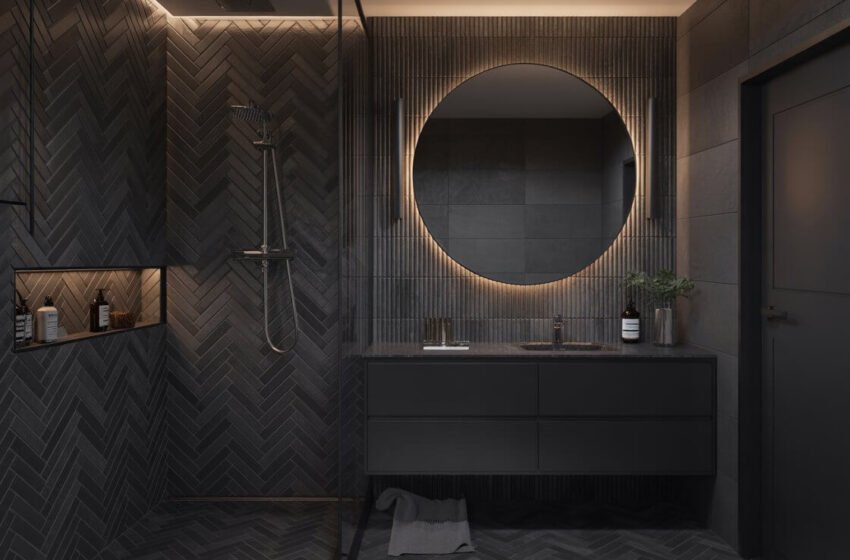
Black bathrooms have a way of stopping people in their tracks. Most bathroom design plays it safe — white walls, chrome fixtures, beige tile — and there is nothing wrong with that. But safe rarely makes anyone catch their breath.
The black bathroom is different. Done well, it is one of the most sophisticated spaces you can create in a home. It feels deliberate, confident, and genuinely luxurious — the kind of room that makes guests wonder if you have a secret interior designer on speed dial.
Done badly, it can feel like a windowless cave. The difference between the two is almost always in the details: the textures chosen, the way light is handled, and the degree to which black is balanced against other materials.
This guide walks you through 20 black bathroom ideas in real depth — not just a style label and a bullet list, but an actual look at what each approach involves, what makes it work, and who it suits best. We have also included practical sections on lighting, common mistakes, and how to choose the right shade of black, so you can go into this decision with your eyes open.
1. All-Black Minimalist — Texture Does the Work
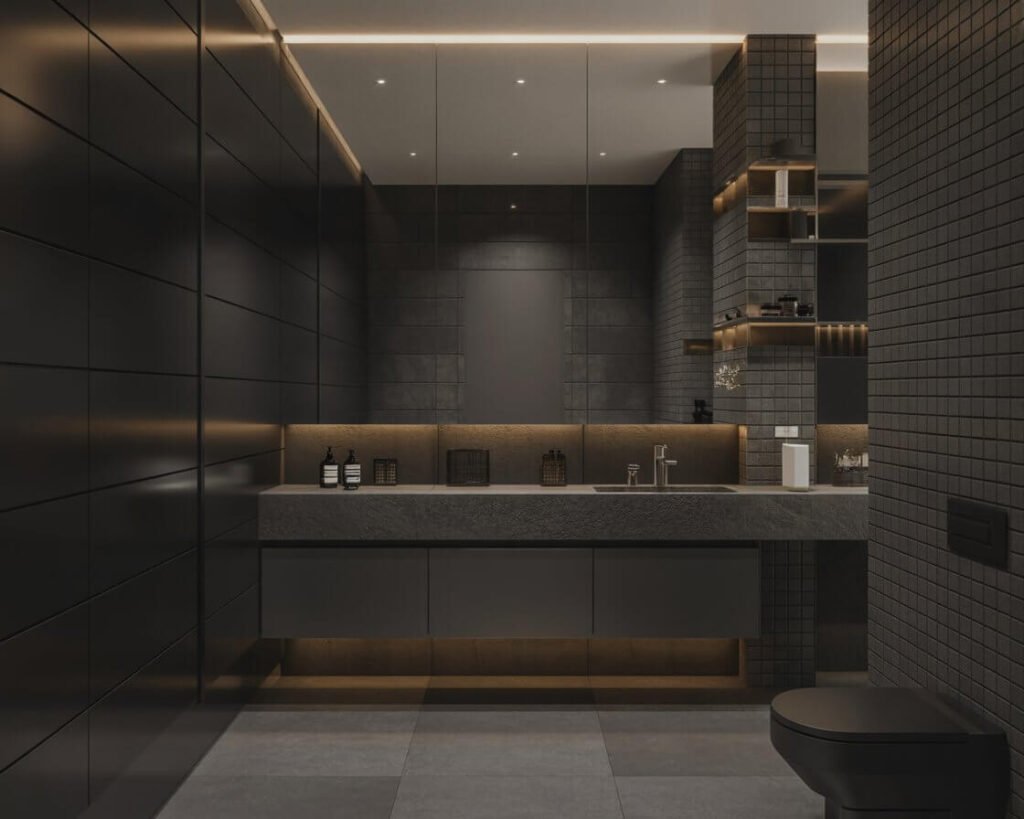
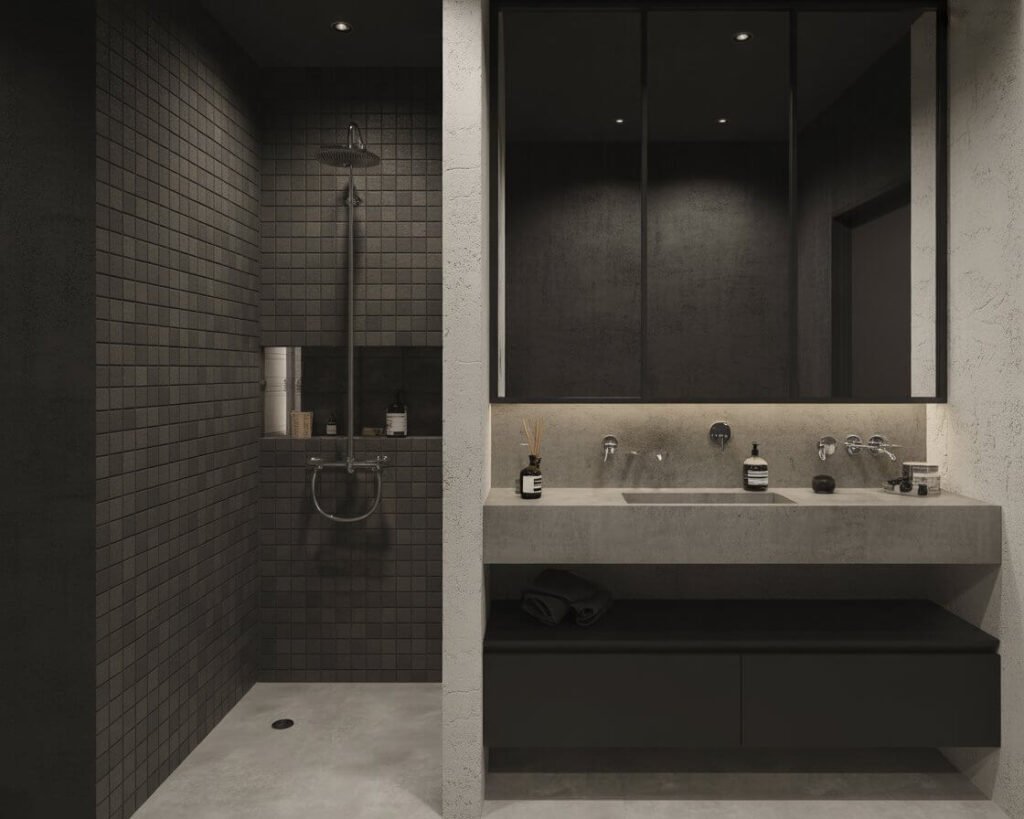
The all-black bathroom is the most committed version of this aesthetic, and it is also the one that intimidates people the most. The key insight that makes it work is this: an all-black room is not actually one colour. It is a composition of surfaces — matte, gloss, textured, smooth — that each absorb and reflect light differently, creating depth and visual interest without a single additional colour.
Matte black tiles on the walls, a polished black stone countertop, and a glossy black freestanding bath can exist in the same space without it feeling flat or monotonous. Indirect lighting underneath floating vanities, behind mirrors, and at floor level prevents the room from feeling oppressive. Think of it less as decorating and more as sculpture.
2. Black and Gold — Classic Glamour, Done Right
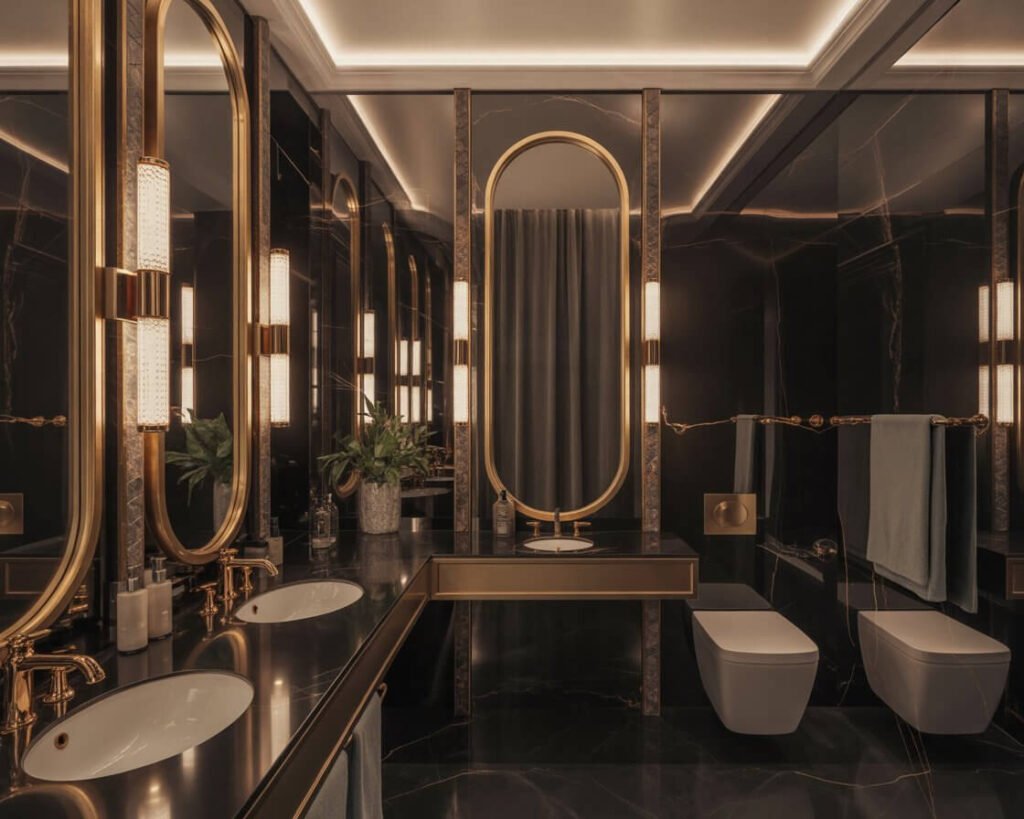
Few combinations in interior design carry the immediate visual weight of black and gold. Black provides the depth and drama; gold adds warmth, richness, and a sense of occasion. Together they create a bathroom that does not just look expensive — it actually feels expensive, in a way that white-and-chrome simply never does.
The discipline required is using gold as the accent, not the base. Gold-framed mirrors, brushed brass taps, a single pendant light with a warm brass shade — these are the gold touches that elevate the space. When gold becomes dominant, the effect tips into ostentation. When it is restrained, the result is genuinely elegant. Keep gold elements consistent in finish — mixing warm yellow gold with cooler rose gold rarely works.
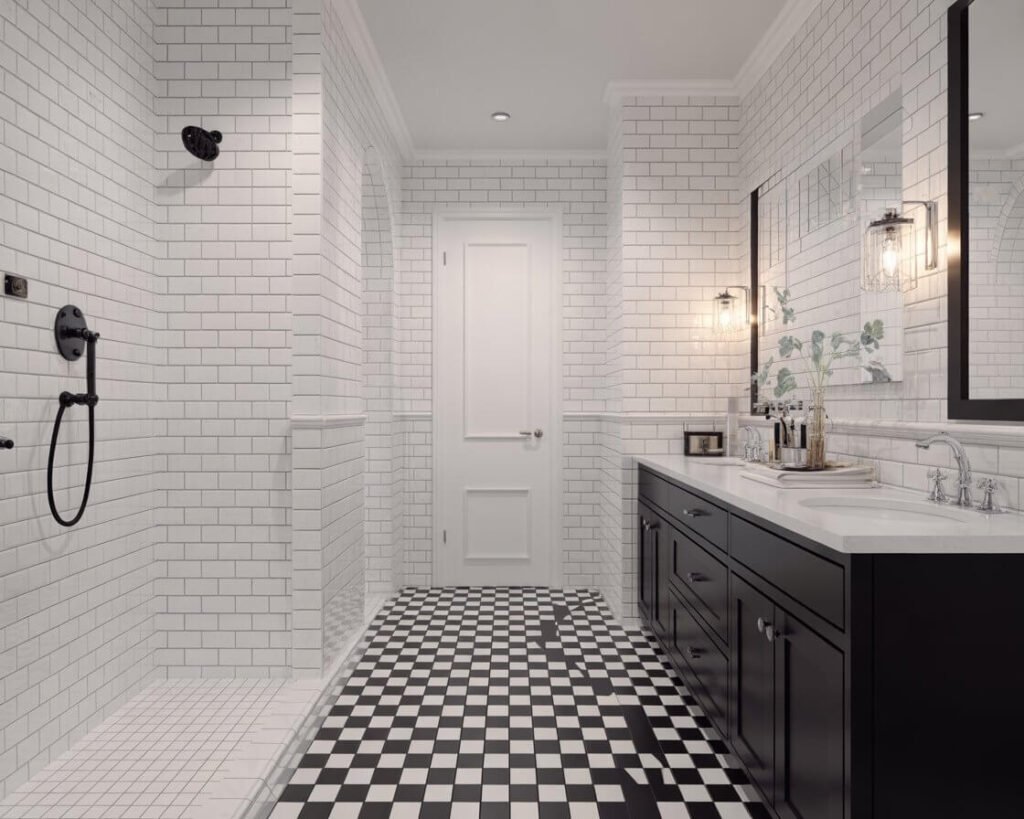
3. Black and White Contrast — A Timeless Pairing
Black and white bathrooms have existed for over a century, and they will continue to work for a century more. The contrast is inherently satisfying to look at — the eye moves naturally between light and dark, finding rhythm and balance. This is a design pairing that does not require trend-chasing to stay current.
The interesting decision is in how you deploy the contrast. Checkerboard floors in a Victorian-style bathroom feel completely different from a modern bathroom with a black matte vanity against stark white subway tiles. Both are correct. Both have character. The choice comes down to what else is happening in your home and which version of this story you want to tell.
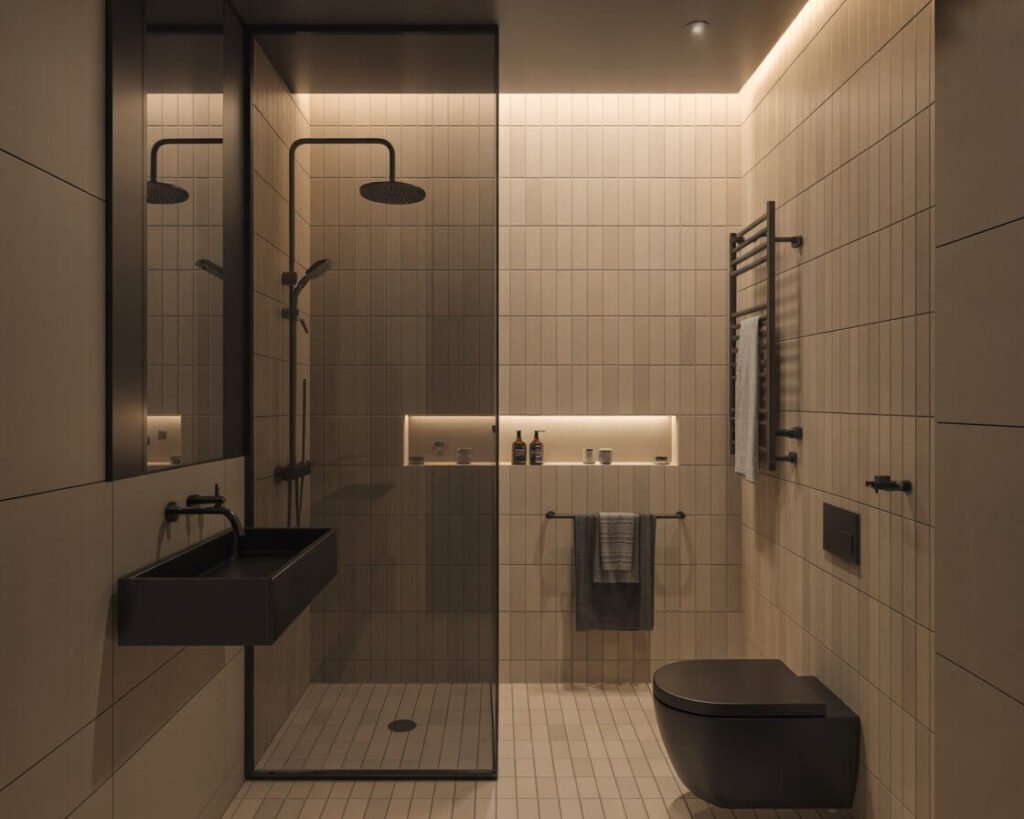
4. Matte Black Fixtures Only — The Minimum Commitment
If you are not ready to commit to black walls or black tiles, matte black fixtures are the most accessible entry point into this aesthetic — and one of the most effective. Swapping out chrome or brushed nickel taps, showerheads, towel rails, and cabinet hardware for matte black equivalents transforms the feel of a bathroom with relatively little cost and no structural work.
Matte black has largely replaced chrome as the default choice in contemporary bathroom design, and the range of products available has expanded considerably. You can now find matte black versions of virtually every fixture type, from simple toilet paper holders to elaborate rainfall showerhead systems. Start with the taps and towel rail — if you love the direction, go further.
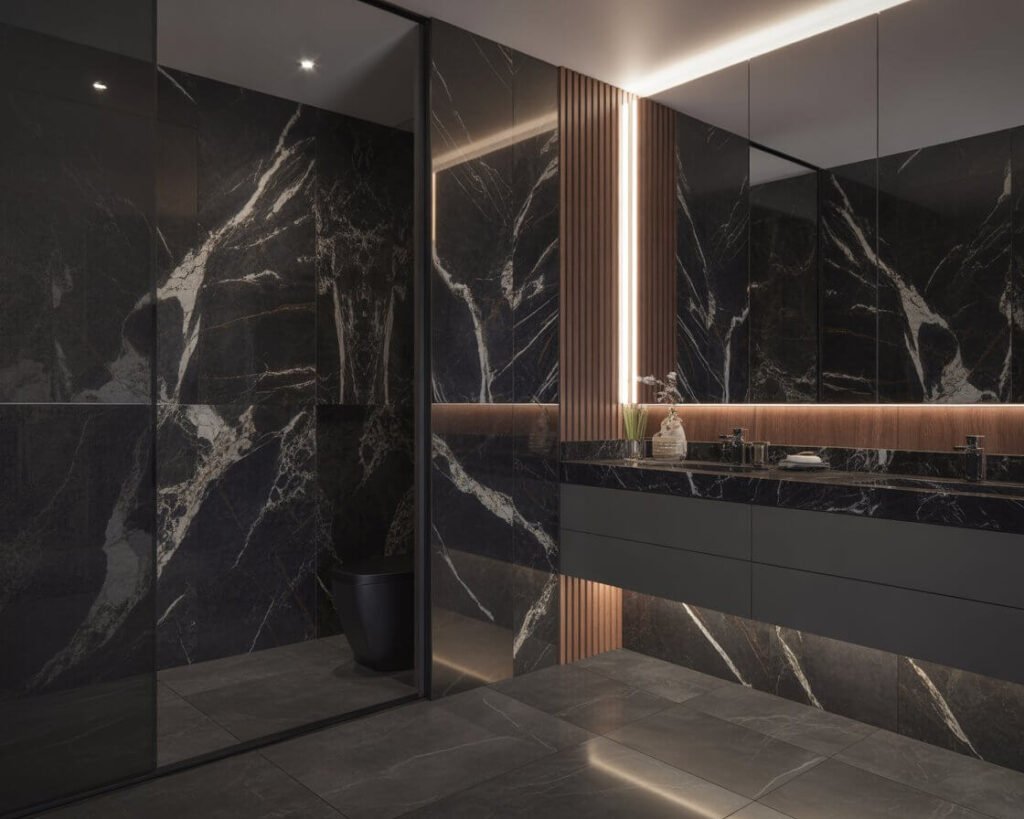
5. Black Marble — The Undisputed Luxury Choice
If there is one material that earns its reputation in a black bathroom, it is natural black marble. Varieties like Nero Marquina, with its distinctive white veining, or the dramatic swirls of Portoro Gold, bring a quality that no manufactured product fully replicates. Each slab is unique, and that uniqueness is part of what makes it so compelling.
Using real marble throughout a bathroom is a serious investment. A more considered approach is to use it strategically: as a feature wall behind the bath, on the vanity countertop, or on the floor in a smaller powder room. Combine it with less expensive matte black porcelain tiles elsewhere and the result reads as luxury without the full luxury price tag. Modern marble-look porcelain has become genuinely impressive, so budget alternatives are worth exploring if cost is a constraint.
6. Industrial Black — Raw, Confident, Urban
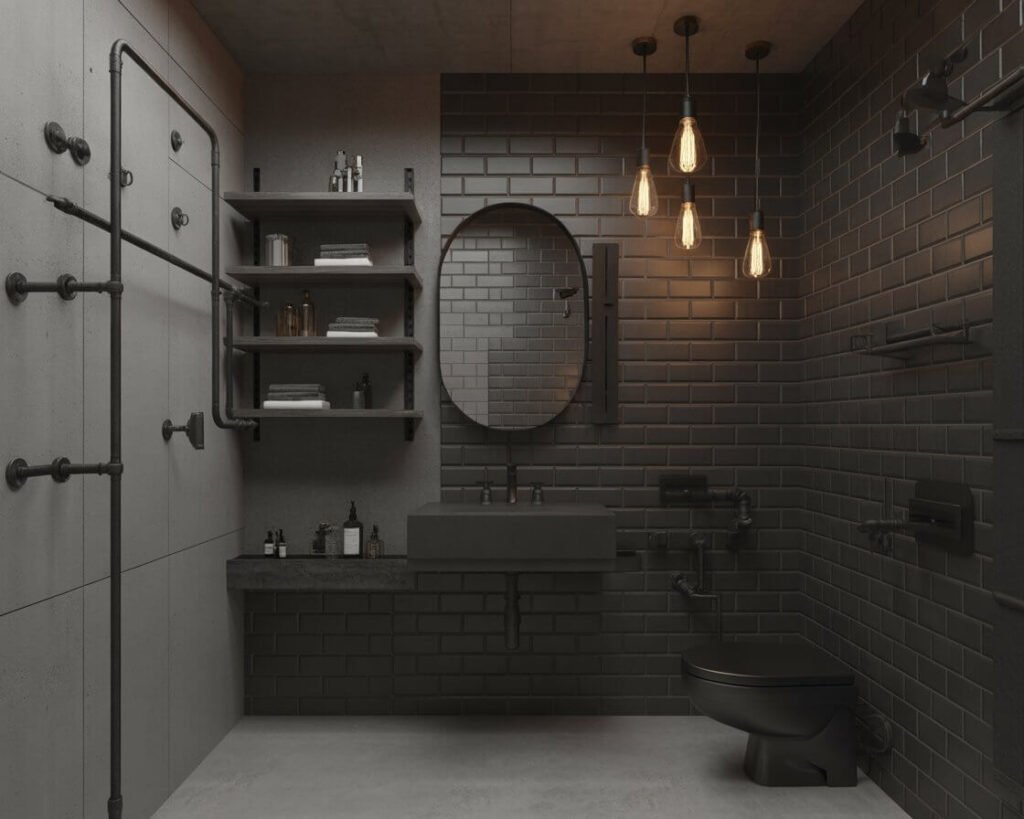
Industrial black bathrooms borrow their vocabulary from converted factory spaces and loft apartments: exposed pipework, concrete surfaces, open steel shelving, and Edison-style bulbs. The appeal is an aesthetic of honesty — materials shown as they are, without decorative concealment.
In practice, achieving a convincing industrial bathroom requires careful sourcing. Matte black metal fixtures with visible fittings, concrete-effect tiles or actual poured concrete surfaces, and deliberately simple, functional accessories all contribute. Avoid the temptation to soften every edge — the occasional rough texture or deliberately utilitarian element is what keeps this style feeling authentic rather than theme-park.
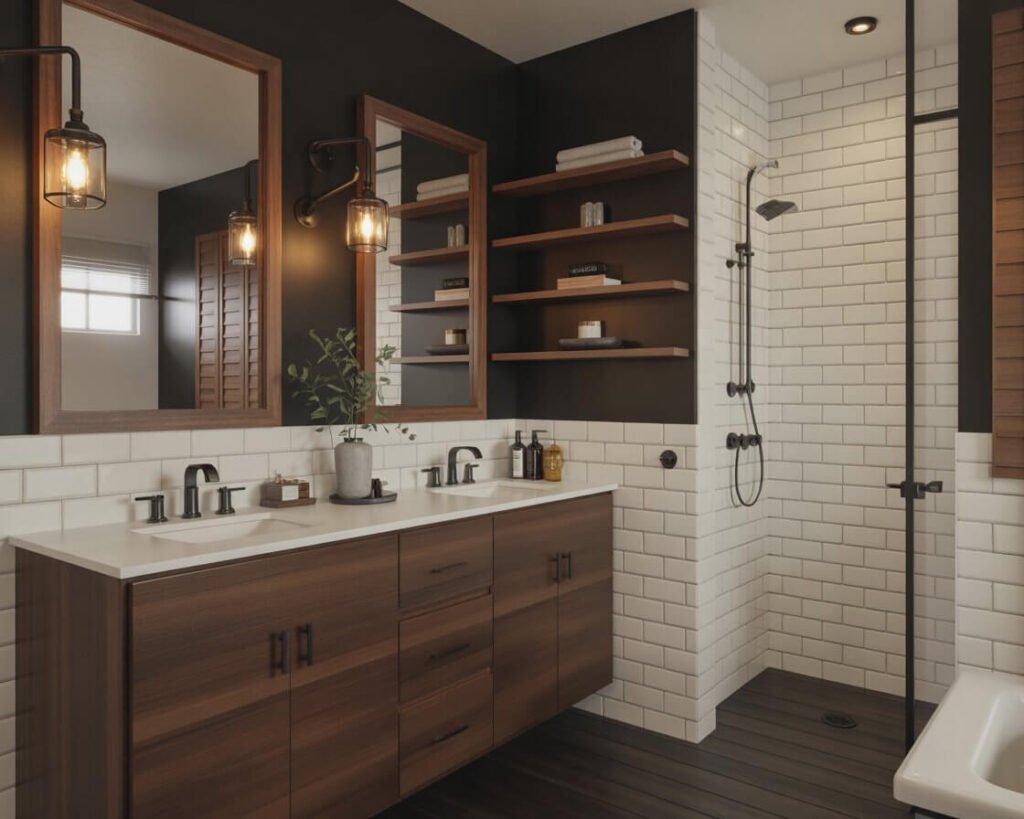
7. Black and Dark Wood — Warmth Within Darkness
One of the most common concerns about a black bathroom is that it will feel cold. The antidote is dark wood, and the combination is more compelling than either element alone. Walnut, smoked oak, or ebony-stained timber introduced through a vanity unit, open shelving, or a mirror frame adds organic warmth that counteracts the coolness of black tile and stone.
The textures tell the story: the smoothness of the black against the grain of the wood, the light catching the wood differently from the tile, the overall composition feeling grounded and alive rather than sterile. This pairing lends itself particularly well to Japandi-influenced bathrooms — that Japanese-Scandinavian hybrid of disciplined minimalism and natural warmth.
8. Black with Botanical Greenery — Jungle Luxe
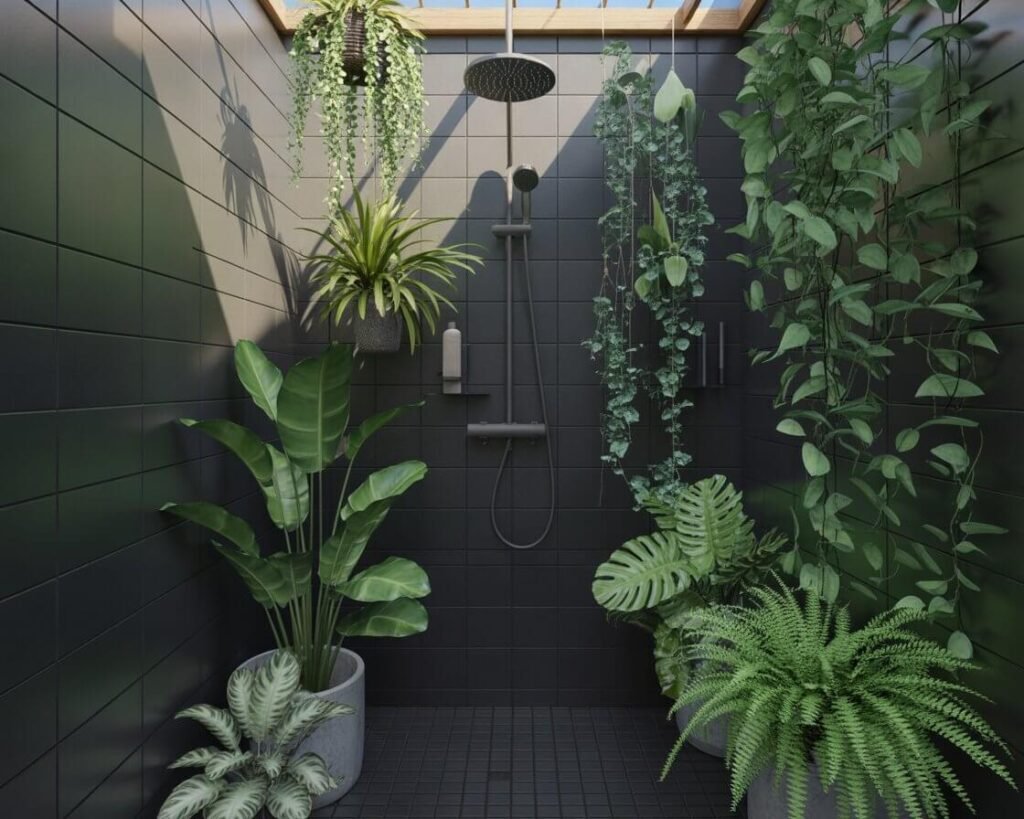
Plants against black backgrounds are a revelation. The contrast between deep, absorbing black surfaces and vivid living green is visually electric in a way that plants against white walls rarely achieve. Black makes the green look greener, the leaves more three-dimensional, the whole bathroom more alive.
This is also a practical approach, because the bathroom is often the most hospitable room in the house for tropical plants — warm, humid, and usually with some natural light from a window or skylight. Pothos, monstera, peace lily, and fiddle-leaf fig all perform well in bathroom environments. A single large statement plant can transform the character of a black bathroom more dramatically than almost any other addition.
9. Black Feature Wall — Commitment-Free Drama
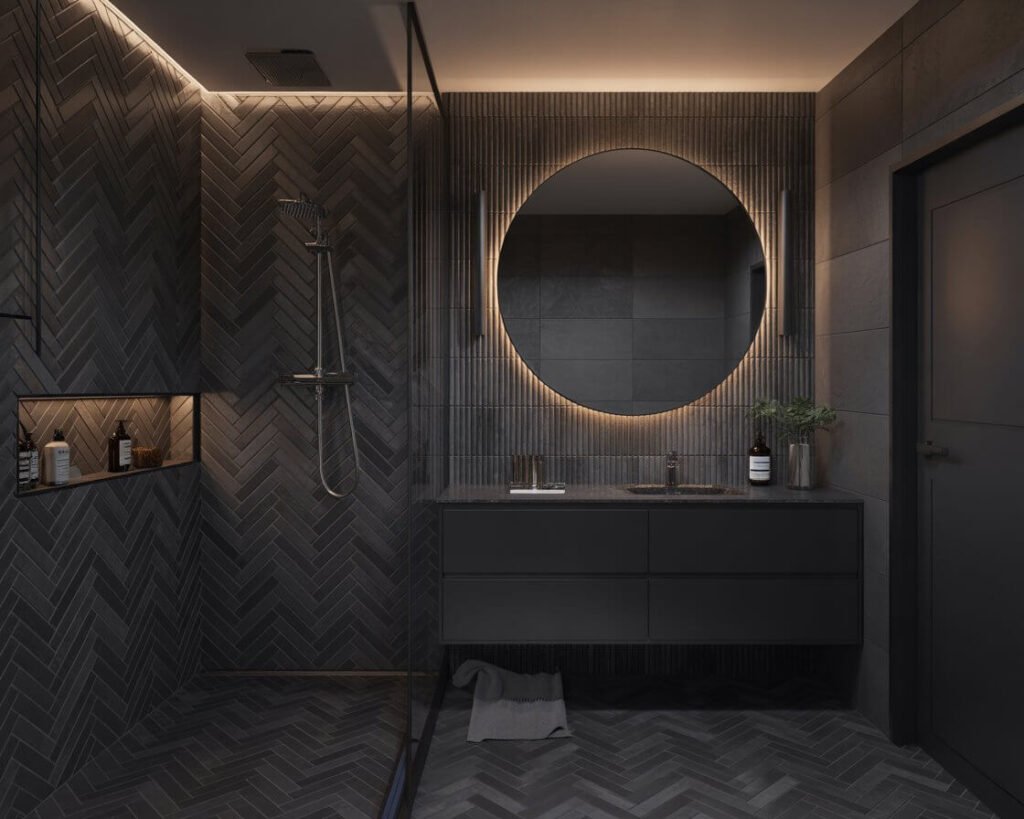
For homeowners who want the drama of a black bathroom without committing every surface to it, a single black feature wall is an excellent middle ground. One wall — typically behind the vanity or behind the bath — painted or tiled in black immediately changes the atmosphere of the room without making the space feel enclosed.
The feature wall approach also works particularly well in family bathrooms, where a completely dark space might feel unwelcoming for children. One dark wall, balanced by white or light grey elsewhere, gives the room personality and presence without going all the way. It is also much easier to reverse if tastes change.
10. Black Ceiling — The Unexpected Move
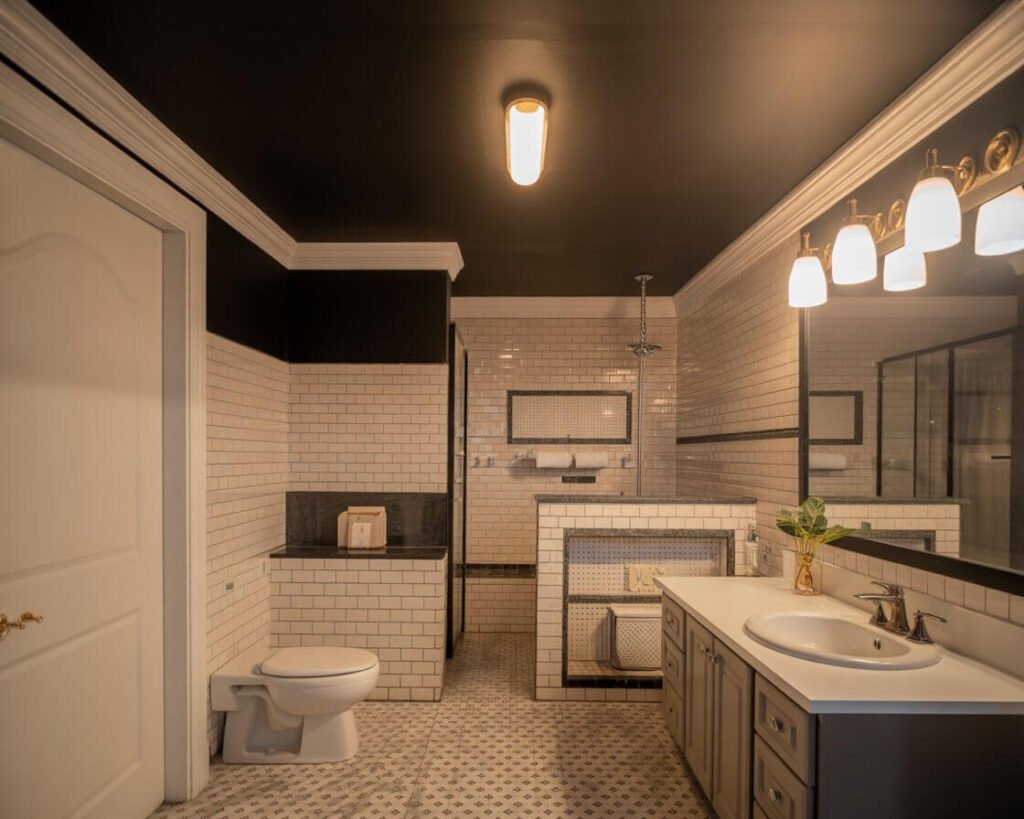
While most people think horizontally when planning a bathroom refresh, the ceiling is an overlooked surface with significant design potential. A black ceiling in an otherwise light bathroom creates an intimacy and enclosure that feels surprisingly comfortable rather than oppressive — particularly in bathrooms with decent ceiling height.
The effect is a bit like being outdoors at night, with the walls and fittings lit and the sky dark above you. It draws the eye up, adds unexpected depth, and makes the white fixtures and walls below appear to glow. It is one of the more unusual ideas on this list, but in the right space it is genuinely spectacular.
11. Black Grout — Small Change, Big Impact
This is the most overlooked detail in tile-based bathroom design, and one of the most impactful changes you can make. White grout on white tiles disappears; black grout on white or light grey tiles becomes part of the design, creating a deliberate grid pattern that gives the space a completely different character.
Black grout on white subway tiles in a herringbone or running bond layout is a combination that reads as both classic and contemporary. It also has the practical advantage of not showing staining as aggressively as white grout does over time. If you are retiling a bathroom, this is a detail worth thinking about before you finalise your specification.
12. Black Freestanding Bath — The Statement Centrepiece
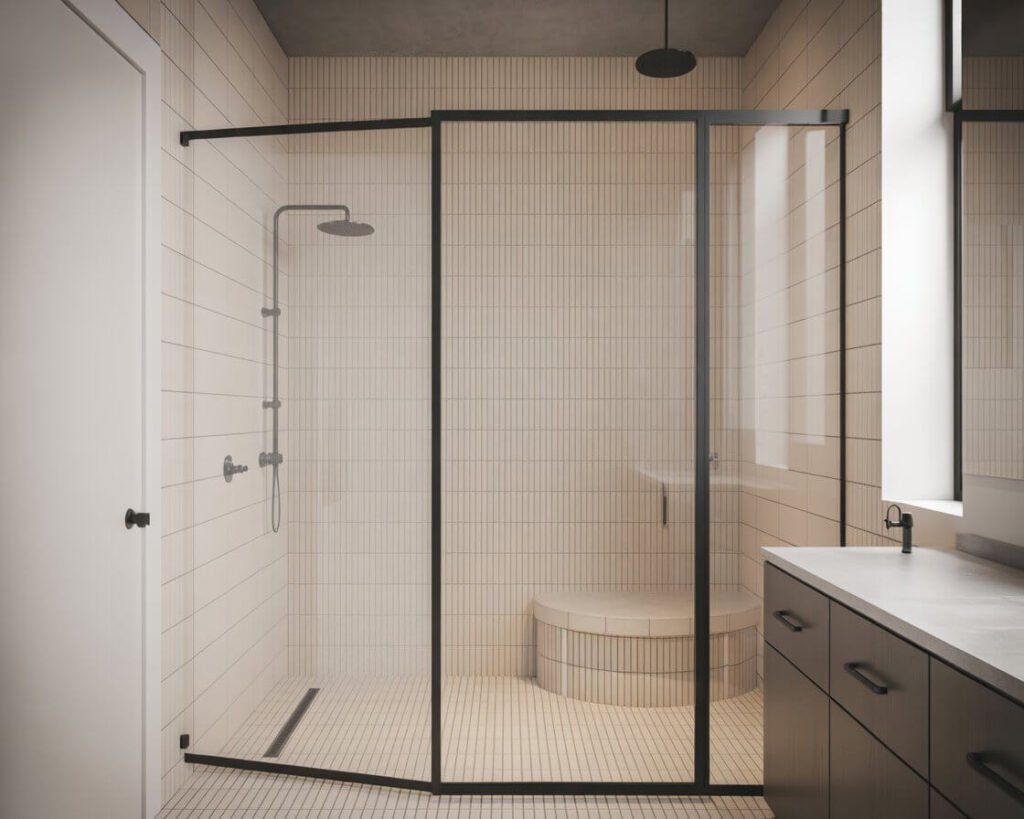
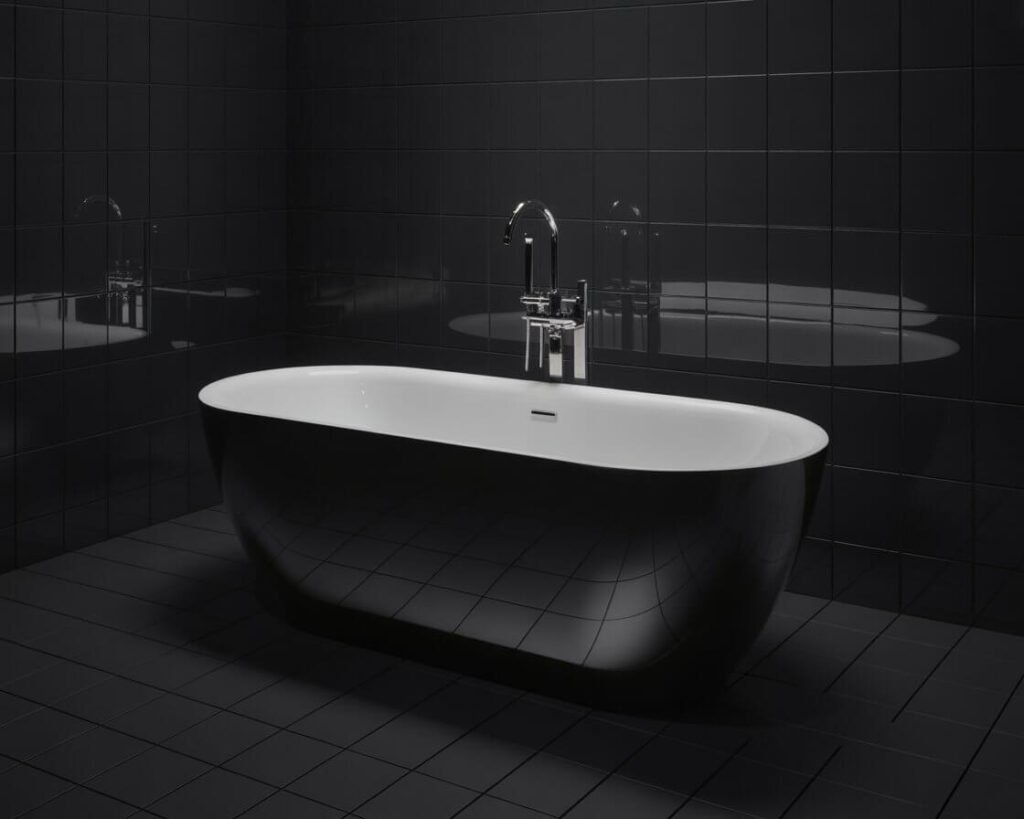
A freestanding bath is already a statement piece. A black freestanding bath is a statement piece that commands the room. Whether matt black with a smooth, almost sculptural finish, or a dark stone composite with a genuine weight to it, a black freestanding tub in a lighter bathroom becomes the single point around which everything else arranges itself.
This works particularly well in a bathroom with large format light stone tiles and simple white walls — the bath needs relatively little competition to hold its own. Position it where it can be seen from the doorway, ensure the floor is robust enough to bear its weight when full, and spend on the tap to match: a floor-mounted matte black or brushed brass tap completes the composition.
13. Black Walk-In Shower — Immersive and Spa-Like
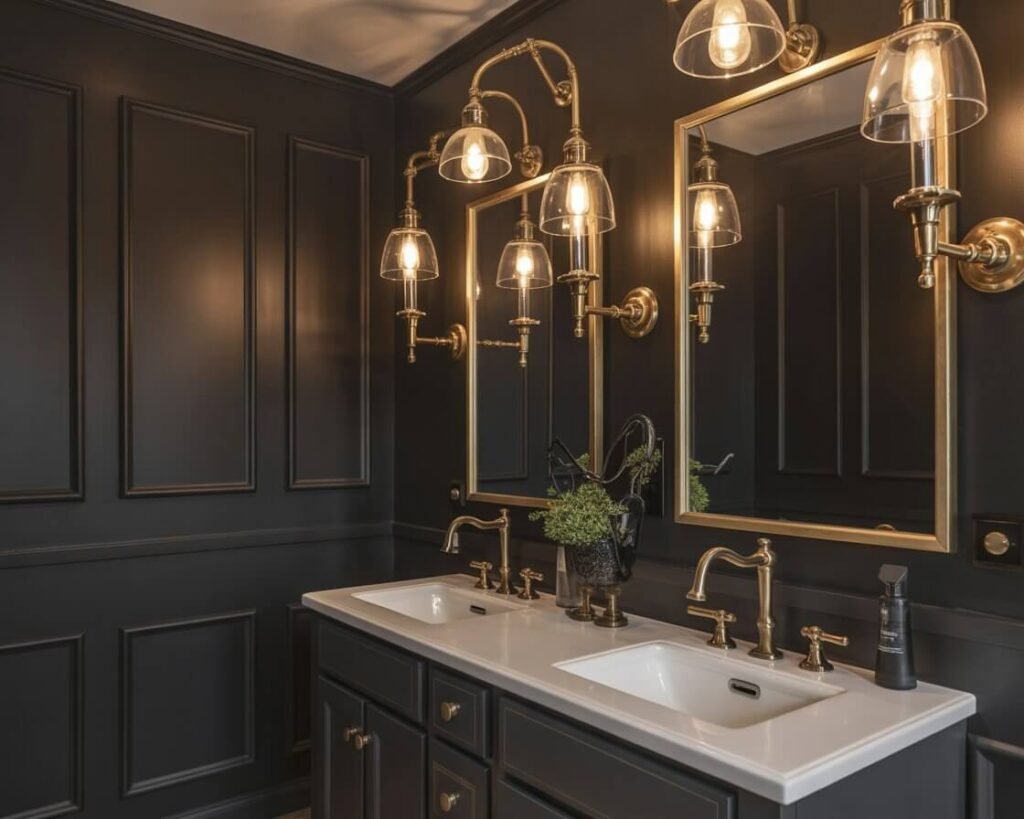
Walk-in showers in matte black tile — floor, walls, ceiling — create one of the most immersive bathroom experiences available outside of a commercial spa. When every surface around you is dark and textured, and water falls from a ceiling-mounted rainfall head, the experience of showering genuinely changes. It becomes more deliberate, more sensory, more like something worth doing slowly.
Waterproofing and ventilation are critical when tiling a shower enclosure fully in dark materials. A good exhaust fan is essential to prevent moisture buildup, and all tiling and grouting must be done to a professional standard. Non-slip texture on the floor is non-negotiable. Done properly, though, this is arguably the most impressive single feature a bathroom can have.
14. Black and Copper — Warm Metal, Dark Ground
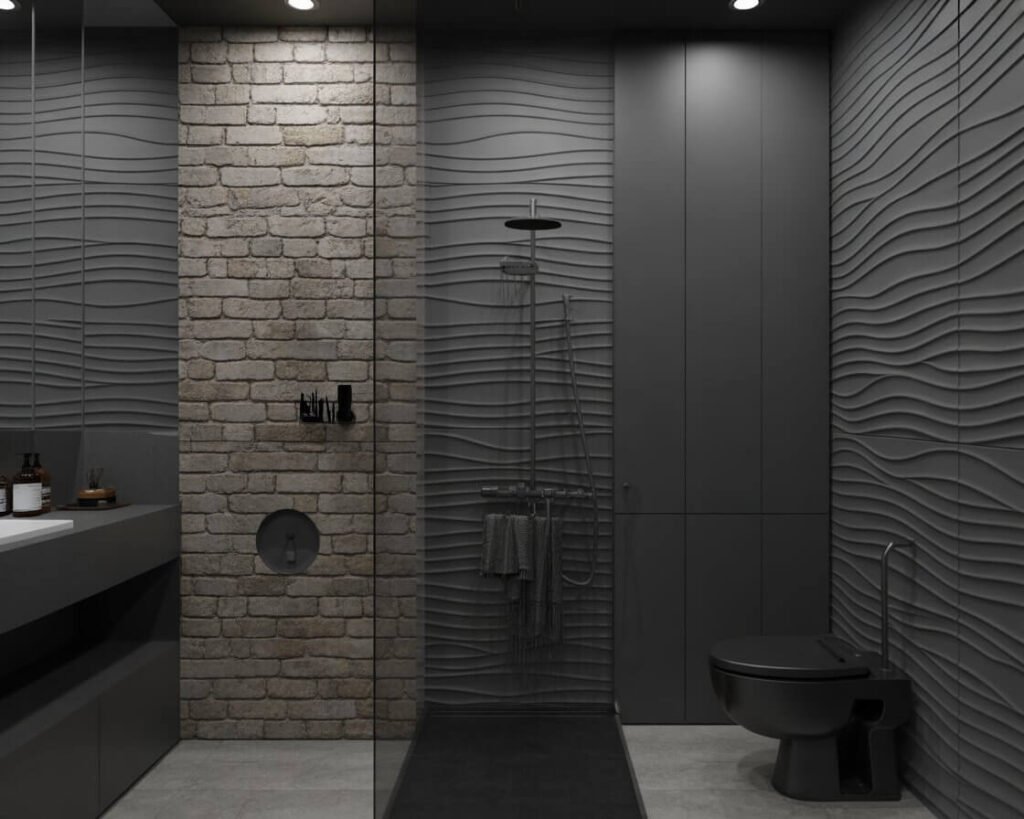
Copper fixtures against black surfaces create a warmth that gold approaches but does not quite reach. There is something about copper — the slight softness of the metal, the way it picks up ambient light rather than broadcasting it — that feels more relaxed and less formal than gold, while still reading as a premium choice.
Copper taps, a copper-framed mirror, and copper towel hooks against matte black tiles give a bathroom a character that feels genuinely distinctive. The key caution is consistency: like gold, copper should remain as the accent throughout. Mixing copper with brushed nickel or chrome in the same space rarely resolves cleanly.
15. Black Powder Room — Go All-In When the Room Is Small
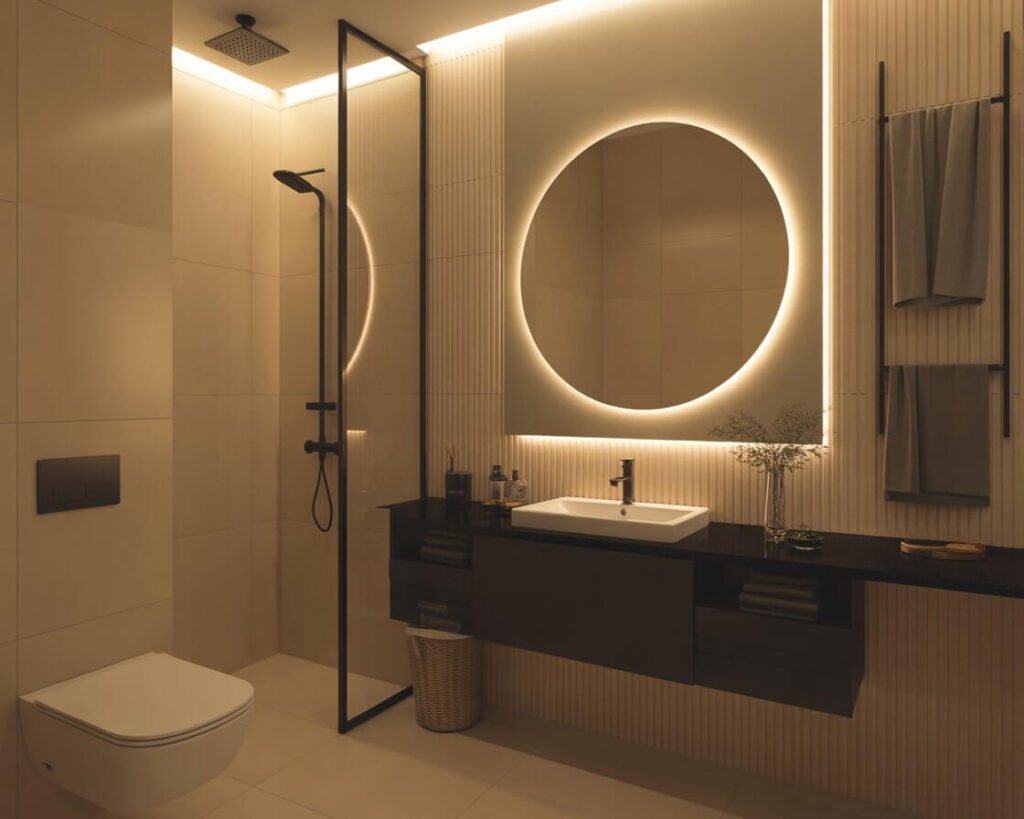
Powder rooms — small guest bathrooms used only for hand-washing — are actually the ideal space to attempt a fully black design. Because these rooms are small and used briefly, the usual concerns about dark spaces feeling claustrophobic or oppressive do not really apply. Nobody is spending thirty minutes getting ready in a powder room.
In a powder room, black can be applied to every surface without reservation: walls, floor, ceiling, fixtures, accessories. The result, when executed with confidence and good lighting, is one of the most memorable small spaces in a home. Guests remember a powder room that makes them pause when they walk in. That is a design success worth pursuing.
16. Art Deco Black Bathroom — Geometric and Glamorous
Art Deco design and black bathrooms were made for each other. The Deco vocabulary — geometric patterns, stepped profiles, symmetry, rich materials, and a theatrical use of contrast — translates naturally into a black bathroom with gold accents, hexagonal or chevron-patterned floor tiles, octagonal mirrors, and sconce lighting that would not look out of place in a 1930s hotel.
This is a style that rewards research. Study reference images, understand the shapes and proportions that define the period, and apply them deliberately rather than randomly. An Art Deco black bathroom is one of the most visually coherent design directions you can take — the historical precedent does a lot of the heavy lifting for you.
Getting Lighting Right in a Black Bathroom
Lighting is the single most important element in a dark bathroom, and the one most commonly underestimated. A black bathroom with inadequate lighting will feel depressing. The same room with well-considered layered lighting will feel like a retreat. The difference is entirely in the planning.
Layer Your Light Sources
Do not rely on a single overhead light. A black bathroom needs at least three layers of light: ambient (the general fill light), task (focused lighting around the mirror for grooming), and accent (lighting that emphasises architectural features or creates atmosphere).
Go Warm, Not Cool
Colour temperature matters enormously in a dark space. Cool white light (5000K and above) reads as clinical and harsh against black surfaces. Warm white light (2700K to 3000K) gives black its depth and richness, making the room feel luxurious rather than harsh. This is one of the most common mistakes in black bathroom installations and one of the easiest to avoid.
Use Mirrors Strategically
Mirrors multiply light by reflecting it back into the room. In a black bathroom, large mirrors — or multiple mirrors at different heights — can transform the feel of the space dramatically. A full-height mirror on one wall in a small black bathroom makes the space feel significantly larger and lighter than it physically is.
Consider Indirect and Integrated Lighting
Recessed LED strips behind a floating vanity, inside a niche, or along the perimeter of the ceiling create a soft glow that fills the lower portions of the room with warm light. This kind of indirect lighting is particularly effective in black bathrooms because it illuminates the space without creating harsh shadows or hot spots.
Common Mistakes to Avoid
- Neglecting ventilation: Dark surfaces can show water and humidity-related damage more readily over time. A powerful extractor fan is essential, not optional.
- Using too many competing finishes: Matte black, gloss black, satin black, and charcoal all in the same room tends to look muddled. Choose one or two finishes and commit to them.
- Forgetting the floor: Dark walls with a white or very light floor can look unintentionally stark. Consider a mid-tone or dark floor to anchor the room, or use an interesting texture that bridges the tones.
- Underestimating the importance of accessories: In a black bathroom, small objects stand out more than they do in lighter rooms. Cheap or mismatched accessories become very visible. Invest in quality across the details.
- Skipping professional installation for stonework: Natural stone and large-format tiles in a wet area require professional installation. Poor adhesion or grouting in a shower or bath surround leads to water damage that is expensive to repair.
Choosing the Right Shade of Black
Black is not one colour. Warm blacks have a brown or red undertone; cool blacks lean toward blue or green. Jet black reads as intense and graphic; soft black or off-black reads as more nuanced and atmospheric. The right choice depends on what else is in the room and what feeling you are trying to create.
When selecting paint, tile, or stone, look at samples in the actual room at different times of day. A colour that looks rich and deep in afternoon light may read as flat and cold under artificial evening lighting, or vice versa. Always test before committing to a full order. This applies whether you are buying paint or ordering large-format tile — the investment in samples is always worth it.
For paint, popular choices in 2025 include Farrow and Ball Railings (a near-black with a dark blue undertone), Little Greene Obsidian (a warm, rich black), and Dulux Jet Black (a true, neutral black). Each behaves very differently on the wall — testing is essential.
Frequently Asked Questions
Will a black bathroom make a small space feel even smaller?
Not necessarily. A dark room with good lighting, large mirrors, and consistent materials can feel surprisingly spacious. The most important factor is how the darkness is handled — a small, well-lit black bathroom with a large mirror and light coming from multiple directions can feel larger than a poorly lit white bathroom. The relationship between dark surfaces and light sources is what determines the perception of space.
Are black bathrooms hard to clean?
In many ways, black bathrooms are easier to keep looking clean than white ones. Water spots, soap residue, and general marks are significantly less visible on dark surfaces. Matte finishes, however, can sometimes show limescale more clearly than gloss, particularly in hard water areas. A regular light clean and an occasional descaling treatment are usually sufficient. Avoid abrasive cleaners on matte surfaces, as they can dull the finish over time.
Does a black bathroom affect resale value?
This depends significantly on execution. A poorly done black bathroom — inconsistent finishes, cheap fixtures, inadequate lighting — will likely be a negative for buyers who then face a renovation. A beautifully executed black bathroom with quality materials and professional installation is increasingly viewed as a premium feature rather than a liability. The design conversation around black bathrooms has shifted considerably; it is no longer considered a niche or risky choice.
What colours work best alongside black in a bathroom?
White and off-white are the most reliable contrast colours. Warm naturals — terracotta, sand, warm grey — soften a black bathroom and add organic character. Brass and gold add warmth and elegance. Deep green, whether through tiles or plants, creates a dramatic and increasingly popular combination. Cool metallics like chrome and brushed nickel work, but tend to read as more corporate and less warm than the brass-family metals.
Final Thoughts
The black bathroom is not a trend in the conventional sense — it is not going to look dated in three years the way certain tile shapes or colour combinations do. Black is a permanent fixture in the design vocabulary of serious interior designers for the same reason it has been relevant in fashion, architecture, and art for centuries: it is definitive, it is versatile, and when it is handled well, nothing else comes close.
The ideas in this guide span a wide range of styles, budgets, and commitment levels. Whether you are replacing your taps with matte black alternatives or planning a complete overhaul with natural stone and a freestanding bath, the principles remain consistent: handle lighting carefully, choose materials deliberately, maintain consistency in finishes, and be willing to invest in the details.
A well-designed black bathroom is not just a room that looks good in photographs. It is a space that changes how you feel when you are in it — calmer, more present, more at ease. That is a rare thing for any room to achieve, and it is worth pursuing.