
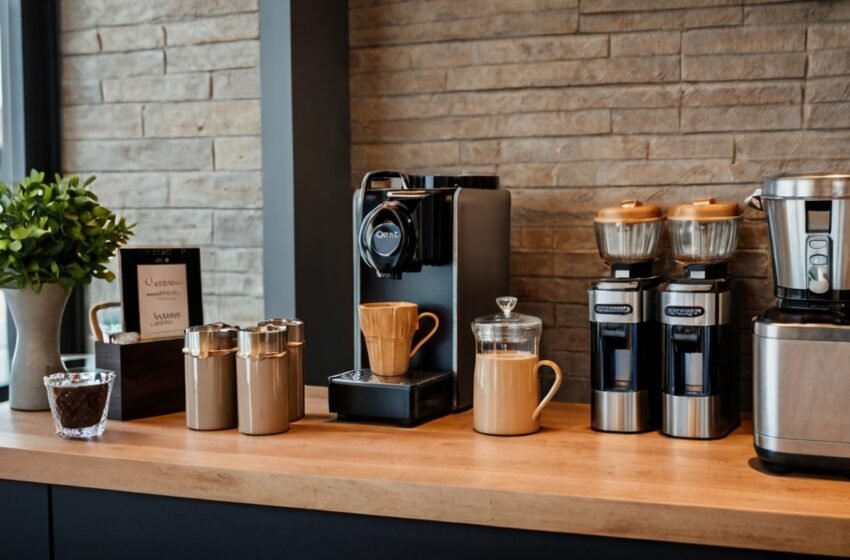
There’s a moment most coffee drinkers will recognise. It’s 6:45 in the morning, you’re barely conscious, and you’re standing in front of a cluttered stretch of worktop trying to locate the coffee filters behind the toaster, the bread bin, and last week’s post. The coffee maker is wedged into a corner so tight you have to angle the carafe to fill it. Nothing about this is enjoyable.
A dedicated coffee station fixes all of that. And unlike most home improvement projects, it doesn’t require a renovation, a big budget, or a particularly generous amount of space. What it does require is a clear idea of what you actually want — and that’s exactly what this guide is for.
1. The Minimalist Floating Shelf Coffee Station

If your instinct is always to edit rather than add, the minimalist floating shelf setup will feel immediately right. The concept couldn’t be simpler: one or two shelves above a dedicated stretch of worktop, everything in its place, nothing extraneous.
The lower shelf sits at a comfortable reaching height and holds your mugs and daily supplies — coffee beans in a glass canister, a small sugar bowl, perhaps a single plant in a compact pot. The machine sits on the worktop below. That’s genuinely all you need. The restraint is the whole point.
Design note: Match your shelf brackets, canister lids, and mug hooks in one consistent finish — matte black, brushed brass, or raw steel. Consistency across small details is what makes a minimal setup look deliberate rather than sparse.
2. Rustic Farmhouse Coffee Corner
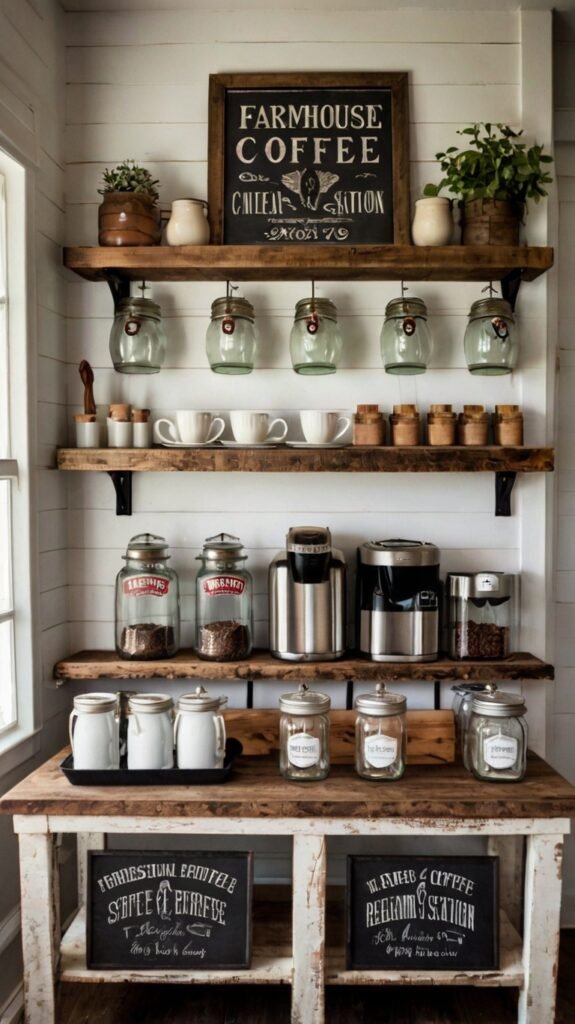
The farmhouse aesthetic has real staying power, and it translates beautifully into a coffee station. Warm wood, handmade ceramics, and a few vintage-inspired touches create something that feels genuinely cosy rather than styled for a photo.
A short length of reclaimed timber as a shelf, mason jars for storing pods and ground coffee, enamelware mugs on hooks, and a small galvanised tray beneath the machine. Add a chalk-painted label or two and the whole thing looks like it’s always belonged there.
What makes it work: The mix of textures — rough wood, smooth ceramic, matte metal — is more important than any individual piece. Farmhouse style is built on contrast, not matching sets.
3. Modern Black and White Coffee Bar

Few colour combinations are as reliably striking as black and white, and the coffee station is a perfect place to deploy it. A white or pale stone worktop surface, matte black machine and grinder, black canisters with white labels — the contrast does all the work.
Metallic accents in chrome, brushed nickel, or gunmetal stop the palette from feeling flat. A black and white grid tile backsplash behind the station adds pattern without introducing colour. The result is something that looks genuinely curated, even if it came together in a weekend.
Pro tip: Keep the mugs in the same palette — all white, all black, or a deliberate mix of both. Introducing colour through mugs undermines the whole effect and makes the station look less considered.
4. The Mobile Bar Cart Coffee Station

The bar cart has had a long second career as a coffee station, and for good reason. It requires no installation, no electrician, and nothing more than a plug socket nearby. For renters, people in small flats, or anyone who hasn’t yet found the right permanent spot for their coffee setup, a good bar cart is the ideal solution.
Look for a cart with at least two tiers — top for the machine and a small tray, lower tier for mugs, beans, and accessories. Wheels should lock so the cart stays put while you’re using it. Sides can often take hanging hooks for mugs, which frees up shelf space considerably.
What to Look for in a Coffee Station Bar Cart
- Solid construction — espresso machines are heavy and the cart needs to be stable.
- Locking castors — a cart that shifts while you’re tamping espresso is genuinely frustrating.
- A lower shelf deep enough to hold mugs lying on their side if needed.
- Side rails or bars that can take S-hooks for mug hanging.
- A finish that suits your space — brass, matte black, white lacquer, and natural rattan all exist.
5. Industrial Pipe Shelf Coffee Station
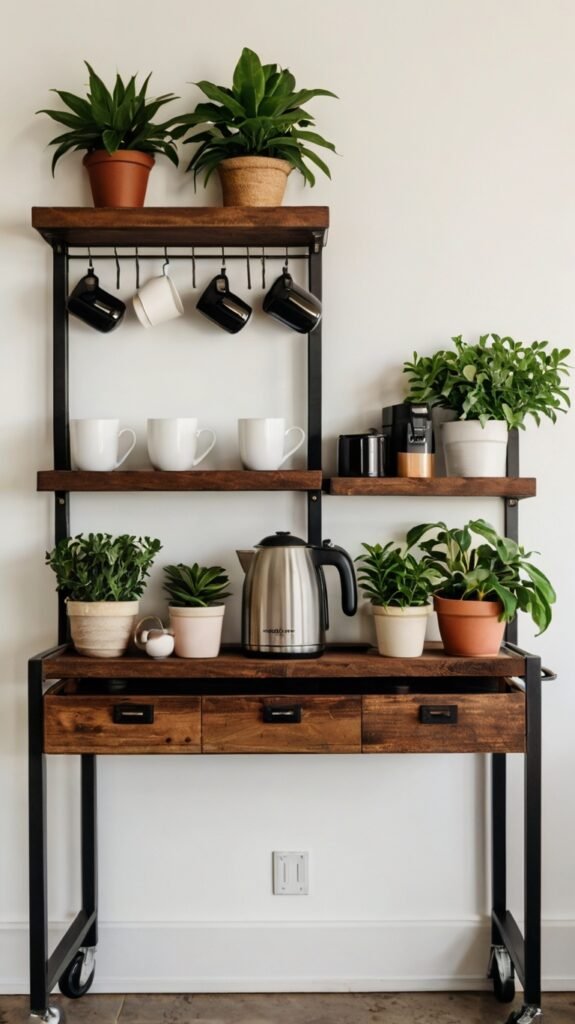
Galvanised steel pipe shelving has been the signature look of industrial interior design for over a decade, and it shows no sign of fading. Applied to a coffee station, it creates something that genuinely looks like a high-end café — the kind where the barista knows your order before you ask.
The pipes and fittings are available from hardware stores or online as ready-to-assemble kits. The planks — scaffold board, reclaimed timber, or oiled oak — are cut to size and mounted onto the pipe brackets. The whole system is customisable: you decide the height, depth, and number of shelves based on your actual space and equipment.
Style tip: Pair the pipe shelves with exposed brick, dark grout tiles, or a concrete-look surface for maximum industrial effect. Edison filament bulbs above the station complete the look without any additional effort.
6. Scandi-Inspired Coffee Nook
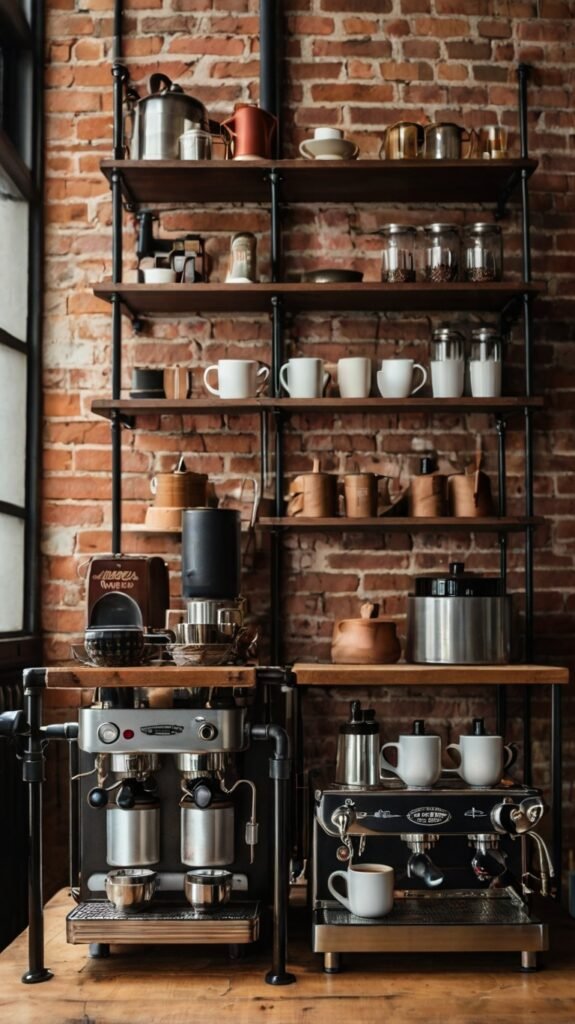
Scandinavian design principles — function first, materials honest, decoration minimal — produce coffee stations that are some of the most quietly beautiful around. Pale wood, clean white ceramics, a small plant, and a pour-over setup in natural materials. That’s the complete brief.
What makes Scandi style different from plain minimalism is warmth. Where minimalism can feel cold, Scandi design uses texture — linen, wood grain, ceramic — to keep things feeling human. A small wooden tray, a hand-thrown mug, a sprig of dried botanicals in a simple vase. None of it is precious, but all of it is considered.
Key principle: Every item on a Scandi coffee station should be doing a job. Decorative items earn their place by being also useful — the tray corrals the setup, the plant improves the air, the wooden board doubles as a serving surface.
7. Boho Coffee Corner

Bohemian style is the permission slip to be eclectic, layered, and unapologetically personal in your design choices. A boho coffee corner mixes textures and materials with a confidence that other styles would find difficult — and it works precisely because of that confidence.
A woven rattan tray as the base. Ceramic mugs in earthy terracotta, sage, and cream tones. A small macramé wall hanging above the shelves. Trailing plants in terracotta pots alongside the machine. Pampas grass or dried flowers in a clay vase. The overall effect is warm, characterful, and lived-in — like the coffee station has been assembled over years from pieces you genuinely love.
One rule to follow: Even in boho style, restraint matters. Pick a loose colour palette — warm earthy tones work best — and let everything sit within it. Total eclecticism without any thread of cohesion tips into chaos rather than character.
8. Built-In Hidden Cabinet Coffee Bar

For those who want the full functionality of a well-equipped coffee station but not the visual impact of one, the hidden cabinet bar is the most elegant solution available. The concept is simple: a kitchen cabinet, fitted with a socket inside and a pull-out shelf at machine height, conceals everything behind closed doors when not in use.
When you open the cabinet, the full setup is revealed — machine on the pull-out shelf, mugs on a bar above, pods or beans in a drawer below. When you’re done, close the doors and it’s gone. The kitchen stays serene and uncluttered, and there’s no compromise on function.
Planning a Hidden Cabinet Coffee Station
- Have an electrician fit an internal socket before you install any shelving inside the cabinet.
- A pull-out or swing-out shelf at the right height prevents the machine being crammed against the cabinet top.
- Ventilation matters — steam from a machine in an enclosed space needs somewhere to escape.
- A small LED strip inside the cabinet means you can actually see what you’re doing early in the morning.
- Soft-close hinges on the cabinet doors make the whole setup feel premium and prevent early-morning slamming.
9. Tiered Tray Coffee Station

A tiered tray coffee station is the shortest distance between ‘nothing’ and ‘a proper coffee station’. You need no shelves, no installation, no tools. A good two or three-tier stand, placed on any available stretch of worktop, gives you immediate vertical organisation that looks deliberately styled.
Top tier: sugar, sweetener, small spoon or stirrer. Middle tier: pods, a small jar of ground coffee, or folded filter papers. Bottom tier: a few coasters, a napkin, or a seasonal decorative item. Everything is visible, everything is within reach, and the tray’s footprint is surprisingly small given how much it holds.
Seasonal approach: The bottom tier is your opportunity to reflect the time of year without effort — a miniature pumpkin in autumn, a sprig of holly at Christmas, a small bunch of dried lavender in summer. It’s the kind of detail that makes a home feel genuinely cared for.
10. Coffee and Tea Dual Station

The coffee-versus-tea household debate is as old as hot beverages themselves. The dual station sidesteps the argument entirely by giving both sides their own clearly defined territory, while keeping everything in one cohesive setup.
Left side: espresso machine, beans in an airtight canister, small milk jug, espresso cups on hooks. Right side: electric kettle, a caddy or small drawer unit for tea bags, a honey pot, tea mugs. Tie both sides together with matching accessories — same tray style, same canister lids, same hooks — and the whole thing reads as one considered station rather than two setups competing for the same counter.
11. The Espresso Lover’s Dedicated Bar

If you take your coffee seriously — if you’ve ever talked about extraction yield, or own a burr grinder that cost more than your first mobile phone — your coffee station needs to be built around your actual workflow rather than around looks alone.
The grinder belongs next to the machine, not behind it. A knock box for spent pucks should be within easy reach. A small scale for weighing your dose, a tamper mat, and a narrow drip tray all need designated spots. The aesthetic follows the function here, not the other way around.
Workflow tip: The best espresso stations are designed left to right in the order you use things: grinder, tamper mat, machine, knock box. If you’re right-handed, keep the knock box to the right so disposal is a natural part of the movement. Small details like this make a real difference at 7am.
12. Coffee Station in a Pantry or Larder

A dedicated pantry — whether it’s a full walk-in or a tall larder cupboard — is one of the best locations for a coffee station that many people overlook entirely. The coffee setup lives inside, completely out of sight from the main kitchen, yet fully accessible and functional.
Fit a shelf at counter height inside the pantry, add a socket, hang mugs on hooks above, and store everything else on the shelves around the machine. When the pantry door is closed, the kitchen is spotlessly clear. When you need coffee, everything is in one place and easy to reach. It’s the cleanest possible solution for those who want function without visual impact.
13. Mug Display Coffee Station

For the dedicated mug collector — and the mug-collecting community is larger and more passionate than most people realise — the coffee station is an opportunity to put the collection on show. Mugs become the focal point rather than an afterthought.
A pegboard allows for maximum flexibility: hooks can be repositioned without any drilling as your collection grows or changes. A ladder shelf with pegs works beautifully in a farmhouse or Scandi setting. For a cleaner look, a horizontal row of brass hooks across a painted or tiled section of wall turns the mugs into a visual display that works like art.
Curation tip: Display your twenty favourite mugs, not your entire collection. Rotate seasonally, keep special occasion mugs in a cabinet, and let the display breathe. A mug display that’s too dense loses its impact and starts to look like a charity shop shelf.
14. Small Space Coffee Station — Five Principles That Actually Work

A small kitchen is not an obstacle to a great coffee station. It’s a constraint that forces better decisions. Every element has to earn its place, and the result is often more thoughtful and more functional than a setup with unlimited space.
The Five Principles of Small Space Coffee Stations
- Go vertical. Wall space is your biggest asset. A single floating shelf above the machine can hold everything that would otherwise crowd the worktop.
- Choose one machine that does its job brilliantly rather than multiple machines that compete for space.
- Mug hooks on the wall are more space-efficient than mugs in a cabinet — and they look better.
- Decant beans and supplies into slim, tall canisters rather than keeping them in their original packaging, which is almost always bulkier than necessary.
- Define the station boundary with a tray and commit to keeping it. A coffee station that has a clear edge stays tidy naturally.
15. Coffee Station with Chalkboard Backdrop

A small section of chalkboard paint on the wall behind your coffee station adds personality, practicality, and a welcome dose of humour to your morning routine. Write the day’s coffee menu, leave a note for the next person up, track your bean varieties, or just write something that makes you smile at 7am.
Chalkboard paint is available in spray or rollable form and takes an afternoon to apply. Frame the painted section with simple timber moulding or picture rail to give it a finished, intentional look rather than the appearance of a wall that’s been partially painted and abandoned. One section of roughly 60 x 90cm is all you need — large enough to write on comfortably, small enough not to dominate the space
How to Plan Your Coffee Station: What to Think About Before You Start
Before spending any money or moving anything around, take ten minutes to work through these questions. The answers will shape every decision that follows and save you the frustration of setting something up that doesn’t quite fit how you actually live.
What Kind of Coffee Do You Actually Make?
A pod machine user, a pour-over enthusiast, and a home barista with an espresso setup all have completely different spatial and storage requirements. The station should be designed around your real equipment and your real morning routine — not an idealised version of either.
Where Is the Nearest Power Socket?
Your coffee station needs to be near a socket, or you need to have one installed. Running a cable across a worktop to a distant socket looks bad and creates a hazard. This question often dictates location more than anything else.
How Much Natural Light Does the Space Get?
A north-facing corner with no window nearby will feel dark and uninviting regardless of how well it’s styled. If your preferred location is naturally gloomy, factor in task lighting before committing to it. Under-cabinet LEDs and a well-positioned pendant light can compensate for poor natural light, but they need to be planned from the start.
Who Uses It, and When?
If one person makes coffee at 5:30am and another at 8am, the setup needs to work quietly without disturbing anyone. If it’s used by multiple people simultaneously on weekend mornings, the layout needs to accommodate two people without them getting in each other’s way. Think about your actual household, not a hypothetical single user.
Do You Want It Permanent or Flexible?
A permanent coffee station built into the cabinetry is a longer-term commitment that requires more planning. A bar cart or tiered tray setup is completely moveable and reversible. If you’re renting, or if you’re not yet sure where the best spot is, start with a flexible solution and upgrade when you have more clarity.
Frequently Asked Questions
How much space do I need for a coffee station?
A minimum of 60cm of uninterrupted worktop is workable for a compact setup. 90cm is comfortable. A full espresso station with a grinder and accessories benefits from 120cm. Vertical storage reduces how much surface area you need — a well-planned shelf above a smaller worktop section can hold more than a sprawling flat setup.
Can I set up a coffee station without drilling anything into the wall?
Yes. A bar cart, a tiered tray, or a freestanding shelving unit all create a fully functional coffee station without any wall fixings. If you want shelves but don’t want to drill, tension shelving systems that wedge between floor and ceiling are another option that leaves no marks.
What’s the most important thing to get right in a coffee station?
The location. Everything else — the accessories, the aesthetic, the organisation — can be adjusted and improved over time. The location, once committed to, shapes all other decisions. Get the power socket proximity right, get the traffic flow right, and make sure the station is somewhere you actually want to stand for two or three minutes each morning.
How do I keep a coffee station looking tidy?
Define the boundary — usually with a tray — and stick to it. Store only coffee-related items inside the defined area. Decant supplies into matching containers so nothing looks out of place. Wipe the tray and machine surface every two or three days. These four habits, done consistently, keep a coffee station looking good with minimal effort.
Is a separate coffee station worth it if I have a small kitchen?
Especially worth it. In a small kitchen, a defined coffee station prevents the morning coffee routine from sprawling across and disrupting the entire worktop. Containing everything in one place — even a small place — keeps the rest of the kitchen available for other tasks and makes the space feel more organised overall.
Conclusion: The Best Coffee Station Is the One You’ll Actually Use
A coffee station is, at its core, a very simple idea: put everything you need for your morning coffee in one place, make that place pleasant to be in, and your mornings get noticeably better. The version that works for you might be a £30 setup assembled in an afternoon, or it might be a built-in bar that becomes a feature of your kitchen for years to come.
What matters is that it suits your space, your style, your routine, and — honestly — your patience for organisation. A beautifully designed coffee station that requires constant maintenance to keep tidy will always lose out to a simpler setup that actually stays in order.
Start with what you have. Clear a section of worktop. Add a tray. Move the mugs to within easy reach. That’s already a coffee station. Everything else is refinement.
The 25 ideas in this guide cover the full range — from the genuinely minimal to the properly ambitious. Pick the one that fits where you are right now, not where you’d like to be one day. The coffee will taste better immediately, and the rest will follow.