
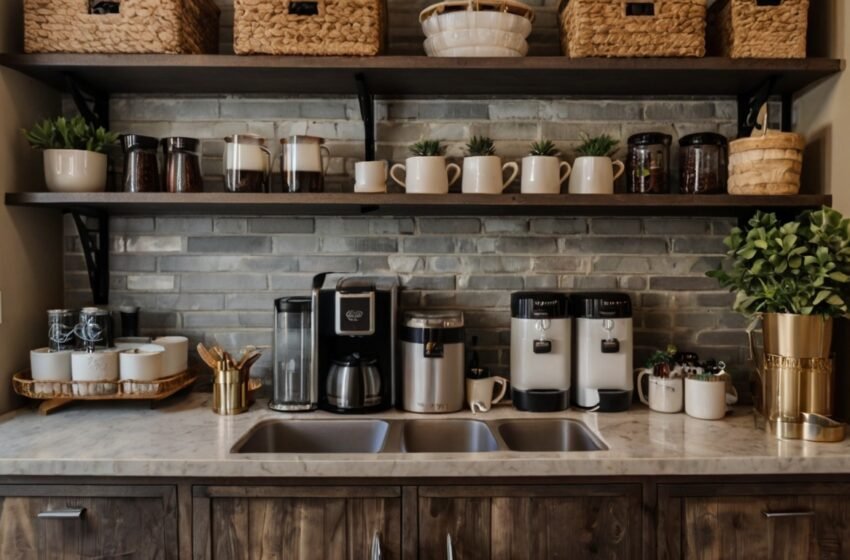
Let’s be honest. The first few minutes of the morning aren’t pretty. You’re half-asleep, the kitchen light is too bright, and you’re rummaging through three different cupboards looking for the coffee filters you’re almost certain you bought last week. Sound familiar?
Here’s the thing: a dedicated kitchen coffee station changes all of that. Not in a life-altering, self-help-book kind of way — in a genuinely practical, ‘why didn’t I do this sooner’ kind of way. When everything you need is in one place, organised and ready, your morning goes from frantic to almost pleasant.
Whether you’ve got a sprawling kitchen with a spare alcove just begging for a purpose, or a compact flat where counter space is basically currency, there’s a coffee station setup that will work for you. This guide covers 22 of the best ideas — from quick, budget-friendly refreshes to full built-in coffee bar setups — with honest advice on what actually works in real homes.
1. The Classic Minimalist Coffee Corner

If your idea of kitchen heaven is a clean, uncluttered worktop with only the essentials in sight, the minimalist coffee corner was made for you. The principle is simple: keep only what you use every single day on the surface, and store everything else out of sight.
A single espresso machine or pour-over setup, one matching set of mugs on a hook, a small canister for beans — that’s genuinely all you need. Add a floating shelf above the machine for beans and a small tray to define the zone, and you have a coffee station that looks intentional and calm rather than thrown together.
Pro tip: Match your canister, tray, and mug hook in the same finish — matte black, brushed brass, or raw wood — for a cohesive look that requires zero styling effort.
2. Floating Shelf Coffee Station
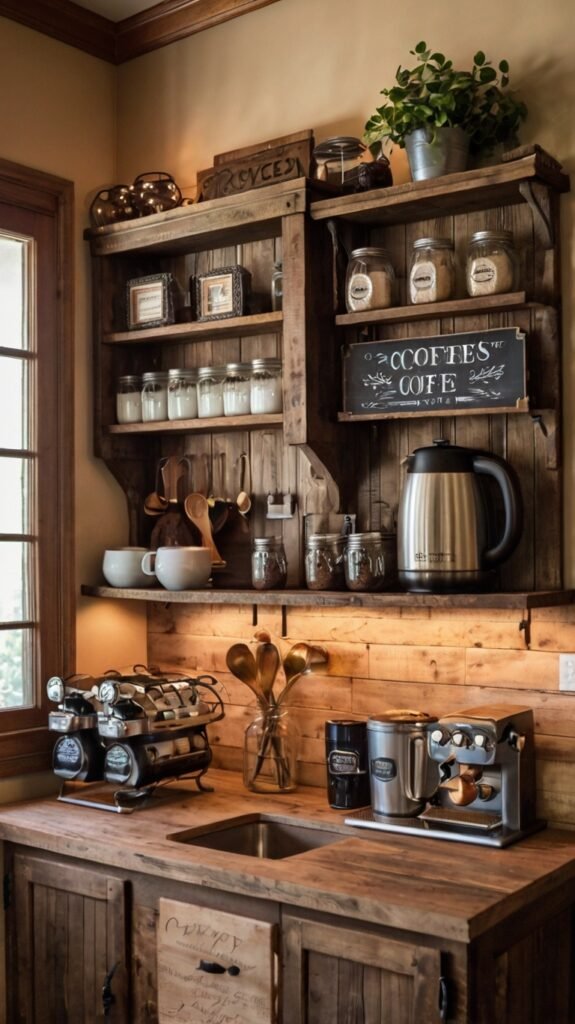
One or two floating shelves above a dedicated stretch of worktop is one of the most affordable and flexible coffee station setups you can create. It works in almost any kitchen style and can be put together over a weekend for very little money.
The lower shelf sits at a comfortable reaching height for mugs and daily supplies. The upper shelf holds coffee bags, a small plant, or a piece of art that makes the space feel finished. Between the shelves and the worktop below, you’ve created a vertical coffee zone that uses wall space rather than competing for floor or counter space.
- Use matching brackets for a built-in look — exposed pipe brackets for industrial style, hidden fixings for a clean modern finish.
- Paint the wall behind the shelves in a slightly different shade to create a subtle backdrop that frames the station.
- Hang S-hooks on the underside of the lower shelf for mugs — functional and looks great.
3. Rustic Farmhouse Coffee Station

The farmhouse coffee station is warm, unpretentious, and genuinely cosy — the kind of setup that makes you want to linger over your morning cup rather than down it standing up. It’s also one of the easiest styles to achieve without spending a fortune.
Start with a wooden tray or a small section of butcher block as your base. Add a mason jar filled with wooden stirrers, a small ceramic sugar bowl, and a vintage-style label maker to identify your canisters. Hang a few hooks on a short length of reclaimed timber for mugs, and you’ve got the aesthetic locked in.
Style note: Mix textures deliberately — rough wood against smooth ceramic, a metal tray beneath a fabric coffee bag. The contrast is what makes farmhouse style feel warm rather than bland.
4. Hidden Cabinet Coffee Bar
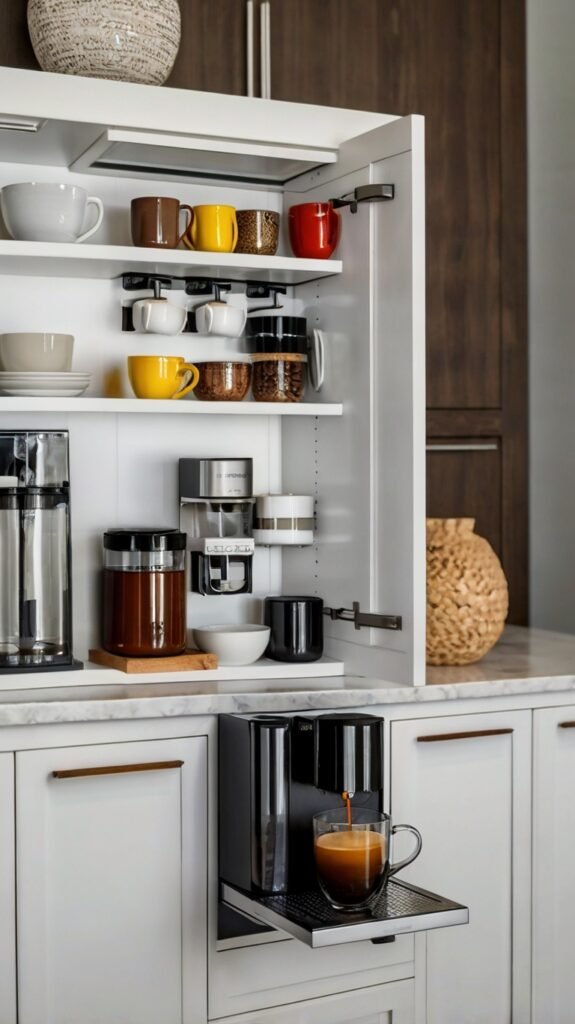
If you love the idea of a fully equipped coffee station but hate the thought of it being visible when you’re not using it, converting a kitchen cabinet into a concealed coffee bar is the smartest solution going.
The concept is straightforward: remove the cabinet doors (or use bi-fold doors that tuck neatly away), have an electrician add a socket inside the cabinet, and set up the interior with your machine at the right height, mugs on a shelf above, and a pull-out drawer below for pods, filters, and accessories. Close the doors and it completely disappears into your kitchen.
What You Need to Make It Work
- A socket installed inside the cabinet — essential, and worth the cost of an electrician.
- A pull-out shelf or platform at the right height so your machine isn’t wedged against the top of the cabinet.
- Good ventilation — steam from a coffee machine in an enclosed space needs somewhere to go.
- A small strip light inside so you can actually see what you’re doing at 7am.
5. Industrial Pipe Shelf Coffee Station
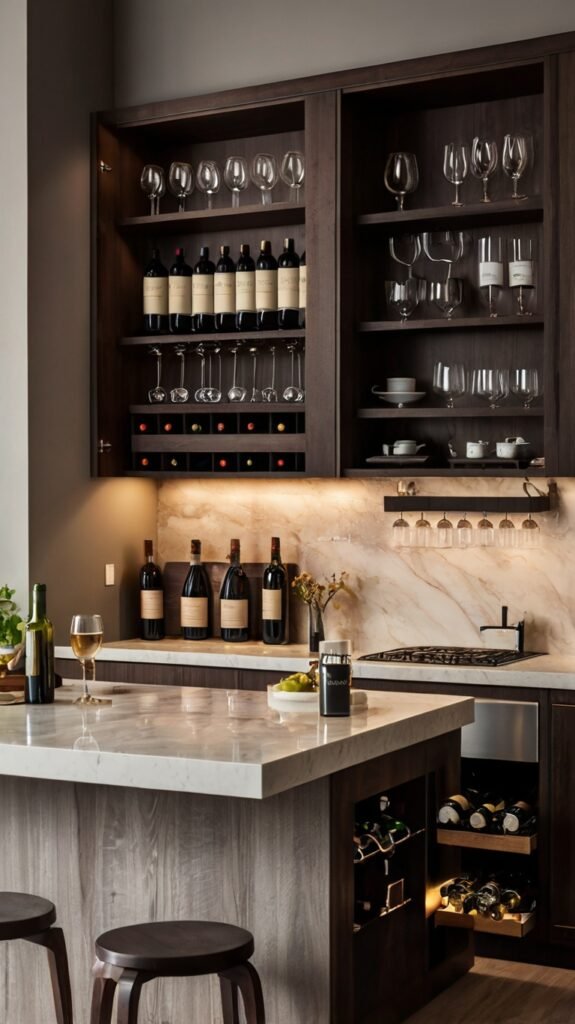
Industrial-style coffee stations have a real ‘third wave coffee shop’ energy — raw, considered, and a little bit cool. The centrepiece is a shelf system built from galvanised steel pipes and reclaimed or scaffold board timber planks.
The shelves are strong enough to hold even heavy espresso machines, and the pipe brackets can be configured in almost any arrangement depending on your wall space. Pair with matte black accessories, a concrete or slate worktop section, and Edison bulb lighting above, and the result looks genuinely professional.
Budget tip: Pipe shelf kits are available online for much less than you might expect. If you’re handy, you can build a custom version from hardware store parts for even less.
6. Coffee and Tea Dual Station

Not everyone in the household is a coffee drinker, and fighting over the same corner of the worktop every morning gets old quickly. A dual coffee and tea station solves this problem neatly by giving each camp its own clearly defined zone.
The coffee side holds the machine, beans, and espresso cups. The tea side has an electric kettle, a small caddy or drawer unit for tea bags, and a selection of mugs. Tie the two sides together with matching accessories — same tray style, same mug hooks, same canister lids — and the whole thing reads as one cohesive station rather than two separate setups competing for space.
7. Tiered Tray Coffee Station

The tiered tray setup is one of the most popular coffee station ideas for good reason: it’s affordable, portable, requires no installation, and makes the most of vertical space on your worktop. A two or three-tier stand gives you multiple levels to work with while keeping a relatively small footprint.
Top tier: sugar, sweetener, a small spoon rest. Middle tier: coffee pods, a small jar of ground coffee, or a stack of filter papers. Bottom tier: napkins, coasters, or a seasonal decorative element. Everything is visible and within reach, which makes the whole thing genuinely functional rather than just decorative.
Seasonal styling: Swap out the decorative elements on the bottom tier by season — a small pumpkin in autumn, a pinecone in winter, some dried flowers in spring. It keeps the station feeling fresh without any real effort.
8. Corner Nook Coffee Station

Awkward corners are one of the most underused spaces in any kitchen. Rather than filling them with appliances that get shoved to the back and forgotten, turn the corner into a dedicated coffee nook. A custom L-shaped shelf arrangement fits the geometry perfectly and makes the corner feel purposeful.
Corner spaces often get good natural light too, which makes them genuinely pleasant to stand in for the few minutes your coffee is brewing. Add a small stool nearby and you’ve got the closest thing to a café experience you can create without leaving the house.
9. Bar Cart Coffee Station

If your kitchen simply doesn’t have the counter space for a permanent coffee station, a bar cart is your best friend. A good-quality bar cart on wheels gives you dedicated coffee storage and prep space that can be rolled out when you need it and tucked away when you don’t.
The top surface holds your machine and a small tray. The shelves below hold mugs, beans, and accessories. Some bar carts have a hanging rail for towels or a mug hook on the side. The fact that it’s mobile also means you can take it to wherever you happen to be — the dining room for weekend brunch, the garden for summer mornings.
What to look for: Choose a cart with locking wheels so it doesn’t move while you’re using it, and a lower shelf sturdy enough to hold your heaviest items without wobbling.
10. Built-In Coffee Station with Dedicated Appliance Garage
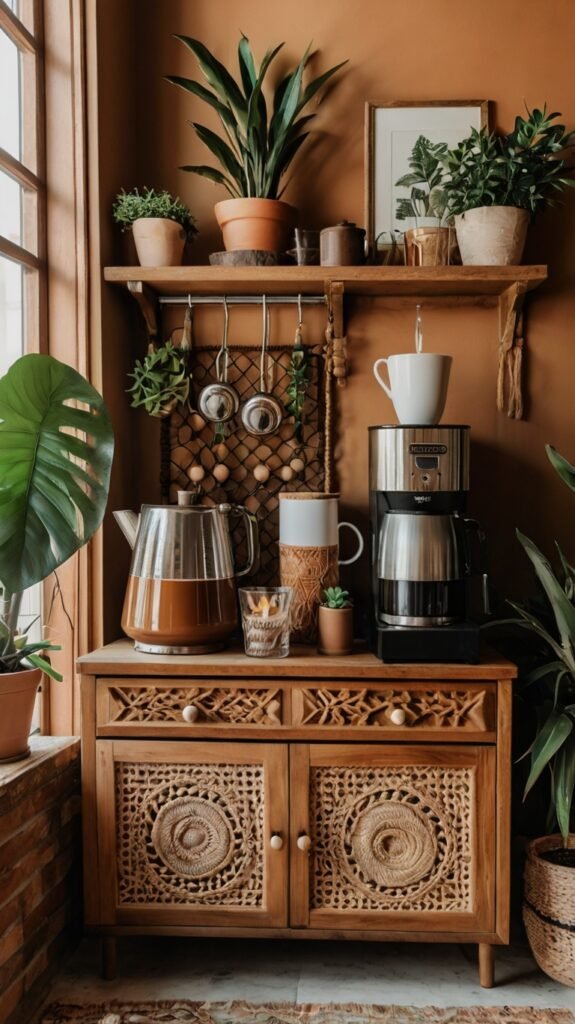
For those doing a kitchen renovation, building a dedicated coffee station with an appliance garage is the gold standard. An appliance garage is essentially a cabinet section with a roll-top or flip-up door that conceals everything inside when closed, but gives you instant access when open.
The interior is fitted out specifically for coffee: a built-in socket, a shelf at the perfect machine height, concealed storage above and below. When you’re not making coffee, the door closes and the kitchen looks seamlessly tidy. It’s the most investment-heavy option on this list, but if you’re already renovating, it’s absolutely worth specifying.
11. Small Kitchen Coffee Station — Making the Most of Limited Space

A small kitchen doesn’t mean you can’t have a proper coffee station — it just means you need to be more deliberate about how you use every inch. Vertical space is your biggest asset here. Wall-mounted shelves, magnetic knife strips repurposed for metal canisters, and hooks on the inside of cabinet doors all create storage without using any worktop space.
Five Space-Saving Rules for Small Kitchen Coffee Stations
- Choose a compact machine that does one thing brilliantly rather than a large multi-function machine that dominates the counter.
- Use the wall above your coffee zone — a single shelf can hold everything that would otherwise clutter the worktop.
- Store mugs on hooks rather than in a cabinet — it frees up an entire shelf for other supplies.
- Decant beans into a slim, tall canister rather than keeping them in the original bag, which takes up far more space.
- Use the inside of a nearby cabinet door for a mounted pod holder or filter paper storage.
12. Scandi-Inspired Coffee Station

Scandinavian design applied to a coffee station results in something genuinely beautiful: simple, functional, uncluttered, and with a warmth that comes from natural materials rather than decoration. Think pale wood, clean white ceramic, and one or two plants.
A light birch or pine shelf, white or cream canisters with simple black labels, a small ceramic plant pot with a trailing plant, and a pour-over setup in natural materials. That’s the full brief. Scandi style is about removing everything that isn’t earning its place, and coffee stations benefit enormously from that discipline.
13. Coffee Station with a Chalkboard Wall
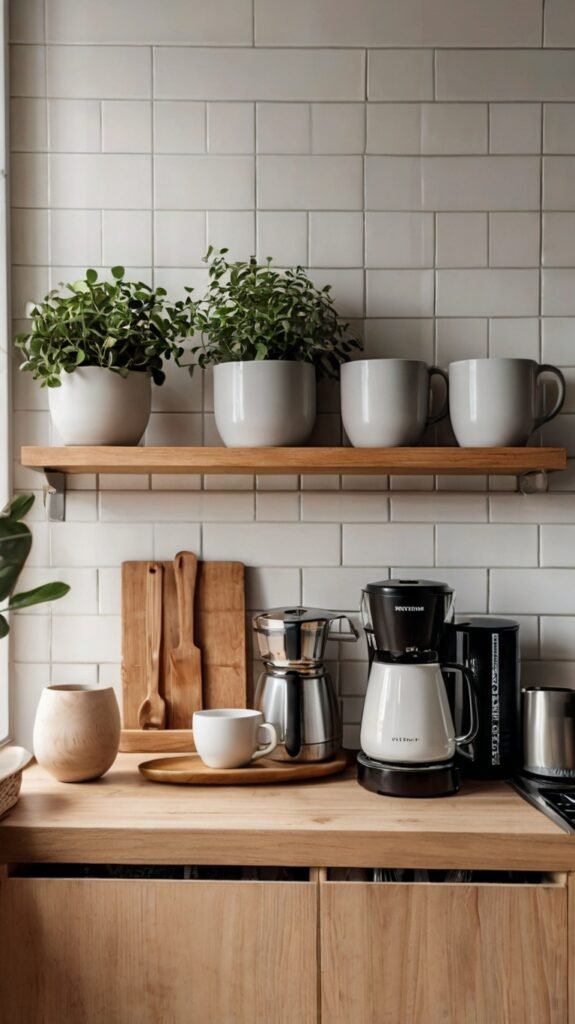
A small section of chalkboard paint behind your coffee station adds a practical and personal touch that’s hard to achieve any other way. Write the week’s coffee menu, leave a note for whoever gets up after you, or simply write a quote that helps you face the morning.
Chalkboard paint comes in a spray-on version that can be applied to a section of wall in an afternoon. You can frame the painted section with simple timber moulding to make it look intentional rather than unfinished. It’s an extremely low-cost update that adds a lot of character.
14. Espresso Bar with a Proper Grinder Setup

If you take your coffee seriously — and we mean properly seriously, with freshly ground beans for every cup — your coffee station needs to be built around the grinder, not the machine. The grinder is the most important piece of equipment in a specialty coffee setup and deserves prime position.
Place your grinder and espresso machine side by side on a dedicated section of worktop. Keep a small tray beneath to catch grounds and drips. Store your whole bean coffee in an airtight canister with a date wheel — freshness matters. Add a small scale for dialling in your dose, and a knock box for spent grounds.
For serious coffee lovers: A drip tray with a small built-in drawer for the knock box makes the whole workflow cleaner and keeps grounds contained. It’s the detail that separates a properly designed espresso station from a machine on a worktop.
15. Coffee Station in a Pantry

If you’re lucky enough to have a pantry — whether it’s a full walk-in or a tall larder cupboard — it’s one of the best locations for a coffee station. Everything is contained, nothing clutters the main kitchen worktops, and you can kit it out however you like without worrying about how it looks from the rest of the kitchen.
Fit a shelf at counter height, add a socket, and use the wall space above for mugs and supplies. A small pull-out drawer unit in the pantry can hold pods, filters, stirrers, and anything else you need. The pantry door closes and the kitchen stays serene.
How to Plan Your Kitchen Coffee Station: Practical Advice
Before you buy anything or rearrange a single shelf, take ten minutes to think through these questions. The answers will save you time, money, and the frustration of setting something up only to find it doesn’t actually work for the way you live.
Start with How You Actually Make Coffee
A capsule machine user and a pour-over enthusiast have completely different spatial and storage needs. A capsule machine needs pod storage above all else. A pour-over setup needs a kettle, a scale, filter papers, and somewhere to keep a stack of different beans. Design your station around your actual equipment, not the aspirational setup you might have one day.
Think About Traffic Flow
Your coffee station should be in a spot that doesn’t create a morning traffic jam. If your main sink is on the opposite wall to where you want the station, think about how often you’ll need to cross the kitchen during your routine. Ideally, the station is near a water source or you can fill everything the night before.
Plan Your Power Points First
Running cables across a worktop to reach a distant socket looks terrible and is a trip hazard. Before you commit to a location, check that a socket is within reach — or budget for an electrician to add one. This is especially important for hidden cabinet stations and built-in appliance garages.
Consider Who Else Uses It
If multiple people in the household use the coffee station, think about height, reach, and routine. Mugs stored at the back of a high shelf that require a step to reach will get put back in the wrong place immediately. If one person uses it at 5:30am and another at 8am, think about whether the setup works for both without disturbing anyone.
Frequently Asked Questions
Where is the best place for a coffee station in a kitchen?
The best location is near a power socket, close to a water source, and out of the main cooking zone. A corner or the end of a run of cabinets works particularly well because it feels like a defined area rather than a worktop that’s been co-opted for coffee equipment.
How much counter space do I need for a coffee station?
A minimum of 60cm of uninterrupted counter space is workable for a compact setup with a small machine and a tray. 90cm gives you room to work comfortably. A full espresso station with a grinder, machine, and knock box benefits from at least 120cm. Vertical storage above the worktop reduces how much surface area you actually need.
Can I create a coffee station without any storage space?
Yes. A tiered tray on the worktop gives you three levels of storage in a very small footprint. A bar cart adds mobile storage without any installation. Even a simple tray with a canister and a mug hook on the wall above it constitutes a functional coffee station.
What should every coffee station have?
At the minimum: your coffee maker, coffee storage (beans, pods, or ground coffee), mugs within easy reach, and whatever you add to your coffee (sugar, milk, syrup). Everything beyond that is personal preference. The goal is having everything for your specific morning routine in one place, not following a prescribed list.
How do I keep a coffee station tidy?
The single most effective thing you can do is define the boundaries of the station — usually with a tray — and commit to never storing non-coffee items inside it. Decant everything into matching containers so nothing looks out of place. Wipe down the tray and machine every couple of days and the station will almost always look tidy with minimal effort.
Conclusion: Your Morning Deserves a Proper Home
A kitchen coffee station isn’t a luxury. It’s a small piece of organisation that has a surprisingly large impact on how your day starts — and by extension, how your day goes.
The ideas in this guide cover everything from a 30-minute, almost zero-cost setup to a full built-in coffee bar that becomes a feature of the kitchen. What they all have in common is the same simple logic: bring everything you need for your morning routine into one thoughtfully designed space, and stop hunting through cupboards at 6am.
Start simple. Clear a section of worktop, add a tray, move your mugs within easy reach. You don’t need to wait for a renovation or a bigger kitchen or a better machine. The coffee station that works is the one you can actually create today.