
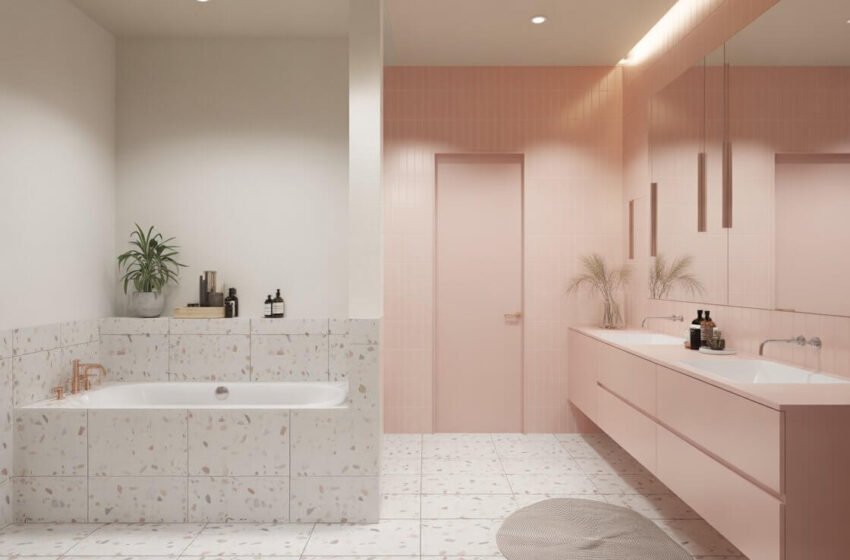
Tile is the one decision in a bathroom renovation that touches everything. It affects how big the room looks, how warm it feels, how much light it reflects, and whether the whole thing reads as timeless or dated six years from now.
It’s also the decision most people agonize over — because the options are genuinely overwhelming. Walk into any tile showroom and you’re confronted with hundreds of sizes, finishes, materials, and patterns. Most of us end up defaulting to something safe, then spending the next decade wondering what we were afraid of.
This guide is here to change that. Below are 20 bathroom tile ideas covering every surface, every style, and every budget. Whether you’re renovating a full primary bathroom, refreshing a cramped powder room, or just finally dealing with that grim shower floor, you’ll find something here that clicks.
We’ve included the practical stuff too — not just what looks good in photos, but what actually holds up, how different tiles behave in wet spaces, and the details that separate a polished result from a disappointing one.
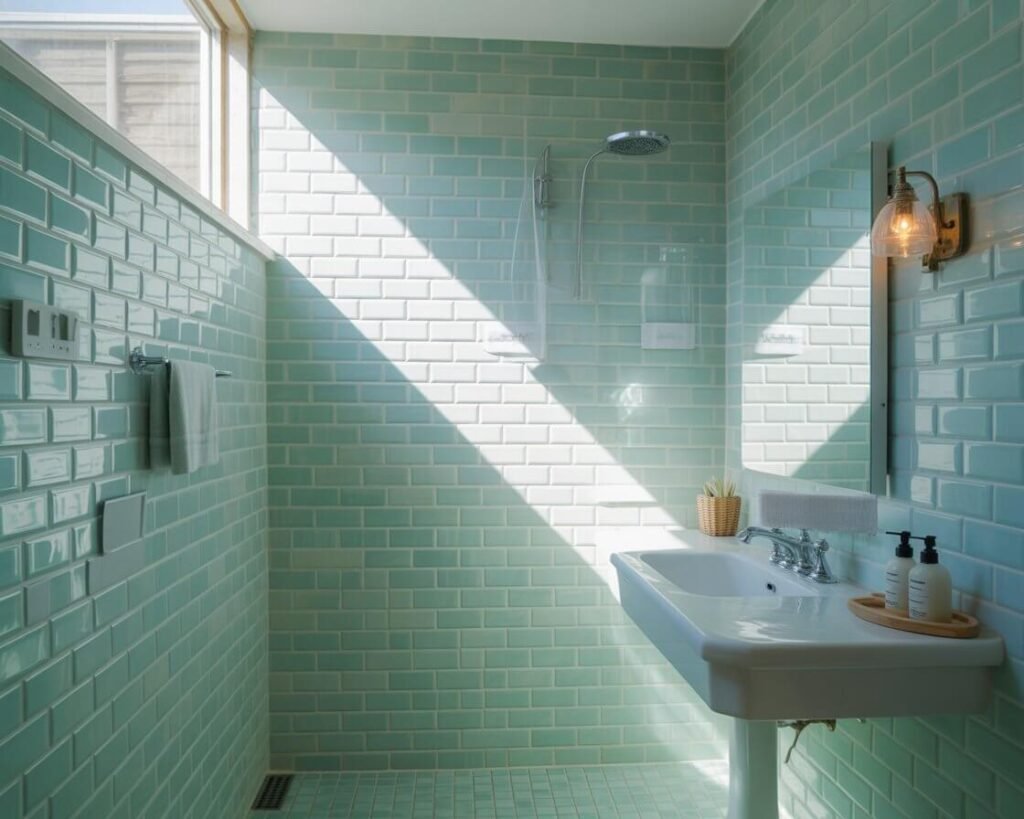
1. Classic Subway Tile — Reinvented
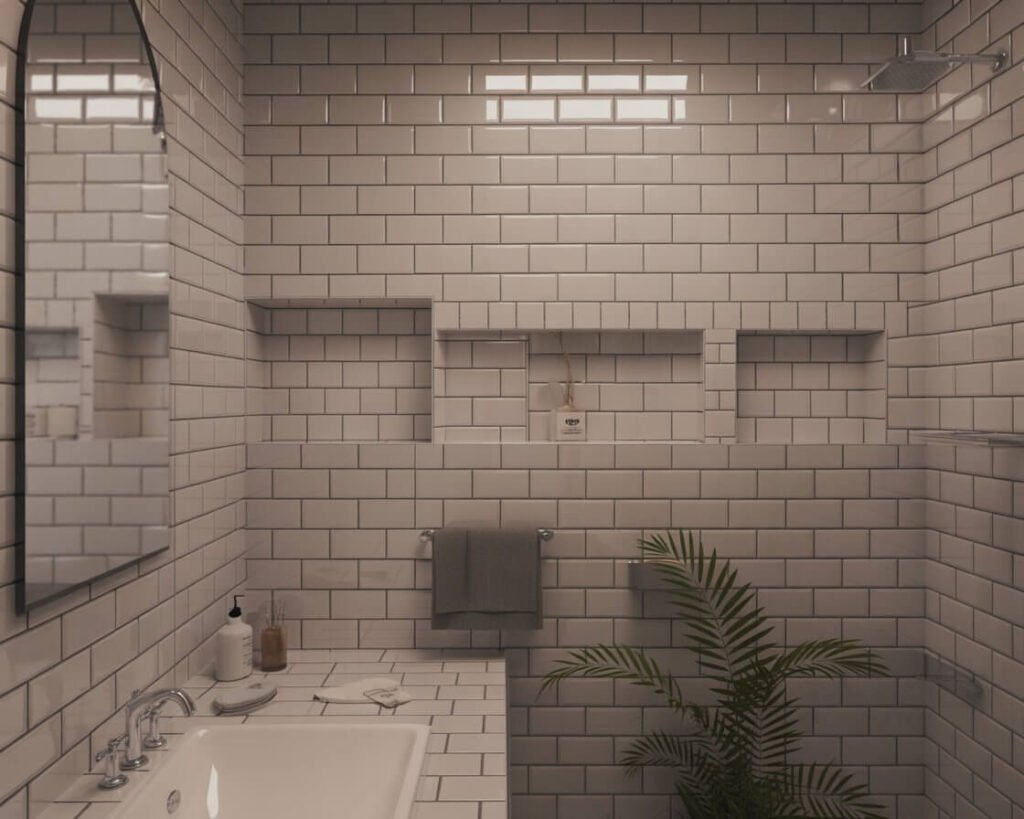
Subway tile has been around for well over a century, and it’s not going anywhere. But the version that dominates bathrooms in 2025 looks a lot different from the plain white 3×6 brick that’s been the default for decades.
Today’s subway tile comes in longer formats (3×12, 4×16), handmade textures with soft variation, unexpected colors from deep forest green to warm terracotta, and finishes ranging from high gloss to chalky matte. The classic shape remains, but the personality has expanded considerably.
What Makes It Work
Subway tile succeeds because it’s inherently neutral — it provides structure and rhythm without demanding to be the focal point. That makes it a great canvas for other decisions: your fixtures, your vanity, your lighting.
- Vertical stack or herringbone patterns add sophistication to a simple tile
- Dark grout (charcoal or dark gray) with white tile creates a graphic, high-contrast look that hides grime better than white grout
- Colored grout on colored tile (sage green with a warm tan grout, for example) adds unexpected warmth
- Longer formats like 3×12 or 4×16 read as more contemporary and require fewer grout lines
If you’re torn between something bold and something safe, subway tile in a non-white color is often the right middle ground — distinctive enough to feel intentional, timeless enough to age well.
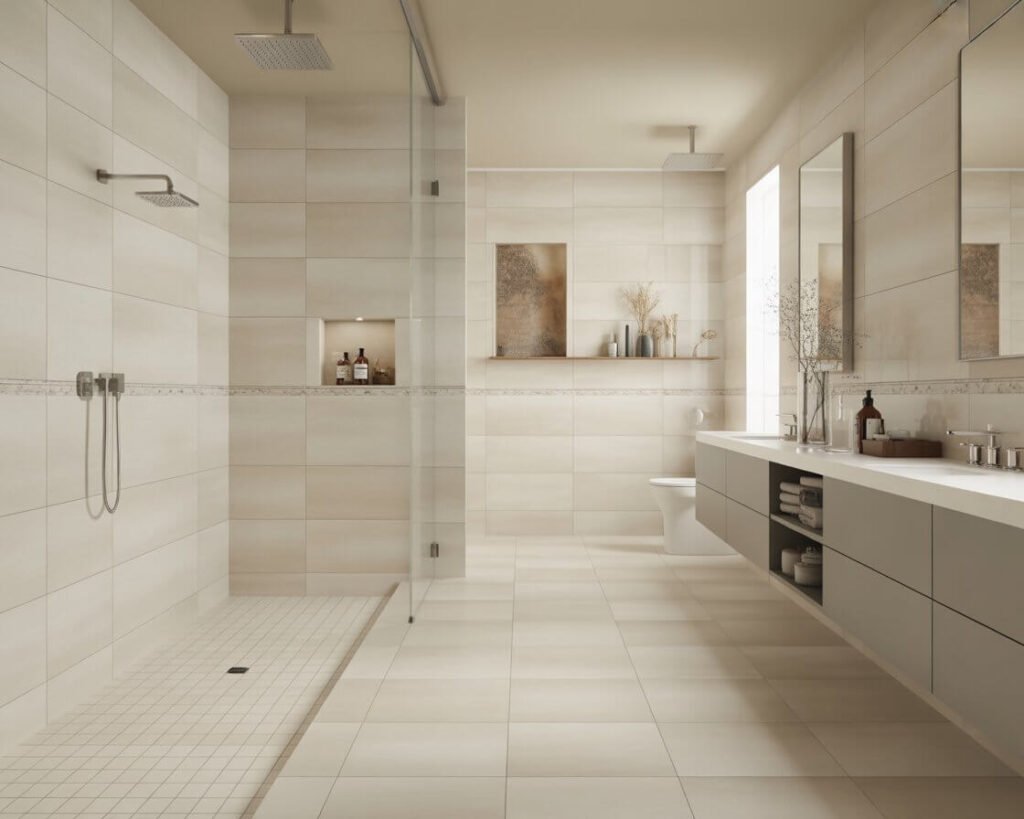
2. Large-Format Floor Tiles
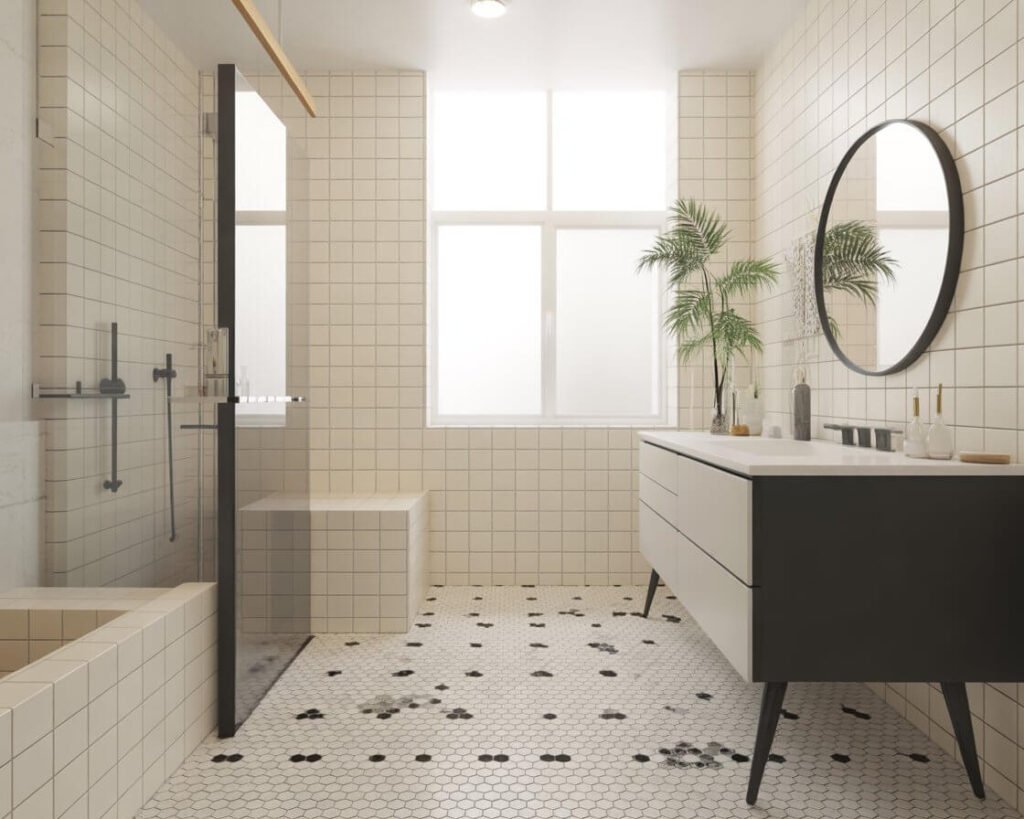
One of the most impactful changes you can make in a bathroom — especially a smaller one — is switching to large-format floor tiles. Tiles in the 24×24 or even 24×48 range have fewer grout lines, which means fewer visual interruptions. The floor reads as one continuous surface rather than a patchwork grid, and the room immediately feels larger and more open.
Rectified large-format tiles (precision-cut for tight joints) are particularly effective because the grout lines can be kept to just 1/16 inch, nearly invisible from a standing height.
Practical Notes
- Large tiles require a very flat, level subfloor — any dips or humps become obvious
- Porcelain is the standard choice: durable, low-maintenance, available in realistic stone and concrete looks
- For slip resistance in wet areas, choose tiles with a matte or textured finish and a COF (coefficient of friction) rating of 0.60 or higher
- Diagonal installation on a large tile can visually widen a narrow bathroom
Large-format tiles also work beautifully as a continuous flow from floor to wall — extending the same tile up the lower portion of a wall creates an uninterrupted visual line that feels deliberately designed.
3. Marble Tile — Real and Lookalike
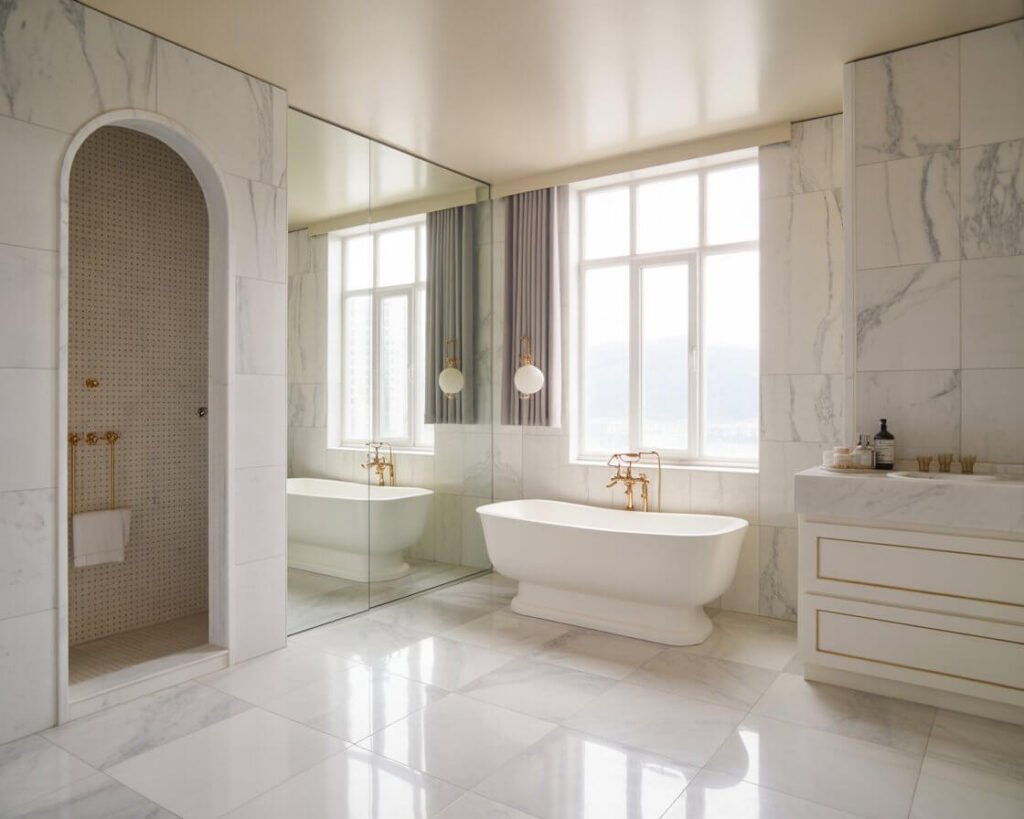
Marble is the material that has defined luxury bathrooms for centuries, and its appeal hasn’t faded. The natural veining — no two slabs identical — brings an organic richness that no manufactured material has fully replicated.
Real marble comes with genuine tradeoffs: it needs sealing, it’s sensitive to acidic cleaners, and it will etch and stain over time. For some people, that developing patina is part of the charm. For others, it’s a maintenance commitment they didn’t sign up for.
Marble Varieties Worth Knowing
- Carrara — classic soft gray veining on white, the most widely available and affordable marble
- Calacatta — bolder, more dramatic veining with a warmer white background, typically pricier
- Nero Marquina — deep black with white veining, striking for accent walls or shower floors
- Verde Guatemala — deep green with golden veining, for bathrooms that want real personality
When Porcelain Marble Is the Right Call
Porcelain marble-look tiles have reached a point where they’re genuinely convincing. Digital printing technology now captures the depth and variation of natural stone at a fraction of the cost and with zero maintenance requirements. For a bathroom that gets heavy daily use, porcelain marble often makes more practical sense — without much visual compromise.
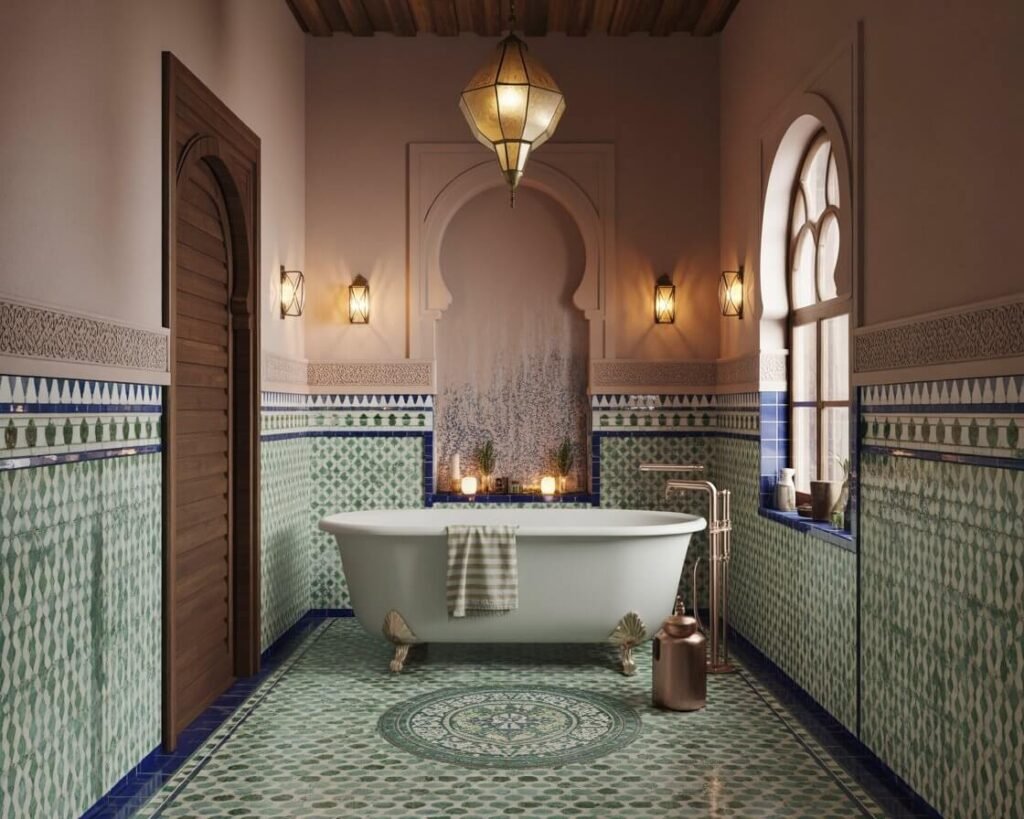
4. Zellige Moroccan Tile
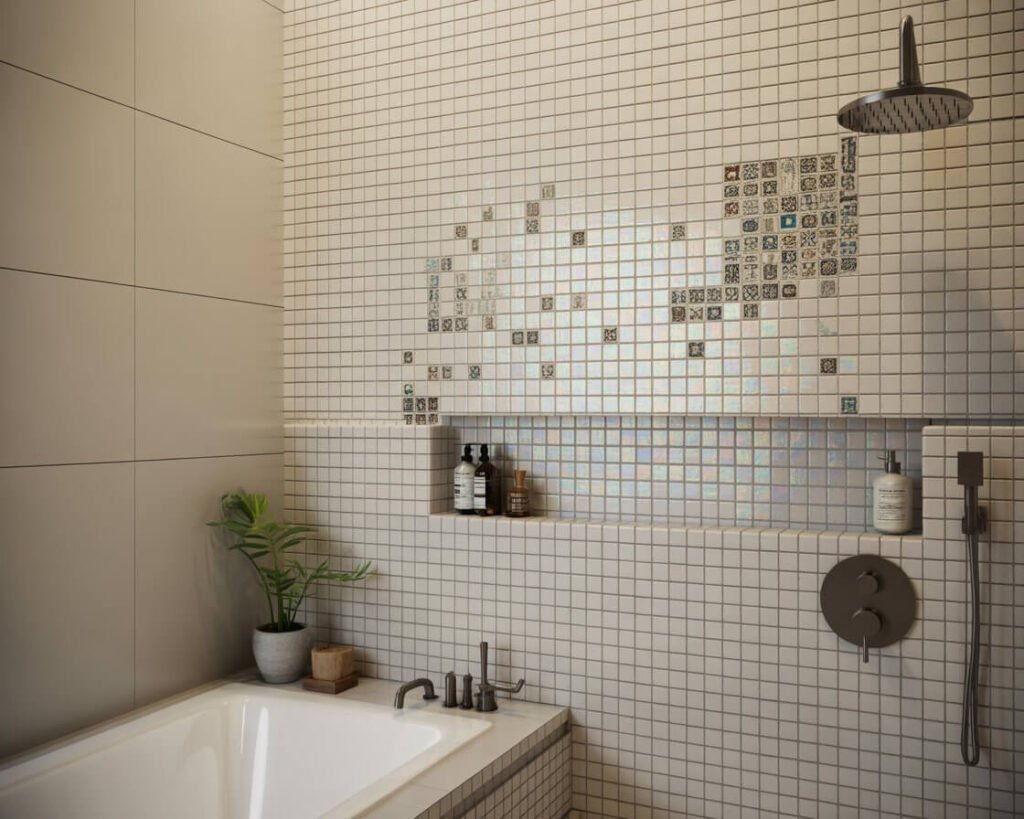
If you want something that looks unmistakably handmade and alive, zellige tile is in a category of its own. These hand-pressed, kiln-fired clay tiles from Morocco have an irregular surface that catches light differently depending on the angle — making them shimmer, shift, and glow in a way that factory-made tiles simply can’t replicate.
Each zellige tile has slight variations in color, glaze depth, and surface texture. That inconsistency is the point. A zellige wall doesn’t look like a flat, uniform surface — it looks like something made by a person, with the warmth and character that implies.
How to Use Zellige Well
- Best as a feature wall or shower surround rather than every surface — the texture is bold
- Particularly beautiful in rich, saturated colors: cobalt blue, deep teal, warm olive, biscuit
- Pair with simple, matte fixtures so the tile is the undisputed focal point
- Use a matching or tone-on-tone grout — contrasting grout competes with the already-busy surface
Zellige tile is an investment — both in cost and in committing to a specific aesthetic. But in the right bathroom, it’s the kind of decision that makes the whole room feel like it has a soul.
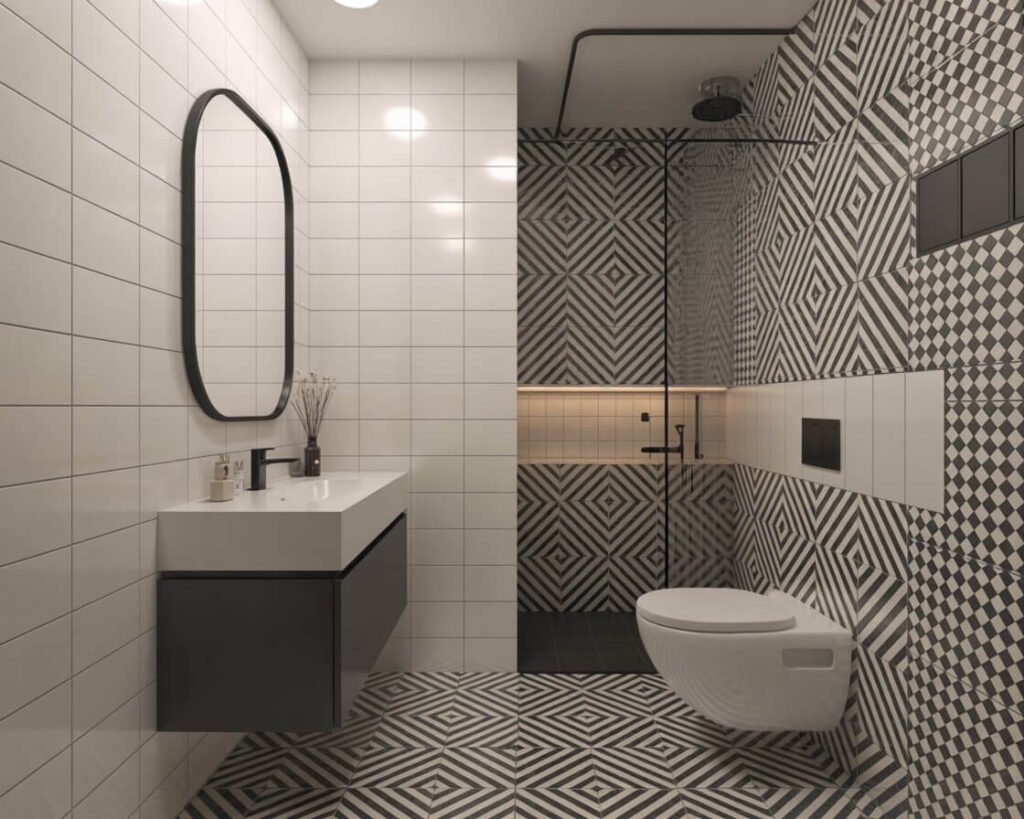
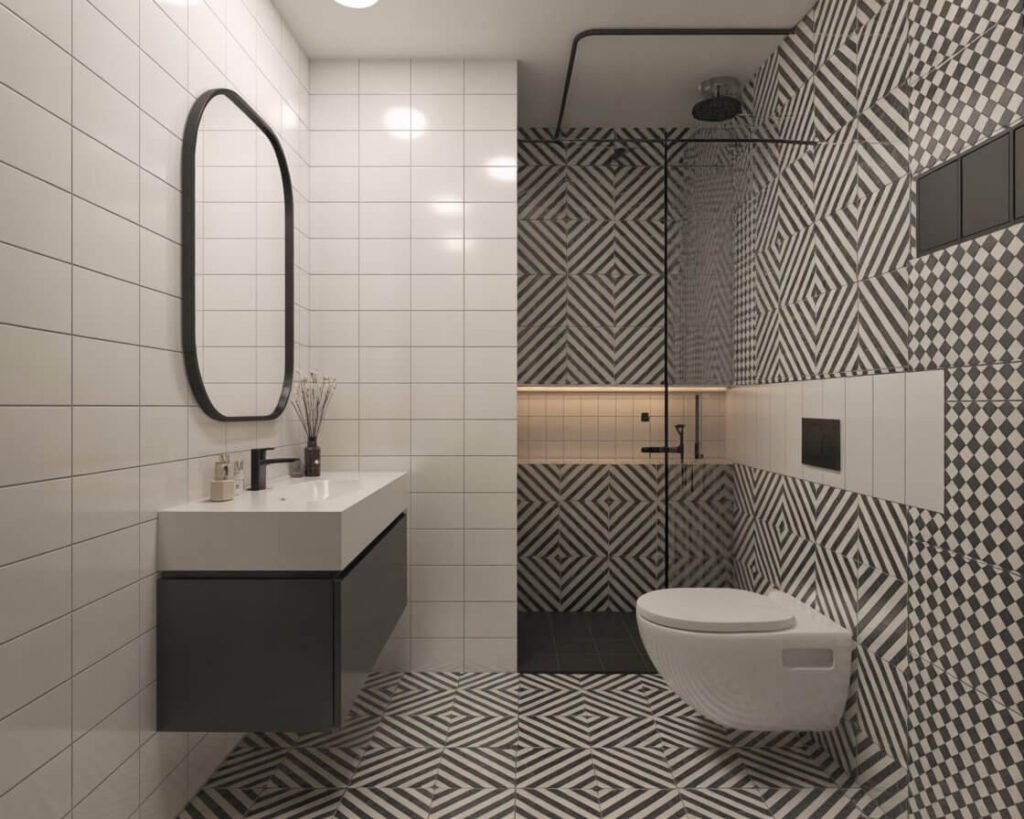
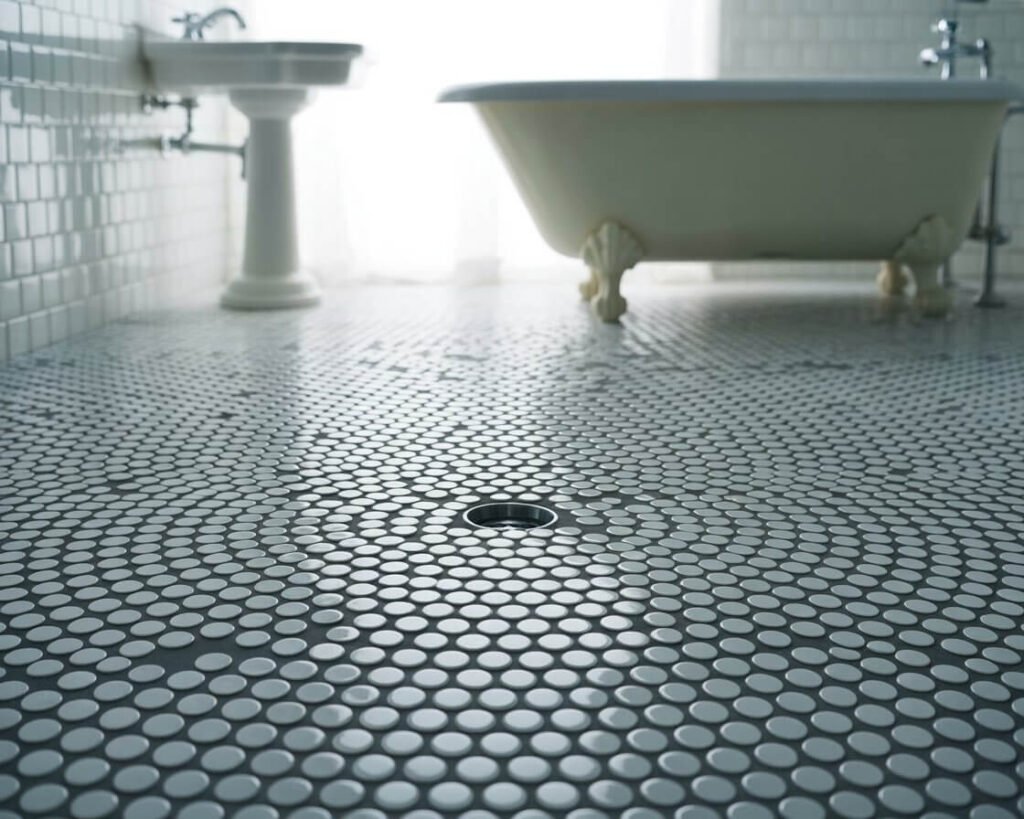
5. Black and White Floor Tile
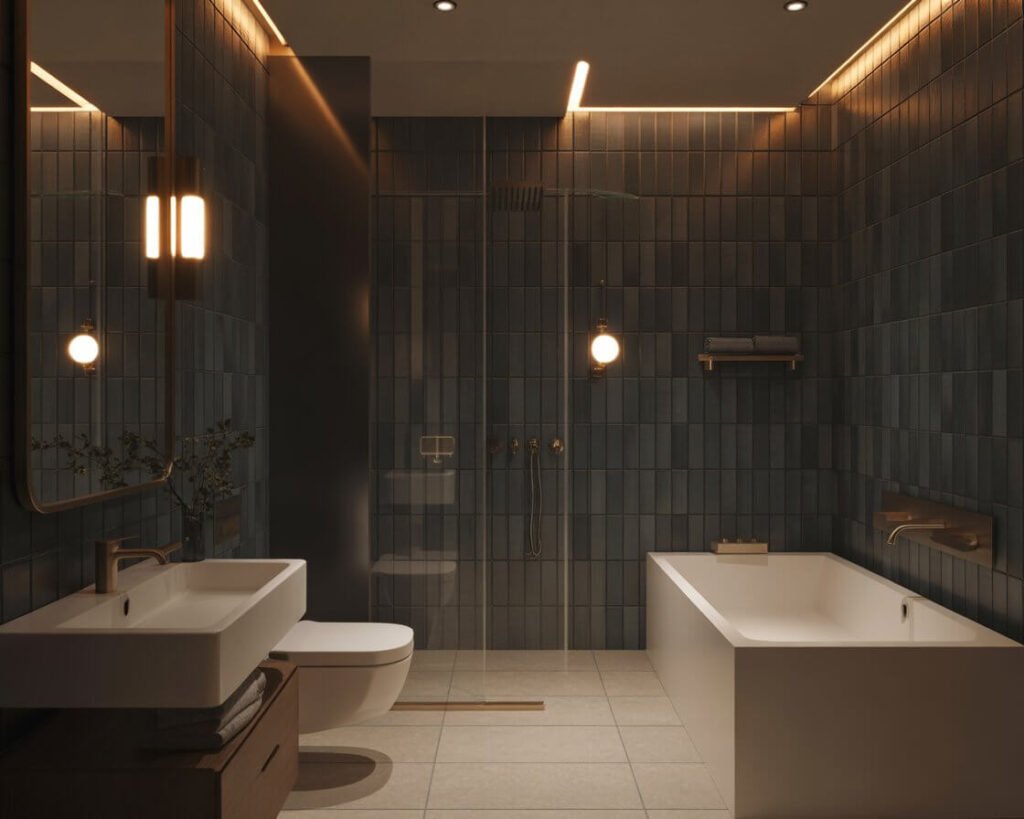
There’s a reason the black and white floor tile combination has survived every design era from Victorian townhouses to contemporary apartments: it works. The contrast is graphic and bold, but the palette is completely neutral — meaning it plays well with almost any wall color, fixture finish, or vanity style.
The classic version is a checkerboard pattern in square tiles. The updated version comes in dozens of variations: penny rounds in black and white, encaustic cement tiles with geometric patterns, hexagons arranged in flower or star formations, and marble-look tiles in a two-tone diamond grid.
Scale Matters
The size of the tile dramatically changes the energy of a black-and-white floor. Small tiles (1×1 or 2×2 checkerboard) feel vintage and intricate. Medium tiles (8×8 checkerboard) feel classic and timeless. Large format (12×12 or 24×24 in alternating tones) feels contemporary and architectural.
- Small mosaic checkerboard: vintage charm, works well in a powder room or small bath
- Classic 8×8 checkerboard: the diner tile — nostalgic without being precious
- Encaustic cement in black and white patterns: artisan feel, enormous variety of designs
Keep walls and fixtures simple when the floor is this strong. Let the floor lead.
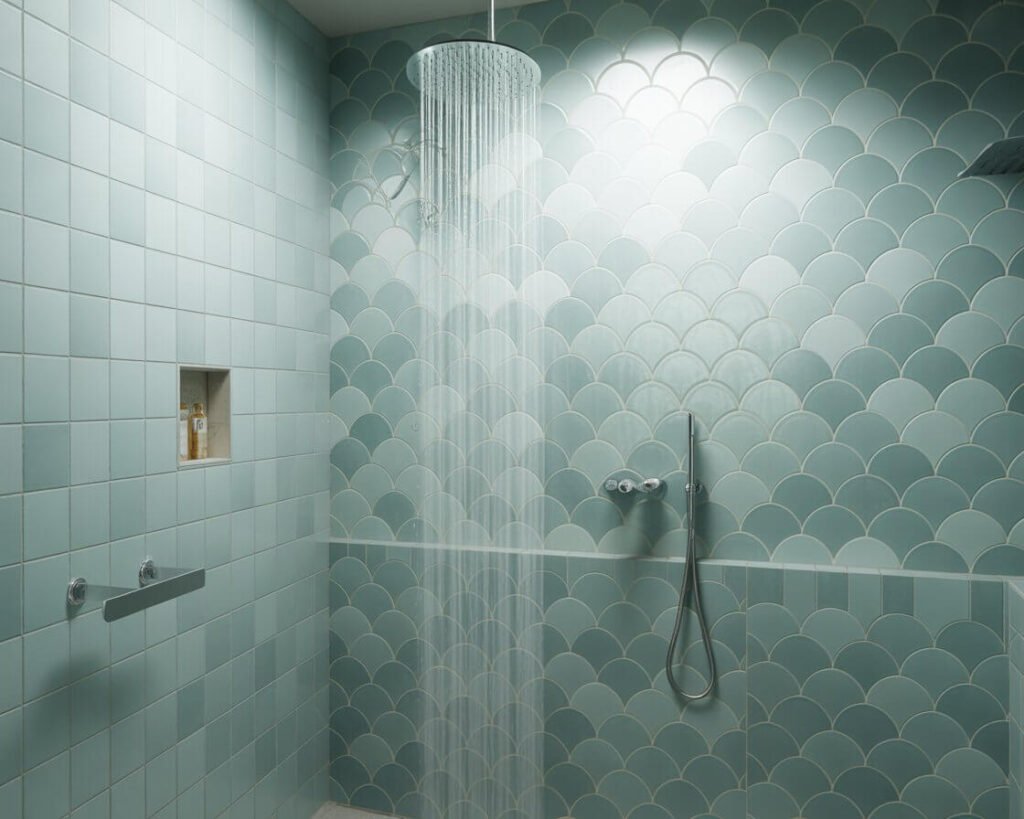
6. Textured 3D Wall Tile
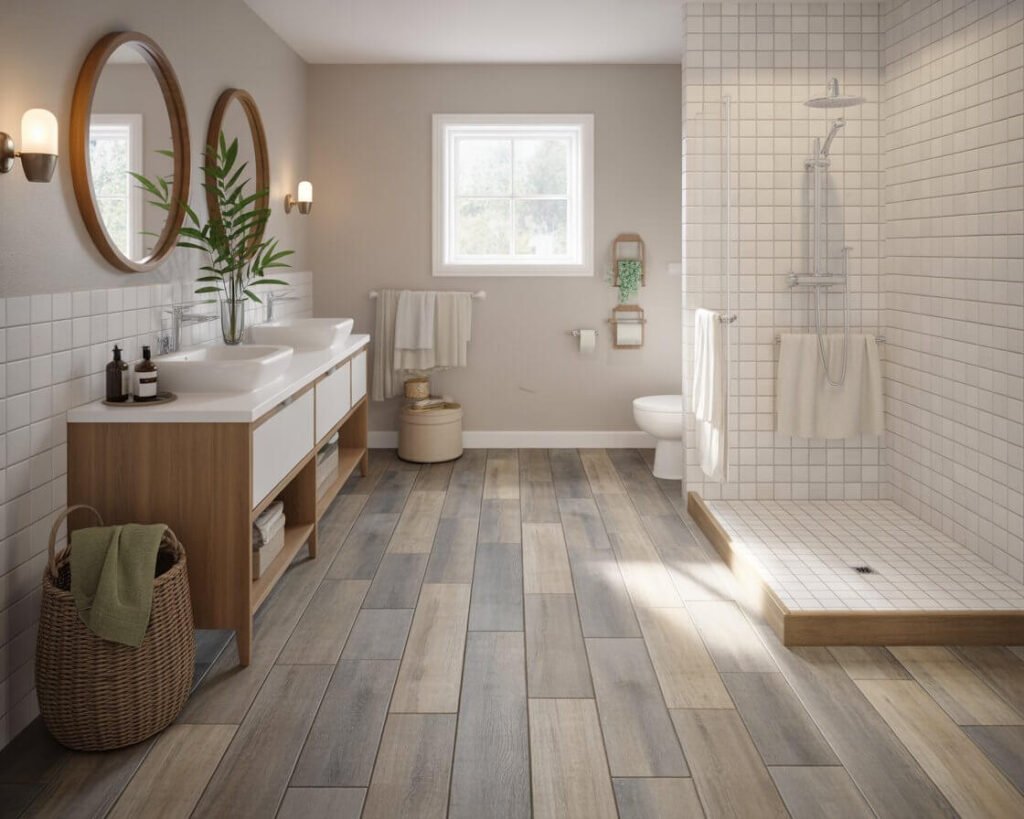
Flat tiles are the default, but textured wall tiles offer something flat tiles can’t: a surface that changes with the light throughout the day. As the sun moves or artificial lighting shifts, a textured tile wall casts small shadows that animate the surface and create depth you can actually feel.
3D tiles come in a wide range of relief styles — gentle ripples, geometric facets, stacked wave forms, and deep sculptural patterns. The most effective are usually the subtler ones: a slight undulation or a soft diamond pattern adds quiet dimensionality without overwhelming the space.
Best Applications for Textured Tile
- Behind the vanity as a feature wall — visible from the doorway, impactful without covering too much surface
- Shower back wall behind the showerhead — the water and light interact beautifully with texture
- In monochromatic color schemes where texture provides the interest color can’t
Stick to a single color in textured tiles — multiple colors plus texture usually reads as too busy. The tile’s form is already doing the work; color should support it, not compete.
7. Encaustic Cement Tile
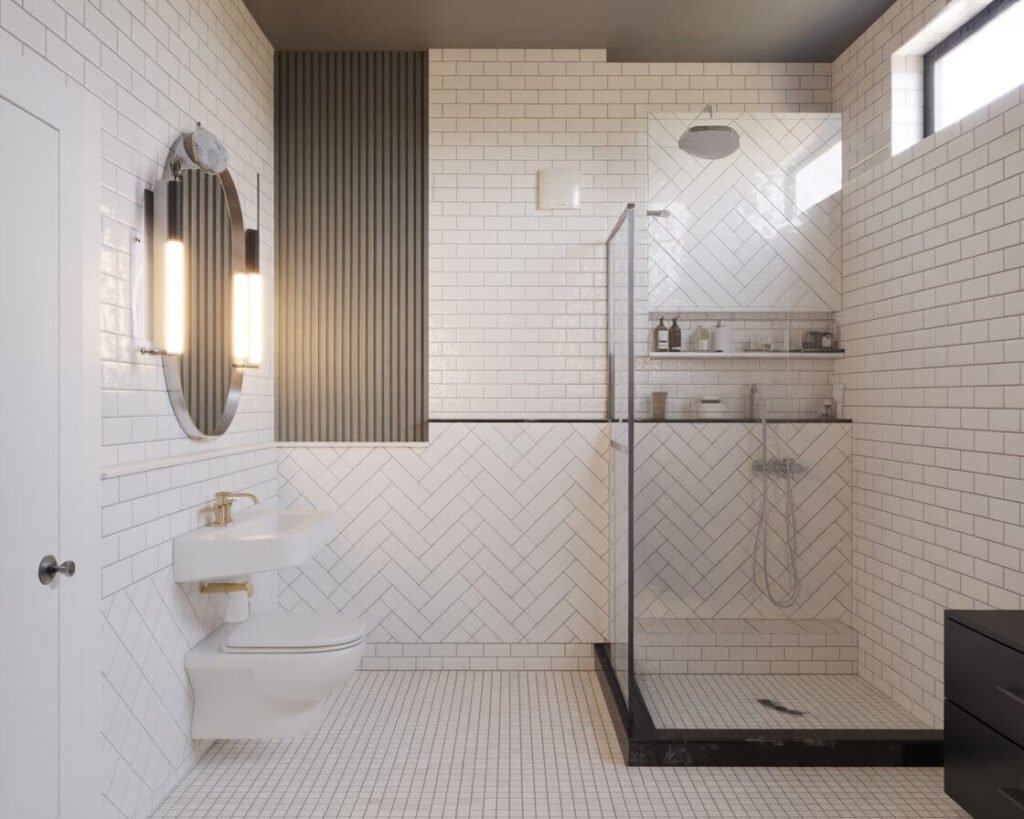
Encaustic cement tiles have been used in European and North African architecture for centuries, and their moment in contemporary interiors has been a long time coming. These unglazed tiles are made by pressing pigmented cement into molds — the pattern goes all the way through the tile, so it won’t wear off even with decades of use.
The patterns are endlessly varied: geometric, floral, arabesque, Moroccan-inspired, Spanish colonial. The color palette tends toward earthy, saturated tones — terracotta, cobalt, sage, mustard — that feel handcrafted rather than manufactured.
What You Need to Know Before Buying
- Cement tile must be sealed before grouting and after installation — unsealed, it will stain permanently
- It’s naturally matte and slightly porous, which gives it warmth but requires more maintenance than porcelain
- Use a penetrating sealant and reseal annually in high-traffic wet areas
- It’s best on floors and feature walls rather than inside showers unless you’re diligent about sealing
Encaustic tile rewards patience — both in installation and in choosing the right pattern. Take your time with it, and you’ll end up with a floor that looks more interesting every year.
8. Wood-Look Porcelain Tile
The appeal of warm wood tones in a bathroom is obvious — wood is organic, inviting, and visually softer than stone or ceramic. The problem is that real wood and water don’t mix well long-term. Enter wood-look porcelain tile: a material that delivers the grain, color variation, and warmth of hardwood with all the durability and water-resistance of porcelain.
Modern digital printing technology has made wood-look tiles convincingly realistic. The best versions have varied plank patterns (no two tiles identical), embossed grain texture, and subtle color shifts that read as natural wood rather than printed imitation.
How to Use It Well
- Install in long planks running the length of the room to make the bathroom feel larger
- Use in floors only or continue onto the lower portion of walls for a warm, cohesive look
- Pair with matte stone or concrete-look tiles on walls to balance warmth with cool neutrality
- Choose tiles with at least 4–6 different print variations to avoid a repeating pattern that looks artificial
Lighter wood tones (ash, blonde oak) keep the bathroom feeling airy. Darker tones (walnut, espresso) add drama and warmth but work best in well-lit spaces.
9. Penny Round Tile
There’s something deeply satisfying about a floor covered in penny rounds. These small circular tiles — typically 1 inch in diameter, though larger 2-inch versions exist — create a mosaic-like surface that’s both retro and enduringly fresh.
The high grout-to-tile ratio means excellent slip resistance (great for shower floors), and the variety of colors and configurations is enormous. Classic white with white grout for a clean, spa-like look. White with dark grout for a graphic vintage effect. A gradient arrangement moving from cream to warm gray. A mix of two or three colors in a scattered random pattern.
Where Penny Rounds Work Best
- Shower floors — the grout lines provide grip, and the scale suits the intimacy of the space
- Powder room floors — small rooms can handle this level of pattern without it overwhelming
- Shower niches and accent borders — a strip of penny rounds within a larger-tile shower adds detail and interest
They come pre-mounted on mesh backing sheets, which makes installation manageable. The challenge is cutting around drains and fixtures — worth hiring a tiler with mosaic experience for this one.
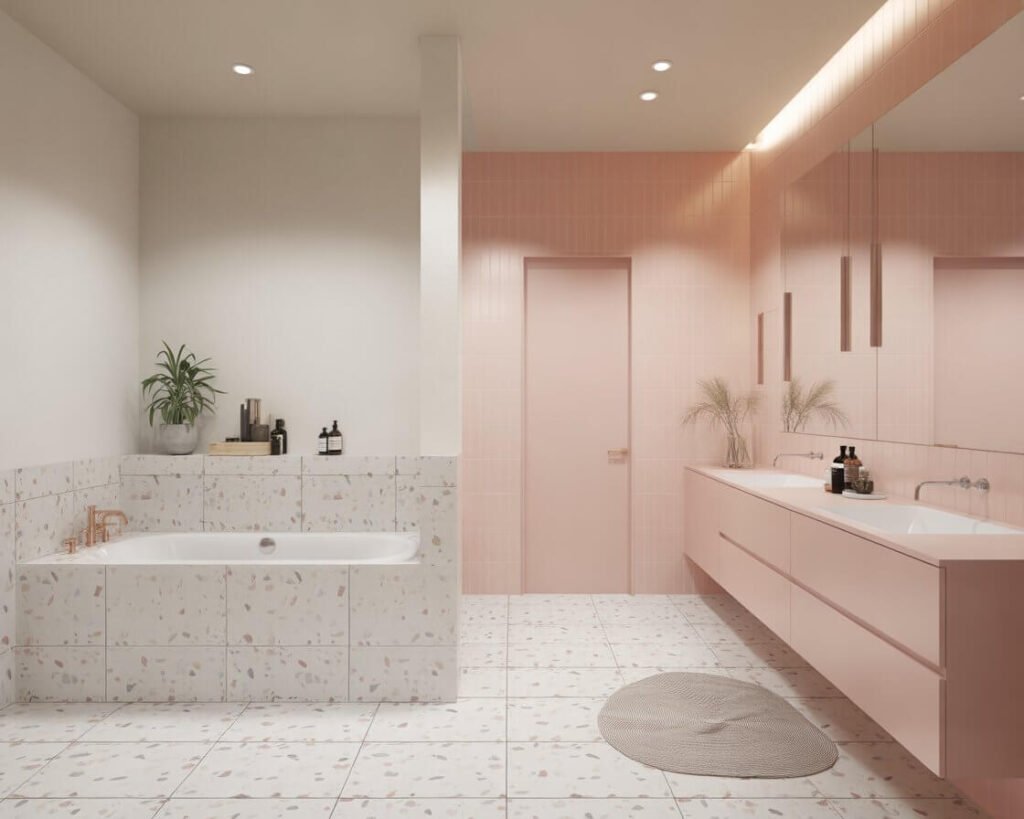
10. Terrazzo Tile
Terrazzo — the composite material made from chips of marble, glass, or granite set in a cement or resin base — originated in 15th-century Venice as a practical way to use stone offcuts. It became an icon of mid-century architecture and has returned to prominence as one of the defining tile trends of the past several years.
The appeal is its cheerful, speckled randomness. No two terrazzo tiles look the same. The chips vary in color, size, and placement in a way that feels organic rather than manufactured. It works in both minimalist bathrooms (where it adds the only pattern) and more layered spaces (where it contributes warmth and history).
Terrazzo Tile Options
- Porcelain terrazzo-look tile — digitally printed, very consistent, easy maintenance
- Real cement terrazzo tile — authentic variation, requires sealing, more character
- Large-format terrazzo slabs — for a continuous, seamless look on floors or walls
Neutral terrazzo (white or gray base with mixed chips) works almost anywhere. Bolder versions with colored bases or large chips make a bigger statement and suit bathrooms that lean eclectic or playful.
11. Dramatic Black Tile
The all-dark bathroom — walls, floor, or both in deep matte black — is a serious design commitment. It’s also one of the more striking things you can do in a bathroom when done with confidence.
Matte black tile in particular has a depth and quietness that glossy surfaces don’t. It absorbs rather than reflects, which makes the bathroom feel more enveloping — like being inside a room that’s been designed rather than assembled. Water spots and soap residue are far less visible on matte black than on white, which is a practical benefit nobody talks about enough.
Making Black Tile Work
- Warm lighting is essential — cold overhead light in a dark bathroom is harsh; warm Edison-style bulbs or warm-white LEDs soften everything
- Contrast elements (white fixtures, brass or gold hardware, natural wood accents) prevent the room from feeling like a void
- Limit it to one surface if you’re uncertain — a black floor with white walls, or a black feature wall with white tile elsewhere
- Matte black zellige or textured tile takes the drama up a level — the surface variation catches light even in a dark color
A black bathroom done well doesn’t feel dark — it feels intimate. The difference is lighting, contrast, and material quality.
12. Handmade Ceramic Tile
Factory-made tile is precise, consistent, and often beautiful. But handmade ceramic tile has something factory production can’t replicate: irregularity. Each piece is slightly different — subtly varied in color saturation, glaze pooling, and edge texture. Assembled into a wall or floor, the result looks alive rather than printed.
Handmade tiles come from studios and artisan manufacturers around the world, particularly in Portugal, Spain, Mexico, and increasingly the United States. They tend to cost more than factory tile, but for a feature wall or shower surround, the investment is often worth it.
Styles to Look For
- Crackle glaze — fine crazing across the surface gives an antique, collected-over-time quality
- Reactive glaze — color varies based on kiln temperature, making each tile unique
- Hand-painted motifs — illustrated patterns in blue and white (azulejo style) or geometric forms
- Raw clay edges — unfixed edges that show the material rather than hiding it
13. Herringbone Pattern
The herringbone pattern — rectangular tiles arranged in a V-shaped zigzag — is one of those layouts that adds significant visual interest without requiring any special tile at all. You can execute it in the most basic subway tile and achieve a result that looks genuinely considered.
It works on floors, walls, and shower surrounds. The diagonal movement of the pattern draws the eye along the surface and can make narrow or short bathrooms feel longer.
Herringbone Variations
- Classic herringbone — alternating diagonal tiles in a traditional V-pattern
- Double herringbone — two rows of tile per arm, larger-scale version of the pattern
- Chevron — similar but the tile ends are cut at an angle so the points align perfectly; cleaner, more graphic
- Vertical herringbone — V-points running up the wall; makes ceilings feel higher
For a subtle, sophisticated effect, use herringbone in a single neutral tile with minimal grout contrast. For something bolder, use two contrasting tile colors in the same pattern.
14. Fluted or Ribbed Tile
Fluted tile — tile with parallel raised channels running vertically or horizontally across the surface — has become one of the most recognizable tile trends of the last few years, and with good reason. The vertical ribs add architectural structure to a plain wall, casting gentle shadows that shift with the light and creating a surface that feels more three-dimensional than standard flat tile.
It originated as an architectural detail in stone columns and furniture reeding, and that lineage gives it a sense of classical sophistication even in contemporary bathrooms.
Where Fluted Tile Shines
- Behind the vanity as a full-height feature wall — instantly elevates a basic bathroom
- Bathtub surround — the vertical lines complement the horizontal form of the tub
- As a wainscoting layer — fluted tile on the lower half of the wall with flat tile or painted surface above
Choose matte or honed finishes for fluted tile — gloss on a textured surface can look plastic rather than refined. Off-white, warm gray, and sage green are all excellent color choices.
15. Mosaic Glass Tile
Glass tile brings something no other material offers: actual translucency. Light passes through and reflects off the surface simultaneously, creating a luminous quality that’s particularly beautiful in shower environments where light and water interact.
Glass mosaics work best as accents rather than full surfaces — they’re intense, and covering an entire room in reflective glass tile can feel overwhelming. Used strategically, though, a strip of iridescent glass in a shower niche, or a glass mosaic accent band running across a ceramic tile wall, lifts the entire room.
Choosing Glass Mosaic Tile
- Iridescent or mother-of-pearl finishes catch and shift color with changing light
- Frosted glass provides subtle texture and is less intensely reflective than clear
- Recycled glass tile (often made from wine bottles or industrial glass) has an earthy, irregular character
- Use epoxy grout with glass tile — regular cement grout can crack as glass expands and contracts with temperature changes
Pair glass mosaic with large-format ceramic or stone tile for contrast of scale — tiny glass chips next to a big, smooth stone tile is a satisfying material dialogue.
16. Tile All the Way to the Ceiling
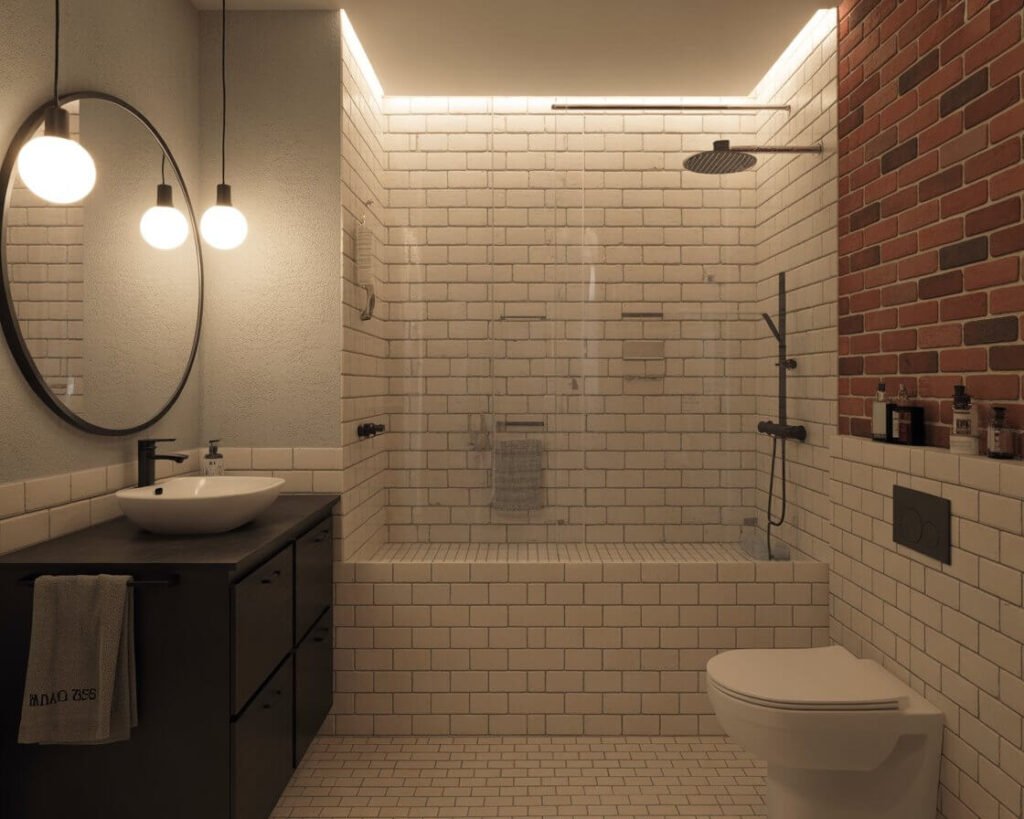
Most bathrooms stop tiling at around shoulder height — a practical decision that has become an aesthetic default. But taking tile all the way to the ceiling is one of the most dramatic and effective things you can do in a bathroom, and it’s a particularly powerful move in small bathrooms that need to feel larger.
When tile runs uninterrupted from floor to ceiling, the eye travels upward and the room feels taller. It also eliminates the paint-above-tile line that often looks like an afterthought and requires repainting every few years.
How to Pull It Off
- Simple tile, full height — a subtle textured tile or classic subway in a tall stack reads as intentional, not overwhelming
- Two tiles, stacked — a different tile on the lower half that transitions to a simpler tile or painted surface above keeps the budget manageable while still achieving height
- Match grout to tile color for a seamless, continuous surface that emphasizes height
Floor-to-ceiling tile is a commitment — but it’s one of the few bathroom decisions that almost everyone who makes it wishes they’d made sooner.
17. Sage Green and Earthy Tones
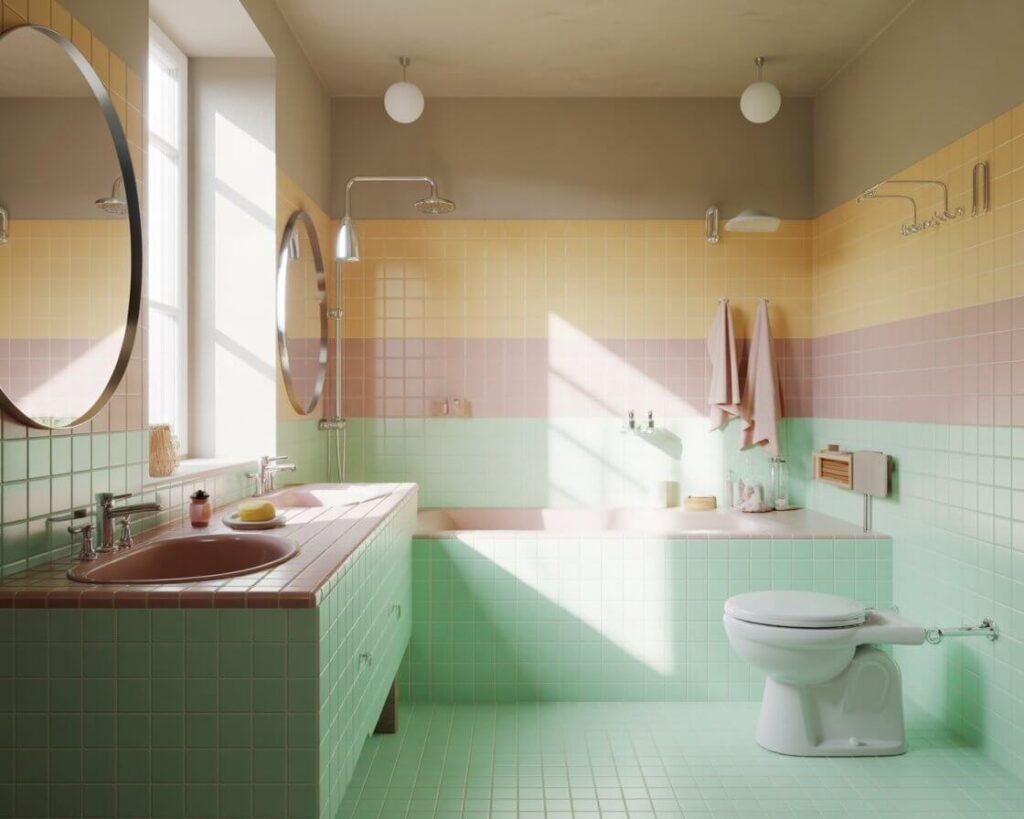
The shift away from gray-dominant bathrooms toward warmer, more organic tones has been one of the defining design movements of the last few years. Sage green, warm terracotta, muted olive, dusty rose, and mushroom brown have all made their way into bathrooms that previously defaulted to white and gray — and the results are often genuinely warmer and more personal.
These earthy tones work because they connect the bathroom to nature without trying too hard. Sage green in particular has the dual quality of feeling both calming and fresh — closer to a spa than a clinical white bathroom, but quieter and more restful than bold jewel tones.
Niche Tile Ideas
- Mosaic glass or penny rounds inside a large-format ceramic tile shower — contrast of scale
- Zellige or handmade ceramic in a feature color inside a neutral tile surround
- Marble inside a porcelain shower — real marble detail within an easy-maintenance surround
- Colored tile (deep blue, forest green) inside a white subway tile shower
Build the niche between wall studs for the deepest, most usable shelf depth (typically 3.5 inches). Waterproof it carefully — a poorly waterproofed niche is a future problem that’s expensive to fix.
The niche detail is often what separates a bathroom that looks “done” from one that looks designed. It’s a small investment with a disproportionate visual return.
Final Thoughts: Choosing Tile With Confidence
The best tile decision is always the one you made because it was right for your bathroom, your taste, and your life — not because it was the safest choice available.
Tiles are one of the most permanent decisions in a home renovation. They outlast furniture, outlast paint, outlast light fixtures. That permanence is exactly why they’re worth thinking carefully about. But it’s also why it’s worth being a little bolder than your first instinct.
The bathroom you’ll love in ten years is almost always the one where you committed to something — a real color, a specific texture, a pattern you were initially unsure about. Beige squares chosen in a moment of timidity tend to feel disappointing before the grout has even dried.
Use this guide as a starting point, not a checklist. Find two or three ideas that genuinely excite you, narrow them down based on your bathroom’s light and layout, and then make the call. Your bathroom will be better for it.
Frequently Asked Questions
What bathroom tile is easiest to maintain?
Glazed porcelain tile is the easiest to maintain. The glaze creates a non-porous surface that resists staining, doesn’t require sealing, and cleans easily with standard bathroom cleaners. Large-format porcelain with minimal grout lines is the lowest-maintenance option overall.
What tiles make a small bathroom look bigger?
Large-format tiles with tight grout joints reduce visual interruptions and make small bathrooms feel more open. Light colors reflect more light and expand the perceived space. Extending the same tile from floor partway up the wall creates an unbroken visual line that adds height. Diagonal installation of any tile can also add visual width to a narrow room.
What’s the best tile for a shower floor?
Slip resistance is the primary concern on a shower floor. Look for tiles with a COF (coefficient of friction) rating of 0.60 or higher. Smaller tiles with more grout lines (penny rounds, 2×2 mosaics) provide excellent grip. Matte and textured surfaces outperform glossy ones in wet conditions. Stone tile is beautiful but requires regular sealing.
Is marble tile a bad idea in a bathroom?
Not inherently — but it requires commitment to maintenance. Real marble needs sealing before installation and periodically afterward, it’s sensitive to acidic cleaners (including most bathroom products), and it will develop etching and staining over time. For high-use bathrooms, porcelain marble-look tile delivers a nearly identical appearance without the upkeep.
How do I choose grout color?
Grout color dramatically changes the final look. White or matching grout creates a seamless, clean appearance where the tile reads as one surface. Dark or contrasting grout emphasizes the tile grid and adds graphic definition — great for subway tile and geometric patterns. In wet areas, use unsanded grout for joints under 1/8 inch and sanded grout for wider joints. Always seal grout in shower areas.
Can I mix different tiles in the same bathroom?
Yes — and it often produces better results than using one tile throughout. The key is a unifying element: a shared color palette, complementary finishes, or consistent scale relationships. A good rule is to mix no more than three tile types, and let one be clearly dominant with the others as accents.