
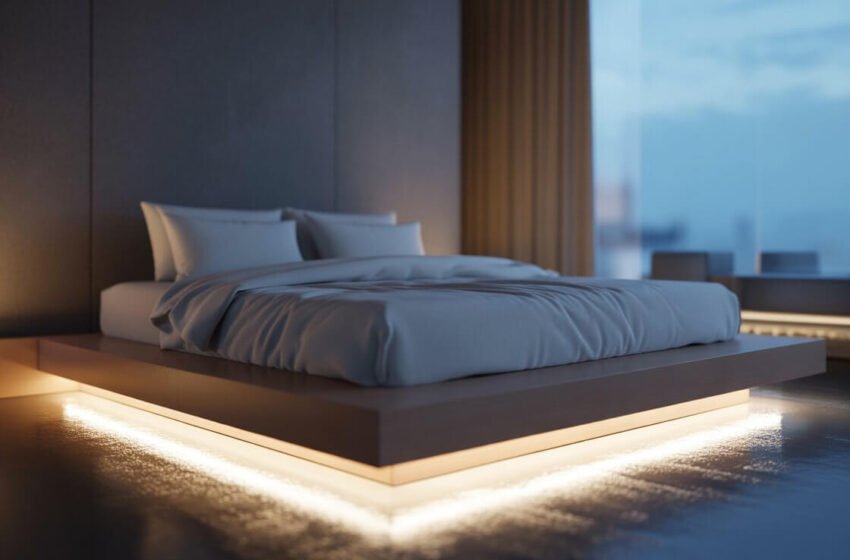
A modern bedroom isn’t about chasing trends. It’s about building a room that feels current, intentional, and genuinely yours — one that functions well, looks considered, and actually helps you rest.
The problem is that “modern” has become one of the vaguest words in interior design. It gets applied to everything from bare-bones minimalism to high-gloss maximalism, leaving most people more confused than when they started. What does a modern bedroom actually look like in 2025, and more importantly, how do you create one without starting from scratch?
That’s exactly what this guide is here to answer. Below are 20 modern bedroom ideas spanning different aesthetics, budgets, and room sizes. Some are big moves — a new color palette, a different bed frame. Others are small ones — a lighting swap, a furniture rearrangement. All of them are practical, grounded in real design principles, and achievable without hiring a decorator.
Find two or three that resonate. Start there. Your bedroom will feel different by the weekend.
1. Lead With a Strong, Low-Profile Bed Frame
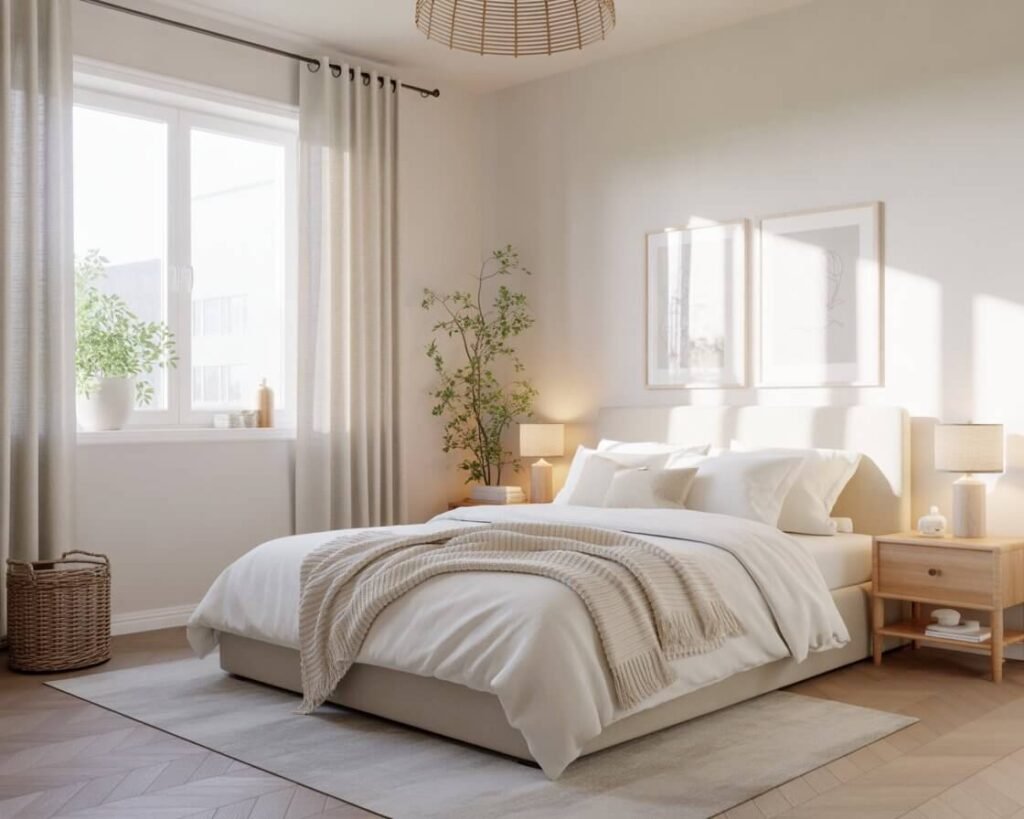
The bed is the visual anchor of any bedroom, and in a modern room, the frame makes an enormous difference. Ornate, bulky bed frames with carved headboards belong to a different era. Modern bedroom design favors clean lines, honest materials, and deliberate simplicity.
Platform beds — particularly those with upholstered headboards in linen, boucle, or velvet — are the dominant modern choice right now. They sit low to the ground, which makes ceilings feel higher and rooms feel larger. The absence of a box spring (platform beds don’t need one) also simplifies the bed’s profile.
What to Look For
- Upholstered platform beds in neutral tones — warm white, camel, slate gray, or charcoal
- Wood-framed beds in walnut, oak, or ash for warmth and material honesty
- Metal frames in matte black or brushed steel for a more graphic, architectural look
- Avoid ornate carvings, footboard storage that adds bulk, or overly high headboards that crowd a smaller room
The right bed frame sets the tone for everything else. Get this decision right and the rest of the room becomes easier to design around it.
2. Adopt a Considered, Neutral Color Palette
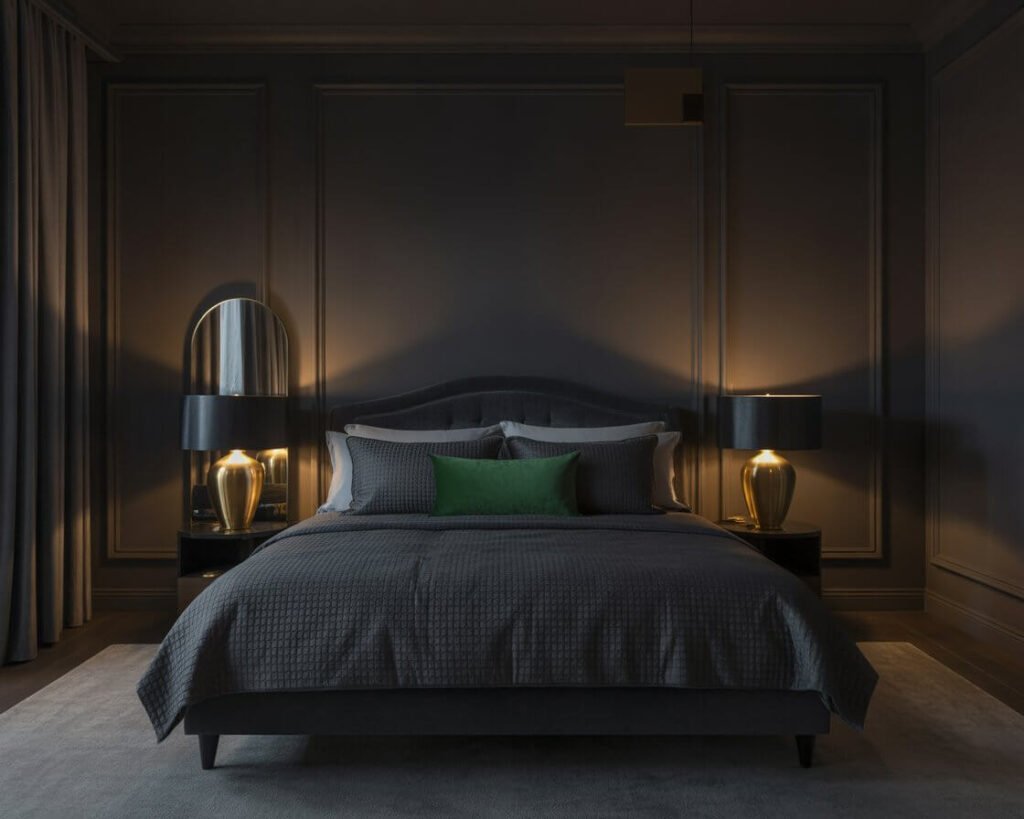
Modern bedrooms don’t have to be white. But they do tend to share one quality: a cohesive, intentional palette that doesn’t compete with itself.
In 2025, the most compelling modern bedroom palettes have moved away from cool gray dominance toward warmer neutrals — creamy off-whites, warm taupes, dusty sage, soft terracotta, and deep earthy tones. These colors feel simultaneously current and timeless, which is exactly what you want in a room you’ll live with for years.
Building a Modern Color Palette
The three-layer approach works well: a dominant wall color, a secondary color in bedding and curtains, and a quiet accent in wood, metal, or a single textile. Beyond three colors and things start to feel less modern and more miscellaneous.
- Warm white + natural oak + soft camel — calm, Scandinavian-influenced, universally appealing
- Charcoal + warm brass + ivory — dramatic, sophisticated, works in both large and small rooms
- Dusty sage + linen + dark walnut — organic, restful, increasingly popular in 2025
- Deep navy + white + rattan — classic contrast with a contemporary natural material accent
Whatever palette you choose, apply it consistently throughout the room — walls, bedding, curtains, and accessories should all be speaking the same language.
3. Layer Your Lighting (And Ditch the Single Overhead)
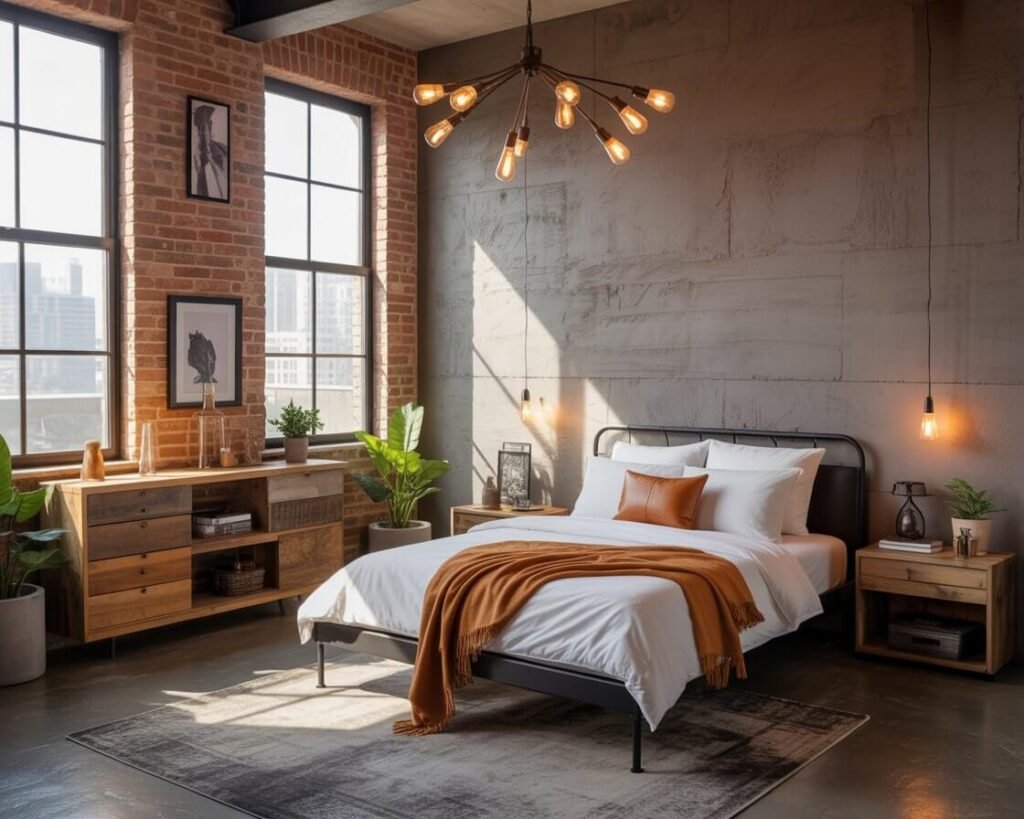
Nothing dates a bedroom faster than a single ceiling light fixture that does all the heavy lifting. It creates flat, shadowless illumination that looks clinical in photos and feels uninviting in person.
Layered lighting is what separates a modern bedroom from a merely furnished one. The idea is simple: combine different light sources at different heights to create warmth, depth, and flexibility. Bright when you need it, dim and ambient when you don’t.
A Three-Layer Lighting Plan
- Ambient — a dimmable ceiling fixture or recessed lighting for general illumination. Should be on a dimmer, always.
- Task — bedside reading light. Wall-mounted sconces are the modern choice; they free up nightstand surface space and sit at exactly the right height for reading.
- Accent — a warm LED strip behind the headboard, a sculptural lamp on a dresser, or a single candle-temperature light source that creates mood in the evening.
For bulb temperature: 2700K–3000K warm white throughout the bedroom. Cooler bulbs (4000K+) are energizing rather than restful — wrong function for the space.
A dimmer switch costs less than twenty dollars and transforms how every bedroom feels after dark. It’s one of the highest-return upgrades you can make.
4. Try a Minimalist White Bedroom — Done With Texture
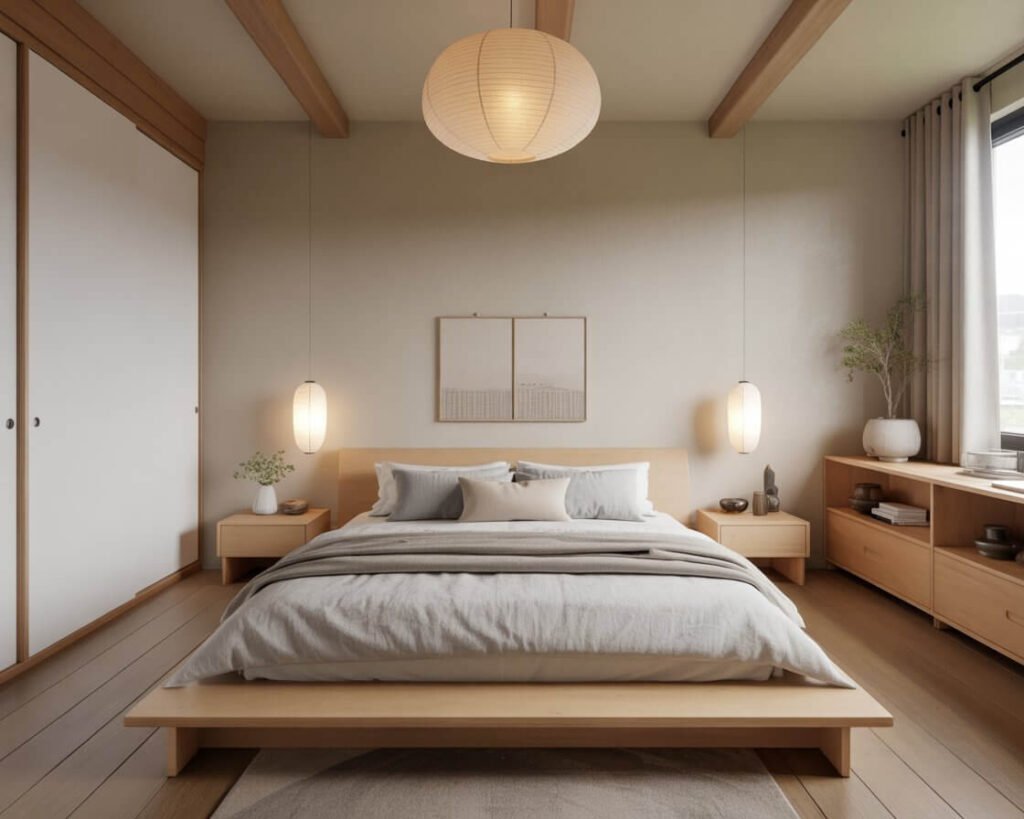
The minimalist white bedroom has a reputation for feeling cold and impersonal, and that reputation is earned — but only when it’s done wrong. Done right, it’s one of the most calming, versatile, and genuinely modern looks available.
The key is understanding that white is not a single color. There are warm whites, cool whites, creamy whites, and bright whites, and the difference between them in a bedroom is significant. Warm whites (with yellow or pink undertones) feel cozy and human. Cool whites (blue or gray undertones) feel crisper and more architectural.
Making White Work
- Layer textures, not colors — a chunky knit throw, smooth linen sheets, a waffle-weave pillow cover, and a sheer cotton curtain all read as “white” but create visual depth
- Add natural wood accents — even a single wooden nightstand or picture frame breaks the flatness without disrupting the palette
- Use one statement element to anchor the room: an oversized piece of art, a textured rug, or a statement headboard in a contrasting material
- Keep the floor as clear as possible — visible floor space is what makes a white bedroom feel spacious rather than empty
The result is a room that’s easy to live in and easy to adjust over time — if you want a seasonal refresh, you change the throw and the accent pillow. The bones stay consistent.
5. Go Dark and Moody With Intention
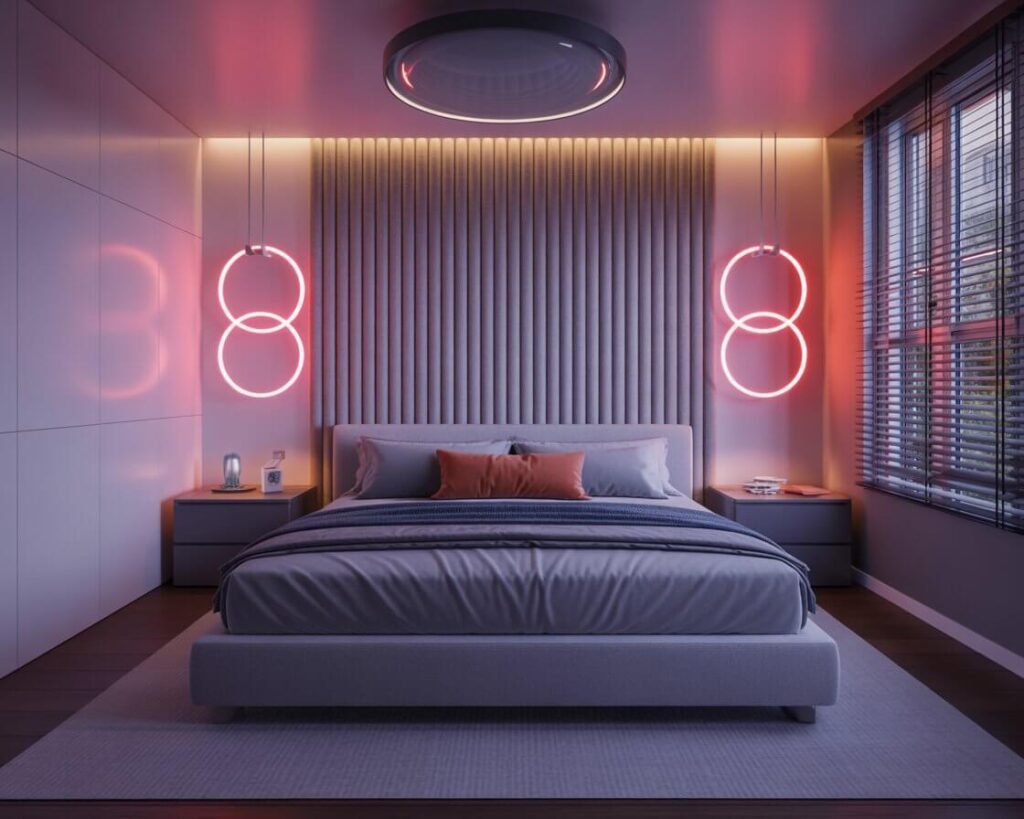
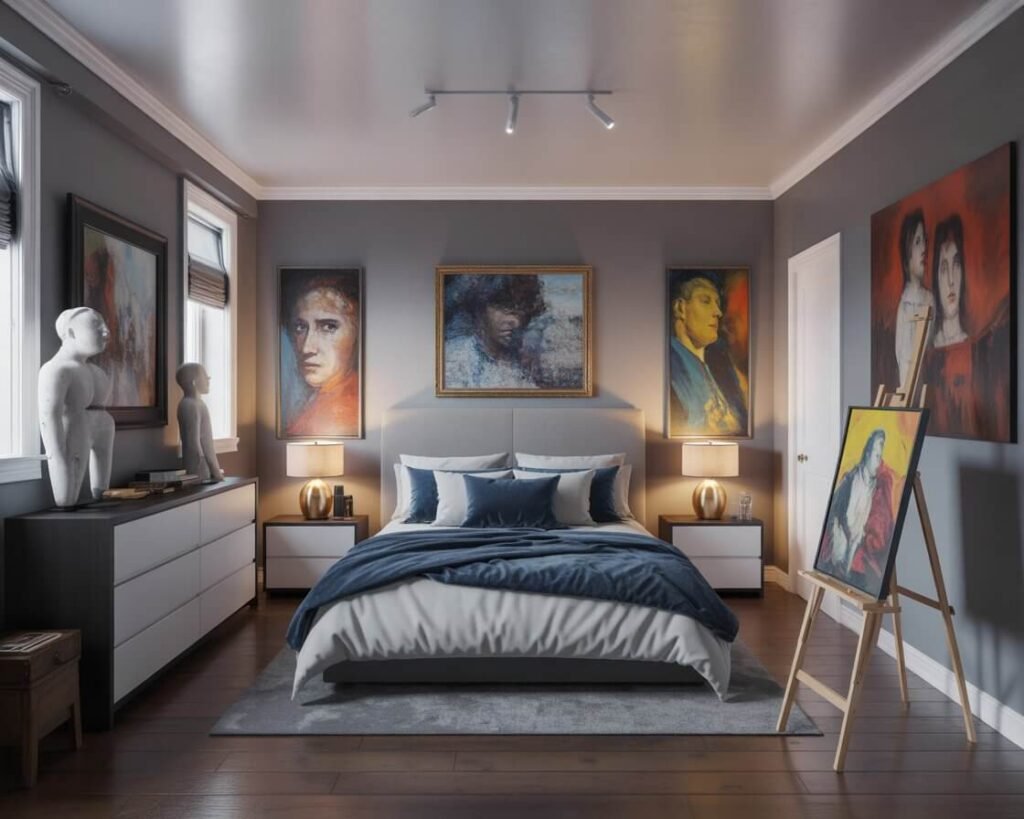
Dark bedrooms make people nervous, and that hesitation is understandable. A poorly executed dark room can feel oppressive. But a dark bedroom done with confidence — the right colors, right lighting, right contrasts — creates an intimacy and sophistication that light rooms simply can’t replicate.
The key distinction is intention. A dark bedroom where everything is dark, including the lighting, reads as a mistake. A dark bedroom where deep wall tones are balanced by warm light, reflective surfaces, and deliberate contrast reads as a design decision.
Colors That Work in a Dark Bedroom
- Charcoal and near-black — the most versatile dark choice, works with virtually any accent color
- Deep navy — warmer and more forgiving than pure black, particularly beautiful with brass fixtures
- Forest green — organic and rich, currently one of the most popular modern bedroom colors
- Plum or deep burgundy — for bedrooms that want real personality and aren’t afraid of it
Essential Principles for Dark Bedrooms
- Warm lighting is non-negotiable — cold or fluorescent light in a dark room is harsh and unflattering
- Mirrors and reflective surfaces bounce light and prevent the room from feeling enclosed
- Contrast in materials: dark walls + light bedding, or dark walls + natural warm wood furniture
- One light-colored element — even a cream duvet or ivory curtain gives the eye somewhere to rest
6. Embrace the Japandi Aesthetic
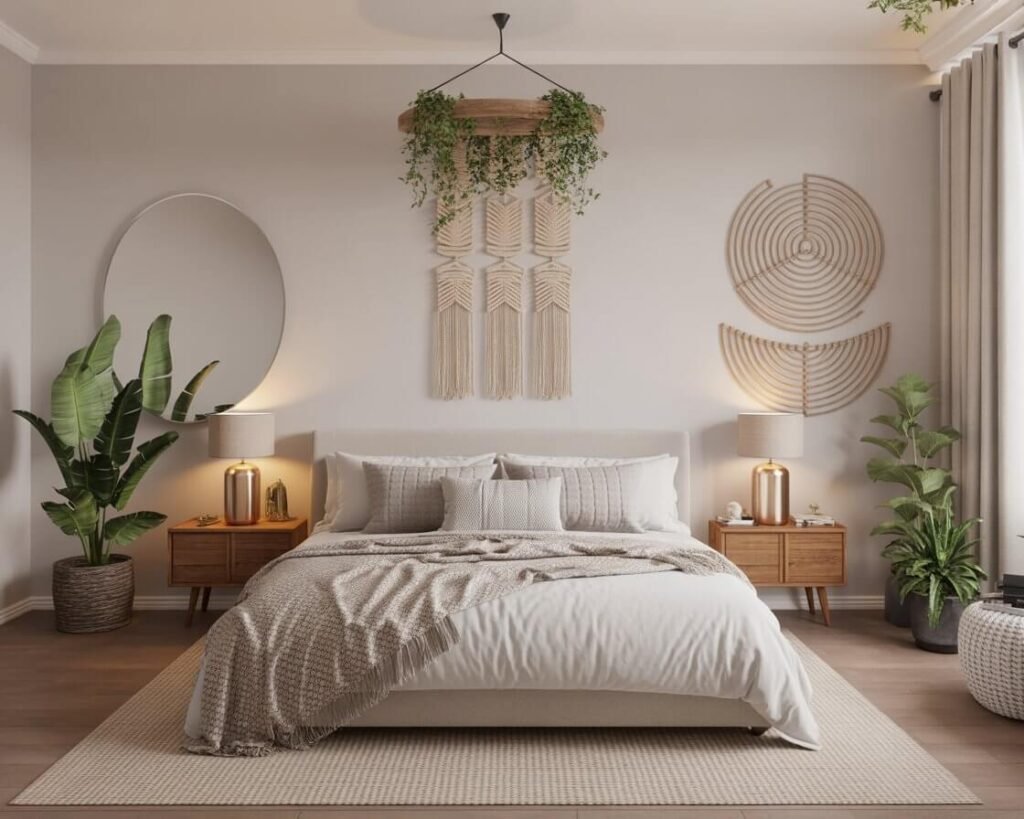
Japandi — the design philosophy born from the intersection of Japanese minimalism and Scandinavian warmth — has moved from trend to established aesthetic over the last few years, and it’s easy to understand why. It solves a problem that pure minimalism often doesn’t: how to have a simple, uncluttered room that also feels genuinely warm and human.
Japanese design brings wabi-sabi (the beauty of imperfection), mindful use of negative space, and low-to-the-ground furniture. Scandinavian design brings hygge (cozy comfort), natural materials, and a preference for craftsmanship over ornamentation. Together, they produce something that feels simultaneously calm and alive.
How to Build a Japandi Bedroom
- Low platform bed — ideally in natural wood with a simple, unadorned frame
- Natural materials throughout — untreated oak or ash, linen and cotton bedding, jute or wool rug
- A limited, warm neutral palette — soft white, warm beige, stone gray, muted sage
- One or two considered objects rather than styled surfaces: a ceramic vase, a single book, a small plant
- Paper, bamboo, or linen light fixtures — organic materials, soft diffused light
The philosophy here extends beyond aesthetics into how you curate what’s in the room. Japandi spaces feel intentional because they are: every object has been chosen and everything else has been removed.
7. Choose Furniture With Clean, Architectural Lines
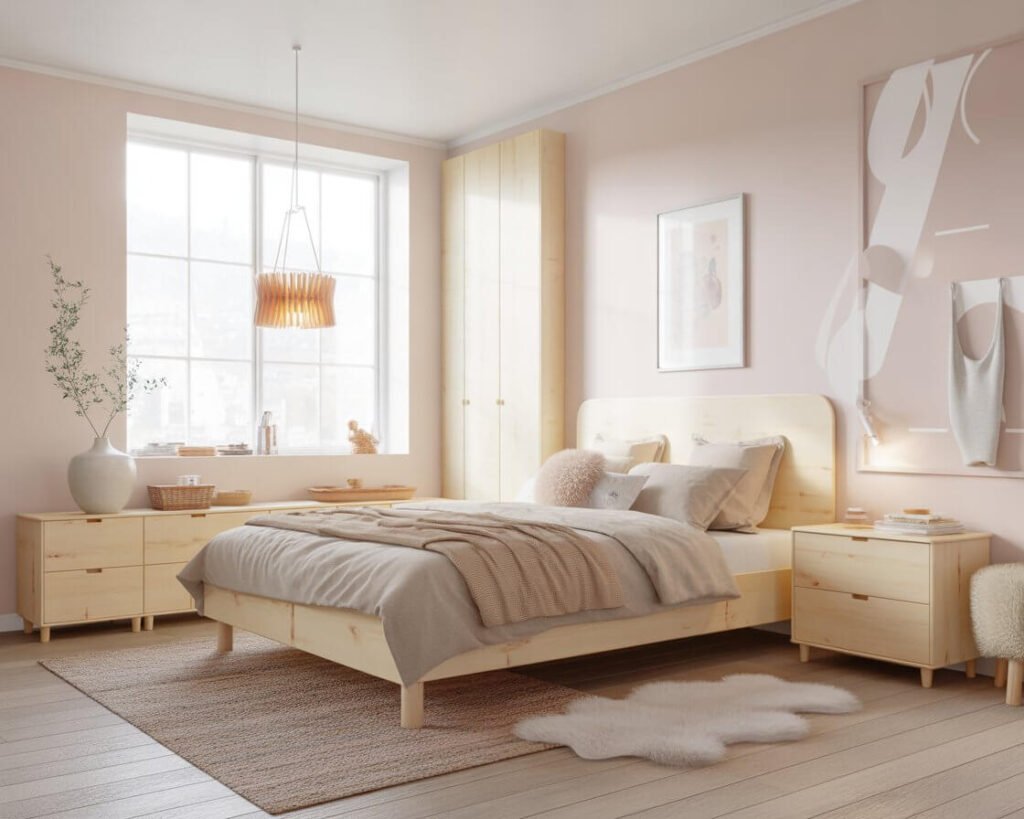
Modern furniture is defined by what it doesn’t do as much as what it does. It doesn’t have ornate detailing. It doesn’t taper into elaborate feet. It doesn’t compete with itself through decorative complexity.
What it does have is proportion, material honesty, and visual clarity. A well-made modern dresser in solid oak with flat-panel drawer fronts and simple bar pulls looks better over time — not despite its simplicity, but because of it.
Modern Bedroom Furniture Principles
- Flat-panel drawer fronts with integrated pulls or simple hardware — no raised panels or decorative molding
- Furniture on legs where possible — visible floor space keeps rooms from feeling dense
- One statement piece per room: a sculptural chair, a distinctive headboard, or a unique dresser — not every piece needs to be interesting
- Consistent finish family — mix materials (wood + metal, wood + upholstered) but keep finishes cohesive
Scale matters enormously in modern design. Furniture that’s too small for a large room looks tentative. Furniture that’s too large for a small room looks crowded. When in doubt, measure before you buy and map furniture placement on paper first.
8. Incorporate Natural Materials for Warmth
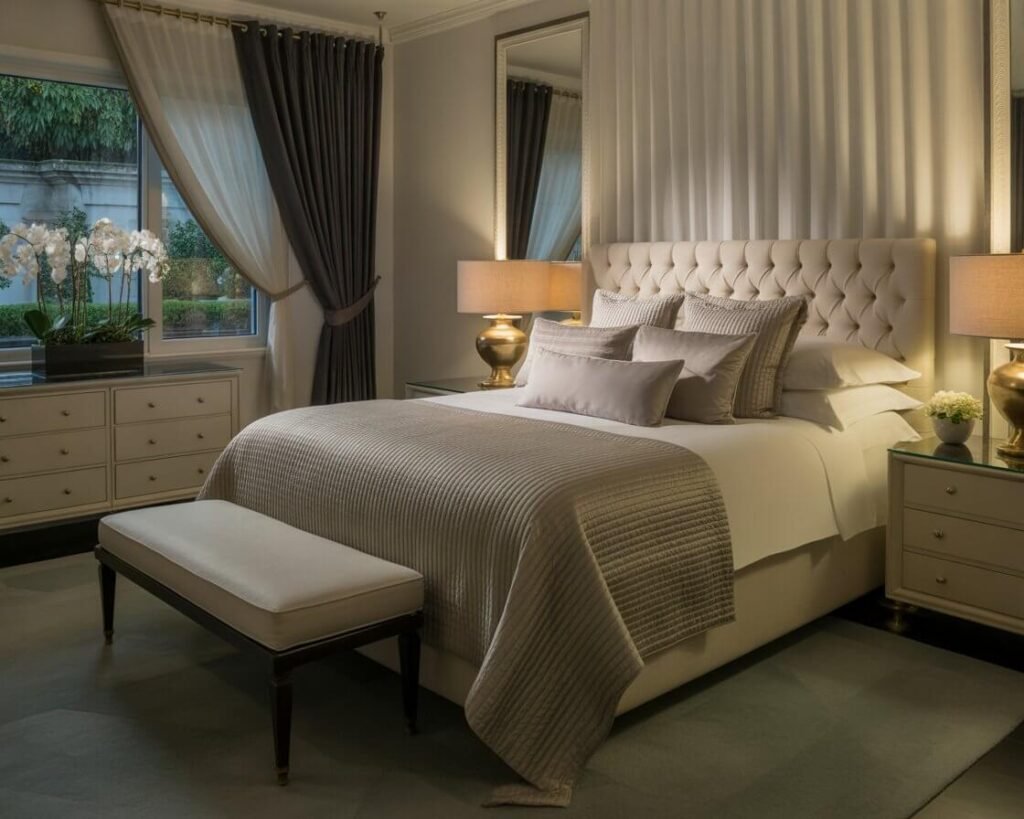
One of the defining qualities of modern bedroom design in 2025 is the move away from purely manufactured surfaces toward natural, tactile materials. Wood, stone, linen, wool, leather, rattan — these materials bring organic warmth that synthetics can’t replicate.
This isn’t nostalgia for the past. It’s a response to how much of our environment is now plastic, screen, and synthetic fiber. Natural materials in a bedroom feel grounding in a way that’s hard to articulate but immediately noticeable.
Natural Materials Worth Prioritizing
- Solid wood furniture — real wood has grain variation and character that ages beautifully; avoid veneer-over-MDF if the budget allows
- Linen bedding — breathes better than cotton, has natural texture, and improves with washing
- Jute or wool rug — natural fiber underfoot feels different from synthetic pile, and it shows
- Ceramic or stone lamp bases — instead of plastic or painted resin
- Rattan or bamboo accent piece — a headboard, chair, or small shelf adds lightness and organic texture
Natural materials don’t have to be expensive. A linen duvet cover and a jute rug are accessible upgrades that change how a bedroom feels more than almost anything else at the same price point.
9. Create a Defined Reading or Sitting Area
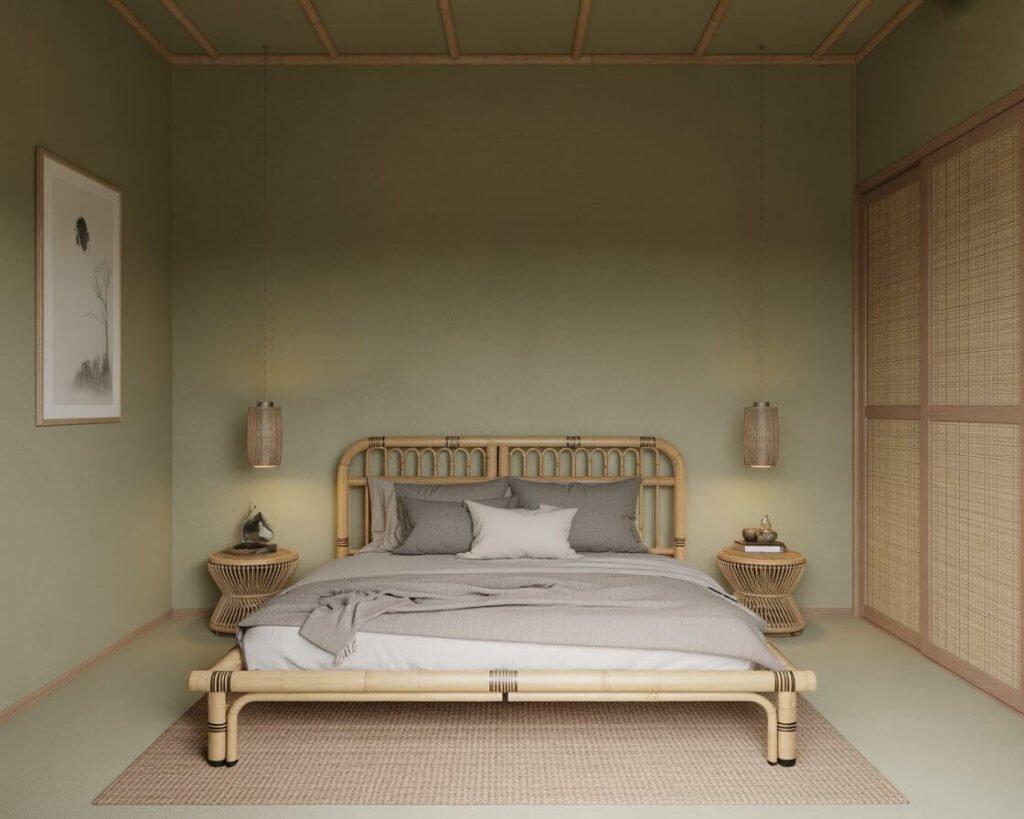
One of the clearest markers of a well-designed modern bedroom is a secondary zone beyond the bed. A small reading chair and floor lamp in a corner, a window seat with cushions, or a simple bench with a side table — these additions signal that the room was designed for living in, not just sleeping in.
Even in a smaller bedroom, a reading nook doesn’t require much space. A single armchair with a floor lamp beside it and a small side table is enough to define the zone and give the room a sense of intentional layout.
Reading Nook Essentials
- A comfortable chair — a lounge chair, a linen armchair, or even a low floor cushion depending on the aesthetic
- A floor lamp or wall sconce positioned to illuminate a seated reader without glare
- A side table or small tray for a book, a drink, a plant
- A small rug to anchor the zone if the chair is on hard flooring
The chair doesn’t need to match the bed frame or the dresser. In fact, a slightly contrasting piece — a different material, a bolder color — makes the secondary zone feel like a deliberate design choice rather than overflow furniture.
10. Use Wallpaper as a Feature Wall
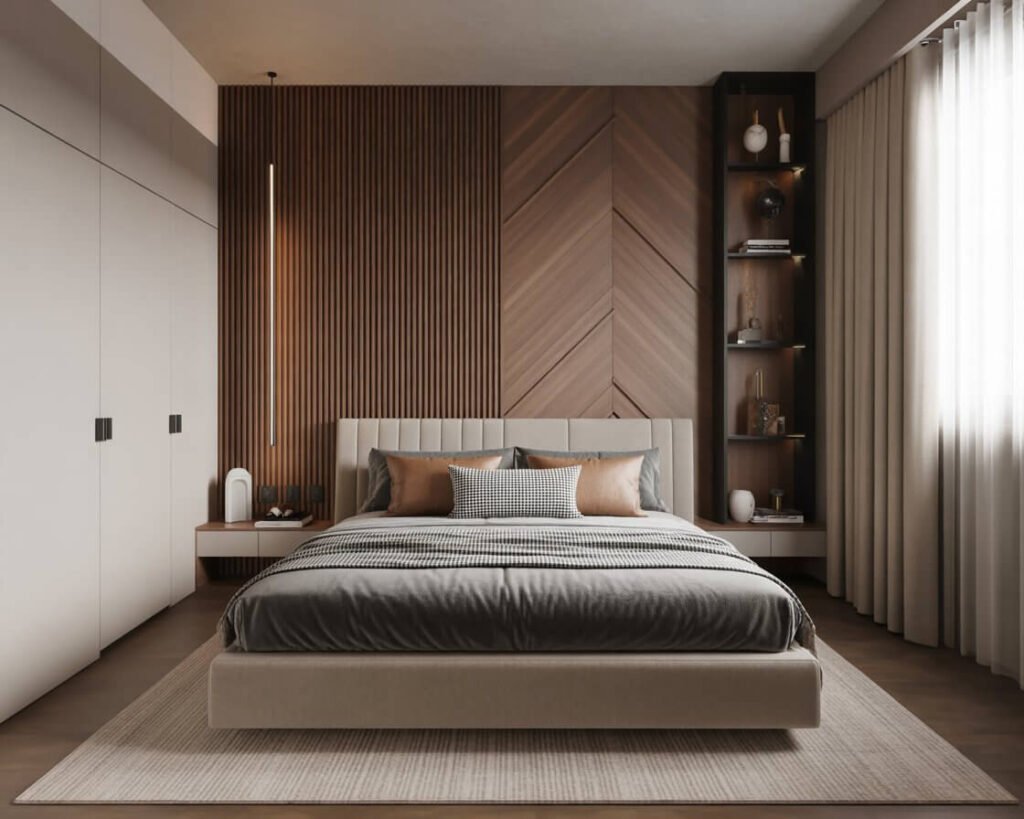
Wallpaper has made a definitive comeback in modern interior design, and modern wallpapers look nothing like the floral and stripe patterns of thirty years ago. Today’s options include abstract art-inspired prints, large-scale botanical patterns, textural linen or grasscloth looks, geometric forms in muted palettes, and hand-painted inspired designs that add the feeling of genuine craft.
In a modern bedroom, wallpaper works best as a single feature wall — the wall behind the bed. This gives the room a clear focal point, adds visual depth, and delivers significant design impact without requiring the whole room to be papered.
Wallpaper Styles That Work in Modern Bedrooms
- Abstract or painterly patterns in muted, earthy tones — adds art-like quality without literal artwork
- Textural wallpaper (grasscloth, linen look, woven texture) — adds depth without obvious pattern
- Large-scale botanical prints in neutral tones — organic and contemporary simultaneously
- Geometric or grid-based patterns — architectural and modern, works well behind a minimalist bed frame
Match the wallpaper to the room’s existing palette rather than choosing it first. The wallpaper should feel like it belongs in the room, not like the room was designed around it.
11. Invest in Quality Bedding Over Quantity of Accessories
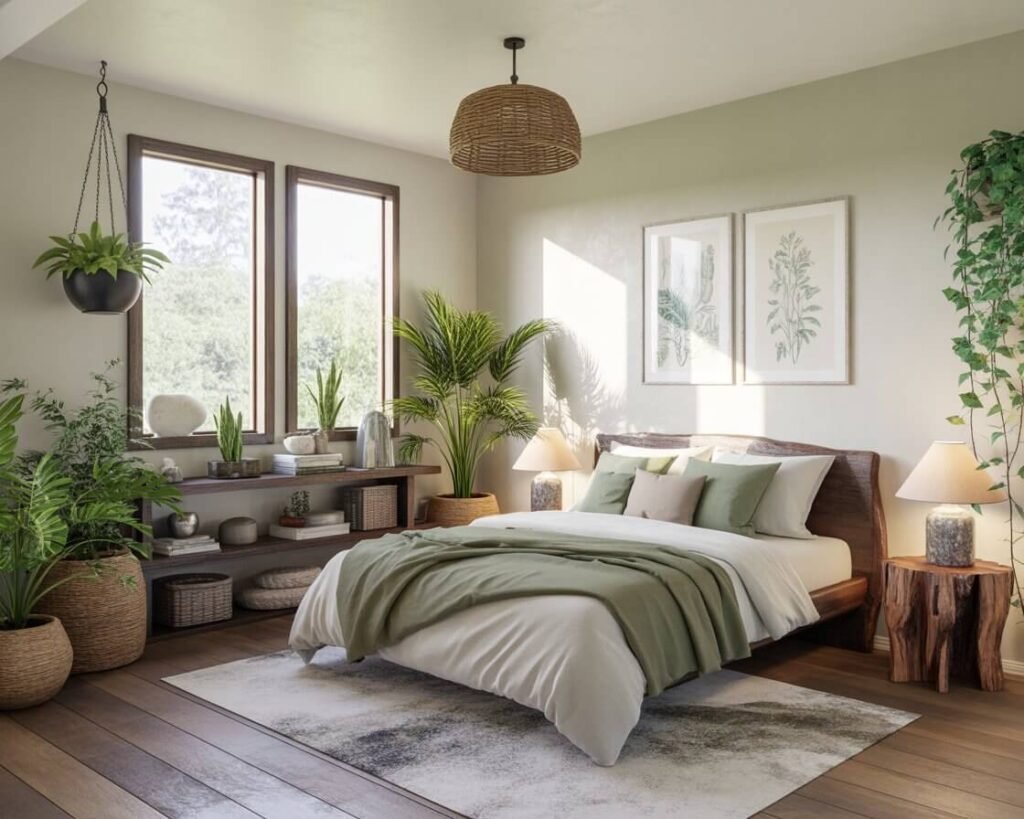
Modern bedroom design involves a fundamental reallocation of what the budget goes toward. Less money on decorative accessories that clutter surfaces; more money on the things you physically interact with every day.
Bedding is the most intimate element of a bedroom — you spend eight hours inside it. High-quality bedding in the right material and color is one of the most impactful investments you can make in how your bedroom looks and how you sleep in it.
Bedding That Looks and Feels Modern
- Long-staple cotton percale — crisp, cool, and clean-looking even when slightly rumpled
- Washed linen — naturally textured, breathes beautifully, gets softer over time
- Waffle weave — adds tactile interest in a neutral color without any printed pattern
- Keep pillows to two sleeping pillows plus one or two European shams — more than that reads as fussy rather than luxurious
Stick to a single color family for bedding. White with white, cream with cream, or a subtle tone-on-tone combination. Modern bedrooms are not the place for bold, pattern-heavy duvet covers unless the rest of the room is very quiet.
12. Integrate Technology Without It Taking Over
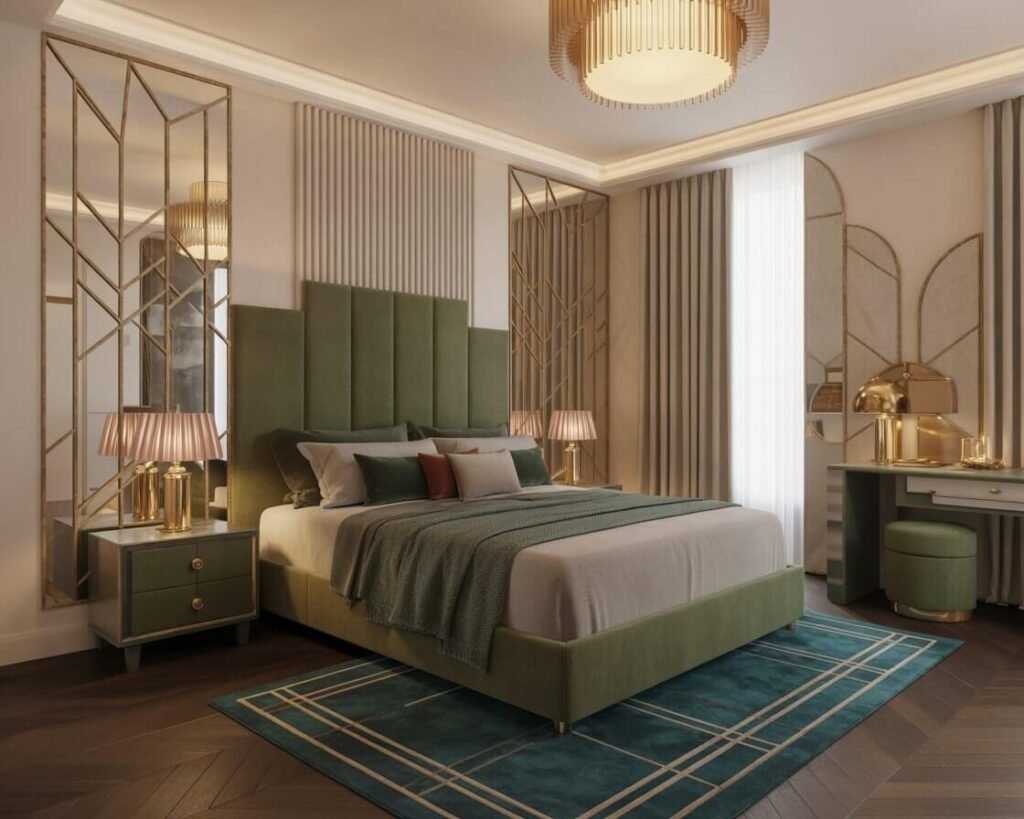
Modern living means technology is part of the bedroom whether you invite it or not. The question isn’t whether to have technology in the bedroom — it’s how to integrate it so it serves you rather than cluttering your space and disrupting your rest.
The most successful modern bedrooms manage technology through concealment and intention: charging cables disappear, screens are either hidden or absent when not in use, and smart devices operate through voice or app rather than visible hardware.
Tech Integration That Actually Improves the Bedroom
- Smart lighting — dimmable, color-temperature adjustable bulbs controlled by phone or voice; set them to warm down automatically in the evening
- Wireless charging nightstand or built-in charging pad — eliminates cable clutter on the bedside surface
- Smart thermostat that knows your preferred sleeping temperature and adjusts automatically
- Recessed or concealed TV — inside a wardrobe that closes, or hidden behind a mirror screen that reflects when off
- Cable management — a single routed cable channel or hidden cord cover eliminates the visual noise of exposed wiring
The goal of technology in a bedroom isn’t to make the room smarter — it’s to make the room quieter. Less visible friction, less visual clutter, better sleep environment.
13. Bring in the Industrial Loft Aesthetic
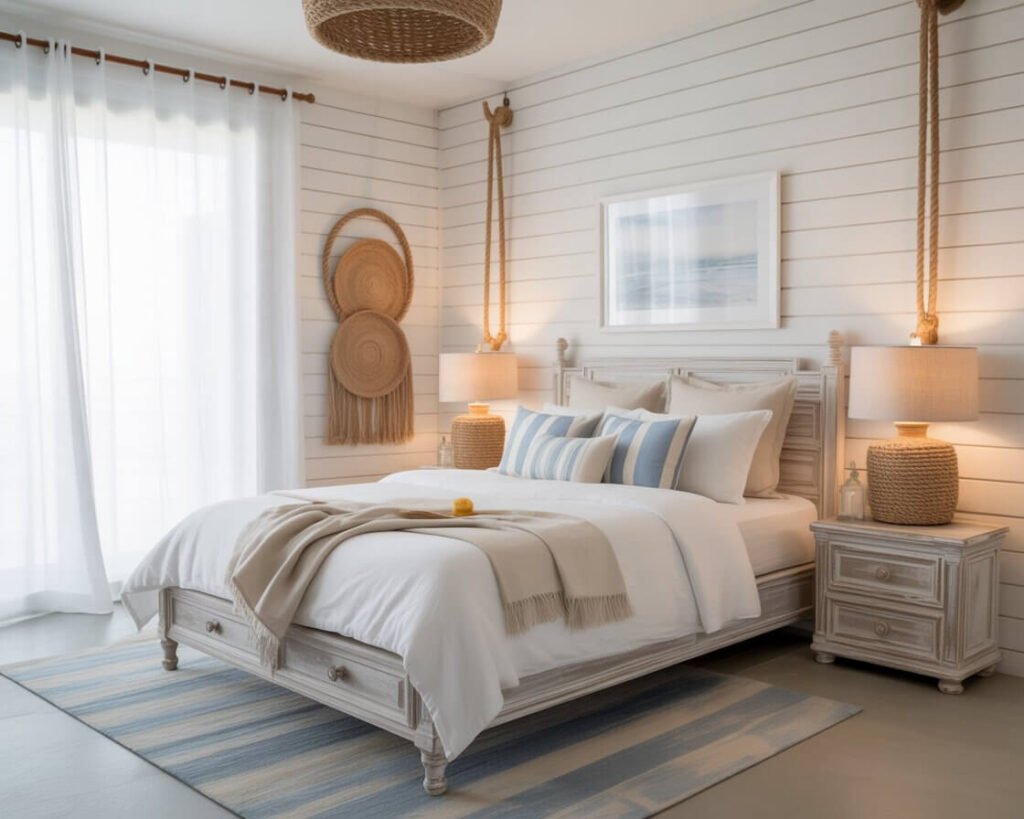
Industrial style in a bedroom — exposed textures, raw materials, functional-looking hardware — has a quality that polished, pristine interiors sometimes lack: it looks like a space where someone actually lives. The slight roughness of an exposed brick wall, the warmth of reclaimed wood, the graphic contrast of matte black metal against a light ceiling — these elements create bedrooms that feel urban, confident, and real.
You don’t need a loft conversion or genuine exposed brick to achieve this. The aesthetic is about material honesty and restraint: using materials that don’t pretend to be something they’re not, and leaving enough unfinished to feel uncontrived.
Industrial Bedroom Elements That Work
- Matte black metal bed frame — the most accessible industrial starting point
- Reclaimed or live-edge wood for a nightstand, shelf, or headboard — the grain and character of real aged wood is distinctive
- Exposed concrete or brick texture — real or convincingly replicated with textured paint or wallpaper
- Edison-style or filament bulb lighting — warm, amber-toned light suits the material palette perfectly
- Leather accents in cognac, saddle brown, or black — a leather bench, pillow cover, or lamp base
Balance raw elements with soft ones. Industrial bedrooms that skip this step feel cold. A chunky wool throw, a linen duvet, and a low-pile area rug warm the space without softening the aesthetic.
14. Add a Statement Headboard
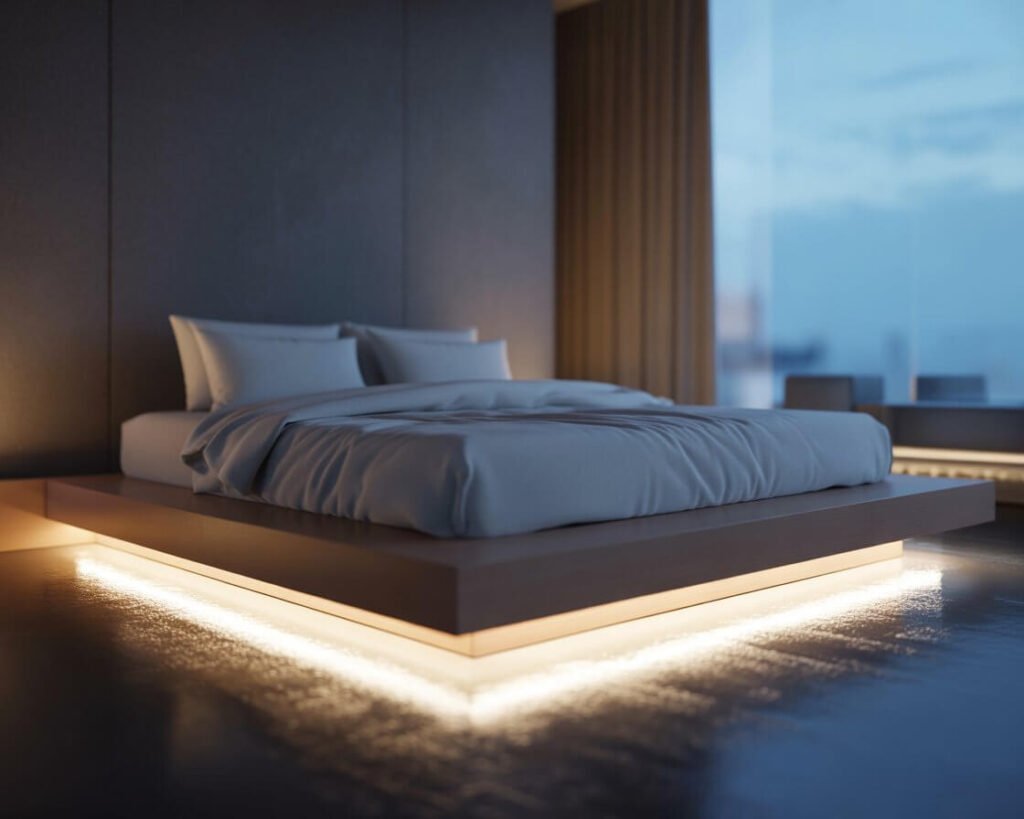
If there’s one element that can single-handedly modernize a bedroom, it’s a well-chosen headboard. A flat, upholstered headboard in a quality fabric can transform a basic bed frame into a focal point. A curved boucle headboard adds sculptural softness. A fluted wood panel headboard brings architectural detail. A dramatic oversized headboard changes the entire scale of the room.
Modern headboards tend to fall into two categories: quietly textural (flat panel upholstery that adds warmth without drama) or architecturally distinctive (curved forms, fluted details, or dramatic height). Both work; the choice depends on the room’s overall energy.
Statement Headboard Styles for 2025
- Curved upholstered headboard in boucle or velvet — sculptural, warm, currently very popular
- Fluted wood panel — architectural, modern, pairs well with both warm and cool palettes
- Arched fabric headboard — softens a room with its organic shape, particularly beautiful in linen or cotton
- Floor-to-ceiling headboard wall — extends the headboard to full wall height for maximum impact
- Wall-mounted floating headboard — minimal, modern, keeps the floor line clean
15. Rethink the Nightstand
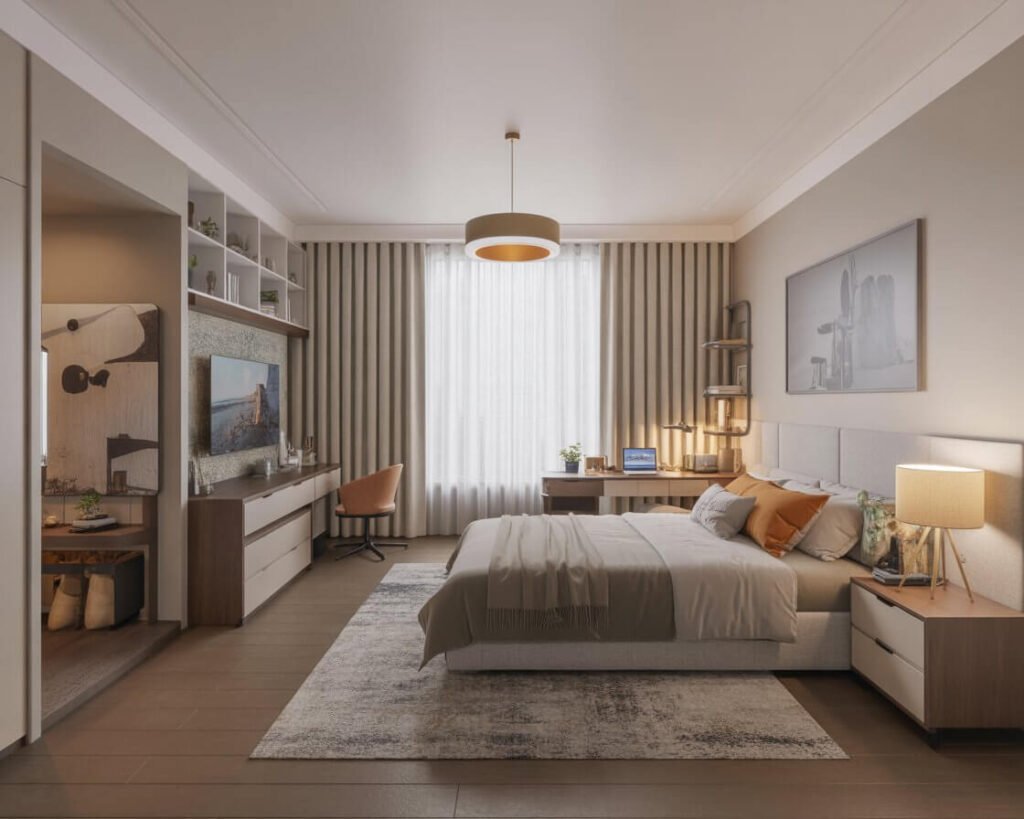
The nightstand is one of the most neglected design decisions in a bedroom. Most people simply buy whatever matches the bed frame or whatever fits next to it — and end up with two chunky boxes that add visual weight without adding much interest.
Modern nightstands tend toward two extremes: minimal floating shelves that disappear and keep the floor clear, or sculptural single-drawer tables that earn their place through form as much as function. Both are significant upgrades over the standard matching pair from a furniture package.
Modern Nightstand Alternatives
- Floating wall shelf — mounted at mattress height, no floor footprint, keeps the room feeling open
- Sculptural side table — a pedestal table, tripod-leg form, or architectural shape that reads as furniture-as-object
- Small stool or low bench — particularly suited to Japandi and Scandinavian-influenced rooms
- Mixed pair — two different but complementary nightstands on either side of the bed; asymmetry done deliberately feels more modern than forced matching
Whatever you choose, keep the surface edited. One lamp, one book, phone charging. The nightstand surface is one of the first things visible when you enter the room — keeping it clear signals control over the whole space.
16. Use Curtains to Add Height and Softness
Curtains are doing two things simultaneously in a modern bedroom: controlling light and shaping the room’s perceived proportions. When chosen and hung correctly, they make ceilings feel higher, windows feel larger, and the room feel more finished overall.
The single most impactful curtain decision is where the rod goes. Hang it as close to the ceiling as possible — not above the window frame as most people default to, but at ceiling height. Then let the curtain panels extend wide on both sides of the window. The result: the window appears dramatically larger and the ceiling dramatically higher.
Modern Curtain Choices
- Linen in a neutral tone — warm, natural, lets in diffused light, ages beautifully
- Sheer white or ivory panels — maximizes natural light while maintaining privacy
- Velvet in a rich tone — adds luxury and acoustic warmth, particularly effective in dark modern bedrooms
- Blackout lining behind a decorative panel — privacy without sacrificing the look of beautiful curtain fabric
Avoid curtains that are too short (they look like a mistake) or too narrow (they look inadequate). Full-length panels that pool slightly at the floor and extend well past the window frame are the modern standard.
Final Thoughts: Modern Isn’t a Style — It’s a Commitment
A modern bedroom isn’t achieved by buying modern furniture. It’s achieved by making a series of considered decisions — about color, materials, light, scale, and what belongs in the room — and then maintaining those decisions over time.
The ideas in this guide aren’t a checklist to complete. They’re a set of principles and starting points. Some will resonate with your taste and your space immediately. Others will feel like too much or not enough. That’s fine. Design is always personal.
Start with what feels most urgent. If your lighting is flat and unpleasant, address that first. If the bed frame looks wrong, that’s the place to begin. If the room feels cluttered despite not having much in it, the floor and surface editing is probably the answer.
The most modern thing a bedroom can be is intentional. Everything else — the color palette, the materials, the specific pieces — follows from that.
Frequently Asked Questions
What defines a modern bedroom?
A modern bedroom is defined by clean lines, intentional design, a cohesive palette, and an absence of unnecessary ornamentation. Modern bedrooms prioritize quality over quantity, integrate natural materials, and use space deliberately. They’re current without being trend-dependent — designed to age well rather than look fashionable for one season.
What colors are most popular in modern bedrooms for 2025?
Warmer neutrals have largely replaced the cool gray dominance of earlier years. Warm white, dusty sage, soft terracotta, deep navy, and forest green are all prominent in 2025 modern bedroom design. Dark, moody palettes (charcoal, near-black, deep forest tones) continue to grow in popularity, particularly in primary bedrooms.
What furniture is essential in a modern bedroom?
A well-chosen bed frame is the most critical piece. Beyond that: a dresser or wardrobe with clean lines and flat-panel fronts, minimal nightstands (floating shelves or sculptural side tables rather than bulky matching sets), and one secondary seating piece if space allows. Less furniture in better quality consistently outperforms more furniture at lower quality in a modern bedroom.
How do I make a small bedroom feel modern?
Keep the floor as clear as possible, use large-format or vertically stacked elements to draw the eye upward, hang curtains at ceiling height, choose furniture with visible legs, and limit the color palette to two or three tones. Mirrors used strategically also expand the perceived space significantly. In small bedrooms, every design decision matters more — which often produces more focused, interesting results.
Is a dark bedroom a good idea?
Yes, when executed with care. Dark bedrooms with warm lighting, reflective surfaces, and deliberate contrast in materials and bedding can feel deeply luxurious and restful. The key is warm light (2700K bulbs on dimmers), at least one lighter contrast element (cream bedding, white trim, a light-colored rug), and avoiding cool or harsh overhead lighting.
How often should I update my bedroom’s design?
Modern design is built to last — a quality bed frame, neutral palette, and good lighting shouldn’t need replacing on a trend cycle. Small refreshes every year or two (new bedding, a different rug, a seasonal throw, updated art) keep the room feeling current without full renovation. Major updates to furniture and paint every five to ten years is a realistic cadence for most people.