
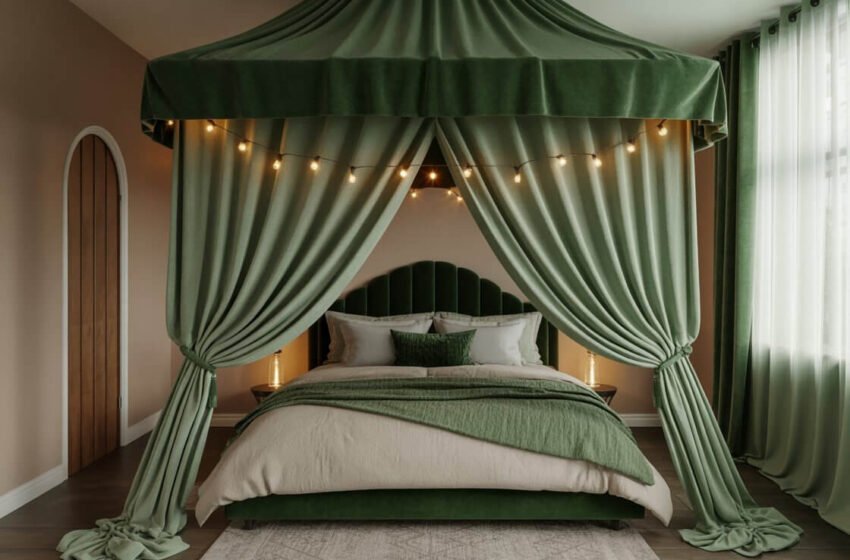
There is a moment, somewhere between scrolling through home design accounts at midnight and staring at the same magnolia walls you have lived with for three years, when you decide something has to change. For a lot of people right now, that something is green.
Green has quietly become the most discussed bedroom color of the decade. Not because it is a passing trend, but because it actually does something the endless parade of greys and beiges never managed — it makes a bedroom feel genuinely alive. Restful without being bland. Sophisticated without trying too hard. Connected to something natural in a way that no neutral ever quite achieves.
The range within green alone is extraordinary. Sage green feels like a weekend morning in the countryside. Emerald drips with drama and confidence. Forest green is brooding and luxurious. Mint is fresh and bright. Olive is earthy and grown-up. And that is before you even get to the ways green interacts with other colors, materials, and light in a bedroom setting.
Sage Green Walls with Warm Neutral Textiles
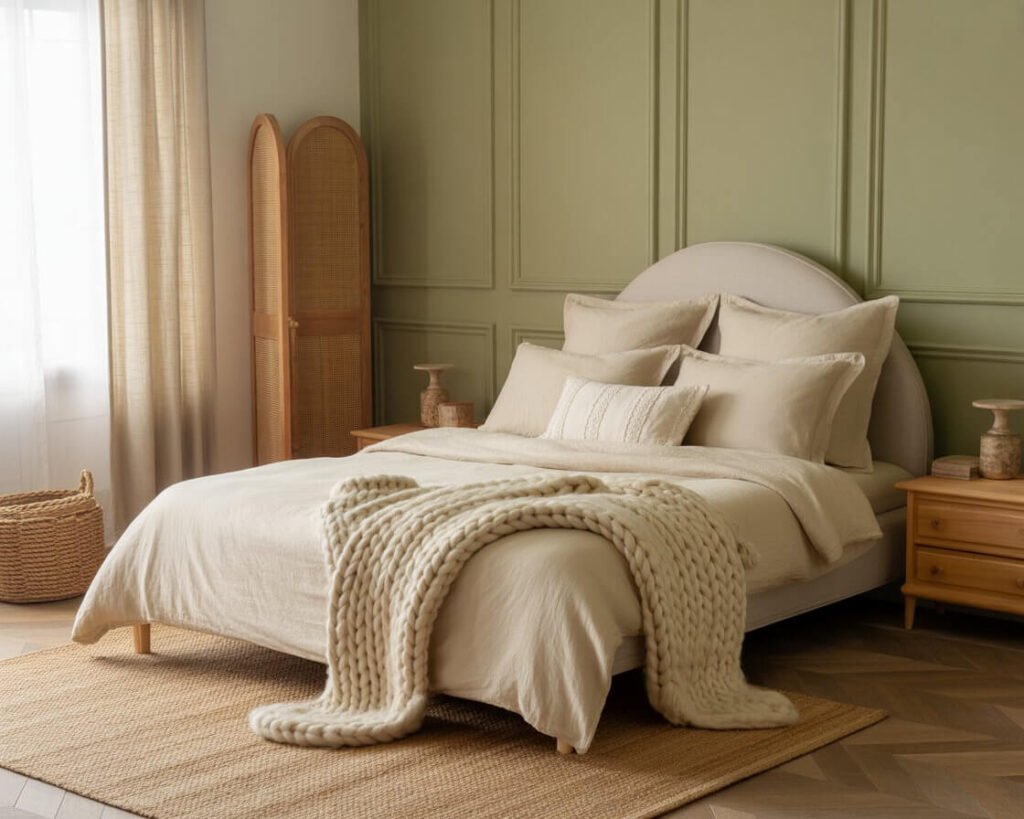
Sage green is arguably the most universally flattering bedroom wall color available right now, and it has earned that reputation honestly. The grey-green, slightly dusty quality of a good sage sits beautifully in both natural and artificial light — it never looks garish, never feels cold, and works with practically every furniture finish you might already own.
The key to making sage green walls sing is in the textile choices around them. Go warm rather than cool — cream linens rather than bright white, oatmeal cushions rather than ice grey, amber-toned timber furniture rather than pale ash. Layering textures in this warm neutral palette against sage walls creates a bedroom that feels genuinely cosy and considered.
Deep Forest Green Accent Wall Behind the Headboard
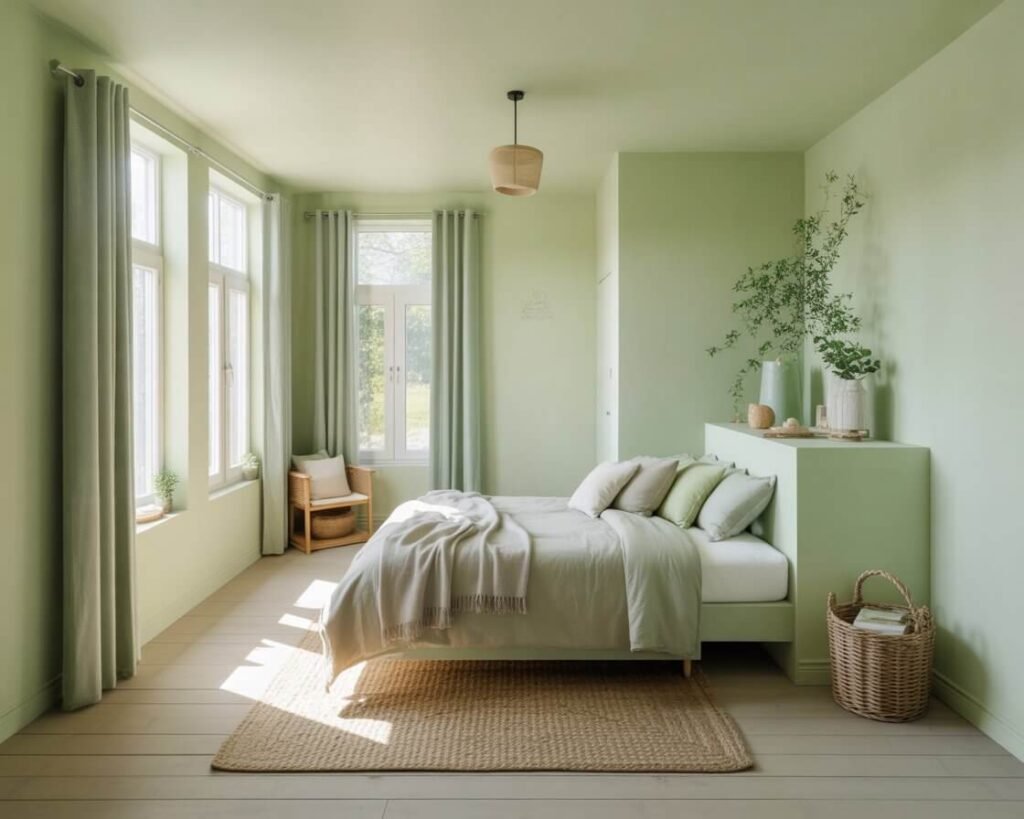
If you are not ready to commit to four green walls but want real impact, a forest green accent wall behind the bed is one of the most effective design moves in a bedroom. The deep, saturated green creates an instant sense of depth and drama, making the bed feel anchored and intentional rather than floating in the middle of the room.
Keep the remaining three walls in a complementary neutral — warm white, pale greige, or even a very light sage — and let the feature wall do the heavy lifting. The contrast between the dark green and the lighter walls creates a natural framing effect that makes the bed the undisputed focal point of the room.
Emerald Green Velvet Headboard as the Focal Point
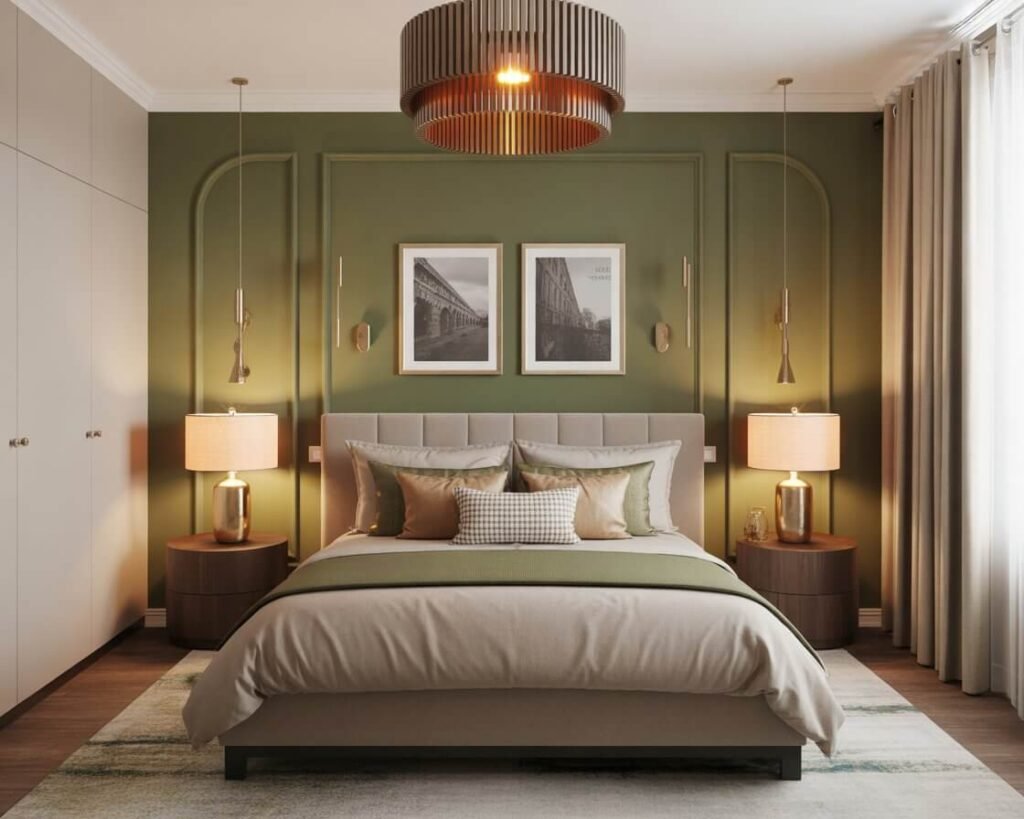
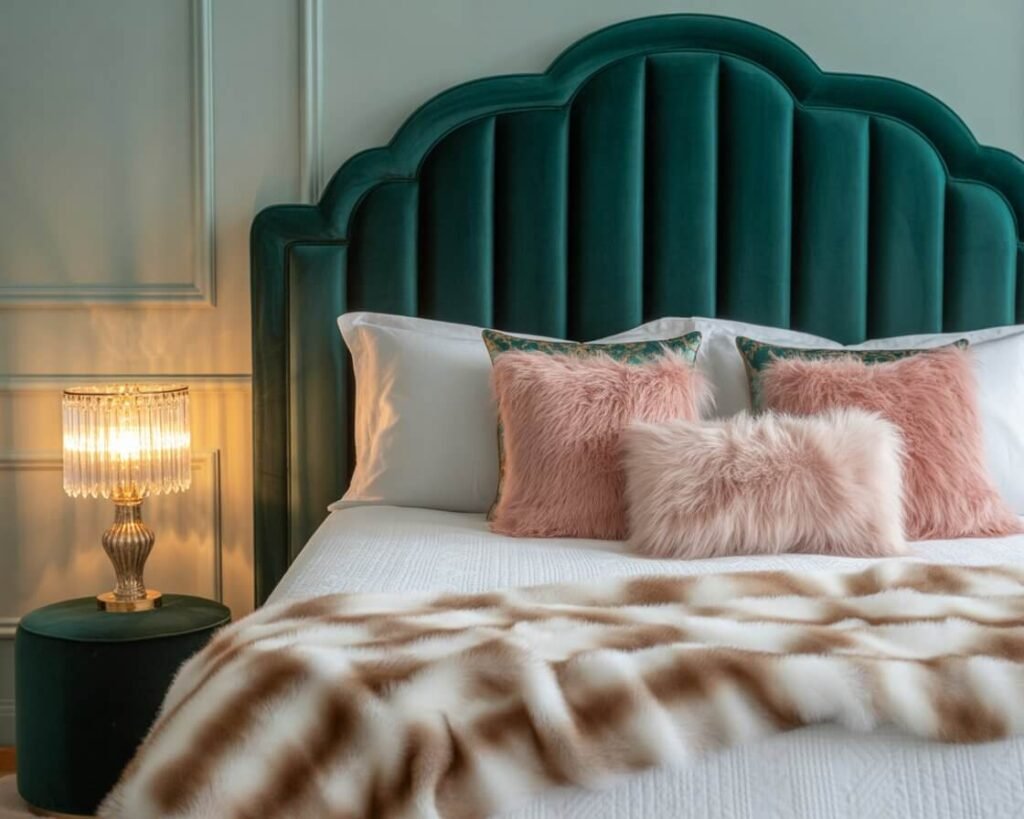
If painting walls feels like too big a commitment, an emerald green velvet headboard gives you the jewel-toned drama of a full green room without a drop of paint. A deep emerald velvet against white or pale grey walls reads as genuinely luxurious — the kind of thing you see in boutique hotels and immediately want to replicate at home.
Velvet is a material that rewards generosity. If you are going for a velvet headboard, go large — a full-width panelled design that runs almost to the ceiling creates far more impact than a small upholstered rectangle. Style with blush pink, warm gold, and cream accessories to soften the intensity of the emerald.
Olive Green and Warm Gold for a Sophisticated Palette
Olive green occupies a fascinating middle ground between green and brown, and that earthy warmth makes it one of the most sophisticated shades you can bring into a bedroom. It feels genuinely grown-up — less primary school art room, more Milanese apartment — and it pairs magnificently with warm metallics.
Introduce warm gold through bedside lamps, picture frames, mirror surrounds, and cabinet handles. The olive provides a rich, muted base while the gold adds just enough shine to lift the palette without tipping it into garish territory. Natural materials — jute rugs, linen bedding, cane furniture — complete the look perfectly.
Mint Green for a Fresh, Light-Filled Bedroom
Mint green is the extrovert of the green family — bright, optimistic, and genuinely energising. It works especially well in bedrooms that receive plenty of natural light, where the brightness of the color becomes an asset rather than an overwhelming presence.
The trick with mint is in the pairing. Used alongside crisp white, it can feel a little clinical or bathroom-ish. Instead, ground it with warm wood tones, introduce some texture through woven baskets or rattan furniture, and add softness with off-white or cream bedding rather than pure white.
Dark Bottle Green with Brass and Marble Accents
For a bedroom that feels properly luxurious, few combinations can compete with deep bottle green, warm brass, and cool marble. The green provides a rich, enveloping backdrop; the brass adds glamour and warmth; the marble — whether in lamp bases, side tables, or a fireplace surround — introduces a cool, sophisticated counterpoint.
This is a palette that works best in larger bedrooms where the depth of the dark green does not feel overpowering. In a generous master bedroom with high ceilings, bottle green walls create a sense of enclosure that feels cocoon-like and supremely restful. Pair with a statement ceiling light — a sculptural chandelier or a cluster of amber glass pendants — for a finished, hotel-suite quality.
Sage Green Ceiling for an Unexpected Design Moment
Painting walls green is expected. Painting the ceiling green is a move that genuinely surprises people — and when it is done well, it creates one of the most cocooning, atmospheric bedrooms you can imagine. A sage or dusty green ceiling over white or light grey walls wraps the room in color from above, creating a feeling of shelter that is particularly restful in a bedroom.
This technique is sometimes called the fifth wall, and it is one of the most underused tools in interior design. The ceiling naturally draws less light than the walls, so even a relatively soft shade will read slightly deeper overhead — which works in your favor with green, giving the shade a little more presence without going too dark on the walls.
Green and White Botanical Wallpaper
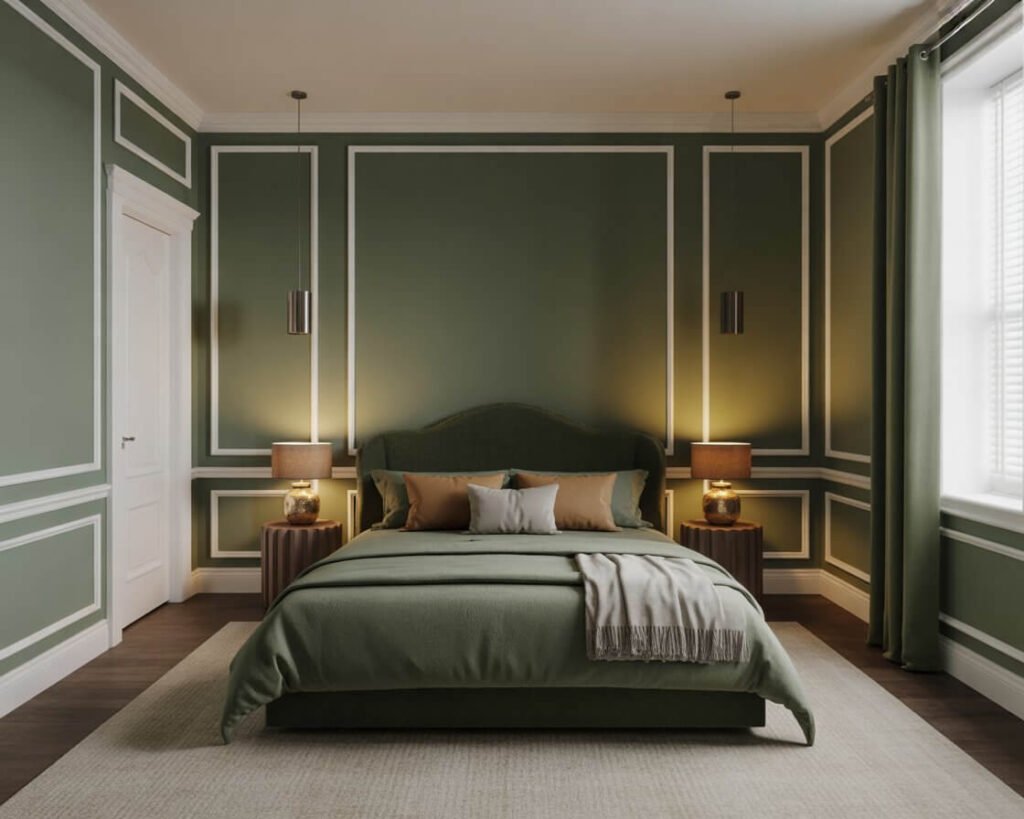
Not everyone wants flat painted walls, and for those who prefer pattern, a green botanical wallpaper is one of the most enduring choices available. Whether it is a bold tropical leaf print, a delicate hand-painted fern design, or a contemporary geometric pattern in shades of green and white, botanical wallpaper brings the outdoors in in the most literal way.
For maximum impact, use the wallpaper on a single feature wall behind the bed and keep the remaining walls in a tone pulled from the background of the paper — typically a warm white, ivory, or very pale sage. Let the wallpaper pattern dictate the color palette for the rest of the room.
Soft Pistachio Green in a Scandinavian-Style Bedroom
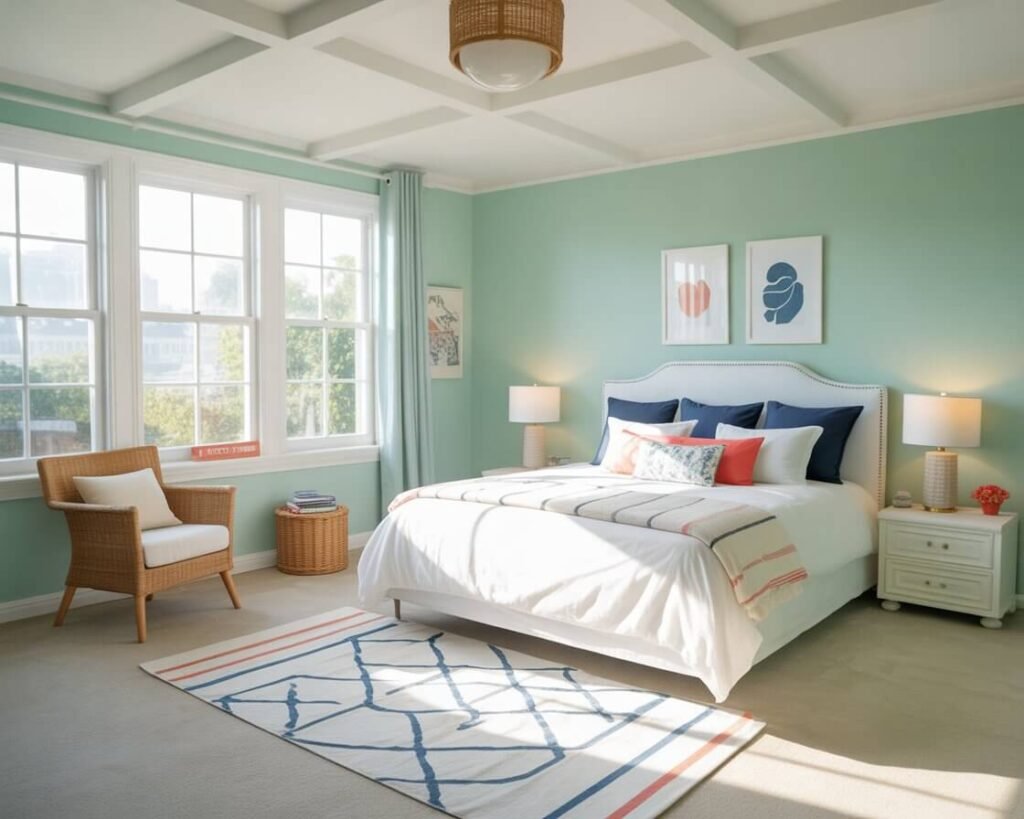
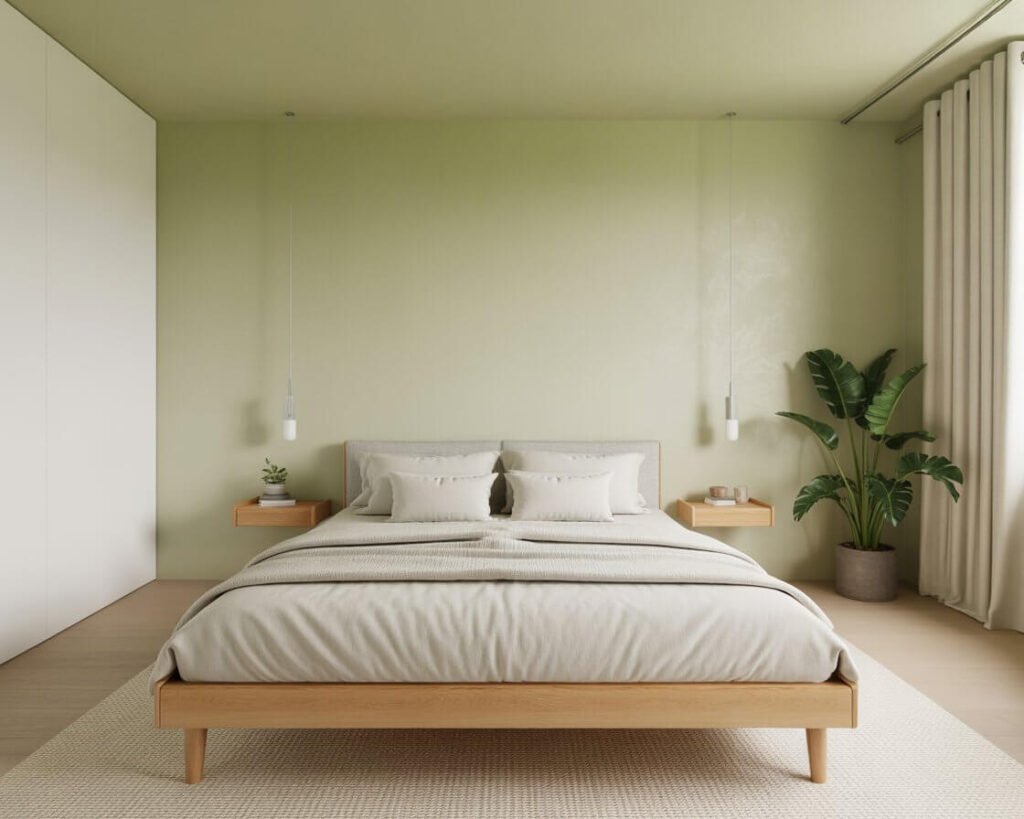
Scandinavian design principles — simplicity, natural materials, functional beauty — translate perfectly into a bedroom, and pale pistachio green is one of the most sympathetic colors for that aesthetic. It is a color that whispers rather than shouts, providing just enough warmth and interest to prevent the room from feeling cold or characterless without disrupting the clean, calm Scandi atmosphere.
Keep furniture minimal — a platform bed with a low-profile frame, floating bedside shelves rather than tables, and perhaps a single statement plant. Choose bedding in tones of white, oatmeal, and very pale grey. Natural fiber rugs, white oak furniture, and simple linen curtains complete the look.
Green and Grey: A Sophisticated Modern Combination
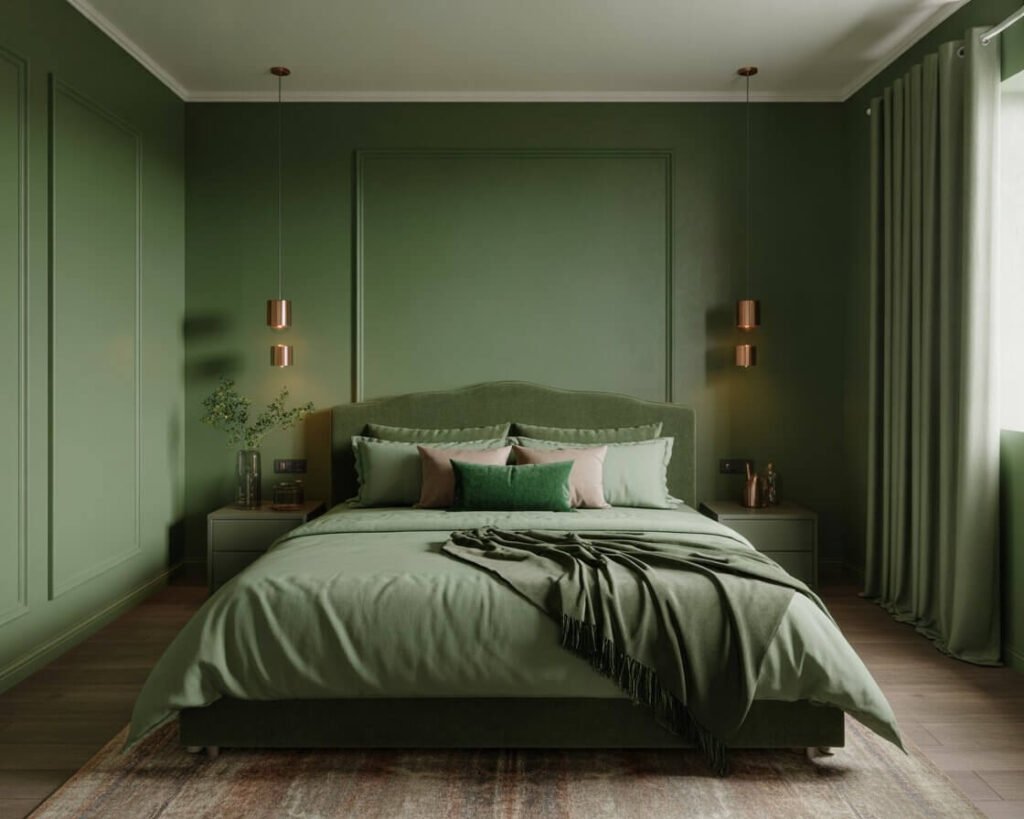
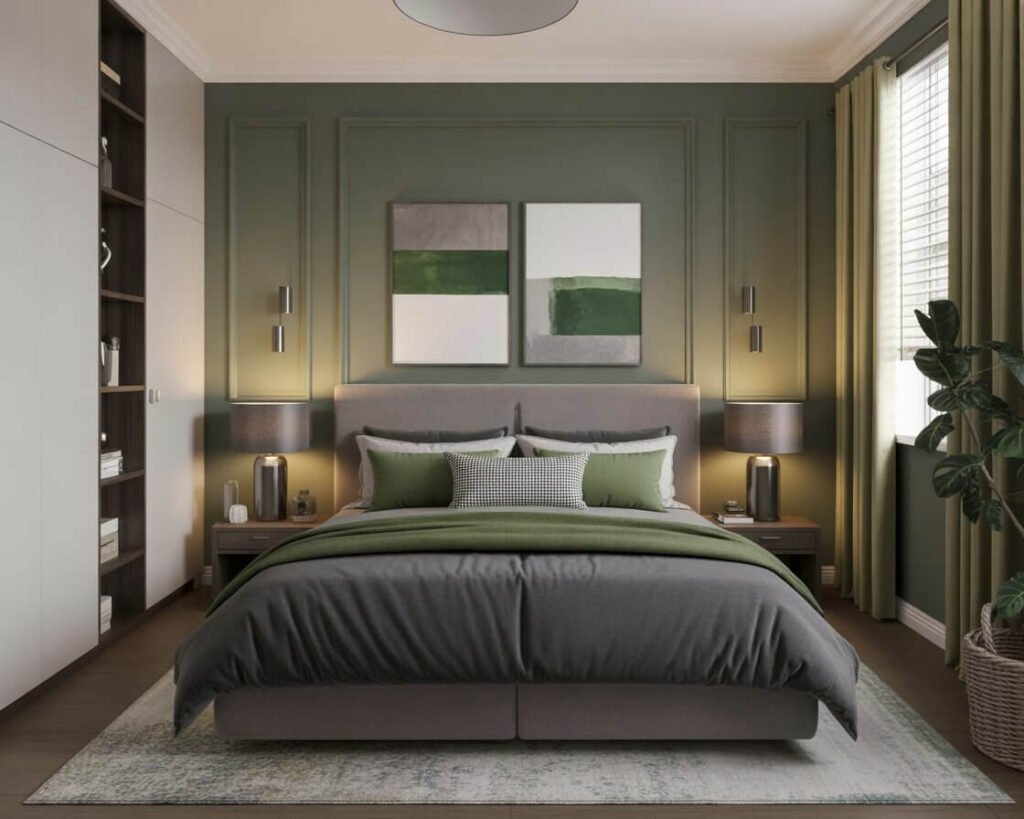
Green and grey is one of those color combinations that feels effortlessly sophisticated, largely because grey grounds and moderates whatever shade of green you pair it with. The result is almost always more restrained and grown-up than the same green used alone.
Charcoal grey bedding against sage green walls is a particularly effective combination — the deep grey anchors the room while the sage keeps it from feeling heavy or gloomy. Alternatively, pale grey walls with green introduced through textiles, artwork, and accessories allows you to adjust the green intensity over time without repainting.
Boho Green Bedroom with Layered Plants and Textiles
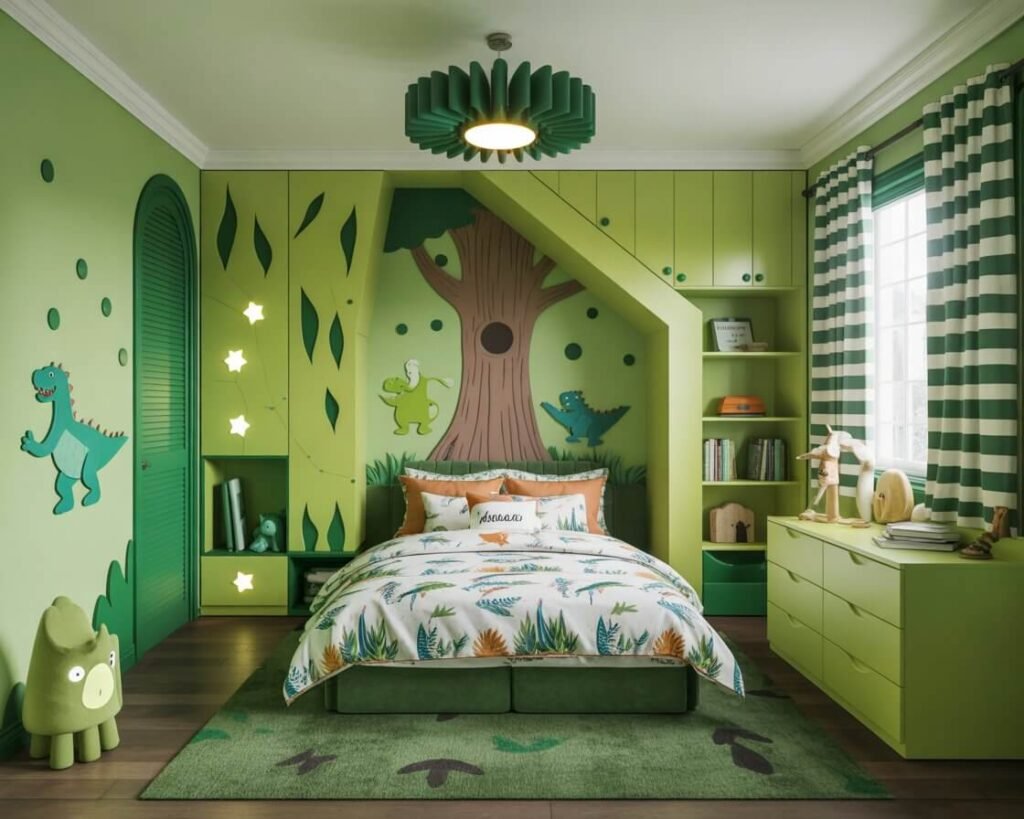
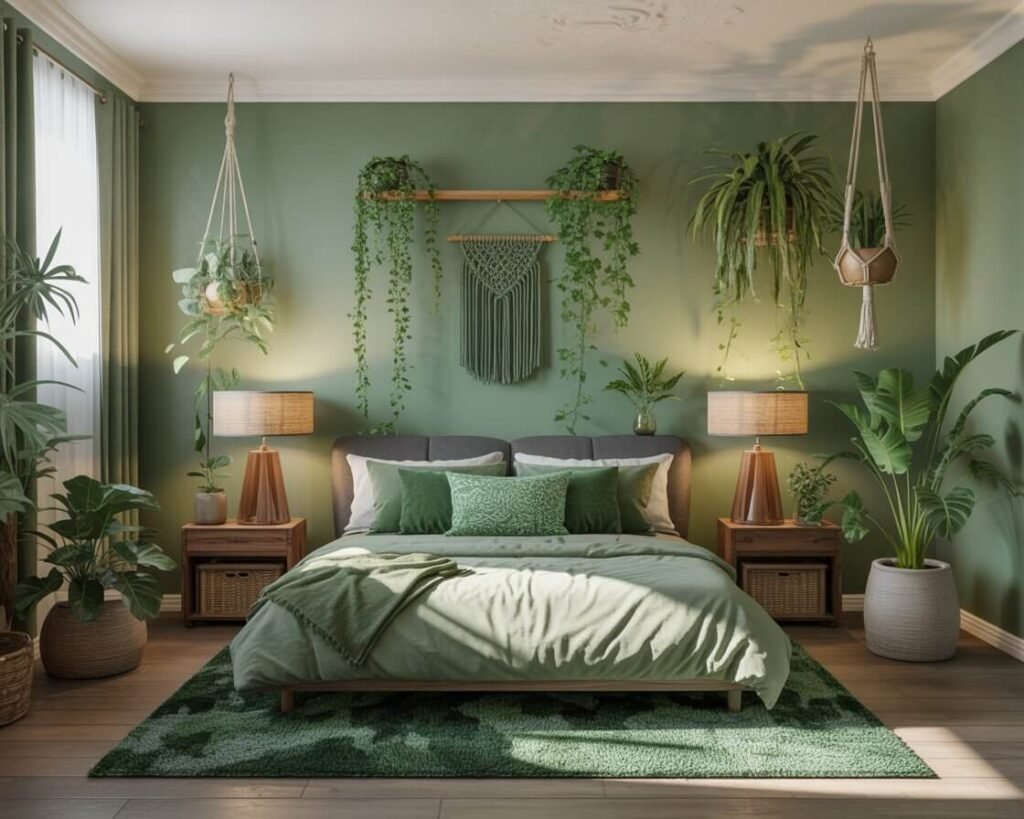
If any design style was made for green bedrooms, it is bohemian. The layered, eclectic, texture-rich quality of boho interiors is the perfect framework for building a green bedroom that feels lush, personal, and genuinely lived-in rather than magazine-staged.
Start with a base of sage or olive green walls, then layer. Add a macrame wall hanging, a vintage Persian rug, mismatched cushions in different shades of green, terracotta, and warm yellow. Bring in as many plants as you can manage — trailing pothos, hanging ferns, a large monstera in the corner. The goal is organized abundance, not minimalism.
Deep Green Walls with White-Painted Timber Furniture
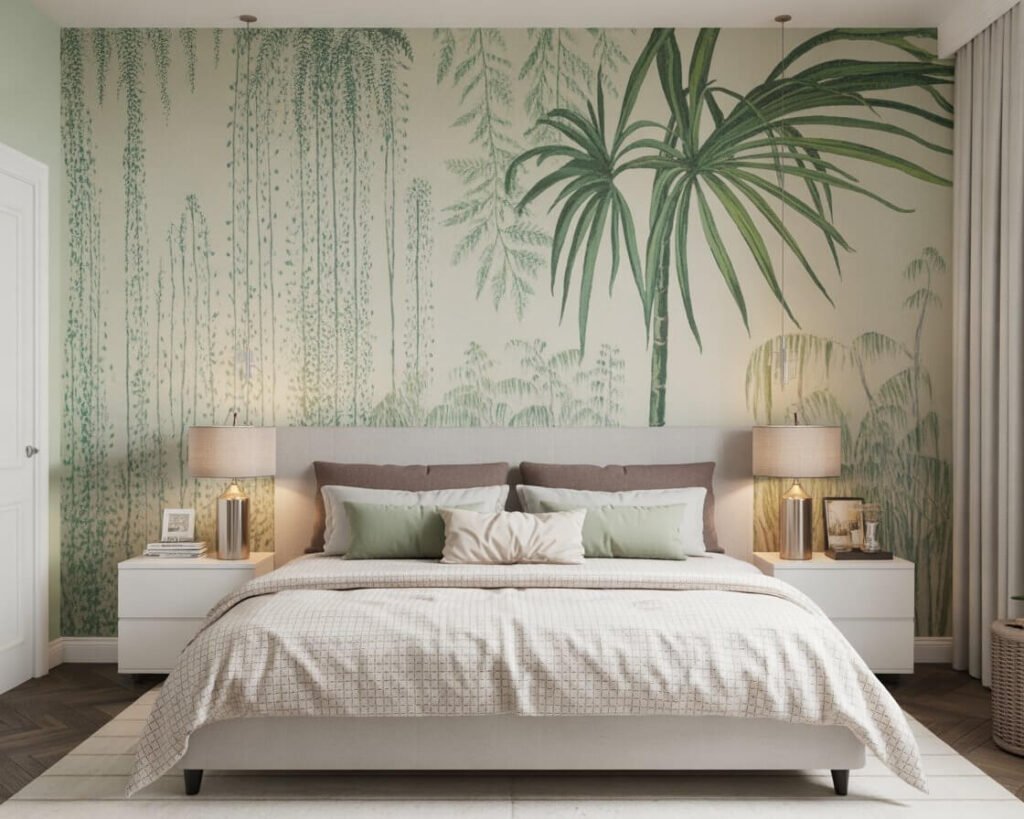
Dark green walls paired with white-painted furniture is a combination that has been working in interior design for centuries, and it continues to work because the contrast is simply beautiful. The deep green recedes and creates depth; the white furniture pops forward and adds freshness.
This approach is particularly effective in a cottage or country-style bedroom, where painted furniture — a wardrobe with panel doors, a chest of drawers with turned legs, a wrought iron bed frame — sits naturally against the richness of the dark green walls. Add floral or botanical textiles, a natural stone or slate floor, and the room feels genuinely timeless.
Muted Sage Green with Terracotta Accents
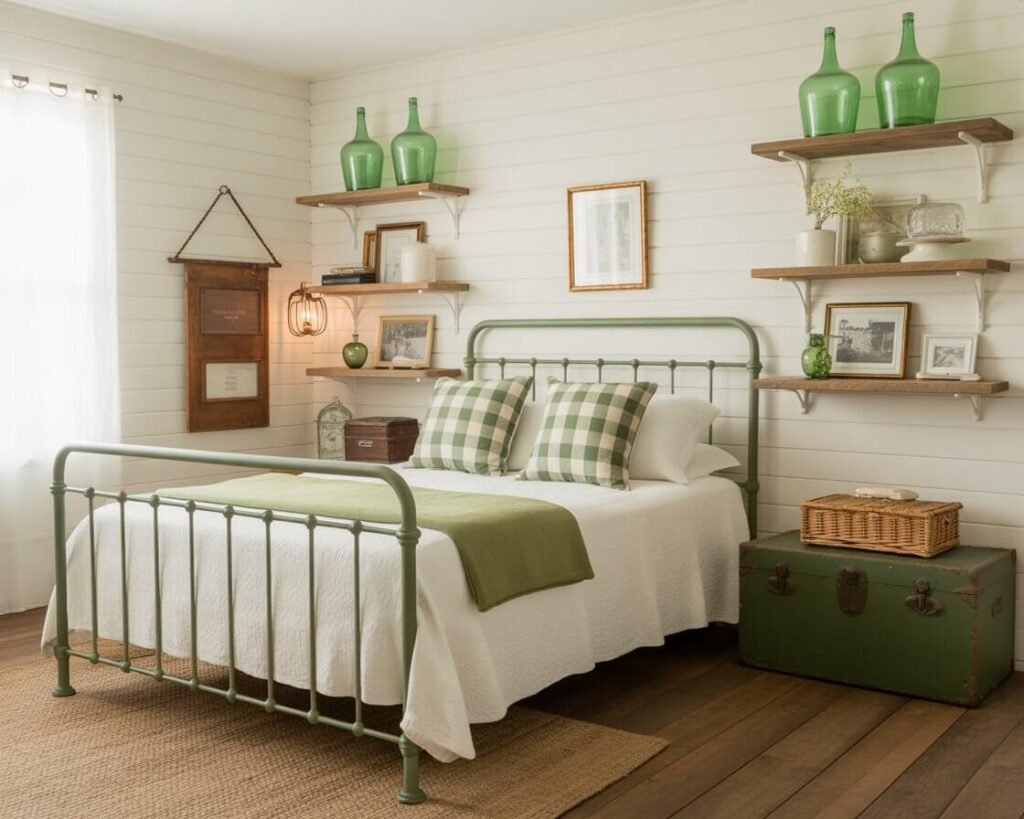
Sage green and terracotta is one of the most compelling color combinations to emerge from the design world in recent years. Both colors have a muted, earthy quality that feels rooted and natural, and they complement each other in the way that colors drawn from the same landscape inevitably do — think dusty olive leaves against red clay soil.
Introduce terracotta through ceramic table lamps, a throw or two, perhaps a textured cushion cover or a terracotta-toned area rug. The terracotta works as a warm accent against the cool of the sage, and together they create a bedroom that feels connected to the natural world in a subtle, non-literal way.
Hunter Green with Black Accents for a Dramatic Look
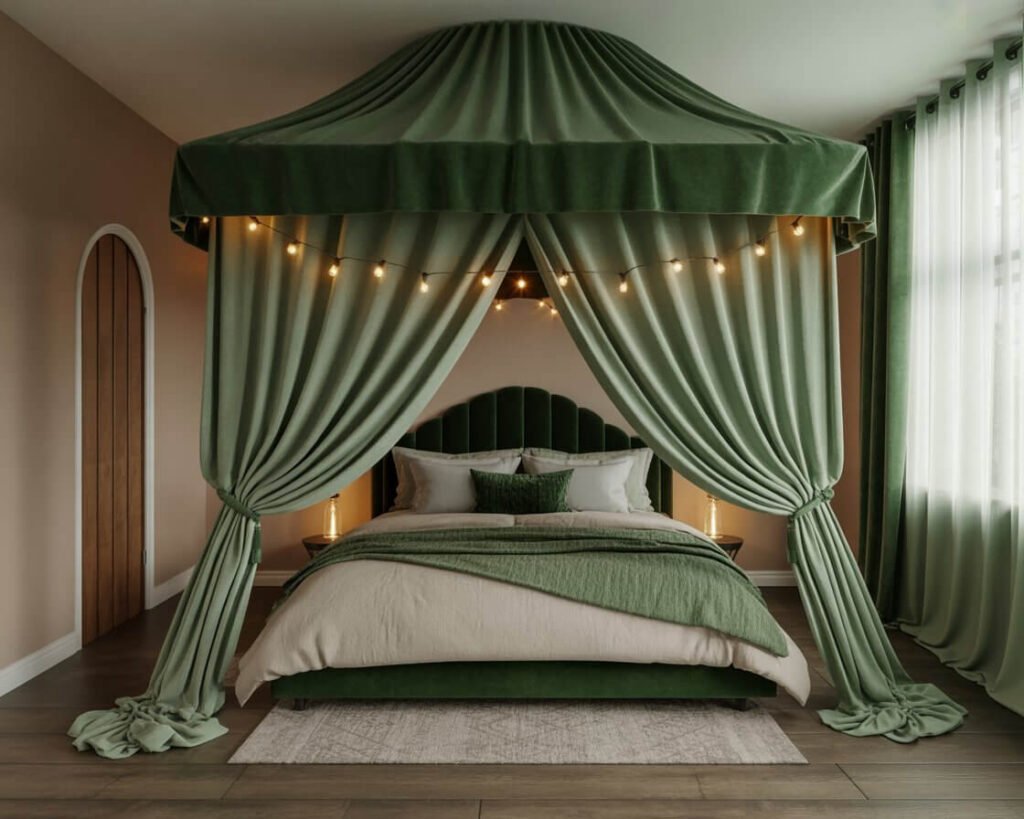
Hunter green and black is a bold choice — this is a bedroom palette for those who are comfortable with drama and are not afraid to commit to a room that makes a strong visual statement. The deep, slightly blue-toned hunter green combined with black hardware, black picture frames, and a black-stained timber bed frame creates a moody, masculine room with serious presence.
This palette requires careful lighting planning. A room this dark needs multiple light sources at different levels — bedside lights, a floor lamp, perhaps LED strip lighting behind a floating headboard — to create warmth and prevent the room from feeling oppressive after dark.
Green Bedroom with Natural Wood and Rattan
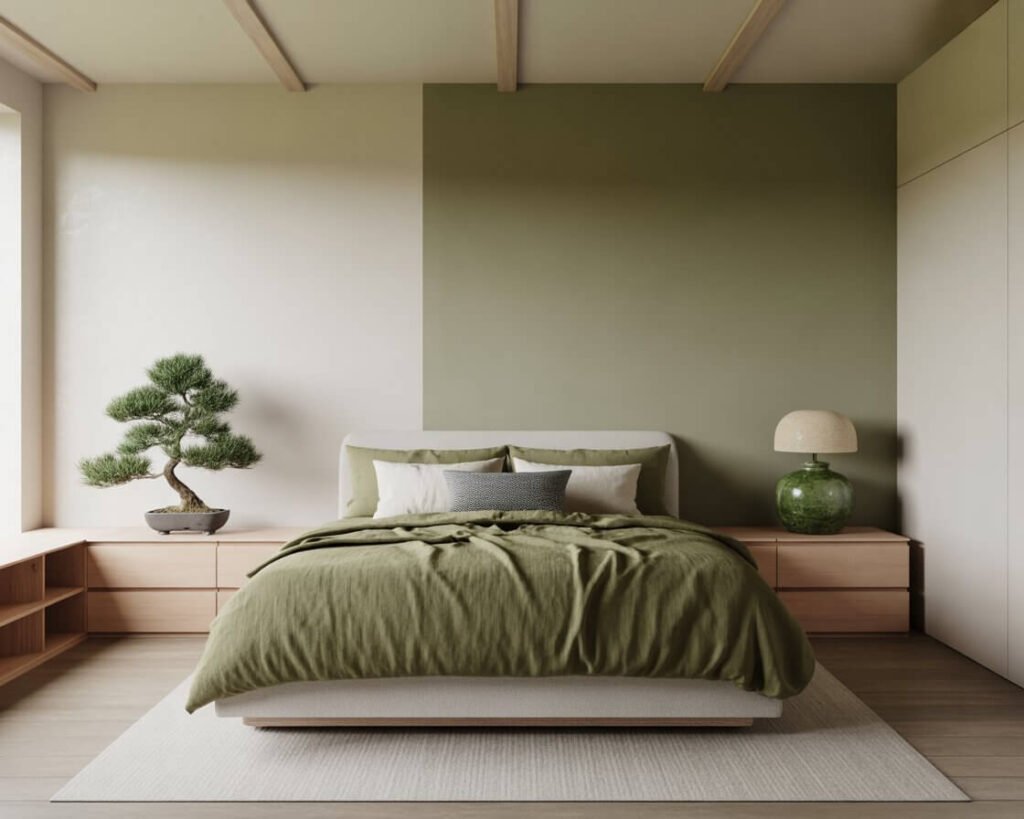
Green and natural wood is perhaps the most instinctively harmonious combination in interior design, and nowhere does it work better than in a bedroom. The warmth of natural timber — whether in a bed frame, beside tables, a wardrobe, or flooring — grounds the green and prevents it from reading as cold or stark.
Rattan and cane furniture adds further texture and an organic quality that complements green beautifully. A rattan pendant light above the bed, a cane-fronted wardrobe, or a woven bedside table alongside a green wall creates a room that feels genuinely connected to nature.
How to Choose the Right Shade of Green for Your Bedroom
Consider the Light in Your Room First
Before falling in love with a paint color on a phone screen or in a shop, understand the light in your bedroom. North-facing rooms receive cool, indirect light throughout the day — they benefit from warmer, more yellow-toned greens like olive, sage, or khaki. Cold blue-toned greens like teal or deep hunter can look beautiful in north-facing rooms too, but they need warm artificial lighting to prevent the room from feeling chilly after dark.
South-facing rooms are more forgiving — the warmth and directness of southern light flatters almost every green shade and even makes very dark greens like bottle or forest feel inviting rather than oppressive.
Test Paint Samples Properly
Paint samples are non-negotiable with green. The color you see on a card in a shop is almost never what you end up with on a wall, because paint color shifts dramatically with scale and lighting. Always buy at least two sample pots of any green you are considering.
Apply large swatches — at least A3 size — on the actual wall you plan to paint, ideally on both a north and south-facing section if your room has them. Observe the samples at different times of day, under natural light and under your bedroom’s artificial lighting. Only commit to a full tin once you are genuinely happy with what you see under all conditions.
Match the Finish to the Room’s Function
Matte and flat finishes absorb light and give green walls a rich, almost velvety depth — ideal for a bedroom where you want the color to feel enveloping and restful. Eggshell provides a very subtle sheen that is easier to clean and holds up better to the occasional scuff or mark.
Avoid high-gloss finishes on bedroom walls. The reflectivity creates visual noise and draws attention to every imperfection in the plaster, neither of which is restful.
Styling a Green Bedroom: Colors and Materials That Work
Green is one of the easiest colors to style around because of how broadly it connects to the natural world. The materials and colors that exist in nature alongside green — warm wood, raw stone, pale sand, aged metal — naturally work with it in an interior setting too.
Warm whites and creams are almost always a better companion to green than pure brilliant white. Brilliant white can look slightly harsh against green, particularly the softer, dustier shades. An off-white — whether ivory, linen, or a barely-there warm grey — sits more harmoniously.
Timber in warm tones — walnut, oak, teak, aged pine — works beautifully alongside green. Pale Scandinavian ash and white oak work better with cooler, lighter greens like sage and mint. Richer, warmer timbers suit the deeper shades like forest, bottle, and hunter.
Metallics are a natural pairing. Warm brass and unlacquered bronze suit olive, sage, and earthy greens. Cooler polished nickel and chrome work better with cooler, blue-toned greens like teal and hunter. Black iron and matte black hardware suit all greens but particularly the deepest shades.
For textiles, natural fibers — linen, cotton, wool, jute, rattan — work almost universally well with green. They share an organic quality that feels coherent. Synthetic materials and very shiny fabrics can look slightly out of place in a natural green palette, though velvet is an honourable exception — it is synthetic in many cases but its texture reads as luxurious rather than cheap.
Final Thoughts: Why Green Might Be Exactly What Your Bedroom Needs
After spending time thinking about green bedrooms — the shades, the combinations, the ways different people bring color into their most personal space — what stands out most is this: green almost never disappoints.
It is a color that works hard for a room. It creates calm without dullness. It adds character without demanding attention. It connects a space to the natural world without resorting to literal woodland murals or leaf-print everything. And unlike many trend-driven color choices, green has been present in bedroom design across centuries and cultures because it genuinely works on a human level, not just an aesthetic one.
Whether you start with a sage green feature wall, a single emerald velvet cushion, or a full deep bottle green commitment on every surface, the journey into green bedroom design tends to be a one-way door. Once you see what a considered shade of green does to a room — to the quality of the light in it, to how you feel in it at the end of a long day — going back to magnolia rarely holds much appeal.