
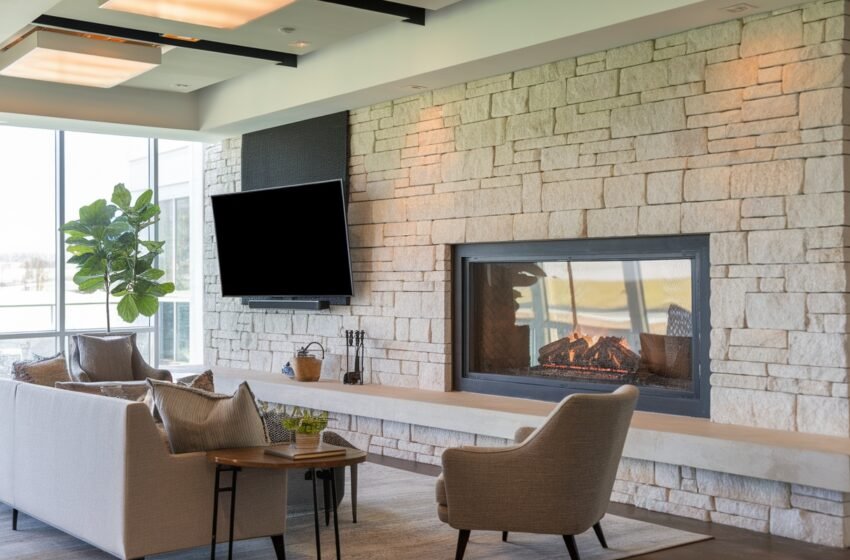
Let’s be honest — most people were told at some point that putting a TV above a fireplace is a bad idea. Too high, bad for your neck, heat damages the screen. And yet, here we are, with millions of living rooms doing exactly that, and doing it beautifully.
The truth is, the fireplace-and-TV combination is not a design crime. When it is planned thoughtfully and executed with the right layout, it becomes one of the most striking focal points a living room can have. The fire adds warmth and texture. The television adds function. Together, they anchor a space in a way that neither can quite manage alone.
The Classic Linear Gas Fireplace Below a Wall-Mounted TV
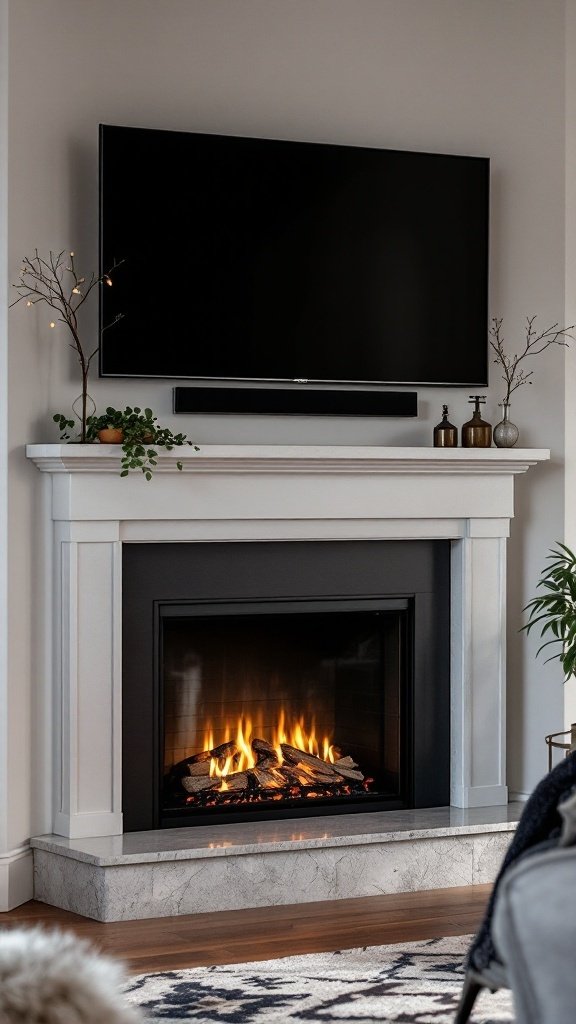
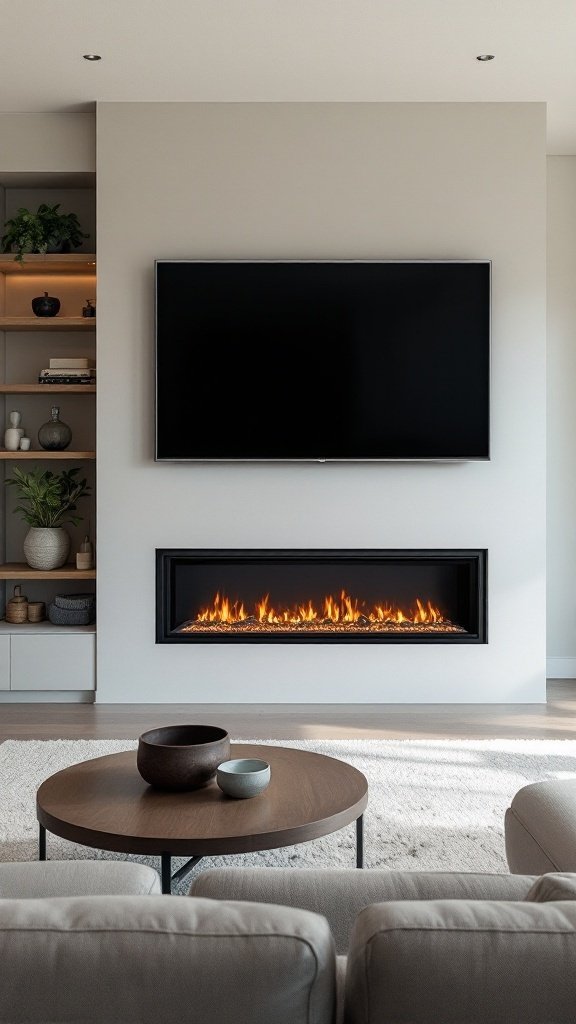
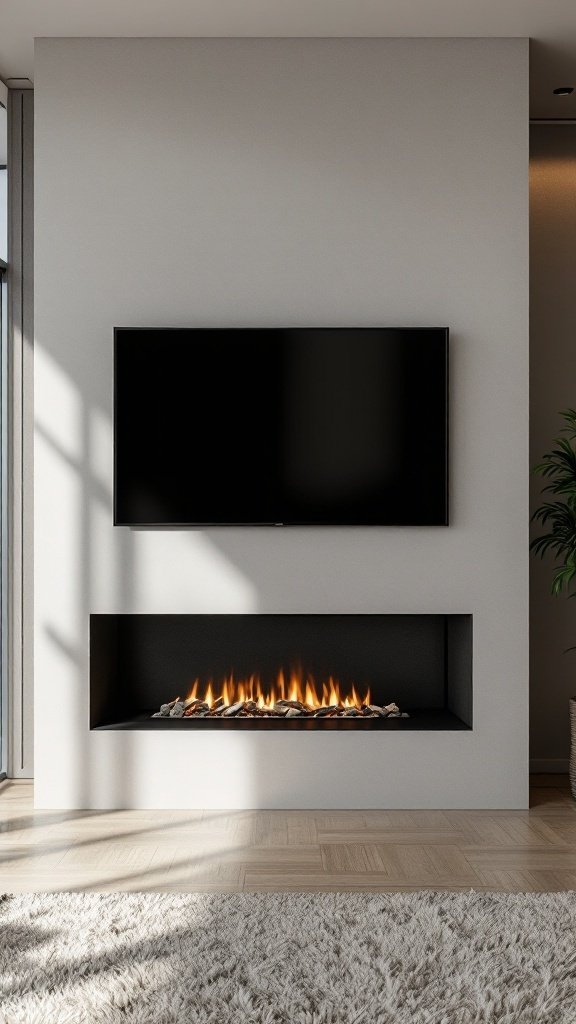
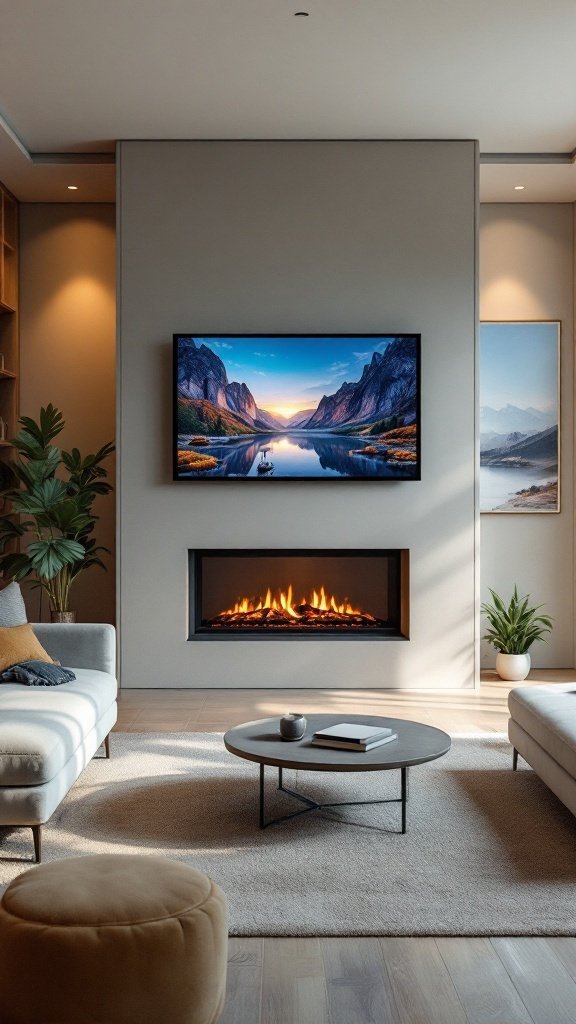
This is the layout that started the trend and remains the most popular for good reason. A horizontal linear gas fireplace — typically running 40 to 72 inches wide — sits low on the wall beneath a flat-panel TV mounted directly above it. The result is a seamless horizontal composition that feels inherently modern.
The key to pulling this off well is proportion. The TV and the fireplace should be roughly the same width, or the TV should be slightly narrower. A mismatch — especially a very narrow fire opening beneath a very wide screen — looks unbalanced.
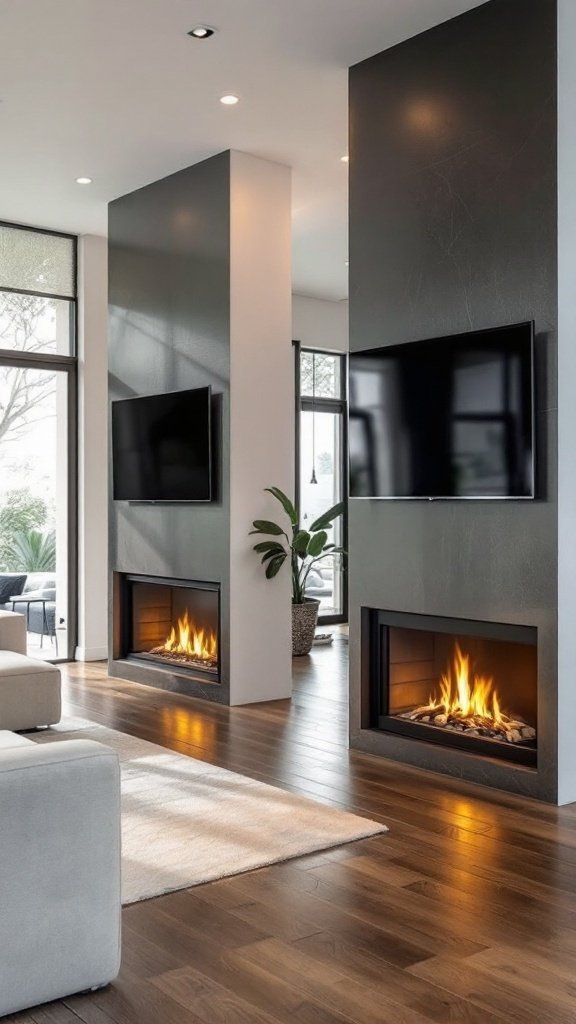
Full-Height Feature Wall with Inset Fireplace and Floating TV
Take the fireplace-TV combo to its logical extreme with a full floor-to-ceiling feature wall. The fireplace is inset into the lower portion of the wall, and the television floats above it, either recessed or surface-mounted. Flanking panels — in stone, plaster, timber, or large-format tile — tie everything together into one architectural statement.
This approach works especially well in open-plan living spaces where the feature wall becomes the visual anchor point for a large room. It reads as intentional and designed rather than improvised.
Recessed Fireplace Nook with Built-In TV Cabinet
Rather than a flush-to-wall installation, this approach recesses the fireplace slightly into the wall, creating a shallow nook effect. The TV is mounted within a custom-built cabinet that wraps around the fireplace opening, complete with integrated shelving, hidden cable management, and even concealed storage for remotes, streaming devices, and gaming consoles.
The built-in cabinet gives the whole setup a furniture-quality finish. It also solves the perennial problem of cable clutter — everything is tucked away inside the structure, leaving a clean, polished face to the room.
Rustic Stone Fireplace with Mounted TV and Timber Mantle
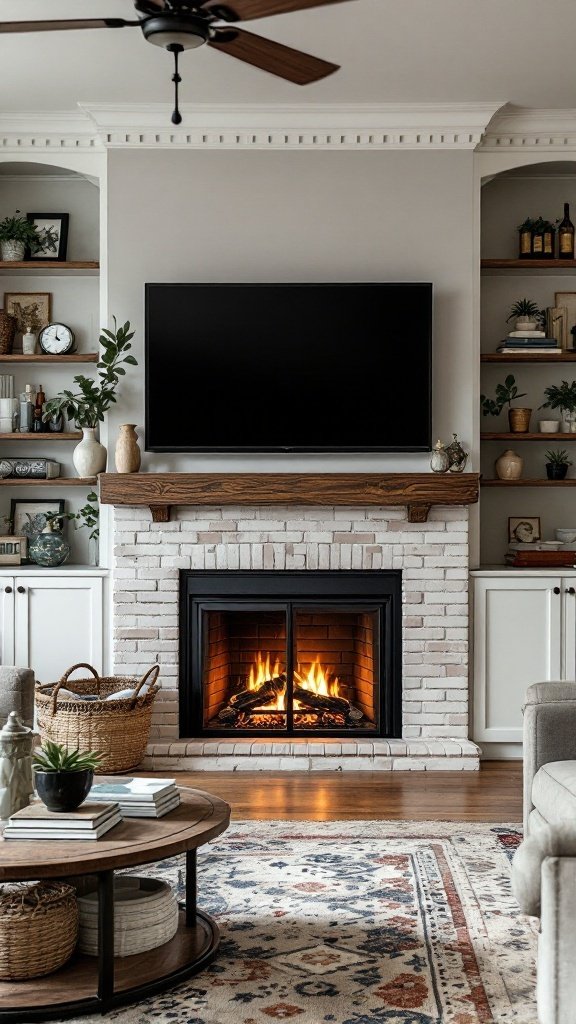
Not every modern fireplace idea needs to be cold and minimal. A stacked stone fireplace with a heavy timber mantle delivers tremendous warmth and character, and it pairs surprisingly well with a mounted flat-panel TV when the surround is designed thoughtfully.
The trick is in the scale. A chunky stone fireplace needs an equally bold TV to hold its own — a 65-inch or 75-inch screen sits far more comfortably above substantial stonework than a modest 50-inch panel would. The timber mantle also provides a natural visual break between fire and screen.
Minimalist White Wall Fireplace with Frameless TV
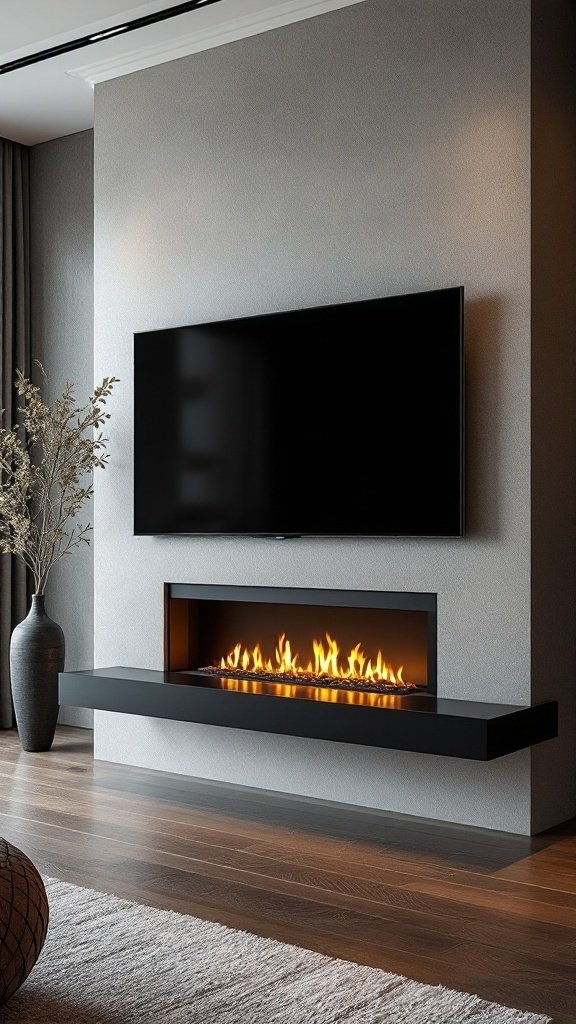
If your design philosophy leans toward less-is-more, a pure white or pale plaster wall with a sleek inset fireplace and a frameless TV creates an almost gallery-like calm. The television disappears into the wall when switched off, and the fire becomes the single point of focus. When both are active, the contrast is striking.
Frameless or thin-bezel TVs — particularly OLED models — work best in this context. Pair with minimalist furniture in neutral tones and the occasional sculptural decorative object to keep the space feeling warm rather than clinical.
Corner Fireplace with Angled TV Mounting
Corner fireplaces present a spatial challenge that most designers try to avoid — but when handled cleverly, they can become one of the most interesting layouts in a room. An angled TV mount positioned just above a corner fireplace allows both to be viewed comfortably from multiple seating positions, which is a genuine advantage in irregularly shaped rooms.
Some homeowners opt for a custom corner media unit that wraps around the fireplace entirely, housing the TV at a slight angle while incorporating shelves and storage on either side.
Two-Sided Fireplace Between Living Room and Dining Area
A double-sided fireplace — open on two faces — is an architectural luxury that also solves the TV placement question elegantly. The living room side incorporates the television above or beside the fireplace opening, while the dining room side benefits from the visual warmth of the fire without needing a screen at all.
This setup works best in open-plan homes where the kitchen, dining, and living areas flow into each other. It defines zones without closing them off and creates a genuinely dramatic architectural moment.
Traditional Mantle with Contemporary TV Integration
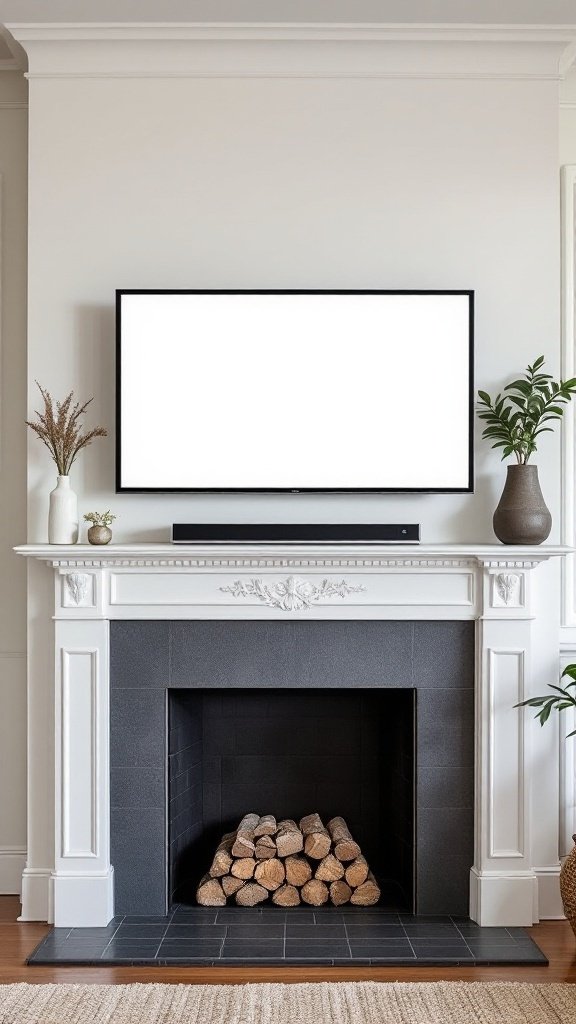
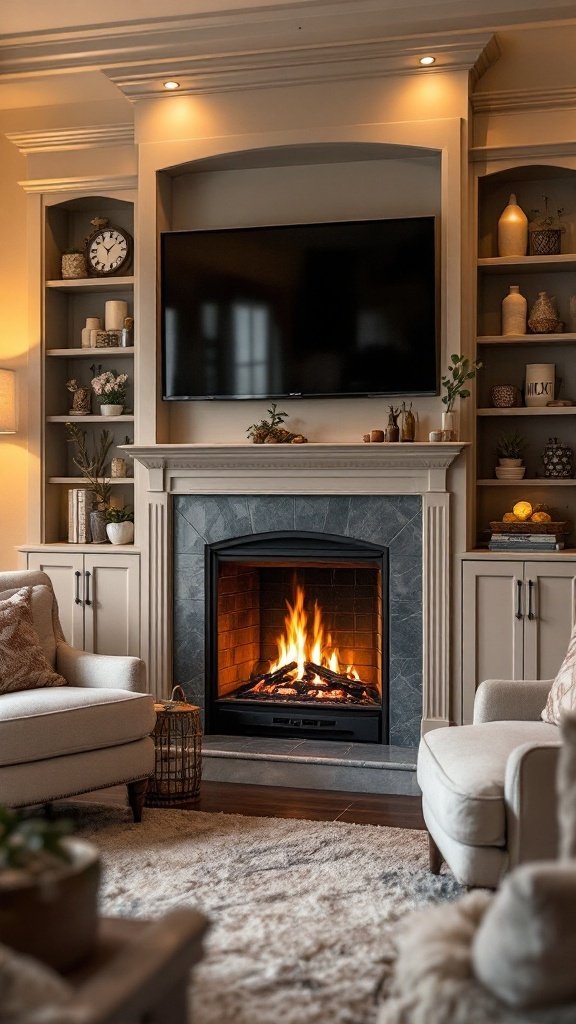
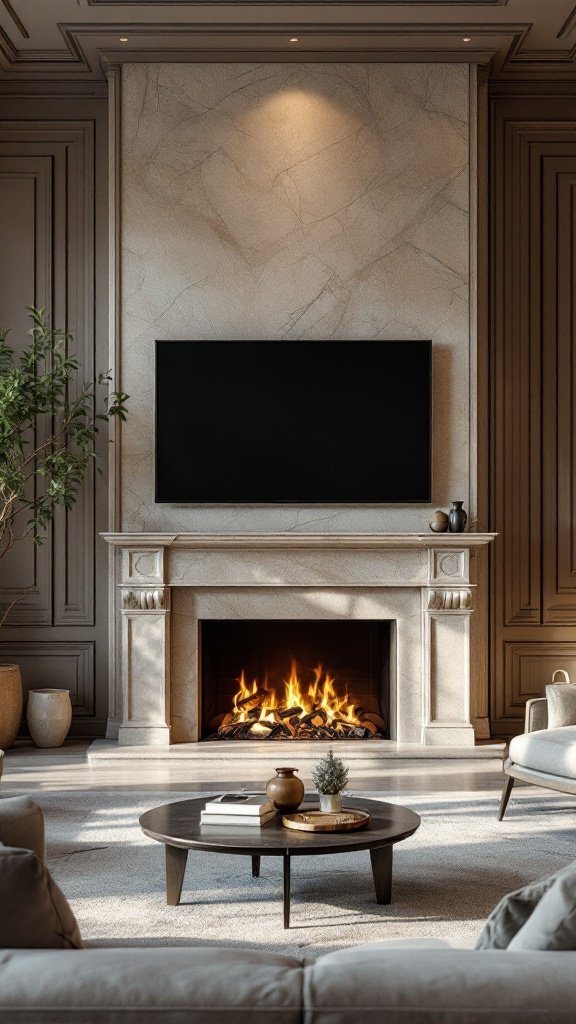
A classical painted mantelpiece — think Georgian, Victorian, or arts-and-crafts proportions — does not have to look out of place with a modern television. When the TV is recessed slightly into the chimney breast above the mantle, and the surrounding décor is edited carefully, the result is an elegant blend of old and new.
The key is restraint on the mantle shelf itself. Avoid cluttering it with too many objects. A couple of considered pieces, some greenery, and maybe a slim soundbar are all you need. Let the architecture do the work.
Suspended Fireplace Below a Floating TV Panel
For the genuinely bold design choice, a suspended or hanging fireplace — one that drops from the ceiling on a flue pipe with no surrounding wall structure — positioned beneath a wall-mounted TV creates a striking layered effect. The fire floats in space; the screen floats above it. Nothing meets, nothing touches.
This is a look that photographs extraordinarily well and stops visitors in their tracks. It is also more complex to engineer than it appears, requiring careful structural planning and professional installation.
Concrete Feature Wall with Linear Fireplace and Integrated Screen
Raw concrete has become one of the most versatile materials in contemporary interior design, and it works brilliantly as a fireplace-TV wall finish. A poured or board-formed concrete wall with a thin linear fireplace inset and a TV surface-mounted flush to the concrete creates a cohesive, monolithic composition that feels properly architectural.
The material’s natural grey tones are neutral enough to work with virtually any furniture palette, and its textured surface adds visual interest without competing with the fire or screen.
Is It Actually Safe to Put a TV Above a Fireplace?
The short answer is yes, provided you plan correctly. The concerns about heat damage are valid for wood-burning fireplaces with no proper heat management — a roaring wood fire pumps significant heat upward, and sustained exposure to temperatures above 50°C can degrade LCD and OLED panel performance over time.
However, most modern gas fireplaces are designed with forward-directed heat outputs that push warmth into the room rather than straight up the wall. Electric fireplaces produce no wall-directed heat at all. If you are set on a wood-burning fireplace, a properly installed heat deflector shelf between the firebox and the TV can manage the temperature differential effectively.
Solving the Viewing Angle Problem
The most common ergonomic complaint about TV-over-fireplace setups is neck strain from looking upward. The ideal television viewing height positions the centre of the screen at or slightly below eye level when seated. In many fireplace installations, the TV ends up considerably higher than this.
The solution is a full-motion tilting TV mount that allows the screen to angle downward toward the viewer. These mounts are readily available and can make an above-fireplace TV installation genuinely comfortable to watch for extended periods.
Cable Management is Non-Negotiable
A beautiful fireplace-TV wall is immediately undermined by visible cables dangling down the chimney breast. Plan your cable management before anything is mounted. For built-in installations, cables can be routed through the wall cavity. For surface-mounted setups, in-wall cable conduit kits provide a clean, Code-compliant solution in most situations.
Also plan for your power outlet positions. The TV power supply and any streaming devices need accessible outlets, ideally positioned inside the mounting recess or inside the TV cabinet rather than on the exposed wall face.
Choosing the Right TV Size for Your Fireplace
There is no single correct answer, but a useful rule of thumb: the TV should be roughly the same width as the fireplace opening, or up to 20 percent wider. Going significantly wider makes the setup look top-heavy. Going narrower makes the TV look lost above a substantial fireplace surround.
For most living rooms, the sweet spot is between 55 and 75 inches. Ultra-wide screens above 85 inches work brilliantly in large open-plan spaces but can feel overwhelming in a standard living room.
Styling the Space Around Your Fireplace TV Wall
The feature wall itself is only half the equation. What surrounds it determines how the overall room feels.
Keep the furniture arrangement simple and symmetrical around the feature wall. Two matching sofas facing each other, or a sofa and two chairs arranged in a U-shape, both allow comfortable views of the TV while keeping the seating close enough to feel the warmth of the fire.
Avoid hanging artwork or mirrors on the same wall as the fireplace and TV. That wall is doing enough work. Use the adjacent walls for art, and keep the feature wall clean and focused.
The mantle or the shelf space immediately adjacent to the fireplace is prime styling territory. A few well-chosen objects — a sculptural vase, a stack of books, a trailing plant, a single piece of art leaning against the wall — adds personality without clutter.
Lighting deserves special attention. Recessed ceiling lights positioned to wash the feature wall from above create beautiful drama. Wall sconces on the flanking walls add layered warmth. And if your shelving incorporates LED strip lighting, the glow behind objects on shelves adds a soft ambient layer that works especially well in the evening.
Final Thoughts: Making the Fireplace and TV Work Together
The best modern fireplace ideas with TV are not about choosing one over the other or forcing them to coexist awkwardly. They are about designing a space where both elements belong — where the screen and the fire feel like they were always meant to share a wall.
The ideas in this guide cover everything from budget-friendly electric inserts to fully bespoke architectural feature walls. There is a version of the fireplace-TV combination that works for every style, every budget, and every room size. The key is approaching it with intention rather than afterthought.
Measure carefully. Plan your cable management. Choose materials that earn their place on the wall. And above all, design for how you actually live — not for how the room looks in photographs.
Because the best living room is not the one that looks the most impressive in a design magazine. It is the one you genuinely want to come home to every evening, settle into, and enjoy.