
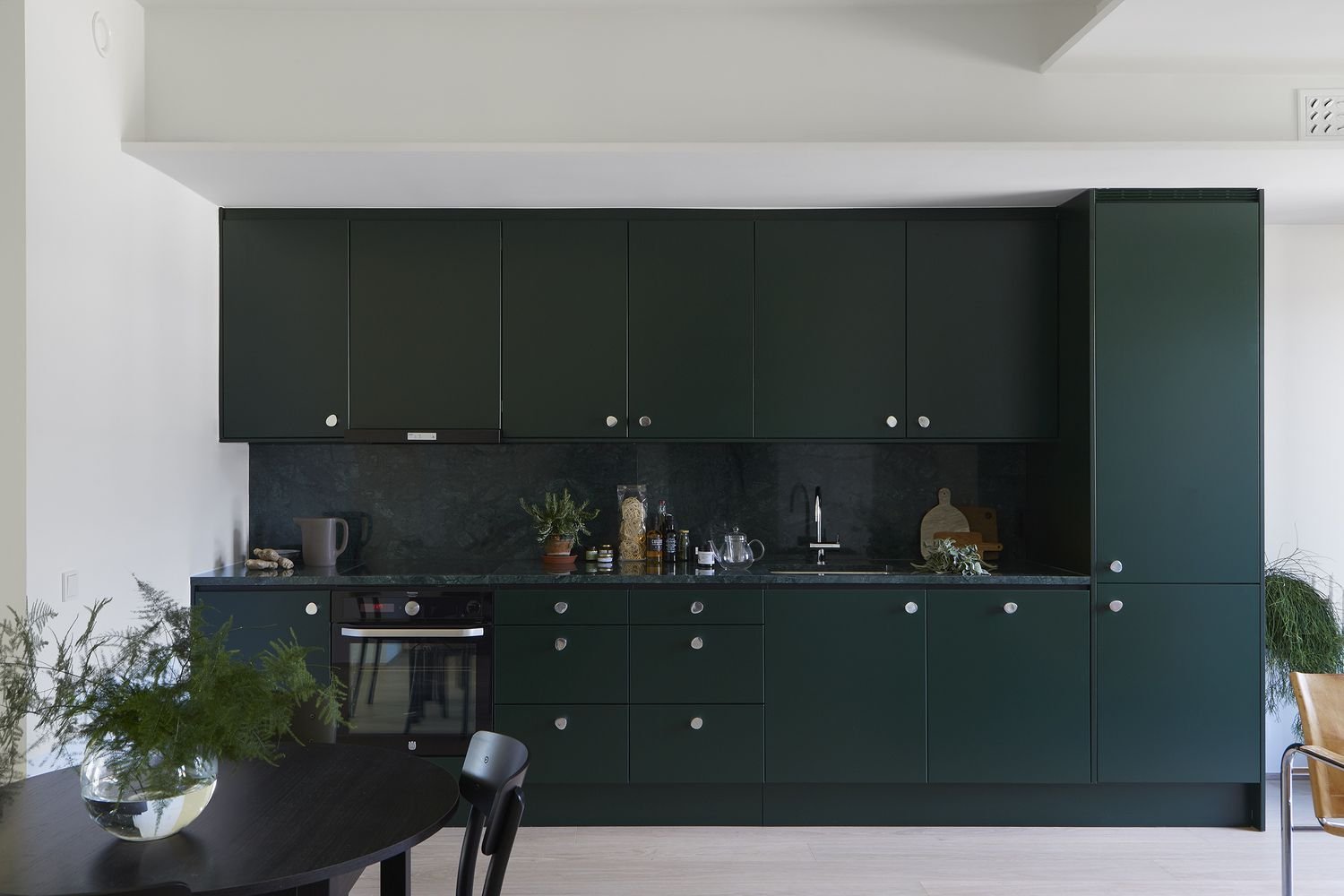
If there is one interior design trend that refuses to fade quietly into the background, it is the dark green kitchen. From deep forest greens to rich hunter tones, this color has made its way from accent walls to full cabinet overhauls — and for good reason. Dark green carries a unique quality that few other colors can match: it feels both bold and calming at the same time.
Walk into a kitchen dressed in dark green and you will immediately feel something shift. The color grounds the space. It creates a sense of depth and intention. It is the kind of design choice that says, “this kitchen was thoughtfully put together,” not just assembled from a catalog. And the best part? Dark green works across nearly every kitchen style — from modern minimalist to cozy farmhouse to sleek contemporary.
1. Dark Green Cabinets with Brass Hardware
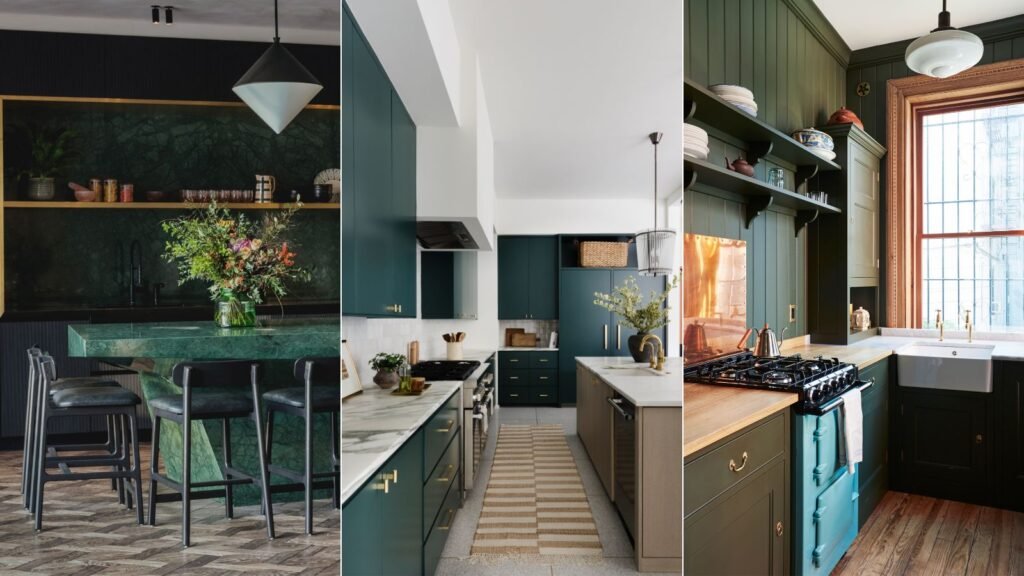
Let’s start with one of the most classically appealing combinations in kitchen design. Dark green cabinets paired with brass hardware create a look that manages to feel luxurious without crossing into stuffy territory. The warmth of brass naturally balances the depth of dark green, and together they produce a kitchen that looks both timeless and intentional.
The key to making this work is choosing the right finish for your brass. Unlacquered brass develops a natural patina over time and tends to look more organic and less flashy. Satin brass sits in a middle ground — warmer than chrome, but less bold than polished gold. Either works beautifully against a deep green, so it really comes down to the overall mood you are going for.
What Makes This Combination Work
- Brass warmth counterbalances the coolness of dark green tones
- The contrast creates visual interest without overwhelming the space
- Works equally well with shaker-style and flat-front cabinet doors
- Ages gracefully — both materials develop character over time
2. Dark Green Island Against White Perimeter Cabinets
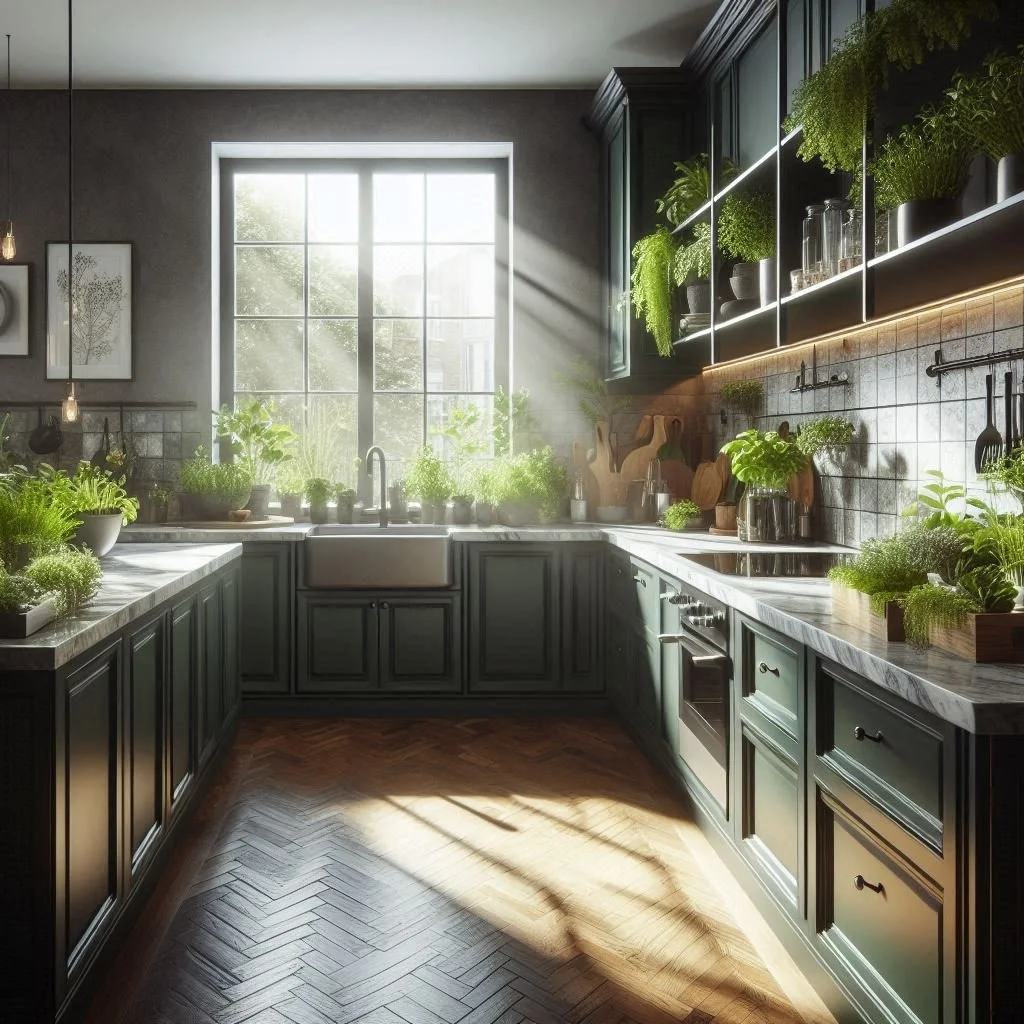
Not ready to go all-in on dark green throughout your entire kitchen? A dark green island is one of the smartest ways to introduce the color without a full commitment. When paired with white or off-white perimeter cabinets, the island becomes a natural focal point — a statement piece that anchors the entire room.
This approach works particularly well in open-plan kitchens where the island is visible from the living or dining area. The green draws the eye and creates a visual connection between the kitchen and the rest of the space. For countertops, white quartz with subtle veining tends to look clean and elevated without competing with the green.
Pro tip: Add pendant lights directly above the island to highlight the color and create a layered lighting effect. Warm-toned bulbs will bring out the richness of the green far better than cool white lighting.
3. Dark Green with Natural Wood Accents
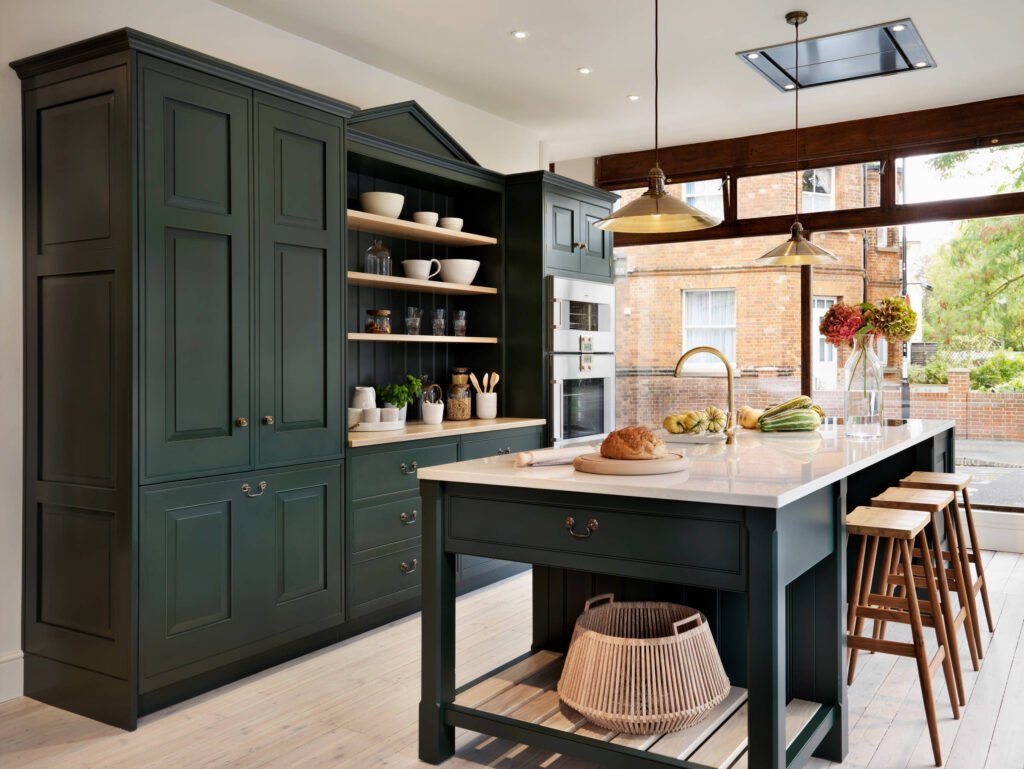
There is something almost elemental about pairing dark green cabinetry with natural wood. The combination feels grounded, organic, and genuinely inviting. Think dark green lower cabinets alongside open shelving in medium-toned oak, or painted green upper cabinets with a butcher block island surface.
Wood species matter here more than you might think. Lighter oaks can feel a bit washed out against very deep greens, while walnut — with its rich chocolate undertones — creates a dramatic and luxurious contrast. If you want something in between, white oak with a natural or light honey finish tends to be the most versatile pairing.
- Avoid very pale or whitewashed woods — they can look stark against deep green
- Warm-toned walnut or medium oak are consistently the best pairings
- Add potted herbs or greenery to lean into the natural theme
- Consider open wooden shelving for a lived-in, layered effect
4. Forest Green Cabinets with Marble Backsplash
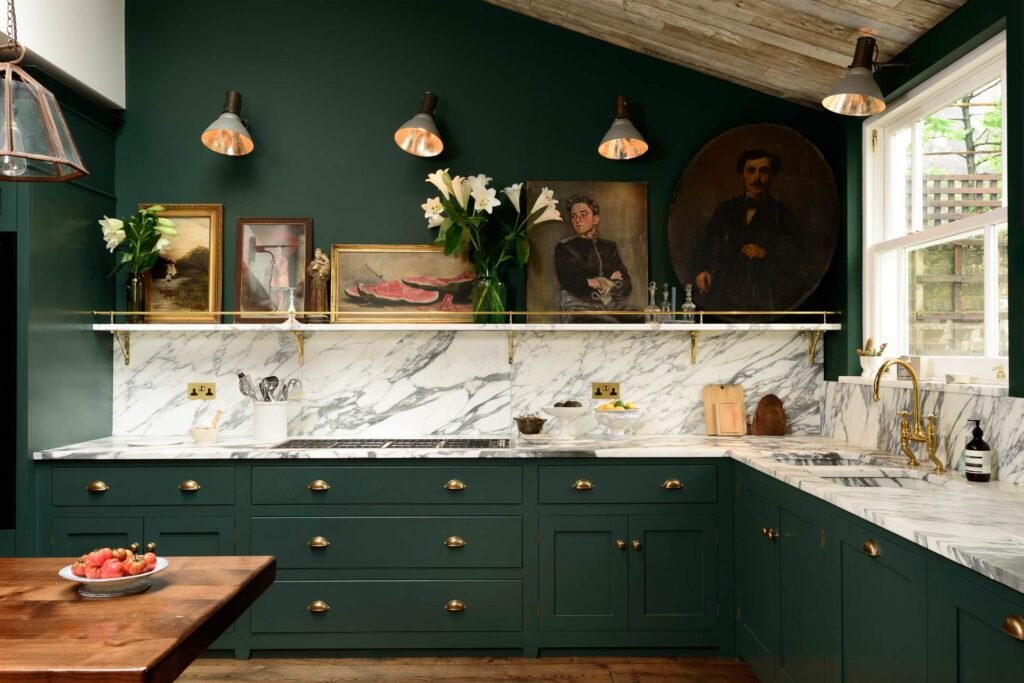
If there is a combination that feels genuinely elevated and timeless, it is dark green cabinetry with a marble backsplash. White marble with natural grey veining against deep green creates a classic pairing that has been used in high-end kitchen design for years — and it still looks incredible today.
For those who want something a little more adventurous, consider a marble with natural green veining. The way the veins echo and reference the cabinet color creates a cohesive, almost gallery-like quality in the kitchen. It looks like a deliberate design choice rather than a happy accident.
On a tighter budget? High-quality porcelain slabs that mimic marble have become remarkably convincing. If you are choosing large-format tiles for a slab backsplash look, go with rectified tiles for the cleanest joints.
5. Two-Tone Kitchen: Dark Green Lowers and White Uppers
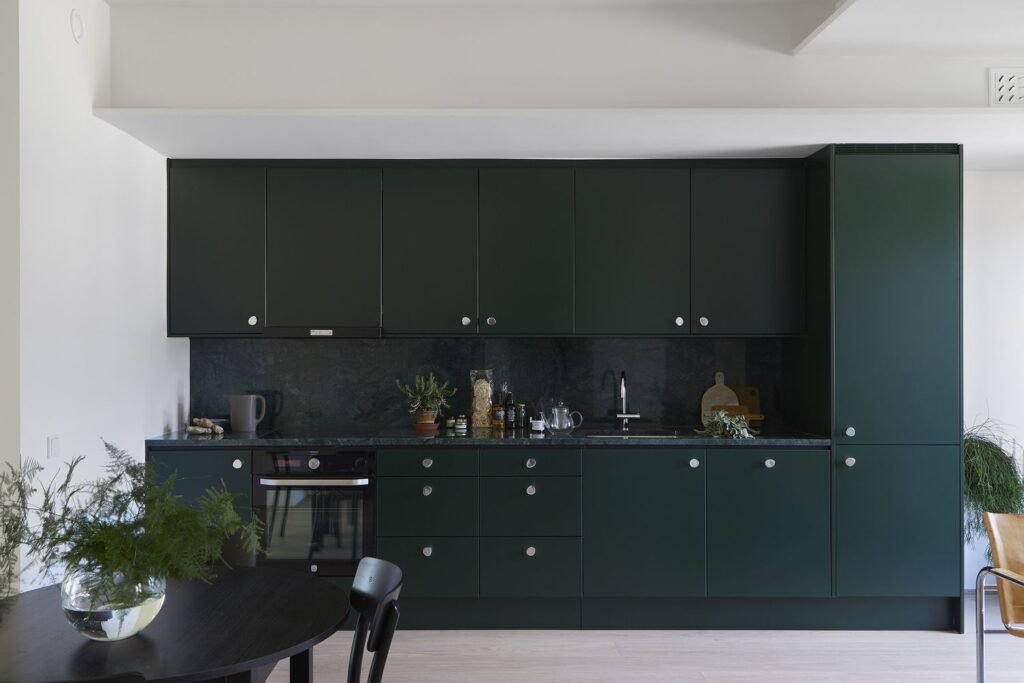
The two-tone kitchen layout is a design approach that genuinely serves a purpose beyond aesthetics. By keeping dark green on the lower cabinets and using white or cream on the upper cabinets, you balance visual weight in a way that makes smaller kitchens feel significantly larger.
White upper cabinets reflect natural light far more effectively than dark ones. This means your kitchen stays bright even as the lower half adds depth and drama. It is one of the most practical ways to incorporate dark green in a space where full dark cabinetry might feel too heavy or enclosed.
Best Scenarios for Two-Tone
- Kitchens with limited natural light
- Galley or narrow kitchen layouts
- Smaller square footage where visual space matters
- Renters who want bold style without full commitment
6. Dark Green Cabinets with Matte Black Hardware
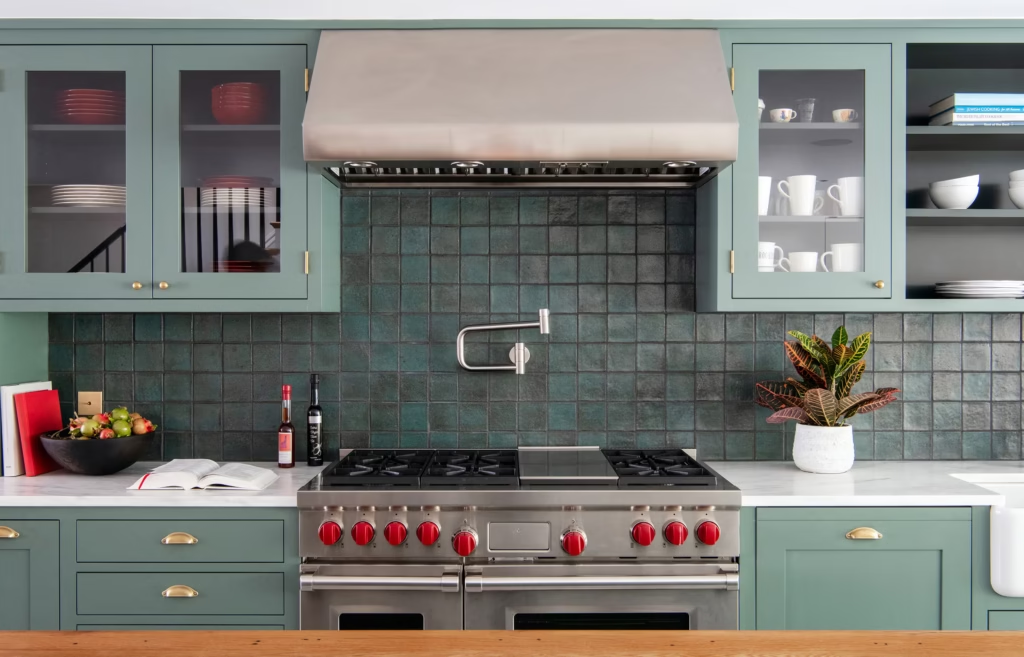
While brass and gold get a lot of attention, matte black hardware paired with dark green cabinets creates a completely different mood — and it is one that has been growing steadily in popularity. The combination feels more contemporary and restrained. Less vintage, more architectural.
Matte black hardware essentially disappears into the green at certain angles, creating a seamless, clean look. At other angles, the dark contrast gives the cabinets a graphic, intentional quality. This approach works brilliantly in kitchens that lean toward a more modern or industrial design language.
Important: Choose matte black over glossy black. Glossy hardware shows fingerprints readily and can look slightly cheap against high-quality cabinetry. Matte finishes hold up far better to daily use.
7. Dark Green and Gold Accents for a Jewel-Tone Effect
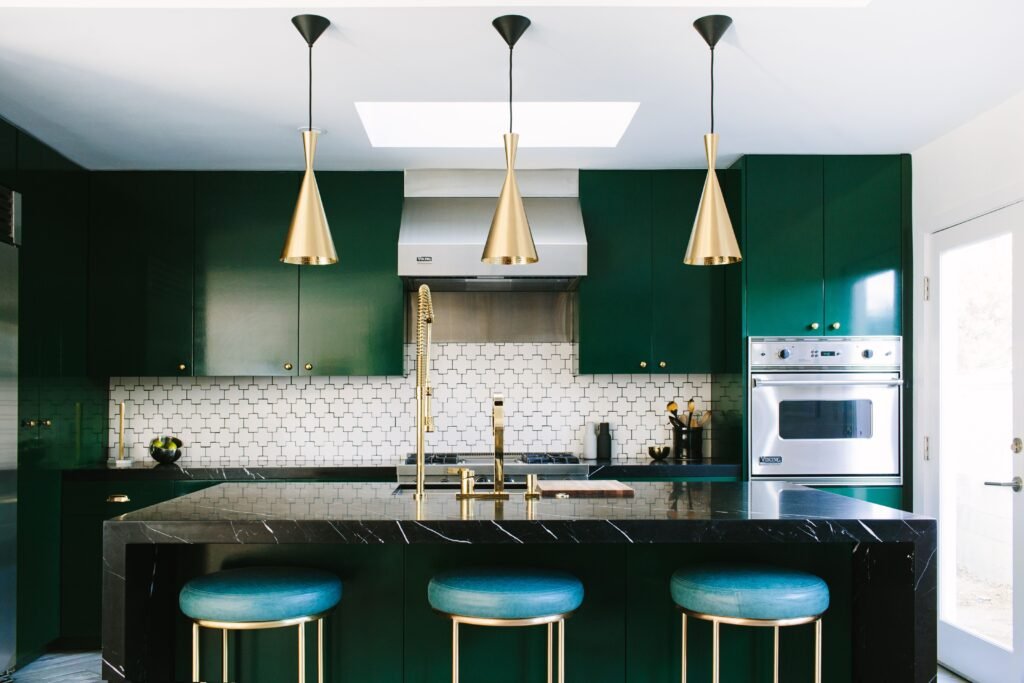
If you want your kitchen to feel genuinely opulent, dark green with gold accents is the direction to go. This pairing transforms the green into something almost jewel-like — rich, saturated, and deeply intentional. It draws on a color palette that has been used in luxury interiors for centuries.
The trick here is restraint. Choose three or four gold elements and commit to them: cabinet hardware, the faucet, a range hood trim, and perhaps a light fixture above the island. Too much gold and the kitchen starts to feel overdone; the right amount and it feels considered and expressive.
- Gold faucets in a bridge or goose-neck style work beautifully
- Cabinet pulls and knobs in brushed gold rather than polished look more grounded
- A single gold pendant light can tie the whole palette together
- Avoid mixing gold with chrome — pick one metallic family and stay in it
8. Dark Green Kitchen with White Farmhouse Sink
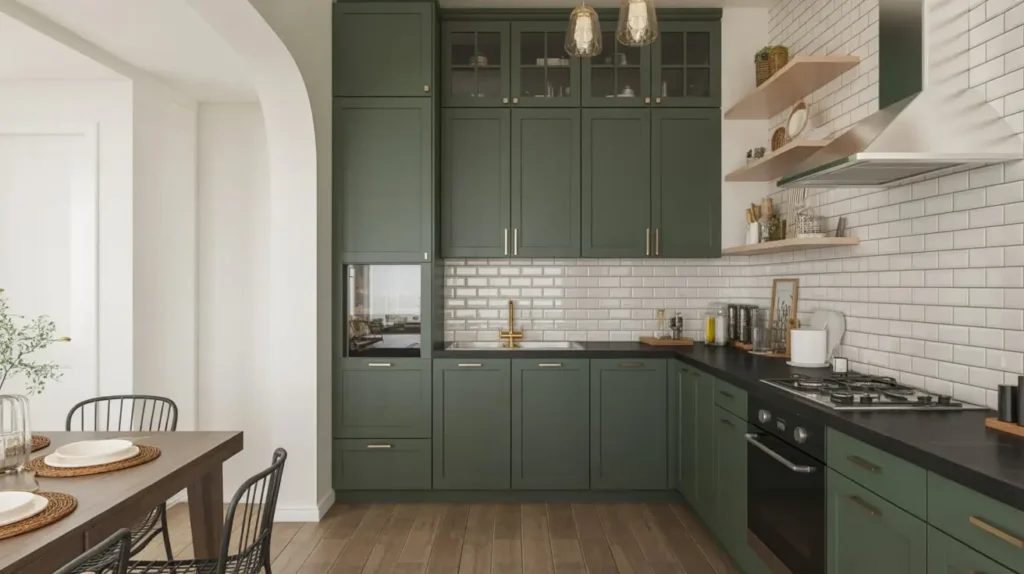
There is a particular combination that captures something nostalgic and deeply comforting — dark green cabinetry surrounding a classic white apron-front farmhouse sink. The contrast between the bold green and the bright white of the sink creates a focal point that feels both dramatic and homey.
This look tends to suit kitchens with a warmer, more traditional character. Shaker-style cabinet doors work especially well here. Adding a bridge faucet in brass or copper completes the look and reinforces the vintage sensibility without tipping into pastiche.
Sink Details That Elevate the Design
- Choose a single basin apron-front sink for maximum visual impact
- A bridge faucet in unlacquered brass or aged copper adds warmth and character
- Keep the countertop material simple — honed marble or butcher block both work well
- A small potted herb garden on the windowsill above the sink completes the picture
9. Dark Green Pantry with Open Shelving
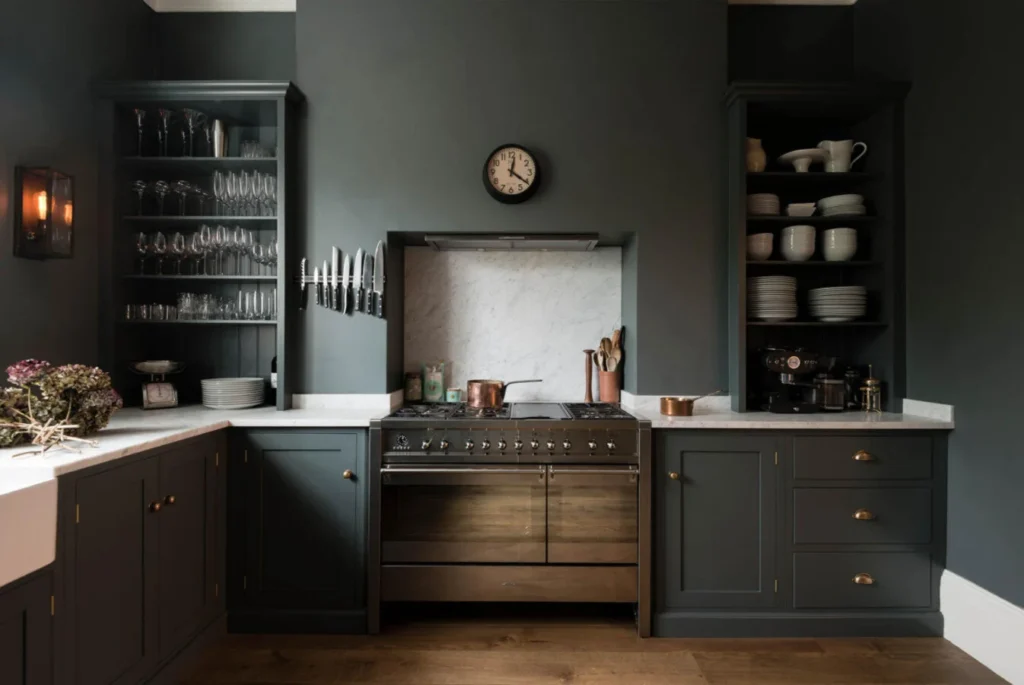
Not every dark green statement needs to involve your main cabinets. A dark green pantry with open shelving is a contained, lower-commitment way to introduce the color while creating a genuinely stunning functional space. Paint the interior walls of a walk-in pantry in deep green, add white or wooden shelves, and let your organized pantry goods become the display.
The dark background makes jars, tins, and ceramics pop in a way that painted white pantry walls simply cannot match. It also makes the pantry feel more intentional and curated. This is a particularly good idea if you are working toward a first use of dark green before committing to a larger kitchen refresh.
10. Dark Green Cabinets with Herringbone Tile Floors
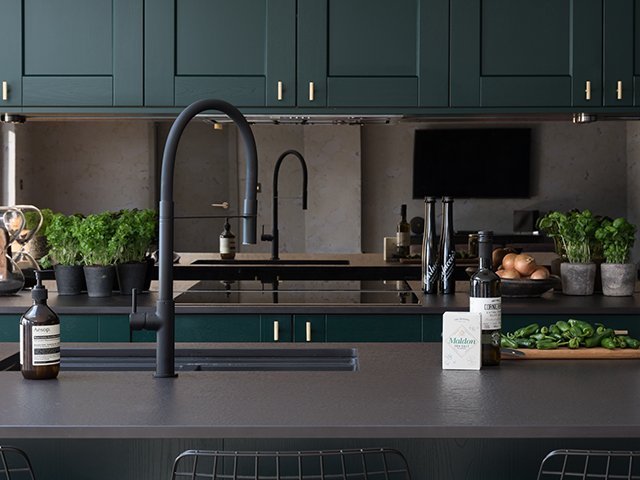
Dark green cabinetry is a bold enough choice on its own, but when you pair it with herringbone flooring, you create a kitchen that feels genuinely layered and considered. The geometric pattern of herringbone adds movement to the floor plane, while the cabinetry provides a strong visual anchor above.
In terms of tile choice, warm white or soft beige herringbone tiles work best with most dark green tones. If you want a slightly moodier result, go for a greyed-out porcelain in a lighter tone. The key is making sure the floor does not compete with the cabinetry — it should complement and support the overall palette.
- Choose tiles with natural variation rather than uniform solid colors
- Grout color matters: a warm grey or slightly off-white grout reads more naturally than stark white
- Natural stone herringbone (like limestone or travertine) elevates the look considerably
- Large herringbone tile pattern works best in bigger kitchens; smaller tiles suit tighter spaces
11. Deep Hunter Green with Stainless Steel Appliances
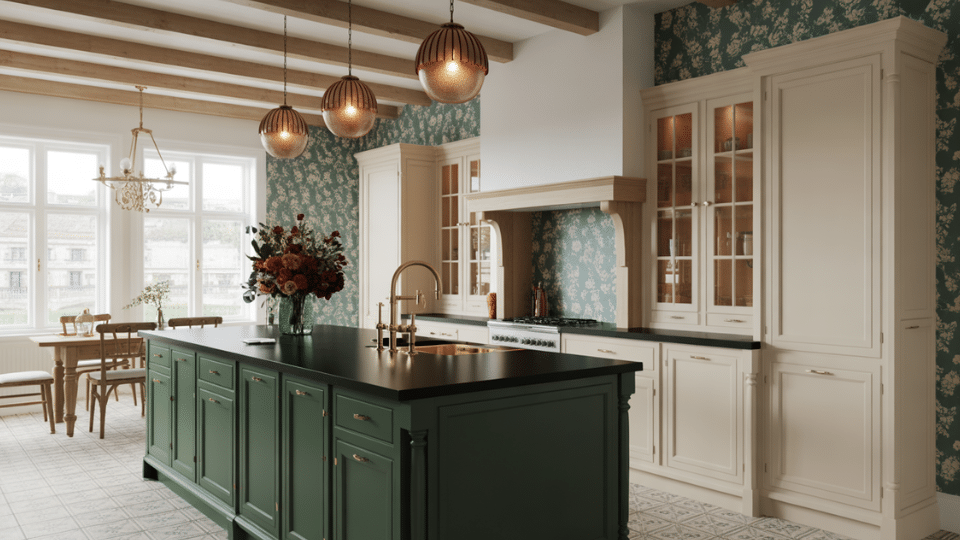
Hunter green and stainless steel is one of those combinations that feels modern, clean, and just a little bit commercial-kitchen-inspired. The cool metallic tones of stainless steel play well against the depth of hunter green, and the result is a kitchen that feels professional and pulled together.
This is a particularly good approach if you are working with a kitchen that already has stainless steel appliances installed. Rather than replacing them, lean into the combination. Hunter green cabinets will make existing stainless look more intentional and less clinical.
12. Dark Green Open Shelving in a Mostly White Kitchen
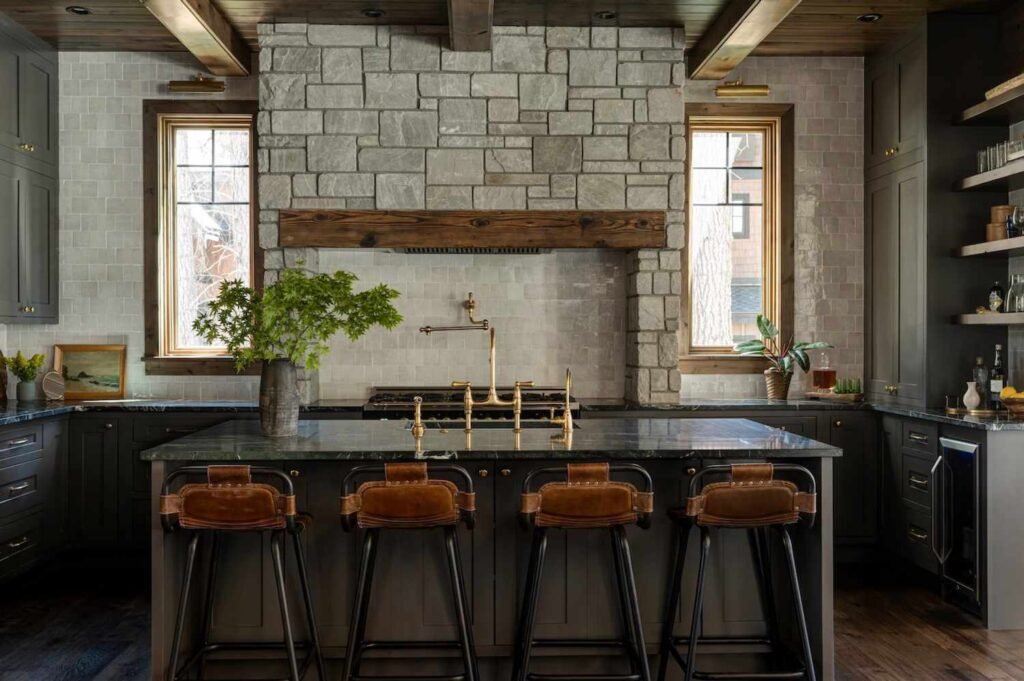
Not every dark green kitchen needs dark green cabinets. Another approach that is gaining significant traction is using dark green open shelving in an otherwise white or neutral kitchen. A set of painted dark green floating shelves against a white tile backsplash creates a striking accent without altering the overall brightness of the space.
This works especially well in smaller kitchens where full dark cabinetry would feel too heavy. The shelves provide a concentrated color moment while the rest of the kitchen remains light and airy. Display ceramics in warm earth tones or whites to balance the green rather than compete with it.
13. Dark Green Kitchen with Black Countertops
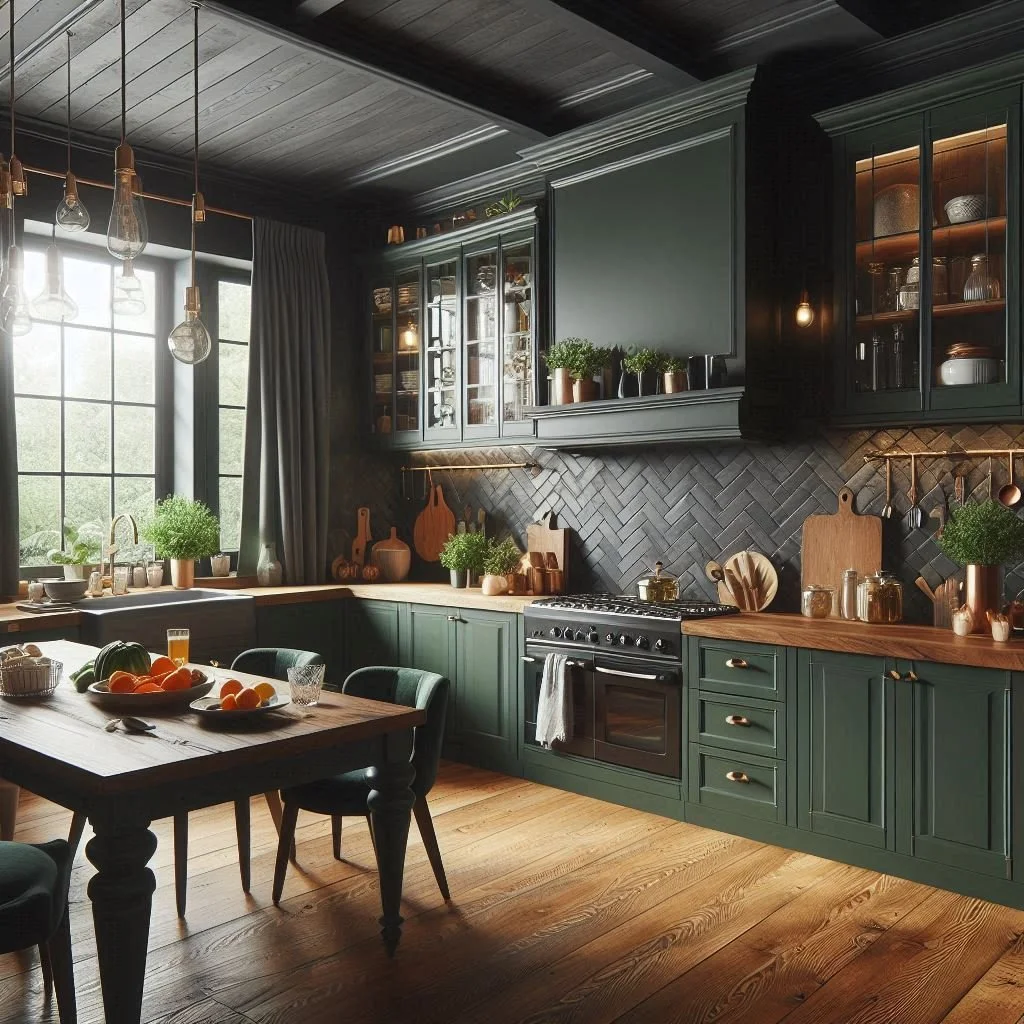
For kitchens that are unafraid of going dramatic, pairing dark green cabinetry with black countertops creates a moody, sophisticated result that is genuinely striking. This combination works best when balanced with lighter elements elsewhere — white walls, natural light, or warm wood flooring — to prevent the space from feeling too closed in.
Honed absolute black granite or matte black quartz are the most popular choices here. The non-reflective finish keeps the look from feeling too stark and allows the green cabinetry to remain the visual focus. Add brass hardware and warm lighting to soften the overall effect and bring some life back into the palette.
Balancing Dark on Dark
- Prioritize natural light — large windows or skylights are essential
- Keep walls and ceiling light to maintain a sense of space
- Warm lighting (2700K-3000K bulbs) is non-negotiable in this kind of kitchen
- Add texture through natural materials like wood, linen, or rattan to prevent the space feeling flat
14. Sage to Forest: Choosing Your Dark Green Shade
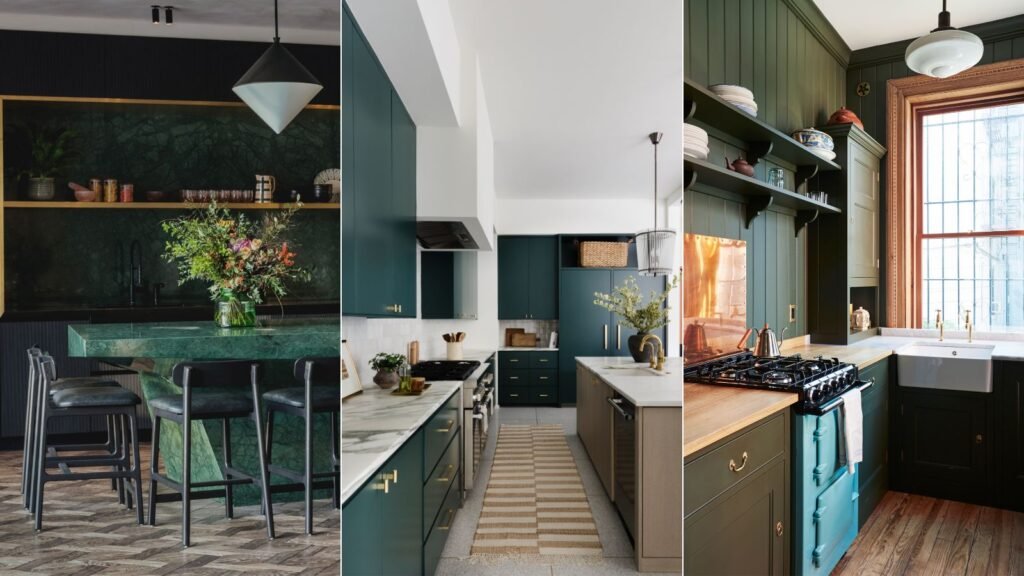
Dark green is not a single color. It exists on a wide spectrum, and choosing the right shade for your specific kitchen is one of the most important decisions you will make in the design process. Get it right and the whole space comes to life. Get it wrong and no amount of great hardware or backsplash tile will fully compensate.
Popular Dark Green Shades and Their Best Applications
- Hunter Green — a classic, deep jewel-toned green that works in both traditional and contemporary kitchens. Versatile and consistently popular.
- Forest Green — slightly cooler and more muted than hunter green. Suits modern farmhouse and Scandinavian-influenced kitchens particularly well.
- Bottle Green — deep and slightly blue-toned, with a luxurious quality. Works beautifully with brass and white marble.
- Olive Green — warmer and earthier, with a more relaxed, organic feel. Pairs naturally with wood and terracotta tones.
- Emerald Green — rich and vivid, with more saturation than the others. Best used as an accent or on a single feature element rather than throughout.
Always test paint swatches in your actual kitchen before committing. The way a green reads under natural daylight is often very different from how it looks under artificial lighting, particularly in the evening. Many designers recommend living with a large swatch for at least 48 hours across different times of day before making a final decision.
15. Dark Green Kitchen in a Small Space
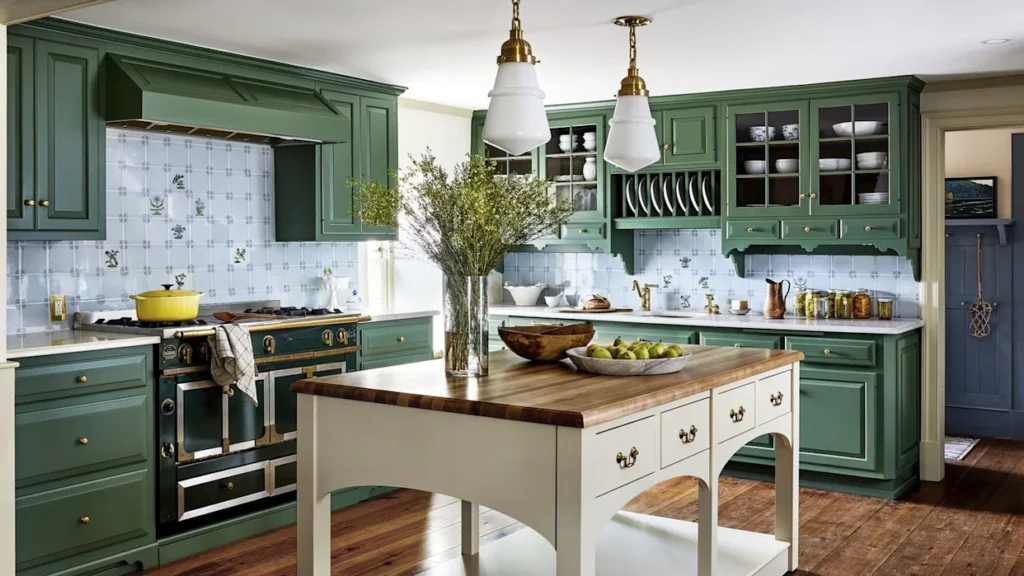
One of the most persistent myths about dark colors in kitchens is that they will make a small space feel even smaller. In practice, this is not always true. When handled carefully, dark green in a small kitchen can actually create a sense of depth and intimacy that makes the space feel more considered and special rather than cramped.
The key is controlling contrast. Use white or very light countertops, backsplash, and walls to maintain brightness. Maximize natural light wherever possible. Use reflective surfaces like polished hardware, glossy tiles, and glass cabinet fronts to bounce light around the space. A small kitchen dressed in dark green with good lighting and smart contrast elements can look genuinely stunning.
Frequently Asked Questions About Dark Green Kitchens
Does dark green make a kitchen feel smaller?
Not necessarily. When balanced with light countertops, bright backsplash tiles, and good natural or artificial lighting, dark green can create depth and sophistication without making a space feel cramped. The two-tone approach (dark green lower cabinets with white uppers) is a particularly effective solution for smaller kitchens.
What colors pair best with dark green kitchen cabinets?
White and off-white are the most consistently successful pairings, offering clean contrast and helping to keep the space light. Brass and gold hardware add warmth. Natural wood introduces texture and earthiness. Black hardware creates a more contemporary, minimal effect. Terracotta and copper tones add warmth and character for a more unique palette.
Is dark green a timeless color choice for a kitchen?
Yes. While dark green has experienced a particular surge in popularity recently, it has a long history in interior design as a sophisticated and enduring color choice. Green kitchens appeared in country houses and farmhouses throughout the 20th century and continue to age gracefully. Unlike trend-driven colors that can feel dated quickly, deep greens tend to feel classic and considered.
What is the best paint finish for dark green kitchen cabinets?
A satin or eggshell finish is generally the best choice for kitchen cabinets. These finishes offer enough sheen to allow easy cleaning without the high reflectivity of gloss, which can highlight surface imperfections. High gloss can look stunning in very contemporary kitchens but requires a very smooth substrate to look its best.
How do I choose the right shade of dark green?
Test large paint swatches in your actual kitchen under both natural and artificial light. Consider the other fixed elements in the space — flooring, countertop material, and window size — and choose a shade that complements rather than clashes with them. Generally, kitchens with warm-toned floors and hardware suit olive and forest green, while cooler palettes work better with bottle or hunter green.
Final Thoughts: Is a Dark Green Kitchen Right for You?
The dark green kitchen is one of those design choices that tends to divide opinion before it is installed and create unanimous admiration after. It takes a certain degree of confidence to move away from safe, neutral kitchen palettes — but the result, when executed thoughtfully, is almost always worth it.
What makes dark green particularly compelling is its adaptability. It can be contemporary or traditional, dramatic or understated, minimalist or maximalist, depending entirely on what surrounds it. The color itself is never the problem; it is always the execution that matters.
Whether you choose to go all-in with dark green cabinetry throughout your entire kitchen or simply introduce the color through a painted island, a statement pantry, or a bold range hood, the most important thing is to make the decision intentionally. Live with swatches. Test the light. Consider your hardware and countertop materials carefully. And then commit fully.
1 thought on “15 Dark Green Kitchen Ideas That Will Completely Transform Your Space”