
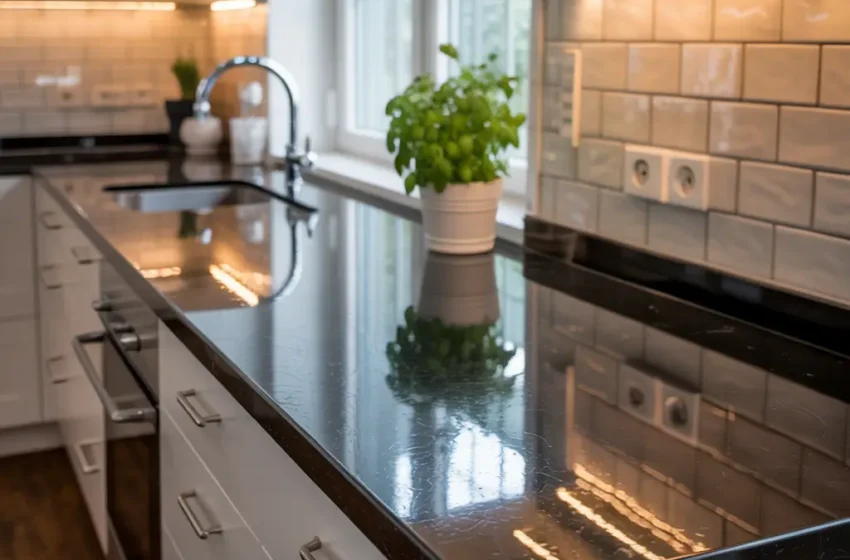
There is a reason black countertops keep showing up in the most enviable kitchens on the internet. Not because they are trendy — trends come and go — but because they work. They bring depth, sophistication, and a kind of quiet confidence to a kitchen that lighter surfaces simply cannot replicate. The moment you set a black countertop against white cabinetry, warm wood, or bold color, something clicks. The entire room suddenly feels more intentional, more considered, more like a space that was actually designed rather than assembled.
And yet, despite their undeniable impact, many homeowners hesitate. Will black make the kitchen feel smaller? Will it show every speck of dust? Is it too trendy to commit to? These are fair questions, and this guide answers all of them. But here is the short answer: when black countertops are chosen thoughtfully and styled well, they do not shrink a kitchen — they anchor it.
Black countertops come in an extraordinary range of materials: granite, quartz, marble, soapstone, quartzite, concrete, and laminate, each with its own aesthetic character, maintenance requirements, and price point. Understanding which material suits your lifestyle is just as important as knowing which design ideas inspire you.
In this guide, you will find 20 carefully researched black countertop kitchen ideas — each one covering a distinct design direction, styling approach, and material recommendation. You will also find a full material comparison guide, a practical buying checklist, maintenance advice, and answers to the questions that come up most often. By the time you finish reading, you will have everything you need to make a confident, well-informed decision.
1. Black Countertops with White Shaker Cabinets — The Enduring Classic
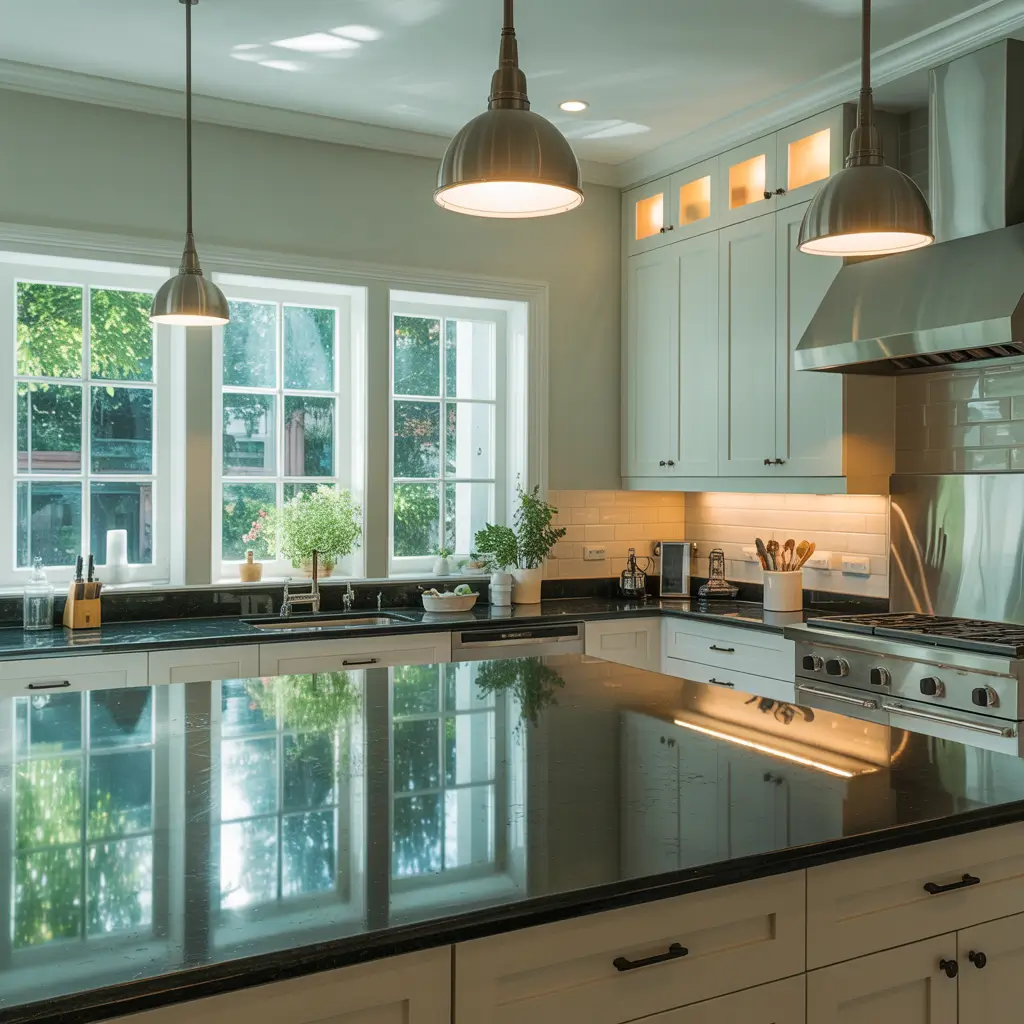
If there is one pairing that has defined modern kitchen design for the last two decades, it is black countertops against white shaker cabinets. The combination works for the same reason a classic black-and-white photograph works: the contrast is clean, legible, and impossible to tire of.
The white cabinets do the heavy lifting on brightness — they bounce light around the room, keep the upper half of the kitchen feeling open, and provide a neutral backdrop that lets almost any accessory or hardware choice look intentional. The black countertop, meanwhile, grounds the entire composition. It gives the kitchen visual weight, preventing it from feeling too sterile or clinical, and creates a clear horizontal plane that makes the room feel organized.
Hardware choice matters here. Brushed nickel, chrome, and matte black all work well, but each takes the look in a slightly different direction — brushed nickel reads as classic transitional, chrome as crisp and contemporary, and matte black as urban and graphic. Choose based on the mood you want your kitchen to project.
Best for: Traditional, transitional, and modern farmhouse kitchens.
2. Black Marble Countertops — Unmatched Luxury
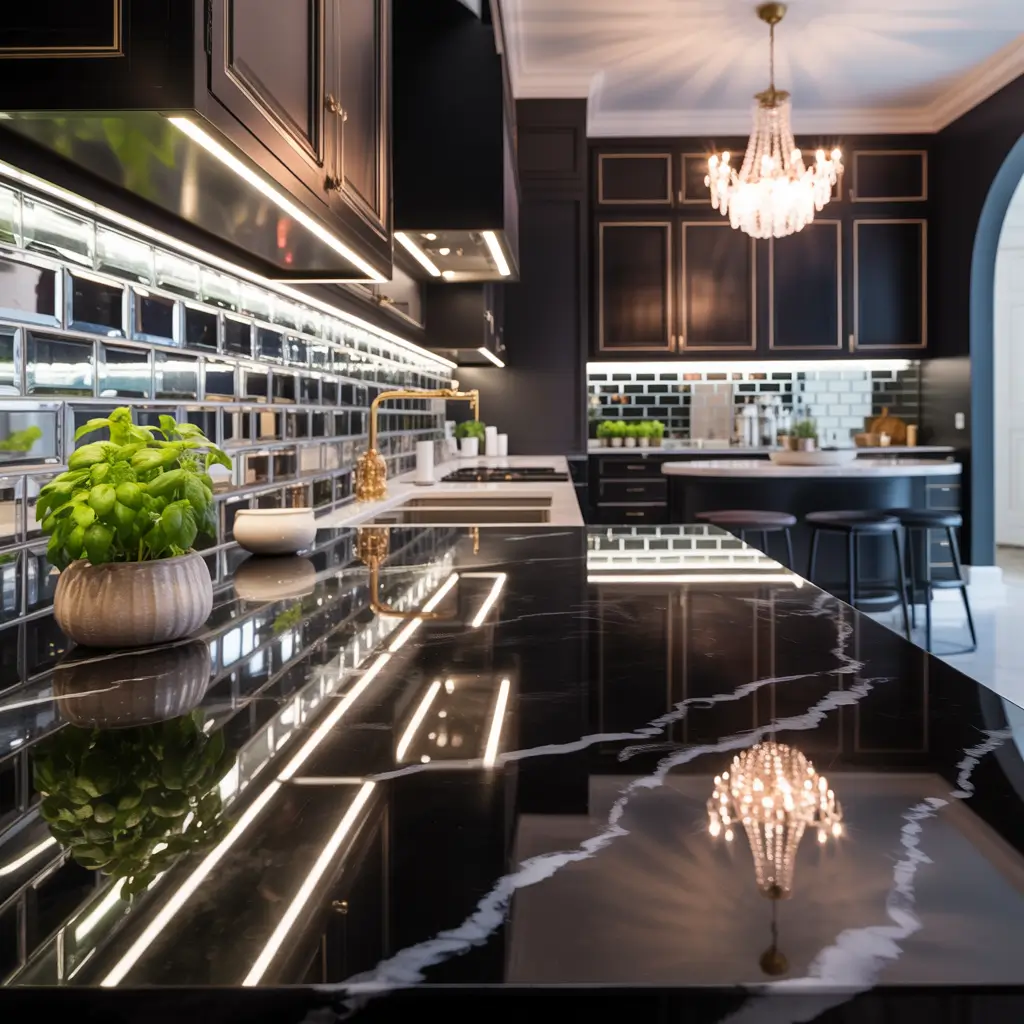
Few surfaces in residential design carry the visual weight of black marble. Whether it is Nero Marquina with its striking white veining, Saint Laurent with its delicate gold lines, or Portoro with its bold, graphic patterning, black marble is the material that makes kitchens feel genuinely exceptional.
The secret to making black marble work is restraint. Because the stone itself is so visually powerful, everything else in the kitchen should take a step back. Simple shaker or slab cabinets in soft gray, white, or warm wood allow the marble to be the undisputed focal point. Brushed gold hardware in small doses echoes the stone’s warm veining. A backsplash in a single solid tile — rather than a patterned one — prevents the eye from being pulled in too many directions.
Marble is softer than granite and more susceptible to etching from acidic substances like lemon juice and vinegar. Professional sealing twice a year, prompt cleanup of spills, and pH-neutral cleaners will keep the surface looking pristine for decades. The maintenance commitment is real, but so is the reward.
Best for: Luxury, Mediterranean, and architecturally ambitious kitchen designs.
3. Matte Black Countertops for a Sophisticated, Low-Maintenance Finish
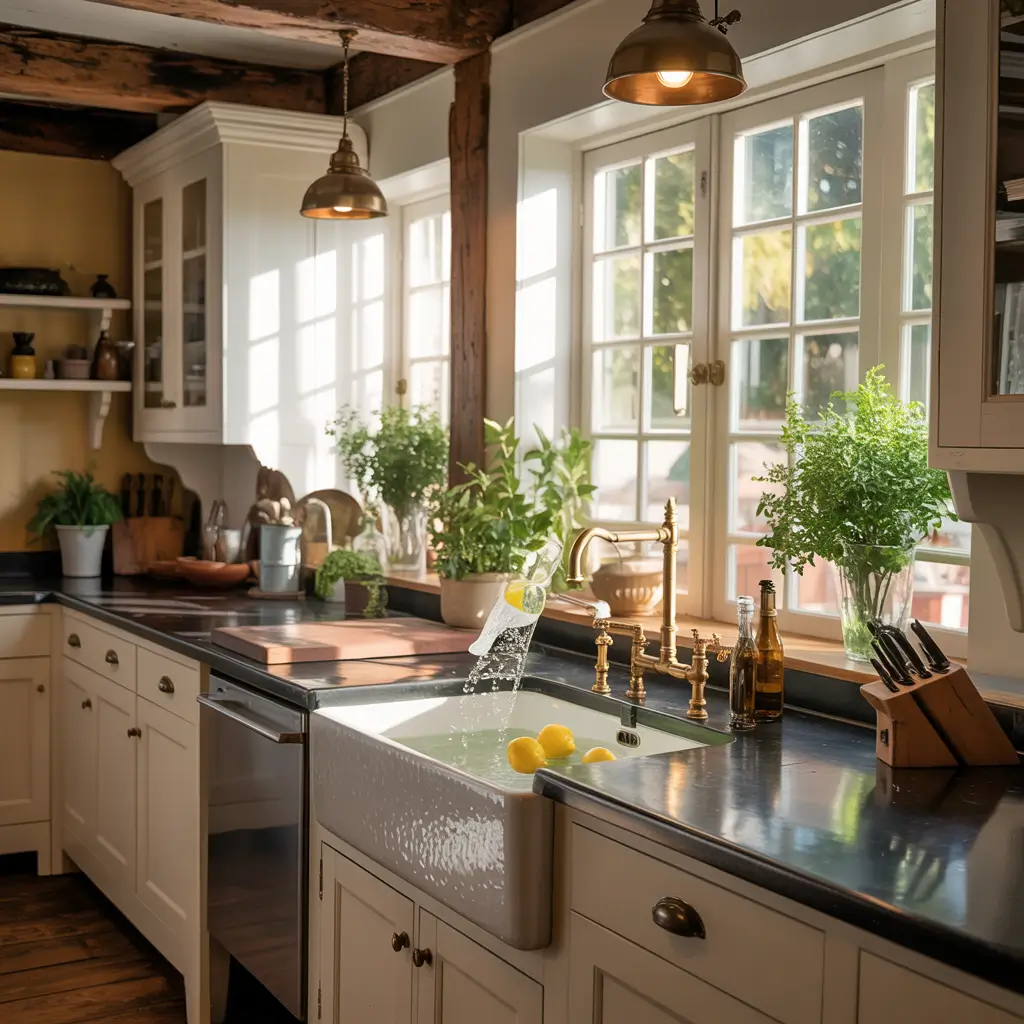
Not all black countertops need to shine. Honed and leathered finishes — both of which produce a matte surface rather than a glossy one — have grown enormously in popularity because they offer a sophisticated, understated look that polished surfaces simply cannot match.
Matte black countertops absorb light rather than reflecting it, which creates a surface that feels rich and tactile rather than flashy. More practically, they are significantly more forgiving in everyday use. Fingerprints, water marks, and light dust are far less visible on a honed surface, which means less obsessive cleaning between uses. In a busy family kitchen, this is not a minor benefit — it is genuinely life-changing.
Honed granite and honed quartzite are the most popular choices for matte black countertops. Both are dense, durable stones that resist scratching well. Leathered granite goes one step further by adding a subtle texture to the surface, giving it an almost tactile, artisanal quality that photographs beautifully and feels even better in person.
Best for: Minimalist, Japandi, Scandinavian, and contemporary kitchen designs.
4. Black Quartz Countertops — Practical Perfection
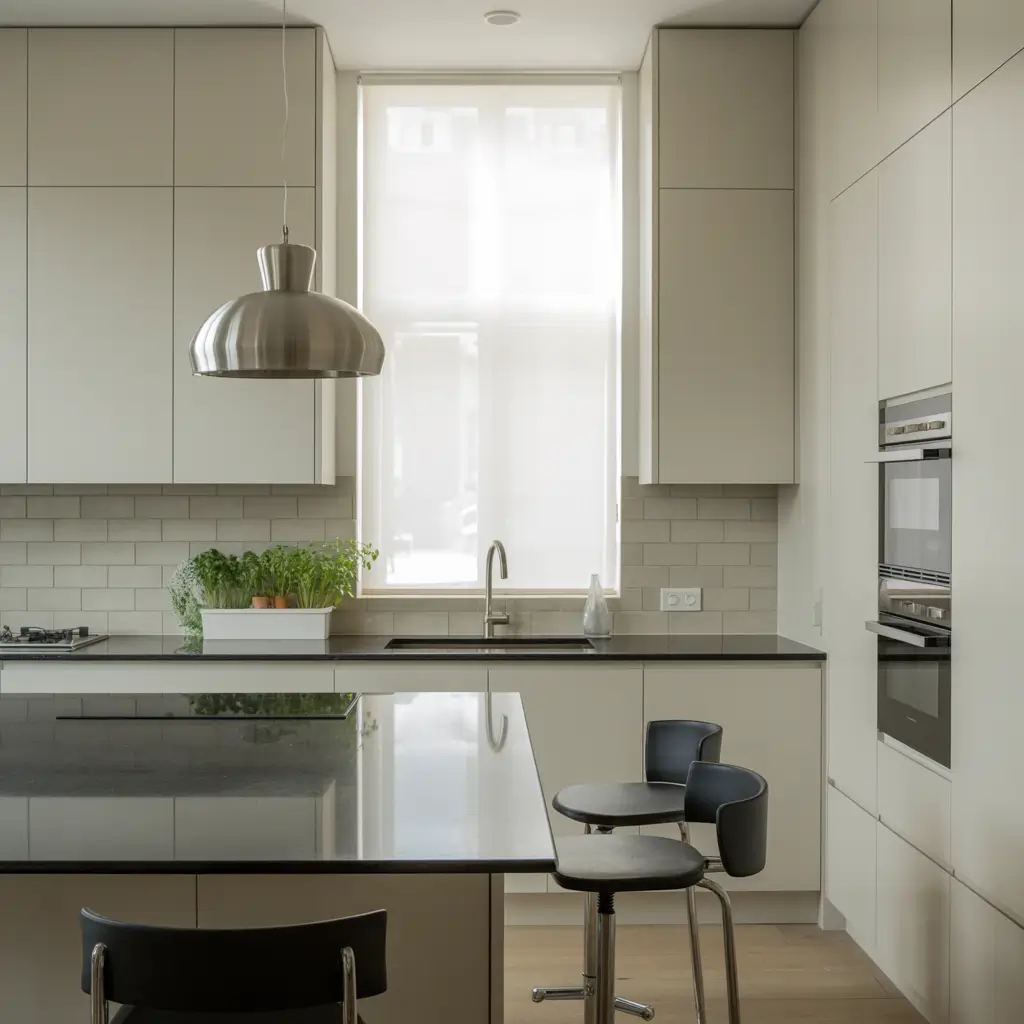
Engineered quartz has become the default choice for homeowners who want the drama of black countertops without the maintenance demands of natural stone. Quartz is non-porous, which means it never needs sealing and resists staining from coffee, red wine, and cooking oils far better than granite or marble.
Black quartz comes in a wide range of varieties — from pure, almost lacquer-like blacks with zero pattern variation, to varieties that convincingly mimic black granite or marble with realistic veining and flecking. The uniformity options are particularly appealing for minimalist kitchens, where a perfectly consistent surface contributes to the overall sense of precision and calm.
One important distinction: quartz is not heat-proof. Always use trivets under hot pans, as prolonged direct heat can damage the resin binders in the engineered stone. In every other respect, black quartz is arguably the most practical choice in the black countertop category.
Best for: Busy family kitchens, rental properties, and anyone who prioritizes low-maintenance beauty.
5. Black Soapstone Countertops — The Farmhouse Favorite
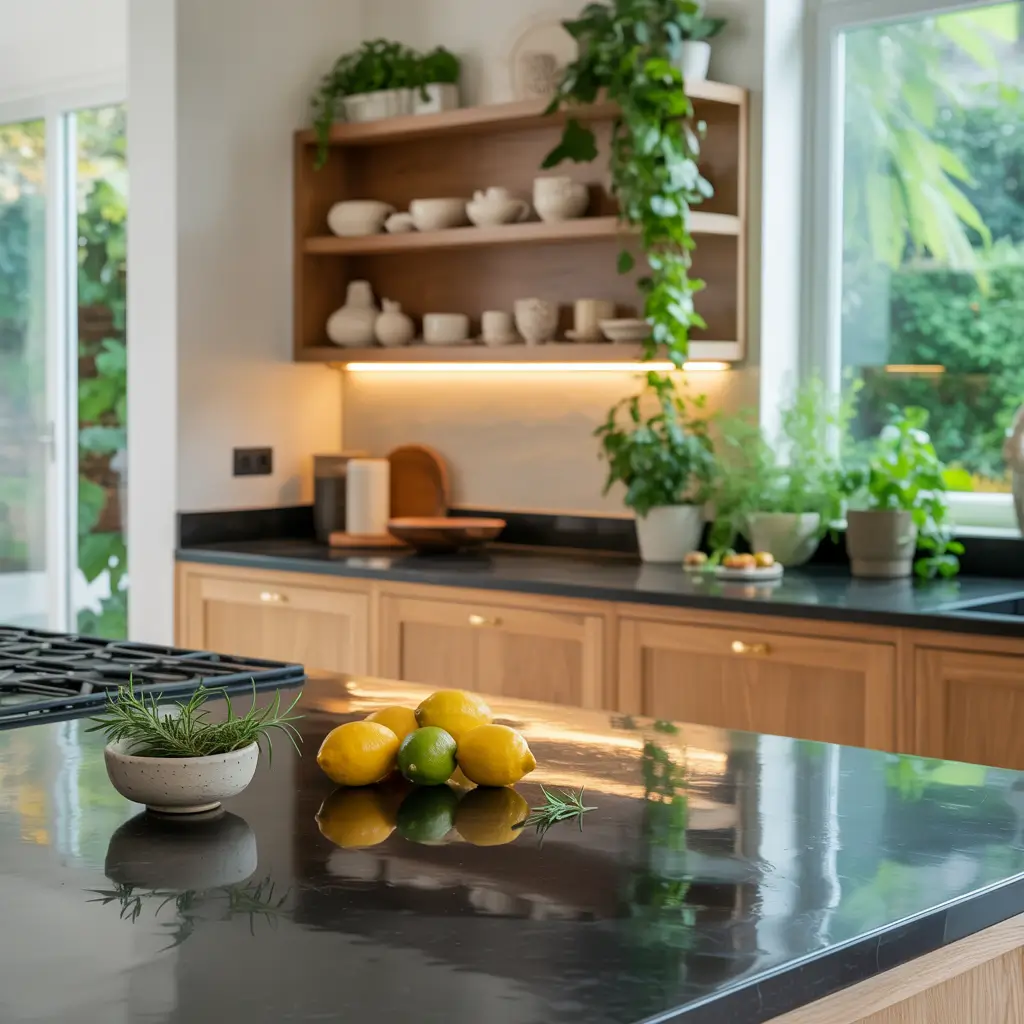
Soapstone is one of the oldest countertop materials in residential design, and it has earned its longevity. Unlike granite, which shows veining and mineral flecks, soapstone has an almost completely uniform, matte gray-black surface with a slightly waxy feel that is entirely its own.
What makes soapstone particularly well-suited to farmhouse and cottage kitchens is its relationship with age. Unlike quartz or polished granite, soapstone actually improves over time — it develops a natural patina that deepens its color and gives it a genuinely antique character. Minor scratches can be sanded out, and regular oiling with mineral oil keeps the surface looking rich and healthy.
Soapstone is also naturally non-porous, which means it never requires sealing. It is impervious to acids, making it one of the most genuinely practical natural stone options for kitchens. The trade-off is that it is softer than granite and can scratch — a quality that, as noted, actually adds to its charm over time.
Best for: Farmhouse, cottage, transitional, and historically inspired kitchen designs.
6. Black Concrete Countertops — Industrial Edge, Custom Craftsmanship
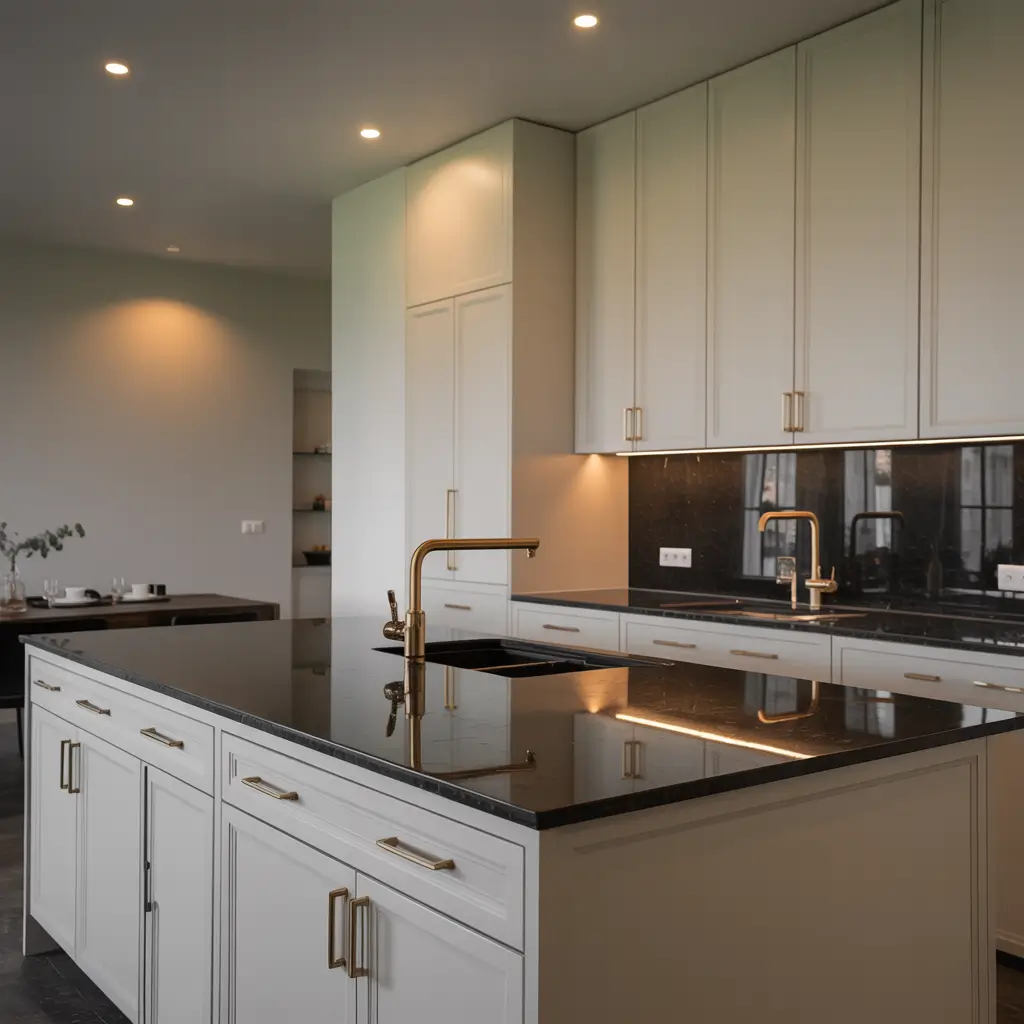
Concrete countertops occupy a unique position in the kitchen design world: they are simultaneously one of the most artisanal and one of the most architecturally bold choices available. Black-tinted or naturally cured concrete has a raw, textural quality that polished stone cannot replicate, and because concrete is cast in place or custom fabricated, every installation is genuinely one-of-a-kind.
In an industrial kitchen, black concrete works in perfect harmony with exposed brick, steel shelving, and Edison bulb pendant lights. But it also brings surprising warmth to softer kitchen styles when paired with wood cabinets and matte brass hardware — the roughness of the concrete acts as a counterpoint to the organic smoothness of wood, creating a tension that feels designed and considered.
Concrete does require sealing and ongoing maintenance to prevent staining, and it is susceptible to cracking if the supporting structure is not sufficiently rigid. Work with a skilled concrete fabricator and ensure proper substrate support during installation.
Best for: Industrial, loft, eclectic, and custom-designed kitchen spaces.
7. Black Countertops with Gold Fixtures — Effortlessly Glamorous
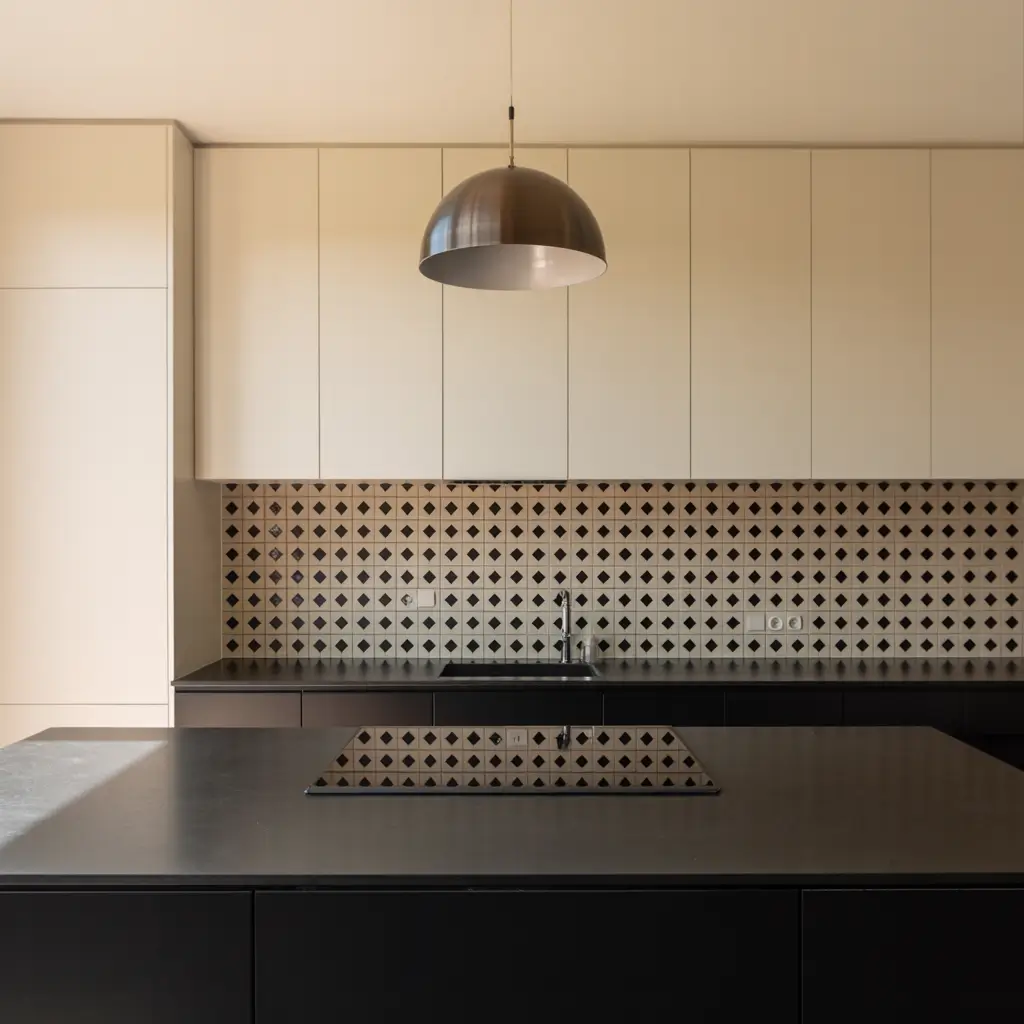
The combination of black countertops and warm metallic fixtures has become one of the defining pairings of contemporary kitchen design — and with good reason. The deep, cool tones of black stone or quartz make warm gold tones pop in a way that cooler metals like chrome or stainless cannot.
The key to this look is choosing the right shade of gold. Brushed gold and champagne bronze are the sweet spots — sophisticated without ostentation. Highly polished brass tends to read as too shiny and assertive, while antique brass can veer into dated territory unless the kitchen has a genuinely vintage character.
Apply the gold consistently across the kitchen’s touch points: faucet, cabinet hardware, pendant light fixtures, and bar stool frames. This repetition creates cohesion and makes the gold feel like a considered design choice rather than an afterthought. Keep cabinet colors in the neutral-to-dark range — white, navy, gray, or forest green all work beautifully.
Best for: Glam contemporary, transitional, and luxury kitchen designs.
8. Black Countertops with Warm Wood Tones
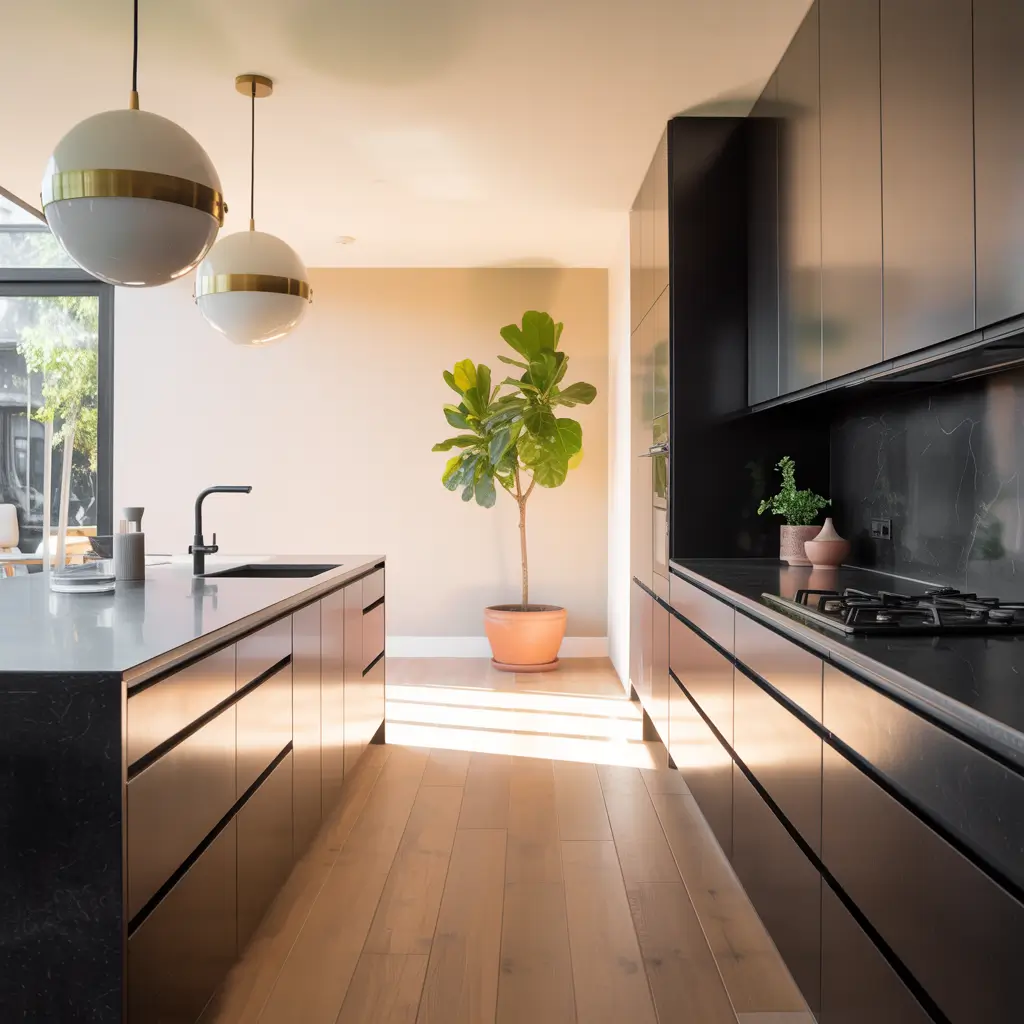
There are few contrasts in kitchen design as immediately satisfying as the pairing of black countertops with warm, natural wood. The cool, mineral quality of the stone and the organic warmth of the wood create a visual tension that keeps the eye interested, and a tonal balance that keeps the space from feeling either too cold or too rustic.
The most effective implementations of this pairing tend to keep the wood in a supporting role — floating open shelves in walnut or oak, a butcher block accent on a secondary island, wood-frame bar stools, or cabinet doors in a natural wood veneer. The black countertop remains the dominant horizontal surface, while the wood provides warmth and texture throughout the vertical planes.
Wood species matter here. Walnut, with its deep chocolate tones and fine grain, is the most versatile pairing for black countertops. Lighter woods like ash, birch, or maple work beautifully in Scandinavian and Japandi-influenced kitchens. Avoid very orange or reddish woods like cherry unless your granite has warm, amber undertones that can echo the wood’s color.
Best for: Rustic, transitional, organic modern, and Japandi-inspired kitchen designs.
9. Two-Tone Cabinets with Black Countertops — Visual Depth and Balance
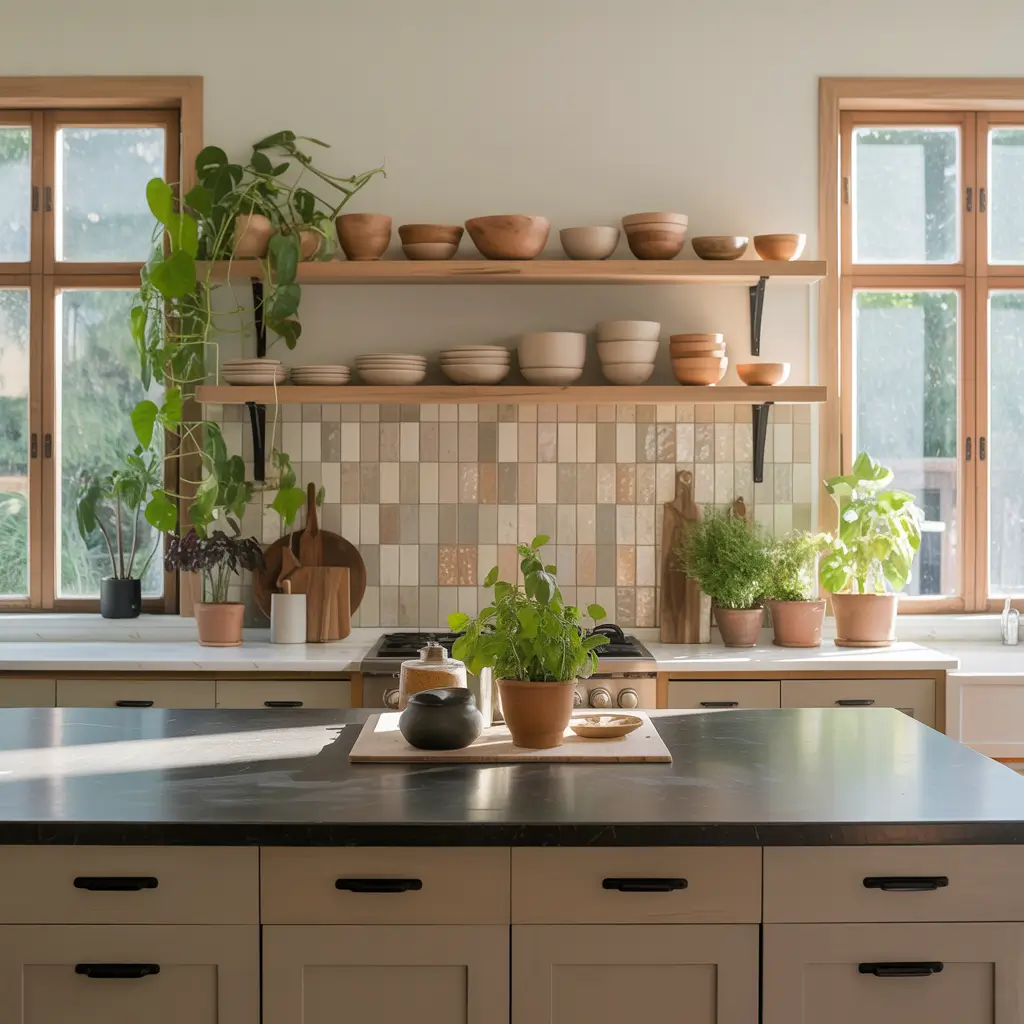
Two-tone cabinet design is one of the most effective ways to add complexity and visual interest to a kitchen without the space feeling busy or overworked. Black countertops are the ideal anchor in a two-tone scheme because they sit at the intersection of both cabinet colors and provide a unifying horizontal element that ties the composition together.
The most popular approach uses dark lower cabinets — navy, forest green, charcoal, or deep olive — paired with white or off-white upper cabinets. The black countertop echoes the depth of the lower cabinets while sitting naturally below the lighter uppers. This creates a kitchen that feels grounded at the base and open at the top — an effect that makes the room feel taller and more spacious than it actually is.
For maximum impact, choose a matte or leathered black countertop finish when using very dark lower cabinets. The tonal similarity with a slight textural difference creates a sophisticated, layered effect that polished finishes cannot achieve.
Best for: Contemporary, transitional, and statement-making kitchen renovations.
10. Black Countertops in a Small Kitchen — Making Them Work
The most persistent misconception about black countertops is that they will make a small kitchen feel claustrophobic. In practice, the opposite is often true — when done with care, black countertops can make a compact kitchen feel purposeful, intentional, and designed rather than squeezed.
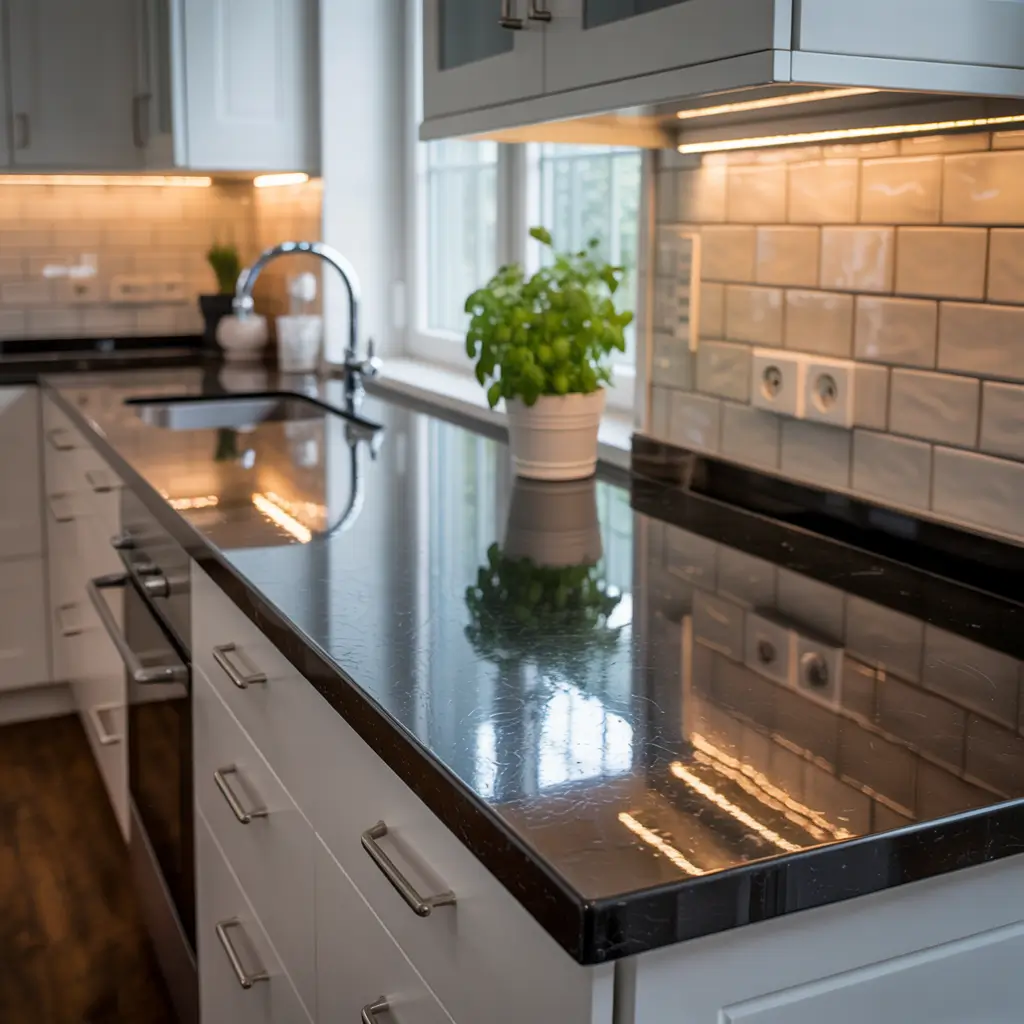
The key is ensuring that the surfaces surrounding the countertop keep the space feeling light. Upper cabinets and walls in white or cream, a bright reflective backsplash, and generous lighting — both ambient overhead and focused under-cabinet task lighting — allow the dark countertop to function as a grounding element rather than a visual weight.
Think of a small sushi bar or coffee counter in a high-end establishment. The dark surfaces do not make those spaces feel small — they make them feel focused and elevated. The same principle applies to a well-executed compact kitchen at home.
Best for: Galley kitchens, apartment kitchens, and compact single-wall kitchen configurations.
11. Black Countertops and a Light Stone Backsplash
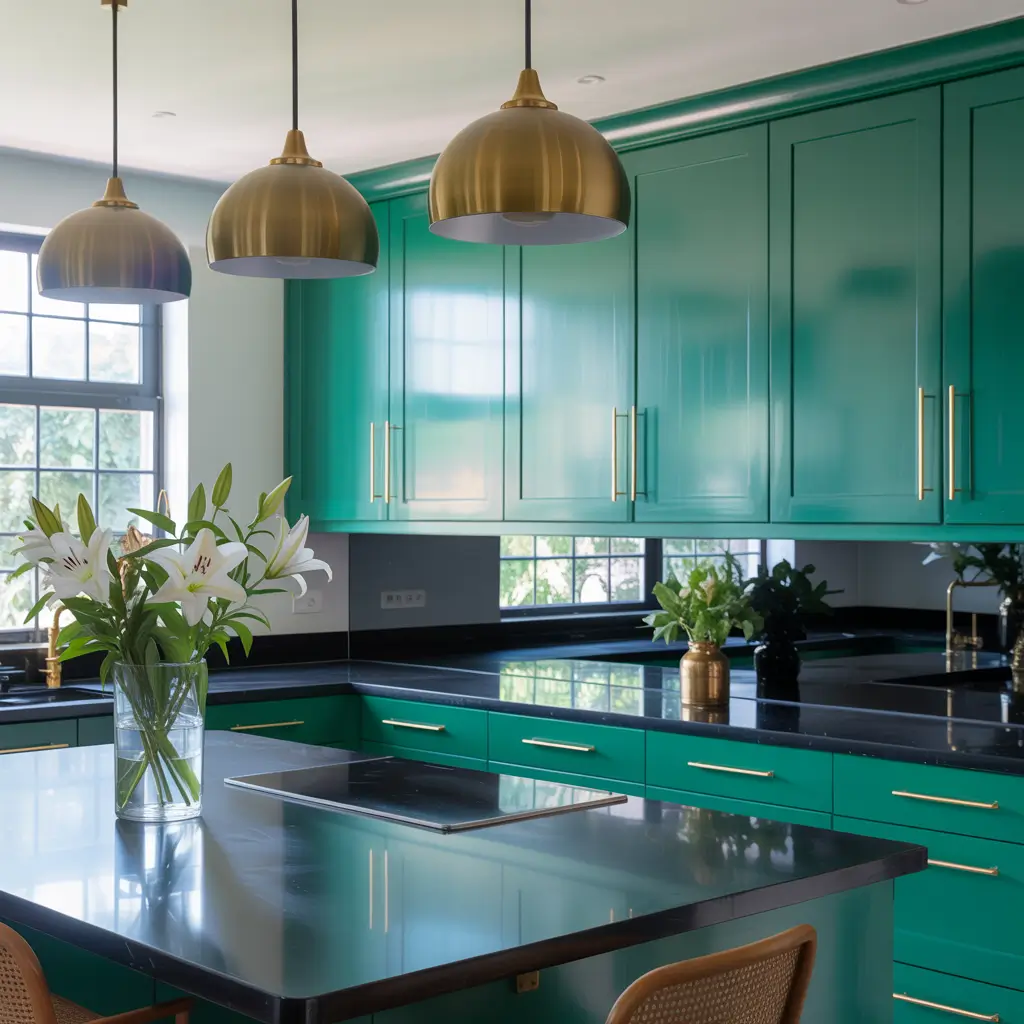
When black countertops are paired with a light natural stone backsplash — white marble, cream travertine, or pale quartzite — the result is one of the most quietly luxurious combinations in kitchen design. The two natural materials share an organic quality that engineered surfaces cannot replicate, and the contrast between the dark horizontal plane and the light vertical surfaces creates a sense of balance that feels inherently right.
The trick is ensuring the backsplash stone does not compete with the countertop for attention. A subtle marble with fine gray veining is ideal — it adds movement and texture without overwhelming the eye. Avoid large-format marble slabs with dramatic veining if your countertop also has significant pattern, as the two will fight for dominance.
For a fully cohesive luxury look, choose a countertop and backsplash from the same stone family and have them installed by the same fabricator. The relationship between the two surfaces will feel seamless and considered.
Best for: Luxury transitional, Mediterranean, and architecturally refined kitchen designs.
12. All-Dark Kitchen with Black Countertops — Bold and Beautiful
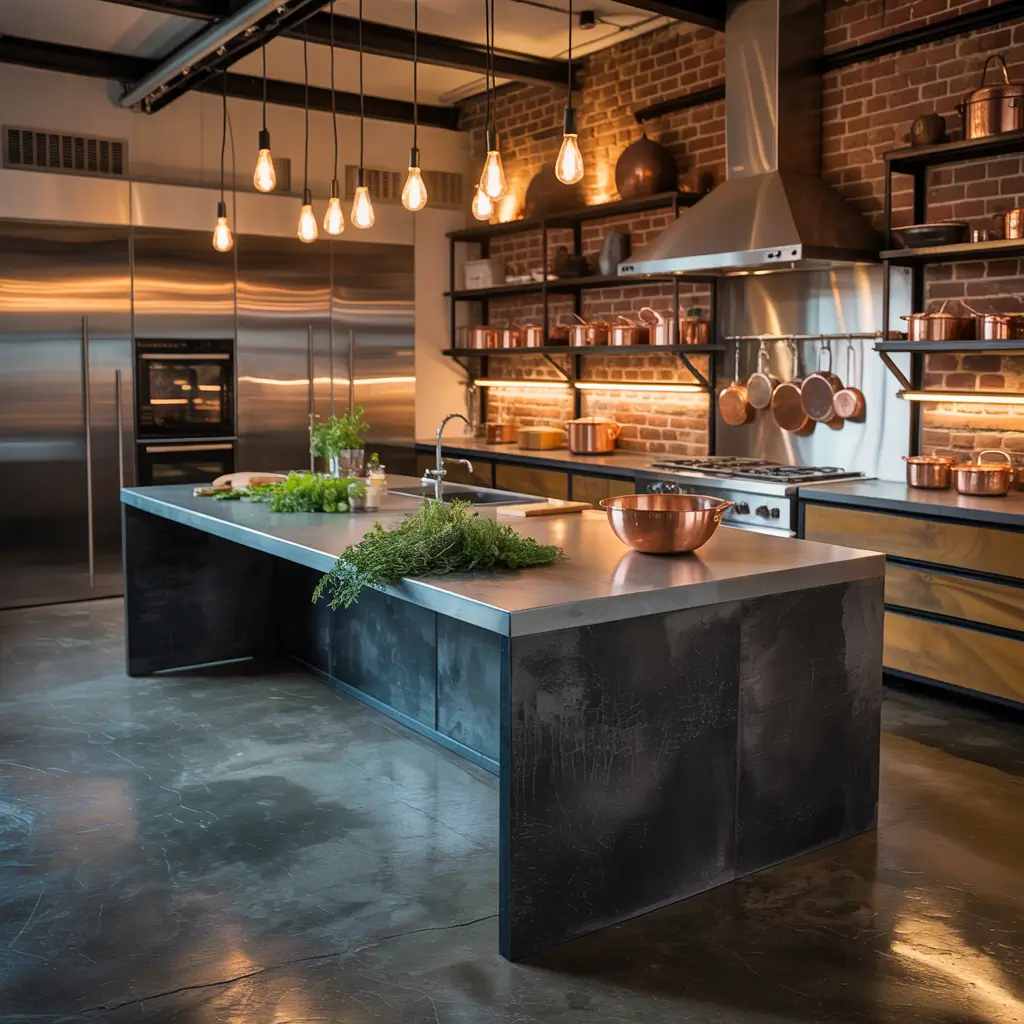
For the genuinely fearless designer, an all-dark kitchen — black countertops, dark cabinets, dark walls, and dark flooring — is one of the most visually striking residential spaces you can create. Done well, it does not feel oppressive or cave-like. Done well, it feels like a jewel box: intimate, dramatic, and utterly original.
The secret to a successful all-dark kitchen is contrast through texture and finish, not color. Pair matte cabinet fronts with polished countertops. Introduce a glossy black tile backsplash alongside flat-painted walls. Use lighting generously — under-cabinet LEDs, recessed overhead fixtures, and pendant lights above the island all contribute to making the dark surfaces glow rather than absorb.
A single contrasting element — a vase of white flowers, a brass fruit bowl, light wood bar stools — provides the visual breathing room the space needs and prevents the darkness from feeling absolute.
Best for: Contemporary, maximalist, and architecturally bold kitchen designs.
13. Farmhouse Kitchen with Black Countertops
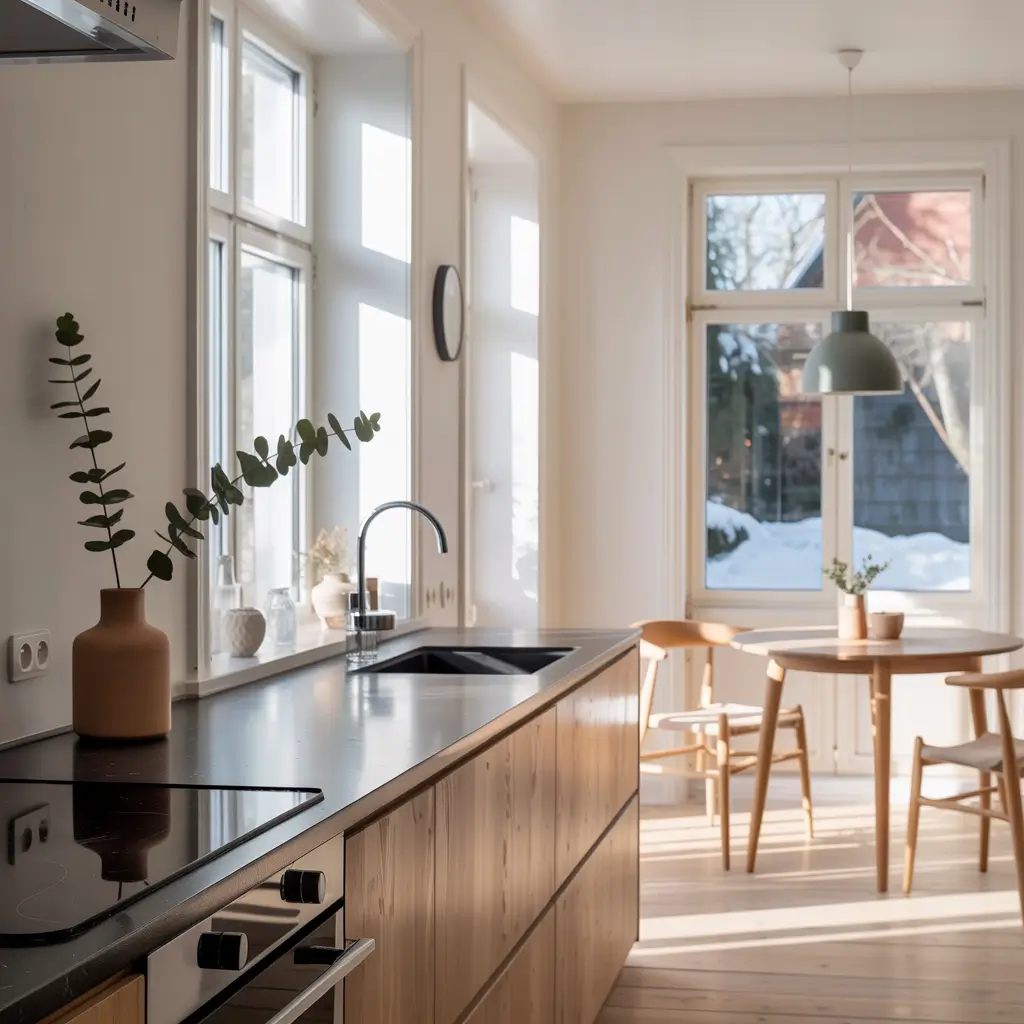
The modern farmhouse kitchen has, in recent years, moved well beyond its all-white origins. Black countertops fit naturally into this evolved farmhouse aesthetic — they bring sophistication and grounding to a style that, in its purest form, can sometimes feel too pristine or coordinated.
Black soapstone is the natural choice here. Its matte, slightly waxy surface and uniform color recall the dark stone sinks and workbenches of historical farmhouse kitchens, giving the material genuine contextual authenticity. Pair it with cream or linen cabinetry, an apron-front sink in white or black, subway tile backsplash with dark grout, and open wooden shelving displaying everyday white ceramics.
The result is a farmhouse kitchen that feels gathered rather than decorated — as though the space has been thoughtfully assembled over time rather than styled in an afternoon.
Best for: Modern farmhouse, cottage, and transitional kitchen styles.
14. Scandinavian Kitchen with Black Countertops
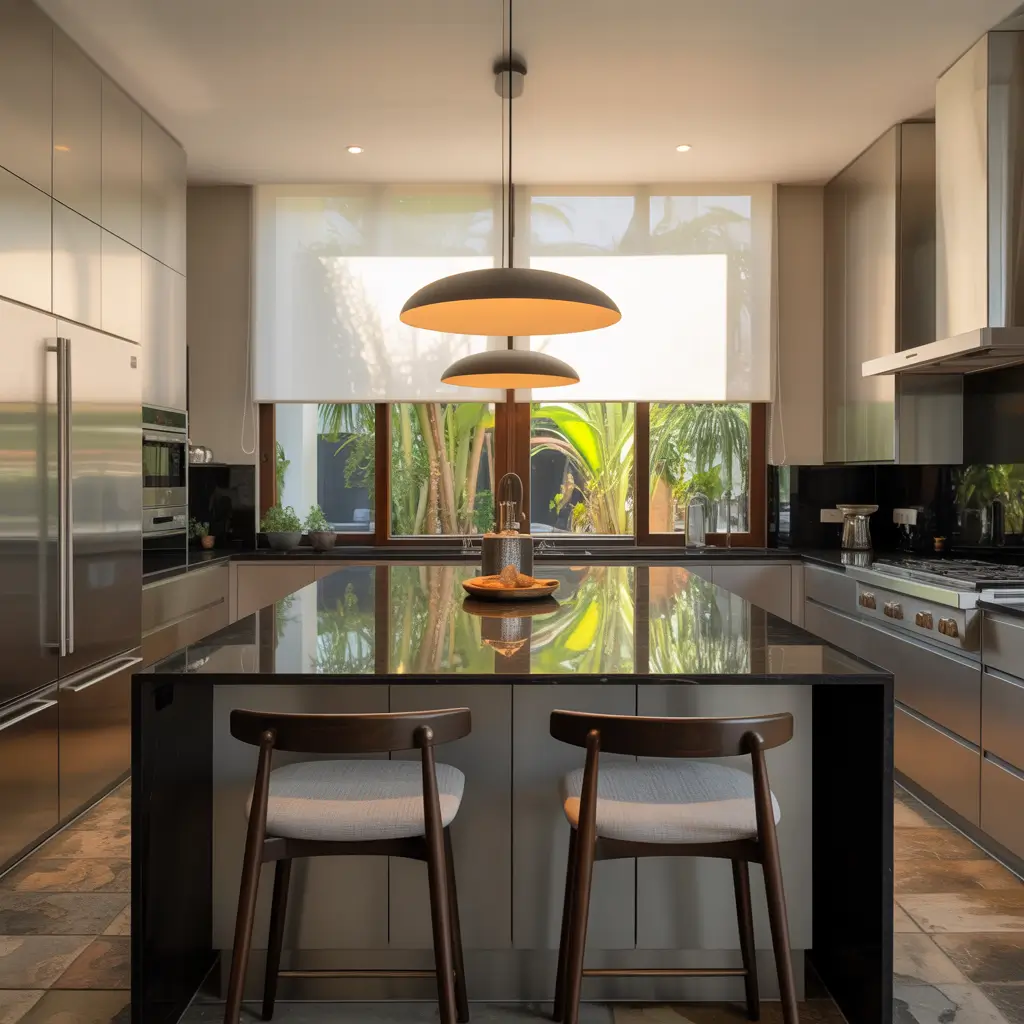
Scandinavian design has always valued honesty in materials — surfaces that look like what they actually are, and forms that do not pretend to be more complex than their function requires. Black countertops, particularly in honed or leathered finishes, fit naturally into this philosophy. They are genuine, tactile, and unambiguously themselves.
In a Scandi kitchen, pair black countertops with pale birch or ash cabinetry, white painted walls, and handleless or minimal-hardware cabinet fronts. The palette stays restrained — black and wood, white and light — but the effect is anything but boring. The black countertop provides exactly the visual weight the space needs to prevent the characteristic Scandinavian lightness from feeling insubstantial.
Plants are an essential finishing touch in a Scandinavian kitchen with black countertops. The deep green of a trailing pothos or a cluster of fresh herbs against the dark stone surface creates one of the most naturally beautiful colour combinations in kitchen design.
Best for: Scandinavian, Nordic, Japandi, and minimalist kitchen designs.
15. Black Countertops with Green Cabinets
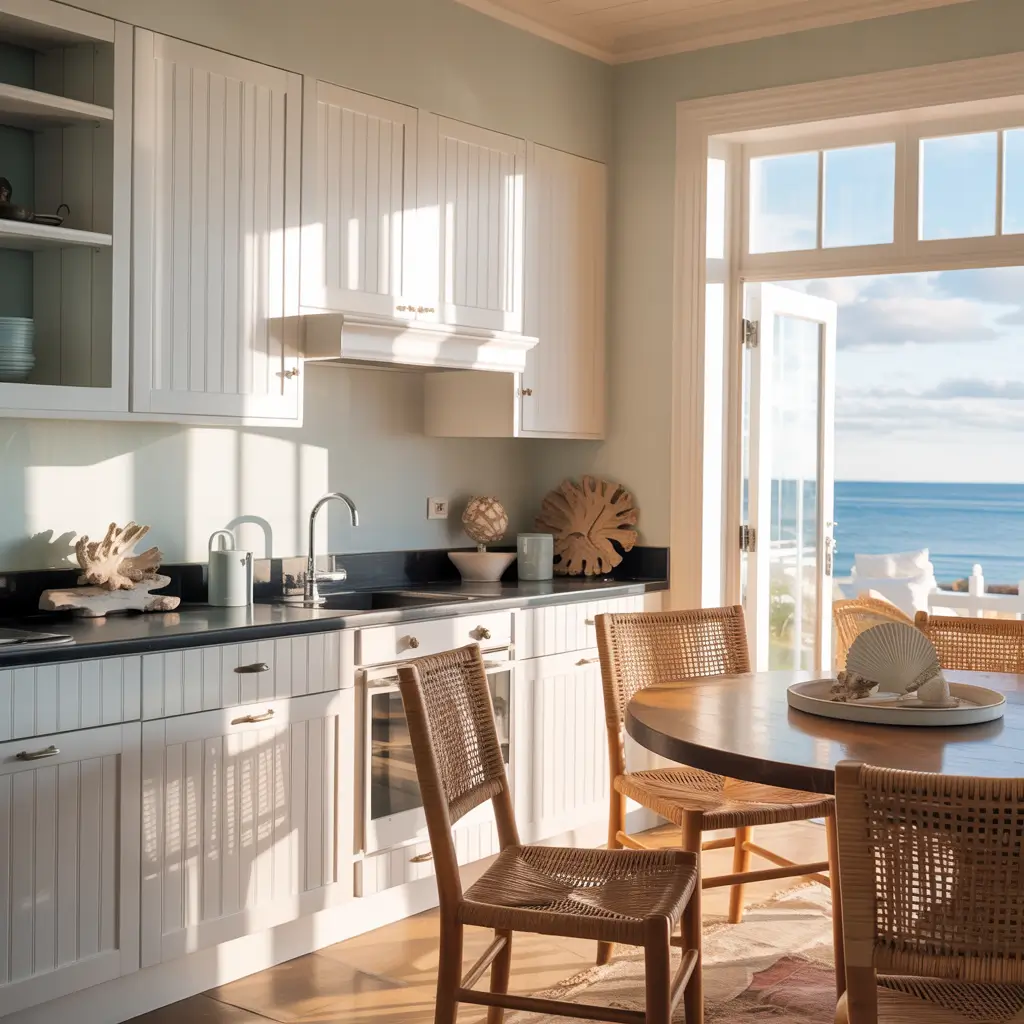
The surge in earthy, nature-inspired kitchen palettes over the last several years has produced one genuinely outstanding pairing: black countertops with green cabinetry. Regardless of which shade of green you choose — sage, forest, deep olive, or hunter — black countertops bring out the best in all of them.
The reason is simple: both black and green draw from the same organic, mineral palette. Black granite in particular, with its visible flecks and natural variation, echoes the complexity of the natural world in a way that resonates with the green tones of foliage and stone. The two colors together feel grounded, earthy, and inherently cohesive rather than contrived.
Finish the look with unlacquered brass hardware — the warm metal tone bridges the black and green beautifully — and a backsplash in cream, white, or natural zellige tile. The result is a kitchen that will feel contemporary now and timeless in a decade.
Best for: Organic modern, earthy contemporary, and nature-inspired kitchen designs.
Black Countertop Materials Compared: Which One Is Right for You?
Choosing the right black countertop comes down to understanding the trade-offs between durability, maintenance, cost, and aesthetic. Here is a practical comparison of the six most popular options:
Granite
Natural granite is one of the hardest countertop materials available and, when properly sealed, resists staining and scratching well. Black granite varieties — including Absolute Black, Black Galaxy, Black Pearl, and Ubatuba — each have distinct visual characters, from the pure uniformity of Absolute Black to the dramatic gold flecking of Black Galaxy. Annual sealing is required. Cost: moderate to high.
Quartz
Engineered quartz combines crushed stone with polymer resins to create a non-porous, highly consistent surface that never requires sealing. Black quartz is the most practical choice in the category and comes in a wide range of finishes and patterns. Not heat-proof — always use trivets. Cost: moderate to high.
Marble
Natural marble is the most visually luxurious choice but requires the most maintenance. It is susceptible to etching and staining and must be sealed regularly. Black marble varieties like Nero Marquina and Portoro are breathtaking but demand careful, committed ownership. Cost: high to very high.
Soapstone
Naturally non-porous and naturally matte, soapstone never requires sealing and is impervious to acids. It develops a rich patina over time and minor scratches can be sanded out. It is softer than granite and can mark, but many owners consider this part of its character. Cost: moderate to high.
Concrete
Custom fabricated and completely unique, concrete countertops in black tones offer a raw, artisanal quality that no other material matches. Requires sealing and ongoing maintenance. Professional fabrication and proper substrate support are essential. Cost: moderate to high, depending on complexity.
Laminate
Modern laminate has improved significantly and offers a surprisingly convincing approximation of black stone surfaces. It is the most budget-friendly option, requires no sealing, and is easy to clean. It cannot be repaired if chipped or scratched, and heat resistance is limited. Cost: low to moderate.
Your Pre-Purchase Black Countertop Checklist
Before committing to your black countertop choice, work through these practical considerations:
- Order physical samples of your shortlisted materials and live with them in your kitchen for at least a week. Observe how they look in morning light, afternoon light, and artificial evening light.
- Decide on your finish — polished, honed, or leathered — before ordering samples, as the finish dramatically changes how a material looks and behaves.
- Consider your household’s actual cooking habits. Do you cook daily and intensively? Quartz or soapstone will reward you better than marble. Do you entertain frequently and want maximum visual impact? Polished granite or marble will deliver it.
- Visit a stone yard and view full slabs in person if you are choosing natural stone. Small samples are not representative of how a full slab will read in your kitchen.
- Clarify the edge profile with your fabricator before finalizing the order. The edge — eased, beveled, ogee, bullnose, or waterfall — significantly affects the overall aesthetic.
- Confirm the sealing and maintenance requirements of your chosen material and ensure you are genuinely prepared to follow through. An unsealed granite or marble will stain.
- Get at least three installation quotes and ask each fabricator specifically about their experience with the material and finish you have chosen.
Caring for Black Countertops: The Definitive Maintenance Guide
Daily and Weekly Care
- Wipe black countertops with a soft cloth or microfibre and warm soapy water for daily cleaning. Avoid abrasive sponges or harsh chemical sprays, which can dull polished finishes and degrade sealers over time.
- Dry the surface thoroughly after cleaning, particularly on polished stone. Water left to air-dry on a polished black surface will leave visible mineral deposits.
- Blot spills immediately rather than wiping them across the surface. Red wine, coffee, turmeric, and oil can stain unsealed or under-sealed stone if left to sit.
- Use a pH-neutral, stone-specific cleaner for weekly maintenance. Standard household cleaners can be acidic or alkaline enough to etch marble and degrade granite sealers over time.
Sealing Natural Stone
Granite, marble, and quartzite all require regular sealing to maintain their stain resistance. Perform the water test annually: drop a tablespoon of water onto the surface and observe. If the water beads, your seal is intact. If the water is absorbed and the stone darkens, it is time to reseal. Use a penetrating, stone-specific sealer and follow the manufacturer’s instructions precisely.
Protecting Your Investment
- Always use trivets or heat-resistant pads under hot pans, regardless of countertop material. Even granite, which is highly heat-resistant, can crack under sudden thermal shock.
- Use a cutting board rather than cutting directly on any countertop. Knives will scratch polished stone, and the cutting force can chip edges.
- Do not sit or stand on countertops. Despite their apparent solidity, stone countertops can crack under concentrated point loads, particularly near seams and edges.
- If you notice a chip or crack, contact a stone repair specialist promptly. Small chips can be filled with colour-matched epoxy before they propagate into larger cracks.
Frequently Asked Questions About Black Countertops
Do black countertops show dust and crumbs more than lighter surfaces?
Polished black countertops can show light dust and fine crumbs more visibly than light-colored surfaces because the pale particles contrast against the dark background. However, they hide actual stains, splashes, and wet marks far better than white or cream surfaces. Choosing a honed or leathered finish significantly reduces the visibility of dust and everyday debris. In practice, most owners find that black countertops require no more cleaning than lighter alternatives — just a different kind of attention.
Are black countertops going out of style?
No. Black countertops have been a staple of high-end kitchen design for decades and show no signs of diminishing. Unlike trend-driven colors or materials, black is a design fundamental — it grounds spaces, creates contrast, and serves as a neutral foil for virtually any other color or material. The specific materials and pairings may evolve, but black countertops as a category will remain relevant indefinitely.
What is the most durable black countertop material?
Granite and engineered quartz are the most durable options in the black countertop category. Granite scores between 6 and 7 on the Mohs hardness scale and is highly resistant to scratching and heat when properly sealed. Engineered quartz scores similarly and adds the advantage of being non-porous, which eliminates sealing requirements. For sheer longevity in a high-use family kitchen, quartz is the most practical choice.
Will black countertops make my kitchen feel smaller?
Only if the rest of the kitchen is also dark and the lighting is inadequate. Black countertops paired with light cabinetry, a bright backsplash, and well-planned lighting create a beautifully balanced space that does not feel smaller — it feels anchored. The key is ensuring the black countertop functions as a grounding horizontal element within a lighter overall composition, rather than as the defining tone of the entire room.
How much do black countertops cost?
Costs vary significantly by material. Laminate is the most affordable option, typically ranging from a few hundred dollars for materials alone on a standard kitchen. Granite and quartz typically fall in the mid-to-upper-moderate range per square foot installed. Marble and custom concrete are at the higher end of the spectrum, and exotic or rare stone varieties can go higher still. Always obtain multiple quotes and clarify whether the price includes fabrication, installation, edge profiling, and removal of existing countertops.
Can I install black countertops myself?
For natural stone and engineered quartz, professional installation is strongly recommended. Stone slabs are extremely heavy — often exceeding thirty pounds per square foot — and require precise templating, cutting, and seaming to achieve the seamless, structurally sound fit that keeps countertops safe and beautiful for decades. DIY installation errors in stone are expensive to correct. Laminate countertops, by contrast, are a more realistic DIY project for experienced home improvers.
Conclusion
After exploring twenty distinct design directions, comparing six countertop materials, and addressing the most common questions about black countertops in kitchens, the conclusion is unambiguous: black countertops are one of the best investments you can make in your kitchen.
They are versatile enough to work in virtually every kitchen style, from a tight urban apartment to a sprawling farmhouse kitchen. They are available in materials that suit every lifestyle, from the barely-there maintenance of engineered quartz to the evolving character of natural soapstone. And they bring a depth, sophistication, and sense of intentionality to a kitchen that simply cannot be replicated by lighter surfaces.
The twenty ideas in this guide are a starting point, not a prescription. Your kitchen is unique — your cabinet color, your natural light, your cooking habits, your personal aesthetic — and the black countertop choice that is right for you will emerge from the intersection of those specific factors. There is no single correct answer, but there is a correct process: look at samples in your own space, understand your material options fully, and invest in skilled fabrication and installation.
The kitchens that genuinely stop people in their tracks — the ones that appear in the renovation stories people bookmark and return to — almost always have one thing in common. There is a dark, grounded, considered horizontal surface that makes everything else in the room look better. That surface is almost always black.
1 thought on “15 Stunning Black Countertops Kitchen Ideas for Modern Homes”