
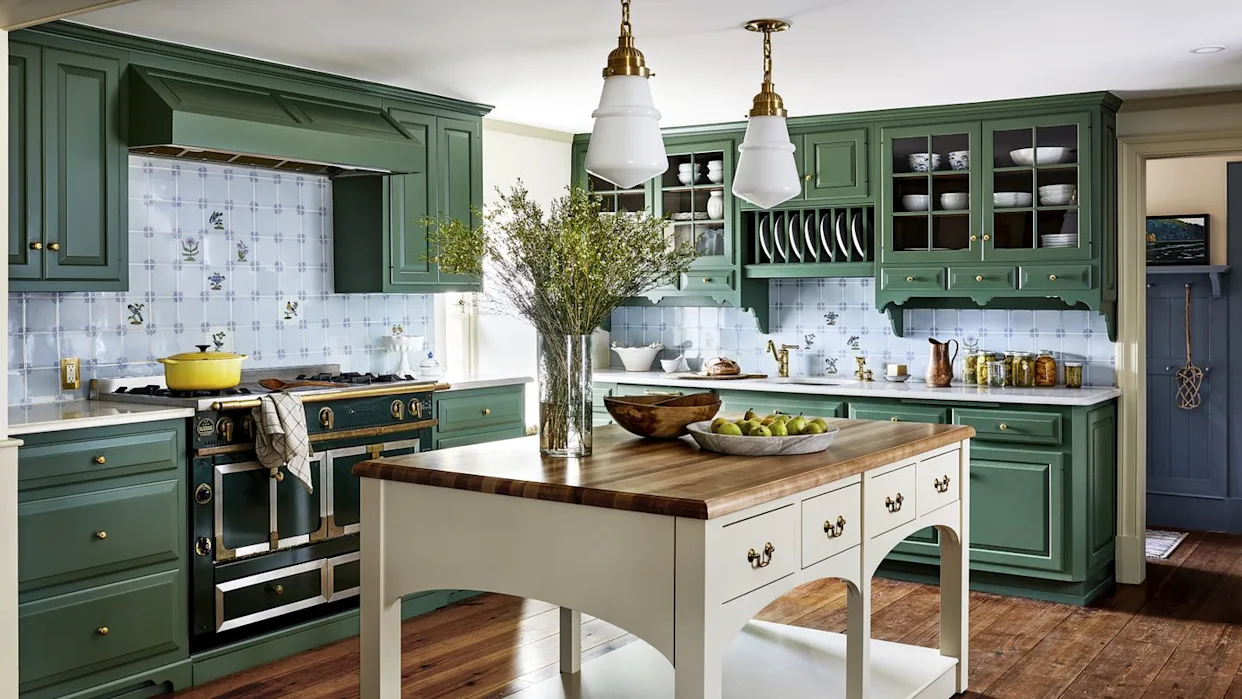
There is something almost magical about sage green. It sits right at that crossroads between earthy and elegant, calm and characterful — and nowhere does it shine more beautifully than in the kitchen. Whether you are renovating from scratch or just thinking about refreshing your cabinets, sage green has a way of making the heart of your home feel genuinely inviting.
I have spent a lot of time exploring what makes sage green kitchens work — from the undertones of the paint to the hardware choices, countertop pairings, and styling tricks that separate a ‘nice’ kitchen from one that stops guests in their tracks. This guide covers 20 real, practical, and beautiful sage green kitchen ideas that you can actually use — not just Pinterest fantasies.
1. Full Sage Green Cabinet Makeover
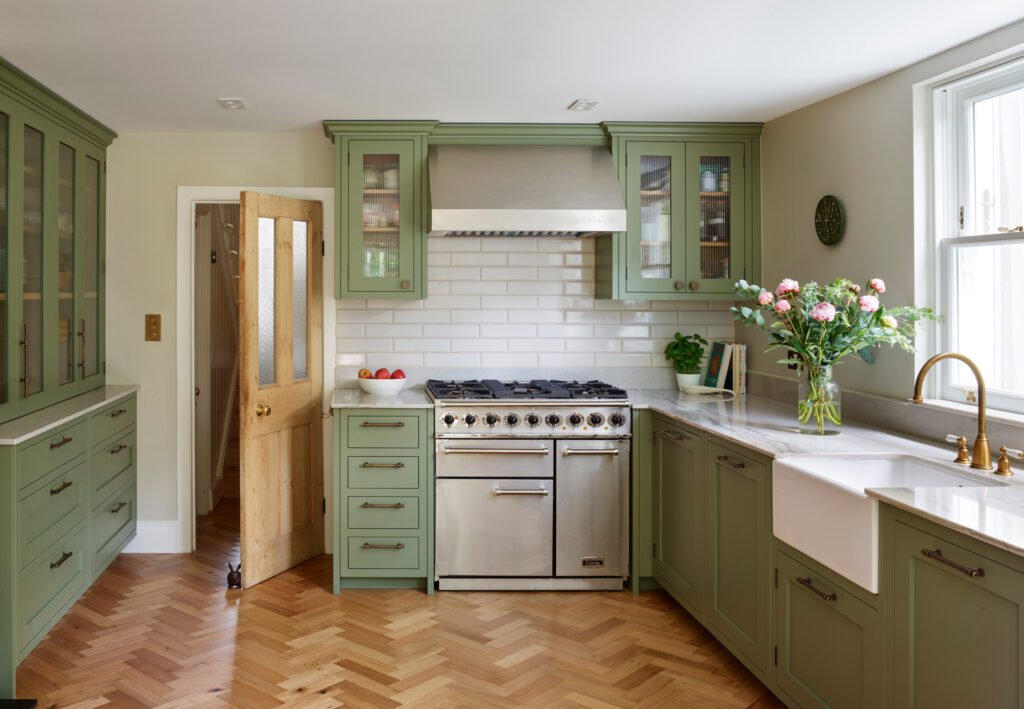
If you want maximum impact, painting all your cabinets sage green is the move. It feels bold, but sage green is forgiving enough that going all-in rarely looks overwhelming — provided you pair it with the right countertops and backsplash.
Look for a shade with grey undertones rather than yellow ones. Benjamin Moore October Mist (their 2021 Color of the Year) and Farrow & Ball Mizzle are both excellent choices. They hold their character in both natural daylight and warm artificial lighting without pulling green or too cool.
Pro tip: If you are hiring a painter, ask for two coats over a quality primer. Sage green on bare wood or cheap primer will look patchy and uneven — the color’s subtlety demands a proper base.
2. Sage Green Lower Cabinets with White Uppers
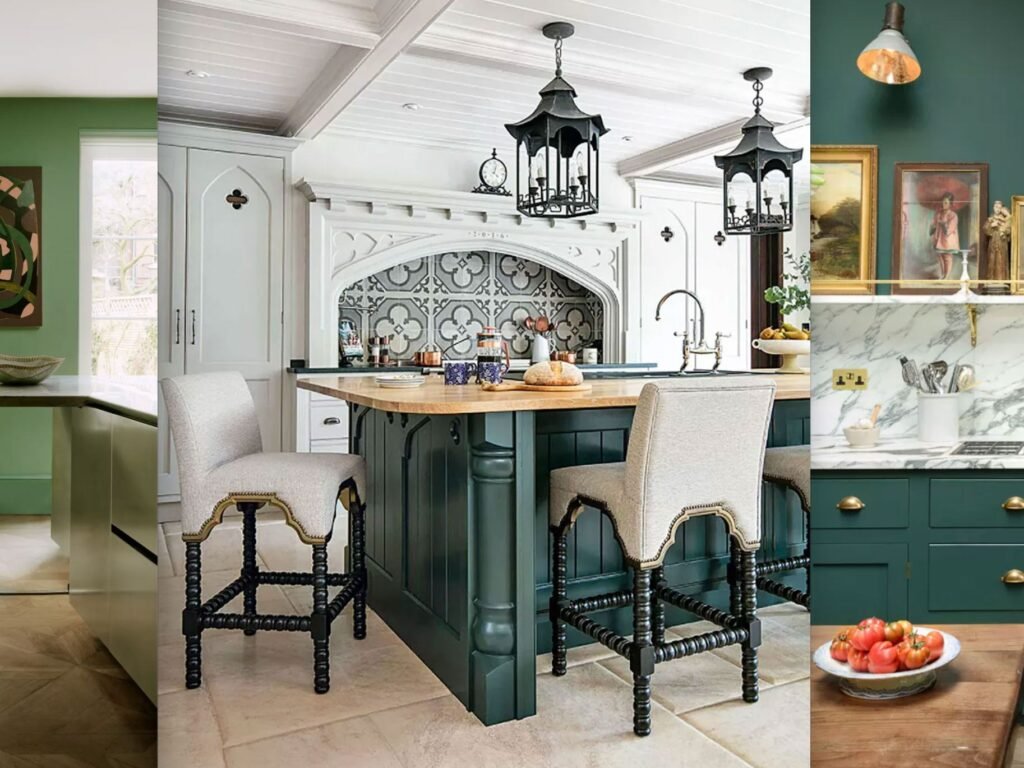
This is probably the most popular approach for good reason. Keeping your upper cabinets white preserves the sense of height and openness in the kitchen, while the sage green lowers ground the space and add personality. It is a very livable combination — easy to refresh over time and a look that photographs beautifully if you ever decide to sell.
The key is to make sure your white is a true warm white rather than a stark brilliant white, which can clash with sage’s muted quality. Dulux Timeless or Farrow & Ball All White are both excellent companions to sage green.
3. Sage Green Island as a Statement Piece
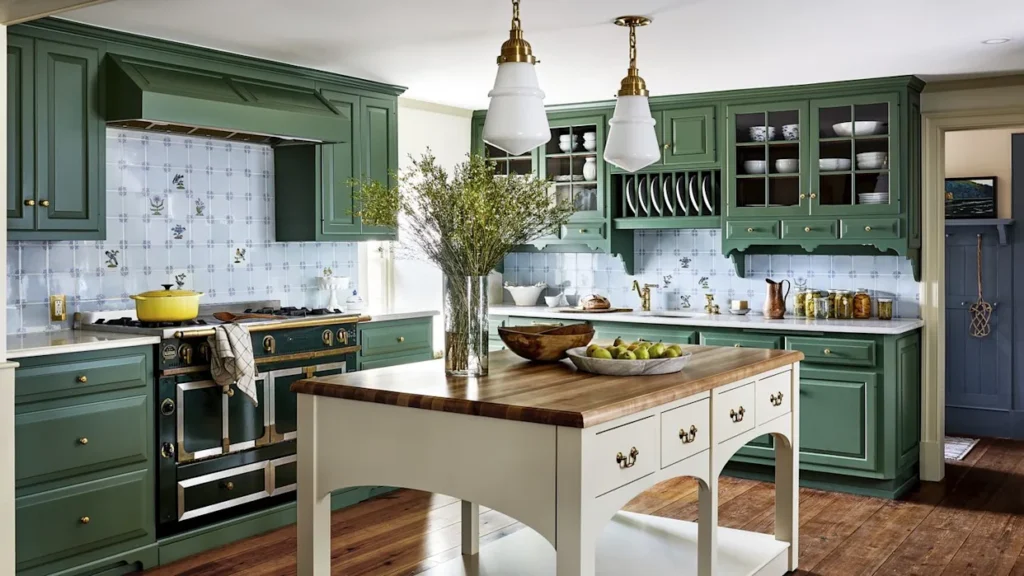
Not ready to commit to full sage green cabinetry? Paint just your island. A sage green island against white or cream perimeter cabinets is one of the most striking kitchen combinations you can pull off — it feels intentional, considered, and expensive without requiring a full renovation.
Pair it with a butcher block or waterfall marble top for maximum visual impact. Add contrasting bar stools in natural rattan or warm wood, and your island instantly becomes the focal point the room deserves.
4. Sage Green Shaker Cabinets for a Farmhouse Feel
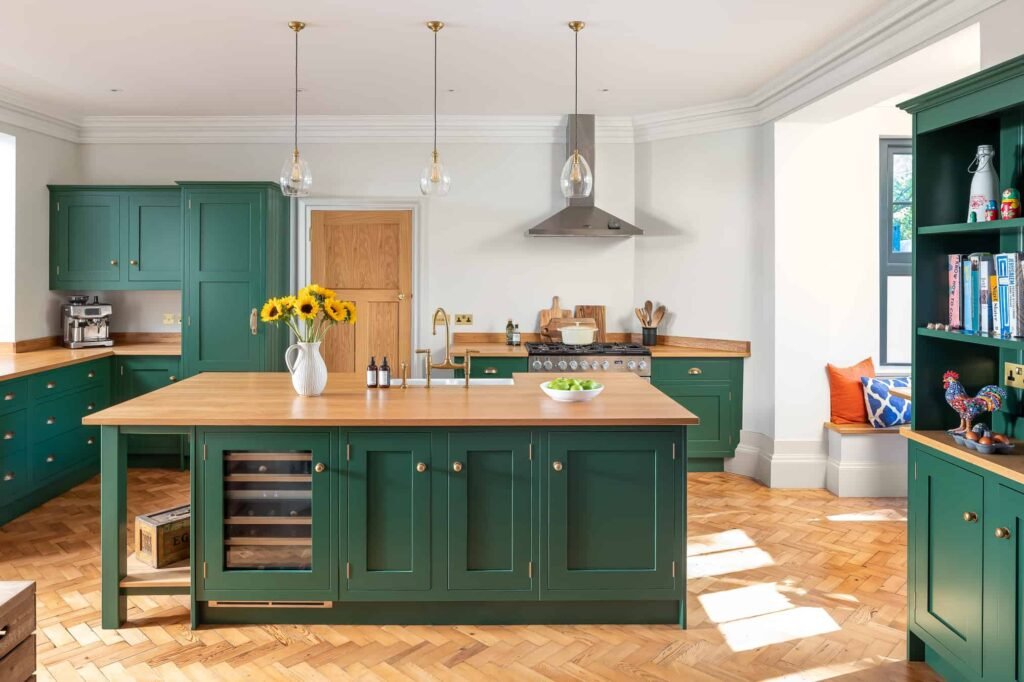
Shaker cabinet doors and sage green were practically made for each other. The clean, recessed panel of the shaker style lets the color do the talking while the simple form keeps things from feeling overdone. This is the look that powers the modern farmhouse aesthetic — relaxed, warm, and effortlessly put-together.
To lean into the farmhouse vibe, add an apron-front sink in white or concrete, open wooden shelving for displaying ceramics or cookbooks, and wrought iron or matte black hardware for a touch of contrast.
5. Sage Green with Brass and Gold Hardware
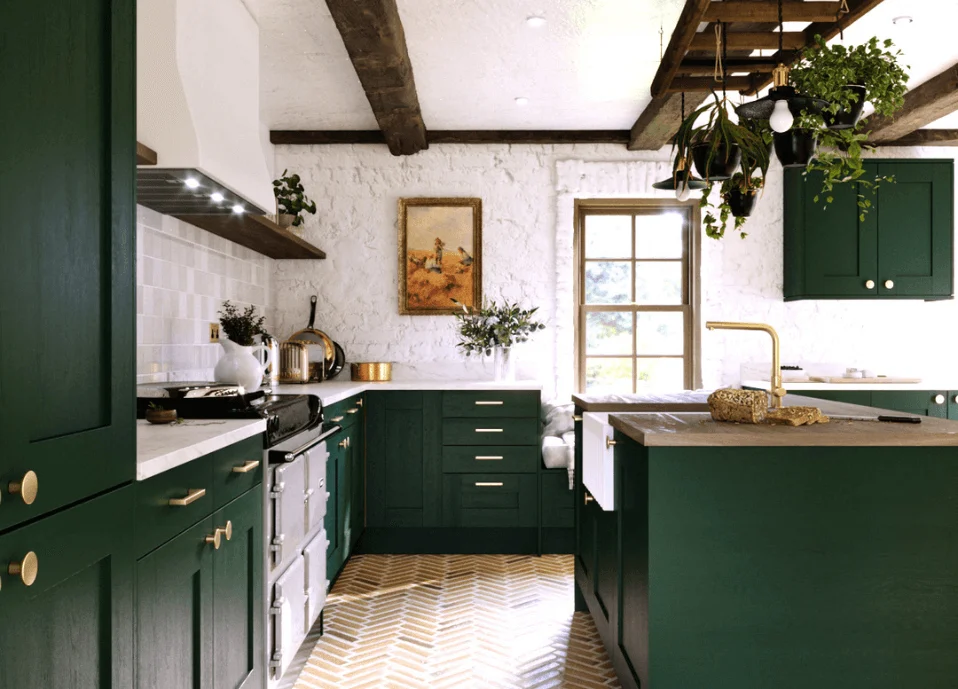
If sage green and brass sound like an odd pairing, trust the process. The warm gold tone of brushed brass draws out the subtle warmth buried in sage green, creating a combination that feels genuinely luxurious without trying too hard. It is the kind of kitchen that makes people stop and ask, ‘Did you use an interior designer?’
Stick to brushed or antique brass rather than polished gold — the latter can feel garish against a color as understated as sage. Use the hardware consistently: cabinet pulls, a brass faucet, and maybe a pendant light or two. Three matching elements are enough to make it feel cohesive.
6. Sage Green with Matte Black Hardware for a Modern Edge
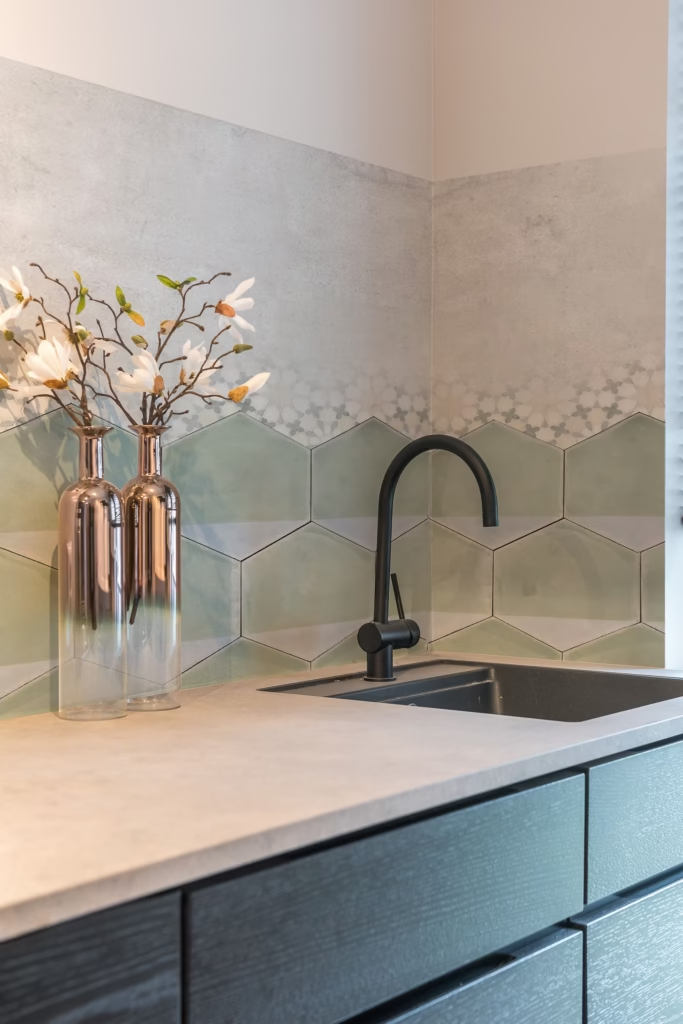
On the other end of the spectrum from brass sits matte black — and it works just as beautifully with sage green, albeit in a completely different way. Where brass is warm and romantic, matte black is crisp and contemporary. This pairing tends to suit open-plan kitchens in modern homes with clean architectural lines.
Think flat-panel sage green cabinet doors, a white quartz countertop with subtle veining, a sleek black faucet, and bar-pull handles in matte black. The contrast is sharp without being aggressive, and the overall effect is kitchen-showroom quality.
7. Sage Green Kitchen with Marble Countertops
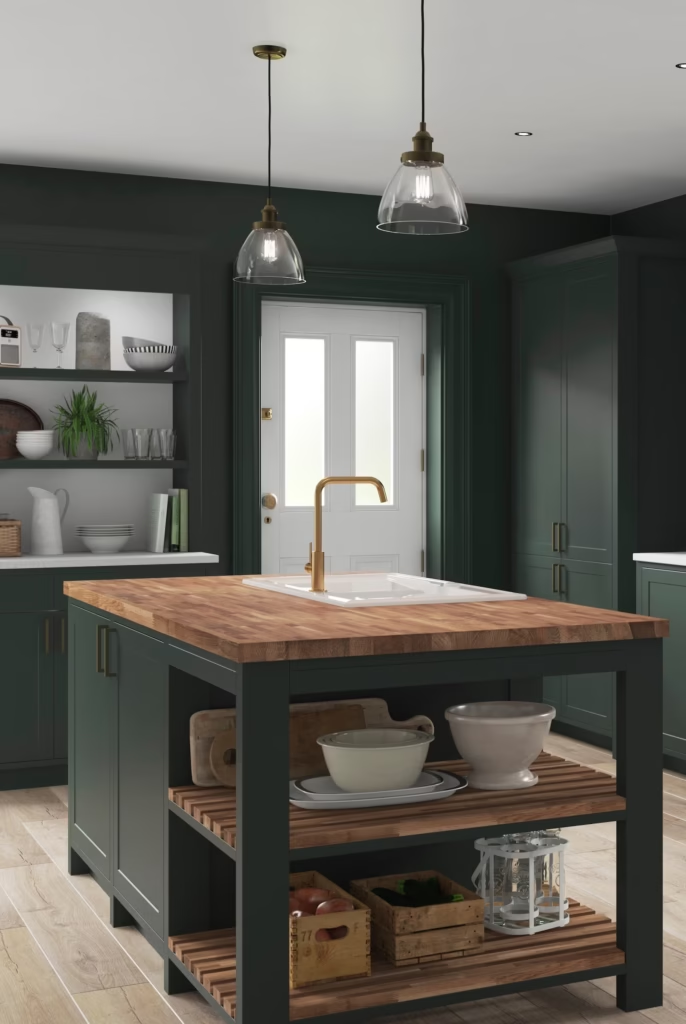
There is a reason the sage green and white marble combination appears so frequently in high-end kitchen design — it is genuinely beautiful. Marble brings cool elegance; sage green brings organic warmth. Together they balance each other perfectly.
If real marble is out of budget (and the maintenance puts you off), opt for a quartz alternative with similar veining. Silestone’s Calacatta Gold and Caesarstone Calacatta Nuvo are both stunning next to sage green cabinetry and far easier to live with day-to-day.
8. Sage Green and Wood — A Natural Partnership
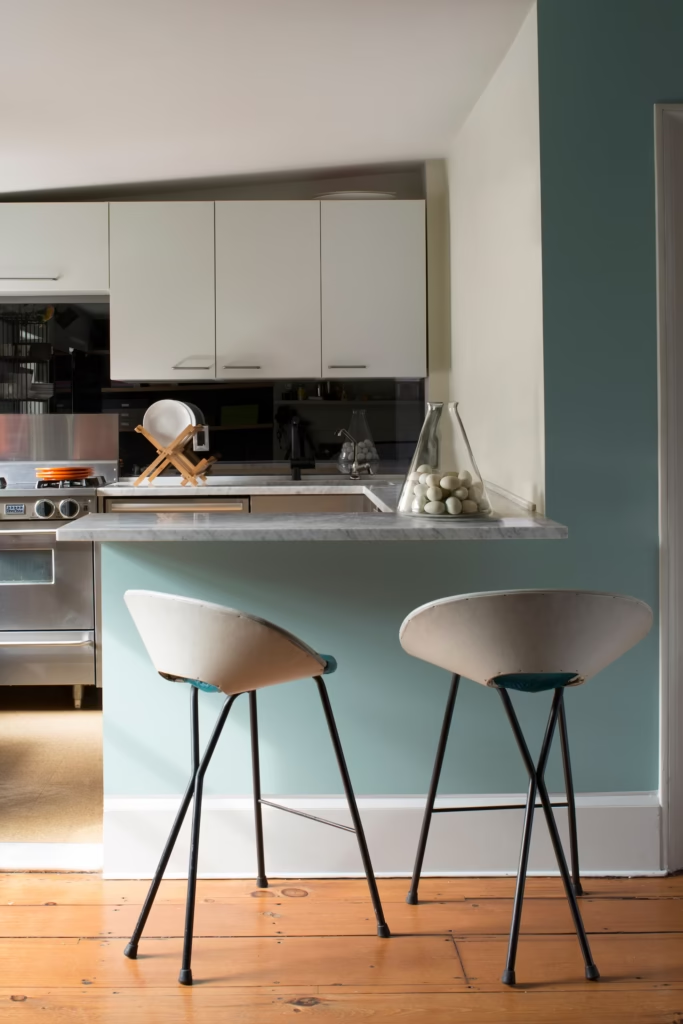
Few material pairings feel as naturally right as sage green and wood. The organic quality of both materials means they reinforce rather than compete with each other. Whether you go for light Scandinavian oak or deep, rich walnut depends on the vibe you are after.
Light oak floating shelves against sage green cabinets have a clean, Japandi-influenced quality — minimal, calm, and considered. Dark walnut, on the other hand, creates a richer, more dramatic look that works especially well in kitchens with high ceilings and good natural light.
Wood accents to consider: open shelving, a butcher block section of countertop, bar stools, a kitchen table, or even just a collection of wooden utensils and chopping boards displayed intentionally on the worktop.
9. Sage Green Subway Tile Backsplash
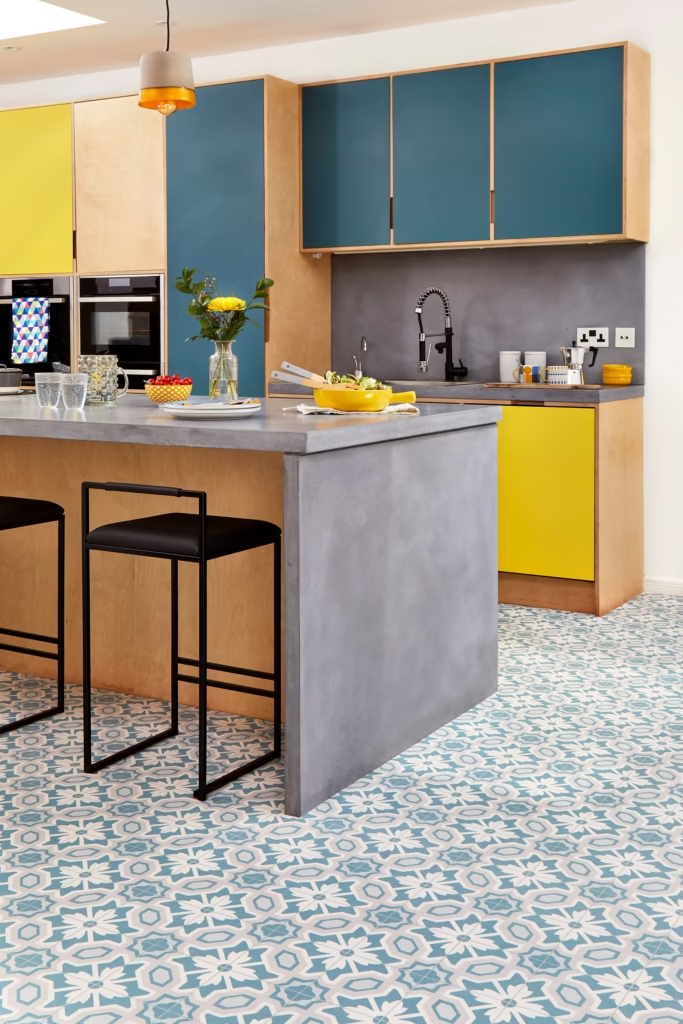
You don’t have to commit to sage green cabinets to bring the color into your kitchen. A sage green subway tile backsplash is a lower-commitment and lower-budget way to introduce the tone while keeping your cabinetry neutral. Against white or cream cabinets, sage green tiles feel fresh, earthy, and genuinely distinctive.
For a contemporary twist, consider zellige tiles — handmade Moroccan-style tiles with a slightly uneven surface that catches light beautifully. In sage green or a close terracotta companion, they can transform a backsplash from purely functional to truly special.
10. Sage Green Open Shelving Kitchen
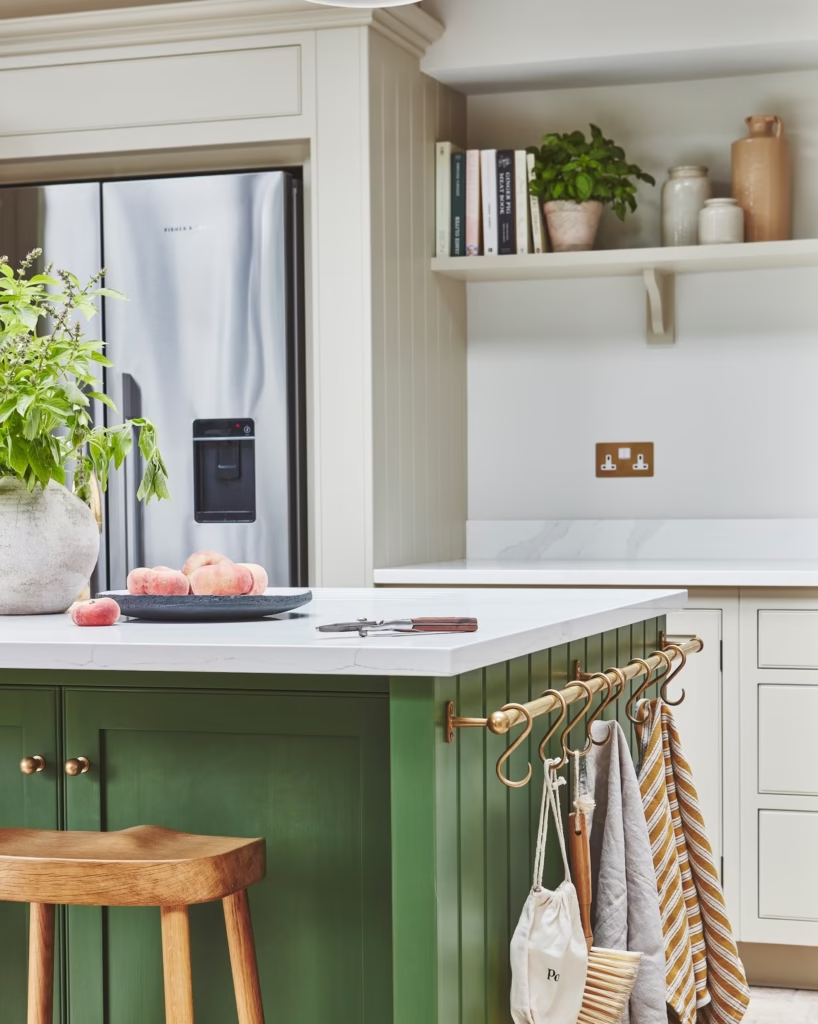
Open shelving is divisive — some people love the airy, styled look; others hate dusting crockery. But if you’re in the ‘love it’ camp, painting the wall behind your open shelves in sage green (even without changing your cabinets) is an incredibly effective way to bring colour into the kitchen.
The sage green wall acts as a backdrop that makes your ceramics, glasses, and plants pop. Stack white plates against it and they look like they belong in a design magazine. Add a trailing pothos or a few dried herb bunches and the effect is genuinely beautiful.
11. Dark Sage Green Kitchen for a Moody Aesthetic
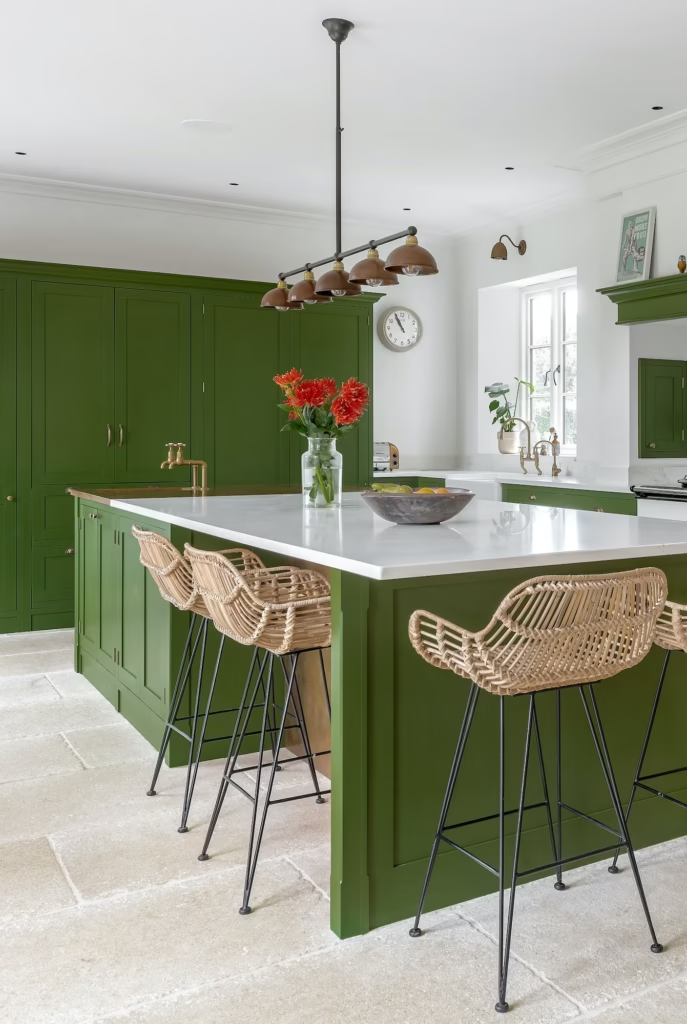
Not everyone wants light and airy. If you’re drawn to deeper, moodier interiors — the kind of kitchen that feels like it exists in perpetual golden hour — consider a darker shade of sage green. Think closer to Hunter or Deep Forest rather than the washed-out pastel versions.
This approach works best with good lighting: under-cabinet LEDs, pendant lights over the island, and ideally a window or skylight to stop the space feeling cave-like. Pair with warm brass fixtures and cream stone countertops for a jewel-box quality that feels anything but ordinary.
12. Sage Green Galley Kitchen
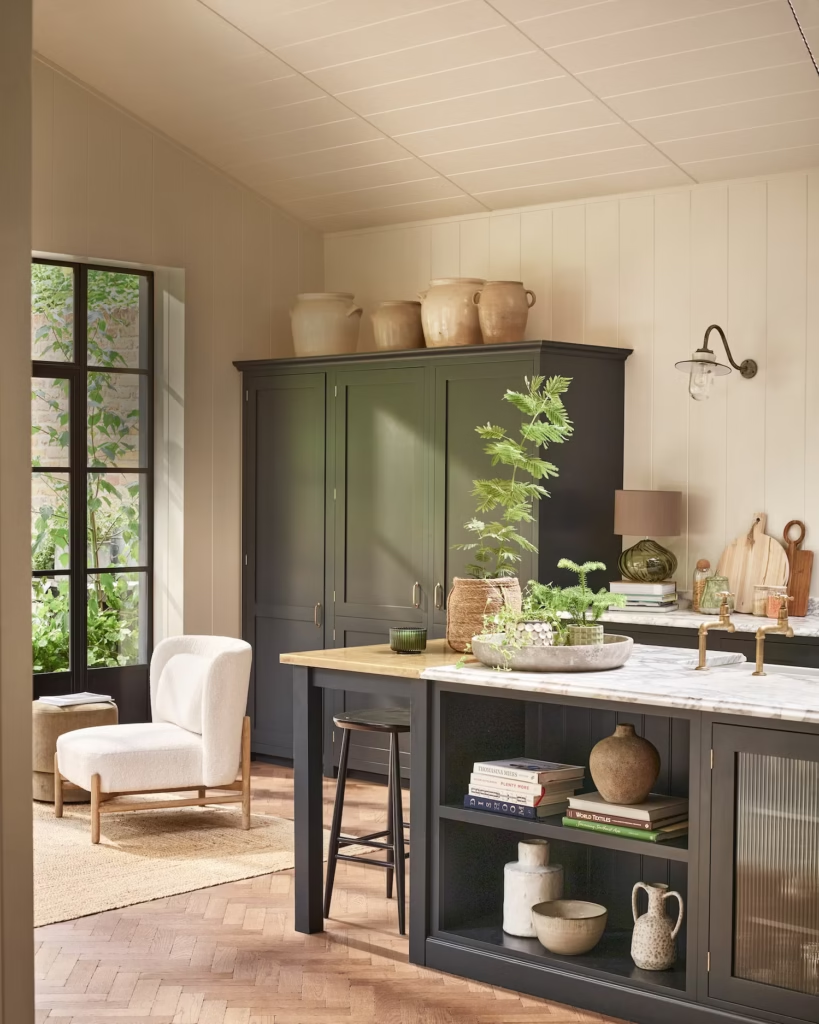
Sage green is particularly good at making narrow galley kitchens feel less tunnel-like. Because it is a muted, recessive color, it doesn’t visually close the walls in the way a bold color might. Painting the cabinets on both sides sage green creates cohesion and makes the space feel deliberately designed rather than awkwardly narrow.
To enhance the feeling of space, use the same sage green on both sides, keep the backsplash light (white metro tiles work brilliantly here), and hang a statement pendant at the far end to draw the eye down the length of the kitchen rather than focusing on the walls closing in.
13. Sage Green with Terracotta Accents
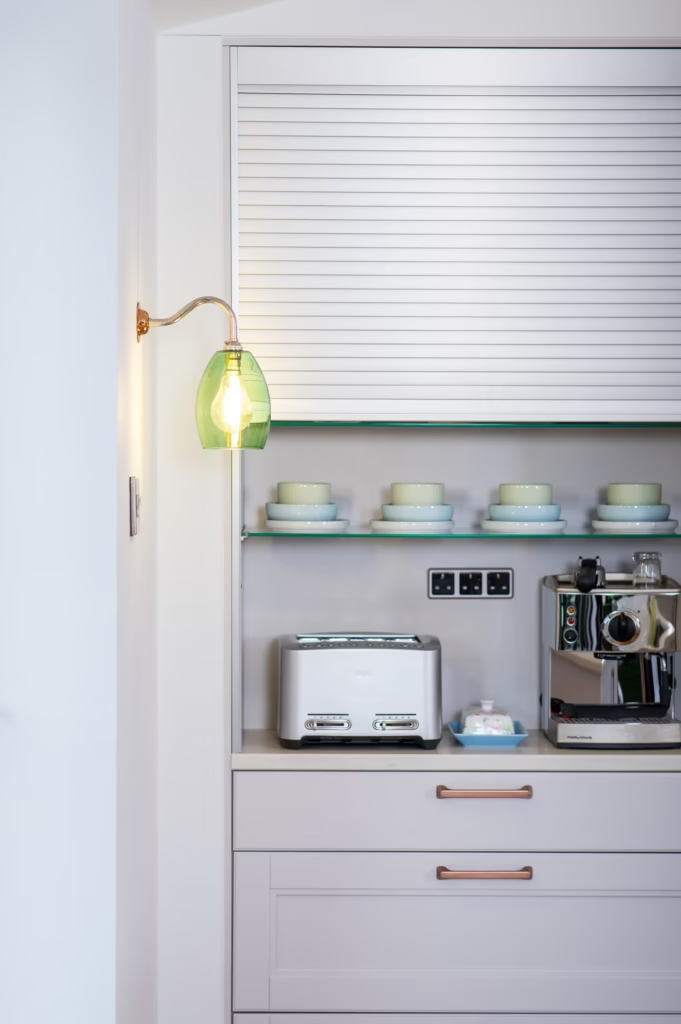
Terracotta and sage green is one of those combinations that feels both earthy and effortlessly chic. The warm orange-red of terracotta sits opposite green on the color wheel, which means these two tones naturally complement and energize each other.
You don’t need terracotta tiles or paint to make this work — start small. A collection of terracotta pots on the windowsill, a terracotta tile backsplash as a feature strip, some clay ceramics on open shelves. Against sage green cabinetry, these warm tones come alive in a way that feels fresh, artisan, and totally alive.
14. Sage Green Painted Kitchen Walls (Not Just Cabinets)
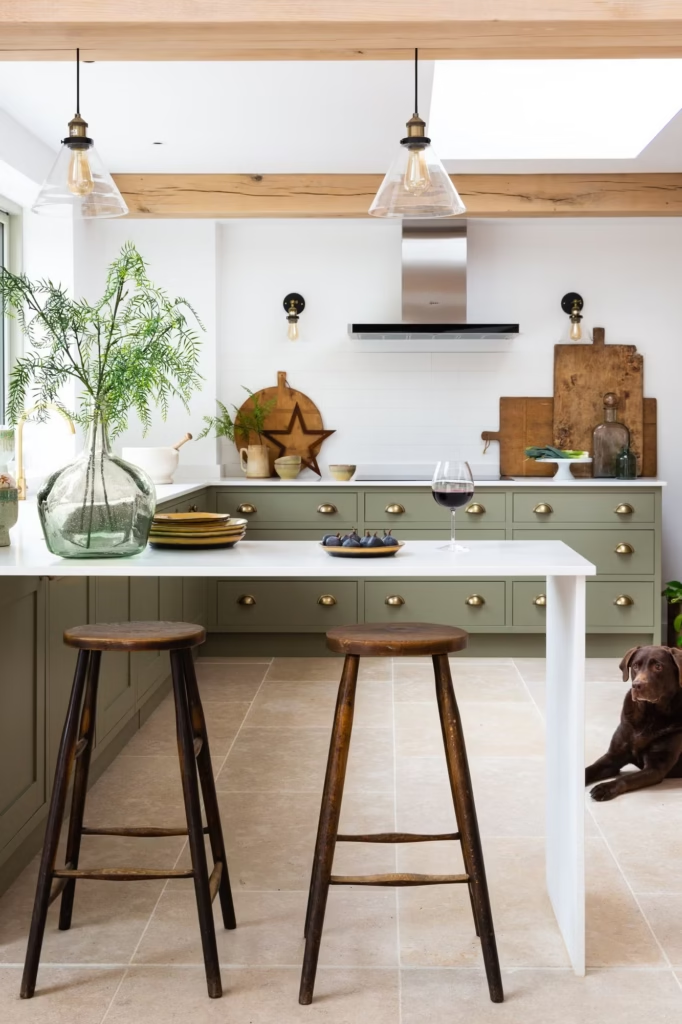
Painting your kitchen walls sage green rather than (or as well as) the cabinets is a softer, more enveloping approach. It works especially well in kitchens with white or natural wood cabinets, where the wall color creates depth and coziness without dominating.
This approach suits cottage-style kitchens particularly well. Imagine white-painted wooden cabinets, a sage green wall above the dado rail, classic white metro tiles below, and a few copper pots hanging from a ceiling rack. That is a kitchen that will never not look wonderful.
15. Sage Green Two-Tone Kitchen with Navy
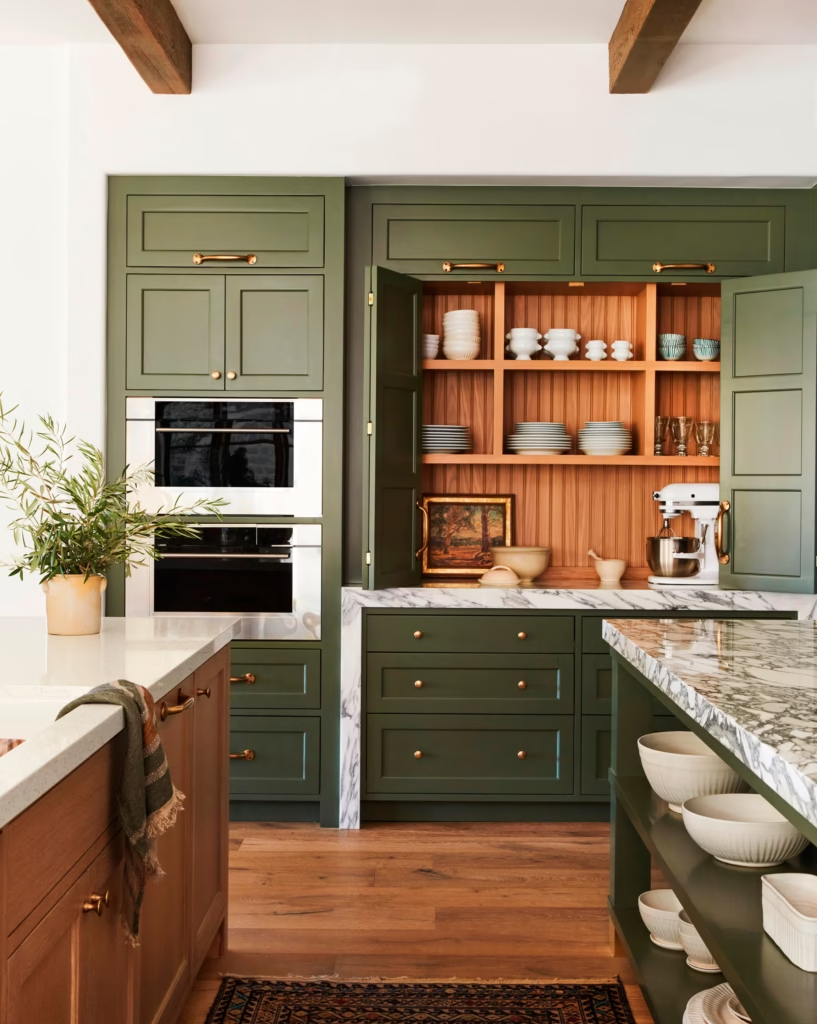
For those who want something a little more unexpected, pairing sage green with navy blue creates a bold, layered kitchen that feels genuinely sophisticated. Use sage green for the majority of your cabinetry and a deep navy for just the island or a single bank of cabinets — the contrast creates drama while the muted tones of both colors keep things from feeling garish.
Brass hardware works brilliantly as a connector between these two colors, warming both tones and tying the palette together.
Best Sage Green Paint Colors for Kitchens
Choosing the right shade makes all the difference. Here are the most reliable sage green paints for kitchen use:
- Benjamin Moore October Mist (HC-161) — the most popular sage green of recent years. Balanced grey-green with excellent light behaviour.
- Farrow & Ball Mizzle (No.266) — complex, slightly blue-toned sage that shifts beautifully throughout the day.
- Farrow & Ball Sage (No.80) — the classic. Slightly yellower than Mizzle, warm and welcoming.
- Dulux Sage Advice — a softer, more affordable option that works well on both cabinets and walls.
- Little Greene Sage Derby — a refined choice for those who want something less widely seen but just as beautiful.
- Sherwin-Williams Clary Sage (SW 6178) — ideal for US readers; versatile and consistently well-reviewed.
Tips for Getting Your Sage Green Kitchen Right
A few practical points before you start ordering paint samples:
- Always test paint in your actual kitchen under both natural and artificial light. Sage green shifts dramatically depending on light temperature.
- Consider the floor: warm wood floors pull sage green warmer; grey stone or cool tiles push it cooler. Neither is wrong, but know which direction you want to go.
- Hardware is not an afterthought. The finish — brass, chrome, matte black, bronze — will define the entire mood of the room. Order samples before committing.
- Commit to the right finish. Eggshell or satin for cabinets (practical and wipeable), matte for walls if you want a soft, chalky effect.
- Plan your lighting early. Under-cabinet lights, pendant lights over an island, and warm-toned bulbs (2700K) all enhance sage green. Harsh cool white lights flatten and dull it.
Final Thoughts
Sage green is one of those rare design choices that manages to feel both current and timeless at once. It’s calming without being boring, distinctive without being divisive, and — perhaps most importantly — it makes every kitchen feel a little more like home.
Whether you go all-in with floor-to-ceiling cabinets or start small with a painted island, the ideas in this guide give you a solid foundation to work from. The real secret, though? Choose the shade that genuinely makes you happy when you see it — because in a kitchen, where so much of daily life plays out, the color you look at every single morning matters more than any trend ever could.