
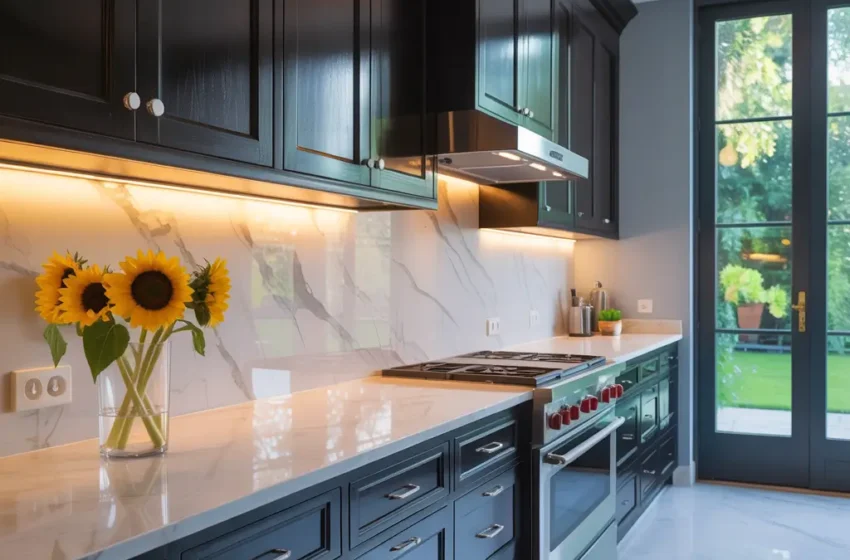
There’s a moment in almost every kitchen renovation project when someone — a partner, a parent, a well-meaning friend — leans over and says, ‘Are you sure you want to go with black?’ And the person who was sure, suddenly isn’t. Modern black kitchens are not a trend. They are not a risk. They are not a phase that will date your home in three years and make future buyers grimace.
They are one of the most enduring, versatile, and genuinely exciting design directions you can take a kitchen — and the proof is written across a century of architecture, design history, and the lived experience of millions of homeowners who made the switch and never looked back.
“A modern black kitchen doesn’t just make a statement. It becomes the room that everyone in your house gravitates toward — because it feels like it was designed, not defaulted into.”
1. Matte Black with Brushed Gold
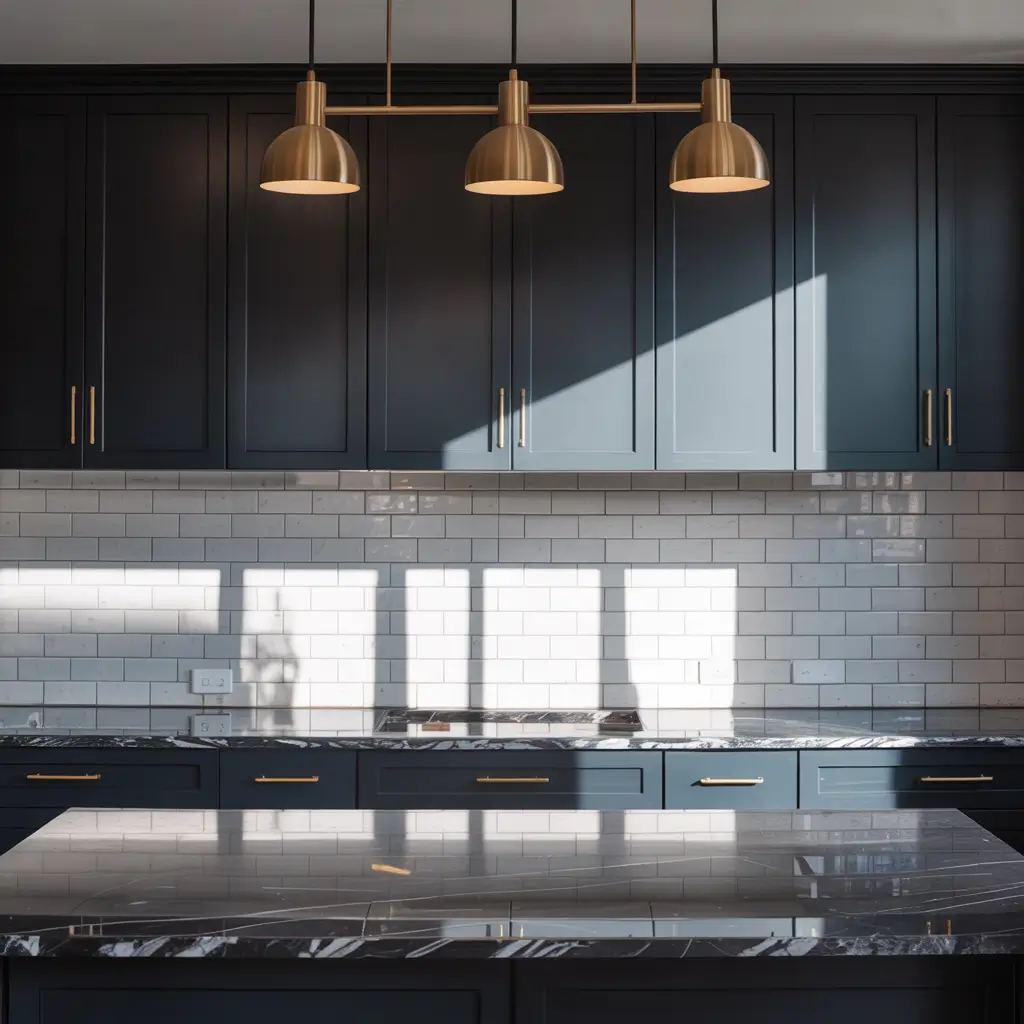
If modern black kitchen design had a signature look for this decade, the matte black and brushed gold combination would be it. This pairing has appeared in luxury hotels, award-winning restaurants, and the most-shared kitchen renovation posts for good reason: the contrast between the two is almost scientifically perfect.
Matte black absorbs light. It has a velvety, depth-creating quality that makes surfaces look intentional and expensive. Brushed gold reflects it — warmly, softly, without the cold glare of polished chrome. Together, they create a kitchen that reads as both bold and refined.
Getting the Gold Ratio Right
The most common mistake with this combination is using too much gold. Gold is a seasoning, not the main dish. The right amount — hardware pulls, faucet, pendant lighting, maybe a pot filler — creates warmth and personality. Too much starts to feel theatrical rather than luxurious.
- Cabinet hardware — brushed gold bar pulls or cup handles on matte black cabinets are the foundational move.
- Faucet and fixtures — a brushed gold bridge faucet or gooseneck at the sink anchors the palette at eye level.
- Pendant lighting — warm gold metal pendants over a kitchen island tie the scheme together beautifully.
- Pot filler — if your plumbing setup allows, a wall-mounted pot filler in brushed gold above the range is a genuine showstopper.
- Shelf brackets — for any open shelving sections, gold brackets add warmth without dominating.
★ Pro Tip: Don’t match your gold tones exactly. Slightly different finishes — some warmer, some lighter — look collected and curated rather than kit-purchased. This slight variation is what separates interiors that feel designed from those that feel decorated.
2. All-Black Everything: The Bold Commitment
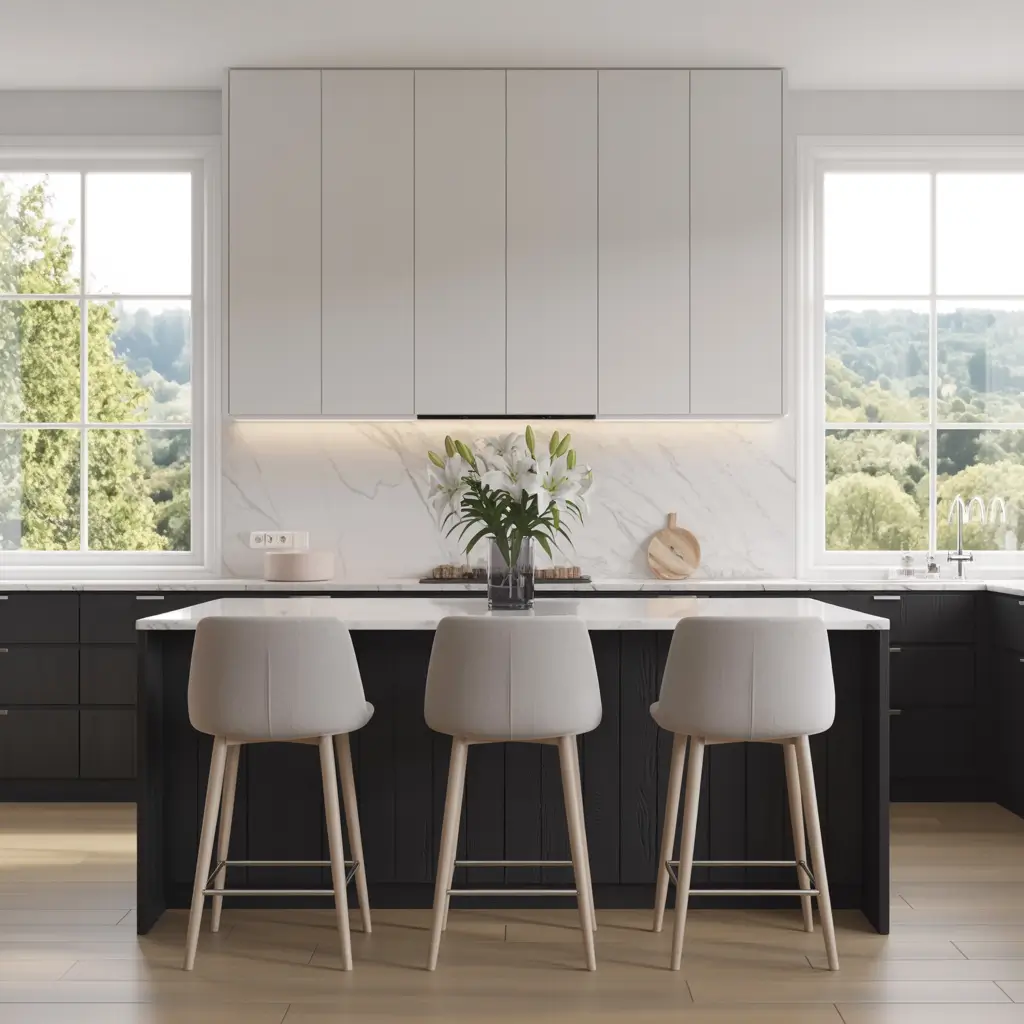
Committing to an all-black kitchen is not for everyone, and that’s completely fine. But for those with the confidence to do it, a fully realized all-black kitchen is one of the most extraordinary design spaces you can create in a home.
The all-black kitchen works because black, unlike other colors, doesn’t clash with itself. What creates visual interest in a monochromatic dark space is the interplay of textures, finishes, and materials rather than color contrast. Matte cabinet doors against a glossy backsplash tile. Rough concrete countertops alongside smooth lacquered drawer fronts. A brushed metal range hood against painted cabinet surfaces.
The Non-Negotiables of an All-Black Kitchen
- Layered lighting — this is not optional. An all-black kitchen without thoughtful, generous lighting becomes a cave. Plan for under-cabinet LED strips, recessed ceiling fixtures, pendant lights, and accent lighting inside or beneath cabinets.
- Texture variation — without color contrast, texture carries the entire visual interest of the space. Vary your surfaces deliberately.
- One warm element — a natural wood shelf, a butcher block section, or a collection of plants introduces organic warmth that prevents the space from feeling sterile.
- Quality of finish — in an all-black kitchen, every surface gets scrutiny. Invest in better paint, better tile, better stone. Imperfections are amplified by uniformity.
★ Design Rule: In an all-black kitchen, let one material be genuinely special. A slab of book-matched black marble behind the range. A section of handmade zellige tile. A concrete countertop poured in place. The rest can be more restrained — the special element carries everything.
3. Modern Black Kitchen with Natural Wood
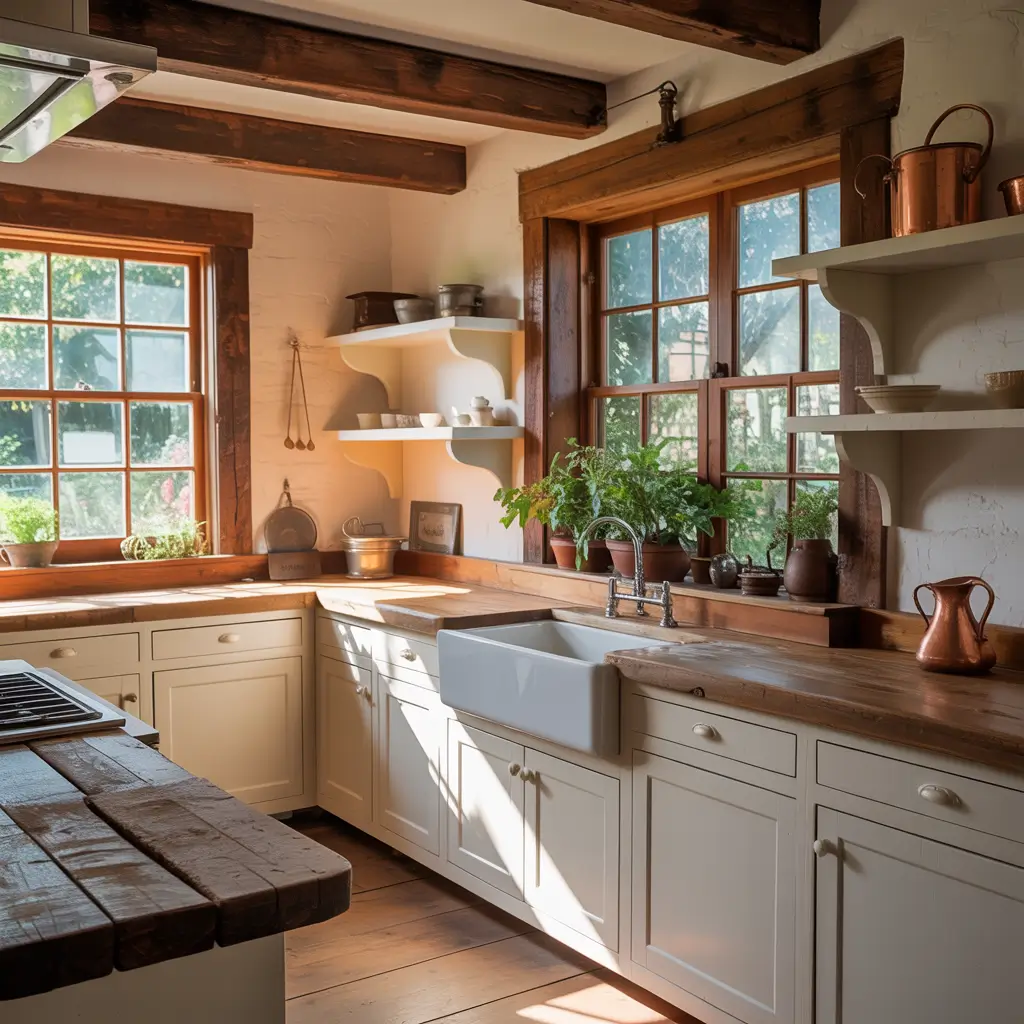
The most common concern about modern black kitchens is that they’ll feel cold, clinical, or unwelcoming. The answer to that concern is almost always the same: add wood.
Natural wood and black are design partners of the highest order. Wood brings warmth, organic texture, and a sense of living character that no paint color can replicate. Black grounds the space, provides drama and depth, and makes the wood look richer than it would against white.
The combination appears in Scandinavian design studios, Japanese-influenced interiors, and contemporary kitchen showrooms worldwide because it works across virtually every cultural design tradition.
Choosing Your Wood Tone
- Light woods (maple, ash, birch) — creates an airy, Scandinavian feel. The high contrast between very light wood and very dark cabinets is striking and modern.
- Medium tones (white oak, natural oak) — the most versatile option. Warm but not heavy, pairs with black without either element dominating.
- Rich tones (walnut, teak) — deep, luxurious warmth. The combination of walnut and matte black is one of the most sophisticated pairings in contemporary design.
- Reclaimed or character wood — brings history, variation, and sustainability. Imperfections in the wood read as intentional character against clean black cabinetry.
Wood placement doesn’t need to be everywhere. A black island with a walnut countertop. Floating shelves in white oak above black wall cabinets. A wood-paneled ceiling above a black cabinet run. Strategic placement often has more impact than covering every surface.
4. Handleless Black Cabinets
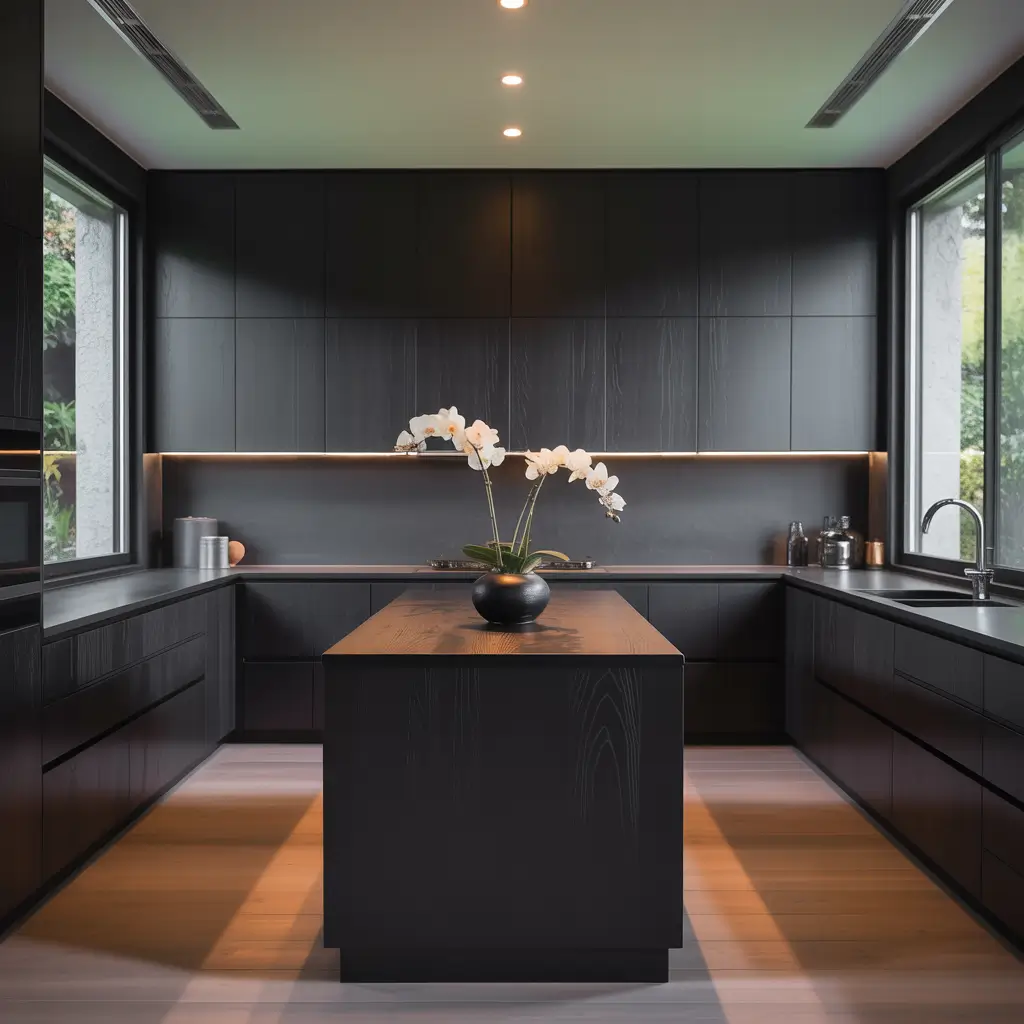
If there’s one detail that signals ‘this kitchen was professionally designed,’ it’s handleless cabinets. Push-to-open mechanisms or integrated grip channels replace protruding hardware entirely, creating a completely uninterrupted cabinet surface that reads as architectural rather than decorative.
On black cabinets specifically, the handleless look is extraordinarily powerful. Without hardware breaking the surface, you see the full expanse of the cabinet’s color and finish — and on a run of deep black cabinetry, that unbroken surface is genuinely impressive.
Handleless Mechanism Options
- Push-to-open (tip-on) — press the cabinet door and it springs open. No visible mechanism, completely clean surface. Best for lower cabinets where bending isn’t a constant issue.
- J-pull or recessed grip — a subtle channel routed into the top or bottom edge of the door. Invisible from the front, functional from above or below.
- Finger-pull channel — a thin horizontal groove across the full width of the door. Creates a subtle linear detail that’s almost decorative.
- Integrated toe kick opening — for lower cabinets, a kick-plate opening mechanism allows hands-free opening — genuinely useful when your hands are full.
★ Practical Note: Handleless cabinets require precise installation. Even slight misalignment between adjacent doors is immediately obvious without hardware to draw the eye away. Budget for experienced cabinet installers and be prepared for adjustment time.
5. Black Kitchen with White Countertops
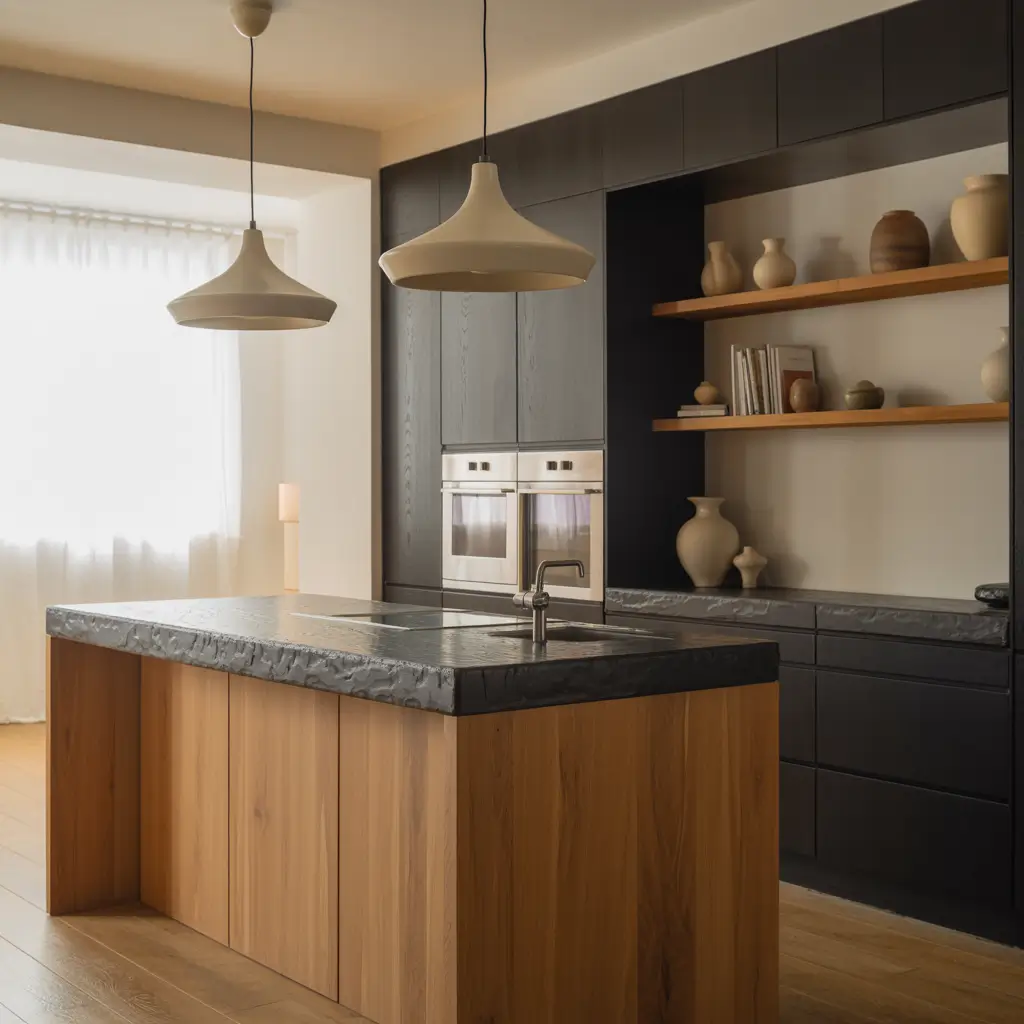
The relationship between black cabinets and white countertops is one of the most reliable pairings in all of kitchen design. The contrast is immediate and powerful — dark below, light above — and the visual clarity it creates gives even mid-sized kitchens a sense of intentional design.
White countertops also solve the lighting challenge that all-dark kitchens face. The pale reflective surface bounces light back up into the room, illuminating the underside of upper cabinets and creating a sense of brightness that prevents the kitchen from feeling heavy.
White Countertop Materials That Work Best
- Calacatta or Carrara marble — the gold standard. White stone with natural gray or gold veining that bridges the gap between black and white beautifully.
- White quartz (engineered) — maintenance-free and completely consistent. Modern quartz lines include realistic veining that closely mimics natural marble.
- White quartzite (natural) — harder and less porous than marble, with a similar aesthetic. Best of both worlds for high-use kitchens.
- Solid white concrete — poured-in-place concrete in a near-white pigment creates a textural, craft-forward surface that’s both modern and unique.
- Honed white granite — more durable than marble, available in white varieties with subtle variation that reads as sophisticated rather than busy.
★ The Best Pairing: Black matte cabinets with honed (not polished) white Calacatta marble is arguably the most beautiful kitchen countertop combination available. The matte finish of both surfaces creates a cohesive softness that polished versions can’t match.
6. The Modern Black Kitchen Island
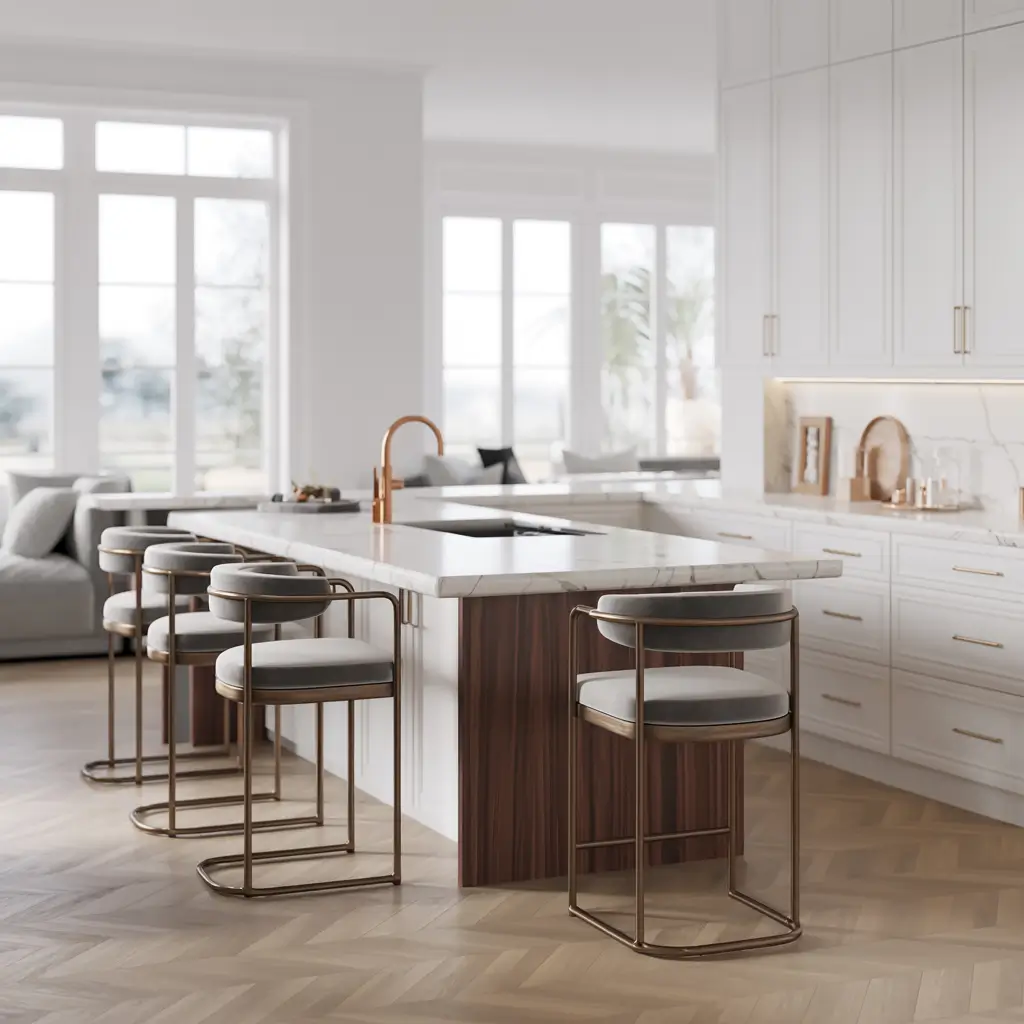
In the open-plan homes that define contemporary living, the kitchen island is often the most important single piece of furniture in the house. It’s where children do homework, where parties naturally gravitate, where every conversation seems to begin and end. Making it a black island is one of the most impactful single design decisions available.
A black island against lighter perimeter cabinets creates immediate visual hierarchy. The island becomes the anchor of the room — the design center of gravity around which everything else is organized. It defines the kitchen zone in an open-plan space without walls, and it invites gathering in a way that lighter, less defined islands often don’t.
Black Island Design Details Worth Investing In
- Waterfall edge — the countertop material continues vertically down the side of the island to the floor. Creates an architectural, sculptural quality that looks genuinely expensive.
- Contrasting countertop — a black island with a white marble or wood top creates layered interest. The contrast on the island itself mirrors the larger kitchen composition.
- Integrated seating — an overhanging counter section on one side of the island provides informal seating without the need for a separate dining table.
- Panel-ready appliances — a black panel wine fridge, microwave drawer, or dishwasher integrated into the island body creates a seamless look.
- Statement pendant lighting — two or three pendants hanging directly above the island define the space and add decorative personality.
7. Industrial Modern Black Kitchen
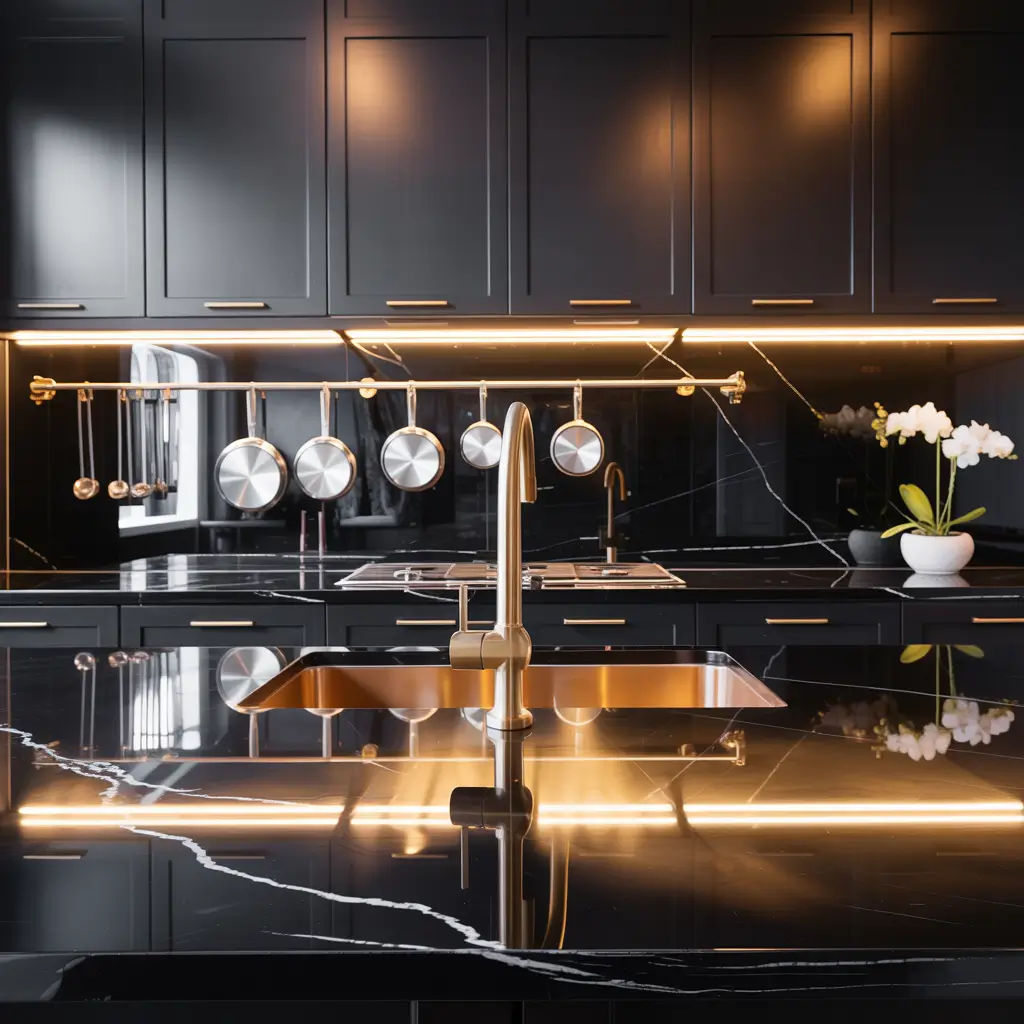
The industrial aesthetic and the modern black kitchen were made for each other. Industrial design values raw materials, functional honesty, and the beauty of things that are built to work — and black cabinetry provides the perfect organized, refined counterpoint to those raw, expressive elements.
In an industrial modern black kitchen, the cabinets do the heavy lifting of providing structure and cohesion. The industrial elements — concrete, steel, exposed brick, raw wood — provide the texture, character, and edge that prevent the kitchen from feeling too polished or corporate.
Industrial Elements to Pair with Black Cabinets
- Concrete countertops — polished or raw, poured in place or pre-cast. The tactile variation of concrete against smooth black cabinet doors is one of the most compelling textural contrasts in kitchen design.
- Exposed steel shelving — black powder-coated steel pipe and board shelving in place of some upper cabinets adds industrial authenticity.
- Wire mesh cabinet inserts — replacing solid door panels with wire mesh in some upper cabinets adds industrial texture while creating display opportunities.
- Cage or Edison bulb lighting — industrial pendant lights in matte black iron or aged steel above the island define the aesthetic.
- Exposed brick or stone — if your home’s structure includes brick walls or you’re willing to create a faux brick panel, the combination with black cabinets is extraordinary.
- Black stainless steel appliances — modern appliance lines include black stainless that blends into dark cabinetry far more elegantly than standard brushed stainless.
★ Industrial Design Philosophy: Embrace imperfection. A concrete countertop with visible seams. An industrial shelf with slightly uneven spacing. Grout that isn’t machine-perfect. These ‘flaws’ are features in industrial design — they prove the space was made by humans, for humans, not assembled from a catalog.
8. Scandinavian Modern Black Kitchen
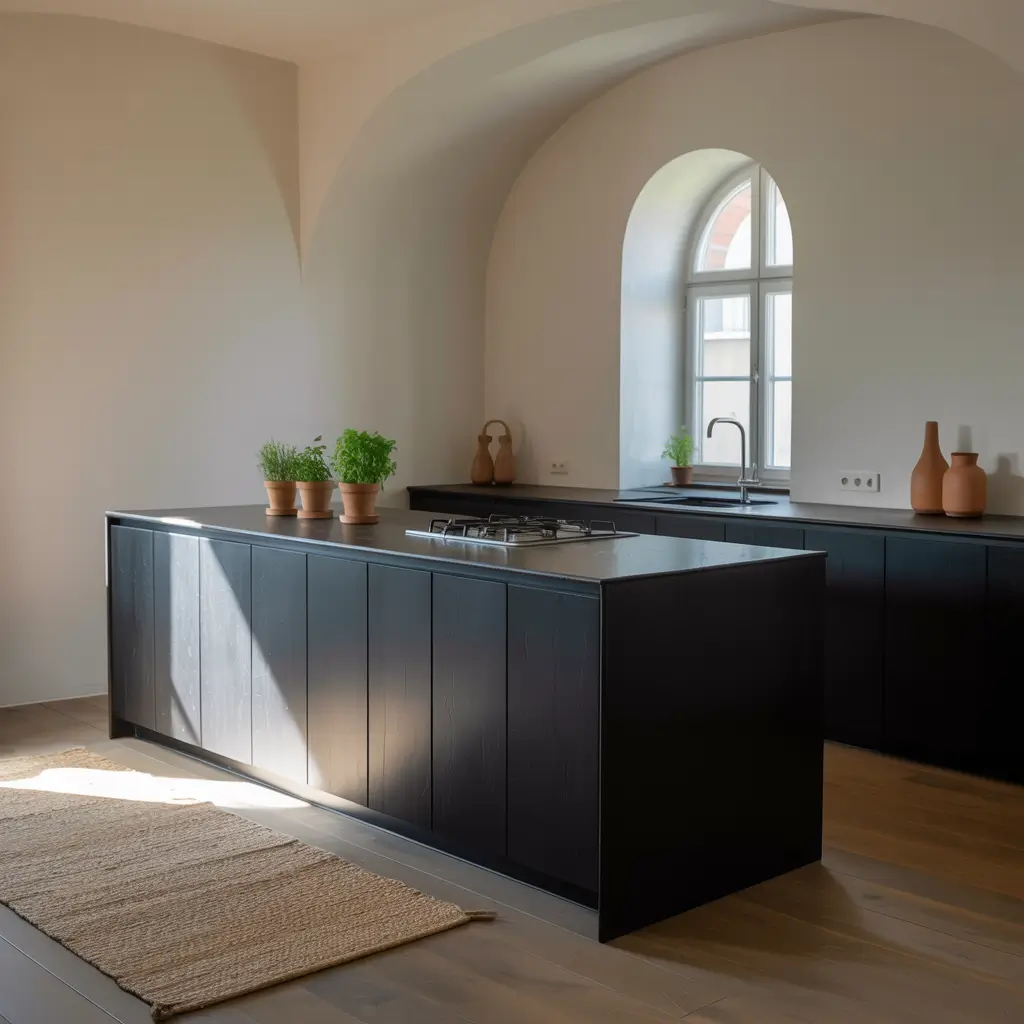
Scandinavian kitchen design has exported an idea to the world: that a kitchen can be simultaneously minimal and warm, restrained and inviting. The modern black kitchen fits surprisingly naturally within this philosophy — provided you approach it the Scandi way.
The Scandinavian black kitchen is not about drama or statement-making. It’s about using black as a grounding element that anchors the space and makes everything around it — the light flooding through large windows, the natural textures, the simple hardware — read more clearly.
Core Elements of the Scandi Black Kitchen
- Matte finishes throughout — gloss has no place in Scandinavian design. Every surface, from cabinet doors to tile to countertops, should be flat or satin at most.
- Light-source maximization — Scandinavian design is obsessed with natural light for good reason. If you’re doing a black kitchen in this style, maximize window size, use no window treatments, and keep walls and ceilings white.
- Simple, restrained hardware — thin bar pulls in brushed steel or matte black, or no hardware at all. Decorative hardware competes with Scandi’s clean vision.
- Natural materials as accents — white oak floating shelves, a linen-wrapped bar stool, a woven rattan pendant light, a ceramic vase. Nature’s textures are Scandi’s warmth.
- Plants as essential, not optional — in a black kitchen without color, green plants do essential visual work. A trailing pothos on a shelf, herbs on the windowsill, a structural fiddle leaf fig in the corner.
9. Modern Black Kitchen with Led
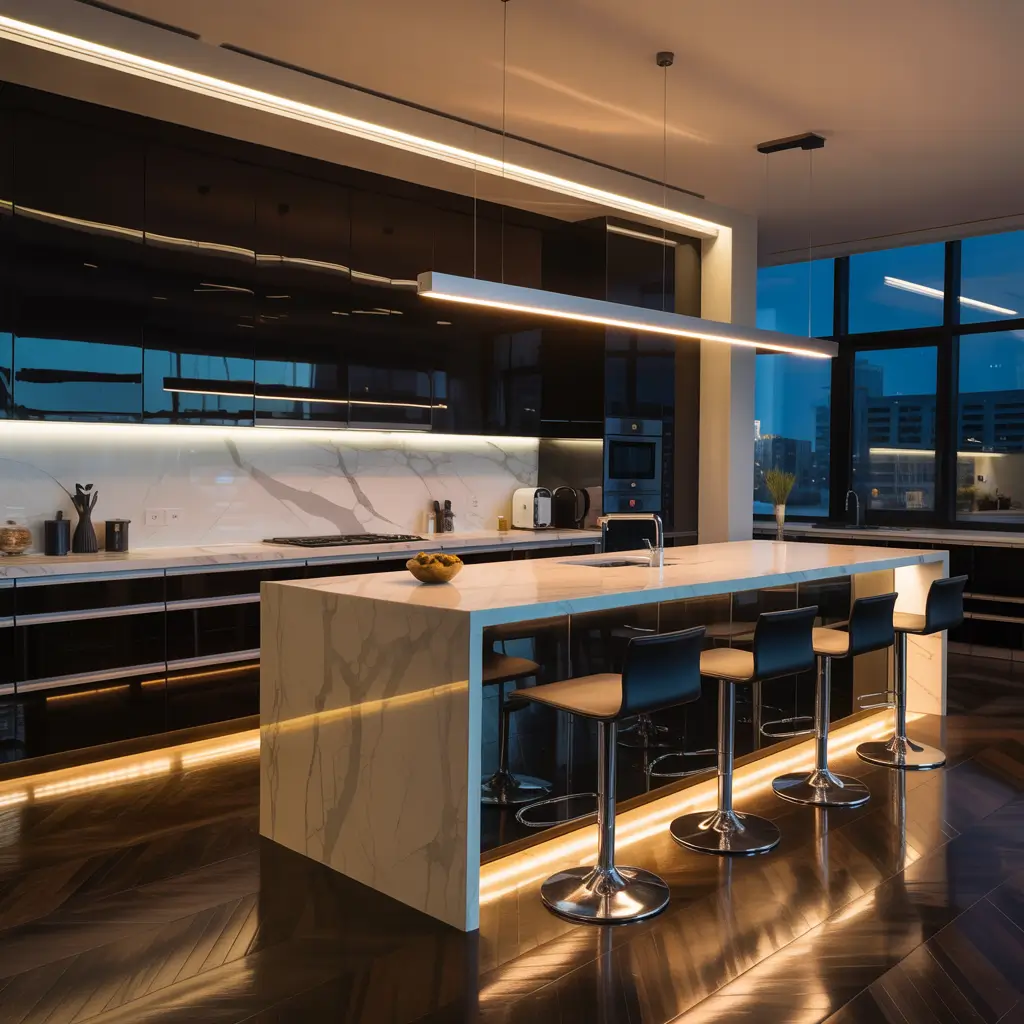
Modern LED lighting technology has fundamentally changed what’s possible in a black kitchen. We’re not just talking about adequate illumination — we’re talking about light as a design material in its own right, something that can be adjusted, layered, colored, and controlled to completely transform the character of a space throughout the day.
In a modern black kitchen, lighting is not a finishing touch. It is a structural design decision that needs to be planned at the same time as the cabinet layout and countertop selection — not after.
The Five Lighting Zones of a Modern Black Kitchen
- Task lighting — under-cabinet LED strips that illuminate countertops directly. Essential for safety and functionality. Choose 2700-3000K warm white. Install dimmers.
- Ambient lighting — recessed ceiling fixtures or a linear suspension fixture providing general illumination. Black kitchens need 20-30% more ambient light than lighter kitchens of the same size.
- Accent lighting — interior cabinet lighting (visible through glass-front doors), toe-kick lighting along the floor, and shelf lighting create layers of warmth and depth.
- Decorative lighting — pendant lights above an island or dining area that function as jewelry for the space. The fixture itself is a design element; choose it with as much care as any cabinet or countertop.
- Color-tunable lighting — smart LED systems allow you to shift from crisp task light during cooking to warm amber for dining to cooler, brighter light for cleaning. This versatility makes a black kitchen genuinely responsive to how it’s being used.
★ Critical Bulb Temperature: Never install cool white (4000K+) or daylight (5000K+) bulbs in a black kitchen. These temperatures create a harsh, clinical atmosphere that kills warmth entirely. Commit to 2700-2900K throughout for a rich, inviting glow that makes black surfaces look their best.
10. Black Kitchen with Dramatic Backsplash
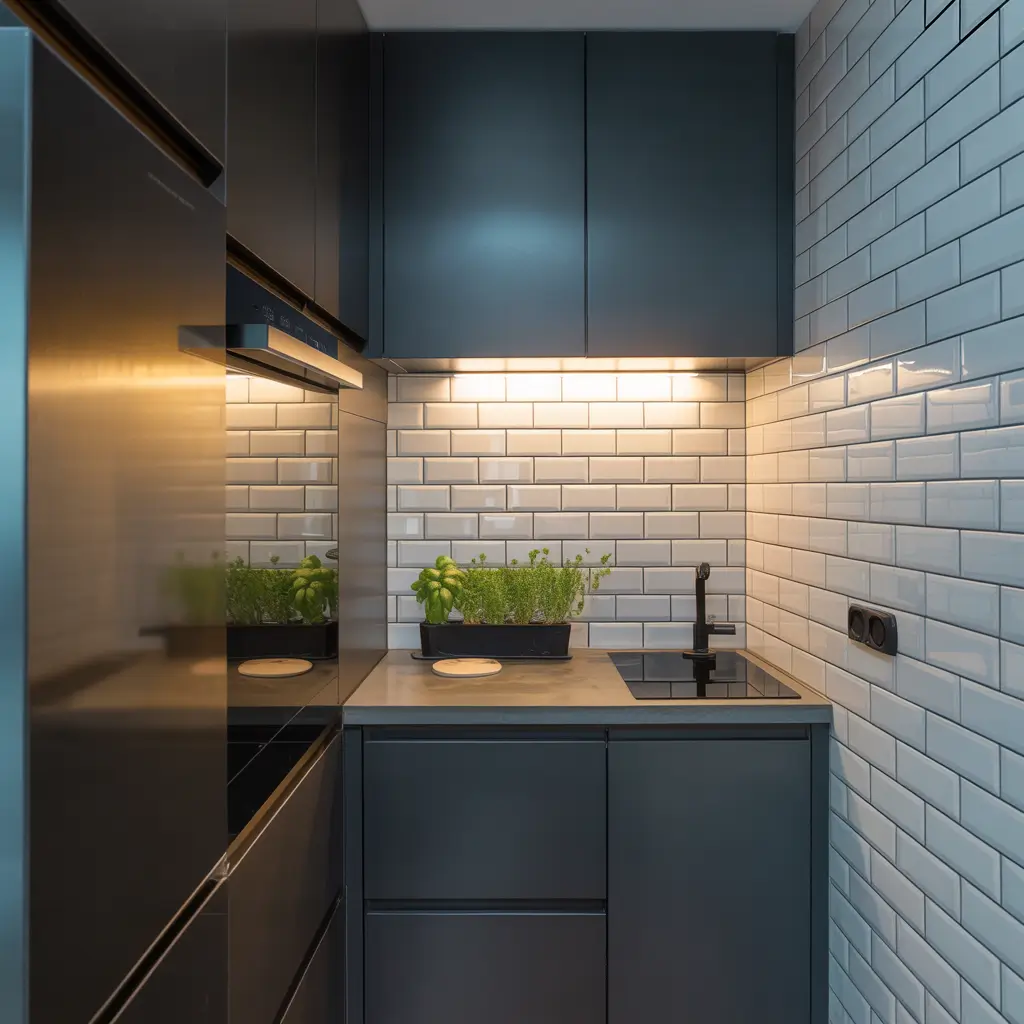
Black cabinets create the ultimate neutral backdrop for a backsplash that genuinely makes a statement. Because the cabinets are already doing the heavy work of defining the kitchen’s palette, the backsplash becomes a canvas — a place where you can inject personality, pattern, texture, and color without destabilizing the overall design.
Think of black cabinets as the walls of a gallery. The backsplash is the artwork.
Backsplash Options That Shine Against Black
- Large-format marble slab — a single slab of white or light marble run floor-to-ceiling behind the range creates a breathtaking focal point. The natural veining against black cabinets is genuinely spectacular.
- Zellige tile — handmade Moroccan tiles with slight variations in color, finish, and alignment. The imperfect, light-catching surface is extraordinary against a dark backdrop.
- Colored subway tile — forest green, deep teal, dusty terracotta, or slate blue subway tiles in a classic brick-lay or vertical stack pattern. The color reads powerfully against black.
- Metallic mosaic — mirror or metal-finish mosaic tiles that catch and multiply light in a black kitchen. Maximum visual drama.
- Geometric tile — bold geometric patterns in black and white or black and a single accent color. The pattern becomes a graphic element within the architecture.
- Artisan handmade tile — tiles with visible variation, rich glazing, and tactile texture. Each tile is slightly different, creating a surface that rewards close attention.
★ The Contrast Principle: The darker your cabinets, the lighter your backsplash can afford to be. White, cream, or pale stone backsplashes glow against black cabinetry in a way they never do against white cabinets. Use this to your advantage.
11. Modern Farmhouse Black Kitchen
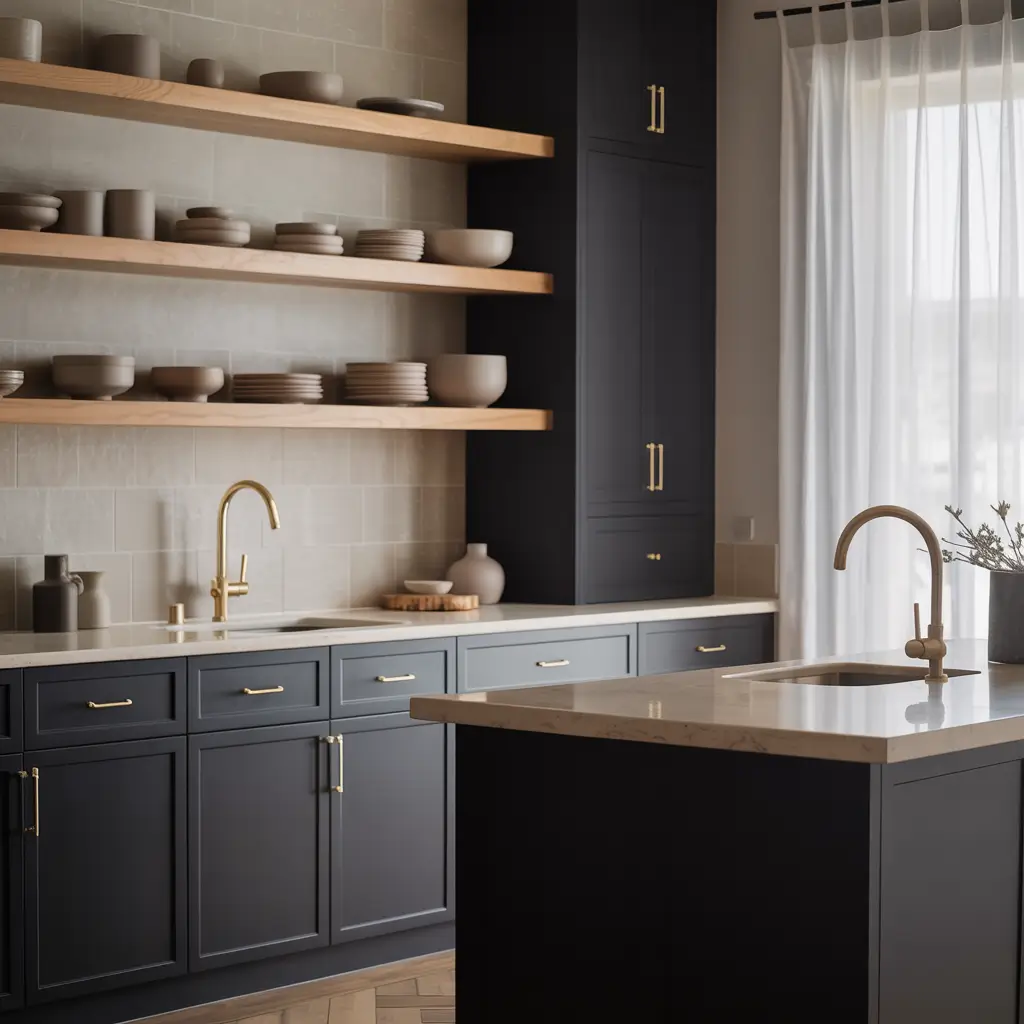
The modern farmhouse aesthetic has been the dominant American kitchen style for the better part of a decade. But all-white farmhouse is aging — and the next evolution of the style is already here. Black shaker cabinets, black hardware, black range hoods in a farmhouse framework create a kitchen that retains all the warmth and character of the original style while adding a sophistication that white farmhouse simply can’t match.
The key insight is that farmhouse style was never really about white. It was about craftsmanship, natural materials, practical design, and a sense of genuine hospitality. Black cabinets are fully compatible with all of those values.
Modern Farmhouse Black Kitchen Elements
- Black shaker cabinet doors — the shaker profile’s traditional craftsmanship reads perfectly in black. The color modernizes the style without undermining it.
- White apron-front sink — the contrast between a white farmhouse sink and black surrounding cabinetry is one of the most powerful details in this genre.
- Butcher block or wood island top — warmth, practicality, and character. Wood on the island against black cabinets is the definitive modern farmhouse move.
- Bridge faucet in unlacquered brass — warm metal, traditional profile, perfect contrast with the dark cabinetry.
- Shiplap or beadboard accent — a wall treatment in white that adds texture and softness. Works beautifully as a backsplash in a farmhouse black kitchen.
- Vintage-inspired pendant lighting — iron, aged brass, or woven rattan. Farmhouse lighting has distinctive character; the black cabinets make it look intentional rather than quaint.
12. Black and Grey Modern Kitchen
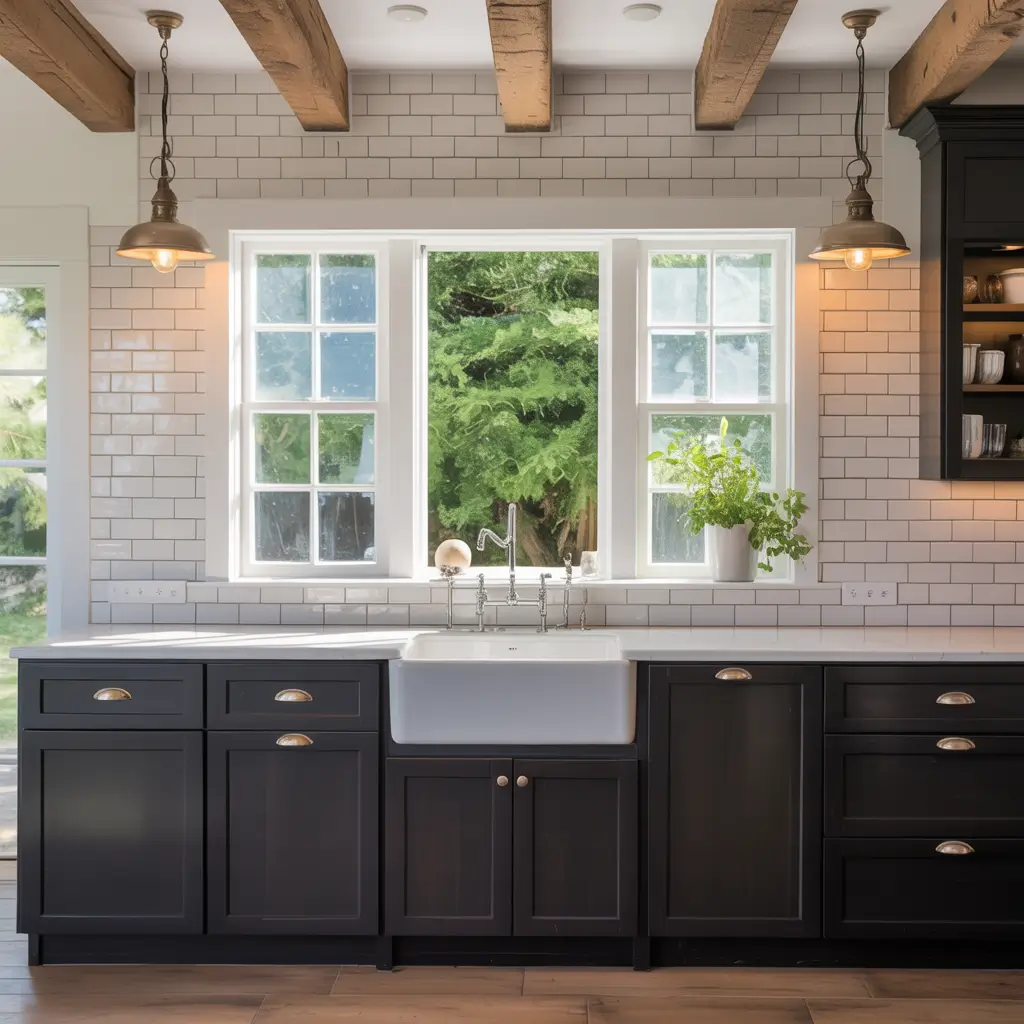
When you want the drama of black without the high contrast of a black and white kitchen, a black and grey palette offers a third way. Nuanced, layered, and sophisticated, a black and grey kitchen works through tonal depth rather than sharp contrast — and the result is one of the most grown-up, refined kitchen aesthetics available.
Charcoal grey walls with black cabinetry. Dark grey concrete countertops with black matte cabinet doors. A grey-veined white quartz creating a gradient between the two. The space builds depth through variations on a theme rather than opposition of opposites.
Making Black and Grey Work
- Use at least three distinct tones — near-black, deep charcoal, mid-grey. Without tonal variation, the palette collapses into a muddy dark mass.
- Add metallic shine — brushed nickel, gunmetal, or dark bronze hardware and fixtures are essential to prevent the palette from feeling flat.
- Introduce warm texture — warm-toned wood, natural linen, aged brass. Even a small amount of warmth prevents grey-black kitchens from feeling cold.
- Use natural light aggressively — grey absorbs light even more than black in some finishes. Maximize window size, keep window treatments minimal, and over-invest in artificial lighting.
- Add one crisp contrast — white countertops, white walls, or a white ceiling give the eye a place to rest and prevent the kitchen from feeling oppressive.
13. Glossy Black Cabinets
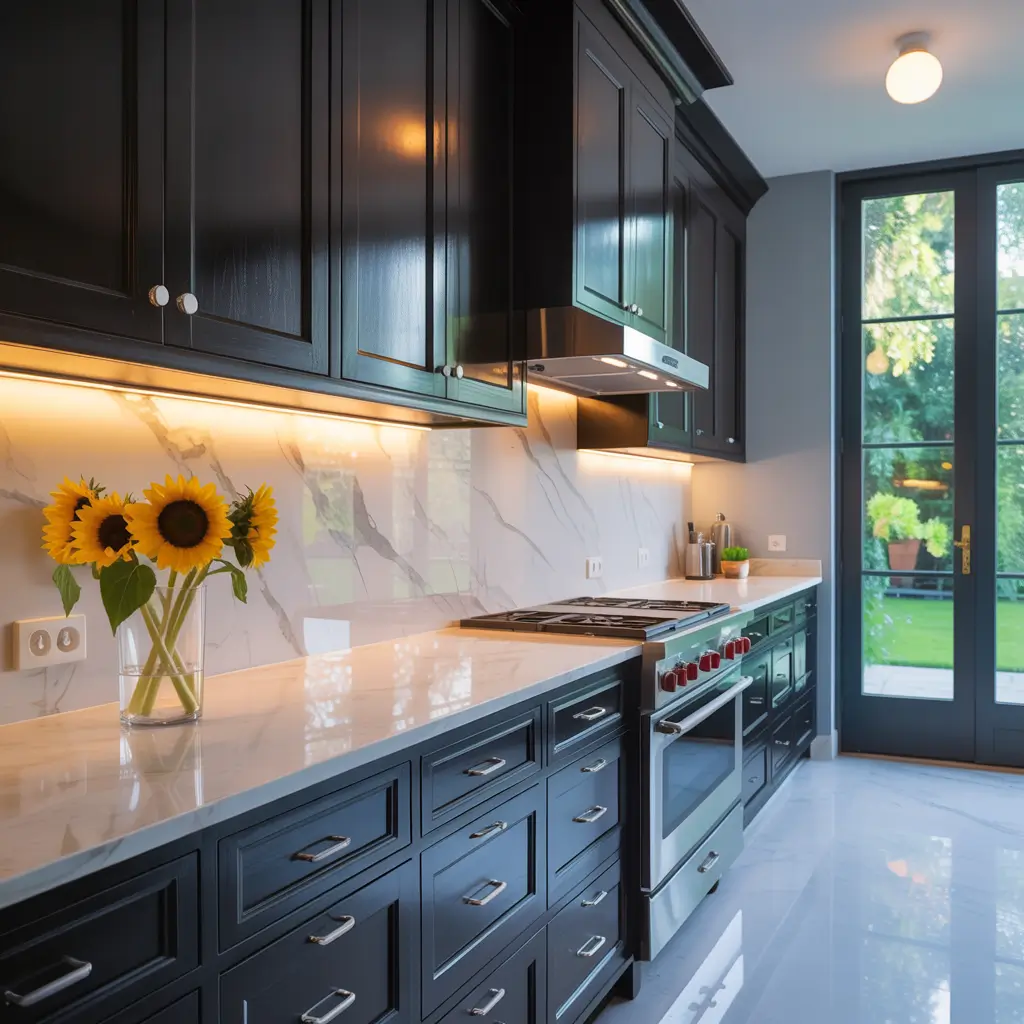
If matte black is the understated, artistic choice, high-gloss black is the full-on showroom statement. Glossy black cabinet doors have a lacquer-like, almost mirror quality that reflects light and transforms a kitchen into something that feels genuinely cinematic.
This is a finish that works best in contemporary or ultra-modern kitchens where the surrounding design is equally sleek and controlled. Handleless doors, integrated appliances, polished stone countertops, architectural lighting — the glossy black is the most visible expression of a design philosophy that extends to every detail.
The honest maintenance reality: high-gloss black shows every fingerprint, every water spot, and every smudge. If you choose this finish, plan to wipe down cabinet surfaces regularly, and keep a clean microfiber cloth accessible. The cleaning is quick — but it’s a consistent commitment.
★ Gloss Trick: Install push-to-open or recessed grip mechanisms on glossy black cabinets specifically to minimize fingerprints from handle contact. The combination of gloss finish and zero hardware creates the most spectacular — and most maintenance-intensive — black kitchen surface possible.
14. Black Kitchen with Open Shelving
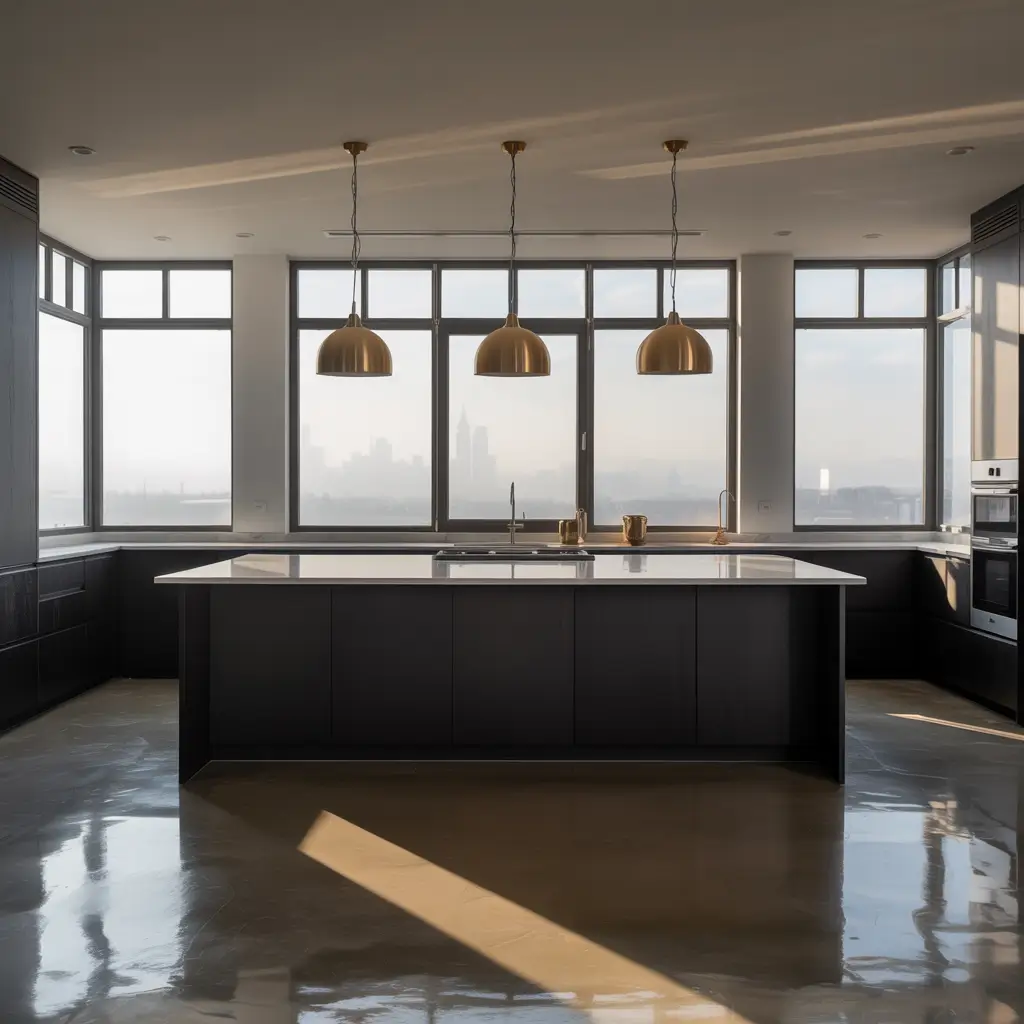
Replacing some upper cabinet doors with open floating shelves in a modern black kitchen accomplishes several things simultaneously: it breaks up the visual mass of continuous cabinetry, creates opportunities for display and personalization, makes the kitchen feel less enclosed, and — when styled well — transforms everyday items into design elements.
The contrast of open shelving against black walls or black surrounding cabinetry is particularly effective. Items on those shelves — white dishes, glass vessels, wooden cutting boards, green plants — pop against the dark background in a way that feels curated and intentional.
What to Display on Open Shelves in a Black Kitchen
- White ceramics and dinnerware — the most visually striking option. White dishes against a black background look like an art installation.
- Glassware and decanters — catches light beautifully and adds sparkle to what might otherwise be a uniformly dark visual field.
- Cookbooks with interesting spines — adds color, personality, and signals that the kitchen is genuinely used and loved.
- Wooden boards and utensils — warmth and functionality displayed together. A collection of differently-sized wooden cutting boards has genuine visual appeal.
- Plants and fresh herbs — green against black is one of the most vibrant color contrasts available. Even a small trailing plant transforms the energy of the shelf.
- One or two genuine decorative pieces — a beautiful ceramic vase, an interesting sculptural object. Not too many. Open shelves in a modern kitchen should never look cluttered.
15. Black Kitchen in a Small Space
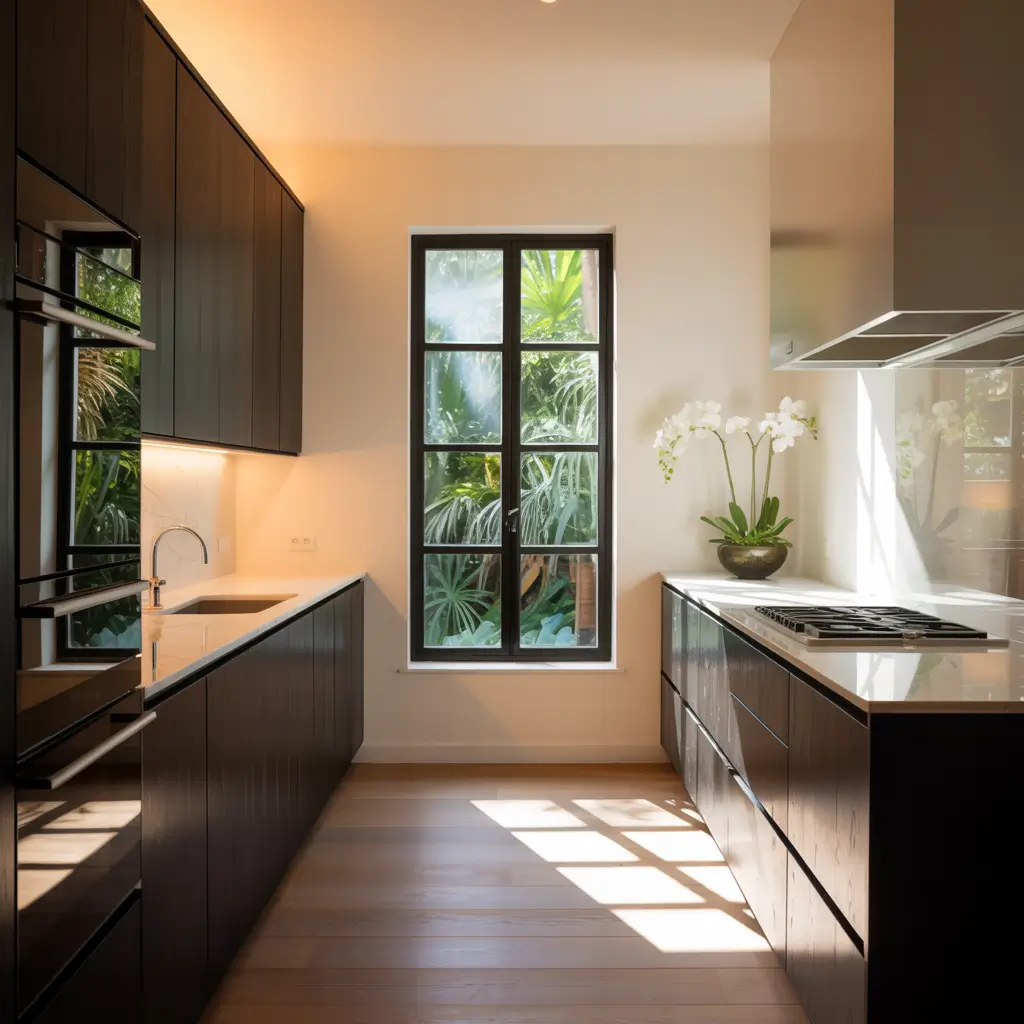
We have to address this directly, because the myth is persistent and it’s holding good design decisions hostage: black cabinets in a small kitchen will not make it feel smaller.
The size perception of a kitchen is determined by its layout, its lighting, and the relationship between horizontal and vertical elements — not primarily by the darkness of its surfaces. A small kitchen that is thoughtfully designed and well-lit with black cabinetry will always read better than a small kitchen that is beige and unresolved.
Strategies for Modern Black Cabinets in Small Kitchens
- Glossy or satin finish on cabinets — reflective surfaces bounce light and create a sense of spaciousness that matte finishes can’t.
- White or very light countertops — the horizontal surface visible at most eye levels is the most powerful perception tool. Keep it light.
- Light ceiling and walls — create a container of lightness around the dark cabinetry. The black reads as intentional rather than dominant.
- Extend cabinets to ceiling height — eliminating the soffit space above cabinets and running them floor-to-ceiling draws the eye up and makes the room feel taller.
- Under-cabinet lighting — essential in any kitchen, but particularly critical in a small dark one. It lifts the perceived weight of upper cabinets and illuminates countertops.
- Glass-front cabinet doors on some upper cabinets — creates visual depth and prevents the upper section from reading as a solid wall of black.
★ The Small Kitchen Secret: A small kitchen with well-planned black cabinetry and excellent lighting will look better in photographs and in person than a larger kitchen with indifferent beige cabinets. Commitment to a design vision creates spaces that feel considered, and considered always looks bigger.
FQR
Will a black kitchen lower my home’s resale value?
This concern is understandable but largely unfounded for well-executed black kitchens. A beautifully designed black kitchen appeals to a large pool of contemporary buyers. A poorly painted attempt in any color lowers value. The design quality matters far more than the color choice. In competitive real estate markets, a distinctive, high-quality black kitchen is frequently cited as a selling point.
How do I keep a black kitchen looking clean?
Matte black surfaces require regular dusting (microfiber cloths are essential) but resist fingerprints well. Glossy black requires more frequent wiping but cleans easily when you do. White countertops show food staining — choose materials with appropriate hardness and seal natural stone regularly. The honest answer: black kitchens require consistent maintenance, but so does any kitchen you actually cook in.
What if I want to change from black cabinets later?
Painted cabinets can be repainted. Factory-lacquered cabinets can often be re-lacquered. New doors can replace old ones. A black kitchen is not as permanent a decision as it might feel in the planning stage. The cabinet boxes — the most expensive part of the cabinetry — can almost always be reused with new doors and a fresh paint job.
Which paint is best for black kitchen cabinets?
Benjamin Moore Advance in ‘Onyx’, Sherwin-Williams Emerald Urethane Trim Enamel in ‘Black Magic’, or Farrow & Ball Hardback in ‘Off-Black’ or ‘Pitch Black’ are the most frequently recommended options among professional painters. All three are water-based, cure extremely hard, and are available in the matte and satin finishes most appropriate for black kitchen cabinetry.
Conclusion
Every kitchen that ends up in a design magazine, every kitchen that stops conversation when guests walk in, every kitchen that becomes the room you live in rather than just cook in — these kitchens all have something in common: they were designed with conviction.
The modern black kitchen is a design decision made with conviction. It says you understand that kitchens can be more than functional. That cooking can happen in a space that’s beautiful. That the room where you start your morning and end your evening deserves to be considered and purposeful and genuinely yours.
It says, in the quietest possible way, that you’re not settling for beige.
“The best modern black kitchen isn’t the most expensive one or the most dramatic one. It’s the one that makes you want to be in it.”
Start with the idea in this article that genuinely excites you — the one you keep coming back to. Build from there. Order samples. Live with colors on your existing cabinets for a week. Look at them in morning light and evening light and artificial light. Make the decision slowly and confidently.
And when you’re finally standing in your finished modern black kitchen, coffee in hand, looking at the space you created — you’ll understand why so many people say the same thing after making the switch: they only wish they’d done it sooner.