
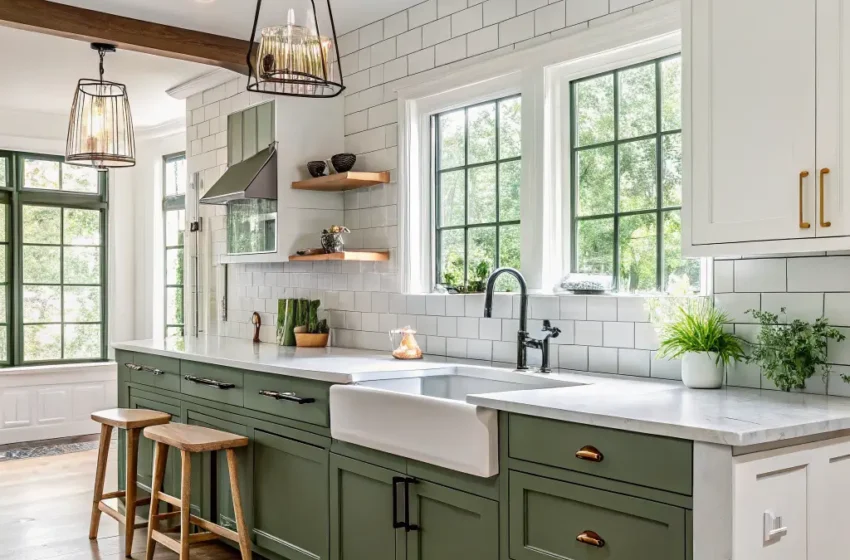
Over the past few years, olive green has moved from occasional accent walls into full kitchen overhauls — cabinets, islands, pantry doors, backsplash tiles, even appliances. Interior designers who once reached for white as a default have started recommending olive green as a fresher, more characterful alternative that works across nearly every kitchen style. And the homeowners who have taken that leap almost universally say the same thing: they wish they had done it sooner.
1. Olive Green Shaker Cabinets with Brushed Nickel Hardware
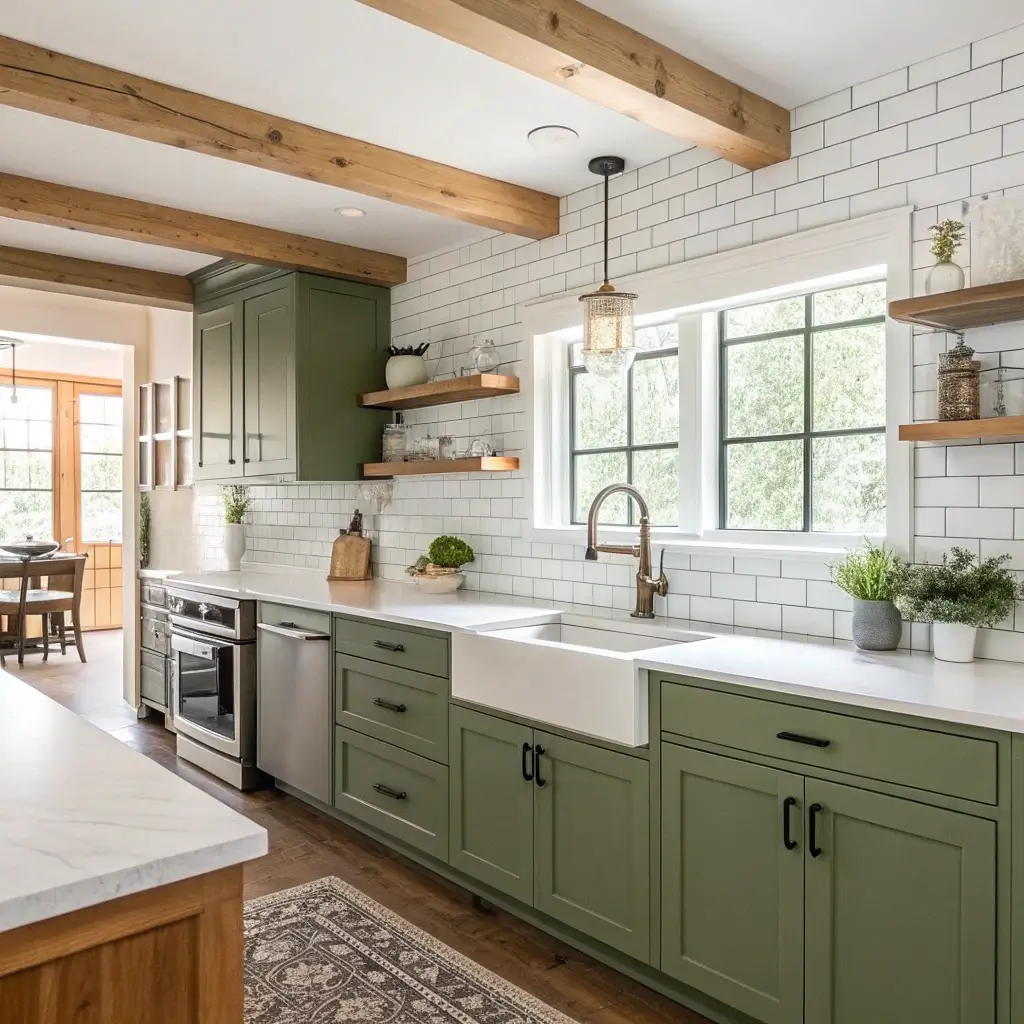
Shaker cabinets are the kitchen equivalent of a well-cut blazer — classic, clean, and endlessly adaptable. Paint them in olive green and something interesting happens: the crisp geometry of the shaker frame takes on warmth and character that white or grey simply cannot deliver. The combination feels simultaneously traditional and current, the kind of kitchen that would look as natural in a 1920s farmhouse as in a new-build apartment.
Brushed nickel hardware is the quiet partner that makes this whole equation work. It is cool enough to balance olive’s warmth without the starkness of chrome, and understated enough to let the color carry the room. If you have been on the fence about shaker cabinets in a colored finish, olive green is genuinely one of the most forgiving starting points. It photographs beautifully, hides everyday marks better than lighter shades, and rarely feels like a mistake.
Getting the Most from Olive Shaker Cabinets
- Choose a satin or eggshell finish — it cleans easily and avoids the dated look of high gloss
- Keep countertops light: white quartz, pale stone, or butcher block all work well
- Brushed nickel and satin chrome both pair cleanly without competing
- Pull handles tend to read more contemporary; round knobs feel more traditional
2. Two-Tone Olive and Cream Kitchen
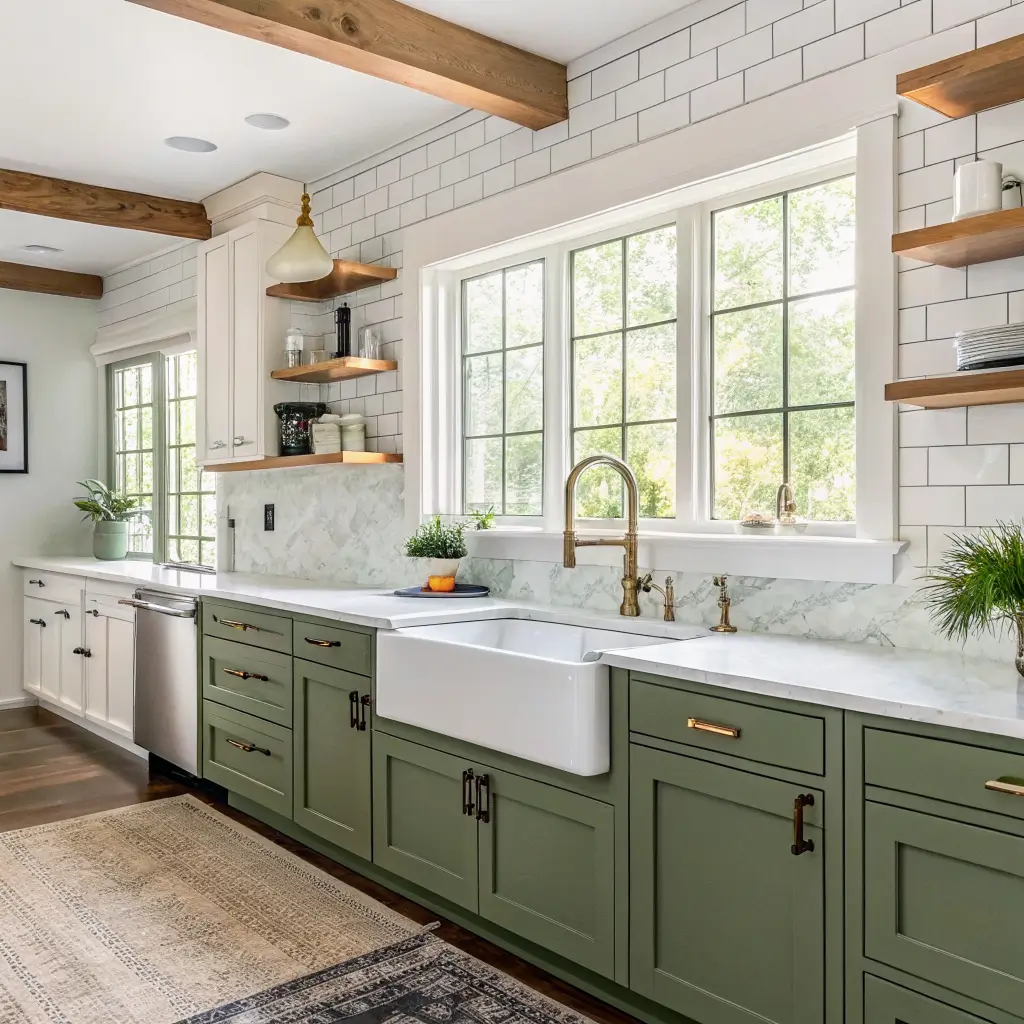
The two-tone kitchen has become a staple of thoughtful kitchen design for good reason — it solves the tension between wanting bold color and maintaining a sense of openness. Pairing olive green lower cabinets with cream or off-white uppers is one of the most harmonious combinations you can land on. The warmth of cream takes the edge off what might otherwise feel like a cool, heavy lower half.
This layout is particularly effective in kitchens that lack generous natural light. The light uppers reflect whatever light is available while the olive lowers add depth without absorbing the entire room into shadow. There is also a practical side to this arrangement: lower cabinets take the brunt of daily kitchen activity, and olive green hides scuffs, splashes, and fingerprints far better than cream alone would.
Variations Worth Considering
- Olive island surrounded by cream perimeter cabinets — a clean focal point without full commitment
- Cream uppers with glass-front doors above olive lowers creates a layered, collected feel
- An olive butler’s pantry or coffee station alongside cream main cabinets offers a contained color moment
- Add a warm wood shelf between upper and lower cabinets to bridge the two tones naturally
3. Olive Green Kitchen Island as the Room’s Focal Point
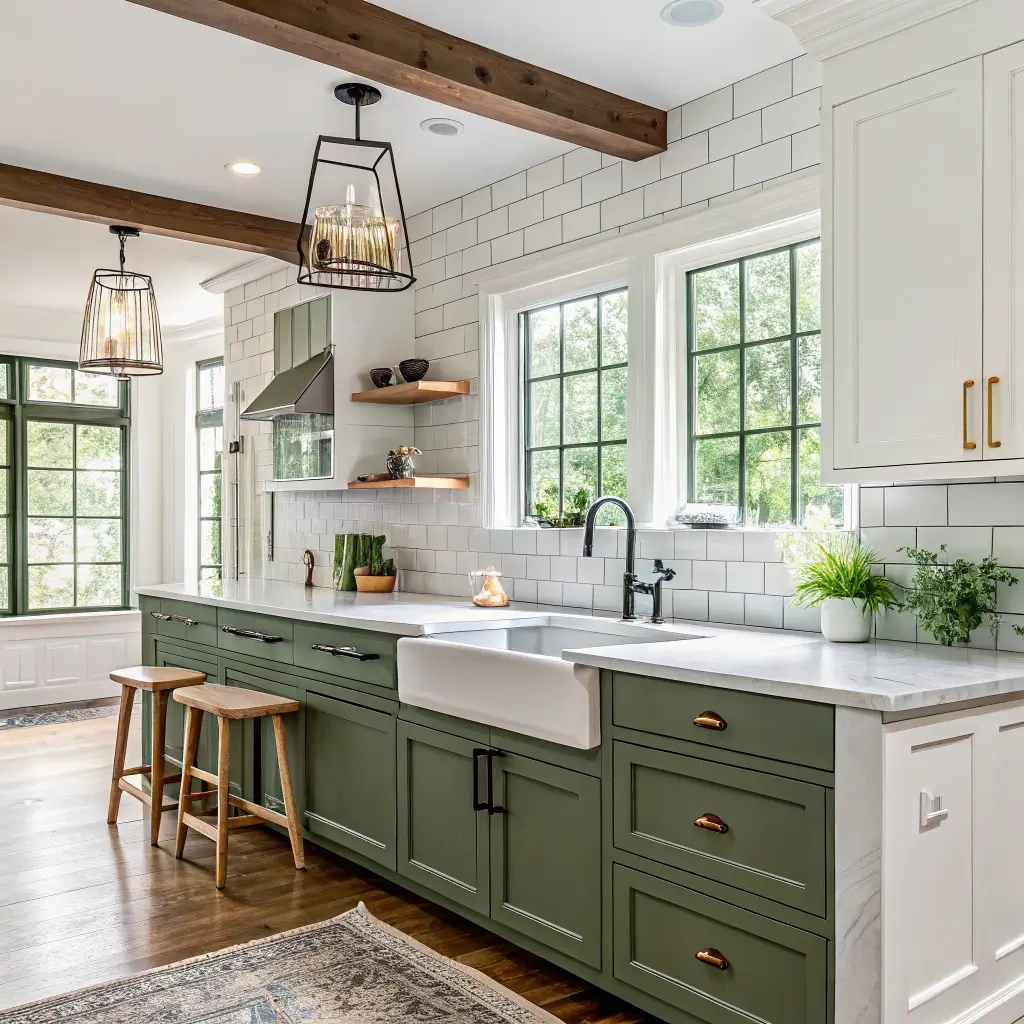
If there is one upgrade that consistently delivers the highest visual return on investment in a kitchen, it is a painted island. A standalone island in olive green, set against white or light grey perimeter cabinetry, becomes the gravitational center of the room. It draws the eye in a way that furniture and accessories simply cannot replicate.
What makes this approach so popular is the freedom it offers. You are not committed to olive green throughout — just on this one large, important element. And yet the impact is considerable. Add bar stools in natural leather or warm wood, a pendant light above with a warm bulb, and a countertop in light quartz or honed limestone, and you have a kitchen that feels genuinely designed rather than assembled.
Practical tip: If the island has a lower shelf or wine rack built in, paint the interior of those recessed spaces the same olive green. The color continuity makes the island read as a single, solid piece rather than a collection of components.
4. Matte Olive Green Walls with White Cabinetry
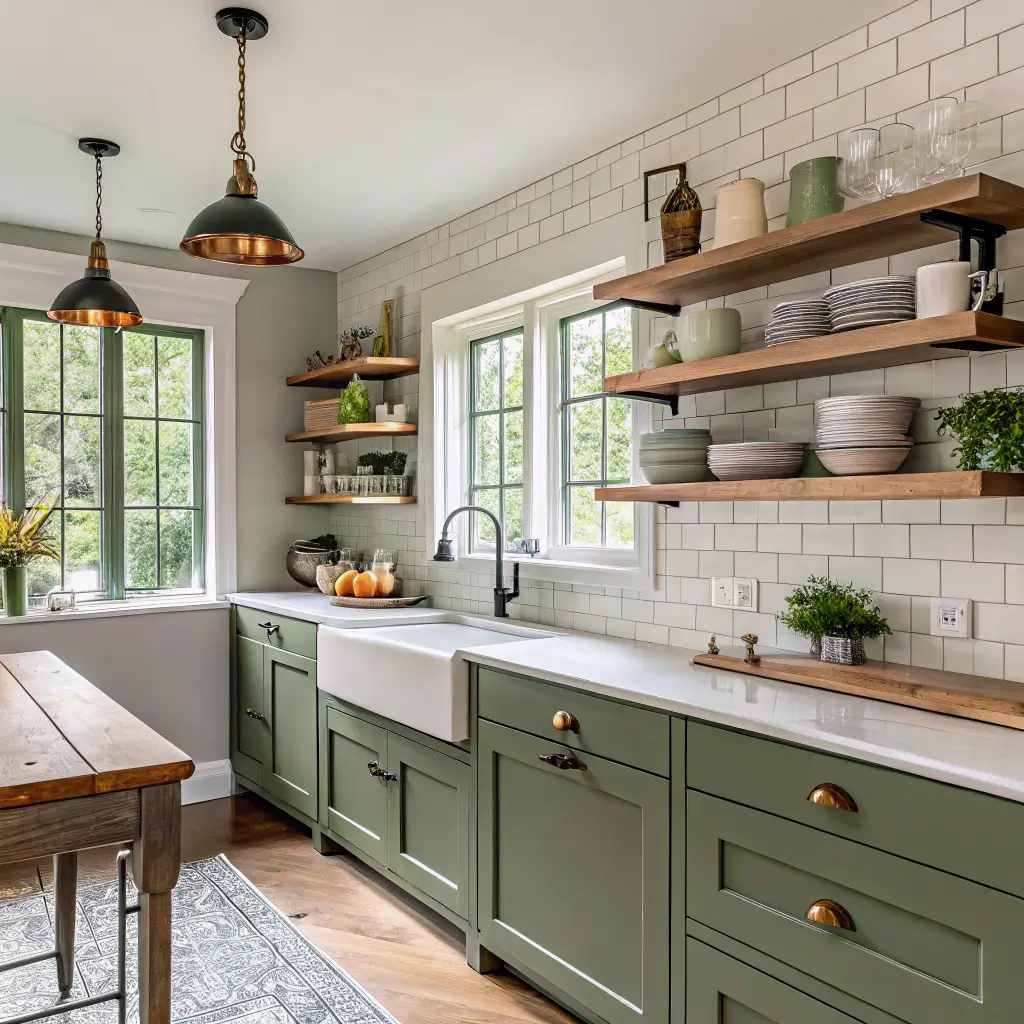
The most committed version of this idea — and one that pays off handsomely — is painting your kitchen walls in matte olive green while keeping the cabinetry white or cream. The matte finish is non-negotiable here. It absorbs light rather than reflecting it, which gives the walls a depth and quietness that satin or eggshell cannot match.
White cabinets against olive walls create a high-contrast combination that feels both bold and grounded. The white reads cleanly and precisely against the earthy backdrop, and the result is a kitchen that feels considered and deliberate. This approach works exceptionally well in kitchens with strong architectural features — exposed beams, original tile floors, or period-appropriate hardware — because the olive wall acts as a rich, gallery-like backdrop for those details.
Styling Olive Green Walls Well
- Keep large surfaces simple — the walls are the statement, so let them breathe
- Natural textures such as linen blinds, jute rugs, and ceramic accessories complement the earthy tone
- Brass or copper accents bring out the warm undertones in olive without clashing
- Live plants and fresh herbs reinforce the natural quality of the color and look genuinely beautiful against it
5. Olive Green Cabinets with Brass Hardware and Gold Accents
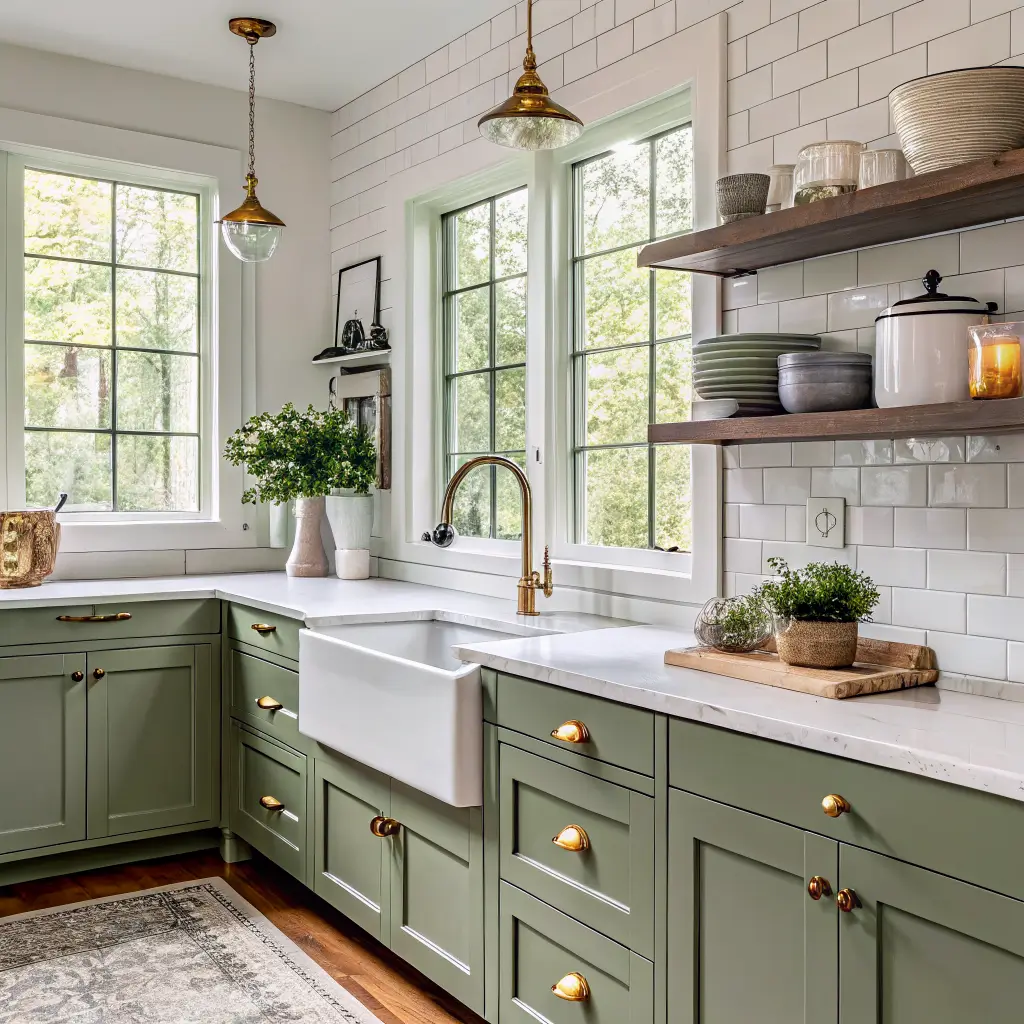
Few color and material combinations feel as naturally suited to each other as olive green and brass. The explanation is almost chemical: both carry warm, golden undertones that resonate with each other rather than competing. Where a cooler green might make brass look garish, olive seems to draw it out and amplify it in the best possible way.
The combination has a warmth and richness that is difficult to achieve through any other pairing. Unlacquered brass, which develops a natural patina over time, is particularly well suited here — the slight variation in tone as it ages makes the kitchen feel more like a curated, lived-in space than a showroom. Brushed brass is the cleaner, lower-maintenance alternative that suits more contemporary kitchens without sacrificing any of the warmth.
Where to Introduce Brass in an Olive Kitchen
- Cabinet pulls and knobs — the most immediate and impactful change
- Faucet in brushed or unlacquered brass, ideally a bridge style for traditional kitchens
- Pendant lights above the island or dining area in aged brass tones
- Sink strainer and soap dispenser in matching finish — the details matter more than people expect
6. Farmhouse-Style Olive Green Cabinets
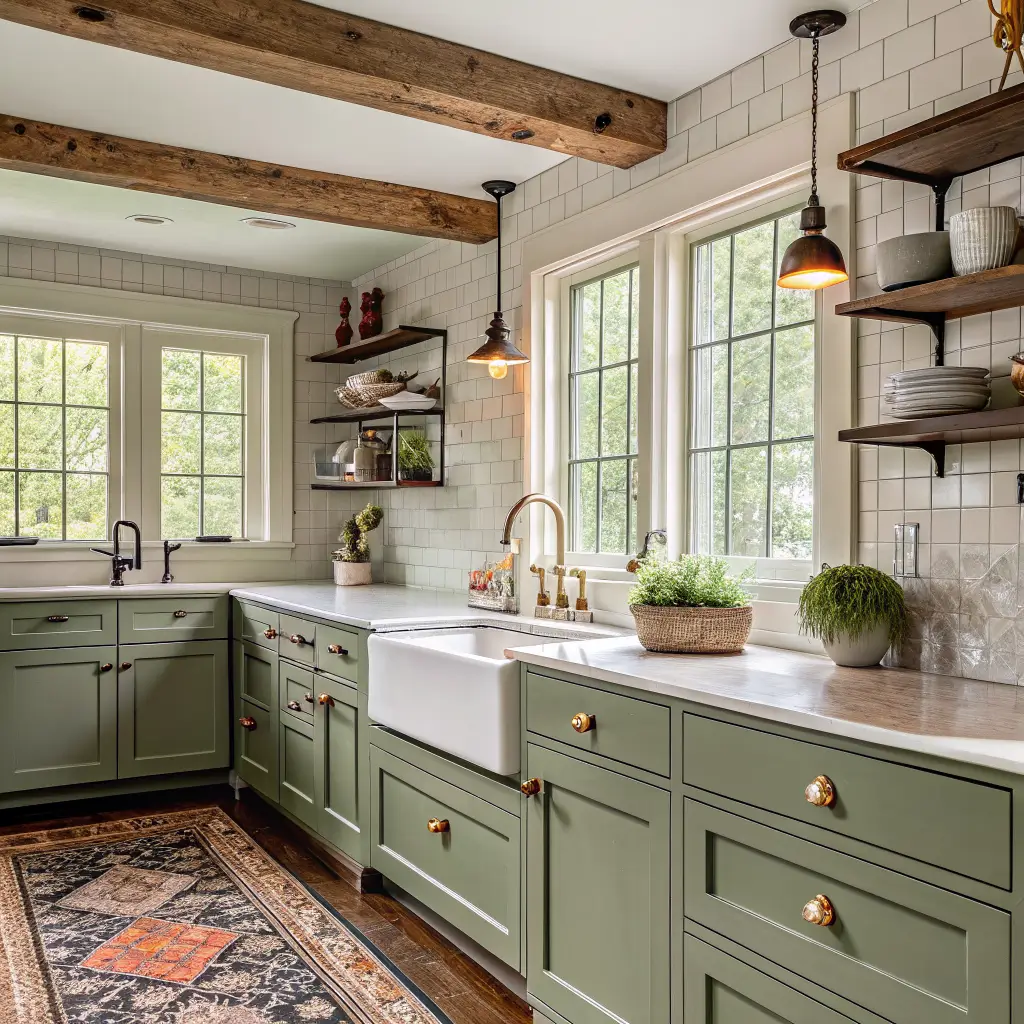
Farmhouse kitchens have always leaned on a palette drawn from the natural world — cream, stone, warm wood, aged metal. Olive green slots directly into that sensibility without any adjustment required. It has the same organic, unhurried quality as aged timber or handmade tile. In fact, olive green arguably revives the farmhouse kitchen from the all-white version that became, over the course of a decade, somewhat predictable.
The farmhouse olive kitchen is defined as much by texture and material as by color. Open shelving with visible brackets, a deep apron-front sink, exposed wood beams, handmade ceramic accessories — these are the elements that give olive green its fullest expression in this style. The color acts as the connective thread that makes all of those individual components feel like they belong together.
Farmhouse Details That Complete the Look
- Shiplap or beadboard paneling on a feature wall or as a backsplash alternative
- A white or fireclay apron-front sink with a bridge faucet in aged brass or oil-rubbed bronze
- Woven pendant lights or exposed filament bulbs above the island
- Open shelving in reclaimed wood displaying ceramics, cutting boards, and stoneware
- Linen or cotton tea towels in warm neutrals hanging from oven door handles
7. Olive Green Backsplash Tiles
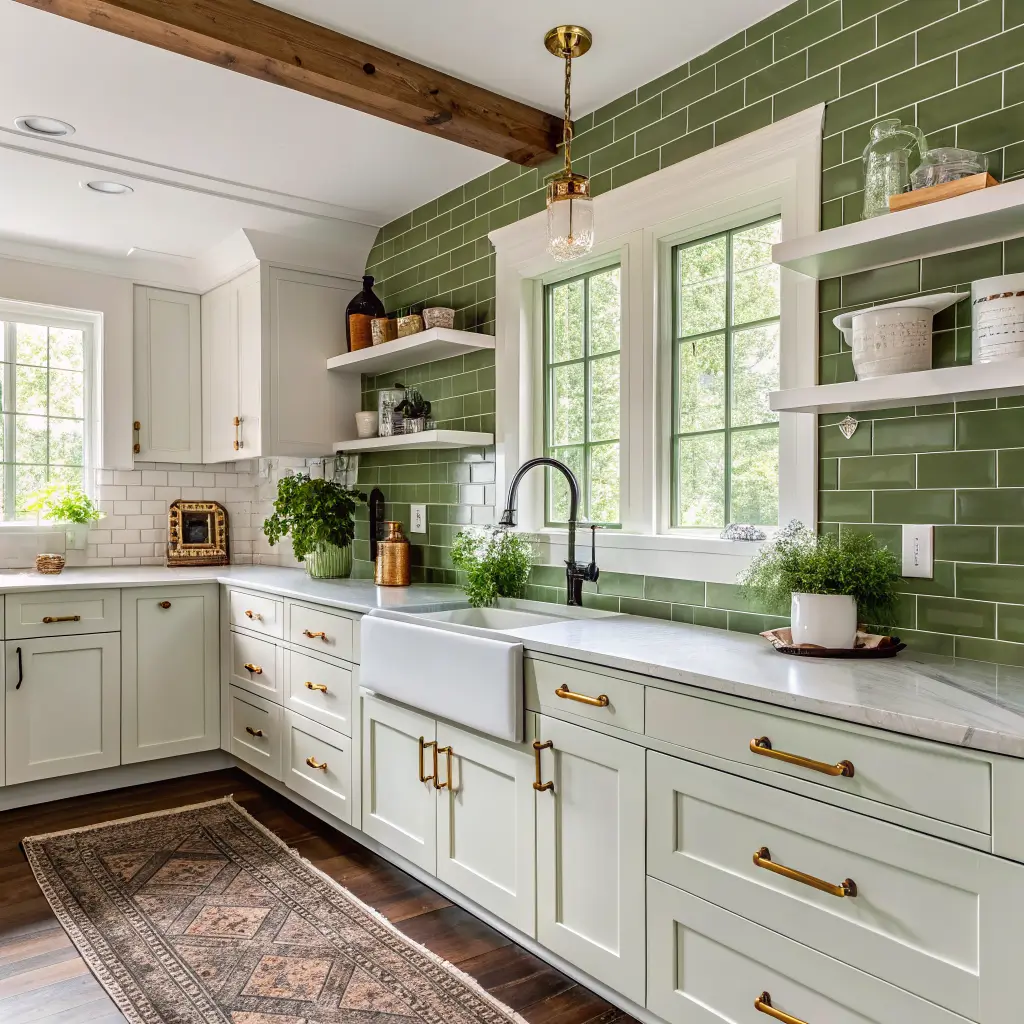
A backsplash is one of the most creatively expressive surfaces in a kitchen, and olive green tiles — particularly handmade or artisan varieties — bring a quality of depth and texture that painted surfaces cannot. The natural variation in tone within handmade tiles means that what starts as a single color becomes a rich, layered surface that changes depending on where you are standing and how the light falls.
Zellige tiles are the most popular choice for olive green backsplashes right now, and justifiably so. The slight imperfections and tonal variation of traditional Moroccan zellige tiles give olive green its most characterful expression. Subway tile in olive is a subtler approach that works well in more contemporary kitchens. Large-format porcelain in muted olive tones, with minimal grout lines, suits modern and minimalist designs.
A note on grout: the grout color you choose will change the entire reading of the backsplash. A warm grey grout with olive tiles emphasizes the earthiness of the combination. White grout creates more contrast and a fresher, more graphic quality. Test both before committing.
8. Olive Green and Natural Wood
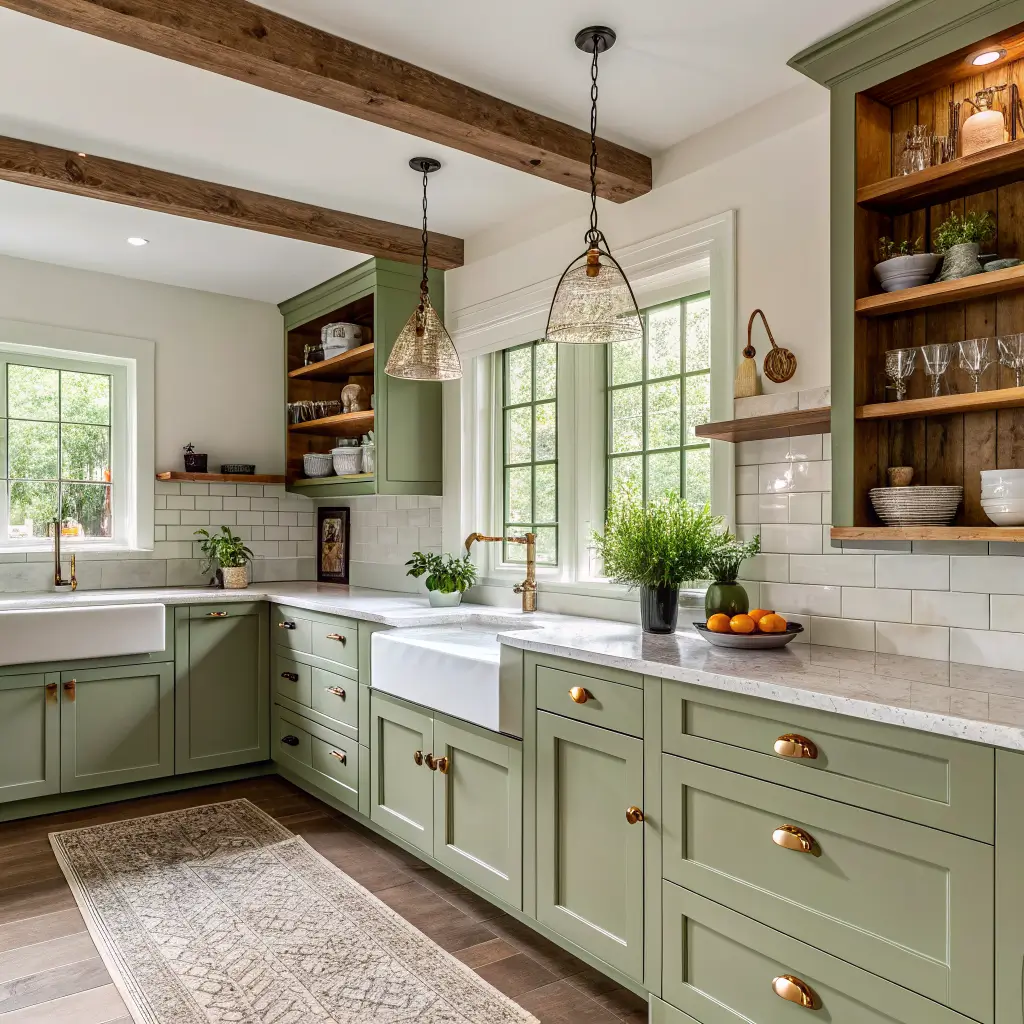
Olive green and natural wood is perhaps the most instinctively appealing combination in the entire spectrum of kitchen design. It references something fundamental — the relationship between leaf and branch, canopy and bark — and delivers a kitchen that feels genuinely connected to the natural world without being theatrical about it.
The most versatile wood pairings for olive green are medium-toned oak and walnut. Oak, particularly in its natural or white-oiled finish, creates a lighter, more Scandinavian-influenced look. Walnut, with its deeper chocolate tones, leans more toward a rich, moody aesthetic. Both work, and the right choice depends entirely on the overall mood you want the kitchen to carry.
Wood Elements to Introduce in an Olive Kitchen
- Floating shelves in solid walnut or oak — a high-impact, relatively low-cost addition
- A butcher block island top for warmth and practicality
- Exposed ceiling beams, where structurally available, add enormous character
- Wooden bar stools in a natural or lightly oiled finish work at any island height
- A reclaimed wood feature shelf or mantel shelf above a range creates a natural focal point
9. Olive Green Pantry Doors
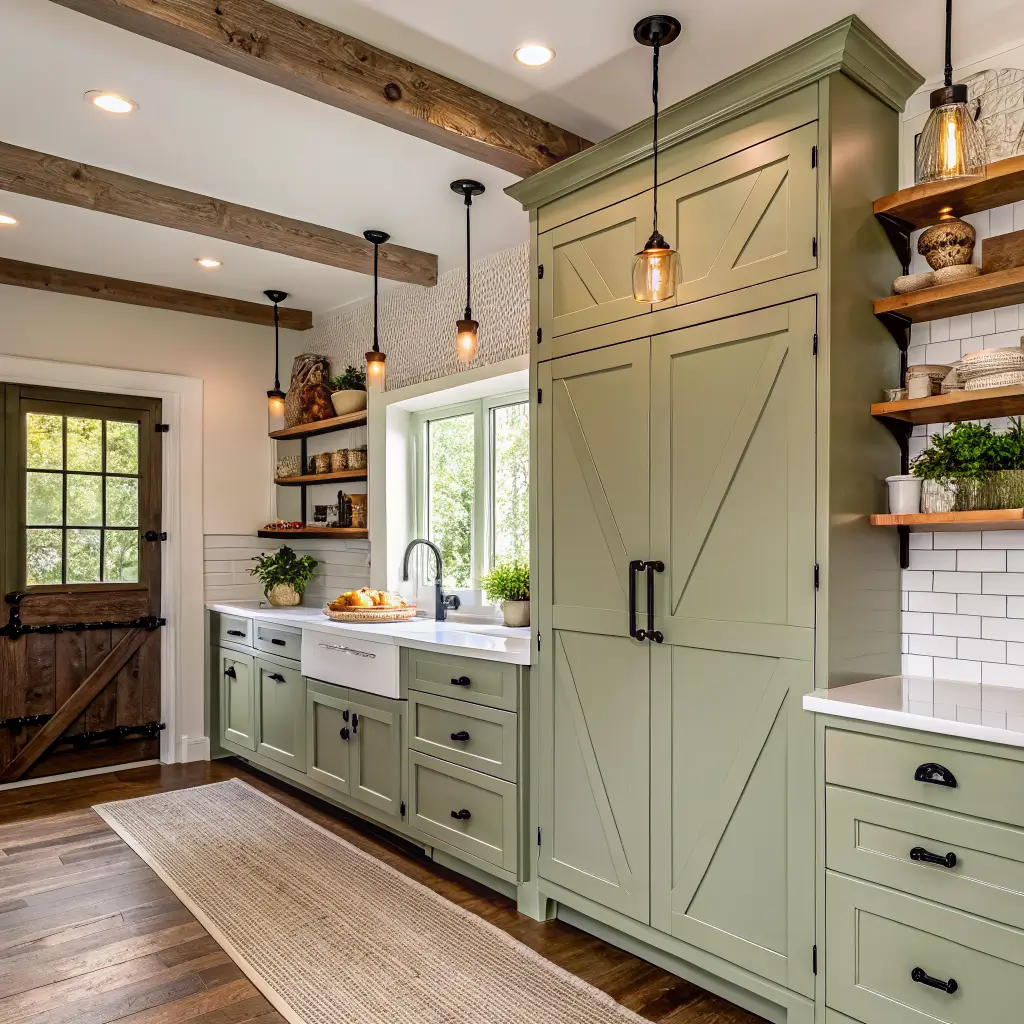
If full olive green cabinetry feels like a stretch, a painted pantry door is one of the most satisfying and lowest-risk ways to introduce the color. A single door painted in olive green, particularly in a kitchen with light or neutral cabinetry, reads as an intentional design choice rather than an experiment. It adds a flash of color and personality without changing the overall balance of the space.
This works especially well with tall pantry doors that reach close to ceiling height — the scale of the olive surface makes the color feel more considered and architectural rather than decorative. Add brass bar handles and a simple brass hook on the reverse of the door, and even the inside of your pantry becomes something worth noticing.
10. Olive Green Lower Cabinets with Open Shelving Above
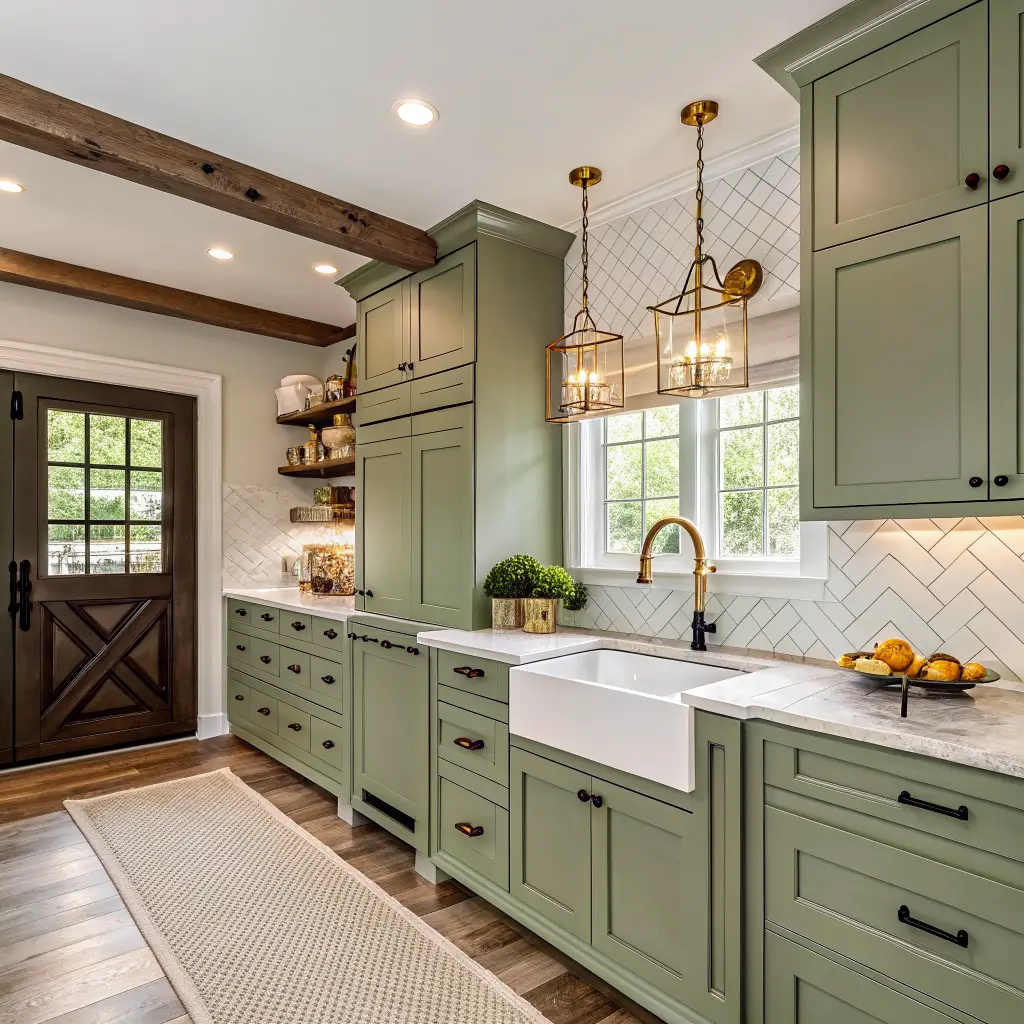
Replacing upper cabinets with open shelving is a design move that has gained significant traction, and it works particularly well when paired with olive green lower cabinets. The combination feels airy, curated, and genuinely contemporary. The open shelving breaks what might otherwise be a solid block of color, allowing the wall behind to show through and giving the kitchen a more layered, collected quality.
The key to making open shelving work above olive lower cabinets is curation. What you display matters enormously. A mix of white ceramics, warm stoneware, wooden boards, and a few plants creates a balanced, natural composition that reinforces the earthy quality of the olive below. Avoid overfilling the shelves — the white wall showing between items is part of the design.
Open Shelf Styling for Olive Green Kitchens
- Odd numbers of objects tend to read more naturally than even groupings
- Vary the height of items — tall bottles, medium bowls, low plates — for visual rhythm
- Keep the color palette of displayed items warm and neutral; avoid bright or clashing colours
- A trailing plant on the top shelf softens the overall composition considerably
11. Olive Green with Terracotta and Earthy Accents
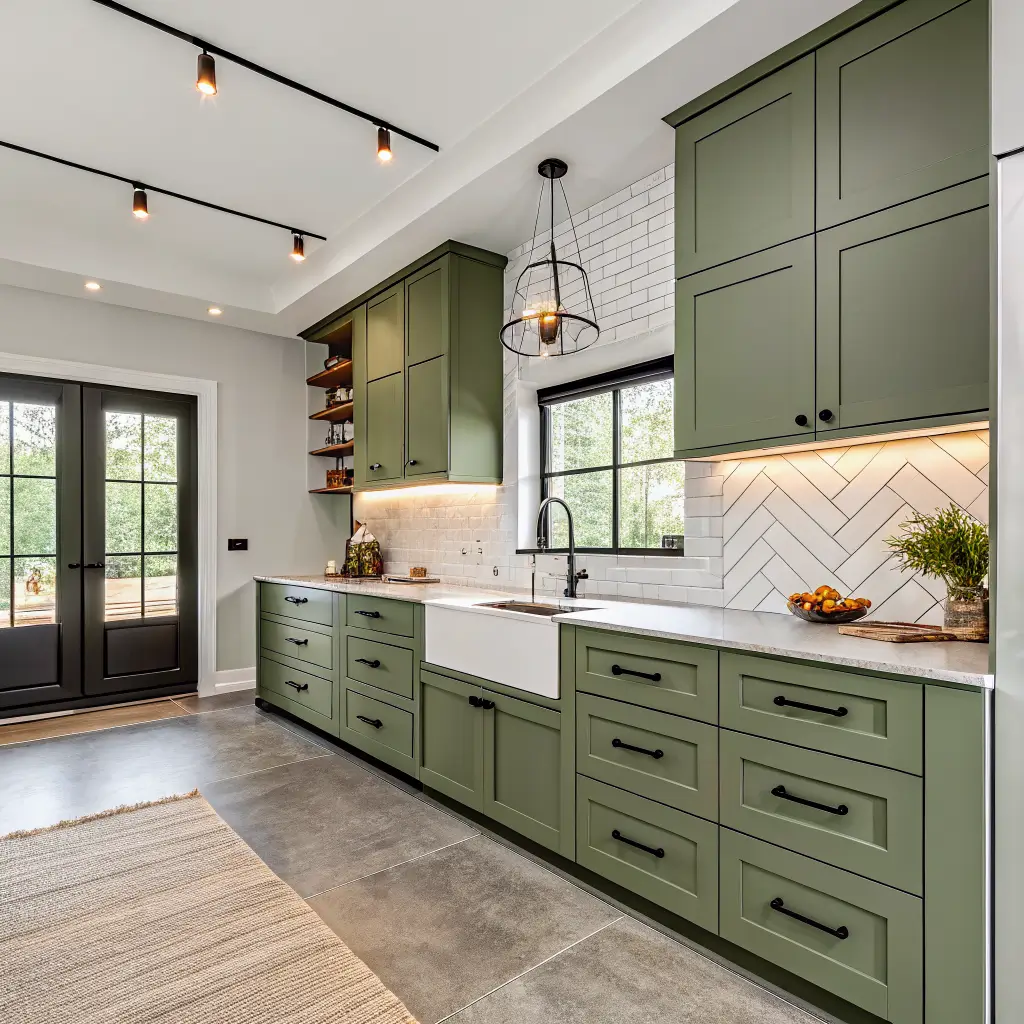
For kitchens that want to push further into warmth and personality, olive green paired with terracotta creates one of the most genuinely distinctive combinations available. These two colors occupy adjacent territory on the warm, earthy end of the spectrum, and together they produce a kitchen that feels deeply organic and utterly human.
This is a palette that references Mediterranean and Southwestern interiors without being literal about either. Terracotta floor tiles, handmade ceramic accessories in rust and amber tones, and copper cookware on display — these are the elements that bring the combination to life. It is an unapologetically warm kitchen, one that feels like it has been collecting character over many years.
- Terracotta hex or square floor tiles ground the kitchen in the warmest possible way
- Handmade ceramic hardware in earthy glazes adds artisan character to olive cabinets
- Copper or oil-rubbed bronze fixtures bridge the two primary tones
- A jute or wool rug at the sink or island area completes the warm, layered feel
12. Olive Green with Black Hardware for a Modern Edge
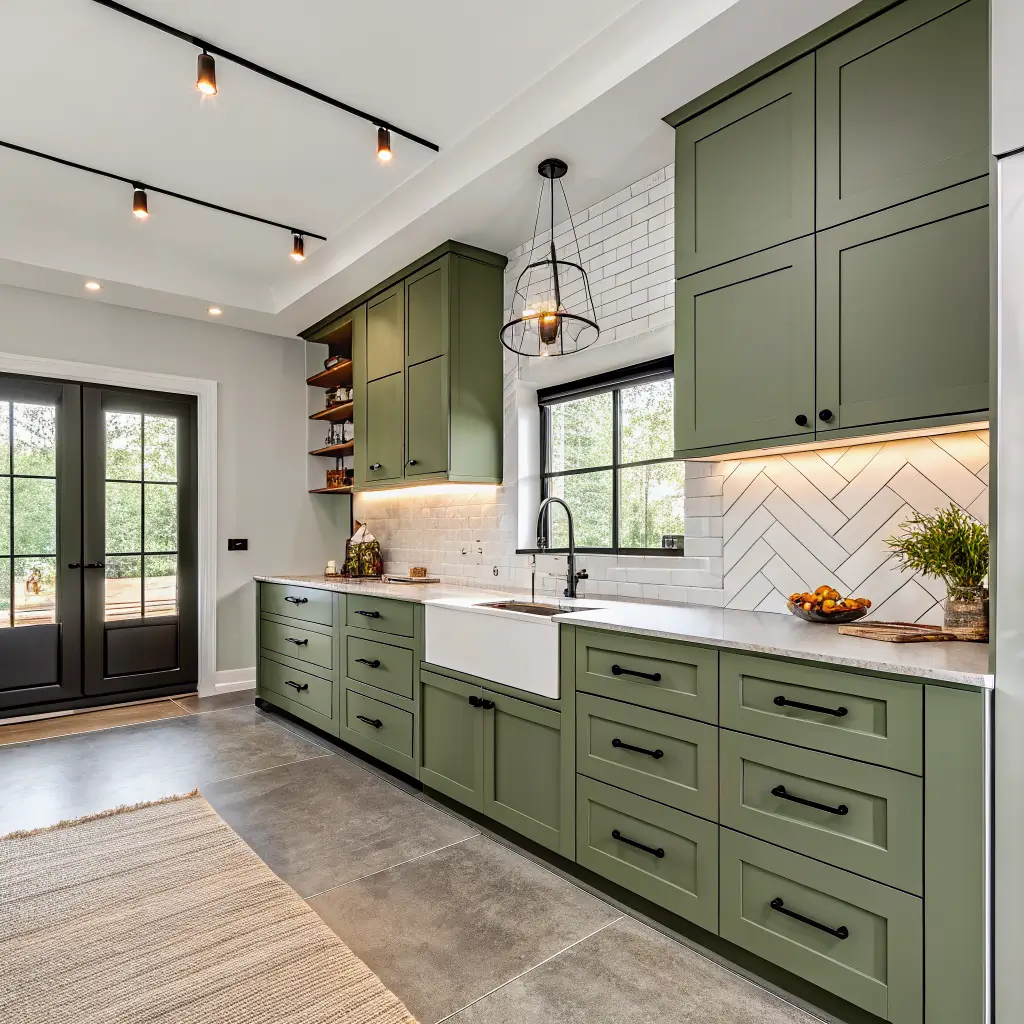
While brass is the most obvious hardware partner for olive green, matte black hardware offers a completely different register — more contemporary, more architectural, and sharper in its overall effect. The contrast between the warm, organic quality of olive and the graphic clarity of matte black creates a tension that works very well in modern kitchen designs.
This combination suits flat-front or handleless cabinets as well as shaker style, and it works equally well with both light and dark countertops. Paired with stainless steel appliances, matte black hardware and olive cabinetry create a kitchen that feels both warm and considered — softer than an all-grey scheme, more disciplined than an all-natural materials approach.
13. Olive Green Kitchen with Concrete Countertops
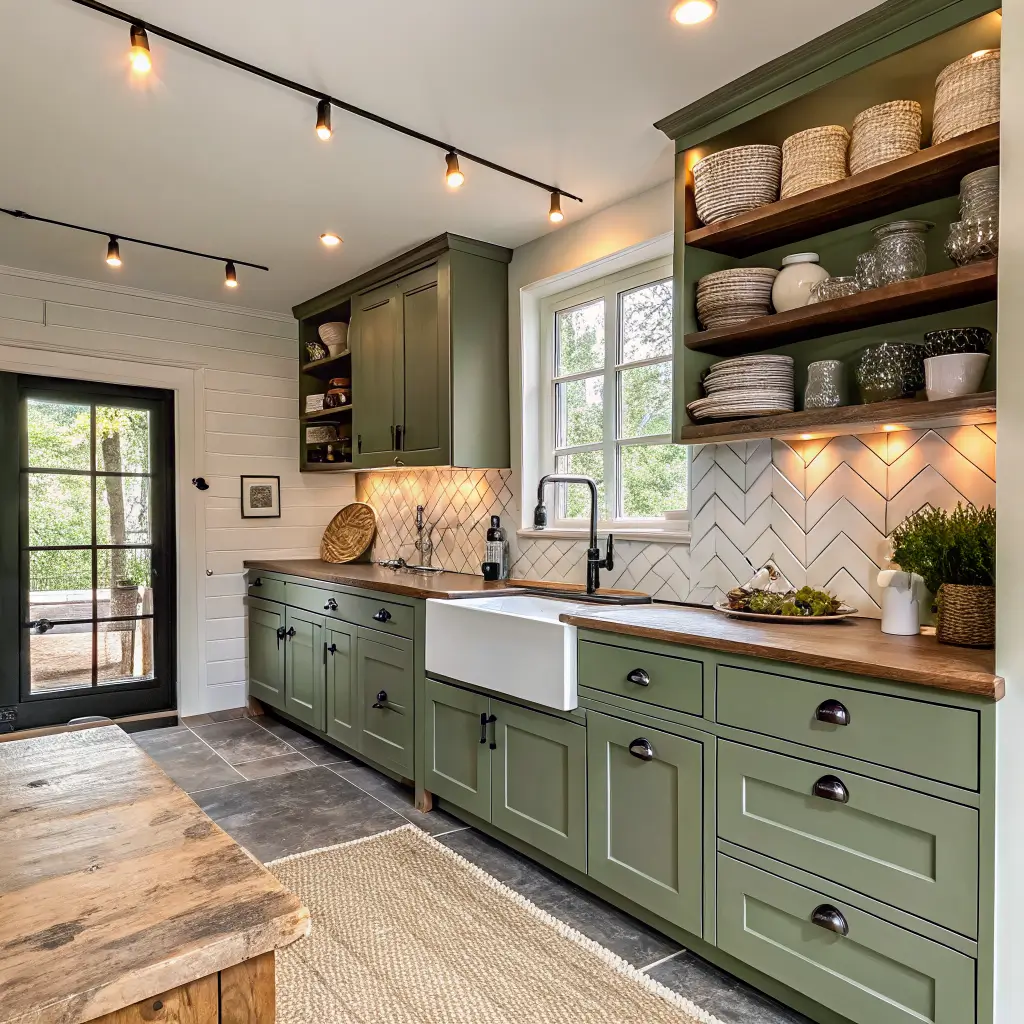
Concrete countertops have a particular visual quality — cool, slightly industrial, with a matte surface that absorbs light rather than reflecting it — that creates a fascinating contrast with warm olive cabinetry. The pairing works because the two materials sit at different points on the warm-cool spectrum, and that tension is genuinely interesting rather than uncomfortable.
Polished concrete in a light grey or warm taupe tone is the most versatile option here. The slight variation in tone that comes with handmade concrete surfaces adds character and ensures the kitchen does not feel too uniform or manufactured. Seal concrete countertops properly and maintain them correctly and they will develop a beautiful patina over time — much like the olive green cabinetry they sit alongside.
14. Choosing the Right Shade of Olive Green
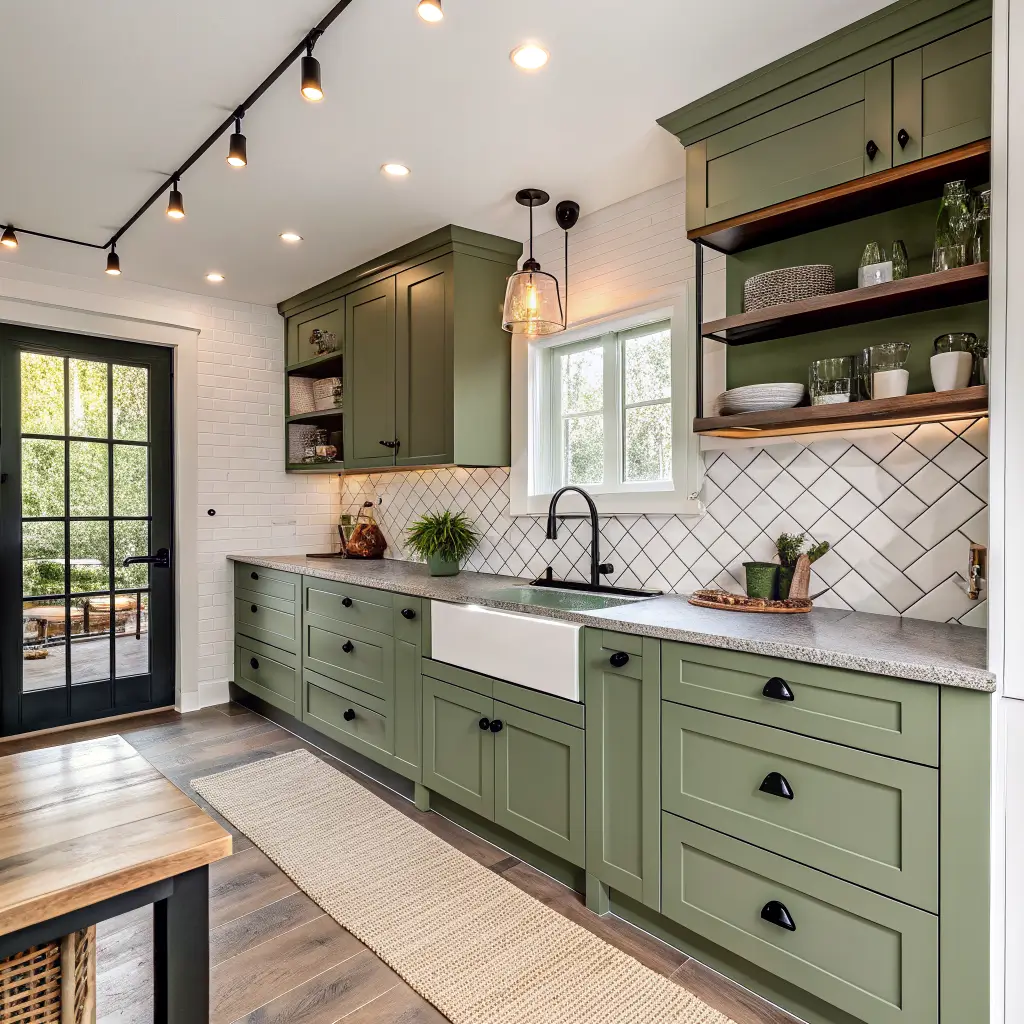
Olive green is not a single color. It spans a surprisingly wide range, from muted yellow-greens with a distinctly vintage quality to deeper, greener tones with almost no yellow at all. Choosing the right shade for your specific kitchen is one of the most consequential decisions in the entire design process, and it deserves careful attention.
A Guide to Popular Olive Green Shades
- Warm Olive — higher yellow content, warmer and sunnier in character. Works well in kitchens with cool-toned floors or grey stone countertops, where it adds needed warmth.
- Classic Olive — balanced yellow-green with a soft, muted quality. The most versatile option, compatible with nearly every countertop material and hardware finish.
- Deep Olive — closer to a dark moss green, with minimal yellow. Creates a more sophisticated and serious effect, well-suited to larger kitchens with strong natural light.
- Grey Olive — low in both yellow and saturation, with a distinctly earthy, almost stone-like quality. Pairs exceptionally well with natural materials and works in both modern and traditional contexts.
- Bright Olive — higher saturation and more vivid than the others. Best used as an accent — on a single island or pantry door — rather than throughout a full kitchen.
Always test your chosen shade as a large swatch in your actual kitchen. Paint manufacturers offer sample pots for exactly this reason. Live with the swatch for at least two full days, observing how the color reads in morning light, afternoon sun, and under your specific artificial lighting. What appears on a small paint chip or a screen is rarely what you will see on a full cabinet door.
15. Olive Green with Subway Tile Backsplash in Off-White
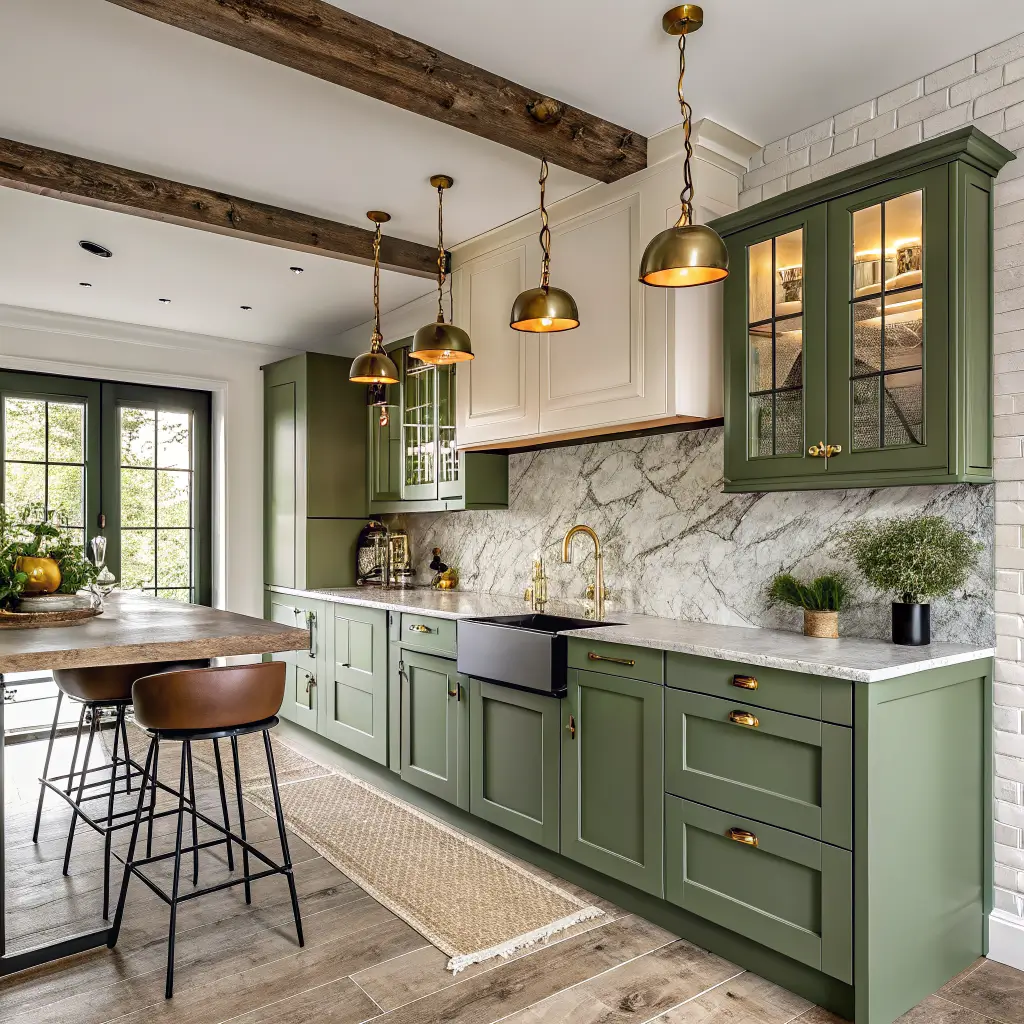
Sometimes the most successful design combinations are the most unassuming ones. Olive green cabinetry with a classic off-white or cream subway tile backsplash is exactly that — a combination so well-balanced and proportioned that it rarely fails, regardless of the kitchen’s size, layout, or overall style.
The off-white subway tile keeps the backsplash from competing with the cabinetry while adding texture and the classic appeal of a material that has appeared in kitchens for well over a century. The slightly warm tone of off-white tiles, as opposed to stark white, resonates with olive’s warmth and prevents the kitchen from feeling cold or clinical.
Frequently Asked Questions About Olive Green Kitchens
Is olive green a good color for kitchen cabinets?
Yes, and it is consistently rated among the top kitchen cabinet colors by interior designers. Olive green offers warmth, depth, and a connection to the natural world that white and grey palettes simply cannot provide. It is also one of the most forgiving cabinet colors for everyday kitchen life — it hides marks and minor scuffs better than lighter shades.
What hardware finish works best with olive green cabinets?
Brass — particularly brushed or unlacquered — is the most naturally complementary hardware finish for olive green. Both share warm undertones that resonate rather than clash. Matte black is an excellent alternative for a more contemporary result. Brushed nickel is the most understated option and works well when you want the color to do the talking without competition from the hardware.
What countertop material goes with olive green?
White or light quartz is the most versatile and reliably successful choice. Light marble or marble-look porcelain creates a more luxurious combination. Butcher block wood countertops are ideal for farmhouse or organic-style olive green kitchens. Honed concrete or limestone suits more contemporary or industrial-influenced designs.
Does olive green work in a north-facing kitchen?
It can, but it requires more care with shade selection. In a north-facing kitchen that receives cooler, less direct light, warmer olive shades — those with higher yellow content — tend to perform better than cool grey-olives, which can read as drab in low light. Warm artificial lighting (2700K to 3000K colour temperature) is particularly important in north-facing kitchens with deep green or olive cabinetry.
How does olive green differ from sage green for kitchens?
Sage green is softer, lighter, and more muted — it carries significantly more grey and less yellow than olive. Olive green is warmer, deeper, and more complex in tone. Sage green tends to recede quietly into a space, while olive green makes a more deliberate statement. Both are popular, but olive tends to suit kitchens where a richer, more characterful result is the goal.
Final Thoughts: Is Olive Green Right for Your Kitchen?
Olive green is one of those kitchen colors that earns its place not through drama or novelty, but through the way it makes a space feel. It is warm without being loud, characterful without being difficult, and distinctive without feeling like it will date in five years. These are qualities that are genuinely rare in kitchen design, and they explain why olive green has moved from trend to enduring favorite in such a short period of time.
The ideas in this guide cover everything from a single painted pantry door to a fully committed olive green kitchen. None of them require an enormous budget, and all of them benefit from the same underlying principle: choose your shade carefully, test it in your actual light conditions, and surround it with the natural materials — wood, stone, ceramic, linen — that bring out its best qualities.
However much or little olive green you bring into your kitchen, the result is almost always the same: a space that feels warmer, calmer, and more genuinely inviting than it did before. That is a difficult result to argue with.
1 thought on “15 Olive Green Kitchen Ideas That Bring Warmth and Style to Every Space”