
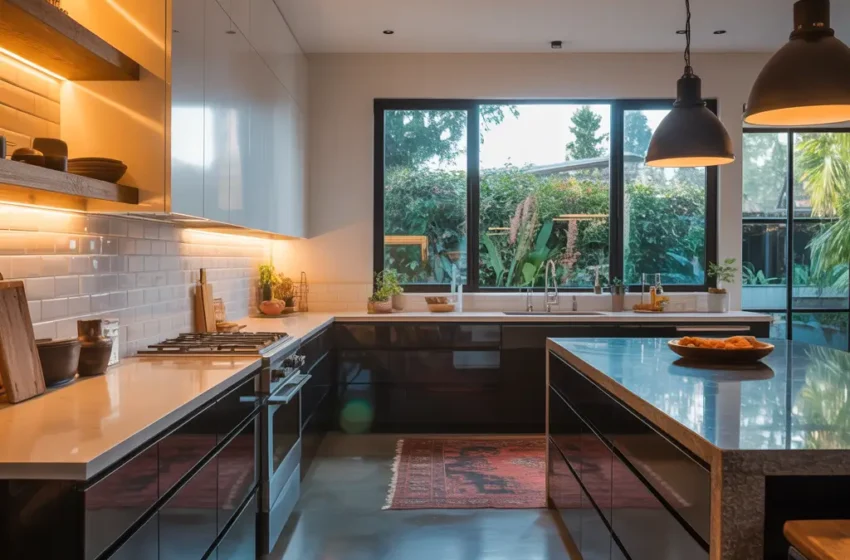
Some design trends come and go so fast you barely have time to repaint before they’re over. Sage green this year, terracotta the next. But black and white kitchen cabinets? They’ve been the backbone of great kitchen design for over a century — and they show absolutely no sign of slowing down.
There’s a reason this combination endures. Black and white together create contrast, clarity, and a sense of considered design that few other color pairings can match. Done right, a black and white kitchen feels both timeless and completely current, sophisticated without being stuffy, bold without being trend-dependent.
But here’s the thing — not all black and white kitchens are created equal. The difference between a kitchen that looks like a professional design and one that looks like an indecisive accident comes down to understanding how to use these two colors intentionally. Proportions matter. Finish matters. Hardware matters. The way you layer in other materials — countertops, backsplash, flooring — matters enormously.
“Black and white isn’t a limitation — it’s a design philosophy. And once you understand it, your kitchen will never look ordinary again.”
In this article, we’re walking through 20 of the best black and white kitchen cabinet ideas, covering every style from ultra-modern monochrome to warm farmhouse fusion. Each section includes practical tips, styling advice, and the real-world considerations you need before making any decisions. Let’s get into it.
1. The Classic Two-Tone: Black Lowers, White Uppers
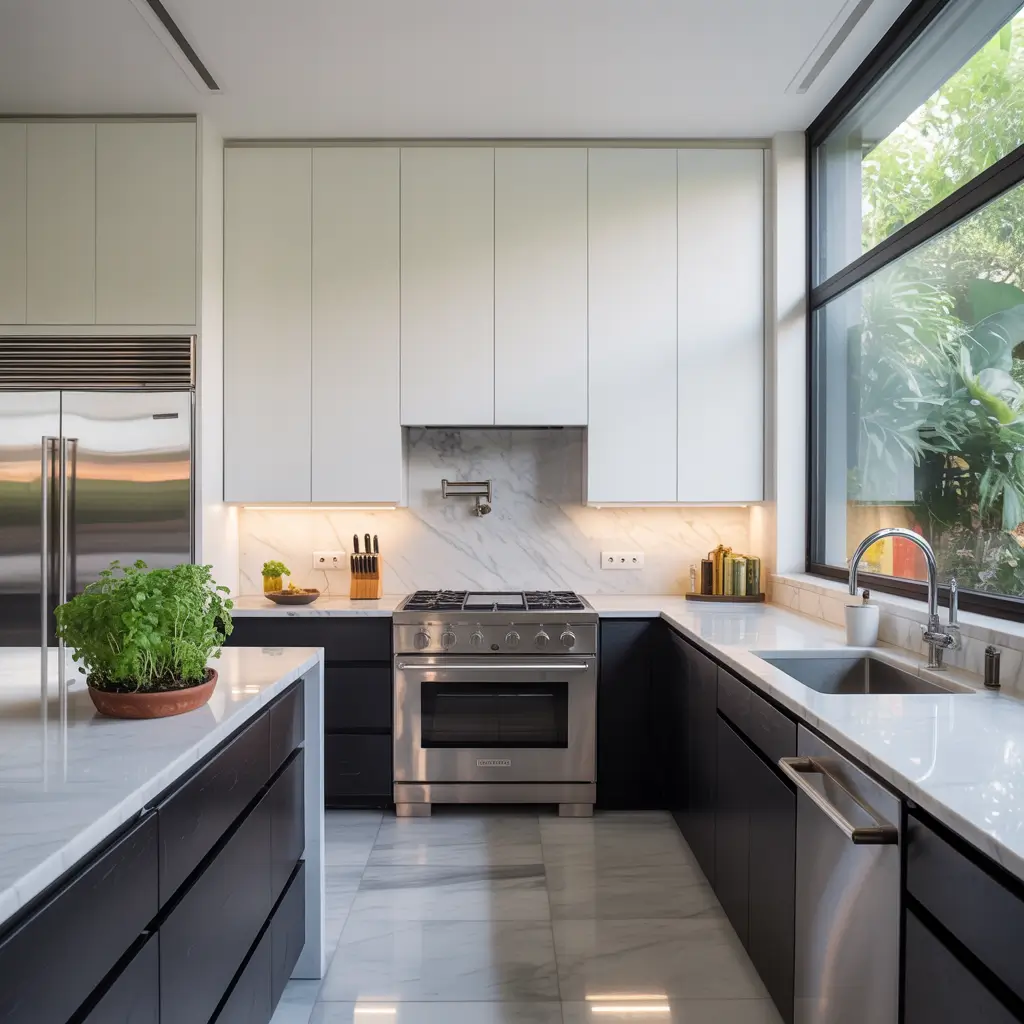
If there’s one arrangement in the black and white kitchen cabinet playbook that’s been proven to work in virtually every kitchen, it’s this one: black lower cabinets paired with white upper cabinets. It’s the starting point for so many people’s design journey, and it’s popular for excellent reasons.
The logic is sound on multiple levels. Black on the bottom grounds the kitchen visually, anchoring the space and making it feel deliberate rather than floating. White on top opens things up, reflects light, and keeps the room from feeling heavy or closed-in. It’s the same principle as wearing a white shirt with dark trousers — immediately put-together, instantly flattering.
Why This Layout Works in Real Life
Lower cabinets take the most abuse in any kitchen — kicks from daily movement, splashes from cooking, mystery sticky residue that appears from nowhere and belongs to no one. Black hides all of that. Scuffs, marks, and general wear are nearly invisible on dark surfaces, which means your kitchen looks clean for longer with less effort.
Upper cabinets, meanwhile, are at eye level and above — the zone that most defines the visual character of your kitchen. Keeping them white maintains brightness and makes the ceiling feel higher, which is especially valuable in kitchens with standard 8-foot ceilings.
✦ Pro Tip: Define the boundary between your black and white cabinets with intention. A contrasting countertop (white quartz or marble on black bases creates a clean horizontal line), a strip of backsplash tile, or a visible rail between upper and lower cabinet runs all help the transition feel deliberate rather than accidental.
2. Flipped: White Lowers, Black Uppers
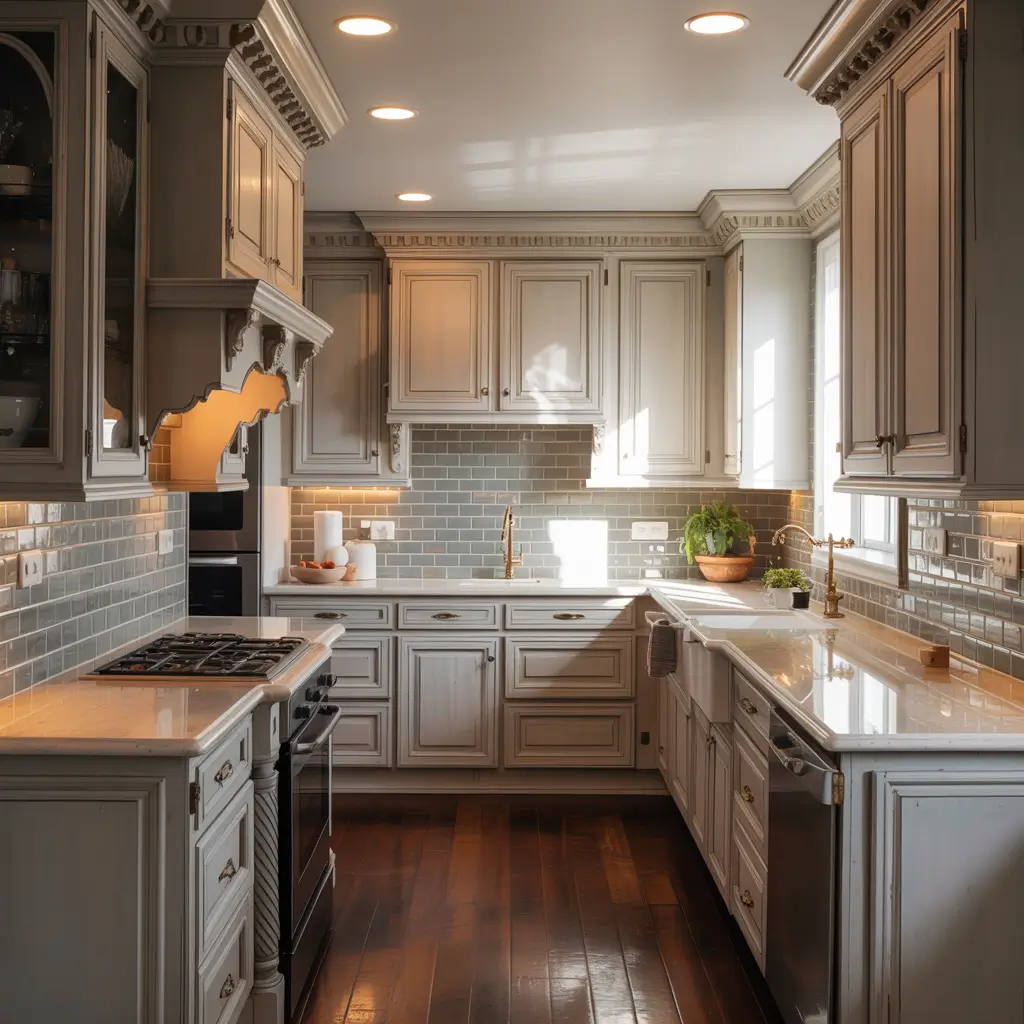
Less common but genuinely striking, the reverse arrangement — white lower cabinets with black upper cabinets — creates a completely different visual effect. Instead of grounding the space, the black cabinets seem to float above, drawing the eye upward and creating a dramatic canopy effect over the kitchen.
This configuration works best in kitchens with excellent natural light or very good artificial lighting. Because the upper half of the kitchen is dark, lighting becomes even more important here — under-cabinet lighting from the black uppers becomes essential, both functionally and aesthetically.
Where this arrangement really shines: kitchens with interesting ceiling architecture (exposed beams, vaulted ceilings, skylights) where you want to draw attention upward. The black cabinets frame the ceiling space rather than disappearing against it.
✦ Design Note: Add glass-front doors to some of your black upper cabinets. The combination of dark cabinet frames with interior lighting and visible dishware creates a display-case effect that looks genuinely high-end.
3. Modern Monochrome: Pushing Black and White to the Extreme
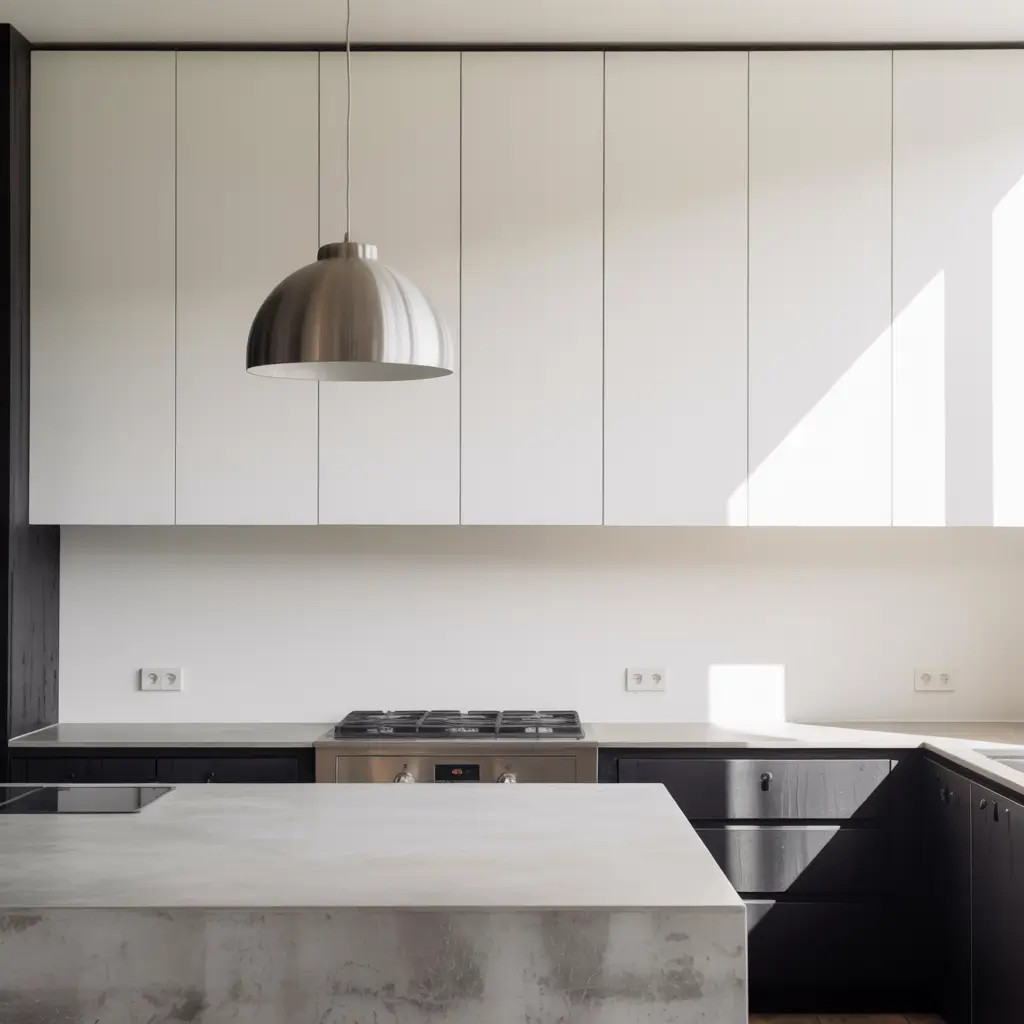
The monochrome kitchen takes the black and white palette and commits to it completely — no wood accents, no warm metals, no color anywhere. What you’re left with is pure visual architecture, a kitchen that feels more like a design installation than a place to make dinner. (You can still make dinner in it, though. Excellent pasta.)
This approach demands quality materials and flawless execution. When there’s no color to distract the eye, every surface becomes a statement. Cabinet finish quality, countertop selection, the straightness of grout lines — all of it is amplified in a monochrome space.
Elements That Make Monochrome Work
- Handleless push-to-open — Handleless, push-to-open cabinet mechanisms for an uninterrupted surface.
- Integrated appliances — Integrated appliances concealed behind matching cabinet panels.
- Waterfall countertops — Waterfall countertop edges where the counter flows unbroken to the floor.
- Layered LED lighting — Hidden LED strip lighting inside cabinets, under cabinets, and in toe kicks.
- Pattern within the palette — Geometric backsplash tile or flooring to add pattern within the palette.
- Varied textures — Matte black fixtures and matte white surfaces for textural contrast.
The reward for getting monochrome right is a kitchen that photographs like a magazine spread and ages beautifully — because the palette is so classic that no specific element dates the space.
4. Black and White Shaker Cabinets: Timeless Meets Timeless
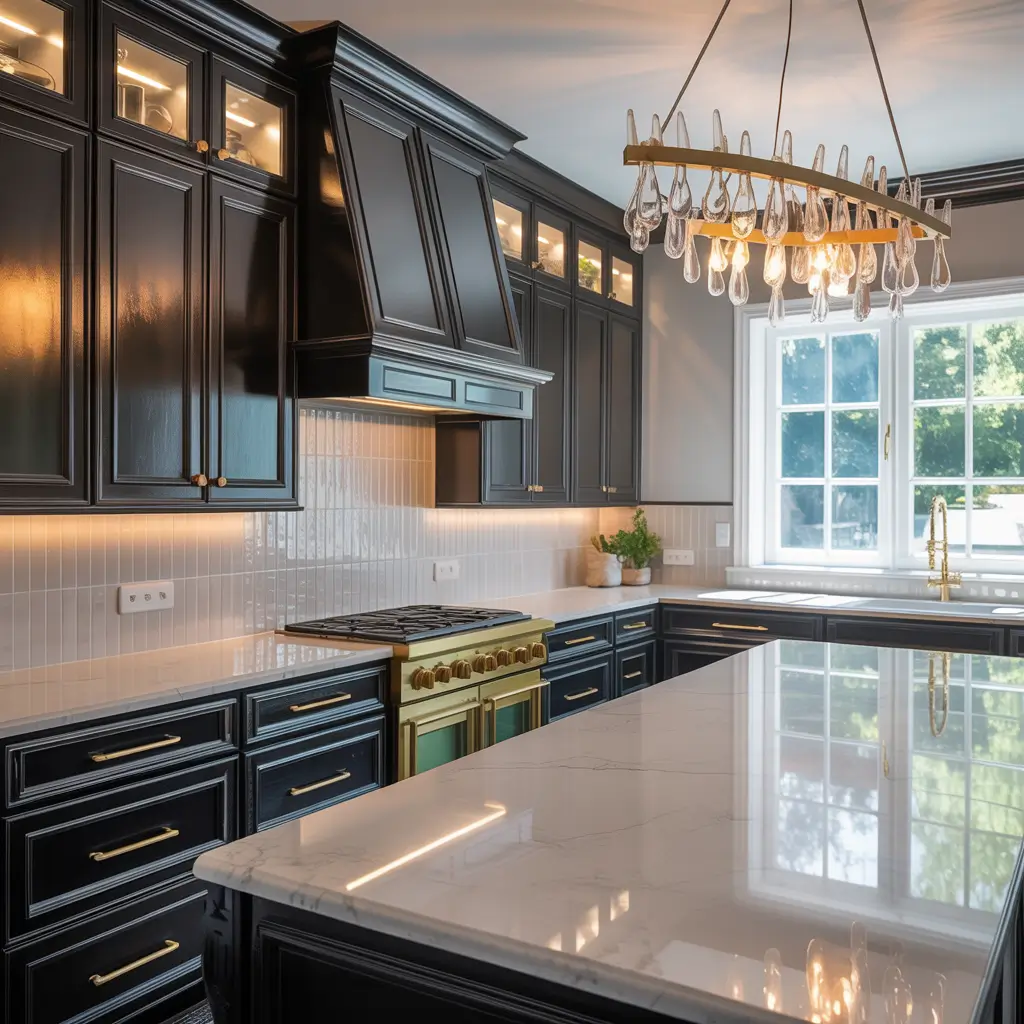
Shaker-style cabinet doors are the most popular kitchen cabinet style for good reason: their simple recessed panel design is clean enough for modern spaces but has enough traditional detail to feel warm and crafted. Put them in black and white together, and you have a combination so solid it borders on unkillable.
Black shaker lower cabinets and white shaker upper cabinets are a matchup that works in farmhouse kitchens, Craftsman homes, transitional spaces, and contemporary apartments. The shaker door’s inherent simplicity prevents the color contrast from ever feeling jarring.
Black and White Shaker Hardware Options
- Warm metals — Brushed gold or antique brass pulls — adds warmth and makes both colors pop.
- Tone-on-tone black — Matte black hardware on both sets for a tone-on-tone sophisticated effect.
- Silver finishes — Brushed nickel or chrome for a clean, contemporary look.
- Ceramic knobs — Ceramic or porcelain knobs for a farmhouse or vintage touch.
- Mixed metals — Mixed hardware — different finishes on black vs white cabinets — for contrast within contrast.
✦ Pro Tip: Use the same hardware style on both your black and white cabinets, even if you vary the finish. Visual consistency in hardware shape ties the two-tone look together. When hardware styles differ between upper and lower cabinets, the design starts to feel accidental rather than intentional.
5. Matte Black + Glossy White: Playing with Finish
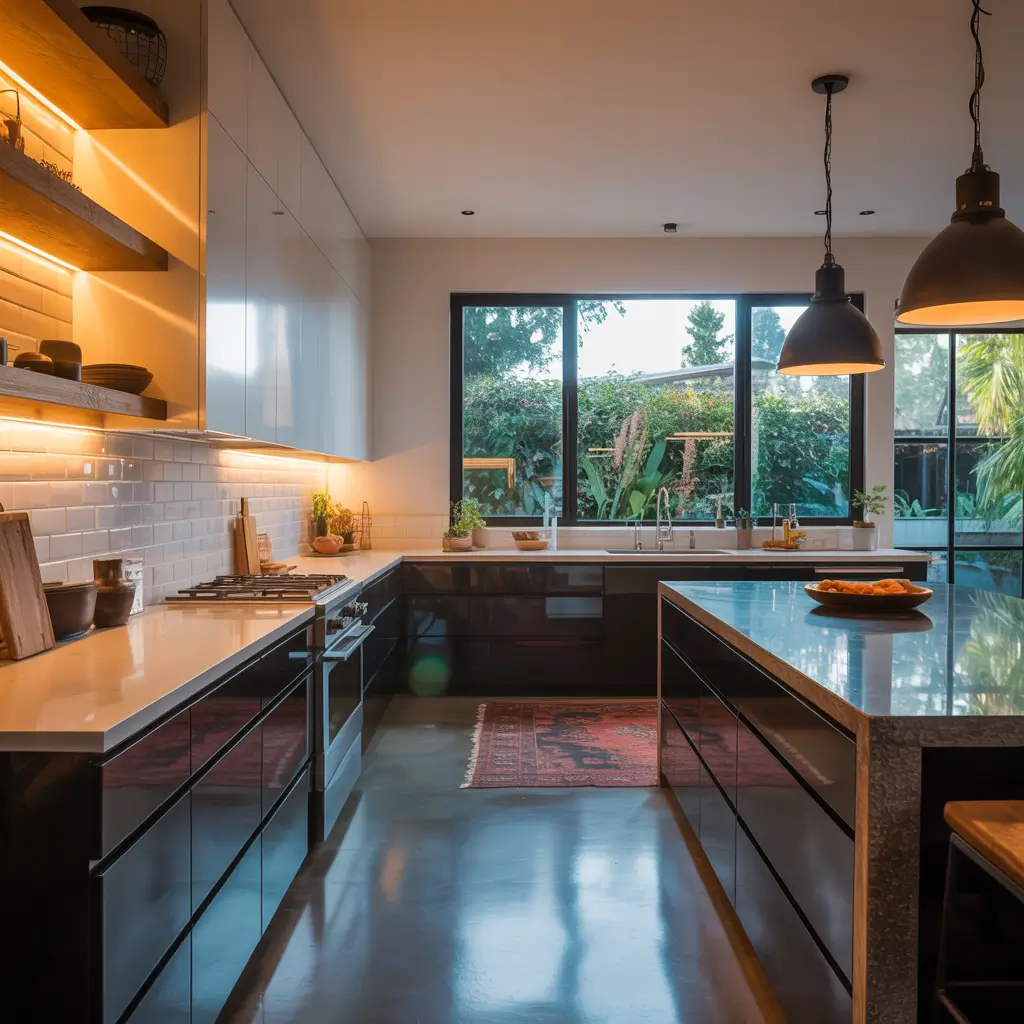
Here’s a sophisticated move that goes underappreciated: using the same black and white palette but varying the finish between the two sets of cabinets. Matte black lower cabinets paired with high-gloss white uppers create a texture contrast that adds depth and visual interest without introducing any additional color.
The matte black has a velvety, light-absorbing quality. The glossy white reflects light and sparkles slightly as it catches illumination from different angles. Together, they create a kitchen that looks different throughout the day as the light changes — a living quality that uniform finishes can’t match.
Maintenance reality check: matte finishes show dust and certain types of smudging more than you’d expect, but they resist fingerprints well. Glossy finishes show every fingerprint and water mark but clean off easily. Understanding this trade-off before you choose will save you frustration later.
✦ Design Trick: Flip the convention occasionally. A glossy black island with matte white perimeter cabinets creates a focal point that commands the room. The island’s reflective surface becomes the star of the show.
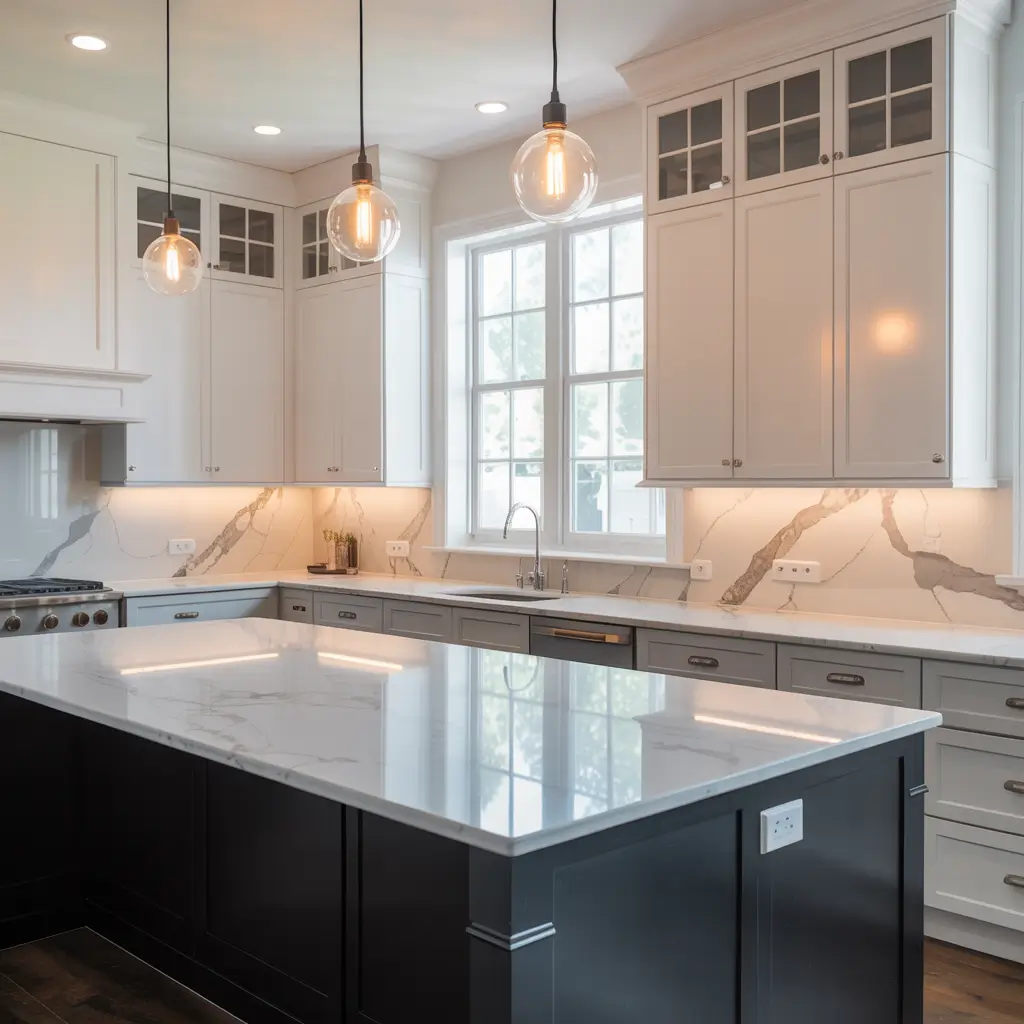
6. Black and White Kitchen Cabinets with Marble Countertops
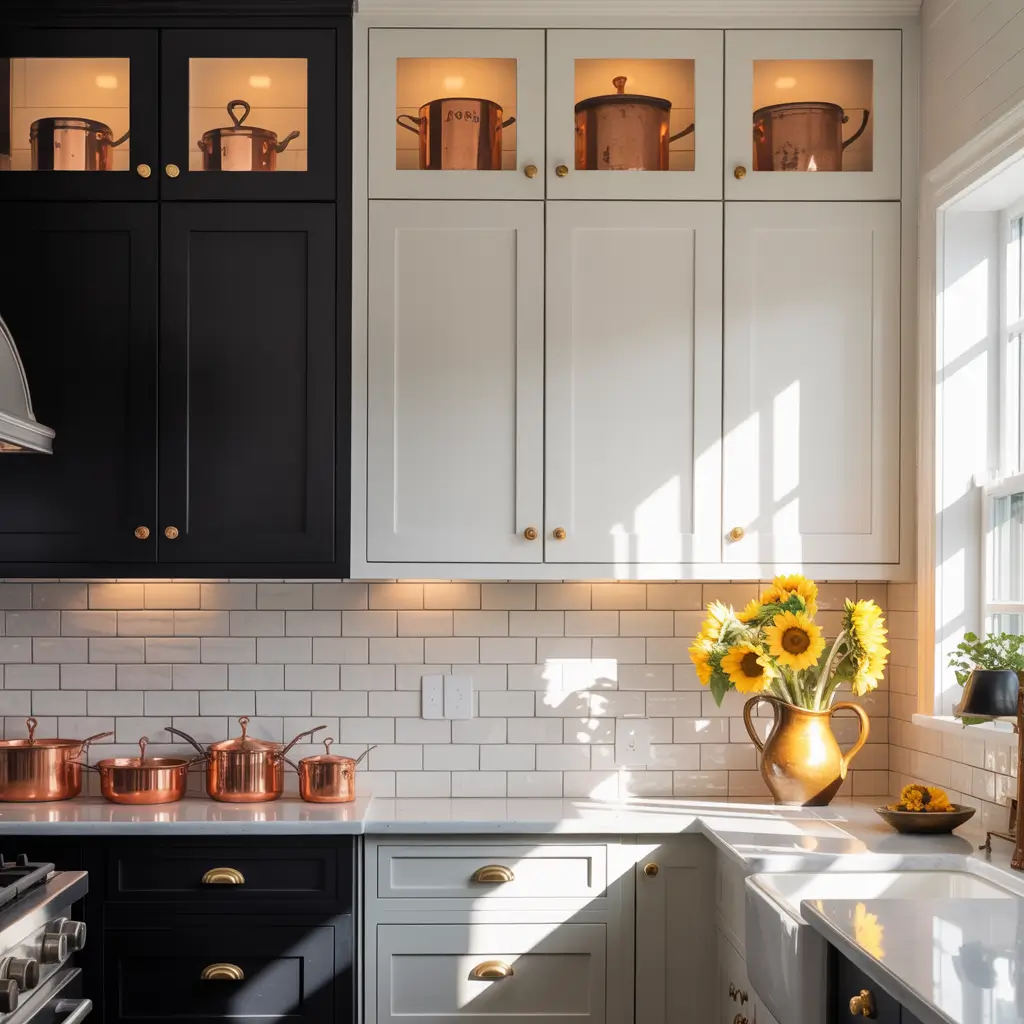
If there’s a pairing that elevates a black and white kitchen from nice to genuinely breathtaking, it’s marble countertops. Marble is the ultimate bridge between black and white cabinets because — in most varieties — it contains both colors within its own veining. The marble unifies what would otherwise be a stark contrast.
Best Marble Types for Black and White Kitchens
- Carrara — Carrara Marble — White background with soft gray veining. Classic, elegant, and broadly available.
- Calacatta — Calacatta — Brighter white with bolder, more dramatic veining. The showstopper option.
- Statuario — Statuario — Pure white with strong, contrasting veins in gray and gold.
- Nero Marquina — Nero Marquina — Black marble with white veining. Reverses the conventional countertop assumption.
- White Quartzite — White Quartzite — Natural stone that looks like marble but resists scratching and etching.
- White Quartz — White Quartz (engineered) — Completely maintenance-free, consistent appearance, great for families.
Extending the marble up as a backsplash slab rather than using separate tile is the design upgrade that makes a kitchen look genuinely luxurious. It’s more expensive, but the visual payoff — a seamless wall of veined stone behind black or white cabinets — is spectacular.
✦ Practical Note: If you love marble but fear the maintenance, white quartz with subtle gray veining is now virtually indistinguishable from natural Carrara at any normal viewing distance. You get the look without the sealing, etching, and staining anxiety.
7. Farmhouse Black and White Kitchen Cabinets
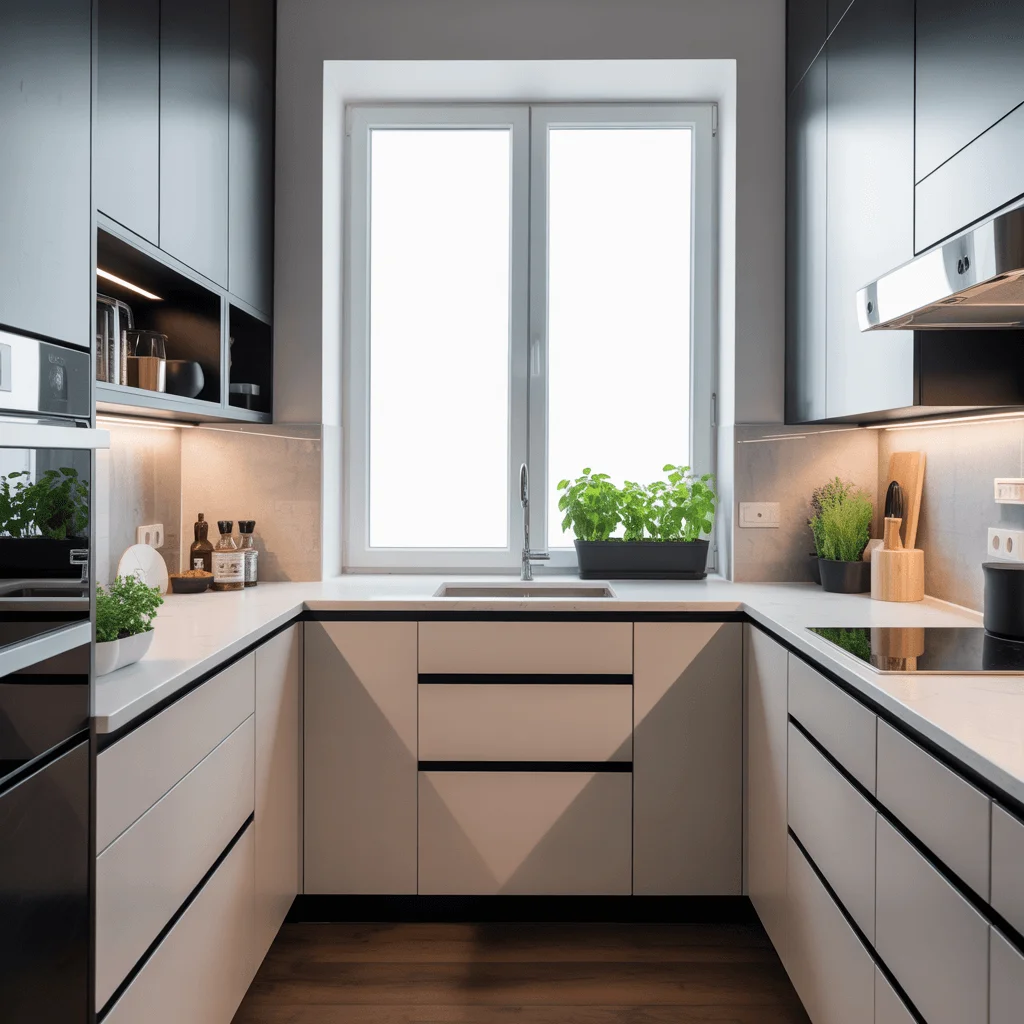
For a long time, farmhouse kitchen design meant one thing: white. Shiplap, open shelving, apron sink, all-white cabinets, butcher block — the formula was set. But the evolution of the farmhouse aesthetic has been beautiful to watch, and black and white cabinets are right at the heart of it.
Black lower cabinets in a farmhouse kitchen bring a grown-up edge to a style that can sometimes tip into the overly sweet. The white elements — upper cabinets, apron sink, walls — retain all the warmth and openness that makes farmhouse so enduringly beloved. The black stops it from looking like a catalog.
Essential Elements for a Black and White Farmhouse Kitchen
- Apron sink — White apron-front (farmhouse) sink against black lower cabinets — the contrast is dramatic in the best way.
- Butcher block — Butcher block island top or section of countertop for warmth and texture.
- Bridge faucet — Vintage-inspired bridge faucet in unlacquered brass or oil-rubbed bronze.
- Open shelving — Open floating shelves — white or natural wood — in place of some upper cabinets.
- Textural wall treatment — Shiplap, beadboard, or exposed brick as an accent wall or backsplash element.
- Pendant lighting — Vintage-inspired pendant lighting in aged black iron or weathered brass.
- Subway tile — White subway tile backsplash — the farmhouse standard that never gets old.
8. Minimalist Black and White: Less Is More (and It Shows)
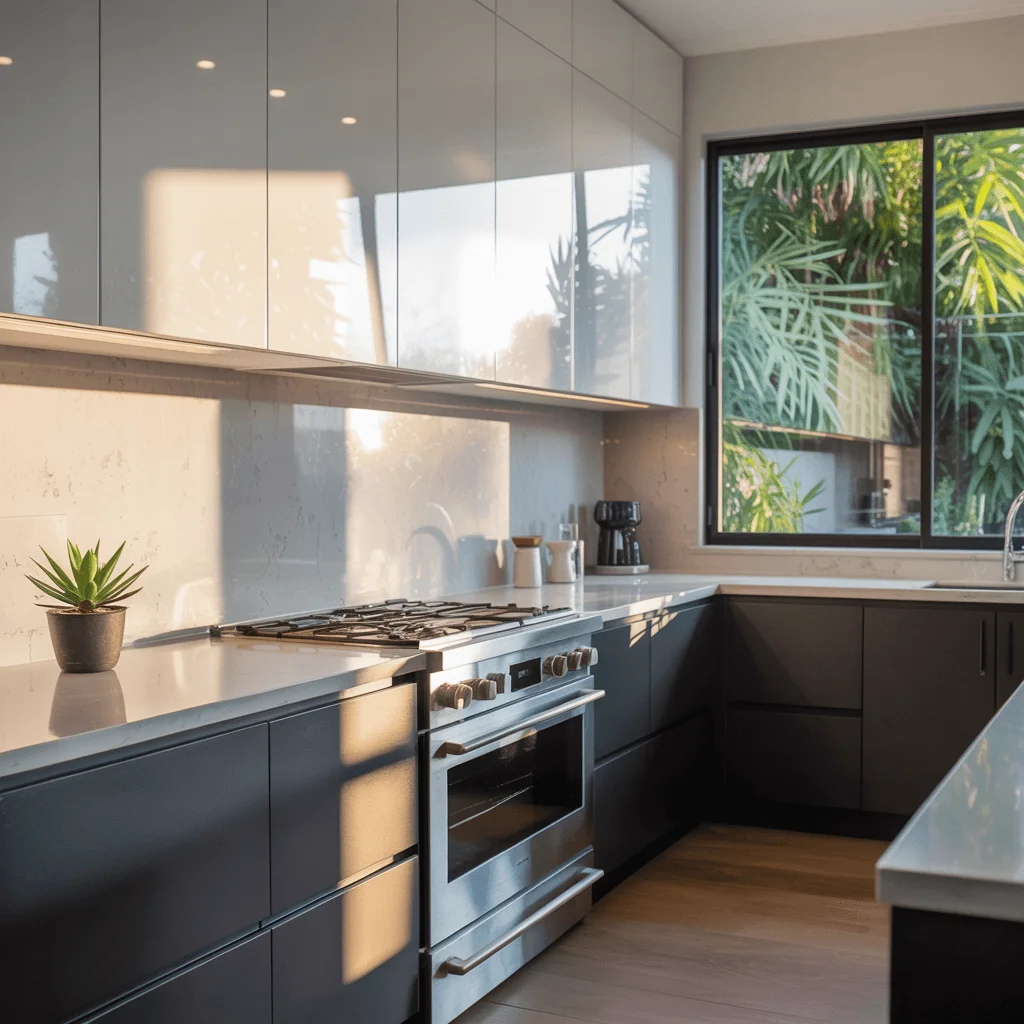
Minimalist kitchen design is about removing decisions until only the essential ones remain. In a minimalist black and white kitchen, there’s no decorative molding, no elaborate hardware, no backsplash tile that competes for attention. What you have is flat surfaces, clean lines, and a color palette of exactly two.
The effect is powerful precisely because of what’s absent. Without visual clutter to process, your eye moves smoothly around the room, and the kitchen feels calm, spacious, and considered. It’s the kitchen equivalent of a deep breath.
Making Minimalism Work
- Slab doors — Flat-front (slab) cabinet doors with no raised or recessed panels.
- Hidden handles — Push-to-open or recessed grip handles — no protruding hardware to interrupt the surface.
- Integrated appliances — Integrated appliances that disappear into the cabinet run.
- Seamless countertops — Large-format countertop slabs with minimal seaming.
- Hidden lighting — Concealed lighting only — no decorative pendant lights unless very simple.
- Precision installation — Uniform grout lines and consistent tile direction in any backsplash.
Minimalism rewards quality of materials over quantity of elements. Invest in better cabinet paint, better countertop stone, better hardware — because when there’s less to look at, everything you see gets more scrutiny.
9. Black and White with a Bold Backsplash
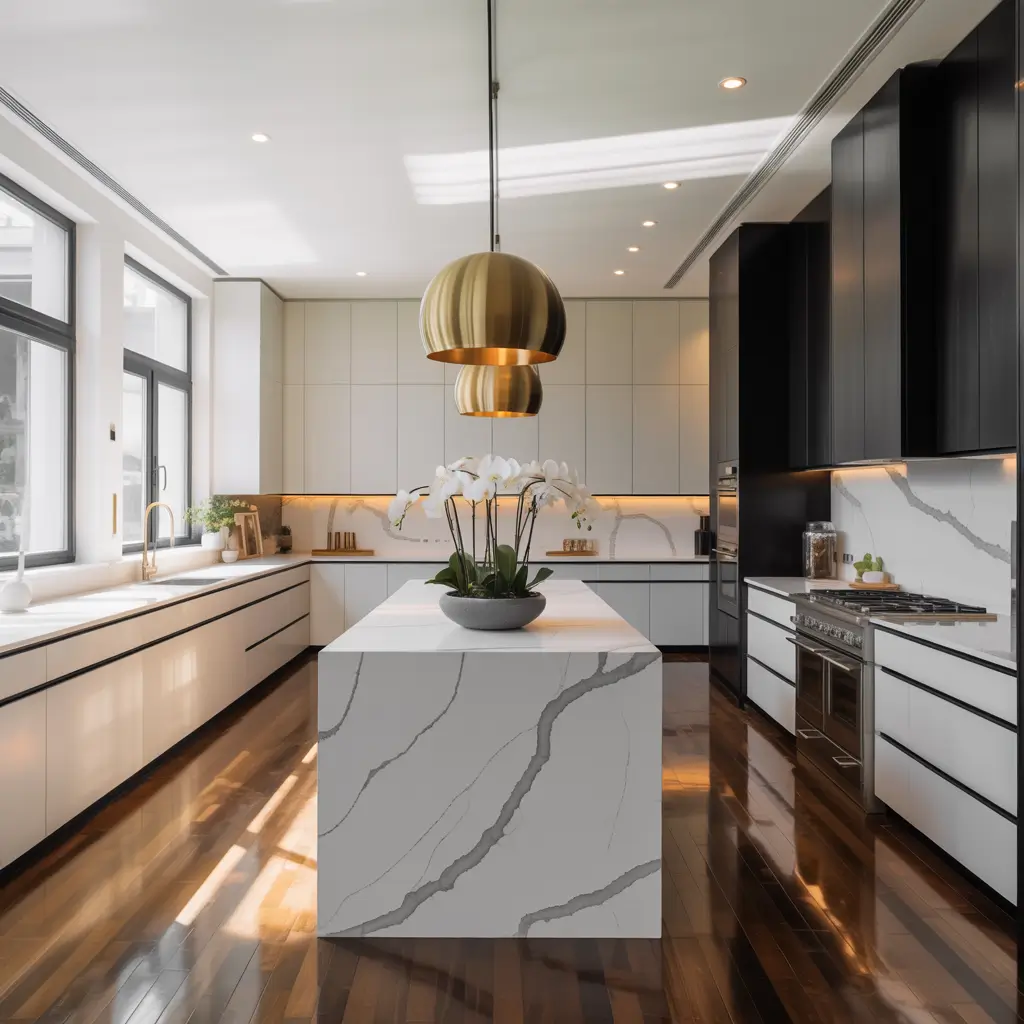
Black and white cabinets create the perfect neutral foundation for a truly show-stopping backsplash. Because both colors are so strong and neutral simultaneously, they can anchor almost any backsplash pattern or color without the kitchen feeling chaotic.
Think of it this way: black and white cabinets are the quiet room that makes a great painting look even better. The backsplash gets to be the artwork.
Backsplash Styles That Shine Against Black and White Cabinets
- Patterned ethnic tiles — Moroccan or Spanish encaustic tiles in deep terracotta, cobalt, or forest green.
- Zellige — Zellige tiles — handmade Moroccan tiles with slight variations that catch light beautifully.
- Marble slab — Large-format marble slabs run floor-to-ceiling behind the range for maximum impact.
- Colored subway tile — Subway tiles in unexpected colors — sage green, navy, dusty pink — laid in herringbone or vertical stack patterns.
- Metallic mosaic — Mirror or metallic mosaic tiles for a kitchen that glitters and amplifies light.
- Artisan tile — Handmade artisan tiles with visible texture, minor imperfections, and rich glazing.
✦ Golden Rule: The more dramatic your backsplash, the simpler your cabinet hardware should be. Let one element take the stage. Competing statements in a kitchen always create noise rather than drama.
10. Black and White Cabinets in a Small Kitchen
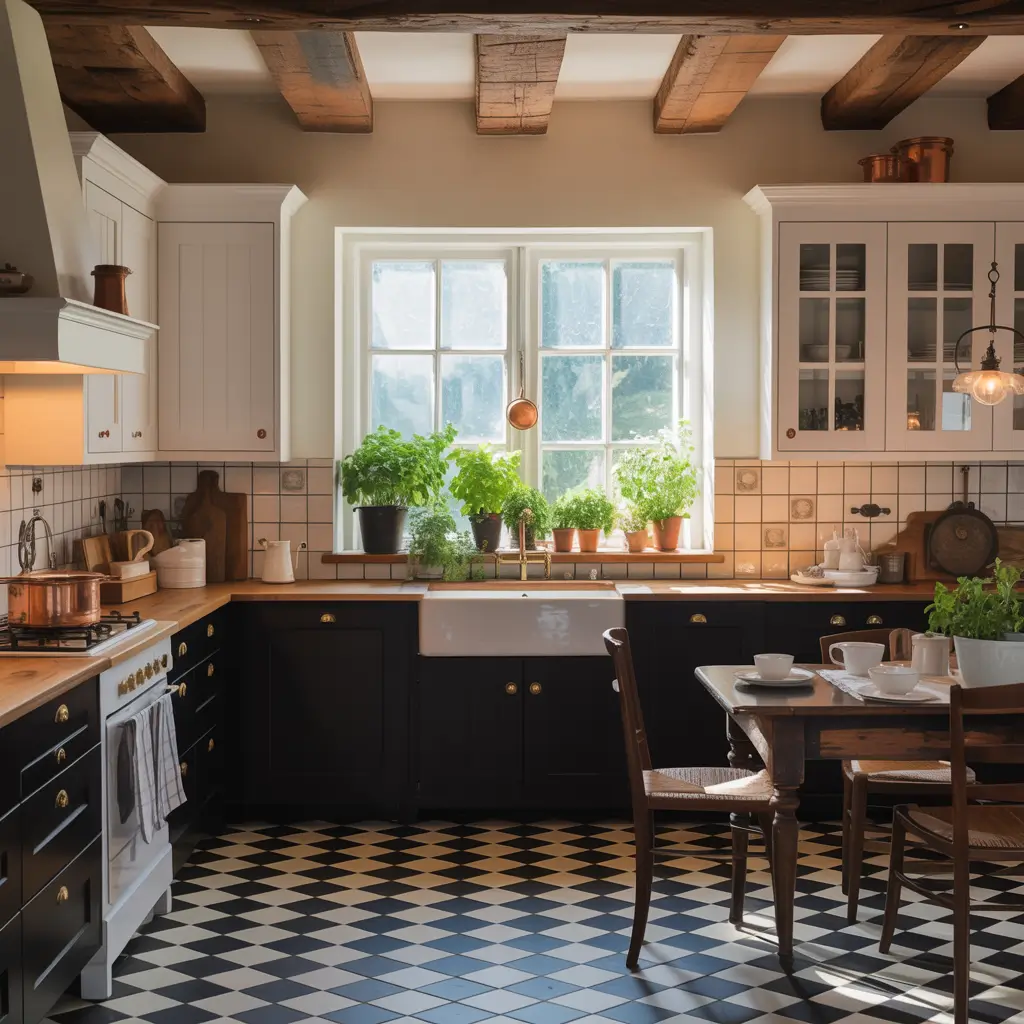
Ask most people about using black cabinets in a small kitchen and they’ll tell you it’s a mistake — that dark colors will make it feel even smaller. This is understandable but largely a myth, and black and white cabinets actually present a unique advantage in compact spaces: they create definition and intentionality that a single pale color can’t.
A small kitchen with a clear design purpose — where the black and white palette has been applied thoughtfully — always looks better than a small kitchen painted beige because nobody could decide what to do with it.
Small Kitchen Black and White Strategies
- 70/30 ratio — Keep white as the dominant color — roughly 70% white, 30% black — to maintain brightness.
- Gloss on white — Use glossy finishes on white cabinets to maximize light reflection.
- Under-cabinet lighting — Install under-cabinet LED strips to illuminate countertops and push perceived space upward.
- Consistent black — Use the same black consistently — one black cabinet tone, one black hardware tone.
- Slim hardware — Keep hardware minimal and streamlined; chunky pulls overwhelm small spaces.
- Mirror element — Add a mirror or mirrored backsplash element to double the perceived depth.
11. The Black and White Kitchen Island
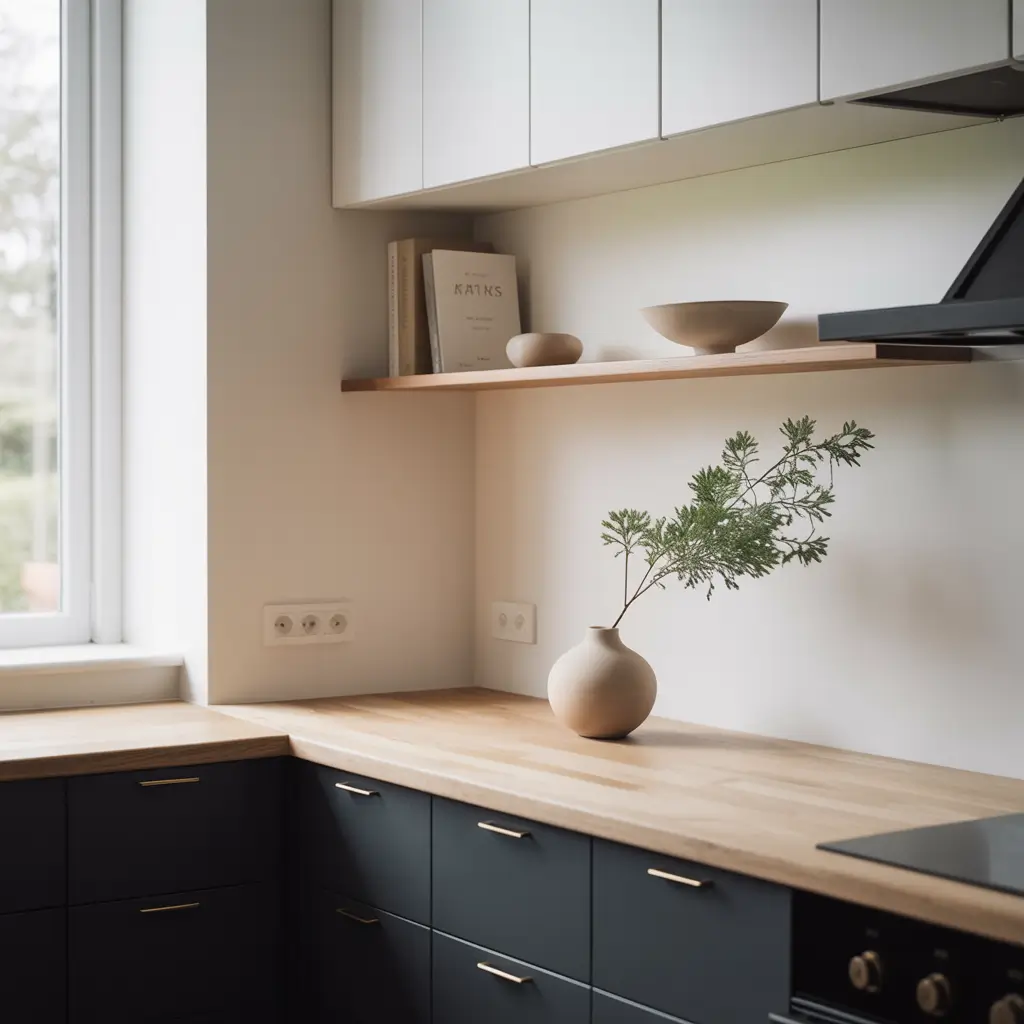
If you have an island in your kitchen, it becomes the most powerful design element in the room — and using it to anchor a black and white palette is one of the smartest moves in contemporary kitchen design.
The most versatile approach: a black island surrounded by white perimeter cabinets. The island becomes the visual anchor of the kitchen, a bold statement piece that draws the eye without overpowering the room. The white cabinets surrounding it keep the space bright and balanced.
Alternatively, a white island against black perimeter cabinets creates a lighter, more airy focal point — the island becomes a bright stage for cooking and gathering rather than a dramatic statement piece. Both work beautifully; the choice comes down to the overall mood you want to create.
Island details worth investing in: a waterfall countertop edge (where the stone flows over the side of the island to the floor), contrasting countertop material (black island with white stone top, or white island with black countertop), and statement pendant lighting directly above.
✦ Sizing Note: An island needs a minimum of 42 inches of clearance on all sides for comfortable movement. Don’t sacrifice circulation for visual impact — a beautiful island that makes the kitchen difficult to work in defeats the purpose entirely.
12. Scandinavian Black and White Kitchen Design
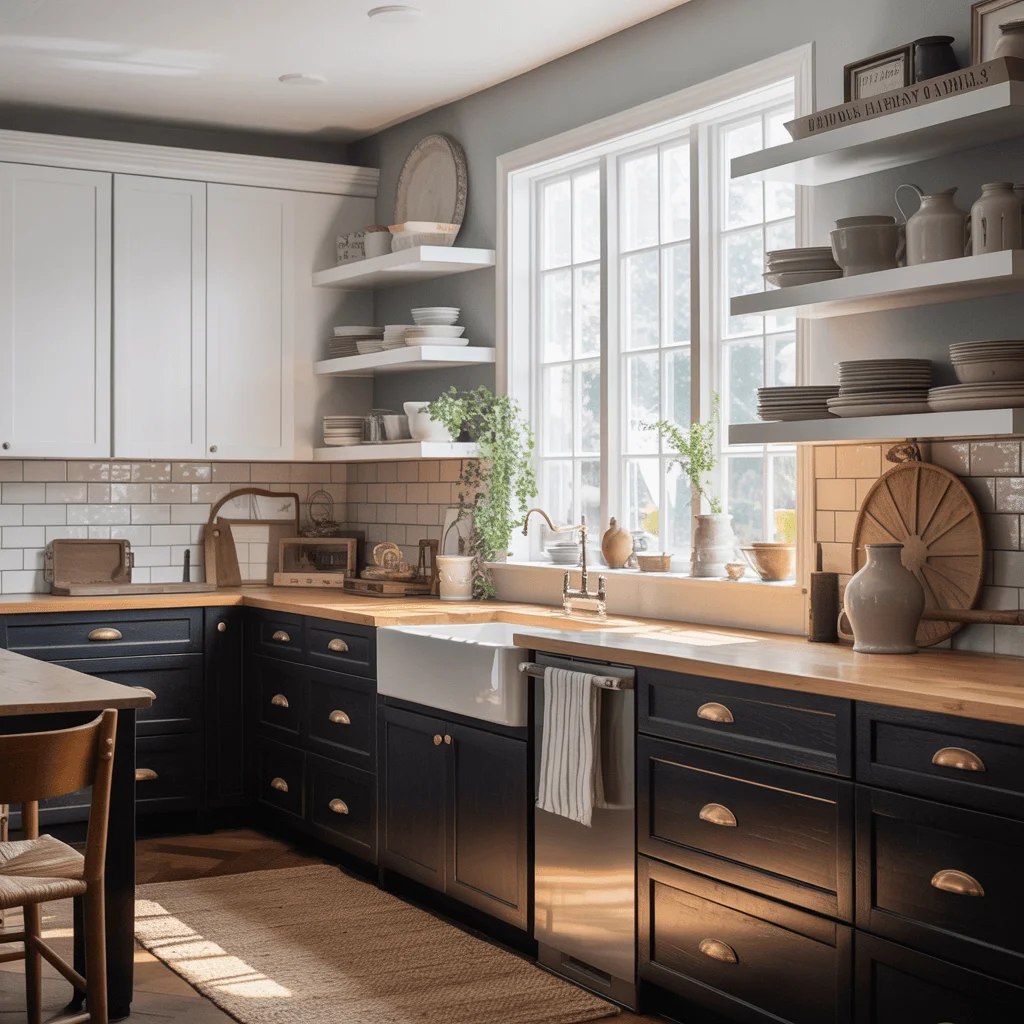
Scandinavian design has given the world some of the most livable, beautiful kitchens ever made — and it turns out the black and white palette fits perfectly within its principles of simplicity, functionality, and warmth.
In a Scandi black and white kitchen, black is used as a grounding element rather than a dramatic statement. It provides visual weight and definition, but the overall atmosphere remains light, calm, and welcoming. This is achieved through careful attention to natural materials, warm textures, and strategic use of plants.
Core Scandi Black and White Elements
- Matte only — Matte finishes on everything — no gloss. Scandi design values subtlety.
- Light surroundings — White walls and light wood flooring to keep the space feeling bright and open.
- No hardware — Minimal hardware — or none at all, with push-to-open mechanisms.
- Wood warmth — Natural wood accents (a butcher block section, a wooden shelf, a cutting board displayed on the counter) to add warmth.
- Living green — Abundant plants — trailing pothos, herb gardens on windowsills, a statement fiddle leaf fig.
- Clean geometry — Clean, rectilinear cabinet shapes — no curved profiles or decorative details.
The Scandinavian approach proves that black and white doesn’t have to mean cold or harsh. With the right textures, materials, and living elements, it creates exactly the cozy, inviting atmosphere that hygge promises.
13. Industrial Black and White Kitchen Cabinets
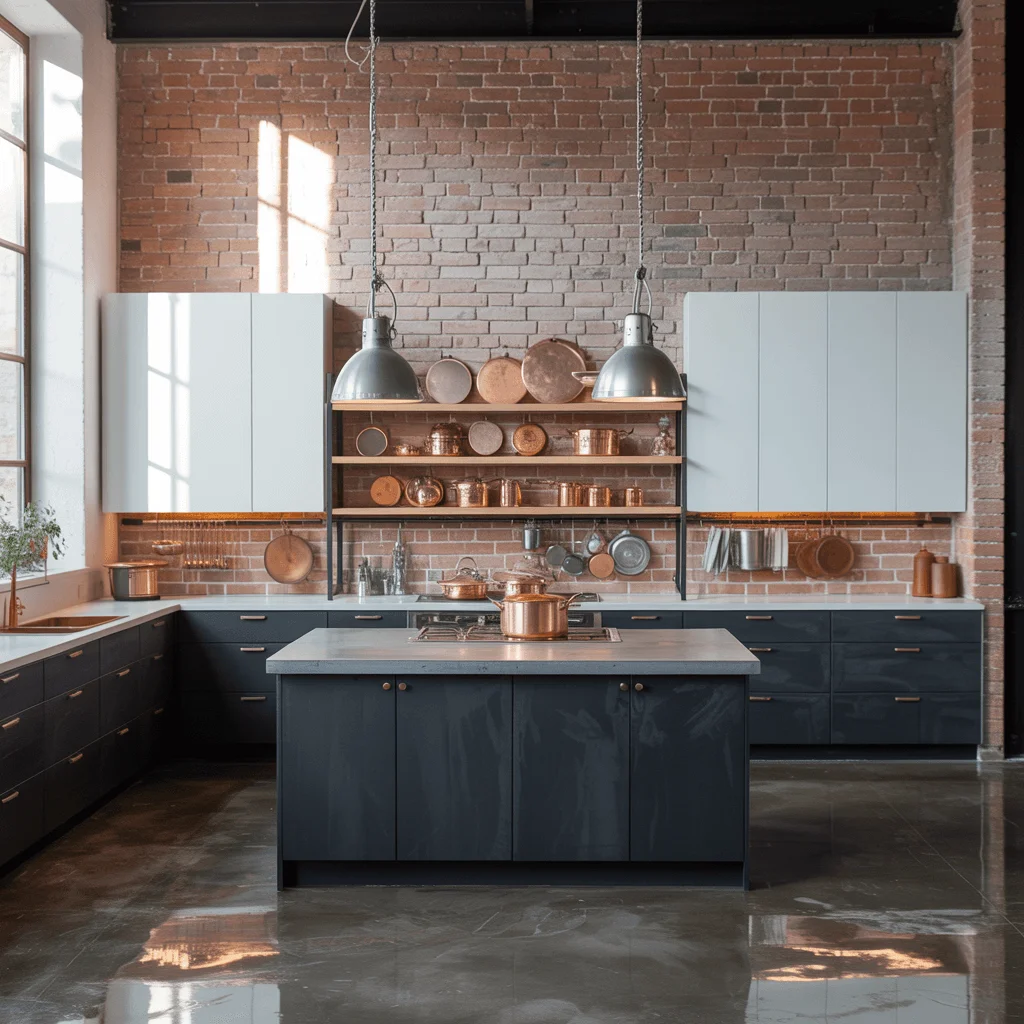
The industrial aesthetic has been one of the most consistently popular interior design styles of the past decade, and black and white cabinets are a natural fit for its vocabulary of raw materials, functional design, and urban edge.
In an industrial black and white kitchen, the cabinets provide the clean, organized framework while raw materials — concrete, exposed steel, brick, wire mesh — add texture and character. The contrast of refined cabinetry against rough-hewn materials is exactly what makes industrial kitchens feel so compelling.
Industrial Details to Add Alongside Black and White Cabinets
- Concrete countertops — Concrete countertops — polished or raw — for a textural counterpoint to smooth cabinet doors.
- Exposed pipe brackets — Exposed pipe shelving brackets in black steel or iron.
- Wire mesh inserts — Wire mesh cabinet door inserts instead of solid panels or glass.
- Industrial lighting — Edison bulb or cage-style pendant lighting in matte black.
- Subway tile backsplash — Standard brick-lay white subway tile backsplash for utilitarian texture.
- Steel windows — Black steel window frames (if renovating) to carry the palette into the architecture.
Embrace imperfection in an industrial kitchen. Concrete that shows the form marks. Grout that isn’t perfectly uniform. A shelf bracket that’s slightly oxidized. These details aren’t flaws — they’re character, and they’re exactly what makes industrial design feel authentic rather than manufactured.
14. Black and White Cabinets with Open Shelving
Replacing some or all of your upper cabinets with open floating shelves alongside your black and white lower cabinets is one of the most visually effective moves in contemporary kitchen design. It adds breathing room, creates display opportunities, and breaks up the visual mass of a full run of upper cabinet doors.
The most successful approach: keep your black lower cabinets for concealed storage of everything you don’t want to look at (pots, tupperware, cleaning supplies) and use open shelves above for items that photograph well and that you use frequently (everyday dishes, glasses, cookbooks, small plants).
Open Shelf Styling with Black and White Cabinets
- Tone-on-tone shelves — White-painted shelves against a white wall for minimal visual interruption.
- Warm wood shelves — Natural walnut or oak shelves for warmth against the palette.
- Black steel shelves — Black powder-coated steel shelving for an industrial-leaning look.
- Marble shelves — Marble shelves for maximum luxury (and if you’re comfortable with that level of commitment).
✦ The Open Shelf Rule: Everything on an open shelf should either be beautiful, useful, or both. Open shelves are not overflow storage for the cabinets below. Edit ruthlessly and resist the urge to fill every inch — negative space on a shelf is part of the design.
15. Black and White Cabinets with Gold and Brass Hardware
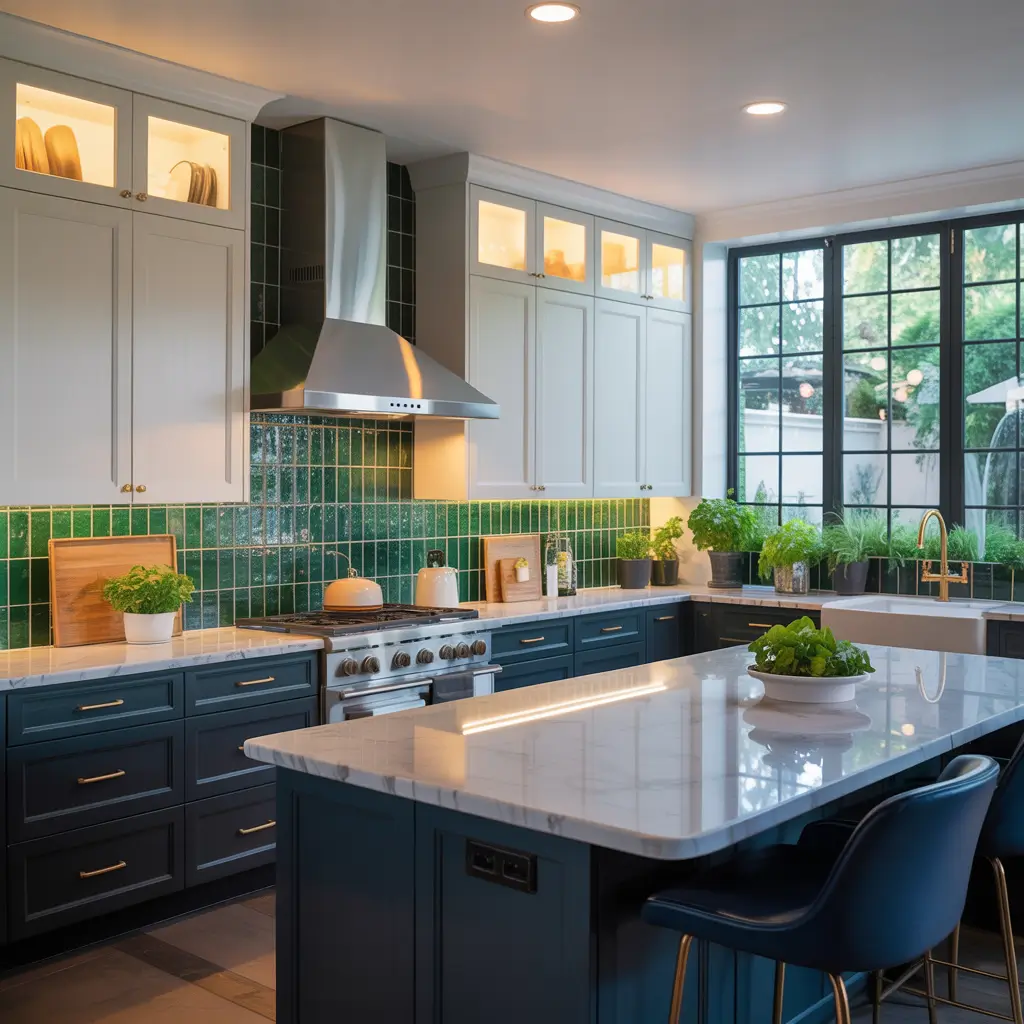
If black and white is the wardrobe, gold hardware is the jewelry. Adding warm metallic accents — brushed gold, unlacquered brass, antique brass, champagne gold — to a black and white kitchen immediately elevates it from sharp to luxurious.
Gold and brass are warm tones, and warmth is exactly what a black and white kitchen needs to feel inviting rather than clinical. Even a small amount of warm metal — just the cabinet hardware — can completely change the emotional temperature of a space.
Where to Use Gold and Brass in a Black and White Kitchen
- Cabinet hardware — Cabinet pulls and knobs — the most impactful and least expensive upgrade possible.
- Sink fixtures — Kitchen faucet and soap dispenser at the sink.
- Pot filler — Pot filler above the range if your plumbing allows.
- Pendant lights — Pendant lighting above the island or dining area.
- Shelf brackets — Shelf brackets for open shelving sections.
- Range hood accents — Range hood details, straps, or frame.
Unlacquered brass is particularly beautiful in a black and white kitchen because it develops a natural patina over time, growing richer and more characterful as it ages. This living finish adds a sense of history and permanence to a color palette that might otherwise feel too clean.
Frequently Asked Questions
Do black and white kitchen cabinets show dirt?
Both black and white show different types of dirt. White cabinets reveal smudges, grease splatter, and yellowing over time. Black cabinets show dust, water spots, and certain types of fingerprints. Matte black is more forgiving than gloss; white in an eggshell or satin finish cleans more easily than flat. The honest answer: all cabinets require maintenance. Black and white together means you’re always cleaning whichever one is looking worse.
Will black and white cabinets look dated in five years?
Unlikely. Black and white as a combination has been a design constant for over a hundred years — in fashion, in graphic design, in architecture, and in interiors. Specific applications of it go in and out (high-gloss black was very 2012; minimalist matte black is very 2024) but the overall palette is as close to permanent as anything in design gets.
What flooring works best with black and white kitchen cabinets?
Light wood floors (blonde oak, maple, ash) are the most versatile option, adding warmth that prevents the black and white palette from feeling cold. White marble-look tile amplifies the elegance of the palette. Large-format dark tile can work in a dramatic monochrome kitchen but needs excellent lighting. The one thing to generally avoid: highly patterned floors that compete with already-contrasting cabinets.
Can I add black and white cabinets to a kitchen that already has colored walls?
Absolutely, though the wall color will significantly shape the overall effect. Deep colored walls — forest green, navy, charcoal — can work beautifully with black and white cabinets, creating a richly layered look. Warm neutrals (cream, sand, warm gray) are the most forgiving. Avoid cool pale grays, which can make black and white kitchens feel sterile.
Conclusion:
The most important thing this guide should leave you with is confidence. Black and white kitchen cabinets aren’t a gamble — they’re one of the most reliably successful design choices you can make. The palette works across styles, across price points, across kitchen sizes, and across decades.
What separates the black and white kitchens that look like magazine features from the ones that just look like someone painted their cabinets is intentionality. Understanding why you’re placing black where you are and white where you are. Choosing materials that relate to each other. Getting the lighting right. Editing out elements that don’t serve the overall vision.
Start with the look that genuinely excites you — whether that’s sleek modern monochrome, warm farmhouse fusion, or bold industrial edge — and build your decisions outward from that center of gravity. Every choice that supports that vision strengthens it; every choice that conflicts with it weakens it.
“The kitchen you actually want to cook in every morning is worth more than the most Instagram-perfect kitchen you could build.”
Take your time. Order samples. Live with colors taped to your cabinet doors for a week in different lighting conditions. Gather quotes from at least three contractors. And when you finally stand in your finished black and white kitchen — making coffee while sunlight plays across the contrast of dark and light — you’ll understand why this combination has inspired designers and homeowners for generations.
1 thought on “15 Stylish Black and White Kitchen Cabinets Ideas to Try Today”