
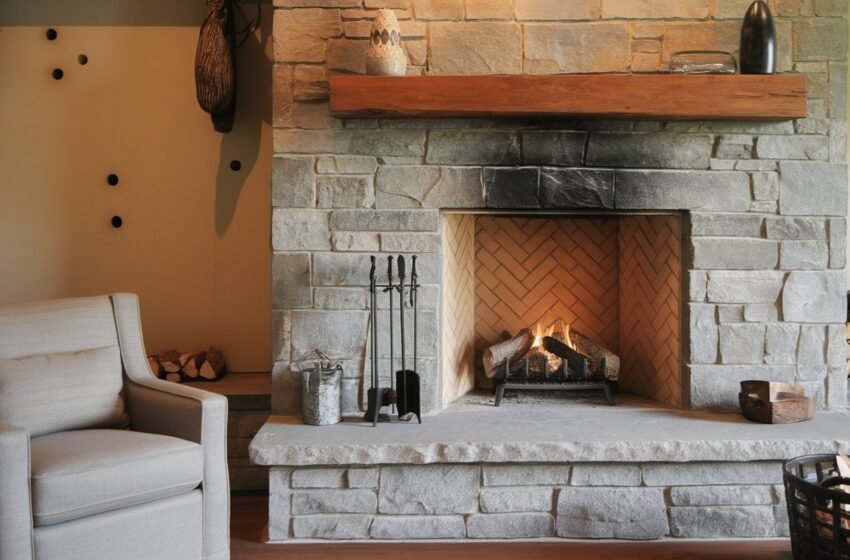
Stone and fire belong together. It is one of the oldest combinations in human history, and no matter how much our interiors evolve, that pairing never loses its power. Walk into a room with a well-designed stone fireplace and you feel it immediately — a sense of solidity, warmth, and permanence that no other material quite delivers.
What has changed is what ‘modern’ stone fireplace design actually looks like. For a long time, stone fireplaces were associated with a particular aesthetic — dark, heavy, traditional, and sometimes a little dated. Today’s designers have completely reimagined what is possible. Stone now features in fireplaces that are sleek and minimal, dramatically large-scale, softly textured, or boldly architectural. The material itself has not changed, but the way we use it has.
Whether you are starting from scratch in a new build, renovating an existing fireplace, or simply looking for inspiration for a future project, this guide has you covered. Here are 17 modern stone fireplace ideas that are genuinely worth stealing — from understated and elegant to bold and unforgettable.
1. Floor-to-Ceiling Stacked Stone Feature Wall
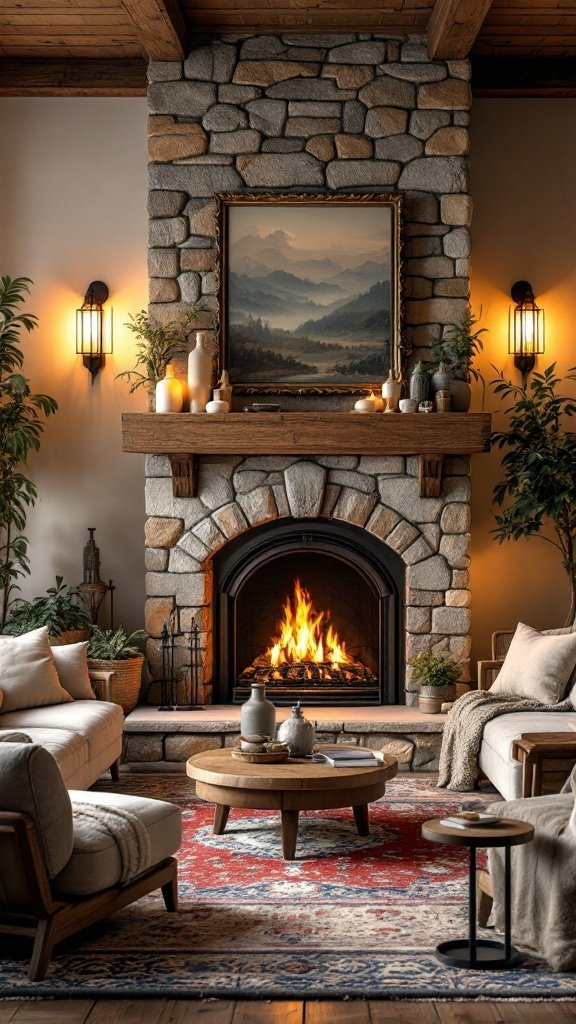
When stone goes all the way from the floor to the ceiling, the effect is nothing short of dramatic. A full-height stacked stone feature wall transforms a fireplace from a simple focal point into an architectural statement that defines the entire room.
The key to making this work in a modern interior is the choice of stone and the stacking pattern. Irregular, natural stacking feels rustic. Precise, horizontal coursing with consistent joint widths feels contemporary. Choose a stone with a relatively consistent colour — grey slate, pale limestone, or buff sandstone — to keep the look clean rather than chaotic.
2. Sleek Marble Surround with Minimal Detailing
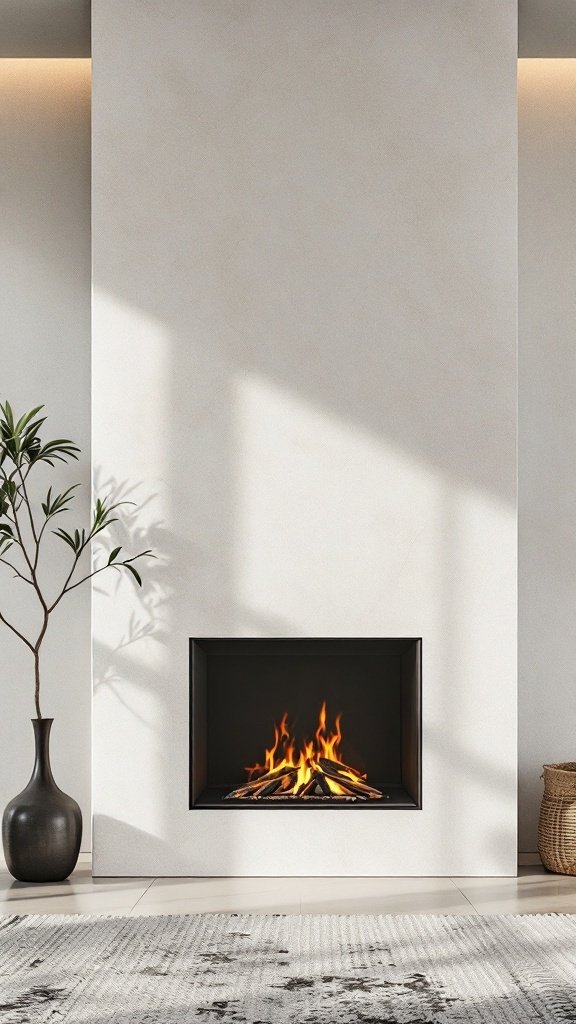
Marble has been used in fireplace surrounds for centuries, but the way it is used today is radically different from the ornate, heavily moulded surrounds of the Georgian and Victorian eras. Modern marble fireplace design is defined by restraint: large, uninterrupted slabs, razor-thin profiles, and virtually no decorative detailing whatsoever.
A slab of book-matched Calacatta Oro marble — where two matching slabs are opened like a book to create a mirrored veining pattern — is one of the most beautiful things you can do with a fireplace. Pair it with a simple black steel insert and a floating shelf mantel in the same marble, and you have a fireplace that is genuinely extraordinary.
3. Rustic-Chic Stone Surround with Oak Beam Mantel
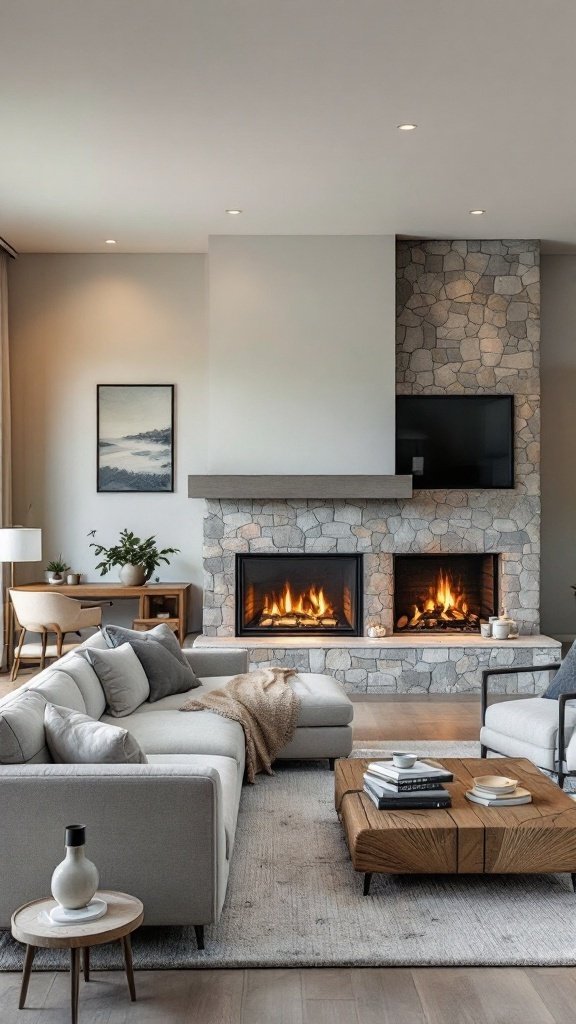
The combination of rough-textured stone and a thick, character-rich oak beam is a classic for a reason. It brings together two of the most elemental natural materials in a way that feels rooted, honest, and deeply welcoming.
The modern interpretation of this look focuses on quality and restraint. Use a stone with real textural interest — hand-split slate, irregular limestone, or fieldstone — and pair it with a beam that has been cleaned and lightly treated rather than over-finished. Keep the surrounding decor simple: a few carefully chosen objects on the mantel, some comfortable seating, and nothing that competes with the stone and timber.
4. Textured Stone Accent Wall with Inset Fire
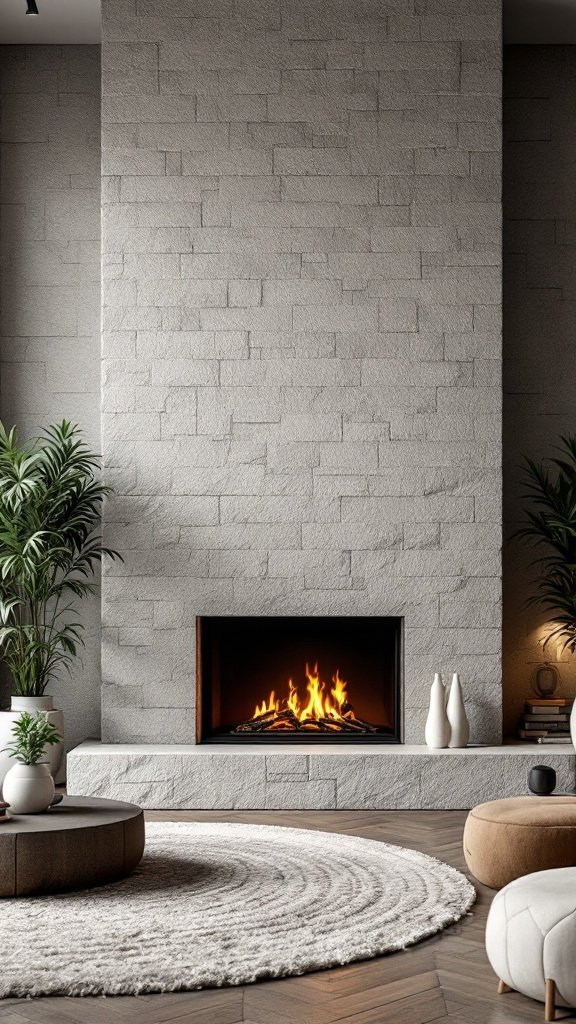
Rather than framing the fireplace with a conventional surround, this approach makes the entire chimney breast a stone accent wall. The fire itself is inset flush with the stone, with no visible frame or border — just a rectangular opening cut directly into the rock.
Grey tones work particularly well here because they read as both contemporary and natural simultaneously. The texture of the stone — whether it is split-face slate, brushed limestone, or rough-cut quartzite — creates visual depth and interest without the need for any additional decoration. This is a powerful, confident design statement.
5. Two-Sided Stone Fireplace for Open-Plan Living
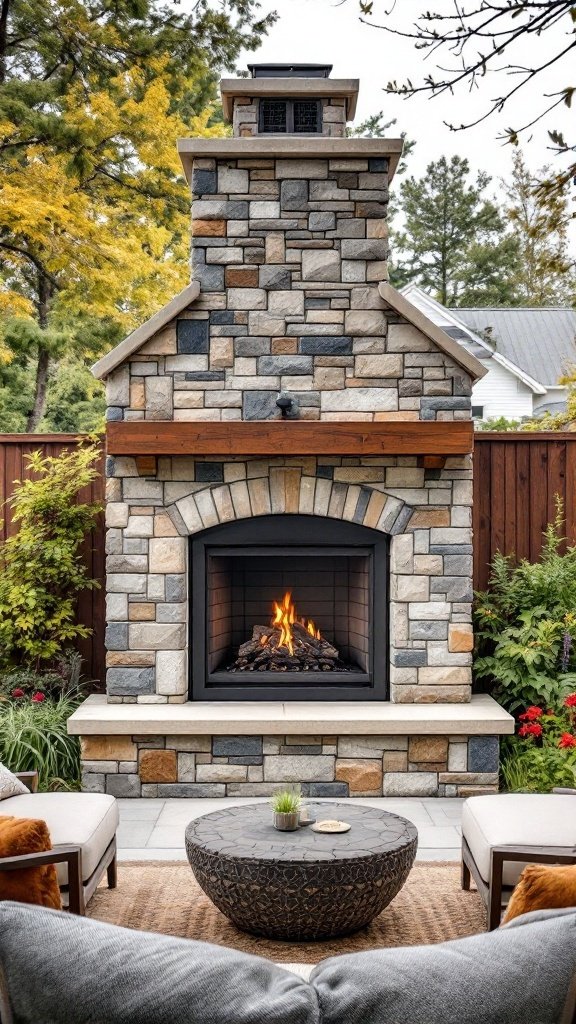
Open-plan living spaces present a particular challenge: how do you create warmth and intimacy in a large, flowing space? A two-sided stone fireplace is one of the most elegant solutions available.
Positioned at the threshold between a living area and a dining room, or between an indoor space and an outdoor terrace, a two-sided fireplace serves both zones simultaneously. The stone surround unifies the design across both spaces while the fire itself provides a visual connection point. Structurally, these installations require careful planning, but the result — flames visible from two directions, framed by beautiful stone — is genuinely spectacular.
6. Polished Concrete and Stone Hybrid
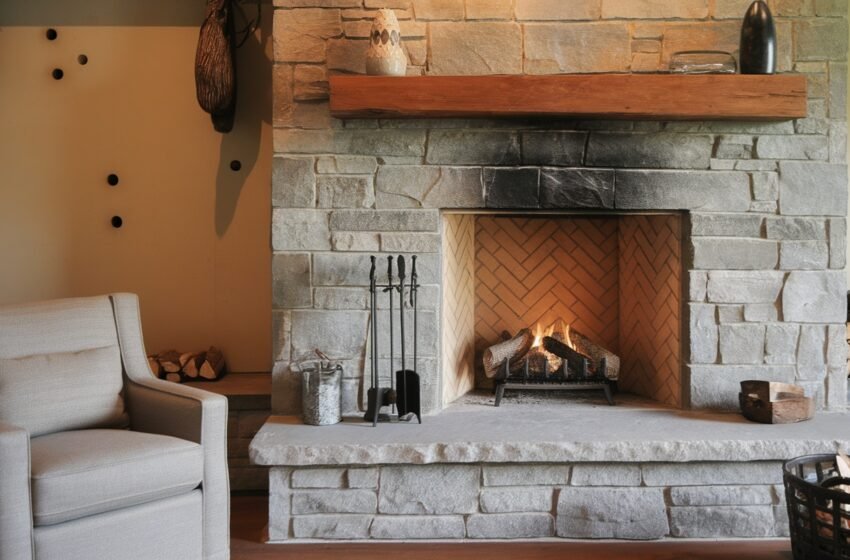
Some of the most interesting modern fireplace designs combine two or more materials to create a composition that is more than the sum of its parts. The combination of polished concrete and natural stone is one of the most successful of these hybrids.
A poured concrete hearth and inner firebox framed by a natural stone surround — or the reverse, with a stone hearth beneath a concrete chimney breast — creates a pleasing contrast between the manufactured and the natural. Keep both materials in a similar tonal family (warm grey concrete with pale limestone, for example) to maintain coherence.
7. Ledgestone Panel Fireplace
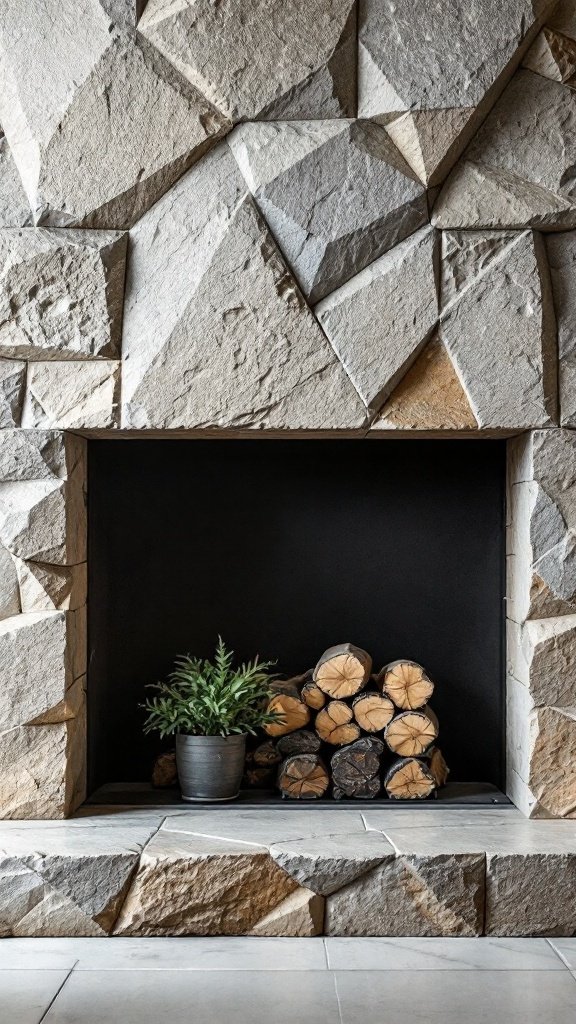
Ledgestone — thin, horizontal slices of natural stone stacked in offset courses — has become one of the most popular choices for modern fireplace cladding, and it is easy to understand why. It is relatively straightforward to install, it reads well at a range of scales, and it has a clean, contemporary quality that suits a wide variety of interior styles.
For a modern look, choose ledgestone in a single, consistent colour rather than a multi-tonal blend. Pale greys, warm beiges, and charcoal blacks all work beautifully. Keep the surrounding wall simple — plain plaster in a complementary tone — so the texture of the stone is the star.
8. Wall-Mounted Fire with Stone Cladding
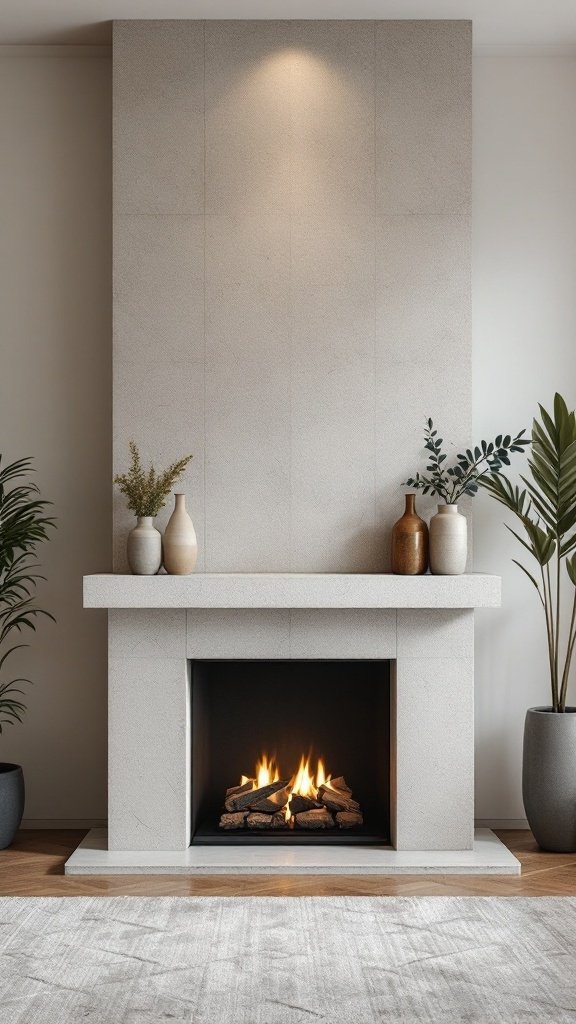
Wall-mounted fires — slimline gas or electric inserts that project from the wall rather than sitting within it — are one of the defining looks of contemporary interior design. Adding natural stone cladding to the wall behind and around a wall-mounted fire elevates the look significantly.
The stone brings warmth and texture to what can otherwise feel like a cold, corporate aesthetic. It also provides a visually grounding backdrop that makes the fire itself — usually positioned at eye level or slightly above — feel more intentional and considered. Choose a stone with a relatively smooth surface to complement the sleek, minimal profile of the fire unit.
9. Fireplace with Integrated Stone TV Wall
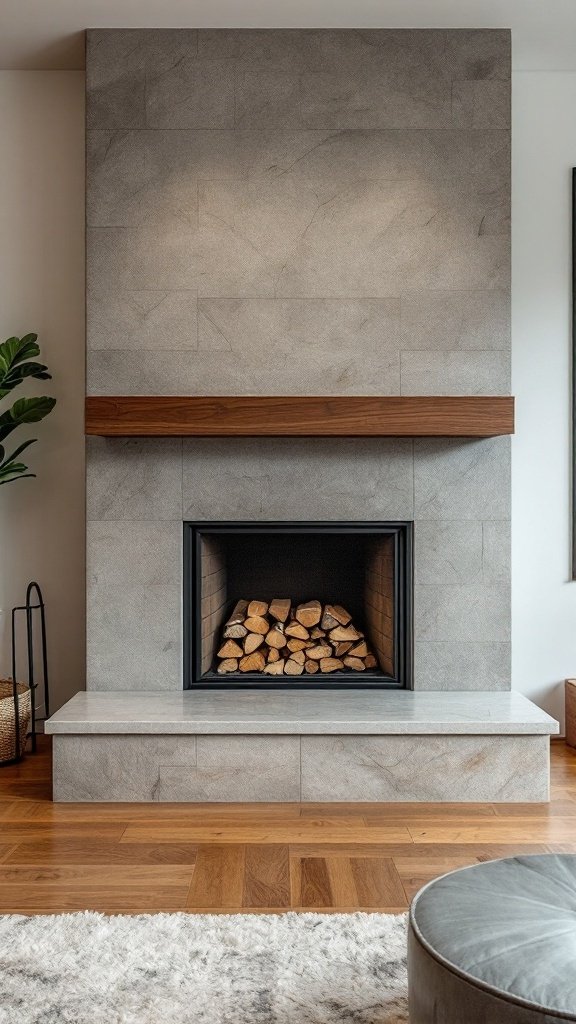
The combination of a fireplace and a TV in the same wall is one of the most requested features in new-build and renovation projects. When both are integrated into a continuous stone-clad wall, the result can be genuinely impressive.
The challenge is avoiding the look of two competing focal points fighting for attention. The solution is to treat the stone wall as the primary element and position both the fire and the screen as elements within it, rather than as the wall’s purpose. A consistent stone material across the entire wall — interrupted only by the rectangular openings of the TV recess and the fire below — creates a unified, architectural composition.
10. The Outdoor Stone Fireplace Retreat
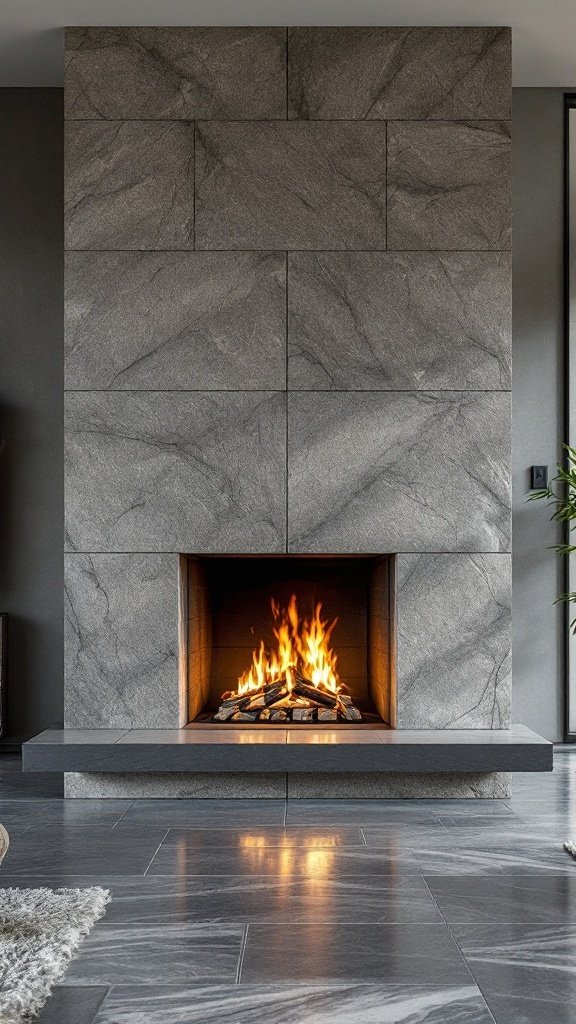
Stone is the natural choice for outdoor fireplaces. It weathers beautifully, it is impervious to the elements, and it connects the structure to the landscape in a way that no other material can.
A well-designed outdoor stone fireplace becomes the anchor point for an entire garden living space. Surround it with generous seating — deep sofas with weather-resistant cushions, or chunky stone benches built into the surrounding structure — and you have created an outdoor room that is genuinely usable for much of the year. The fire provides warmth and light; the stone provides the sense of permanence and shelter that makes the space feel like a destination rather than just a garden corner.
11. Slim-Profile Stone Fireplace for Contemporary Spaces
Not every modern stone fireplace needs to be large-scale or dramatic. In smaller rooms, or in spaces where the architecture is already doing a lot of the heavy lifting, a slim-profile stone fireplace — with a minimal surround, a compact firebox, and restrained detailing — can be exactly right.
Think of a single slab of honed limestone, perhaps 150mm wide, framing a simple gas fire. Or a thin band of brushed granite around a small, elegant insert. The stone is present, it adds quality and authenticity, but it does not dominate. This kind of quiet confidence is its own kind of sophisticated.
12. Stone Fireplace with Built-In Alcoves
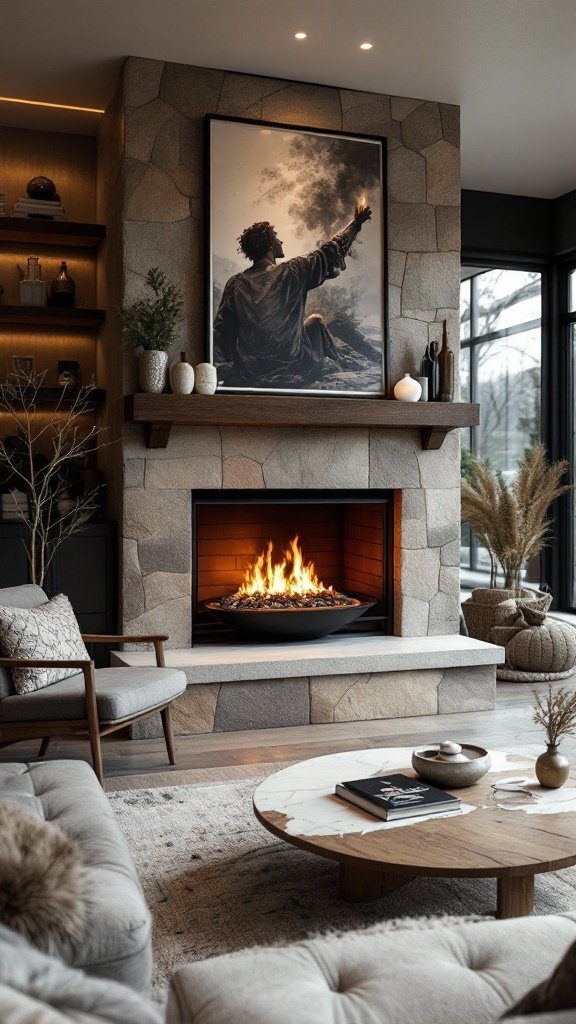
Flanking a stone fireplace with built-in alcoves — either open shelving niches or cupboard spaces — creates a unified fireplace wall that feels architecturally resolved rather than improvised.
The alcoves provide practical storage and display space, and they frame the fireplace in a way that gives it visual weight and importance. For a modern look, have the alcoves lined in the same stone as the fireplace surround, or contrast them with painted timber shelving. Keep the styling of the alcoves simple and deliberate — a few well-chosen books, a ceramic or two, perhaps a trailing plant.
Choosing the Right Stone for Your Fireplace
With so many options available, choosing the right stone for your fireplace can feel overwhelming. Here is a quick guide to the most popular choices and what they work best for.
- Limestone: Warm, soft, and versatile. Available in a wide range of colours from creamy white to deep grey. Hones to a beautiful matte finish and suits both traditional and contemporary designs. One of the most popular choices for modern fireplace surrounds.
- Marble: The premium choice. Marble’s characteristic veining makes every piece unique, and its ability to be polished to a mirror finish gives it an unmatched sense of luxury. Best suited to formal or high-end contemporary interiors. Requires sealing and careful maintenance.
- Slate: Naturally split into thin layers with a distinctive textural surface. Almost always dark in colour — grey, blue-grey, or charcoal. Excellent for contemporary and industrial-inspired designs. Very durable and low-maintenance.
- Sandstone: Warm buff and golden tones. Slightly softer than limestone and less suitable for polished finishes, but beautiful when used in its natural, textured state. Works particularly well in rural and country-style interiors.
- Quartzite: A metamorphic stone with a sparkling, crystalline surface. Extremely hard and durable. Available in whites, greys, and warm gold tones. One of the more expensive options but produces spectacular results.
Whichever stone you choose, always source it from a reputable supplier and, ideally, see it in person before committing. Stone can look very different in a showroom under artificial light compared to how it will look in your home in natural daylight.
Practical Tips Before You Start
A stone fireplace is a significant investment, both financially and in terms of the disruption involved in installation. Here are a few practical points to bear in mind before you begin.
- Engage a specialist early. Stone fireplace installation — especially when structural work is involved — requires specialist skills. Find a company with a strong portfolio of completed projects and ask for references.
- Check building regulations. Any work involving a fireplace or chimney in the UK must comply with Building Regulations Part J. If you are in a listed building or conservation area, you may also need planning permission.
- Consider the weight. Natural stone is heavy. Your floor structure may need to be assessed and potentially reinforced before a substantial stone fireplace installation can proceed, particularly in upper-floor rooms or older properties.
- Plan your flue. Whether you are connecting to an existing chimney, lining an existing flue, or installing a new twin-wall flue system, this needs to be planned and installed correctly. Always use a HETAS-registered engineer for solid-fuel installations.
Seal and protect your stone. Most natural stones used in fireplace settings benefit from sealing to prevent staining and moisture ingress. Your supplier or installer will advise on the right product for your specific stone.
Final Thoughts
Stone fireplaces have endured for thousands of years because they are simply very, very good at what they do. They provide heat, they create beauty, and they bring a sense of solidity and permanence to a home that nothing else quite matches.
The 17 ideas in this guide cover an enormous range of styles, from the boldly dramatic to the quietly refined. Some will suit period properties; others are clearly at home in the most contemporary of new builds. But all of them share a common quality: an understanding that when stone and fire come together with genuine care and skill, the result is something genuinely special.
Take your time, do your research, and invest in quality — both in the stone itself and in the people who install it. A stone fireplace is not a piece of furniture you replace after a few years. Get it right, and it will be one of the defining features of your home for generations.
Now find your stone, and light your fire.