
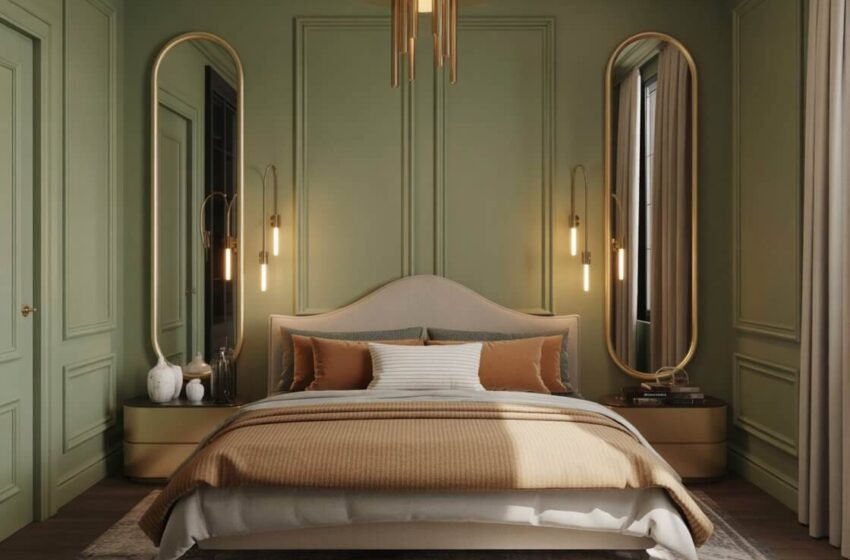
There are colours that follow trends, and then there are colours that transcend them. Sage green firmly belongs in the second category. It has been quietly showing up in the most beautiful bedrooms on the internet for years now, and rather than fading like a passing fad, it just keeps growing in popularity. There is a reason for that.
Sage green sits in a very particular sweet spot. It is earthy enough to feel grounded and natural, muted enough to feel genuinely restful, and just complex enough in its undertones to feel sophisticated rather than safe. In a bedroom — a space that is supposed to be a refuge from the noise and pace of daily life — those qualities matter enormously.
The other brilliant thing about sage green is how forgiving it is to work with. It pairs beautifully with warm neutrals, natural wood, crisp white, deep forest green, blush pink, terracotta, and aged brass. It works in tiny rooms and vast master suites. It suits minimalist Scandinavian schemes and warmly layered bohemian interiors in equal measure.
The Classic Sage Green Accent Wall
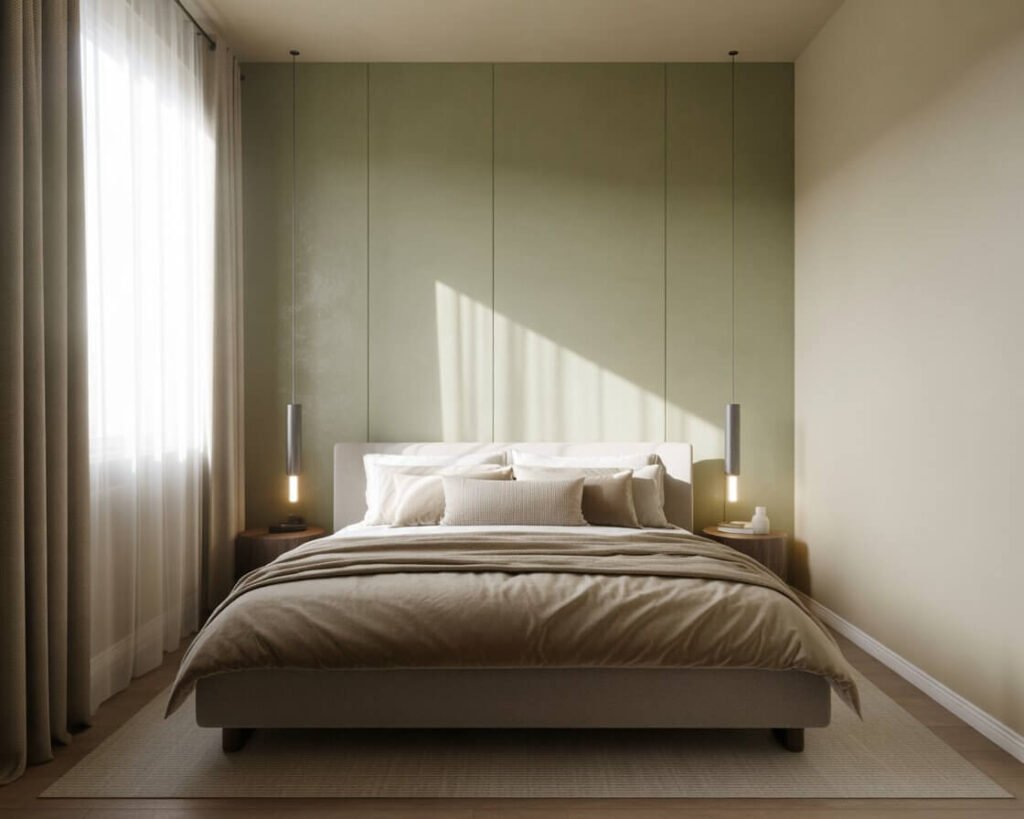
If you are new to sage green and want to start somewhere achievable, the accent wall is your best friend. Paint the wall behind your bed head-to-toe in sage, leave the remaining three walls in white or a warm off-white, and you will have a bedroom that looks genuinely considered for minimal effort and cost.
The reason the wall behind the headboard works so well is structural: it frames the bed beautifully, reinforcing it as the natural focal point of the room. Choose a shade with slightly grey undertones for a more sophisticated, contemporary feel, or one with warmer yellow-green undertones if you want something slightly more earthy and cosy.
Sage Green and White — The Freshest Combination
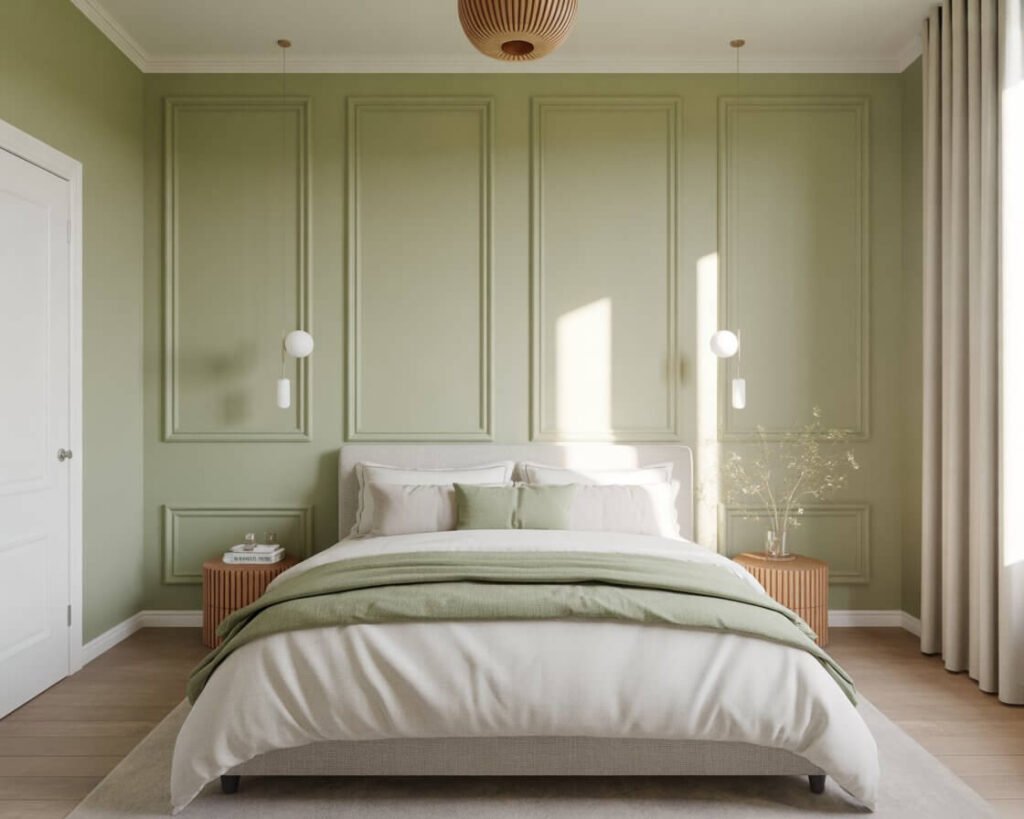
Sage green paired with crisp white is one of those combinations that simply cannot go wrong. White lifts the sage, stops it from feeling heavy, and brings a clean brightness to the space that feels effortlessly modern. It is the bedroom equivalent of a white linen shirt — timeless, unfussy, and always right.
For the best results, think about the ratio. Sage green walls with white woodwork, white ceiling, and largely white bedding gives you a fresh, airy space with the green as a considered backdrop. Alternatively, white walls with sage green bedding, curtains, and a few carefully chosen accessories gives you something softer and easier to change when the mood takes you.
Sage Green Bedding as an Easy First Step
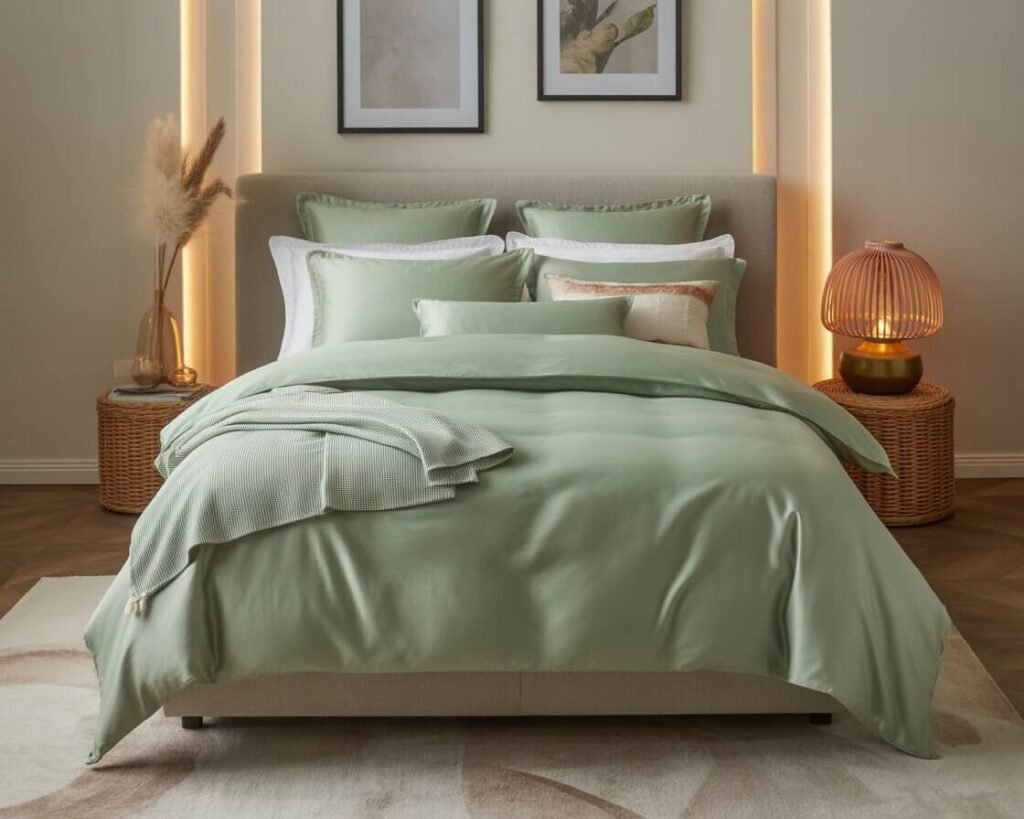
Not ready to commit to painting? Fair enough. Swapping your bedding for sage green options is one of the most immediate and low-risk ways to introduce the colour, and the effect can be surprisingly transformative.
The key is choosing quality over novelty. Look for natural fibres — washed linen or 100% cotton — rather than synthetic alternatives. They have a much softer, more lived-in quality that suits the gentle, organic nature of sage green perfectly. Layer different tones within the green family — a slightly lighter duvet cover, slightly deeper pillowcases, a muted sage throw — for a bed that looks genuinely inviting rather than flat.
Sage Green with Natural Wood — A Match Made for Calm
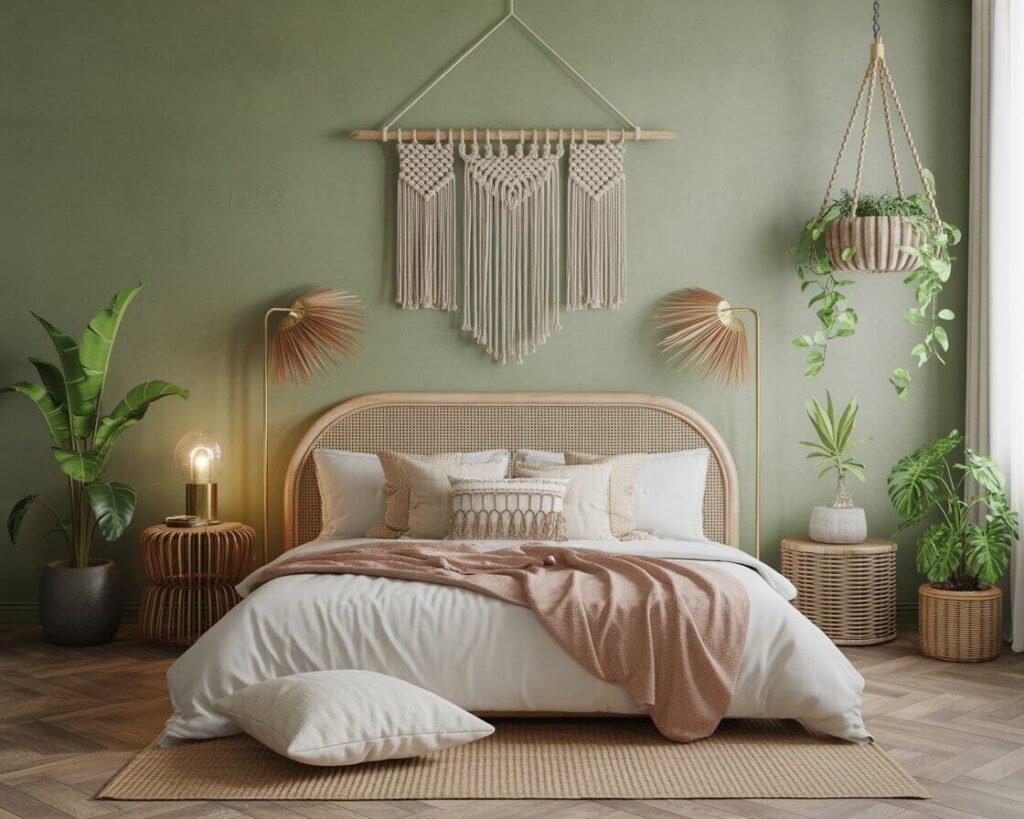
Sage green and natural wood are perhaps the single most harmonious pairing in the sage green canon. Together they create a bedroom that feels genuinely connected to the natural world — calm, organic, and beautifully warm without being overdone.
Light oak or ash floors and furniture work brilliantly against sage walls. Darker walnut tones create more drama and depth. Even small wooden elements — a bedside table, a headboard, a picture frame or two — are enough to ground the sage and stop it from feeling cold. If you are starting a bedroom from scratch, this is arguably the most reliable and enduringly beautiful combination you can build around.
Bohemian Sage Green — Layered, Lived-In, and Lovely
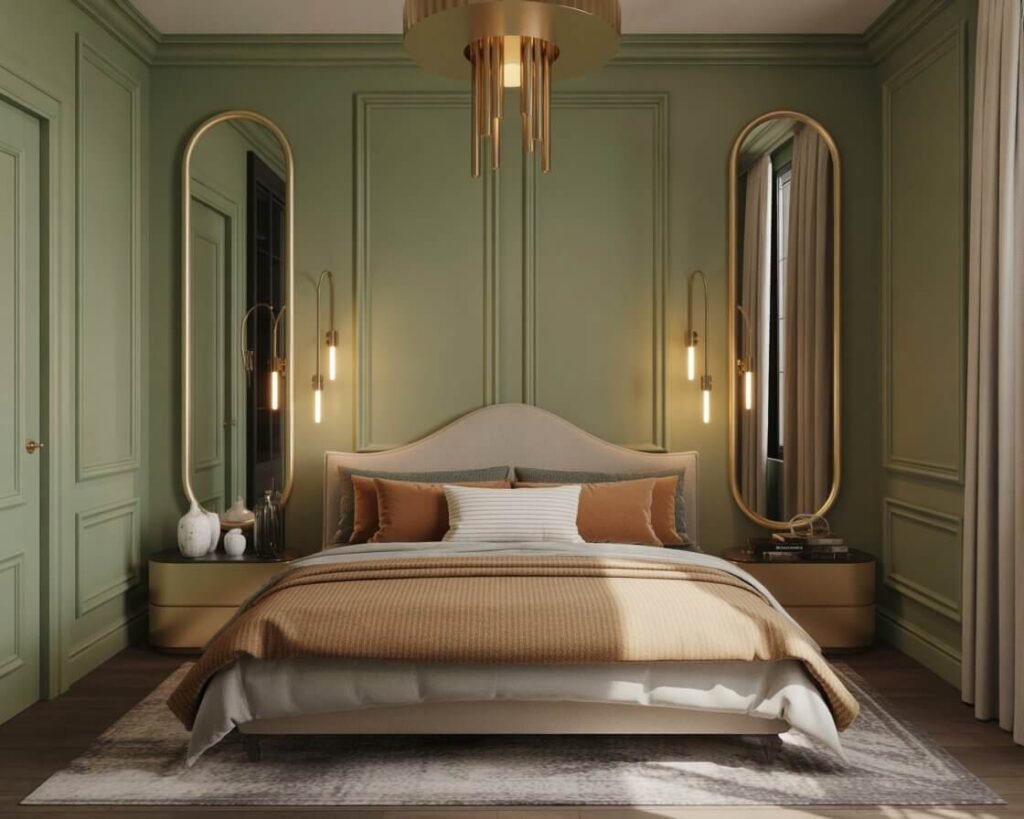
Sage green is one of the best backdrops for a bohemian-inspired bedroom, precisely because it shares the same earthy, nature-connected philosophy. Against sage walls, rattan furniture, macramé wall hangings, hand-thrown ceramics, and trailing plants look entirely at home rather than eclectic for eclectic’s sake.
Do not be afraid of pattern and texture in a boho sage bedroom. Embroidered cushions, patterned kilim rugs, linen and cotton throws in layered tones — sage is muted enough to hold all of that together without the space feeling chaotic. The rule of thumb is to keep the walls in a single consistent sage and let the accessories do the talking.
Sage Green and Gold Accents
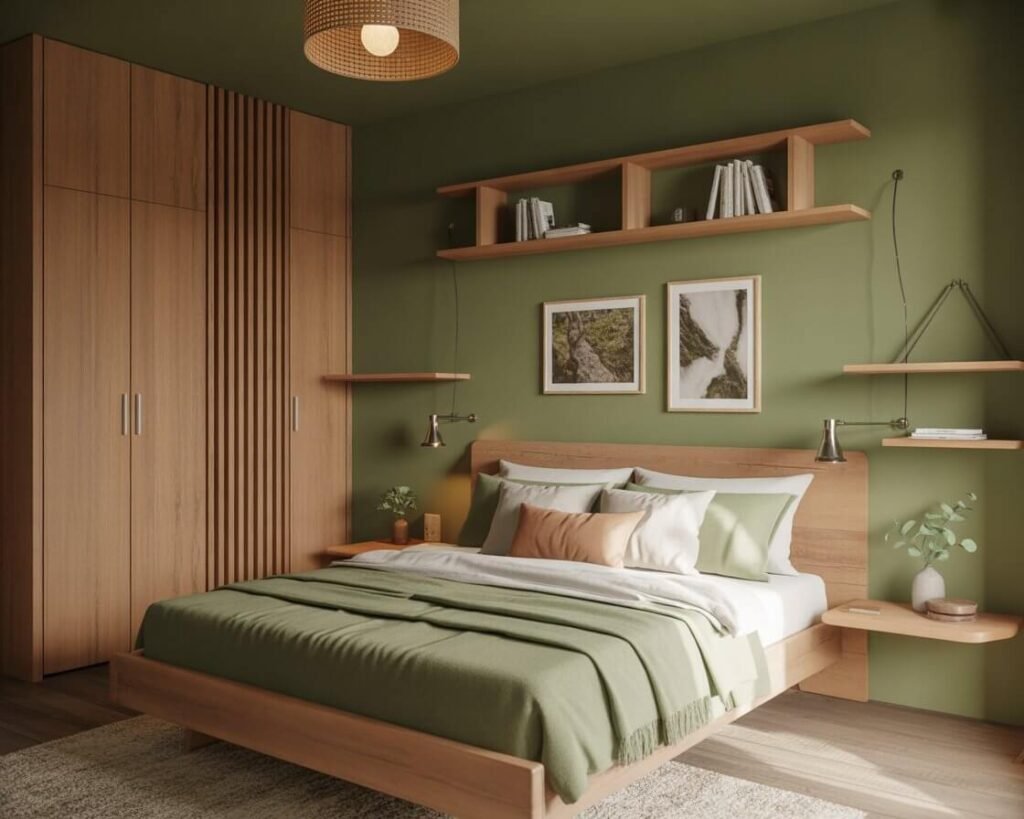
If you want your sage green bedroom to feel genuinely luxurious, gold is your best friend. The warm, rich tones of aged brass or matte gold sit against sage in a way that feels inherently elevated — not flashy or overdone, but quietly, confidently expensive.
The key is restraint. You do not need much gold for it to register. A pair of brass bedside lamps, a few gold picture frames, a gilded mirror above a console, or gold-toned handles on a painted wardrobe — any of these is sufficient. Let the sage carry the room and use the gold as punctuation rather than a full stop.
All-Over Sage Green — Walls, Ceiling, and Trim
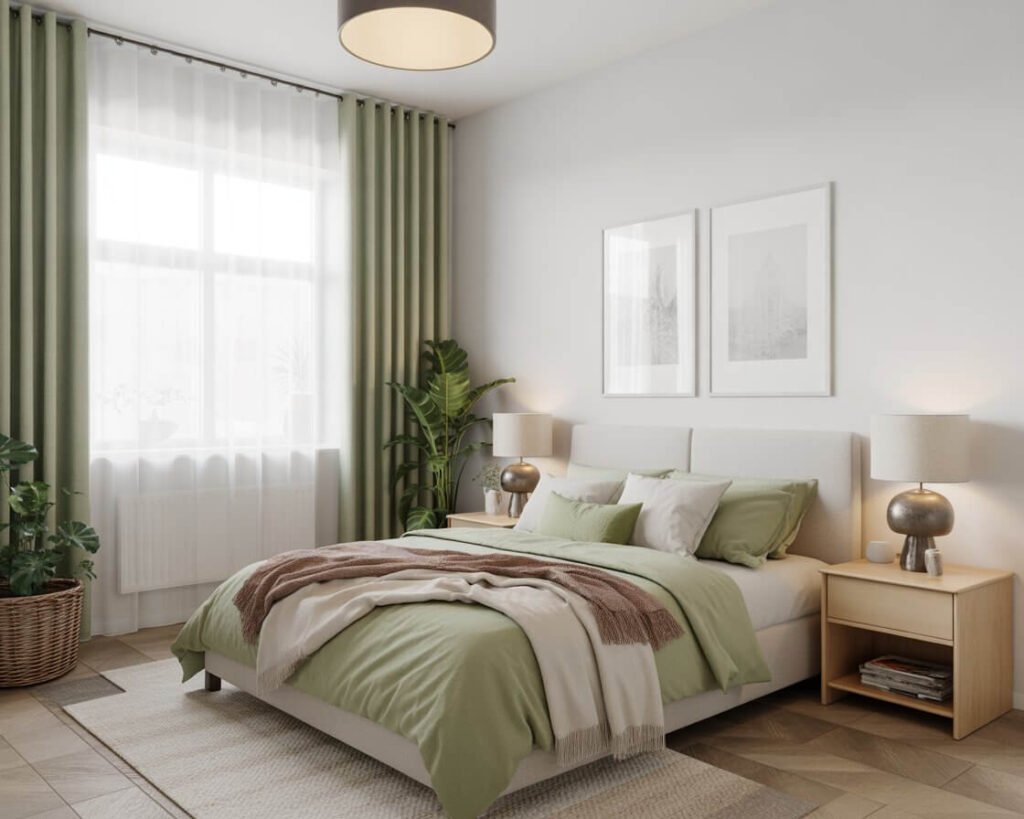
For those who want to fully commit, painting every surface in the same sage green — walls, ceiling, and woodwork alike — creates a deeply immersive, enveloping effect that is difficult to achieve any other way. Interior designers sometimes call this ‘drenching’ a room in colour, and when it is done well, it is extraordinary.
The result is a space that feels like stepping inside a soft, green world. All the usual visual noise created by contrasting ceiling, walls, and trim disappears, and what is left is an almost meditative quality that is perfectly suited to a bedroom. Use a satin or eggshell finish for a slightly more interesting surface than flat matt, and choose a shade that you genuinely love — because it will be everywhere.
Sage Green with Blush Pink
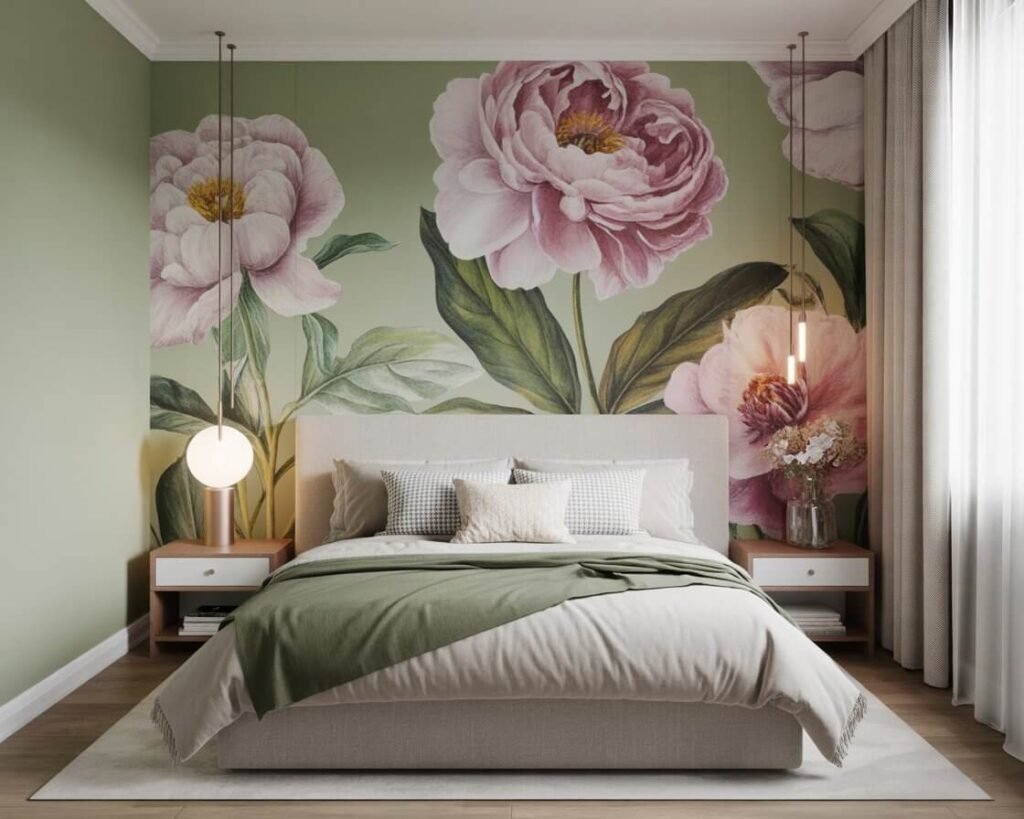
Sage and blush is a combination that manages to feel simultaneously soft and sophisticated. The green cools and grounds the warmth of the pink; the pink adds a tender, gentle warmth that prevents the sage from feeling too serious. Together they create a bedroom that is genuinely serene.
This palette works especially well in a feminine bedroom, but it is far from exclusively so — the muted, sophisticated versions of both colours are miles from anything that could be described as overly saccharine. Think dusty rose rather than candy pink, and grey-sage rather than bright mint, and the result is something that would feel at home in the most considered contemporary interior.
Sage Green Feature Headboard
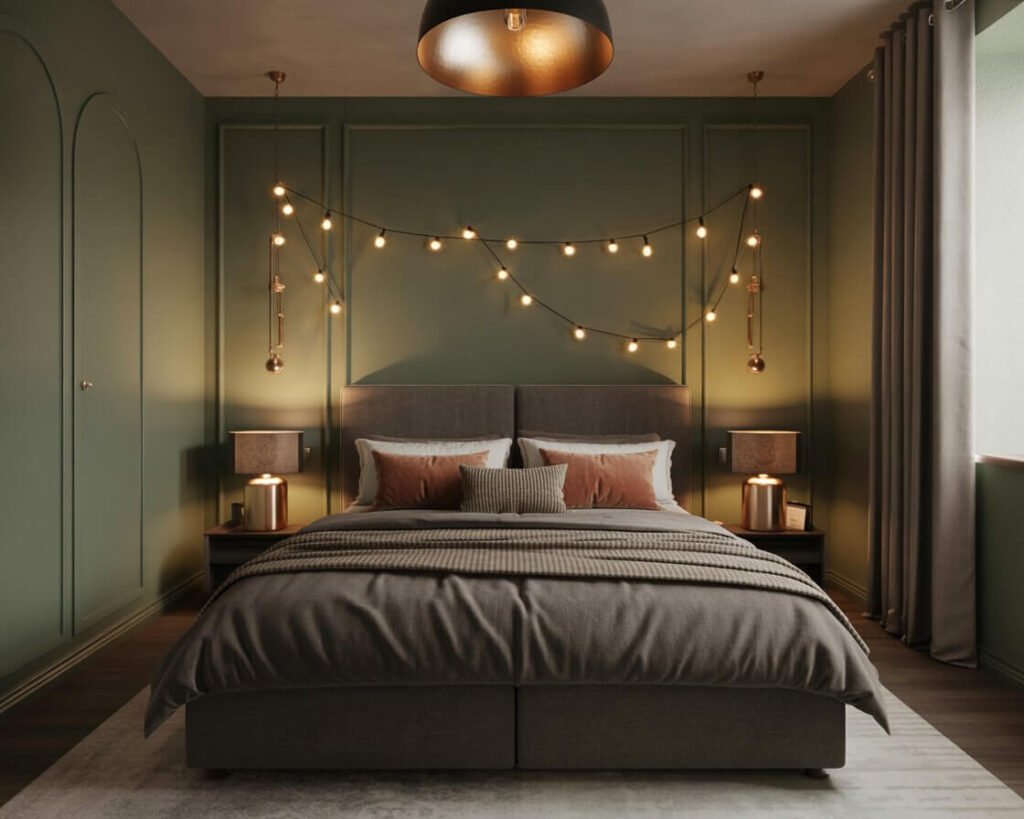
If a full repaint feels like a step too far, an upholstered headboard in sage green velvet or linen is a beautifully contained way to introduce the colour. A large, statement headboard in the right shade of sage can anchor the entire room and shift the palette considerably without requiring any structural changes.
Velvet in particular does extraordinary things with sage green. The way velvet catches and reflects light means the colour shifts subtly as you move around the room, from something almost silvery in direct light to a rich, deep green in shadow. It brings a luxury quality to a bedroom that is hard to replicate with any other material.
Sage Green Curtains and Soft Furnishings
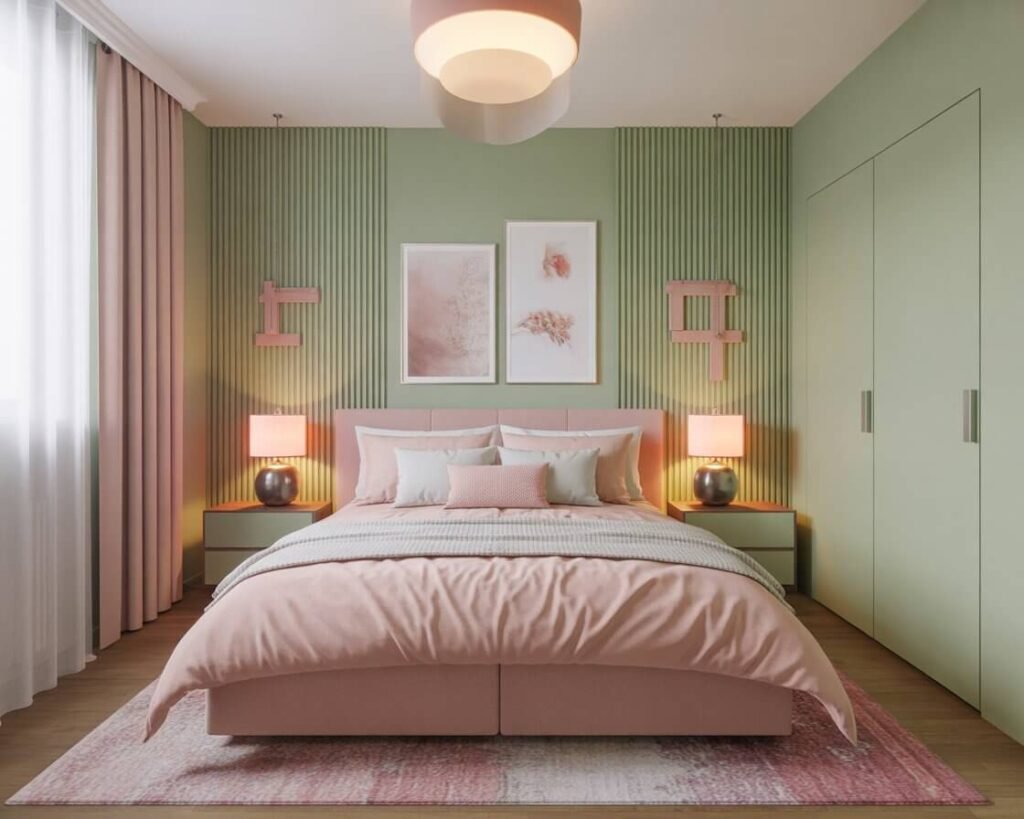
Curtains are one of the most underestimated elements in bedroom design, partly because they cover such a large area of wall and window. Switching to sage green curtains — especially floor-to-ceiling panels in linen or a linen-look fabric — can fundamentally shift the mood of a room without a single stroke of paint.
The effect is particularly beautiful when the curtains pool slightly on the floor. That extra length creates a sense of generosity and softness that immediately makes a room feel more considered and expensive. Pair sage curtains with white or off-white walls for a clean, contemporary look, or with matching sage walls for a more immersive, cocooning effect.
Sage Green and Terracotta — An Earthy, Grounded Pairing
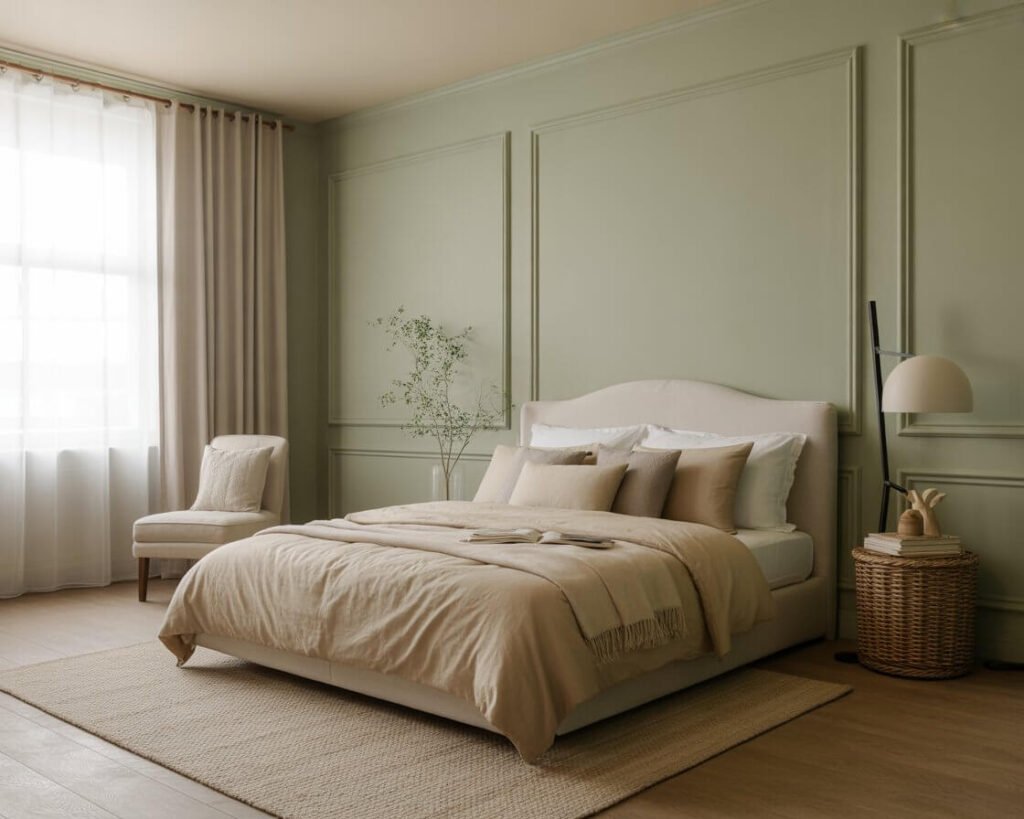
Terracotta and sage green together bring the feeling of the natural landscape indoors in a way that is warm, grounded, and deeply appealing. The red-orange undertones of terracotta and the cool grey-green of sage sit opposite each other on the colour wheel, which creates a natural visual tension that keeps the eye interested.
Introduce terracotta through accessories rather than large areas of paint — a terracotta-toned rug, a cluster of unglazed ceramic pots, a few cushions in warm brick tones. Against sage walls, these warm earthy notes glow beautifully. Add a few dried botanical stems or pampas grass in natural tones and the whole scheme comes together with real warmth.
Sage Green in a Minimalist Bedroom
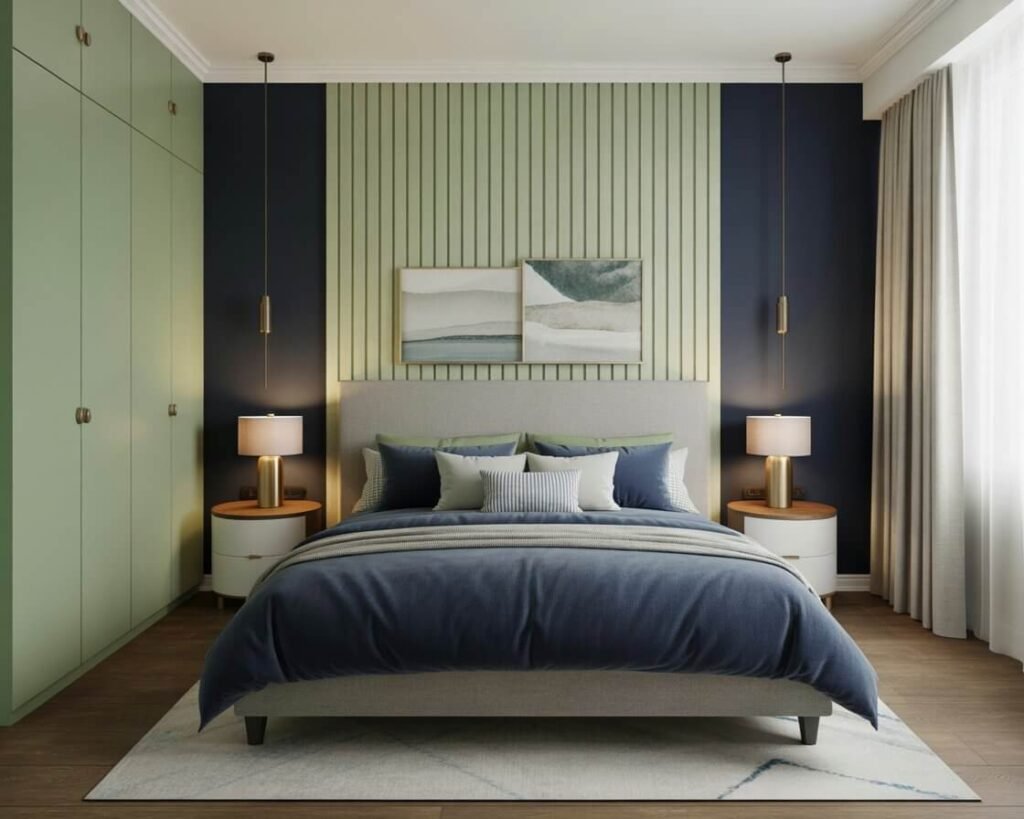
Sage green and minimalist design are a very natural fit. The colour’s inherent restraint — its refusal to shout or dominate — suits the minimalist philosophy of doing more with less. In a pared-back bedroom with clean lines, considered negative space, and a disciplined approach to what is and is not in the room, sage green provides all the warmth and personality the space needs without cluttering it.
Keep surfaces clear, stick to two or three tones at most, and invest in a few genuinely beautiful objects rather than filling the room with many mediocre ones. A sage green bedroom in the minimalist tradition should feel like it has been edited rather than decorated.
Sage Green Painted Furniture
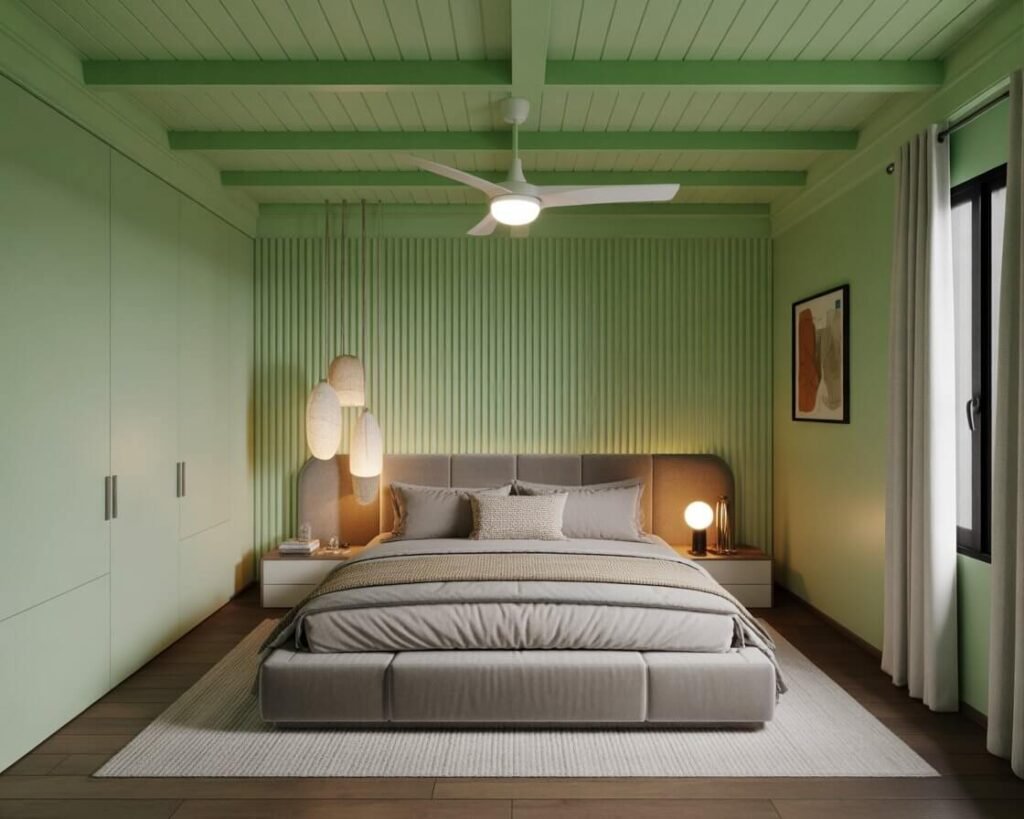
If your bedroom furniture is looking tired or generic, painting it in sage green is one of the most cost-effective transformations available. A chest of drawers, a wardrobe, or a bedside table painted in a carefully chosen sage creates an instant bespoke quality that off-the-shelf furniture simply does not have.
This approach works especially well with older furniture that has good bones but dated aesthetics. Sand, prime, and use a furniture-specific paint for the most durable result. Finish with aged brass or ceramic handles and the result is a piece that looks entirely intentional and considerably more expensive than it actually was.
Sage Green with Dark Forest Green — Tonal and Dramatic
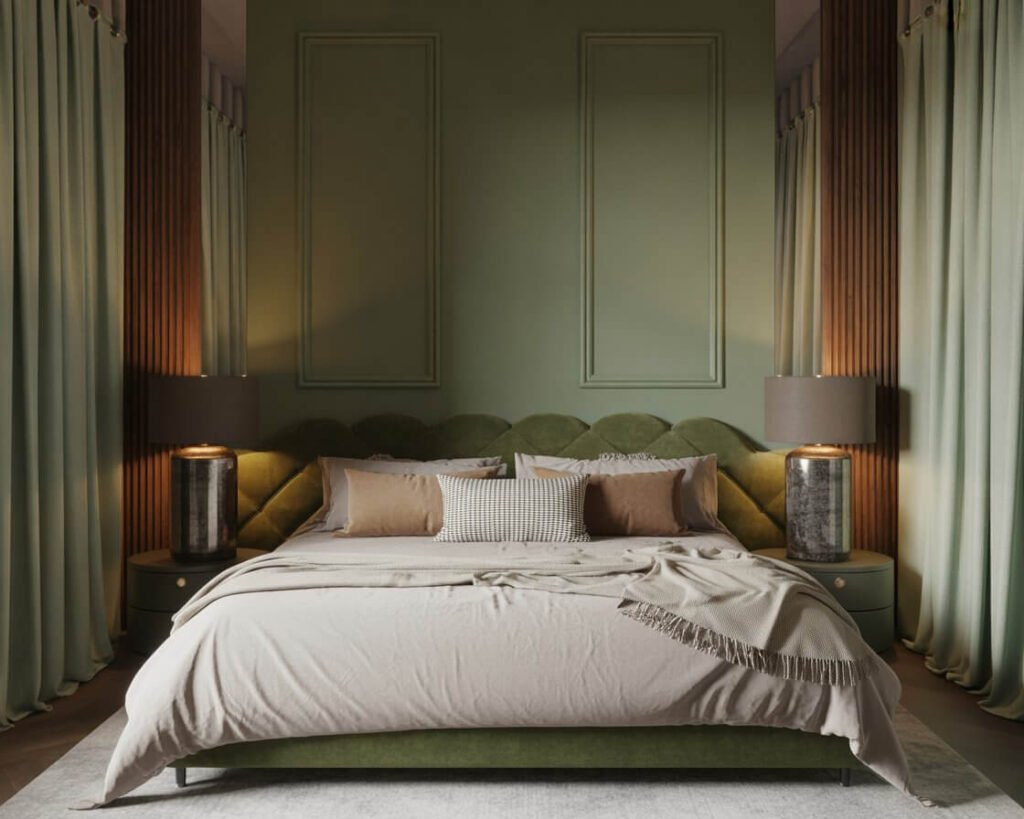
For those who love colour but want to avoid the safe, predictable route, a tonal green bedroom — sage on the walls combined with deeper forest green in the soft furnishings, bedding, and curtains — creates something genuinely dramatic and immersive.
The key is contrast within the tonal family. Keep the walls in a lighter, more muted sage and bring in the drama through the textiles. A deep bottle green velvet bedspread, forest green velvet curtains, and sage green walls create a room that feels like being inside a beautiful, sheltered garden. Ground the scheme with natural wood tones and warm lighting.
Sage Green with Black Accents
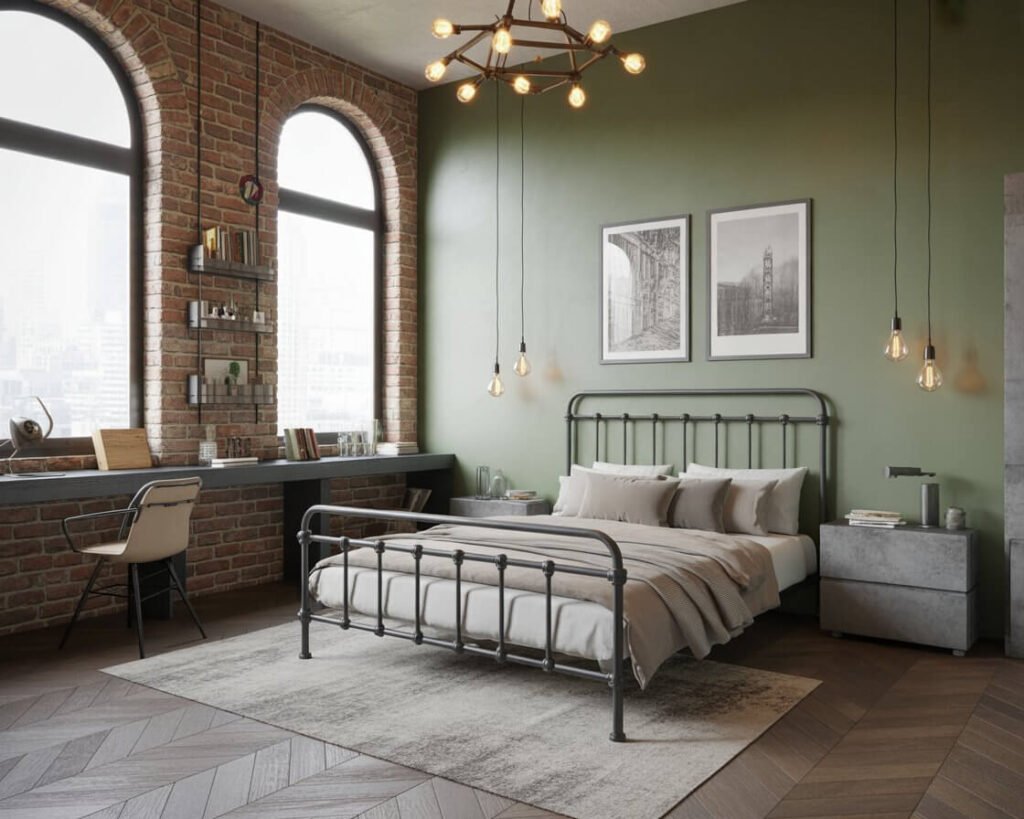
Black is the most grounding accent colour you can use with sage green, and it stops the palette from feeling too soft or insubstantial. A few well-placed black elements — a slender black bedframe, black picture frames, a matte black pendant light, black hardware on a wardrobe — give a sage green bedroom a crispness and confidence that elevates it considerably.
This combination works especially well in a more contemporary or Japandi-influenced interior. The restraint, the clean lines, and the limited palette all feel genuinely considered. Keep the black minimal and intentional — it is punctuation, not a co-lead.
Sage Green in a Small Bedroom
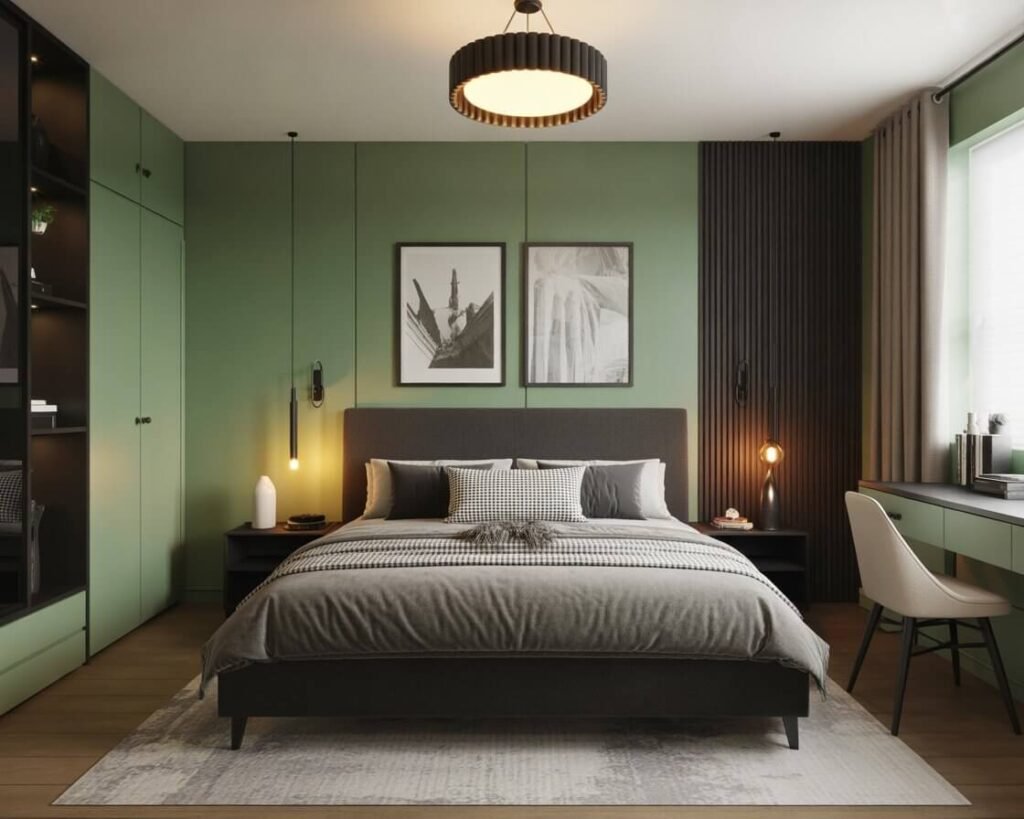
There is a common fear that dark or saturated colours will make a small room feel even smaller. Sage green is one of the most compelling arguments against this received wisdom. Because it is so closely associated with the outdoors and with open, natural spaces, it tends to make a room feel more expansive rather than more enclosed, even in smaller spaces.
In a small bedroom, sage green on all four walls with a white ceiling creates a space that feels like a beautifully contained jewel box rather than a cramped afterthought. Add a large mirror to amplify the light, use pale natural wood for any furniture, and keep the bedding simple and light-toned.
Colours That Work Beautifully Alongside Sage Green
One of sage green’s greatest strengths is how versatile it is as a base colour. Here is a quick guide to the combinations that consistently deliver the best results.
- White and off-white: The most reliable combination. Crisp white creates a fresh, contemporary feel; warmer off-whites like linen or cream give a softer, more relaxed result.
- Natural wood tones: Light oak, ash, bamboo, and rattan all pair beautifully with sage. Darker walnut adds drama. Avoid very orange-toned pine, which can clash.
- Blush and dusty pink: For a soft, feminine, deeply restful scheme. Keep both colours muted rather than bright.
- Terracotta and burnt orange: Earthy and warm. Best introduced through accessories and textiles rather than large painted areas.
- Gold and aged brass: Adds luxury and warmth. Use sparingly — a little goes a very long way.
- Deep forest green: For a tonal, dramatic, immersive effect. Keep sage on the walls and bring in the deeper tones through soft furnishings.
- Black and charcoal: Grounds and sharpens the palette. Best used as an accent in hardware, frames, and lighting rather than in large areas.
What to avoid: very bright or saturated colours tend to fight with sage rather than complement it. Avoid neon accents, very bright primary colours, and anything that feels sharp or highly contrasted against the green’s gentle, muted quality.
Practical Tips for Getting Your Sage Green Right
Even with the best ideas, sage green can go wrong if a few practical points are overlooked. Here is what to keep in mind.
- Always test paint on your actual walls. Sage green is particularly sensitive to the light conditions in your specific room. A shade that looks perfect in a north-facing showroom might look completely different on your south-facing bedroom walls in afternoon sun. Test large swatches and live with them for a few days before committing.
- Consider the undertones. Sage green shades vary considerably in their undertones. Some lean grey and cool; others have yellow or olive undertones that read much warmer. Your existing furniture, flooring, and the light in your room should inform which undertone family you choose.
- Choose the right paint finish. For bedroom walls, an eggshell or satin finish is generally preferable to a flat matt. It is slightly more durable, easier to clean, and catches the light in a way that adds a subtle quality to the finished result.
- Do not underestimate the power of lighting. Sage green looks very different under cool daylight bulbs compared to warm incandescent or LED equivalents. Warm-toned lighting (around 2700K) brings out the best in sage green, making it feel richer and more enveloping.
- Start smaller if you are unsure. Bedding, curtains, and accessories are all lower-commitment ways to test the colour before committing to paint. If you love how it feels in the room, you can always scale up.
One final thought on the practical side: sage green is a very liveable colour. Unlike some shades that start to feel oppressive after a few weeks, sage has a quality that most people find they grow more rather than less attached to over time. Trust it.
Final Thoughts
Sage green is one of those genuinely rare things in interior design: a colour that is simultaneously fashionable and timeless, bold enough to make a real impact and restrained enough to live with indefinitely. In a bedroom — a space that should be deeply personal, genuinely restorative, and completely your own — it is close to ideal.
The 18 ideas in this guide cover every level of commitment, from a simple bedding swap that costs very little and takes no time, to a fully realised sanctuary where every element has been chosen with care and intention. There is no wrong entry point. The most important thing is to choose the version that excites you and then do it properly.
Natural materials, warm lighting, a thoughtful mix of textures, and a palette built around the gentle, calming quality of sage green — that is the recipe. The rest is personal, and personal is exactly what a bedroom should be.
Now choose your shade, and make your room a place worth coming home to.