
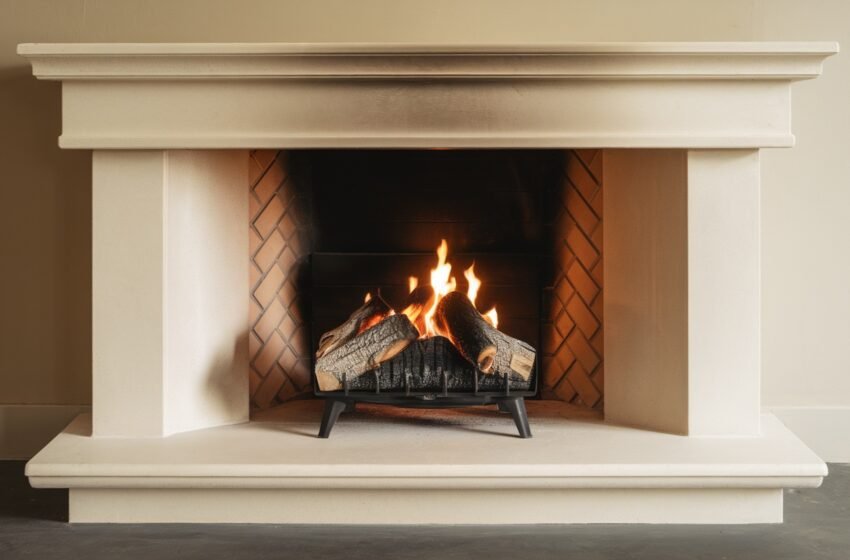
There is something almost magical about a wood-burning fireplace. The crackle of logs, the flickering amber glow, the faint scent of timber — it does not just heat a room, it transforms it. And the good news? You no longer have to choose between that primal warmth and a sleek, contemporary home aesthetic.
Modern wood burner fireplaces have come a very long way from the bulky, brick-and-mortar designs of old. Today’s options are refined, architectural, and genuinely stunning. Whether you are renovating a Victorian terrace, building a Scandinavian-inspired retreat, or simply looking to make a statement in your living room, there is a wood burner style out there that will fit perfectly.
In this guide, we have pulled together 15 of the most inspiring modern wood burner fireplace ideas — covering styles, placements, materials, and clever design tricks. Read on, get inspired, and find the look that speaks to your space.
1. The Floating Wall Fireplace
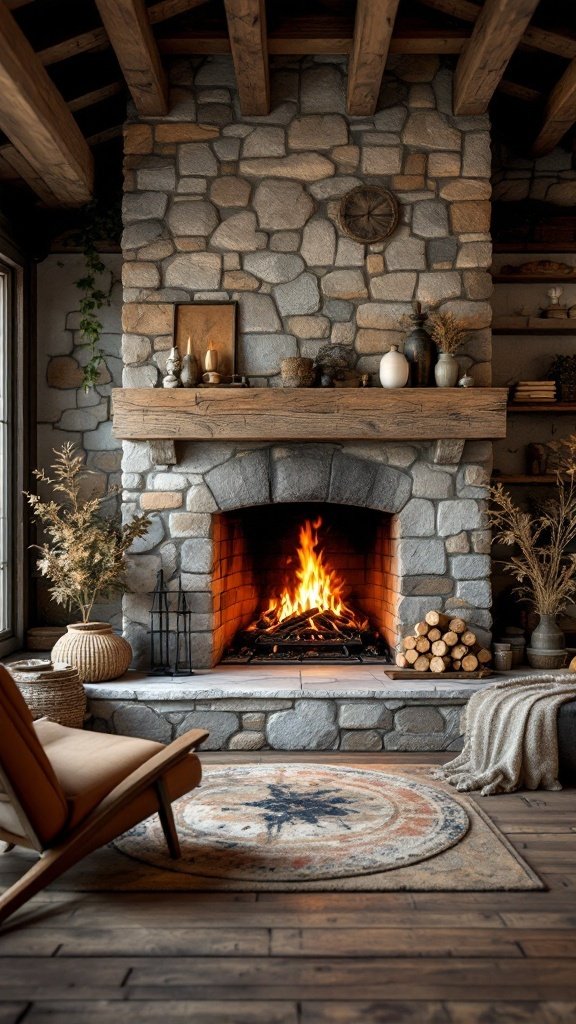
Wall-mounted wood burners that appear to float mid-wall are one of the defining looks of contemporary fireplace design. Suspended above the floor on a minimal bracket or recessed into a feature wall with no visible surround, they create a dramatic focal point without eating into floor space.
This works especially well in open-plan living spaces where you want the fireplace to be visible from multiple angles. Pair it with a plastered chimney breast painted in a deep, moody tone for maximum impact.
2. Fireplace with Built-In Shelving
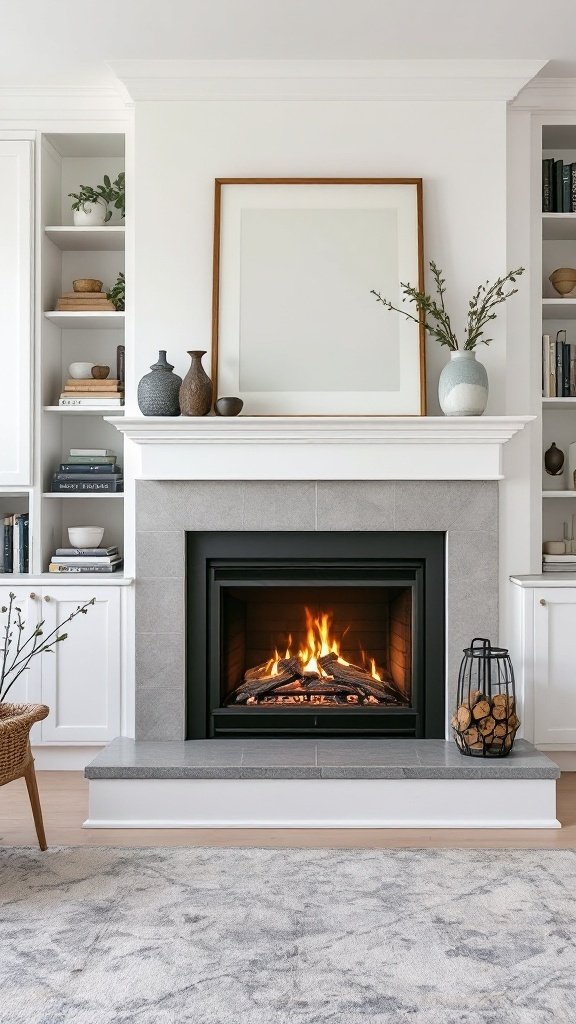
Flanking a wood burner with floor-to-ceiling built-in shelving is one of those design moves that never goes out of style. It looks considered and intentional while also being brilliantly practical.
Use the shelves to display a curated mix of books, ceramics, and trailing plants. Keep the wood burner itself simple — a matte black finish works beautifully against painted or timber-clad shelving. The key is to balance the shelving on both sides symmetrically so the fireplace sits perfectly centred.
3. The Rustic-Chic Stone Fireplace
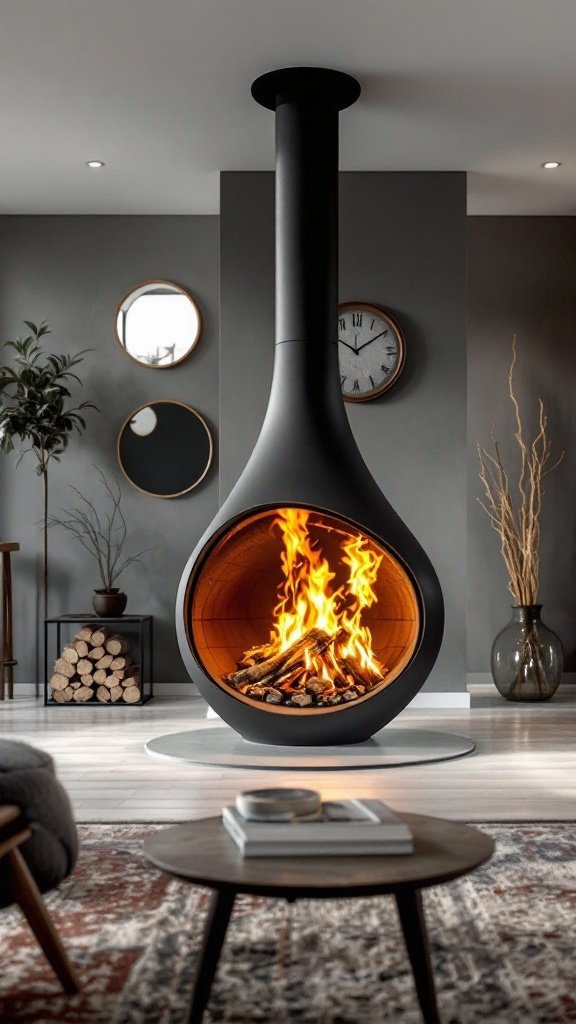
Natural stone and a wood burner are a combination that feels timeless rather than dated — especially when you approach the stonework with a modern eye. Think irregular limestone stacking, smooth slate panels, or textured sandstone rather than the over-worked, fussy stonework of the 1990s.
A chunky oak beam across the mantel grounds the look beautifully, and a sleek, contemporary stove in front of the stone creates a pleasing contrast between the raw and the refined. This is the style that works especially well in older properties or rural homes where you want to honour the architecture without feeling like you are living in a museum.
4. Open Concept Wood Burning Stove in a Kitchen-Diner
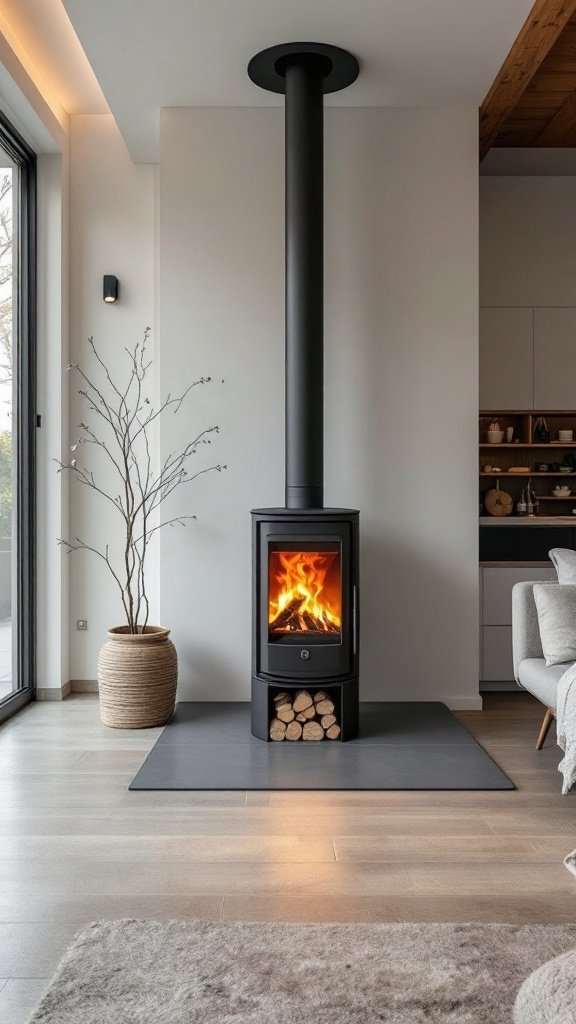
The wood burner is not just for the sitting room anymore. Installing one in an open-plan kitchen-diner is a bold move that pays off enormously in terms of atmosphere. Imagine gathering around the fire while something delicious simmers on the stove — it creates the kind of convivial, heart-of-the-home feeling that is very hard to manufacture artificially.
For this setting, freestanding cylindrical or pod-shaped stoves work particularly well. Their sculptural form makes them a design feature in their own right, and their compact footprint means they do not dominate a space that already has a lot going on.
5. The Sculptural Statement Stove
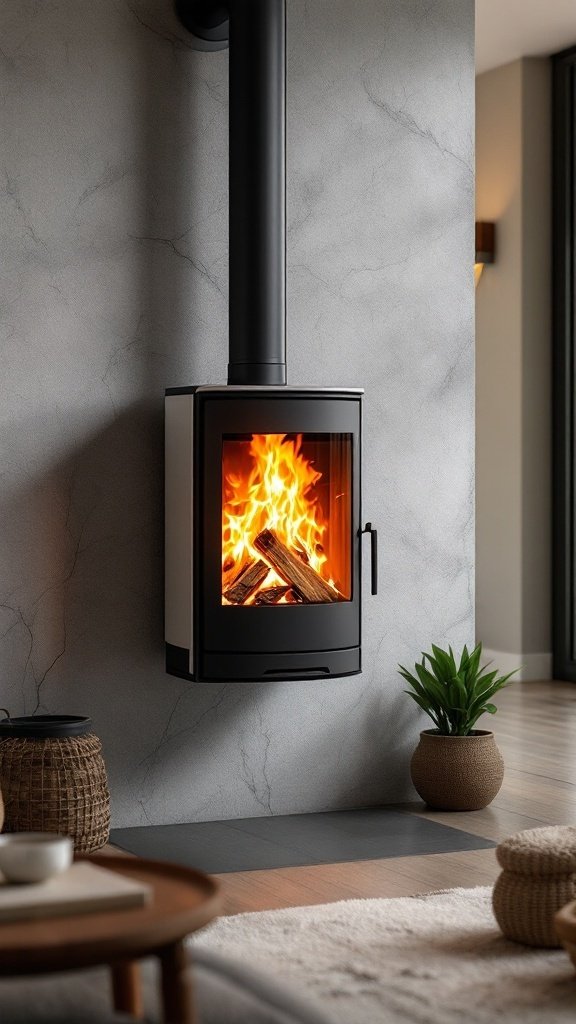
Some wood burners are genuinely more sculpture than appliance. Brands like Contura, Rais, and Morso produce stoves with such striking, considered forms that they function as centrepieces even when they are not lit.
If you are drawn to this approach, resist the urge to over-decorate around the stove. Let it breathe. A simple hearth of polished concrete or honed marble, a carefully stacked log store to one side, and perhaps a single ceramic vase. That’s all you need.
6. Double-Sided Indoor-Outdoor Fireplace
If you have the luxury of a home that connects seamlessly to an outdoor terrace or garden room, a double-sided wood burner is a genuinely magical feature. It allows you to enjoy the fire from both inside and outside simultaneously, making it the ultimate entertainer’s fireplace.
These installations require careful planning from a structural and building regulations perspective, so engage a specialist early. But when done well, the result is nothing short of breathtaking — flames visible through a glass panel that seems to dissolve the boundary between interior and exterior.
7. The Minimalist Inset Burner
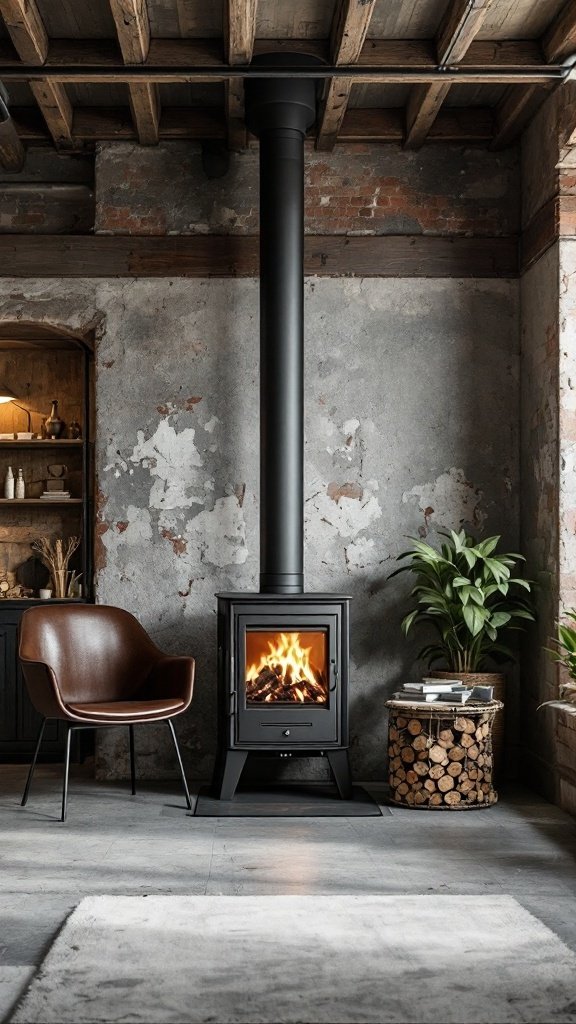
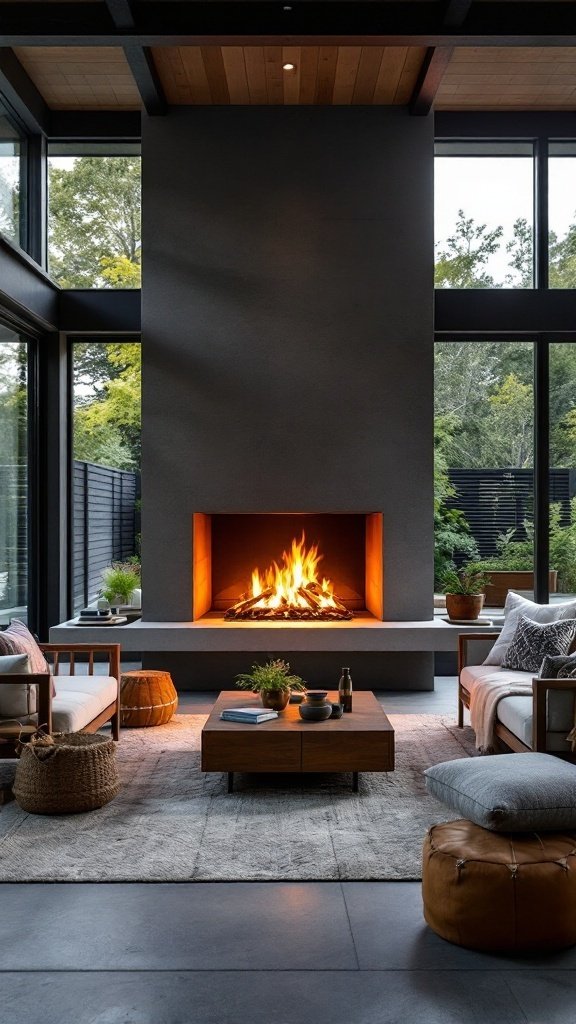
For those who favour a truly pared-back aesthetic, an inset wood burner — fitted flush into the wall with no visible surround or mantel whatsoever — is the ultimate expression of restraint. The fire is framed purely by the wall material, whether that is smooth render, polished plaster, or a solid slab of stone.
This works best in rooms where the architecture itself is the star of the show. Think double-height ceilings, floor-to-ceiling glazing, and clean, uncluttered surfaces. The fire becomes one element within a composed whole rather than the focal point fighting for attention.
8. Log Store as a Design Feature
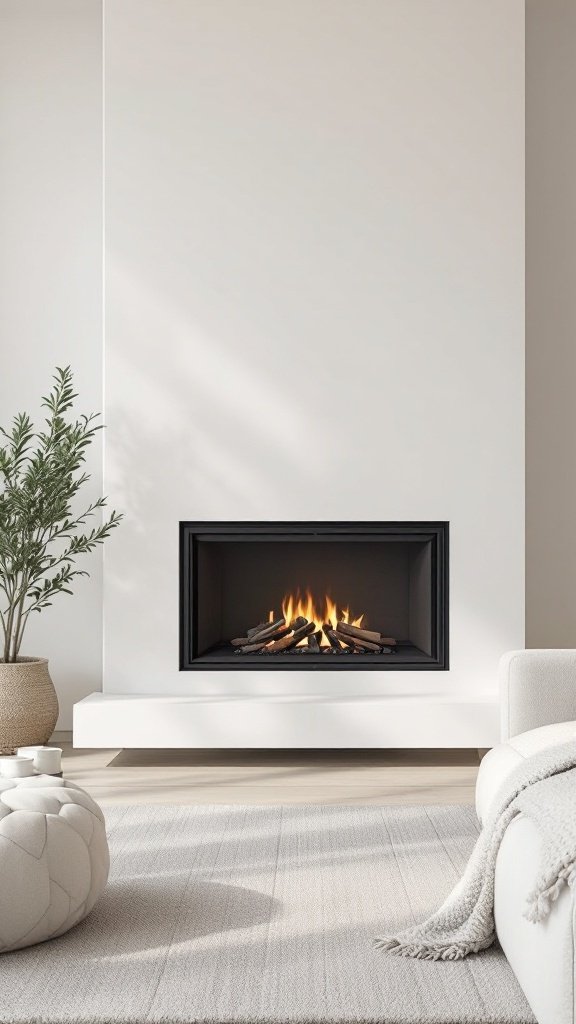
One aspect of wood burning that many homeowners overlook at the design stage is the log storage. A cluttered pile of logs shoved in a corner is a missed opportunity. Instead, think of your log store as an integral part of the fireplace zone.
Built-in log alcoves on either side of the hearth, a recessed niche beneath a floating stove, or an elegant powder-coated steel log basket that echoes the finish of the stove itself — any of these approaches turns a practical necessity into something genuinely attractive.
9. Concrete Surround and Hearth
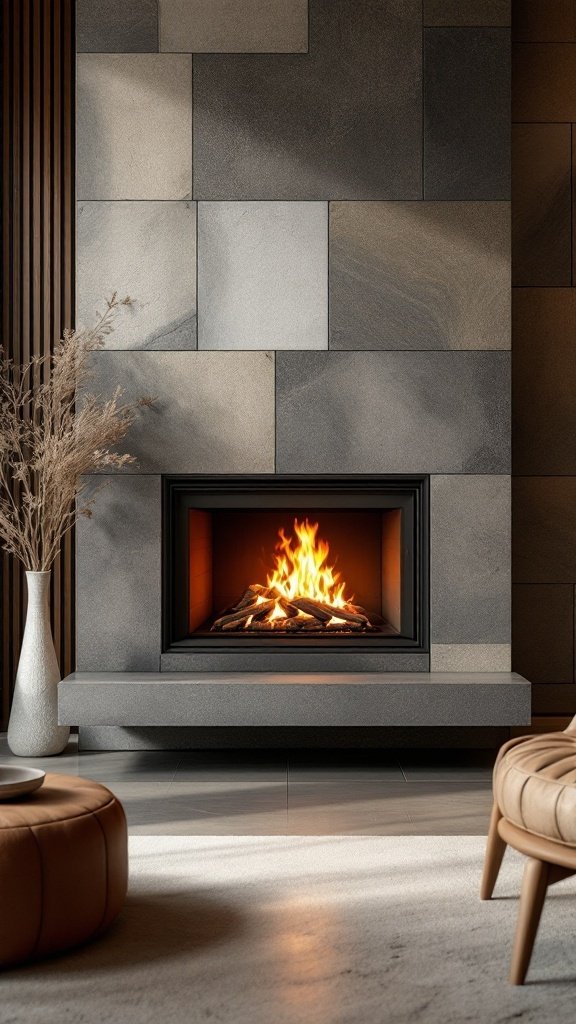
Polished or micro-cement surrounds have become hugely popular in contemporary fireplace design, and it is easy to see why. The material has a raw, industrial quality that sits beautifully alongside the warmth of real flames, and it can be cast into almost any form — from geometric and angular to softly rounded.
Poured concrete hearths also have the advantage of being extremely durable and heat-resistant. Keep the palette monochromatic — grey concrete, black stove, white walls — and the result is effortlessly chic.
10. Scandinavian Hygge-Style Wood Burner
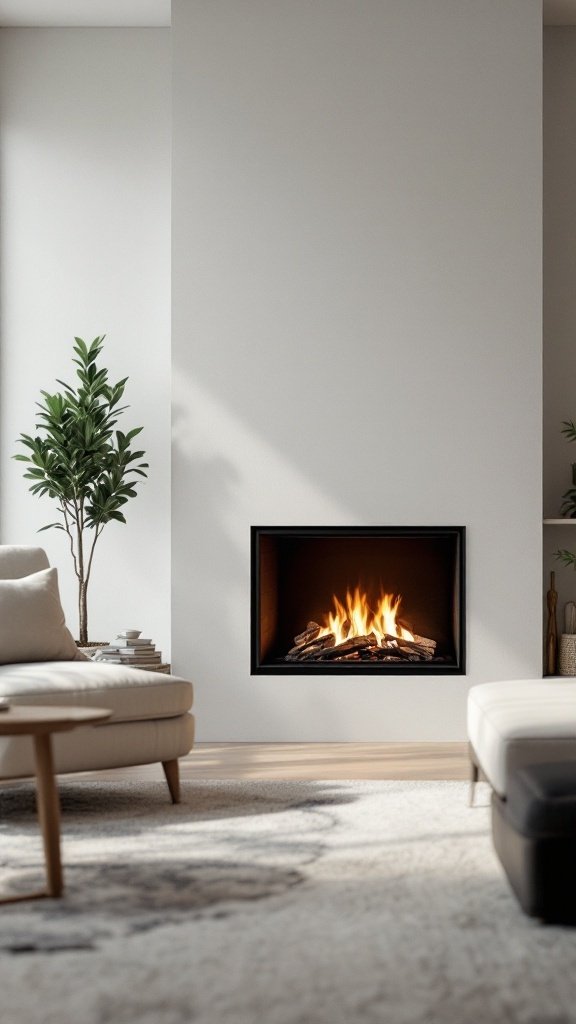
The Danish concept of hygge — that warm, cosy contentment you feel when surrounded by soft light, good company, and a roaring fire — has been enormously influential in interior design over the past decade. And a wood burner sits squarely at the heart of it.
To nail the Scandi hygge look, keep everything tactile and organic. A pale wood floor, a sheepskin throw draped over a low sofa, a cluster of pillar candles on the mantel, and a classic cylindrical stove in matte steel or enamel. The palette should be warm white, natural linen, and soft grey. Simple, honest, and deeply comforting.
Practical Things to Consider Before You Install
Choosing your ideal wood burner is the fun part. But there are some important practical considerations that should inform your decision-making from the outset.
- Building regulations and planning permission: In the UK, most wood burner installations fall under permitted development, but you will need to comply with Building Regulations Part J. If you live in a smoke control area, you will need to use an exempt appliance. Always check with your local authority before proceeding.
- Chimney and flue: Whether you are connecting to an existing chimney or installing a twin-wall flue system, the installation must be carried out by a HETAS-registered engineer. A poorly installed flue is a serious fire and carbon monoxide risk.
- Room size and stove output: A stove that is too large for a room will overheat the space and force you to run it at low temperatures, which causes tar and creosote build-up. Use a BTU calculator to match the stove’s kilowatt output to your room’s volume.
- Fuel sourcing: Where will your logs come from? Ideally you want well-seasoned hardwood — ash, oak, or beech — with a moisture content below 20%. Kiln-dried logs are the most convenient option and burn hottest and cleanest.
- Maintenance: A wood burner requires regular maintenance to stay safe and efficient — including annual chimney sweeping and periodic checking of door seals, rope gaskets, and firebricks. Factor this into your decision.
How to Choose the Right Style for Your Home
With so many options available, it can be genuinely difficult to know where to start. Here is a simple framework that might help.
Start with your architecture. The fireplace should feel like it belongs to the building, not like it has been imported from a different era or style. A Georgian townhouse will carry a traditional inset burner with a classic surround beautifully. A barn conversion suits raw materials and generous scale. A new-build apartment calls for something sleeker and more sculptural.
Then consider your existing palette and materials. If your home already uses a lot of timber, a wood-clad fireplace surround will feel cohesive. If you have gone for a monochrome, minimal scheme, a matte black inset burner will slot straight in without disruption.
Finally, think about how you actually live. Do you want the fire to be the gathering point of the room, the place where everyone instinctively congregates? Then go large and bold. Or do you want it to be a quiet, ambient background presence that you enjoy while reading or working? Then a smaller, understated model might suit you better.
Final Thoughts
A modern wood burner fireplace is one of the most rewarding investments you can make in your home. Done well, it is simultaneously practical and beautiful — a genuine centrepiece that adds warmth (both literal and figurative), character, and value to your space.
The ideas in this guide span an enormous range of styles, budgets, and architectural contexts. Whether you are drawn to the raw simplicity of a Scandinavian pod stove, the drama of a dark-on-dark statement fireplace, or the timeless elegance of natural stone with an oak beam, there is a wood burner design out there that will feel completely right for your home.
Take your time, do your research, consult a specialist installer, and then commit fully to the design. A wood burner is not just a heating appliance — it is a feature that will define your home for decades to come. Get it right, and every winter evening for the rest of your life will be a little bit better for it.