
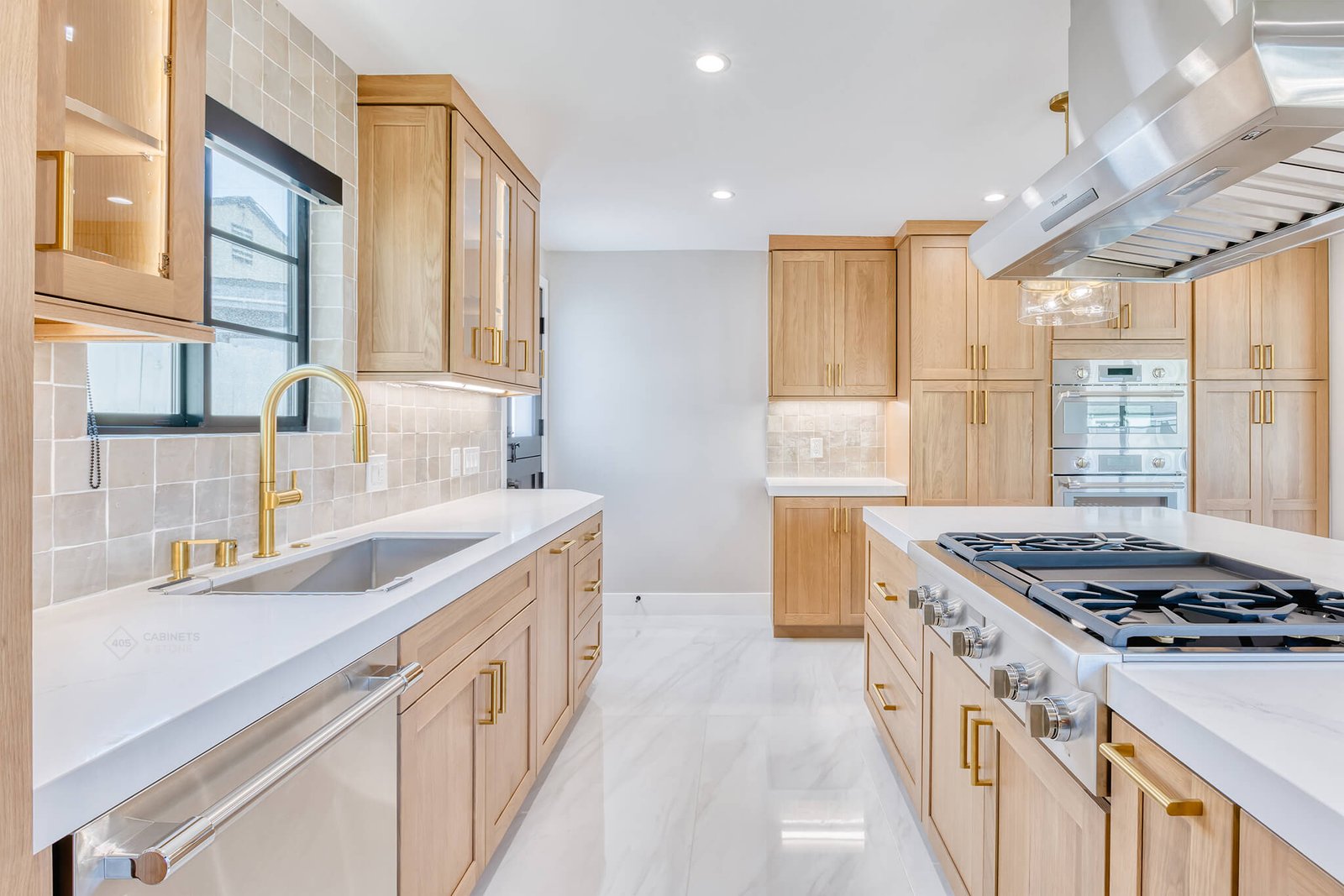
Walk into almost any newly renovated kitchen these days, and there’s a good chance you’ll spot a familiar face—white oak. Warm, textured, and effortlessly stylish, white oak kitchen cabinets have gone from a niche designer choice to one of the most sought-after finishes in modern home renovation. And honestly? It’s not hard to see why.
Whether you’re building from scratch, replacing dated oak cabinetry from the 1990s, or just daydreaming about your next renovation project, white oak brings something to the table that painted cabinets simply can’t replicate: soul. That distinctive grain, the natural variation in color, and the way it catches warm afternoon light—it all adds up to a kitchen that feels genuinely alive.
1. What Exactly Is White Oak — And Why Does It Matter?
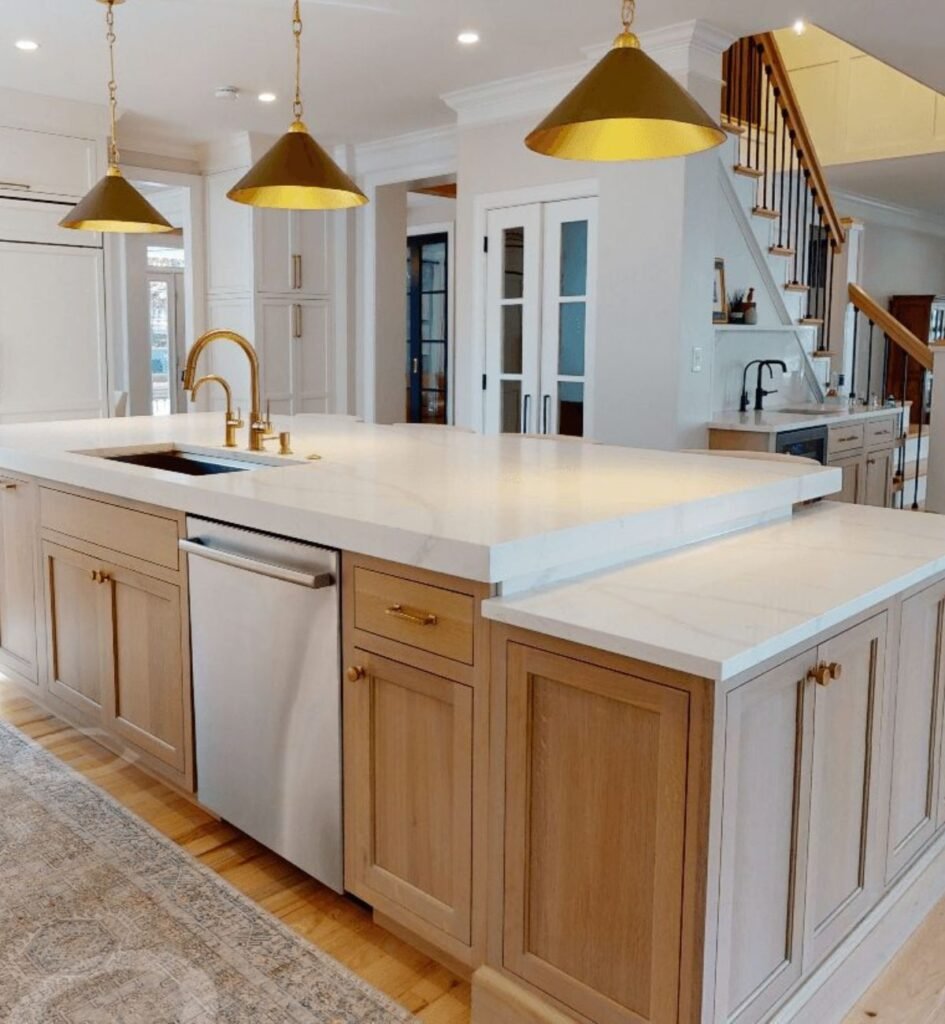
Before we start pinning inspiration photos, it helps to understand exactly what you’re working with. White oak (Quercus alba) is a hardwood native to North America, and it has some genuinely impressive properties that make it ideal for kitchen cabinetry.
White Oak vs. Red Oak: What’s the Difference?
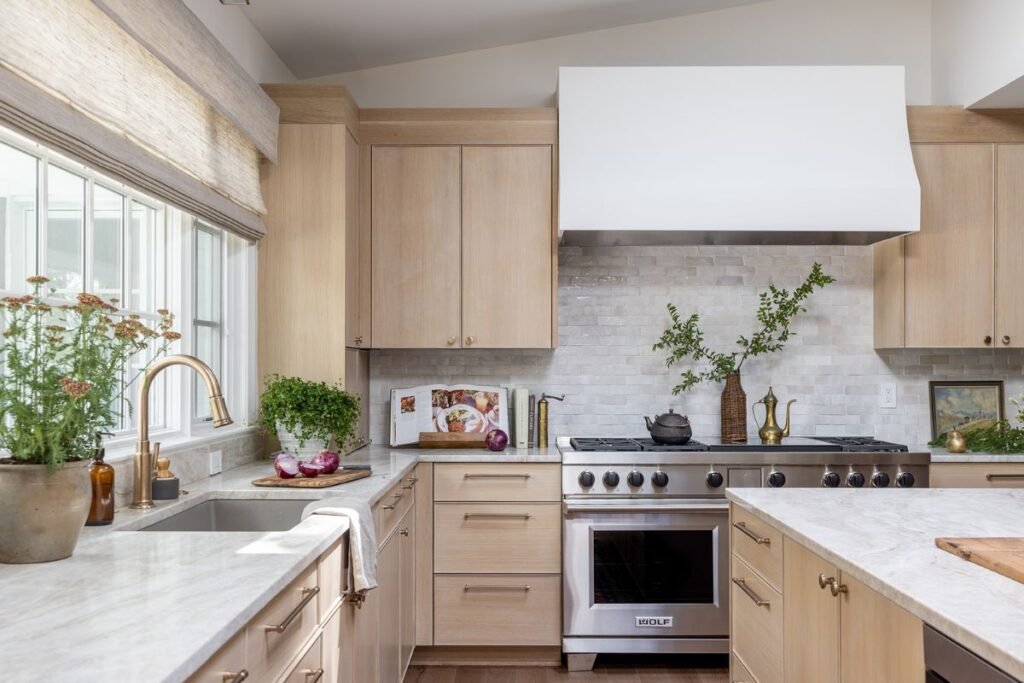
Many homeowners confuse white oak and red oak—they’re both popular in cabinetry and flooring, but they’re not interchangeable. Here’s what sets them apart:
• Grain Pattern: White oak has a tighter, more uniform grain with distinctive ray flecks that catch the light beautifully. Red oak tends to have a more open, pronounced grain that can look busy.
• Color Tone: White oak has a grayish-tan base tone that makes it ideal for modern and Scandinavian-inspired kitchens. Red oak leans warmer and more reddish, which can feel dated in certain contexts.
• Durability: White oak scores around 1,360 on the Janka hardness scale—slightly harder than red oak (1,290)—making it more resistant to dents and everyday wear.
• Water Resistance: This is where white oak really wins. Its closed-grain structure makes it naturally more water-resistant than red oak, which is a big deal in a kitchen environment.
In short, white oak is the more versatile, contemporary-feeling choice—and its subtle undertones mean it plays nicely with a wider range of countertop materials, wall colors, and hardware finishes.
2. Design Styles That Work Beautifully with White Oak Cabinets
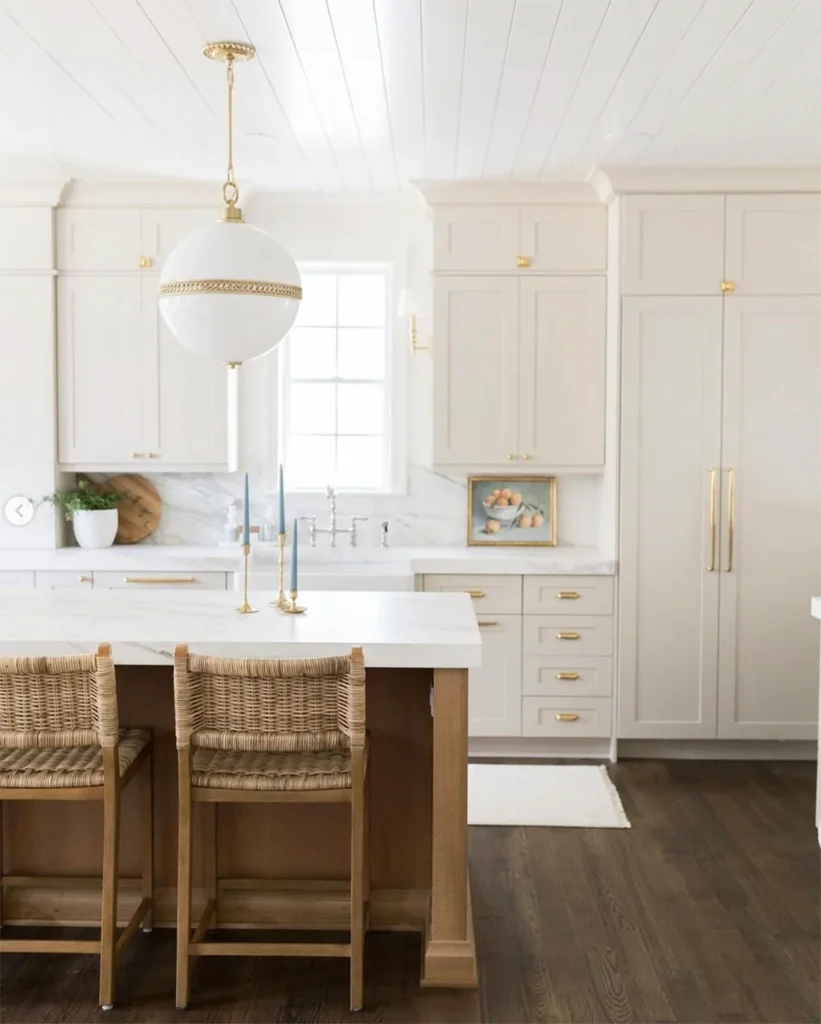
One of the biggest selling points of white oak is just how adaptable it is. Unlike a painted cabinet color that can feel locked into a particular decade, white oak ages gracefully and works across a surprising range of design aesthetics.
Modern and Contemporary Kitchens
White oak pairs seamlessly with the clean lines, minimal hardware, and open floor plans that define modern kitchen design. Flat-panel doors (also called slab doors) in white oak look especially stunning in contemporary spaces—the natural grain becomes the visual focal point, and there’s no ornate millwork competing for attention.
Pair with: Quartz countertops in white or light gray, matte black or brushed nickel hardware, integrated appliances, and concrete or large-format porcelain tile flooring.
Scandinavian and Nordic Design
The Scandinavian kitchen aesthetic is all about warmth, simplicity, and natural materials—and white oak was practically invented for this style. The wood’s cool gray-tan tones align perfectly with the Nordic palette of whites, soft grays, and natural textures.
Pair with: White walls, open shelving for displaying ceramics, linen textiles, and houseplants. Keep hardware minimal—brushed brass or raw wood pulls work beautifully here.
Transitional Style (The Best of Both Worlds)
Not fully modern, not fully traditional? Transitional design is where most American homeowners actually land, and white oak shines here too. Shaker-style white oak doors (with their simple recessed center panel) strike that perfect balance between classic and current.
Pair with: Marble or marble-look quartz countertops, subway tile backsplash, oil-rubbed bronze or unlacquered brass hardware, and warm-toned flooring.
Farmhouse and Rustic Kitchens
Wire-brushed or lightly distressed white oak gives farmhouse kitchens an authentic, lived-in character that painted cabinets struggle to replicate. The wood grain tells a story—and in a farmhouse kitchen, that’s exactly the point.
Pair with: Apron-front sinks, vintage-inspired hardware, shiplap or brick backsplash, and butcher block islands.
Mid-Century Modern
White oak has strong roots in mid-century modern design, where clean silhouettes and natural materials were king. Horizontal grain direction, low-profile hardware, and warm amber stain tones make white oak cabinets feel like they belong in a beautifully restored 1960s home.
Pair with: Terrazzo tile, brass accents, statement pendant lighting, and bold color pops through accessories.
3. Finish Options: How Stain and Sealant Change Everything
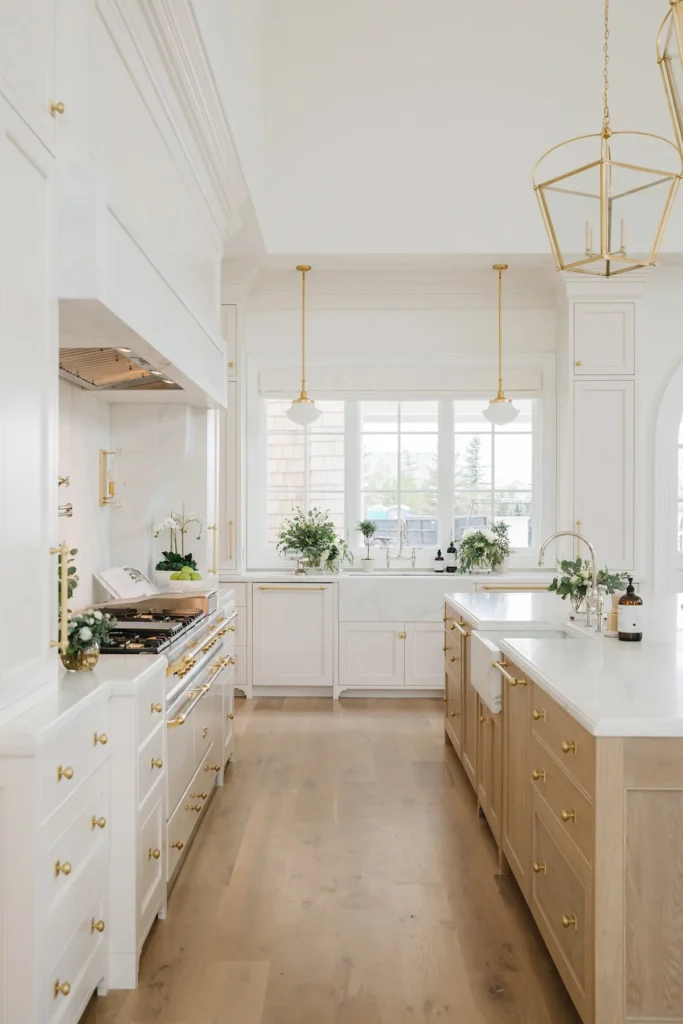
Raw white oak straight from the lumber yard has a beautiful, almost neutral tone—but the finish you choose will dramatically change how it looks in your kitchen. Understanding your options upfront saves you from costly regrets.
Natural / Clear Finish
A natural oil or water-based sealant with no added stain lets the wood speak for itself. You get the full range of white oak’s natural color variation—creamy whites, warm tans, and subtle gray tones all visible in the grain. This finish tends to look the most organic and pairs well with modern and Scandinavian kitchens.
Keep in mind: Over time, white oak will mellow slightly in color, picking up warmer golden tones as it’s exposed to light and air.
Light Gray Stain
A light gray or “greige” (gray-beige) stain is enormously popular right now because it leans into white oak’s naturally cool undertones. The result is sophisticated without feeling cold—especially when paired with warm-toned countertops or flooring.
Whitewashed or Cerused Finish
Whitewashing involves rubbing a diluted white stain into the wood grain, then wiping it back. The result is a light, airy look that’s part Scandi, part beachy, and entirely beautiful. A cerused finish goes a step further by emphasizing the grain with a white pigment—this works especially well on the open-grain textures of wire-brushed white oak.
Honey or Amber Stain
If you love the warmth of traditional wood cabinetry but want a more polished, current look, a honey or amber stain on white oak delivers exactly that. It’s warm without being orange (a common complaint about 1990s-era stained oak cabinets), and it brings a richness to the space that feels truly inviting.
Dark Stain (Walnut-Inspired)
For dramatic, moody kitchens, a deep walnut or espresso stain on white oak creates a high-end, restaurant-quality look. This works especially well in larger kitchens where the dark cabinets don’t overwhelm the space.
4. Hardware Pairings: The Jewelry of Your Cabinets
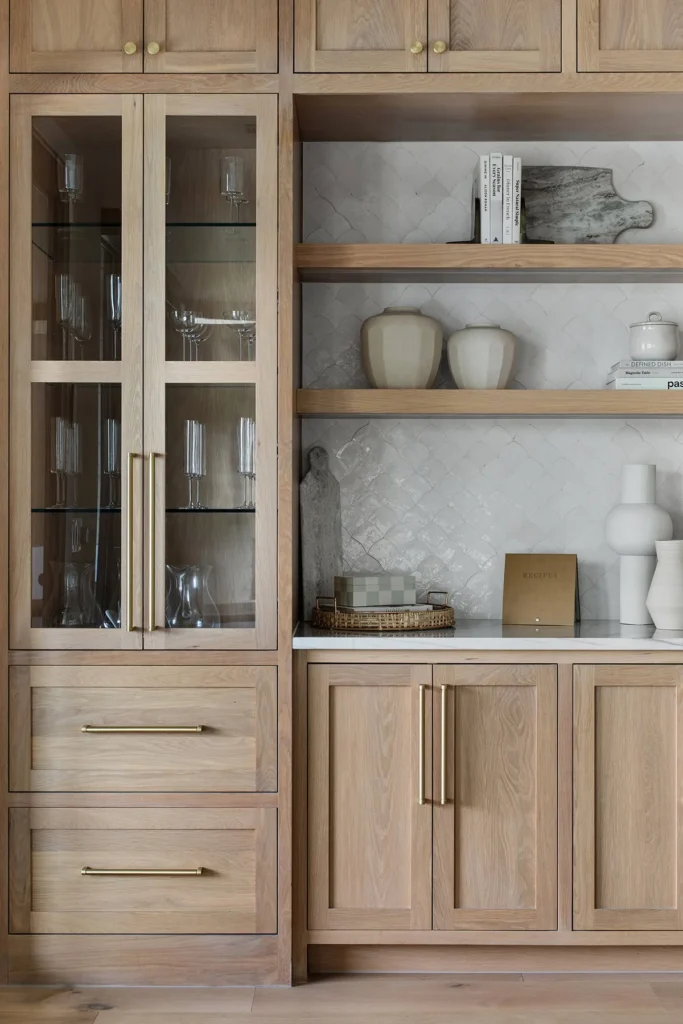
Hardware might seem like a small detail, but it has an outsized impact on how your white oak cabinets look and feel. Think of it as jewelry for your kitchen—get it right and it elevates everything; get it wrong and it undermines the whole design.
1. Matte Black – The most popular choice for contemporary white oak kitchens. Matte black hardware creates a sharp, graphic contrast against the warm wood tones and hides fingerprints well.
2. Brushed Brass or Unlacquered Brass – Warm, slightly vintage, and absolutely gorgeous against white oak. Unlacquered brass will develop a natural patina over time—some people love this living quality; others prefer the consistent finish of brushed brass.
3. Brushed Nickel or Satin Chrome – For a cleaner, more neutral look that doesn’t pull warm or cool, brushed nickel is a reliable choice. It works across design styles without drawing too much attention to itself.
4. Oil-Rubbed Bronze – Perfect for transitional or farmhouse kitchens, oil-rubbed bronze adds depth and warmth. It leans traditional, so it works best with shaker-style doors rather than flat-panel.
5. Integrated/Handle-Free – For ultra-modern kitchens, push-to-open mechanisms or routed J-pull grooves eliminate hardware entirely. The result is sculptural and clean—the grain becomes the only visual texture.
5. Countertop Combinations: What Works Best with White Oak
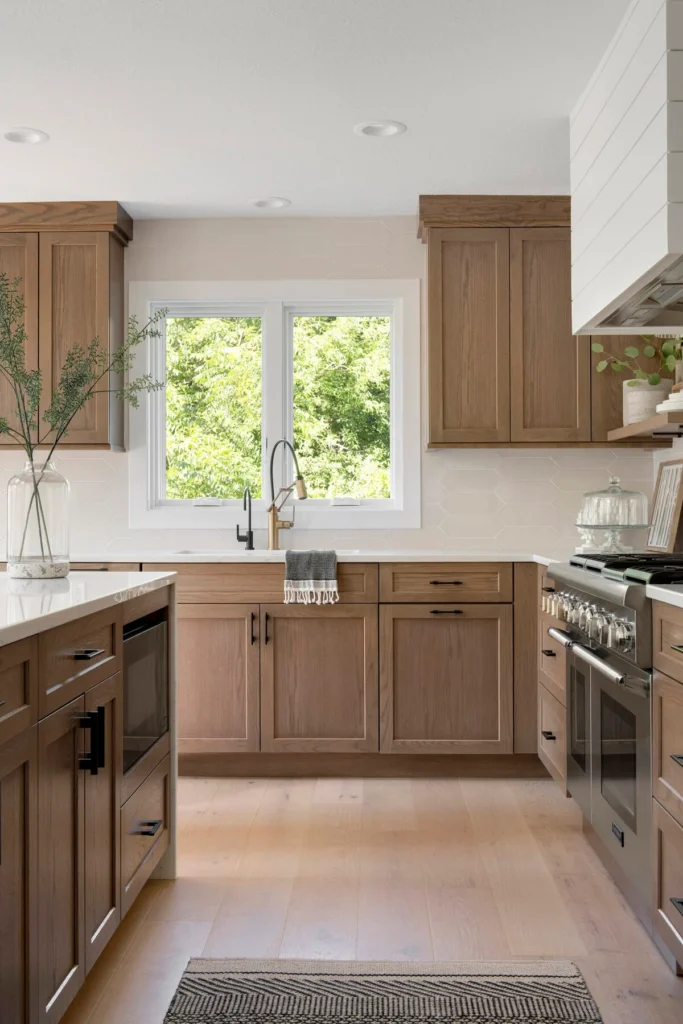
White oak is incredibly versatile when it comes to countertop pairings. Here are the combinations that consistently produce stunning results:
White Oak + White Quartz
A classic pairing that’s bright, airy, and timeless. The creamy tones in white oak complement the crispness of white quartz without making the kitchen feel sterile. Add some texture through a patterned backsplash to keep it from feeling flat.
White Oak + Marble (or Marble-Look Quartz)
Few combinations look more luxurious. The organic veining of marble echoes the wood grain in white oak, creating a cohesive, nature-inspired palette. If actual marble feels too high-maintenance, a quality marble-look quartz gives you the aesthetic without the upkeep.
White Oak + Concrete
For industrial-chic or modern-rustic kitchens, concrete countertops pair beautifully with white oak. The smooth, matte surface of concrete contrasts pleasingly with the textured wood grain. It’s an unexpectedly harmonious combination.
White Oak + Butcher Block
A warmth-on-warmth combination that feels cozy and inviting, especially in farmhouse or Scandinavian kitchens. Using a wood island with white oak base cabinets creates a layered, organic look. Just be aware that butcher block requires regular oiling to maintain.
White Oak + Black Soapstone or Dark Quartzite
For drama, pair white oak with a dark, matte stone countertop. The contrast is striking without feeling harsh, and it keeps the kitchen from looking too uniform or predictable.
6. Backsplash Ideas That Complement White Oak Cabinets
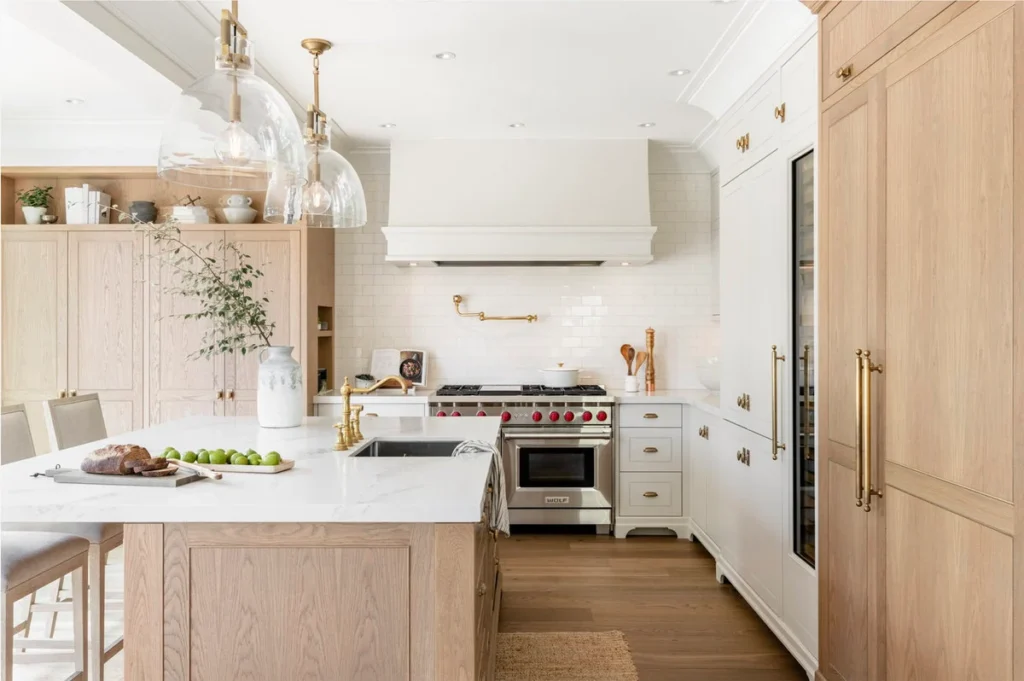
Your backsplash is the bridge between your cabinets and countertops—it has a lot of visual work to do. Here are some directions that work particularly well with white oak:
• Zellige or Handmade Ceramic Tile: The slight irregularities in handmade tile echo the natural variation in wood grain. Light-colored zellige tile with a glossy, uneven surface is a match made in design heaven.
• Subway Tile: A reliable classic. White or off-white subway tile in a brick-lay or herringbone pattern is clean and unobtrusive—it lets the white oak be the star. Dark grout adds depth and definition.
• Fluted or Reeded Tile: Textured tile in a vertical fluted pattern is one of the hottest trends in kitchen design right now, and it pairs beautifully with white oak’s linear grain patterns.
• Terracotta or Earthy-Toned Tile: For warm, Mediterranean-inspired kitchens, terracotta or earthy tile warms up the space and plays off white oak’s natural warmth.
• Stone Slab Backsplash: For a high-end, seamless look, continue your countertop material up the wall as a backsplash. This works especially well with marble or quartzite.
7. 15 Stunning White Oak Kitchen Cabinet Ideas
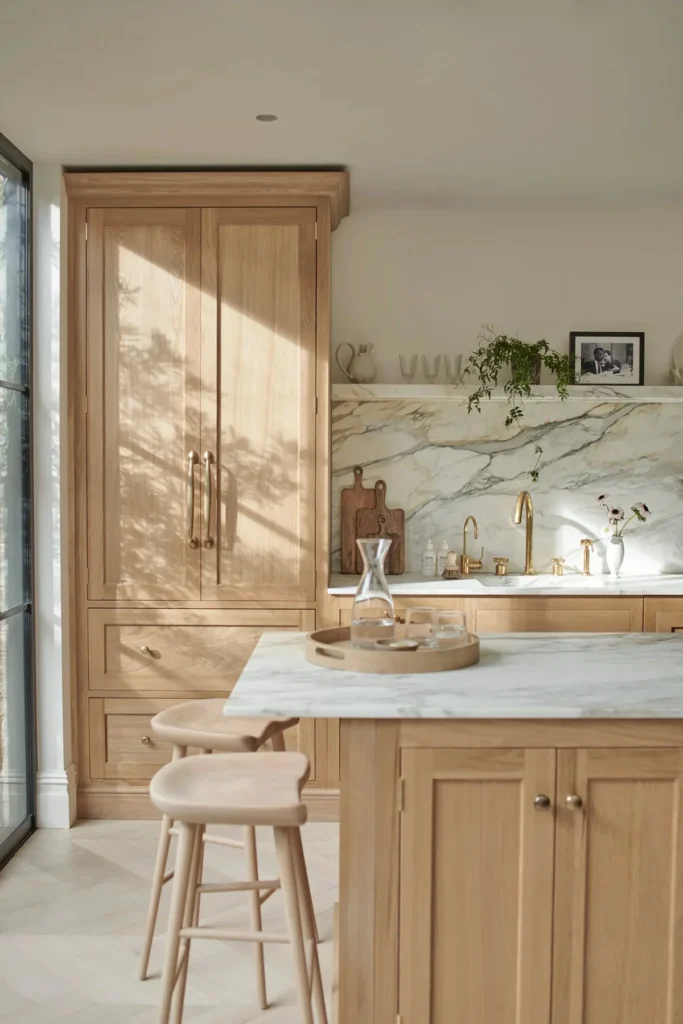
Ready for design inspiration? Here are 15 curated ideas to spark your creativity—each one a different take on what makes white oak so endlessly versatile.
Idea 1. Flat-Panel White Oak with Matte Black Hardware
Clean, contemporary, and endlessly stylish. Flat-panel (slab) cabinet doors in white oak strip away every unnecessary detail, letting the natural grain be the visual star. Pair with matte black pulls, a white quartz countertop, and minimalist open shelving for a kitchen that feels both current and timeless. The contrast between the warm wood and graphic black hardware is a design move you’ll never regret.
Idea 2. White Oak Shaker Cabinets with Brushed Brass
The shaker door profile is a design classic for good reason—its simple recessed panel adds just enough visual structure without being fussy. In white oak, the shaker style takes on a warmth and depth that painted versions can’t match. Add brushed brass hardware and you’ve got a transitional kitchen that looks effortlessly sophisticated.
Idea 3. Two-Tone: White Oak Uppers, Navy Blue Lowers
Two-tone cabinets have been trending for years, and white oak upper cabinets with deep navy or midnight blue base cabinets is one of the most striking combinations you can create. The navy grounds the space and adds drama, while the white oak uppers keep the kitchen feeling bright and connected to the ceiling. It’s a high-impact look that’s surprisingly easy to live with.
Idea 4. White Oak Island in an All-White Kitchen
If you’re not ready to commit to wood cabinets throughout, consider this: white painted perimeter cabinets with a white oak kitchen island. The island becomes the focal point—warm, tactile, and visually grounding in a sea of white. Add a contrasting countertop (butcher block or dark stone) and statement pendant lights to complete the look.
Idea 5. Scandinavian-Inspired White Oak Kitchen
Think light, airy, and intentionally simple. White oak cabinets in a natural or light gray stain, white walls, open shelving for ceramics and herbs, and simple bar-pull handles. Keep the color palette neutral and let the wood texture do the decorative work. Add a few plants and a well-placed woven basket and you’re living the Nordic dream.
Idea 6. White Oak with Marble Waterfall Island
Few things in kitchen design are more dramatic than a marble waterfall countertop cascading over the sides of a kitchen island. Pair the island with white oak cabinetry throughout the rest of the kitchen and you’ve got a space that manages to feel both luxurious and natural. The organic patterns in the marble and the wood grain seem to speak the same visual language.
Idea 7. Rustic White Oak with Vintage Hardware
Wire-brushed white oak has a beautifully textured surface that reads as authentically rustic without looking rough or unfinished. Pair with unlacquered brass bin pulls (the kind that develop a patina over time), an apron-front sink, and open shelving displaying vintage ironstone. It’s a kitchen that feels like it’s been there for generations—even if it was installed last year.
Idea 8. White Oak with Concrete Countertops
This combination feels urban and earthy at the same time. Smooth, matte concrete countertops against the textured warmth of white oak cabinetry creates a sophisticated industrial-meets-organic vibe. This works especially well in loft-style spaces or homes with an architectural, modern-industrial aesthetic.
Idea 9. Mid-Century Modern White Oak Kitchen
Low-profile cabinetry, flat-panel doors with horizontal grain direction, integrated handles, and a mix of wood and metal finishes—mid-century modern design is a natural fit for white oak. Add a bold-colored backsplash (terracotta or deep green), retro-inspired pendant lighting, and some vintage barstools to lean fully into the aesthetic.
Idea 10. Moody Kitchen: Dark Walls + White Oak Cabinets
Here’s a design move that surprises people every time: charcoal gray, deep forest green, or even black walls paired with white oak cabinetry. The wood glows warmly against the dark backdrop, and the contrast creates a dramatic, high-end atmosphere that feels more like a boutique hotel bar than a home kitchen. Brave? Yes. Worth it? Absolutely.
Idea 11. Handle-Free White Oak Cabinets
For the cleanest, most minimal aesthetic possible, eliminate hardware entirely. Push-to-open mechanisms or integrated J-pull grooves routed directly into the cabinet doors create a seamless, sculptural look. In white oak, this approach lets the grain be the only texture in the space—a bold, sophisticated choice that works beautifully in modern homes.
Idea 12. Glass-Front White Oak Upper Cabinets
Mix solid white oak lower cabinets with glass-front uppers to open up the space and create visual interest. The white oak frames give the glass panels warmth and grounding, while the glass allows you to display curated kitchenware or ceramics. Add interior LED lighting for a high-end, illuminated display effect.
Idea 13. White Oak with Open Shelving and Black Brackets
Replace your upper cabinets with open shelving—white oak shelves on dramatic matte black brackets—while keeping the lower cabinets in solid white oak. The result is a design that feels open and architectural, with the black brackets acting as graphic punctuation throughout the space. Display carefully curated ceramics, glassware, and cookbooks.
Idea 14. Cerused or Wire-Brushed White Oak Farmhouse Kitchen
Cerusing is a finishing technique that emphasizes the grain by filling it with a white pigment. On wire-brushed white oak, the result is a dramatically textured surface with deep shadows and bright highlights—it looks hand-crafted and genuinely luxurious. This finish works particularly well in farmhouse and transitional kitchens where character and warmth are the priority.
Idea 15. White Oak Kitchen with Terracotta Accents
Pair white oak cabinetry with terracotta floor tile, earthy-toned backsplash tile, and warm clay-colored accessories to create a kitchen with a distinctly Mediterranean warmth. The natural, sun-baked tones of terracotta and the organic warmth of white oak share an earthy DNA that makes them feel deeply compatible. Add some trailing plants and copper cookware for the finishing touch.
8. White Oak Cabinet Door Styles: Which Profile Is Right for You?
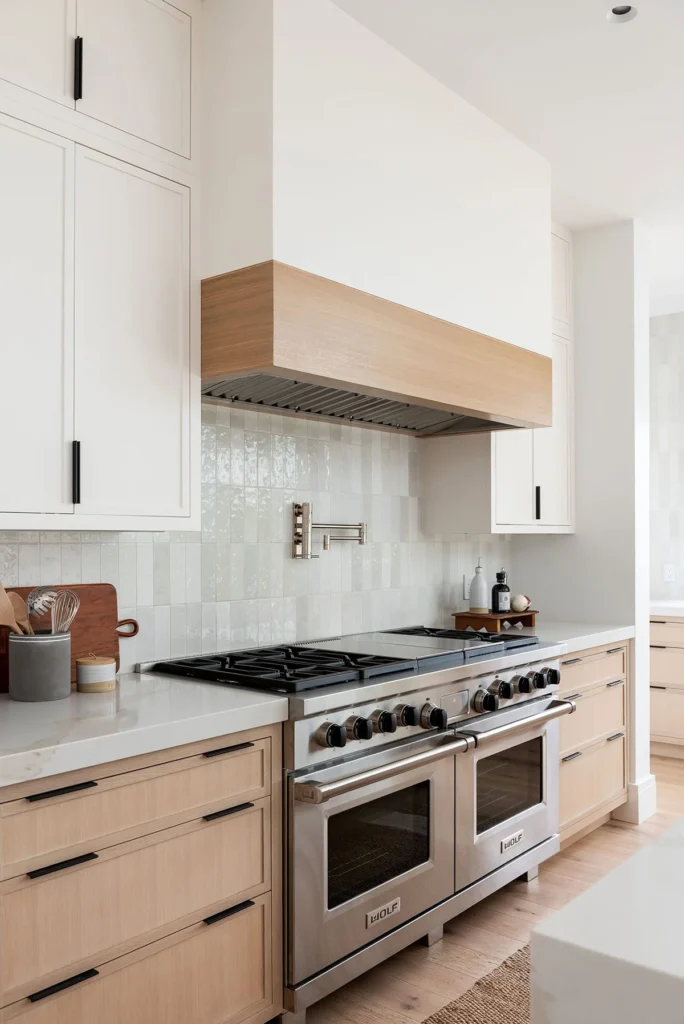
Cabinet door style affects both the look and the feel of your kitchen. With white oak, there are several profiles worth considering:
1. Flat-Panel (Slab) – The cleanest, most contemporary option. One smooth, flat panel with no additional framing or detail. Lets the wood grain speak entirely for itself.
2. Shaker – A simple recessed center panel with a flat rail-and-stile frame. The most versatile profile—works in modern, transitional, and traditional kitchens alike.
3. Beadboard – A panel with vertical grooves running its height—classic farmhouse or cottage aesthetic. Less common in white oak but beautiful in rustic contexts.
4. Raised Panel – A more traditional, formal profile with a raised center section. Less common with white oak (which tends toward contemporary), but striking when executed well.
5. Inset Cabinet Doors – The doors sit flush within the cabinet frame rather than overlaying it. More expensive and precise to manufacture, inset doors create a furniture-quality look that’s particularly stunning in white oak.
9. Cost Considerations: What to Budget for White Oak Cabinets
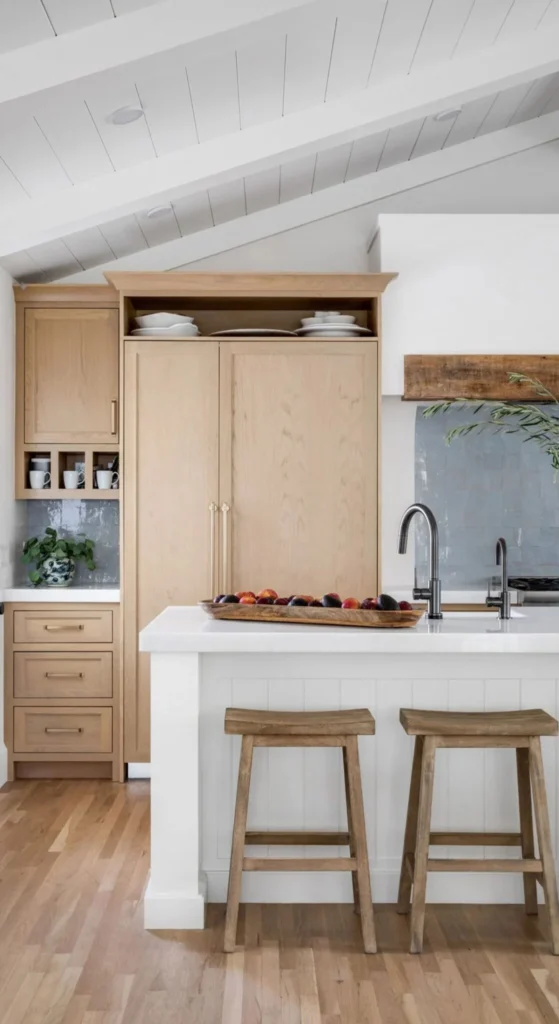
White oak isn’t the cheapest cabinet material—but it holds its value, and when compared to mid-to-high-range painted cabinets, it’s often competitively priced. Here’s a general breakdown to help you plan:
Stock vs. Semi-Custom vs. Custom
• Stock Cabinets: Pre-made, limited sizes, generally $100–$300 per linear foot installed. White oak in true stock cabinets is rare—more commonly you’ll find wood-look laminates at this price point.
• Semi-Custom: More size options, real wood veneer or solid wood faces, typically $300–$650 per linear foot installed. This is where many homeowners find the sweet spot between quality and budget.
• Full Custom: $650–$1,500+ per linear foot installed. Everything made to your specifications, often by local or regional craftspeople. For white oak cabinetry that truly stands apart, custom is hard to beat.
Factors That Affect Pricing
Door style (inset costs more than overlay), finish type (cerusing or wire-brushing adds cost), hardware selection, interior fittings (pull-out shelves, drawer organizers), and the complexity of your layout all affect the final price. Get at least three detailed quotes from local cabinet makers before committing.
10. Care and Maintenance: Keeping Your White Oak Cabinets Beautiful
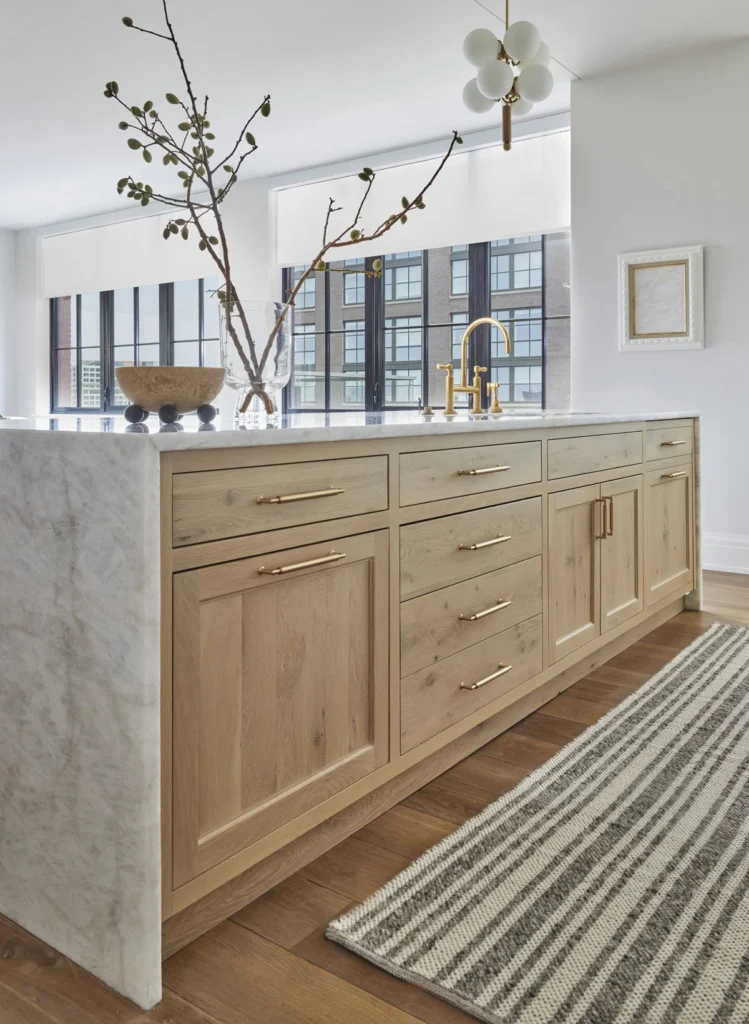
The good news: white oak cabinets are genuinely low-maintenance compared to many other materials. Here’s what you need to know to keep them looking great for decades.
Daily Care
• Wipe spills quickly: White oak is water-resistant, but standing water can still cause issues over time. Wipe up splashes promptly with a soft, dry cloth.
• Use mild cleaners only: Avoid harsh chemicals or abrasive scrubbers. A damp cloth with a small amount of dish soap is usually all you need.
• Keep moisture away from hinges and joints: These are the most vulnerable points—ensure they stay dry and check them periodically for any signs of swelling.
Annual Maintenance
• Inspect the finish: Every year or two, take a close look at your cabinet finish. If it’s looking dull or worn, a fresh coat of hard-wax oil or water-based poly can revive it dramatically.
• Tighten hardware: Cabinet pulls and hinges loosen over time with regular use. A quick tighten with a screwdriver takes five minutes and makes a real difference.
Protecting the Wood Long-Term
Avoid placing cabinets directly above or beside heat sources where possible, as extreme heat can dry out and crack wood over time. Consider installing a range hood that vents to the outside to reduce moisture and grease buildup near your cabinets.
11. White Oak vs. Other Popular Cabinet Materials: A Comparison
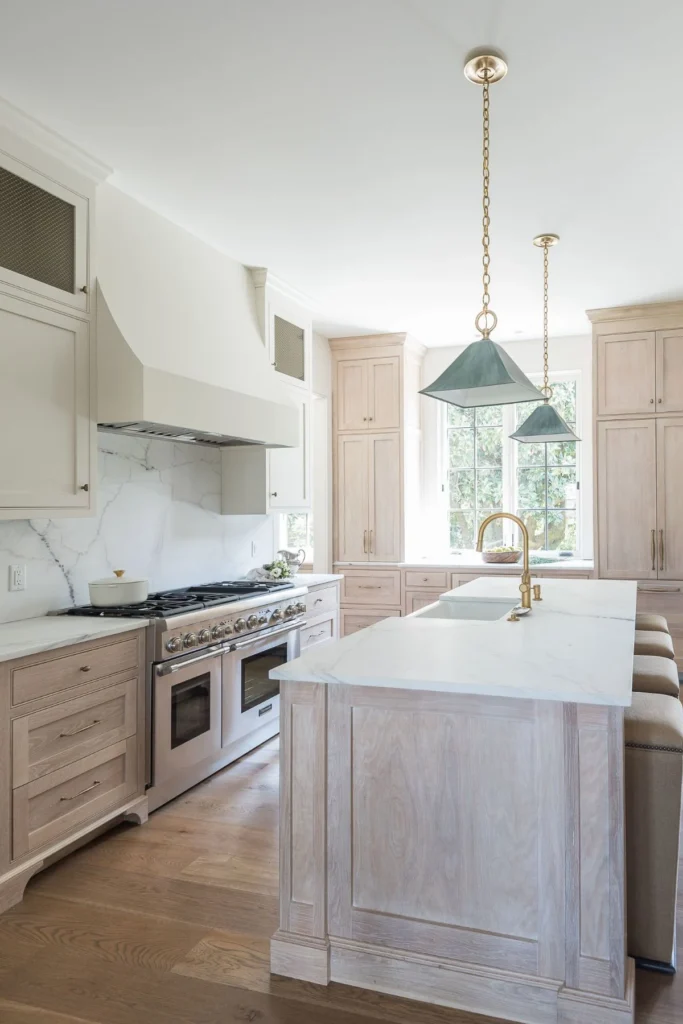
How does white oak stack up against other popular cabinet choices? Here’s an honest comparison:
1. White Oak vs. Painted MDF – Painted MDF cabinets are typically less expensive and offer a perfectly smooth, uniform surface in any color. But they chip, swell with moisture, and can’t be refinished the way real wood can. White oak has a longer lifespan and a depth of character that MDF can’t replicate.
2. White Oak vs. Walnut – Walnut is richer and darker, with a distinctive chocolate-brown tone. It’s stunning but harder to pair with certain color palettes. White oak is more neutral and versatile—easier to work into an existing home’s aesthetic.
3. White Oak vs. Maple – Maple is another popular hardwood choice—it’s very smooth-grained and takes paint well. In its natural state, maple lacks the visual interest of white oak’s distinctive grain and flecks. For painted cabinets, maple is excellent; for natural wood cabinets, white oak is more striking.
4. White Oak vs. Bamboo – Bamboo is technically a grass, not a hardwood, but it’s used widely in cabinetry. It’s eco-friendly and durable, but it doesn’t offer the same design flexibility or grain character as white oak.
5. White Oak vs. Thermofoil – Thermofoil cabinets look good in photos but can peel, warp, and delaminate—especially near heat. White oak is the far more durable long-term investment.
12. Frequently Asked Questions About White Oak Kitchen Cabinets
Do white oak cabinets go out of style?
Natural wood cabinetry has been used in kitchens for centuries, and there’s every reason to think it’ll remain desirable for centuries more. White oak in particular has a neutral, timeless quality that doesn’t scream any one design era. The specific finish or hardware you choose might evolve over time, but the wood itself ages gracefully.
Can white oak cabinets be painted?
Yes—but why would you? One of white oak’s greatest selling points is its natural grain and color. If you later decide you want a change, consider re-staining rather than painting. White oak stains beautifully and can be lightened, darkened, or given a completely different tone with a fresh stain application.
Are white oak cabinets good for humid climates?
White oak’s naturally closed grain structure makes it more resistant to moisture and humidity than many other wood species. That said, all wood expands and contracts with changes in humidity. Proper finishing (oil or polyurethane) and good ventilation in your kitchen will protect your cabinets regardless of your climate.
How do I clean white oak cabinets without damaging the finish?
Use a soft, slightly damp cloth for daily cleaning. For tougher grease or residue, a small amount of gentle dish soap diluted in water works well. Avoid ammonia-based cleaners, bleach, or anything abrasive. Dry the surface after cleaning to prevent water marks.
What’s the difference between white oak veneer and solid white oak cabinets?
Solid white oak uses full pieces of wood throughout the cabinet, while veneer uses a thin layer of real white oak over an engineered wood substrate (like MDF or plywood). Veneer cabinets are less expensive and can actually be more dimensionally stable (less prone to warping). A quality white oak veneer over plywood is an excellent choice for kitchen cabinetry.
Conclusion: The Case for White Oak Kitchen Cabinets
White oak kitchen cabinets aren’t just a design trend—they’re a long-term investment in a material that has proven its staying power through decades of changing tastes. The combination of genuine durability, natural beauty, and remarkable design versatility makes white oak one of the smartest choices you can make for a kitchen renovation.
Whether your style leans toward cool Scandinavian minimalism, warm farmhouse charm, dramatic moody palettes, or sleek contemporary design, there’s a version of white oak cabinetry that’s perfect for your home. The wood’s natural grain, its adaptability to different stains and finishes, and its ability to complement almost any countertop, backsplash, or hardware combination give you a foundation that’s both beautiful and genuinely flexible.
The kitchens that stand the test of time—the ones that still feel fresh and inviting fifteen years after they were installed—tend to be the ones built on natural materials. White oak belongs squarely in that category. It’s a choice you’ll make once and be happy about for a very long time.
So if you’ve been on the fence about white oak kitchen cabinets, consider this your sign to take the plunge. Start collecting samples, call your local cabinet makers, and get ready to fall completely in love with your kitchen all over again.