
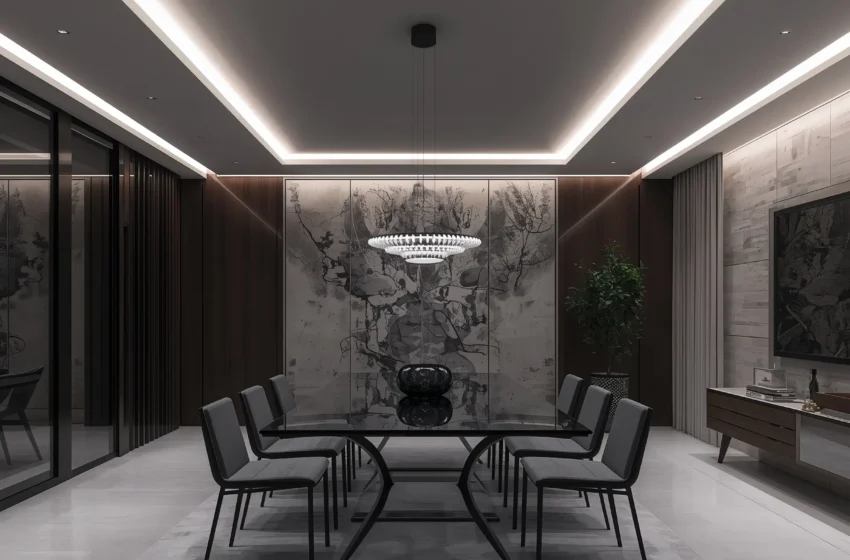
Lighting is the one element in interior design that most people get wrong — not because it’s complicated, but because it’s invisible until something goes wrong. Nobody notices good lighting. Everyone notices bad lighting.
Sit under a harsh overhead fixture while trying to enjoy dinner and you’ll understand immediately what’s at stake. The food looks wrong. People look tired. Conversation feels effortful. Change the light — lower it, warm it, layer it — and the same room becomes somewhere you want to linger for hours.
Dining rooms are particularly sensitive to lighting because they serve so many different purposes within the same day. Breakfast is practical and needs enough light to read, check phones, and move quickly. Dinner with friends calls for something softer and more flattering. The right lighting setup handles all of it — and the right fixture choices ensure those setups look good even when nothing is switched on.
Here are 20 dining room lighting ideas — covering fixture types, placement, layering strategy, style directions, and the technical details that most guides skip over. Whether you’re renovating from scratch or just replacing an uninspiring pendant, this is what you need to know.
1. Understand Lighting Layers Before Buying Anything
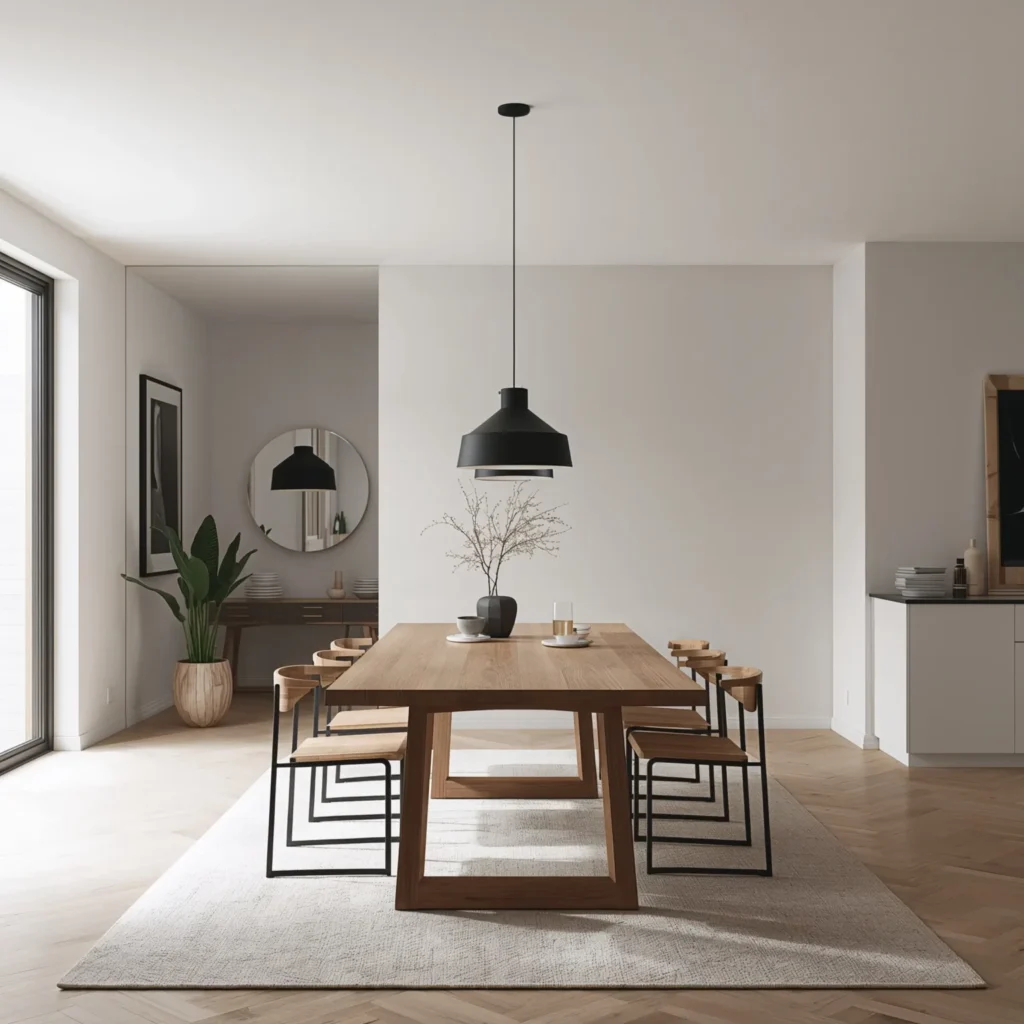
The single most important concept in dining room lighting isn’t a fixture type — it’s the idea of layering. A dining room that relies on a single overhead source will always feel flat, regardless of how impressive that fixture looks. A room with well-considered lighting layers adapts to every mood and occasion.
The three essential lighting layers:
- Ambient lighting — the general illumination of the room (overhead fixtures, recessed lights)
- Task lighting — focused light where function demands it (pendants over the table, under-cabinet strips at a sideboard)
- Accent lighting — mood and atmosphere (wall sconces, candles, LED strips, picture lights)
Most dining rooms only have the first layer. Adding even one more — a pair of wall sconces, a dimmer-controlled pendant, a few candles on the table — changes the room’s quality entirely.
Pro Tip: Put every dining room light on a separate dimmer circuit. It costs very little extra during installation and gives you an almost infinite range of atmosphere options for the lifetime of the room.
2. The Classic Chandelier: Still the Most Versatile Dining Room Choice
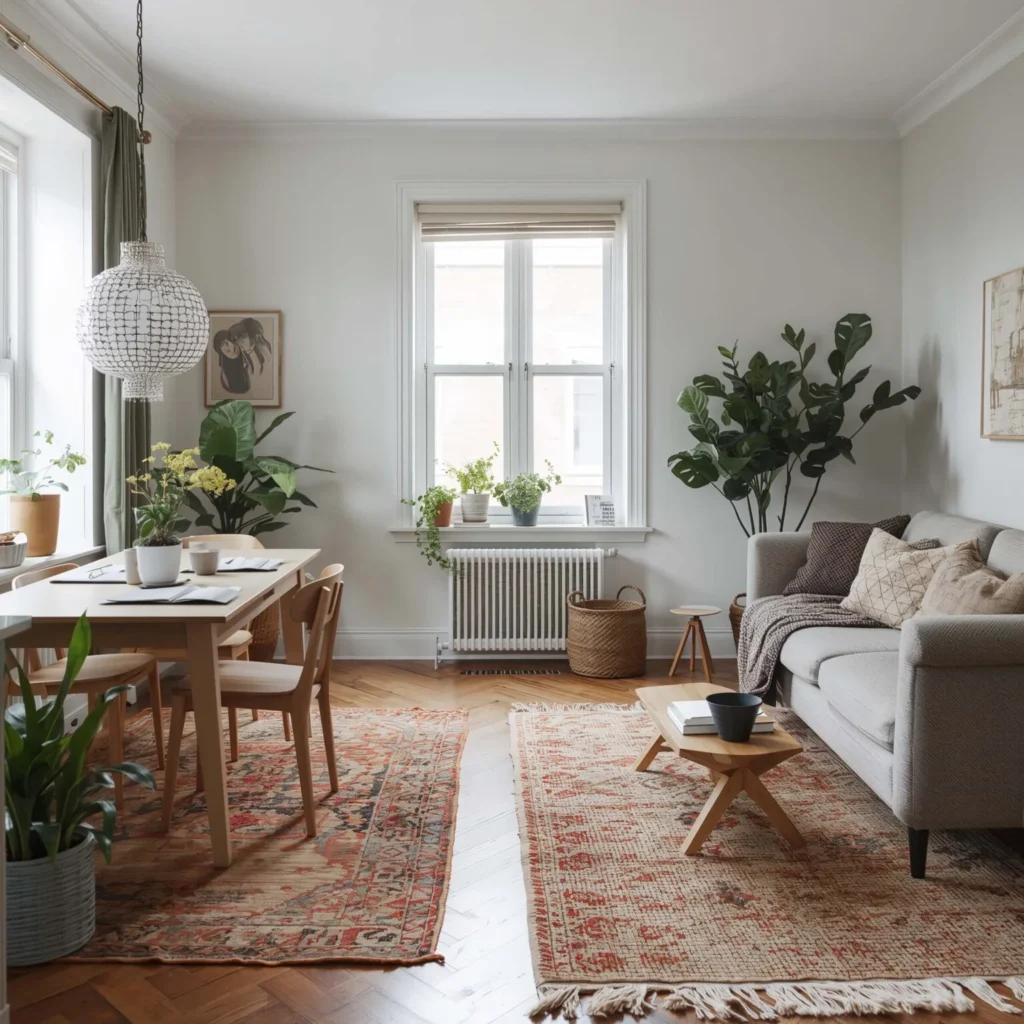
Chandeliers have dominated dining rooms for centuries, and the reason isn’t tradition — it’s that they work. A chandelier over a dining table provides centred, distributed light, creates a clear visual focal point, and communicates something about the room’s character and the household’s taste.
The contemporary chandelier market has moved a long way from traditional crystal-and-brass. Today’s options include geometric sculptural pieces in matte black, clustered glass globe designs, organic rattan and rope forms, and stripped-back industrial structures. There’s a chandelier suited to every design direction.
How to size a chandelier correctly:
- Add the room’s length and width in feet — the sum in inches gives you the ideal chandelier diameter
- For example: a 12 x 14-foot room calls for a chandelier roughly 26 inches in diameter
- Over the dining table specifically, the fixture should be 6 to 12 inches narrower than the table on each side
- Hang the bottom of the chandelier 30 to 36 inches above the table surface
Pro Tip: Chandeliers look most expensive when they fill the vertical space appropriately. A fixture that’s too small for the ceiling height looks lost. When in doubt, size up rather than down — you can always add a canopy extension to adjust the drop.
3. Linear Pendants for Rectangular Tables
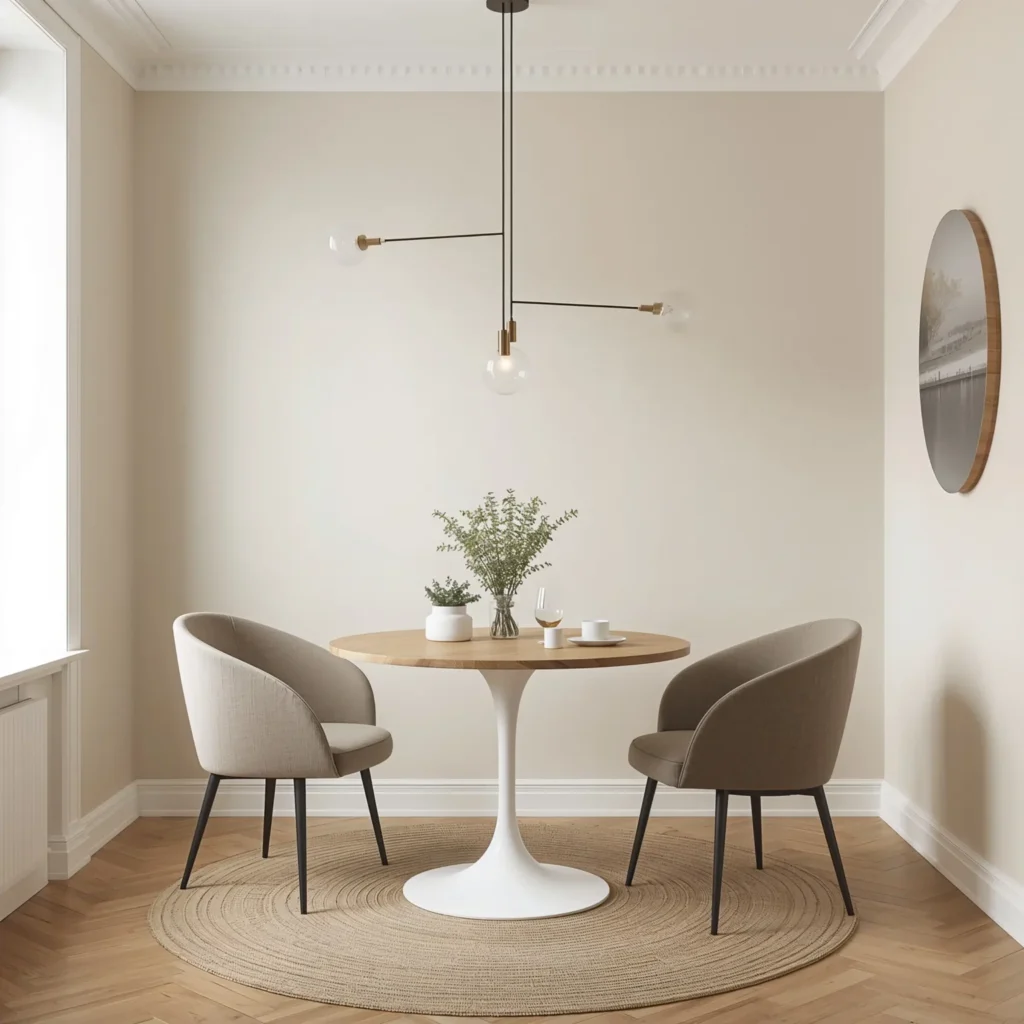
A linear pendant — an elongated fixture that runs parallel to a rectangular dining table — is one of the most effective and underused lighting solutions in dining room design. It provides even illumination along the full length of the table, keeps sightlines clear between guests, and has a clean, modern quality that suits a wide range of interior styles.
The length of the pendant should be roughly two-thirds the length of the table — enough to light the full surface without overhanging the ends awkwardly. Most linear pendants come with adjustable cables or rods, making installation straightforward even in rooms with high ceilings.
Linear pendant styles worth knowing:
- Minimalist bare-bulb linear — exposed filament bulbs on a simple metal armature, industrial and warm
- Diffused glass linear — frosted or opal glass tube that spreads light evenly and softly
- Multi-pendant linear bar — a series of individual pendants suspended from a single canopy
- Organic linen or woven linear — soft material shade stretched over a frame, textural and warm
4. Clustered Pendant Groups: Flexible and Full of Character
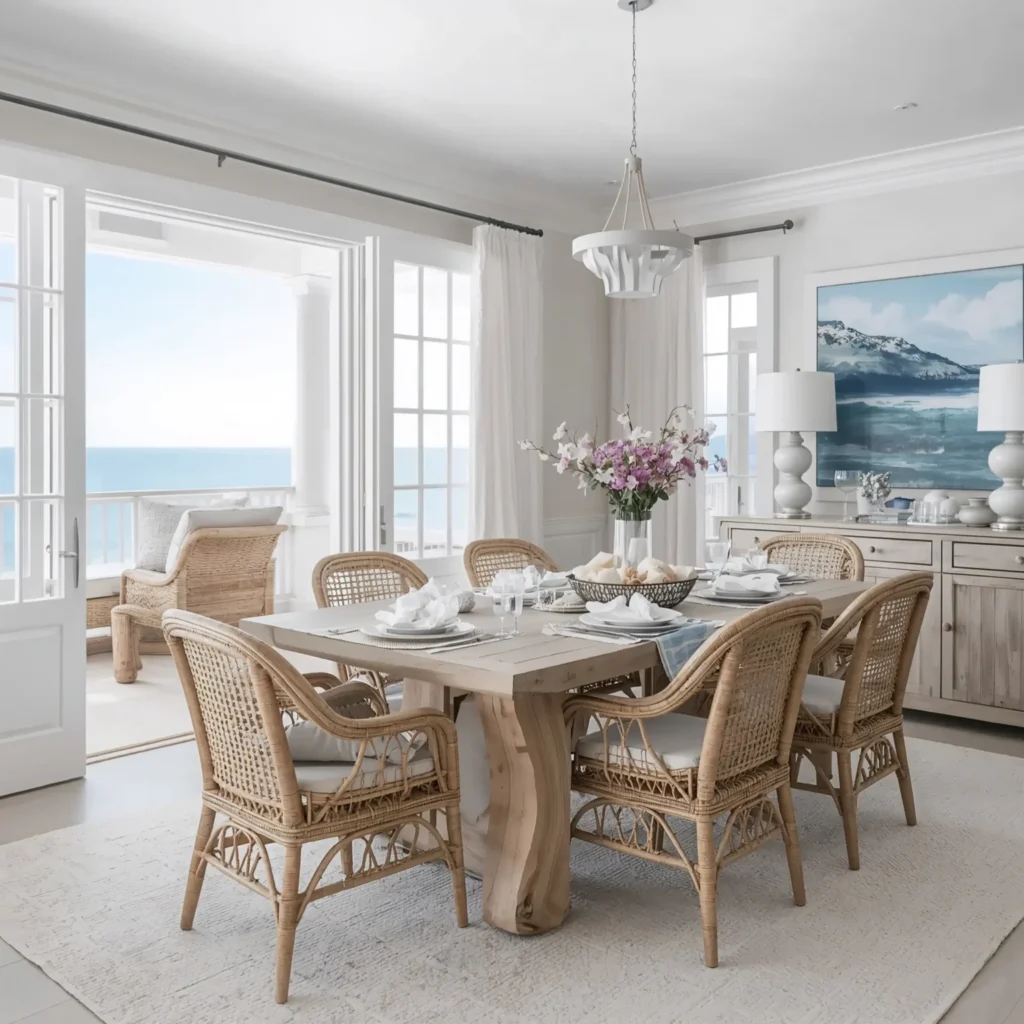
Where a single large pendant or chandelier creates a single focal point, a cluster of smaller pendants creates something more dynamic — a suspended composition that can be adjusted, expanded, and made uniquely yours.
Pendant clusters work particularly well over round or square tables, in rooms with high ceilings that need the light source brought down to a comfortable level, and in spaces where you want to introduce multiple materials or finishes without overwhelming the room.
Cluster arrangement principles:
- Odd numbers work better than even — three or five pendants read as a composition, four can look like a grid
- Vary the drop heights within a 12 to 18-inch range for a natural, organic feel
- Keep the diameters consistent even if heights vary — uniformity in size, variation in height
- Ensure the overall cluster footprint is proportional to the table below it
Pro Tip: If you’re making a cluster from individual pendants rather than a purpose-built cluster fitting, use a multi-canopy ceiling plate to keep the installation clean and manageable without multiple holes in the ceiling.
5. Drum Shades: Soft, Familiar, and Endlessly Adaptable
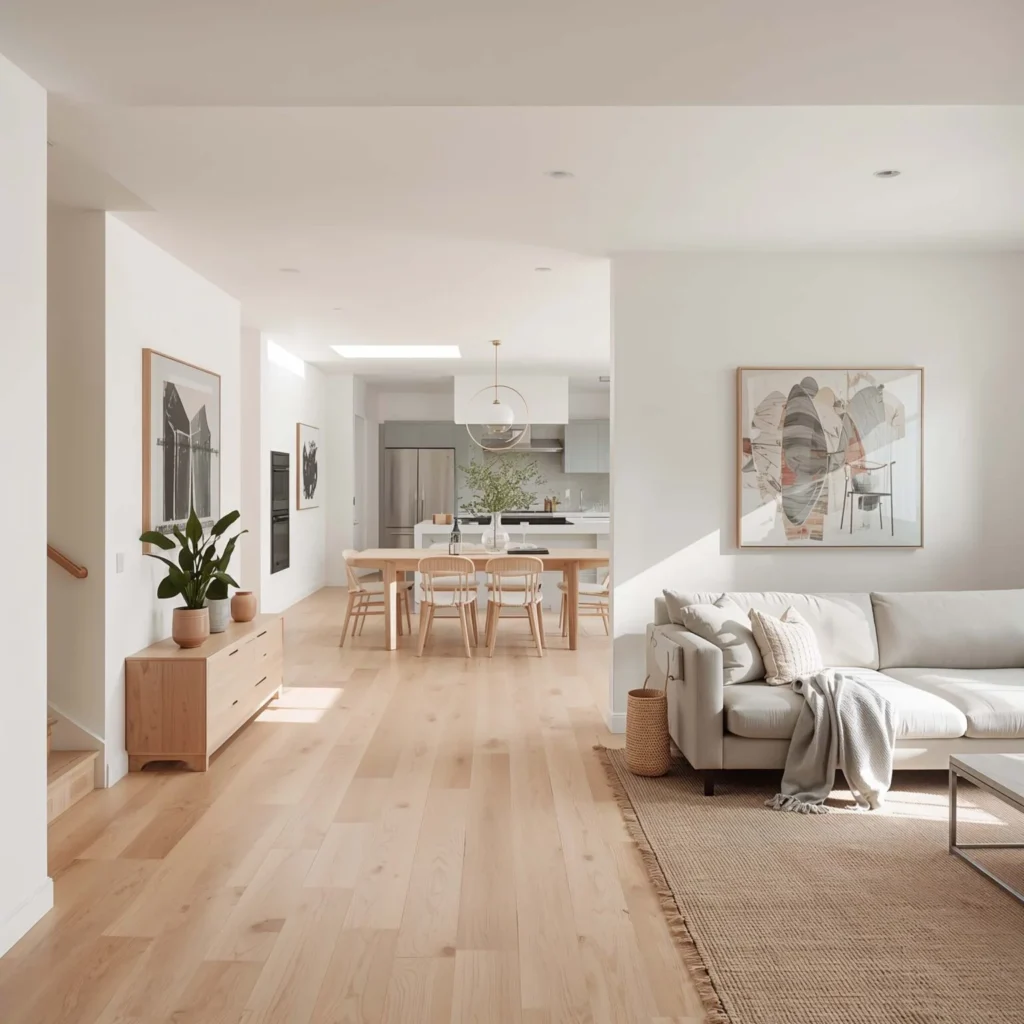
The drum shade pendant — a cylindrical shade suspended over the table — is one of the most reliably successful dining room lighting choices across all styles and budgets. It works because it diffuses light gently in all directions, creates a warm pool of illumination over the table, and has no strong stylistic allegiance that makes it clash with specific interiors.
Choose shade fabric with care. Linen diffuses light warmly and softly. Cotton is slightly crisper. Silk adds sheen. A white or cream interior lining maximises light output; a dark or coloured interior lining creates a moodier, more intimate effect and casts light primarily downward rather than in all directions.
Drum shade options for different dining room styles:
- Neutral linen — universally applicable, particularly good in farmhouse and Scandinavian interiors
- Black exterior, white interior — graphic contrast, suits contemporary and industrial spaces
- Rattan or woven grass — natural texture, adds warmth and a global influence
- Printed or patterned fabric — a statement choice that works when the rest of the room is restrained
6. Rattan and Natural Material Pendants
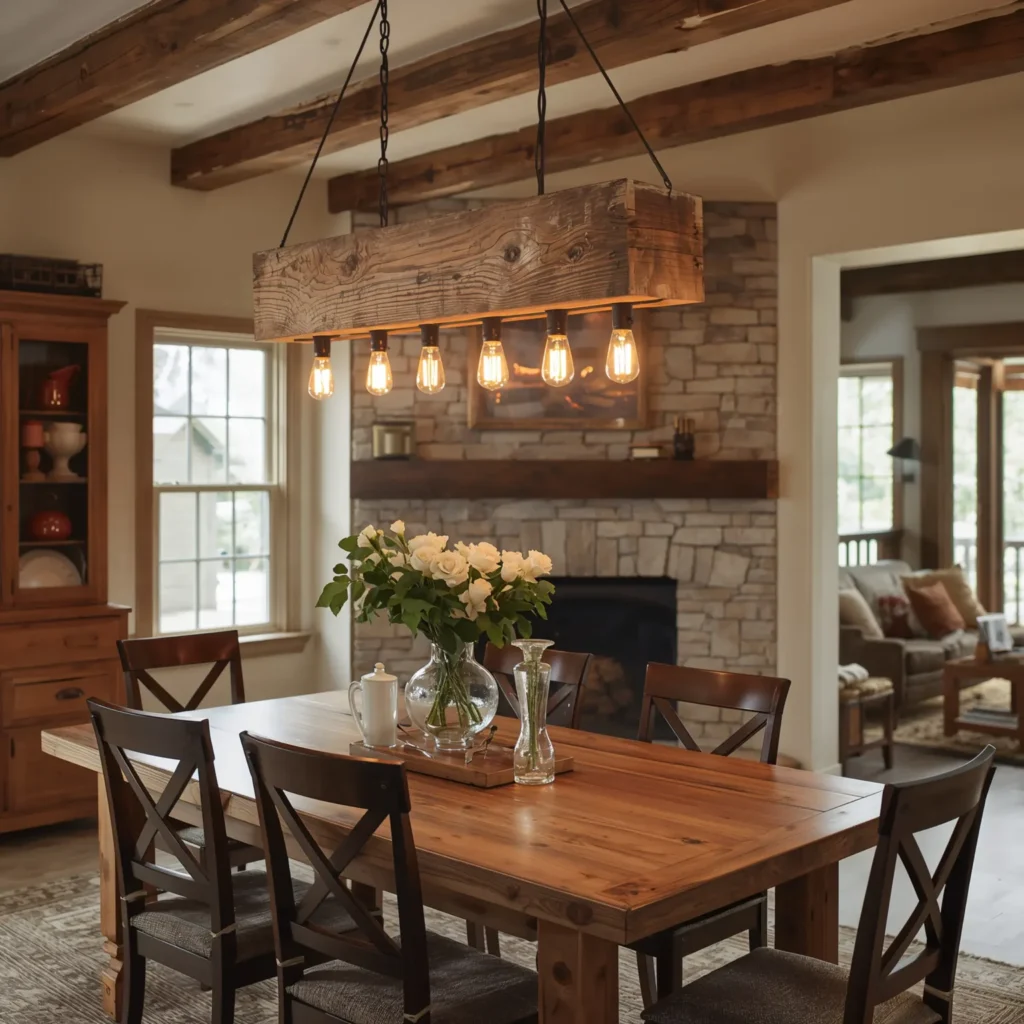
Natural material lighting fixtures — rattan, bamboo, seagrass, wicker, rope — have moved from niche to mainstream, and for good reason. They bring warmth, organic texture, and a handcrafted quality that manufactured metal or glass fixtures can’t replicate. And the light patterns they cast are genuinely beautiful: dappled, irregular, warm.
In dining rooms, natural pendant shades work across a surprisingly broad range of styles. They feel at home in farmhouse and coastal spaces, obviously. But a large-scale sculptural rattan pendant also works well in contemporary and even minimalist interiors as a deliberate textural counterpoint to clean-lined furniture.
Natural material fixture types:
- Globe rattan pendants — spherical form, warm dappled light through the weave
- Seagrass or sisal wrapped pendants — tight coiled texture, earthy and relaxed
- Bamboo cage pendants — more structured, geometric quality with an organic material
- Rope or macrame pendants — bohemian, textural, particularly good in rooms with high ceilings
- Woven grass drum shades — a softer, fuller form with gentle diffused light
Pro Tip: Natural fibre pendants should be kept away from direct moisture sources. In open-plan kitchen-dining spaces, position them well away from the cooking area where steam and grease could damage the weave over time.
7. Statement Chandeliers: When You Want the Fixture to Be the Room
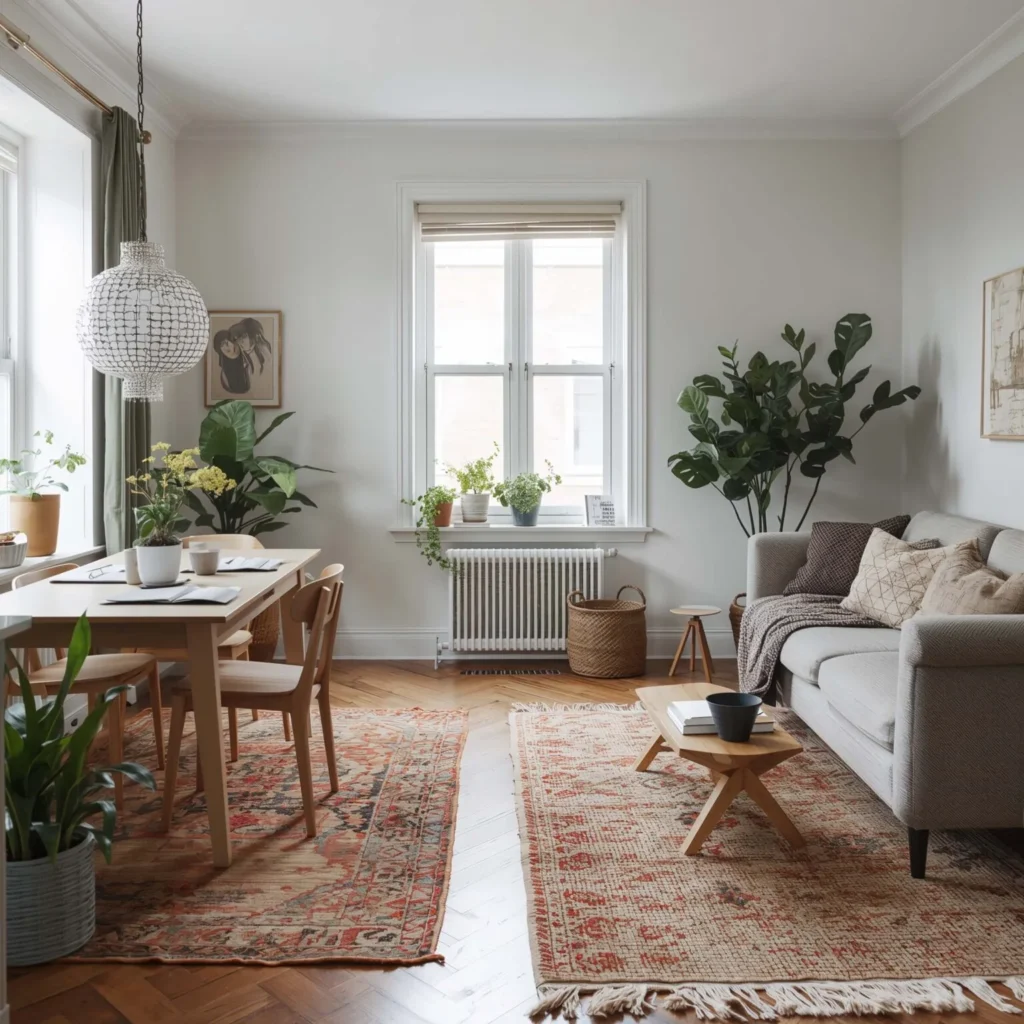
Most lighting serves the space and the people in it. Statement chandeliers reverse that relationship — they are the attraction, and everything else in the room organises around them. In the right context, this is exactly the right approach.
Statement dining room chandeliers tend to be large in scale, architecturally bold, and designed to create an immediate impression when you walk into the room. They work best in rooms that have the ceiling height and volume to support them, and in interiors that can absorb a strong focal point without feeling overwhelmed.
Statement chandelier styles that earn their presence:
- Oversized antler or branch forms — organic and sculptural, suits rustic and eclectic spaces
- Multi-arm sputnik designs — retro-modernist, dramatic and playful at the same time
- Cascading crystal formations — traditional glamour, genuinely extraordinary with a dimmer
- Large-scale geometric cage — architectural and contemporary, suits rooms with clean lines
- Sculptural ceramic or stone — unusual material choices that make the fixture feel one-of-a-kind
One practical note: large chandeliers are heavy. Before ordering, confirm your ceiling can structurally support the weight — this may require additional blocking between joists if it hasn’t been designed for a heavy fixture.
8. Wall Sconces: The Lighting Layer Most Dining Rooms Are Missing
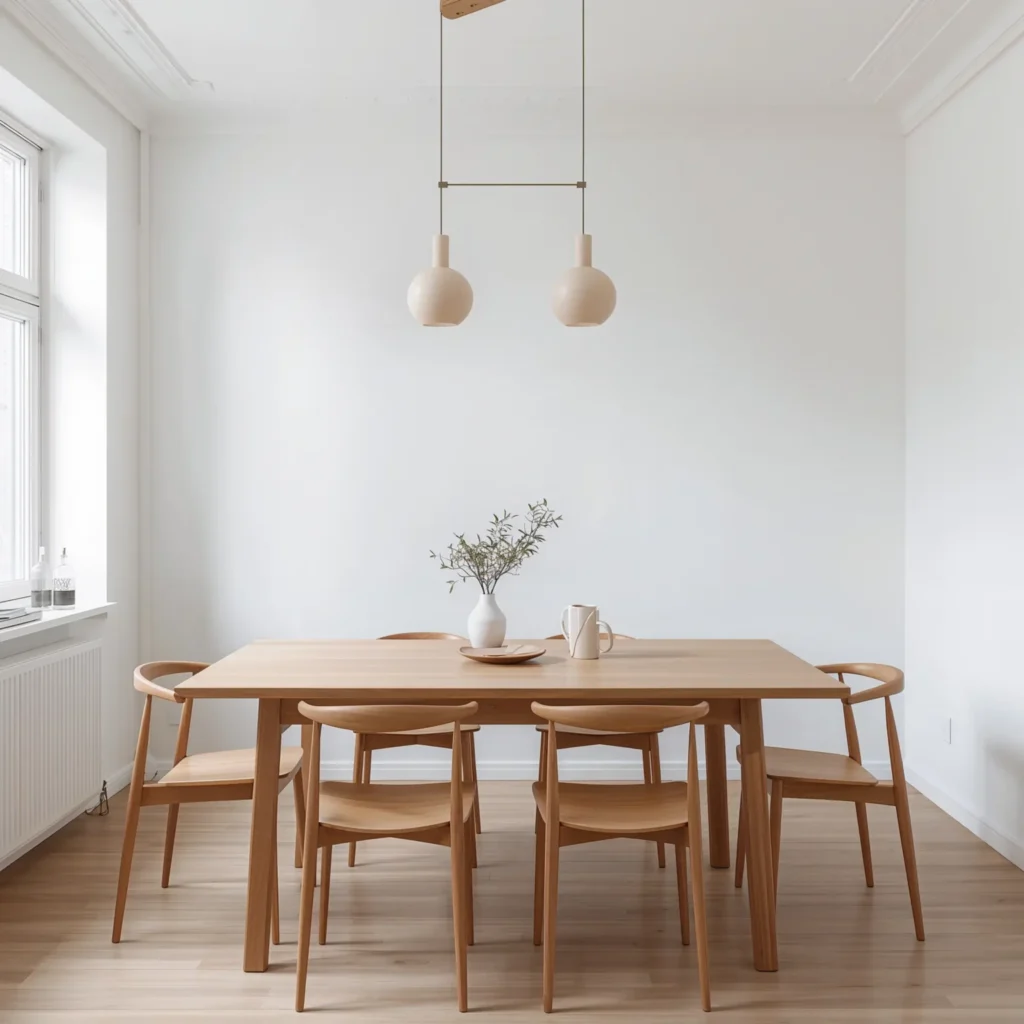
Wall sconces rarely appear in dining rooms outside of formal, traditionally designed spaces — and that’s a missed opportunity. A pair of sconces flanking a mirror, sideboard, or feature wall adds the crucial second lighting layer that makes dining rooms feel genuinely designed rather than just equipped.
The functional role of sconces in a dining room is to provide warm, low-level ambient light that flatters faces and softens shadows. While the pendant over the table lights the food and the table surface, sconces illuminate the room itself — the walls, the people, the overall atmosphere.
Sconce placement guidelines:
- Flanking a mirror above a sideboard — the most common and most effective placement
- On either side of a window in a dining room — frames the view beautifully
- At eye level when seated — approximately 60 inches from floor to the centre of the fixture
- Spaced at least 6 feet apart — closer than this and they start to crowd each other
Pro Tip: Plug-in sconces (with a cord that runs down the wall and into a standard socket) are a practical alternative to hardwired installations if you’re renting or don’t want to run new electrical cables. The cord can be painted to match the wall or run behind a thin cable conduit.
9. Recessed Lighting Done Properly
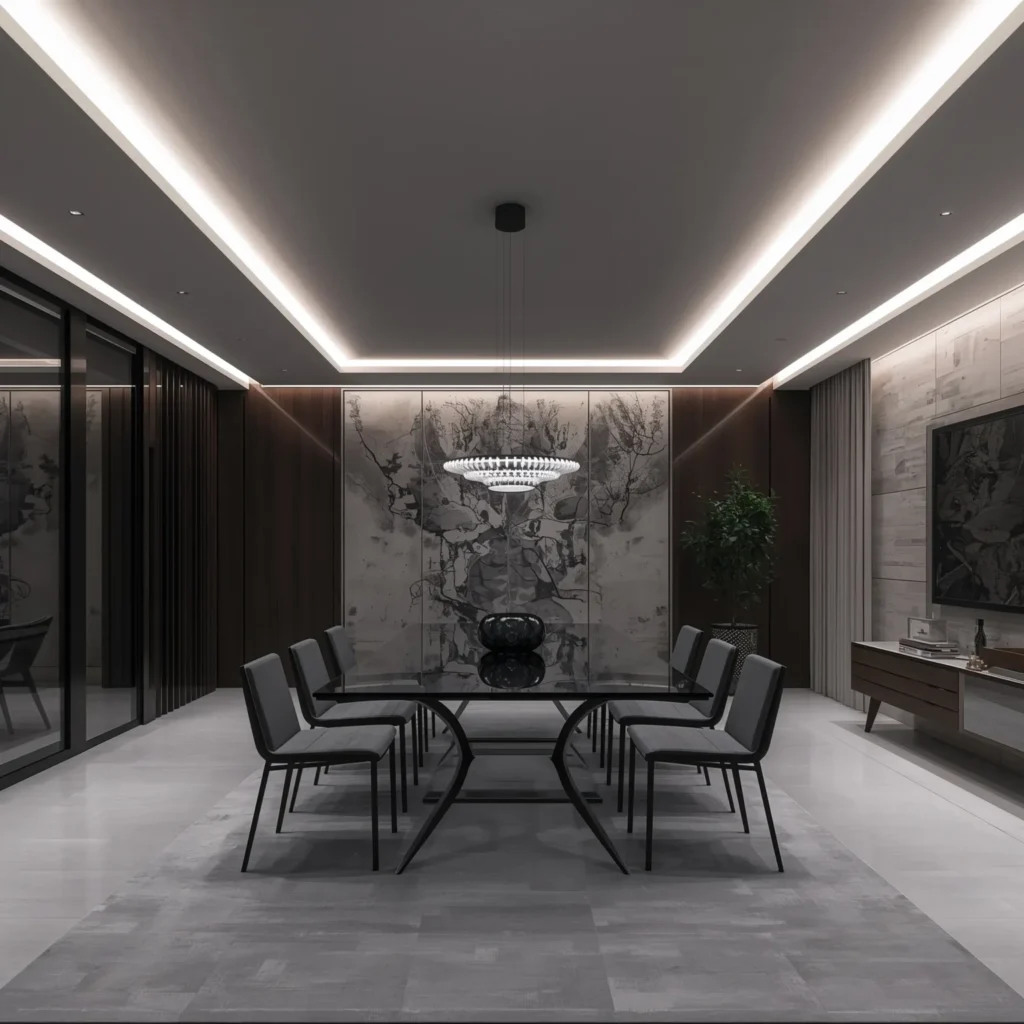
Recessed lighting has a complicated reputation in dining rooms. Used well, it provides clean, unobtrusive ambient illumination that lets the pendant or chandelier take the visual focus. Used badly — which is to say, positioned without thought, aimed incorrectly, or set to the wrong colour temperature — it makes a dining room feel like a shopping centre food court.
The most common mistake is placing recessed lights directly over the dining table, which creates harsh downward light that flattens everything and creates unflattering shadows on faces. Recessed lights in a dining room work as perimeter lighting — illuminating the walls and the edges of the room — while a pendant or chandelier handles the table.
Recessed lighting best practice for dining rooms:
- Position cans 2 to 3 feet from the wall to wash the walls with light
- Space cans approximately equal to the ceiling height divided by two
- Use warm white LEDs at 2700K — not the cooler 3000K common in kitchens
- Choose gimbal or adjustable trim heads so you can direct light precisely
- Always put recessed lights on a separate dimmer circuit from the table fixture
10. Edison Bulbs and the Warm Filament Aesthetic
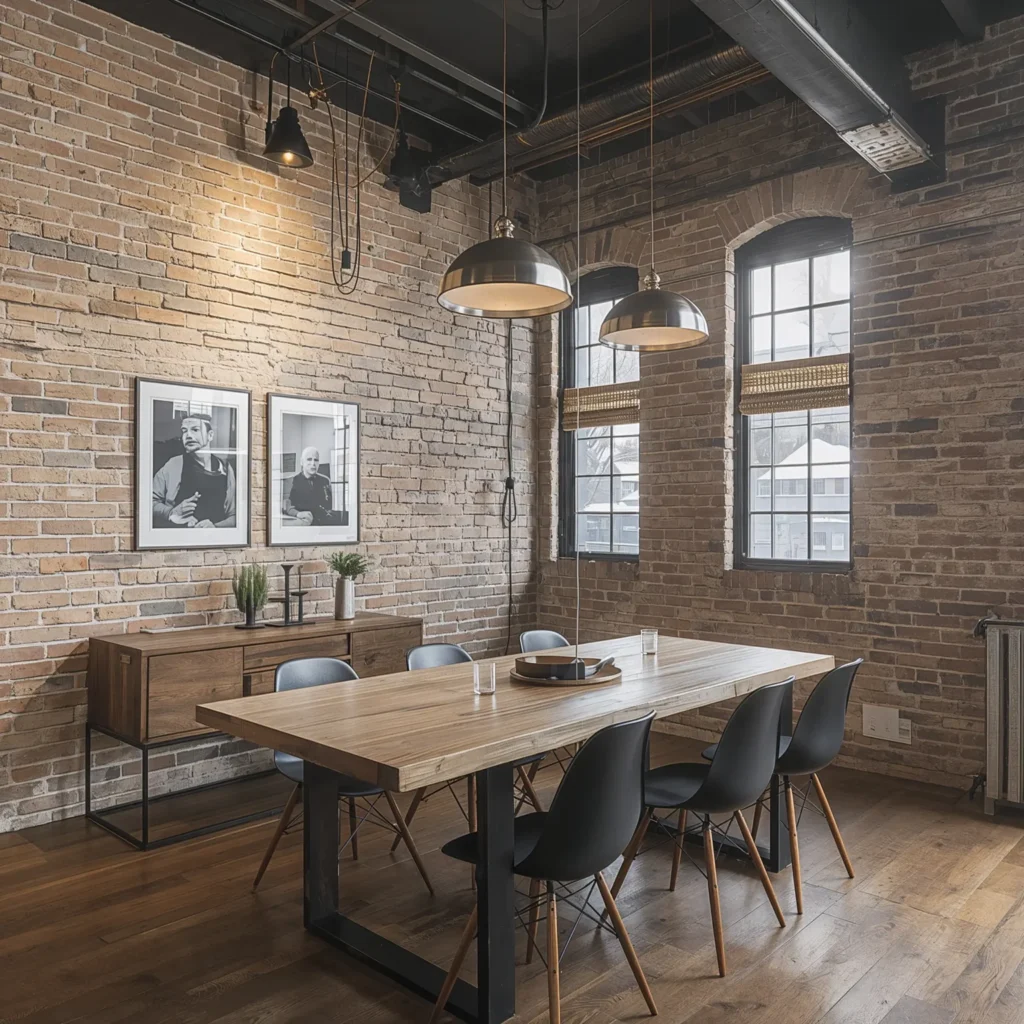
Edison-style bulbs — with their visible filament and warm amber glow — have been a fixture (no pun intended) in farmhouse, industrial, and eclectic interiors for over a decade. Their continued popularity isn’t nostalgia. It’s because no other light source produces quite the same quality of warmth and intimacy.
The glow of a visible filament bulb is directional and warm in a way that diffused LED panels can’t replicate. It’s closer to candlelight on the spectrum — flattering, relaxed, and genuinely atmospheric. Used in a pendant, chandelier, or exposed string arrangement over a dining table, it sets a mood almost immediately.
Edison bulb types and what to use them for:
- Globe (G-style) — large spherical bulb, good for open-frame chandeliers and pendants
- Tubular (T-style) — elongated form, suits linear pendants and industrial fixtures
- Classic teardrop (A-style) — versatile, works in almost any fixture designed for Edison bulbs
- Squirrel cage filament — decorative spiral or cage pattern, for fixtures where the bulb is prominently visible
Pro Tip: Modern LED Edison-style bulbs have largely closed the gap with original incandescent versions. Choose LED filament bulbs in the 2200K to 2400K range — the warmest end of the LED spectrum — and you’ll get the aesthetic with a fraction of the energy use.
11. Candles: The Original Dining Room Lighting
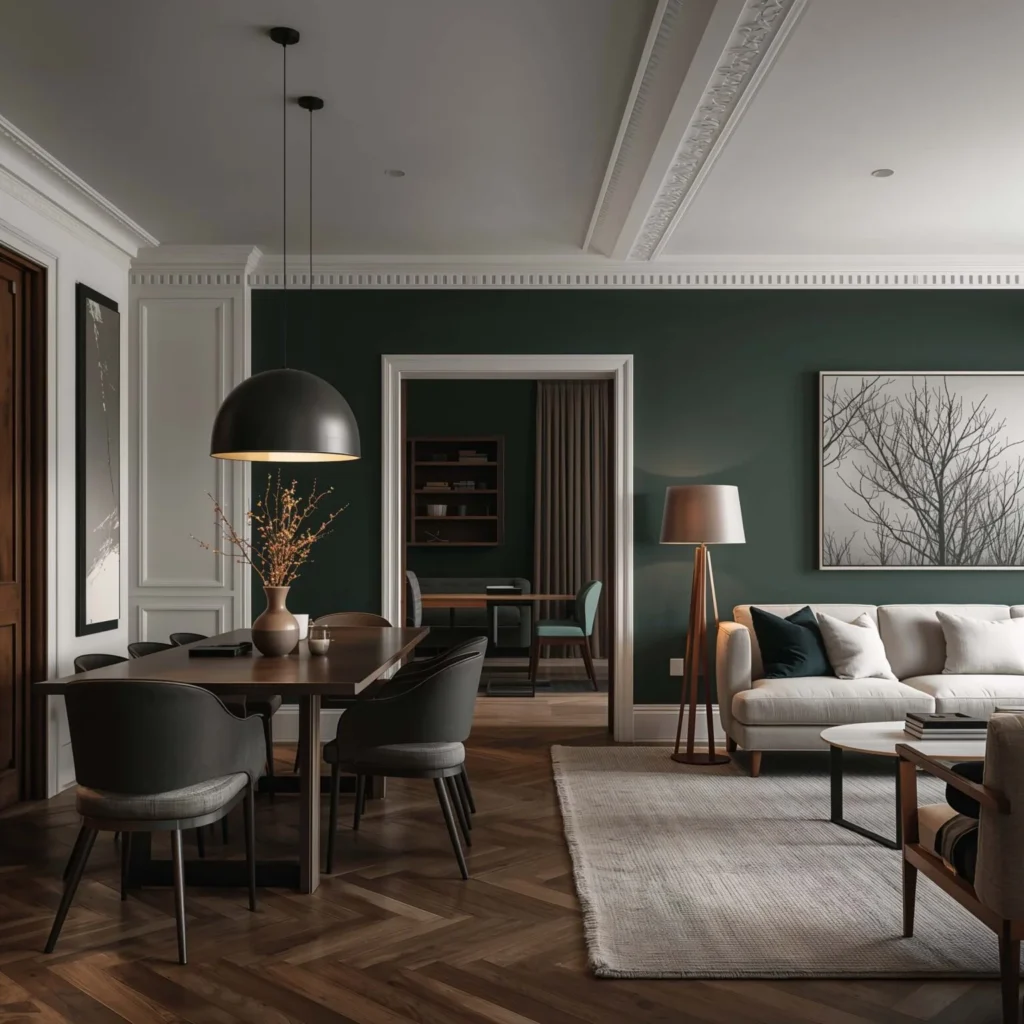
Before electricity, every dining room in the world was lit by candles. There’s a reason that formal dining rooms still look better by candlelight than by any artificial alternative, and it’s not sentimentality — it’s physics. Candlelight is warm (approximately 1800K), directional, and slightly flickering, which creates a sense of intimacy and animation that no fixed light source can fully replicate.
Candles in a dining room work best as the third layer of the lighting scheme — not the primary source, but the finishing touch that transforms a well-lit room into a genuinely atmospheric one. On the table as part of the centrepiece, in candleholders on the sideboard, as taper candles in simple holders along the windowsill.
Candle options for dining rooms:
- Pillar candles — long-burning, suit heavy stone or wooden holders
- Taper candles — elegant, suit traditional candlesticks and simple metal holders
- Tea lights in glass holders or lanterns — low-level, multiplied across the table
- LED flameless candles — the practical alternative for homes with children or strong draughts
12. The Importance of Colour Temperature
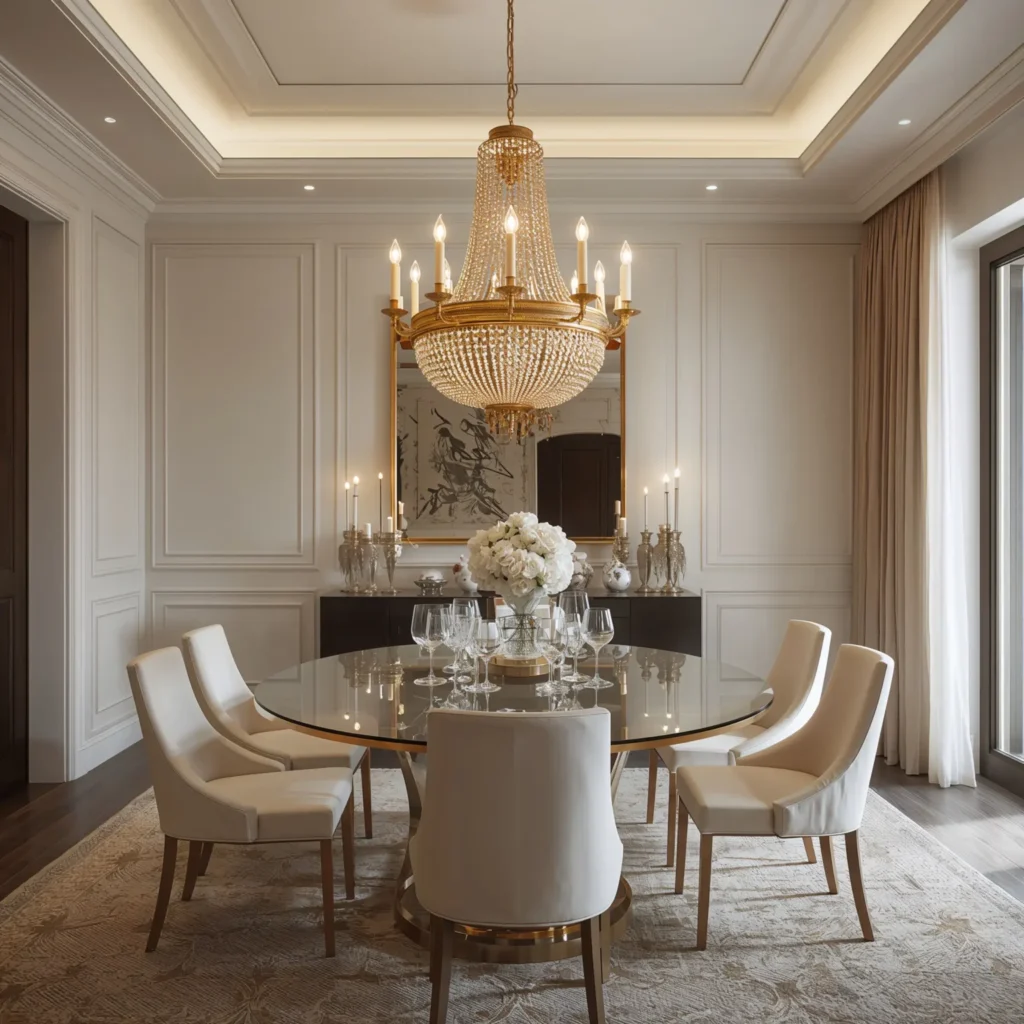
Colour temperature is the most technically significant lighting decision you make, and the one most often overlooked in favour of fixture aesthetics. A beautiful chandelier loaded with the wrong colour temperature bulbs will make your dining room feel clinical, institutional, or simply off — and you’ll spend months wondering why the room never quite looks right.
Colour temperature is measured in Kelvin (K). Lower numbers are warmer (more orange/amber). Higher numbers are cooler (more blue/white).
Colour temperature guide for dining rooms:
- 1800K to 2200K — candlelight range, very warm amber, deeply atmospheric, for accent and evening use
- 2700K — warm white, the standard for residential lighting, suits almost all dining room fixtures
- 3000K — soft white, slightly cooler, common in kitchens, acceptable in dining rooms with warm materials
- 3500K and above — neutral to cool white, unsuitable for dining rooms, makes food look unappetising
The standard recommendation for dining rooms is 2700K throughout — warm enough to flatter faces and food, bright enough to be functional. If you’re adding candles or firelight, you can go slightly cooler in the artificial sources since the warm candle glow will balance the overall temperature.
Pro Tip: Check the colour temperature on every bulb before purchasing — it’s listed on the packaging, usually near the wattage. Many retailers stock the same bulb in different temperatures, and it’s easy to accidentally buy the wrong version.
13. Brass and Gold Finishes: Warm, Timeless, and Currently Very Popular
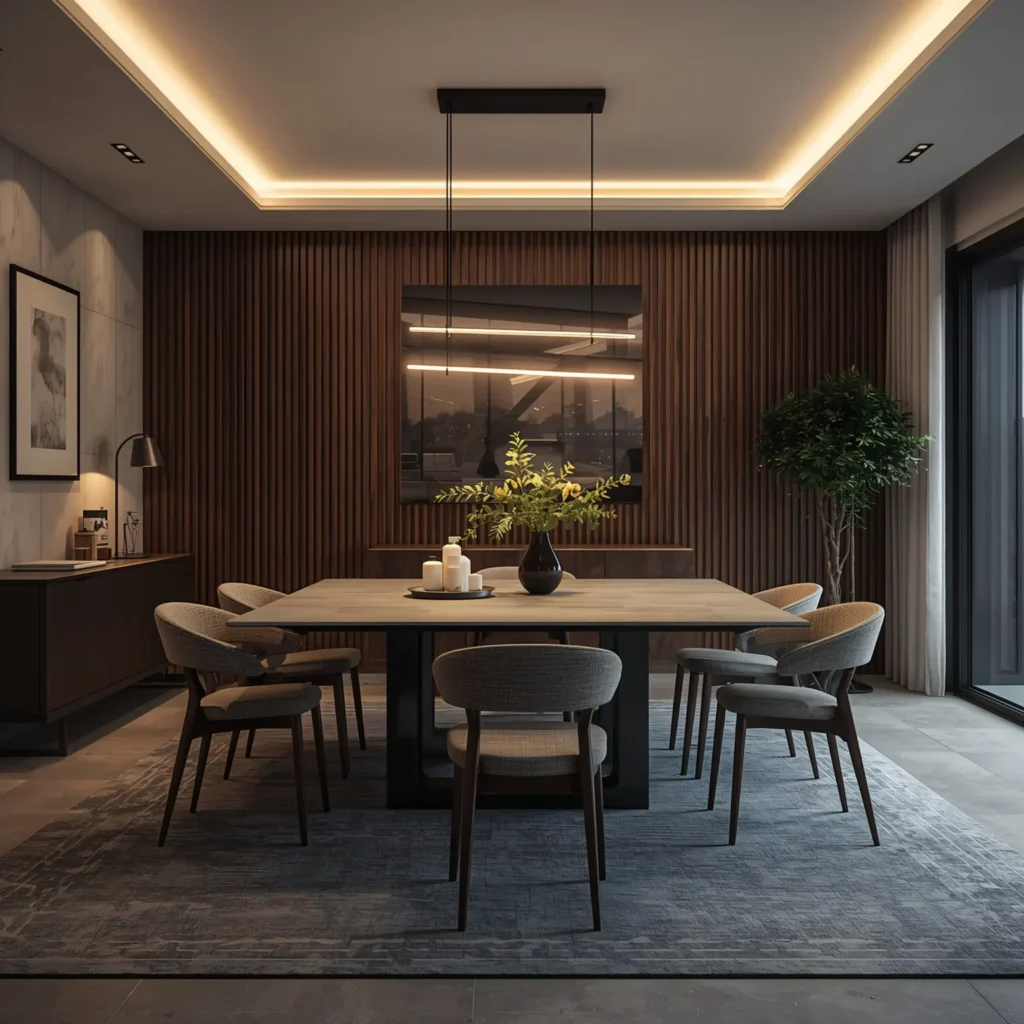
Metal finish trends in lighting move slowly, and brass has been building momentum for long enough now that it’s safe to say it has legs. Unlike its previous incarnation — the polished, lacquered brass of the 1980s and 90s that aged badly and dated fast — contemporary brass finishes are deliberately understated.
Unlacquered brass develops a natural patina over time, darkening and gaining character rather than looking like it needs polishing. Brushed or satin brass has a warm, muted quality that reads as sophisticated rather than showy. Antique brass has depth and a slightly aged quality that suits traditional and eclectic spaces.
Brass fixture styles for different dining rooms:
- Brushed brass chandelier with clean geometric form — suits contemporary and transitional rooms
- Antique brass candlestick chandelier — traditional, works beautifully in period properties
- Unlacquered brass pendant with exposed bulb — industrial-influenced, aged and characterful
- Warm gold clustered globe pendants — glamorous and contemporary, suits jewel-toned rooms
Pro Tip: Brass mixes well with other metals in the same room. Pair it with matte black for high contrast, with bronze for a tonal warm grouping, or with natural wood tones for a softer, more organic feel.
14. Matte Black Fixtures: Clean, Graphic, and Universally Compatible
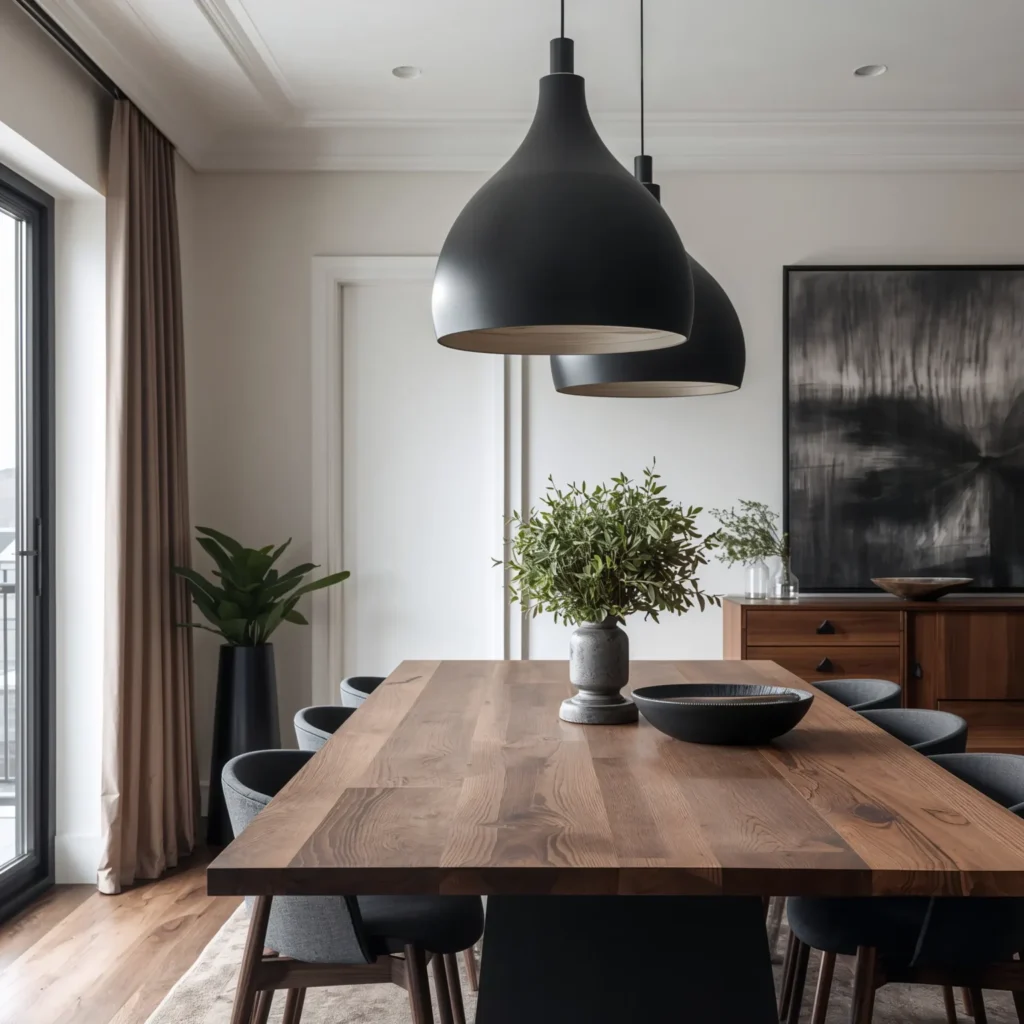
Matte black has become the most versatile finish in contemporary lighting — and it earned that status. Unlike polished chrome (which shows every fingerprint) or unlacquered brass (which requires acceptance of patina), matte black is practically bulletproof: it doesn’t show marks, doesn’t age noticeably, and goes with almost everything.
In dining rooms, matte black fixtures read as both modern and slightly industrial — which makes them a natural fit for farmhouse interiors (where the contrast with warm wood is intentional), contemporary spaces (where the graphic quality suits clean lines), and transitional rooms that blend traditional and modern elements.
Matte black fixture types that work well in dining rooms:
- Cage or exposed bulb pendants — industrial, warm with Edison bulbs
- Geometric chandeliers — architectural, suits rooms with strong angles
- Minimal single-stem pendants with glass shade — clean and refined
- Multi-arm chandeliers — dramatic, particularly good with white or cream interiors
15. Crystal Chandeliers: Modern Interpretations of a Classic
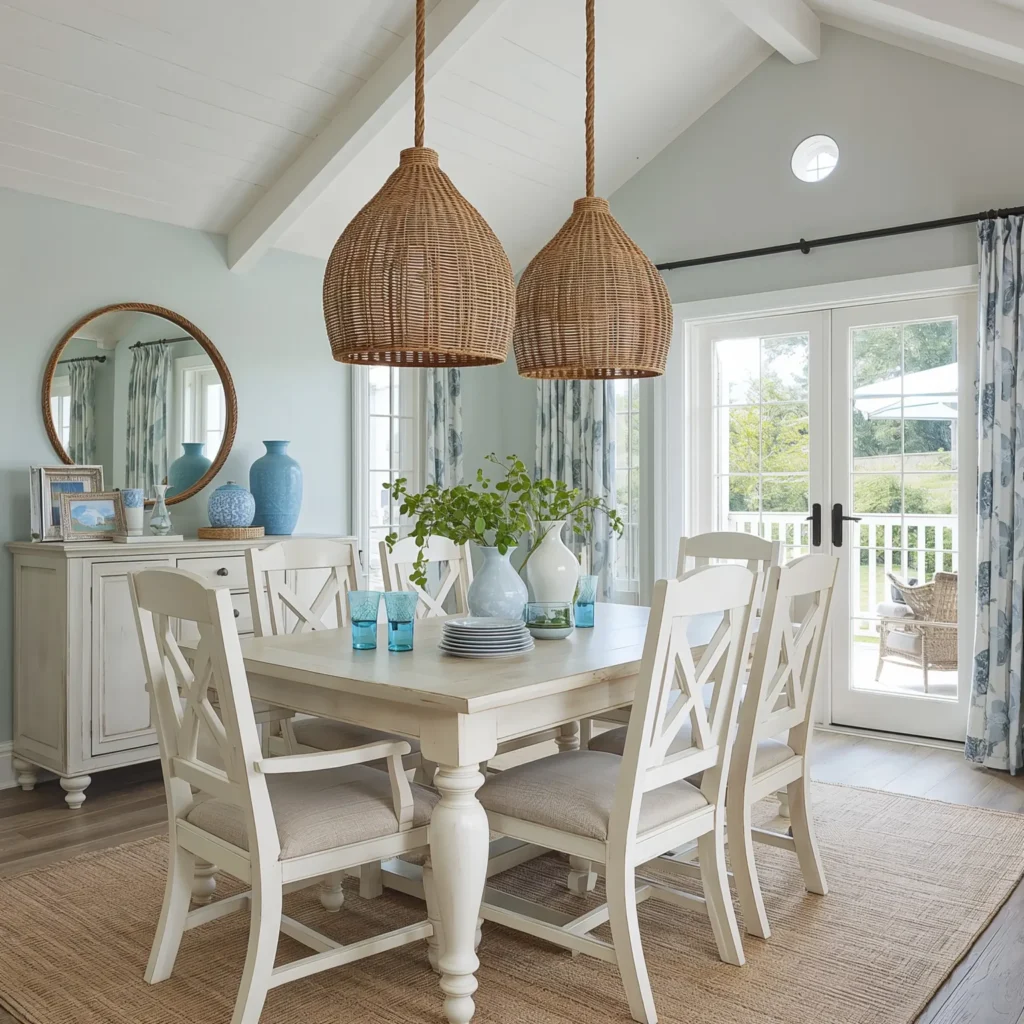
Crystal chandeliers have never really gone away. They’ve simply evolved. The traditional cascading crystal designs that dominated formal dining rooms for generations remain beautiful and appropriate in period properties and classically designed spaces. But contemporary crystal fixtures have moved well beyond that single form.
Modern crystal chandeliers include geometric structures in which crystal elements are used as accents rather than the entire fixture, linear crystal designs that suit contemporary spaces, and mixed-material pieces that combine crystal with matte black, antique brass, or natural wood.
What to check when buying a crystal fixture:
- Crystal type — genuine K9 crystal or Swarovski elements refract light differently than glass imitations
- Frame material and finish — brass and steel are significantly more durable than aluminium
- Cleaning access — consider whether you can reach all parts of the fixture for maintenance
- Weight — confirm your ceiling junction box is rated for the fixture’s weight before purchasing
Pro Tip: A crystal chandelier in a dining room with a dimmer is one of the most atmospheric lighting setups in residential design. At full brightness, the refracted light is brilliant and celebratory. Dimmed low, the crystals catch the warm glow in a way that creates genuine magic.
Final Thoughts
Lighting is one of those topics where the gap between knowing what to do and actually doing it can stretch for years. People live with inadequate dining room lighting not because they don’t care, but because it feels complicated — like it requires an electrician, a designer, and a firm decision about a fixture that will be permanently fixed to the ceiling.
The reality is more accessible than that. Some of the most effective lighting changes in a dining room cost almost nothing: a dimmer switch, a warmer bulb, a couple of candles on the table. Start with the smallest change that moves the room in the right direction.
Get the colour temperature right first — swap any cool-white bulbs for 2700K warm white equivalents. Add a dimmer to whatever’s already overhead. Bring in candles for evening meals. Those three changes alone will transform most dining rooms. From there, you can layer in the right fixture, the sconces, the sideboard lamps — one decision at a time, each one building on the last.
The goal, ultimately, is a dining room that makes people look good, food look appealing, and the people around the table want to stay. Lighting is the element that makes that happen more reliably than any other. Invest in it accordingly.
1 thought on “15 Unique Dining Room Lighting Ideas for Modern Living”