
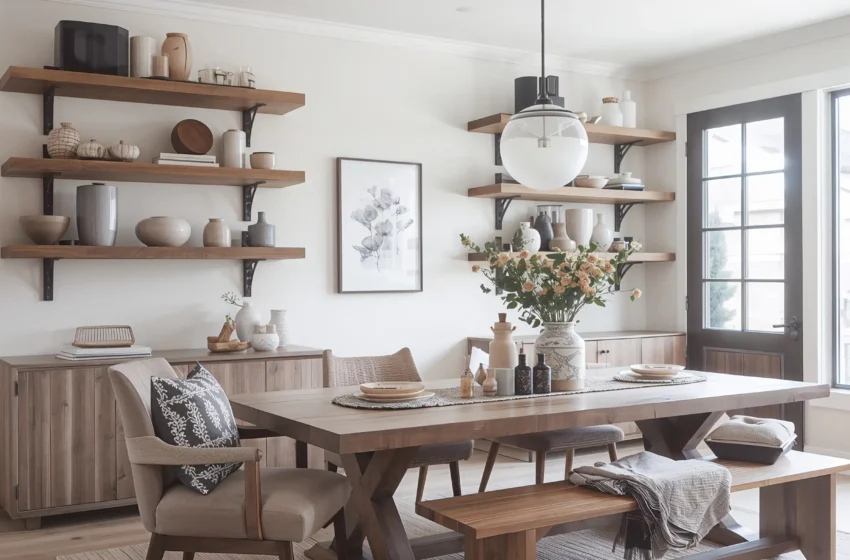
Modern farmhouse style has been declared ‘over’ at least a dozen times in the last few years. And yet, every time you scroll through design inspiration, there it is — warm wood, soft neutrals, a little bit of black, and that unmistakable sense of welcome.
There’s a reason it keeps coming back. It isn’t really a trend. It’s a mood — one that prioritises comfort over perfection, warmth over minimalism, and real life over showroom staging. And nowhere does it work better than the dining room.
The dining room is where modern farmhouse style genuinely earns its keep. This is the space where people gather, linger, and come back to. It needs to feel good — not just look good in photographs. When these two things align, you end up with something rare: a room that’s both beautiful and deeply liveable.
Here are 20 modern farmhouse dining room ideas — covering everything from furniture and lighting to colour, texture, and the small details that make a big difference. These aren’t aspirational concepts from a perfect magazine shoot. They’re practical, thoughtful ideas for real homes.
1. Start with a Solid Wood Dining Table as Your Anchor
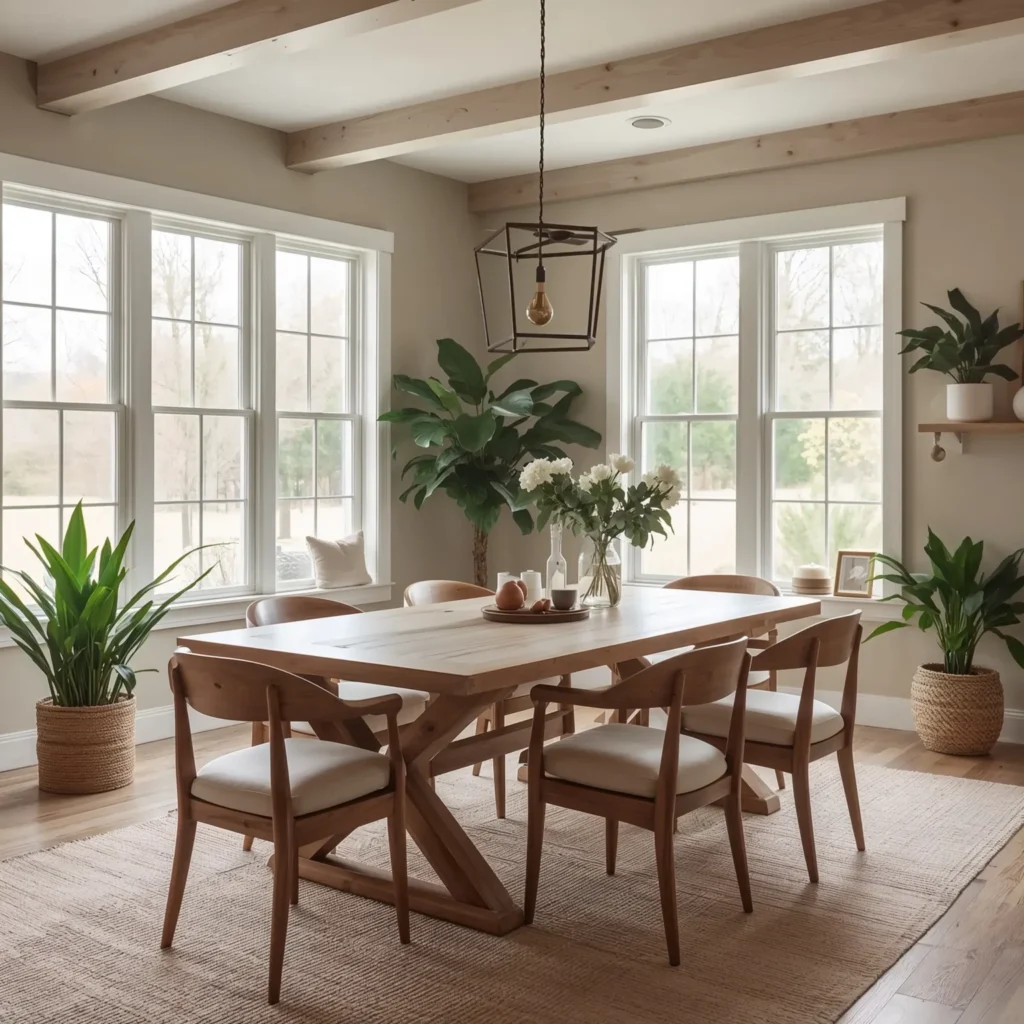
Every great modern farmhouse dining room begins with a table worth building around. Not a table that matches the chairs, not a set from a furniture showroom — a table with actual character. Solid wood is the obvious choice, and the imperfections are the point.
Knots, grain variation, natural colour shifts — these are the qualities that make reclaimed or solid hardwood tables irreplaceable. Oak, walnut, and pine are the most popular choices. Oak is durable and takes stain beautifully. Walnut has a natural warmth and depth that’s hard to fake. Pine is softer, marks more easily, but develops a patina over time that many people love.
Table styles that suit modern farmhouse dining rooms:
- Trestle tables — the classic farmhouse form, with cross-beam supports at each end
- Pedestal tables — cleaner and more modern, with good legroom all around
- Live-edge tables — one long natural edge retained, uniquely organic
- Parsons-style solid wood tables — simple, contemporary, and very versatile
- Reclaimed barn wood tables — maximum character and sustainability in one piece
Pro Tip: If you’re buying a dining table to last decades, spend more than you think you should. A genuinely well-made solid wood table is repairable, refinishable, and will outlast every other piece of furniture you own.
2. Mix Your Dining Chairs Intentionally
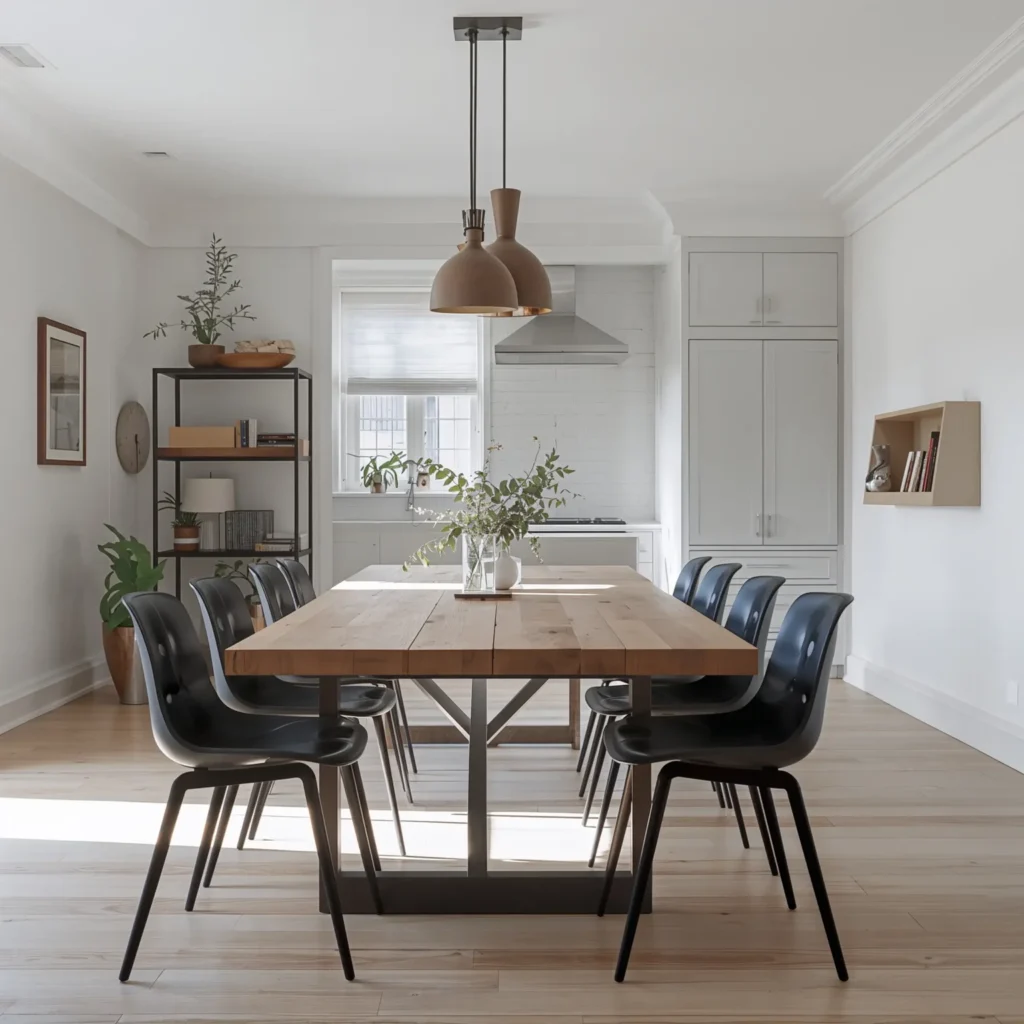
Matching dining sets — the table plus six identical chairs sold as a unit — are practical, but they rarely produce an interesting room. Modern farmhouse design is at its best when it looks like it evolved over time, not arrived in a single delivery van.
The most effective approach is to use two or four matching side chairs along the length of the table and a different, more generous chair at each head. Carver chairs — those with arms — at the ends of the table add structure and a sense of occasion.
Chair combinations that work well:
- Upholstered linen chairs paired with wooden bench seating on one side
- Vintage wooden ladder-back chairs with modern upholstered carvers at the heads
- Metal-frame chairs with wood seats mixed with fully upholstered side chairs
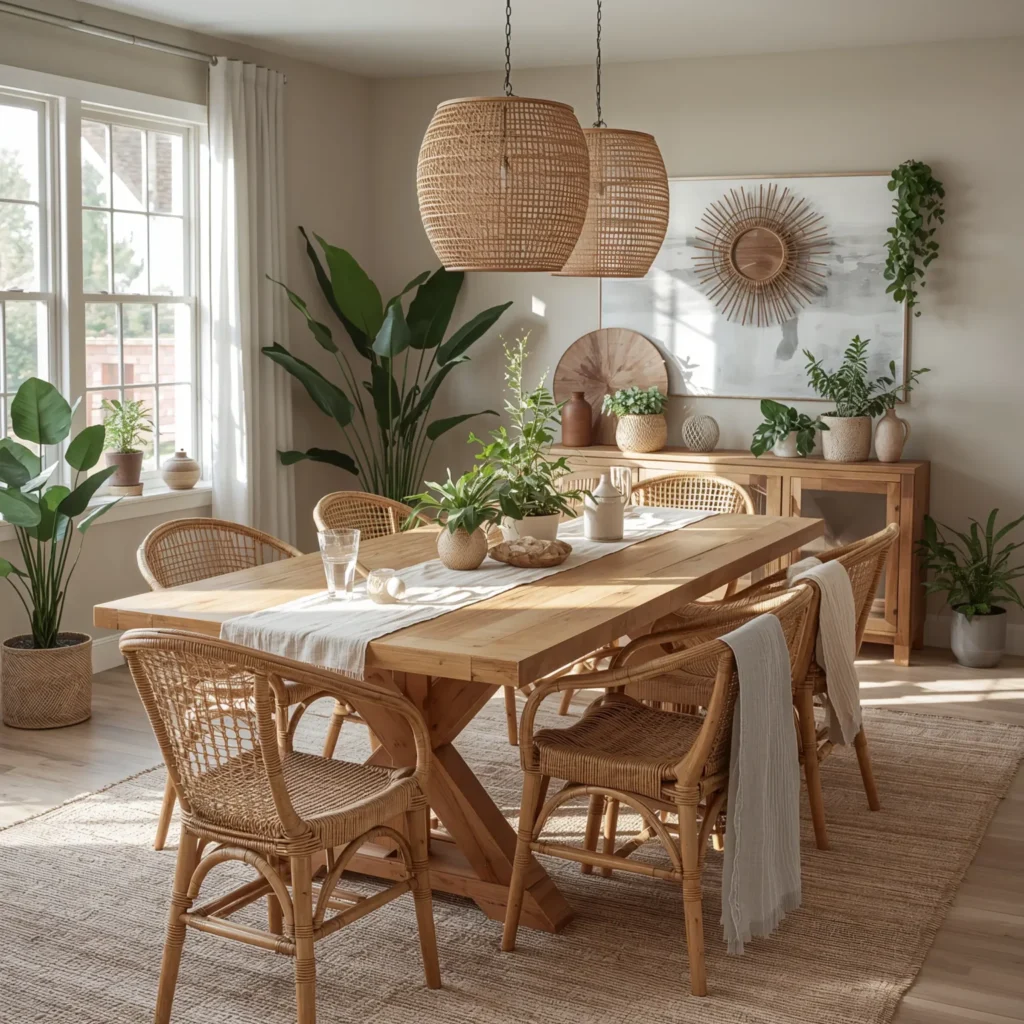
- Rattan or woven chairs alongside painted wooden ones for texture contrast
The rule that keeps mixing from tipping into chaos: hold one element constant. If all the chairs share the same seat height and a similar scale, you can vary almost everything else — material, finish, style — and the room will still feel cohesive.
Pro Tip: A bench seat along one side of the dining table is one of the most practical and visually interesting choices in a farmhouse dining room. It seats more people than individual chairs, adds a casual warmth, and looks particularly good under a window.
3. Get the Lighting Right — It Changes Everything
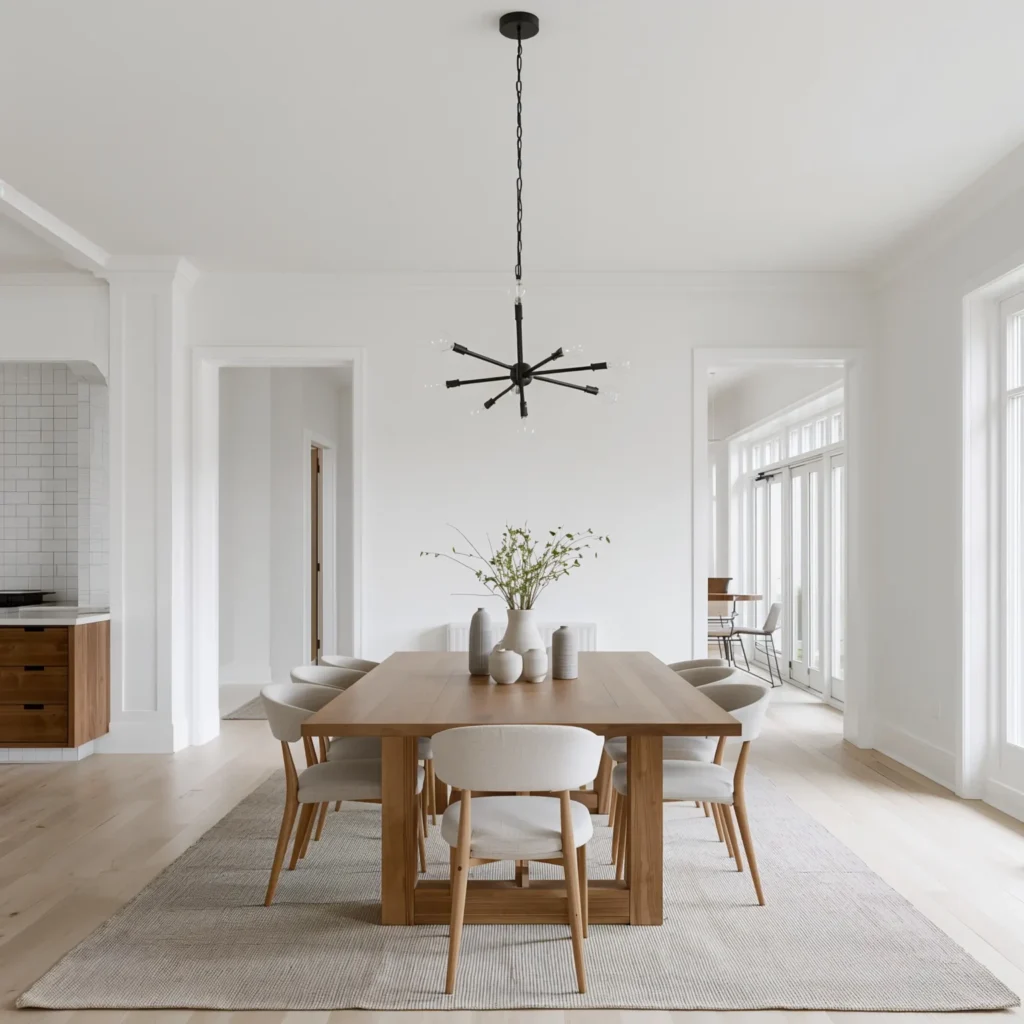
If you get one thing right in a dining room, make it the lighting. A beautiful table, well-chosen chairs, and a stunning rug can all be undone by a single harsh overhead fixture. And the reverse is equally true: the right light over a dining table transforms even a modest room into somewhere that feels genuinely special.
Modern farmhouse lighting sits between two poles: the warmth and handcrafted quality of traditional farmhouse fixtures, and the clean lines and restraint of contemporary design. The best pieces bring both together.
Lighting ideas that suit modern farmhouse dining rooms:
- Linear pendant lights over a rectangular table — even illumination, clean lines, no sightline obstruction
- A statement chandelier with warm metal finish — black iron, aged brass, or brushed bronze
- Clustered Edison bulb pendants — warm, casual, and very adaptable to different table sizes
- Rattan or woven pendant shades — natural texture that adds warmth without weight
- Wagon-wheel or spoke chandeliers — the farmhouse classic, works beautifully in rooms with high ceilings
Hang the pendant or chandelier at the right height — roughly 30 to 36 inches above the table surface. Too high and it loses intimacy; too low and guests are peering around it to make eye contact.
Pro Tip: Install a dimmer switch on every dining room light fixture. The ability to shift from bright functional lighting for family breakfast to soft, warm light for a dinner party is worth far more than the cost of the dimmer.
4. Shiplap: Use It Purposefully, Not Everywhere
Shiplap has become so synonymous with modern farmhouse design that it risks becoming a cliché. The problem isn’t shiplap itself — it’s the tendency to cover every available wall in it and call it done. Used with restraint and intention, shiplap remains one of the most effective ways to bring farmhouse texture and warmth into a dining room.
The best applications treat shiplap as an accent rather than a wallpaper substitute. A single feature wall behind a sideboard or buffet creates a strong focal point. Shiplap on the lower half of a wall combined with paint on the upper half, separated by a picture rail or chair rail, gives the room a classic, layered quality.
Where shiplap works best in a dining room:
- Behind the dining table on the main wall, framing the space
- The lower portion of all walls, with a complementary paint colour above
- A narrow entryway or nook wall that leads into the dining area
- As a ceiling treatment — an underused application that adds drama and warmth
Pro Tip: Paint shiplap in an off-white or warm cream rather than stark white. Pure white shiplap can feel clinical; warm whites like Alabaster, Antique White, or Linen create the comfortable, layered feel that modern farmhouse design is known for.
5. The Power of a Well-Chosen Dining Room Rug
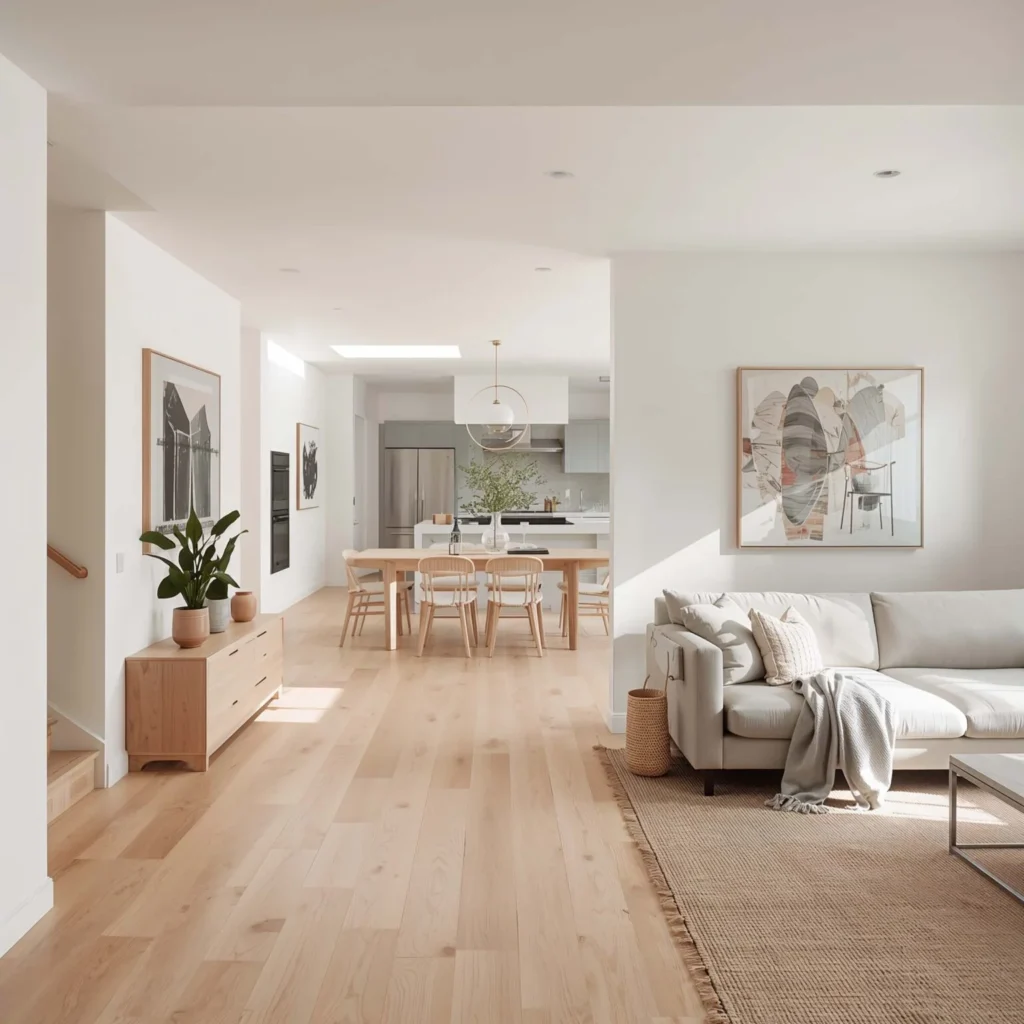
A rug under the dining table does several things at once: it defines the eating area, softens the room acoustically, adds colour and texture underfoot, and — perhaps most importantly — makes the whole space feel more considered and complete.
The most common rug mistake in dining rooms is choosing one that’s too small. If chairs legs fall off the rug when pulled out, the rug is undersized. The general rule: allow at least 24 inches of rug beyond the table on every side. This ensures chairs remain on the rug even when pulled back for seating.
Rug materials and styles suited to farmhouse dining rooms:
- Natural jute or sisal — extremely popular in farmhouse interiors, durable and honest
- Wool flatweave rugs — more refined, easy to clean, good colour range
- Vintage-style Persian or Oushak rugs — warm tones, pattern, and instant character
- Indoor-outdoor rugs — practical for families with children, surprisingly stylish
- Braided rugs — a traditional farmhouse choice that’s had a genuine design revival
Pro Tip: Layer a smaller flatweave or sheepskin over a larger natural jute rug for a collected, textural look that’s become a signature element of current farmhouse interior design.
6. Build a Colour Palette That Feels Warm, Not Flat
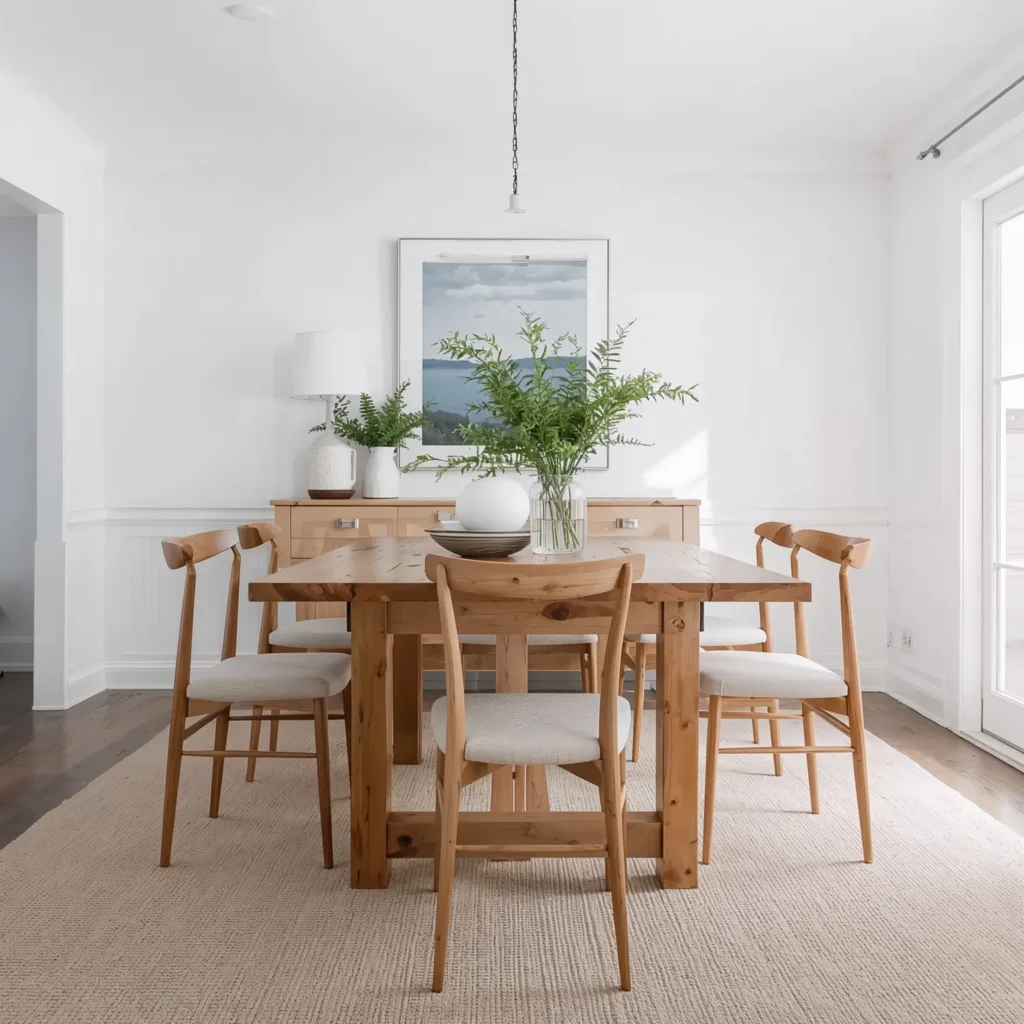
One of the risks of modern farmhouse design is ending up with a room that’s technically correct but emotionally flat — all beige walls and white trim with nothing to catch the eye or hold interest. Warmth in colour isn’t just about choosing beige over grey; it’s about understanding undertones and how colours interact.
Colour directions that work in modern farmhouse dining rooms:
- Warm whites and creams — the safe foundation, but choose whites with yellow or peach undertones rather than blue or green ones
- Sage green — a perennial farmhouse favourite that looks sophisticated with wood tones and natural materials
- Terracotta and clay — deeper and more saturated, works beautifully as an accent wall or on lower cabinets in an open-plan space
- Slate blue or dusty navy — cooler, but grounds the room and pairs surprisingly well with warm wood tones
- Warm charcoal — a sophisticated alternative to black as an accent, less stark and more liveable
The key to any farmhouse colour palette is internal consistency. Choose colours from the same temperature family — warm with warm, cool with cool — and let natural wood tones bridge the gaps. A room that has consistent undertones throughout feels settled and intentional, even when the colours vary.
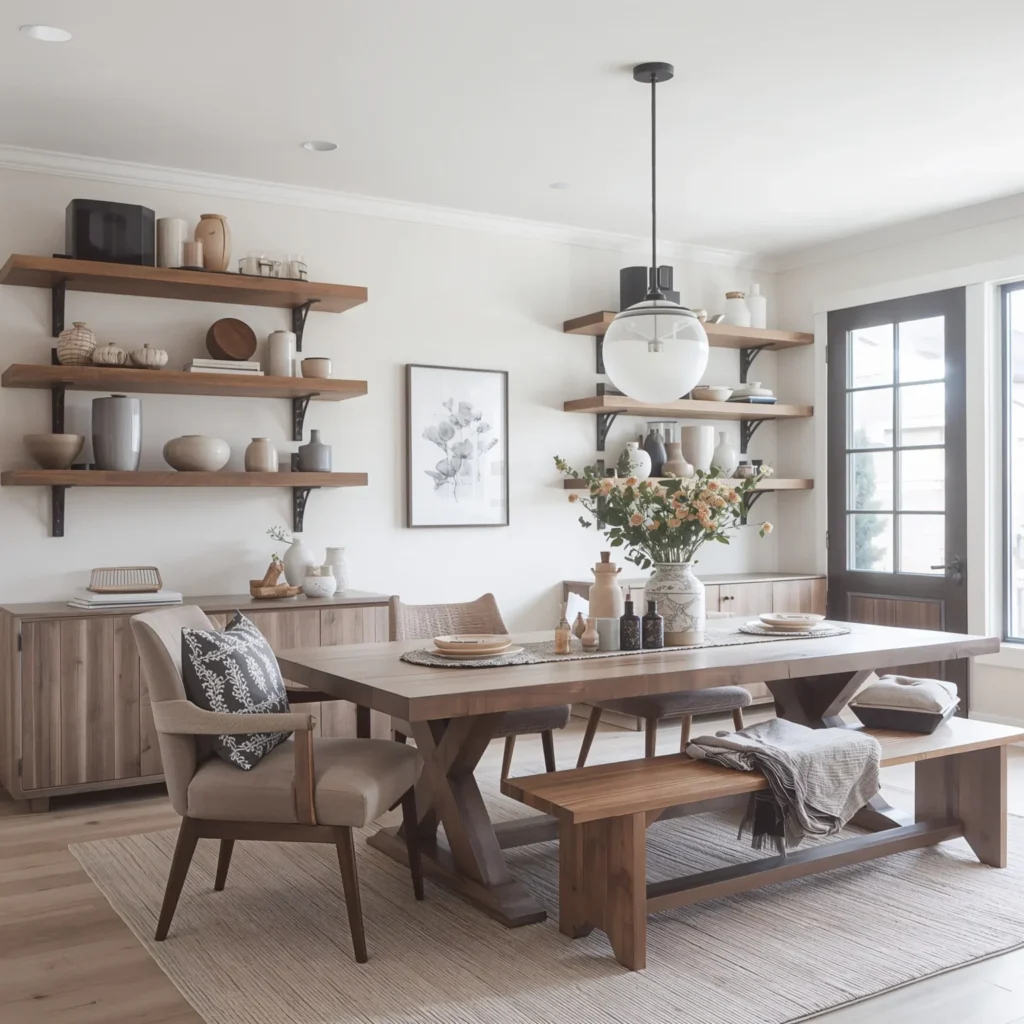
7. Open Shelving: Curated, Not Cluttered
Open shelving in a dining room is one of those ideas that looks effortless in design photos and requires genuine effort to execute well in real life. When it works, it adds warmth, function, and a sense of personality that closed cabinets simply can’t provide. When it doesn’t, it looks like an organised junk collection.
The secret is treating open shelving like a changing display rather than permanent storage. What’s on those shelves should be both useful and considered — things you actually reach for regularly, combined with a few objects that simply look good and add to the room’s story.
What to put on open dining room shelves:
- White or cream dinnerware as the consistent visual anchor
- A couple of cookbooks with attractive spines
- Small plants or trailing greenery
- Wooden serving boards and ceramic bowls
- Glass jars with dry goods — both practical and beautiful
- One or two pieces of art or ceramics that you genuinely love
Pro Tip: Edit ruthlessly. Take everything off the shelves, then only put back what earns its place. Leave gaps between objects — negative space makes the display feel intentional rather than crowded.
8. Bring in Natural Textures at Every Layer
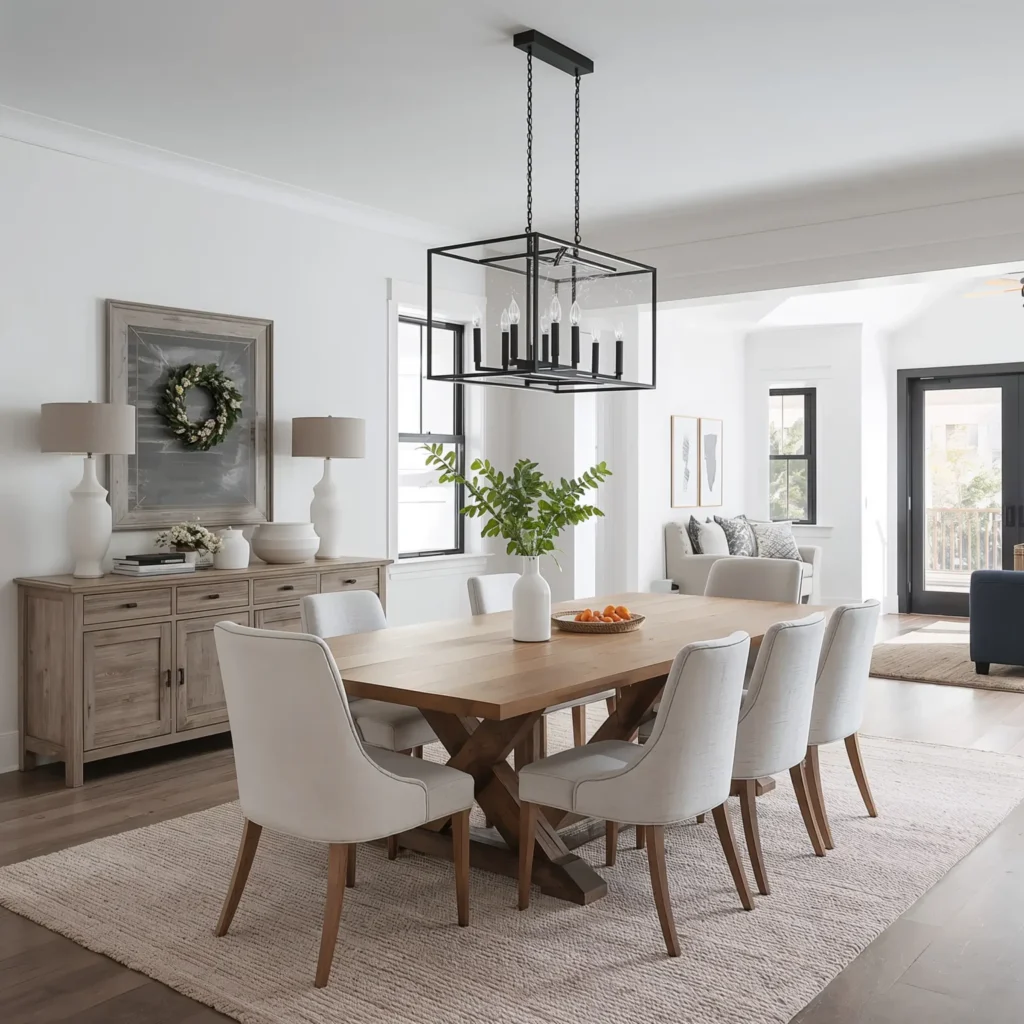
Modern farmhouse design is fundamentally a textural style. The visual interest comes not from bold patterns or vivid colour but from the contrast between rough and smooth, matte and sheen, soft and hard. Layer enough different natural textures and the room comes alive.
Textures to incorporate throughout a farmhouse dining room:
- Grain-rich solid wood — on the table, shelving, or a sideboard
- Linen or cotton upholstery — relaxed, unpretentious, and genuinely comfortable
- Woven materials — rattan chair backs, a jute rug, a woven pendant shade
- Raw or glazed ceramics — in a centrepiece bowl, candleholders, or wall plates
- Aged or patinated metal — black iron, brushed brass, burnished bronze in hardware and lighting
- Stone surfaces — a slate serving board, a marble trivet, or a stone-topped sideboard
The goal is a room that rewards closer inspection — where you notice more detail and more quality the longer you spend in the space. That’s what separates a genuinely good farmhouse dining room from one that just has the surface markers of the style.
9. A Statement Sideboard Does More Than You Think
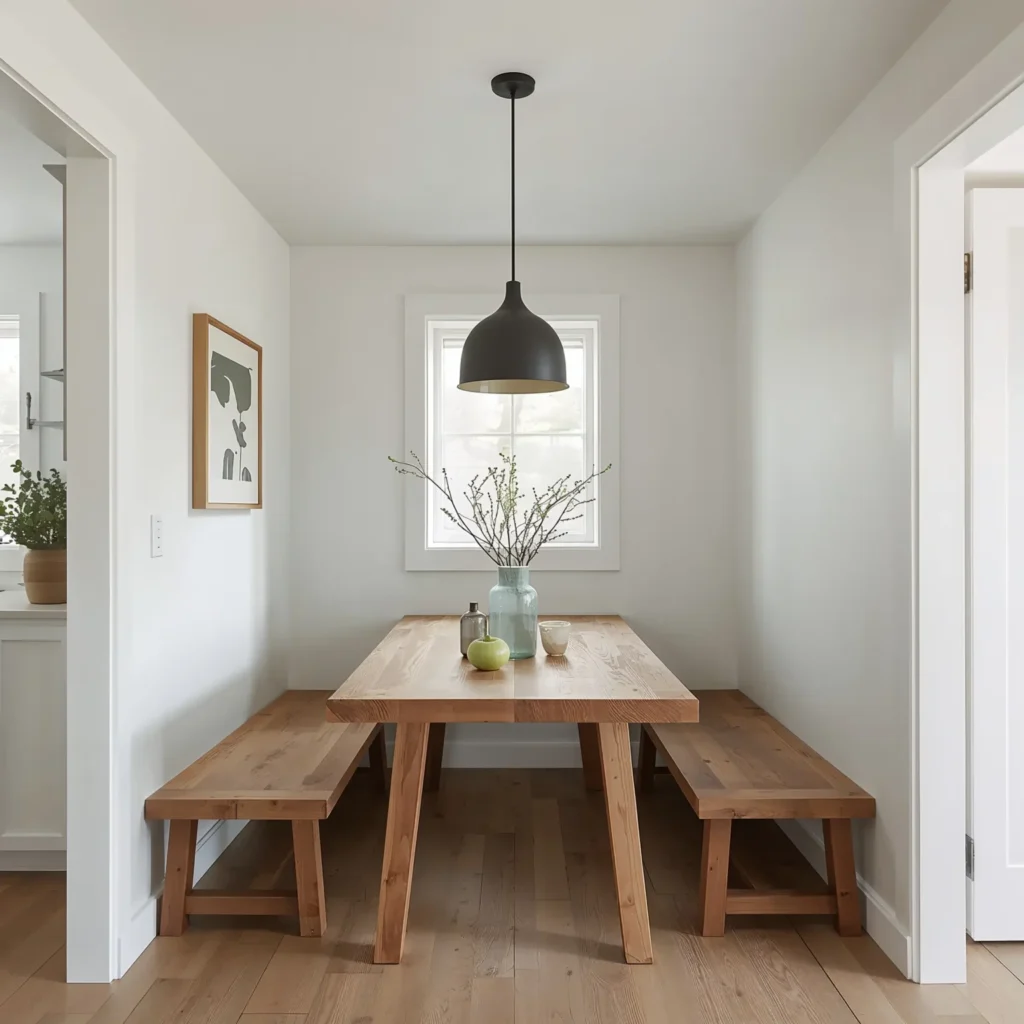
The sideboard or buffet is often treated as an afterthought — somewhere to put the wine glasses and the spare table linens. In a well-designed farmhouse dining room, though, it plays a much more important role: it grounds the space, creates a secondary focal point, and gives you a surface to style seasonally.
Farmhouse sideboards tend to be generous in scale and honest in material. A solid wood piece with simple hardware, a few drawers, and cabinet space below is both the most versatile and the most timeless choice.
How to style a farmhouse dining room sideboard:
- A large mirror or a piece of substantial artwork on the wall above
- Two lamps for symmetry and warm light — pull them from matching outlets
- A tray grouping a few objects together so they read as one composed element
- Seasonal fresh flowers or a potted plant for life and colour
- A few carefully chosen objects that tell something about the household
Pro Tip: Vary the height of objects on your sideboard — tall lamps, medium vases, low trays and books. A flat arrangement at one level looks staged; varied heights look natural and collected.
10. Wainscoting and Board-and-Batten Wall Treatments
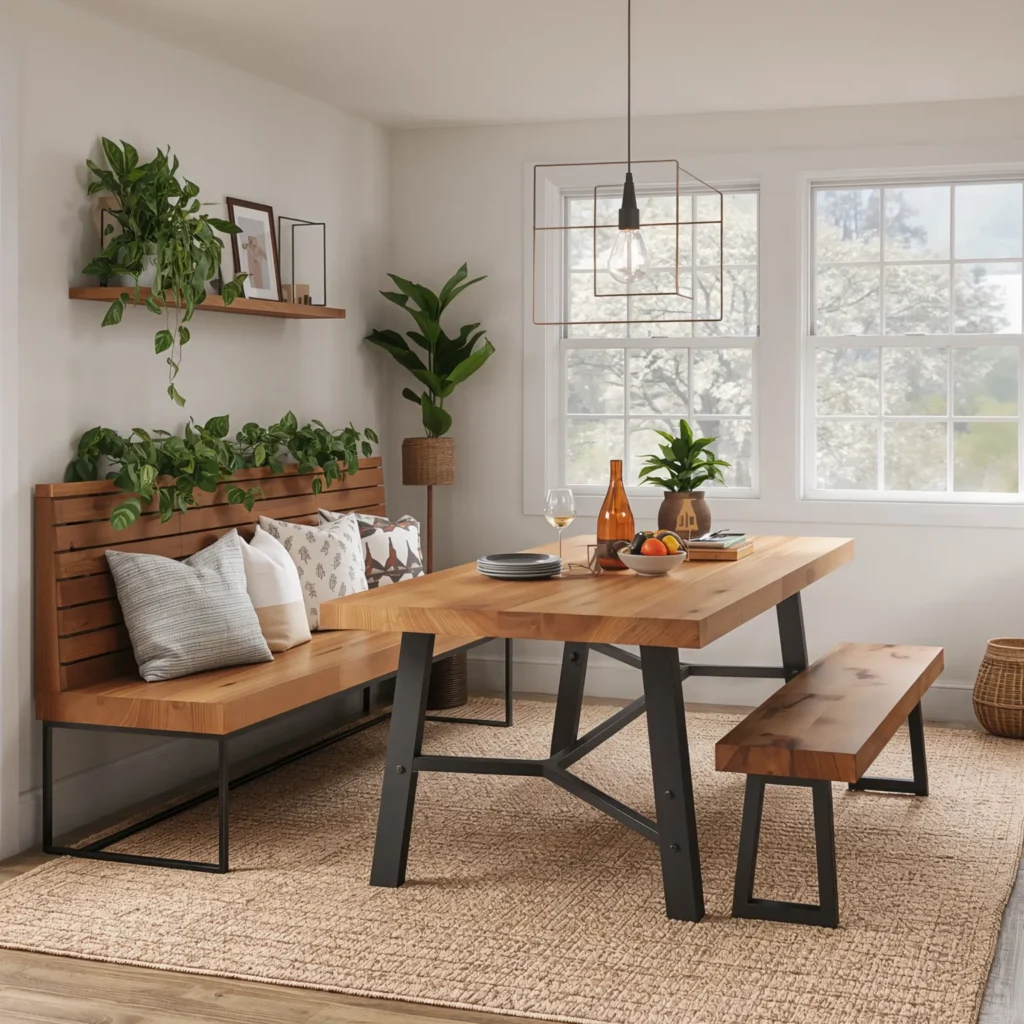
While shiplap gets most of the attention in farmhouse interiors, wainscoting and board-and-batten wall treatments are arguably more versatile — and in a dining room, they add a refinement and formality that shiplap alone can’t provide.
Wainscoting — with its raised panels and chair rail — lends a historic quality that suits older homes or dining rooms with higher ceilings. Both treatments add depth and interest to walls that would otherwise be flat, and both photograph beautifully.
Colour combinations for board-and-batten dining rooms:
- Deep forest green lower panels, warm cream above — classic and very current
- Navy blue lower panels, soft white above — crisp, graphic, and timeless
- Warm terracotta lower panels, off-white above — earthy and unexpected
- Charcoal grey lower panels, warm white above — sophisticated and versatile
11. Layer Your Centrepiece Rather Than Buying One
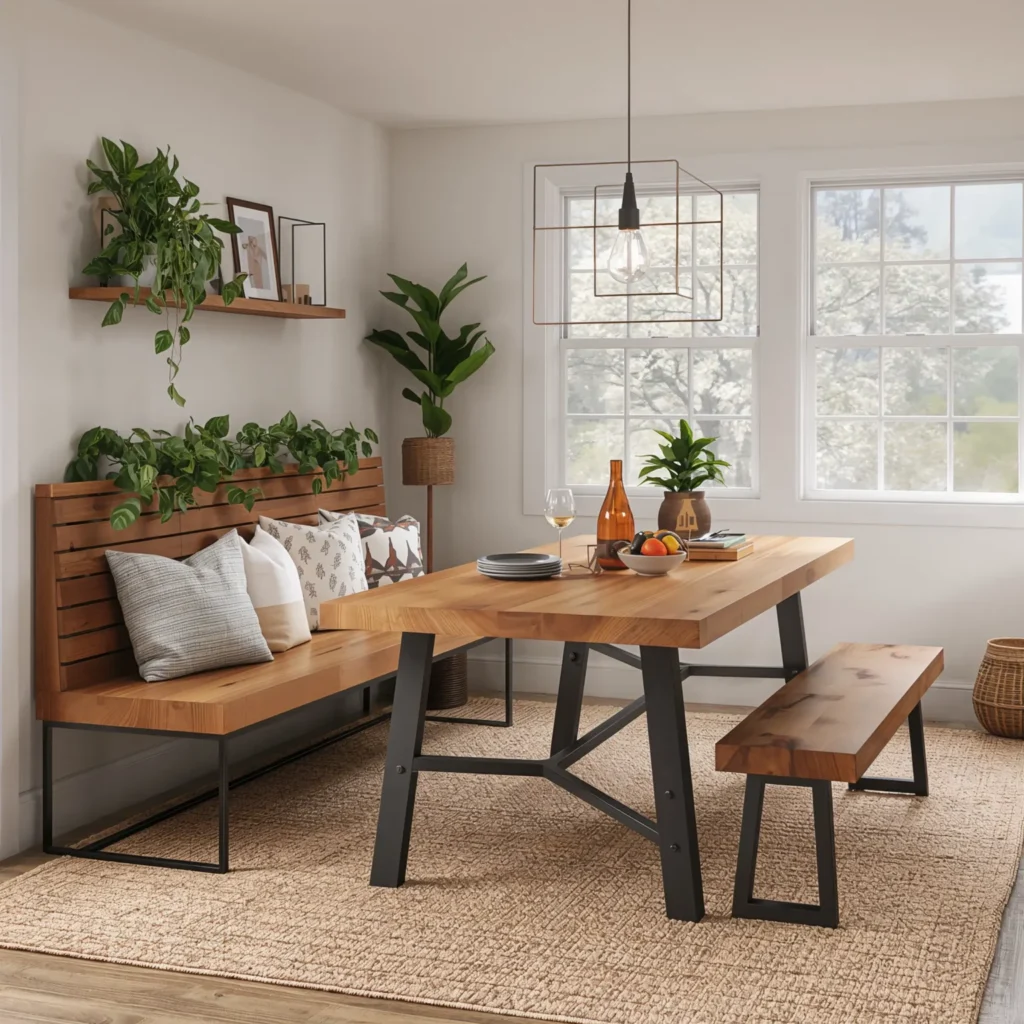
A dining table centrepiece that’s been ‘designed’ — a matching set bought together from a home accessories shop — tends to look exactly that way. The most appealing centrepieces in farmhouse dining rooms look like they arrived gradually, each piece chosen independently.
Elements of a layered farmhouse table centrepiece:
- A wooden tray or a piece of natural stone as the base
- A cluster of different-height candles — pillar candles, taper candles, tea lights
- A ceramic vase with seasonal flowers or dried grasses
- A small potted succulent or a low trailing plant
- One or two natural objects — pinecones, smooth river stones, a piece of wood
The point is to create something that looks collected rather than purchased. None of the individual elements need to be expensive; the composition is what makes it work. And seasonal rotation keeps it fresh throughout the year.
Pro Tip: Dried flowers and grasses — pampas grass, dried lavender, cotton stems, bunny tail grass — are some of the most effective centrepiece materials for farmhouse dining rooms. They last for months without water and add a softness and warmth that’s hard to achieve with fresh flowers.
12. Hardware Is the Punctuation of the Room
Hardware — drawer pulls, door handles, cabinet knobs — is the detail that most people either get perfectly right or forget about entirely. In a modern farmhouse dining room with a sideboard or built-in cabinetry, hardware choices matter more than they’re usually given credit for.
Black iron hardware is the most widely used in contemporary farmhouse design: it’s versatile, honest, and works with nearly every wood tone and wall colour. Aged brass or unlacquered brass is warmer and more traditional. Brushed bronze sits between the two — warm like brass but more subtle.
Hardware principles for farmhouse dining rooms:
- Be consistent — use the same finish throughout one room
- Scale matters — oversized hardware on small drawers looks wrong, and vice versa
- Cup pulls and bin pulls read more casually than bar handles — good for relaxed spaces
- Ceramic or porcelain knobs add a cottage or vintage quality when that’s appropriate
13. Window Treatments That Let in Light and Add Softness
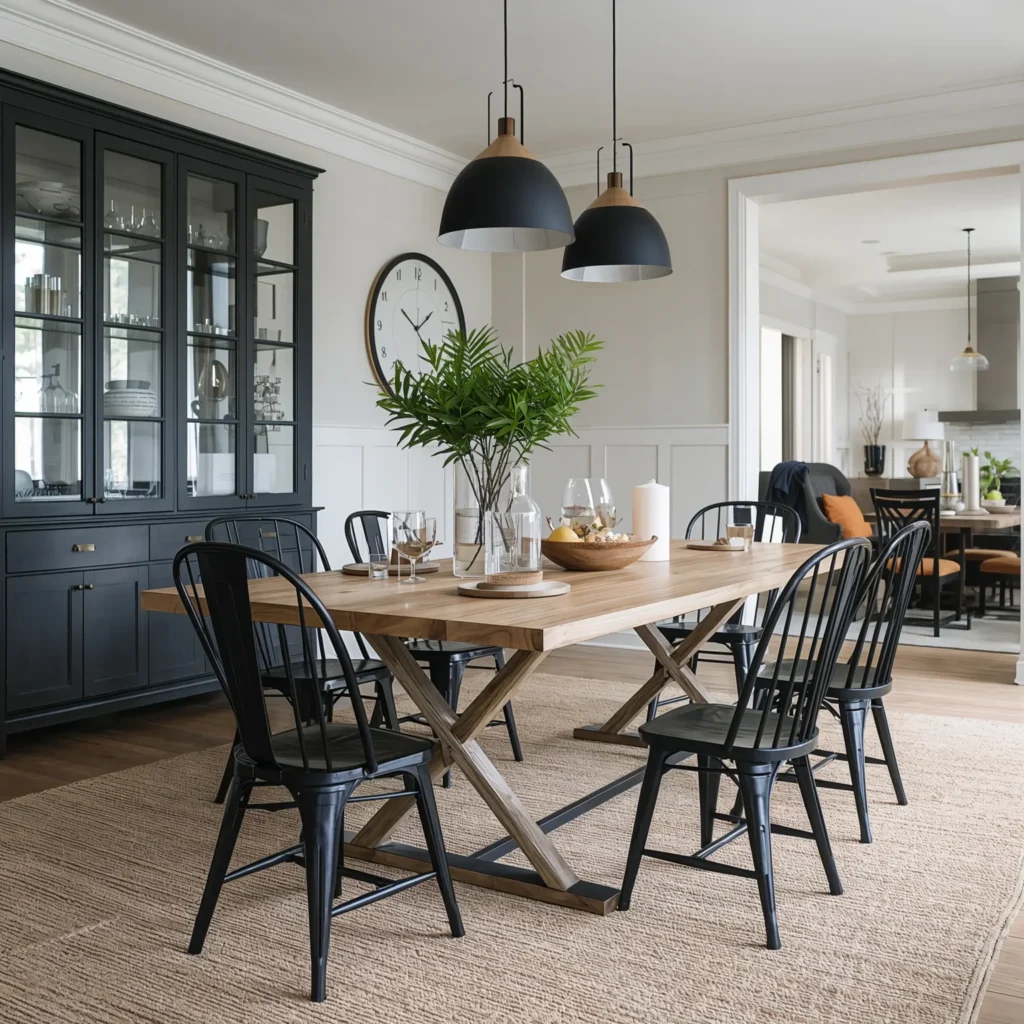
Dining rooms are at their best with good natural light — and window treatments that work with the light rather than against it. Heavy, lined curtains that block light may suit a bedroom, but a dining room benefits from something airier.
Window treatment ideas for farmhouse dining rooms:
- Linen or cotton curtains in white, cream, or soft natural tones — light-filtering without blocking
- Sheer curtains in a subtle texture — Roman stripe sheers, linen gauze
- Roman blinds in a woven natural fabric — clean when raised, soft when lowered
- Simple tab-top panels in a relaxed fabric — unfussy and very farmhouse
- Shutters — painted white or left natural, particularly good in rooms with character architraves
Hang curtains higher than the window frame — ideally as close to the ceiling as possible — and wider than the window opening. It makes the window look larger and the room feel taller, without any structural change.
14. Greenery and Plants That Belong in the Space
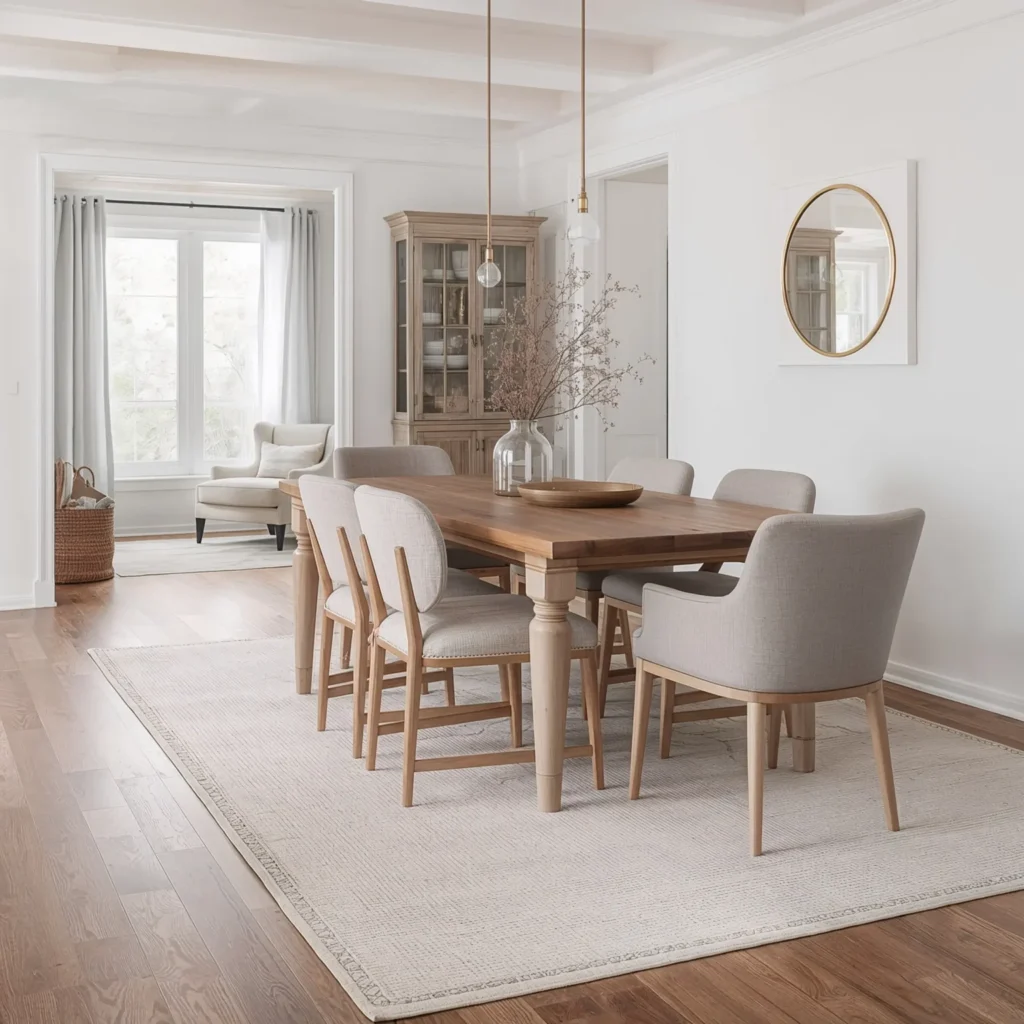
Plants in a dining room do something that no decorative object can fully replicate: they signal life. They introduce organic shape, natural colour variation, and a dynamic quality — things change, grow, need attention — that makes a room feel inhabited rather than staged.
The key in a modern farmhouse dining room is to choose plants that feel appropriate to the setting. Architectural statement plants and tropical specimens tend to belong in contemporary or eclectic spaces. Farmhouse dining rooms are better suited to softer, more familiar varieties.
Plants that work well in farmhouse dining rooms:
- Trailing pothos or ivy — in a ceramic pot on a high shelf or the top of a sideboard
- Olive trees or ficus — small-scale trees that bring structure and warmth
- Herbs in terracotta pots — rosemary, sage, thyme — genuinely fragrant and useful
- Dried bundles of lavender or eucalyptus — long-lasting, fragrant, and visually soft
- Simple garden flowers in a ceramic jug — seasonal, informal, and full of character
15. The Art of Setting a Farmhouse Table
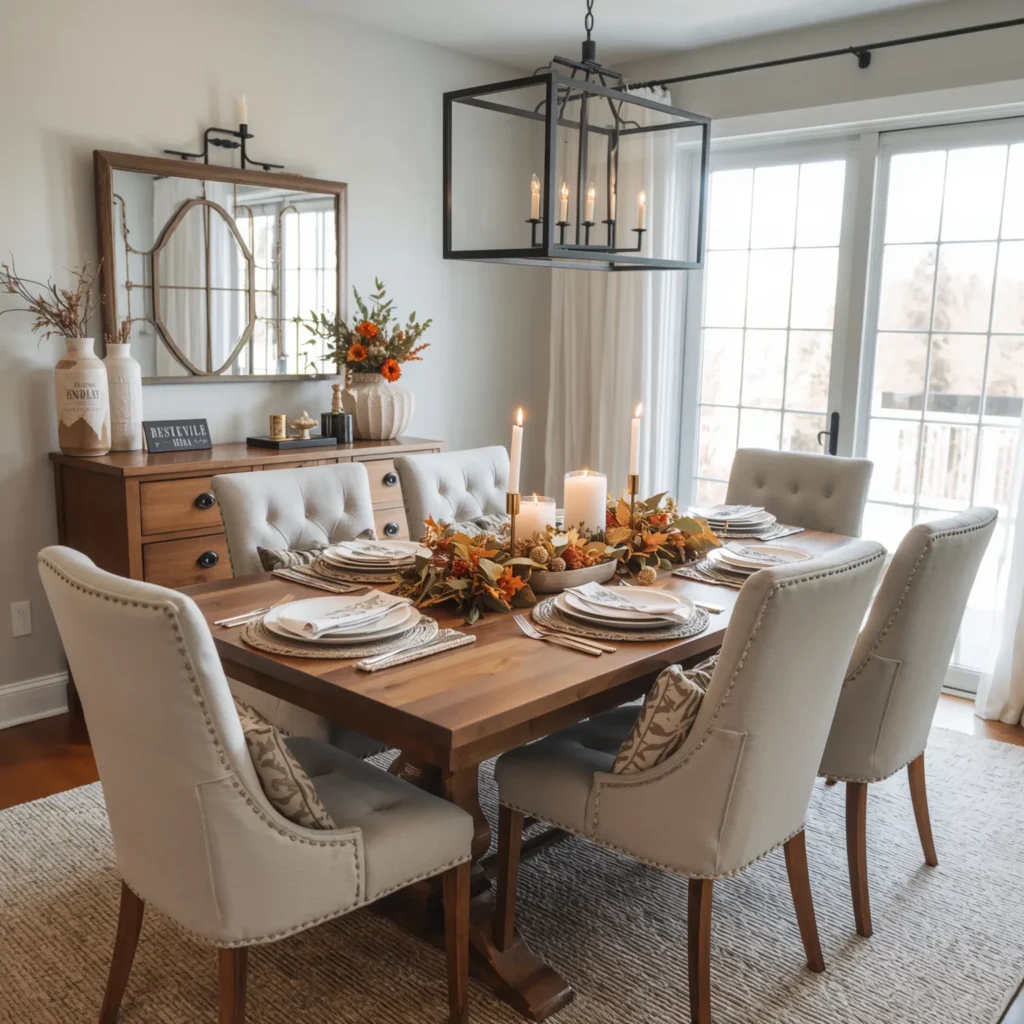
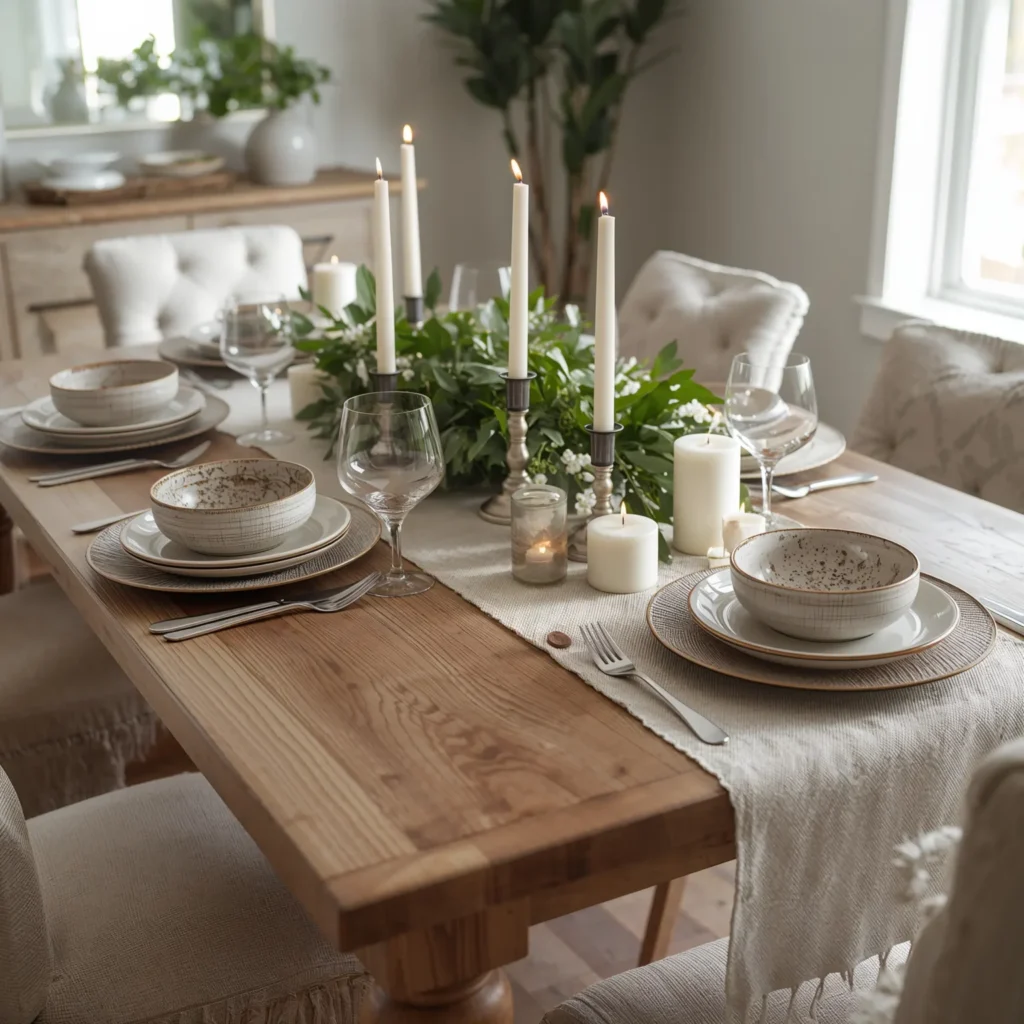
The way a table is set contributes as much to the atmosphere of a farmhouse dining room as any design element. And the modern farmhouse aesthetic lends itself to a style of table-setting that feels generous and relaxed rather than formal and correct.
Everyday farmhouse table-setting principles:
- Use linen napkins rather than paper — even unironed, they look better
- Mix your tableware — not every plate needs to match
- A simple centrepiece of fresh or dried flowers in a ceramic jug
- Candles for most meals, not just special occasions
- Wooden or bone-handled cutlery to add warmth to the table surface
The principle behind all of it is hospitality. A farmhouse table setting should communicate that there’s enough — enough food, enough space, enough time. That generosity of spirit is what makes people want to stay at the table.
Bringing It All Together
A modern farmhouse dining room isn’t assembled in a single afternoon. The best ones are built up over months and years — a table found at an auction, chairs reupholstered in a new fabric, a mirror picked up at a flea market, walls repainted when the first colour didn’t quite work.
That accumulation is exactly what gives these rooms their quality. They look collected, lived-in, and genuinely personal — because they are. No set from a catalogue, no matter how well curated, achieves the same thing.
Start with the fundamentals covered here: a table worth anchoring the room to, lighting that makes people look good and feel welcome, a colour palette with warmth and depth, and enough natural texture to reward a second look. Build from there, and don’t rush the decisions that matter.
The goal, ultimately, is a dining room where people want to sit down and stay. Where dinner becomes a two-hour conversation, where breakfast feels unhurried, where the room itself contributes to the pleasure of being in it. That’s what modern farmhouse design, at its best, actually delivers.