
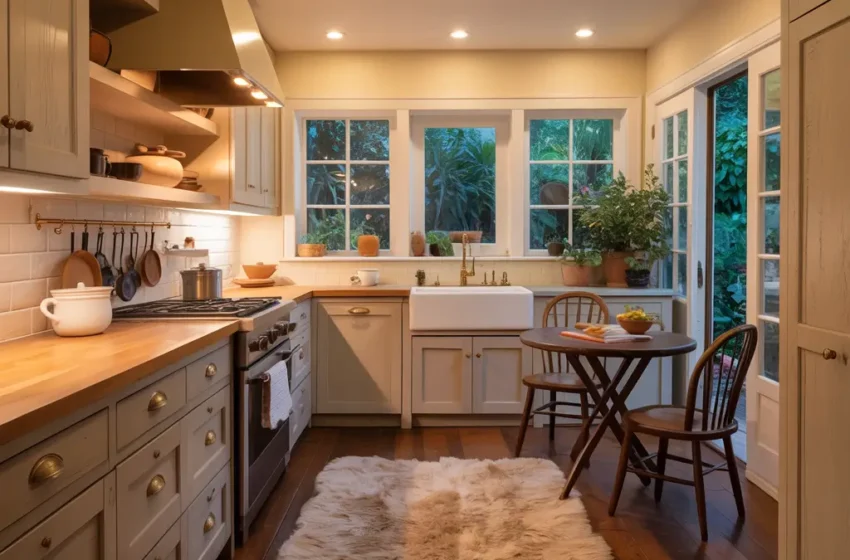
There’s a cabinet material that has quietly overtaken everything else in kitchen design conversations over the past three years. Not a new paint color. Not a trendy lacquer finish. A wood. Specifically, white oak.
If you’ve been paying attention to kitchen renovation content at all — the design accounts, the renovation blogs, the kitchen showrooms — you’ve watched white oak go from “interesting choice” to “everyone’s asking for it.” And unlike most design trends that peak and fade, there are real reasons why white oak has earned this level of sustained enthusiasm.
White oak is not honey oak. That distinction matters more than almost anything else in this guide. The honey oak of the 1990s — orange-toned, heavy-grained, dated the moment the decade ended — shares almost nothing with modern white oak except the species name. White oak has a cooler, more neutral undertone. Its grain is tighter and more even. It takes stain and finish beautifully in ways red oak and honey oak never could. It ages gracefully rather than turning progressively more orange over time.
This guide covers 15 white oak kitchen cabinet ideas that span every design style, every budget range, and every kitchen size. You’ll find specific finish recommendations, honest trade-offs, hardware guidance, and the design logic behind each idea — not just inspiration photography described in words.
1. Natural White Oak in a Clear Satin Finish — The Benchmark
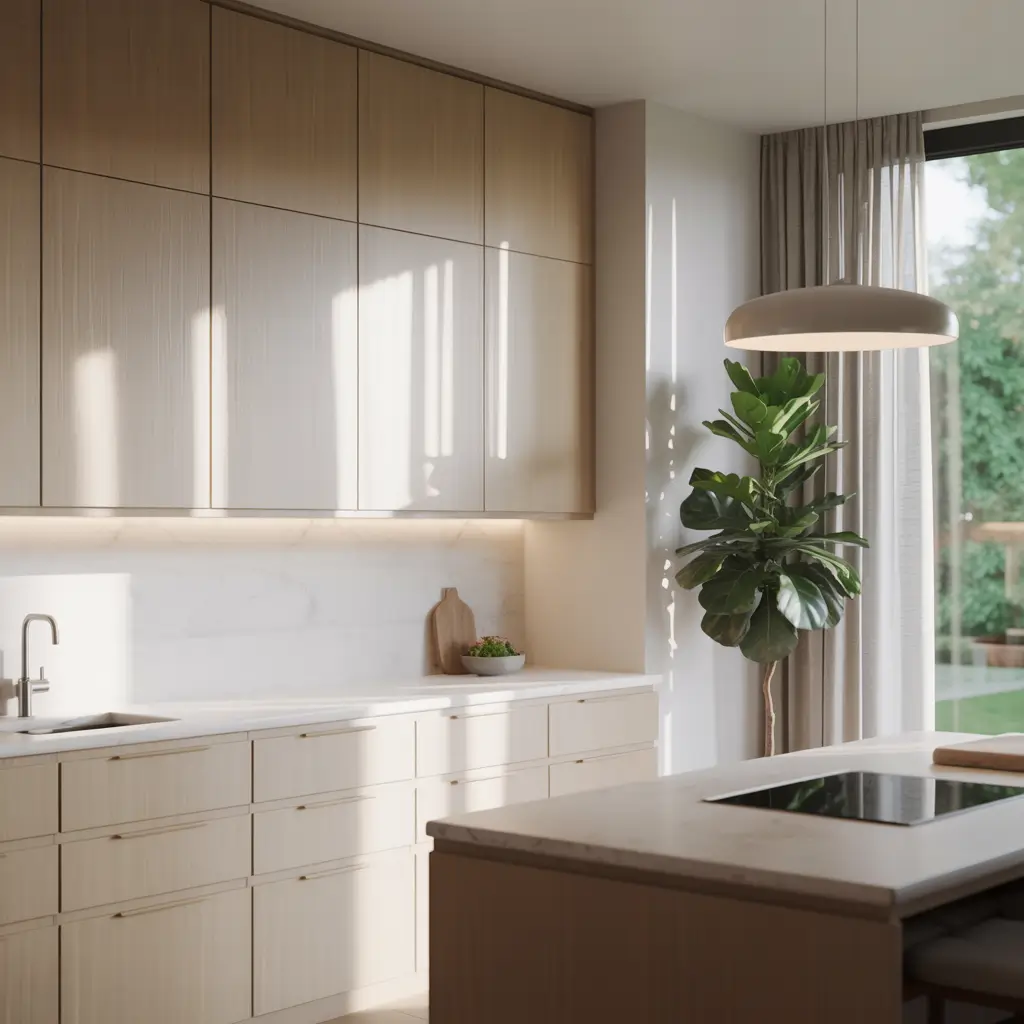
Start here before you start anywhere else. Natural white oak in a clear or very lightly tinted satin finish is the reference point that all other white oak cabinet approaches build from. It’s also, for many kitchens, the right and final answer.
A clear satin finish on white oak reveals the wood’s own color — that particular warm blonde-gray tone that has made the species so popular. It shows the grain without amplifying it. It protects without adding color. And it produces a cabinet face that reads as both contemporary and timeless simultaneously, which is an extraordinarily difficult balance to achieve.
The honest reason to start with natural finish is that it gives you the most decision flexibility for everything else in the kitchen. Natural white oak pairs with almost any countertop material, any wall color, any hardware finish, and any floor. It’s a generous, accommodating starting point that doesn’t demand specific companions the way darker or more saturated materials do.
What “Natural” Actually Means in White Oak Finishes
- Clear matte oil finish — the most natural-looking result; deepens the wood color slightly without any sheen
- Clear satin polyurethane — the most common cabinet finish; durable, easy to clean, slight sheen
- Lightly tinted satin — adds a barely perceptible gray or beige tone to even out color variation between boards
- Hardwax oil (Rubio Monocoat and similar) — the professional’s choice for a truly natural look; penetrates rather than coats
- UV-cured finish — maximum durability, used by most cabinet manufacturers, smooth and clean
Pro Tip: Request a finish sample applied to the actual white oak species and cut you’re ordering from, not a generic sample board. White oak color varies significantly between flat-sawn and quarter-sawn cuts, and between boards from different trees. Your sample needs to match your actual material.
2. White Oak Shaker Cabinets — The Design Workhorse
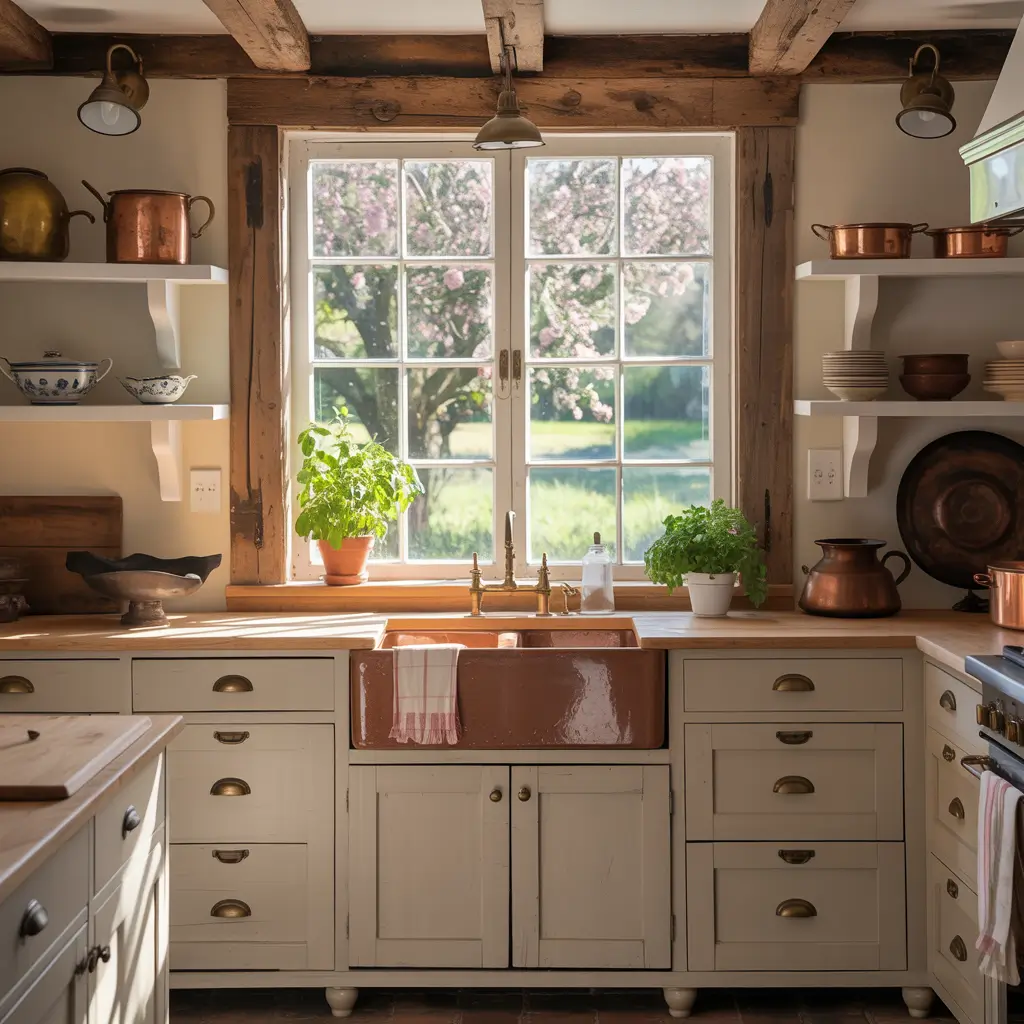
The shaker cabinet door style in white oak is the combination that appears most frequently in kitchen renovation projects right now, and it’s earned that position through merit rather than trendiness. The five-piece shaker door — with its recessed center panel and clean frame — provides just enough architectural detail to make the cabinet face interesting, while remaining simple enough that the wood grain itself remains the primary visual element.
In white oak, shaker doors take on a warmth that painted shaker cabinets can never quite replicate. The recessed panel catches light differently than the frame, creating subtle shadow lines that shift through the day. The grain runs consistently across both frame and panel, creating a coherent wood story across the entire cabinet face. The result is a kitchen that feels crafted and considered rather than specification-standard.
Shaker Profile Variations in White Oak
- Classic 3/4-inch reveal shaker — the standard; works in every style from farmhouse to transitional
- Narrow-profile shaker with 1/4-inch reveal — more contemporary feel, less traditional character
- Thick-frame shaker (wider stiles and rails) — more substantial appearance, good for high-ceiling kitchens
- Inset shaker — the door sits flush inside the cabinet frame; the most refined and most expensive option
- Beaded inset shaker — adds a thin bead detail around the frame interior; traditional and furniture-like
3. Quarter-Sawn White Oak — The Cathedral Grain Statement
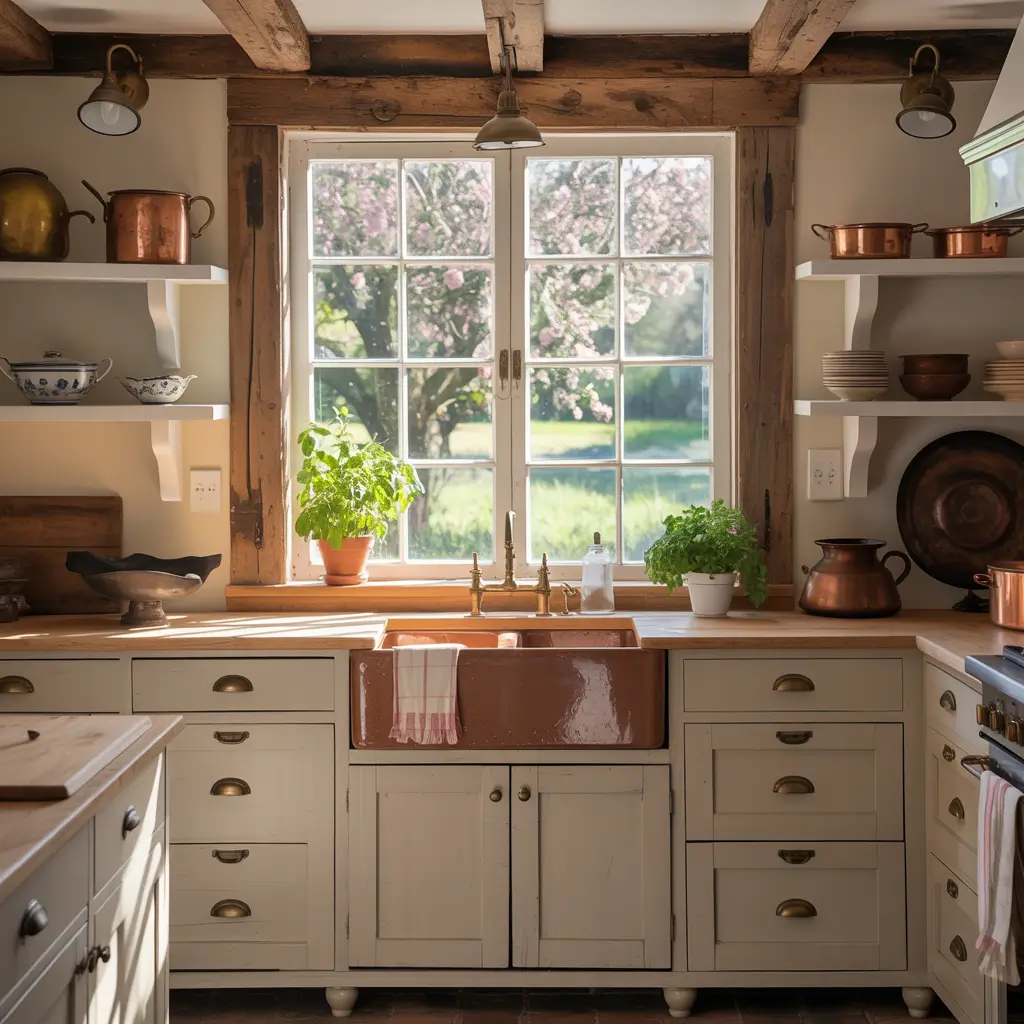
If flat-sawn white oak is the everyday choice, quarter-sawn white oak is the statement. The difference comes from how the log is cut. In quarter-sawn boards, the growth rings run at a steep angle to the face, producing a tight, straight grain pattern rather than the cathedral arches of flat-sawn boards. But that’s not the reason people specify quarter-sawn white oak for kitchens.
The reason is ray fleck — the medullary rays that run radially through the wood and become visible in the quarter-sawn cut as distinctive silvery-gold flecks across the face of each board. No other species produces ray fleck quite like white oak, and no other cut of white oak produces it like quarter-sawn. The effect is subtle at a distance and extraordinary up close. Cabinet doors that catch light and shift in appearance as you move through the kitchen.
Quarter-sawn white oak costs more than flat-sawn. The cut produces less usable lumber per log, which is reflected directly in price. It’s also more dimensionally stable — less prone to cupping and movement with humidity changes — which is a genuine practical advantage in a kitchen environment.
Quarter-Sawn vs Flat-Sawn White Oak for Cabinets
- Quarter-sawn grain — tight, straight, with ray fleck shimmer; contemporary and striking
- Flat-sawn grain — cathedral arch patterns; more traditional, more variation board to board
- Rift-sawn — similar tight grain to quarter-sawn but without the ray fleck; the most contemporary option
- Mixed grain — some manufacturers use both in a single kitchen; creates variation that reads as natural rather than engineered
Pro Tip: Quarter-sawn white oak is most dramatic when used as flat-panel (slab) cabinet doors. Shaker-style doors break up the grain pattern across the frame and panel, which reduces the impact of the ray fleck. If you’re specifying quarter-sawn specifically for the grain pattern, let a clean flat-panel door show it fully.
4. Wire-Brushed White Oak Cabinets — Texture You Can Feel
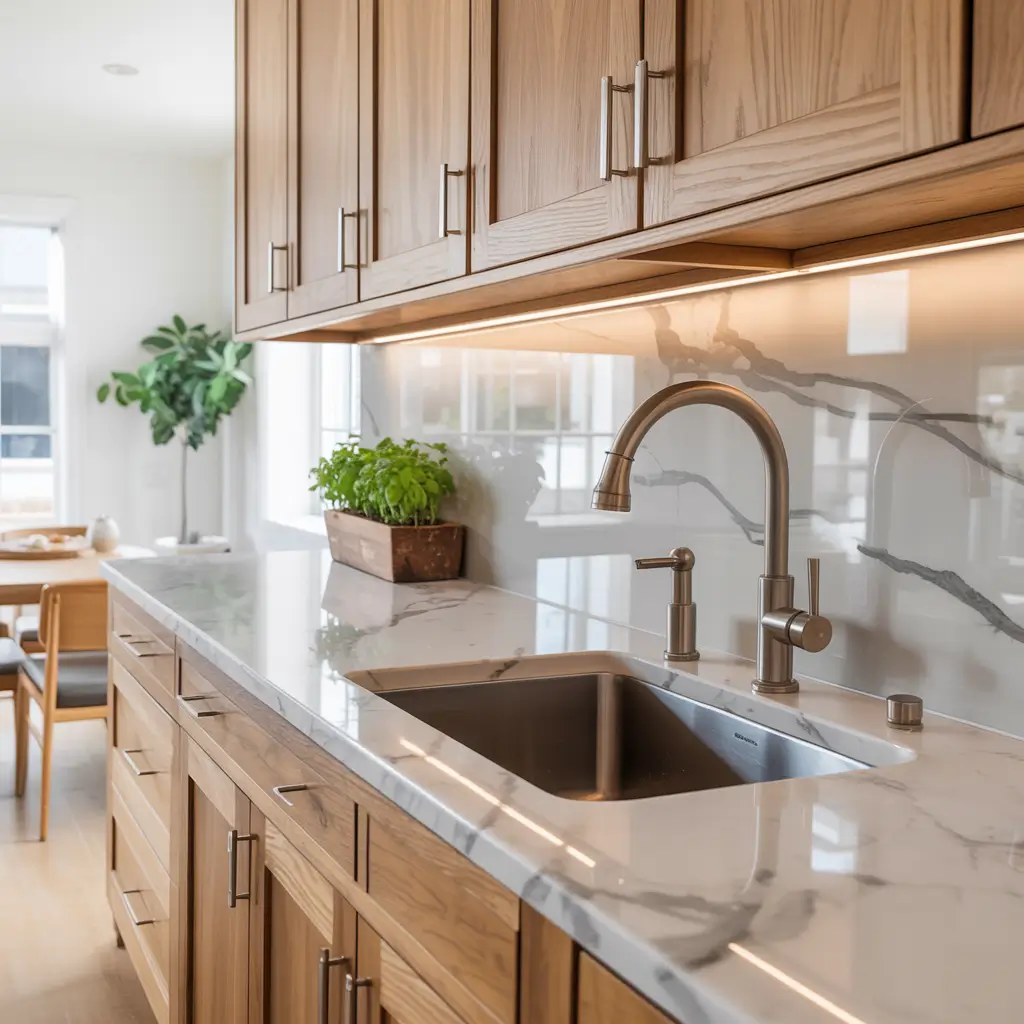
Wire-brushing is a finishing technique where a rotating wire brush runs across the wood surface, removing the soft grain tissue between the harder growth rings and leaving a finely textured surface with visible grain channels. On white oak, the result is a tactile, slightly rustic finish that reads as genuinely handcrafted rather than manufactured.
The practical advantages of wire-brushed white oak cabinets are considerable. The texture hides minor scratches and dents far better than a smooth surface — the visual noise of the texture absorbs small imperfections. Fingerprints are less visible. The surface has a matte character that doesn’t require a flat-finish topcoat to look intentional. In a working family kitchen that takes real daily use, wire-brushed white oak ages more gracefully than any other cabinet finish option.
Wire-brushed white oak works across a surprisingly wide range of design styles. In a farmhouse kitchen, it reads as authentic and handcrafted. In a contemporary kitchen, it provides the material depth that flat surfaces sometimes lack. In a coastal kitchen, it suggests weathered driftwood without resorting to bleached or artificially distressed finishes.
Wire-Brushed White Oak: Applications and Pairings
- Farmhouse kitchens — wire-brushed shaker doors with black cup-pull hardware and apron sink
- Coastal kitchens — wire-brushed with a light gray or whitewash tint, brushed nickel hardware
- Contemporary kitchens — wire-brushed flat-panel doors with integrated handles, stone countertops
- Transitional kitchens — wire-brushed shaker with brass hardware, marble or quartz countertops
5. White Oak with Black Hardware — The Modern Classic Pairing
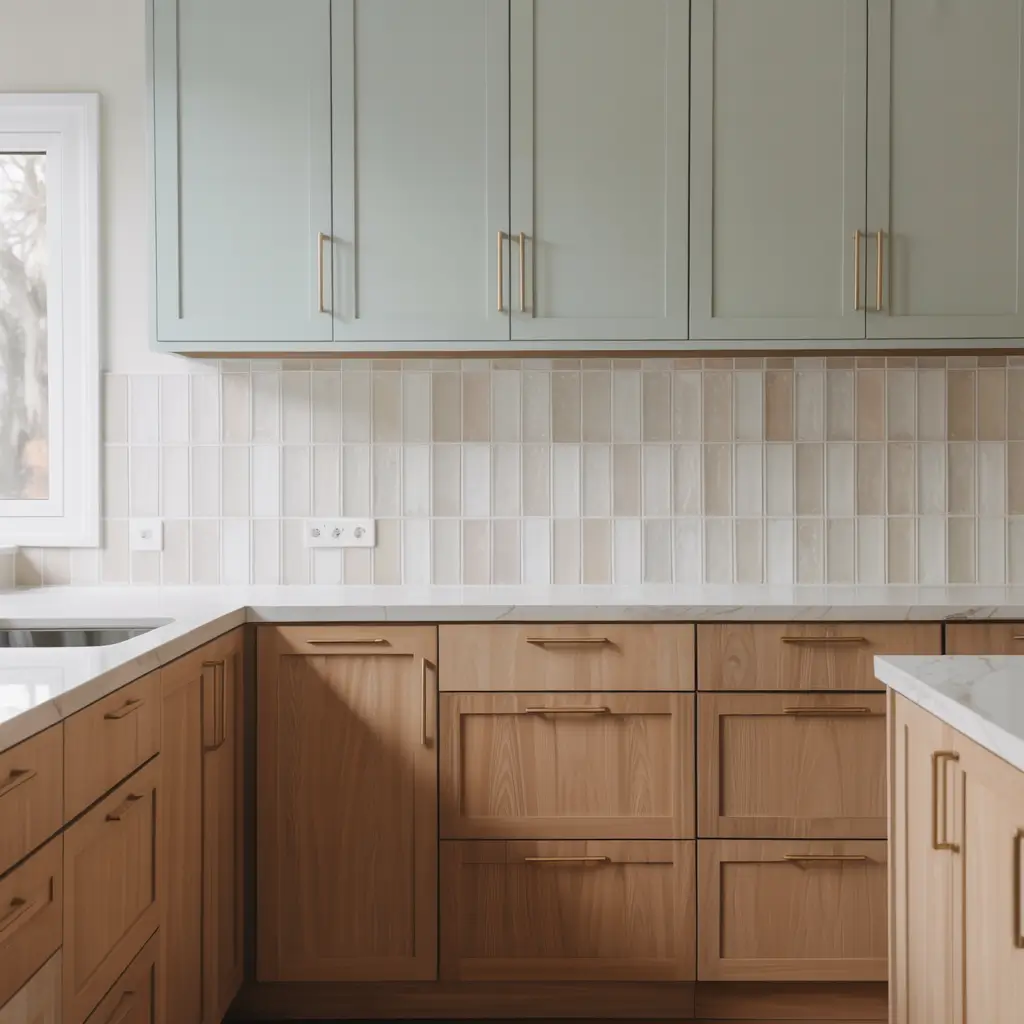
Matte black hardware on white oak cabinets is the kitchen design equivalent of a well-tailored outfit in neutral tones. The combination works because black hardware provides strong visual definition against the warm, mid-toned wood without introducing color that would compete with the oak’s natural grain.
The contrast ratio between white oak and matte black is exactly right — high enough to be intentional and visually satisfying, not so high that it feels jarring or graphic. Compare this with matte black on white cabinets (high contrast, sharply modern) or on walnut cabinets (near-lost against the dark wood). White oak creates the middle ground where matte black hardware reads as both clearly visible and elegantly restrained.
Matte Black Hardware Styles That Work Best with White Oak
- Long bar pulls (8-12 inch) on drawer fronts — elongated proportions complement the horizontal grain of white oak
- Simple round knobs on upper doors — understated and clean without pulling attention from the wood
- T-bar pulls — transitional bridge between traditional and modern, pairs with both shaker and flat-panel
- Arch pulls — slightly softer curve, more organic, matches well with wire-brushed white oak textures
- Integrated J-pull handles — for a more minimal look where the hardware is the door edge itself
6. White Oak with Brass and Gold Hardware — Warmth on Warmth
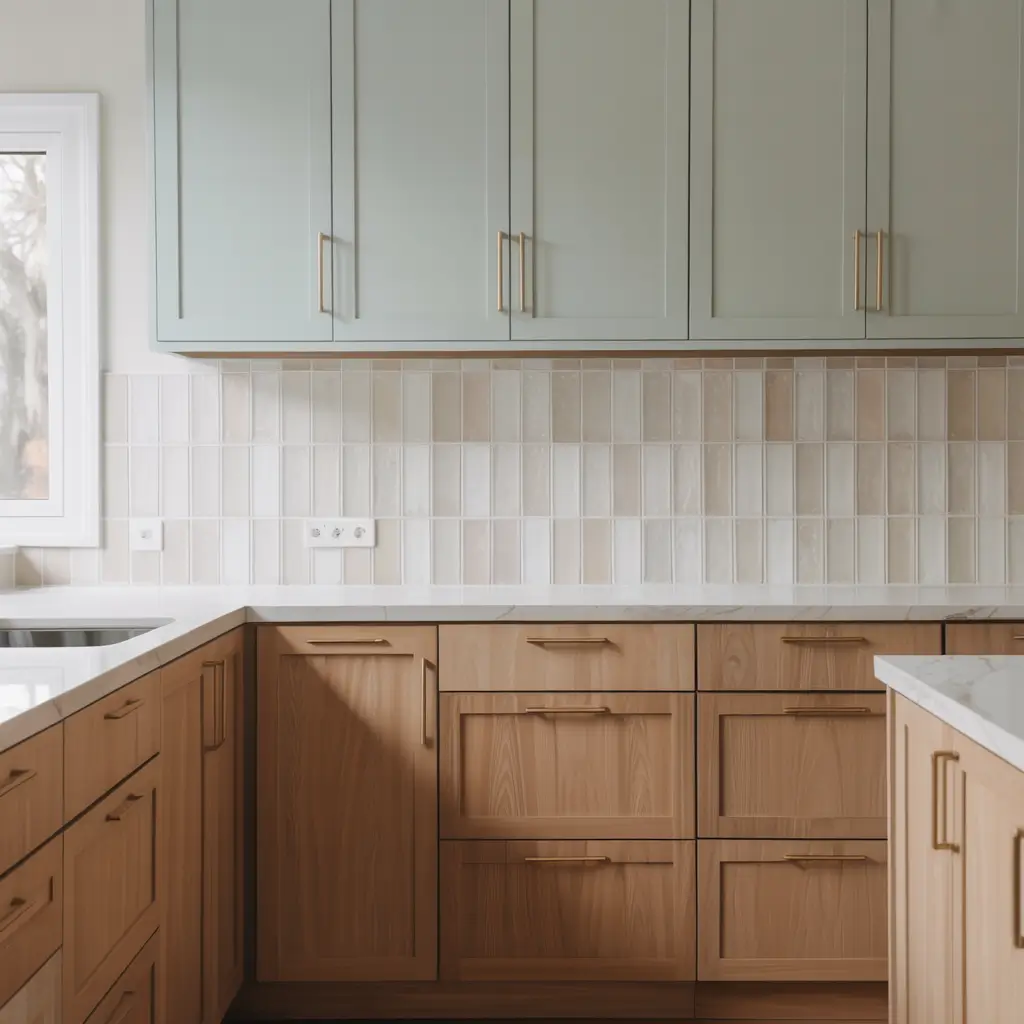
Brass and white oak share a color temperature: both sit in the warm blonde-gold range that makes kitchens feel inviting rather than clinical. Pairing them creates a kitchen that feels genuinely warm and rich without relying on dark colors or heavy materials to create that sense of depth.
Unlacquered brass is the most interesting choice with white oak specifically because both materials change over time. The oak deepens slightly with age and UV exposure. The brass develops a living patina that shifts from bright gold to a warmer, more complex tone. After five years, a white oak kitchen with unlacquered brass hardware looks as though it grew into itself — a quality that manufactured surfaces can’t replicate.
Brushed brass is the lower-maintenance option — consistent finish, less patina development, hides fingerprints better. It creates a slightly more formal, editorial quality against white oak, pairing particularly well with marble countertops and white oak shaker cabinets in a transitional or contemporary kitchen.
Brass and Gold Hardware Combinations for White Oak Kitchens
- Unlacquered brass knobs on white oak shaker cabinets with a natural finish — the warmest, most organic combination
- Brushed gold bar pulls on flat-panel white oak with Calacatta marble countertop — editorial and sophisticated
- Antique brass cup pulls on white oak with a slightly grayed finish — vintage, collected, farmhouse-appropriate
- Satin gold with wire-brushed white oak — the texture of the wood and the warm metal work together beautifully
7. White Oak Flat-Panel (Slab) Cabinets — Contemporary and Clean
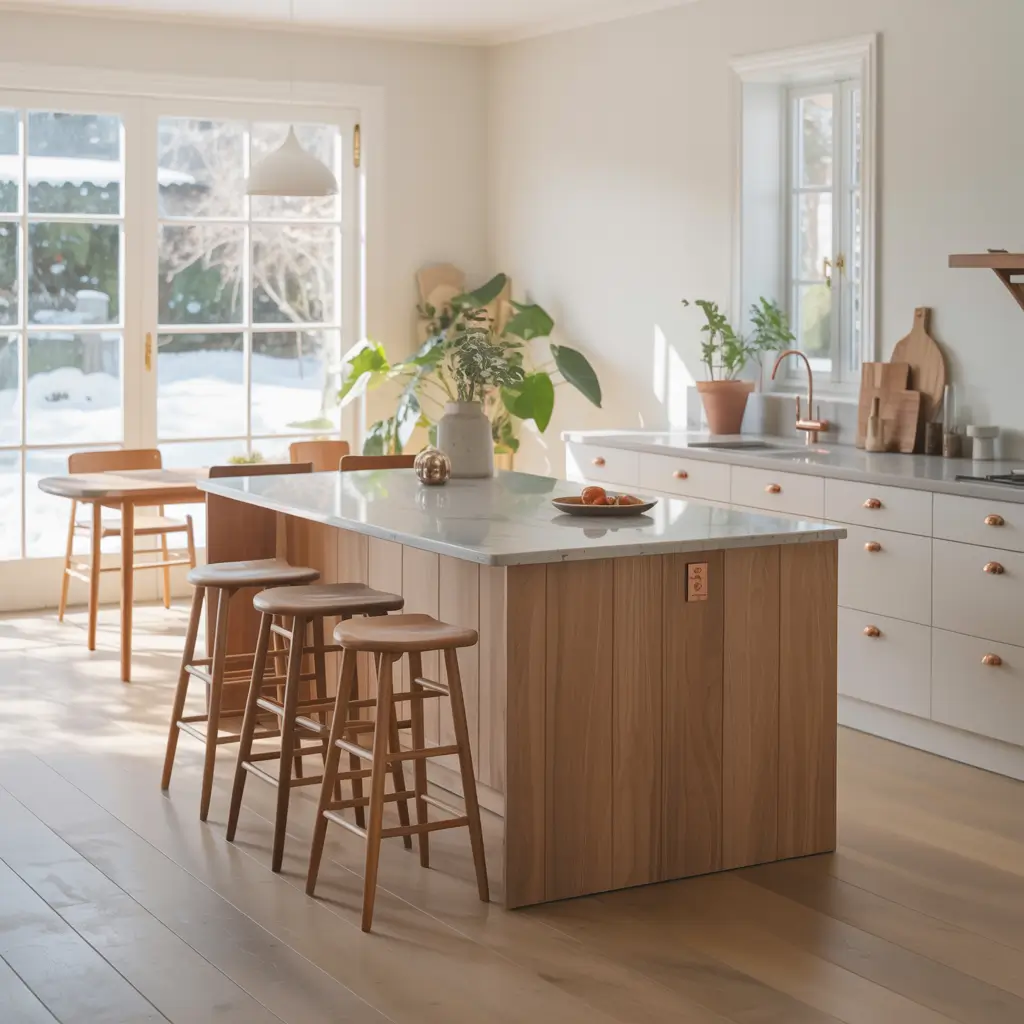
Flat-panel or slab-door white oak cabinets are the choice when you want the wood to be completely uninterrupted. No frame, no panel, no shaker detail — just a single continuous wood surface from edge to edge. The grain runs unbroken across the full door face, and the result is a cabinet that functions almost as a wood panel composition across the entire kitchen wall.
In quarter-sawn or rift-sawn white oak, the flat-panel approach allows the grain pattern to be the primary design element of the kitchen. The doors become a study in the consistency and beauty of the wood grain itself. In flat-sawn white oak, the cathedral arches and natural variation of the grain create an organic, slightly less controlled composition that works well in more relaxed, livable kitchens.
The flat-panel door also allows the best integration with handleless designs. A routed J-pull handle integrated into the top edge of the door, combined with a push-to-open lower cabinet, creates a kitchen where the wood surface is completely uninterrupted from floor to ceiling.
Flat-Panel White Oak: Finish Combinations That Work
- Natural rift-sawn with integrated handles and white quartz countertop — the purist Scandi-contemporary look
- Quarter-sawn with a light gray tint and matte black hardware — dramatic grain against the cool tint
- Flat-sawn natural with exposed grain variation and brass hardware — warm, organic, inviting
- Wire-brushed flat-panel with concrete countertop — raw material combination with strong contemporary character
8. White Oak Cabinets with White Countertops — Light on Light
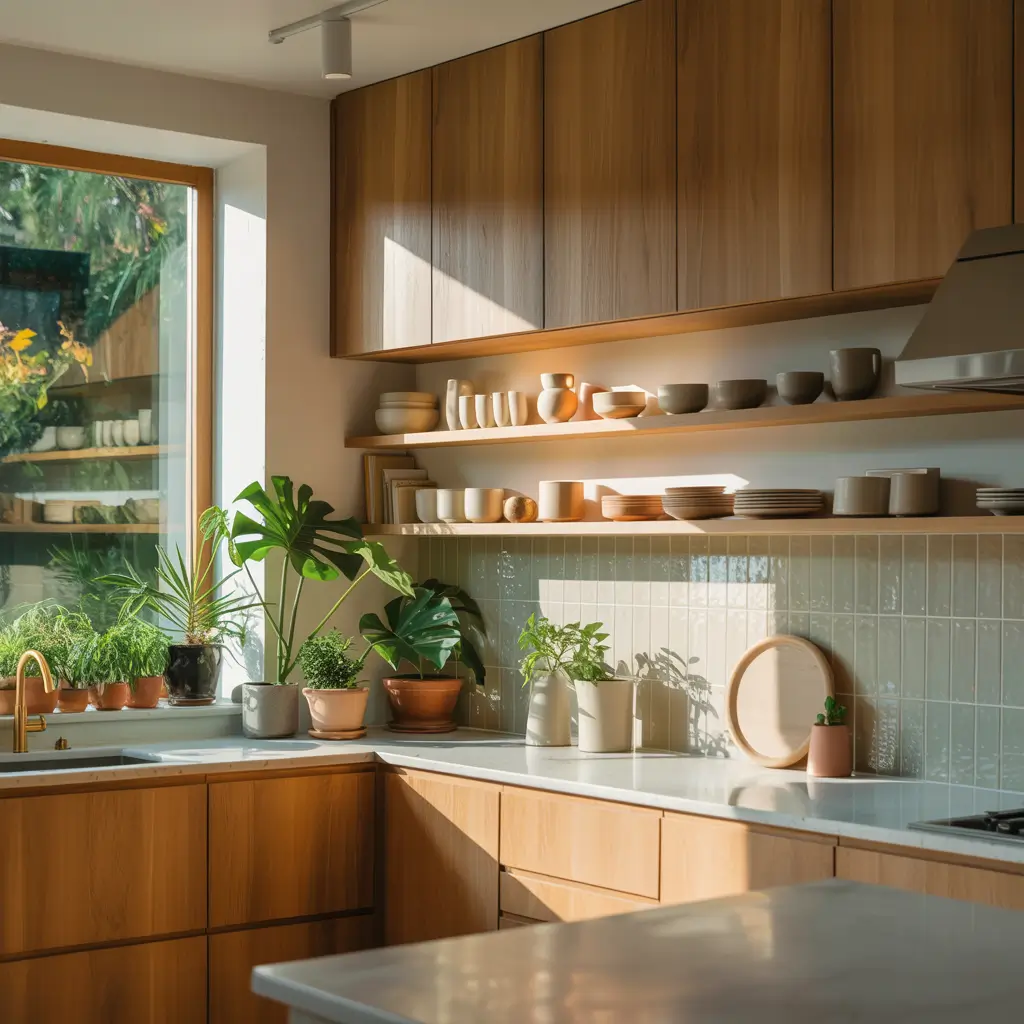
White oak with white countertops creates a kitchen that feels luminous. The warm wood tones of the oak and the cool or neutral white of the countertop exist in gentle contrast — distinct enough to register as two separate materials, similar enough in tone to create a cohesive, airy space.
This combination works particularly well in kitchens with limited natural light because both materials are reflective in complementary ways. The white countertop bounces light. The white oak absorbs and warms it. The effect is a kitchen that feels as though it’s glowing from within rather than simply lit from above.
White Countertop Materials for White Oak Kitchens
- White quartz with minimal veining — the most practical choice; non-porous, heat resistant, matches any shade of white oak
- Carrara marble — the most beautiful choice; cool gray veining provides contrast with the warm oak; requires sealing and care
- Calacatta marble — bolder gold or gray veining that actually echoes the warm tones of the white oak grain
- White solid surface (Corian or similar) — seamless integrated sink option, completely maintenance-free
- White concrete — matte, slightly rough, creates a beautiful raw contrast with the smoothness of the oak
- White oak butcher block — same species, same warmth; the all-wood combination creates complete material consistency
Pro Tip: If you’re pairing white oak cabinets with white quartz or marble, ask for a sample of the countertop material placed directly against a cabinet door sample in your kitchen’s actual lighting conditions. The undertones in white countertop materials (blue, pink, cream, gray) interact with the warm undertones of white oak in ways that only become obvious when you see them side by side.
9. Two-Tone Kitchen: White Oak with Painted Cabinets
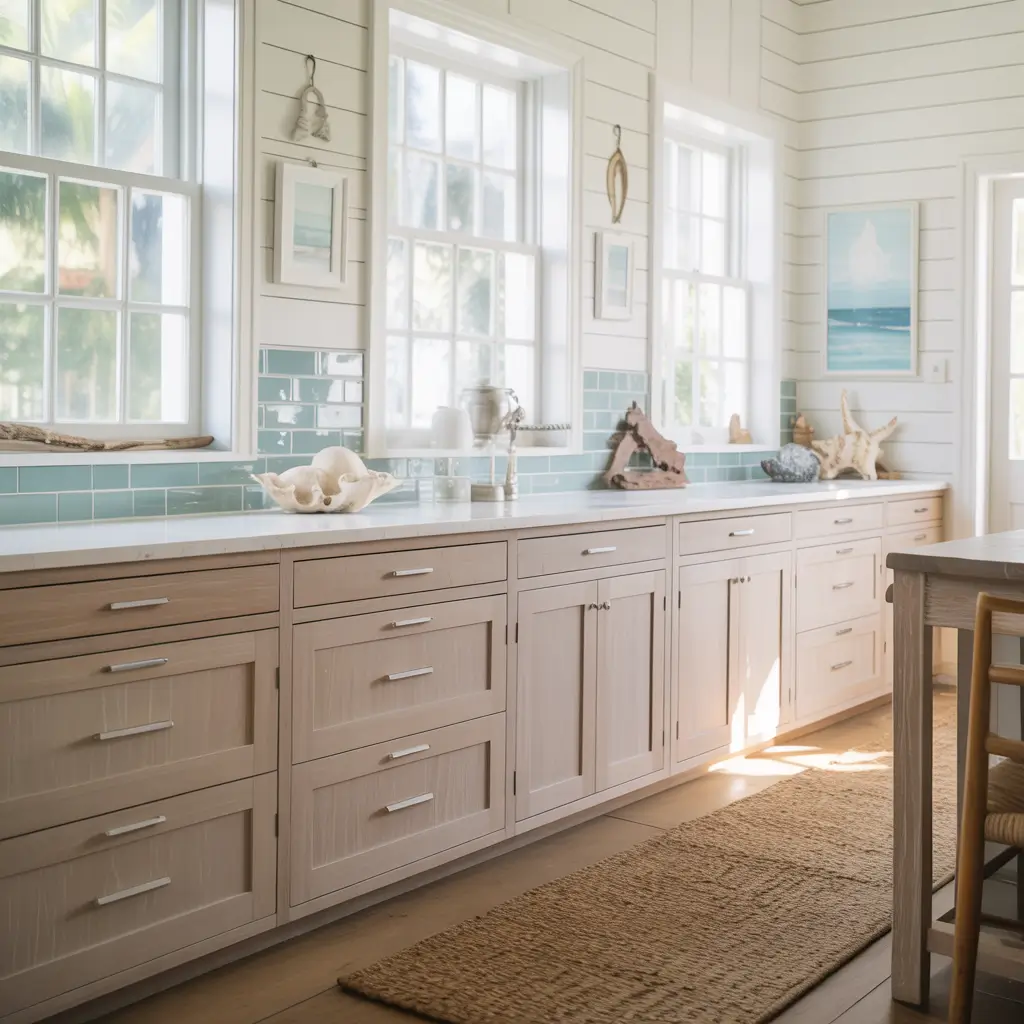
Combining white oak with painted cabinets is one of the most versatile and design-forward approaches in contemporary kitchen design. The wood provides warmth and natural character; the paint provides color and definition. Neither alone achieves what both together accomplish.
The most common approach is white oak on the island or lower cabinets and painted uppers. The wood grounds the base of the kitchen in warmth and materiality while the painted uppers keep the room bright and introduce a color note that personalizes the space. Reversing the arrangement — painted lowers and white oak uppers — is less common but equally valid, particularly in kitchens where you want the wood to read at eye level.
Painted Color Pairings That Work with White Oak
- Sage green uppers with white oak base cabinets and island — the earthy, organic combination that feels completely natural
- Navy blue upper cabinets with white oak lowers and island — the boldest contrast; the oak warms the cold blue significantly
- Soft white upper cabinets with white oak lowers — the most subtle version; wood is the accent, not the paint
- Warm gray or greige uppers with white oak lowers — a tonal combination that feels sophisticated and unforced
- Deep forest green island in white oak surrounded by white painted perimeter cabinets — wood as the statement piece
10. Scandinavian White Oak Kitchen — The Natural Light Maximizer
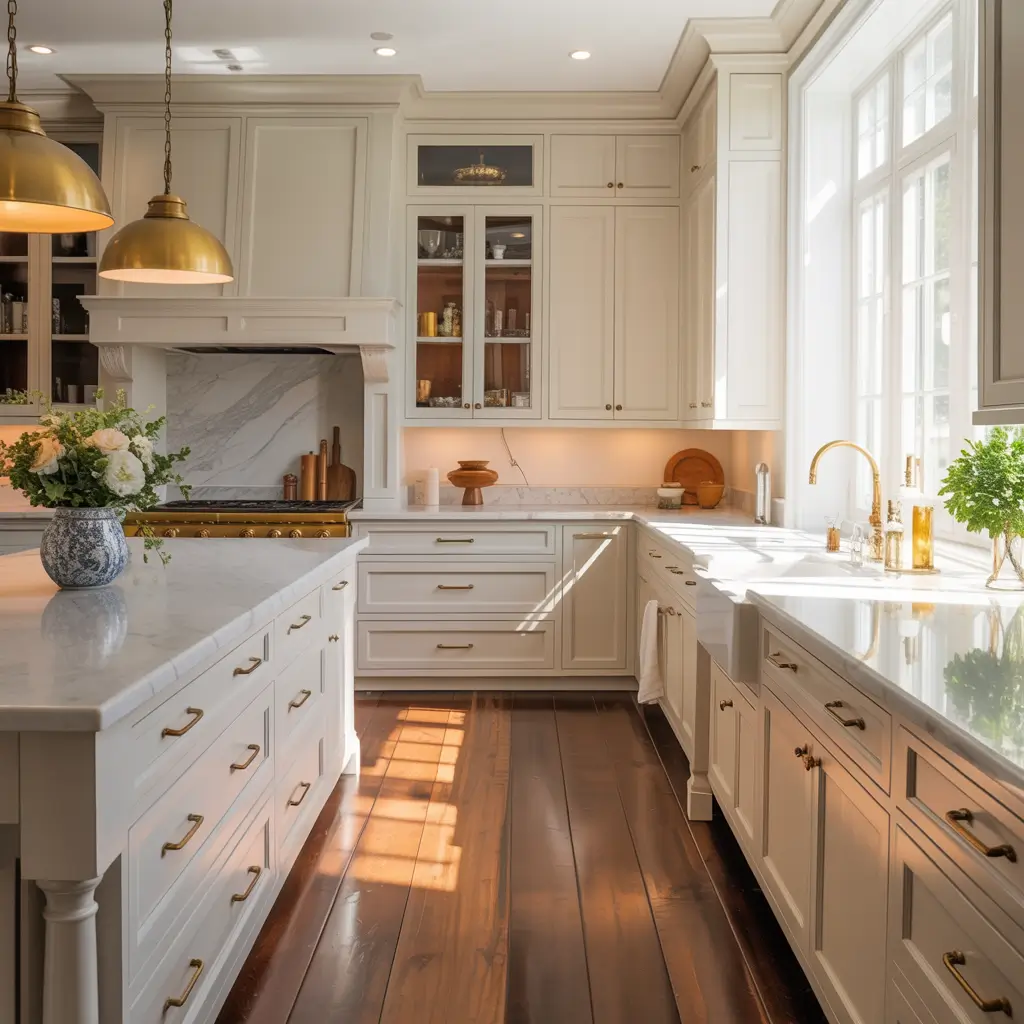
Scandinavian kitchen design is built on three principles that white oak serves perfectly: natural light, natural materials, and a deep commitment to functional beauty. The Scandi kitchen doesn’t use white oak to make a statement. It uses it because white oak is genuinely the right material for a space that prioritizes warmth, lightness, and honesty about what things are made of.
The Scandinavian white oak kitchen tends toward lighter finishes — natural or very lightly whitened — to maximize the wood’s light-reflective quality. It pairs with white or very light gray walls to avoid competing with the wood. It uses minimal hardware, often integrated or in simple black. And it makes serious room for natural light: large windows, light countertops, and a general avoidance of anything that would trap or absorb the light that the wood is working so hard to bounce around the room.
Essential Elements of a Scandi White Oak Kitchen
- White oak in natural or lightly whitened finish on flat-panel or simple shaker doors
- Light oak or white oak flooring that continues the material story from counter to floor
- White walls and ceiling with no strong wall color to compete with the wood warmth
- Minimal hardware — integrated handles, simple black bar pulls, or handleless design
- Indoor plants — essential to Scandi design; trailing pothos, fresh herbs, a single statement plant
- Natural linen or cotton window treatments — soft, organic, warm against the cool light
11. White Oak with Dark Countertops — Grounded and Dramatic
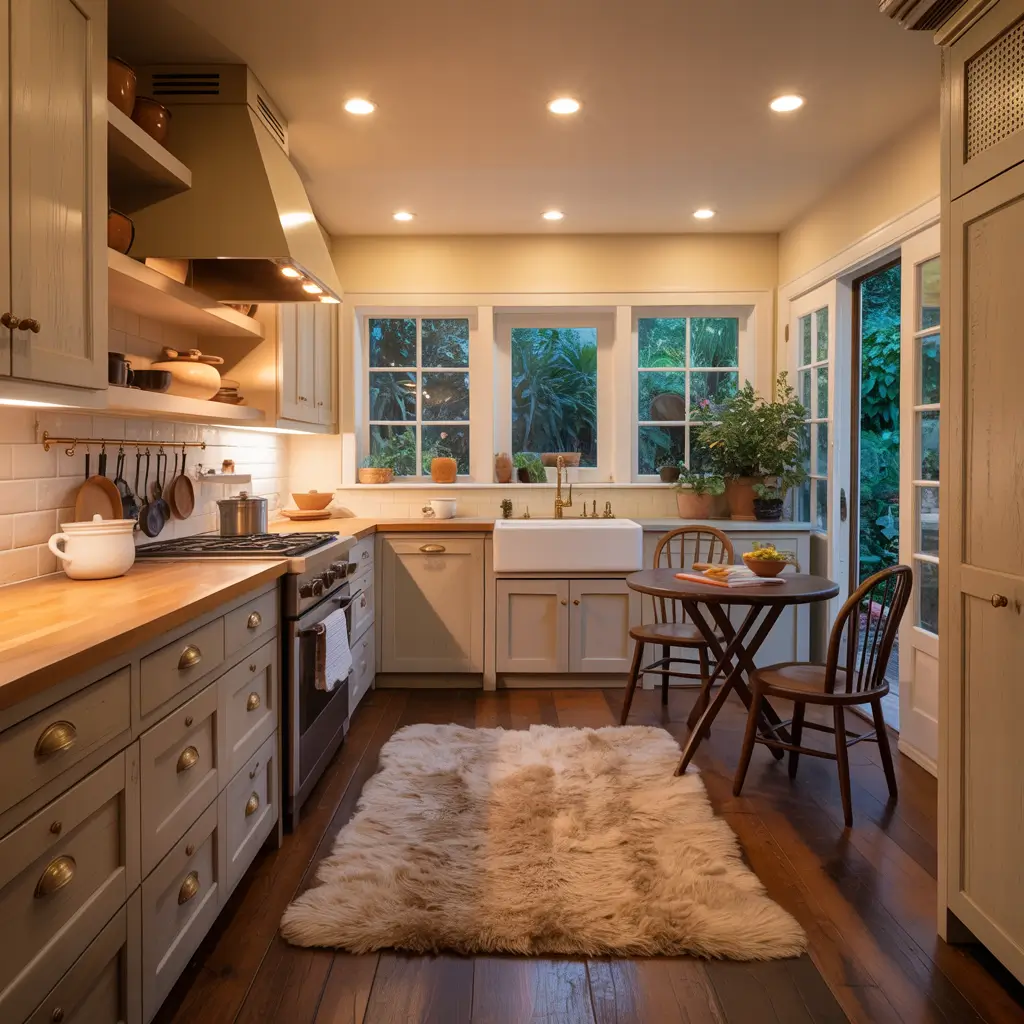
Light wood against a dark countertop creates one of the most visually satisfying contrasts in kitchen design. The white oak’s warm blonde tones glow against a black, deep gray, or dark green countertop in a way that makes both materials look better than they would individually.
This combination is particularly effective because the white oak provides warmth without visual heaviness. A dark countertop on dark cabinets creates a kitchen that can feel oppressive. A dark countertop on white oak creates a kitchen that feels grounded and rich without losing lightness — because the wood itself is inherently bright-toned.
Dark Countertop Options That Shine Against White Oak
- Absolute black granite — maximum contrast; polished or leathered finish both work beautifully
- Soapstone — deep blue-gray with a matte, tactile surface; organic and beautiful against white oak grain
- Black quartz — consistent, maintenance-free; the most practical dark countertop option
- Dark gray quartzite — movement and depth in the stone; softer contrast than absolute black
- Forest green quartzite or marble — the unexpected choice; the green reads as natural against the warm wood
12. White Oak Farmhouse Kitchen — Authentic Warmth
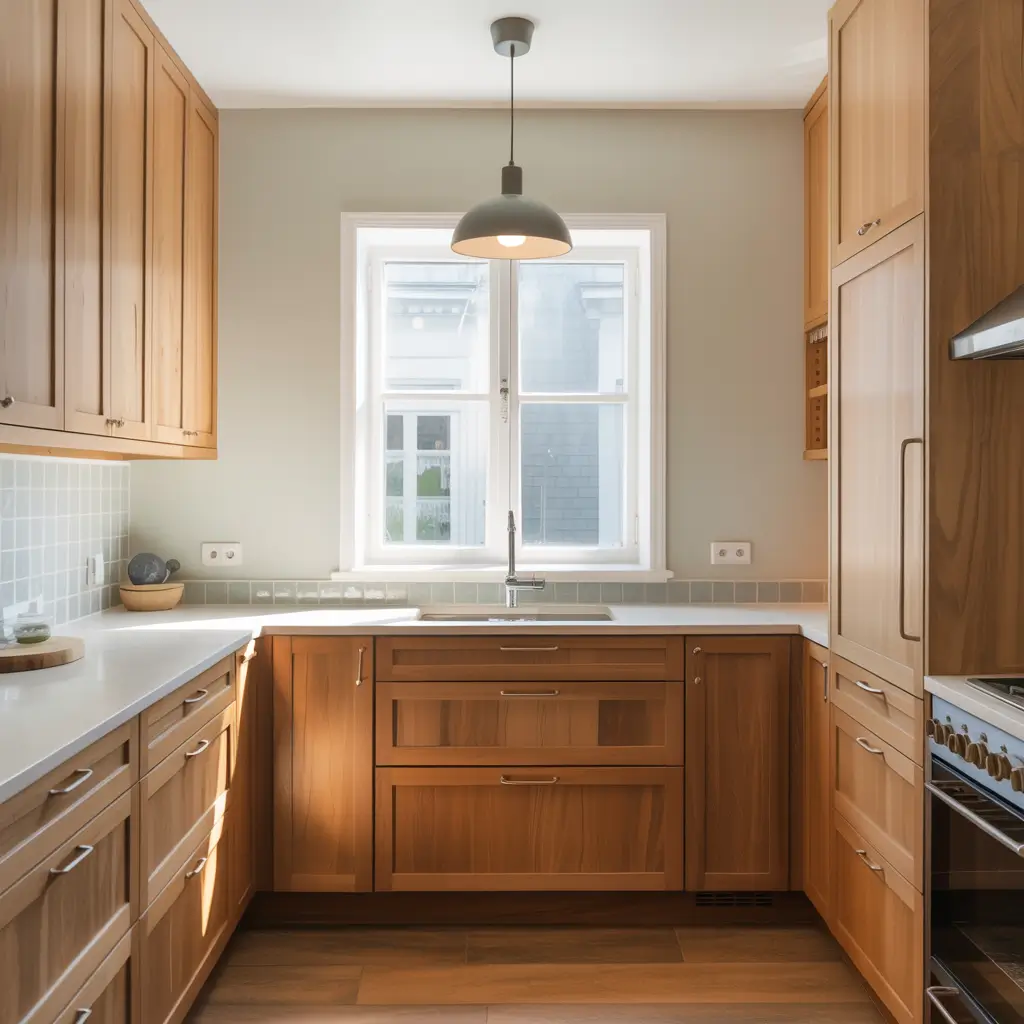
The farmhouse kitchen aesthetic has been executed in shiplap, in painted cabinetry, in vintage furniture-style pieces — but white oak farmhouse cabinets occupy a specific and genuinely special place in that tradition. They have the warmth and grain variation that suggests real, honest craftsmanship. They age in ways that feel earned rather than applied. And they work with the functional, unpretentious quality of farmhouse design without requiring the kitchen to look rustic to the point of dishonesty.
The white oak farmhouse kitchen tends to use shaker-style doors, often in a wire-brushed or slightly distressed finish that enhances the natural character of the wood. Hardware leans toward traditional forms — cup pulls, bin pulls, ring pulls in antique brass or black iron. The apron-front sink is nearly non-negotiable. Open shelving, if used, is in matching white oak to maintain material consistency.
White Oak Farmhouse Kitchen Details That Make the Difference
- Inset shaker doors in wire-brushed white oak — the most furniture-like, authentic-feeling construction
- Antique brass or black iron cup pulls and bin pulls — traditional hardware forms that reference real farmhouse utility
- Apron-front (farmhouse) sink — white cast iron or fireclay; the definitive farmhouse focal point
- Exposed shelf brackets in black iron with matching white oak shelving — honest, functional, beautiful
- White oak or butcher block island top — continuity of material that reinforces the wood-forward story
- Beadboard paneling on island sides in matching white oak — texture that reads as handcrafted
13. White Oak Cabinets with Open Shelving
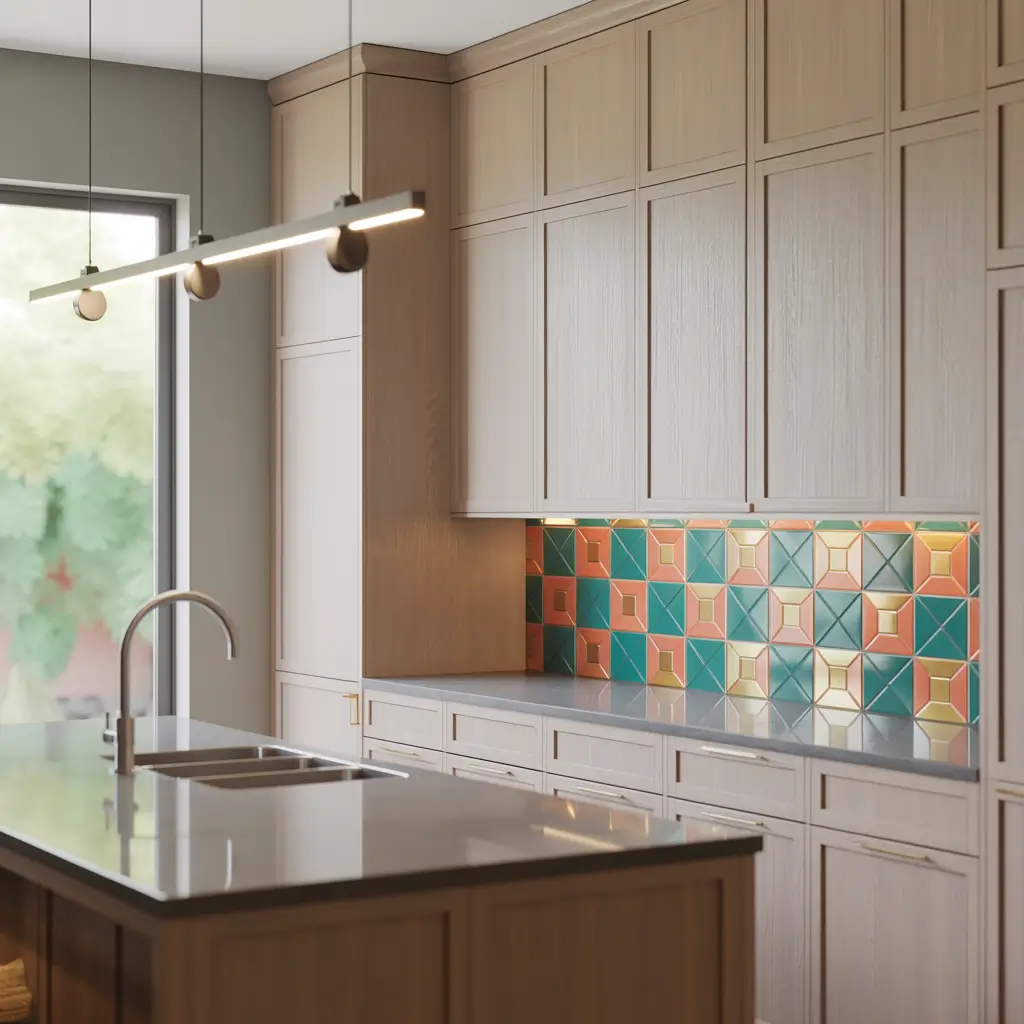
White oak open shelving combined with white oak cabinets creates a kitchen that feels designed rather than specified — a space where someone made deliberate decisions about what to show and what to hide. The shelving also gives the wood grain a chance to appear at a different scale: shelf edges, undersides, and faces all contribute to a richer wood presence than cabinets alone can achieve.
The most successful approach is replacing two or three upper cabinets with white oak floating shelves rather than doing an entire wall of open shelving. This gives you the design benefit — visual openness, display opportunity, the layered effect of open and closed storage — without the practical commitment of keeping every item on every shelf permanently display-worthy.
Styling White Oak Open Shelves
- Keep shelf contents within a three-color palette: white dishware, the wood tone, and one accent color
- Group items in odd numbers — three stacked bowls, five cups, a grouping of seven — for visual rhythm
- Leave fifteen to twenty percent of each shelf empty; the space is as important as the objects
- One plant minimum per shelf unit — green against white oak grain is one of the most natural pairings in kitchen styling
- Match shelf brackets to cabinet hardware finish for a designed, intentional feel throughout the kitchen
14. Whitewashed or Cerused White Oak Cabinets
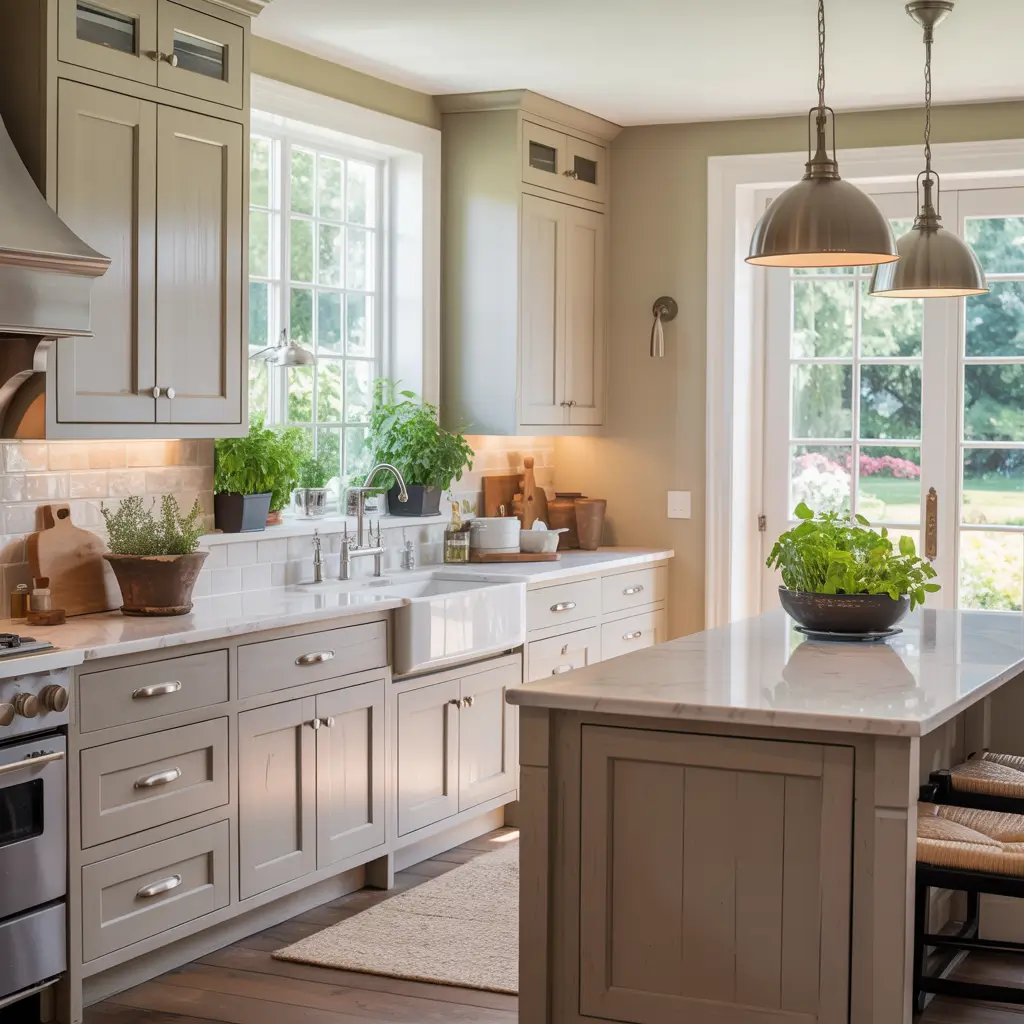
Whitewashing and cerusing are related finishing techniques that introduce white pigment into the grain of the wood, lightening the overall tone while emphasizing the grain channels with white or light gray. The result is a finish that is simultaneously lighter than natural white oak and more textured — the grain reads as more prominent because the white pigment in the channels creates contrast against the wood surface.
Cerused white oak was historically used on Gothic-style furniture and architectural woodwork, but modern cerusing on kitchen cabinets produces something quite different: a clean, contemporary finish with coastal or Scandinavian character that is genuinely distinct from both natural wood and painted surfaces. It occupies the design space between wood and paint in a way that is uniquely its own.
Whitewash and Ceruse Application Methods
- Wire brushing followed by white oil or wax rubbed in and wiped back — the traditional ceruse method; maximum grain emphasis
- Diluted white paint washed over the surface and wiped back — the most accessible DIY method; variable results
- White pigment-tinted hardwax oil — the most controlled and durable professional option; Rubio Monocoat White is the standard
- White-tinted UV finish applied at the factory — the most consistent and durable option for new cabinet orders
Pro Tip: Cerused or whitewashed white oak finishes require wire-brushed surfaces to look correct. The white pigment only reads as texture when there are grain channels to sit in. A smooth-sanded white oak surface with white wash applied just looks faintly whitish — not the dramatic, textured look you’re aiming for.
15. White Oak with a Contrasting Island — The Two-Material Kitchen
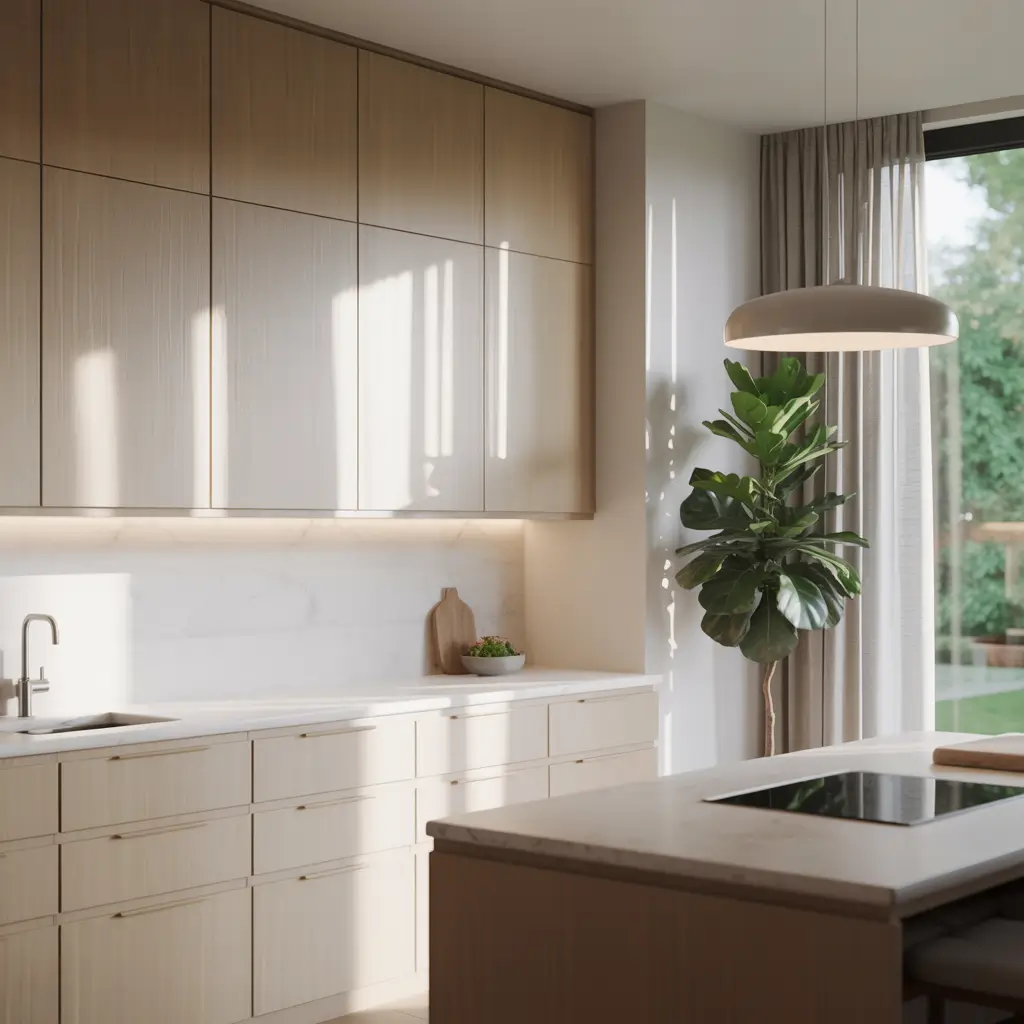
Using white oak for perimeter cabinets and a different material for the island — or vice versa — is one of the most effective ways to add visual interest and spatial definition to an open kitchen layout. The island becomes an anchor, a focal point, a piece of furniture within the larger room.
The most compelling version of this idea is a white oak island surrounded by painted white or light-colored perimeter cabinets. The island’s wood warmth becomes the personality of the kitchen, and the white surround frames it like a gallery wall. The alternative — painted island in a wood-dominated kitchen — also works well, particularly when the island color is a deep, grounded tone like navy, forest green, or charcoal.
Island Material Combinations for White Oak Kitchens
- White oak island with white painted perimeter cabinets — wood as the statement, white as the frame
- Navy painted island in a white oak kitchen — the most popular two-tone kitchen combination currently
- Sage green island in white oak kitchen — the most organic, naturalistic combination
- Marble-wrapped island base in a white oak kitchen — stone as island material for a luxury hotel quality
- Black-painted island with white oak cabinets and white countertop — dramatic three-way contrast
concrete or stone flooring.
Polished concrete is the most dramatic pairing — the high reflectivity of the polished surface bouncing light back up through the space, warming the white oak from below. Honed limestone or sandstone provides softer, more textured contrast. Slate adds cool dark tones that ground the warmth of the wood without darkening the room. Each combination creates a different character, but all of them share the sense of a kitchen built from real, durable materials rather than manufactured surfaces.
The Practical Guide: Buying and Caring for White Oak Kitchen Cabinets
Understanding White Oak Cabinet Sources
White oak kitchen cabinets are available across a wide range of price points and production methods, and understanding the differences helps you match your budget to realistic quality expectations.
Custom cabinets are built to your exact specifications by a local or regional cabinet maker. They offer the widest range of species, cuts, finishes, and construction methods. They also cost the most and take the longest to produce. For white oak specifically, custom allows you to specify quarter-sawn or rift-sawn cuts and apply any finish you want — including hardwax oil treatments that most manufacturers don’t offer.
Semi-custom lines from manufacturers like Plato Woodwork, Plain & Fancy, Dura Supreme, and Showplace offer white oak in a range of door styles and a curated selection of finishes. The price is substantially lower than full custom, the lead times are shorter, and the quality is generally very good. This is where most kitchen renovations in the $30,000–$80,000 range land.
Stock cabinets in white oak from IKEA or Home Depot are limited — white oak is still premium enough that mass-market stock lines rarely offer it. The exception is IKEA’s Axstad and similar door fronts in an oak-look finish, which are affordable but are not solid wood.
White Oak Finish Maintenance
White oak kitchen cabinets require maintenance appropriate to their finish type. This sounds obvious, but it’s genuinely misunderstood by most homeowners until they’ve already made a mistake.
Cabinets with a UV-cured or polyurethane finish should be cleaned with a damp cloth and mild dish soap. Avoid harsh cleaners, abrasive scrubbers, and anything containing bleach or ammonia — these break down the finish film over time and create dullness and micro-scratching. Wipe spills immediately, particularly anything acidic (vinegar, citrus, wine) that can penetrate finish edges if left.
Cabinets with a hardwax oil finish need periodic re-oiling. Once or twice per year, apply a thin coat of the same oil product used in the original finish (Rubio Monocoat, Osmo Polyx, or similar) to high-use areas, buff in and wipe back. This is simple and takes about an hour for a full kitchen. The reward is a finish that never needs to be stripped and refinished — it can be maintained indefinitely through this renewal process.
The Long-Term Perspective on White Oak
White oak develops a patina over time. The wood deepens slightly in color with UV exposure, moving from its initial blonde-gray toward a warmer, richer tone. Hardware develops character. Surfaces in high-contact areas soften. The kitchen accumulates the kind of evidence of real use that can’t be manufactured.
This aging quality is worth factoring into your decision. If you want a kitchen that looks exactly the same in fifteen years as it did on day one, white oak is not the right choice — a painted or lacquered cabinet will maintain its appearance more consistently. But if you want a kitchen that looks better at fifteen years than at one, white oak is extraordinary. The material rewards time in a way that almost no other kitchen cabinet choice does.
Conclusion: Why White Oak Belongs in Your Kitchen
White oak kitchen cabinets are not a trend. Trends are things that peak, photograph well for three years, and then appear on “what not to do” lists five years later. White oak is a material with genuine, enduring qualities that design trends occasionally recognize and bring to the foreground, but that were always there.
The warmth that white oak brings to a kitchen is qualitatively different from the warmth of paint. You can choose a warm paint color and create a warm kitchen. But the warmth of white oak — the grain, the variation board to board, the way the finish catches morning light differently from evening light, the way it feels under your hand — is a different kind of warmth. It’s the warmth of something that grew rather than something that was manufactured.
The 22 ideas in this guide represent the full range of what white oak kitchen cabinets can be. From the minimal clarity of a Scandinavian flat-panel kitchen to the textured richness of a wire-brushed farmhouse kitchen. From the natural blonde of clear-finished quarter-sawn to the ethereal quality of cerused white oak. From a full custom renovation to the refinishing of cabinets you already own.
Pick the approach that fits your kitchen, your style, and your budget. Specify the finish and cut that serves your design goals. Choose hardware that either complements or contrasts the wood warmth. And give the material time to do what it does best: age into something that feels genuinely beautiful and genuinely yours.
1 thought on “15 Trendy White Oak Kitchen Cabinets Ideas to Refresh Your Home”