
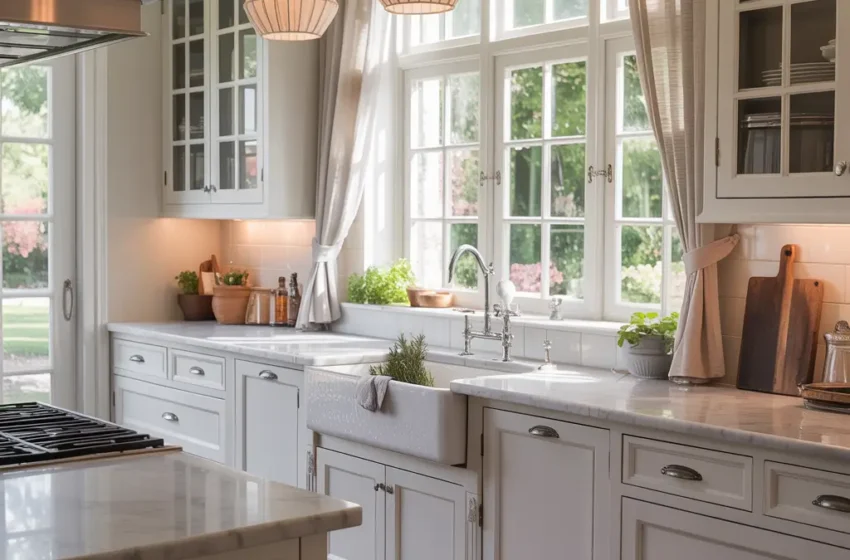
You’ve probably spent more time pinning farmhouse kitchen photos than you’d like to admit. And honestly? We don’t blame you. There’s something almost magnetic about a white farmhouse kitchen — the clean lines, the warm textures, the sense that good food and good conversation happen there every single day.
But here’s the thing most design blogs won’t tell you: getting that look right takes more than a coat of white paint and a farmhouse sink. The details matter. The balance matters. Knowing what to keep, what to skip, and what to prioritize when you’re working with a real budget and a real family — that’s what separates a gorgeous farmhouse kitchen from one that just looks like you tried.
In this guide, we’re covering 20 white farmhouse kitchen ideas that actually work. Not just for a photo shoot, but for Tuesday morning breakfast rushes, Sunday baking sessions, and everything in between. Each idea comes with practical tips you can use right now — whether you’re planning a full renovation or just looking to refresh what you’ve already got.
1. Exposed Wooden Beams Against White Ceilings
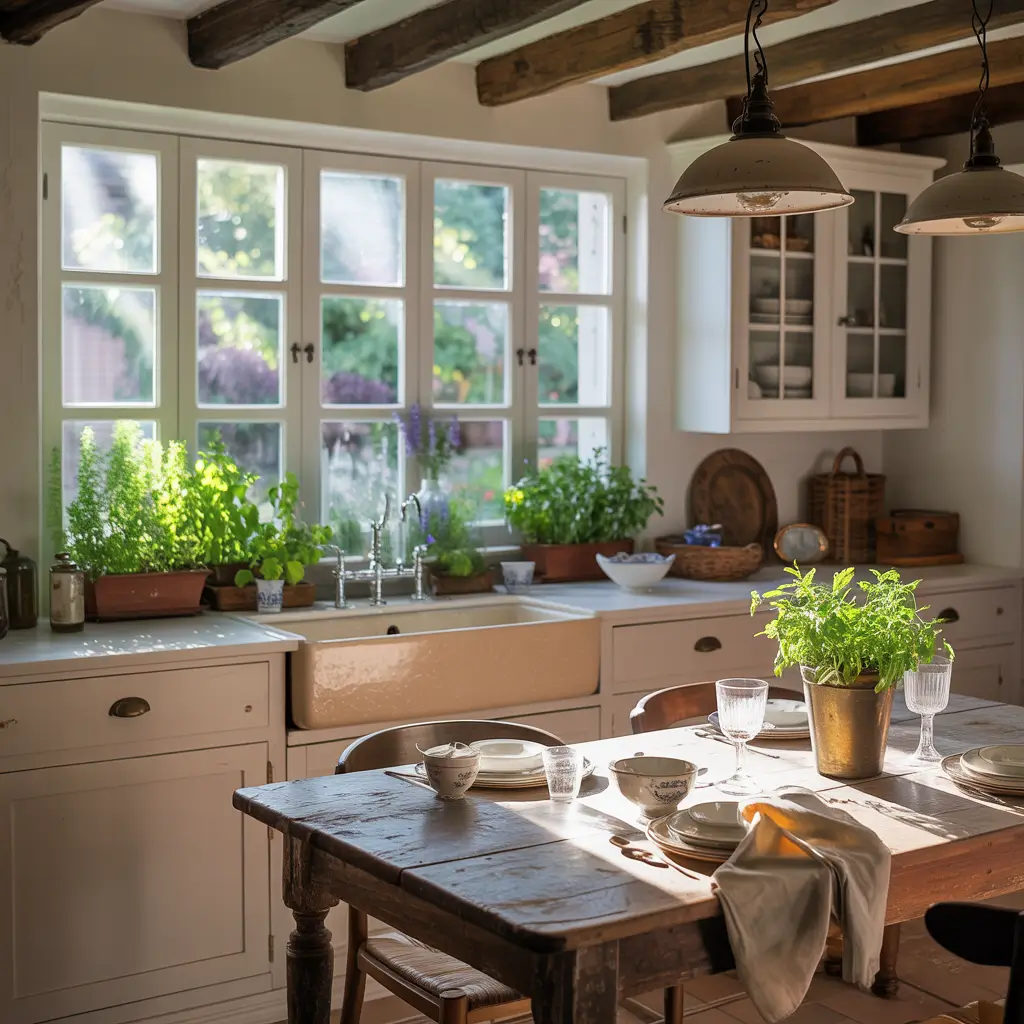
If there’s one design element that signals ‘farmhouse‘ instantly, it’s exposed wooden ceiling beams. Against a white ceiling and white cabinets, they create a rich visual contrast that no amount of decorative accessories can replicate. The beams bring in natural texture, organic warmth, and a sense of history — even in a brand-new kitchen.
Real structural beams are the gold standard, but high-quality faux beams have come a long way and look genuinely convincing when properly installed. The key is choosing the right wood tone: warm oak, weathered pine, and dark walnut all work beautifully against white, but each creates a slightly different mood. Oak feels bright and fresh, pine reads as rustic and relaxed, and walnut adds drama and sophistication.
Pro Tip: Don’t mix beam tones with your flooring unless you really know what you’re doing. Choose one wood finish and carry it through your beams, barstools, and any floating shelves for a cohesive look.
Low ceilings? Horizontal beams can visually widen your space. High ceilings? Vertical support posts draw the eye upward and make the room feel even more grand. Either way, keep the rest of your palette simple and let the beams do the talking.
2. Open Shelving with White Dishware
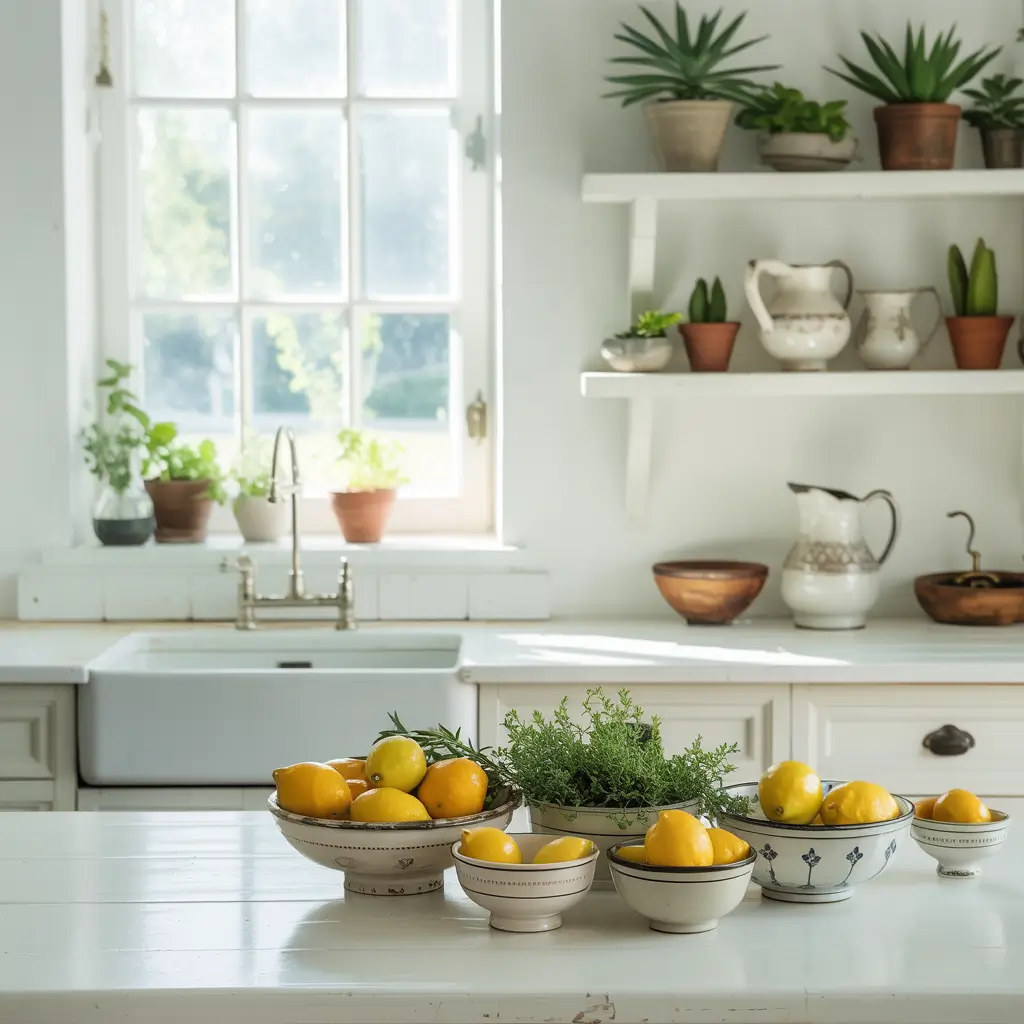
Open shelving divides people — you either love it or you’re terrified of the dusting commitment. But when done right, it’s one of the most effective ways to bring farmhouse character into a white kitchen. Removing upper cabinet doors (or replacing them with floating shelves) instantly lightens the space, creates visual breathing room, and gives you a spot to display the pieces you actually love.
The trick to making open shelving look curated rather than chaotic is editing ruthlessly. Display only what earns its place: white ironstone dishes stacked in neat rows, glass jars filled with dry goods, a small potted herb, a vintage pitcher. Mix practical and decorative, but keep the color palette tight — mostly white, with occasional wood or metal accents.
Design Rule: Follow the grouping of three — odd numbers are more visually appealing. Arrange items in groups of three at varying heights for a naturally styled look.
Floating shelves with no visible brackets look the cleanest and most intentional. If you’re replacing cabinets, 1.5-inch thick solid wood shelves (in white-stained oak or raw wood sealed with matte finish) will hold up to daily use and look beautiful doing it.
3. Apron-Front Farmhouse Sink
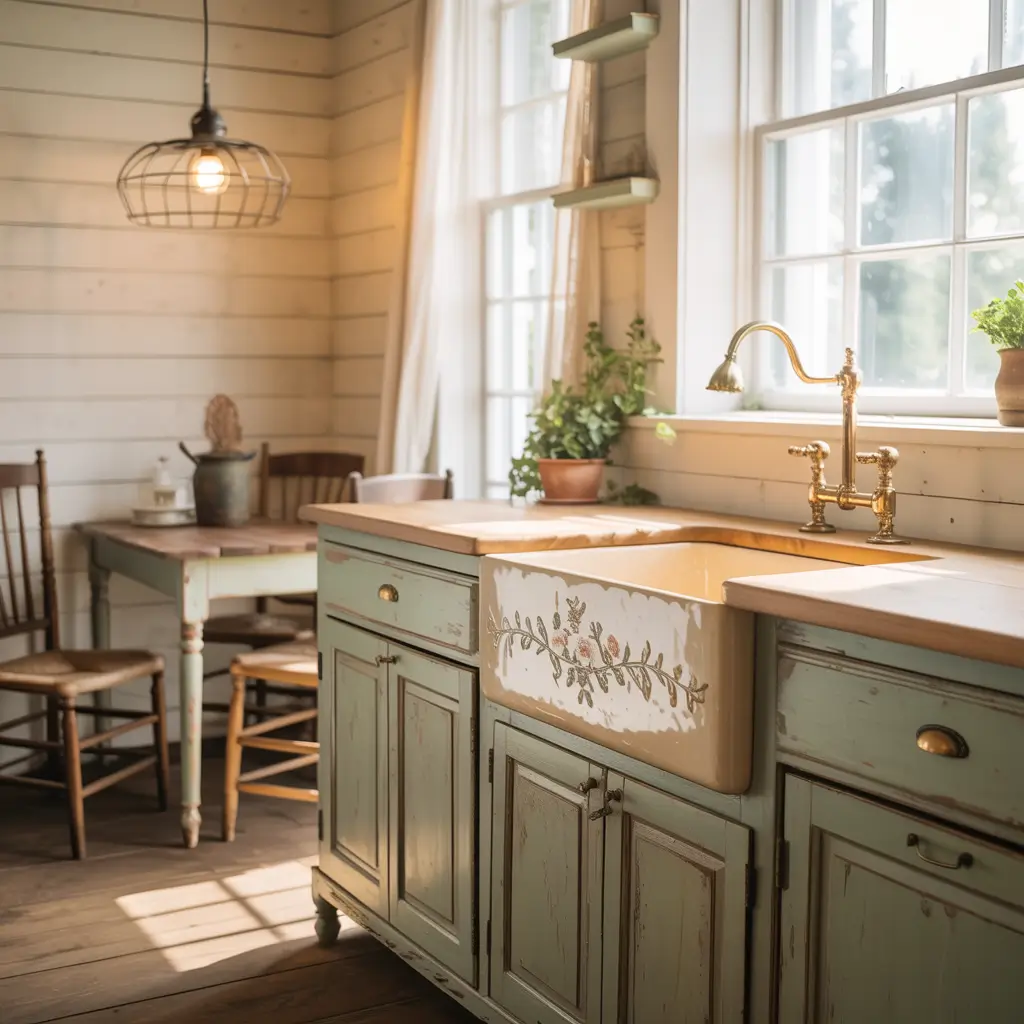
The apron-front sink — also called a farmhouse sink — is the single most recognizable element of this style, and for good reason. Its deep, wide basin is genuinely practical for washing large pots and pans, and its exposed front panel adds architectural detail that a standard under-mount sink simply can’t match.
White fireclay is the classic choice, and it’s earned that reputation. It’s durable, non-porous, stain-resistant, and develops a beautiful patina over time. Stainless steel apron sinks offer a more modern interpretation, while cast iron gives you color options if you want to add a subtle contrast.
Pair your farmhouse sink with a bridge faucet or a high-arc gooseneck in brushed nickel, oil-rubbed bronze, or matte black for a look that feels both traditional and current. Position the sink beneath a window if your layout allows — there’s a reason that pairing is a farmhouse design cliché. It genuinely works.
4. Shaker-Style White Cabinets
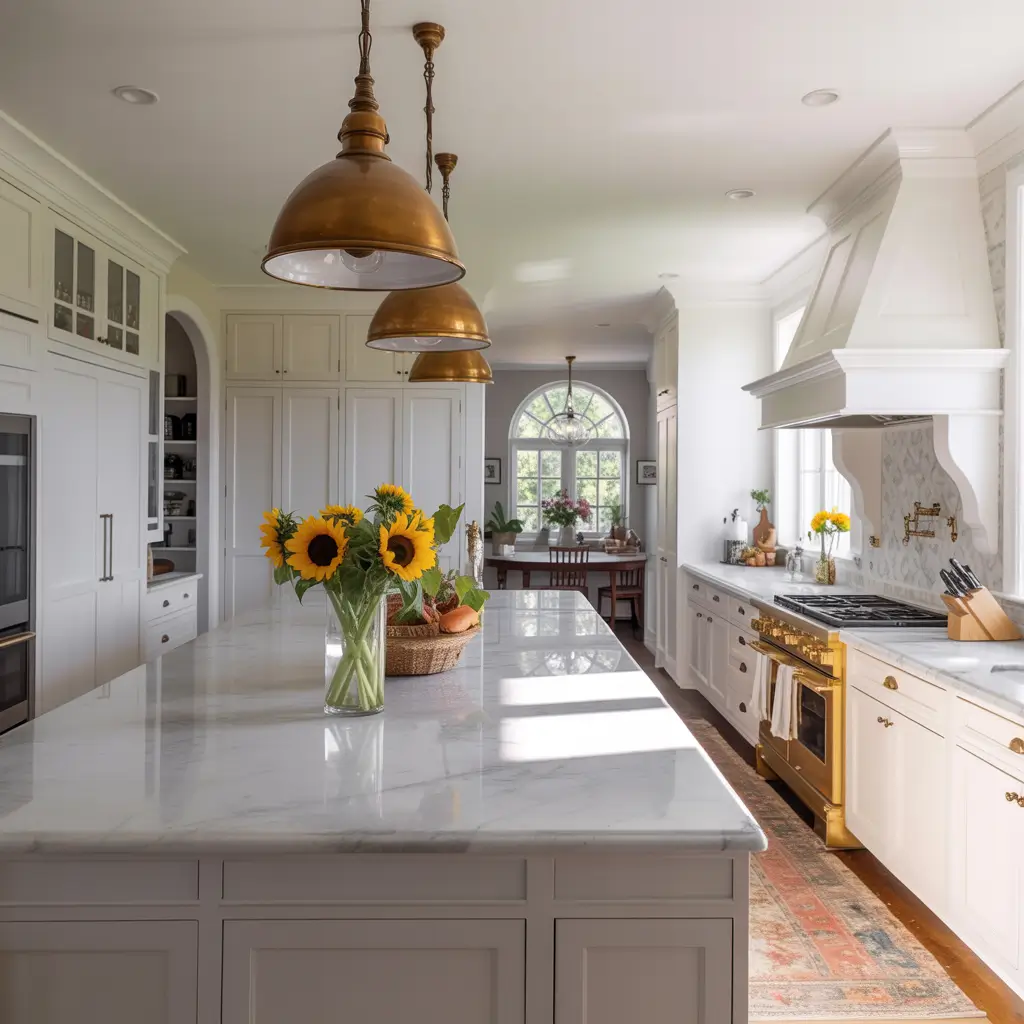
If farmhouse design has a signature cabinet style, it’s Shaker. The recessed panel door, clean lines, and simple proportions make Shaker cabinets versatile enough to work across a range of kitchen styles — but they look most at home in a farmhouse kitchen where the emphasis is on craftsmanship and understated elegance.
White Shaker cabinets work with everything: butcher block countertops, marble slabs, soapstone, quartz, even concrete. They don’t compete with bold backsplashes or statement lighting — they recede gracefully and let other elements shine.
Budget Note: Stock Shaker cabinets from home improvement stores have improved dramatically in quality over the past decade. If a full custom cabinet budget isn’t realistic, stock or semi-custom Shaker cabinets can get you 90% of the look at a fraction of the cost.
For a more modern interpretation, consider flat-front cabinets in white with a slim Shaker-inspired frame. This gives you the clean lines of contemporary design while maintaining the architectural detail that reads as ‘farmhouse’ rather than ‘ultra-modern.’
5. Black Hardware and Fixtures as Contrast
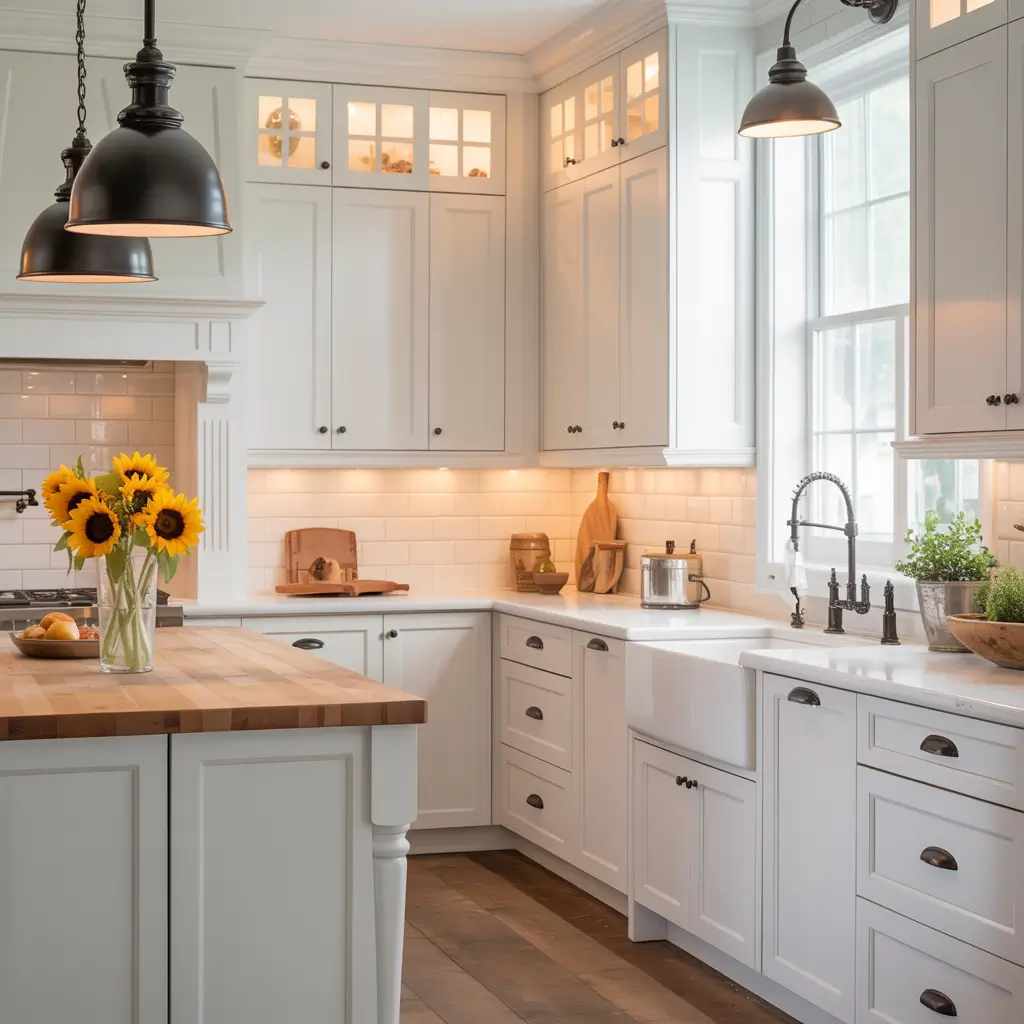
Nothing updates a white farmhouse kitchen faster — or more affordably — than swapping out your cabinet hardware. Matte black pulls, knobs, and handles against white cabinets is a combination that feels both timeless and current. The contrast is striking without being jarring, and it adds definition and character to otherwise flat cabinet faces.
Don’t stop at cabinet hardware. Carry the matte black through your faucet, light fixtures, range hood details, and even window frames if your space allows. The key to this look working is consistency — pick one finish and commit to it throughout the kitchen.
For sizing, choose substantial hardware that’s proportionate to your cabinet doors and drawers. Cup pulls on drawers are both practical and beautiful. Bar pulls work well on larger doors. Avoid pieces that are too small or too delicate — they get lost on farmhouse-scale cabinetry.
6. Butcher Block Countertops for Warmth
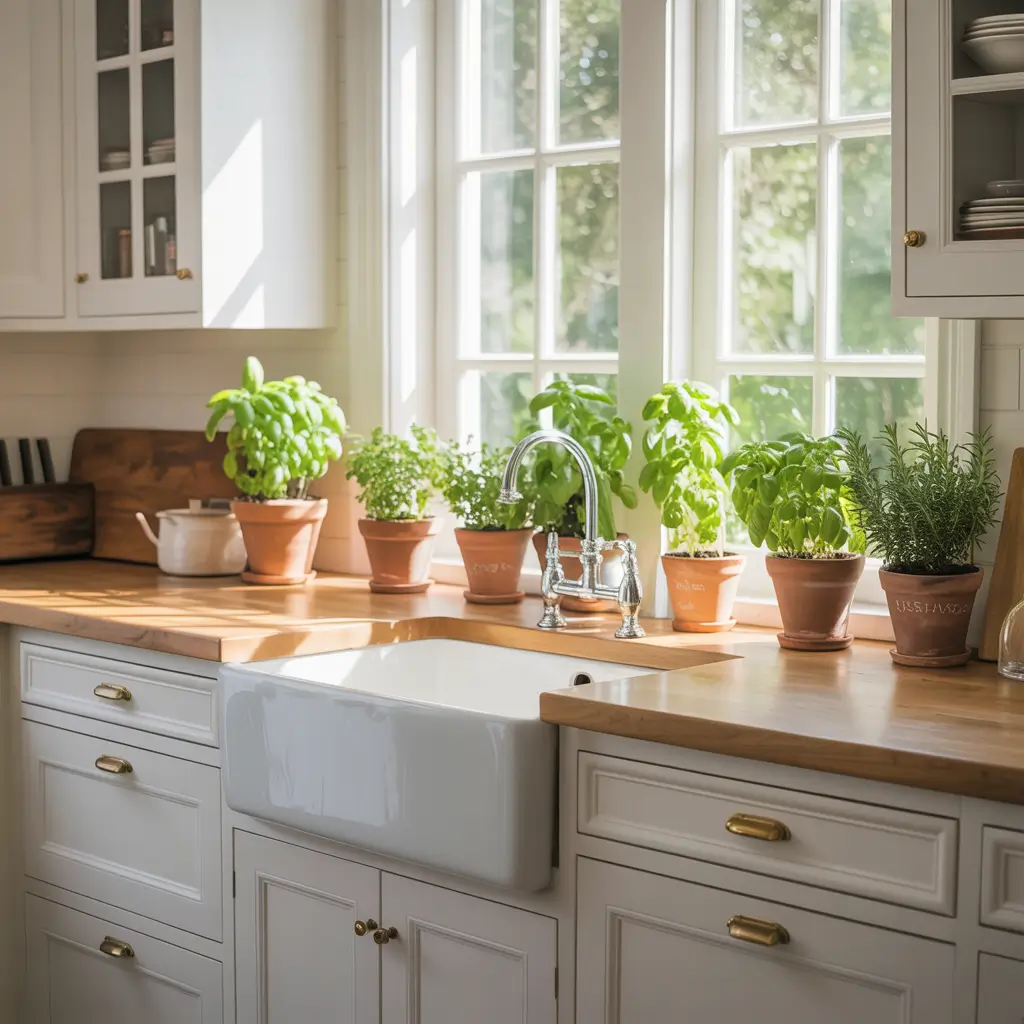
White cabinets paired with butcher block countertops is one of those combinations that just works, no matter how many times you see it. The warm honey tones of the wood soften the brightness of all that white, bringing a sense of organic texture that stone and quartz can’t quite replicate.
Butcher block is also genuinely practical for food prep — you can cut directly on it, and small knife marks add character rather than becoming eyesores. The catch: it requires regular maintenance. Seal it with food-safe mineral oil every few months, wipe up spills promptly, and never let it stay wet. Treat it well and it will last for decades.
Design Tip: Consider using butcher block only on your island or a section of perimeter counter rather than throughout. This gives you the warmth and visual interest without the full maintenance commitment — and looks intentionally designed.
7. Shiplap Accent Wall Behind Open Shelves
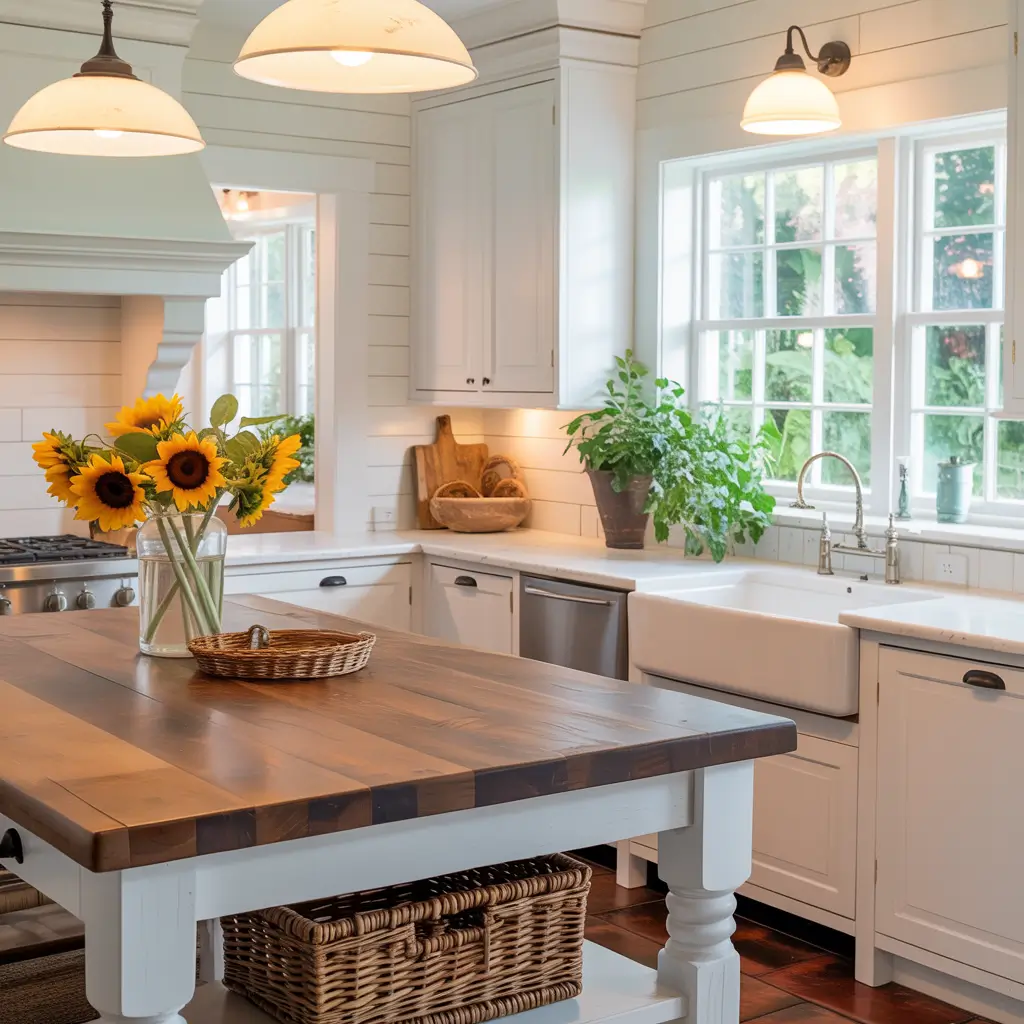
Shiplap has become synonymous with farmhouse style, and while it’s been somewhat overused in the past decade, it remains genuinely effective when deployed thoughtfully. A shiplap accent wall — particularly behind open shelving or as a range hood surround — adds texture, depth, and unmistakable farmhouse character to a white kitchen.
Painted white, shiplap adds subtle texture without color contrast. Left natural or stained in a wood tone, it introduces warmth and pattern. One accent wall, or a specific architectural zone like the space between upper cabinets and the ceiling, is usually enough to make an impact without overwhelming the space.
Real shiplap is pine boards with a rabbet cut that allows them to overlap slightly — this is what creates the signature horizontal groove lines. Faux shiplap using regular boards spaced with a nickel between them looks nearly identical and is easier for DIY installation.
8. Vintage-Inspired Light Fixtures
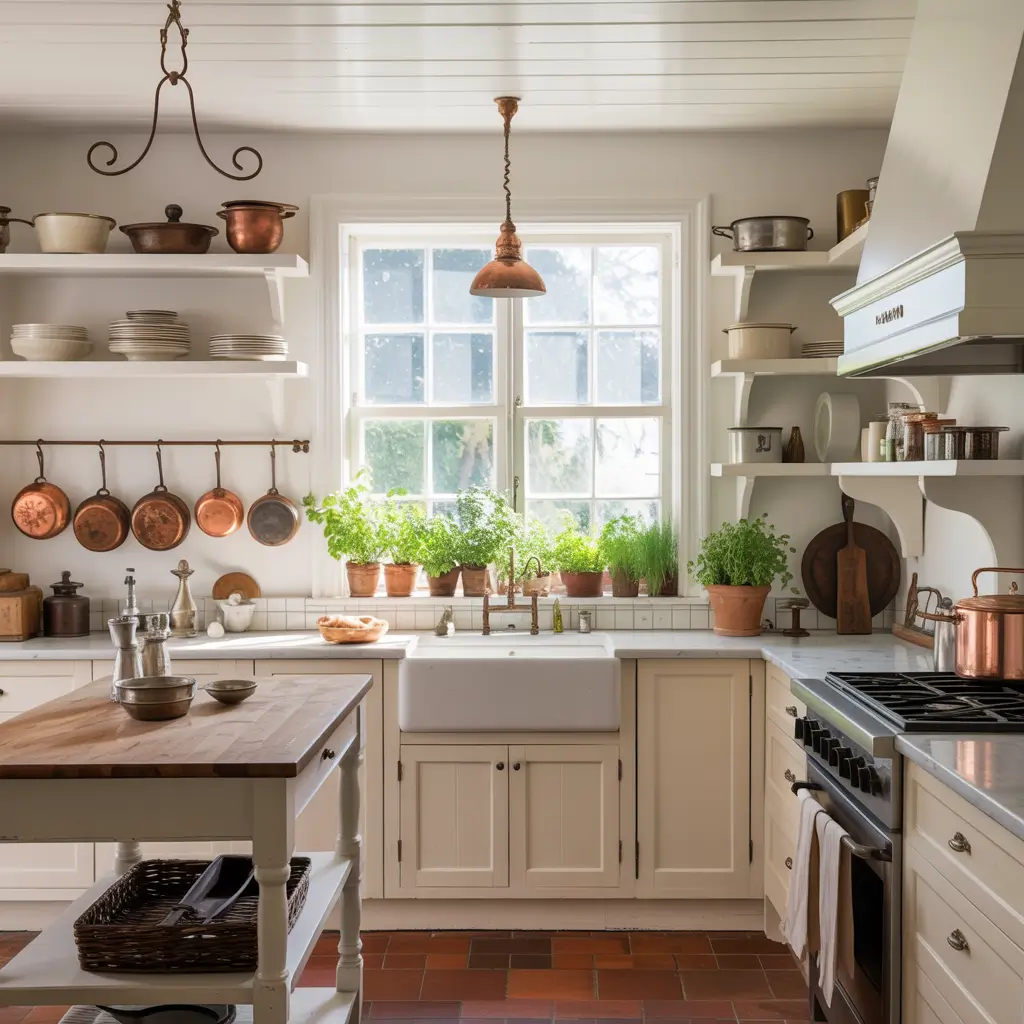
Lighting is the piece of a kitchen renovation that most people underestimate — until they get it right and realize it changes everything. In a white farmhouse kitchen, vintage-inspired fixtures serve double duty: they provide essential task and ambient lighting, and they act as jewelry for the room, adding character and focal points that tie the whole design together.
Pendant lights over a kitchen island are the biggest opportunity. Industrial-style cage pendants, schoolhouse globe pendants, lantern-style pendants with black frames — all feel at home in a farmhouse kitchen. Hang them at the right height (30-36 inches above the countertop for standard pendant pendants) and make sure you choose a scale that’s proportionate to your island.
For overhead lighting, a farmhouse-style chandelier with a wood or black iron frame makes a statement in larger kitchens. Under-cabinet lighting adds practical task illumination and warm ambiance. Consider dimmers throughout — the ability to shift from bright work light to warm evening glow is something you’ll appreciate every single day.
9. White Kitchen Island with Contrasting Dark Base
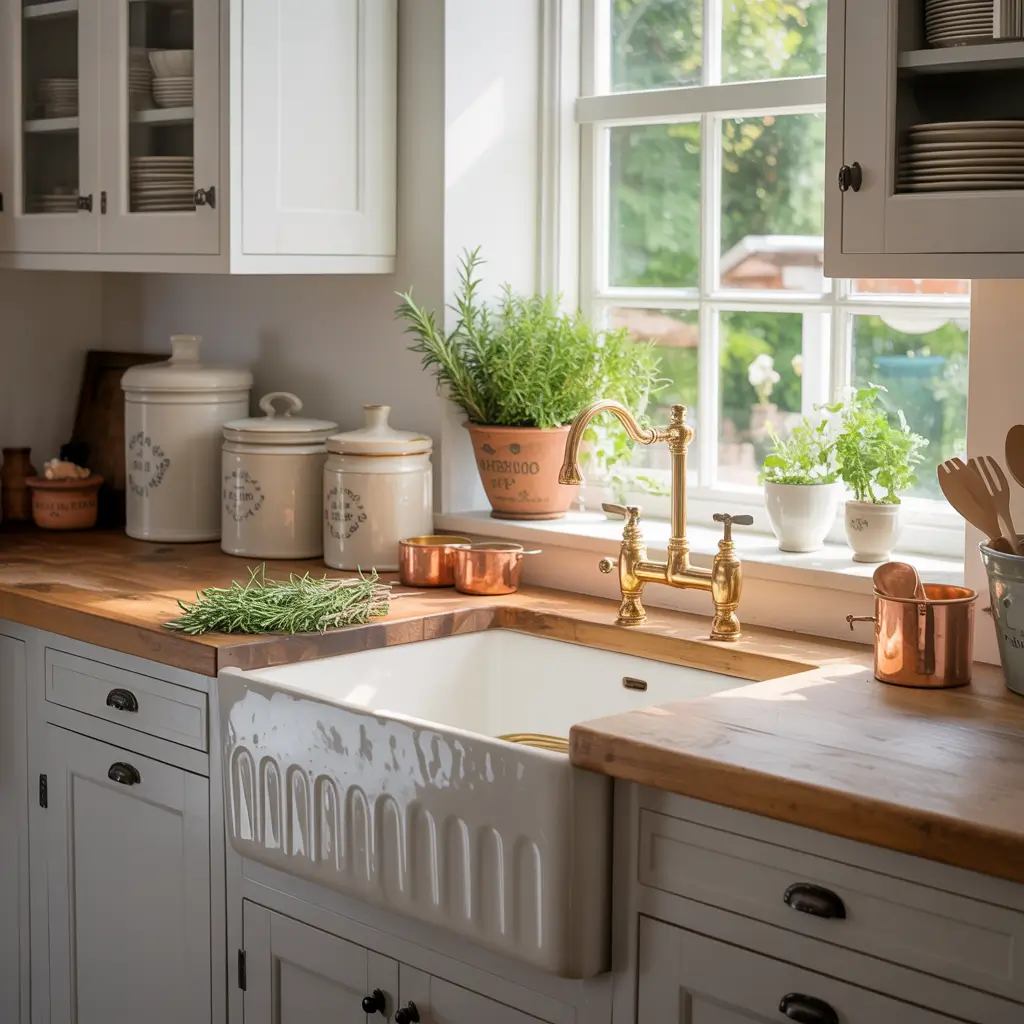
A kitchen island is both a practical workhorse and a design anchor — and a well-chosen island can elevate an entire kitchen. One approach that works beautifully in white farmhouse kitchens is pairing white upper elements with an island that has a contrasting dark base: navy, charcoal, forest green, or deep black.
This creates visual grounding and makes the island feel like a piece of furniture rather than a built-in. The contrast breaks up the expanse of white without introducing pattern or complexity, and it gives the kitchen a more layered, curated look.
Functional Note: Your island needs at least 36 inches of clearance on all working sides. Less than that and you’ll be constantly navigating around people and open cabinet doors. If you’re tight on space, a mobile island on casters gives you flexibility.
Top the island with a different material than your perimeter counters — butcher block if your perimeter is quartz, or vice versa — to reinforce the idea that the island is its own distinct element.
10. Subway Tile Backsplash in Classic White
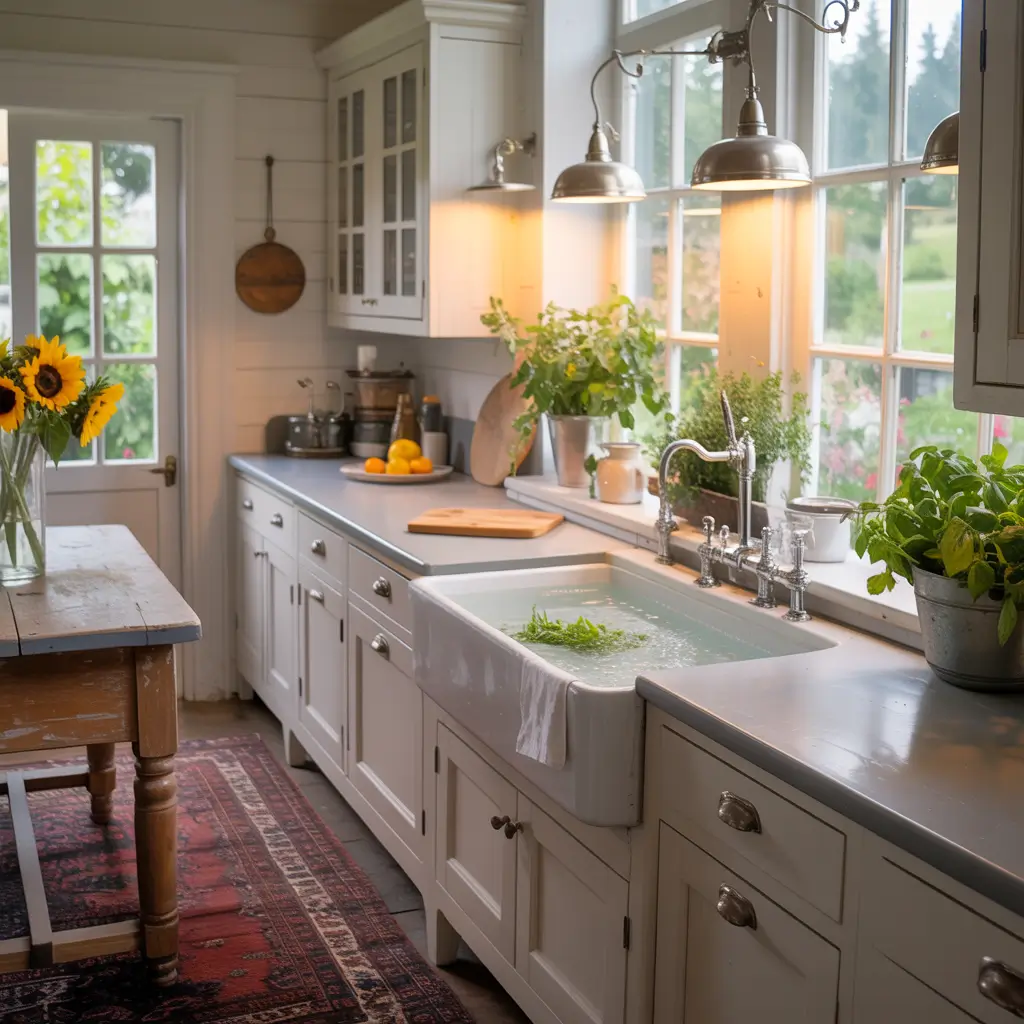
Subway tile is the farmhouse kitchen backsplash — simple, affordable, timeless, and endlessly variable depending on how you use it. The classic 3×6 white subway tile with white grout virtually disappears into white cabinetry, adding subtle texture while keeping the overall look clean and bright.
For more visual interest, use a contrasting grout color. Dark gray or black grout against white subway tile makes the individual tiles pop and gives the backsplash real presence. This also shows less grime between tiles — a genuine practical benefit in a working kitchen.
Layout variations give you additional creative control without changing the material. Standard brick-lay is the classic choice. Vertical stack creates a taller, more modern feel. Herringbone adds elegance and visual movement. All work in a white farmhouse kitchen; choose based on the overall mood you’re after.
11. Maximizing Natural Light with White Reflective Surfaces
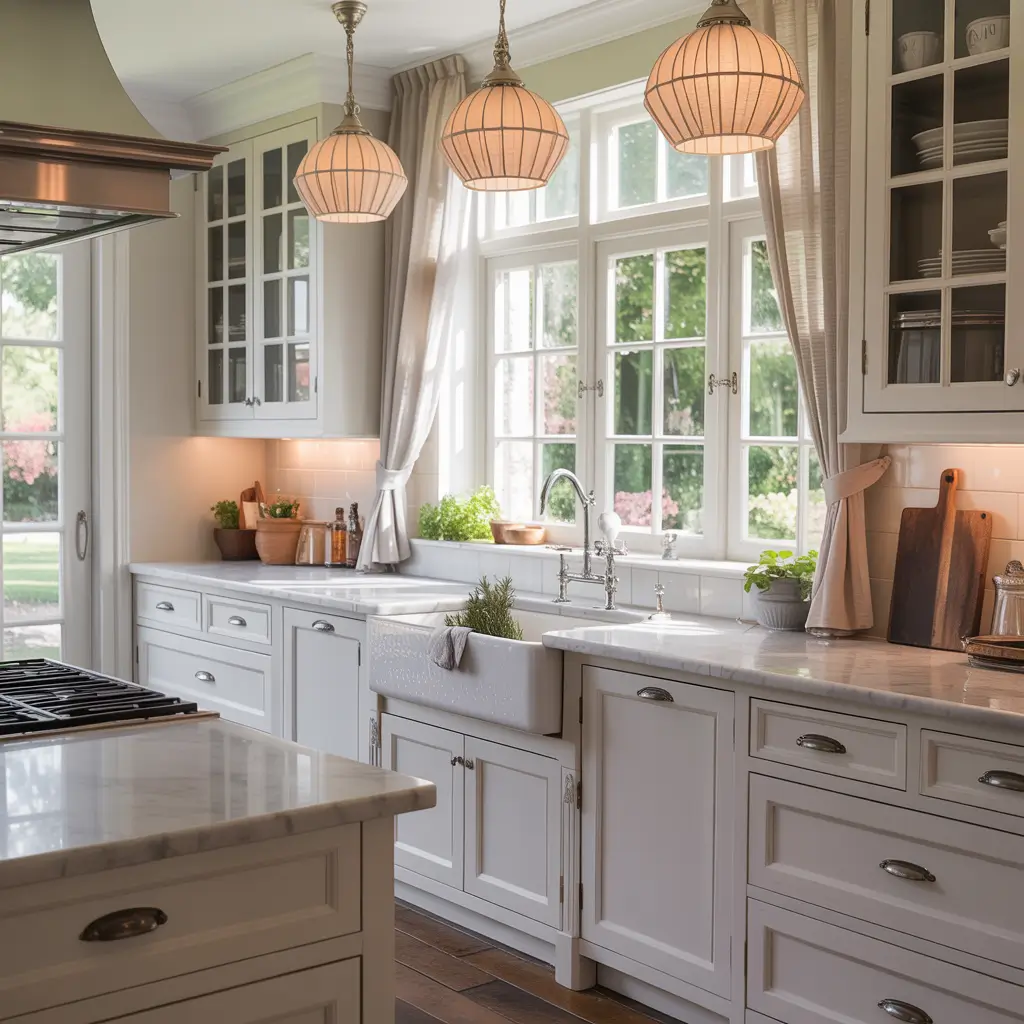
One of the best things about white farmhouse kitchens is how they handle light. White surfaces reflect natural light rather than absorbing it, which means even a kitchen with modest windows can feel bright and open. Maximizing this effect is about more than just choosing white — it’s about strategic placement of reflective surfaces and keeping light pathways clear.
If you’re planning a renovation, consider enlarging windows, adding a pass-through to an adjacent room, or installing a skylight above the sink or island. These are significant investments but they transform the quality of light in the space entirely.
For existing kitchens, remove heavy drapes in favor of simple white linen panels or Roman shades. Use glass-front cabinet doors near windows to allow light to pass through. Install under-cabinet lighting that washes the countertop in warm light. And keep window sills clear — a clutter-free sill maximizes the light coming in.
12. Farmhouse Table as a Kitchen Dining Area
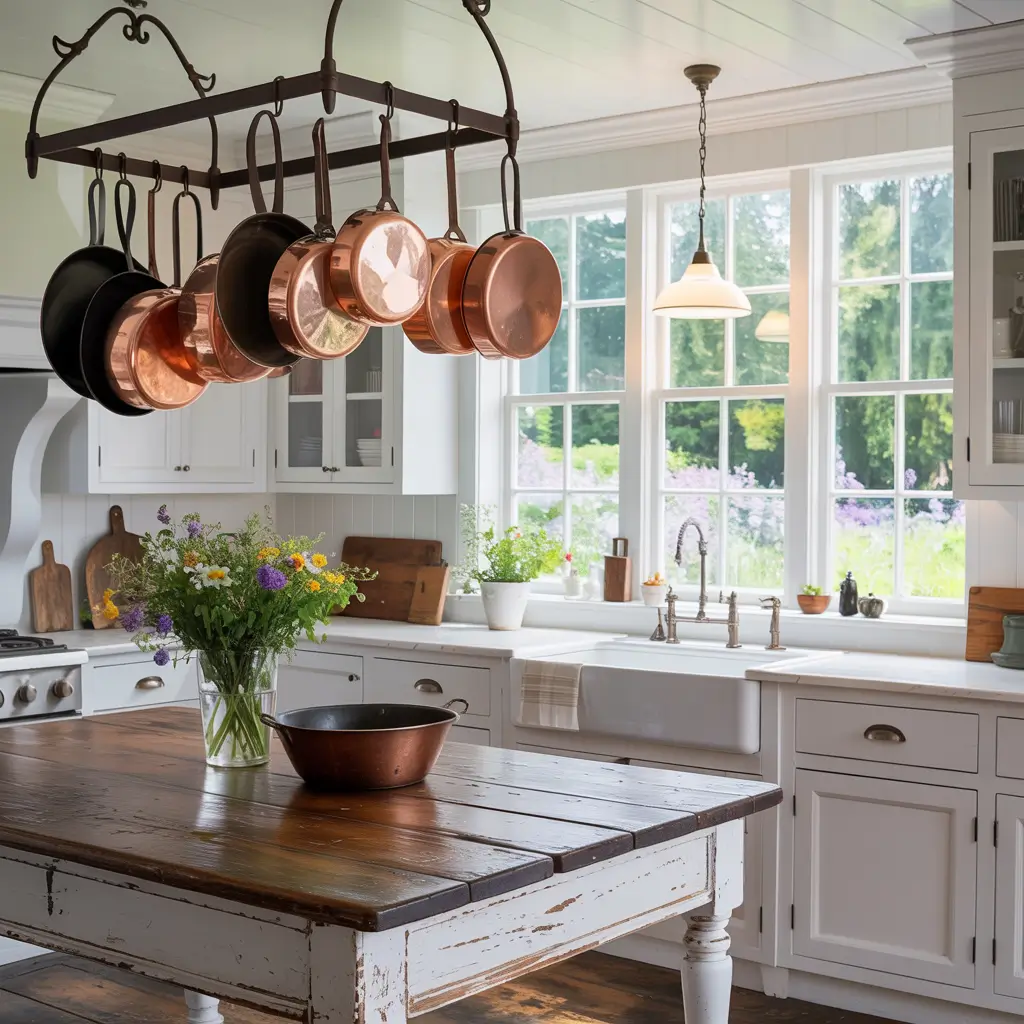
In a large enough kitchen, a farmhouse dining table creates a true gathering space that makes the room feel like the heart of the home. A solid wood table — oak, walnut, pine, or reclaimed lumber — grounds the white kitchen with natural warmth and invites people to pull up a chair and stay.
Keep the table styling simple: a linen runner, a small vase of fresh herbs or seasonal flowers, and a few candles is all you need. Mismatched chairs in complementary styles add personality without looking sloppy — try white painted chairs with one or two wood chairs, or a mix of Windsor-style and cross-back.
Space Planning: A 36-inch round table seats four comfortably and works in a 10×10 kitchen nook. For six to eight seats, you’ll want a 72-80-inch rectangular table with at least 36 inches of clearance on all sides.
13. Floating Wood Shelves as Functional Decor
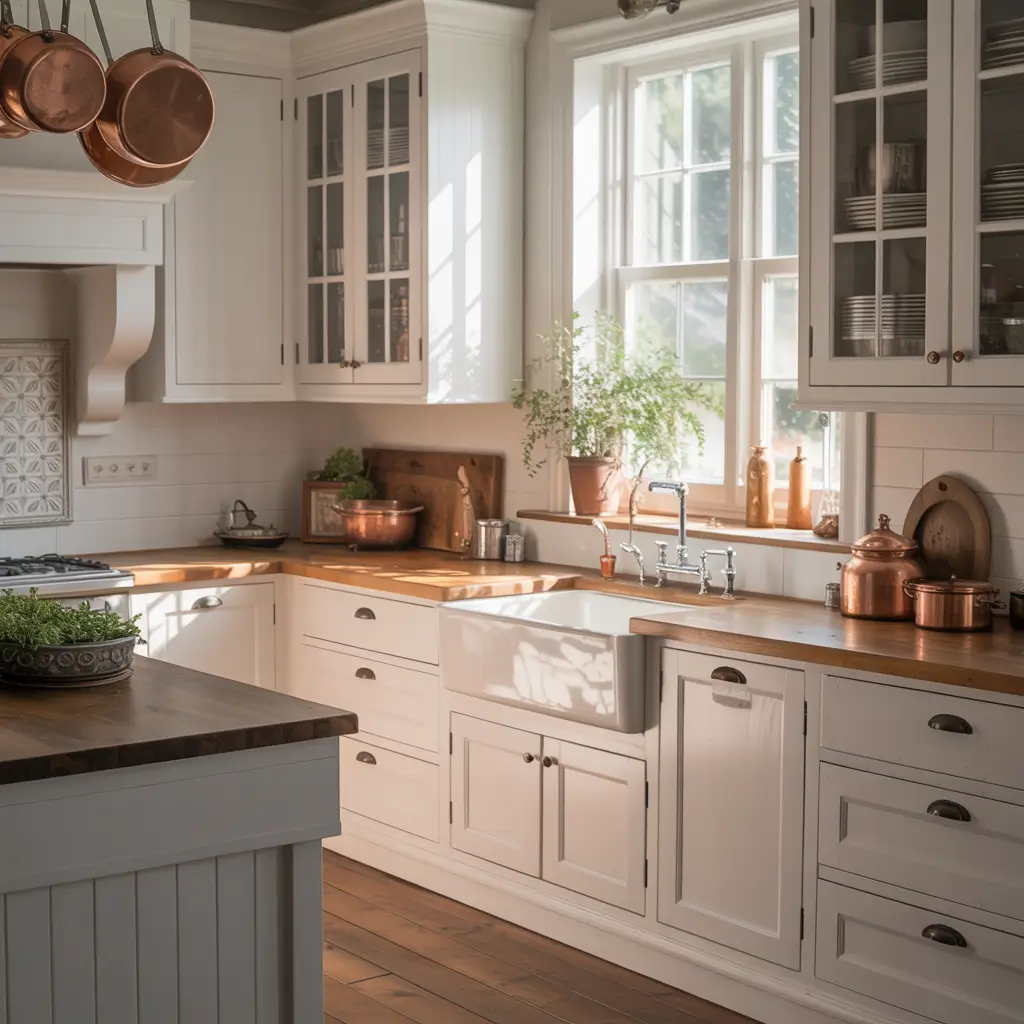
Floating wood shelves do something that cabinetry alone can’t: they turn your kitchen storage into display. A pair of 48-inch floating shelves in white-washed oak or natural maple, flanking a window or range hood, immediately reads as farmhouse — and they’re genuinely useful for keeping frequently-used items within easy reach.
Styling floating shelves is an art form. The goal is balance: practical items (dishes, glasses, canisters) mixed with decorative objects (a small plant, a vintage vessel, a wooden board). Keep the color palette tight — mostly white and wood tones, with occasional natural textures like woven baskets or linen.
Thickness matters more than most people realize. Thin shelves look cheap and can sag under the weight of heavy dishes. Invest in 1.5 to 2-inch solid wood shelves, properly anchored into wall studs. They’ll carry the weight and look far more substantial and intentional.
14. Matte Finish White Cabinets for a Softer Look
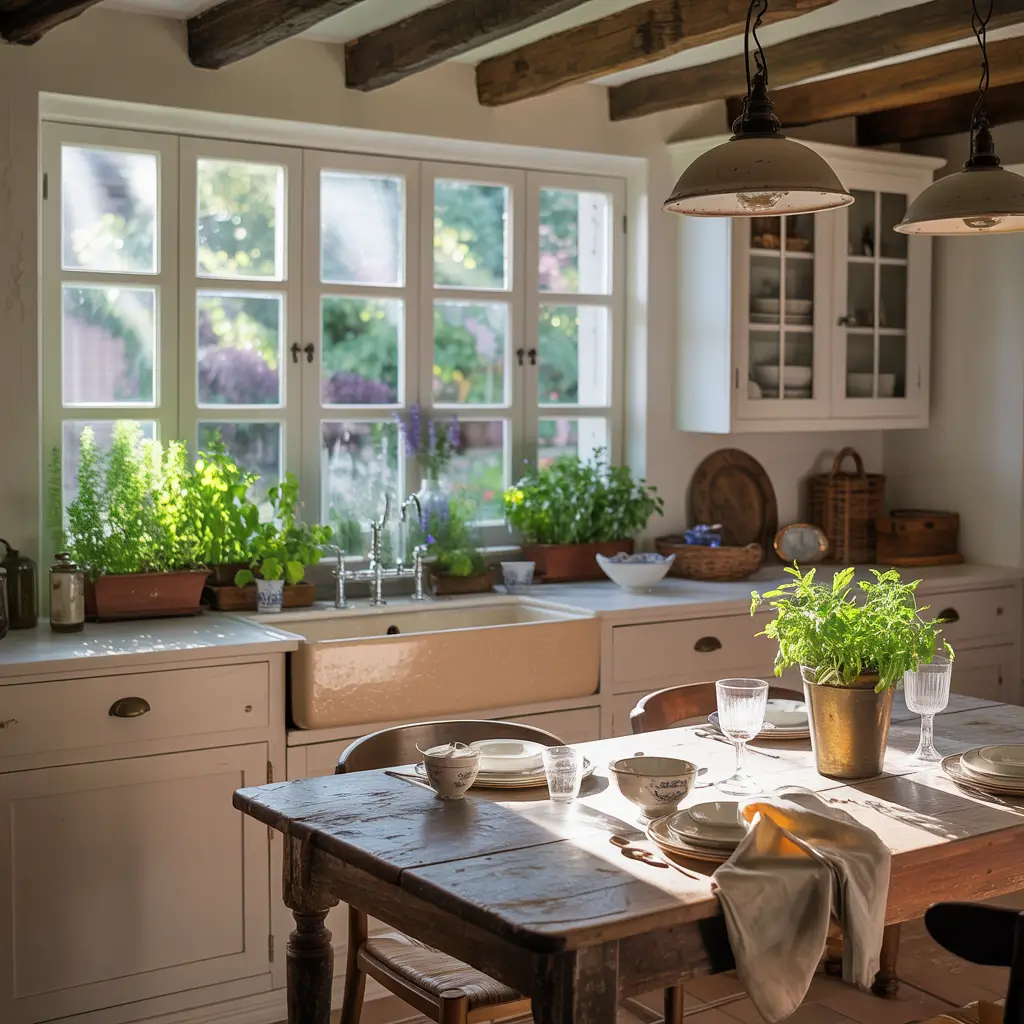
Most white cabinets come in a semi-gloss finish, which is durable and easy to clean — but it can also look flat and institutional in certain lighting. A matte or satin finish gives white cabinets a softer, more depth-rich appearance that reads as more refined and thoughtful.
Matte finishes do require a bit more care — they’re slightly more susceptible to scuffing and marks — but the visual payoff is worth it in a well-trafficked, well-loved kitchen. Wipe-clean matte paints have improved significantly in durability; look for cabinet-specific paints from reputable brands.
Color Note: Pure bright white can feel cold, especially in north-facing kitchens. Consider soft whites with warm undertones — creamy whites, antique white, or warm gray-whites — which read as white in most lighting but feel noticeably warmer and more inviting.
15. Vintage-Style Range Hood as a Focal Point
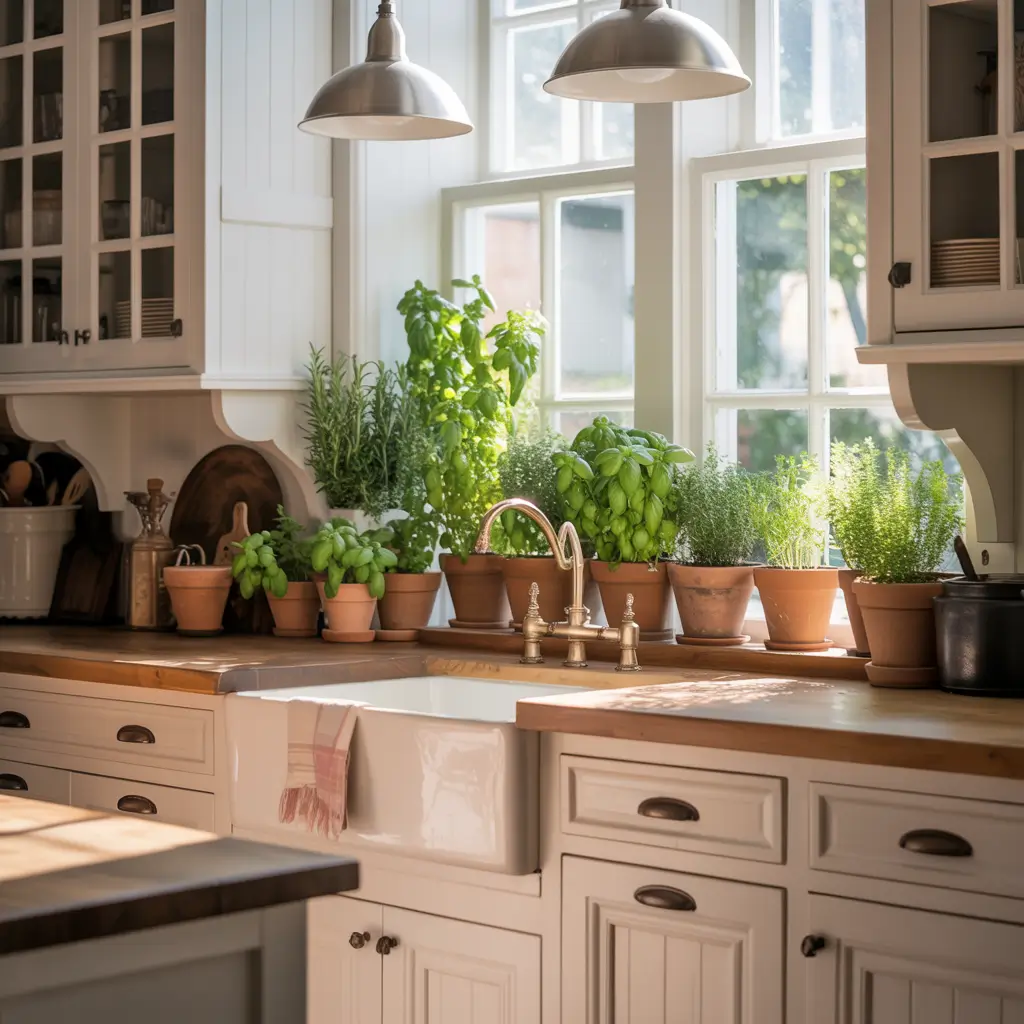
In a white farmhouse kitchen, the range hood above the stove is one of the most prominent architectural elements — and one of the best opportunities to make a real design statement. A custom wood range hood in white paint or natural finish, or a plaster hood with curved lines, elevates the kitchen from pretty to genuinely impressive.
Pair it with a professional-style range in white or stainless, surrounded by a classic subway tile backsplash, and you have a cooking zone that feels both professional and warmly domestic — exactly the balance farmhouse style is after.
The range hood doesn’t have to be enormous or architecturally complex to make an impact. Even a simple shiplap hood with clean lines, painted white with a dark finish on the vent registers, reads as farmhouse and creates a clear focal point in the kitchen.
What to Prioritize: A Practical Buying Guide
If you’re planning a white farmhouse kitchen renovation and working within a budget, here’s how to prioritize your spending for maximum impact:
- Cabinets and hardware — these define the look more than anything else. Invest in quality Shaker-style cabinets and spend on hardware that feels substantial.
- Sink — an apron-front sink is the farmhouse signature piece. It’s worth spending here.
- Lighting — fixtures have an outsized impact on feel. Don’t cut corners on pendants and overhead fixtures.
- Countertops — butcher block gives you warmth at a reasonable price; quartz or marble reads as premium.
- Backsplash — subway tile is affordable and timeless. No need to spend a fortune here.
- Flooring — wide-plank wood or wood-look tile anchors the whole room. Worth investing in if you have budget left.
If you’re refreshing rather than renovating, hardware swaps, open shelving, new light fixtures, and a fresh coat of white paint will take you 80% of the way to the farmhouse look you’re after without a full renovation budget.
Common Mistakes to Avoid
Even the most carefully planned white farmhouse kitchen can go wrong. Here are the most common pitfalls — and how to avoid them:
- Going too matchy-matchy — everything in exactly the same white, same finish, same material reads as sterile rather than curated. Introduce subtle variation in white tones, finishes, and materials.
- Neglecting ventilation — farmhouse ranges and open layouts are beautiful but require serious range hood ventilation. Don’t undersize it.
- Overcrowding open shelves — the appeal of open shelving is the breathing room. Edit ruthlessly and resist the urge to fill every inch.
- Choosing the wrong white — pure bright white can feel cold. Test paint samples in your actual space over several days before committing.
- Ignoring the floor — a beautiful white kitchen sitting on top of dated laminate flooring is a missed opportunity. The floor anchors everything.
- Underestimating maintenance — white shows everything. Be honest with yourself about how much cleaning you’re willing to do before choosing white for every surface.
Frequently Asked Questions
How do I keep white farmhouse cabinets clean?
White cabinets require regular wiping with a damp cloth and mild dish soap. Avoid abrasive cleaners. Repaint as needed — most kitchens need a cabinet refresh every 7-10 years. Semi-gloss or satin finishes are more durable and easier to clean than matte.
What countertop material works best with white farmhouse cabinets?
Butcher block brings warmth and texture at an accessible price point. Quartz in a white marble look gives you durability with elegance. Soapstone is a traditional farmhouse material with beautiful dark gray tones. All three work beautifully — the choice depends on your lifestyle, budget, and aesthetic preference.
Can I achieve a farmhouse look without a full renovation?
Absolutely. The biggest impact changes are hardware swaps (very affordable), new light fixtures (moderate cost), open shelving (replacing a few upper cabinets), and paint. An apron-front sink swap is a mid-range project that transforms the whole kitchen. You don’t need a full gut renovation to get there.
What colors pair best with a white farmhouse kitchen?
Sage green, dusty blue, and warm navy are the top accent color choices for white farmhouse kitchens. Natural wood tones, linen, and black accents work across the board. Avoid very bright accent colors — they tend to fight the calm, collected feeling that farmhouse style is known for.
Final Thoughts
A white farmhouse kitchen is one of those rare design choices that manages to feel both deeply rooted in tradition and completely current. It’s a space that works for the way real people actually live — cooking, gathering, making a mess, and making memories.
The ideas in this guide aren’t about perfection. They’re about creating a kitchen that feels genuinely like home: warm, welcoming, practical, and beautiful in an unforced, everyday kind of way. Whether you’re starting from scratch or updating what you have, the goal is the same — a space that draws people in and makes them want to stay.
Pick the ideas that resonate most with your space, your lifestyle, and your budget. Start with the changes that will have the biggest impact, and build from there. And remember: the best farmhouse kitchen isn’t the most expensive one or the most perfectly styled one. It’s the one that feels most like yours.
1 thought on “15 Stunning White Farmhouse Kitchen Ideas and Cozy Design Tips”