
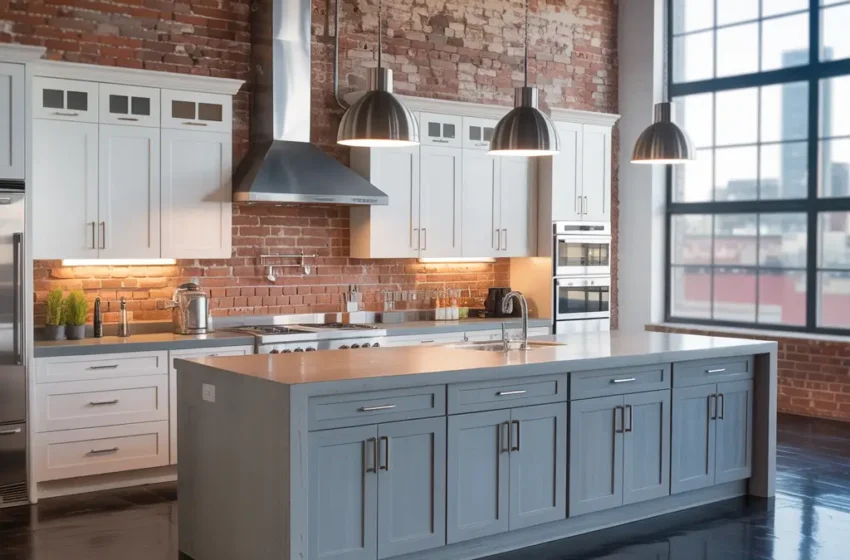
Ask a hundred interior designers to name the most reliably beautiful kitchen color combination, and a significant majority will land on white and grey. Not because it’s the easy answer, but because it genuinely works — in small apartments, sprawling open-plan homes, modern builds, and century-old farmhouses alike.
White brings brightness, openness, and that clean-slate feeling that makes a kitchen feel fresh every single morning. Grey brings depth, sophistication, and the kind of grounding quality that prevents a kitchen from feeling cold or sterile. Together, they’re not just complementary — they’re practically designed for each other.
But “white and grey kitchen” covers a lot of ground. There’s the sleek, modern version with handleless cabinetry and polished concrete counters. There’s the warm farmhouse take with shaker doors and butcher block. There’s the dramatic, moody interpretation with charcoal lowers and bright white walls. And about fifteen variations in between.
This guide covers 15 of the best white and grey kitchen ideas you’ll find anywhere — each one described in enough detail that you can actually envision it in your home, not just on a mood board. Whether you’re planning a full renovation or just thinking about new cabinet colors, there’s something here that was made for your space.
1. Classic White Cabinets with Light Grey Countertops
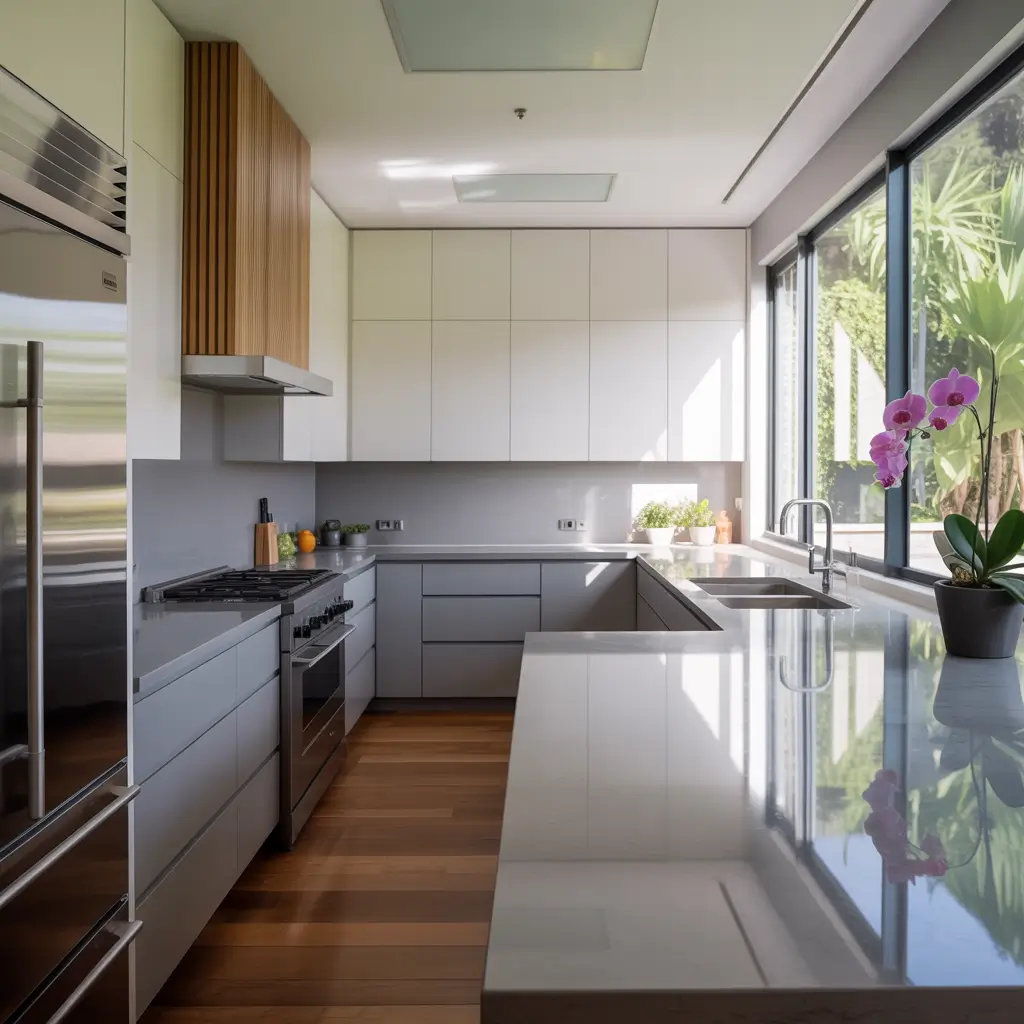
If there’s a version of the white and grey kitchen that belongs in the hall of fame, this is it. White shaker cabinets paired with light grey countertops is a combination that has appeared in design magazines for decades, survived multiple trend cycles, and still manages to look current. That’s not an accident.
The reason it works so consistently is balance. White cabinets make the kitchen feel open and bright, while light grey countertops — in quartz, honed granite, or concrete — add just enough visual weight to keep it from feeling too airy or unanchored. It’s a combination with contrast, but it never feels jarring.
For hardware, brushed nickel or matte chrome keeps things classic. A white subway tile backsplash ties everything together without competing for attention, and light hardwood or light grey tile flooring completes the palette beautifully.
What Makes It Work:
- White shaker cabinet doors — timeless, never trendy
- Light grey quartz or honed granite countertops
- Brushed nickel or chrome hardware throughout
- White or soft ivory subway tile backsplash
- Light wood or grey tile flooring for a cohesive finish
- Under-cabinet lighting to keep the counters bright and functional
2. Two-Tone Kitchen: White Uppers and Grey Lowers
Two-tone cabinetry has become one of the defining kitchen design moves of the past several years, and the white-upper, grey-lower configuration is hands-down the most popular version. It’s easy to understand why: the combination is visually dynamic without being busy, and it creates a natural visual separation between the upper and lower halves of the kitchen.
The darker lower cabinets ground the space and hide scuffs, fingerprints, and everyday wear far better than white does. The lighter upper cabinets keep the kitchen feeling open and prevent the grey from overwhelming the room. Between the two sits your countertop, which acts as the visual bridge — white quartz or a light grey stone both work beautifully here.
Choosing the right shade of grey for your lower cabinets matters more than people realize. A warm grey (with hints of beige or greige) reads very differently from a cool blue-grey, and both look completely different from a true mid-tone grey like Repose Gray or Agreeable Gray. Sample a few on your actual cabinet doors before committing.
What Makes It Work:
- White upper cabinets in shaker or flat-panel style
- Grey lower cabinets in a medium or deep tone
- Consistent hardware finish on both upper and lower cabinets
- White or light grey quartz countertops as the bridge
- A toe kick painted to match the lower cabinets for a clean finish
- A white or light backsplash to keep the upper half feeling open
3. Modern Minimalist White and Grey Kitchen
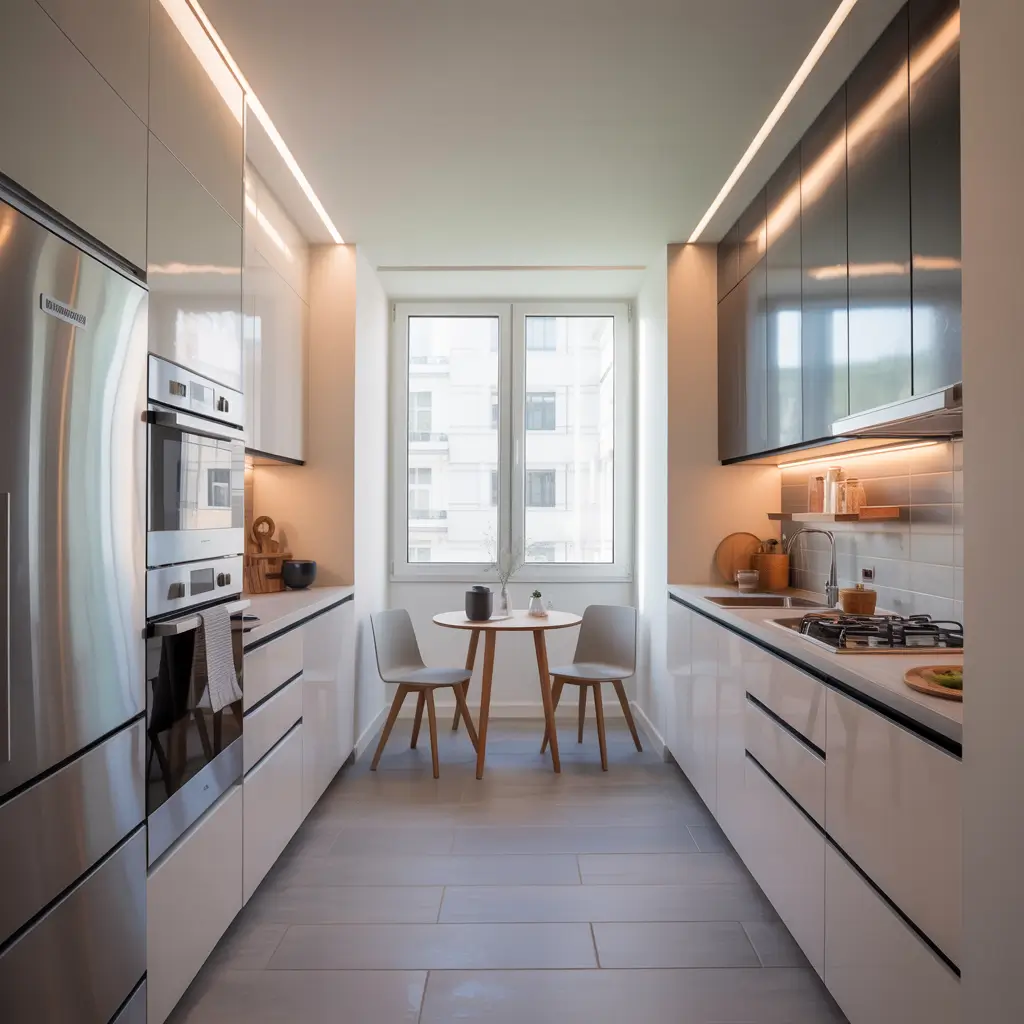
The modern minimalist white and grey kitchen is one of those designs that looks impossibly difficult to achieve and yet, with the right choices, comes together more naturally than almost anything else. The secret is restraint. Every element is chosen deliberately, and nothing is added without a reason.
Flat-panel (slab) cabinet doors in white or off-white with no visible hardware — either push-to-open mechanisms or recessed linear handles — give the kitchen a sculptural quality. Pair with a large-format grey tile or polished concrete countertop, and you have a surface that feels architectural rather than decorative.
The backsplash in a minimalist kitchen should be understated: full-height white or light grey tile that flows seamlessly from counter to ceiling, or a simple slab of the same material as the countertop for absolute continuity. Concealed appliances behind matching cabinet panels complete the effect. The result is a kitchen that feels more like a room than a work area.
What Makes It Work:
- Flat slab cabinet doors with no visible hardware
- Push-to-open or recessed linear pulls for a seamless profile
- Large-format grey tile or polished concrete countertops
- Continuous floor-to-ceiling tile or slab backsplash
- Concealed appliances behind cabinet-matched panels
- Minimal countertop accessories — every item earns its place
4. Farmhouse White and Grey Kitchen
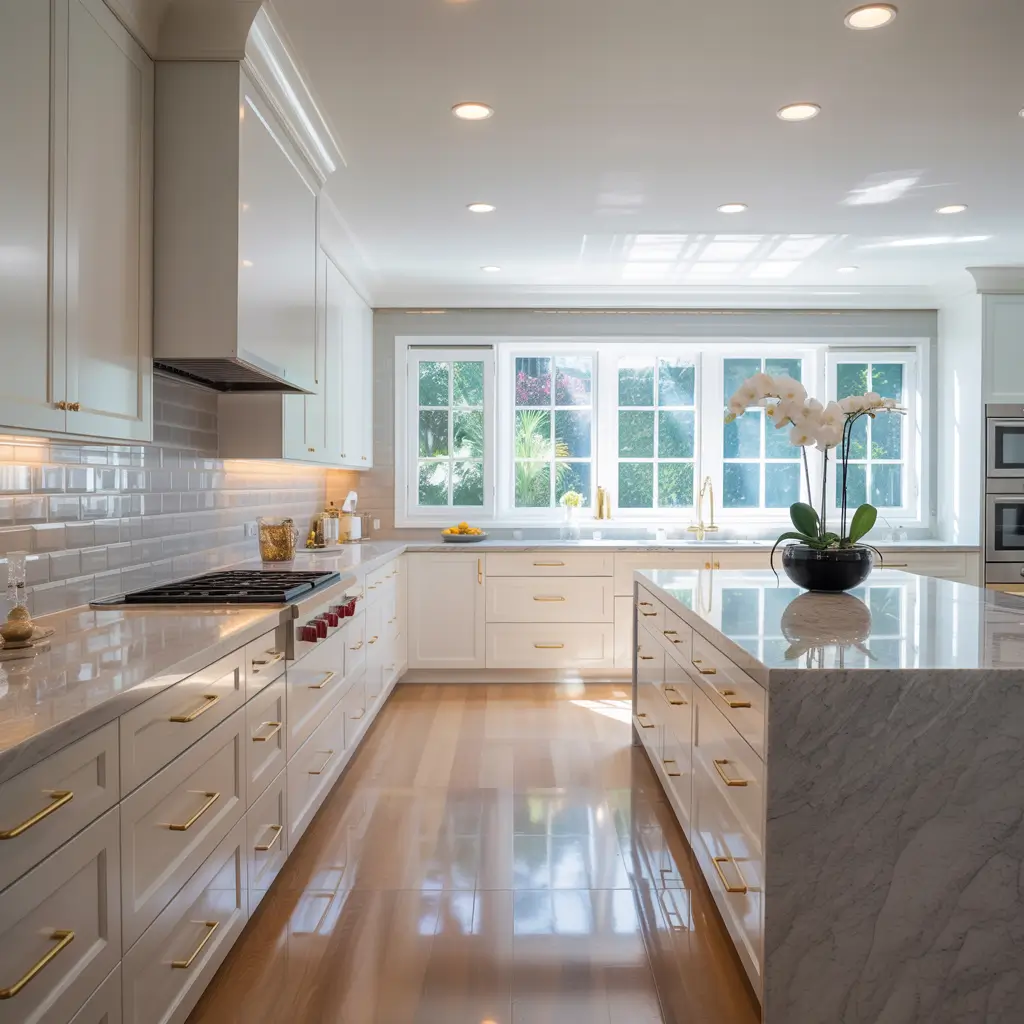
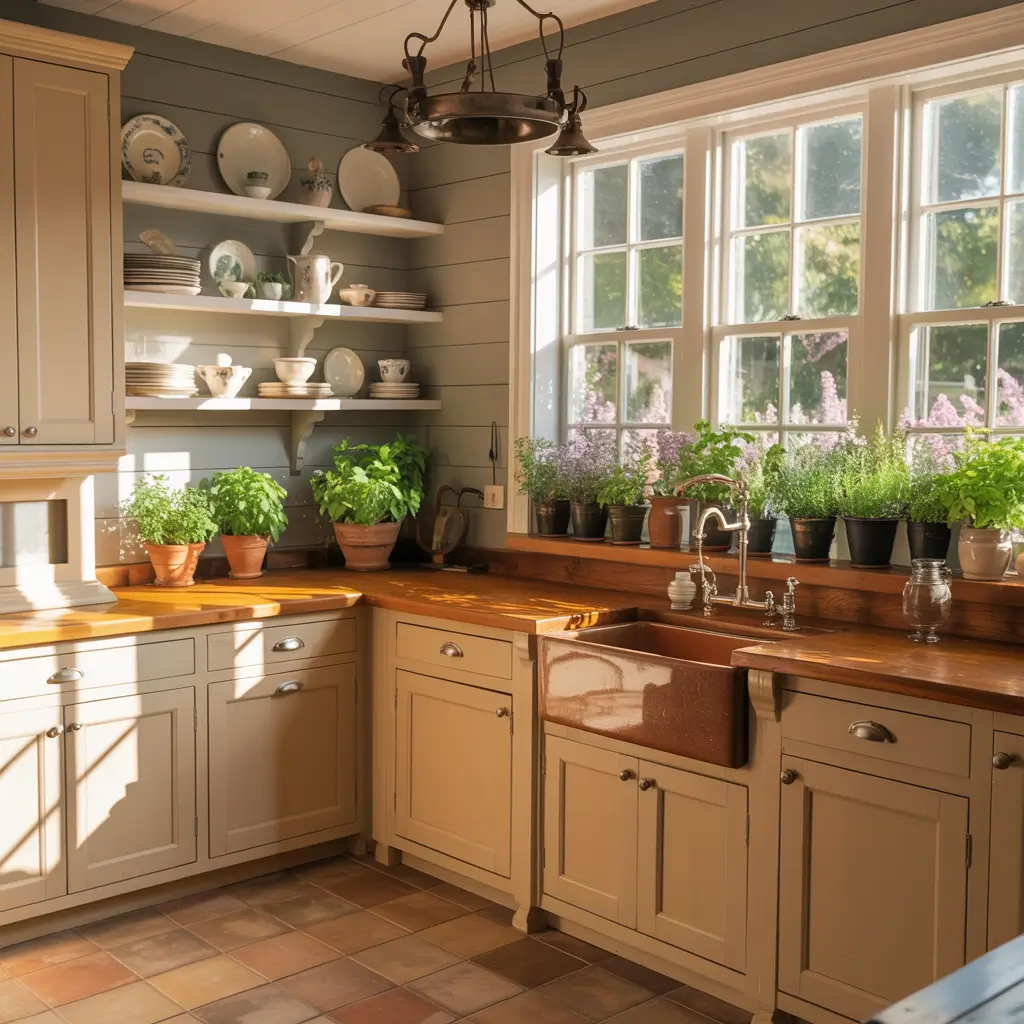
Farmhouse style done well is warm, layered, and full of character — the opposite of the cold, generic farmhouse aesthetic that gets mocked online. A white and grey farmhouse kitchen gets it right when the grey reads as warm and aged rather than corporate, and the white feels worn-in rather than freshly painted.
Start with grey shaker cabinet doors in a warm mid-tone — something like Sherwin-Williams Accessible Beige pushed cooler, or a dedicated warm grey. Pair with an apron-front farmhouse sink in white porcelain, butcher block or honed marble countertops, and open wood shelves above the sink or stove. The white elements — walls, sink, upper shelves — keep the space feeling bright even as the grey grounds it.
Hardware in oil-rubbed bronze or unlacquered brass adds warmth and intentionality. A beadboard or shiplap backsplash painted white, a vintage-style pendant light or two, and a large wood island with bar seating complete the look.
What Makes It Work:
- Warm grey shaker cabinets — not too cool, not too dark
- Apron-front farmhouse sink in white porcelain or fireclay
- Butcher block or honed marble countertops
- Beadboard or shiplap backsplash painted white
- Oil-rubbed bronze or unlacquered brass hardware
- Open wood shelving and a large wood island for warmth
5. White and Grey Kitchen with Marble Countertops
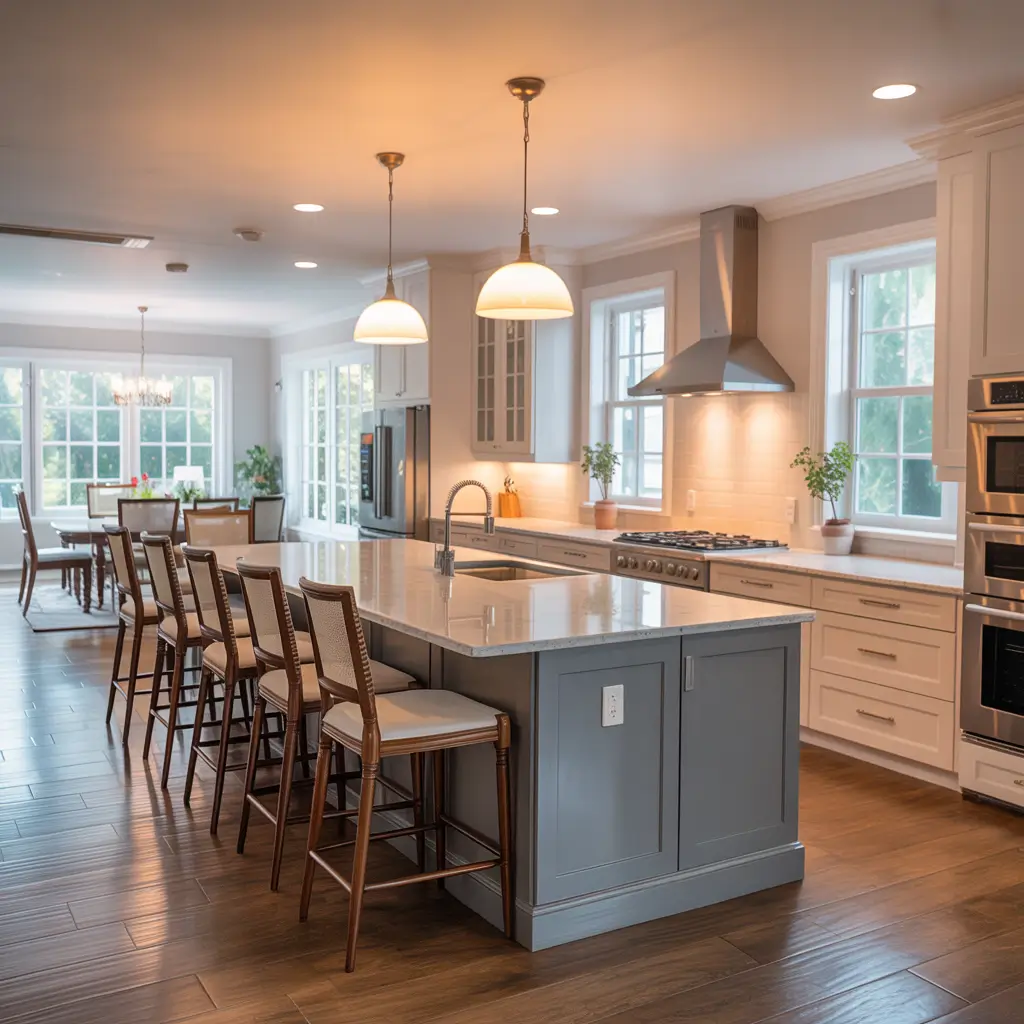
Marble countertops in a white and grey kitchen feel almost too perfect to be true — the natural grey veining of Carrara, Calacatta, or Statuario marble bridges the two colors in a way that no manufactured material can quite replicate. It’s as if the stone was created specifically to complete this palette.
White cabinets are the natural partner here: they let the marble be the focal point without competition. Grey cabinets also work beautifully, provided they’re a shade lighter than the darkest veining in the marble — you want harmony, not a muddy clash of similar tones. A honed finish on the marble is worth considering if you’re nervous about maintenance; it hides etching far more graciously than a polished surface.
What Makes It Work:
- Carrara or Calacatta marble slab countertops with natural grey veining
- Honed finish for a softer look and better etching resistance
- White cabinet doors to let the marble command attention
- Simple white or cream backsplash to not compete with the stone
- Polished nickel or chrome faucet and hardware
- Marble extended to the backsplash for a full slab wall effect
6. Small White and Grey Kitchen That Feels Bigger Than It Is
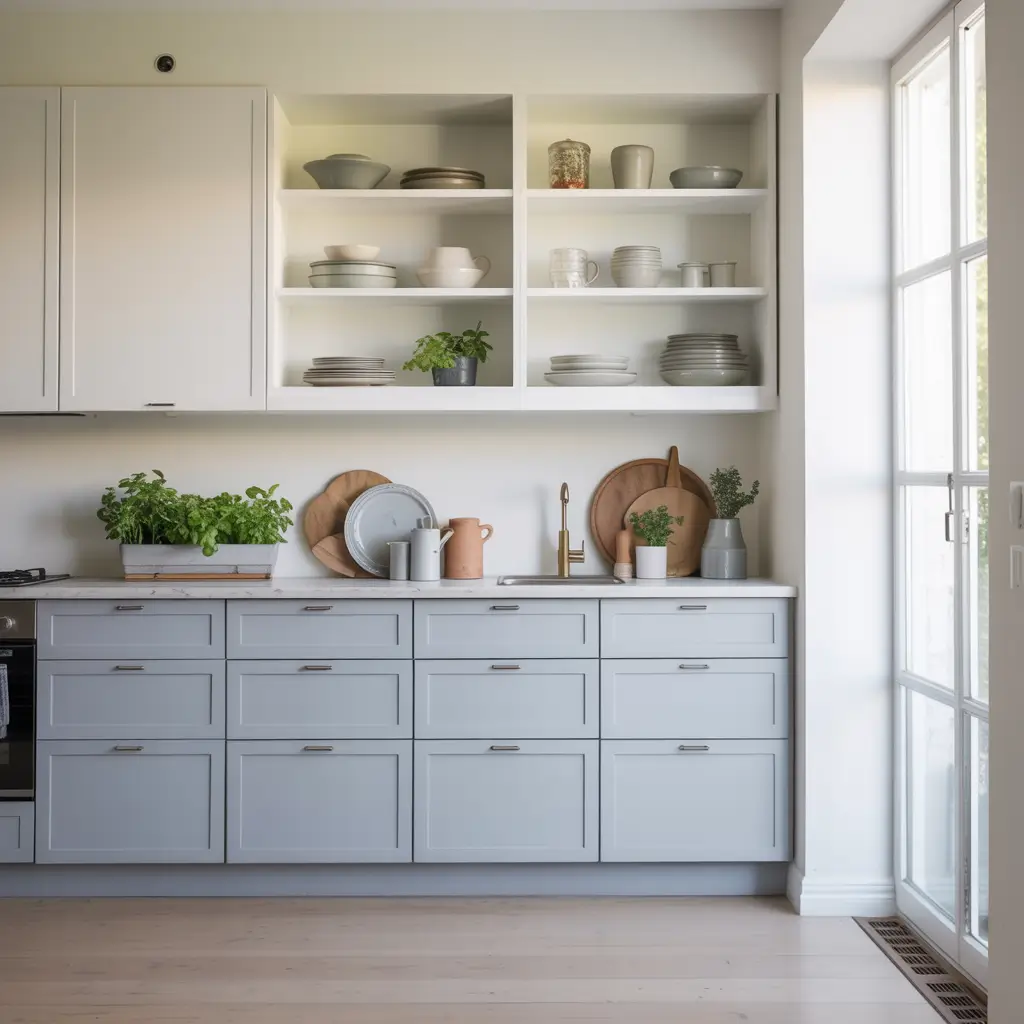
Small kitchens are the design world’s ultimate challenge: maximum function, minimum space, and somehow still beautiful. White and grey is one of the best palettes for the job, because white expands a space visually while grey adds the depth that prevents the kitchen from feeling like a blank, characterless box.
In a compact kitchen, run your cabinets all the way to the ceiling to push the eye upward and maximize storage. Use light grey on just one element — a kitchen island, lower cabinets, or a single accent wall — while keeping everything else white to maintain the sense of space. Reflective surfaces (glossy tile, polished hardware, a mirrored backsplash) also help the room feel larger by bouncing light around.
Glass-front upper cabinets are another smart move in small kitchens: they add visual depth and make the space feel less closed-off. Keep what’s inside organized and intentional — neat stacks of white dishes look great; a chaotic jumble of mismatched containers doesn’t.
What Makes It Work:
- Floor-to-ceiling white cabinets to maximize storage and visual height
- Light grey on a single element only — island, lowers, or accent wall
- Glossy or polished tile backsplash to reflect light
- Glass-front upper cabinets to add depth without bulk
- Seamless countertop and backsplash in the same material
- Recessed downlights plus under-cabinet strips for a well-lit, spacious feel
7. White and Charcoal Grey Kitchen — High Contrast Done Right
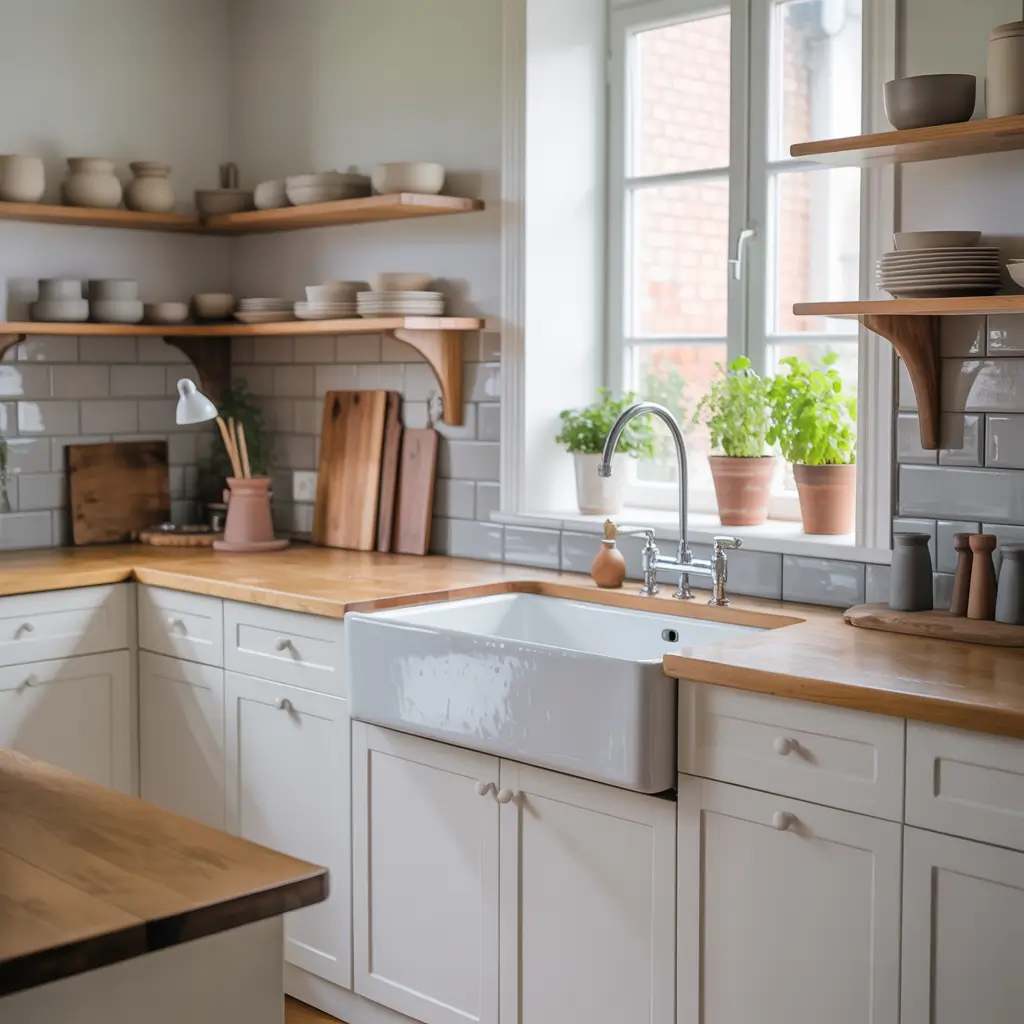
If you love drama in a room — bold contrast, strong lines, a kitchen that commands attention — the white and charcoal grey combination is your answer. This is the version of white and grey that feels most contemporary and has the most visual impact from the moment you walk in.
The key to making it work without tipping into harshness is keeping the white truly bright (not cream or off-white, which can look dingy next to deep charcoal) and ensuring there’s enough light in the space. Charcoal cabinets absorb light, so you’ll want generously sized windows, good overhead lighting, and under-cabinet strips to keep the workspace functional.
White quartz or marble countertops keep the contrast working in your favor. Matte black hardware (rather than chrome or nickel) feels cohesive with the charcoal, and a white tile backsplash prevents the upper half of the kitchen from feeling too dark.
What Makes It Work:
- True bright white uppers or walls against charcoal grey lowers
- Generous natural and artificial light to counter the dark cabinets
- White quartz or marble countertops for clean contrast
- Matte black hardware to complement the charcoal tone
- White or light grey backsplash to brighten the upper half
- Large-format white or light grey flooring to anchor the space
8. White and Grey Kitchen with Open Shelving
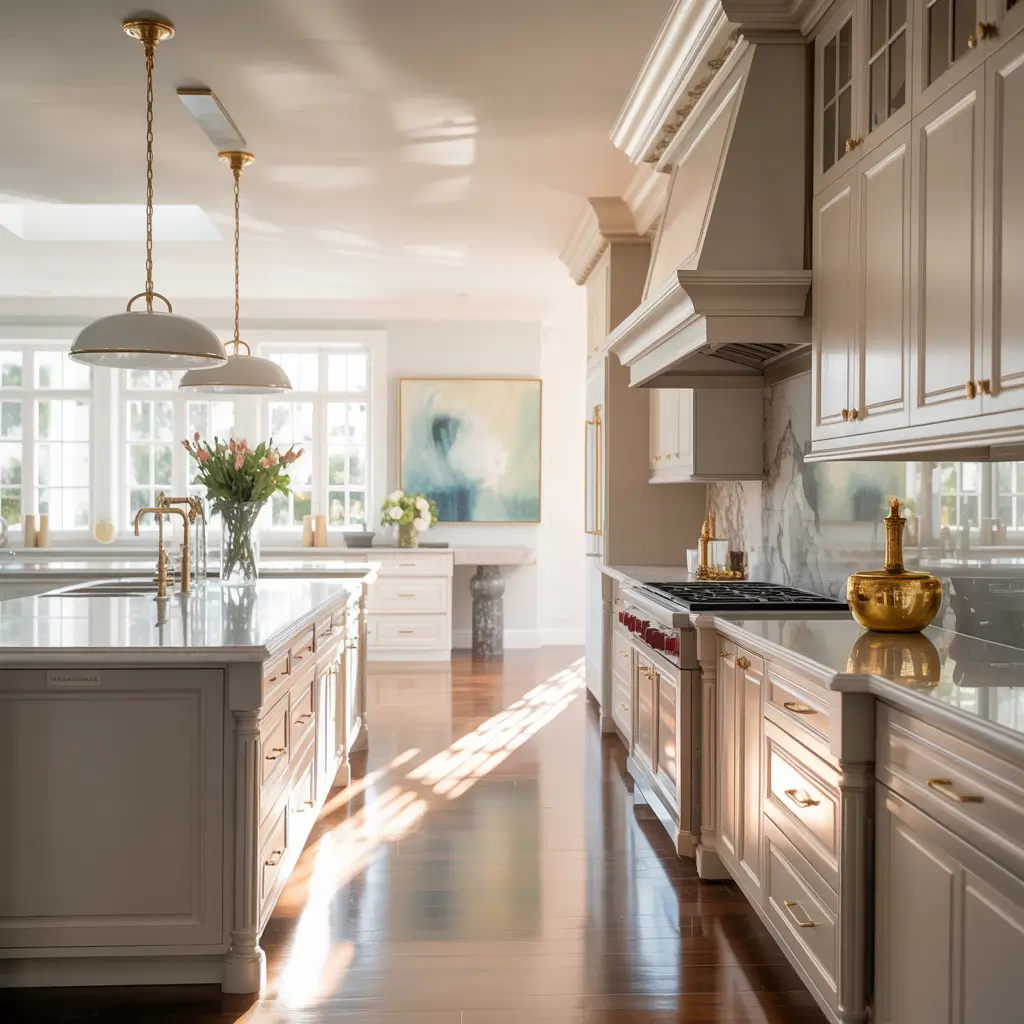
Open shelving in a white and grey kitchen hits a particular sweet spot: it lightens the visual weight of the cabinetry, adds an opportunity to introduce texture and personality, and makes the kitchen feel more like a carefully designed room rather than a purely functional workspace.
The most common and effective approach is replacing some upper cabinets with floating shelves in natural wood. Against white walls and white or grey lower cabinets, the warm grain of white oak or walnut adds exactly the organic contrast the palette sometimes needs. Alternatively, paint shelves the same white as your walls for a seamless, built-in look.
What you display on those shelves matters as much as the shelves themselves. White or neutral dishware, a few plants or fresh herbs, some cookbooks with interesting spines, and everyday glassware arranged neatly — that’s the look. Open shelving rewards organization and punishes clutter, so go in with a plan.
What Makes It Work:
- White oak or walnut floating shelves for warmth against white walls
- Clean, intentional displays — not a dumping ground for mismatched items
- White or neutral dishware that complements the palette
- A few small plants or fresh herbs for life and color
- Sturdy brackets in a metal finish that matches your hardware
- Under-shelf lighting to illuminate what’s on display
9. White and Grey Kitchen with Subway Tile Backsplash
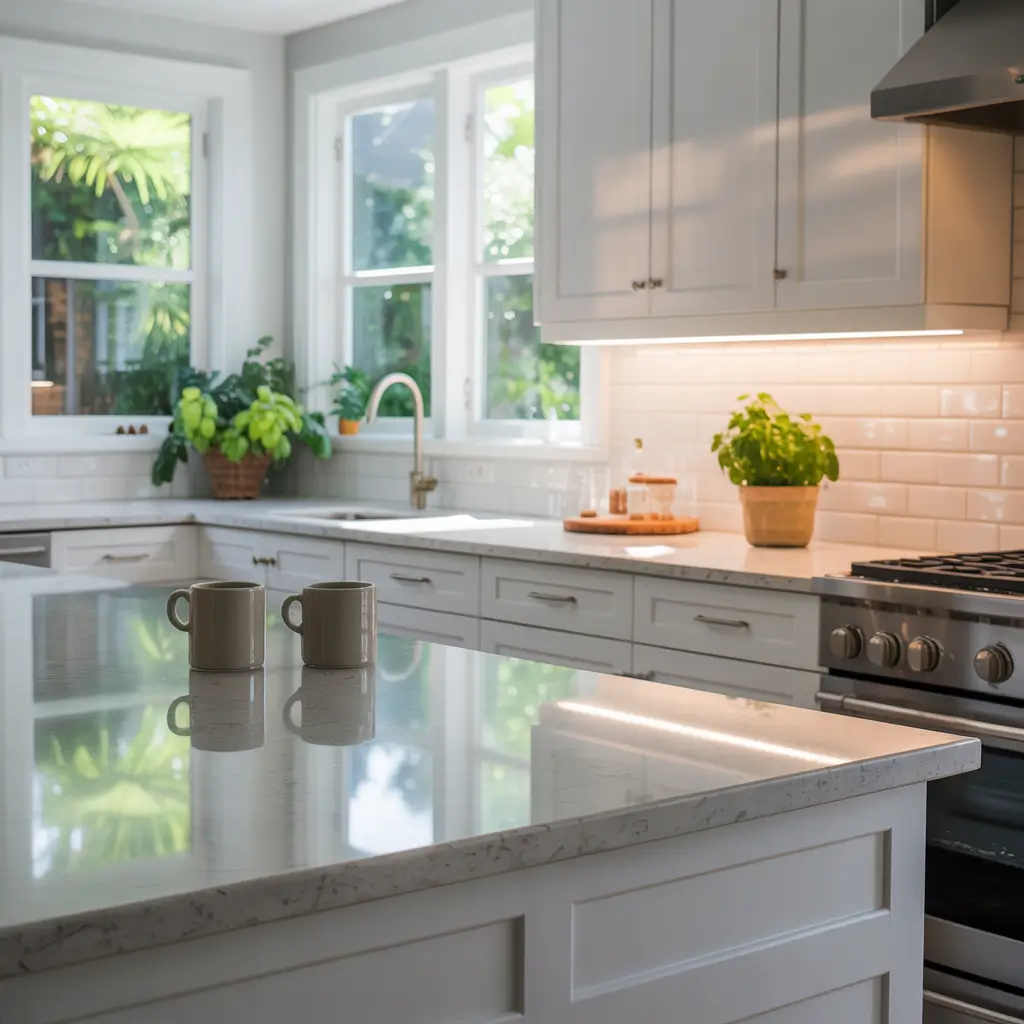
The subway tile backsplash has been a kitchen standard for over a hundred years, and it shows no signs of stepping down. In a white and grey kitchen, it plays the role of quiet anchor: adding subtle texture and visual structure without stealing attention from the cabinets or countertops.
Classic 3×6 white tile in a brick-bond pattern with light grey grout creates a crisp, clean look that works in almost any style of white and grey kitchen. For something slightly more interesting, consider a stacked (horizontal or vertical) pattern, a herringbone layout, or grey subway tile instead of white for a more dramatic effect.
Grout color is more impactful than people expect. White grout creates a nearly seamless look. Grey grout defines the tile lines and adds graphic quality. Dark charcoal grout with white tiles makes a bold, modern statement. Think of grout as a design decision, not just a functional necessity.
What Makes It Work:
- Classic 3×6 white subway tile in a brick-bond pattern
- Grey grout to define the tile lines and add texture
- Full height from counter to upper cabinet for a tailored finish
- Grey subway tile for a more dramatic, tone-on-tone look
- Herringbone or stacked pattern for added visual interest
- Simple cap rail or open shelves to top the installation
10. White and Grey Kitchen with Wood Accents
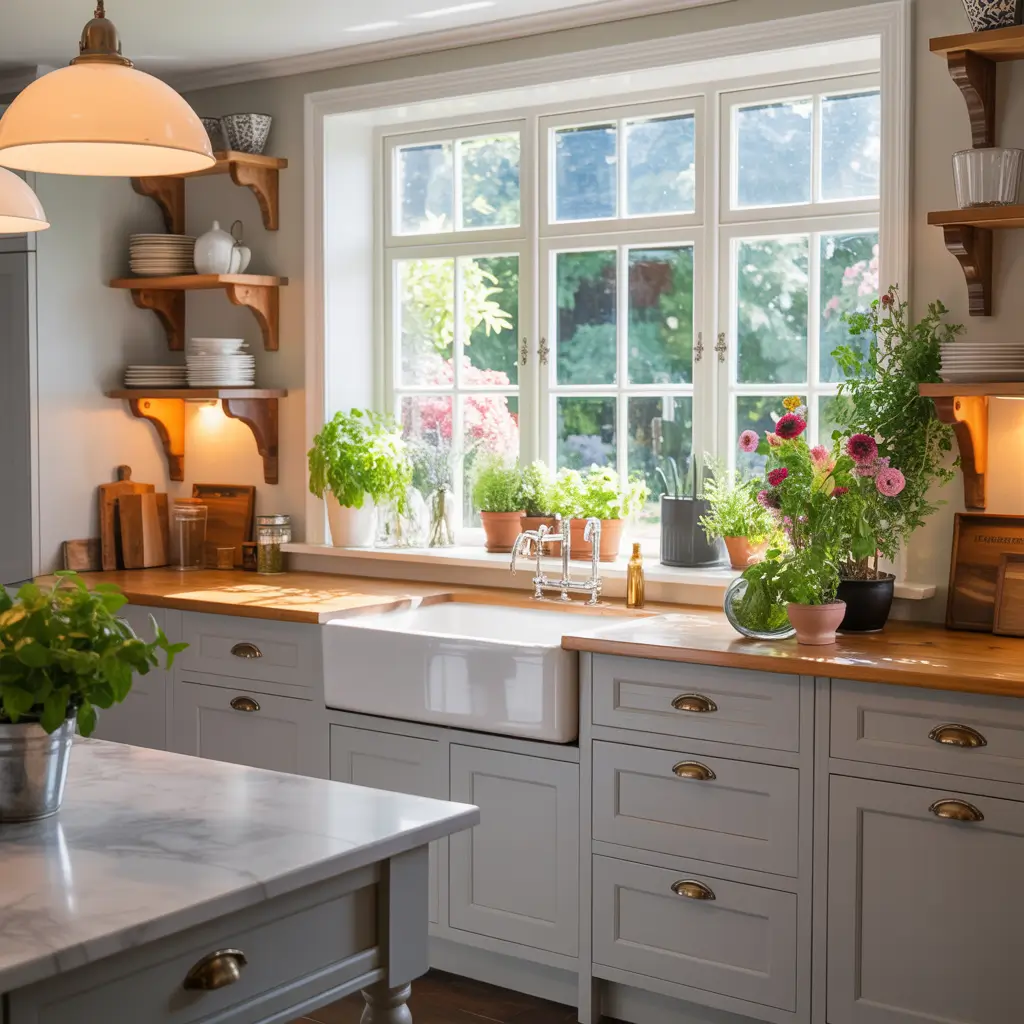
One of the most common criticisms of white and grey kitchens is that they can feel cold or impersonal. The solution is almost always the same: wood. Natural wood accents — in floors, open shelves, an island top, or even just bar stools — introduce warmth and organic texture that immediately makes the palette feel more inviting.
White oak is the current favorite for good reason: it’s warm but not orange, has a beautiful grain without being busy, and pairs seamlessly with both cool and warm greys. Walnut brings richer, darker warmth and works particularly well against lighter greys and bright white. Honey pine or natural maple lean warmer still and can counterbalance a particularly cool grey palette.
You don’t need a lot of wood to feel the difference. A single butcher block island top, a row of floating shelves, or even just bar stools in natural wood can shift the entire feeling of the kitchen from clinical to comfortable.
What Makes It Work:
- White oak floating shelves or a walnut island top
- Natural wood bar stools with a metal frame
- Wide-plank wood flooring in a warm, natural stain
- A butcher block section on one part of the countertop
- White and grey cabinets with wood handles or details
- Woven pendant lights or a rattan shade for additional organic texture
11. White and Grey Kitchen with Black Hardware
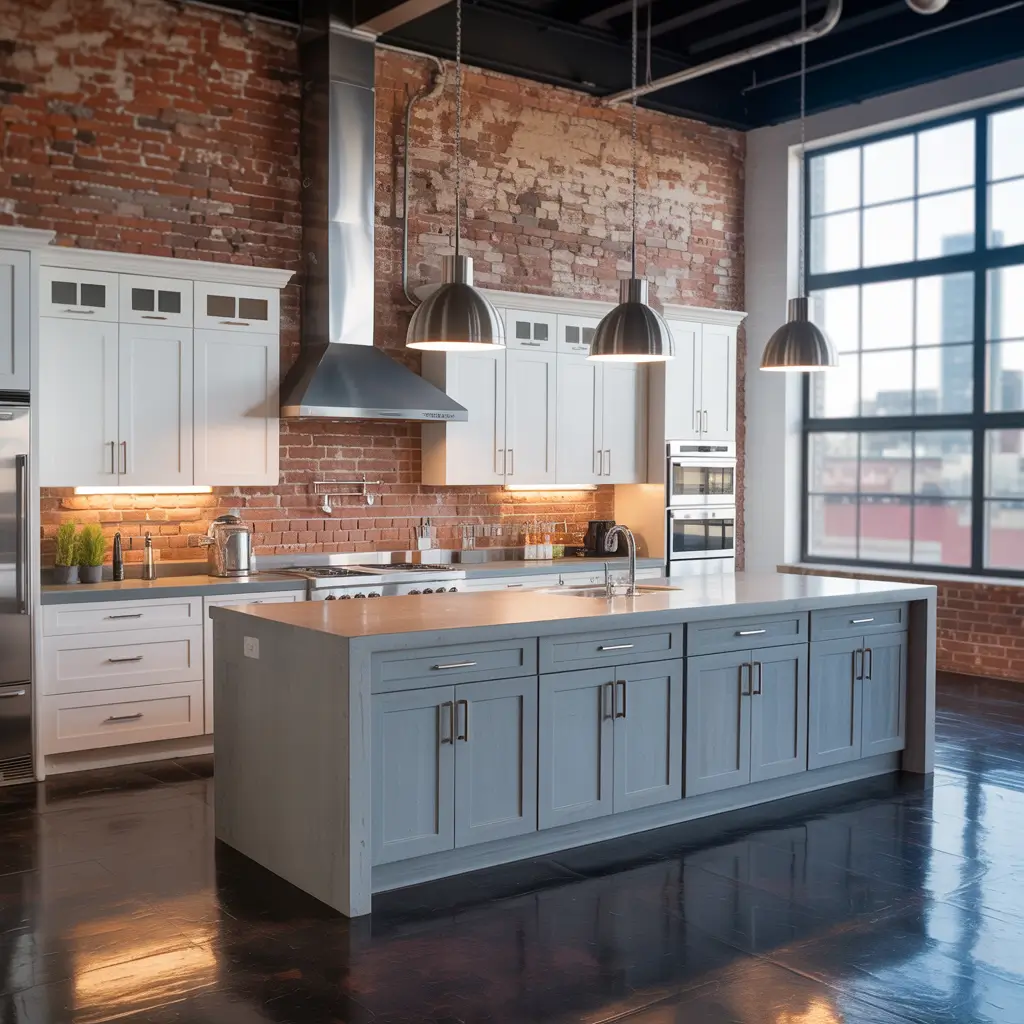
Matte black hardware on white and grey cabinets might be the single easiest upgrade with the biggest visual payoff in kitchen design. It costs relatively little, takes an afternoon to install, and transforms the look from generic to intentional. The black provides a punctuation point that the all-neutral palette often needs.
It works particularly well against white cabinets, where the contrast is sharp and graphic. Against grey cabinets, the effect is subtler and more sophisticated. You can extend the black through the kitchen via a matte black faucet, a range hood, pendant lights, and even window frames if you’re doing a more thorough renovation.
What Makes It Work:
- Matte black cabinet pulls on white shaker or flat-panel doors
- Matte black faucet to tie the hardware finish together
- Matte black pendant lights over the island or sink
- White quartz or marble countertops to keep the background bright
- White or light grey tile backsplash without competing detail
- Consistent matte black throughout — no mixing with chrome or gold
12. Open-Plan White and Grey Kitchen
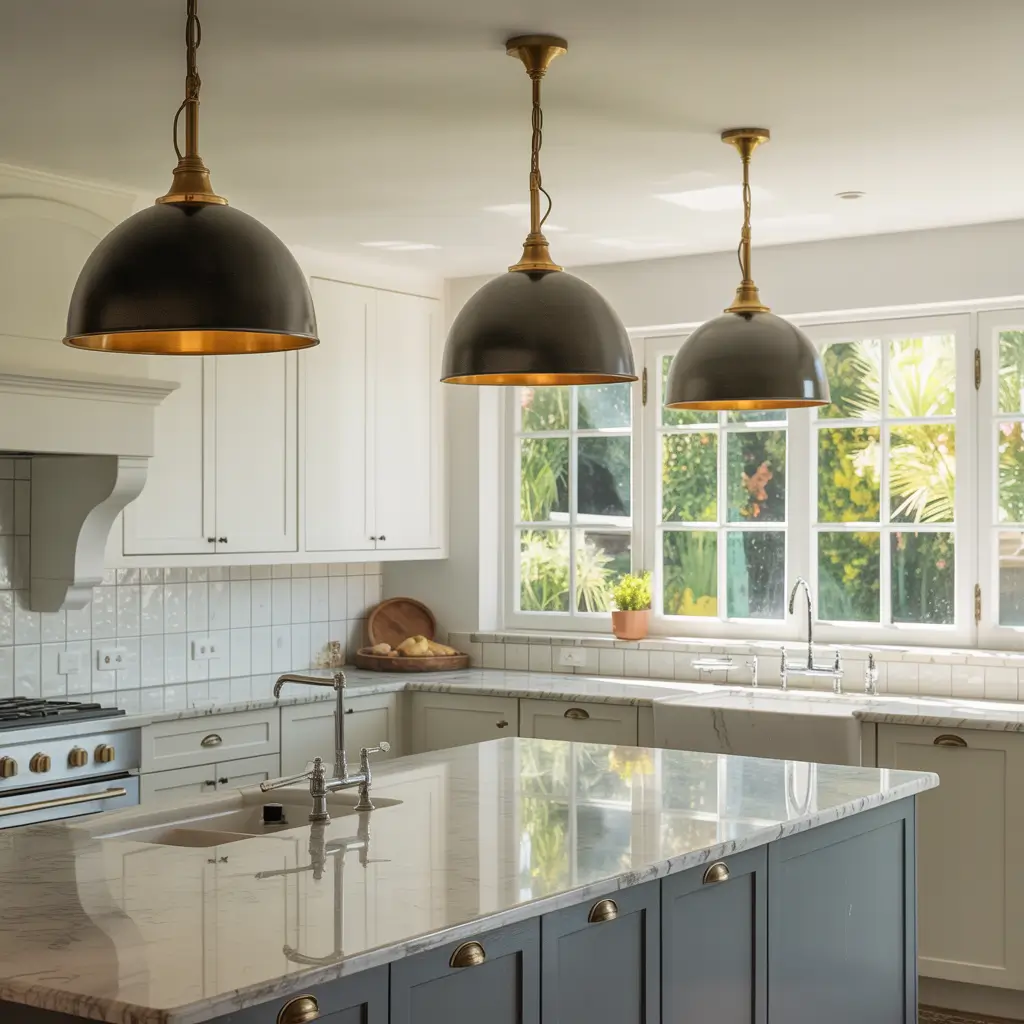
Open-plan kitchens present a unique design challenge: the kitchen needs its own identity while still feeling like it belongs to the wider living space. White and grey is ideal for this situation because it’s neutral enough to coexist with almost any living room or dining room palette while still reading as distinctly “kitchen.”
In open-plan spaces, the kitchen island becomes a critical design element — it defines the boundary between kitchen and living areas and acts as the most visible piece of the kitchen from across the room. A grey island against white perimeter cabinets reads beautifully from a distance and draws people naturally toward the kitchen.
Flooring continuity is also important: running the same floor material through kitchen and living areas creates visual flow and makes both spaces feel larger. If you want to define the kitchen zone subtly, choose a runner rug under the island or dining table rather than changing the flooring material.
What Makes It Work:
- Consistent flooring throughout kitchen and living areas
- Grey island as a focal point visible from the living room
- A shared color or material between the kitchen palette and adjacent decor
- Pendant lights over the island to define the kitchen zone
- Bar stools at the island to create a natural social boundary
- A statement range hood that works as a design feature from all angles
13. White and Grey Kitchen with Quartz Countertops
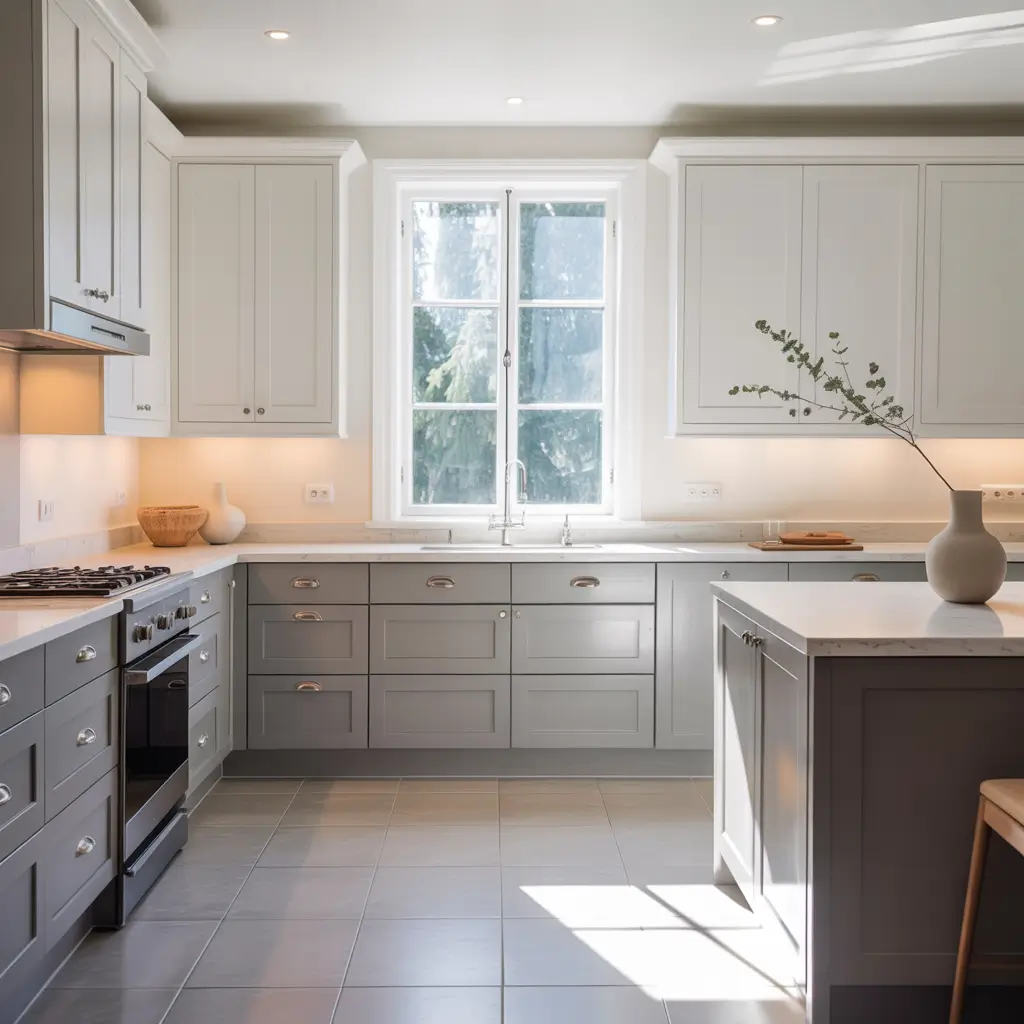
Quartz countertops have become the go-to choice for white and grey kitchens for very good reasons: they’re non-porous, extremely durable, available in an enormous range of white and grey tones, and require almost no maintenance compared to natural stone. For busy kitchens or households with young children, that practical edge matters.
For white cabinets, a white quartz with soft grey veining creates the marble look without the marble anxiety. For grey cabinets, a lighter grey quartz or pure white quartz with minimal pattern provides the contrast the kitchen needs. Look for options with subtle movement in the pattern rather than a flat, engineered appearance — the slightly organic quality makes a big difference in how natural the countertop looks in person.
What Makes It Work:
- White quartz with soft grey veining for white cabinet kitchens
- Pure white or light grey quartz for grey cabinet kitchens
- Waterfall edge on the island for a modern, high-end look
- Quartz extended up the backsplash for a seamless slab effect
- Undermount sink in white or stainless for a clean counter line
- Hardware finish chosen to complement the quartz undertones
14. Grey Kitchen Island with White Perimeter Cabinets
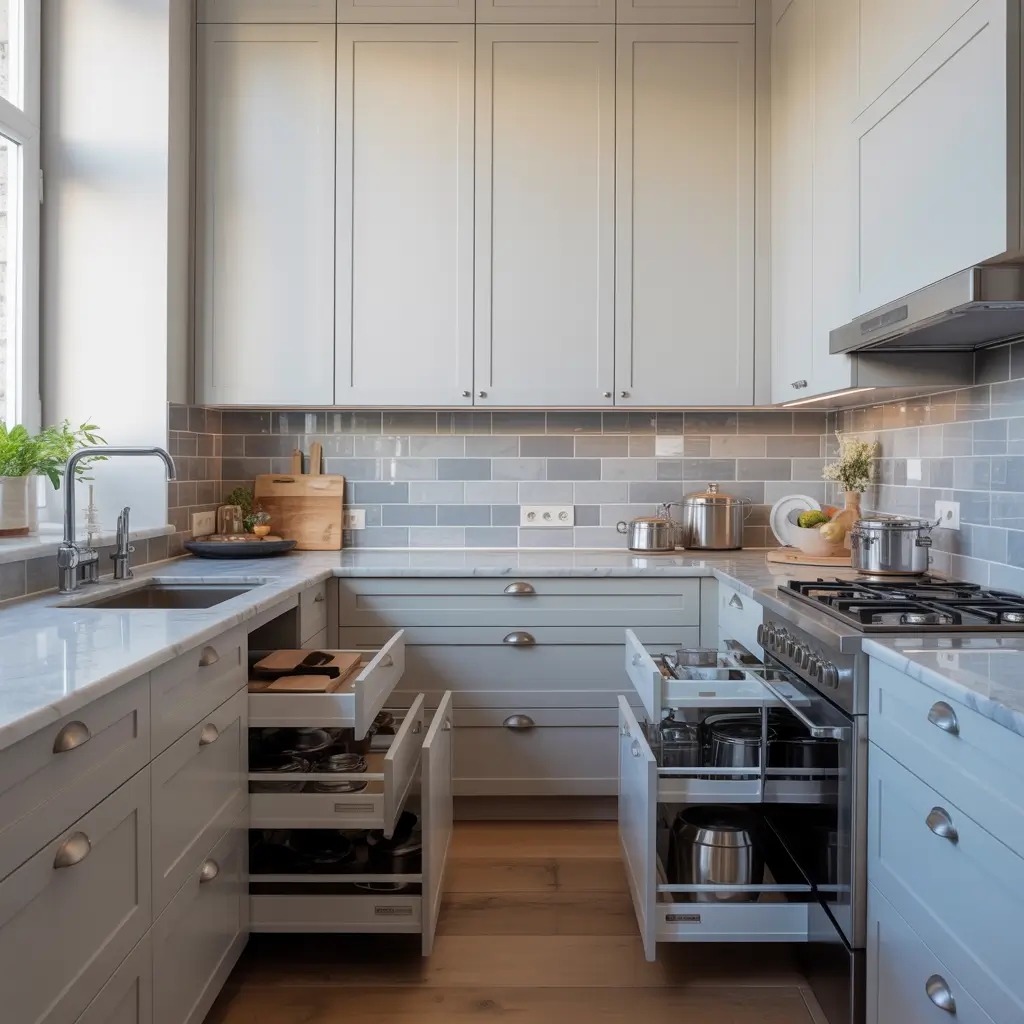
If you’re not ready for two-tone cabinets throughout your entire kitchen, the grey island with white perimeter cabinets is the ideal entry point. It creates the visual interest and depth of two-tone design without the commitment, and it can be introduced into an existing kitchen much more easily than changing all your lower cabinets.
The island becomes the kitchen’s centerpiece — a darker, heavier visual anchor that draws the eye and defines the space. White marble or quartz on top of a grey island is a particularly effective combination, both beautiful and practical. Bar stools in natural wood or woven materials soften the palette and add warmth at exactly the right level — where people actually sit.
What Makes It Work:
- Grey island cabinet in a tone darker than any surrounding grey
- White or light quartz island countertop for contrast
- Consistent hardware on both island and perimeter cabinets
- Pendant lights centered directly over the island
- Natural wood or woven bar stools for warmth
- White perimeter cabinets that frame the grey island without competing
15. White and Grey Kitchen with Gold Hardware
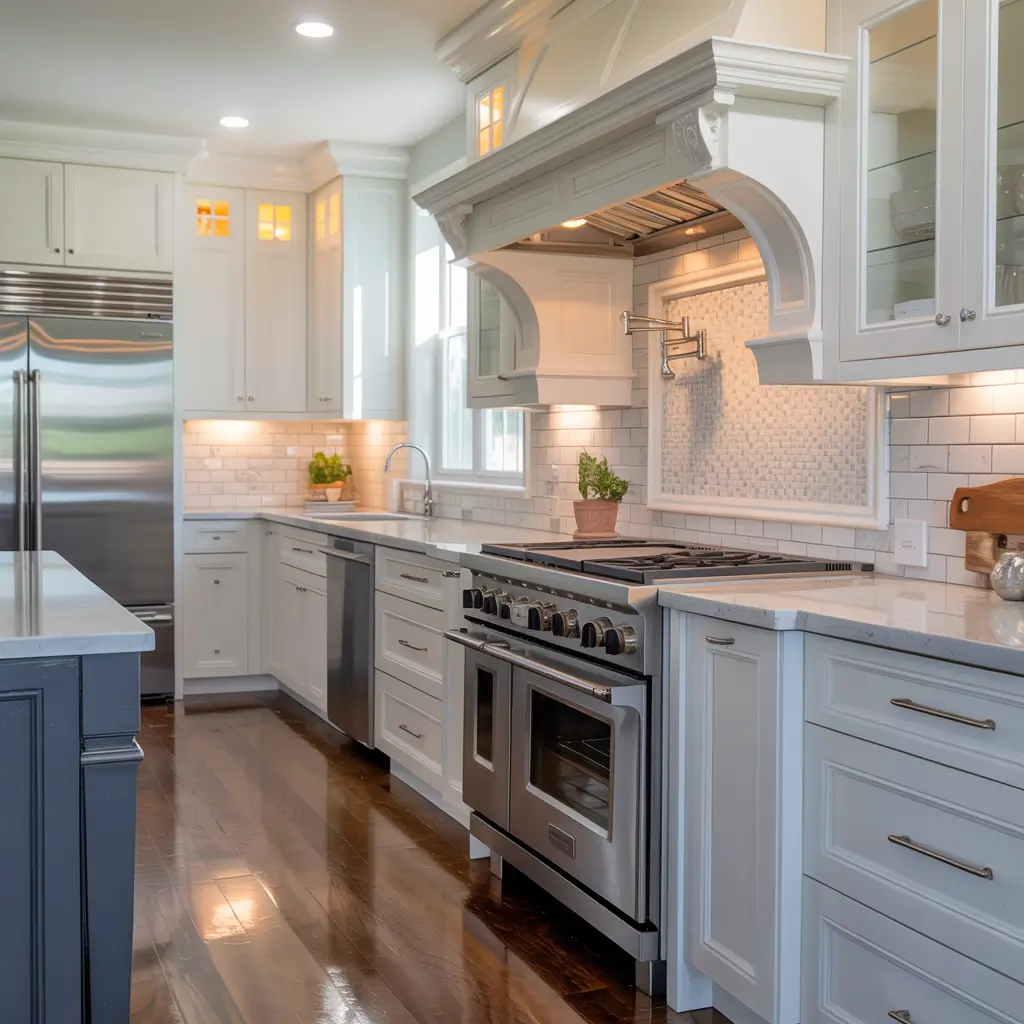
Brushed gold or satin brass hardware in a white and grey kitchen adds warmth and a luxurious quality to a palette that can occasionally drift cool. It’s a combination that feels current without being trendy, and the gold brings out any warm undertones in your grey cabinets or countertops, making the whole kitchen feel more cohesive.
The rule is to carry the gold consistently: cabinet pulls, faucet, range hood detail, and light fixtures should all share the same finish. Mixing gold with chrome or nickel in the same kitchen tends to look like a mistake rather than a design choice. Choose one warm metal and commit to it throughout the space.
What Makes It Work:
- Brushed or satin gold cabinet pulls and knobs throughout
- Matching gold faucet, soap dispenser, and sink accessories
- Gold or warm brass pendant lights over the island
- White or warm grey cabinets with subtle warm undertones
- White marble or cream quartz countertops to complement the gold
- Consistent finish — no mixing with chrome or brushed nickel
How to Choose the Right White and Grey for Your Kitchen
The single biggest mistake people make with white and grey kitchens is treating “white” and “grey” as single colors. They’re not. There are hundreds of whites and hundreds of greys, and choosing poorly — particularly choosing colors with clashing undertones — is how a white and grey kitchen ends up looking muddy, cold, or simply off.
Understand Undertones First
White paint and cabinet finishes pull in different directions: some lean warm (cream, ivory, yellow), some lean cool (blue, green, grey), and some try to be neutral but reveal their undertones in certain lighting. Grey has the same problem on a larger scale: warm greys (with beige or brown undertones) and cool greys (with blue or green undertones) do not always play well together.
The safest approach: choose your grey first, identify its undertone, then choose a white that shares that undertone direction. A warm grey pairs with a warm white. A cool blue-grey pairs with a bright, clean white or a cool off-white. Mixing a warm grey with a cool white — or vice versa — is where most white-and-grey kitchen mistakes originate.
Test in Your Actual Kitchen
Always sample both your white and your grey in the actual kitchen before ordering cabinets or committing to paint. Look at the samples at different times of day — morning light, midday, afternoon, and under your artificial lighting at night. Colors shift significantly between natural and artificial light, and a grey that looks perfect in a showroom can look greenish or purple at home. Large paint chips (at least 12 inches square) give you a far more accurate read than those small sample strips.
Consider the Light in Your Kitchen
North-facing kitchens with limited natural light should lean toward warmer whites and greys — cooler tones will read as cold and flat in low-light conditions. South- and east-facing kitchens can handle cooler whites and darker, more dramatic greys without losing their warmth. Bright, naturally lit kitchens have the most flexibility: almost any combination of white and grey will work when there’s good light doing the heavy lifting.
Final Thoughts
White and grey kitchens have earned their place as a genuine design classic — not because they’re the easiest choice or the most fashionable one in any given year, but because they work. They work in small spaces and large ones. They work in modern homes and traditional ones. They work with warm wood accents, bold color pops, marble countertops, and concrete floors. That kind of adaptability is rare.
The 20 ideas in this guide represent the full range of what white and grey kitchens can be — from the clean simplicity of a minimalist flat-panel kitchen to the layered warmth of a farmhouse design, from the drama of charcoal and bright white contrast to the easy elegance of a coastal palette. Every one of them starts from the same foundation and arrives somewhere completely different.
The best white and grey kitchen isn’t the one that looks most like a design magazine spread. It’s the one that looks and feels most like your home — the one you’ll walk into every morning and still love five years from now. Start with the ideas here, add the details that matter to you, and trust the palette. White and grey rarely lets you down.
“The best kitchen design isn’t the most impressive one. It’s the one that still makes you happy every time you walk in — and white and grey has a remarkable track record of doing exactly that.”
Quick tip: Before finalizing your white and grey palette, hold your white and grey samples next to each other in the actual kitchen space under both natural light and your main artificial lighting. If they look good together in both conditions, you’ve got a winning combination.
1 thought on “15 Stunning White and Grey Kitchen Ideas to Inspire Your Remodel”