
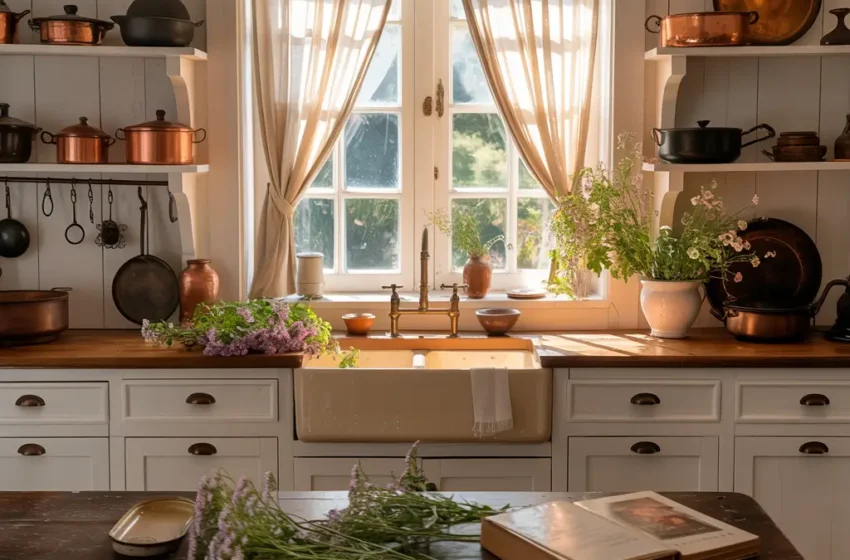
There’s a moment every homeowner knows. You’re standing in your kitchen, coffee in hand, staring at cabinets you’ve hated for three years. Maybe they’re that oak-and-honey combo that was everywhere in 1998. Maybe they’re dark wood that makes the whole room feel like a cave. Maybe they’re just… beige. That forgettable, soul-sapping beige.
White cabinets were my way out of that moment. And honestly? I wish I hadn’t waited so long.
The arguments against white cabinets have always been the same: they show dirt, they look clinical, they’ll go out of style. I heard every version of that speech. But here’s what nobody told me on the other side: white cabinets make a kitchen feel twice as large, they work with literally any countertop or flooring you’ll ever choose, and they have been the most popular cabinet color for over a decade straight — not because of trends, but because they genuinely work.
This guide covers 15 white kitchen cabinet ideas that span every style, every budget, and every kitchen size. You’ll find practical advice, real material recommendations, and the honest downsides nobody else wants to mention.
1. Classic White Shaker Cabinets — The Timeless Benchmark
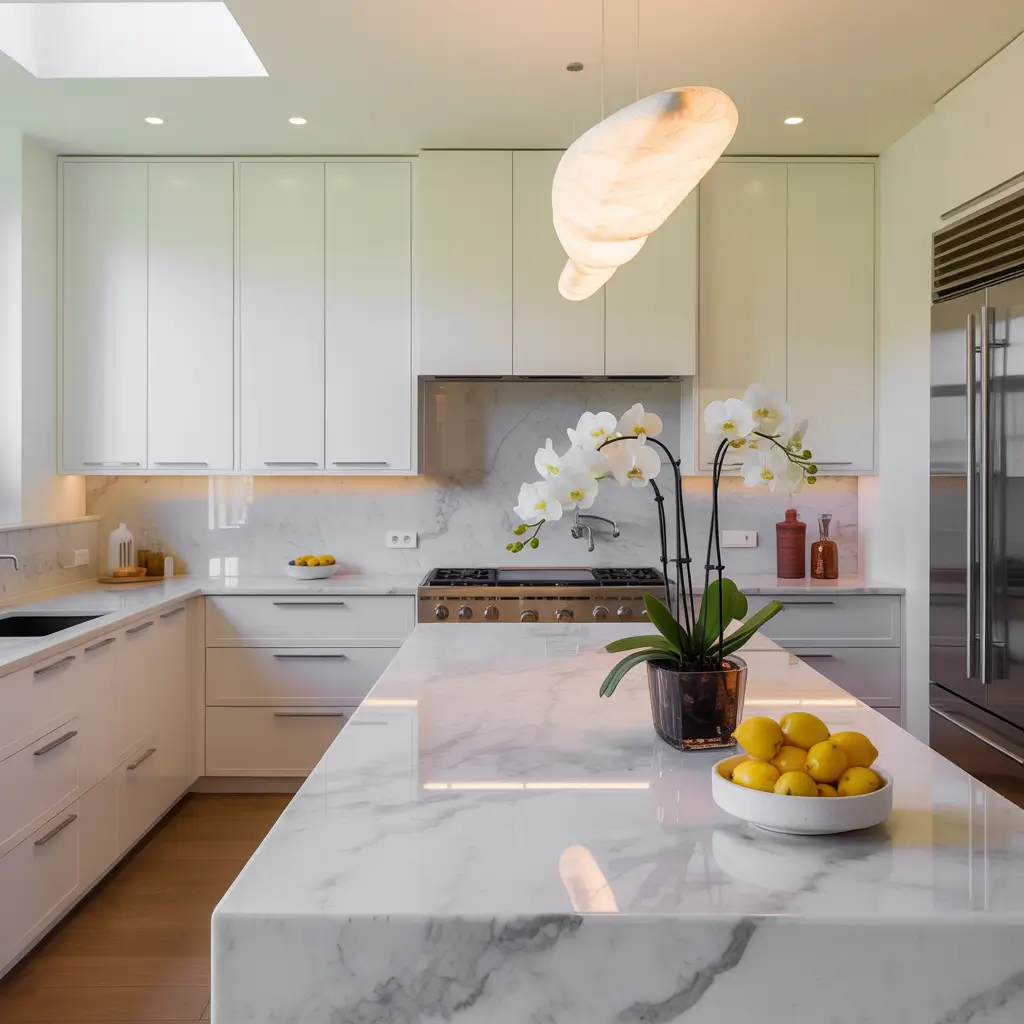
If white kitchen cabinets have a hall of fame, shaker style is the first inductee. The five-piece door with its recessed center panel has been around since the 18th century, and it keeps showing up in new kitchens because it genuinely bridges every design style.
Shaker cabinets sit right in the sweet spot between traditional and modern. They have enough detail to feel warm and crafted, but the lines are clean enough to hold their own in a contemporary space. I’ve seen white shakers in Victorian terrace houses, in open-plan lofts, in farmhouses, and in builder-grade homes where they were the only renovation — and they looked appropriate every single time.
Why Shaker Cabinets Still Win in 2026
- The recessed panel catches light differently throughout the day, giving the cabinet depth without ornamentation
- They pair equally well with matte black hardware, polished nickel, brushed brass, or bronze
- Easier and cheaper to paint than ornate raised-panel doors — ideal for DIY refreshes
- Mass production keeps costs lower than custom options without sacrificing the look
- They age gracefully — shakers from 10 years ago still look current today
Pro Tip: Order one sample door before committing to a full order. White paint colors photograph differently than they look in person, and what looks crisp online can look stark or yellow under your kitchen’s specific lighting.
2. Flat-Panel Slab White Cabinets — Modern and Uncompromising
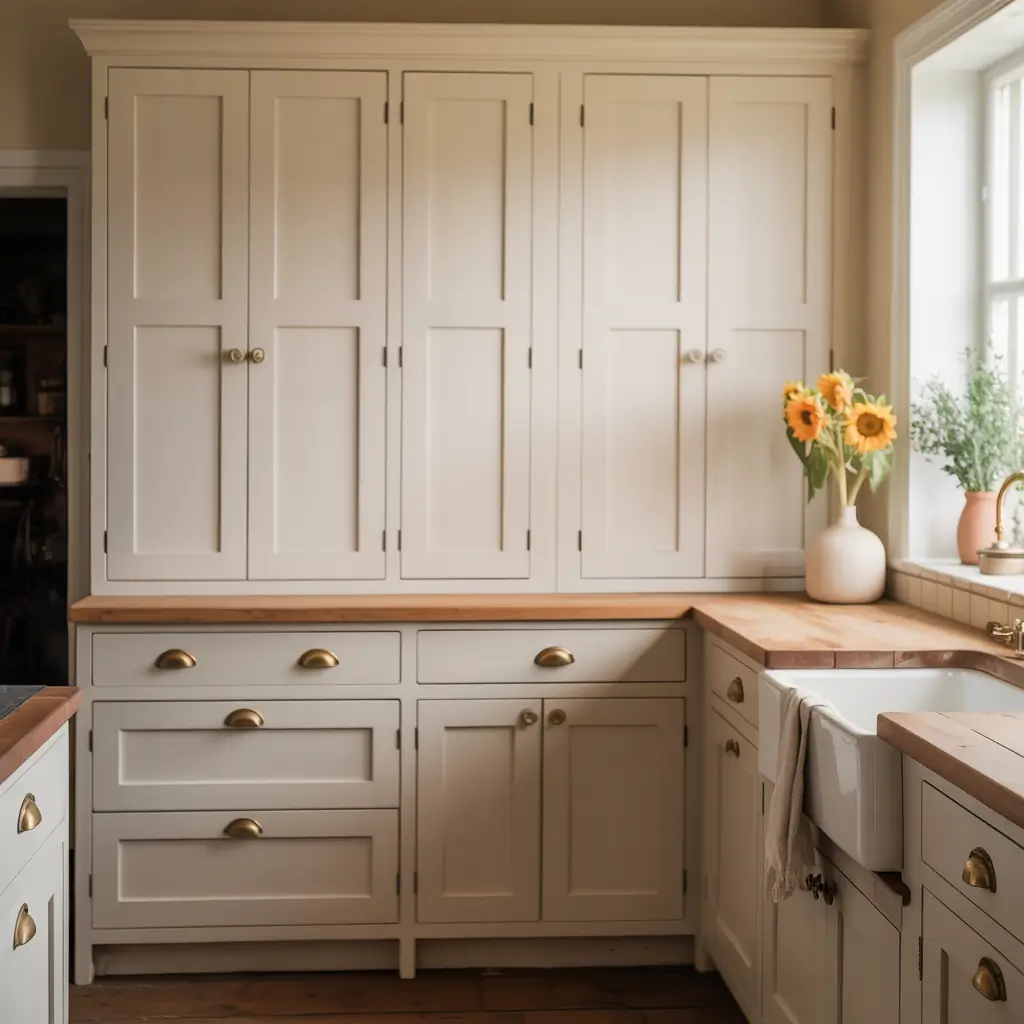
Slab cabinet doors have no frame, no panel, no detail. Just a single flat surface from edge to edge. In white, they create something remarkable: a kitchen that feels architecturally intentional rather than assembled.
The modern white slab cabinet is the choice when you want your kitchen to feel like a design decision rather than a default. It pairs best with handleless designs, integrated appliances, and countertops that continue the clean-line philosophy — think waterfall quartz edges, flush-mounted sinks, and hidden outlets.
The honest trade-off: flat slab doors show every fingerprint, every scratch, and every dent more visibly than shaker or raised-panel doors. They reward regular cleaning and a household that treats cabinetry with some care. In a high-traffic family kitchen, you’ll want to think carefully about finish choice — matte holds up better than high gloss in daily use.
Slab Cabinet Finish Options
- High-gloss lacquer — stunning, reflective, shows everything, hardest to touch up
- Satin lacquer — the smart middle ground: some sheen without full mirror effect
- Matte painted — contemporary, fingerprint-resistant, easiest to live with
- Thermofoil wrap — budget-friendly, seamless, vulnerable to heat damage near ovens
- Two-pack polyurethane — professional spray finish, most durable for everyday use
3. White Cabinets with Matte Black Hardware — The Combination That Never Ages
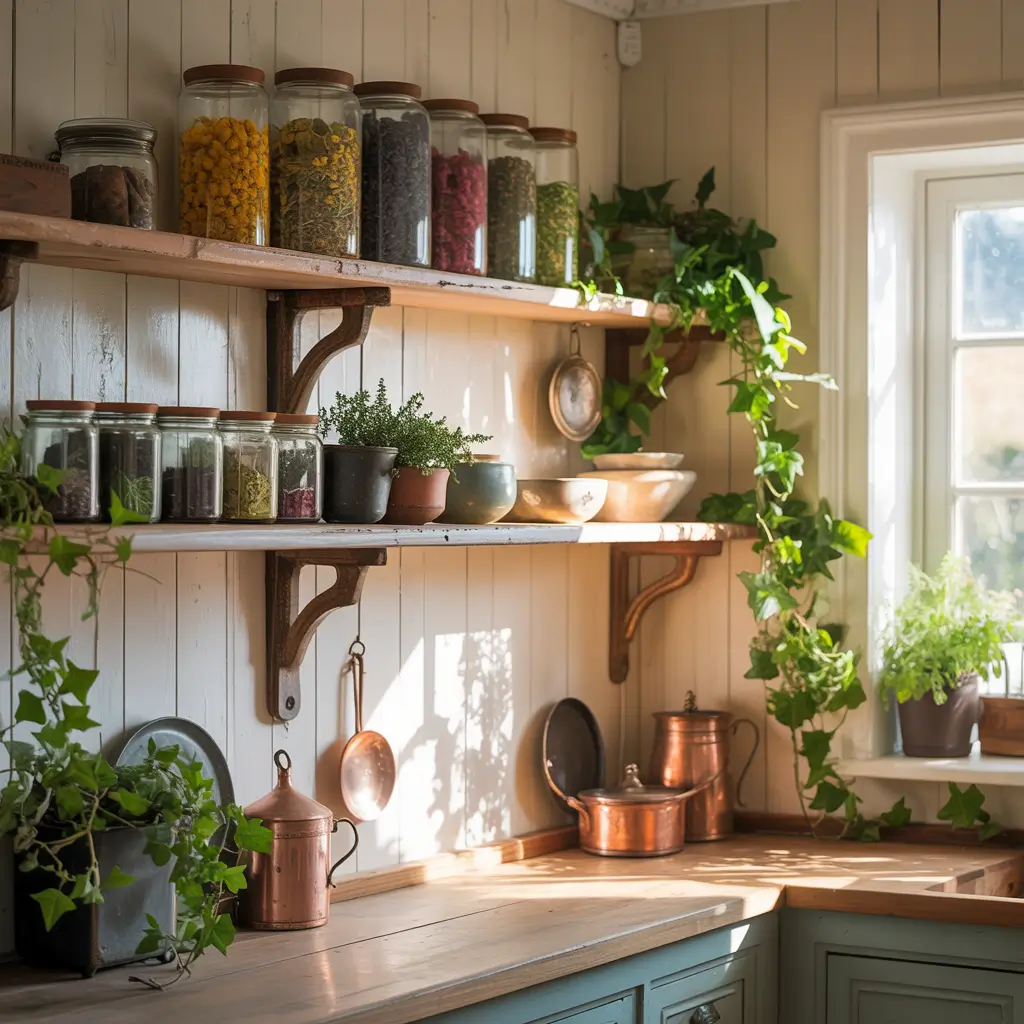
If there’s one white cabinet combination that consistently makes designers and homeowners happy, this is it. Matte black hardware on white cabinets is the design equivalent of a white shirt and dark jeans. Sharp, confident, always appropriate, impossible to ruin.
The contrast does the heavy lifting. White becomes crisper and more intentional when anchored against flat black. The hardware draws the eye along cabinet lines in a way that makes the cabinetry feel custom. Unify your cabinet pulls, faucet, pendant lights, and range hood in matte black and suddenly the whole kitchen reads as a thought-through design rather than a series of separate decisions.
Matte Black Hardware That Works Best on White Cabinets
- Bar pulls in 5–12 inch lengths for a modern, elongated look on drawer fronts
- Round knobs for upper cabinet doors when you want a softer, more traditional feel
- T-bar pulls for a transitional hybrid that works between modern and farmhouse styles
- Arch pulls for a slightly softer, more feminine edge while keeping the black finish
- Long finger pulls recessed into the door face for a truly minimal handle-free look
Pro Tip: Matte black shows water spots in humid kitchens. Wipe down hardware near the sink weekly with a dry cloth to keep the finish looking intentional rather than neglected.
4. White Shaker Cabinets with Warm Wood Open Shelving
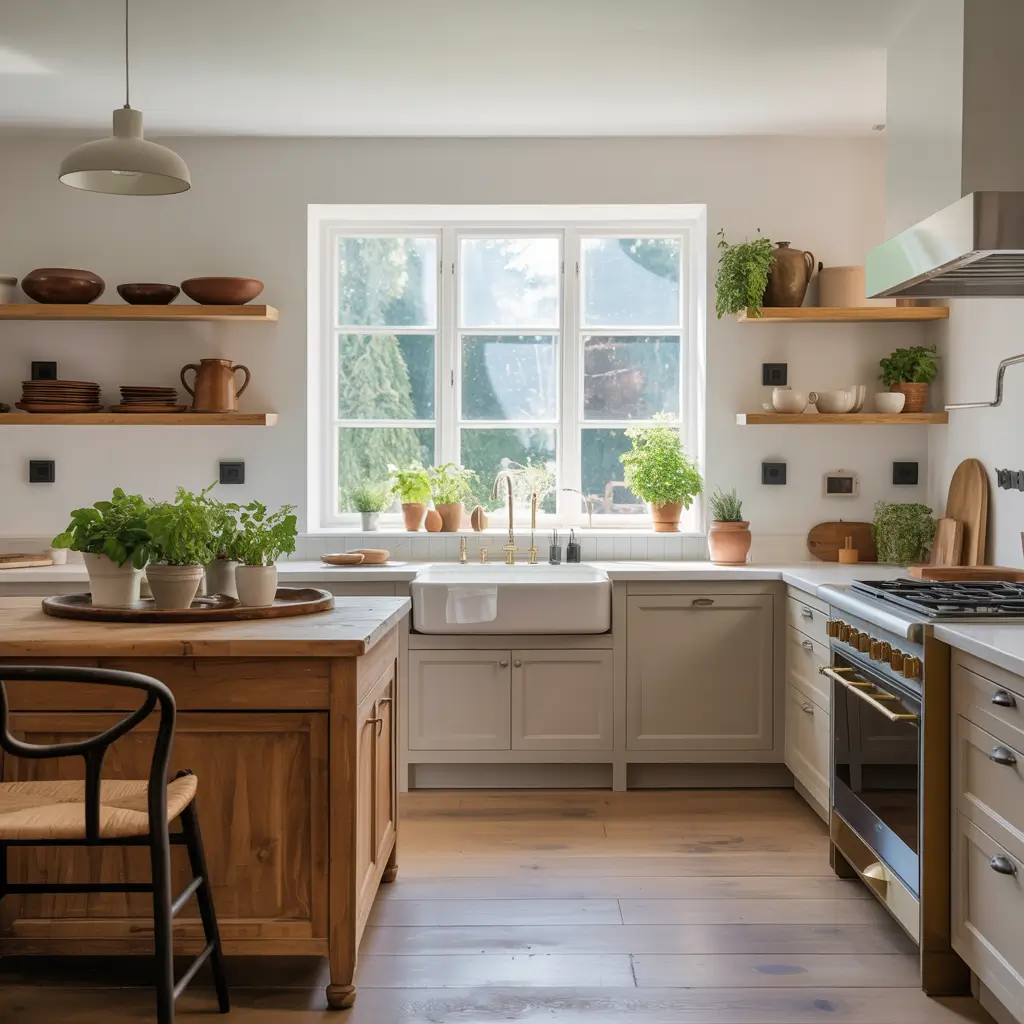
Replace two or three upper cabinets with floating wood shelves in your white kitchen and you’ll achieve something that no amount of styling can fake: the sense that this kitchen was assembled by a person with taste rather than installed by a contractor following a floor plan.
The warmth of natural wood against white is genuinely hard to get wrong. Light oak feels Scandinavian and fresh. Walnut feels rich and sophisticated. Reclaimed pine feels farmhouse-casual. Whatever species you choose, the organic grain pattern and warm tones break up the white expanse in a way that makes the kitchen feel both considered and lived-in.
Styling White Kitchen Open Shelves Without Making Them Look Cluttered
- Limit your color palette on shelves to three to four tones: white dishes, natural wood boards, one or two accent colors
- Group objects in odd numbers — three stacked bowls, five mugs in a row — for visual rhythm
- Leave fifteen to twenty percent of each shelf empty; breathing room is what separates styled from stuffed
- Include one plant per shelf unit minimum — greenery against white is as fresh as it gets
- Keep everyday-use items on lower shelves; display-only items go higher where they’re seen but not grabbed constantly
5. White Cabinets with Brushed Brass and Gold Hardware — Warm Luxury
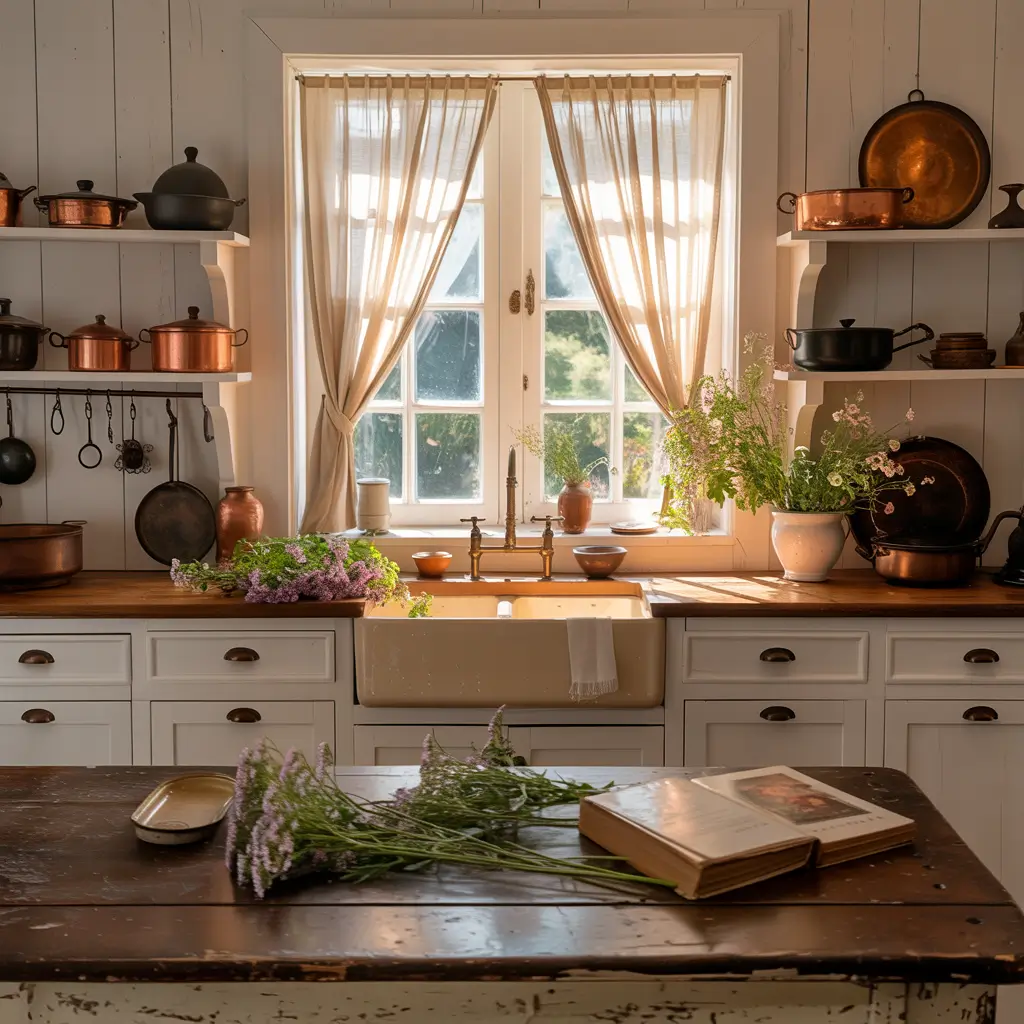
Brass is back, and this time it’s not the shiny, brassy brass of the 1980s. Brushed brass and unlacquered brass have a warmth and depth that polished finishes simply can’t replicate — and against white cabinets, the combination reads as genuinely luxurious.
Unlacquered brass develops a patina over time, darkening slightly in areas of frequent contact and brightening where the light hits it. This variation is the whole point. It looks expensive in the way only natural materials do, because no two kitchens will age identically. Brushed brass is a little more controlled — consistent finish, less drama, still warm — and it hides fingerprints better than its unlacquered counterpart.
Pair either with white shaker cabinets and a cream-toned wall color for a kitchen that feels like a European country house. Pair with crisp white flat-panels and marble for something more editorial.
Gold and Brass Hardware Combinations That Hit
- Brushed brass pulls with creamy white shaker cabinets and butcher block island top
- Unlacquered brass with Calacatta marble countertops and white flat-panel uppers
- Antique brass with white beadboard cabinets and apron sink for vintage charm
- Satin gold with white gloss cabinets and black granite for a glam contemporary look
6. High-Gloss White Cabinets for Small Kitchens — The Space Multiplier
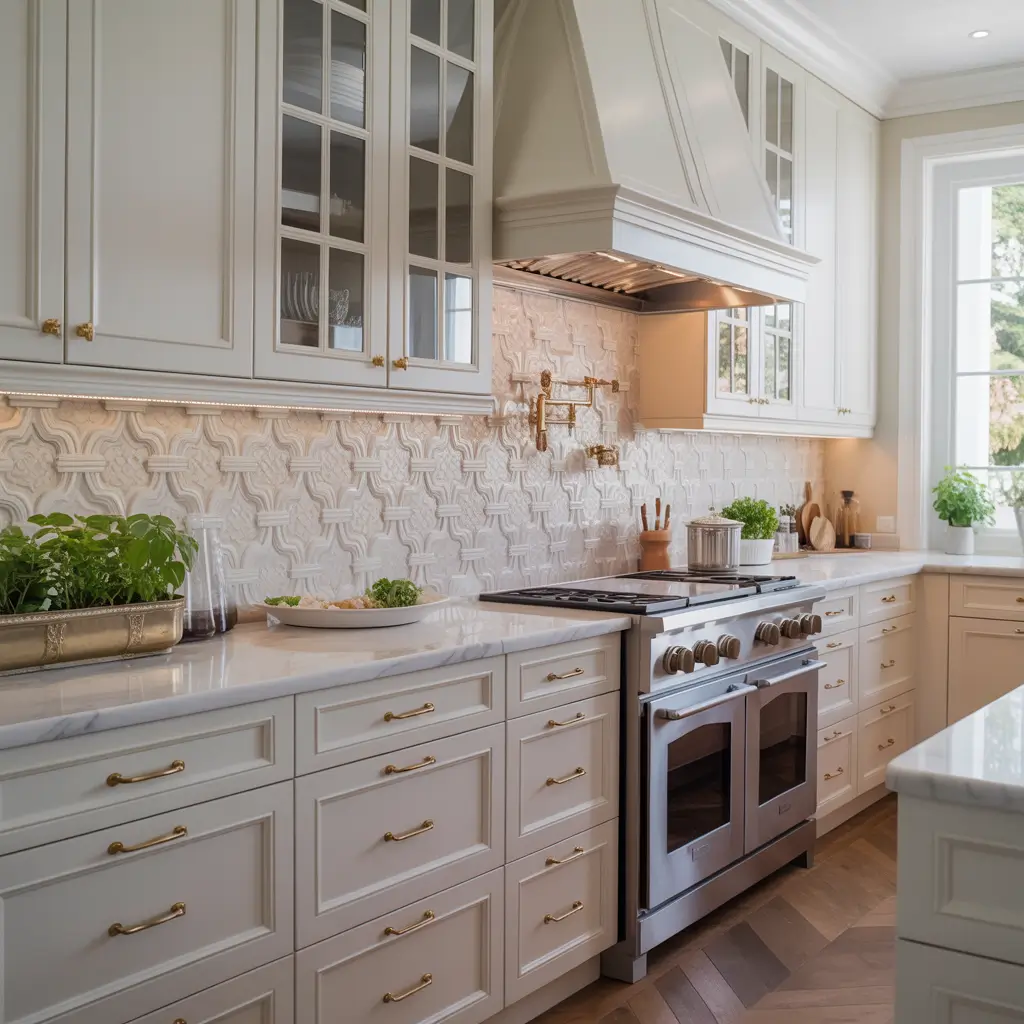
Small kitchens are genuinely difficult design challenges. You’re working with limited square footage, often one or two windows, and the constant feeling that the walls are getting closer. High-gloss white cabinets are the single most effective tool for fighting back.
The reflective surface does what no amount of lighting can fully achieve: it bounces light around the room, blurs the boundaries between surfaces, and creates a sense of spatial expansion that is measurable and immediate. I’ve stood in sixty-square-foot kitchens with high-gloss white cabinets and genuinely felt comfortable. That shouldn’t be possible. It is.
Maximizing the High-Gloss Effect in Small White Kitchens
- Paint walls the same white as the cabinets to eliminate the visual break where cabinet meets wall
- Use a white or light-toned countertop — dark counters create a visual cut that shrinks the space
- Install under-cabinet LED lighting to eliminate shadow beneath upper cabinets
- Extend cabinets all the way to the ceiling with no gap — the gap creates a horizontal line that lowers the perceived ceiling height
- Choose a minimal backsplash — large-format white tiles or a slab backsplash rather than small mosaic tiles that introduce busyness
Pro Tip: Use pushers or touch-latch mechanisms instead of pulls on high-gloss cabinets in small kitchens. Hardware breaks up the reflective surface and creates visual interruptions that work against the space-expanding effect.
7. White Farmhouse Cabinets — Warmth Without the Clichés
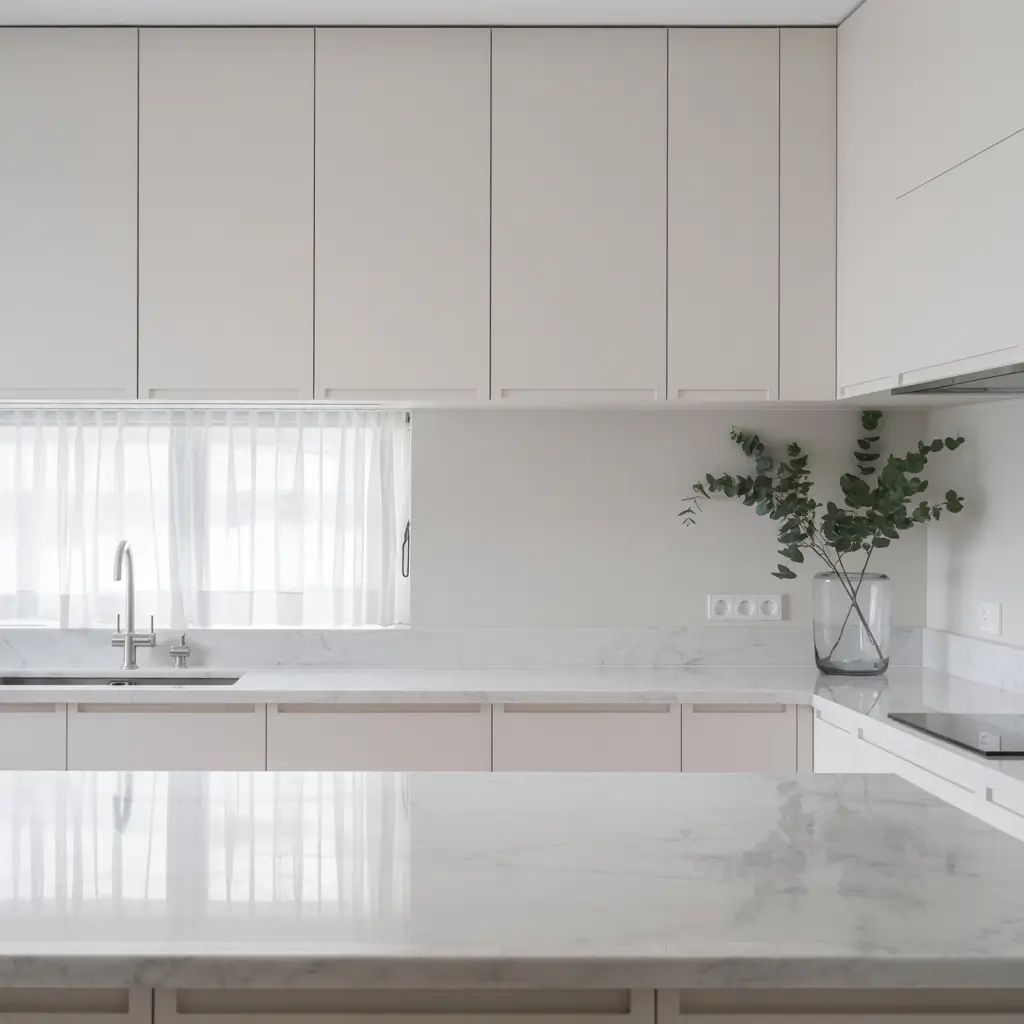
The farmhouse kitchen aesthetic has been borrowed, photographed, and replicated so many times that it risks becoming a parody of itself. You know what I mean: the shiplap, the mason jars, the “farm fresh eggs” sign. Real farmhouse white cabinet design is none of that.
Genuine farmhouse-influenced white cabinets are about the feeling of honest craftsmanship. Cabinets that look like they might have been built by someone who actually knew what they were doing, not ordered from a catalog. The details that achieve this: inset cabinet doors (where the door sits flush inside the frame rather than overlapping it), furniture-style feet on base cabinets and islands, thick crown molding, apron-front sinks, and beadboard panel inserts.
Cabinet Details That Read as Authentic Farmhouse
- Inset door construction — more expensive, infinitely more refined-looking than overlay
- Furniture feet on base cabinets and kitchen islands — makes cabinets look freestanding and collected
- Beadboard inserts in cabinet door centers or on island sides — texture without pattern
- Chunky crown molding at ceiling junction — adds architectural weight and finish
- Mix of cabinet doors, open shelves, and drawer banks — variation gives a hand-crafted rather than factory feel
8. Two-Tone Kitchen Cabinets — White Uppers, Color Below
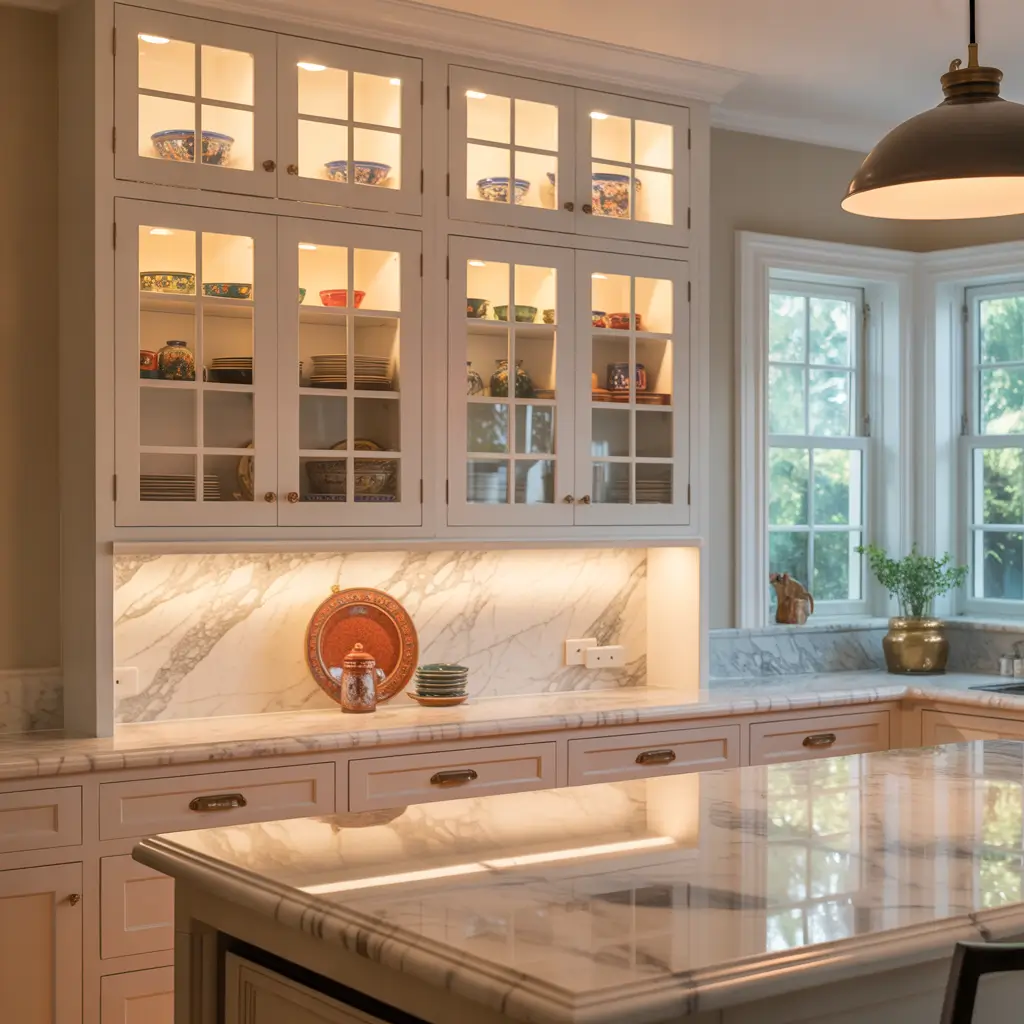
Two-tone kitchens are among the most satisfying design decisions you can make, and they’re more forgiving than you’d think. The formula is simple: white upper cabinets keep the room feeling open and bright above eye level; colored lower cabinets add depth, character, and a sense of groundedness that all-white kitchens sometimes lack.
The color you choose for the lower cabinets sets the entire personality of the kitchen. Navy blue creates a sophisticated, almost traditional-club feel. Sage green reads as earthy and calm — it’s the single most popular two-tone choice right now and for good reason. Deep forest green is bold and dramatic. Charcoal reads modern and sleek. Slate blue is softer and more versatile than navy.
Two-Tone White Cabinet Color Combinations That Work
- White uppers and navy lowers — classic, high-contrast, always photographed well
- White uppers and sage green lowers — the current front-runner, works in every light
- White uppers and charcoal lowers — modern, clean, pairs brilliantly with stainless appliances
- White uppers and terracotta lowers — warm, unexpected, beautiful with brass hardware
- White uppers and dusty blue lowers — coastal, soft, very livable for families
Pro Tip: Keep the countertop neutral when going two-tone. A light quartz with subtle veining, a warm butcher block, or a pale concrete look all bridge the two colors without competing with them.
9. White Cabinets with Glass Front Doors — Display and Depth
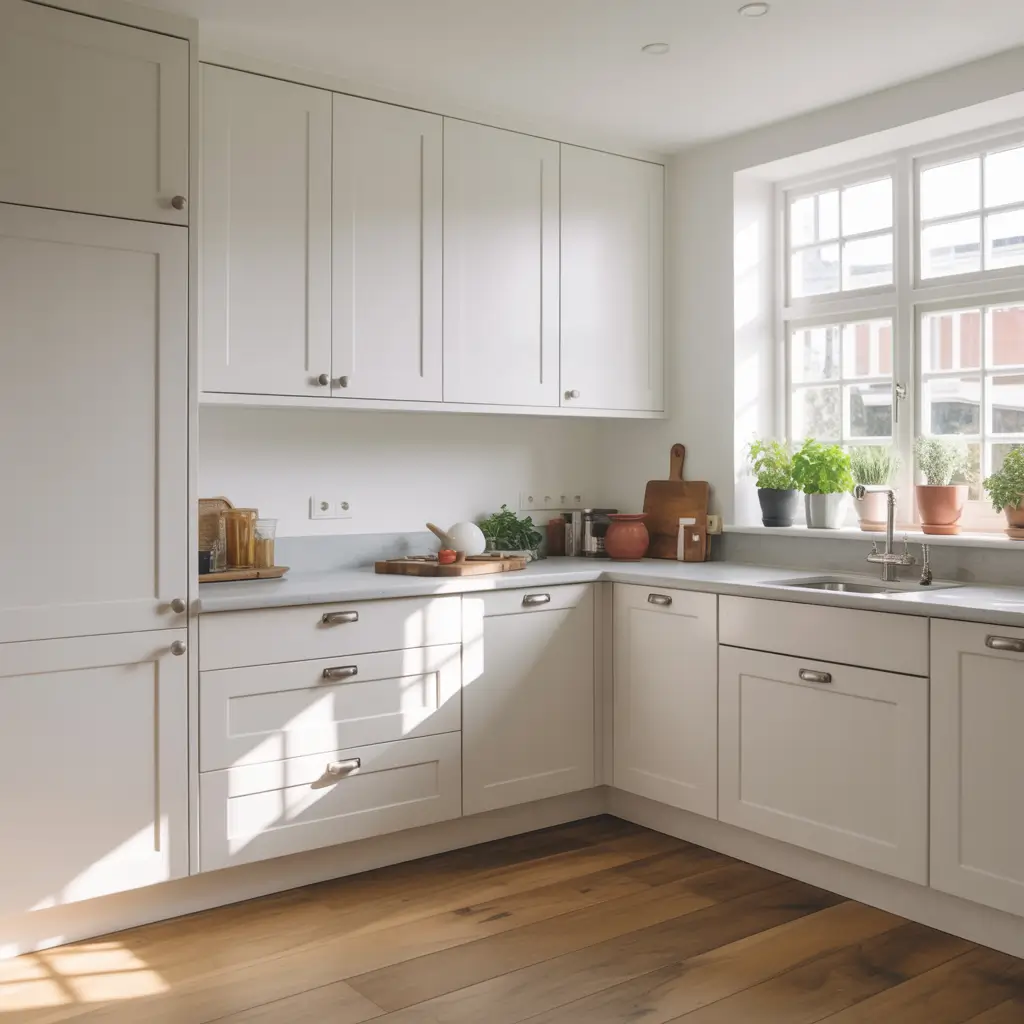
Glass-front cabinet doors accomplish two things simultaneously: they break up what would otherwise be a solid wall of white, and they turn your kitchen storage into a display. This sounds like it might create pressure — suddenly your dishes need to be photogenic — and honestly, that pressure is entirely worth it.
Replacing just the top two or three cabinet doors with glass inserts transforms the visual weight of a kitchen. The eye moves through the glass to the interior, creating perceived depth where none existed. Glass doors also allow whatever lighting is inside the cabinet to escape into the room, which adds warmth and dimension that closed cabinets simply can’t provide.
Types of Glass for White Kitchen Cabinet Doors
- Clear glass — full visibility, demands organized, attractive interior contents
- Reeded or fluted glass — texture that obscures details while still allowing light through
- Frosted or seeded glass — soft diffusion, forgiving if your shelves aren’t perfectly styled
- Antique mirror glass — slightly smoky, warm, genuinely glamorous in the right kitchen
- Wire mesh inserts in a metal frame — industrial and farmhouse-friendly alternative to actual glass
10. White Cabinets with Integrated Appliances — The Seamless Kitchen
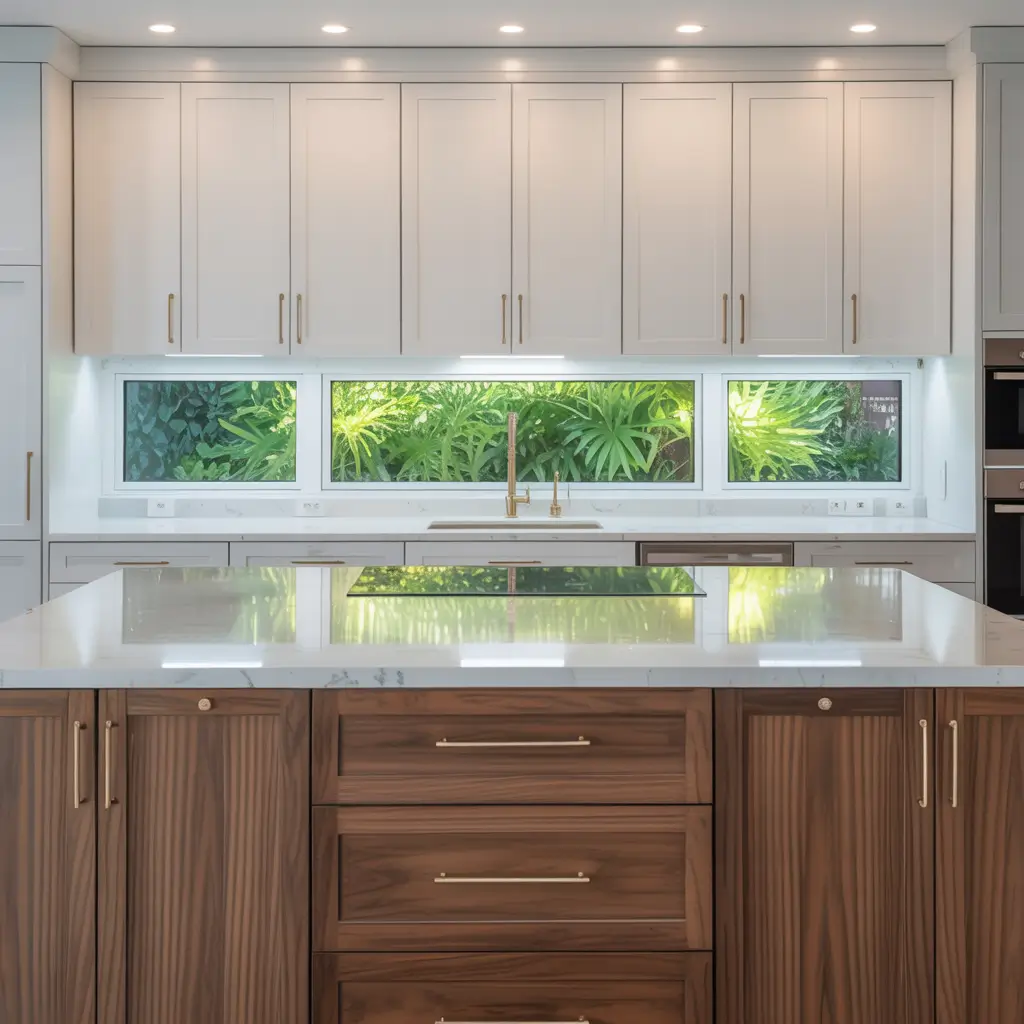
The integrated appliance kitchen — where the refrigerator, dishwasher, and sometimes the range hood wear cabinet-front panels — is the most cohesive, visually calm kitchen you can design. Appliances disappear. The whole kitchen becomes one continuous white surface. It’s striking in a way that’s surprisingly quiet about it.
This look requires planning from the start — integrated appliances must be specified before cabinetry is designed, not added as an afterthought. But the investment pays off. A white kitchen with integrated appliances photographs as a luxury product, and it genuinely creates a calming sense of order that stainless-steel appliance-heavy kitchens can’t match.
What to Integrate and What to Leave Visible
- Always integrate: dishwasher (panel front), refrigerator (panel front), range hood (custom cabinet surround)
- Usually integrate: microwave (built into a cabinet or drawer), coffee machine (in a dedicated appliance garage)
- Often left visible: range or cooktop — a statement range can become a focal point rather than an eyesore
- Practical note: panel-front refrigerators cost significantly more than freestanding; budget accordingly
11. White Inset Cabinets — The Mark of Serious Craftsmanship
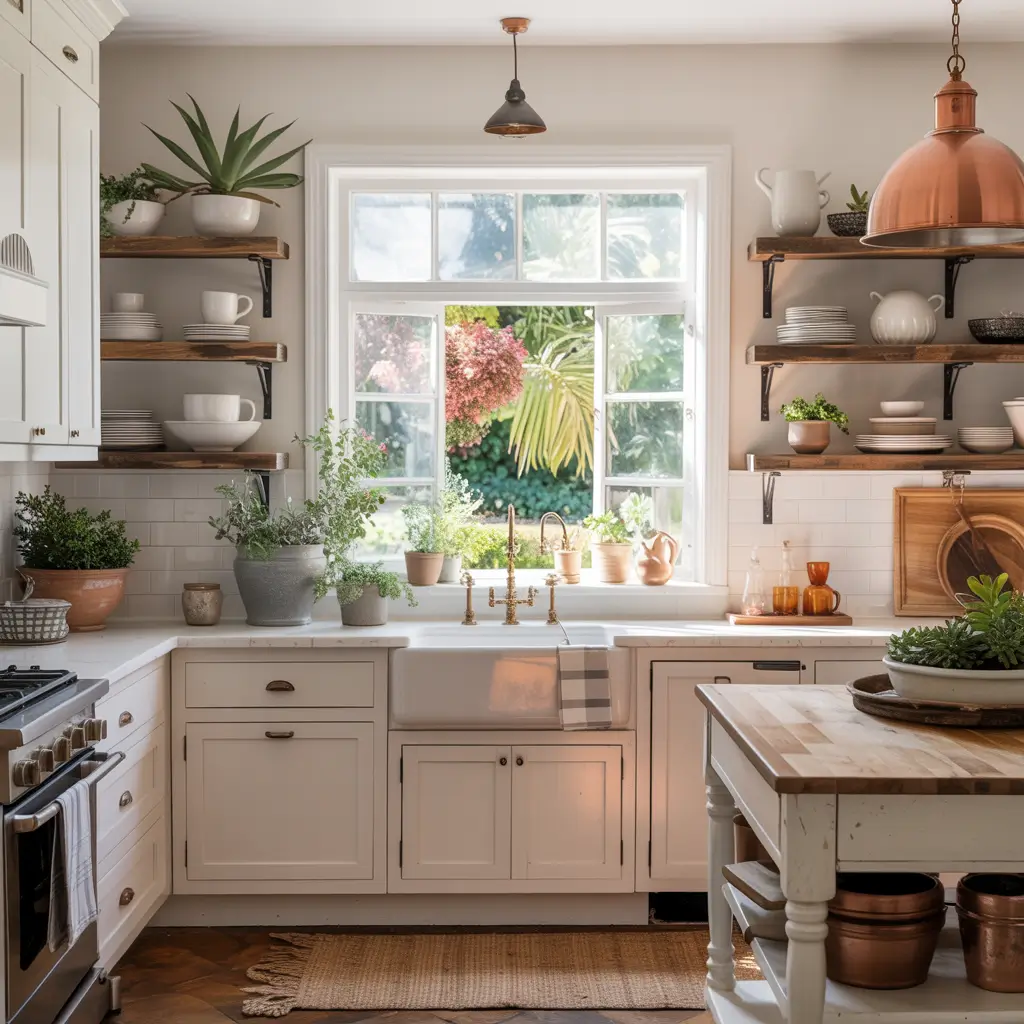
Standard overlay cabinets have doors that sit in front of the cabinet frame. Inset cabinets have doors that sit flush inside the frame, fitting within it like a framed picture. The difference sounds minor. The visual difference is significant.
Inset cabinets look more expensive because they are more expensive — the tolerances required to make each door fit flush with precision are tighter than overlay construction, and the hinges are typically visible, adding a detail element that reads as old-world craftsmanship. In white, inset cabinets read as genuinely bespoke, regardless of whether they actually are custom or came from a quality manufacturer.
If you’re choosing between overlay white shaker cabinets and inset white shaker cabinets and the budget allows, always choose inset. It’s the single upgrade with the highest visual return.
12. White Cabinets with Statement Countertops — Let the Stone Do the Talking
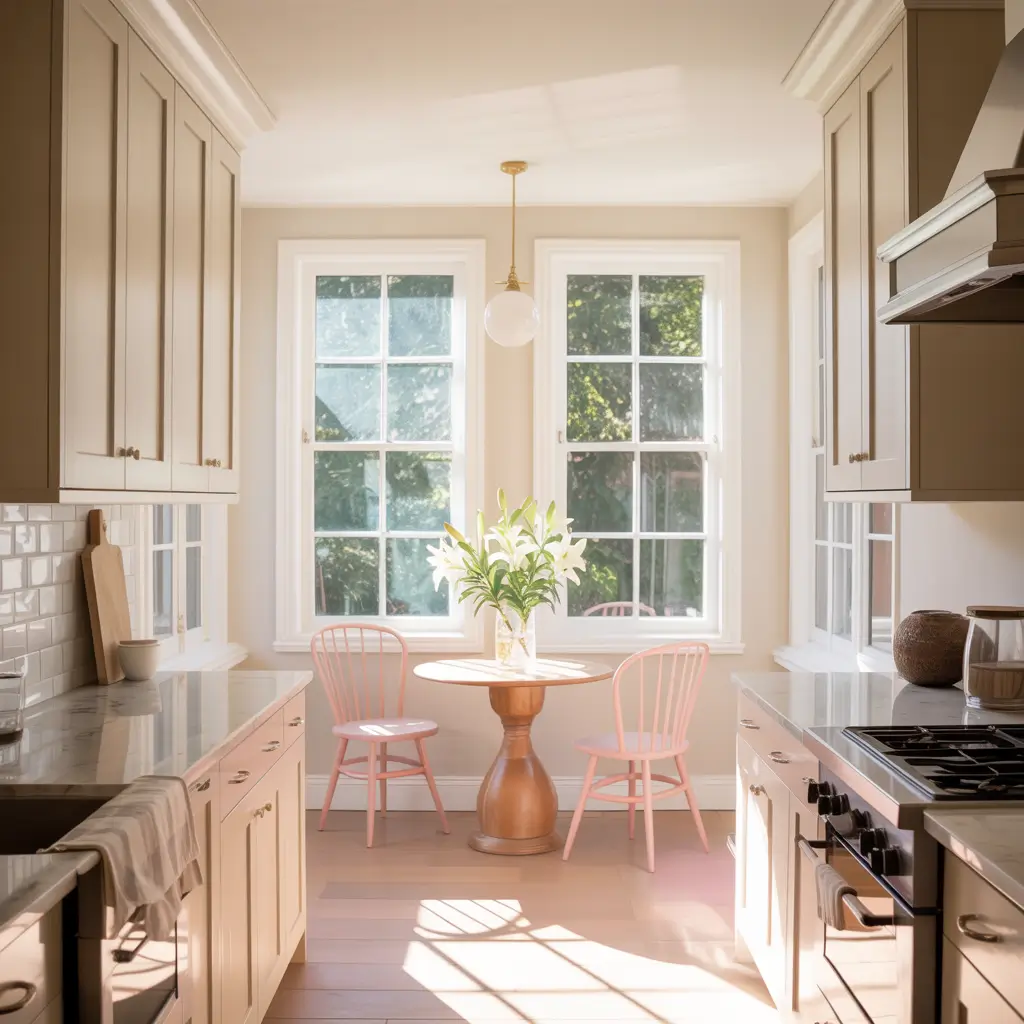
White cabinets give you the freedom to be bold with countertops in a way that darker cabinetry doesn’t. Because the cabinets are neutral, the countertop becomes the artwork.
Dramatic Calacatta marble with thick gold veining. Bold leathered black granite with silver flecks. Soapstone with its deep blue-gray tones. Waterfall-edge quartz in a striking book-matched pattern. All of these work spectacularly against white cabinets because there’s no competition — the stone gets to be the entire personality of the kitchen.
Countertop Materials That Shine Against White Cabinets
- Calacatta or Statuario marble — bold gold or gray veining, true luxury, requires sealing
- Carrara marble — softer gray veining, more accessible price point, equally beautiful
- White quartz with dramatic veining (Calacatta-look) — maintenance-free alternative to real stone
- Absolute black granite — the highest contrast option, modern and bold
- Soapstone — matte, dark, develops patina, extraordinarily tactile and beautiful
- Butcher block — warm, practical for islands, adds natural warmth to all-white spaces
Pro Tip: Request full-slab samples rather than small chips when choosing countertops for white kitchens. Veining patterns in stone vary dramatically across the slab; a two-inch chip tells you almost nothing about how the full countertop will look.
13. White Cabinets with Decorative Crown Molding — The Finishing Touch
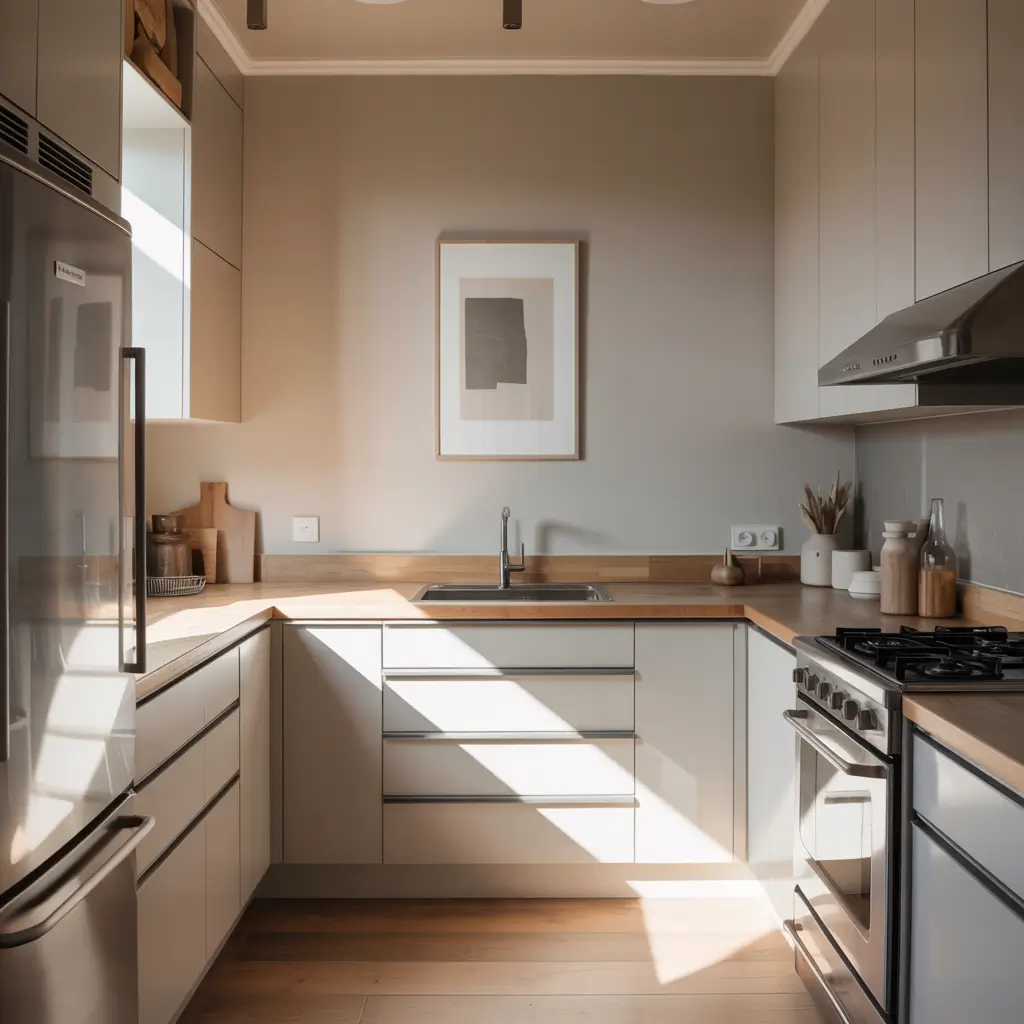
Crown molding is the detail that separates cabinets that look installed from cabinets that look designed. A thick, well-profiled crown molding at the junction of white cabinets and ceiling elevates cabinetry from functional storage to architectural feature.
For white kitchens, the simplest approach is also the most effective: paint the crown molding the same white as the cabinets so everything reads as one continuous installation. This creates a custom built-in look regardless of whether the cabinets are actually custom. If you want to add depth, paint the crown molding one or two shades darker than the cabinet doors — it creates a subtle shadow effect that adds dimension.
Crown Molding Profiles for White Kitchen Cabinets
- Simple cove molding — minimal and clean, works best with modern and transitional styles
- Classic ogee profile — the traditional S-curve, pairs naturally with shaker and raised-panel doors
- Stacked crown — multiple profiles layered together for maximum visual impact in traditional and formal kitchens
- Dentil molding addition — small block details along the crown for formal, traditional settings
14. White Cabinet Painting — The High-ROI DIY Renovation
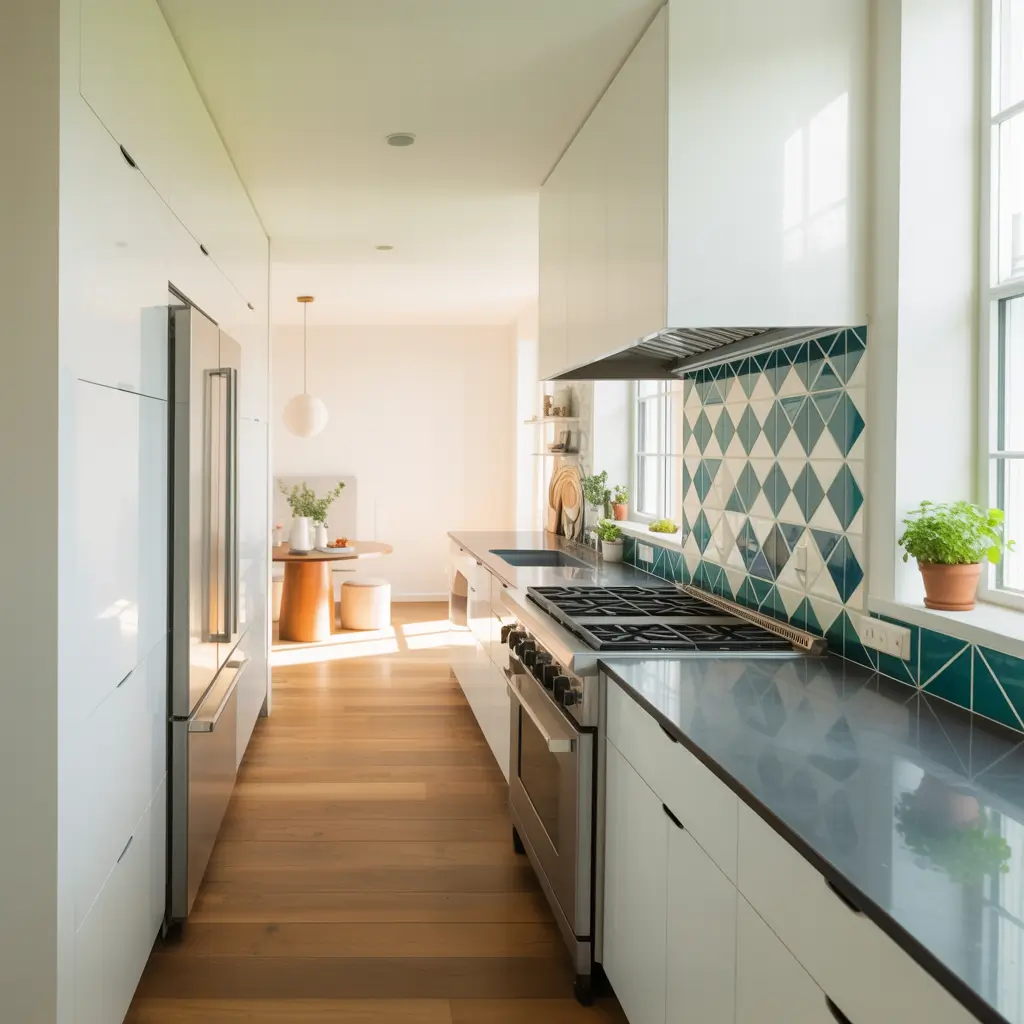
Painting your existing cabinets white is one of the highest return-on-investment projects in home renovation. The numbers are almost embarrassing: $300 to $600 in materials transforms a kitchen that would otherwise require a $15,000 to $30,000 renovation. Properly painted white cabinets are genuinely indistinguishable from factory-finished ones to any eye that isn’t an industry professional.
The qualifier is “properly painted.” Cabinet painting fails when people skip preparation. The preparation is ninety percent of the job. Here’s what that actually looks like:
The Correct Cabinet Painting Process
- Remove all doors, drawers, and hardware; label every piece with painter’s tape for reassembly
- Clean all surfaces thoroughly with a TSP substitute solution to remove grease and cooking film
- Sand with 120-grit to degloss, then wipe clean with a tack cloth
- Apply a quality bonding primer — Zinsser BIN shellac-based primer for laminate and melamine, Bulls Eye 1-2-3 for wood
- Sand lightly after primer coat with 220-grit; wipe clean
- Apply two coats of cabinet-specific paint: Benjamin Moore Advance or Sherwin-Williams Emerald Urethane are the two professional-grade choices
- Use a foam roller on flat door faces for a smooth, brush-mark-free finish; use a brush for frames and detail areas
- Allow full cure time (7 days for Advance) before rehinging and returning to use
Pro Tip: The most common DIY cabinet painting failure is rushing the cure. The paint may feel dry to the touch in hours, but it doesn’t reach full hardness for a week. Rehinge too early and the doors will dent and mark under the lightest pressure.
15. White Cabinets in a Galley Kitchen — Making the Long Narrow Space Work
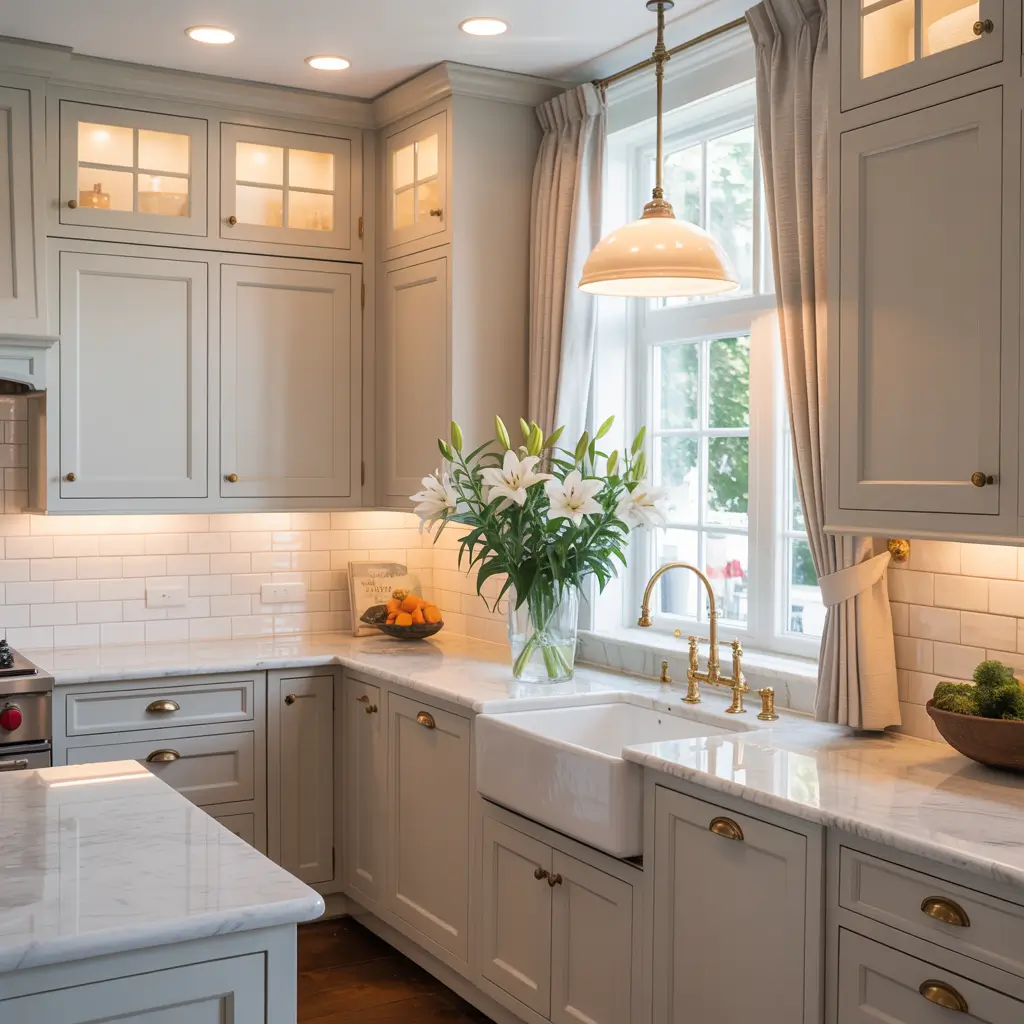
Galley kitchens — the long, corridor-style layout with cabinets on both sides — are the most common kitchen format in apartments and older homes, and the most frequently complained about. They feel narrow, they feel dark, and there’s never anywhere to stand when two people are cooking.
White cabinets address the first two problems directly and dramatically. A galley kitchen with white cabinets on both sides feels like a different room than the same kitchen with dark cabinetry. The white surfaces on both walls reflect light back and forth between them, creating brightness that makes the narrow width feel like less of a constraint and more of a design feature.
Galley Kitchen White Cabinet Strategies
- Match upper cabinet fronts, lower cabinet fronts, and walls all in the same white tone — boundaries between surfaces disappear
- Use a continuous light-toned backsplash tile rather than a patterned one — pattern in a narrow space becomes visually overwhelming quickly
- Install under-cabinet lighting the full length of upper cabinets — galley kitchens have inherent shadow issues that lighting solves
- Consider removing upper cabinets on one side entirely and replacing with open shelving — opens the sight lines significantly
- Use handleless cabinet doors or minimal bar pulls rather than protruding knobs — in a narrow corridor, every inch of clearance matters
The Practical White Cabinet Guide: What Nobody Warns You About
Choosing the Right Shade of White
This is where most white cabinet projects go sideways. Walk into any paint store and ask for white cabinet paint and they’ll show you hundreds of options. The difference between a white that looks perfect in your kitchen and one that looks yellowish or blue-gray comes down to your kitchen’s light quality and the other materials already in the room.
North-facing kitchens with limited natural light need warmer whites (Benjamin Moore White Dove OC-17, Sherwin-Williams Alabaster SW7008) to avoid the blue-gray cast that cool whites develop in indirect light. South and west-facing kitchens can handle cooler, brighter whites (Benjamin Moore Chantilly Lace OC-65, Sherwin-Williams Extra White SW7006) without them looking clinical.
Test at least five to seven paint chips directly on your cabinets or a primed test panel. Observe each at morning, afternoon, and evening under artificial light. The one that looks consistently good across all conditions is your white.
The Dirt and Maintenance Reality
White cabinets do show dirt. This is not a myth. But here’s what the myth-busters miss: white cabinets show dirt, so you clean it. Dark cabinets hide dirt, so you don’t. After three years with dark cabinets, the buildup is genuinely worse than anything visible on white.
The practical maintenance rules for white kitchen cabinets: use a semi-gloss or satin finish (not flat or eggshell) for easier wiping; keep a microfiber cloth within reach of the sink; wipe splashes when they happen rather than scheduling weekly cleaning sessions; use a mild dish soap solution for grease around the range area rather than harsh cleaners that damage the paint film.
White cabinets maintained this way stay looking fresh for a decade or more. White cabinets treated as self-cleaning will look worn within two years.
Resale Value and the Neutral Advantage
Real estate professionals have said for years that white kitchens sell homes faster. There’s a reason for this that goes beyond aesthetics: white is the ultimate neutral. Buyers who walk into a white kitchen can immediately begin projecting their own style onto it. The kitchen doesn’t declare the tastes of the previous owner — it offers a blank canvas.
If you’re within a decade of selling your home, white cabinets are the most financially defensible kitchen choice you can make. They won’t alienate any buyer. They won’t force a price reduction because of a polarizing color choice. They will, consistently, be described as a feature rather than something that needs updating.
Conclusion: Why White Kitchen Cabinets Are Worth It
Every few years, someone announces that white kitchen cabinets are over. They’ve been announcing this since approximately 2012. And yet here we are, in 2026, and white cabinets remain the most chosen, most renovated-toward, and most desired kitchen cabinet color in the country.
That’s not inertia. It’s not people being uncreative. It’s the market repeatedly confirming what good design judgment has always suggested: white works because it’s genuinely the most flexible, most light-enhancing, most broadly appealing starting point in kitchen design.
The 22 ideas in this guide show you the full range of what white cabinets can be — from the clean austerity of a handleless modern slab-door kitchen to the warmth of an antique-finished farmhouse cabinet to the glamour of unlacquered brass pulls on inset shaker doors. White isn’t a single look. It’s a canvas.
Pick the idea that fits your home, your budget, and the way you actually cook and live. Paint them properly if you’re DIYing. Choose the right white for your light. And when someone tells you white cabinets are played out, nod politely and enjoy cooking in yours.
1 thought on “15 Elegant White Kitchen Cabinets Ideas and Timeless Style”