
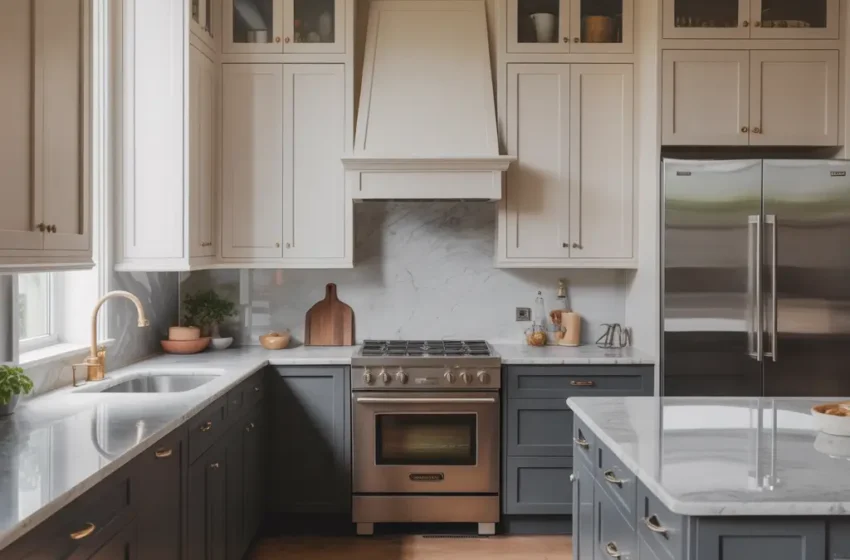
There’s a reason antique white kitchen cabinets keep showing up on design boards, home renovation shows, and “most-pinned” lists year after year. It isn’t a trend. It’s a decision that quietly makes every kitchen look more considered, more lived-in, and more beautiful — without ever feeling try-hard.
Unlike bright white, which can feel clinical, or beige, which can drift toward bland, antique white sits in a sweet spot. It has warmth without being heavy, brightness without the harshness, and a timeless quality that makes it work in a modern condo, a 1920s bungalow, or a farmhouse out in the country.
In this guide, you’ll find 15 genuinely inspiring antique white kitchen cabinet ideas, each one thoughtfully paired with the right countertops, hardware, backsplash, and flooring so you can picture it in your own home. Whether you’re doing a full gut renovation or just swapping out cabinet colors, there’s something here for you.
“Antique white isn’t a color — it’s a feeling. And when it’s done right, it turns an ordinary kitchen into the room everyone wants to spend time in.”
1. The Classic Farmhouse Kitchen with Antique White Cabinets
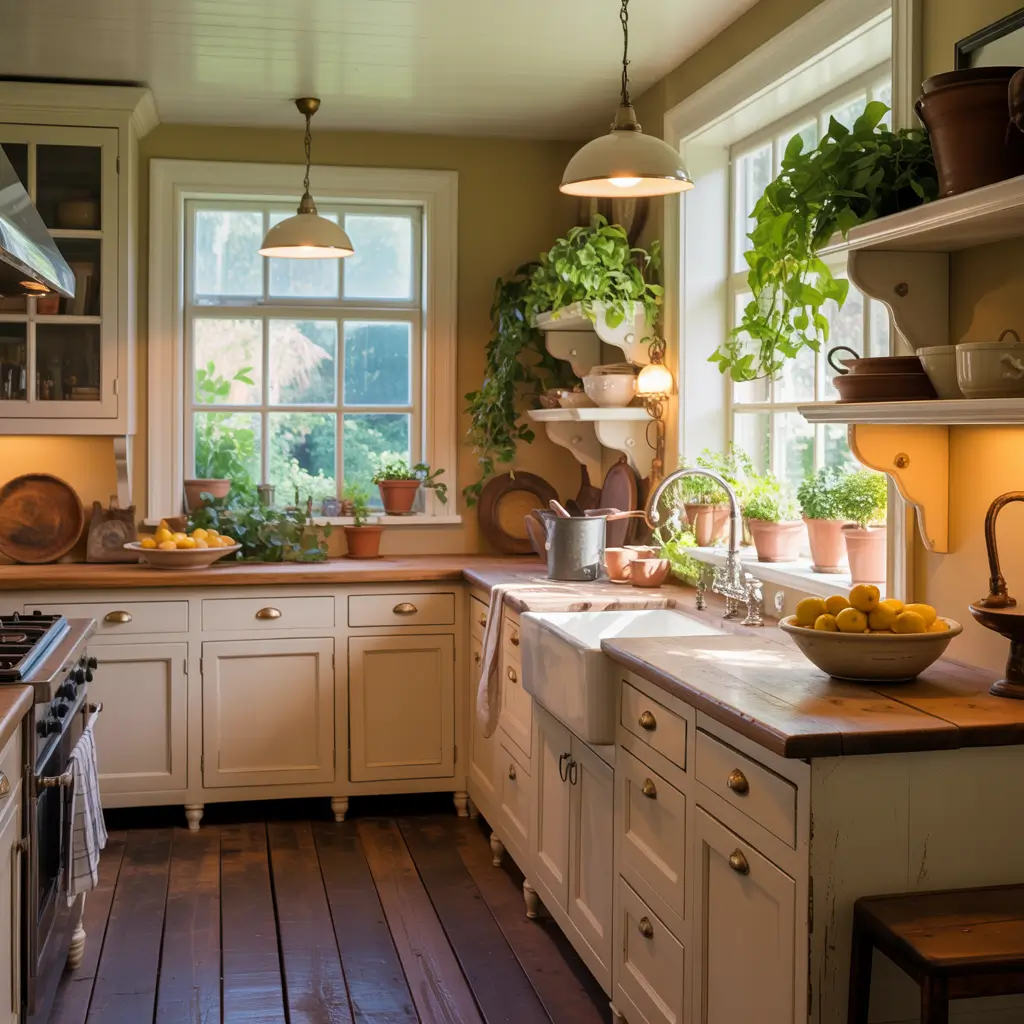
If you want a kitchen that feels like home the second you walk in, the farmhouse style with antique white cabinets delivers every time. There’s something about the combination of creamy cabinet finishes, natural wood accents, and open shelving that makes you want to pull up a stool and stay a while.
Go for raised-panel cabinet doors with a matte or lightly distressed finish — not too polished, not too rough. Pair them with a deep farmhouse sink, butcher block countertops (or a butcher block island if you prefer stone everywhere else), and wrought iron hardware. Add open floating shelves above the sink or stove to display everyday items, and you’ve got the kind of kitchen that photographs beautifully without looking staged.
What Makes It Work:
- Raised panel doors in a matte or lightly distressed antique white finish
- Butcher block countertops or a thick wood island top
- Farmhouse apron sink in fireclay or cast iron
- Oil-rubbed bronze or wrought iron hardware
- Open wood shelves for an airy, lived-in feel
- Shiplap or beadboard accents on the walls or island
2. Modern Minimalist — Yes, Antique White Can Do That Too
Here’s something most people don’t realize: antique white works beautifully in a modern, minimal kitchen. The key is the cabinet door style. Swap raised panels for flat slab doors with integrated pulls or handleless push-to-open hardware, and the softness of the antique white finish reads as refined rather than rustic.
Pair this with quartz countertops in a clean white or soft grey, a minimal subway tile or large-format backsplash, and concealed appliances behind matching panels. The result is a kitchen that feels clean and contemporary without the coldness that often comes with stark white or grey cabinetry.
What Makes It Work:
- Flat-panel (slab) doors for a sleek, no-fuss profile
- Matte black or brushed chrome hardware for contrast
- Quartz countertops with subtle veining
- Integrated appliances behind cabinet panels
- Minimal countertop accessories to keep surfaces clean
- Large-format floor tiles to visually expand the space
3. Antique White Cabinets with Marble Countertops
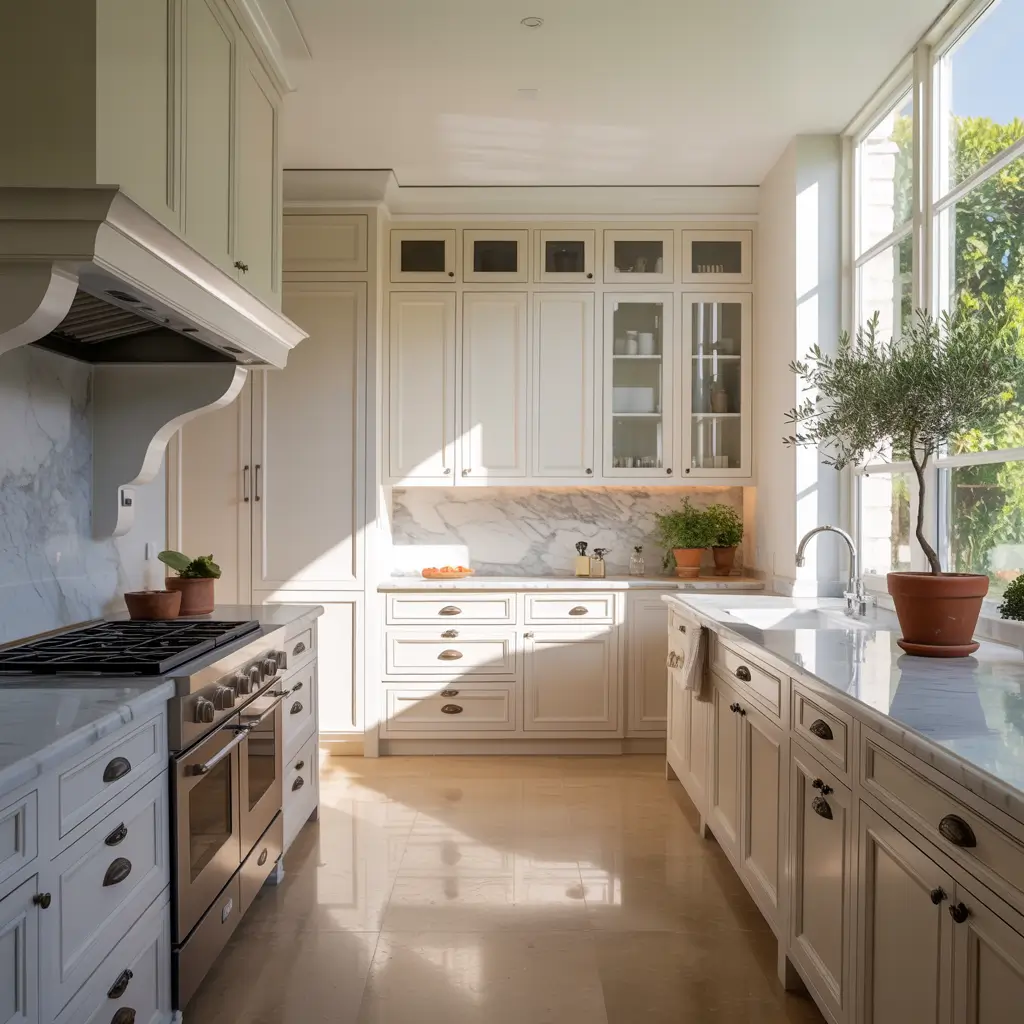
If there’s one pairing that consistently earns its place on design “best of” lists, it’s antique white cabinets with marble countertops. The warm undertones of antique white soften the sometimes-cool look of marble, and the natural veining of the stone gives the kitchen a sense of depth and movement that no solid surface can quite replicate.
Carrara marble is the go-to for classic elegance, while Calacatta offers bolder veining if you want more drama. Opt for a honed finish over polished if you’re worried about maintenance — it hides etches far better and still looks stunning with antique white cabinetry.
What Makes It Work:
- Carrara or Calacatta marble slab countertops
- Honed finish for practicality without sacrificing beauty
- Simple shaker-style cabinet doors to keep the focus on the stone
- Polished nickel or brushed gold hardware
- White or soft grey grout in a subway tile backsplash
- Undermount sink for a clean, uninterrupted counter surface
4. Rustic Antique White Cabinets with Exposed Beams
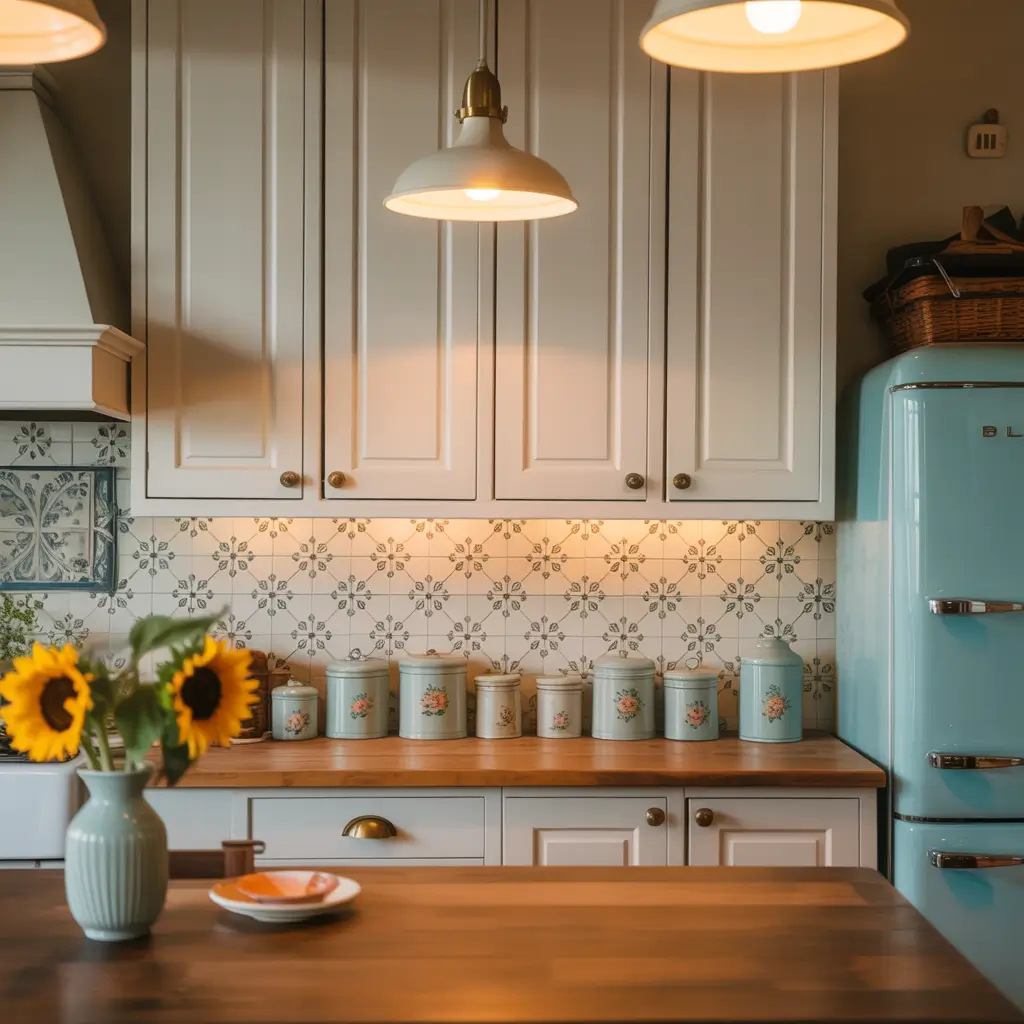
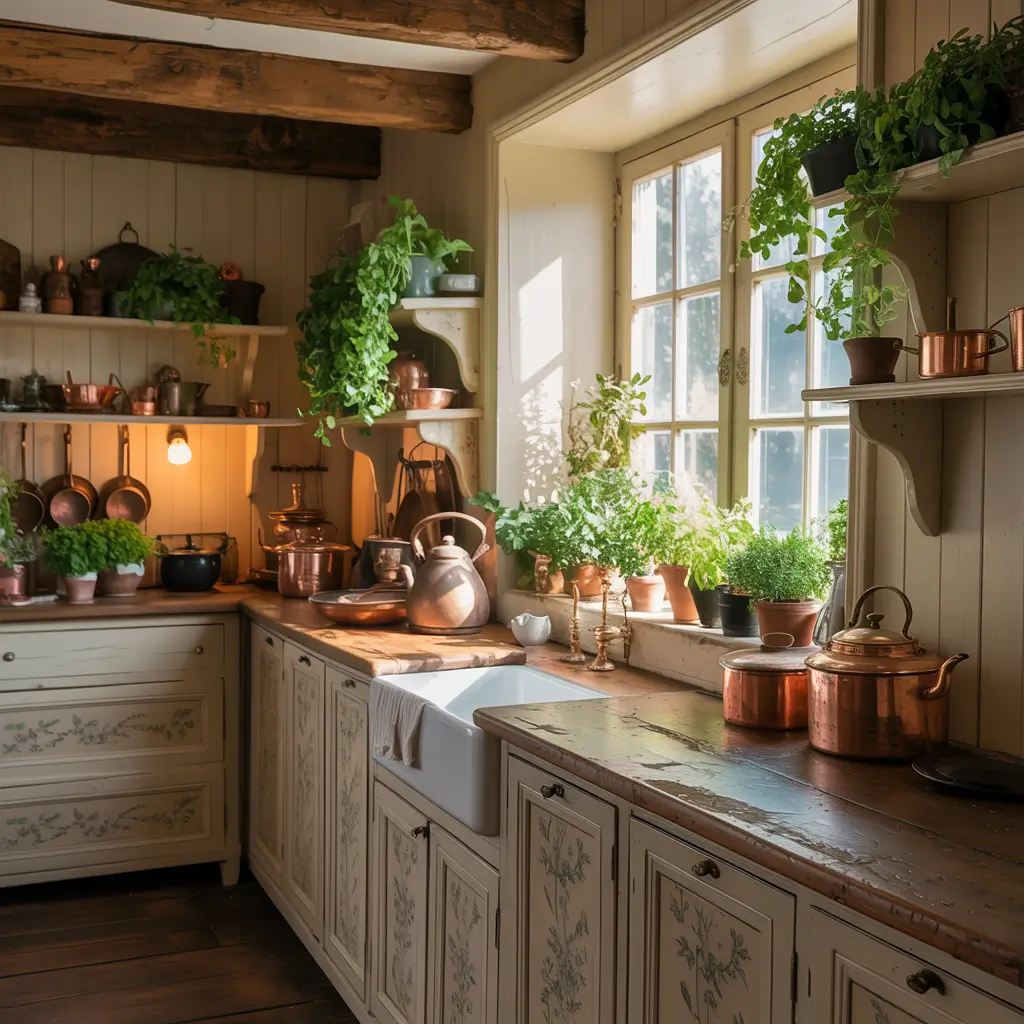
There’s a particular magic to a kitchen with exposed wooden ceiling beams and antique white cabinets. The rough texture of aged wood and the smooth, creamy finish of the cabinets create a balance that feels deliberately designed but effortlessly natural. It’s the kind of look that says “this house has history” even if it was built last year.
For this look, lean into distressed finishes, glazed cabinet details, and hardware in copper, brass, or oil-rubbed bronze. Natural stone countertops — honed travertine, soapstone, or leathered granite — bring an earthy quality that polished stone simply can’t. Pair with reclaimed wood open shelves and a stone or brick backsplash for maximum rustic character.
What Makes It Work:
- Distressed or glazed antique white cabinet finish
- Exposed wooden ceiling beams (faux or structural)
- Honed natural stone countertops — soapstone, travertine, or leathered granite
- Copper or brass fixtures and pulls
- Open shelving in reclaimed wood
- Stone or handmade tile backsplash
5. Vintage-Inspired Kitchen with Antique White Cabinets
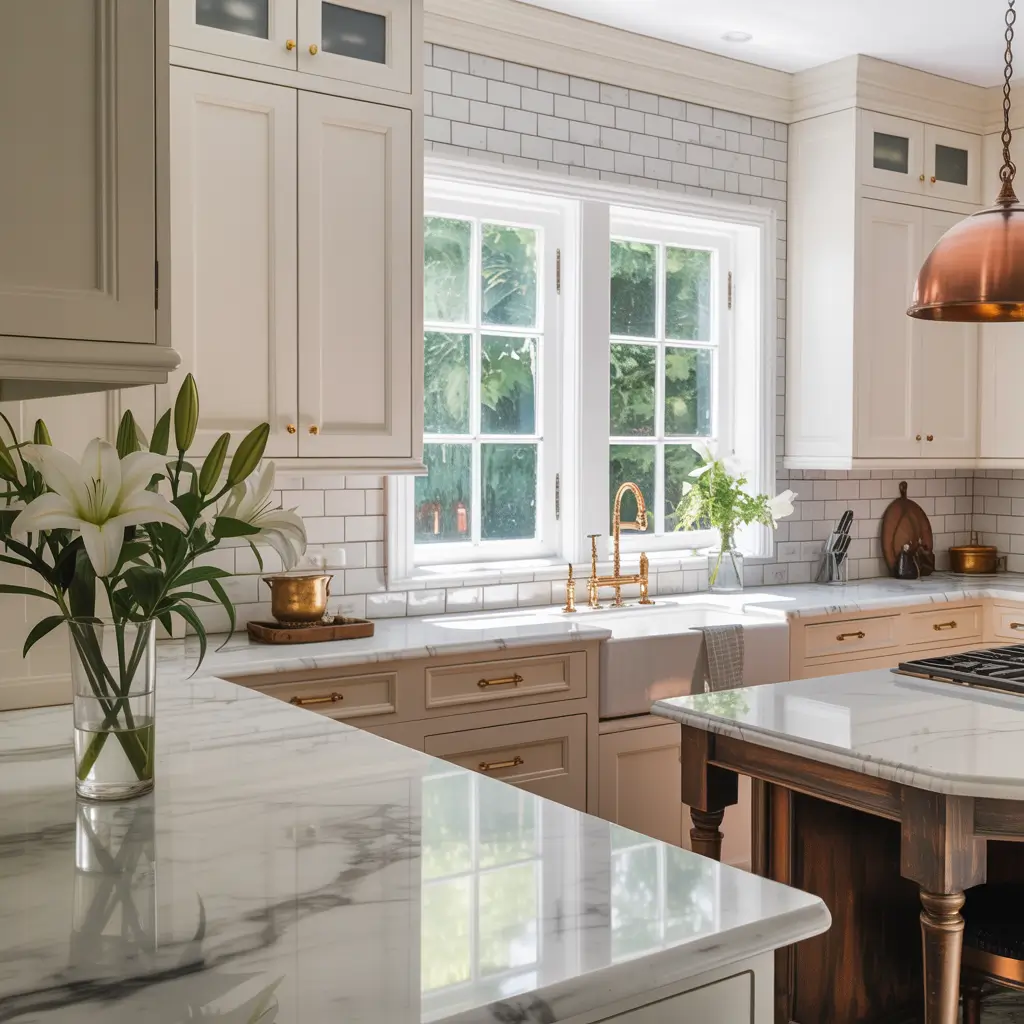
A vintage-style kitchen done well feels like stepping into a beautifully preserved moment in time — warm, character-rich, and full of small details that reward a closer look. Antique white is the ideal canvas for this aesthetic because it already carries a sense of age without committing fully to any single era.
Think glass-front cabinet doors displaying vintage dishware, bridge-style faucets with porcelain handles, checkerboard or hexagon tile flooring, and beadboard wainscoting behind the lower cabinets. The antique white finish should lean creamy here — look for shades with yellow or beige undertones rather than cooler off-whites.
What Makes It Work:
- Glass-front upper cabinets for displaying vintage pieces
- Beadboard wainscoting or backsplash panels
- Checkerboard or hexagonal tile flooring
- Bridge faucets with porcelain cross handles
- Vintage-style pendant lights or schoolhouse fixtures
- Warm cream antique white with yellow or beige undertones
6. Antique White Cabinets with Dark Countertops
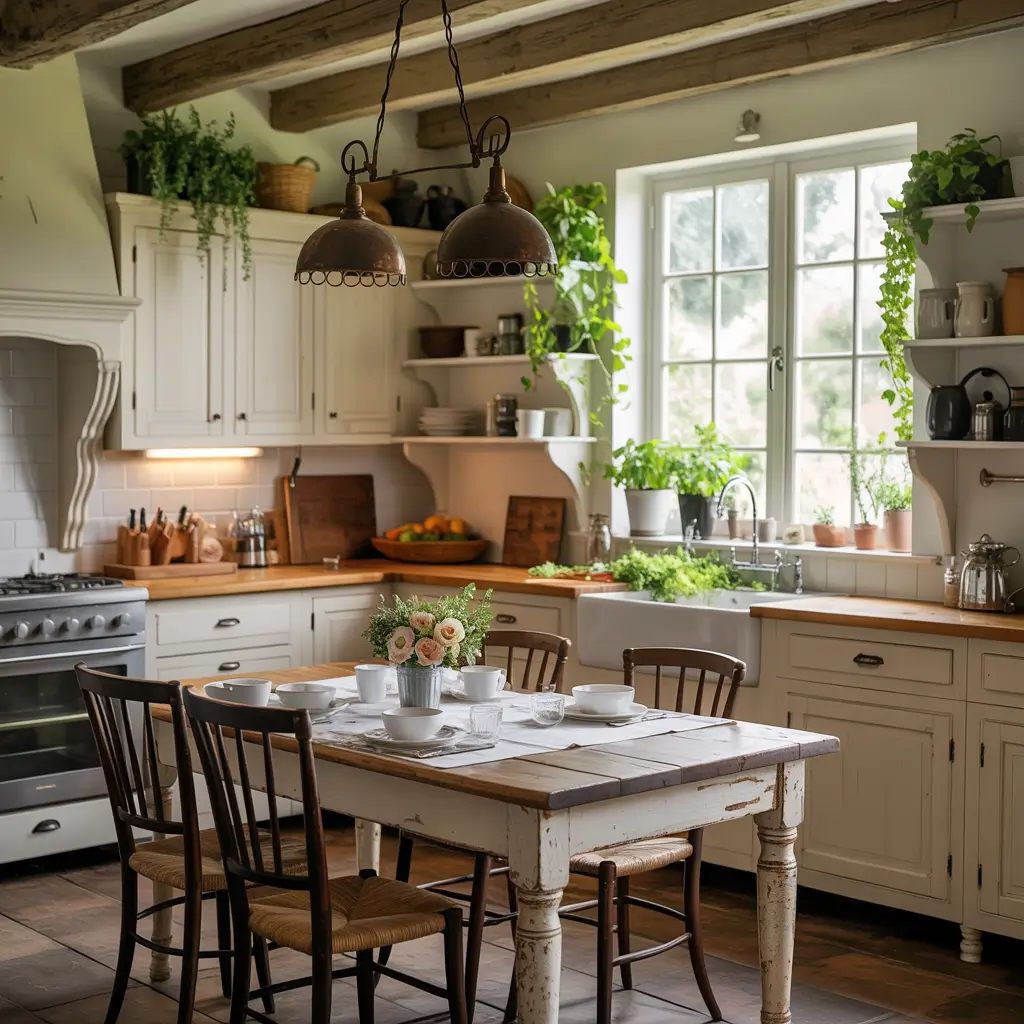
If you want drama in a kitchen without it feeling overwhelming, the combination of antique white cabinets and dark countertops delivers exactly that. The contrast is striking without being harsh — the warmth of the antique white tones down what could otherwise feel too stark or high-contrast.
Black soapstone, dark soapstone, honed Absolute Black granite, or deep charcoal quartzite all make gorgeous partners for antique white cabinetry. Pull out the dark tones in your hardware choices — matte black cabinet pulls work beautifully here — and consider dark wood flooring to complete the look.
What Makes It Work:
- Black soapstone or dark honed granite countertops
- Matte black cabinet hardware for cohesion
- White or light grey tile backsplash to maintain brightness
- Dark hardwood or LVP flooring
- Under-cabinet lighting to brighten the workspace
- Shaker cabinet doors for a clean, classic profile
7. Two-Tone Kitchen: Antique White Uppers, Wood Lowers
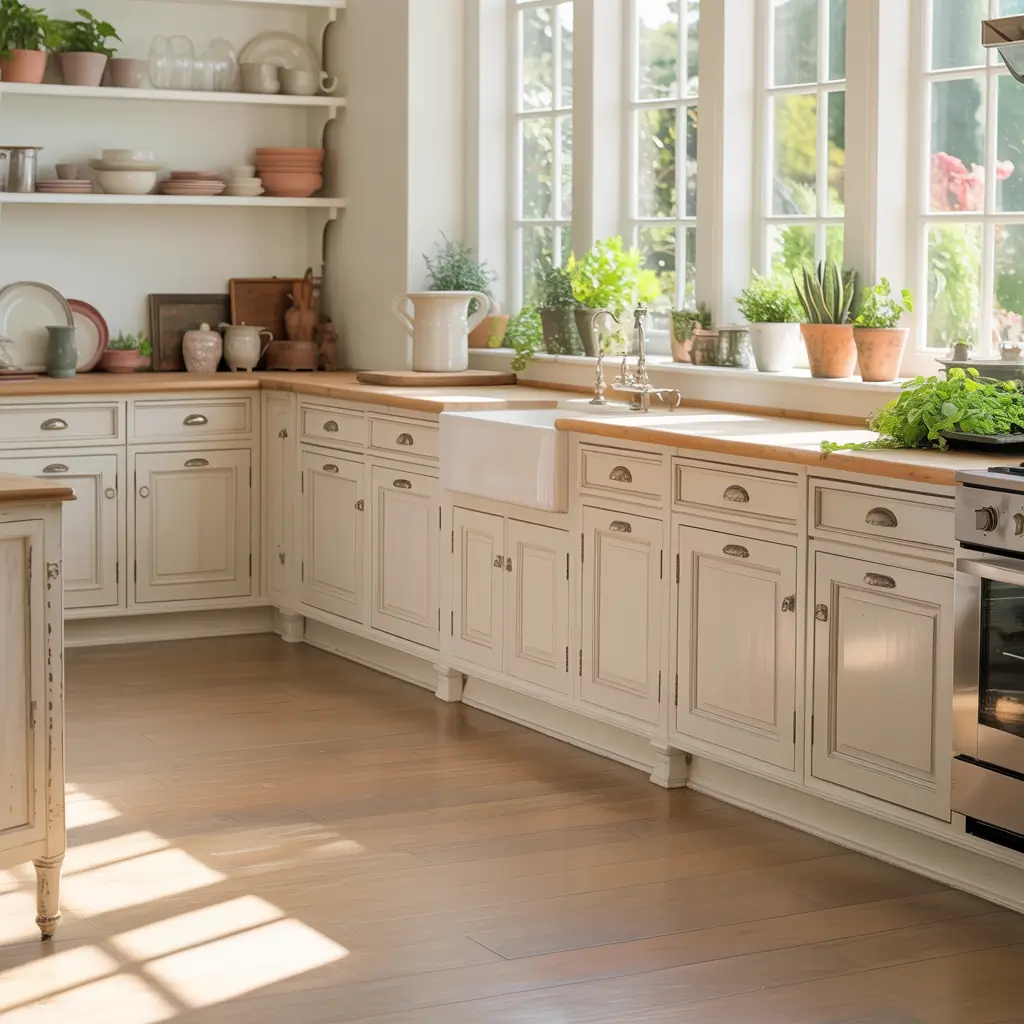
One of the most popular kitchen design moves right now is the two-tone cabinet approach, and antique white paired with natural wood lowers is arguably the most beautiful version of it. The wood brings warmth and texture at eye level where you interact with it most, while the antique white uppers keep the space feeling open and bright.
White oak, walnut, and maple all work wonderfully as the lower cabinet material. Keep the wood finish natural and lightly sealed rather than heavily lacquered — you want it to feel organic, not finished within an inch of its life. Tie the two tones together with consistent hardware throughout.
What Makes It Work:
- White oak or walnut for the lower cabinets
- Consistent hardware finish across both cabinet colors
- Natural stone or quartz countertops to bridge the two tones
- Neutral backsplash to avoid competing with the wood grain
- Antique white uppers to keep the kitchen feeling spacious
- Open shelving on one side to break up the visual weight
8. Small Kitchen with Antique White Cabinets
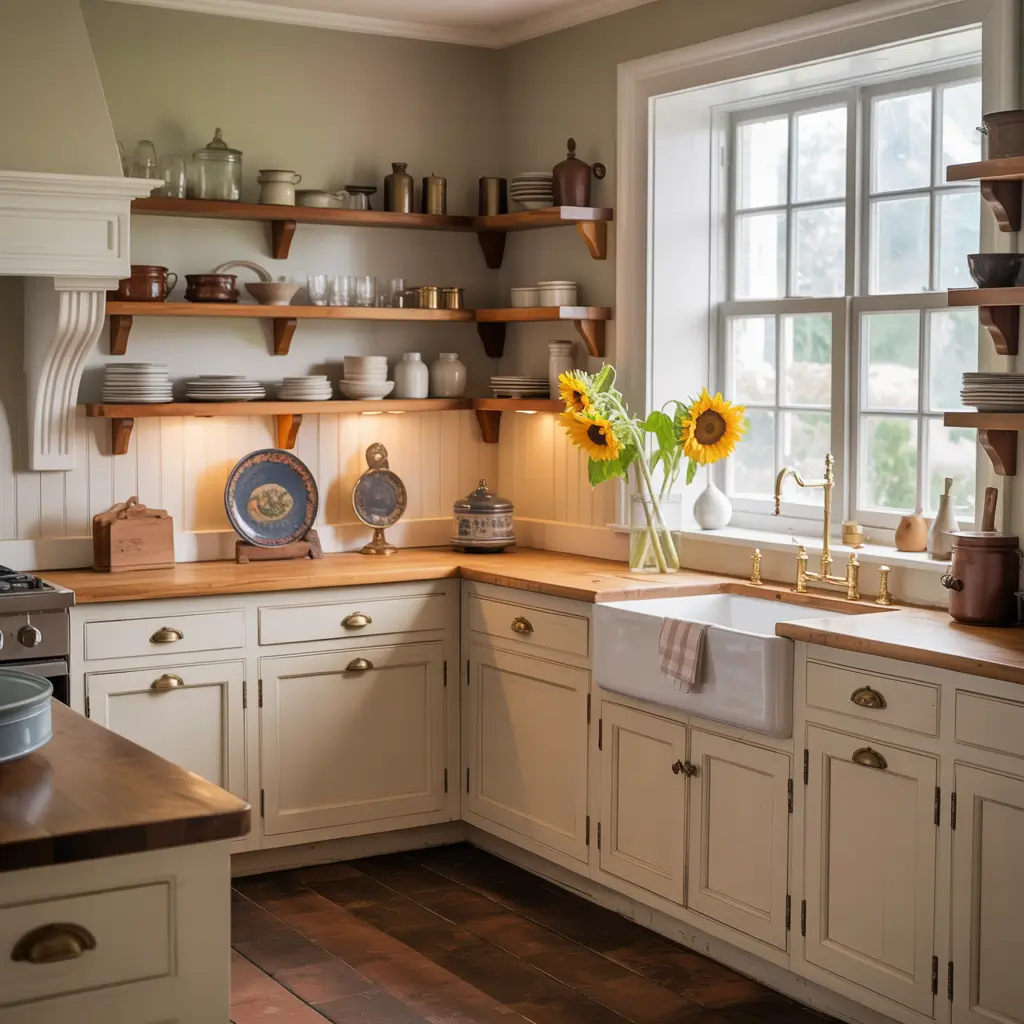
Small kitchens benefit enormously from antique white cabinets. Unlike dark colors, which can make compact spaces feel enclosed, antique white reflects light and keeps the room feeling open without the clinical look of bright white. The warm undertones also prevent that “sterile hospital” feeling that pure white can sometimes produce in small spaces.
To maximize the effect, run your cabinets all the way to the ceiling to draw the eye upward. Choose a backsplash in the same color family as your cabinets — a warm cream or soft ivory tile — to create a seamless flow. Glass-front upper cabinets also help the room feel less boxy by adding visual depth.
What Makes It Work:
- Floor-to-ceiling cabinets to maximize storage and visual height
- Glass-front uppers to add depth to a compact space
- Light countertops in white or cream quartz
- Matching backsplash tile in a similar tone to the cabinets
- Recessed lighting plus under-cabinet strips for a brighter feel
- Minimal hardware or push-to-open mechanisms to reduce visual clutter
9. Antique White Cabinets with Gold Hardware
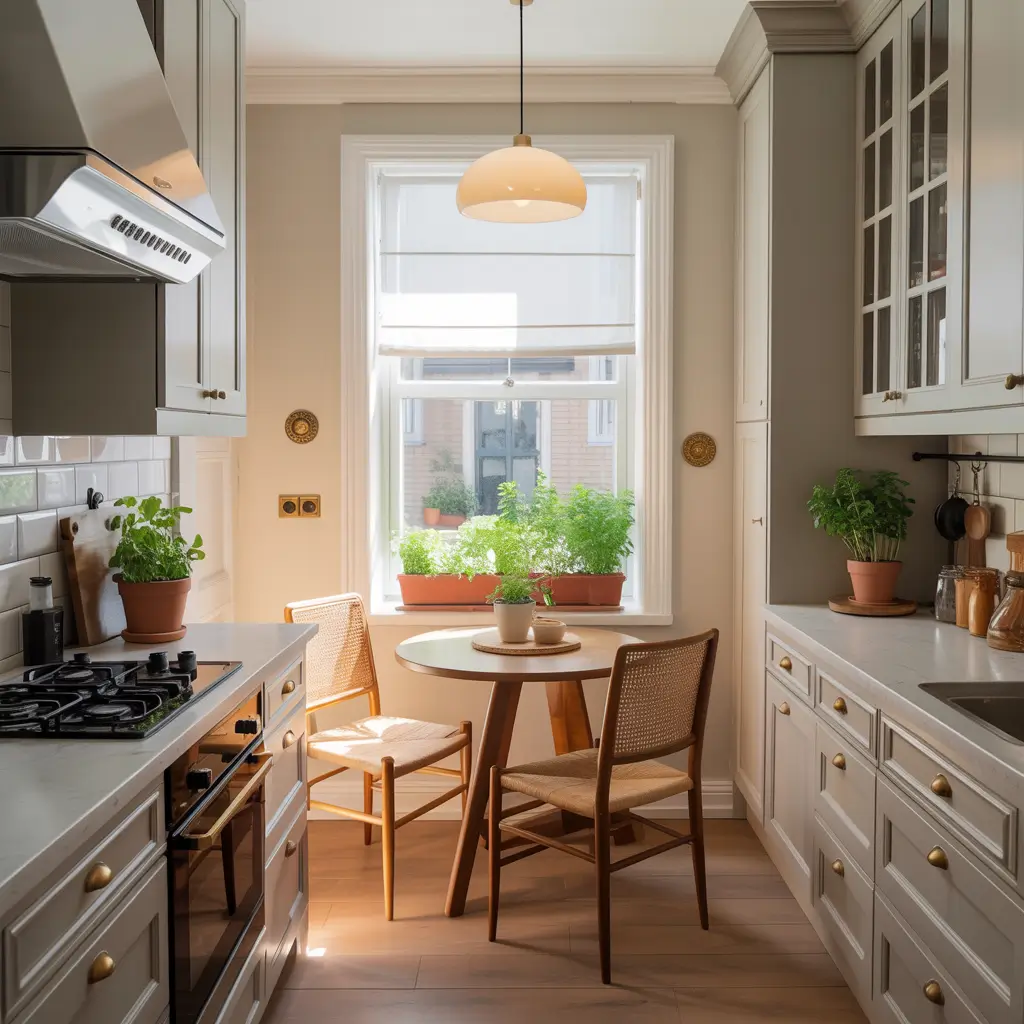
Gold hardware had a moment a few years back, and unlike some trends that quickly feel dated, it’s settled into a long-term classic pairing — especially with antique white cabinets. The warmth of brushed or satin gold picks up the creamy undertones in antique white and elevates the whole kitchen without a single major renovation.
The key is to go brushed rather than polished gold. Polished gold can read as ostentatious; brushed gold has a softer, more sophisticated quality that feels curated rather than flashy. Extend the gold throughout the kitchen — faucet, light fixtures, cabinet pulls — for a cohesive, intentional look.
What Makes It Work:
- Brushed or satin gold cabinet pulls and knobs
- Matching gold faucet and sink hardware
- Warm white or cream marble countertops
- Antique white shaker cabinet doors
- Gold pendant lights over the island
- White or soft grey backsplash tile to balance the warmth
10. Open Concept Kitchen with Antique White Cabinets
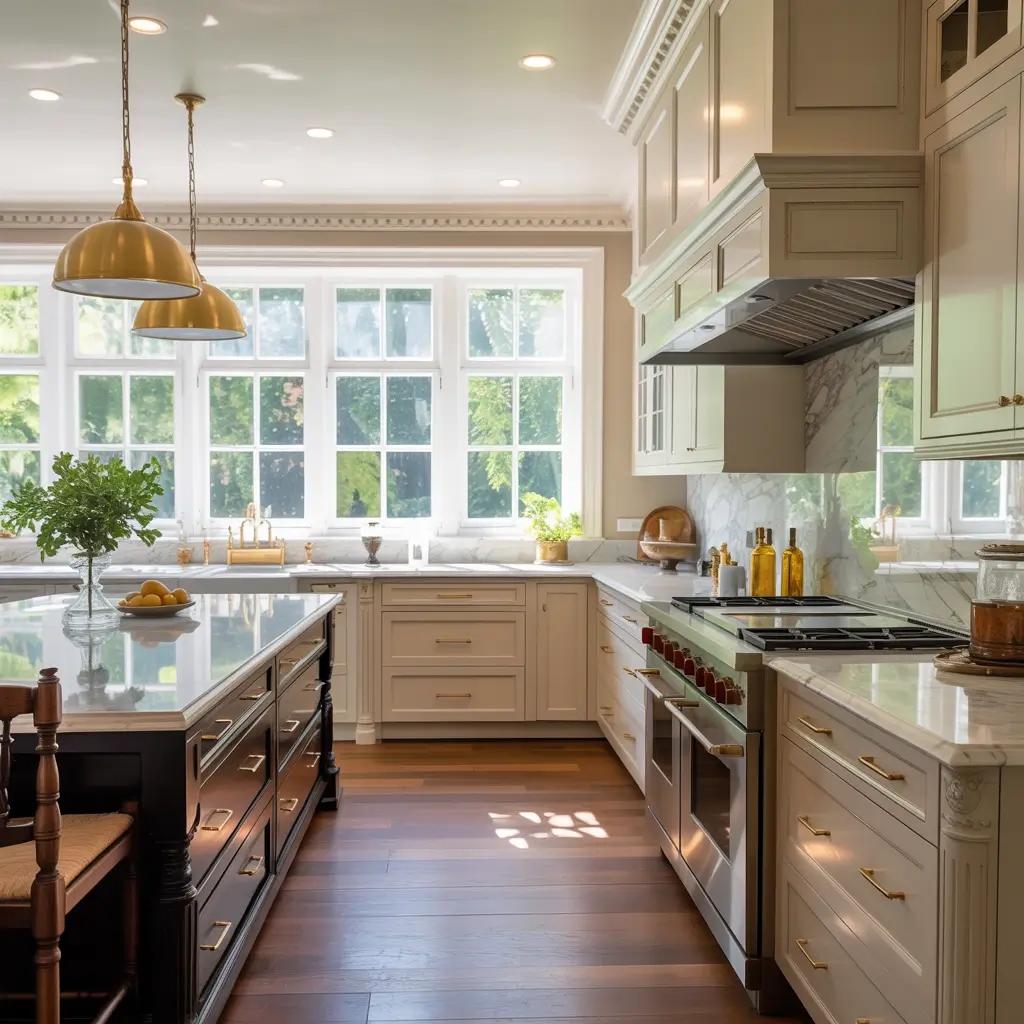
Open-concept kitchens need a cabinet color that can hold its own without fighting with the adjacent living or dining room. Antique white is almost perfect for this — it’s neutral enough to not clash with surrounding decor, warm enough to feel connected to the rest of the home, and distinctive enough to read as a clearly defined space even without walls to separate it.
In open-plan layouts, pay close attention to how your cabinet color interacts with your flooring. If you have warm wood floors throughout, antique white cabinets will look seamlessly intentional. If your floors are cooler in tone, choose an antique white with slightly grey undertones to bridge the two.
What Makes It Work:
- Consistent flooring throughout kitchen and living areas for flow
- A kitchen island with bar seating to define the space
- Pendant lights over the island to anchor the kitchen zone
- Backsplash that complements but doesn’t overpower the adjacent decor
- A cohesive color palette shared between kitchen and living room
- Statement range hood as a focal point in the open space
11. Antique White Cabinets with Subway Tile Backsplash
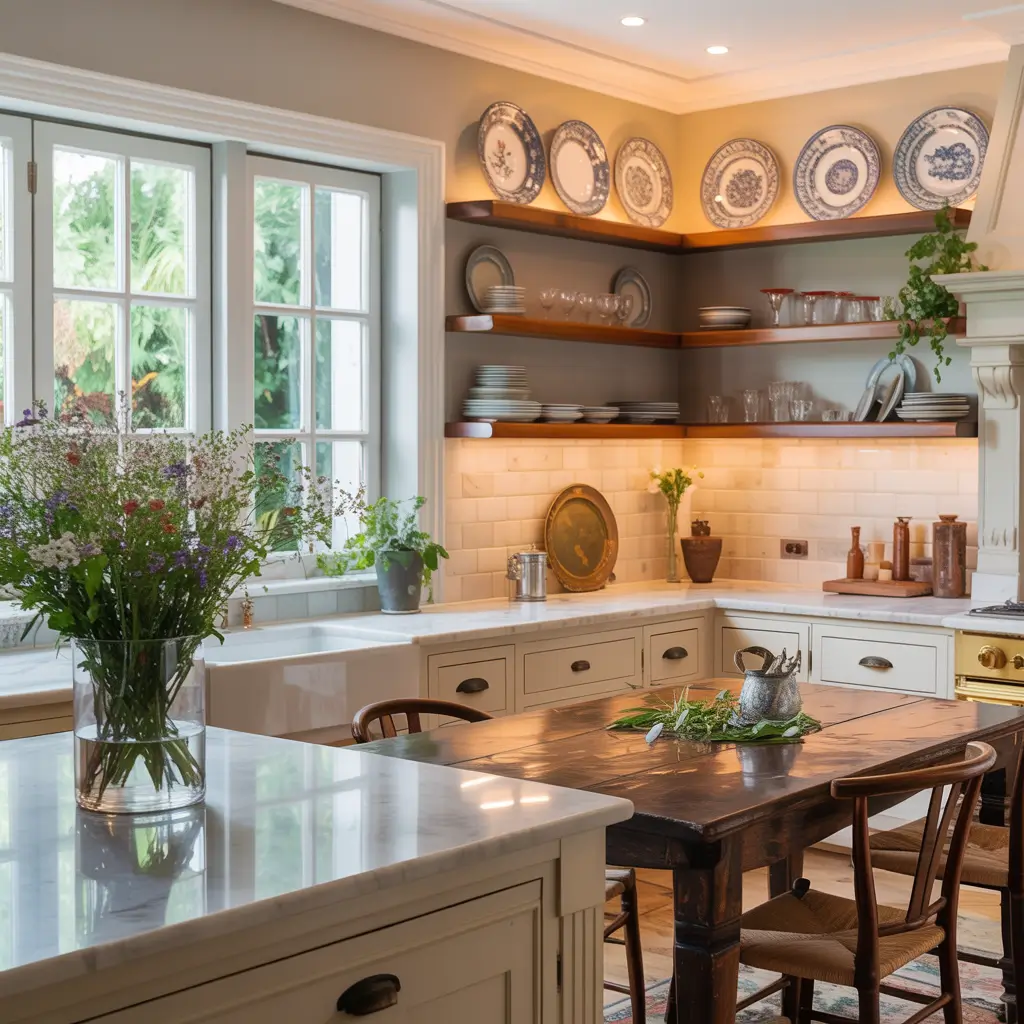
Subway tile and antique white cabinets are one of those combinations that design magazines have been recommending for over a century — and for good reason. It’s not a lazy choice; it’s a proven one. The linear structure of subway tile adds subtle texture and visual interest while keeping the overall palette clean and cohesive.
Classic 3×6 white subway tile in a brick pattern with white or off-white grout gives you a seamless, timeless result. Want a little more personality? Try a herringbone pattern, or use a handmade subway tile with natural variation in the glaze. The slight irregularity of handmade tiles pairs especially well with the warm, imperfect quality of antique white.
What Makes It Work:
- Classic 3×6 subway tile in white or soft ivory
- Warm-toned grout (off-white or light beige) to complement antique white cabinets
- Herringbone or stacked patterns for added character
- Handmade tile for warmth and subtle texture
- Full tile from counter to ceiling for a clean, tailored look
- Simple cap rail or open shelves to top the tile installation
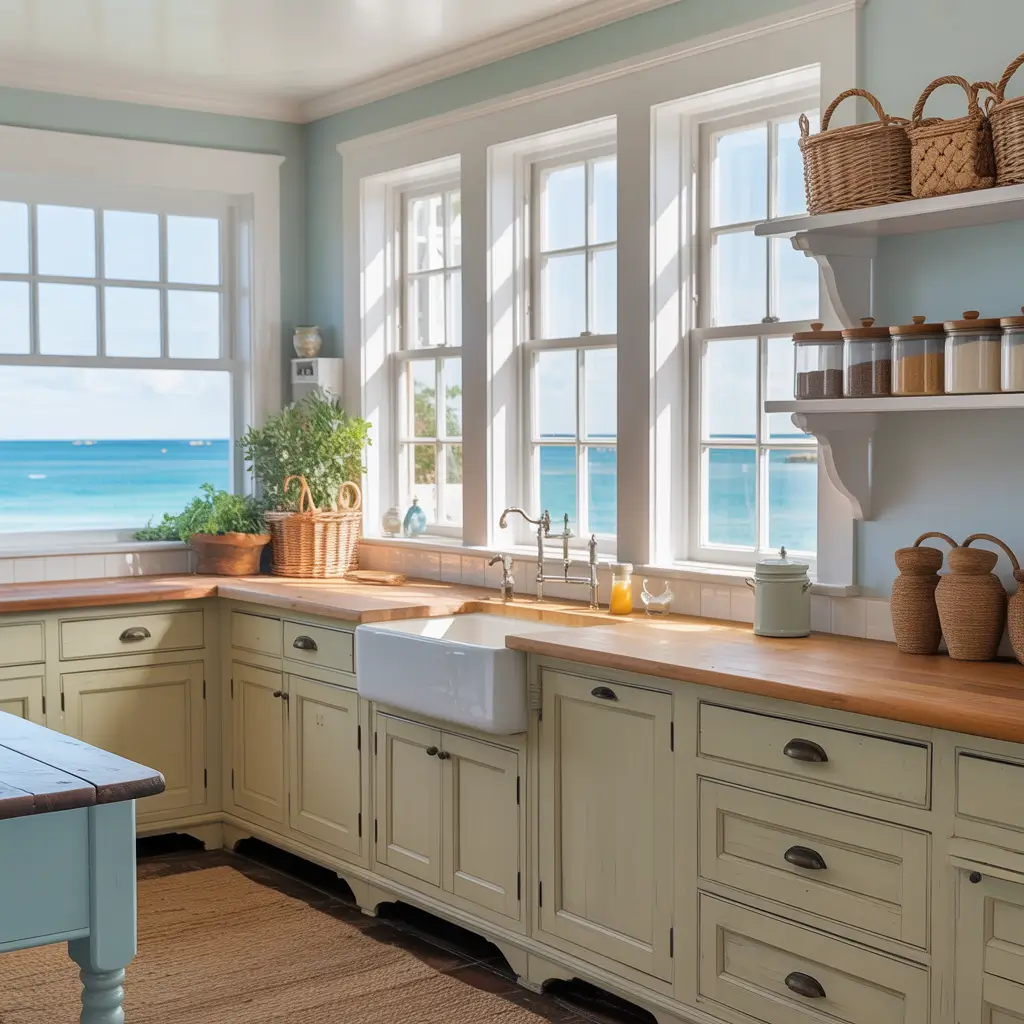
12. Antique White Kitchen Cabinets with Hardwood Floors
Antique white cabinets and hardwood floors are a natural pairing — literally. The warm, organic tones of wood floors bring the creamy softness of antique white to life in a way that tile or laminate simply can’t. It’s the kind of combination that makes a kitchen feel genuinely welcoming.
For the warmest, most harmonious result, choose a wood floor with honey, amber, or warm brown tones — white oak with an amber stain, hickory, or traditional red oak all work beautifully. If you prefer wider planks (5 inches and up), the visual effect is even richer. Just avoid very dark floors if your kitchen gets limited natural light — they can make the space feel heavier than intended.
What Makes It Work:
- Wide-plank white oak or hickory floors with a warm stain
- A natural area rug at the sink to add softness and define the zone
- Antique white cabinets with warm undertones (not cool grey-white)
- Brass or bronze hardware to echo the warmth of the wood
- Natural light maximized through larger windows or skylights
- Light-colored countertops to balance the visual weight of the floors
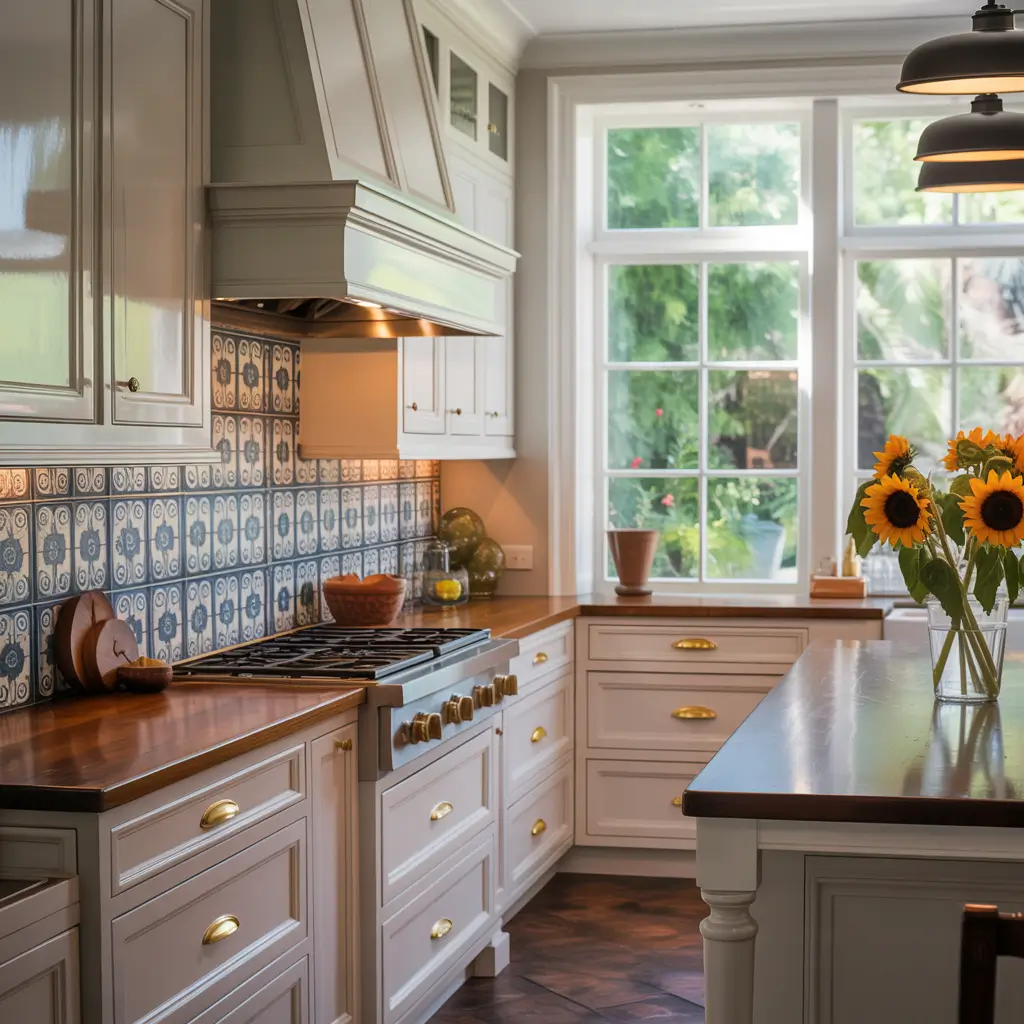
13. Antique White Cabinets with a Bold Backsplash
One of the underrated advantages of antique white cabinets is that they let a statement backsplash shine without competing with it. A bold, patterned tile — Moroccan zellige, hand-painted Spanish tile, or dramatic marbled porcelain — becomes the star of the kitchen while the antique white frames it beautifully.
This approach works especially well in smaller kitchens where you want visual interest without changing the overall cabinetry layout. Choose a backsplash with at least one color pulled from your countertops or flooring to make it feel tied in rather than random.
What Makes It Work:
- Patterned or textured tile as the backsplash focal point
- Simple antique white shaker cabinets to let the tile speak
- Hardware in a neutral finish that doesn’t compete with the pattern
- Solid-color countertops in white, cream, or a color pulled from the tile
- Minimal accessories on the counters to keep the focus on the backsplash
- Good lighting to illuminate the tile detail
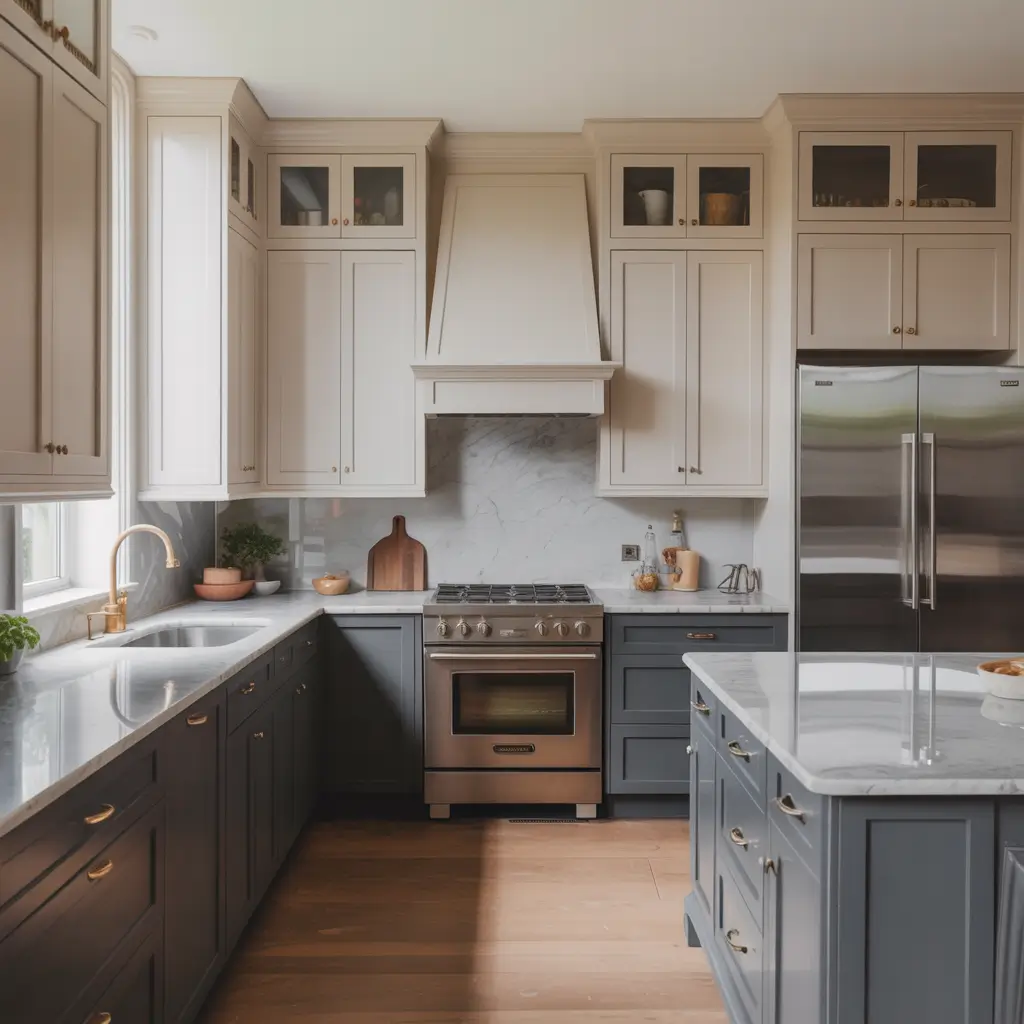
14. Antique White Cabinets in a Transitional Kitchen
Transitional style is the design world’s way of saying “I love classic design, but I also live in the present.” It blends traditional architectural details with cleaner, more contemporary finishes — and antique white cabinets sit right at home in this world.
In a transitional kitchen, you might pair antique white shaker cabinets with quartz countertops, stainless steel appliances, and hardware that splits the difference between ornate and minimal — a simple cup pull or a bar handle in brushed nickel. The result is a kitchen that feels both comfortable and current.
What Makes It Work:
- Shaker cabinet doors (not too ornate, not too plain)
- Quartz countertops in white or soft grey
- Stainless steel or panel-ready appliances
- Brushed nickel or chrome hardware
- Clean-lined pendant lights over the island
- Neutral tile backsplash in a simple pattern
15. Antique White Cabinets with Black Accents
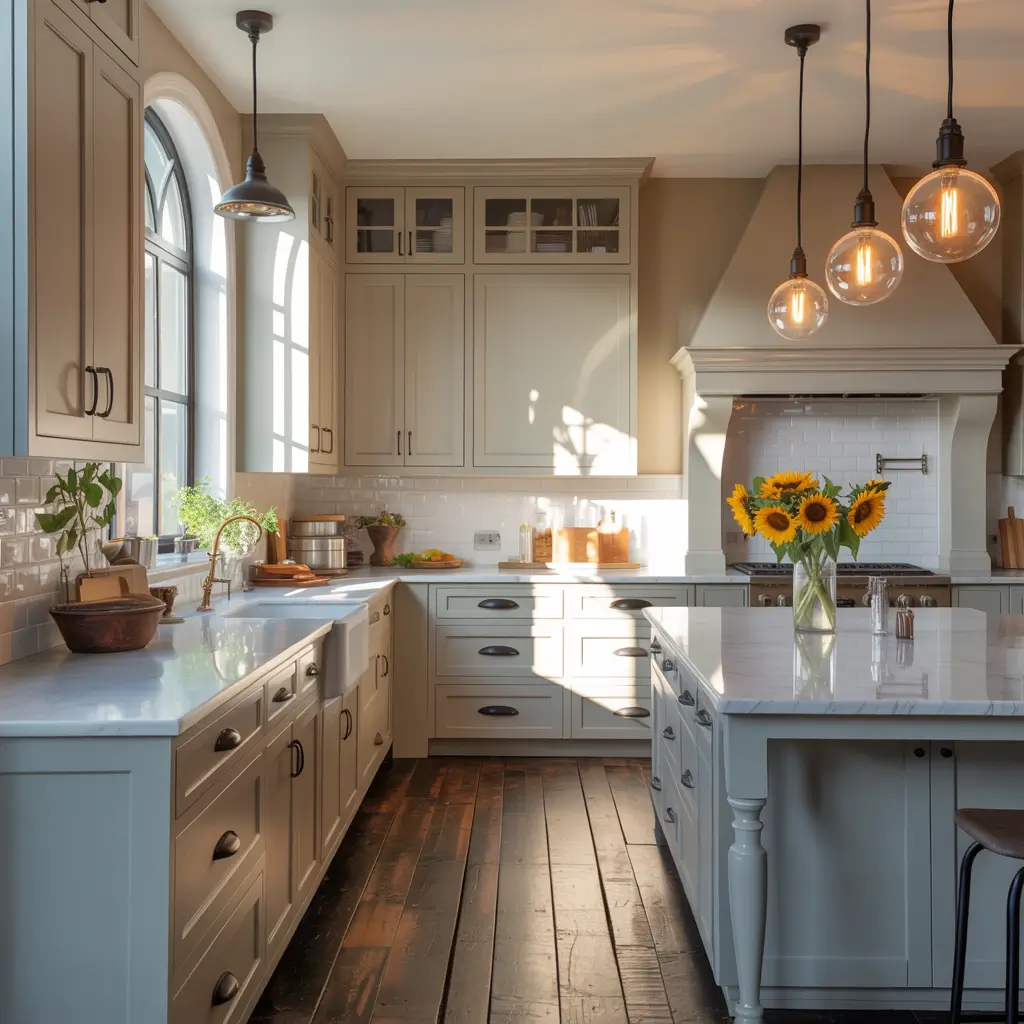
There’s a reason black-and-white kitchens have staying power: the contrast is inherently elegant, and it works in almost every style of home. With antique white, though, it’s a softer, warmer version of that classic pairing — less stark, more sophisticated.
Introduce black through hardware first — matte black pulls and knobs on antique white cabinets make an immediate impact. Then carry it through with a matte black faucet, a black pendant light or two, and perhaps a black-framed window if you’re doing a more extensive renovation. Keep the countertops light to prevent the kitchen from tipping into darkness.
What Makes It Work:
- Matte black cabinet hardware throughout
- Matte black faucet and fixtures
- Light quartz or marble countertops to balance the dark accents
- White or cream backsplash tile
- Black pendant lights over the island or sink
- Antique white cabinets in a simple shaker or flat-panel style
How to Choose the Right Antique White for Your Kitchen
Not all antique whites are the same, and picking the wrong one can make your kitchen feel off in ways that are hard to pinpoint. Here’s what to pay attention to when you’re narrowing down your choice.
Undertones Matter
Antique white paints and finishes tend to pull in one of three directions: warm (yellow or beige undertones), cool (grey or green undertones), or true neutral. Warm antique whites look beautiful with wood tones, brass hardware, and natural stone. Cool antique whites pair better with chrome or nickel hardware and cooler countertop materials.
Always sample the color in your actual kitchen — in natural and artificial light — before committing. A sample on a chip card in a showroom will look completely different on 20 linear feet of cabinets.
Sheen Level
For kitchen cabinets, a satin or semi-gloss finish is generally best — it’s durable, wipeable, and holds up to daily use without looking plasticky. Matte looks beautiful but shows smudges and is harder to clean. High-gloss can feel too modern for an antique white unless you’re intentionally going for a lacquered, contemporary look.
Aging and Patina
Some antique white finishes are intentionally aged with a glaze or distressing technique. This looks incredible in the right context — rustic, farmhouse, vintage kitchens — but can feel out of place in a more modern or transitional space. If you want the color without the aging, look for “almond” or “cream” cabinet finishes, which deliver the warmth without the visual wear.
Final Thoughts
Antique white kitchen cabinets remain one of the best decisions you can make when it comes to a kitchen renovation or refresh. They’re not a trend, they’re not a compromise, and they’re not the “safe” choice. They’re a genuinely beautiful option that works harder than almost any other cabinet color — adapting to different styles, complementing different materials, and making different-sized kitchens all look better.
What makes antique white truly special is its versatility without sacrificing character. It gives you enough warmth to feel cozy, enough brightness to feel open, and enough neutrality to let other design choices — a stunning marble countertop, a bold backsplash, beautiful hardware — take center stage when they should.
Whether you’re drawn to the cozy farmhouse look, the clean lines of modern minimalism, the richness of rustic textures, or the timeless elegance of a marble-and-antique-white kitchen, there’s an idea in this guide that was made for your space. The hardest part isn’t choosing antique white — it’s narrowing down which version of it you love most.
Your kitchen should feel like yours. Antique white gives you the perfect foundation to build on — whatever “home” looks like for you.
1 thought on “15 Stunning Antique White Kitchen Cabinets and Cozy Ideas”