
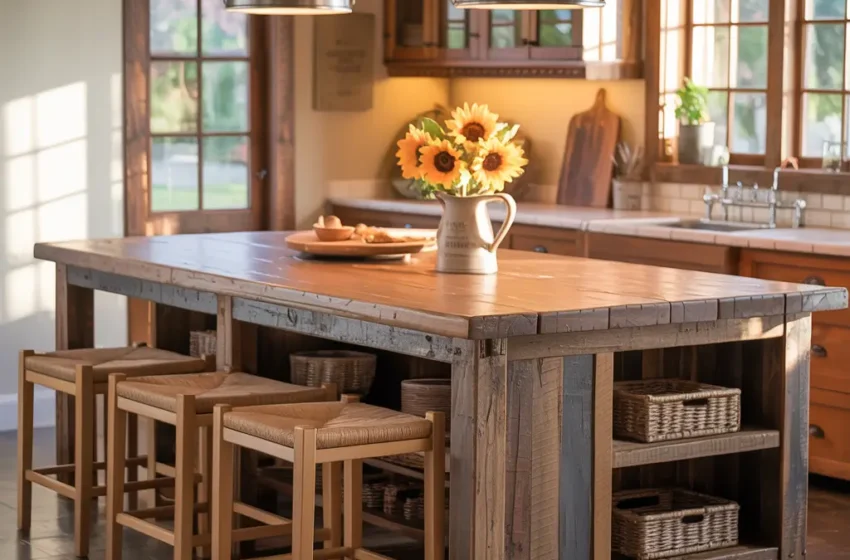
There is something almost magnetic about a vintage farmhouse kitchen. Walk into one, and you immediately feel it — that unhurried warmth, the faint smell of wood and coffee, the sense that meals cooked here are somehow more satisfying than anywhere else. It is a feeling rooted in a simpler time, and yet somehow, it never goes out of style.
Whether you are renovating a full kitchen or just looking for a few thoughtful updates, vintage farmhouse style offers an incredible range of ideas that suit nearly every budget, taste, and layout. The best part? You do not need to gut your kitchen or hire a team of designers to get there. A reclaimed wood shelf here, a farmhouse sink there, and suddenly the whole room starts telling a different story.
In this article, we are walking you through 20 of the best vintage farmhouse kitchen ideas — each one practical, achievable, and genuinely beautiful. Whether you live in a century-old cottage or a modern apartment, these ideas will help you bring that beloved farmhouse warmth home.
1. Rustic Wooden Cabinets with Open Shelving
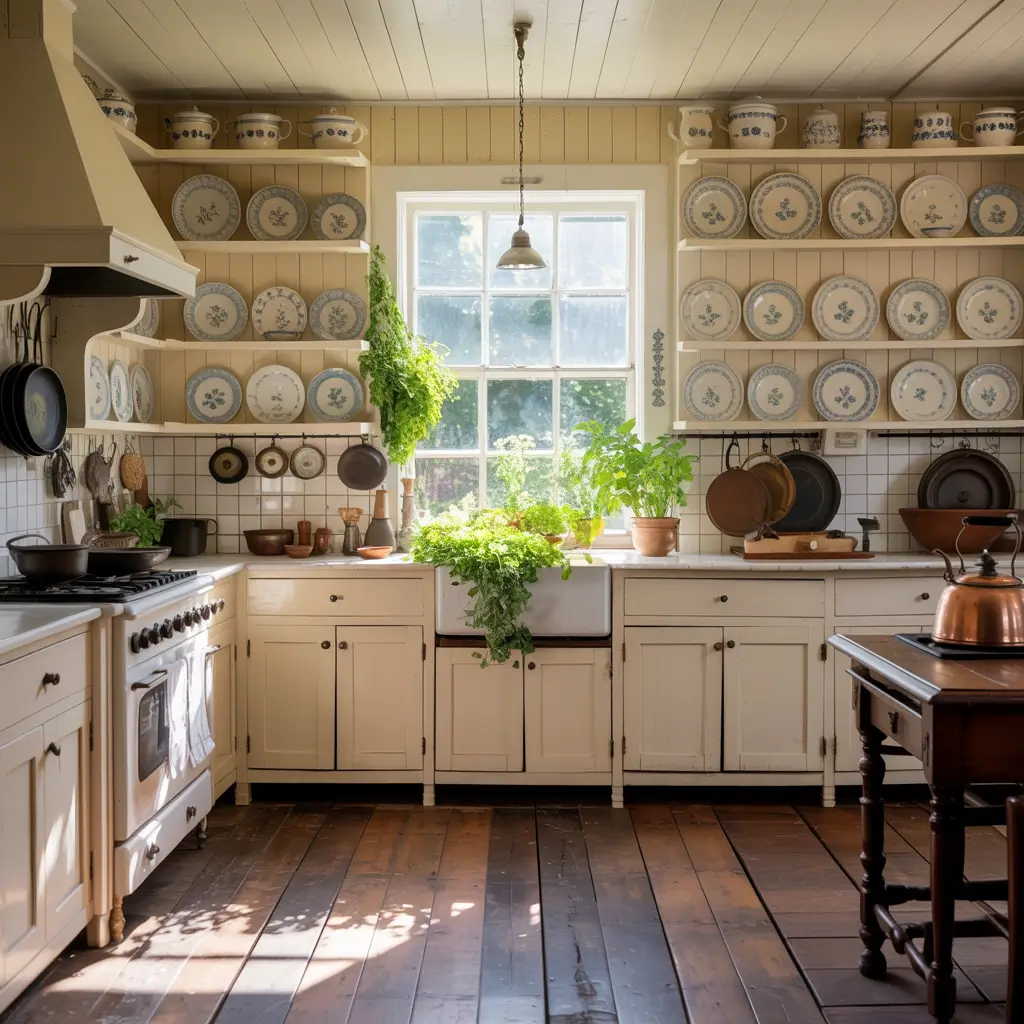
If there is one element that instantly communicates vintage farmhouse, it is natural wood. Rustic wooden cabinets, especially paired with open shelving, create a layered, lived-in look that no amount of factory-finished cabinetry can replicate.
Open shelves invite you to display your prettiest pieces — Mason jars filled with dried pasta, stacked ceramic bowls in earthy tones, or copper pots hanging from hooks above. It forces a kind of beautiful organization: you keep only what you love where everyone can see it.
How to Get It Right
Choose medium-toned woods like hickory, oak, or reclaimed barn wood. These strike the ideal balance between warmth and authenticity. Go too light and you risk a Scandinavian vibe rather than farmhouse. Go too dark and the kitchen feels heavy.
💡 Mix your cabinet doors — keep some solid for storage and remove others for open display. Hide the Tupperware chaos, show off the vintage crockery.
2. A Deep Farmhouse Sink That Changes Everything
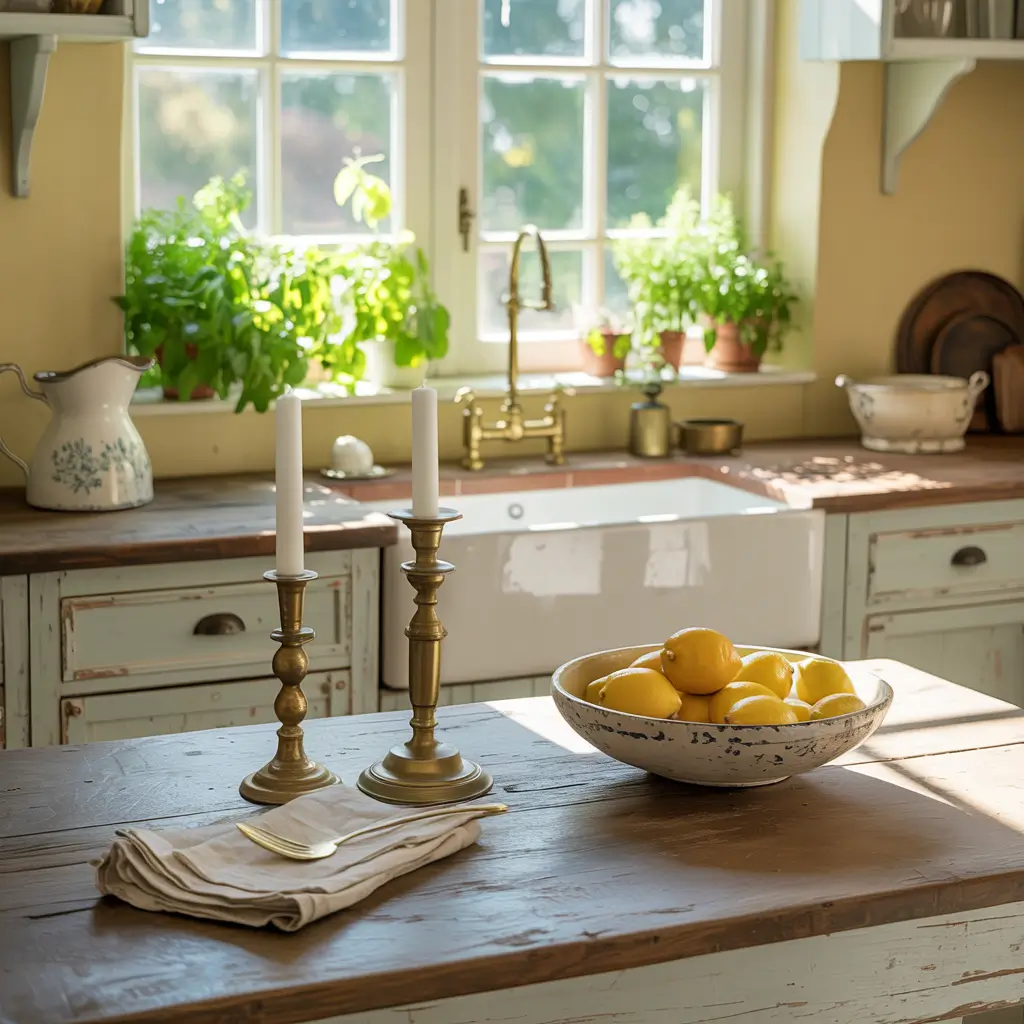
Ask any farmhouse kitchen enthusiast about their single favorite upgrade, and nine times out of ten, they will say the sink. A deep, apron-front farmhouse sink does not just look stunning — it fundamentally changes how you use your kitchen.
The extra depth makes washing large pots a breeze. The wide basin fits full sheet pans and mixing bowls without acrobatics. And visually, it anchors the kitchen with an unmistakable vintage character that brings the whole look together.
Materials to Consider
- Fireclay — beautifully durable, chip-resistant, and classic white. A timeless choice.
- Cast iron — heavier but incredibly long-lasting. Develops character over time.
- Stainless steel with an apron front — a subtle nod to farmhouse style while staying practical and modern.
Pair your sink with a bridge-style faucet in brushed nickel or matte black to complete the look.
3. Shiplap Walls That Add Instant Character
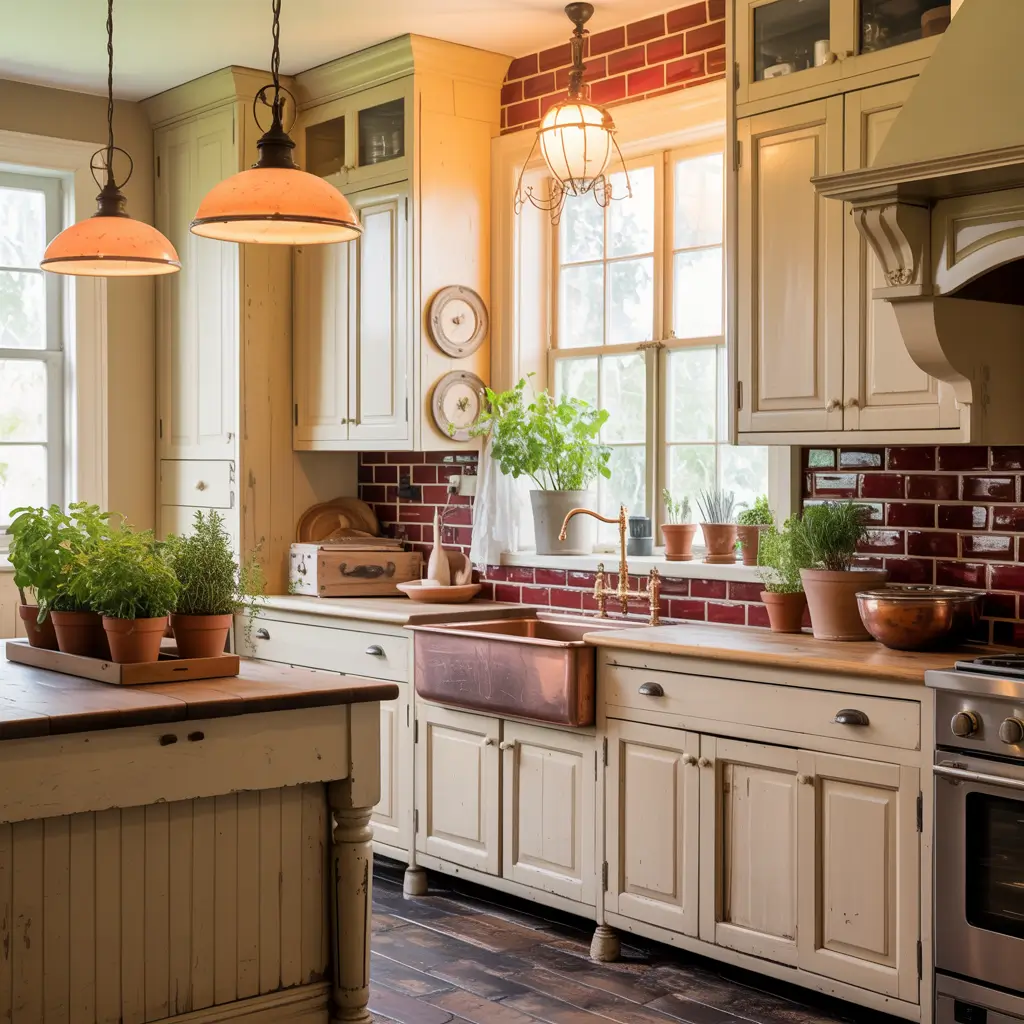
Shiplap has become the unofficial wallpaper of the farmhouse movement — and for good reason. Those clean, horizontal planks add texture and architectural interest to any kitchen wall, making even a plain box feel like it has history.
You do not need to cover every wall. In fact, restraint often works better. A single shiplap accent wall behind the range or along a breakfast nook creates a focal point without overwhelming the space.
Natural or Painted?
Painted shiplap in crisp white or a soft off-white is the most common farmhouse choice. But leaving it raw or whitewashing it reveals the wood grain and adds even more warmth. Try a diluted paint wash — roughly equal parts paint and water — for that perfectly imperfect aged look.
💡 Install shiplap vertically on low ceilings to create an illusion of height — a little design trick that makes a big visual difference.
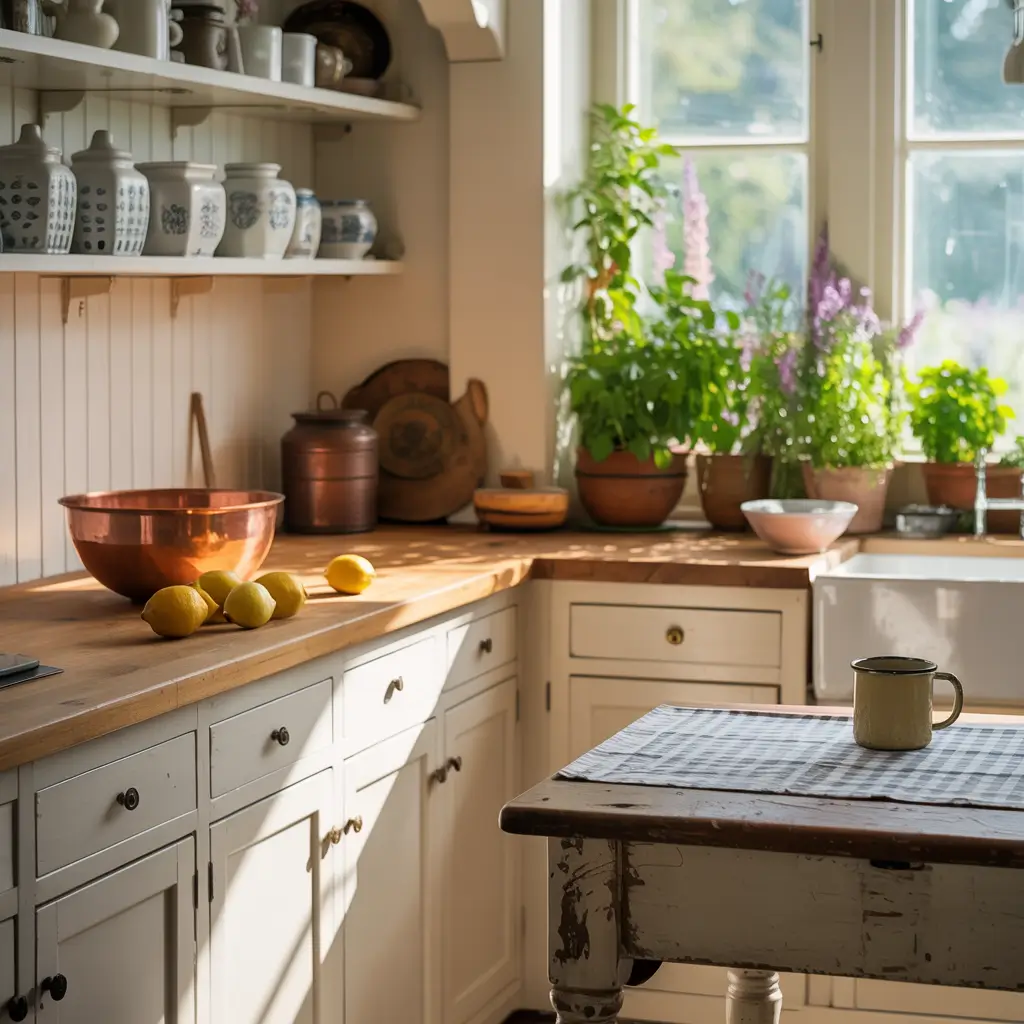
4. Butcher Block Countertops — Warm, Practical, and Forgiving
Marble looks beautiful in a magazine. Butcher block looks beautiful in a real kitchen. There is a warmth to wood countertops that stone simply cannot match, and in a vintage farmhouse kitchen, they feel absolutely at home.
The natural grain patterns, the way they mellow with age, the satisfying solidity of chopping vegetables on them — all of this makes butcher block a signature farmhouse choice.
The Maintenance Reality
Yes, butcher block needs a little care. Monthly oiling with food-safe mineral oil keeps it from drying out. Scratches and scuffs can be sanded back. Spills cleaned up promptly leave no lasting mark. What many people discover after living with butcher block is that it is far more forgiving than they expected — and that each small mark only adds to the story.
5. Vintage Brick Backsplash with Copper Fixtures
The combination of exposed brick and copper fixtures is one of those rare design pairings that looks like it was always meant to be. The warm red-orange tones of brick paired with the rich gleam of copper create a kitchen that feels simultaneously rustic and refined.
Full brick installation can be heavy and expensive, but thin brick veneer panels offer the same look at a fraction of the cost and effort. Seal the surface properly to make cleaning easier — tomato sauce and brick do not mix well without protection.
Copper Ages Beautifully
Genuine copper fixtures develop a patina over time that budget alternatives simply cannot replicate. It starts bright and warm, gradually shifting toward deeper amber tones with use. Embrace that aging — it is exactly what makes vintage farmhouse kitchens feel authentic rather than staged.
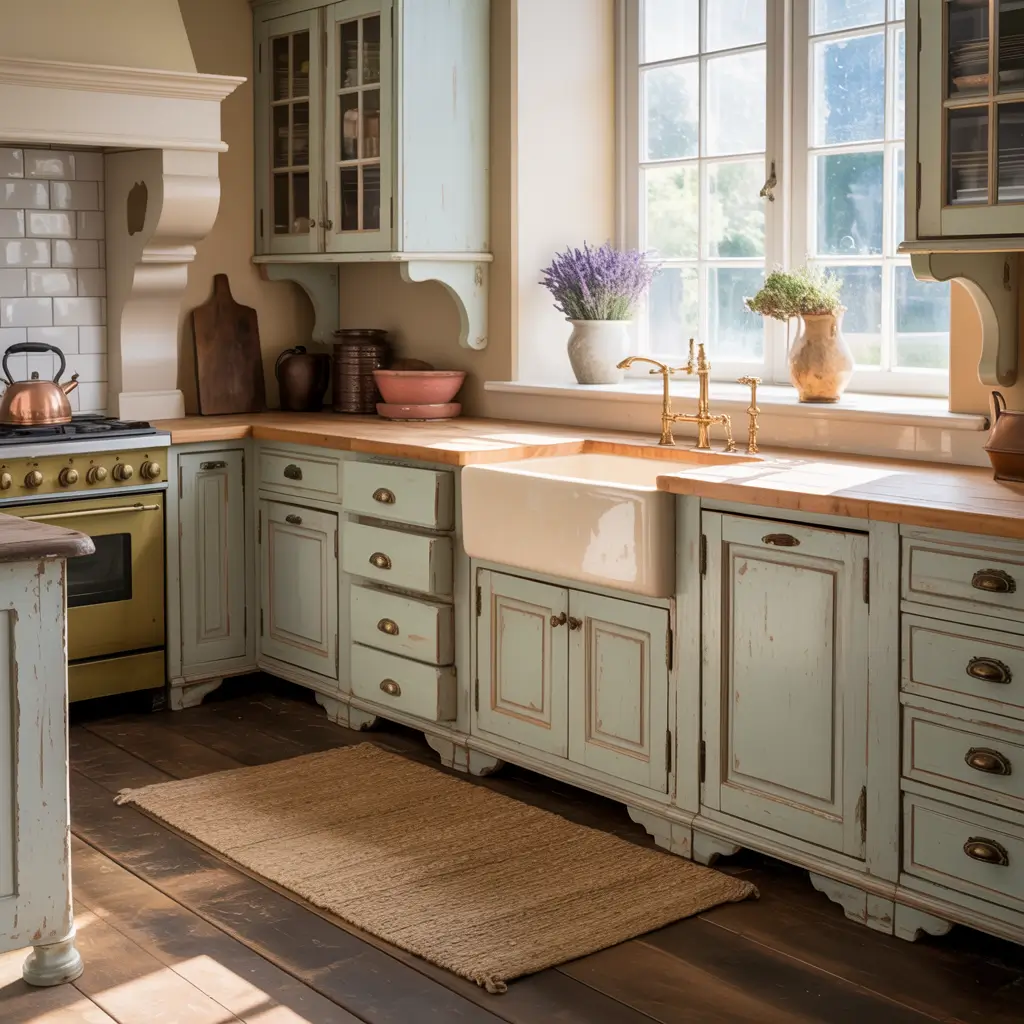
6. Distressed Cabinetry for an Authentically Aged Look
New cabinets trying to look old is an art form, and when done right, the results are genuinely stunning. Distressed cabinetry brings that coveted sense of history and character to a kitchen, as though the space has been lovingly used for generations.
DIY Distressing That Actually Works
- Sand edges, corners, and around hardware — places that would naturally wear with decades of use.
- Apply a base coat of paint, then a slightly lighter top coat.
- Dry-brush the lighter color over raised edges for a worn effect.
- Apply a dark wax or glaze and wipe back, letting it settle into grooves.
- Seal with a matte topcoat to protect the finish and prevent chipping.
The goal is to look like time did the work, not a hammer — so stay subtle and focus on natural wear points.
7. A Cozy Breakfast Nook with a Built-In Bench
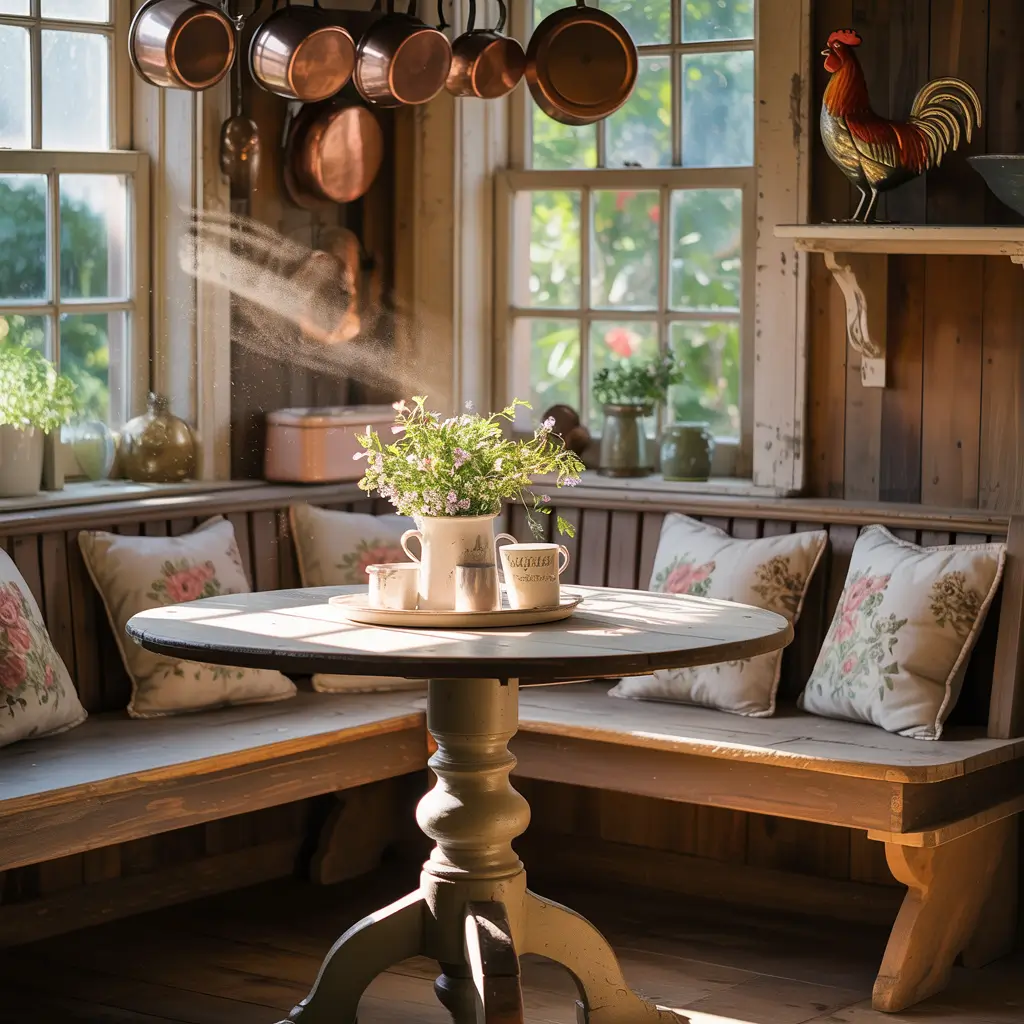
The best kitchens are not just cooking spaces — they are gathering spaces. A breakfast nook with a built-in farmhouse bench turns a corner of your kitchen into a place where people actually want to sit and stay.
Think early morning coffee, homework spread across the table, slow Sunday brunches. The built-in bench also solves a practical problem: tuck storage drawers or lift-up compartments underneath, and suddenly you have hidden a surprising amount of kitchen overflow.
Styling the Nook
Layer textures freely. Buffalo check cushions, a linen tablecloth, a small potted herb, a vintage lantern as a centerpiece — the slight imperfection of mixed patterns is exactly what makes a farmhouse nook feel genuine rather than catalog-perfect.
8. Whitewashed Walls and Antique Accents
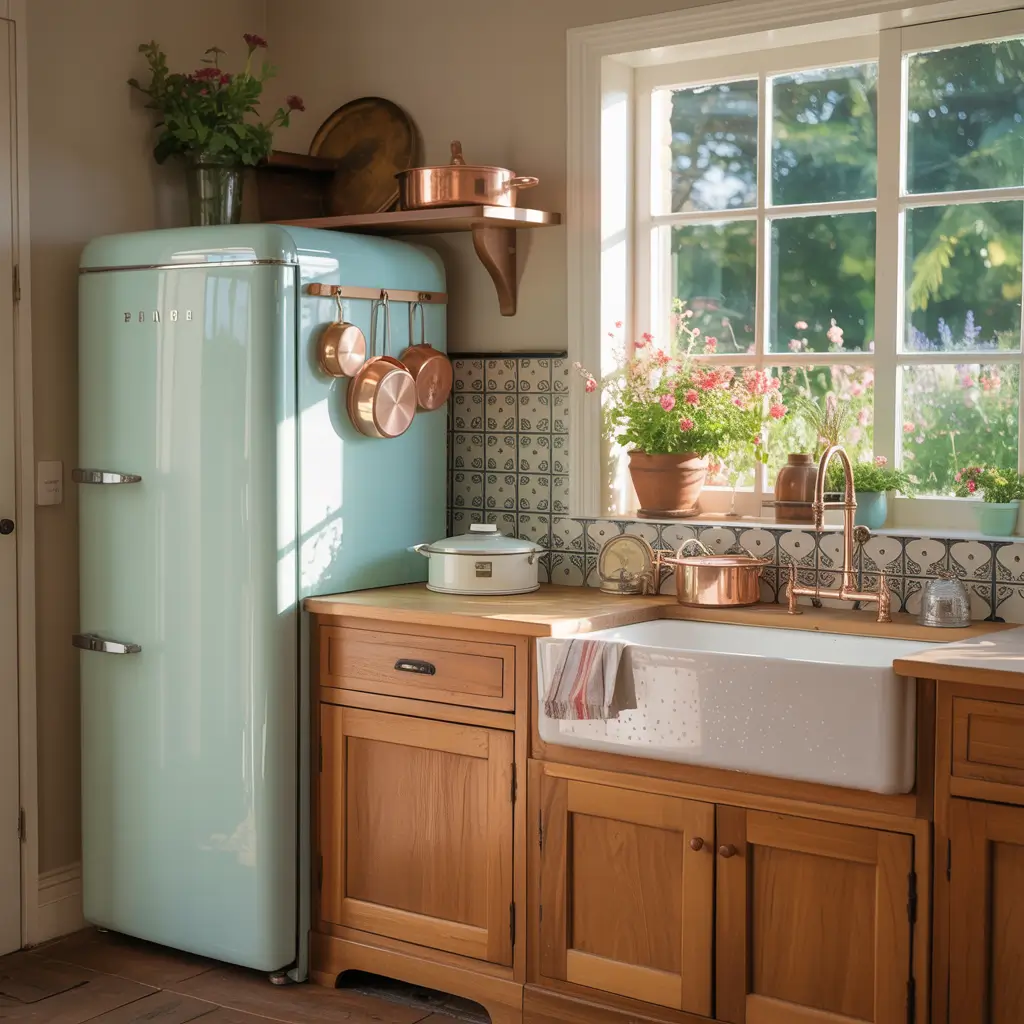
Whitewashed walls give a vintage farmhouse kitchen its signature airy, sun-bleached quality — like a old countryside home where the walls have softened over decades of light and living. The trick is to keep some of the original texture visible so it reads as lived-in rather than freshly painted.
Against that quiet white backdrop, antique accents become the stars. A heavy cast iron scale. A collection of vintage tins. A set of copper measuring cups hung on a peg rail. These objects carry history, and in a whitewashed space, they speak clearly.
💡 Do not try to match your antique pieces — mix eras and origins. A 1940s scale next to 1970s ceramic canisters creates that layered, collected-over-time quality that can never be bought all at once.
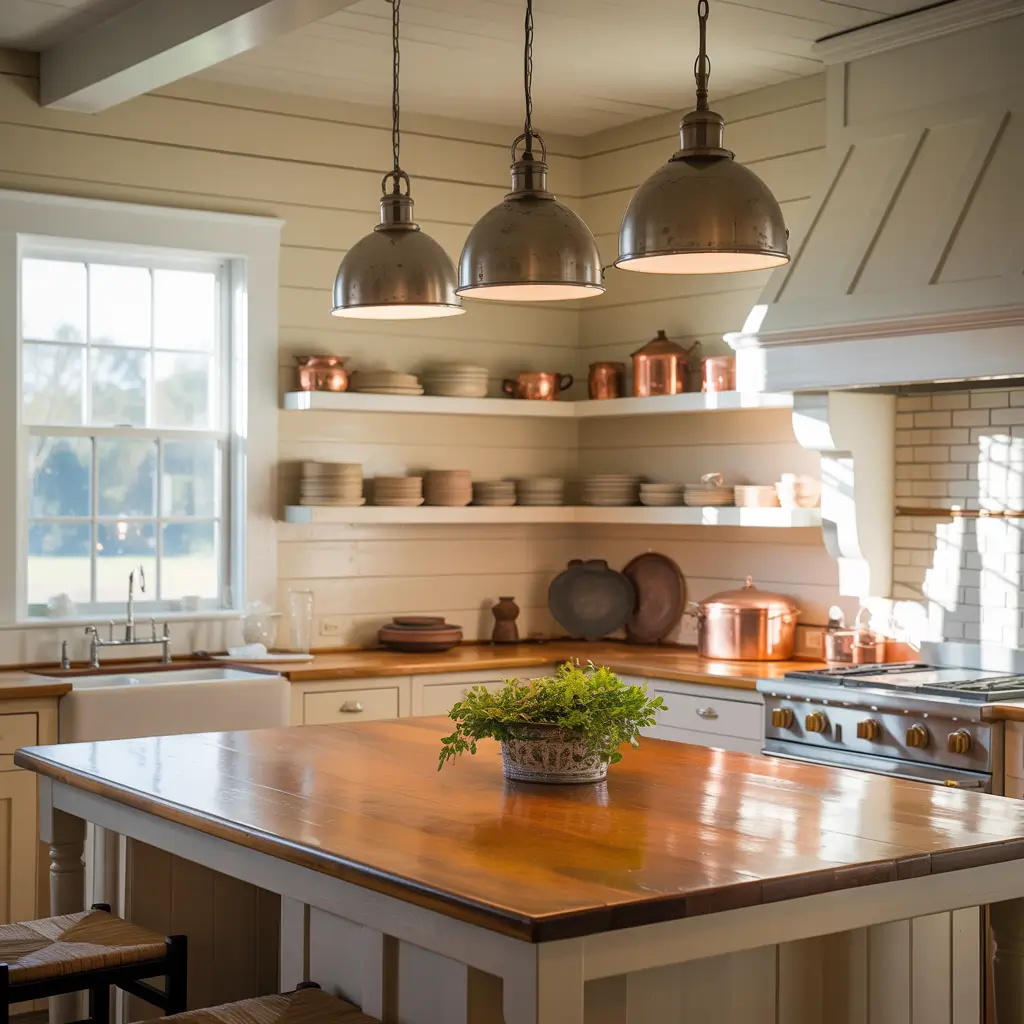
9. Vintage Pendant Lighting That Sets the Mood
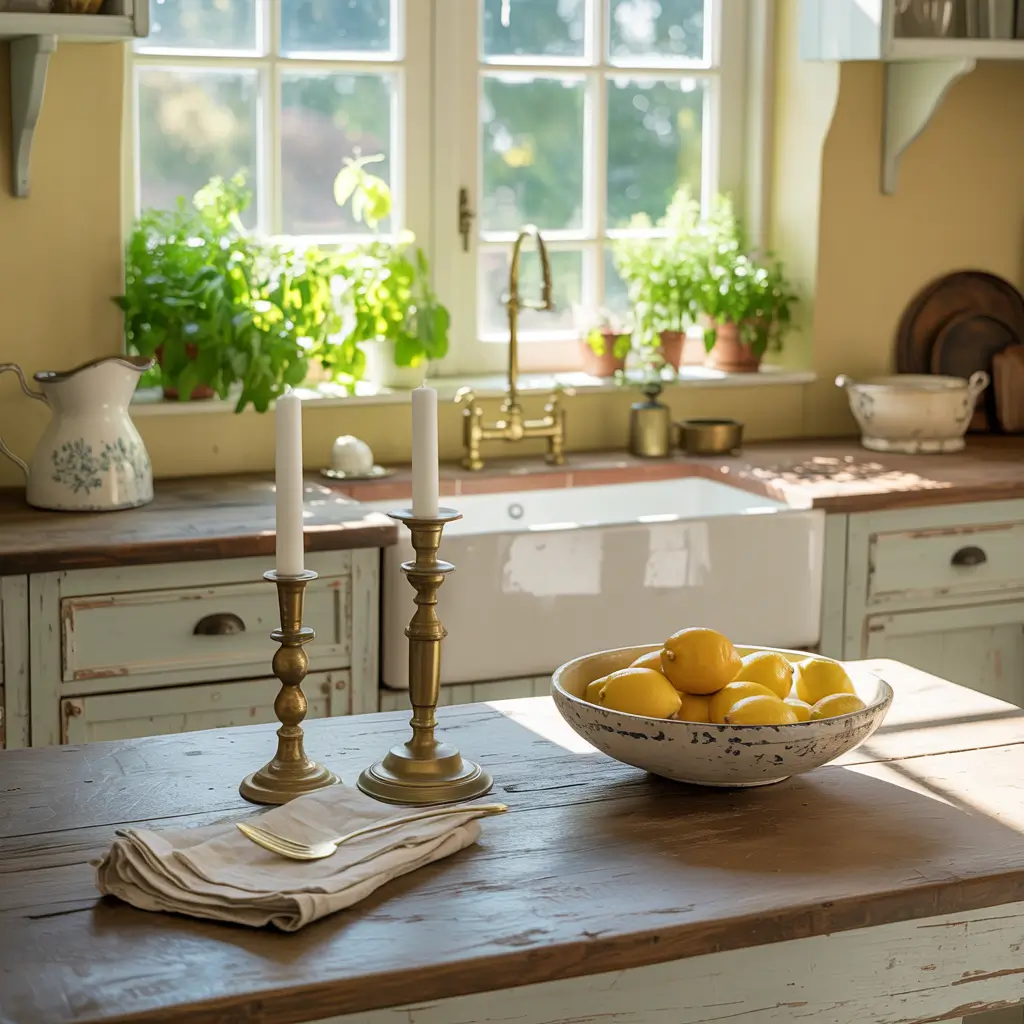
Lighting is one of the most overlooked opportunities in farmhouse kitchen design. Get the lighting right, and the whole kitchen shifts into a warmer, more inviting gear. Get it wrong, and even the most beautiful space feels flat.
Vintage pendant lights — particularly over an island or breakfast nook — add both illumination and personality. Look for milk glass shades, cage-style industrial pendants, or simple enamel barn lights with Edison bulbs.
Where to Find the Good Stuff
- Estate sales and auctions — often the best source for genuinely old fixtures at reasonable prices.
- Antique markets and flea markets — budget time to browse, not rush.
- Online vintage marketplaces — useful for specific styles, though photographs can mislead.
- Salvage yards — surprisingly rewarding for industrial and agricultural-style pieces.
Skip the mass-produced “vintage-inspired” versions from big box stores when you can. The real thing, even if slightly imperfect, always reads better in a room.
10. Retro Appliances That Bring Personality
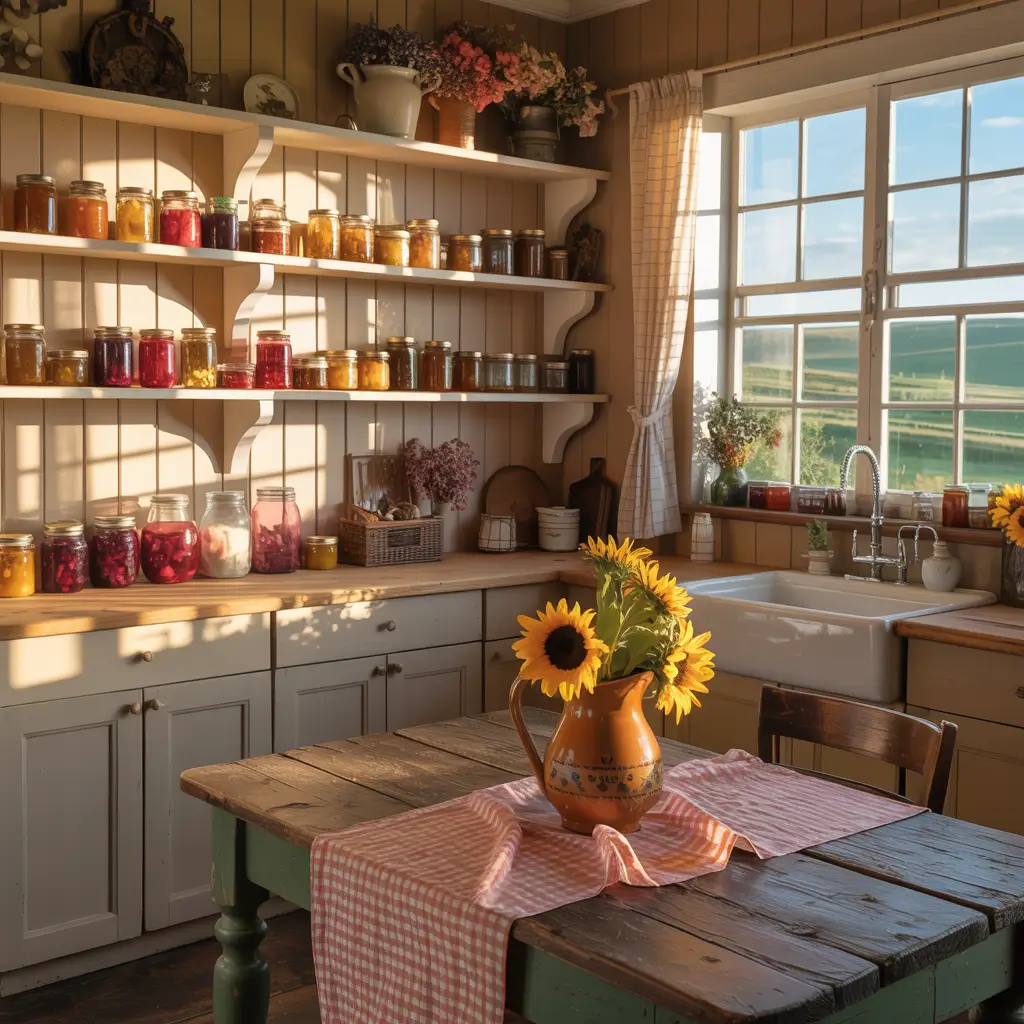
One of the most joyful aspects of a vintage farmhouse kitchen is that it gives you permission to choose appliances with personality. Retro-style refrigerators in soft mint green or butter yellow, a vintage-look range with modern internals, a turquoise stand mixer on the counter — these are not frivolous choices. They are the difference between a kitchen that functions and a kitchen that delights.
Brands like SMEG, Big Chill, and Elmira offer appliances that blend authentic vintage aesthetics with fully modern performance. They represent a real investment, but they also become genuine focal points that guests notice and remember.
💡 If a full retro appliance is not in the budget right now, start with small countertop pieces — a vintage-style toaster, an enamel kettle, or a classic stand mixer in a warm color. The effect adds up quickly.
11. A Statement Kitchen Island with Warmth and Function
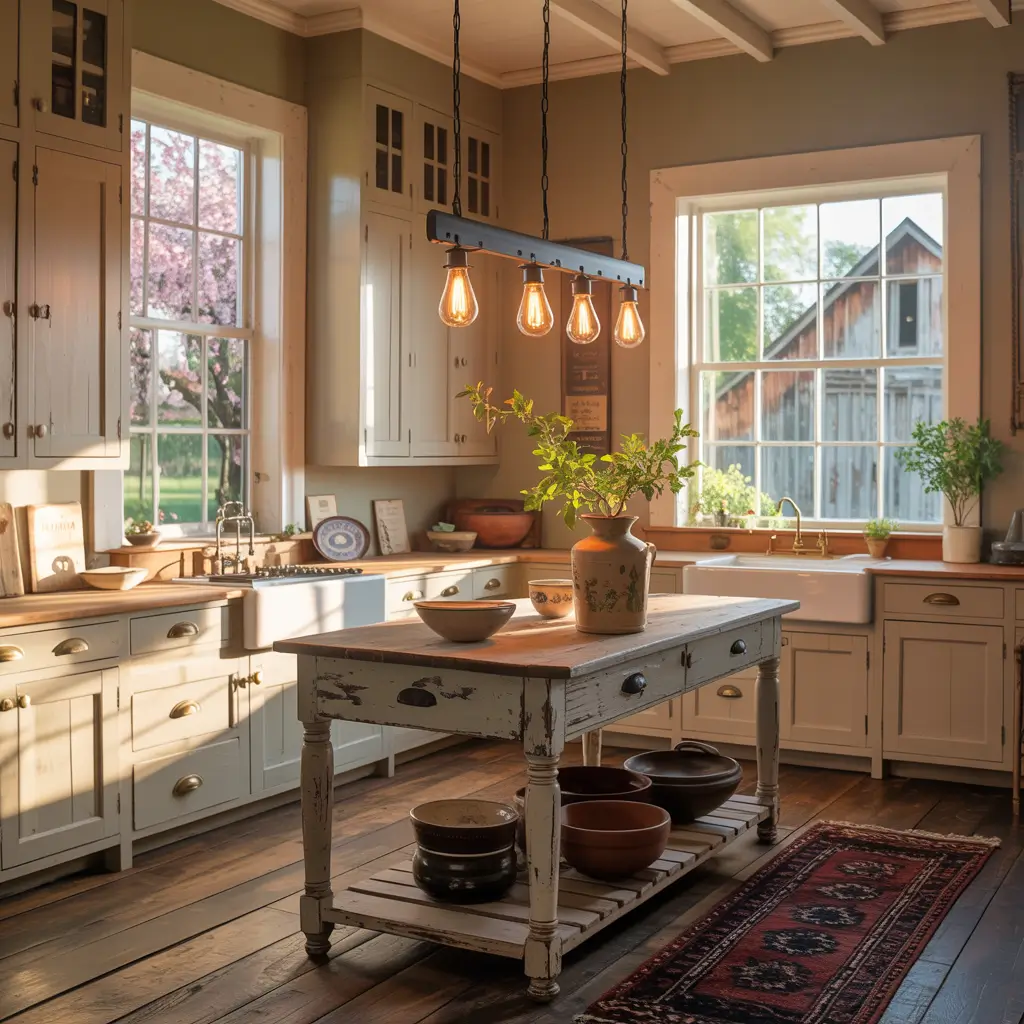
The kitchen island is where vintage farmhouse style and modern practicality meet most happily. Done right, an island provides prep space, seating, storage, and a visual anchor that ties the whole kitchen together.
In a farmhouse kitchen, the island should feel slightly different from the main cabinetry — a contrasting wood tone, a different paint color, or a mix of open and closed storage. This gives it that collected, furniture-like quality rather than looking like it rolled off an assembly line.
Maximize Every Inch
- Add hooks to the sides for hanging tea towels, a small utensil rack, or a shopping list notepad.
- Install a lower shelf for cookbooks and wooden cutting boards.
- Include at least one drawer dedicated to kitchen tools — the island should work as hard as it looks good.
- Consider pendant lighting directly above to define the island as its own zone.
12. Reclaimed Wood Accents Throughout
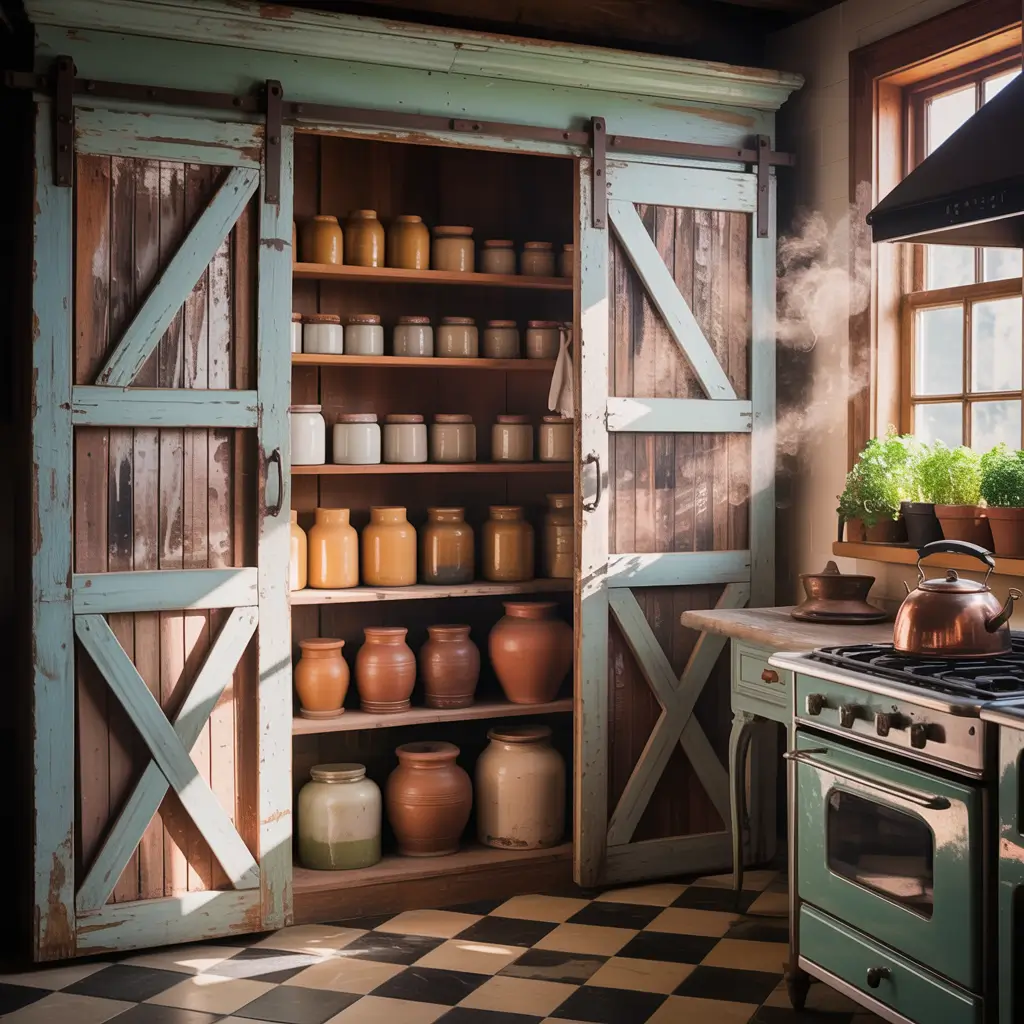
Reclaimed wood brings something to a kitchen that new materials simply cannot: actual history. Whether it is a floating shelf salvaged from an old barn, a ceiling beam rescued from a demolished warehouse, or a backsplash made from weathered planks, reclaimed wood carries a texture and depth that speaks to real time and use.
It does not need to dominate the space. A few well-placed reclaimed elements — a shelf, a frame, a table — are enough to shift the whole atmosphere. They ground the kitchen in something genuine.
Sourcing and Safety
When sourcing reclaimed wood, ask about its origin. Wood from old farm structures is generally safe to use indoors, though it is worth checking for lead paint on older pieces. Have it professionally sealed before using near food surfaces, and sand thoroughly to remove any rough edges.
13. Open Pantry Storage with Vintage Canisters
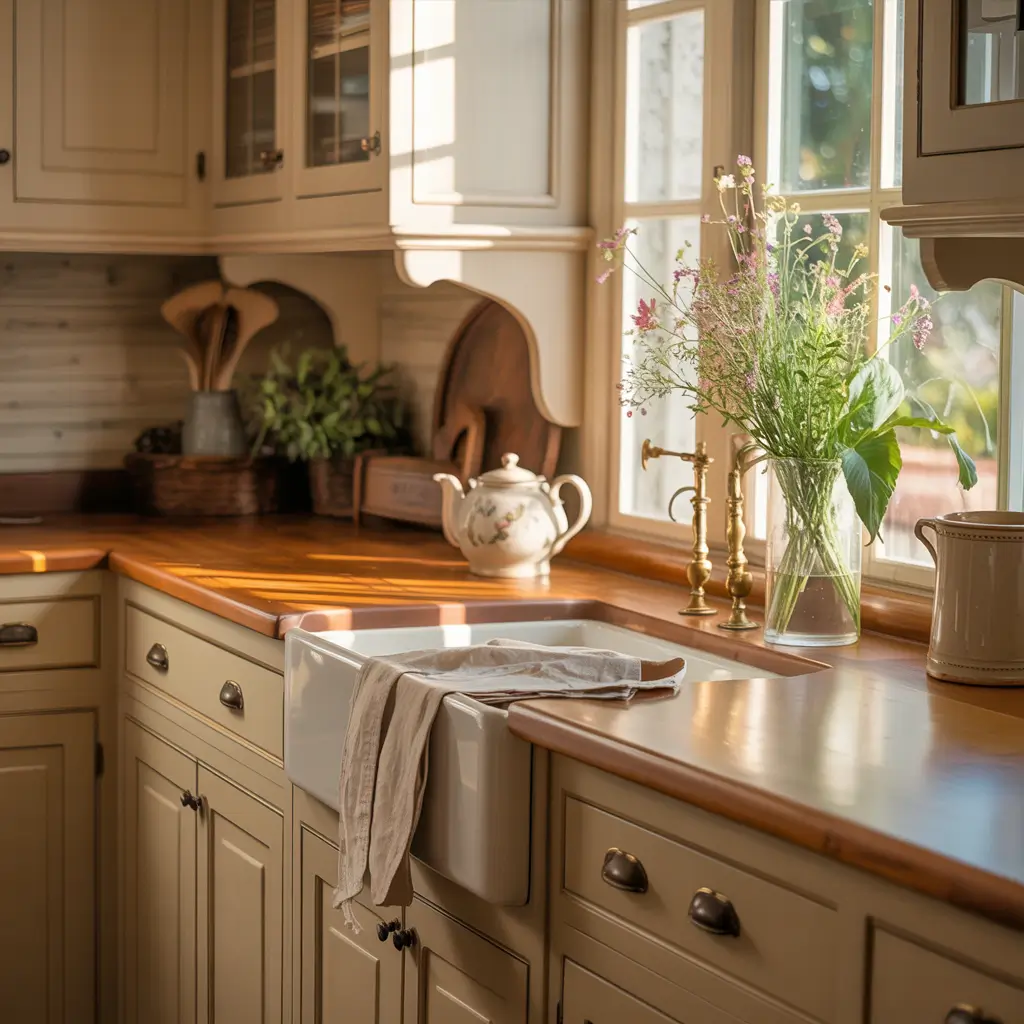
A dedicated pantry — or even just a section of open shelving styled as a pantry — is one of the most practical and beautiful things you can add to a farmhouse kitchen. The key is what you put on those shelves.
Vintage-style glass canisters for flour, sugar, and coffee beans. Wicker baskets for potatoes and onions. A row of labeled Mason jars for dried herbs and spices. Old apothecary bottles repurposed for cooking oils. This kind of storage is functional, beautiful, and deeply in keeping with the farmhouse ethos of things that work hard and look good doing it.
💡 Label everything with hand-lettered tags or small chalkboard labels. It takes five minutes and instantly pulls the whole pantry look together.
14. Stone or Slate Flooring for Authentic Underfoot Character
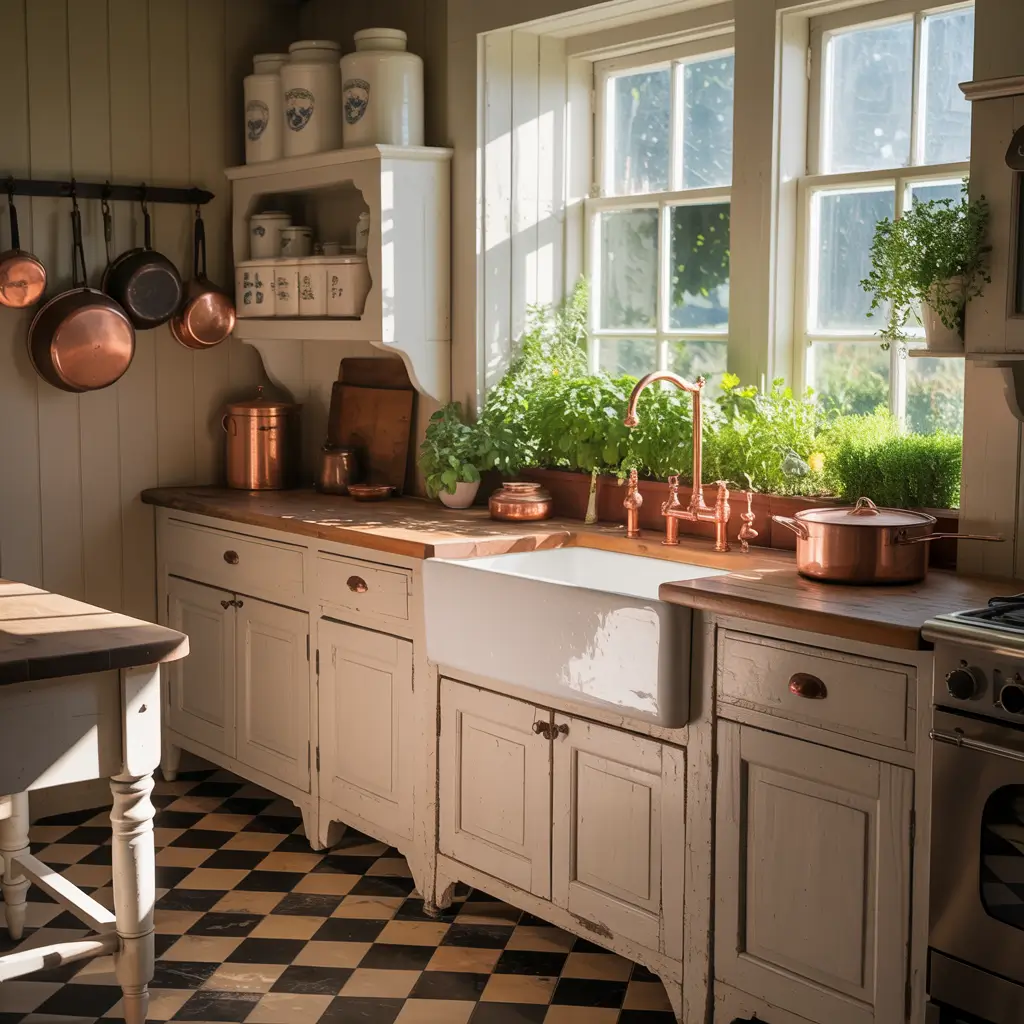
The floor is often an afterthought in kitchen renovations, but in a vintage farmhouse kitchen, it deserves real attention. Stone or slate flooring, whether genuine or a high-quality ceramic reproduction, adds a weight and permanence that softer materials cannot match.
The beauty of stone is its irregularity. No two tiles are quite the same. Over time, it develops a gentle sheen from foot traffic — a patina that only makes it more beautiful. Pair it with a thick rag rug or a woven runner near the sink for warmth and comfort underfoot.
15. A Vintage-Style Range as the Kitchen’s Heart
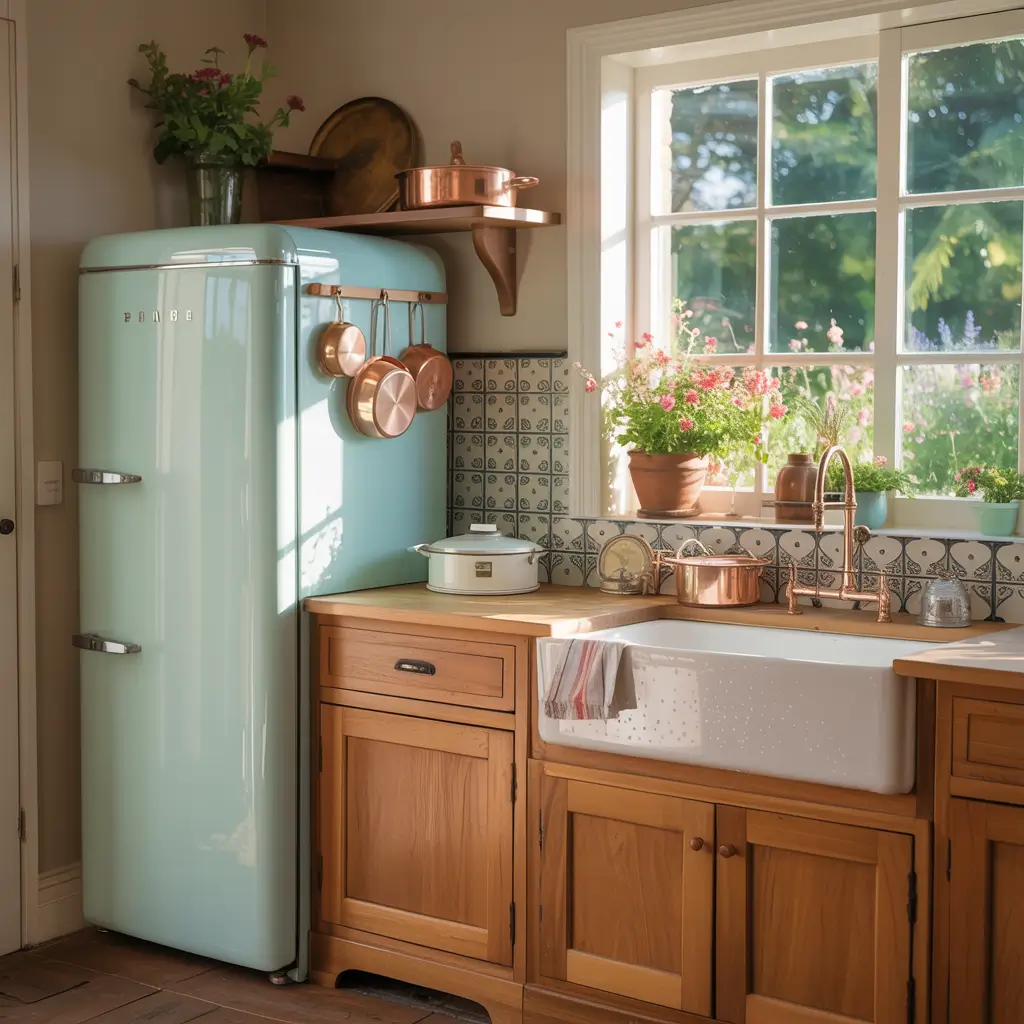
In any farmhouse kitchen, the range is the heart of the room. A vintage-style or restored antique range — with its heavy cast iron grates, clean enamel surfaces, and honest solidity — signals immediately that this is a kitchen where real cooking happens.
Modern ranges styled to look vintage (such as those from La Cornue or AGA) offer all the performance you need while delivering extraordinary visual impact. For a more budget-friendly approach, a standard range with period-appropriate details like black knobs and a classic color works beautifully in a farmhouse context.
Quick Reference: Key Farmhouse Kitchen Elements
- Rustic wooden cabinets with open shelving — warmth and organized display
- Deep apron-front farmhouse sink — functional anchor and visual centerpiece
- Shiplap walls — texture, character, and architectural interest
- Butcher block countertops — warm, practical, and full of personality
- Vintage brick backsplash with copper fixtures — timeless material pairing
- Distressed cabinetry — the beauty of an authentically aged look
- Breakfast nook with built-in bench — a gathering space inside the kitchen
- Whitewashed walls and antique accents — quiet backdrop for curated pieces
- Vintage pendant lighting — the mood-setter that most kitchens get wrong
- Retro appliances — personality and performance in equal measure
Bringing It All Together
The vintage farmhouse kitchen is not a rigid formula. It is more of a feeling — an approach to design that values warmth over perfection, character over uniformity, and liveability over showroom polish. The most beautiful farmhouse kitchens are the ones that look like they have been loved and used and slowly filled with things that matter.
You do not need to implement all twenty of these ideas at once. Start with one or two that speak to you most — perhaps a farmhouse sink, or a set of open shelves, or a pot of herbs on the windowsill. Let the kitchen evolve over time, adding pieces that feel right rather than following a rigid plan. That slow, thoughtful accumulation of character is exactly what makes farmhouse kitchens so genuinely special.
Because at the end of the day, the best kitchen is the one that makes you actually want to be in it — the one where the coffee tastes better, where dinner feels worth making, where people naturally pull up a chair and stay a little longer than they planned. That is the vintage farmhouse promise. And it is one worth keept it.
1 thought on “15 Stunning Vintage Farmhouse Kitchen Ideas for Cozy Spaces”