
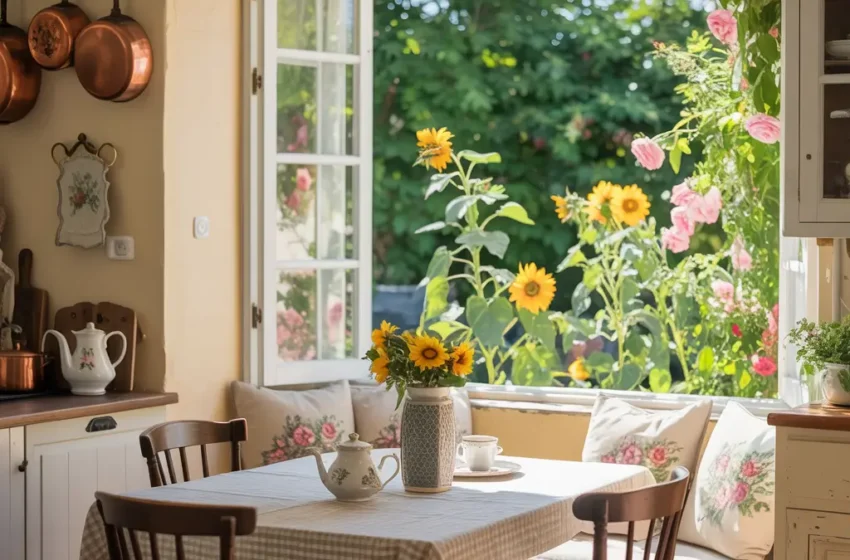
There is a particular quality of calm that settles into a well-designed French farmhouse kitchen. It is not the pristine, catalog-ready calm of a modern minimalist space. It is something older and warmer — the kind of calm that comes from rooms that have been lived in across generations, where the stone floor carries the impressions of a hundred Sunday mornings and the patina on the copper pots took decades to develop.
French farmhouse kitchen design, or cuisine de campagne as it is sometimes called, draws from the long tradition of rural French homes where the kitchen was always the most important room. Not just for cooking, but for gathering. For conversation. For the slow, unhurried rituals of daily life — morning coffee, afternoon bread, evening aperitifs — that the French have always treated with quiet reverence.
What separates it from generic farmhouse style is the sophistication layered beneath the rusticity. A French farmhouse kitchen is not rugged for the sake of it. It is refined, but not precious. It is warm, but not cluttered. The materials are honest — stone, wood, plaster, iron, linen — but they are arranged with a certain effortless elegance that takes real thought to achieve.
In this guide, we are covering 15 specific French farmhouse kitchen ideas, from the structural choices that define the whole aesthetic to the small styling details that pull everything together. Whether you are starting a full renovation or simply want to shift the feeling of your existing kitchen, these ideas will give you a clear, practical path forward.
1. Begin with Aged, Painted Wood Cabinetry in Soft Muted Tones
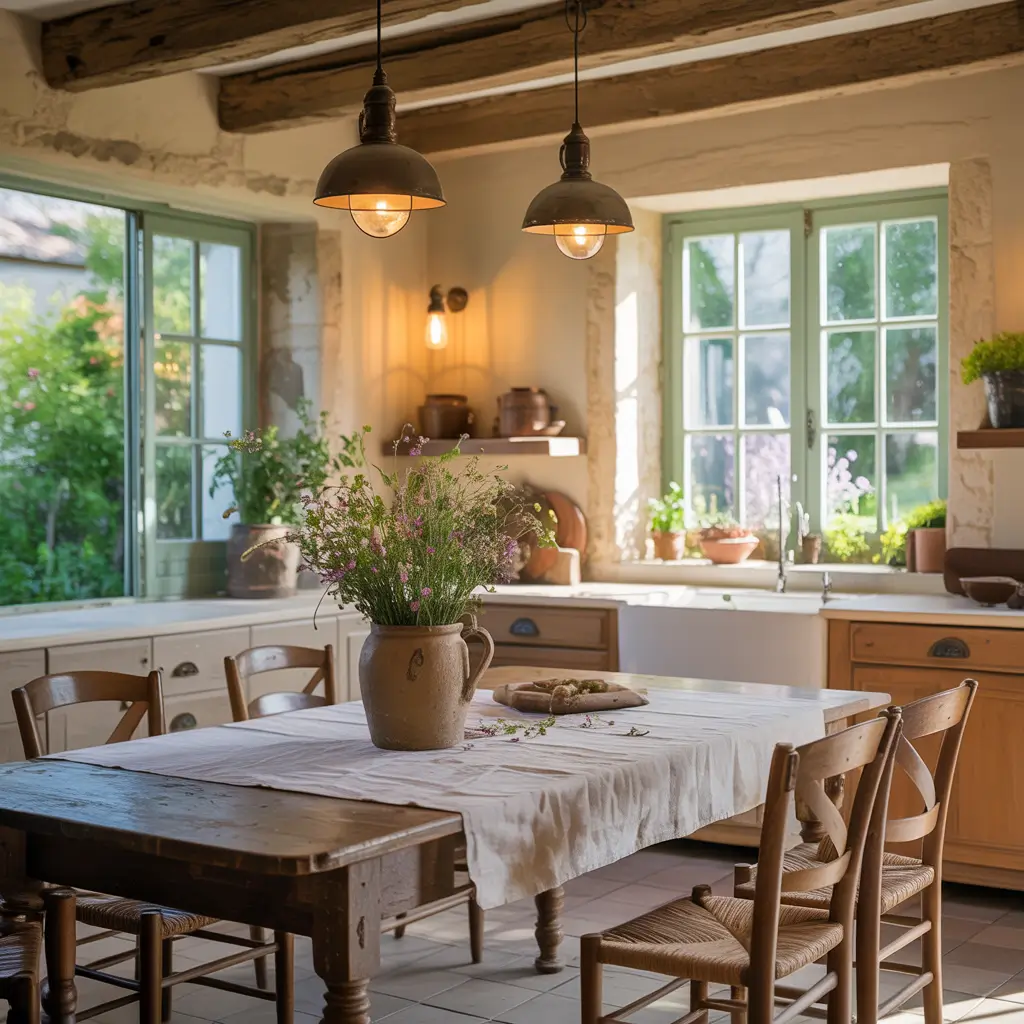
The cabinets set the entire personality of a French farmhouse kitchen, and the language they speak should be quiet, warm, and just slightly imperfect. Where American farmhouse style often leans toward bright white shaker cabinets, the French farmhouse version favors softer, more complex hues — the kind of colors you would find on the shutters of a Provençal farmhouse, faded beautifully by sun and time.
Think old linen, soft grey-green, dusty sage, pale blue-grey, antique cream, and muted ochre. These are not paint-chip colors that look dramatic in the store. They are colors that whisper rather than shout, and they change beautifully throughout the day as the light moves across them.
Color Directions That Work Beautifully
- Soft stone grey with warm undertones for timeless elegance
- Sage green with a slight grey cast — neither too bright nor too muted
- Old linen or antique white with visible brush texture
- Pale duck egg blue for a nod to classic French provincial style
- Warm ochre or clay on a single cabinet run for a Provençal accent
Pair whichever color you choose with aged brass or wrought iron hardware. The finish should look as if it has been there for decades, not just installed last Tuesday. Slightly mismatched hardware — not every knob identical — adds to the sense of gradual accumulation that is central to the French farmhouse feeling.
2. Install a Deep Fireclay or Stone Farmhouse Sink
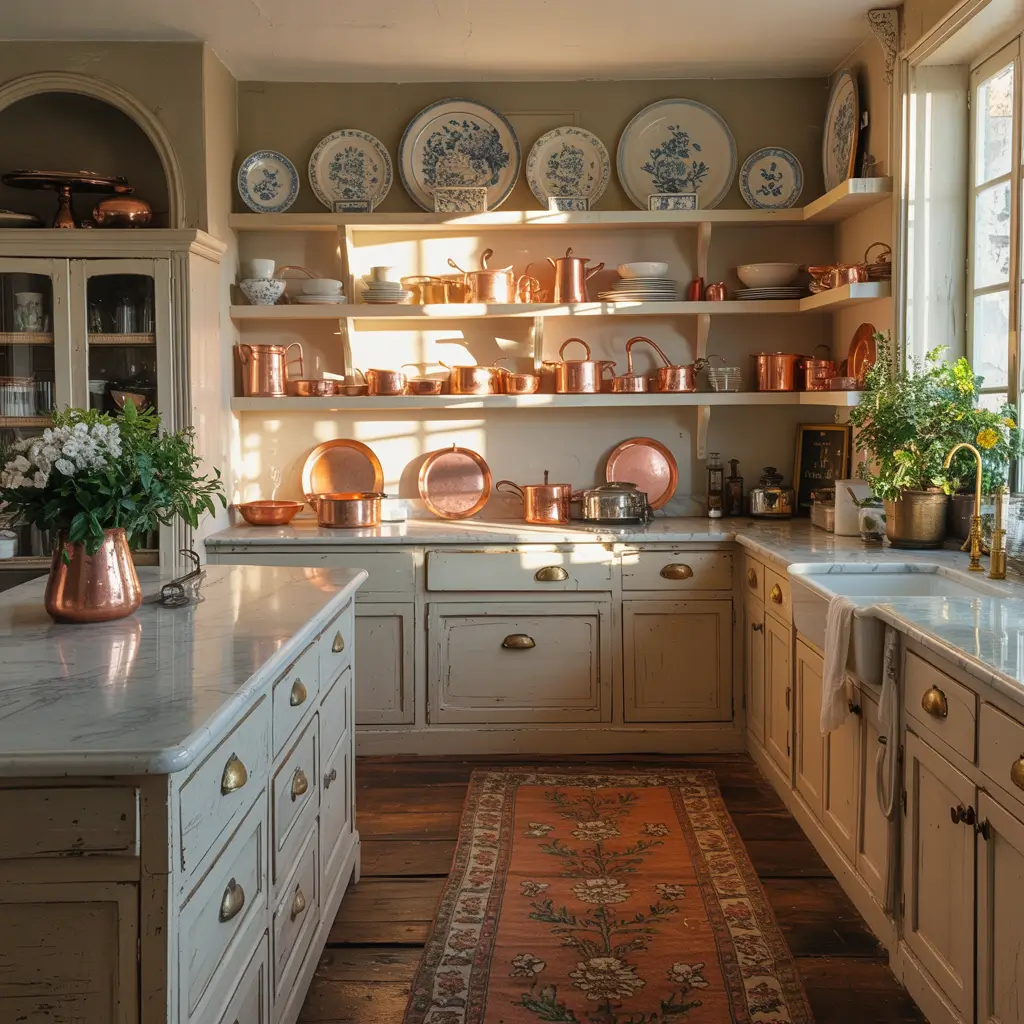
In any French country kitchen, the sink is not a utility item that gets tucked under a cabinet. It is a focal point, and it should look like one. The deep, wide apron-front design that we now call the farmhouse sink has its roots directly in French and English rural kitchen tradition, where basins needed to handle serious domestic volume — washing vegetables from the garden, cleaning game, doing laundry before dedicated rooms for that purpose existed.
Fireclay remains the gold standard for this style. Its matte white surface has a slightly hand-made quality — subtle variations in the glaze, a softness to the edges — that fits perfectly into the French farmhouse aesthetic. Soapstone is another excellent choice, bringing a grey-green depth that suits the cooler tones of a Provençal palette. For something more dramatic and deeply French in character, a stone sink carved from a single block of limestone is as authentic as it gets.
What to Consider When Choosing Your Sink
- Material: Fireclay for classic warmth, soapstone for sophistication, limestone for ultimate authenticity
- Size: Go larger than you think you need — deep basins are central to the style’s functionality
- Single basin: A single, wide basin looks more French and traditional than a divided double
- Faucet: Bridge-style faucets in unlacquered brass or aged bronze complete the look perfectly
3. Use Stone, Plaster, or Limewash on the Walls
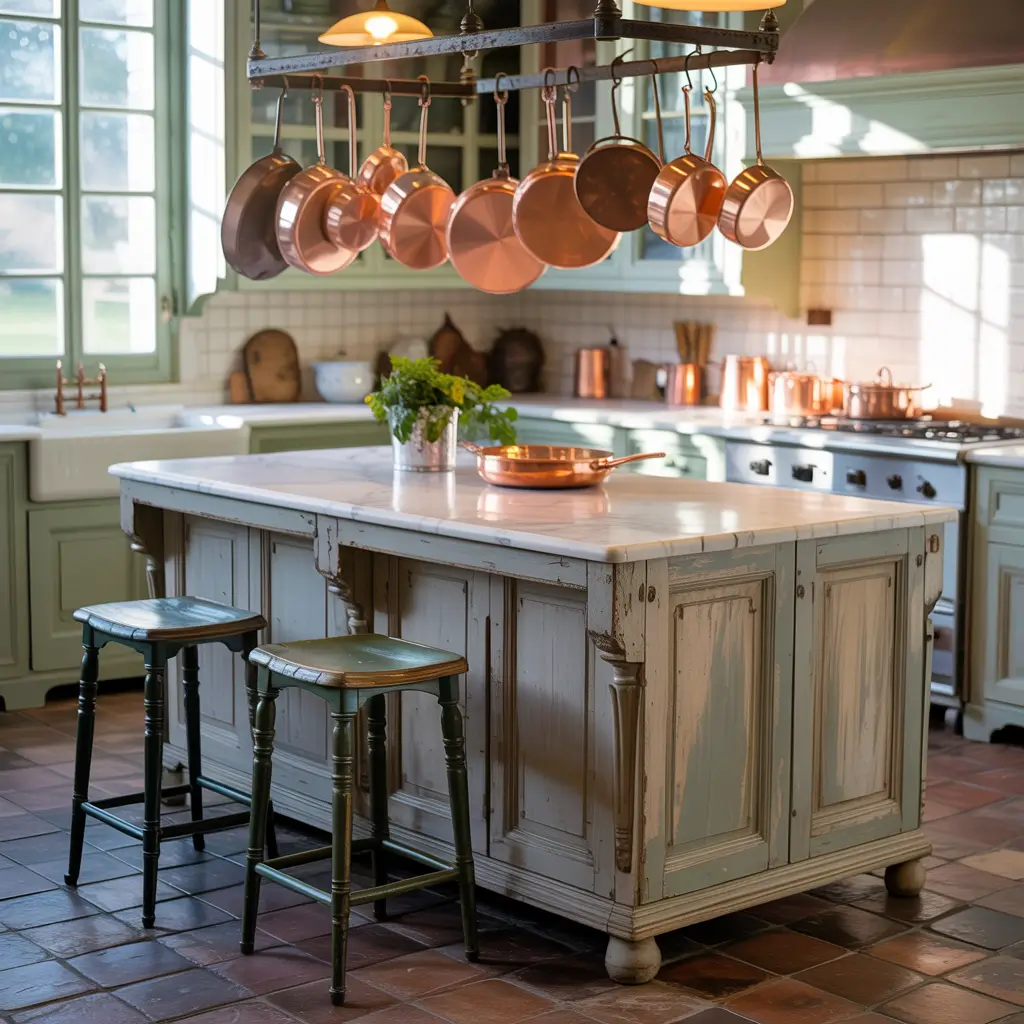
The walls in a French farmhouse kitchen should feel like they have substance. Not the flat, uniform surface of standard drywall with a coat of eggshell paint, but something that has texture, depth, and the sense that it could belong to a building that has been standing for two hundred years.
Limewash paint is one of the most accessible ways to achieve this. Unlike standard paint, limewash creates a layered, translucent effect that shifts with the light and shows subtle variation across the surface. It looks and feels genuinely old in the best possible way, and it works beautifully with the muted palette of French farmhouse style.
For kitchens with the budget and structure for it, exposed stone or plaster walls are transformative. A section of rough-hewn stone behind the range, or a plaster wall that has been allowed to show its natural texture rather than being sanded perfectly smooth, immediately grounds the kitchen in a tradition that no wallpaper or paint effect can fully replicate.
4. Choose Stone, Terracotta, or Reclaimed Tile for the Floors
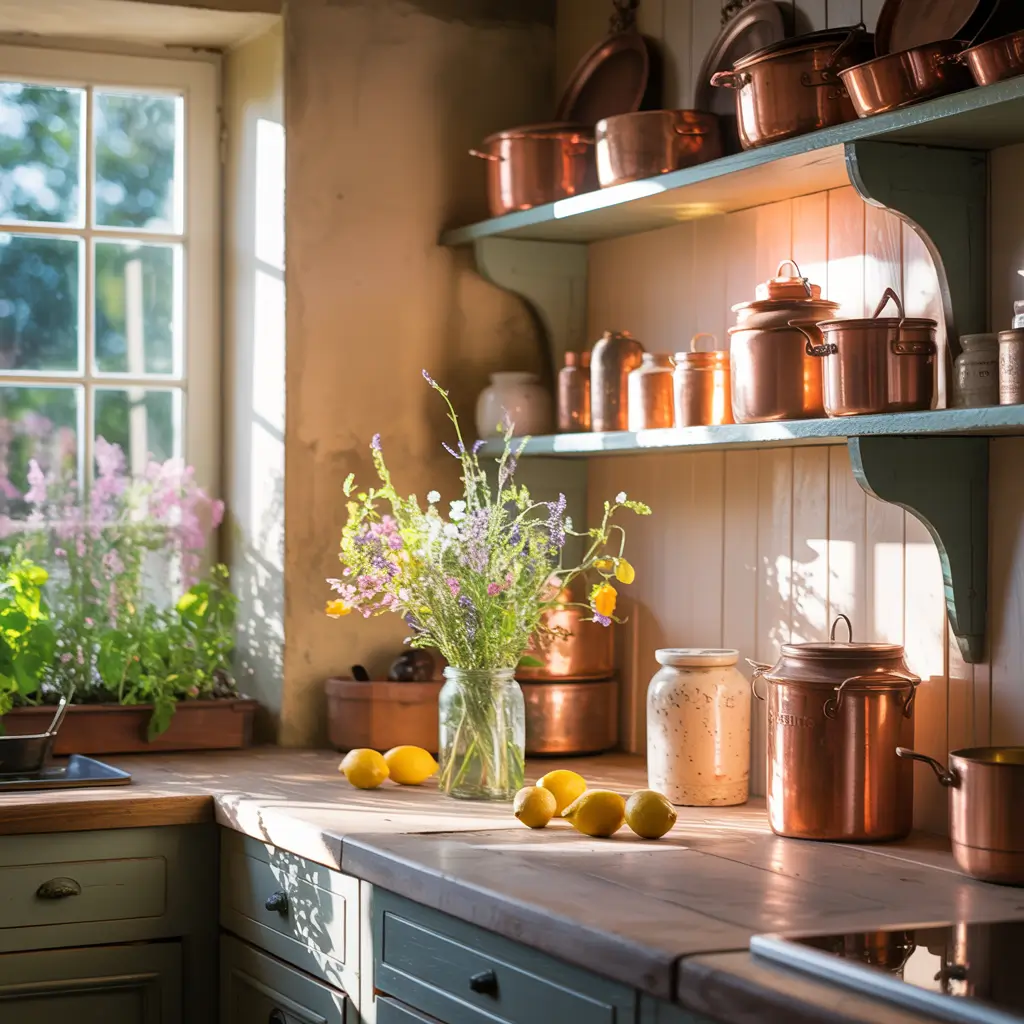
The floor of a French farmhouse kitchen carries the whole room. It needs to be durable, beautiful, and — this is key — honest about its age. Nothing disrupts the French farmhouse feeling faster than a glossy, perfectly uniform floor that looks like it belongs in a hotel lobby.
Large format limestone tiles in a honed or tumbled finish are perhaps the most classic choice. Their natural variation in tone and texture creates a floor that looks different in every square foot, which is exactly the point. Terracotta tiles — especially the hexagonal ones traditional in southern French farmhouses — bring extraordinary warmth and character. Old reclaimed terracotta is ideal if you can source it. New terracotta sealed with a matte finish is a very acceptable alternative.
Flooring Options Ranked by Authenticity
- Reclaimed limestone slabs — the most authentic and most expensive option
- New honed limestone in large format tiles — beautiful and accessible
- Traditional hexagonal terracotta, especially in warm honey or brick tones
- Wide-plank reclaimed oak with a matte finish and visible grain variation
- Cement encaustic tiles in simple geometric patterns for a Moroccan-French crossover
5. Build Around a Statement Range or La Cornue-Style Cooker
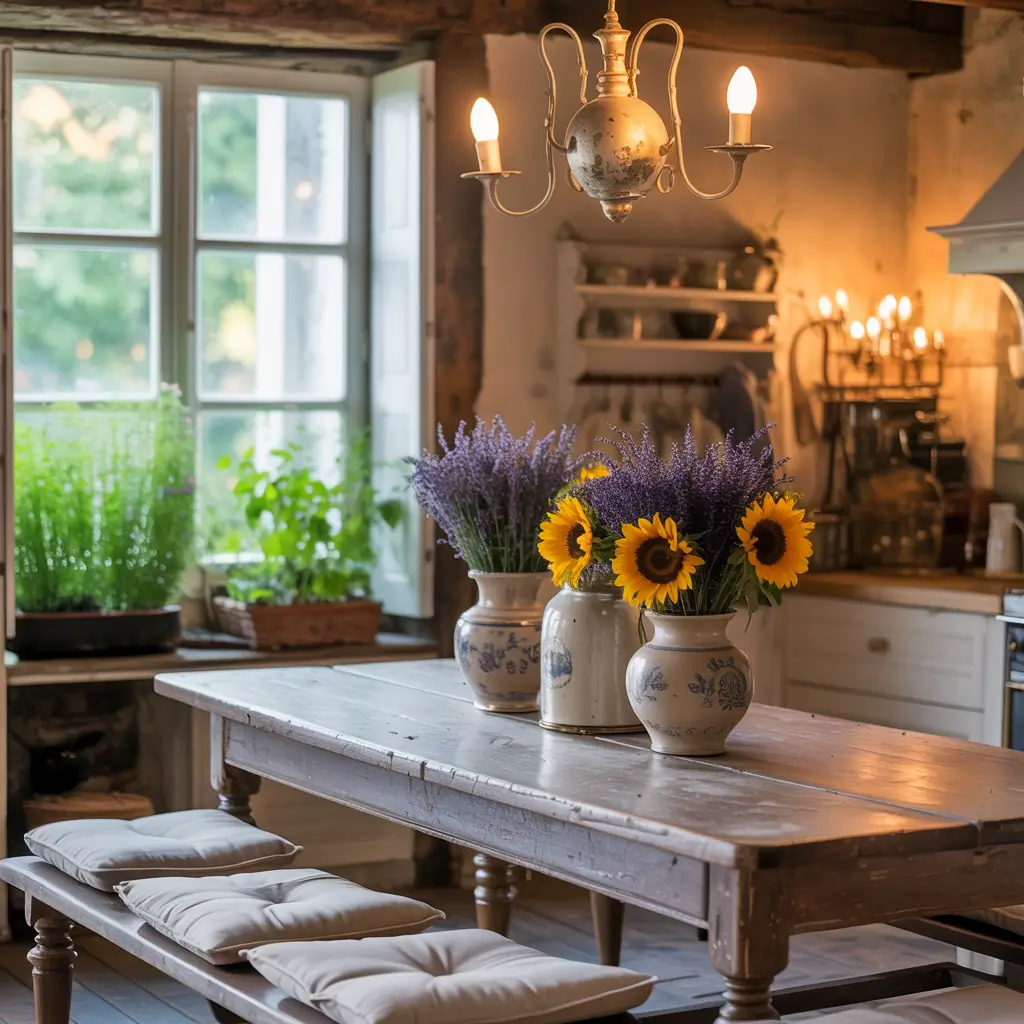
In French country cooking tradition, the stove is not just an appliance. It is the engine of the whole room, and it deserves to look the part. The iconic professional French ranges — the style associated with brands like La Cornue and Lacanche — have a particular silhouette that combines cast iron burners, brass fittings, and a robust enamel body in a way that is immediately recognizable and deeply beautiful.
You do not necessarily need a luxury French range to achieve this effect. A quality range in cream, navy, or forest green with a classic design and quality materials can deliver ninety percent of the visual impact at a fraction of the cost. What matters most is the presence — the range should feel like the centerpiece of the cooking wall, not an appliance you are trying to hide.
Above it, a plastered or wooden range hood adds the architectural emphasis that elevates the whole cooking wall from functional to genuinely impressive. Arched plaster hoods are particularly French in character. A simple reclaimed wood beam over the range, used as a pot-hanging structure, is another beautiful option.
6. Incorporate Open Wooden Shelving with Thoughtful Styling
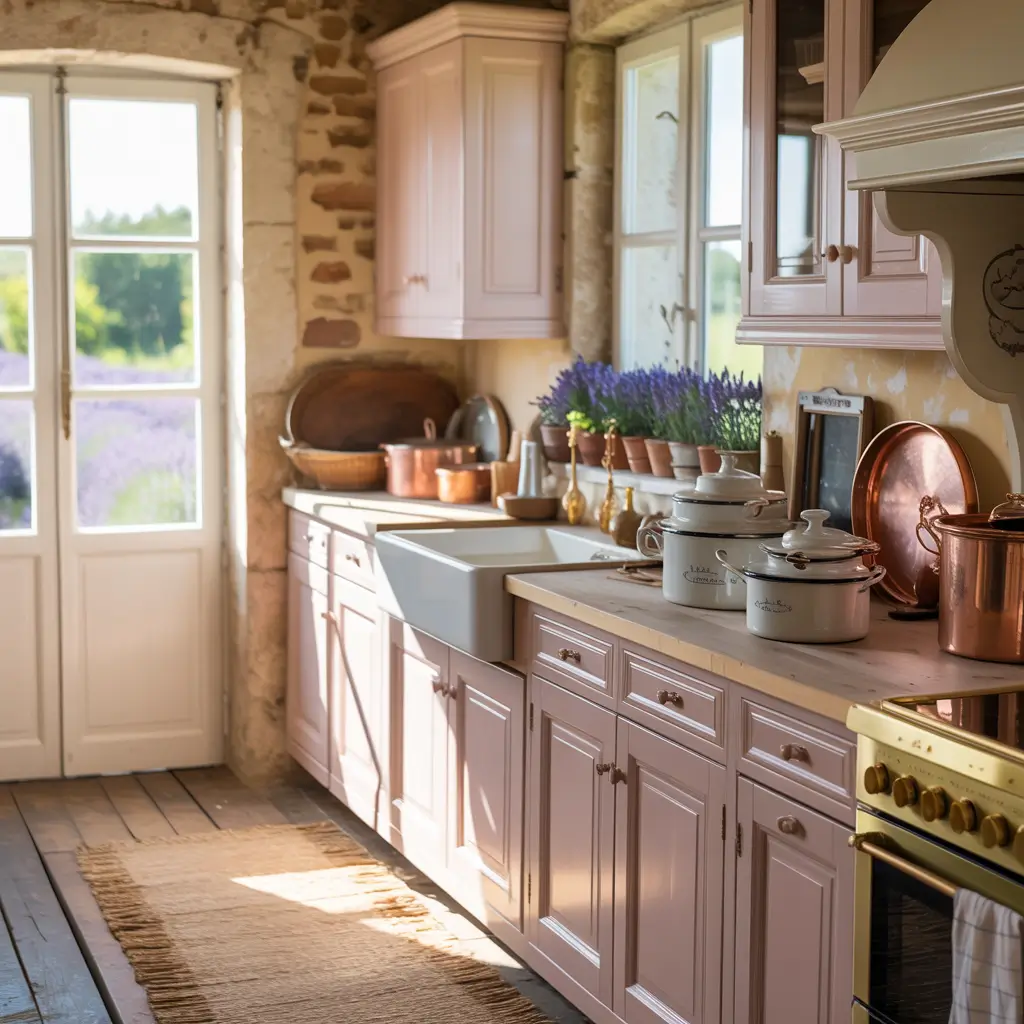
French country kitchens have always stored things in the open. Not because there was no alternative, but because the things used in daily cooking — the copper pots, the glazed earthenware, the glass jars of preserved fruit and dried herbs — were genuinely beautiful and deserved to be seen.
Open shelving made from thick oak or chestnut planks, supported on simple iron brackets, is one of the most powerful styling tools available in a French farmhouse kitchen. It creates visual depth, gives the room a sense of abundance, and provides the perfect setting for displaying the kinds of objects that tell the story of how the kitchen is actually used.
What to Display on French Farmhouse Kitchen Shelves
- Copper and brass pots and pans, ideally with some patina
- Glazed earthenware in natural tones — teal, honey, cream, olive
- Glass jars of varying sizes filled with dried goods
- Stacks of linen napkins and simple cotton dish towels
- A few well-chosen vintage pieces: a small pitcher, an old crock, a ceramic oil bottle
- Fresh herb bundles or dried lavender tied with simple string
The French approach to shelf styling is less about perfection and more about density and warmth. Shelves should look full — not crowded, but genuinely populated with things in daily use.
7. Layer the Color Palette with Provençal Influence
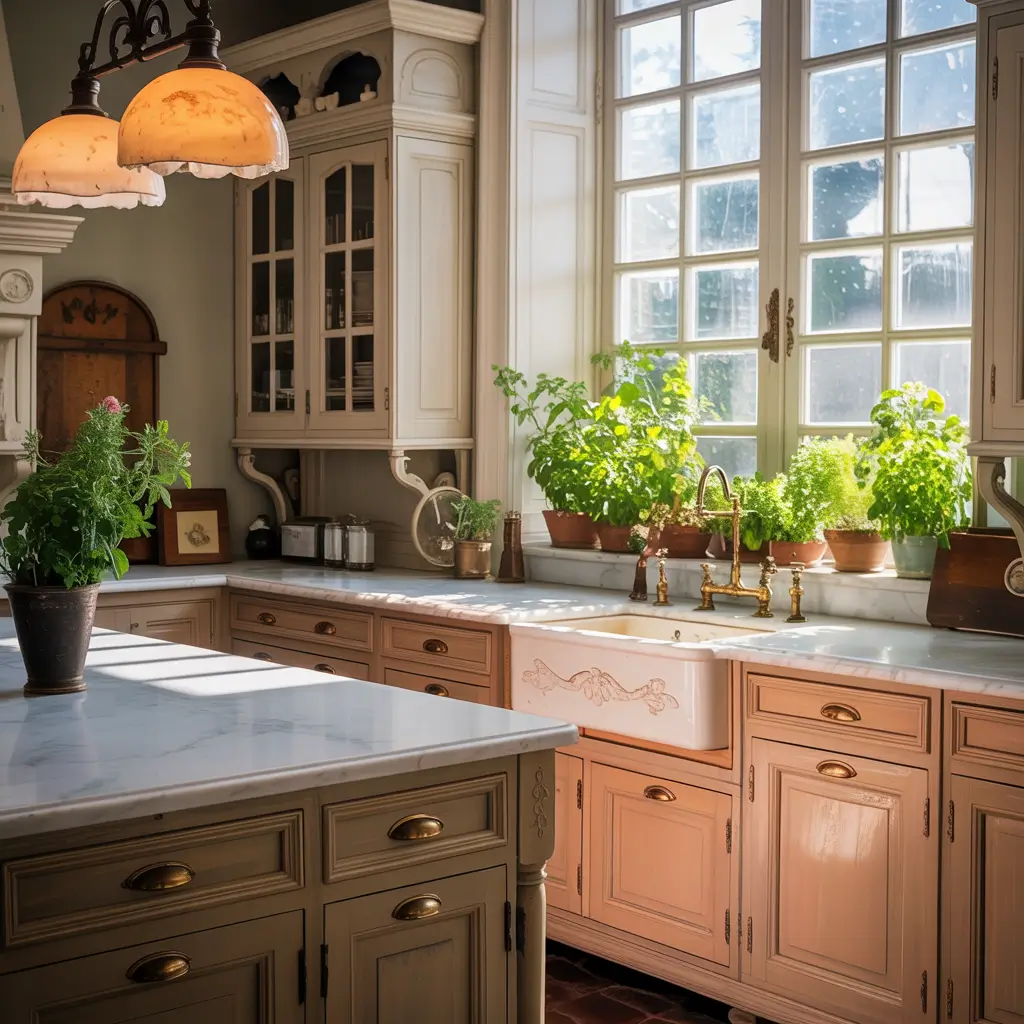
Provençal color — the palette of southern France — is one of the most distinctive contributions French design makes to the farmhouse aesthetic. It draws from the landscape of the region: the lavender fields, the terracotta soil, the sun-bleached stone, the deep green of olive and cypress trees, the vivid yellow of sunflowers. These are warm, saturated, natural colors that work beautifully in a kitchen context.
The key to using Provençal color well is restraint. You are not painting an entire kitchen bright lavender. Instead, you might use it as an accent on one cabinet run, or as the color of a textile against a neutral background. Terracotta and ochre bring warmth when used for accessories or a feature wall. Deep olive green works beautifully on an island painted in contrast to cream upper cabinets.
Provençal Color Accents That Work in Any Kitchen
- Lavender-sprigged linen curtains at a window for a gentle seasonal touch
- Terracotta pots and planters on open shelves or the windowsill
- Ochre or mustard yellow in cushion covers, a table runner, or a painted stool
- Deep olive green on the kitchen island for a rich, grounded contrast
- Touches of aged blue — in a vase, a ceramic dish, or a painted chair
8. Add a Central Island with Character and Patina
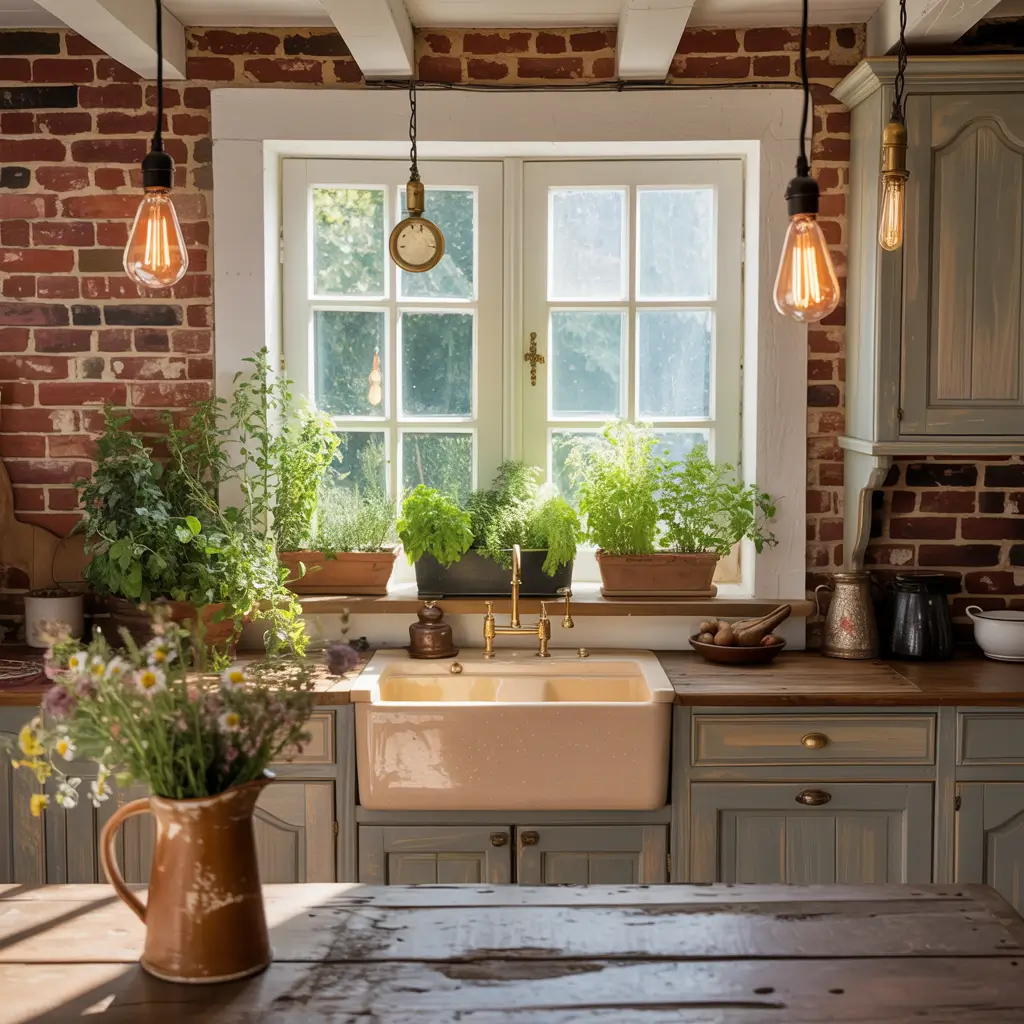
A French farmhouse kitchen island should look like it was not purchased as a kitchen island. The most convincing examples are pieces of furniture that have been adapted — an antique butcher’s block, a heavy provincial console table fitted with a new top, an old baker’s table with thick legs and a single deep drawer. The adaptation is part of the charm.
If you are building an island from scratch, design it to look like furniture rather than cabinetry. Furniture-style legs rather than a full plinth base, a top in a contrasting material from your counters, and a paint color that differs from the main cabinets all contribute to that freestanding, collected-over-time quality. A thick butcher block top with visible grain, or a slab of grey limestone, both suit the style beautifully.
Island Features That Feel Authentically French
- Turned or tapered legs rather than cabinet-style base panels
- A contrasting top material — butcher block, limestone, or honed marble
- Aged brass bin pulls or simple iron ring handles
- Open shelving on one or both ends for baskets and display
- A built-in wine rack or deep drawers for linens and tools
9. Install Classic French-Style Lighting Fixtures
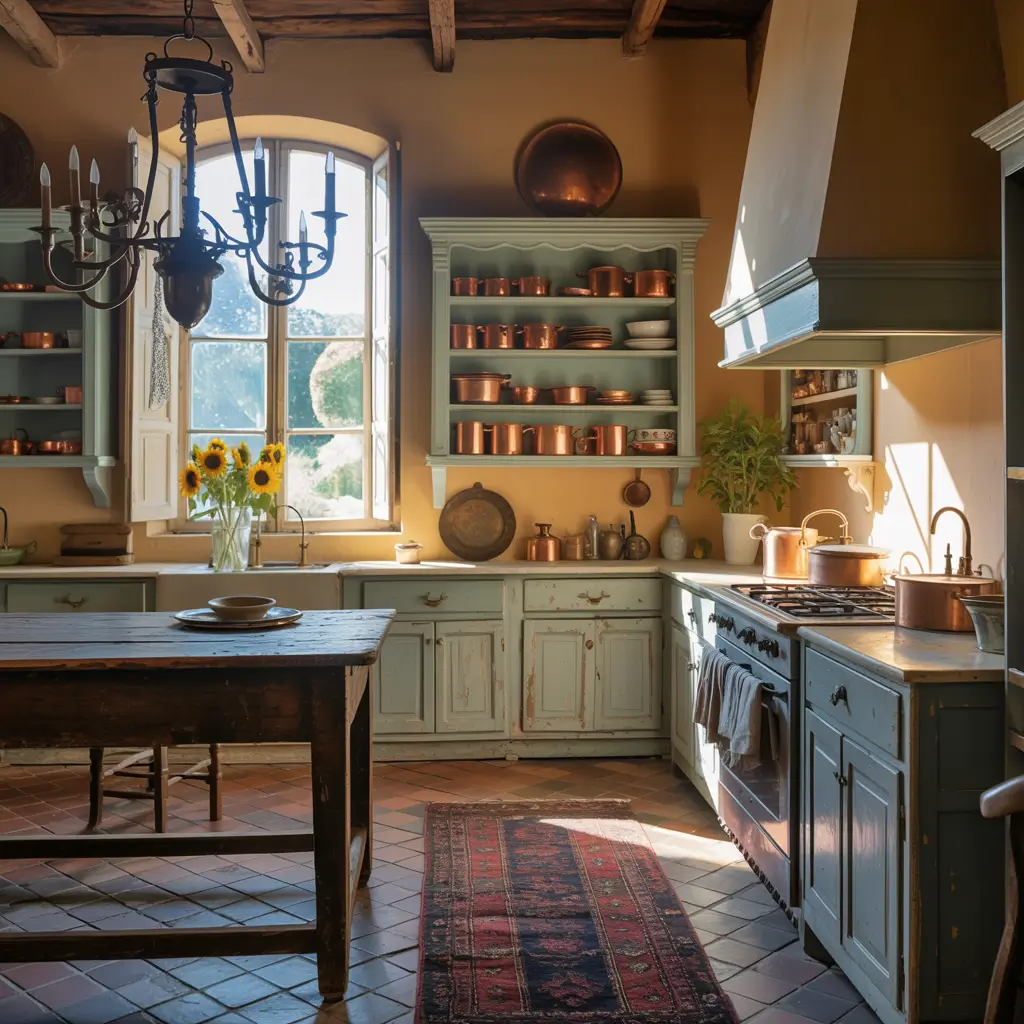
Lighting in a French farmhouse kitchen should feel warm, layered, and just slightly theatrical. The French have a particular gift for making spaces feel intimate even when they are large, and much of that comes from how they approach light — not as a single overhead source but as something distributed throughout the room at different heights and with different levels of warmth.
Lantern-style pendant lights over the island or sink, in aged iron or bronze, are a natural starting point. They have a direct visual lineage with the lanterns that would have hung in French farmhouses and stables for centuries. For the dining area or over a kitchen table, a wrought iron chandelier — simple, asymmetric, with candle-style bulbs — creates extraordinary atmosphere without being fussy.
Lighting Elements That Define the French Farmhouse Look
- Iron lantern pendants over the island — the simplest and most authentic choice
- A wrought iron chandelier above the dining table with exposed filament bulbs
- Wall sconces with antique bronze finish flanking the range or window
- Under-cabinet lighting in warm white to add depth and work light
- A single articulating wall lamp for reading or prep — practical and beautiful
10. Use Linen and Natural Textiles Throughout
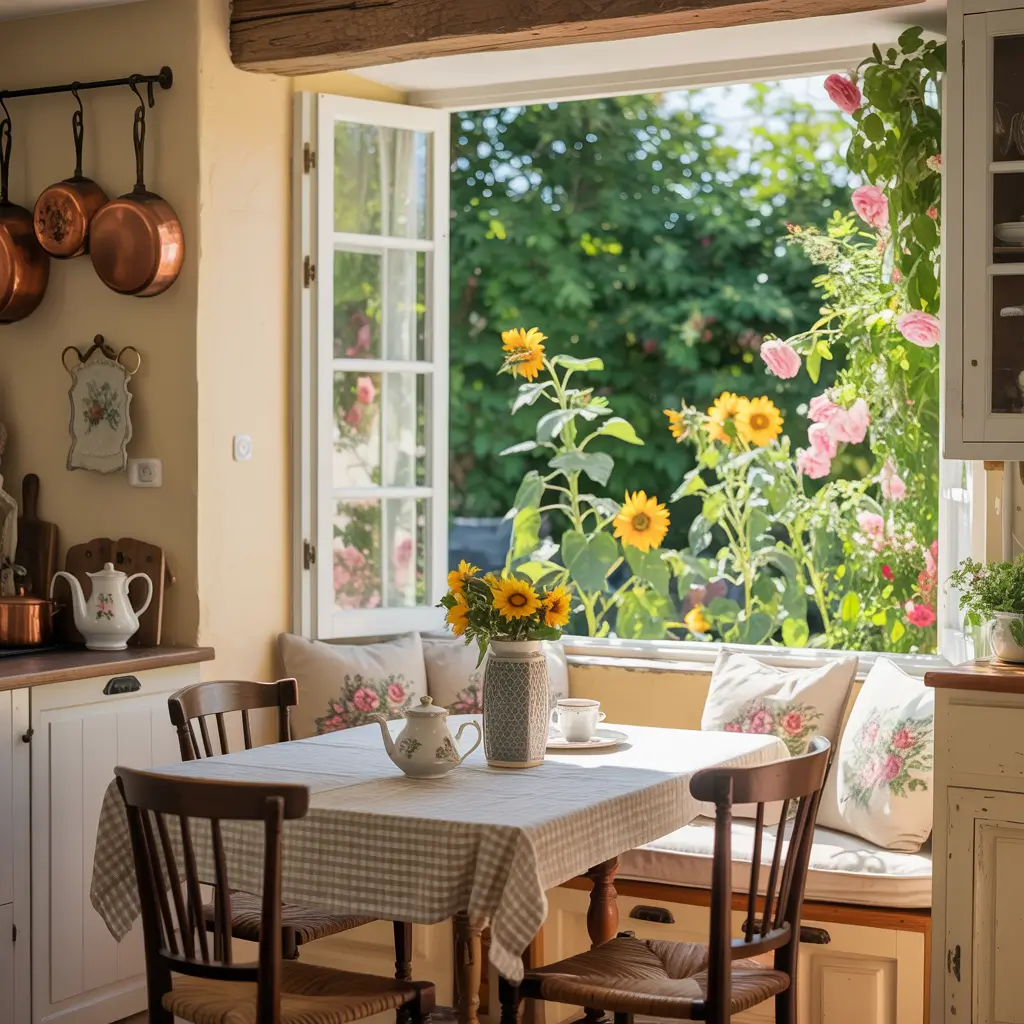
If there is one material that defines French domestic life more than any other, it is linen. It appears in French farmhouse kitchens as curtains, dish towels, aprons, cushion covers, table runners, and the cloth draped over bread rising on the counter. It is unashamedly natural, softens with every wash, and ages in the most beautiful way.
Window treatments in a French farmhouse kitchen should be simple and soft. Long linen panels in natural ecru, soft grey, or faded blue-white that move slightly when a window is open. Café curtains at half-height for privacy without blocking light. The fabric should look gathered and slightly imperfect, never stiff or precise.
Dish towels hung on a simple iron bar, a linen apron on a hook by the door, a folded cloth under a bread basket — these small textile details are what give the kitchen its sense of human occupation. They make the space feel used and comfortable in the most appealing way.
11. Choose Handmade or Hand-Painted Tile for the Backsplash
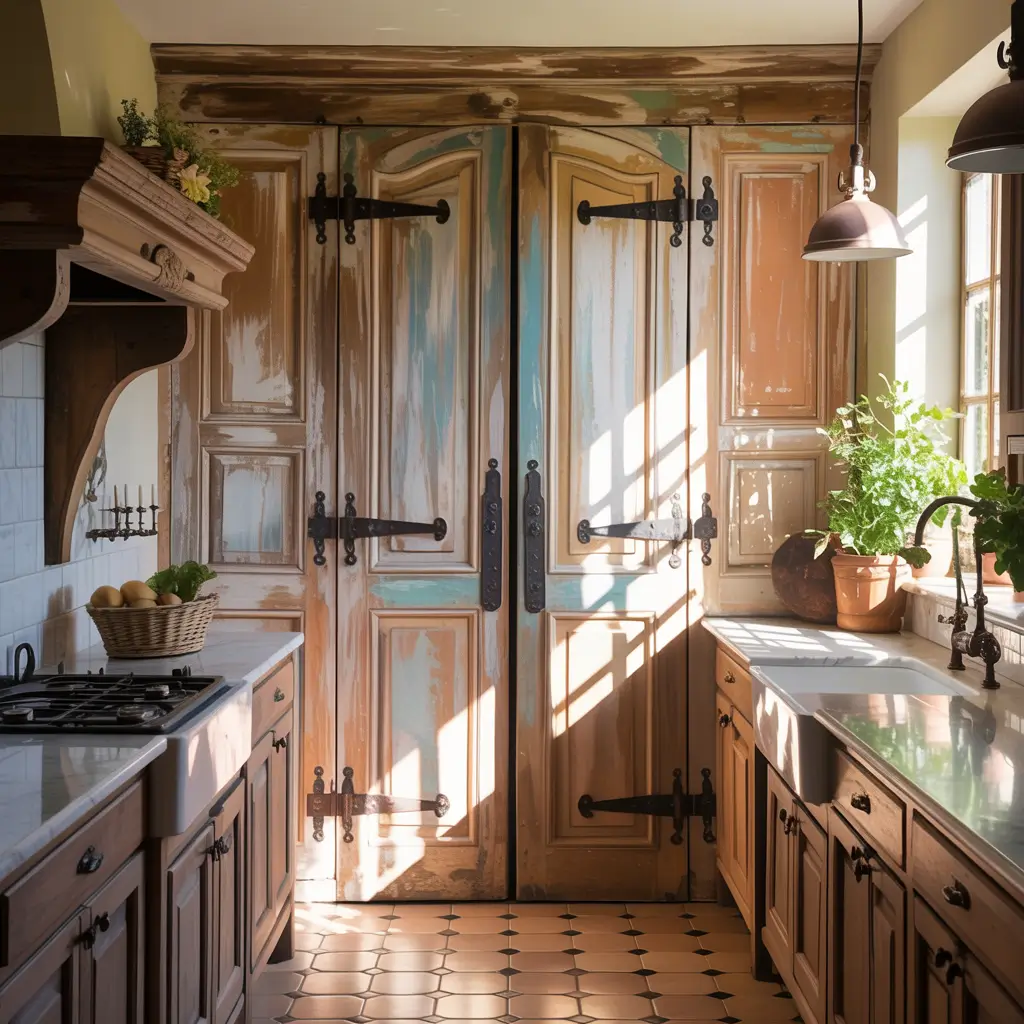
The backsplash in a French farmhouse kitchen is an opportunity for the most beautiful kind of imperfection. Machine-made tiles with perfect uniformity look wrong here. What you want are tiles that carry visible evidence of the human hand — slight variations in glaze, edges that are not perfectly crisp, surfaces that catch the light differently from one tile to the next.
Traditional hand-painted French faïence tiles are the most authentically French choice, particularly in the deep blues and yellows associated with Moustiers-Sainte-Marie and Quimper pottery traditions. They work beautifully as a full backsplash or as a decorative panel behind the range surrounded by simpler tiles. Terracotta tiles brought inside from the floor palette are another striking option.
Backsplash Approaches That Work in a French Farmhouse Kitchen
- Hand-painted faïence tiles in traditional blue and white or Provençal yellow
- Handmade subway tile with visible glaze variation and irregular edges
- Terracotta hexagon tiles to bridge with the floor palette
- Plaster left smooth and simply sealed — understated and deeply French
- Zellige tile from North Africa, which has strong visual links to southern French tradition
12. Display Copper and Earthenware as Active Decoration
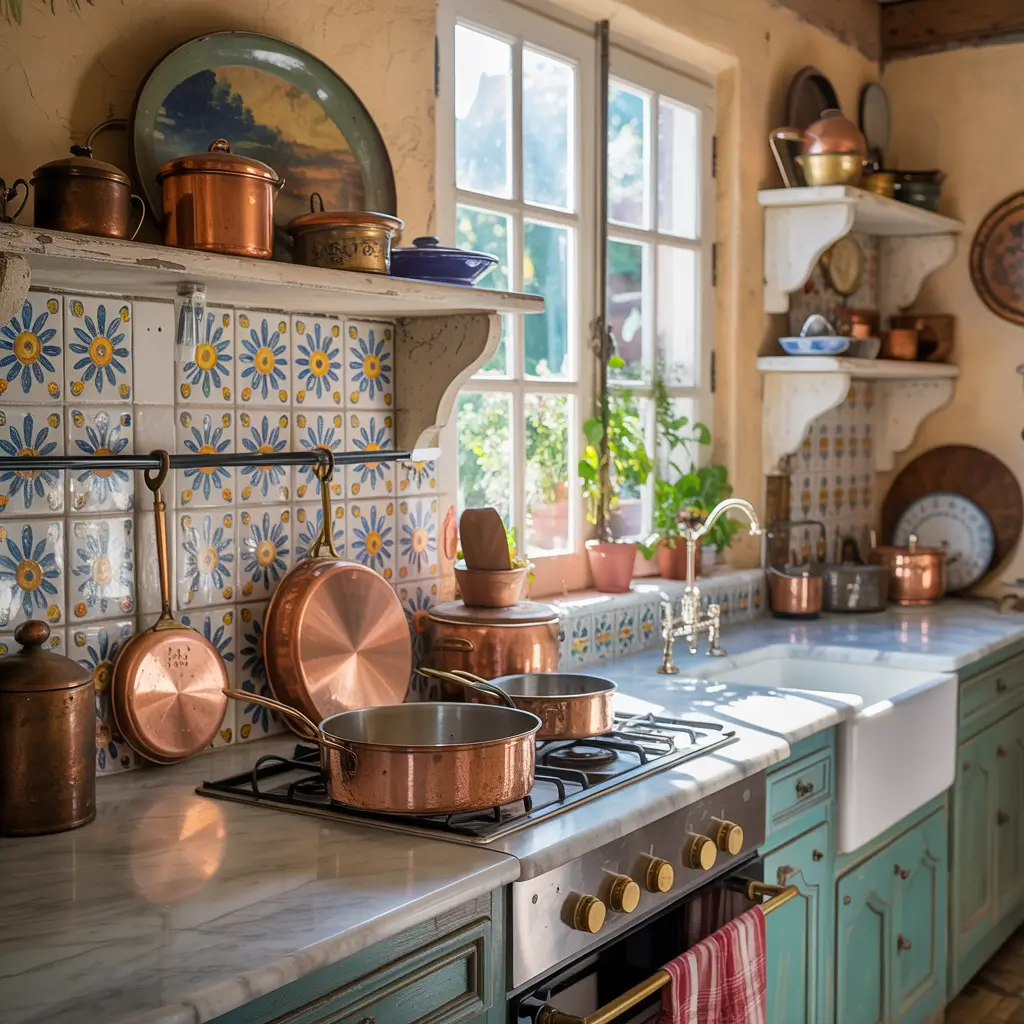
One of the most distinctive features of an authentic French farmhouse kitchen is the presence of cookware as decoration. This is not a styling trick — it is a reflection of how French home cooks actually think about their tools. A copper saucepan with a long handle hanging from a ceiling hook is beautiful because it is beautiful, and it is beautiful because it is used.
Copper is the quintessential French farmhouse material. Its warm reddish-gold tone catches light in a way nothing else does, and its tendency to develop a living patina over years of use means it only improves with time. A collection of copper pots hung above the range or from a ceiling rack creates an immediate visual statement that is simultaneously practical and spectacular.
Complement the copper with glazed earthenware — the kind of deep-colored ceramics you find at a French marché: teal, honey, olive, cream. A stack of mismatched earthenware plates on an open shelf, a collection of pitchers in varying heights, a large ceramic bowl on the counter holding fruit or garlic — these everyday objects become part of the room’s visual identity.
13. Create a French-Inspired Pantry or Garde-Manger
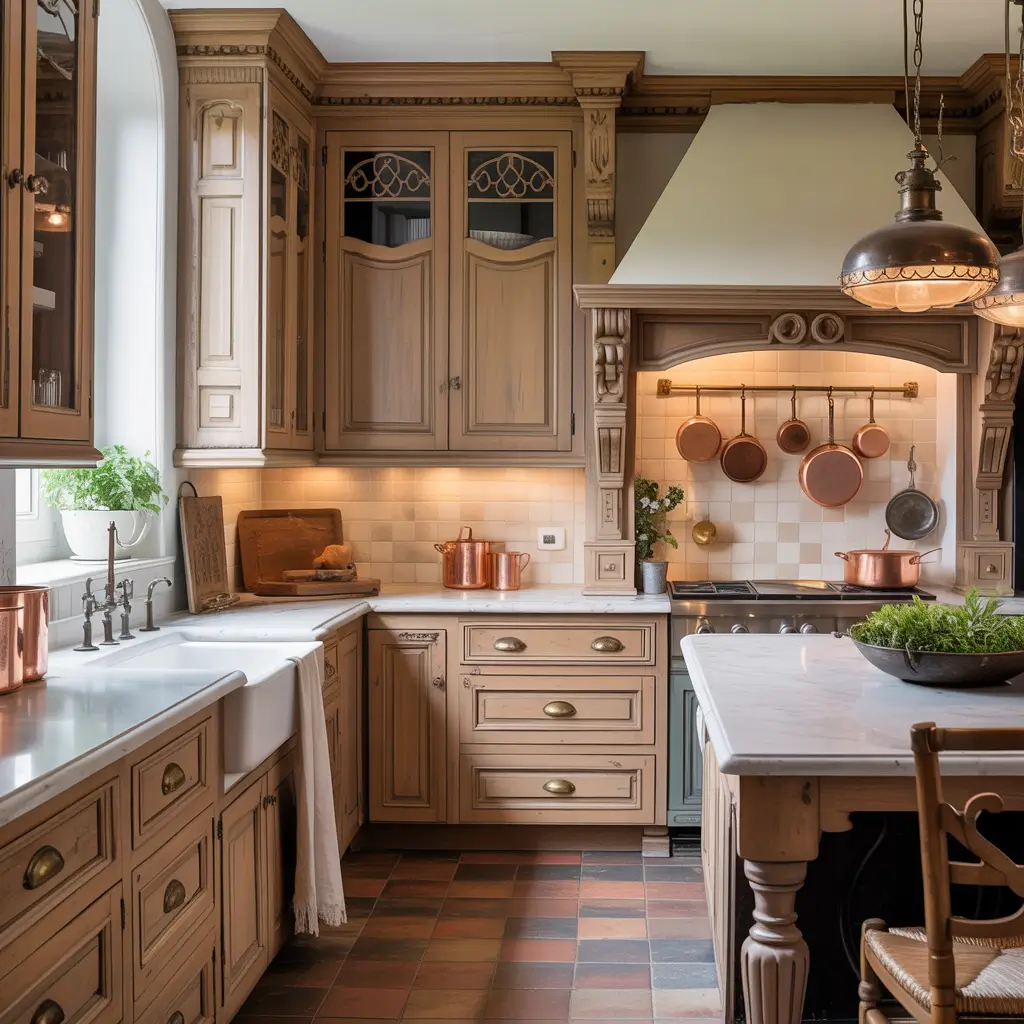
The garde-manger — literally the keeper of food — is a traditional French concept somewhere between a larder, a pantry, and a food preparation space. In the context of a modern kitchen, it translates to a dedicated area for storing and organizing food that prioritizes beauty alongside function.
Even a single set of shelves can serve this purpose if styled thoughtfully. Glass jars of dried goods, wicker baskets for vegetables, ceramic crocks for oils and vinegars, a small wooden rack for wine, earthenware pots for homemade preserves — organized with the same care given to the rest of the kitchen, a pantry wall becomes one of the most appealing features in the room.
Garde-Manger Styling Essentials
- Tall glass jars with swing-top lids for dried legumes, grains, and pasta
- Wicker or rattan baskets for root vegetables and onions
- Ceramic crocks with simple cork stoppers for oils, vinegars, and salt
- A small slate or chalkboard label system for handwritten identification
- A dedicated bread shelf with a linen cloth for a traditional baguette or loaf
- Dried herbs hanging from a small beam or hook above the shelf
14. Add Stone or Brick Architectural Details
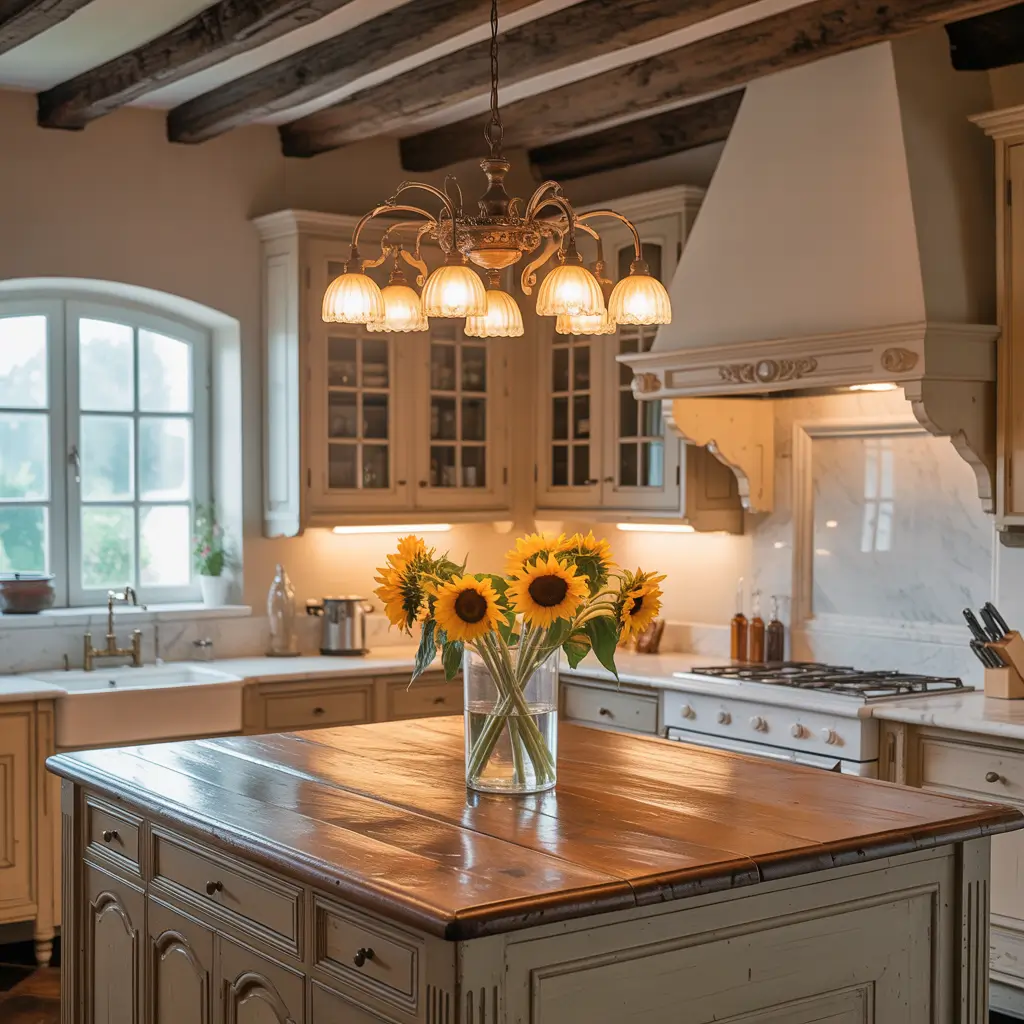
Few things communicate the age and authenticity of a French farmhouse kitchen as effectively as exposed stone or brick. In France, these materials are not decorative choices — they are the fabric of the building itself, visible because generations of inhabitants understood that they were more beautiful than anything you might cover them with.
If your kitchen has existing brick or stone that has been plastered or painted over, consider uncovering it — even partially. A section of exposed stone around the range, a brick arch above a window, or a stone lintel above the sink can transform the entire character of the kitchen without requiring a renovation in the conventional sense.
For new builds or kitchens where the structure does not offer this opportunity, stone veneer and reclaimed brick slip tiles allow the look to be created convincingly. The key is to avoid making it look applied — use it in places where it would logically appear if it were original to the building, and surround it with plaster or limewash rather than modern finishes.
15. Choose Furniture-Style Pieces Over Built-In Cabinetry
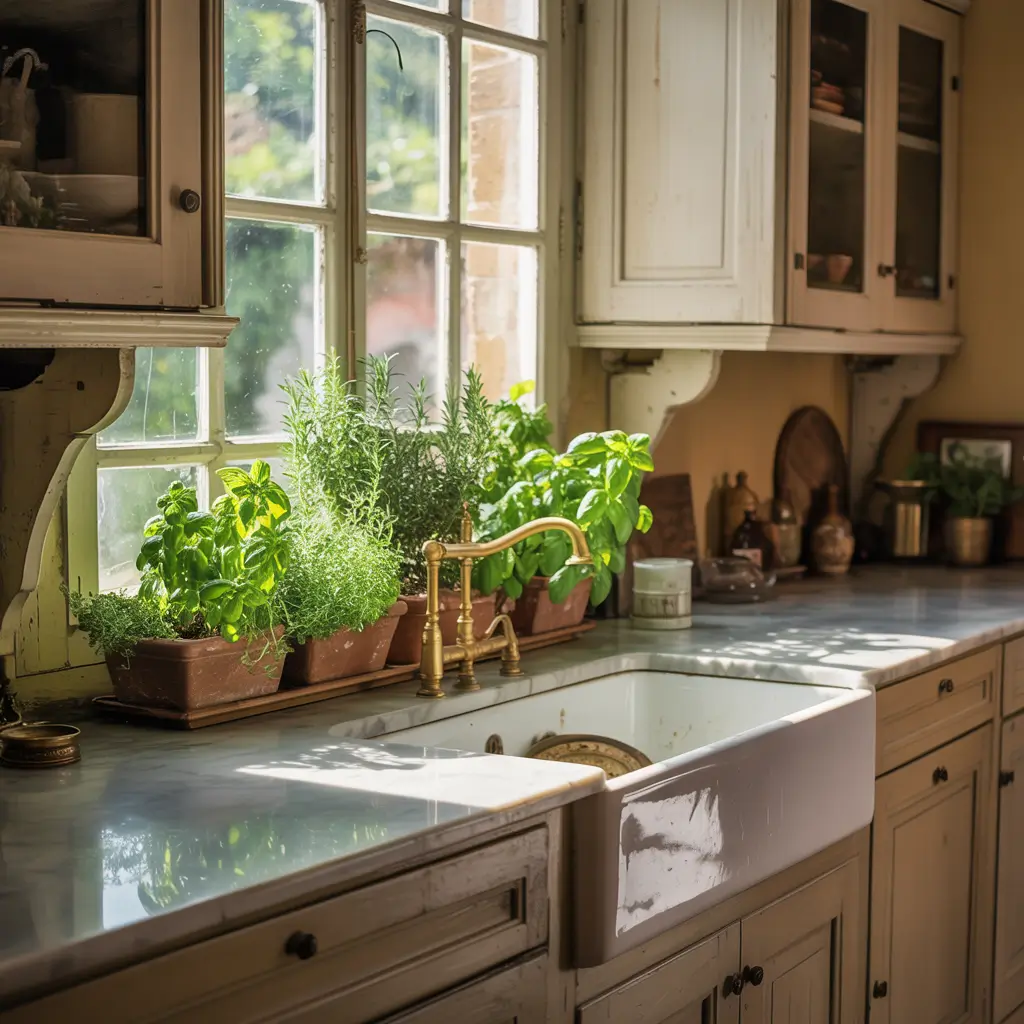
One of the most distinctive differences between a French farmhouse kitchen and a standard fitted kitchen is the balance between built-in and freestanding pieces. French country kitchens have always mixed the two — some fitted storage for practicality, but also freestanding dressers, armoires, and tables that could theoretically be moved, replaced, or taken to the next house.
A large freestanding kitchen dresser in painted wood, with glass-fronted upper cabinets and open shelves below, is one of the most effective single purchases for achieving this aesthetic. It provides substantial storage, creates a display opportunity, and immediately shifts the kitchen away from the look of a fitted kitchen toward something more personal and characterful.
Similarly, a large freestanding armoire used for dry goods storage, a painted wooden console used as a secondary prep surface, or an antique drop-leaf table used for breakfast all contribute to the furniture-forward feeling that is genuinely French in character.
Frequently Asked Questions About French Farmhouse Kitchens
What is the difference between French farmhouse and regular farmhouse kitchen style?
French farmhouse kitchen style shares the foundational elements of farmhouse design — natural materials, warm colors, a sense of age and use — but adds a layer of continental sophistication and restraint. Where American farmhouse style tends toward shiplap, barn doors, and bright white, French farmhouse kitchen design leans toward stone, plaster, limewash, copper, and a more complex, muted color palette drawn from Provençal and Normandy traditions. The result is warmer, more textured, and distinctly more European in character.
What colors are most typical in a French farmhouse kitchen?
The palette tends toward warm neutrals layered with nature-derived accents. Antique cream, stone grey, old linen, and warm white are typical base colors for cabinets and walls. Accent colors pull from the French countryside: sage green, dusty blue, Provençal ochre, terracotta, and muted lavender. What you are avoiding is anything too stark, too saturated, or too uniform — the French farmhouse palette has depth and variation built into it from the materials themselves.
Can French farmhouse kitchen style work in a small kitchen?
Absolutely, and in some ways small kitchens suit this aesthetic better than large ones. The French farmhouse style is fundamentally intimate — it is about creating a space that feels cozy, personal, and anchored in daily life. In a small kitchen, focus on the highest-impact elements: a farmhouse sink if the footprint allows, limewash or textured paint on the walls, open shelving instead of upper cabinets to open the space visually, and a few carefully chosen vintage accessories. These changes can shift the character of even a compact kitchen dramatically.
How do I blend French farmhouse style with a more modern kitchen without it looking costumey?
The key is starting with materials rather than motifs. A limewash wall, a honed stone countertop, a linen curtain — these are material choices that feel genuinely French rather than themed. Add furniture-style pieces where possible and mix old and new without segregating them. A modern induction cooktop beneath a plastered range hood with copper pots above it reads as French farmhouse, not period drama. The goal is to borrow the spirit and the materials of the style without recreating a museum installation.
What is the most important single investment in a French farmhouse kitchen renovation?
If budget requires prioritizing, the sink and the flooring together have the greatest impact on the overall feeling of the kitchen. A deep fireclay apron-front sink changes the character of the cooking wall immediately and dramatically. And nothing else in a kitchen contributes as much to the sense of age, warmth, and authenticity as floors in reclaimed terracotta, honed limestone, or wide-plank reclaimed oak. If you can only do two things, those two things transform the room more than any other combination.
Conclusion: Building a Kitchen That Improves With Time
The most seductive thing about French farmhouse kitchen design is that it gets better the longer you live in it. The copper develops its patina. The limestone floor absorbs the memory of daily traffic. The linen curtains fade to a softer, more beautiful version of whatever color they started as. The wooden shelves darken slightly where hands reach for things every morning. The kitchen becomes, gradually and irresistibly, a record of your life in it.
That is the promise these 20 ideas are working toward — not a kitchen that looks impressive in the year it is finished, but one that becomes more itself as time passes. A kitchen that, ten years from now, will look better than it did on the day you completed the last project.
Start wherever makes sense for your budget and your circumstances. Perhaps it is simply limewashing the walls and changing the hardware. Perhaps it is replacing the sink and laying new floors. Perhaps it is one winter of flea market visits that slowly populates an open shelf with the kinds of objects that tell the story of how your household cooks and lives. None of these starting points is too small.
The French farmhouse kitchen is not something you buy. It is something you build, over time, with intention and patience. The imperfections you collect along the way — the things that do not go quite according to plan, the choices that reveal themselves slowly rather than immediately — are not detractions from the vision. They are the vision. They are what makes it yours.
1 thought on “15 Stunning French Farmhouse Kitchen Ideas and Cozy Decor Tips”