
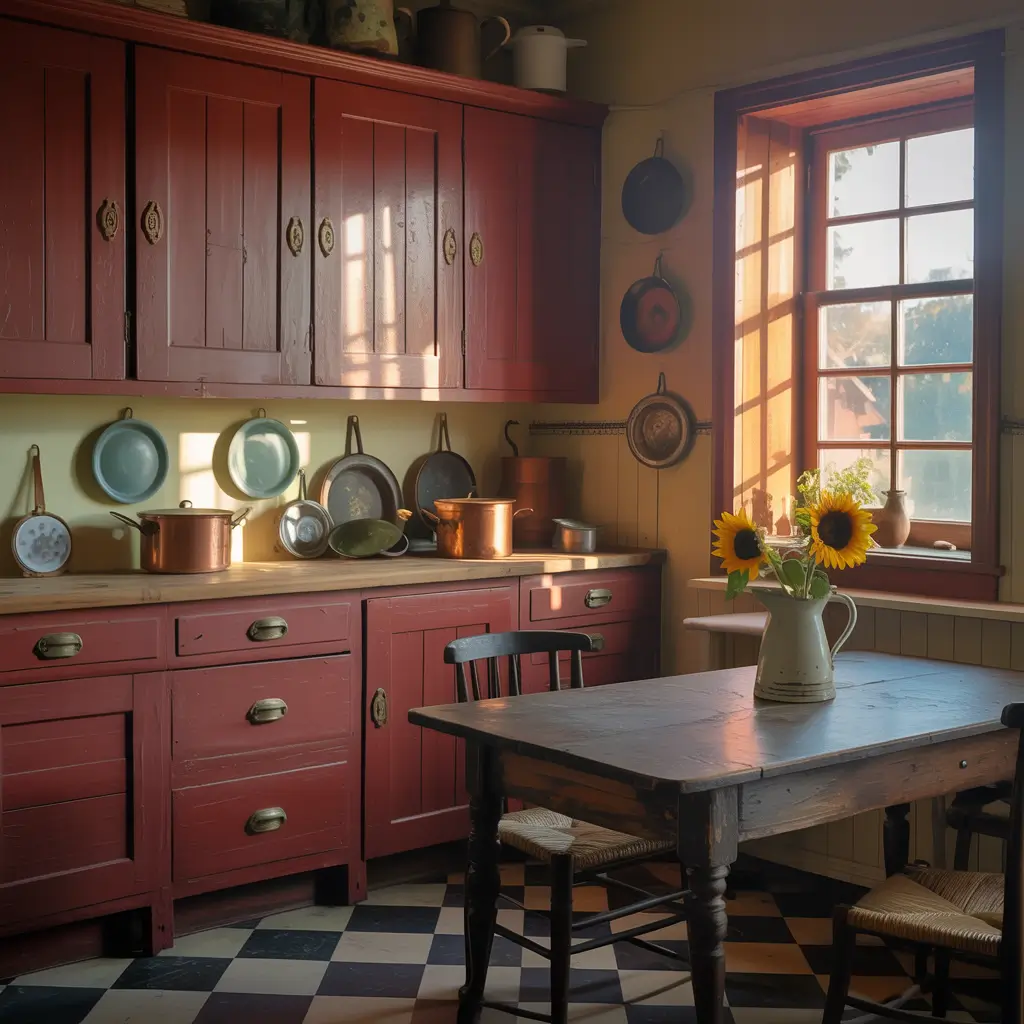
There’s a reason red farmhouse kitchens keep showing up on every must-save Pinterest board and interior design roundup. They’re bold without being loud, warm without being overwhelming, and they carry that unmistakable sense of home that most other color palettes simply can’t replicate.
If you’ve ever stepped into a kitchen with rich red cabinetry, exposed wood beams overhead, and the smell of something wonderful on the stove — you know exactly what I’m talking about. It’s a feeling, not just a look.
Whether you’re planning a full kitchen renovation or just hunting for easy ways to inject some personality into your space, this guide covers 20 red farmhouse kitchen ideas that range from budget-friendly accent swaps to full-scale transformations. Let’s dive in.
1. Classic Barn Red Lower Cabinets with White Uppers
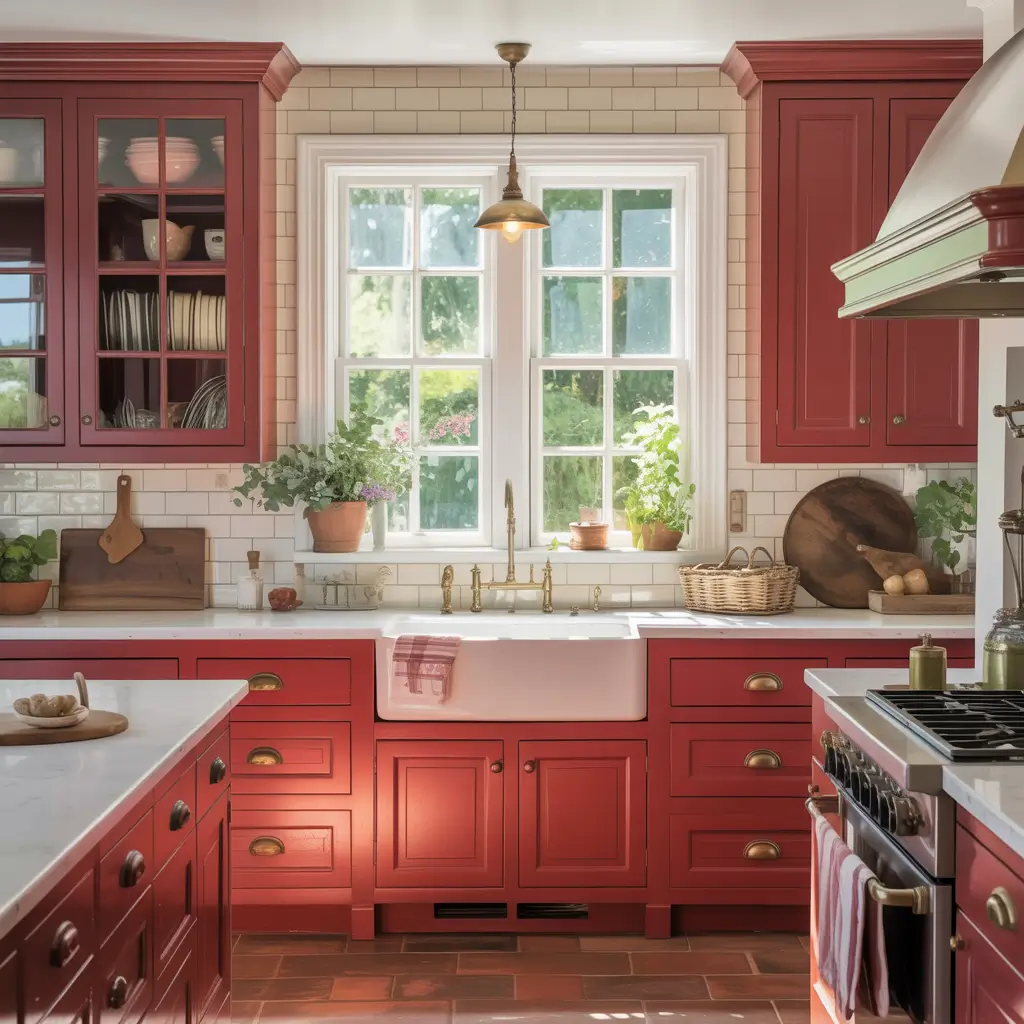
If there’s one combination that defines the red farmhouse kitchen look, this is it. Painting your lower cabinets in a deep barn red while keeping the uppers crisp white creates the perfect visual balance — grounded and warm at the bottom, light and airy at the top.
This approach works in kitchens of all sizes. In smaller spaces, the white uppers keep the room from feeling closed in. In larger kitchens, the red base cabinets add the weight and drama the space needs to feel intentional rather than empty.
1. Paint choice matters: Look for matte or eggshell finishes — they read as more rustic and forgiving than high gloss.
2. Hardware makes or breaks it: Matte black pulls and knobs are the go-to pairing. They add definition without competing with the red.
3. Countertop pairings: Butcher block, honed white marble, or concrete all complement this look beautifully.
💡 Pro Tip: Benjamin Moore’s ‘Barn Red’ (HC-181) and Sherwin-Williams ‘Heartthrob’ (SW 6866) are consistently popular choices for farmhouse cabinet projects.
2. Distressed Red Cabinets for Authentic Rustic Character
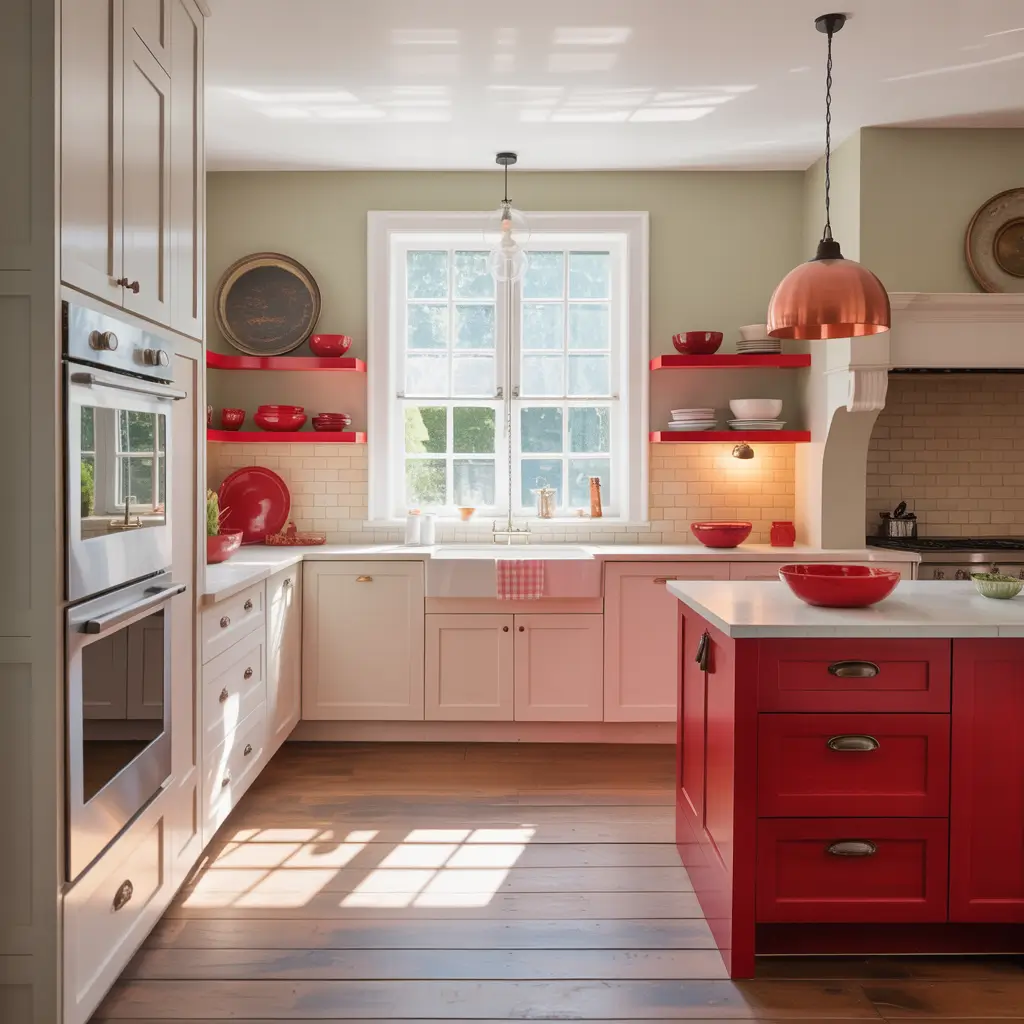
Not every beautiful thing needs to be perfect. Distressed red cabinets — where the paint has been intentionally worn to reveal glimpses of the wood underneath — bring a level of authenticity that fresh paint simply can’t fake.
This look works especially well in older homes where the architecture already tells a story. The cabinets become part of that narrative, looking like they’ve been there for decades rather than just installed last spring.
You can achieve this look two ways: hire a professional faux-finish painter, or do it yourself using a technique called dry brushing followed by strategic sanding at corners and edges. Either way, the result is a kitchen that feels genuinely lived-in and loved.
💡 Pro Tip: Apply a clear wax finish over your distressed cabinets to protect the paint while maintaining that matte, aged appearance.
3. Red Kitchen Island as a Focal Point
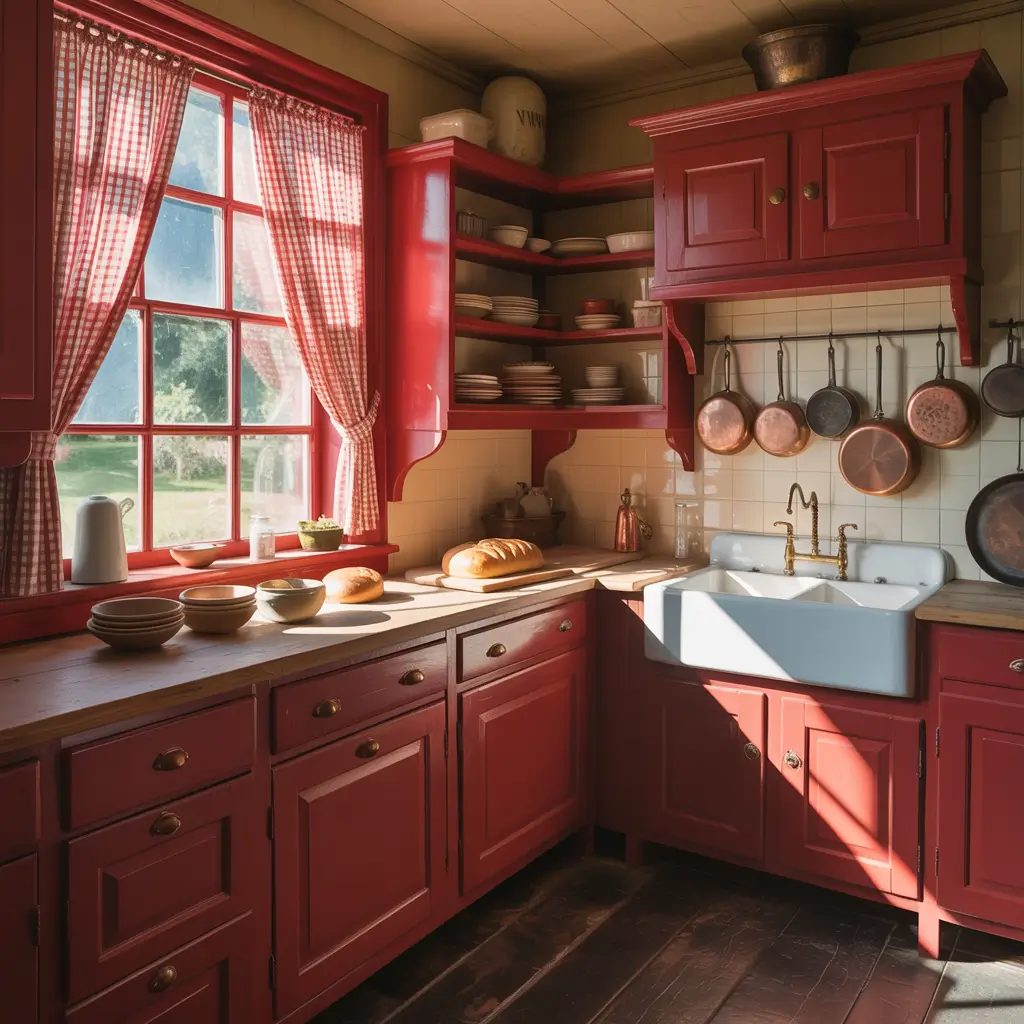
If you’re not ready to commit to red cabinets throughout the entire kitchen, starting with the island is the smartest move you can make. A red island in a mostly neutral kitchen becomes an instant focal point — the piece that ties the whole room together and makes guests say ‘I love your kitchen.’
The island is also a lower-risk starting point. If you ever decide to refresh the look down the road, repainting an island is a weekend project rather than a week-long ordeal.
1. Contrast with natural wood: Pair a red painted island base with a thick butcher block top for the ultimate farmhouse look.
2. Add seating thoughtfully: Black metal barstools or natural wood stools both work well with red.
3. Lighting overhead: A cluster of Edison bulb pendants or a single oversized lantern pendant anchors the island visually.
4. Vintage Red Accents and Farmhouse Accessories
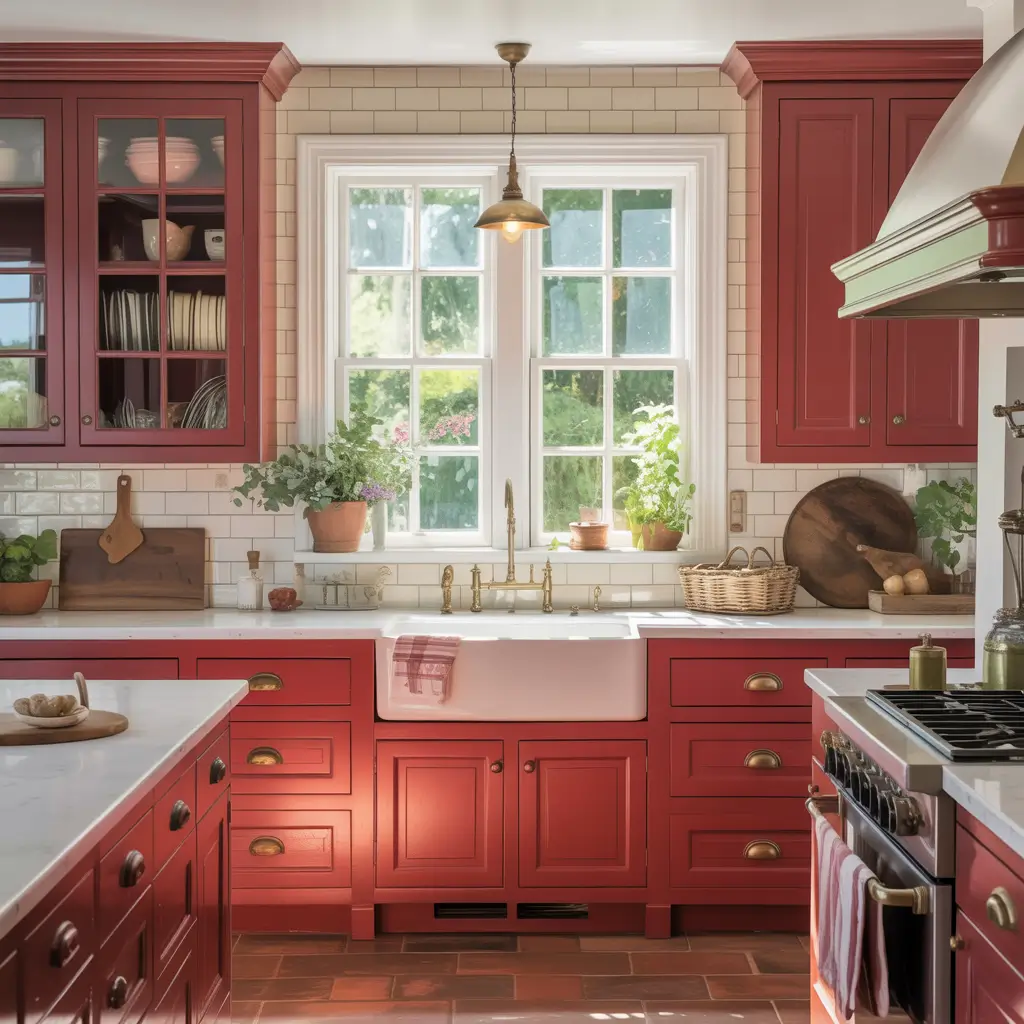
Sometimes the most impactful design choices cost almost nothing. Vintage red accents — a collection of old enamelware on open shelves, a red cast iron skillet hanging on the wall, antique red glass bottles arranged on a windowsill — add warmth and character without requiring a contractor.
The key to making vintage accents feel curated rather than cluttered is restraint. Choose a few meaningful pieces rather than filling every surface. Let each piece breathe and be noticed.
Great sources for vintage red kitchen pieces include estate sales, thrift stores, antique markets, and online platforms like Etsy and Facebook Marketplace. The hunt is half the fun.
1. Red enamelware: Pots, pitchers, and canisters in red enamel are enduringly popular and easy to find.
2. Vintage red scales or crocks: These double as functional storage and decorative focal points.
3. Retro red appliances: A red KitchenAid stand mixer or a Smeg toaster can anchor an entire color scheme on its own.
5. Red and White: The Timeless Farmhouse Combination
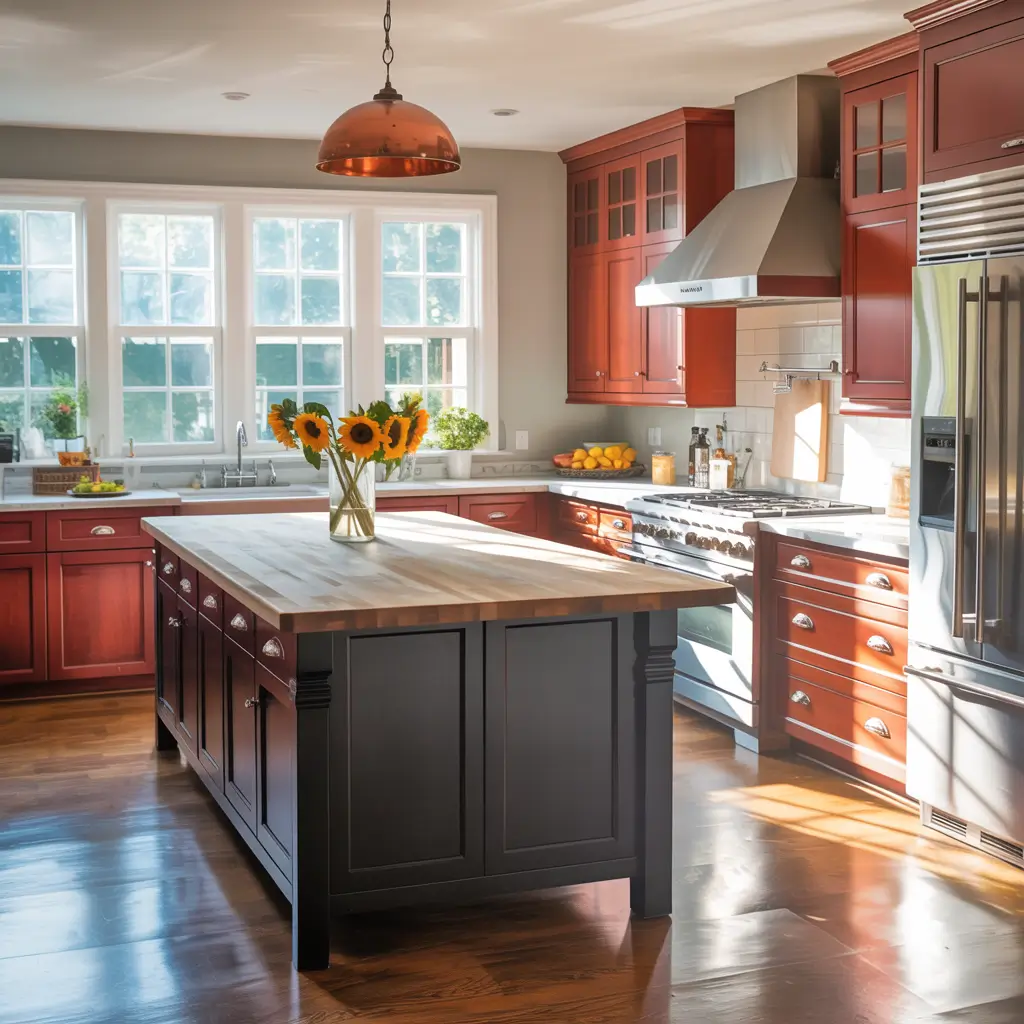
Red and white is to farmhouse kitchens what navy and white is to coastal design — a pairing so fundamentally right that it never really goes out of style. The contrast is crisp, the energy is inviting, and the overall effect is both cheerful and grounded.
The ratio you choose changes the entire mood of the room. A kitchen that’s 80% white with red accents feels bright, fresh, and slightly Scandinavian in its restraint. Flip the ratio closer to 60% red and the space becomes more dramatic, more cozy, more unapologetically bold.
💡 Pro Tip: Red and white checkered floor tiles — whether classic ceramic or modern vinyl peel-and-stick — add an incredible amount of farmhouse personality for relatively low cost.
6. Bold Red Range Hood as a Statement Piece
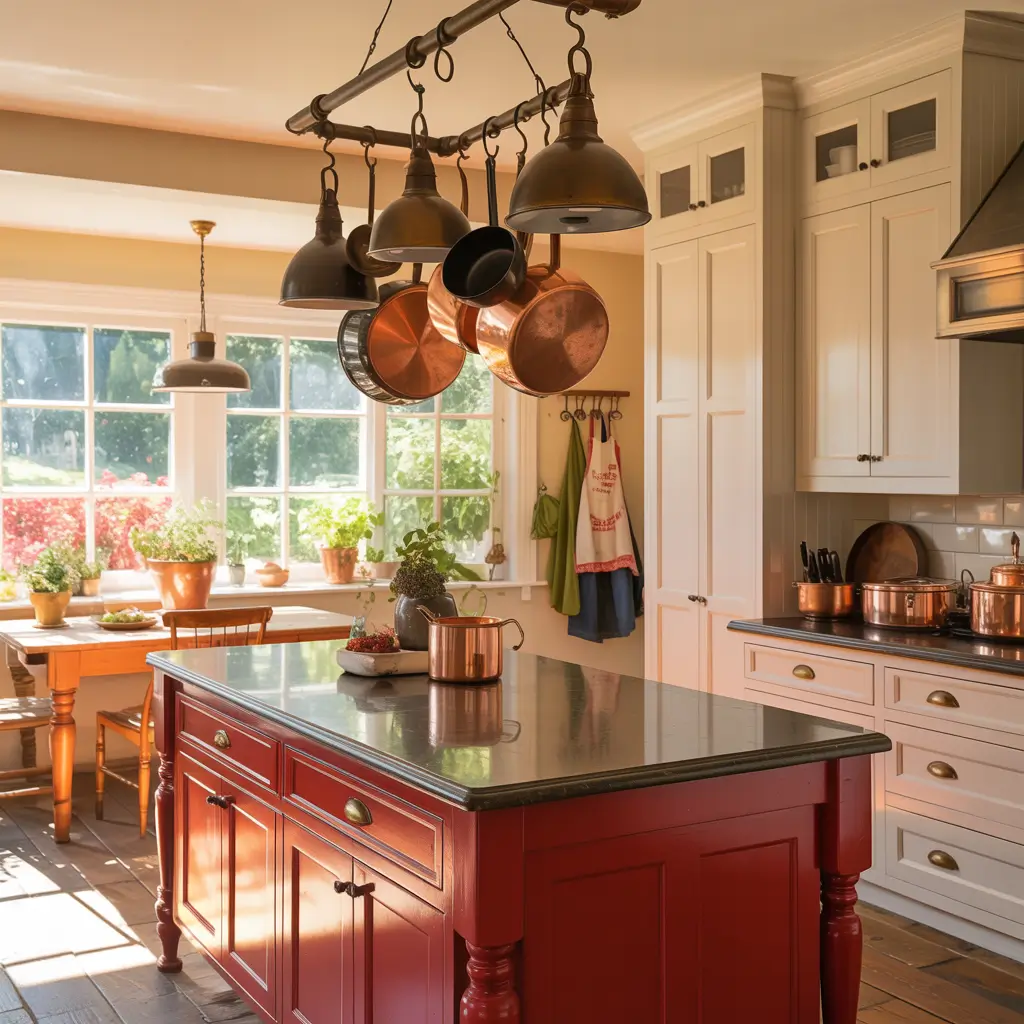
If your kitchen has a fairly neutral color palette and you want to add a single dramatic focal point without touching the cabinets, a custom red range hood is your answer. It draws the eye immediately, adds architectural interest, and frames the cooking area in a way that makes the kitchen feel intentionally designed.
Wood range hoods painted in red work beautifully in farmhouse spaces. You can also find metal hoods powder-coated in deep red or burgundy through specialty suppliers. Either way, the hood becomes the piece that the rest of the kitchen is designed around.
7. Open Red Shelving Against White or Shiplap Walls
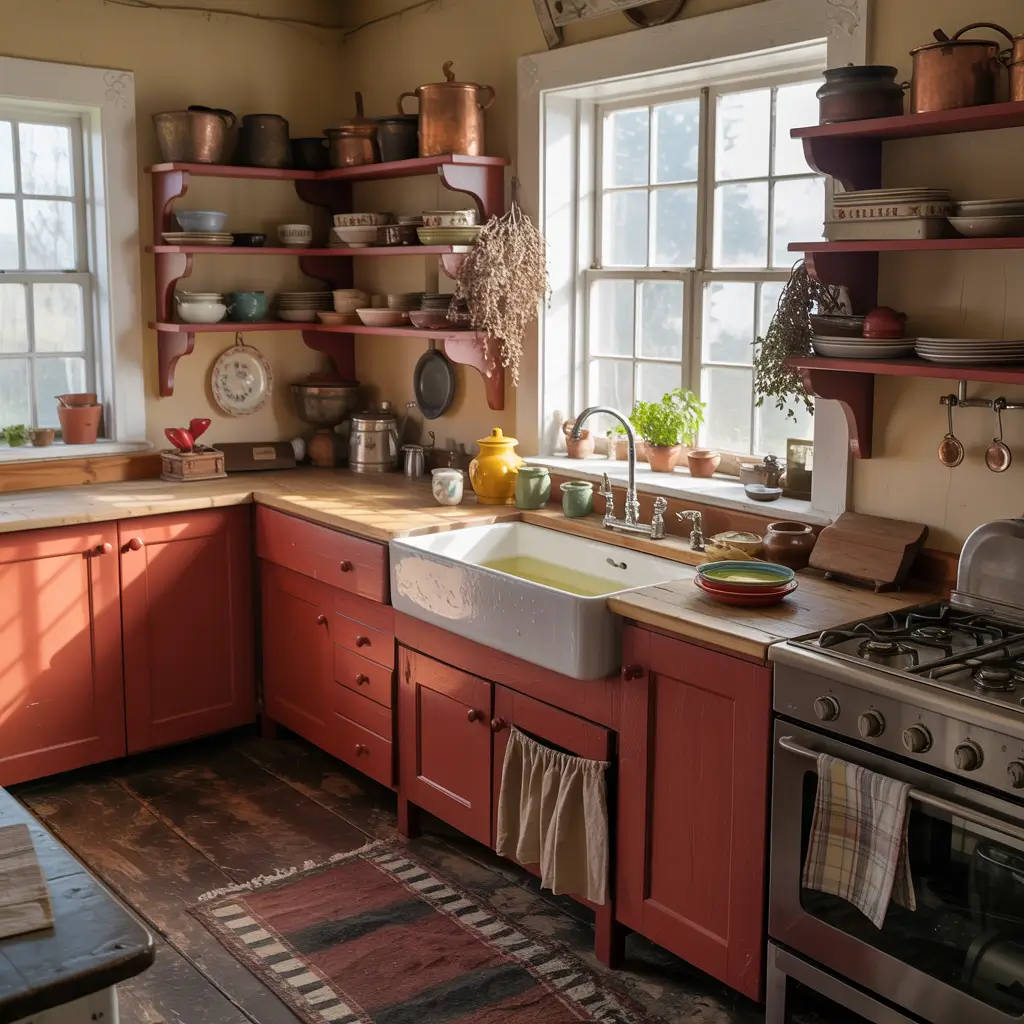
Open shelving is a staple of farmhouse kitchen design, and painting those shelves in a deep red creates something genuinely special — especially when mounted against white walls or the horizontal texture of shiplap paneling.
The key is styling the shelves with intention. Mix white ceramics, natural wood cutting boards, greenery, and a few red accent pieces for a display that feels collected over time rather than assembled in an afternoon.
1. Bracket choice: Black iron brackets against red shelves are a classic farmhouse pairing.
2. Shelf depth: 10-12 inches is ideal for most kitchen items without making the shelves look too heavy.
3. Spacing: Leave at least 14 inches between shelves so taller items aren’t cramped.
8. Red Farmhouse Kitchen with Exposed Wood Beams
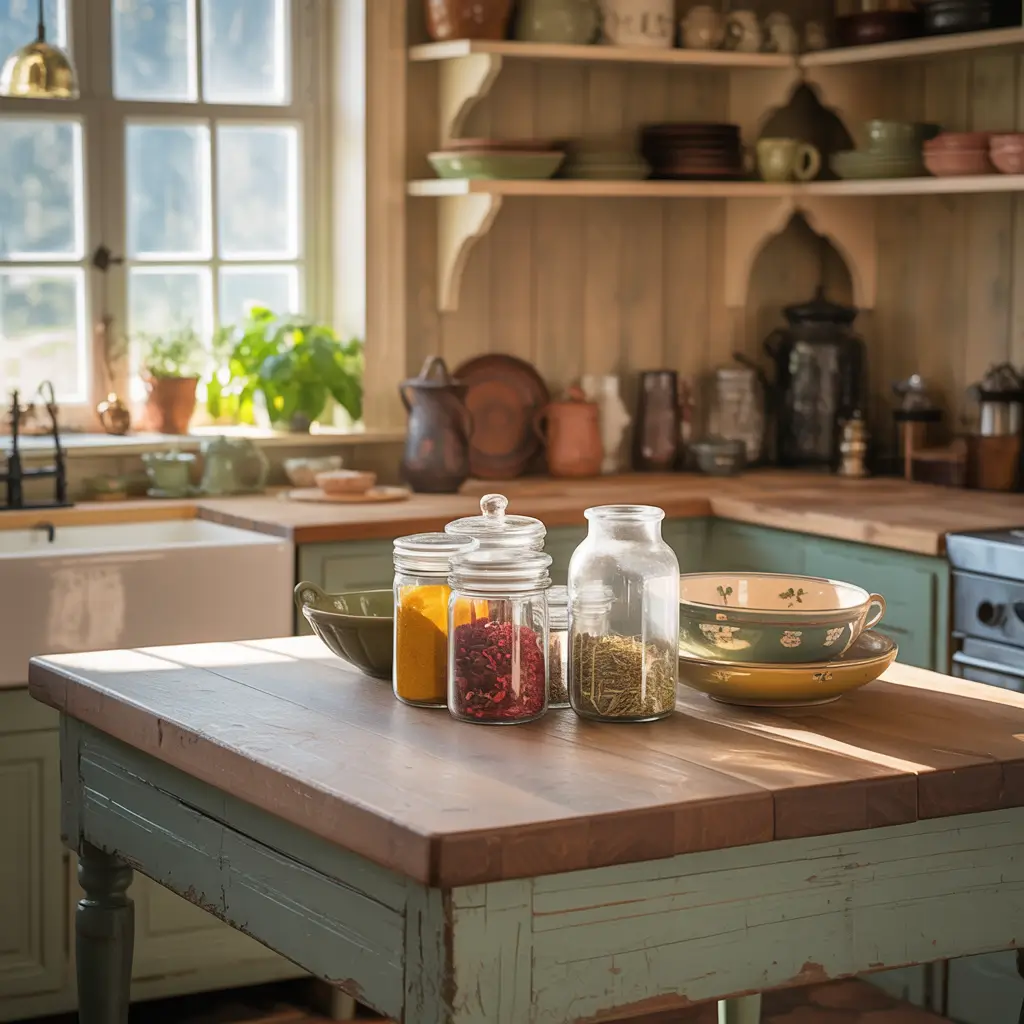
Few combinations in interior design are as reliably beautiful as red and natural wood. When you pair red kitchen elements — cabinets, an island, or even just large accessories — with exposed ceiling beams in raw or stained wood, the result feels both grand and deeply cozy.
The beams add a structural element that anchors the bold red below. It keeps the color from feeling flat or one-dimensional. Together, red and wood create a kitchen that looks like it belongs in a converted farmhouse or a high-end country retreat.
💡 Pro Tip: If your ceilings don’t have real beams, faux wood beam kits are surprisingly convincing and can be installed as a DIY project over a weekend.
9. Deep Burgundy Cabinets for a Sophisticated Take
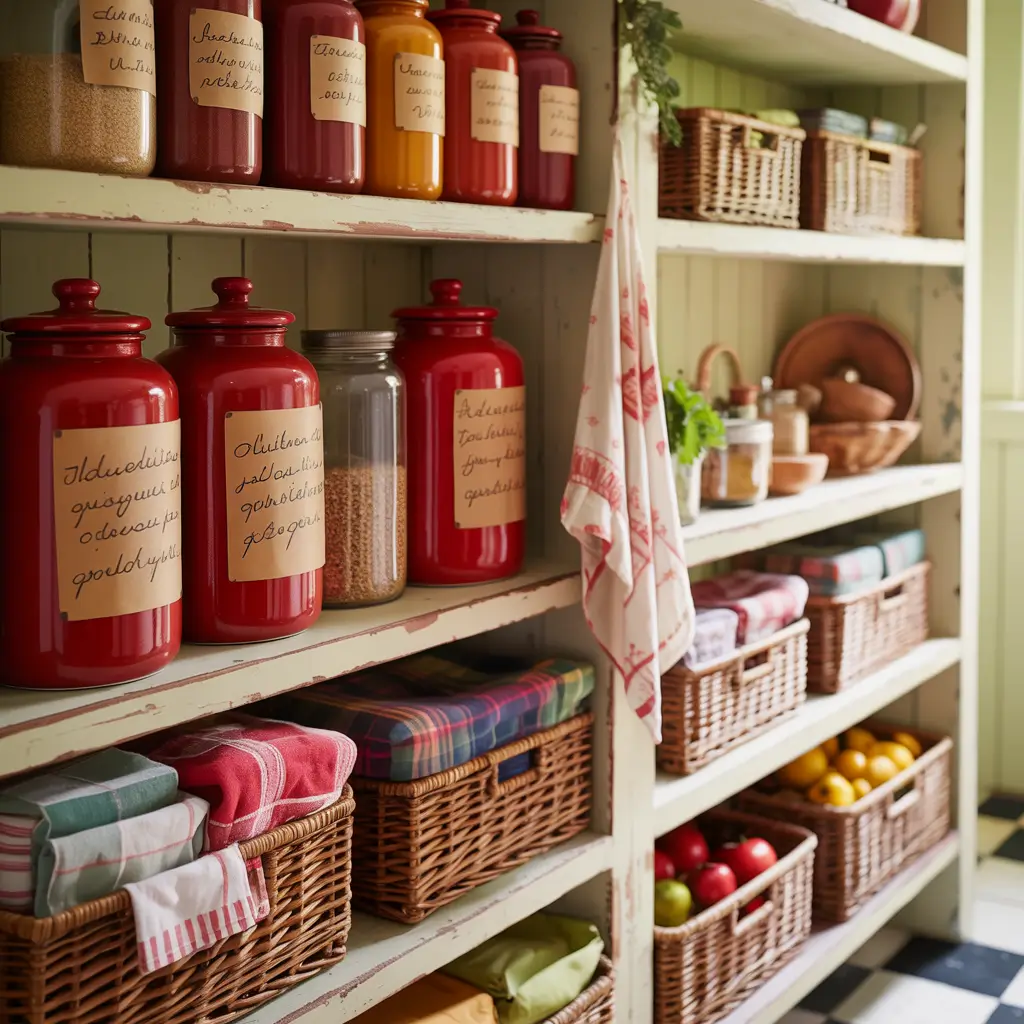
Not all red is created equal. While bright barn red makes a lively, energetic statement, deep burgundy brings something quieter and more sophisticated to the table — a rich, wine-inspired hue that reads as luxurious rather than playful.
Burgundy works especially well in larger kitchens where the depth of the color can be fully appreciated. Pair it with brass or gold hardware (rather than black) and you’ll create a kitchen that feels genuinely elegant while still carrying all the warmth of the farmhouse aesthetic.
1. Burgundy + brass: This combination feels rich and collected, like a space that evolved over years.
2. Countertop pairing: Creamy white quartz or warm gray soapstone complement burgundy better than stark white marble.
3. Lighting: Warm-toned bulbs (2700K) make burgundy glow; cool bulbs can make it look muddy.
10. Red Farmhouse Kitchen with Black Accents
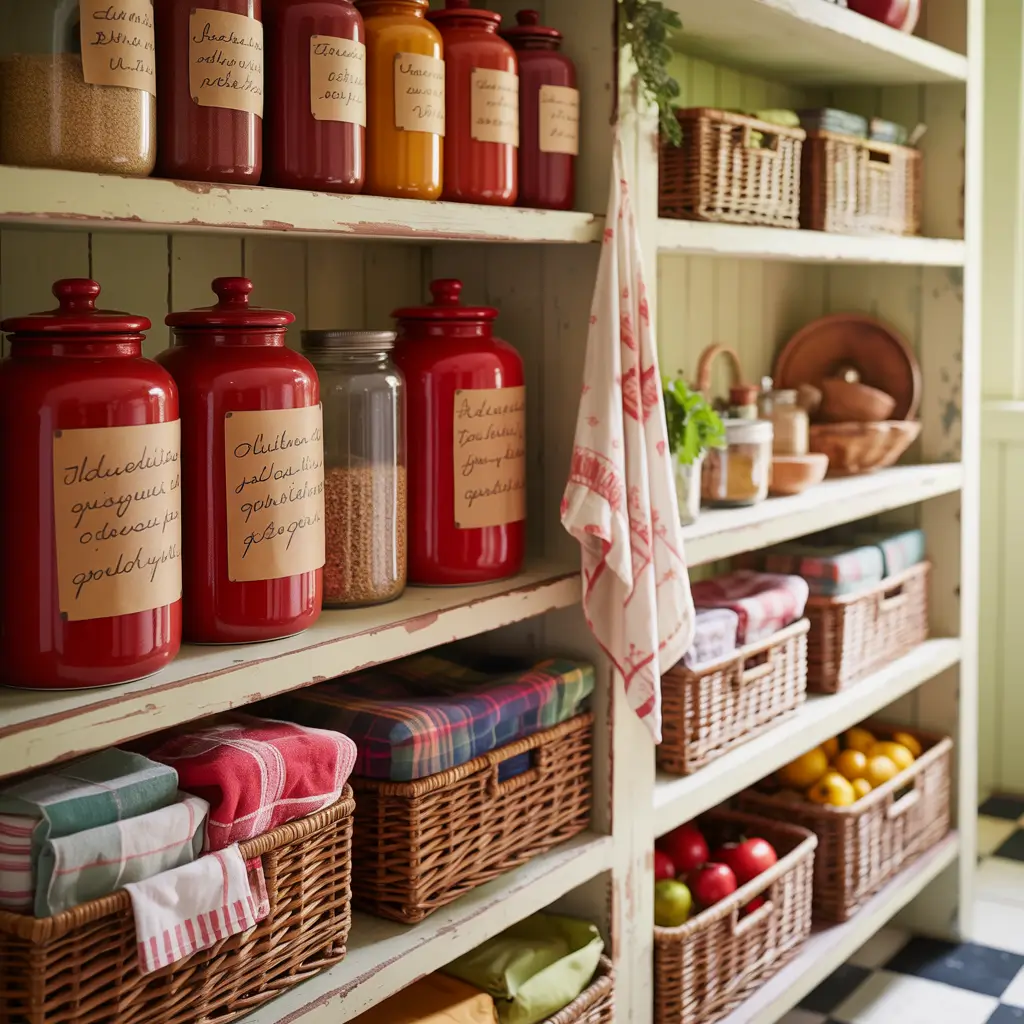
If you want your red farmhouse kitchen to feel more modern and graphic without losing its warmth, introduce black as a third player in the design. Black window frames, black pendant lights, black plumbing fixtures, and matte black cabinet hardware all add a crisp edge that keeps the red from feeling too sweet.
This combination — red, white, and black — has a classic American diner quality to it that somehow feels both retro and current at the same time. Done well, it’s one of the most visually interesting farmhouse kitchen palettes available.
11. Cozy Red Breakfast Nook
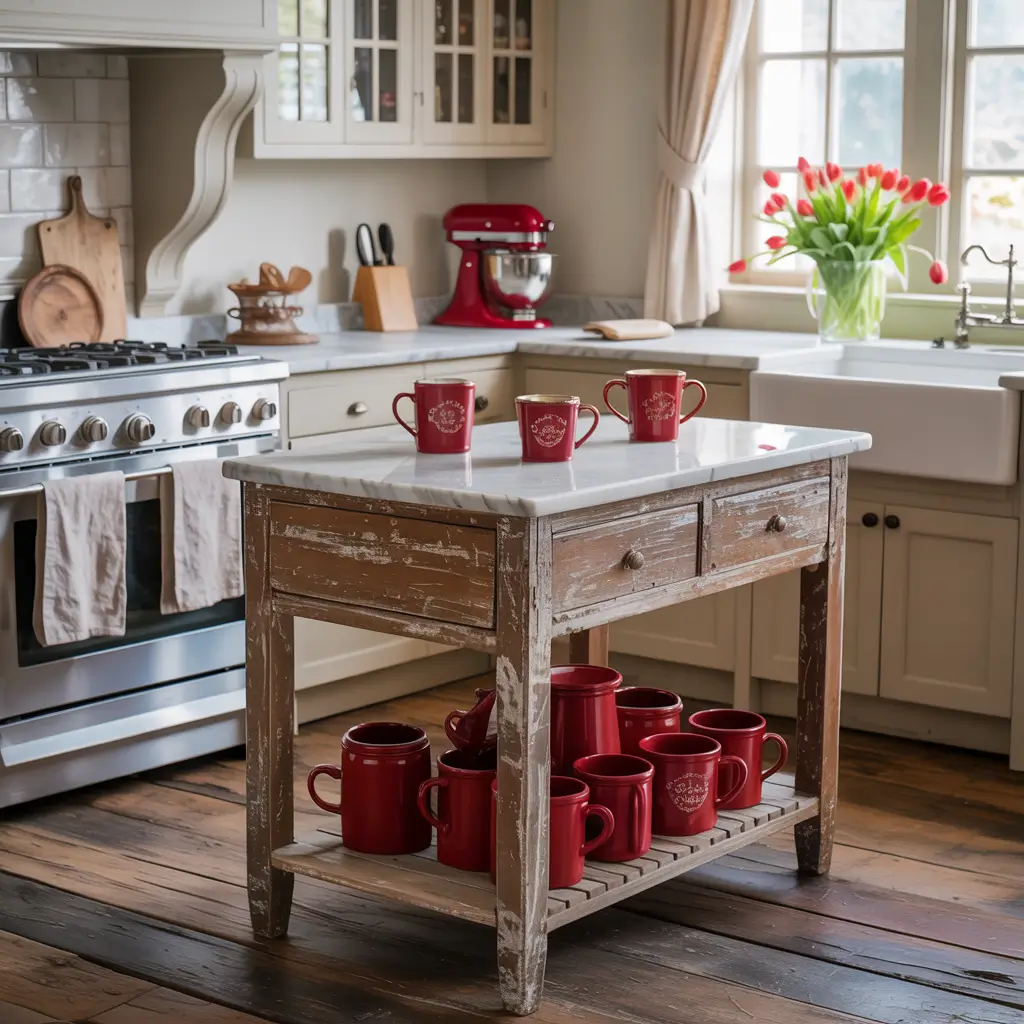
A dedicated breakfast nook is one of the most human-centered things you can add to a kitchen — a space designed specifically for sitting, connecting, and savoring a cup of coffee without the pressure of the larger room around you. Paint that nook in red or bring in red through the bench cushions and upholstery, and you’ve created something genuinely special.
Built-in bench seating painted in red with custom cushions feels particularly at home in a farmhouse kitchen. Add a reclaimed wood table, some mix-and-match vintage chairs, and overhead pendant lighting, and your breakfast nook becomes the most loved corner in your entire home.
💡 Pro Tip: Storage drawers built into the bench seating below are one of the most practical things you can add to a breakfast nook, especially in smaller kitchens.
12. Red Subway Tile Backsplash
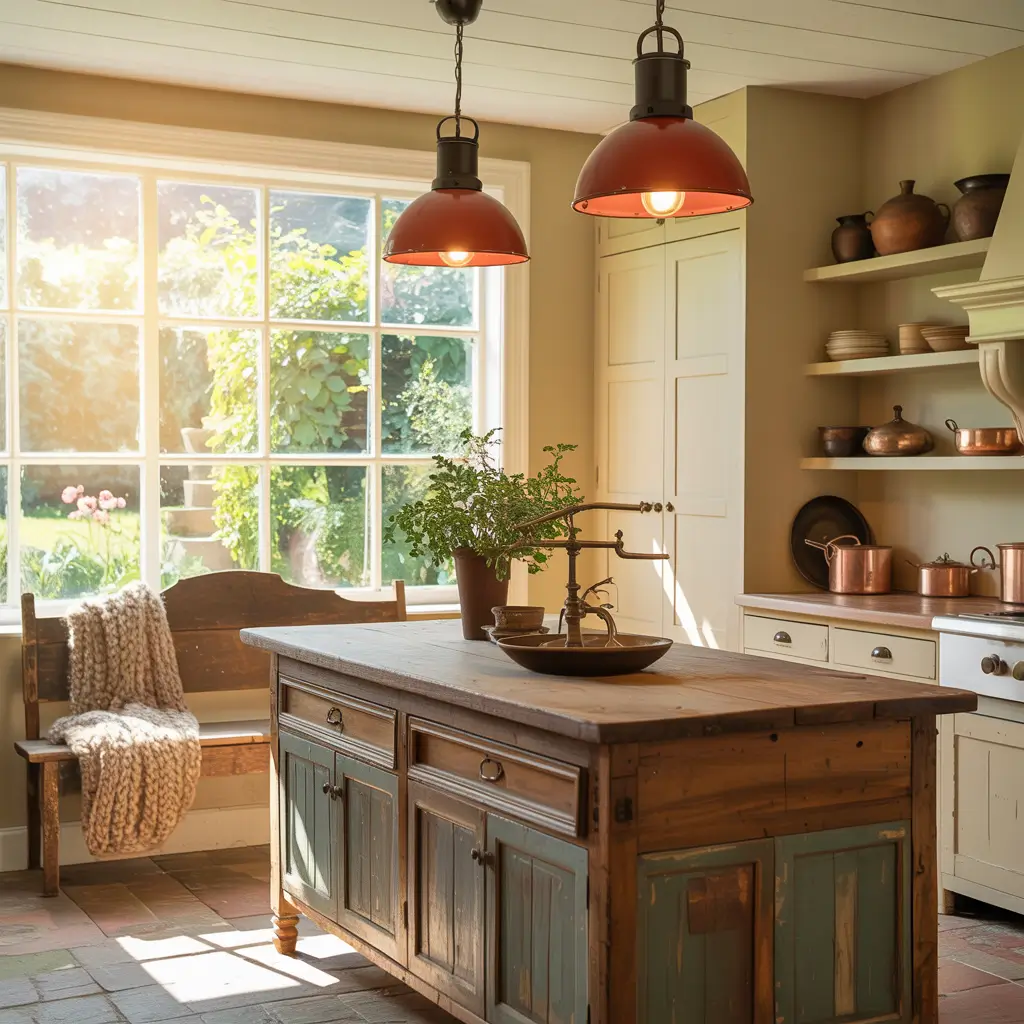
A red subway tile backsplash is an unexpected choice that pays off beautifully. Where most people default to white subway tile, choosing red creates a backsplash that serves as both a functional surface and a genuine design statement.
This works best when the rest of the kitchen is kept relatively neutral — white or natural wood cabinets, simple countertops, and minimal accessories. The red tile becomes the thing that makes the kitchen unmistakably yours.
1. Grout matters: White grout keeps things bright and classic. Dark charcoal grout makes the tile pattern more dramatic.
2. Tile finish: Glossy tile reflects light and feels more traditional; matte tile feels more modern and organic.
3. Layout options: Classic horizontal running bond is safe and timeless; herringbone or vertical stacking adds more visual interest.
13. All-Red Kitchen: Going Bold from Floor to Ceiling
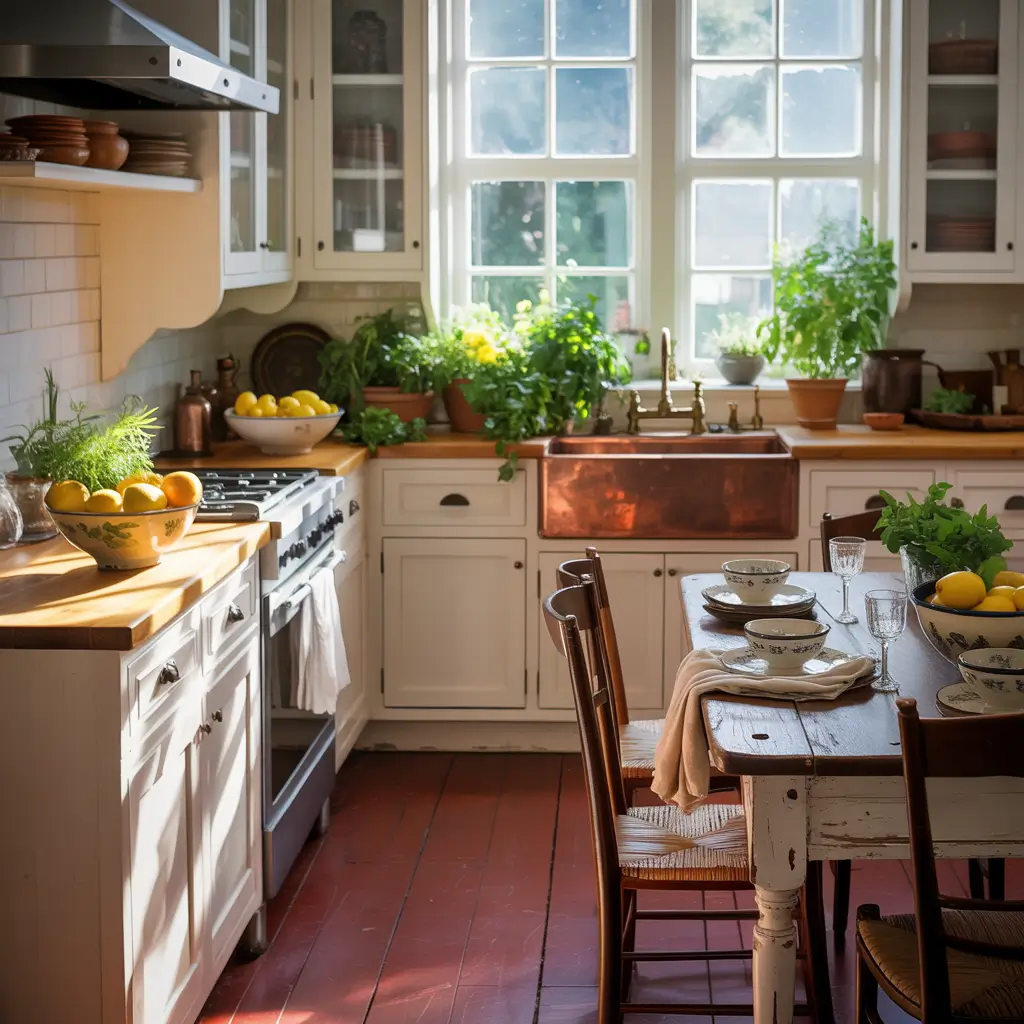
This one isn’t for the faint of heart — but when it’s done right, an all-red kitchen is jaw-dropping. We’re talking red cabinets, red walls, red ceiling, and every surface in a variation of the same hue. It sounds overwhelming on paper, and the first time you see it in person, you might have a moment of doubt. Then you settle into it, and it feels like the coziest room in the world.
The secret to making an all-red kitchen work is texture and variation. Use slightly different shades of red on different surfaces. Bring in plenty of natural materials — wood, linen, stone — to keep things grounded. And make sure there’s strong, warm lighting, because red without the right light can look flat.
💡 Pro Tip: An all-red kitchen is best suited for a separate kitchen space rather than an open-plan layout, where the intensity of the color could overwhelm adjacent rooms.
14. Red Farmhouse Kitchen with Stone Flooring
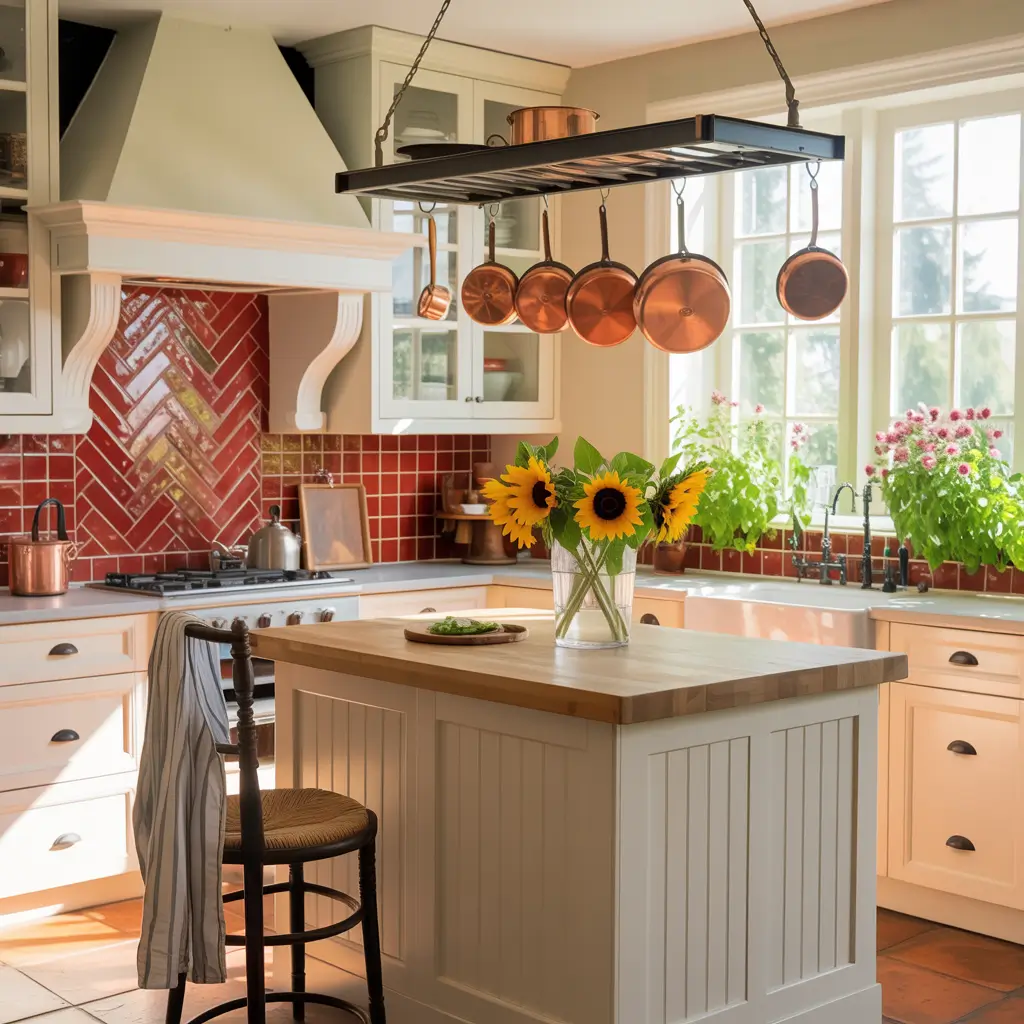
There’s something about stone floors — whether real slate, terracotta tile, or concrete — that grounds a red farmhouse kitchen in a way that no other flooring can. The natural texture and variation of stone provide the perfect visual counterbalance to the boldness of red above.
Terracotta tiles are a particularly beautiful pairing with red cabinetry. Their earthy orange-brown tones pick up on the warmth in the red without competing with it, creating a space that feels deeply connected to natural materials and old-world craftsmanship.
15. Red Farmhouse Kitchen with Farmhouse Sink
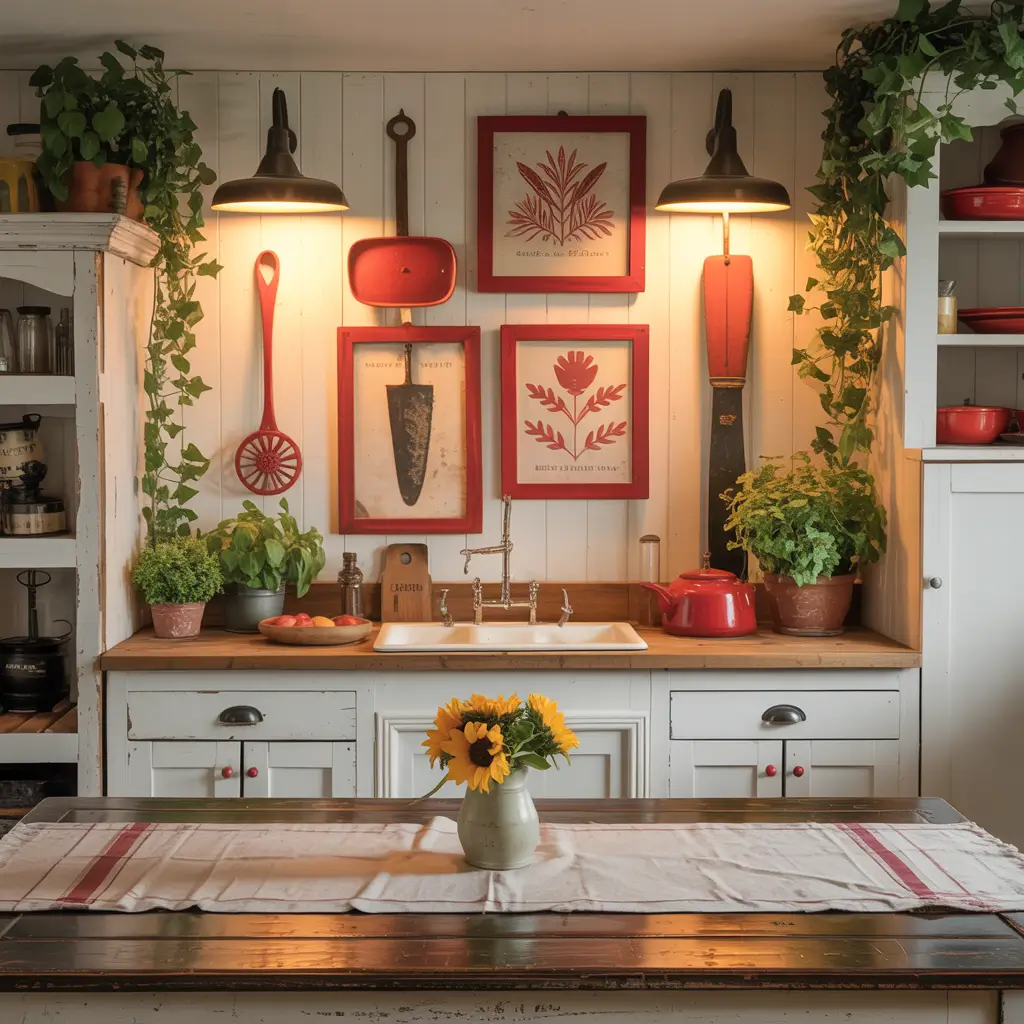
The farmhouse (or apron-front) sink is one of the most iconic elements of farmhouse kitchen design, and it pairs beautifully with red cabinetry. Whether you choose a classic white porcelain farmhouse sink against red lower cabinets or go with a fireclay sink in a warm ivory tone, the combination feels historically authentic and deeply practical.
The generous depth and wide basin of a farmhouse sink were designed for real kitchen work — washing large pots, bathing vegetables from the garden, filling big stockpots. That honest functionality is at the heart of what makes farmhouse design so enduringly appealing.
💡 Pro Tip: Position the farmhouse sink directly under a window if possible. The combination of natural light, a deep sink, and red cabinetry surrounding it creates one of the most naturally beautiful kitchen vignettes imaginable.
Choosing the Right Shade of Red for Your Kitchen
Not all reds are created equal, and choosing the right shade for your specific kitchen makes the difference between a result you love and one you’re trying to live with. Here’s a quick guide:
1. Barn Red / Rustic Red: Muted, earthy, brown-tinged. Most traditional farmhouse choice. Feels historical and authentic.
2. Cherry Red / True Red: Bright and energizing. Works well as accents. Can feel bold when used on full cabinetry.
3. Burgundy / Wine Red: Deep, sophisticated, slightly purple-tinged. Best for larger kitchens with good lighting.
4. Tomato Red / Warm Red: Orange-tinged and warm. Pairs especially well with natural wood and terracotta tones.
Always test paint samples on your actual cabinet doors and walls before committing. View samples in both natural daylight and your evening artificial light — the difference can be significant.
Final Thoughts
A red farmhouse kitchen isn’t just a design choice — it’s a statement about the kind of home you want to live in. It says that your kitchen is meant to be used, to be warm, to be full of people and food and conversation. It says that beauty doesn’t have to be precious or untouchable.
Whether you go all-in with full red cabinetry, or you start small with a single red island and a few well-placed accessories, you’re working with one of the most timeless and deeply satisfying palettes in all of interior design. Red farmhouse kitchens have been beloved for generations, and there’s no sign of that changing anytime soon.
The ideas in this guide span every budget and every level of commitment — from a $40 textile refresh to a full cabinet and shiplap renovation. Start where you are, with what you have, and let your kitchen evolve into the warm, character-rich space it was always meant to be.
Happy decorating — and more importantly, happy cooking. 🍎
Frequently Asked Questions
What color goes best with red farmhouse kitchen cabinets?
White is the most universally flattering pairing — it balances the boldness of red without competing with it. Natural wood tones, warm gray, and cream are also excellent companions. For a more dramatic look, introduce black as a third accent through hardware and fixtures.
Is red a good color for a small kitchen?
Yes, with some strategy. In a small kitchen, use red on lower cabinets only (with white uppers), as a single-wall accent, or through accessories rather than full cabinetry. The key is making sure there’s enough white or light color to keep the space from feeling compressed.
What countertops work best with red farmhouse cabinets?
Butcher block (natural wood) is the classic farmhouse choice and pairs beautifully with red. White or cream quartz, honed Carrara marble, and concrete are also popular options. Avoid very dark countertops — they can make a red kitchen feel heavy.
How do I prevent a red kitchen from feeling overwhelming?
Balance is everything. If you’re going bold with red cabinetry, keep the walls, ceiling, and countertops light. Introduce natural textures like wood, stone, and linen to ground the color. Make sure the room has good lighting — both natural and artificial — as red can feel darker and more intense in poorly lit spaces.
What’s the best red paint for farmhouse kitchen cabinets?
Popular professional choices include Benjamin Moore Barn Red (HC-181), Sherwin-Williams Heartthrob (SW 6866), and Farrow & Ball Rectory Red (No. 217). Always use a dedicated cabinet paint formula rather than wall paint — it’s harder, more washable, and holds up to kitchen use far better.
1 thought on “15 Stunning Red Farmhouse Kitchen Ideas for Cozy Rustic Charm”