
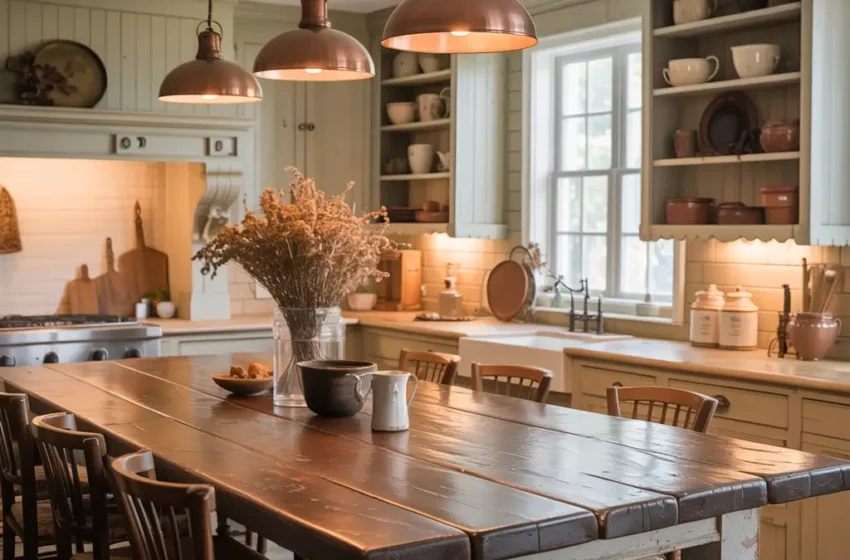
Of all the design decisions you will make in a kitchen renovation or refresh, the island tends to be the one that people get most excited about — and most anxious about. It is the centerpiece. The piece everyone gathers around. The surface that sees more use than any other in the room. Get it right and it anchors everything else. Get it wrong and it sits in the middle of your kitchen like an expensive problem.
The rustic farmhouse kitchen island, specifically, is a design challenge worth taking on. It needs to do several things at once: look like it has always been there, feel warm and welcoming enough to draw people toward it, provide genuine function for cooking and storage and seating, and — ideally — look like it arrived from somewhere interesting rather than being assembled from a flat-pack box.
The good news is that the rustic farmhouse aesthetic is more forgiving than most. Imperfection is the point. Character is the goal. And the materials that define this style — reclaimed wood, aged iron, hand-painted finishes, natural stone — tend to look better over time rather than worse.
These 22 rustic farmhouse kitchen island ideas range from full renovation projects to weekend DIY builds to simple styling changes that require no tools at all. Work through what applies to your kitchen, your budget, and your level of ambition — and build the island your kitchen deserves.
1. Build the Island Around a Reclaimed Wood Top — the Single Most Impactful Choice
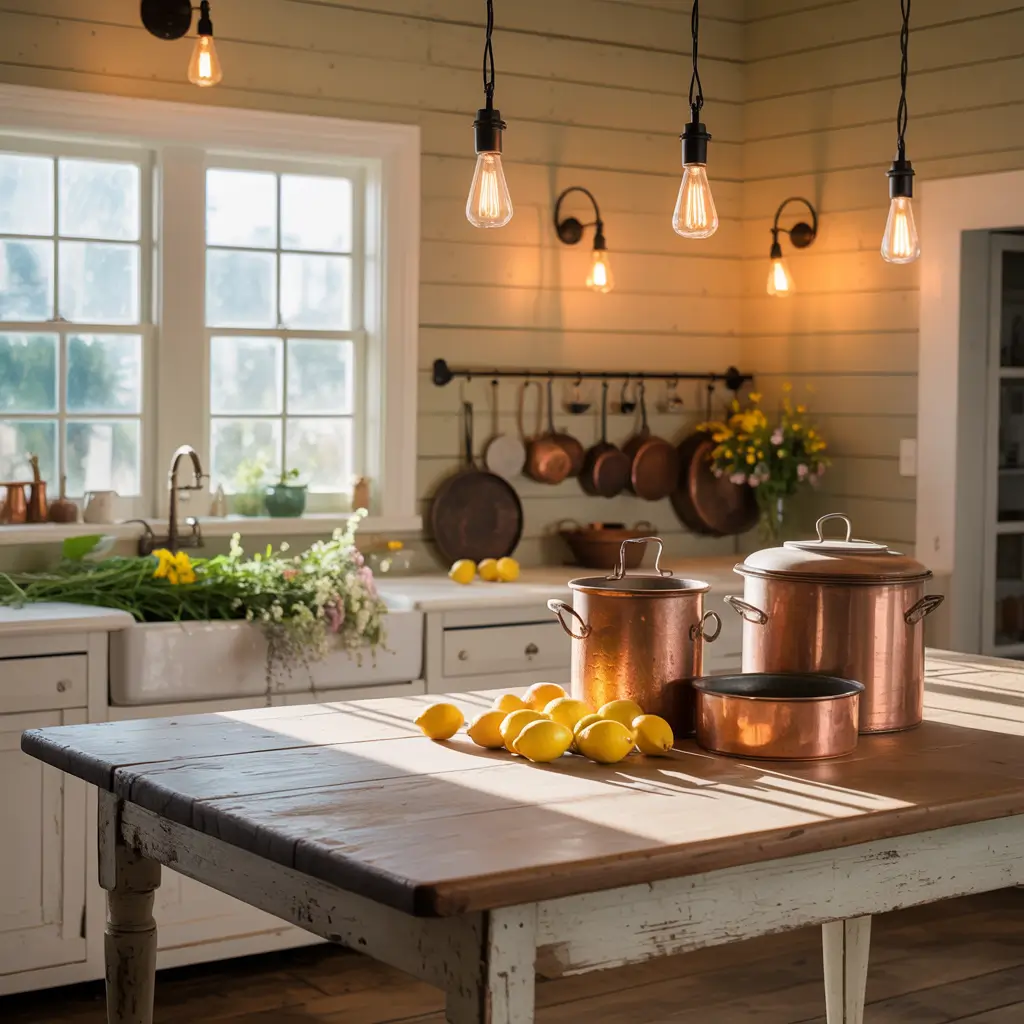
If there is one decision that defines the character of a rustic farmhouse kitchen island more completely than any other, it is the countertop material. And for the rustic farmhouse aesthetic, nothing compares to genuine reclaimed wood.
Reclaimed wood tops — whether end-grain butcher block from old-growth timber, face-grain planks from reclaimed barn board, or thick slabs from salvaged structural beams — have a quality that no new wood can replicate. The grain is tighter, the color is deeper and more complex, and the surface carries the marks of its previous life: nail holes sealed with aged resin, variations in color where the wood was exposed to weather or use, and a weight of presence that takes decades to develop.
Types of reclaimed wood that work best for island countertops:
1. End-grain reclaimed butcher block. The cross-section view of wood fibers arranged vertically. End-grain is naturally self-healing — knife marks close partially over time — and develops extraordinary depth of color and patina with oil treatment. The most durable and the most beautiful long-term choice.
2. Reclaimed barn board face-grain top. Wide planks laid flat, showing the long grain of the wood. This option shows the most character — the most nail holes, color variations, and weathering — and creates the most dramatically rustic visual effect.
3. Reclaimed timber slab. A single thick slab of reclaimed structural timber — a railway sleeper, an old factory floor joist, or a barn beam — used as an island top. The most unusual and most architecturally striking option.
Sourcing Tip: Architectural salvage yards, reclaimed lumber specialists, and barn wood dealers are the right sources for genuine reclaimed material. Online reclaimed wood marketplaces allow you to specify thickness, width, and species. Buy slightly more than you need — waste in cutting and fitting adds up, and matching reclaimed pieces later is difficult.
2. Paint the Island Base in a Contrasting Color to the Perimeter Cabinets
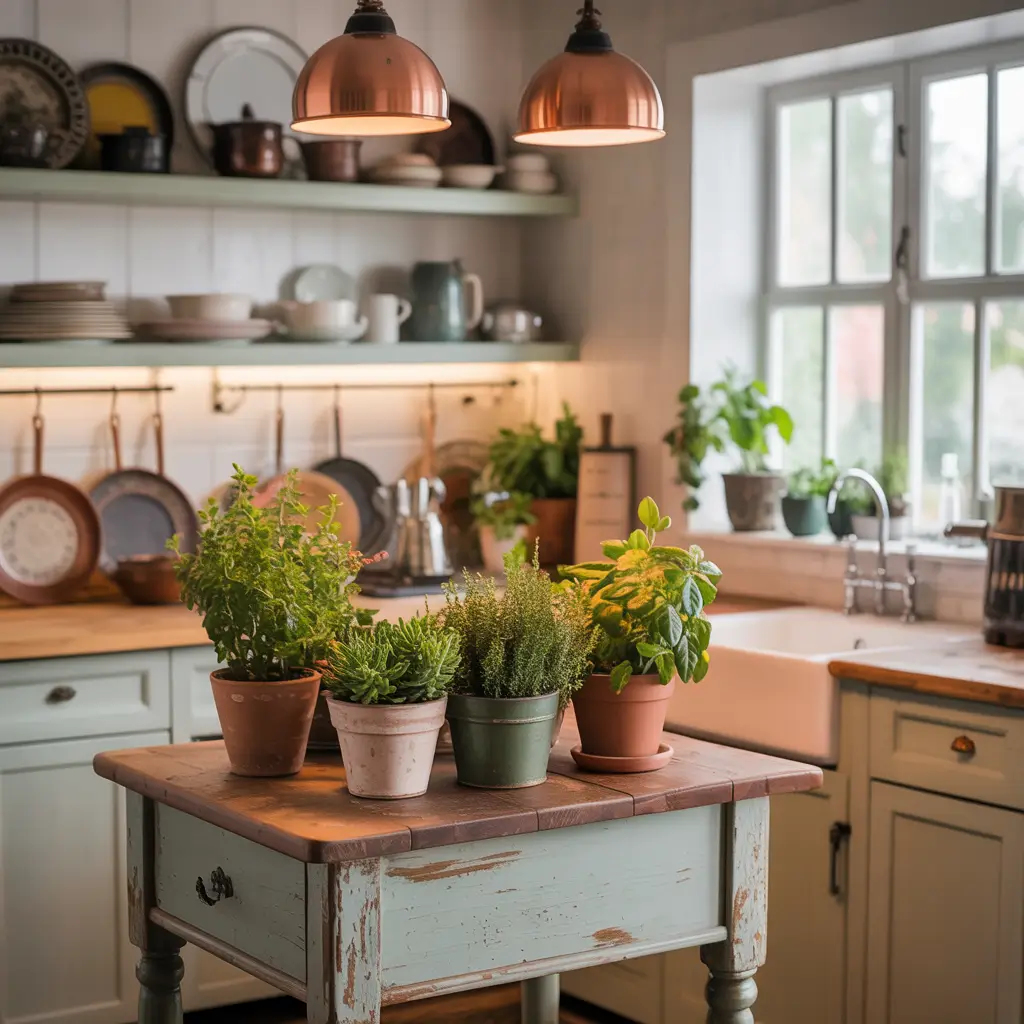
The single most effective way to make a kitchen island feel intentional and designed rather than simply large is to paint it differently from the surrounding cabinetry. In a rustic farmhouse kitchen, where white or cream perimeter cabinets are the standard, a painted island base in a deeper, more saturated tone adds immediate visual drama and prevents the kitchen from feeling flat and uniform.
Color directions that work beautifully for rustic farmhouse island bases:
1. Deep sage green. The most reliably beautiful farmhouse island color — earthy, organic, and warm. Works with white, cream, and wood-toned perimeter cabinets equally well. Farrow and Ball’s Mizzle, Sage, or Calke Green; Benjamin Moore’s Dried Thyme or Hampshire Downs.
2. Navy blue. A deep, slightly muted navy has a timeless quality that suits the rustic farmhouse aesthetic without feeling too nautical or contemporary. It provides the strongest contrast against white perimeter cabinetry.
3. Deep forest green. Richer and darker than sage, forest green on an island base creates an anchoring presence that suits kitchens with high ceilings and generous proportions.
4. Warm charcoal. A slightly brown-toned charcoal rather than a blue-gray one keeps the warmth of the farmhouse palette while adding depth and drama.
5. Dusty terracotta or rust. An unexpected choice that pays off in kitchens with warm wood floors and cream cabinetry — the terracotta tone connects the island to the earthen palette of traditional farmhouse interiors.
Paint the island base in a mineral or chalk paint for the most authentic rustic farmhouse finish — the slight matte texture of a chalk paint finish on a painted wood base looks genuinely handmade rather than factory-finished.
3. Add Furniture-Style Legs Instead of a Standard Toe-Kick Base
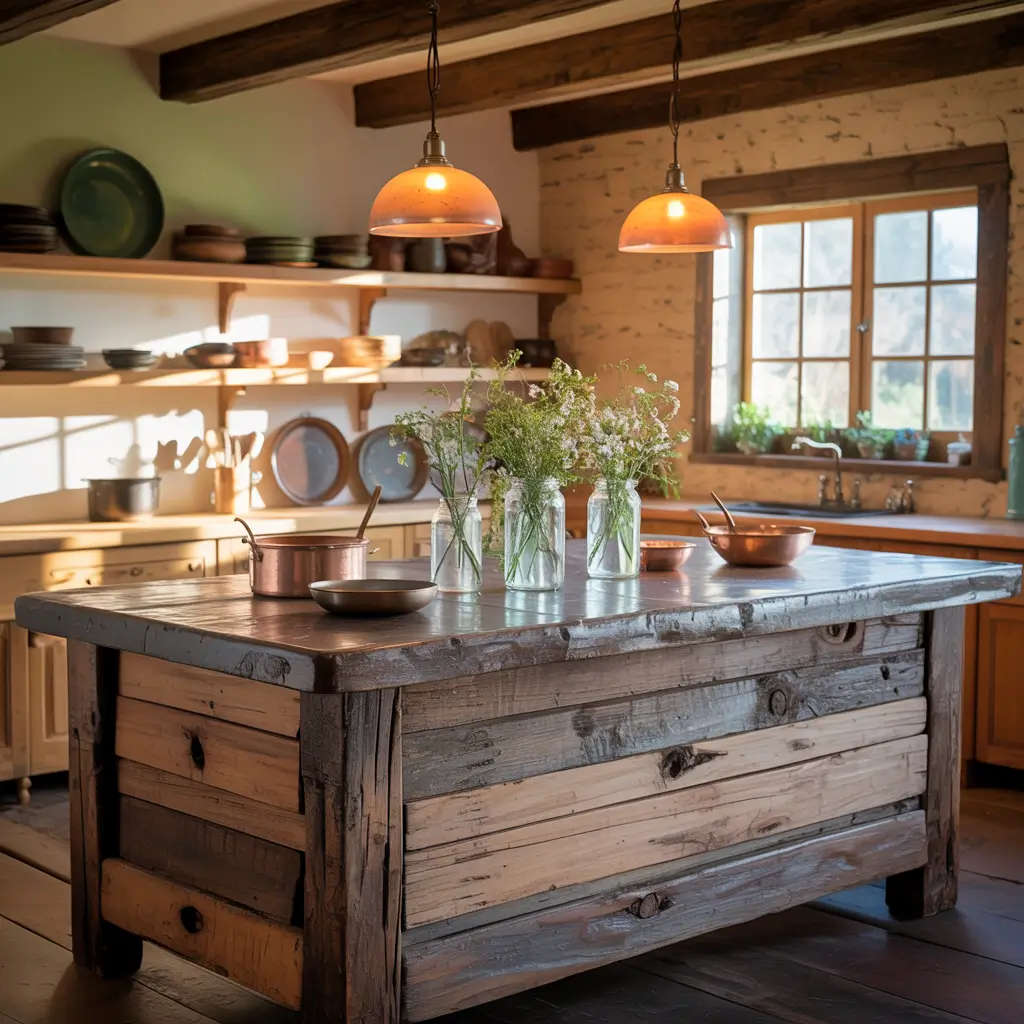
Nothing transforms a kitchen island from built-in millwork into a piece of furniture faster than replacing the standard flush toe-kick base with actual legs. This one change in construction shifts the entire character of the island — from something that was installed to something that arrived, and could theoretically be moved.
Leg styles that suit the rustic farmhouse kitchen island:
1. Turned wooden legs. The most classically farmhouse option — round, lathe-turned wooden legs in a natural or painted finish. The traditional profile of turned legs connects to furniture-making traditions that predate modern kitchen cabinetry entirely.
2. Square tapered legs. Simpler than turned legs, a square post that tapers slightly toward the foot has a Shaker-influenced quality that suits the more restrained rustic farmhouse kitchen.
3. Wrought iron or steel hairpin legs. The most modern-rustic option. Black steel hairpin legs on a reclaimed wood island top create an industrial-rustic effect that connects the farmhouse aesthetic to workshop and factory traditions.
4. Chunky, heavy square posts. Thick 4×4 or 6×6 wooden posts, either stained or painted, suit larger islands and create a more heavily rustic, almost furniture-scale presence.
Proportion Tip: The leg height should bring the island countertop to standard kitchen work height — 36 inches from floor to countertop surface, accounting for the thickness of the top material. Measure the top thickness first and work backward to determine the leg height required.
4. Build Storage Into the Island That Looks Like It Belongs
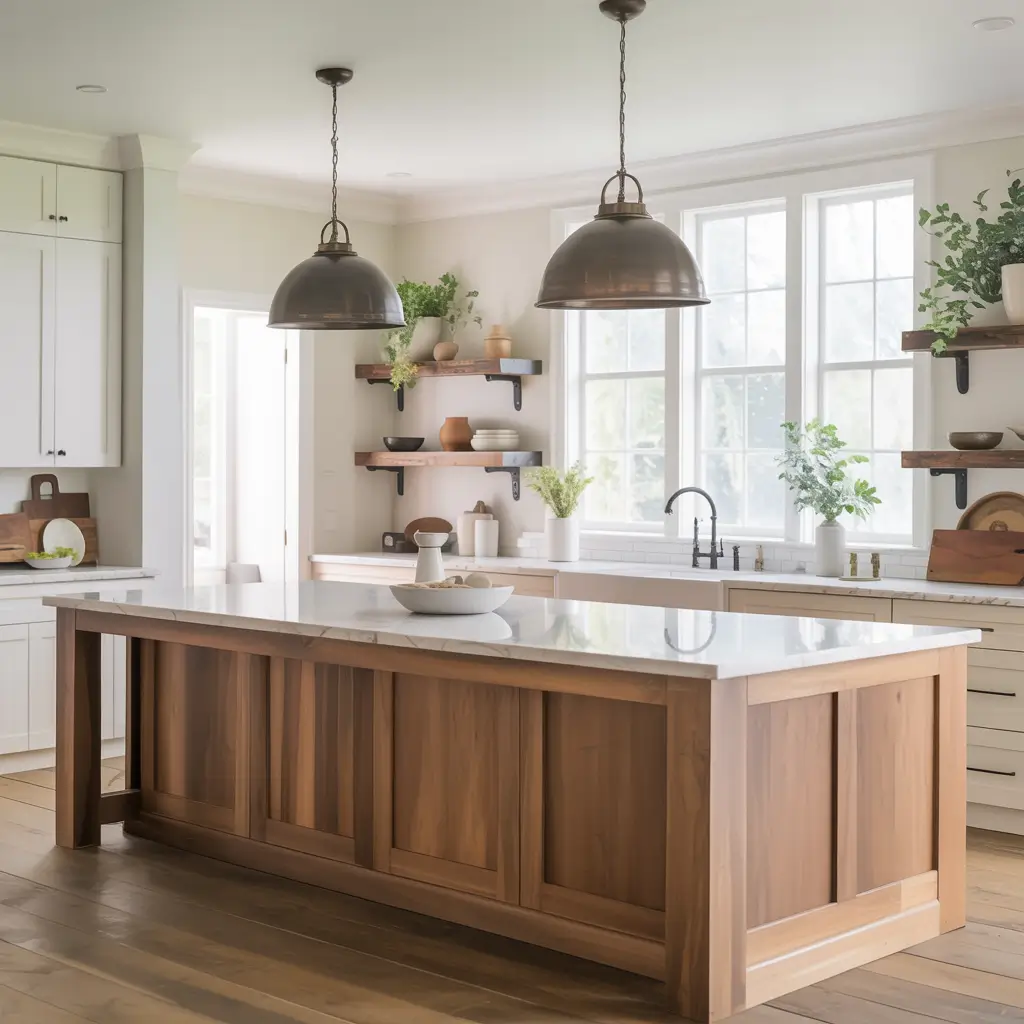
A rustic farmhouse kitchen island is not just a surface — it is a storage opportunity. The challenge is building in that storage in ways that feel organic to the aesthetic rather than looking like practical additions bolted onto a design statement.
Storage approaches that suit the rustic farmhouse island:
1. Open lower shelves. A shelf or two on the island’s lower level, accessible from one or both sides. For open shelves to look intentional on a farmhouse island, what sits on them matters: wicker baskets, enamelware, cookbooks, and stoneware crocks all read as appropriate. Random kitchen clutter does not.
2. Deep drawers on one side. Deep drawers on the working side of the island — the side facing the stove — are the most practical storage configuration. Pots, pans, and baking sheets pull out cleanly without the need to reach into dark cabinet depths.
3. A wine rack in the island end. A vertical wine storage section on one end of the island adds function and visual interest. In a rustic farmhouse kitchen, a wine rack built from wrought iron or simple wooden dowels looks far better than the decorative metalwork versions designed for contemporary kitchens.
4. Visible wicker baskets on lower shelves. Baskets do double duty: they contain loose items that would otherwise look chaotic on open shelves, and they add the organic texture of woven natural fiber to the island’s visual weight.
5. A built-in knife block or utensil rail on the island end. A magnetic knife strip in aged brass or matte black, or a built-in knife block at the island end, keeps the working side of the island organized and adds the honest, tool-focused quality of a professional kitchen to the farmhouse space.
5. Choose Island Seating That Looks Collected, Not Matched
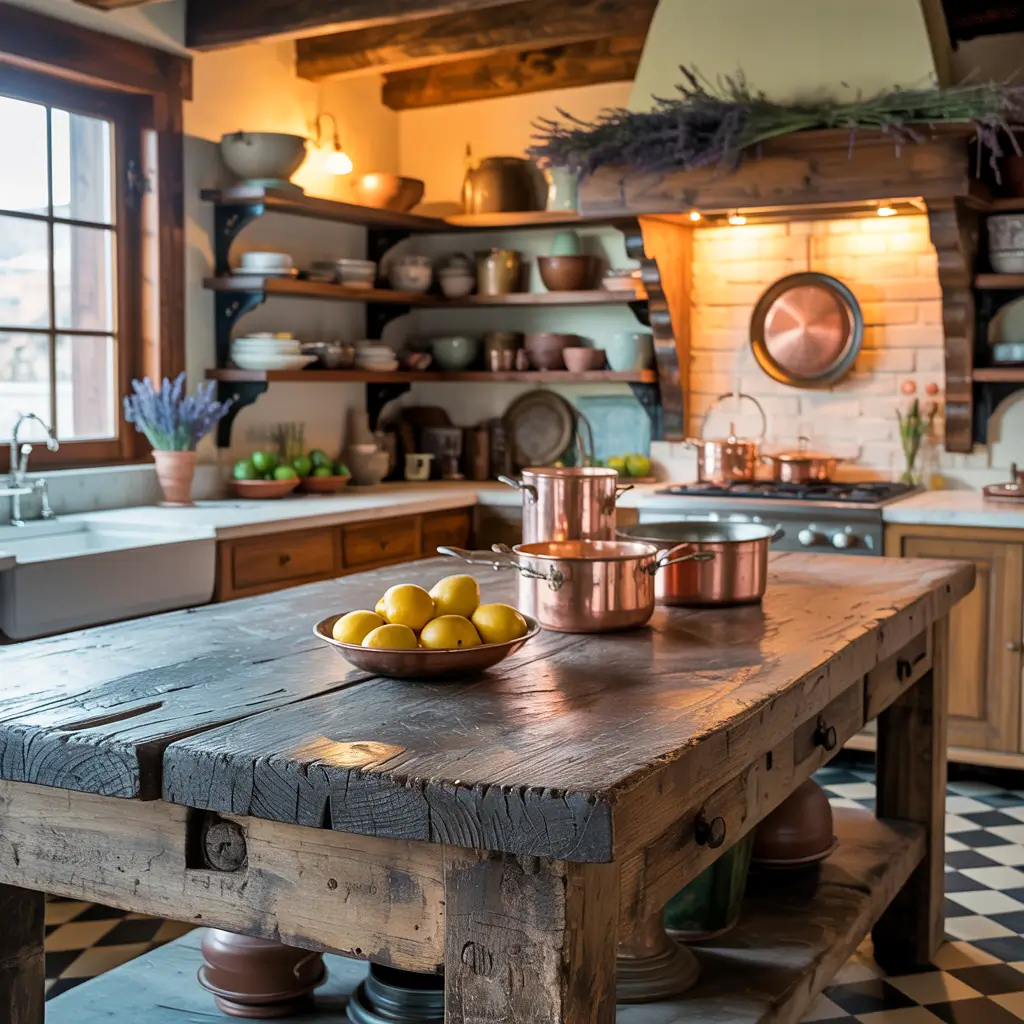
The seating at a rustic farmhouse kitchen island is one of the most visible design choices in the entire kitchen. And the approach that consistently produces the most authentic, characterful result — even though it runs against most people’s instinct — is to avoid a perfectly matched set of identical stools.
In a kitchen built around the idea of accumulated character, a row of four identical showroom stools looks like something purchased from a catalog rather than something that belongs. Two or three stools that are related but not identical — slightly different heights, the same color but a different profile, or the same material in different natural variations — looks far more genuinely farmhouse.
Stool types that suit the rustic farmhouse island:
1. Simple wooden counter stools with a turned or tapered leg. The most classically farmhouse option. Natural oak, painted black, or in a warm walnut stain. Look for stools with a slight variation in grain or finish between pieces.
2. Painted wooden stools in a coordinating tone. If the island is painted sage green, a stool in a warm cream or natural wood pairs well without matting. If the island is navy, a stool in a warm white or natural rattan works beautifully.
3. Woven rattan or seagrass seat stools. The organic texture of natural fiber seating adds warmth and softness to an island that might otherwise be entirely hard surfaces.
4. Vintage or secondhand wooden stools. Estate sales and secondhand furniture shops regularly have wooden stools that are genuinely old, slightly worn, and entirely appropriate for a rustic farmhouse kitchen island. The cost is usually a fraction of new equivalents, and the authenticity is impossible to manufacture.
Height Note: Standard kitchen island height is 36 inches — pair with counter-height stools at 24 to 26 inches seat height. Bar-height islands at 42 inches pair with bar stools at 28 to 30 inches. Measure before buying — a stool that puts your elbows at chin height is both uncomfortable and awkward.
6. Install Pendant Lights That Look Like They Were Found, Not Selected
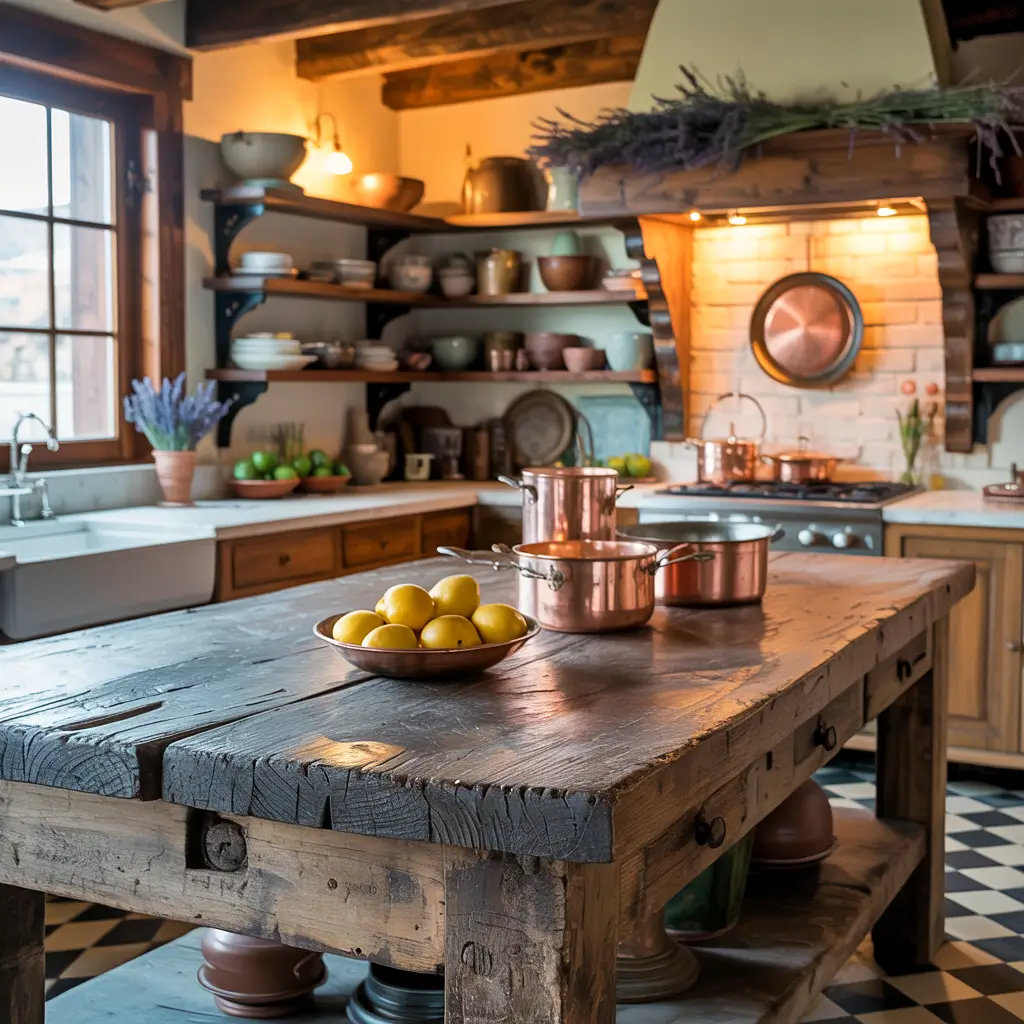
The pendant lights above a rustic farmhouse kitchen island should feel like they were adapted from something else — a barn, a factory, a general store — rather than purchased specifically for a kitchen renovation. That quality of repurposed utility is at the core of the rustic farmhouse lighting aesthetic.
Pendant types with the right farmhouse pedigree:
1. Enamel dome pendants. Originally designed for factory floors and industrial workrooms, the simple dome shade in cream, black, or deep green enamel has a workmanlike honesty that suits the rustic farmhouse island perfectly. One of the most versatile and reliably beautiful options.
2. Vintage cage pendants in aged brass. An open wire cage around an exposed filament bulb, in an aged or oil-rubbed brass finish. Simple, warm, and connected to workshop and artisanal lighting traditions.
3. Barn lantern pendants. Square or rectangular lanterns with glass panels and a dark iron frame. These are the direct descendant of agricultural lighting — they reference the farmyard without being literal about it.
4. Rattan or woven pendant shades. Natural fiber woven shades add organic texture and diffuse light warmly. Best suited to rustic farmhouse kitchens with lighter wood tones and a softer, more cottage-adjacent aesthetic.
5. Vintage industrial pendants in clear glass and brass. A clear glass globe or cylinder shade with a brass fitting and a visible filament bulb. The transparency of the glass keeps the pendant from feeling heavy, while the brass and warm filament light contribute to the farmhouse atmosphere.
Hang pendants so the bottom of the shade is 30 to 36 inches above the island countertop surface. Space multiple pendants evenly along the island’s length — as a rule of thumb, one pendant for every two feet of island length, starting and ending one foot from each end.
7. Use Soapstone or Honed Granite as an Island Countertop Alternative to Wood
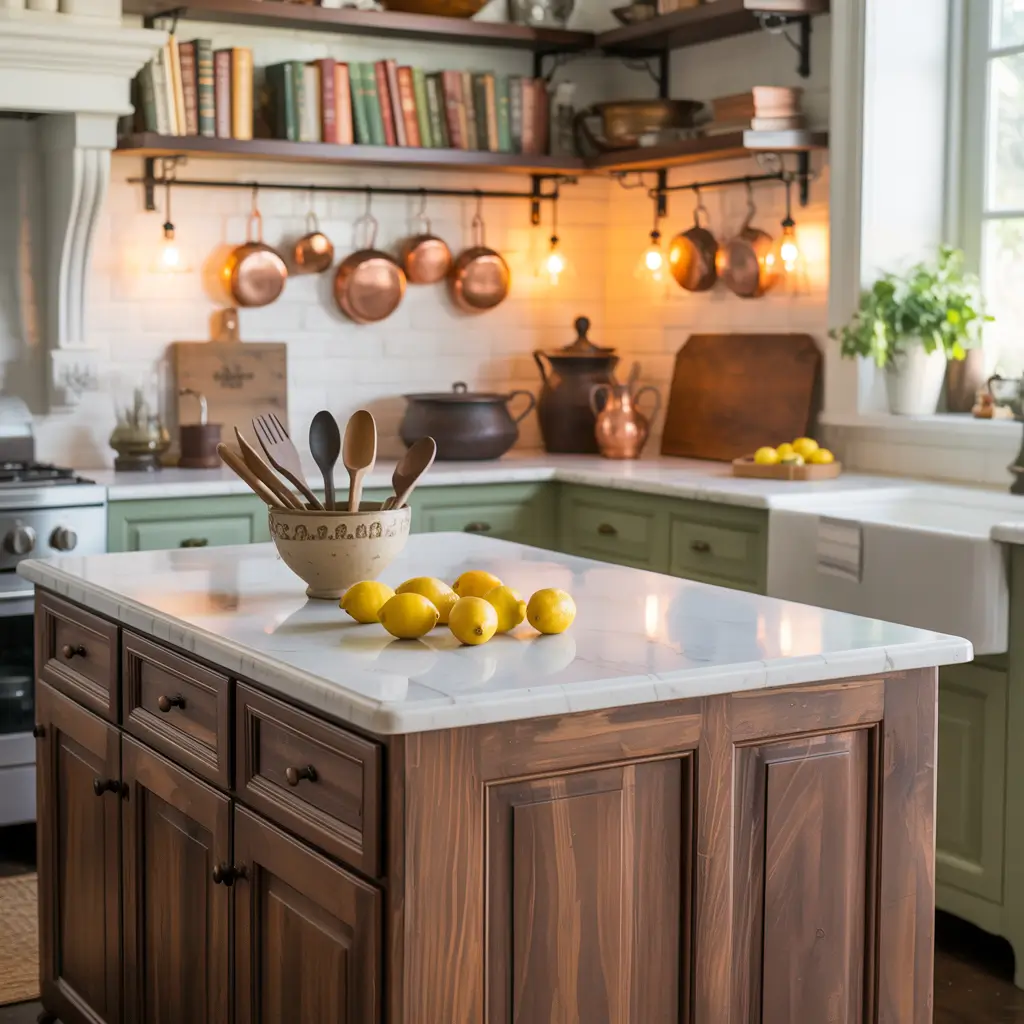
Reclaimed wood is the most warmly rustic island countertop material, but it is not the only one that suits the aesthetic. For kitchens that need a more durable, less maintenance-intensive surface on the primary island prep area, soapstone and honed granite are the natural stone alternatives that connect most completely to rustic farmhouse design.
Soapstone has a quality unlike any other countertop material: a matte, velvety surface in deep charcoal or dark gray tones that develops a beautiful natural patina as it is oiled and used over time. It is non-porous, highly heat-resistant, and naturally resistant to bacteria. The contrast of a dark soapstone island top against a sage green or cream painted base is one of the most striking color combinations in farmhouse kitchen design.
Honed granite — granite finished to a matte rather than polished surface — has a more organic, natural quality than its mirror-bright polished counterpart. In warm beige, gray, or brown tones, honed granite reads as genuinely stone-like rather than artificial, and suits the rustic palette accordingly.
Maintenance Reality: Soapstone requires periodic mineral oil treatment — every few months initially, tapering to once or twice a year as the stone develops a stable patina. It scratches more easily than granite but scratches can be sanded out with fine sandpaper and re-oiled. This is character maintenance, not damage control — embrace it as part of the material’s story.
8. Repurpose an Antique Table or Workbench as the Island Base
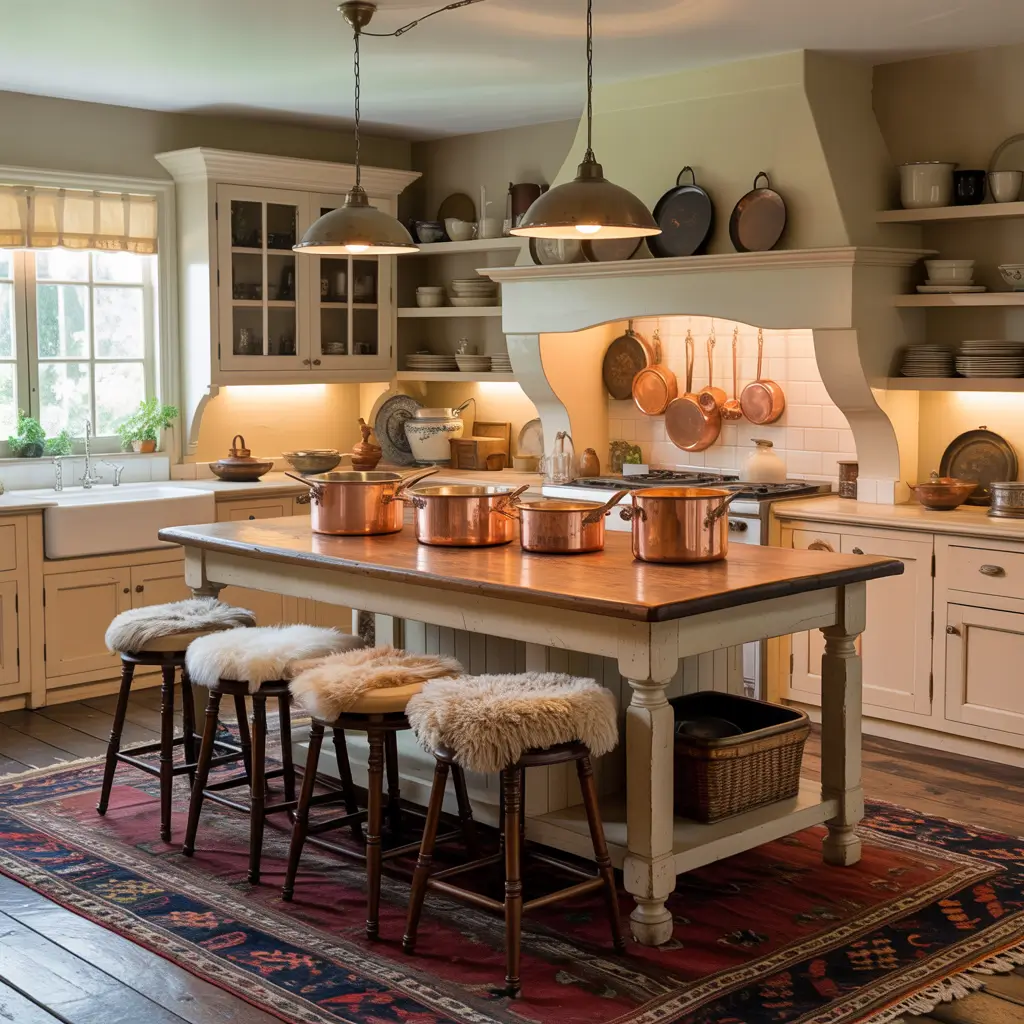
This is the rustic farmhouse kitchen island approach that produces the most authentic and most individual result of anything on this list — and it requires no cabinet-making skills whatsoever. Find the right antique piece, add the right top, and you have an island that no catalog will ever duplicate.
Antique pieces that convert beautifully into kitchen islands:
1. A thick oak farm table. A genuine farm table — heavy, sturdy, with a top worn smooth by decades of use — converted into a kitchen island by adding a butcher block surface over the existing top, painting the base, and adding casters for mobility if needed.
2. An old workbench or potting bench. The heavy construction, the apron rail, and the lower shelf of a vintage workbench translate remarkably well into kitchen island use. The visual language of a workbench — honest, utilitarian, built for real work — is perfectly aligned with the rustic farmhouse aesthetic.
3. A vintage sideboard or dresser. A wide, low dresser or sideboard provides drawer storage, a flat top surface, and furniture-scale presence. Remove the upper drawers for prep clearance, add a wood or stone top, and paint or refinish the base.
4. A merchant’s display counter. Old shop counters and merchant display cases with glass fronts or open cubbies make extraordinary kitchen islands — their original purpose was entirely aligned with organized display and retrieval, which is exactly what a kitchen island does.
Estate sales, architectural salvage dealers, and antique barn markets are the right hunting grounds. The search takes time — the right piece is not always immediately available — but the result of finding and repurposing the exactly right antique piece is an island that feels genuinely irreplaceable.
9. Add Wrought Iron Hardware, Strapping, and Details
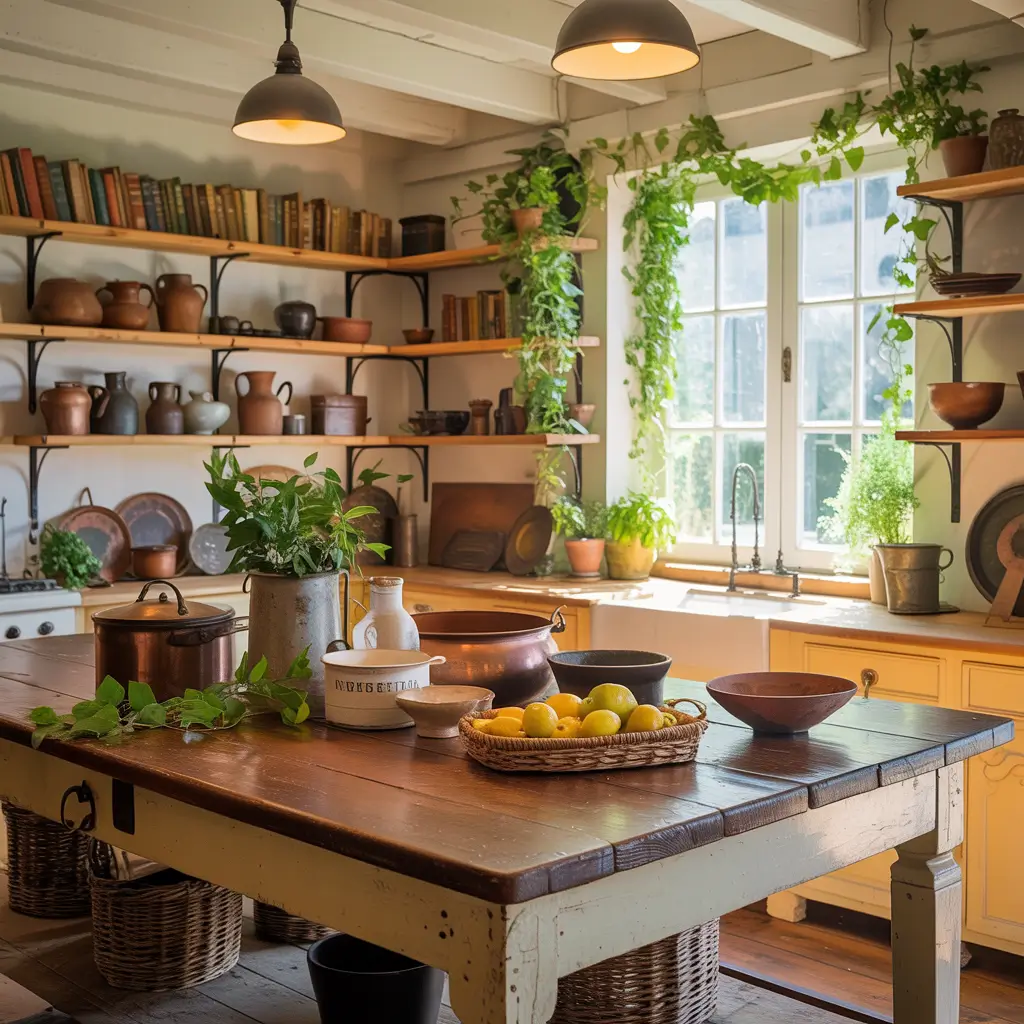
Hardware on a rustic farmhouse kitchen island is not just a functional necessity — it is a design element that communicates the island’s aesthetic direction in every touch and close-up view. And in a rustic farmhouse kitchen, wrought iron hardware communicates that direction more clearly and more authentically than any other metal finish.
Wrought iron has a dark, slightly rough, hand-forged quality that references blacksmith traditions and agricultural ironwork directly. It is not polished, not reflective, and not uniform — and those qualities are exactly what make it right for the rustic farmhouse island.
Wrought iron elements to consider on a rustic farmhouse kitchen island:
1. Cabinet pulls and knobs. Simple bin pulls, cup pulls, or bar pulls in a hand-forged wrought iron finish. Not decorative — honest and functional.
2. Strap hinges on cabinet doors. Long decorative strap hinges in wrought iron, visible on the outside of cabinet doors, reference barn door and gate hardware directly.
3. Towel rail on the island end. A simple iron rod mounted horizontally on the island’s working-side end, for hanging kitchen towels and keeping them within reach.
4. Shelf brackets in hand-forged iron. If the island includes open shelving, hand-forged iron brackets in a simple L-shape or scroll form suit the rustic farmhouse quality of the wood shelves they support.
5. Caster wheels in an aged iron finish. If the island is designed to be mobile, vintage-style iron caster wheels — the kind with a visible spoke design rather than a smooth contemporary profile — add to the furniture-quality character of the island.
10. Create a Working Side and a Gathering Side With Different Functions
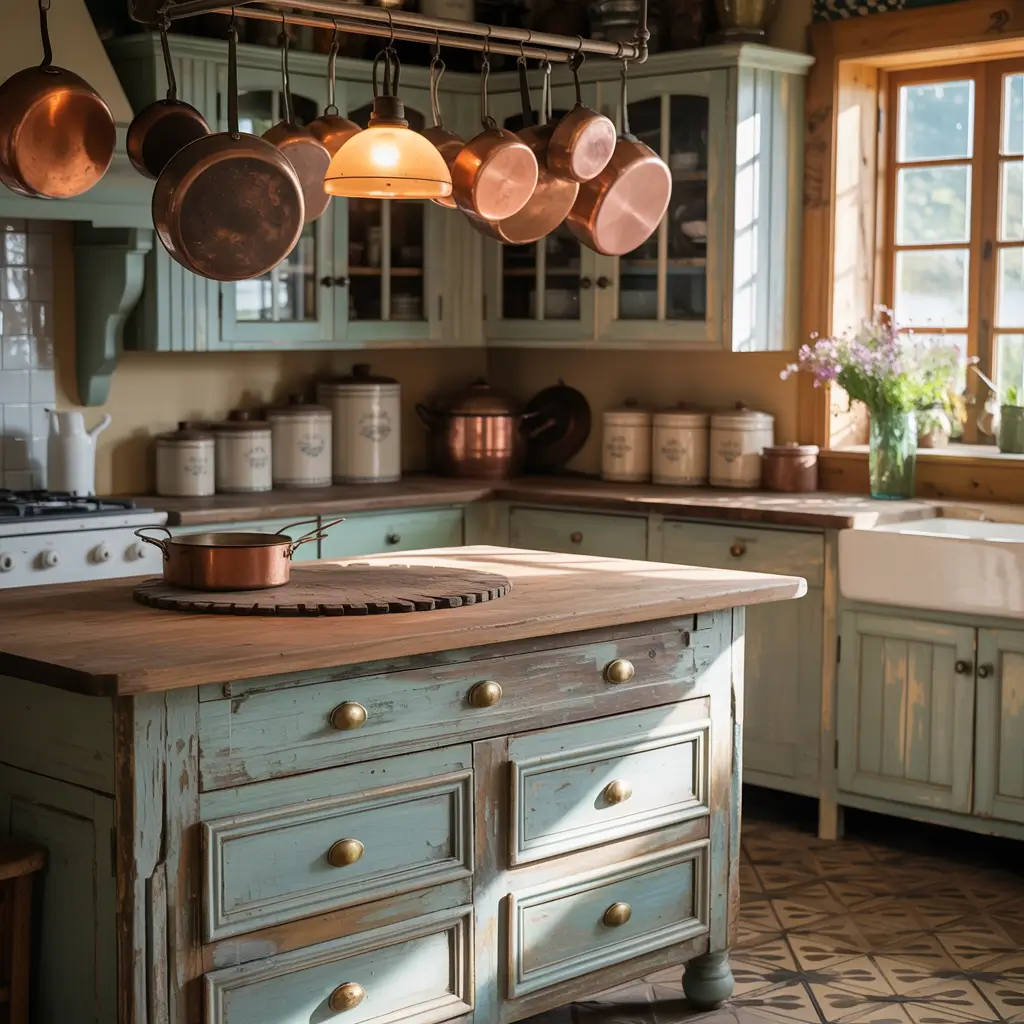
The most functional rustic farmhouse kitchen islands are designed with a clear distinction between two sides: the working side, which faces the stove and sink and serves the cook, and the gathering side, which faces the open kitchen or dining area and serves the people who come to keep the cook company.
The working side of the island should have:
1. The primary prep surface. If the island has a mixed material top — wood on one section, stone on another — the stone or more durable surface should face the working side where the heaviest prep happens.
2. Easy access storage for cooking tools. Deep drawers, a utensil rail, or accessible open shelves for the items needed most during cooking.
3. An electrical outlet. Flush-mounted or in a pop-up configuration for small appliances. A hidden outlet preserves the island’s visual integrity while providing essential function.
4. Adequate clearance. At least 42 inches of floor space between the island working side and the adjacent cabinetry or appliances — 48 inches in kitchens where two people cook simultaneously.
The gathering side should have:
1. Bar or counter-height seating. Stools or seating that lets people sit comfortably and at a conversational height relative to someone standing at the working side.
2. An overhang of at least 12 to 15 inches. Enough countertop overhang for knees and comfortable seated positioning. 15 inches at counter height, 12 inches at bar height.
3. Minimal visual clutter. The gathering side of the island is the side that people look at from the dining or living area. Keep it clean, keep it styled, and let the island’s form do the design work.
11. Install a Prep Sink in the Island for a Fully Functional Workspace
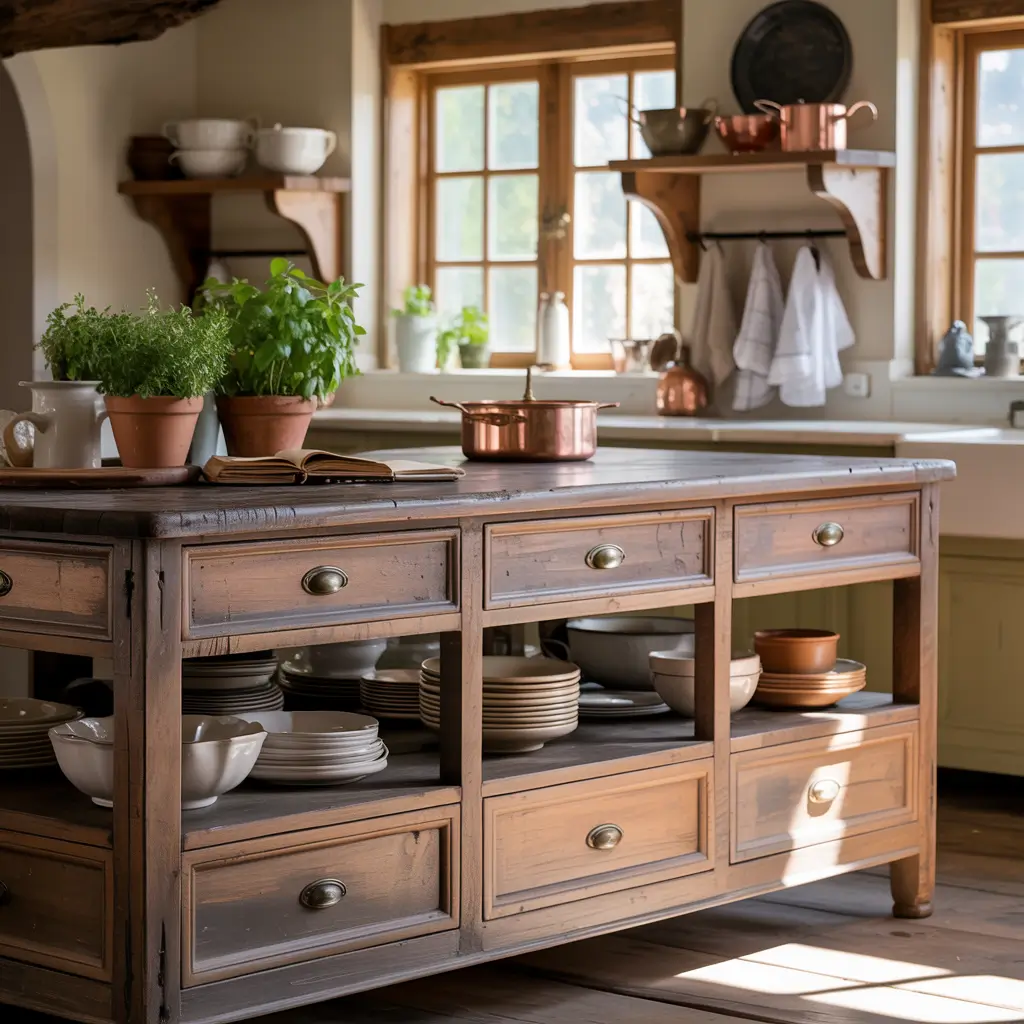
Adding a second sink to the kitchen island — specifically a smaller prep sink rather than a full-scale primary sink — transforms the island from a surface into a self-contained workstation. During meal preparation, a prep sink in the island means that washing produce, rinsing tools, and filling pots all happen at the island rather than requiring constant movement to the main sink across the kitchen.
For a rustic farmhouse kitchen island, the prep sink should suit the island’s aesthetic direction. Options that work well:
1. A small round or square copper prep sink. A hammered copper undermount or drop-in prep sink is both functional and deeply rustic. The copper patina develops over time and the hammered texture adds artisanal character.
2. A white fireclay prep sink. A smaller version of the apron front sink material — white fireclay in a simple undermount configuration. Clean, classic, and entirely consistent with the rustic farmhouse palette.
3. A Belfast-style sink in a reduced size. The deep, single-basin Belfast sink in a smaller format — available in fireclay and stone resin — suits a farmhouse island beautifully and provides generous depth for awkward tasks like washing a large mixing bowl or a cast iron Dutch oven.
Plumbing Note: Adding a prep sink to an existing island is a plumbing project requiring drain and supply line routing to the island location. This is not a DIY project for most people — budget for a licensed plumber. The ongoing daily benefit, however, makes this one of the highest-quality-of-life plumbing investments available in a kitchen renovation.
12. Wrap the Island Base in Beadboard or Shiplap Panels
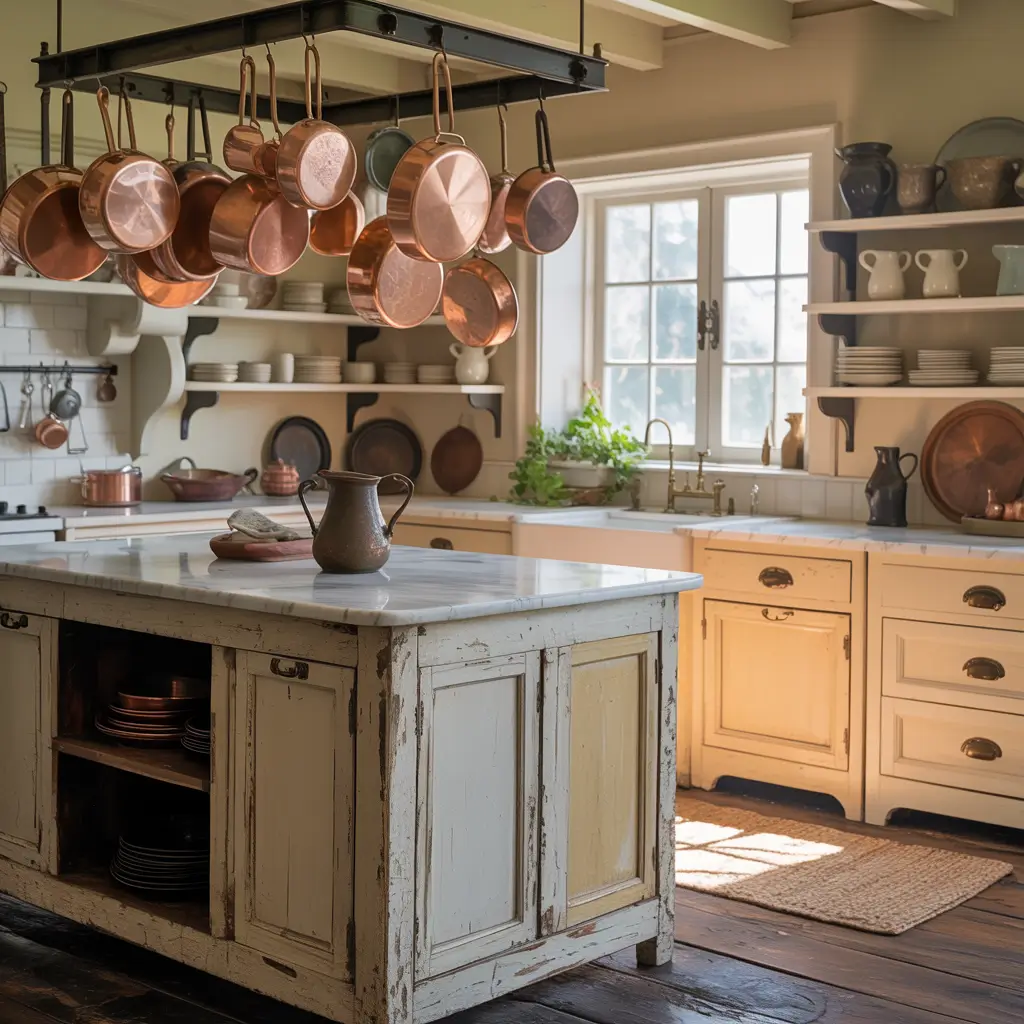
The sides of a kitchen island are one of the most visible surfaces in an open-plan kitchen — seen from the dining area, the living room, and every angle of the kitchen itself. In a standard kitchen, these sides are often flat painted panels that add nothing to the room’s character. In a rustic farmhouse kitchen, they are an opportunity.
Beadboard paneling on the island sides — the vertical tongue-and-groove planks with a distinctive routed bead between each — has been used in farmhouse and cottage kitchens for well over a century. It adds texture, visual warmth, and a handcrafted quality to what would otherwise be a flat painted surface.
Shiplap panels on the island sides — horizontal overlapping boards — have a slightly more barn-like, agricultural quality than beadboard and suit kitchens that are leaning toward a more robust rustic aesthetic. Paint the paneling to match the island base color rather than the perimeter cabinets for a fully upholstered, furniture-like effect.
For a more elaborate treatment, board-and-batten on the island sides — wide vertical boards separated by narrow battens covering the joints — creates a more assertive, architectural quality. This treatment works particularly well on larger islands in kitchens with high ceilings, where the more structural quality of board-and-batten is in proper proportion to the space.
13. Style the Island Top as a Curated Display Between Meals
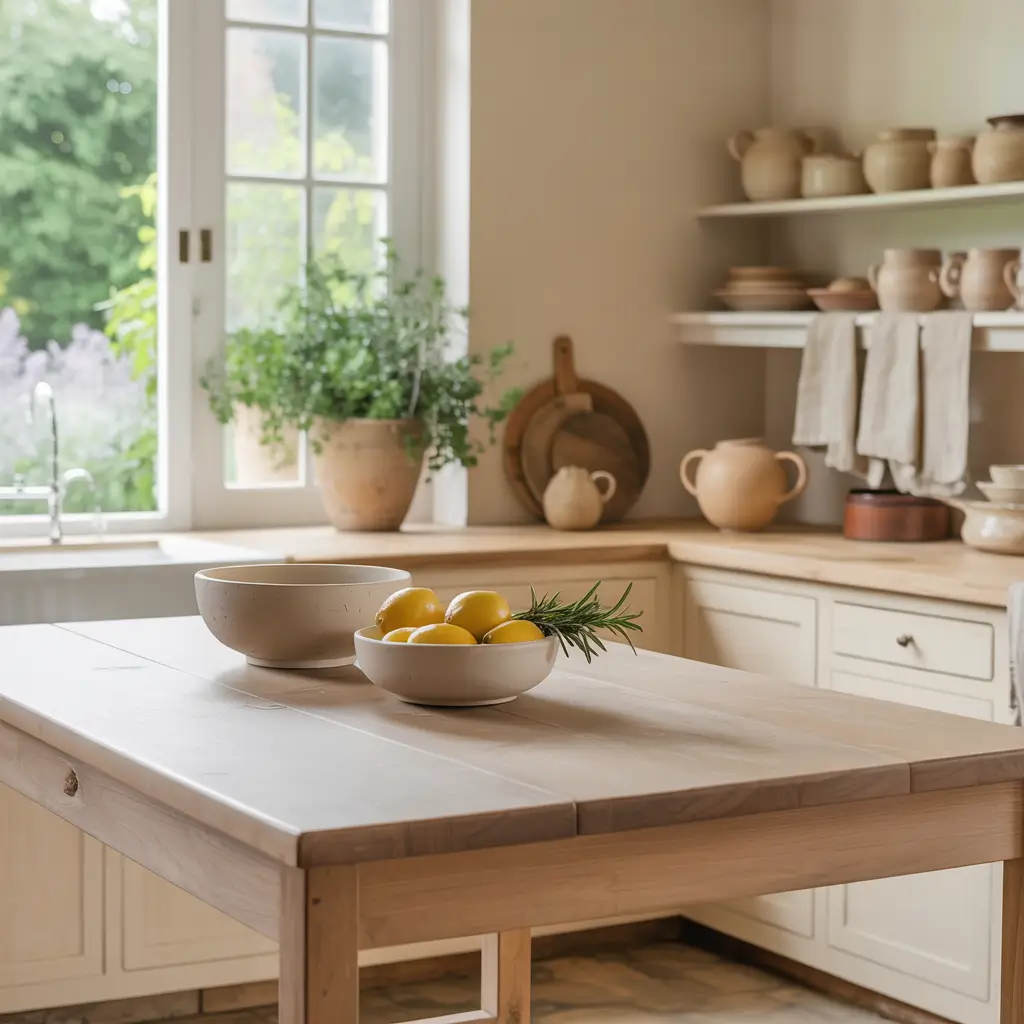
A rustic farmhouse kitchen island that sits between meals as a bare, empty surface is a missed opportunity. The island top, when not in active use for food preparation or dining, is one of the most visited visual surfaces in the entire kitchen — and in a farmhouse kitchen, it should be styled with the same thoughtfulness as a living room shelf.
Objects that belong on a rustic farmhouse island between meals:
1. A large wooden dough bowl or breadboard. The scale of a good antique dough bowl — wide, low, and worn smooth by decades of use — suits the scale of an island countertop perfectly. Place it near the seating end as a centerpiece.
2. A small collection of seasonal produce. A bowl of citrus, a stack of heirloom squash, a small bunch of herbs. Living, edible objects on a kitchen island connect it to the kitchen’s fundamental purpose.
3. A vintage scale or crock of utensils. Functional objects that are also beautiful — placed where they are genuinely within reach during cooking.
4. A small plant in a terracotta pot. A fresh herb, a small succulent, or a trailing pothos on the island’s gathering end adds the life that only something living can provide.
5. A stack of worn cookbooks. Cookbooks that are actually used — with broken spines and smudged pages — have an authenticity that pristine shelf-filler books do not. A stack of two or three near the island’s edge says this is a kitchen that cooks.
Editing Tip: The styled island top should look casually assembled, not precisely arranged. If you find yourself measuring distances between objects or adjusting placement repeatedly, step back and remove something. The farmhouse aesthetic rewards looseness over precision.
14. Build a Waterfall Edge on One Side With Live-Edge or Reclaimed Wood
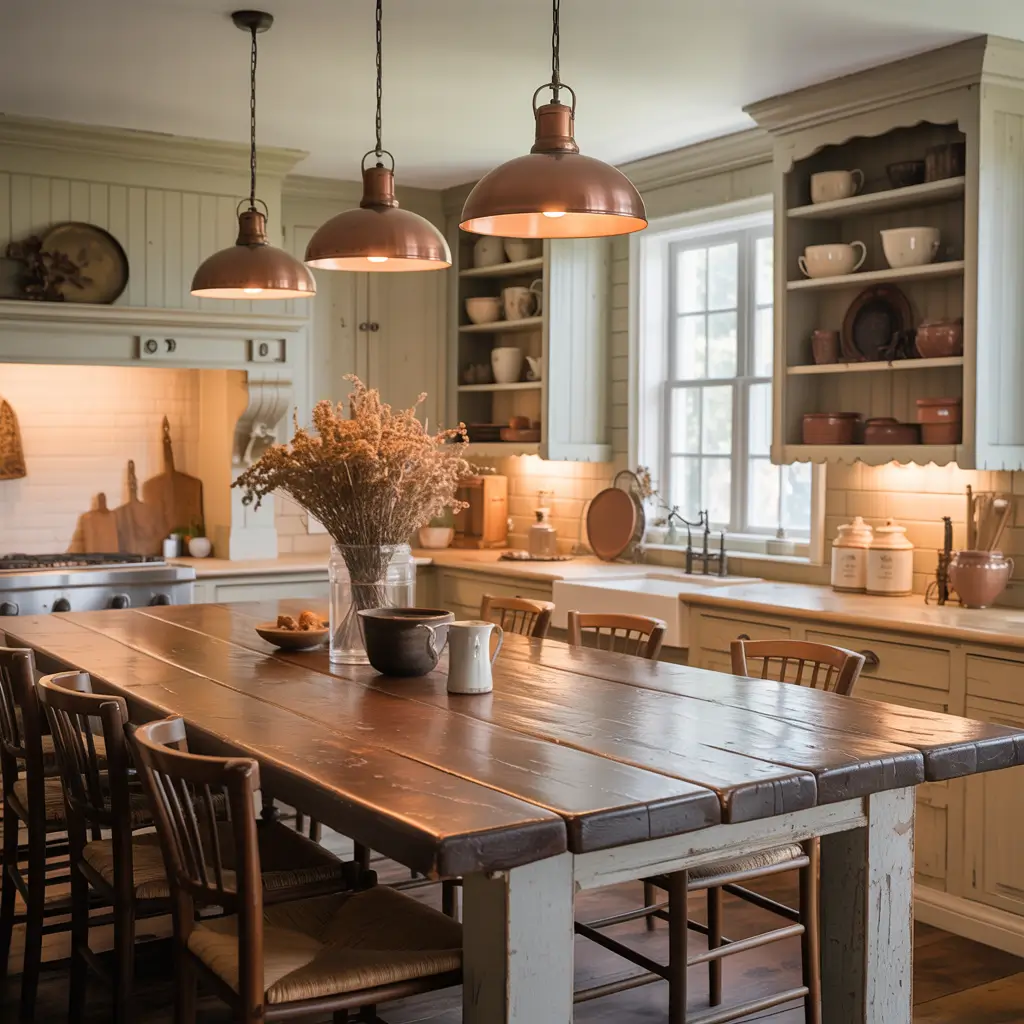
A waterfall countertop — where the countertop material wraps over the island end and continues vertically to the floor — is typically associated with contemporary kitchen design in polished stone or quartz. In a rustic farmhouse kitchen island, the same structural idea executed in reclaimed wood or live-edge slab creates an entirely different and deeply beautiful effect.
A live-edge waterfall island uses a single continuous piece of wood — or bookmatched slabs — where the natural edge of the wood is preserved rather than cut straight. The top flows over the island end in a waterfall of the same material, and the result is something that looks more like furniture or sculpture than cabinetry.
This is a higher-cost, higher-craft execution — live-edge slabs from reclaimed hardwood species like walnut, oak, or cherry are expensive, and the joinery required for a clean waterfall edge requires skilled woodworking. But the result is an island that is genuinely unique and genuinely extraordinary in the way that only authentic craftsmanship in real materials can be.
15. Add an Open Shelf Midway Down the Island for Basket Storage
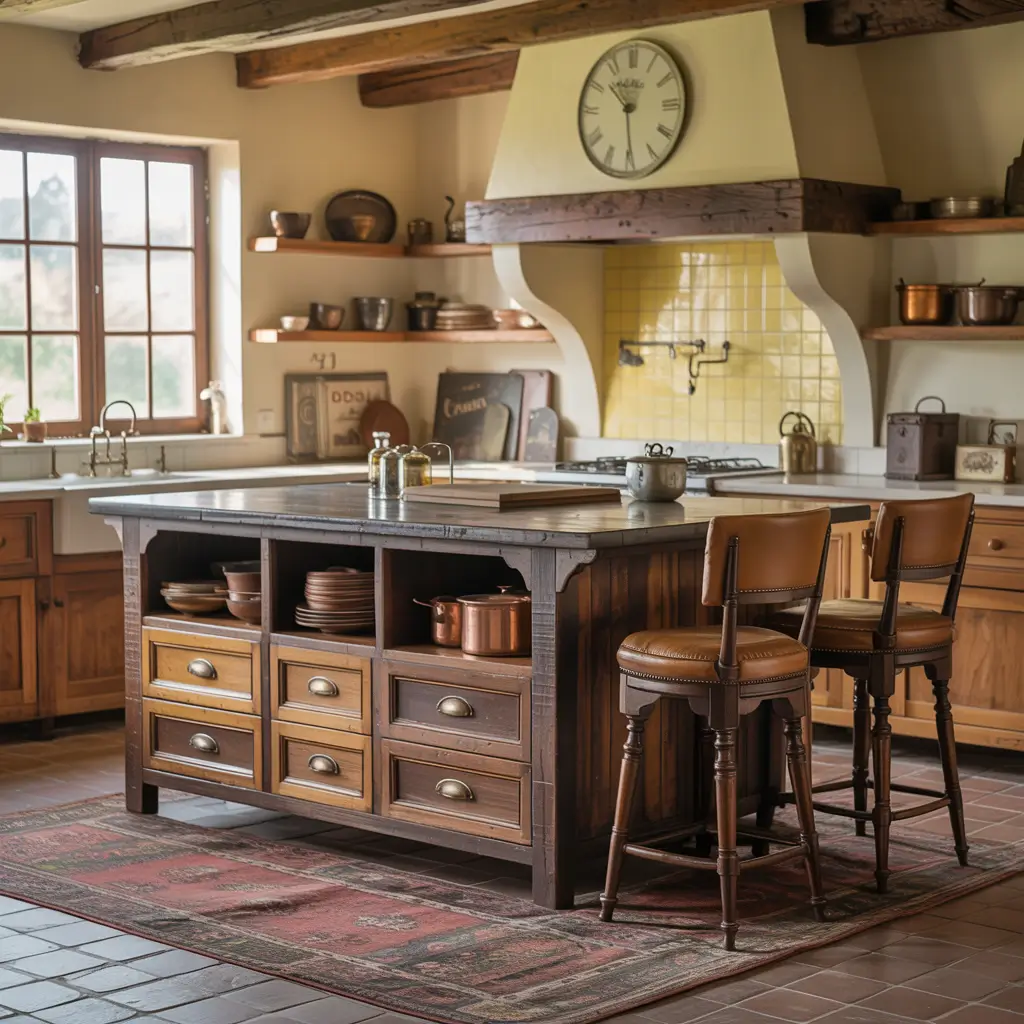
A single open shelf built into the island at approximately mid-height — below the countertop, above the floor level — is one of the most practical and most visually satisfying additions to a rustic farmhouse kitchen island. The shelf provides genuine storage, and the objects stored on it contribute to the island’s visual composition from across the room.
The key is what goes on that shelf. Wicker and seagrass baskets — generously sized, arranged with slight variation in size — suit the farmhouse aesthetic best. Behind the baskets, a collection of linen napkins, kitchen towels, and reusable produce bags stored neatly. The basket covers the storage; the farmhouse material connects to the organic palette of the kitchen.
Cookbooks stacked horizontally on the island shelf are another approach — particularly appropriate near the gathering end of the island, where someone seated at the island might reach for a reference while discussing dinner plans. Choose books with worn, natural covers or plain cloth bindings over brightly designed commercial volumes for a more authentic farmhouse shelf appearance.
Rustic Farmhouse Kitchen Island Sizing Guide
Before committing to any island design, these dimensions need to be confirmed for your specific kitchen:
1. Minimum kitchen size for an island. A kitchen needs at least 13 feet in one direction (wall-to-wall) to accommodate an island with comfortable clearance on both sides. In smaller kitchens, a rolling cart or peninsula is a better solution.
2. Clearance requirements. 42 inches minimum on the working side between island and cabinetry or appliances. 36 inches minimum on all other sides. 48 inches on the working side in kitchens where two cooks work simultaneously.
3. Standard island height. 36 inches from floor to countertop surface, matching standard kitchen counter height. Bar-height islands at 42 inches can work in open-plan kitchens as a visual divider but are less practical as prep surfaces.
4. Seating overhang. 12 inches minimum overhang at bar height, 15 inches minimum at counter height, for comfortable knee clearance when seated.
5. Minimum island length for seating. Allow at least 24 inches of countertop length per seated person. A two-person seating island needs at least 48 inches of length on the seating side.
6. Electrical and plumbing. Plan all electrical outlet and plumbing rough-in locations before the island is installed — running these after installation is significantly more expensive and disruptive.
Rustic Farmhouse Kitchen Island by Budget
Under $500 — Maximum Impact on Minimum Investment
1. Repurpose a thrift-store table or sideboard. The right secondhand piece costs $50 to $200 and becomes an extraordinary island with basic refinishing.
2. Build a simple DIY island from lumber and beadboard. Material cost for a basic DIY island frame with a butcher block top ranges from $300 to $500.
3. Add a rolling kitchen cart in a farmhouse style. A solid wood rolling cart with a butcher block top, painted in a farmhouse color, functions as a moveable island for $150 to $400.
$500 to $2,000 — Quality Materials and Real Craft
1. A painted shaker-style island base with a reclaimed wood or butcher block top. Mid-range pre-built island bases in shaker style, repainted in a farmhouse color and topped with a quality butcher block, fall solidly in this range.
2. A custom-built DIY island with furniture legs and deep drawers. More ambitious carpentry producing a more furniture-quality result. Budget for quality hardware and a premium top.
3. An antique workbench or farm table converted into an island. The piece itself typically costs $200 to $600; refinishing, a new top, and hardware add another $300 to $600.
$2,000 and Above — Heirloom Quality
1. A custom-built island with reclaimed wood top, furniture legs, and beadboard sides. Professional craftsmanship in genuine reclaimed materials. An investment that outlasts everything else in the kitchen.
2. A live-edge slab island top on a custom base. The most dramatic and most individual island available. Material and fabrication costs reflect the rarity of quality live-edge slabs.
3. An integrated island with prep sink, pot rack above, and built-in storage. A full-function island with plumbing, lighting coordination, and custom storage. The complete rustic farmhouse island experience.
Frequently Asked Questions
What size should a rustic farmhouse kitchen island be?
The island should leave at least 42 inches of clearance on the working side and 36 inches on all other sides. As a starting point, an island footprint of 3 feet by 4 to 6 feet suits most kitchens of 200 square feet or larger. Smaller kitchens should use rolling carts or peninsulas rather than freestanding islands to maintain adequate circulation space.
What is the best countertop material for a rustic farmhouse kitchen island?
End-grain reclaimed butcher block is the most authentically rustic option and develops genuine character with use. Soapstone is the best natural stone alternative — matte, dark, non-porous, and beautiful with age. Honed granite and poured concrete are also excellent choices. Avoid polished stone and quartz, which read as more contemporary than the rustic farmhouse aesthetic calls for.
What color should a farmhouse kitchen island be?
The most effective approach is to paint the island differently from the perimeter cabinets. Deep sage green, navy blue, forest green, warm charcoal, and dusty terracotta are all strong farmhouse island colors. If the perimeter cabinets are white or cream, any of these deeper tones creates a beautiful and intentional contrast. Paint the island in a chalk or mineral paint for the most authentic farmhouse finish.
How do I make a cheap kitchen island look rustic and farmhouse?
Four changes make the biggest difference on a limited budget: repaint in a chalk paint in a farmhouse color; replace all hardware with wrought iron or unlacquered brass pulls; add a butcher block top over an existing surface or as a replacement; and add beadboard paneling to the visible island sides. These four changes cost $100 to $400 total and transform even a basic box island into something that reads as genuinely rustic farmhouse.
What stools work best at a rustic farmhouse kitchen island?
Simple wooden counter stools with turned or tapered legs, in natural wood, painted black, or in a warm stain, are the most authentically farmhouse choice. Avoid identical matching sets — two or three stools that are related but slightly different look more genuinely collected. Woven rattan or seagrass seat stools add organic warmth. Look for vintage stools at estate sales and secondhand shops for the most authentic and affordable options.
Can I have a farmhouse island in a small kitchen?
Yes, with proportional sizing and thoughtful design. A small kitchen needs an island that maintains the required clearances — at least 42 inches on the working side and 36 inches on all other sides. In a genuinely compact kitchen, a rolling cart on caster wheels in a farmhouse style provides island function with the flexibility to move or remove it entirely when floor space is needed. Furniture-leg islands rather than solid-base islands look visually lighter and suit smaller kitchens better.
Final Thoughts: The Island That Earns Its Place
A rustic farmhouse kitchen island does not try to impress anyone. It does not call attention to how expensive it was or how many design decisions went into it. It sits in the center of the kitchen and does what it is supposed to do: it provides a generous, warm, well-organized surface for the work and the gathering that make a kitchen worth having.
The materials that define it — reclaimed wood, aged iron, painted wood in a farmhouse color, natural stone with a matte finish — are chosen because they improve with time rather than degrading with use. The design decisions that shape it — furniture legs over a solid base, contrasting paint color, open shelving and basket storage, pendant lights that look borrowed from a barn — are chosen because they create the sense of a piece with history and character rather than a recently purchased appliance.
Whether you are building one from reclaimed timber and basic lumber this weekend, converting an estate sale farm table into the island your kitchen has always needed, or planning a full renovation around a custom-crafted live-edge slab centerpiece, the direction is the same: build something honest, build it in real materials, and give it room to become what it is supposed to be.
The best rustic farmhouse kitchen islands are not the newest ones in the kitchen. They are the ones that look like they have always been there — and could not possibly be anywhere else.
1 thought on “15 Stunning Rustic Farmhouse Kitchen Island Ideas for Your Home”