
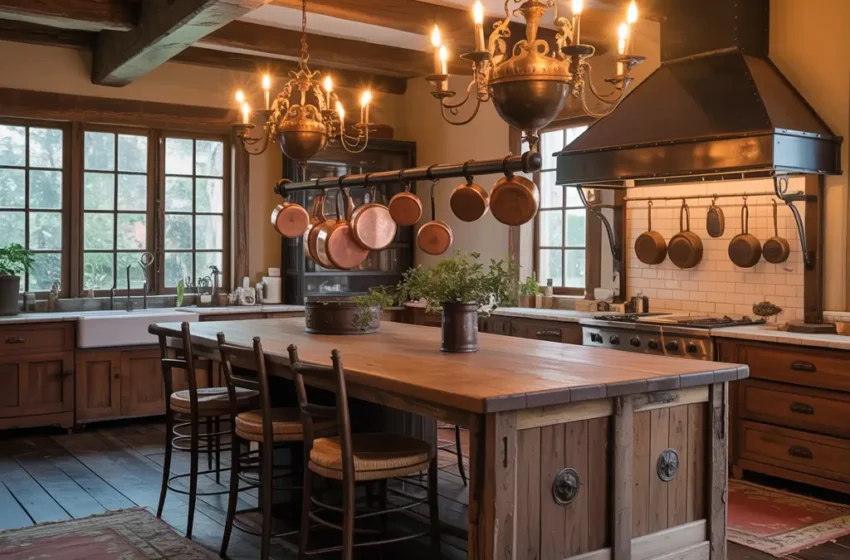
Some kitchens are just rooms where food gets made. And then there are kitchens that feel like the living, breathing center of a home — places where people drift toward naturally, where conversations start without any particular plan, and where the smell of something cooking makes everyone feel like they belong.
That second kind of kitchen is almost always a rustic farmhouse kitchen. And the reason it pulls people in so reliably is not because it follows a particular set of design rules — it is because it feels authentic. The textures are real. The materials have history. Nothing is trying too hard to be perfect, and that imperfection is precisely the point.
Whether you are starting from scratch with a renovation budget or looking for low-cost ways to shift the feeling of a kitchen you already have, these 25 rustic farmhouse kitchen ideas cover every level of commitment, every room size, and every design direction from deeply traditional to modern-rustic hybrid. Take what speaks to you, leave what does not, and build something that actually feels like yours.
1. Anchor the Room With Reclaimed Wood — and Use It Generously
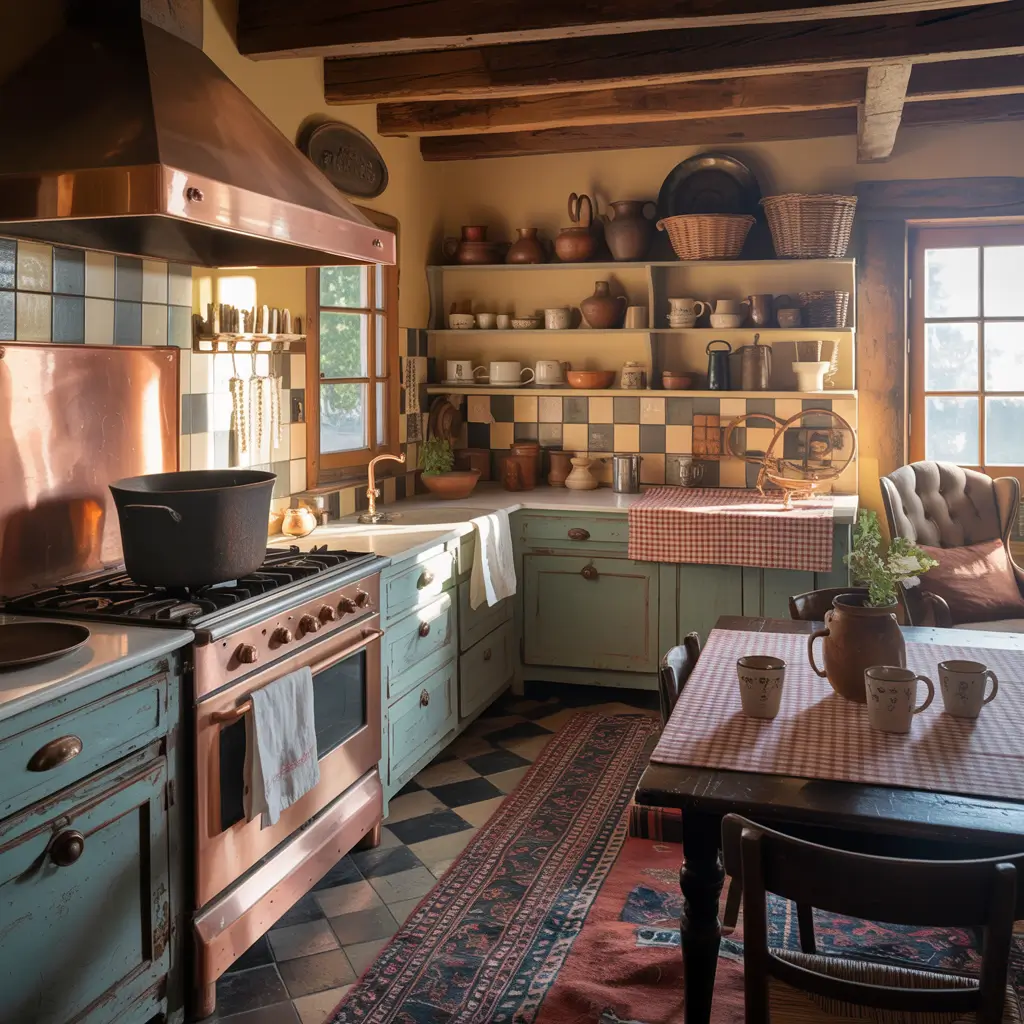
If there is one material that defines the rustic farmhouse kitchen more completely than any other, it is reclaimed wood. Not new wood distressed to look old. Actual reclaimed timber — pulled from old barns, factories, fencing, and floors — with grain patterns, nail holes, weathering, and surface variation that took decades to develop.
The key distinction matters because it shows. Real reclaimed wood has an irregularity and depth of character that no manufactured aging process can fully replicate. When you run your hand across a genuine reclaimed barn beam turned into a kitchen shelf, the texture tells a story. That is what people respond to, even if they could not articulate exactly why.
Where to use reclaimed wood in a rustic farmhouse kitchen:
1. Open shelving. Thick reclaimed planks on simple iron brackets are one of the most impactful and cost-effective farmhouse additions to any kitchen wall.
2. Island countertop. End-grain reclaimed wood on the island surface is both beautiful and practical for food prep. It develops character with use rather than degrading.
3. Ceiling beams. Reclaimed timber beams — either structural or decorative — add immediate architectural weight and rural warmth.
4. Hood surround. Wrapping the range hood in reclaimed wood creates a built-in, architecturally intentional focal point above the stove.
5. Floating breakfast bar. A single thick reclaimed plank mounted to a wall creates an instant eat-in counter with real visual presence.
Sourcing Tip: Architectural salvage yards, barn wood suppliers, and online reclaimed lumber marketplaces are the right places to source genuine material. Prices vary widely — shop around and buy a little more than you think you need to account for waste and future repairs.
2. Choose Cabinets That Look Handmade, Not Mass-Produced
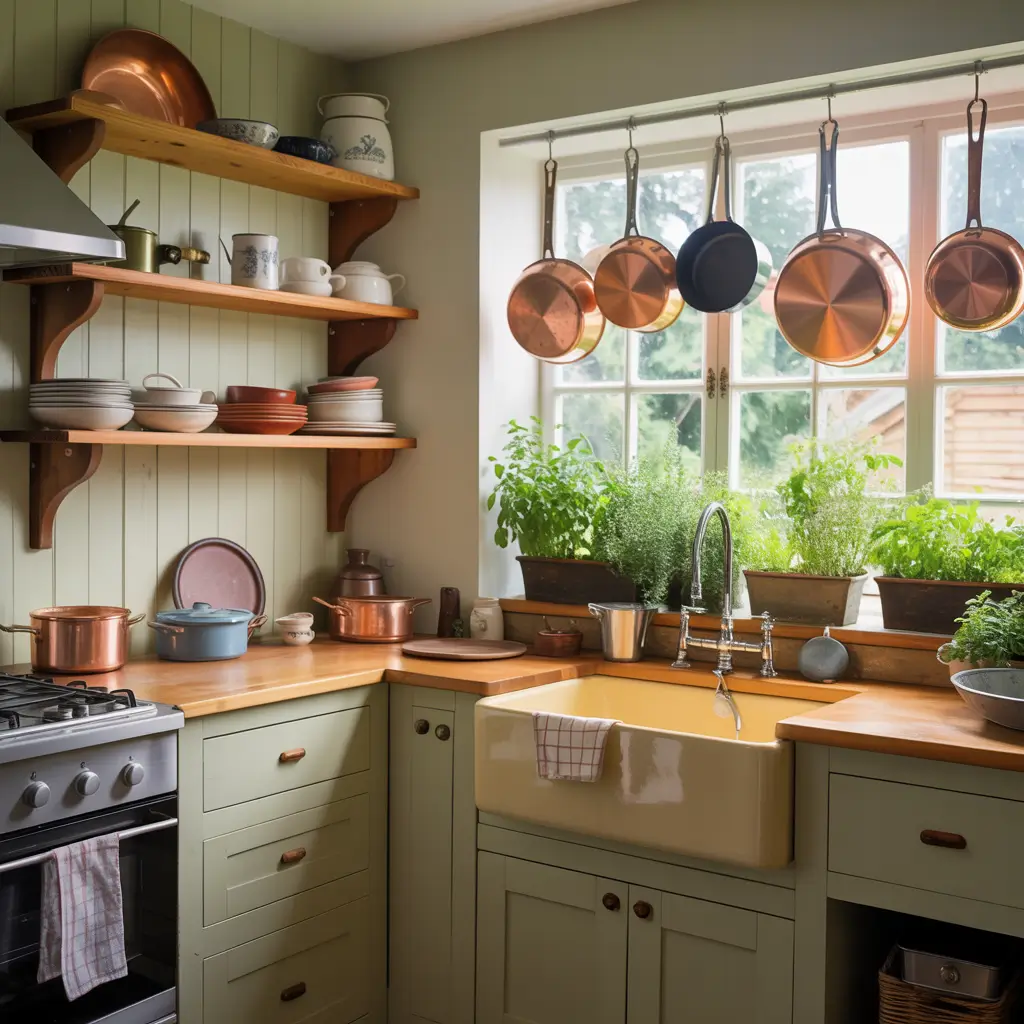
The rustic farmhouse kitchen has no use for the sleek, handle-free, high-gloss cabinetry that belongs in a contemporary kitchen. What it needs instead are cabinets that look like they could have been made in a workshop by someone who cared about the craft — which, at the better end of the market, they were.
Shaker-style cabinets are the standard-bearer because they are genuinely rooted in American craft tradition. The simple flat-panel center, the clean rail-and-stile frame — this is furniture joinery done without ornament, and that honesty is exactly what suits the rustic farmhouse aesthetic.
For a more deeply rustic direction, consider:
1. Beadboard-panel cabinet doors. The vertical groove pattern has a cottage-kitchen quality that pushes the aesthetic further into traditional rural territory.
2. Inset cabinets with visible hinges. Exposed hinges — particularly in an antique brass or oil-rubbed bronze finish — add a furniture-quality, hand-built quality that overlay doors with concealed hinges cannot match.
3. Painted cabinets with subtle distressing. Not aggressive, scratched-up distressing that looks fake — just a light sanding at corners and edges where real wear would naturally occur over years of use.
4. Open-frame cabinets with glass panels. Chicken wire or seeded glass in upper cabinet doors is a particularly charming rustic farmhouse detail.
Painting Tip: For cabinet painting, mineral or chalk paint followed by a dark wax at the edges gives a beautiful aged result without looking theatrical. Build in Color’s Farmhouse White, Annie Sloan’s Old White, or Rust-Oleum’s Chalked in Linen White are all excellent starting points.
3. Install a Fireclay or Cast Iron Apron Sink as the Room’s Centerpiece
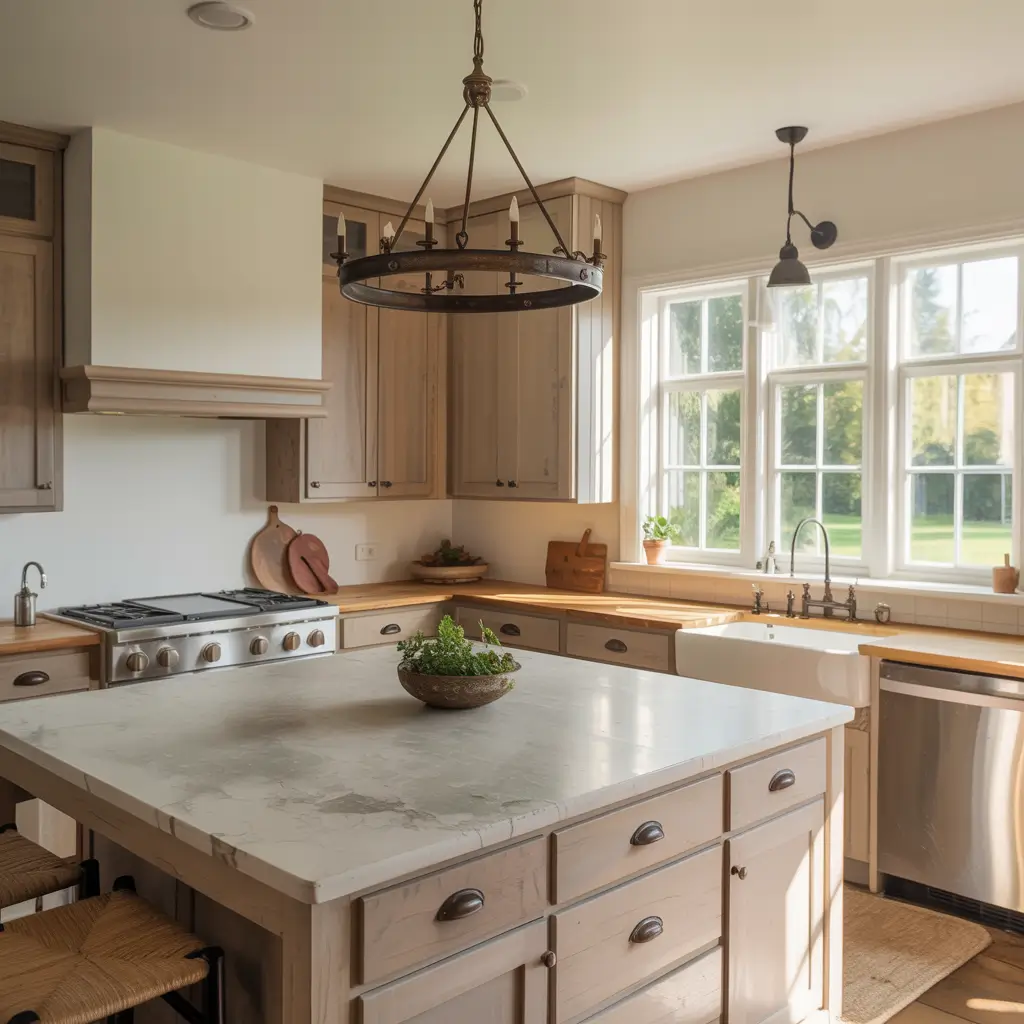
The apron front sink — also called a farmhouse sink — is the most recognizable single element in rustic farmhouse kitchen design. Its presence transforms a kitchen in a way that few other changes can match, and the reason is partly visual and partly emotional: an apron sink looks generous, warm, and built for real use.
The exposed front apron, rather than a standard sink hidden behind a cabinet door, gives the sink a furniture-like quality. It is not hidden. It is a feature. And in a rustic farmhouse kitchen, that directness is exactly right.
Material comparison for the rustic farmhouse kitchen:
1. Fireclay. Dense, vitreous ceramic fired at extremely high temperatures. White or cream fireclay has a depth and slight variation in surface that manufactured porcelain does not. Highly chip-resistant. The traditional choice, and still the most beautiful.
2. Cast iron with enamel. Heavier than fireclay but equally beautiful. The enamel surface is durable and the thermal mass of cast iron keeps water warm during long sessions. Available in white, cream, and bisque.
3. Hammered copper. The most aggressively rustic option. Copper develops a patina over time and the hammered surface texture is inherently artisanal. Requires more care — no harsh detergents — but the visual effect is extraordinary in a deeply rustic kitchen.
4. Stainless steel apron. Appropriate for modern-rustic kitchens that lean more industrial. Brushed or hammered stainless steel next to reclaimed wood and black iron is a strong combination.
4. Lay Stone or Brick on the Floor for Genuine Rural Character
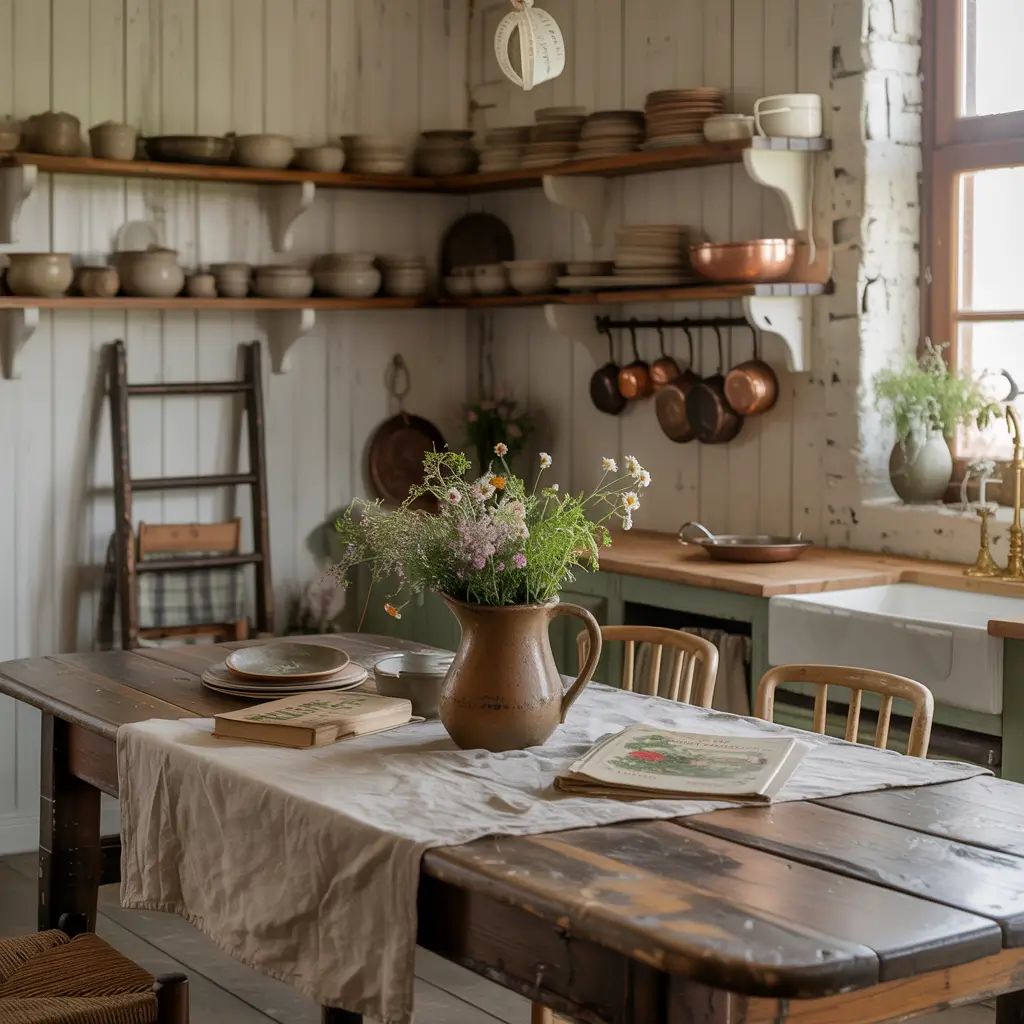
Hardwood floors are appropriate in a rustic farmhouse kitchen and always look beautiful. But if you want to push deeper into genuine rural farmhouse territory, natural stone or reclaimed brick on the floor takes you there in a way that wood simply cannot.
Flagstone floors — large, irregular slabs of natural limestone, slate, or sandstone — are architecturally associated with centuries of farmhouse and cottage kitchens in the British and European tradition. Laid with wider, uneven joints and sealed with a matte natural stone sealer, they bring an age and permanence to a kitchen that no manufactured flooring can approximate.
Reclaimed brick — pavers salvaged from demolished buildings, roads, and factory floors — is the other deeply rustic flooring choice. The variation in color, the visible wear patterns, and the human scale of individual bricks make a reclaimed brick floor one of the most characterful things you can put under a kitchen.
Practical Note: Both stone and reclaimed brick floors are hard underfoot and cold in winter. A quality anti-fatigue mat in front of the sink and stove addresses the comfort concern. Radiant floor heating under stone is the premium solution — expensive to install but transformative in daily comfort, especially in cold climates.
5. Expose or Add Ceiling Beams for Structural Drama
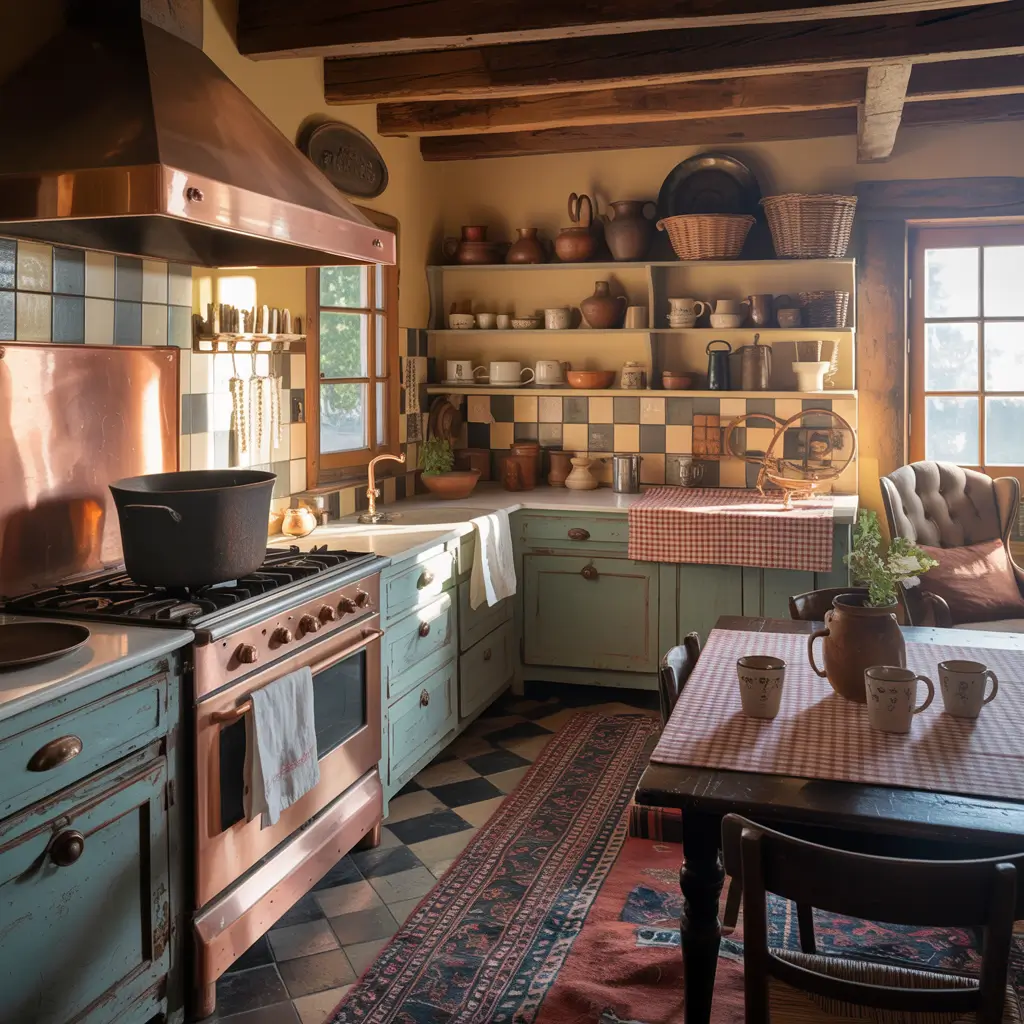
Ceiling beams do something almost nothing else in kitchen design can do: they make you feel the history of a space. A kitchen with exposed timber overhead has weight — architectural and emotional weight — that a smooth plaster ceiling simply does not.
In older homes, removing a false ceiling sometimes reveals genuine structural beams that were covered during a renovation decades ago. If that is a possibility in your home, it is worth investigating before committing to any decorative beam installation.
For homes without existing beams, the options are:
1. Solid reclaimed timber beams. The real thing, properly engineered into the structure or lag-bolted to the ceiling joists. The most authentic result, and the most involved installation.
2. Hollow faux beams in real wood. Three-sided wooden shells that wrap around a structural nailer board. From below, indistinguishable from solid beams. Available in reclaimed pine, oak, and other species from several specialty manufacturers.
3. Polyurethane faux beams. Lightweight foam beams finished to resemble wood. The least expensive option. More convincing in photographs than in person at close range, but entirely workable in rooms where ceiling height makes close inspection impossible.
A single large central beam running the kitchen’s length is the most dramatic and classical placement. Three parallel beams crossing the width of the room create a more enclosed, barn-like atmosphere. Both work — choose based on the ceiling height and the room’s proportions.
6. Use Open Shelving Styled Like a General Store
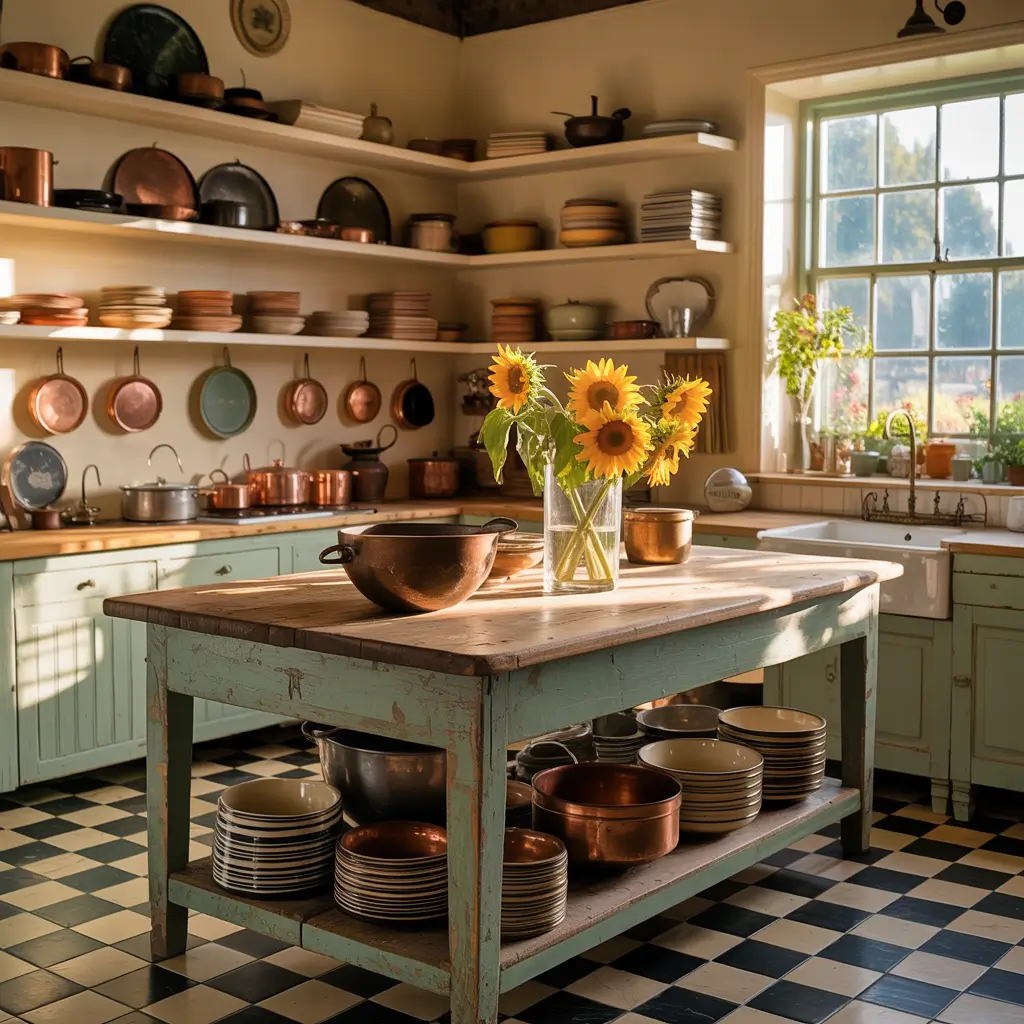
The rustic farmhouse kitchen does not hide its contents behind closed doors. It displays them — with pride, with intention, and with the understanding that everyday objects can be beautiful when chosen well and arranged thoughtfully.
Open shelving in a rustic farmhouse kitchen is not minimalist and it is not perfectly uniform. It is more like a well-organized general store or apothecary: things grouped by type and use, displayed where they can be found easily, with a mix of functional and purely decorative objects that gives the whole arrangement life.
What to display on rustic farmhouse open shelves:
1. Stoneware and ironstone. Salt-glazed crocks, white ironstone plates and bowls, and simple ceramic pieces in earth tones are the foundation of a rustic farmhouse shelf.
2. Glass jars of dry goods. Wide-mouth mason jars in uniform sizes, filled and labeled with simple handwritten or kraft paper tags.
3. Cast iron pieces. A small cast iron skillet, a Dutch oven lid, or a trivet displayed on a shelf reads as both functional and deeply rustic.
4. Dried herbs and botanicals. A bundle of dried lavender, rosemary, or wheat tied with jute twine adds texture, scent, and genuine farmhouse character.
5. Vintage tins and crocks. Old advertising tins, enamel canisters, and stoneware crocks give a shelf the sense of a slow accumulation over time.
6. A few living plants. Small terracotta pots with herbs or trailing plants break up the hard surfaces and remind you the kitchen is a living space.
7. Hang a Wrought Iron or Antique Brass Pot Rack
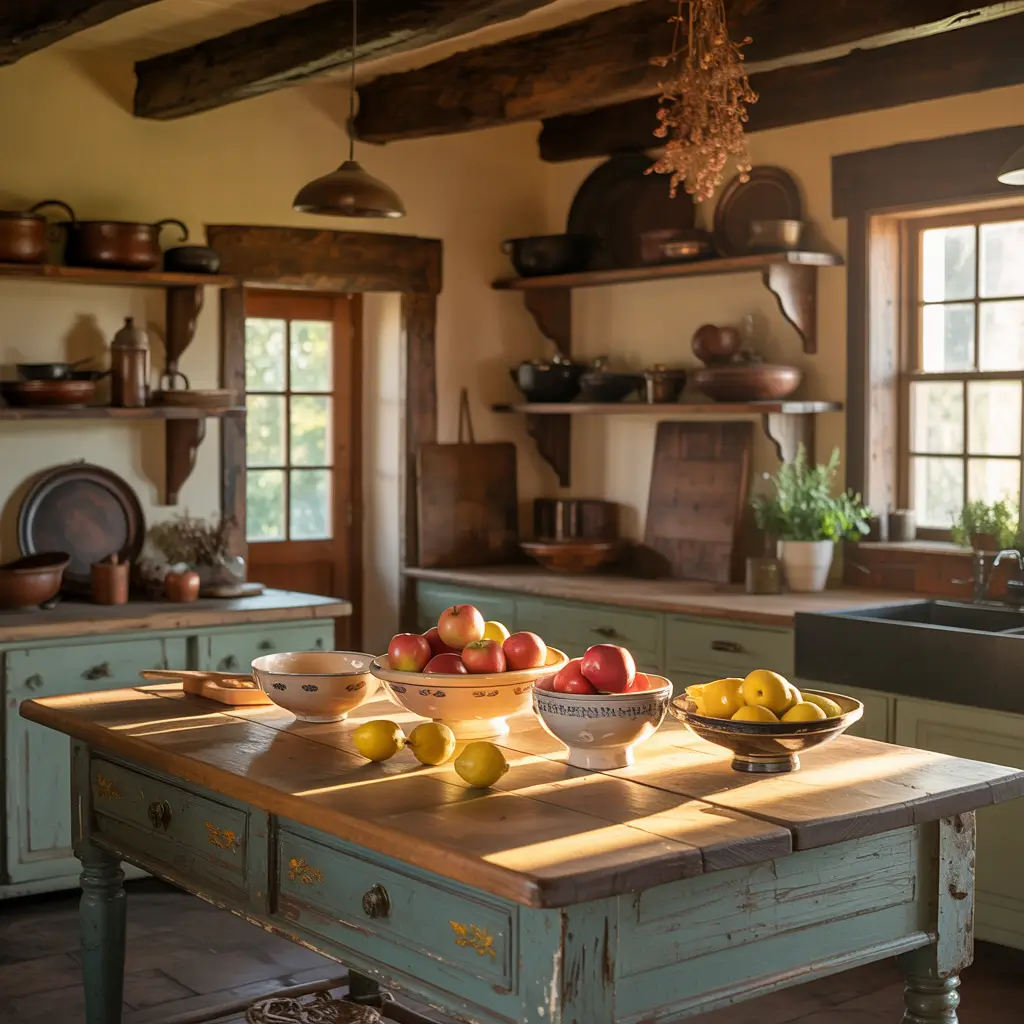
A pot rack is the rustic farmhouse kitchen’s version of a statement chandelier. When cast iron pans, copper saucepots, and well-seasoned dutch ovens hang overhead in a farmhouse kitchen, the message is clear: this is a kitchen built for cooking, and the tools of cooking are not something to be hidden away.
Ceiling-mounted pot racks in wrought iron are the most traditional and most dramatically rustic choice. The dark, hand-forged quality of wrought iron connects visually to agricultural and blacksmith traditions that are deep in the farmhouse DNA. Install with robust ceiling anchors into joists — a fully loaded pot rack is heavier than most people anticipate.
Wall-mounted pot rails — a simpler iron or brass rod mounted horizontally on a wall beside the stove — are an excellent alternative for kitchens without the ceiling height for an overhead rack. A row of hooks, a collection of pans at different sizes, and the kitchen suddenly has a lived-in, professional-kitchen quality that suits the rustic farmhouse aesthetic perfectly.
Curation Tip: What you hang matters as much as how you hang it. A mix of cast iron, copper, and enamel pieces at varying sizes creates visual richness. Old, stained, and well-used pans look far more authentically farmhouse than a matching set of gleaming new cookware.
8. Add Shiplap, Beadboard, or Board-and-Batten to Walls and Cabinets
Paneled walls are as old as carpentry itself, and their continued presence in farmhouse kitchen design is not a trend — it is a genuine connection to how rural domestic spaces were actually built for centuries before drywall became the standard.
Three main paneling styles suit the rustic farmhouse kitchen:
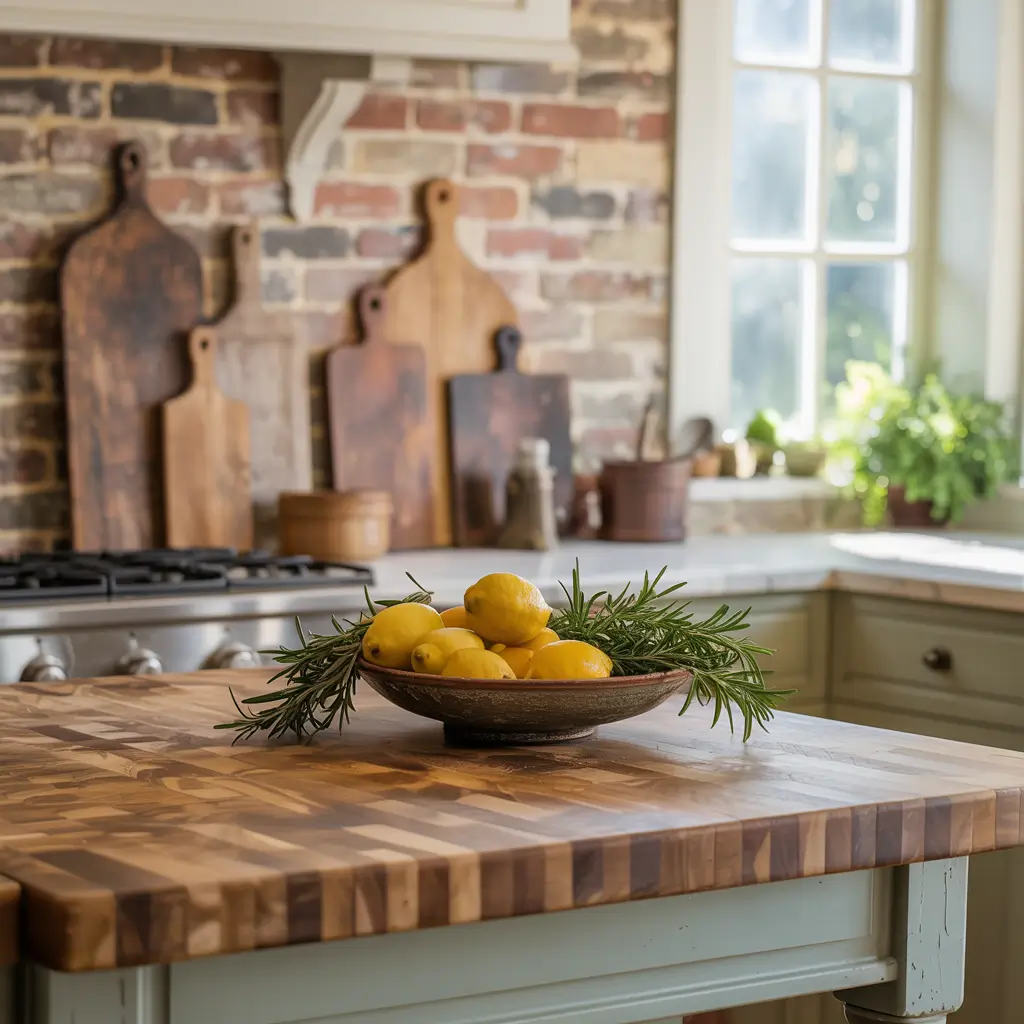
1. Shiplap. Horizontal overlapping boards, traditionally used in agricultural buildings for their weather resistance. In a kitchen, horizontal shiplap behind the range or on a feature wall adds texture and warmth. Painted in white, cream, or a soft sage green.
2. Beadboard. Narrower, vertical tongue-and-groove boards with a distinctive routed bead between each plank. More cottage-like than shiplap, and particularly well-suited to lower cabinet door panels, kitchen islands, and the area below a chair rail.
3. Board-and-batten. Wide vertical boards separated by narrow battens that cover the joints. This is an exterior siding technique brought inside, and it has a more assertive, barn-wall quality that works beautifully in larger rustic farmhouse kitchens.
Sealing Tip: Any wood paneling in a kitchen environment — particularly near the stove or sink — needs proper sealing against moisture and grease. Two coats of oil-based satin polyurethane over the painted surface will protect it through years of kitchen use without losing the farmhouse quality of the finish.
9. Select Countertops That Age Beautifully Rather Than Stay Perfect
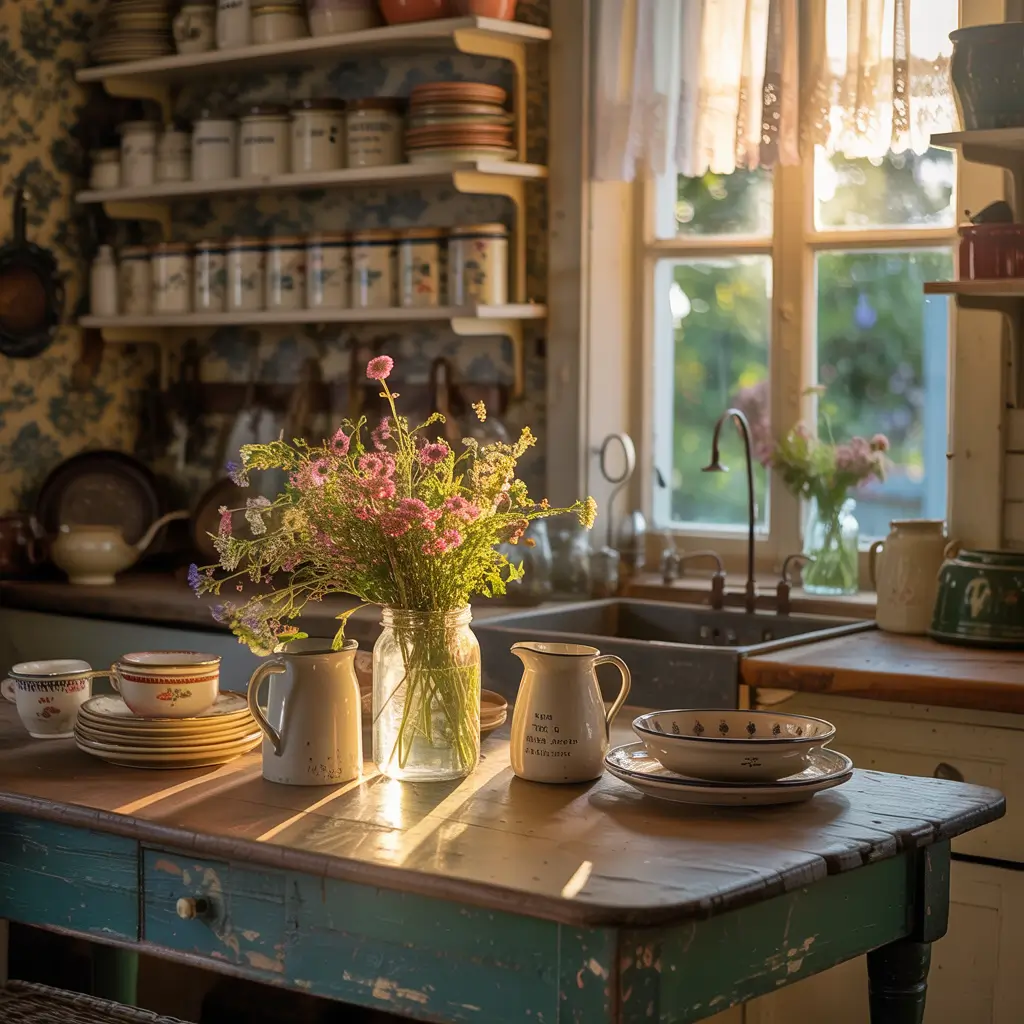
The rustic farmhouse kitchen is not the right place for surfaces that resist all evidence of use. What it calls for instead are materials that change with time — that develop character, patina, and depth as they are lived with.
The best countertop materials for a rustic farmhouse kitchen:
1. Butcher block. The most warmly rustic countertop available. End-grain butcher block in walnut, maple, or oak develops knife marks, oil depth, and a surface richness over years of real use. Treat regularly with food-safe oil and it will outlast everything else in the kitchen.
2. Soapstone. Dark, velvety, and non-porous. Soapstone develops a deeper color when treated with mineral oil and acquires a gentle patina that makes it look better at ten years than it did at installation. Virtually heat-proof and naturally resistant to bacteria.
3. Honed granite. Unlike polished granite, honed granite has a matte surface that reads as more organic and farmhouse-appropriate. It develops a gentle sheen with use rather than staying artificially mirror-bright.
4. Marble with a leathered finish. Leathered marble — a finish that amplifies the natural texture of the stone surface — has a quality entirely different from polished marble. More rustic, more natural, and far more forgiving of the everyday marks that are simply part of kitchen life.
5. Concrete. Poured-in-place or precast concrete countertops in warm gray or terracotta tones have an artisanal, workshop quality that suits the modern-rustic farmhouse direction beautifully. They seal well and develop a gentle patina over time.
10. Install a Vintage-Style or Freestanding Range as the Kitchen’s Heart
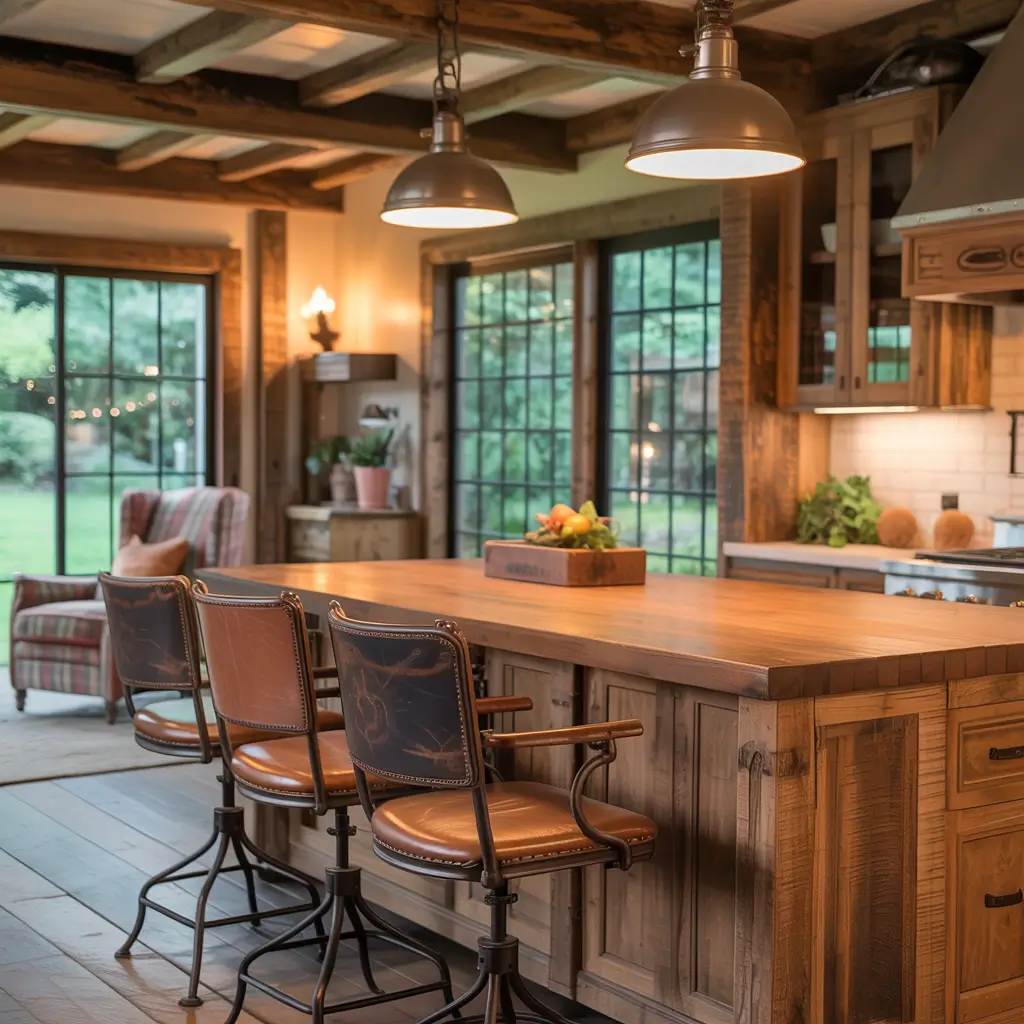
In the original farmhouse kitchen, the wood-burning stove was the heart of the home — the source of heat, the center of food production, and the place everyone gathered. The modern rustic farmhouse kitchen honors that history by treating the range as a genuine focal point rather than an appliance to be minimized.
Vintage-inspired ranges from manufacturers like Big Chill, Smeg, Ilve, and La Cornue have the visual presence and rounded, enameled quality that standard stainless steel ranges simply lack. Cream, sage green, dark green, matte black, and classic red are all available — and each creates an immediate visual anchor in a farmhouse kitchen.
For kitchens where a specialty range is beyond budget, the most impactful alternative is framing the existing range more intentionally. A custom range hood surround in reclaimed wood or painted shiplap, with simple wrought iron or brass strapping, elevates even a basic range by creating an architectural moment above it.
11. Mix Metals Deliberately — Brass, Iron, and Copper Together
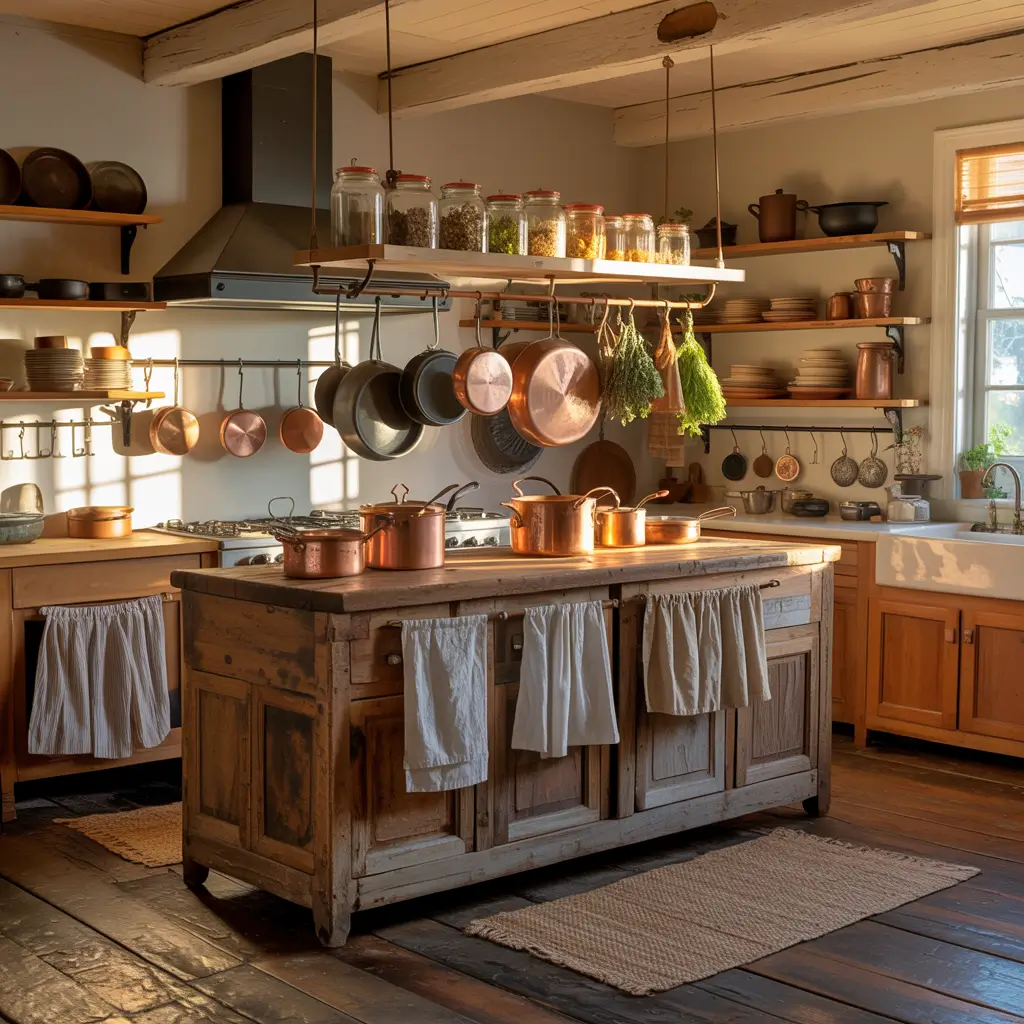
The contemporary design instinct is to pick one metal finish and use it consistently throughout a kitchen. The rustic farmhouse kitchen ignores this advice entirely — and looks better for it. In a space that is meant to feel collected and lived-in over time, matching metals read as forced and unnatural.
The metals that belong in a rustic farmhouse kitchen:
1. Unlacquered brass. Develops a living patina with use, darkening at points of contact and maintaining its brightness in less-touched areas. Cabinet hardware, faucets, and light fixtures in unlacquered brass look genuinely antique within a year of use.
2. Wrought iron. Dark, slightly rough, distinctly agricultural. Pot racks, towel bars, window hardware, and cabinet pulls in wrought iron ground the rustic aesthetic with genuine material weight.
3. Copper. The warmest metal tone available. Copper pots on open shelves, a copper faucet, or a hammered copper sink introduces a color that connects to the earth tones throughout a rustic kitchen in a way no other metal does.
4. Aged bronze and oil-rubbed bronze. Dark, warm, and slightly variable in tone — oil-rubbed bronze hardware has the same lived-in quality as unlacquered brass but in a cooler, darker register.
The principle that makes mixing metals work in a rustic farmhouse kitchen is simply that they are all warm-toned and all have an aged or natural quality. Nothing polished and bright. Nothing chrome. The metals feel related even when they are different.
12. Build a Walk-In Pantry With Vintage-Inspired Organization
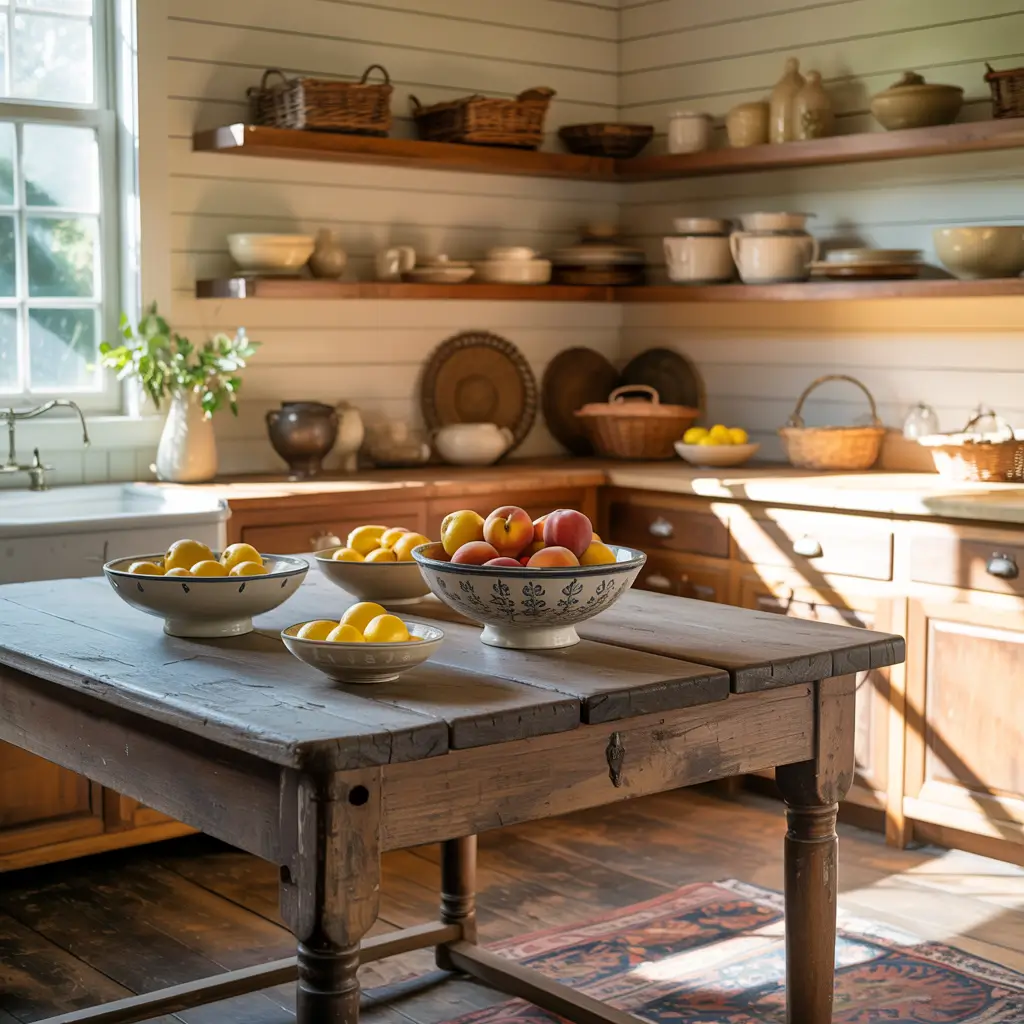
A pantry is one of the most quintessentially farmhouse elements in kitchen design — rooted in the practical reality that farming households needed to store large quantities of preserved and dried food through the winter months. The walk-in pantry, when styled with rustic farmhouse character, becomes one of the most satisfying rooms in a home.
What makes a rustic farmhouse pantry genuinely special rather than just organized:
1. Open wooden shelving on all walls. Simple pine shelving at varying heights, without cabinet doors. Everything visible, everything accessible.
2. Baskets and crates for produce. Wicker, willow, and wooden crates for potatoes, onions, and citrus. The agricultural connection of baskets in a pantry is deeply satisfying.
3. A uniform jar system for dry goods. Wide-mouth mason jars, Weck jars, or Le Parfait jars in consistent sizes. Labeled simply and arranged by category.
4. A chalkboard menu wall. One wall or the back of the door painted in chalkboard paint for a running grocery list and weekly menu. Genuinely practical and genuinely farmhouse.
5. A vintage flour bin or bread box on a lower shelf. Functional antique pieces that earn their place through daily use, not display alone.
Lighting Tip: Pantry lighting is almost always underestimated. A single overhead bulb in a warm filament style, or a series of battery-powered puck lights under shelves for deep pantry spaces, transforms a dark storage closet into a room you actually enjoy entering.
13. Create a Kitchen Window Herb Garden on the Sill
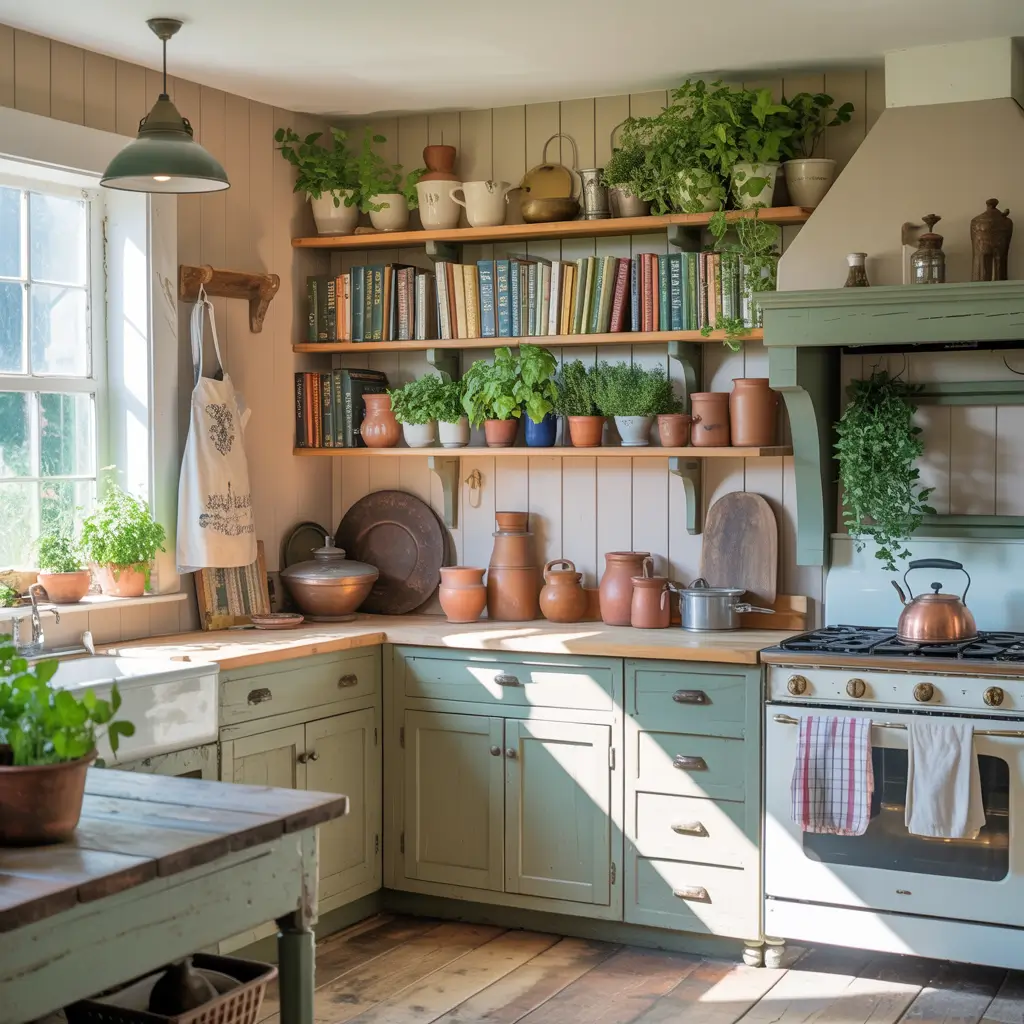
A kitchen windowsill with growing herbs is one of the smallest details in rustic farmhouse kitchen design with one of the largest impacts on how the space feels. It is alive. It smells extraordinary. It connects the kitchen to the garden in a way that is symbolic as well as practical.
Terracotta pots — plain, unglazed, the most basic version available — are the right container for a farmhouse herb garden. They are porous, which is better for most herbs than glazed ceramic. They weather and develop a patina quickly. They cost almost nothing. And they look, in a rustic farmhouse kitchen, exactly right.
Herbs that grow well in a sunny kitchen window: basil, rosemary, thyme, sage, mint, chives, flat-leaf parsley, and lemon balm. For lower-light windows, mint and chives are the most forgiving. Group them in odd numbers — three pots or five pots — for a more natural, less regimented appearance.
14. Add a Stone or Brick Backsplash Behind the Range
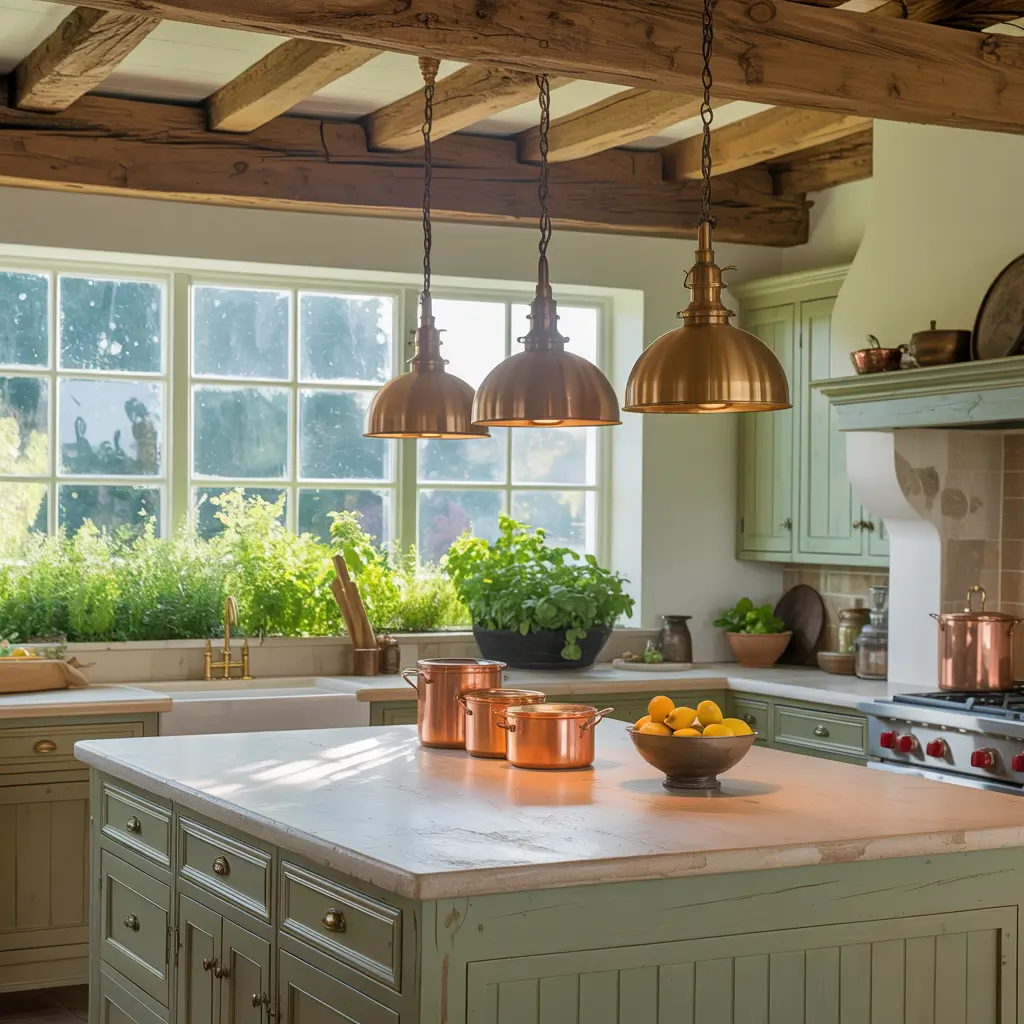
The backsplash behind the range is the kitchen’s most visually prominent vertical surface. In a rustic farmhouse kitchen, treating it with stone or brick — rather than standard tile — creates an immediate focal point that references both the outdoor materials of traditional agricultural buildings and the open hearths of historical farmhouse cooking.
Natural fieldstone, stacked slate, limestone, and quarried sandstone all work beautifully. Installed in a running bond or natural staggered pattern with a dark, slightly rough grout, stone backsplashes look genuinely embedded in the kitchen architecture rather than applied as a surface treatment.
Reclaimed brick is the other outstanding option — particularly in kitchens with exposed beam ceilings and wood floors, where the brick connects visually to multiple other natural materials already present in the room. Thin brick veneer makes this achievable in any kitchen without the structural requirements of full-depth brick.
15. Hang Pendant Lights With Genuine Agricultural Roots
The right pendant light in a rustic farmhouse kitchen does not look like it was designed for a kitchen. It looks like it was adapted from something else — a barn lantern, a factory utility light, a market pendant — and brought inside because it is beautiful and functional.
Pendant types with genuine rustic farmhouse credentials:
1. Barn lanterns. Square or rectangular metal lanterns with glass panels, in black or aged iron. These are direct descendants of actual agricultural lighting and carry that heritage visually.
2. Enamel dome pendants. The utilitarian dome shade — originally designed for factory floors and workshops — looks surprisingly at home in a rustic farmhouse kitchen when finished in cream, black, or deep green.
3. Vintage cage pendants. A wire cage around an exposed Edison bulb, in aged brass or oil-rubbed bronze. Simple, honest, and quietly rustic.
4. Rattan and woven shades. For kitchens leaning toward a warmer, more cottage-adjacent rustic aesthetic, woven natural fiber shades add texture and organic warmth.
5. Gooseneck barn lights. Wall-mounted with a curved metal arm, these reference agricultural signage and barn lighting directly. Paired at either side of a window or over the sink, they are one of the most characterful farmhouse lighting choices available.
Rustic Farmhouse Kitchen Ideas for Small Rooms and Compact Spaces
A small kitchen is not a barrier to a rustic farmhouse aesthetic. It is a different set of parameters. These approaches work particularly well in compact spaces:
1. Replace upper cabinets with floating shelves. The visual openness of shelving versus closed cabinets makes a small kitchen feel immediately larger, while the display opportunity is inherently farmhouse.
2. Use a single apron front sink as the room’s statement piece. In a small kitchen with limited space for multiple design gestures, let the sink do the heavy lifting on its own.
3. Choose a butcher block countertop in a warm tone. Light-toned wood countertops reflect more light and make small kitchens feel warmer and larger simultaneously.
4. Hang a pot rail on the wall beside the stove. Instead of a ceiling rack that might feel overwhelming in a small space, a wall-mounted pot rail provides the same visual richness at a smaller scale.
5. Use vertical space aggressively. Tall open shelving that reaches toward the ceiling, a hanging pot rack, and wall-mounted magnetic knife strips all bring farmhouse character into the room without consuming precious floor space.
Rustic Farmhouse Kitchen Ideas by Budget
Under $200 — High Impact, Low Investment
1. Swap cabinet hardware for oil-rubbed bronze, unlacquered brass, or wrought iron pulls. Return on investment is extraordinary.
2. Decant dry goods into uniform mason jars. An afternoon project that transforms the kitchen’s feel completely.
3. Add terracotta pots with herbs on the windowsill. Living, fragrant, and completely free of artifice.
4. Hang a jute or wool runner in front of the sink. Warmth underfoot is more impactful than it sounds.
5. Place a vintage crock or stoneware piece on the counter for utensils. The right crock costs $8 at a thrift store and looks like it has been there for decades.
$200 to $1,000 — Structural and Visual Upgrades
1. Install floating reclaimed wood shelves in place of some upper cabinets. Labor-intensive but entirely DIY-capable with basic tools.
2. Paint cabinets in a chalk or mineral paint and add farmhouse hardware. A weekend project that changes the entire visual character of the kitchen.
3. Add a gooseneck or apron-front faucet in unlacquered brass or oil-rubbed bronze. One of the highest-impact single hardware changes available.
4. Hang pendant lights over the island in a barn lantern or enamel dome style. Electrician involvement required for hardwired installations.
5. Install shiplap or beadboard on a feature wall or backsplash area. Materials cost is modest; the result is transformative.
$1,000 and Above — Defining Investment Pieces
1. Install an apron front fireclay or cast iron sink. The single most impactful farmhouse kitchen investment. Plan for cabinet modification costs.
2. Replace countertops with butcher block, soapstone, or honed granite. Coordinate with the overall design direction before committing.
3. Install reclaimed wide-plank hardwood flooring. Transformative for the entire kitchen atmosphere.
4. Add exposed or faux reclaimed beam ceiling treatment. Architectural impact that changes the room’s fundamental character.
5. Replace the range with a vintage-style or freestanding model in a statement color. A long-term investment that becomes the kitchen’s defining element.
Frequently Asked Questions
What is the difference between farmhouse and rustic farmhouse kitchen style?
Farmhouse kitchen style covers a broad range from the clean, contemporary shaker-cabinet look often called modern farmhouse to the more deeply textured, materially authentic direction called rustic farmhouse. Rustic farmhouse specifically emphasizes natural materials with genuine age or character — reclaimed wood, stone, handmade ceramics, antique metals — and leans further into imperfection, warmth, and the suggestion of accumulated history. Modern farmhouse tends toward cleaner lines and more curated minimalism.
How do I make my kitchen look rustic farmhouse without renovating?
The most impactful non-renovation changes are: swap cabinet hardware for oil-rubbed bronze or unlacquered brass pulls and knobs; add reclaimed wood floating shelves to one wall and style them with vintage stoneware and mason jars; hang a barn lantern or enamel dome pendant over the island; place terracotta herb pots on the windowsill; decant pantry items into uniform glass jars; and add a jute runner in front of the sink. None of these require a contractor or permanent changes.
What colors are most authentic to rustic farmhouse kitchen design?
Warm whites, aged cream, dusty sage green, terracotta, ochre, and deep moss green are all deeply connected to the rustic farmhouse palette. Cabinet colors that feel most authentic include Farrow and Ball’s Elephant’s Breath, Mizzle, and Mouse’s Back — earthy, slightly complex tones that reference the natural world rather than the color chip rack. Avoid stark bright white and cool gray, which push toward contemporary rather than rustic.
What countertop material is most rustic farmhouse?
End-grain butcher block is the most warmly rustic countertop material and the most deeply connected to farmhouse food preparation traditions. Soapstone is a close second — its dark, matte, velvety surface and the way it develops a patina with use are inherently rustic in quality. Honed or leathered granite and concrete are also excellent rustic choices. Polished surfaces in any material tend to read more contemporary than the rustic farmhouse aesthetic calls for.
Are rustic farmhouse kitchens still popular in 2025 and 2026?
Yes, consistently and increasingly so. The rustic farmhouse aesthetic has evolved away from the mass-produced, all-shiplap formula of the mid-2010s toward something more personal, more materially authentic, and more deeply connected to craft traditions. The current direction emphasizes genuine antique and reclaimed objects over farmhouse-themed merchandise, handmade ceramics over mass-produced decor, and natural material imperfection over manufactured distressing. This evolved rustic farmhouse direction shows every sign of continuing to grow in relevance.
How do I prevent a rustic farmhouse kitchen from looking cluttered?
Edit ruthlessly and repeatedly. Every object on an open shelf or counter should be there for a reason — functional, beautiful, or both. Group similar objects together rather than distributing them randomly. Leave deliberate negative space on shelves between groupings. Limit the number of competing focal points — one great pot rack, one strong backsplash, one beautiful island is more powerful than five competing design statements. And resist filling the space too quickly — the best rustic farmhouse kitchens develop over years, not weekends.
Final Thoughts: Build a Kitchen That Tells the Truth About How You Live
A rustic farmhouse kitchen is, at its best, an honest kitchen. It does not pretend that cooking is a clean, frictionless activity performed on surfaces that resist all evidence of use. It does not hide the tools of the kitchen in cabinets and drawers as though they were embarrassments. It does not try to look like it was designed and photographed yesterday.
It tells the truth about what a kitchen is: a working room, a gathering place, a space where real things happen to real people with real ingredients. The materials — the reclaimed wood, the stone, the cast iron, the aged brass — are chosen because they get better with use. The vintage objects are there because they were made to work and they still do. The handmade ceramics are there because someone made them with their hands and that matters.
Whether you are starting with one set of reclaimed wood shelves and a vintage crock of wooden spoons, or committing to a full renovation with a fireclay apron sink and stone floors and exposed beam ceiling, you are working toward the same thing: a kitchen that feels like yours, that feels like it has always been there, that makes people feel at home the moment they walk into it.
1 thought on “15 Stunning Rustic Farmhouse Kitchen Ideas for Cozy Spaces”