
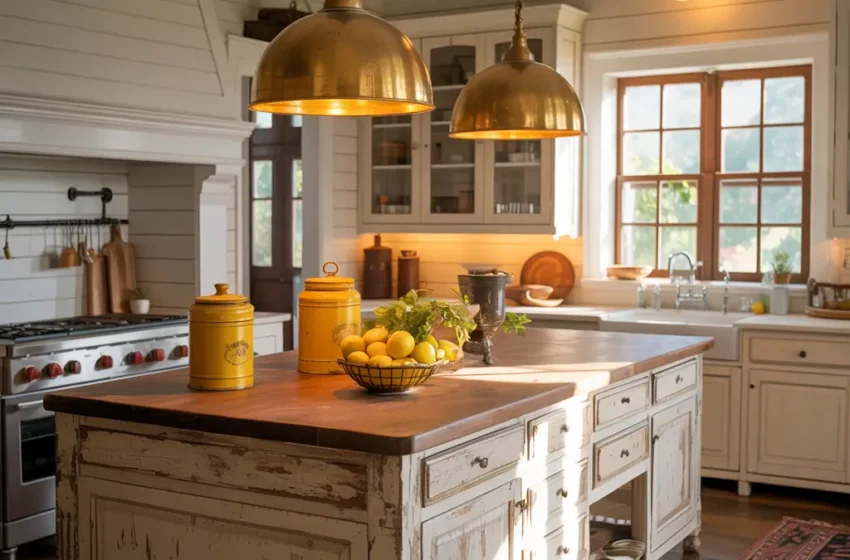
There is a particular kind of kitchen that makes you feel good the moment you walk into it. Not just visually nice — actually, genuinely good. Warm. Cheerful. Like something delicious is either being made or is about to be. Nine times out of ten, that kitchen has yellow in it somewhere.
Yellow is one of those colors that interior designers often get asked about and homeowners often second-guess. It seems too bold, too risky, too much. And then you see it done right — a kitchen with soft buttercream walls catching the morning light, or a mustard-yellow island anchoring an otherwise neutral room — and you immediately understand why it works.
Yellow farmhouse kitchens occupy a very specific sweet spot. The farmhouse aesthetic — warm woods, vintage-inspired fixtures, handcrafted details, relaxed proportions — is the perfect backdrop for yellow. The two fit together the way Sunday mornings and fresh coffee do. Each one is good on its own; together, they’re something else entirely.
This guide gives you 15 yellow farmhouse kitchen ideas that go beyond the obvious. Each one comes with real, practical guidance on how to pull it off — what shades to choose, what to pair it with, what mistakes to avoid, and how to make it work in your actual kitchen rather than just in a perfectly lit magazine shoot.
1. Buttery Yellow Shaker Cabinets with White Uppers
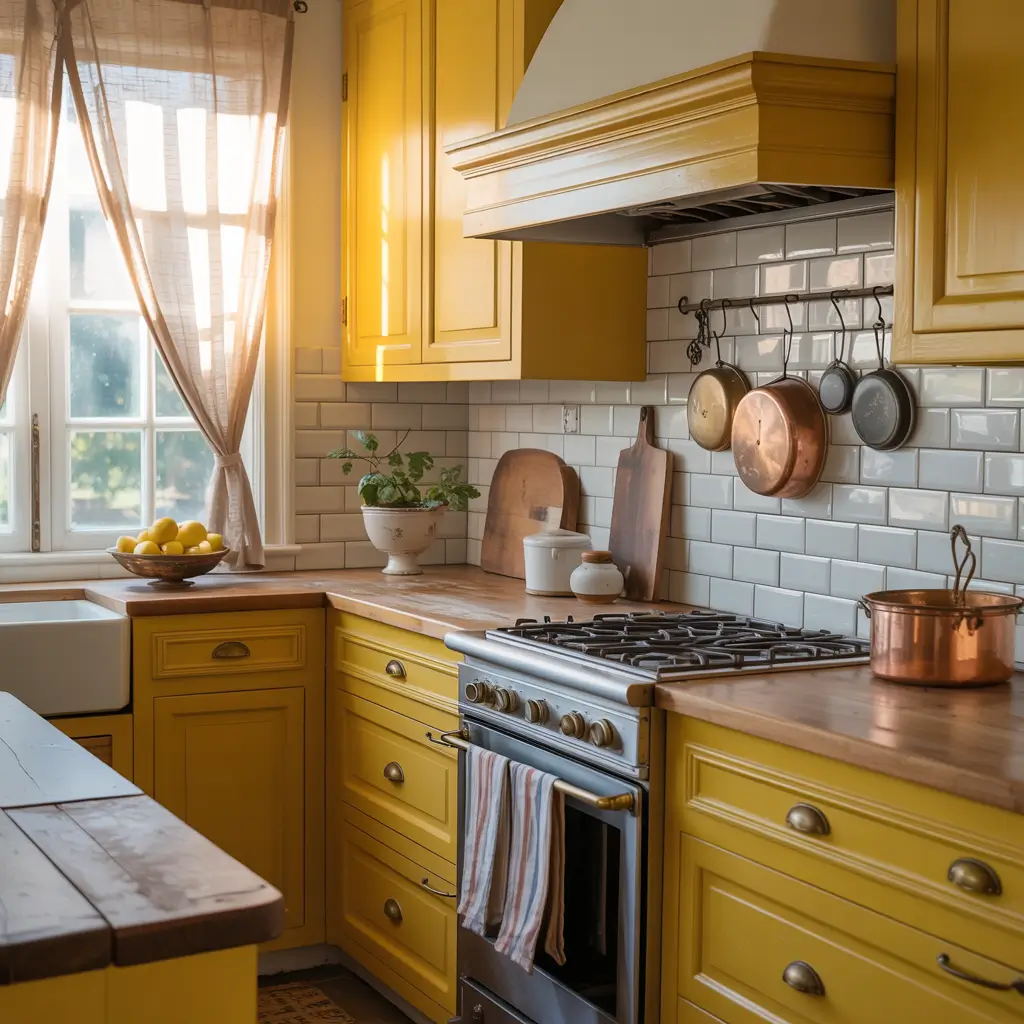
This is the big one — the move that transforms a kitchen more completely than almost any other single decision. Painting your lower Shaker-style cabinets in a soft, buttery yellow while keeping upper cabinets white creates a layered, two-tone look that is both visually interesting and completely balanced.
The Shaker cabinet profile — recessed panel, clean lines, simple proportions — is ideal for yellow. The flat surfaces show off the color beautifully without the distraction of ornate detail, and the overall effect is warm and crafted without being fussy.
For the yellow, look for shades described as ‘butter,’ ‘cream,’ ‘straw,’ or ‘warm ivory’ rather than ‘lemon’ or ‘sunshine.’ You want a color that looks golden in low light and cheerful in bright light — not one that vibrates off the walls on a cloudy day.
Paint Pick: Benjamin Moore’s ‘Hawthorne Yellow’ HC-4 and Farrow & Ball’s ‘Hay’ No.37 are consistently recommended by designers for farmhouse kitchens. Both lean warm and golden rather than bright or cool.
Finish in satin or eggshell rather than high-gloss. A lower sheen reads as more artisan and handcrafted — exactly the quality farmhouse style is after — and it’s more forgiving on imperfect surfaces.
2. Mustard Yellow Kitchen Island as a Statement Piece
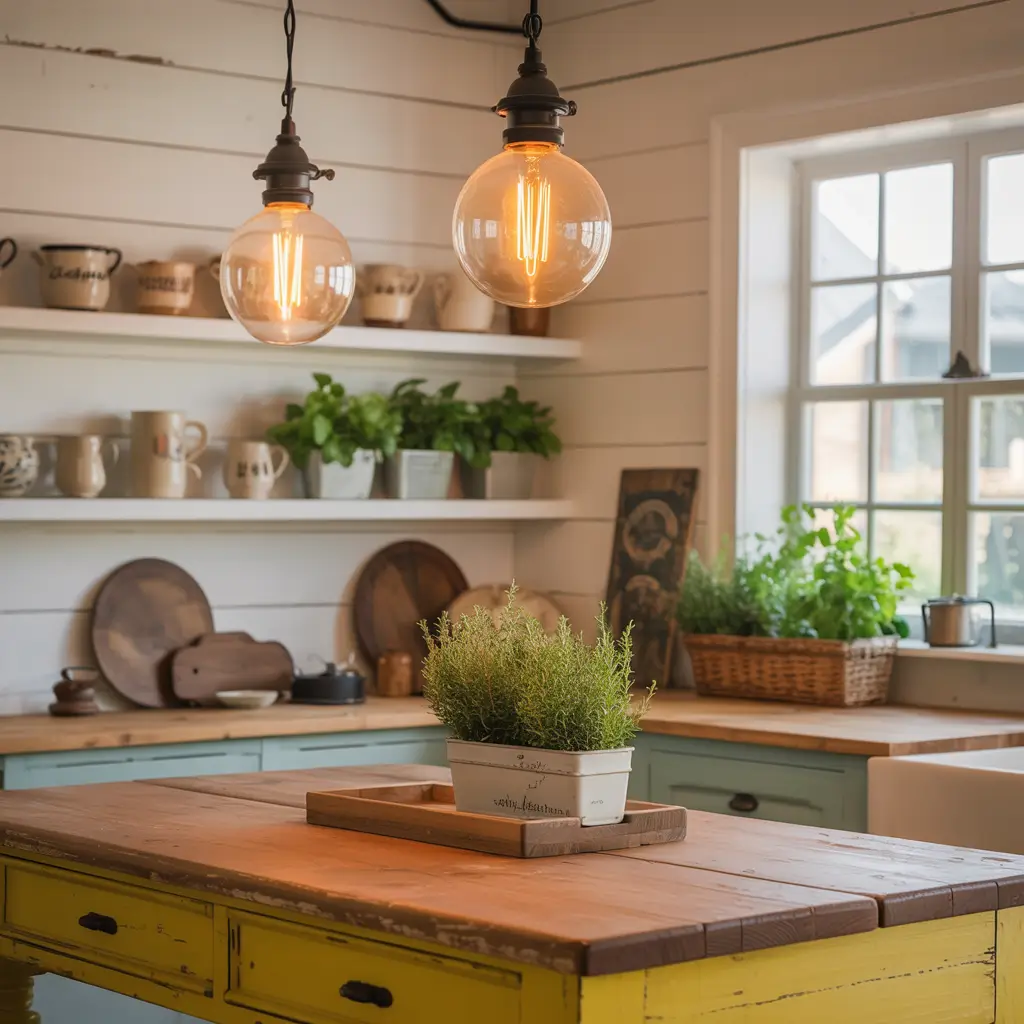
If painting all your cabinets yellow feels like too big a commitment, a mustard island is the perfect compromise. It gives you all the impact and warmth of yellow without the total overhaul — and it creates a natural focal point in the kitchen that anchors the whole room.
Mustard yellow is richer and more saturated than butter or cream — deeper gold with brown undertones that give it serious visual weight. On an island, that depth works in your favor. The island reads almost like a piece of furniture, separate from the surrounding cabinetry, which is exactly the right feeling for farmhouse design.
Top the island with butcher block or a warm marble for the most cohesive look. Add black iron or oil-rubbed bronze hardware. Hang pendant lights in matching black or aged brass directly above it. The result is a kitchen that looks thoroughly designed without feeling like a showroom.
Sizing Note: Your island needs at minimum 36 inches of clearance on all sides where people will walk or work. A beautiful island that creates a traffic problem will quickly become your most frustrating design decision.
3. Soft Yellow Walls with Exposed Wood Beam Ceilings
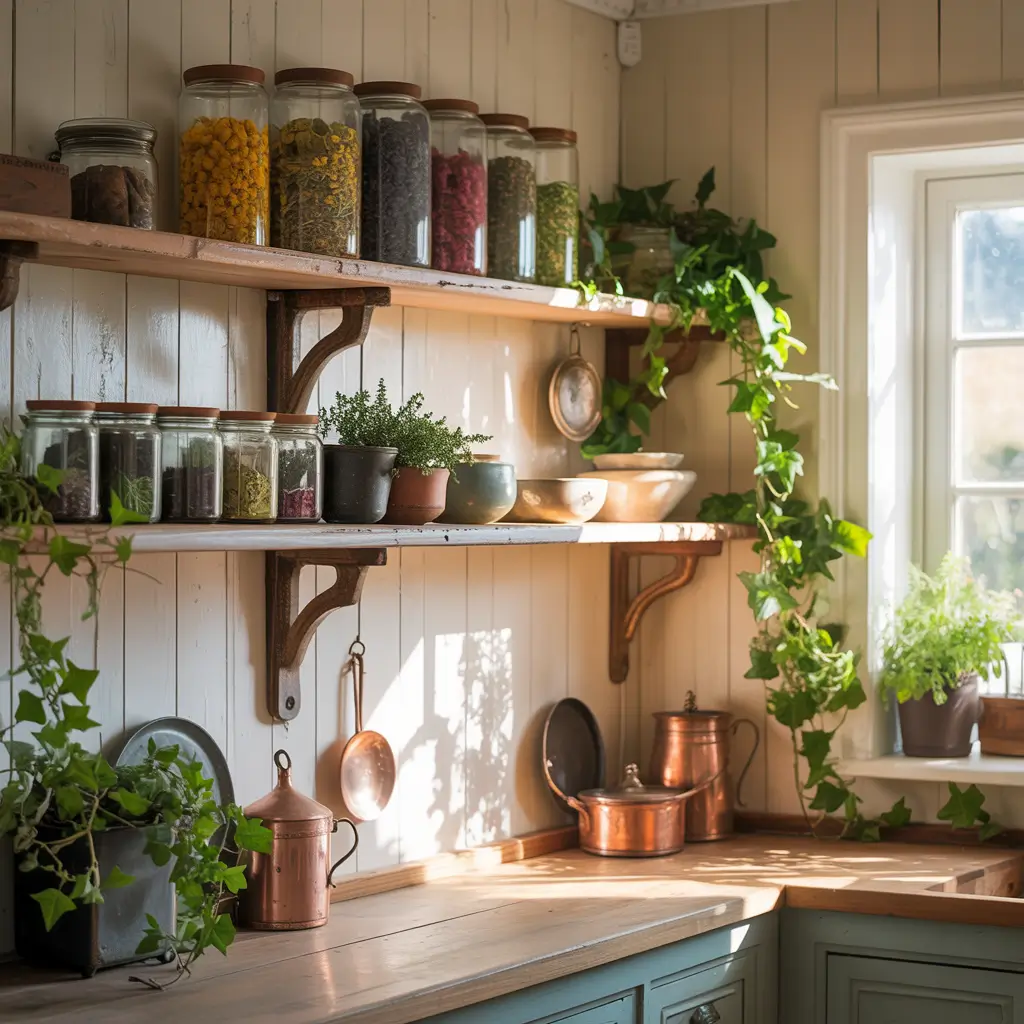
There is something almost cinematic about the combination of soft yellow walls and exposed ceiling beams. It’s a look that reads as deeply rooted — like the kitchen has been there for a hundred years and is exactly as it should be. The yellow warms the space, the beams add structure and texture, and together they create a sense of solidity and comfort that’s genuinely rare.
For wall color in this application, lean very soft — almost a warm white that happens to have yellow undertones. Creamy yellows like ‘Navajo White,’ ‘Ivory Lace,’ or ‘Antique White’ all work beautifully and avoid the risk of the walls feeling too intense once the room is furnished.
The beams should be in a warm wood tone — oak, pine, or hickory — that echoes the yellow of the walls. Dark walnut beams against yellow walls create a more dramatic, pub-like feel. Lighter oak or whitewashed beams keep things airy and casual.
4. Yellow Subway Tile Backsplash with White Grout
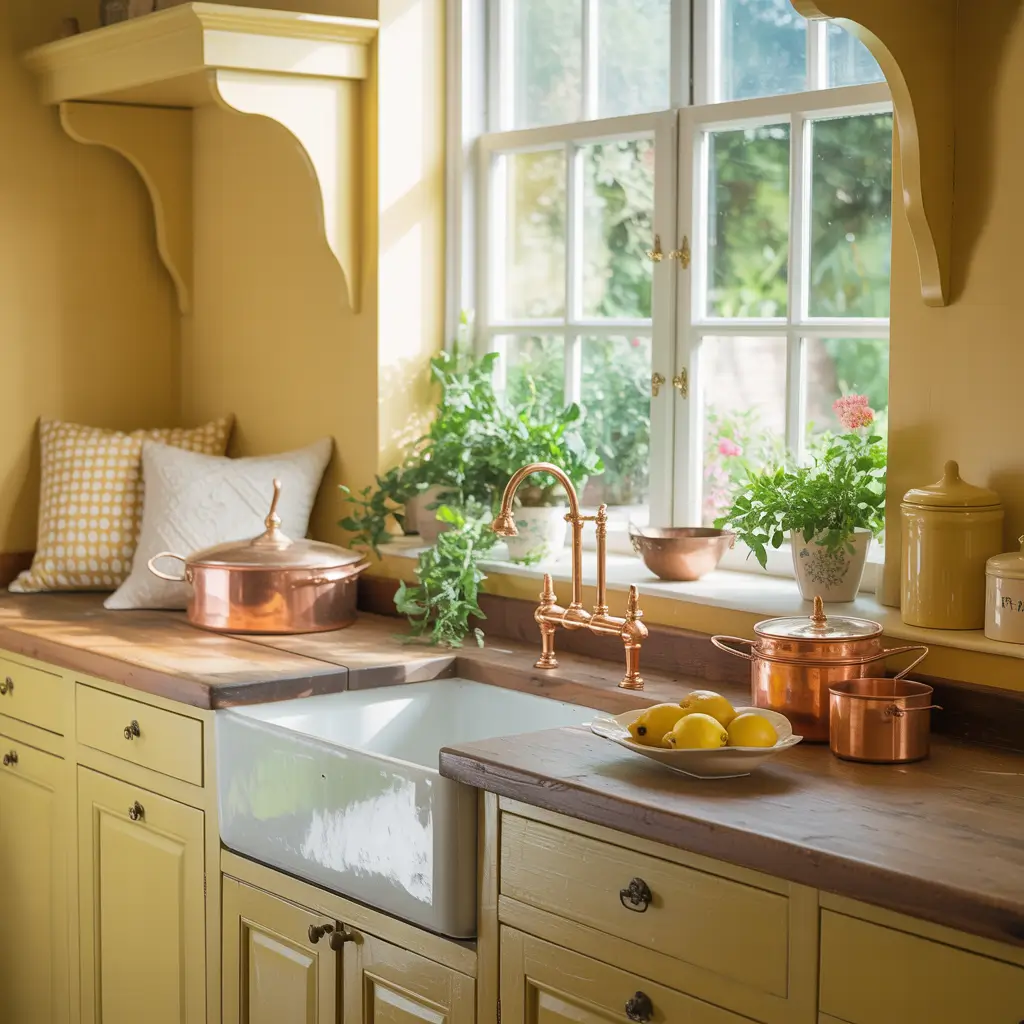
The kitchen backsplash is one of the most impactful and reversible investments you can make, which makes it a great place to introduce color if you’re not quite ready to commit to yellow cabinets or walls. A yellow subway tile backsplash — particularly in a soft, matte glaze — brings farmhouse warmth and color through a format that’s inherently classic and grounded.
Handmade-style ceramic subway tiles in yellow are the ideal choice for farmhouse kitchens. Their slightly irregular surfaces and textured glazes have more character than perfectly uniform commercial tiles, and they look more artisan and less like a home improvement store display.
Use white grout to keep the look clean and bright, or cream grout to soften the contrast and lean warmer. Dark grout will make the pattern pop but can push the aesthetic more urban than farmhouse — use it carefully.
Finish Tip: Matte or satin-glazed tiles read as farmhouse. Highly polished, glossy tiles tend to read as contemporary. In a yellow backsplash, the finish matters as much as the color for getting the right feel.
5. Golden Yellow Vintage-Inspired Range Hood
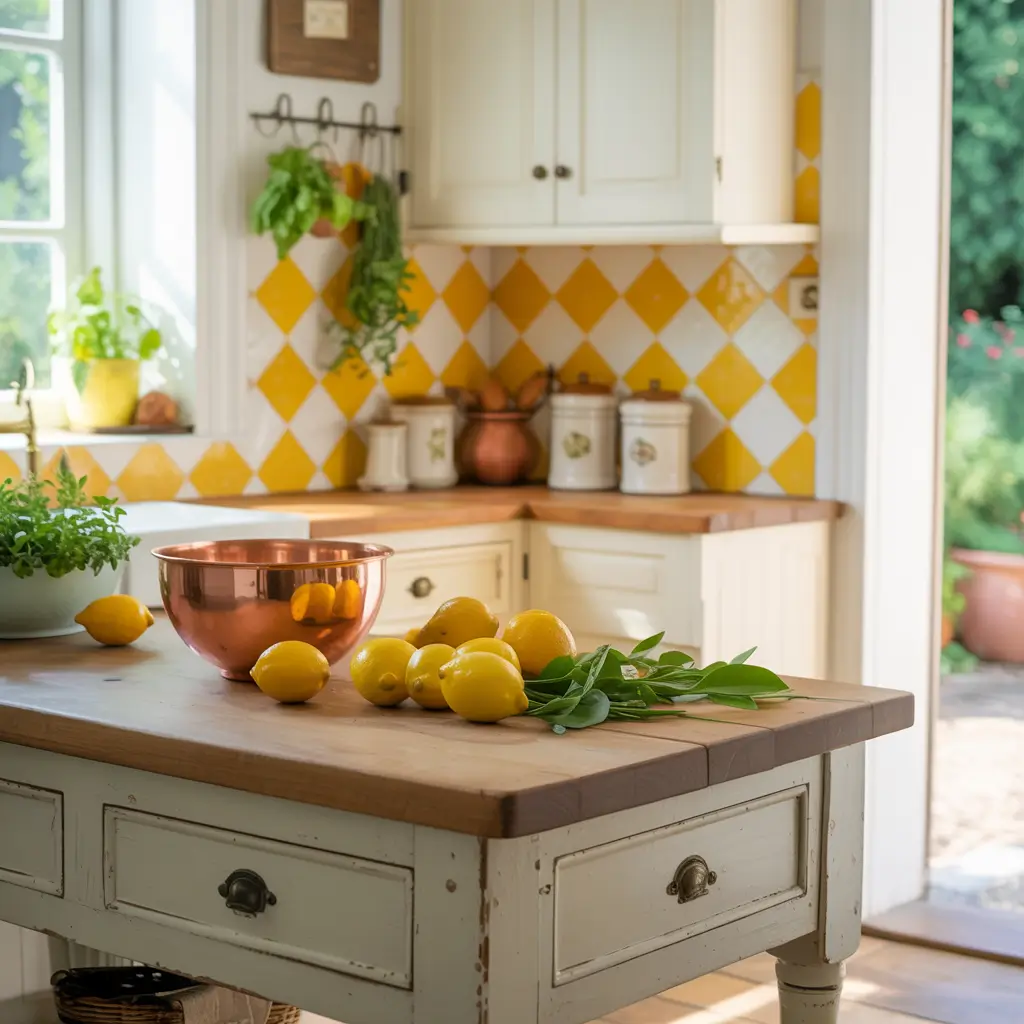
The range hood is one of the most architecturally prominent elements in a kitchen, and one of the most underused opportunities for design character. A custom range hood painted in golden yellow — or clad in yellow tile — becomes the undisputed focal point of the cooking zone and sets the tone for the entire kitchen.
A plaster or shiplap hood with a gently curved profile, painted in a warm golden yellow with a matte finish, has the look of something that’s been there since the house was built. Pair it with a professional-style range in cream or white, a classic subway tile backdrop, and vintage-inspired pot rack above, and you have a cooking zone that feels both serious and utterly inviting.
Even a simpler, boxy hood can be transformed with yellow paint and the right hardware. The key is the proportion — a hood that’s appropriately scaled to your range and ceiling height will always look intentional, regardless of how elaborate the design is.
6. Yellow and White Checkerboard Floor
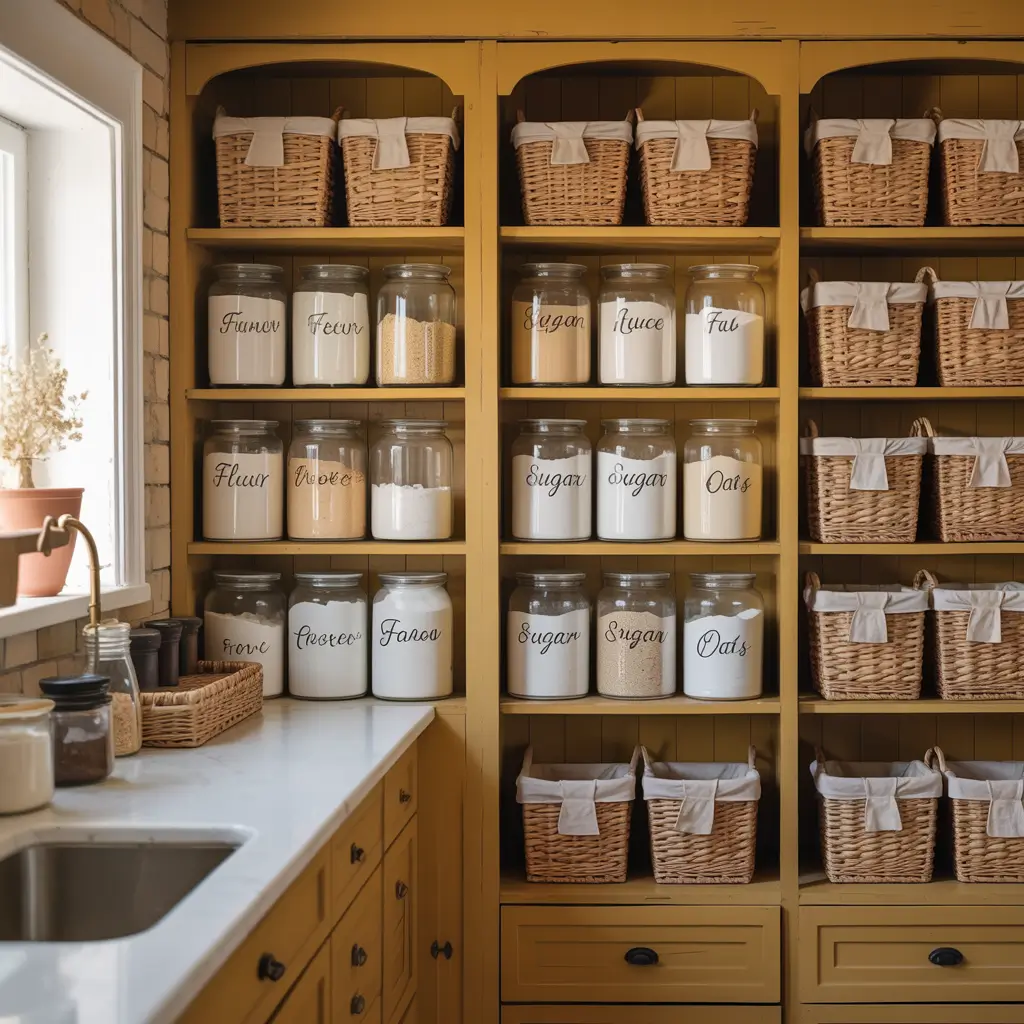
Farmhouse kitchens have a long history with patterned floors — checkerboard tile in particular has been a staple of country kitchen design for well over a century. A yellow and white checkerboard floor brings that heritage into your kitchen with a warmth and personality that black and white simply can’t match.
Scale is the critical decision here. Large-format tiles (12×12 or larger) work best in spacious kitchens where they can breathe without looking busy. Smaller tiles (4×4 or 6×6) are more manageable in compact spaces and create a more vintage, diner-like feel.
Choose a matte or satin finish rather than polished — it’s more practical (shows fewer footprints and scuffs), and it looks more authentically farmhouse. And for the yellow, go softer and warmer than you think you need. The pattern itself provides all the visual energy; the color just needs to contribute warmth.
Maintenance Reality: Grout lines in patterned floors collect dirt. Choose a medium-toned grout (warm gray or tan rather than bright white) to minimize maintenance and keep the floor looking clean between cleanings.
7. Buttercream Yellow Open Shelving with Vintage Dishware
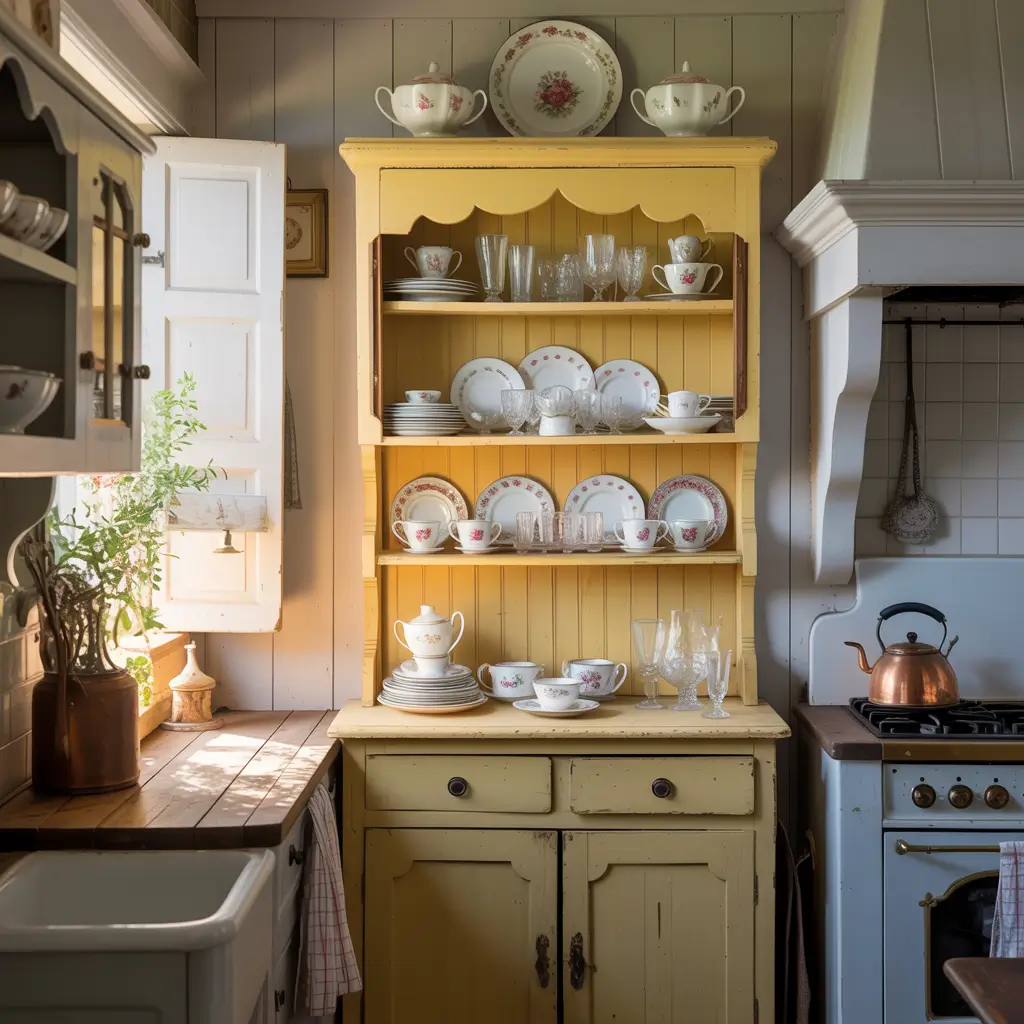
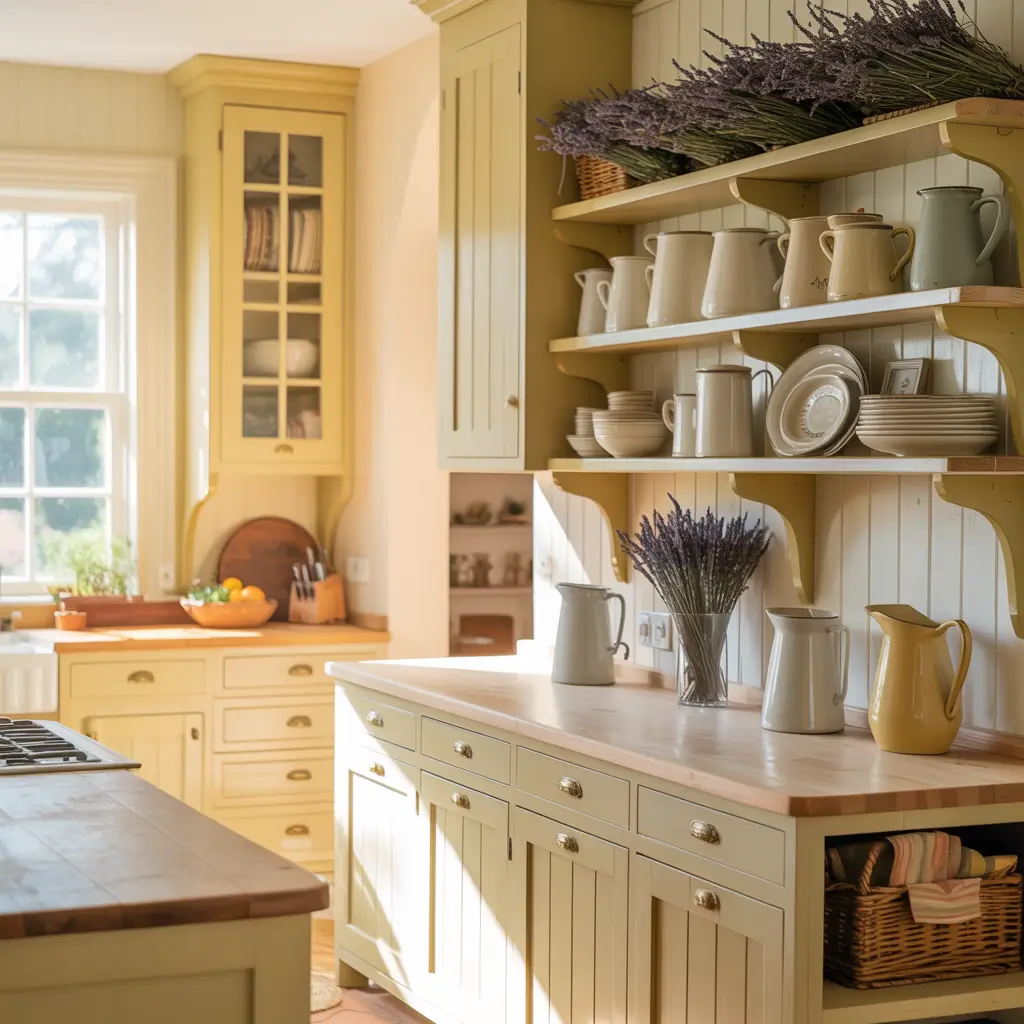
Open shelving in a yellow farmhouse kitchen is an opportunity to create a vignette — a styled display that feels curated and personal rather than utilitarian. Painting floating shelves in a soft buttercream yellow gives them presence without overwhelming the wall, and the color makes everything displayed on them look warmer and more beautiful.
The styling approach is everything. White ironstone dishes, cream ceramic pitchers, clear glass canning jars filled with dried goods, a small terracotta pot with fresh herbs — these are the building blocks of a perfectly styled farmhouse shelf. Mix practical items with decorative ones, but keep the color palette restrained so the yellow of the shelves remains the hero.
Bracket style matters more than most people realize. Simple wooden corbels or plain metal brackets keep the look grounded. Ornate cast-iron brackets add Victorian-farmhouse drama. Either can work depending on the overall aesthetic you’re building toward.
8. Honey-Toned Wood Floors with Yellow Kitchen Accents
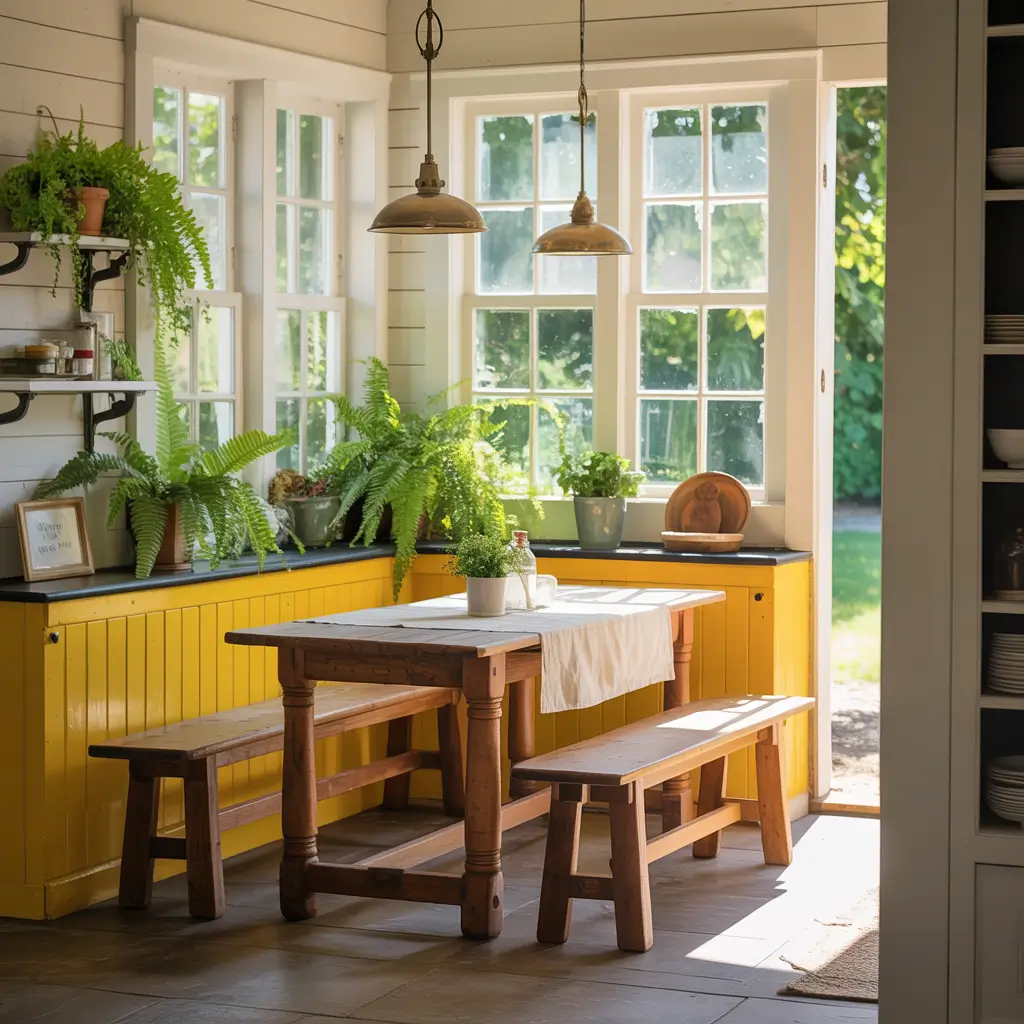
Sometimes yellow comes through the floor rather than the walls or cabinets — and in a farmhouse kitchen, honey-toned hardwood flooring can provide all the warmth and golden color you need without any paint at all. Wide-plank oak, pine, or hickory in a natural or light honey stain creates a floor that reads as inherently yellow in good light.
When your floor is already contributing golden warmth, your yellow accents above it need to be subtle. A few yellow ceramic canisters, a yellow linen dish towel, some golden hardware — these small touches amplify the warmth of the floor without creating competition or visual chaos.
This approach is particularly effective in kitchens with a lot of natural light, where wood floors develop a beautiful glow at different times of day. The kitchen feels golden rather than yellow — a distinction that makes all the difference in terms of livability.
9. Yellow Farmhouse Kitchen with Black Accents
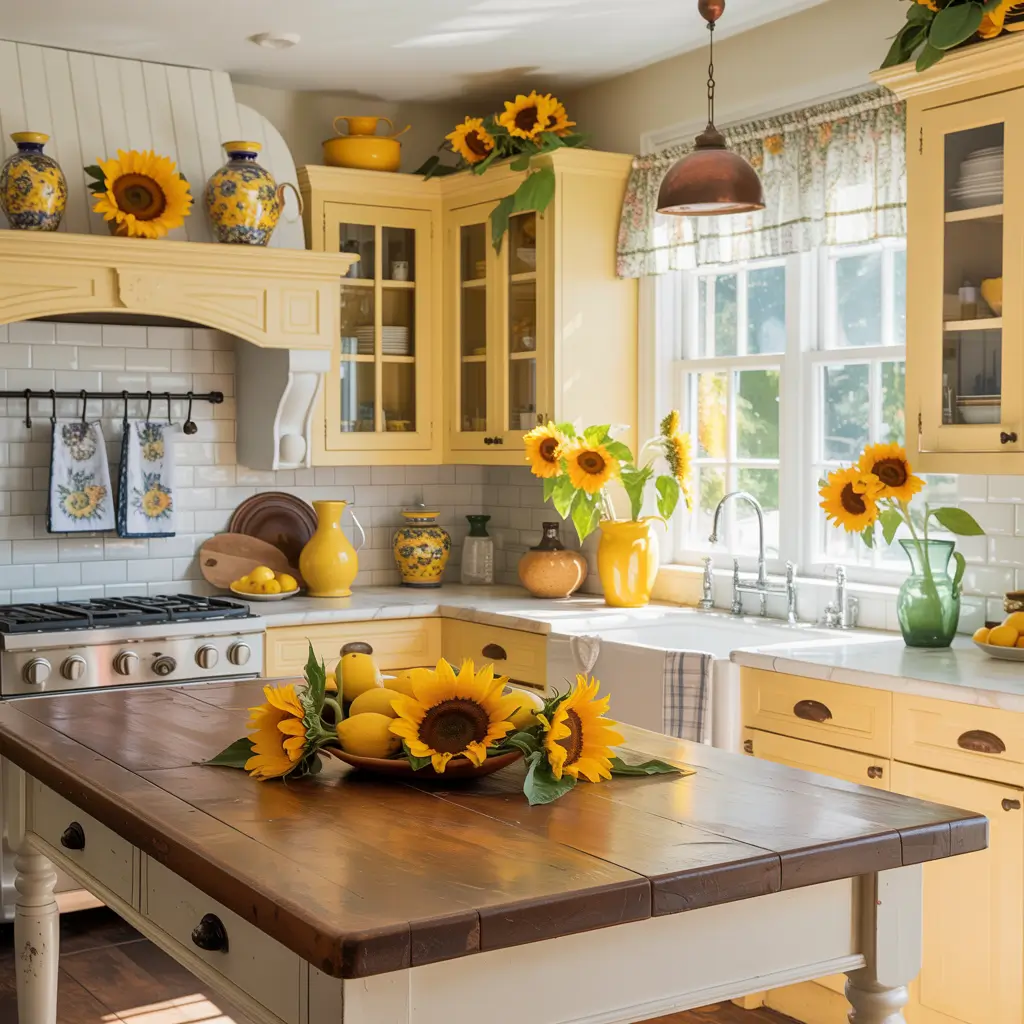
The combination of yellow and black is one of the most visually striking and naturally balanced pairings in interior design. In a farmhouse kitchen, it manifests as warm yellow surfaces — cabinets, walls, or island — contrasted with matte black hardware, light fixtures, faucets, and range hood details.
The black grounding the yellow is what makes this pairing feel sophisticated rather than playful. Without the black accents, yellow can feel undefined and floaty. With them, the yellow has context and contrast, and the whole kitchen reads as thoughtfully put together.
Consistency is essential. If you’re going with black accents, go all the way — cabinet pulls, drawer knobs, faucet, pendant lights, and possibly cabinet frames or window trim. Half-committed contrast looks like a mistake; fully committed contrast looks like a design decision.
Hardware Advice: Matte black hardware is more forgiving than polished black — it shows fewer fingerprints and watermarks. In a kitchen that’s actually used for cooking, that practical advantage matters as much as the aesthetic one.
10. Sunflower Yellow Curtains and Window Treatments
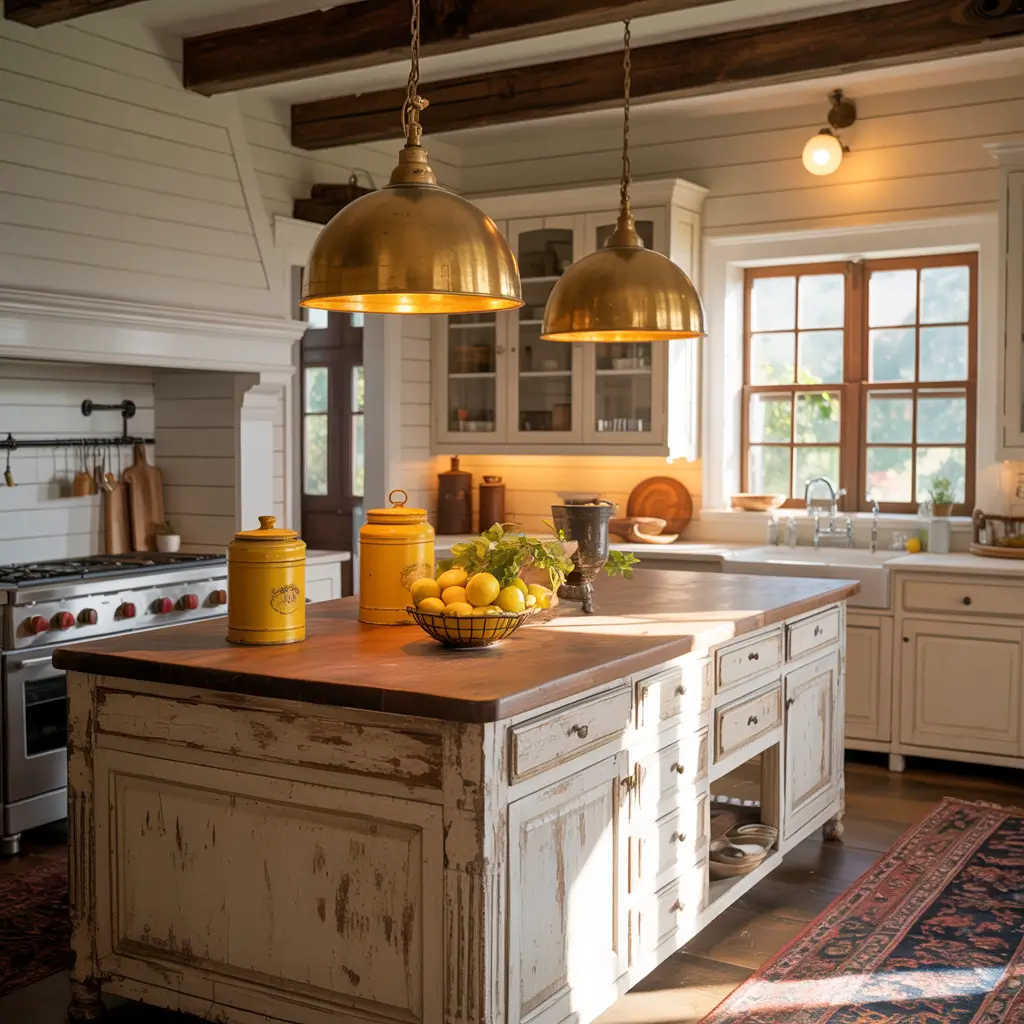
If you’re not ready to paint anything and want to test yellow in your kitchen before committing, window treatments are the perfect starting point. Sunflower yellow curtains or Roman shades in a warm golden fabric introduce color, warmth, and farmhouse character with minimal investment and maximum reversibility.
Linen or cotton canvas curtains in yellow are the most authentically farmhouse choice. They have natural texture and drape beautifully, and they filter light in a way that warms the entire room even when you can’t see the curtains themselves clearly.
Keep the style simple: straight panels with button-tab or grommet headers, or classic Roman shades with flat folds. Ruffles and elaborate trims push the look toward country-kitsch rather than farmhouse-elegant. Clean, simple silhouettes let the color do the work.
11. Yellow Farmhouse Kitchen with Shiplap Accents
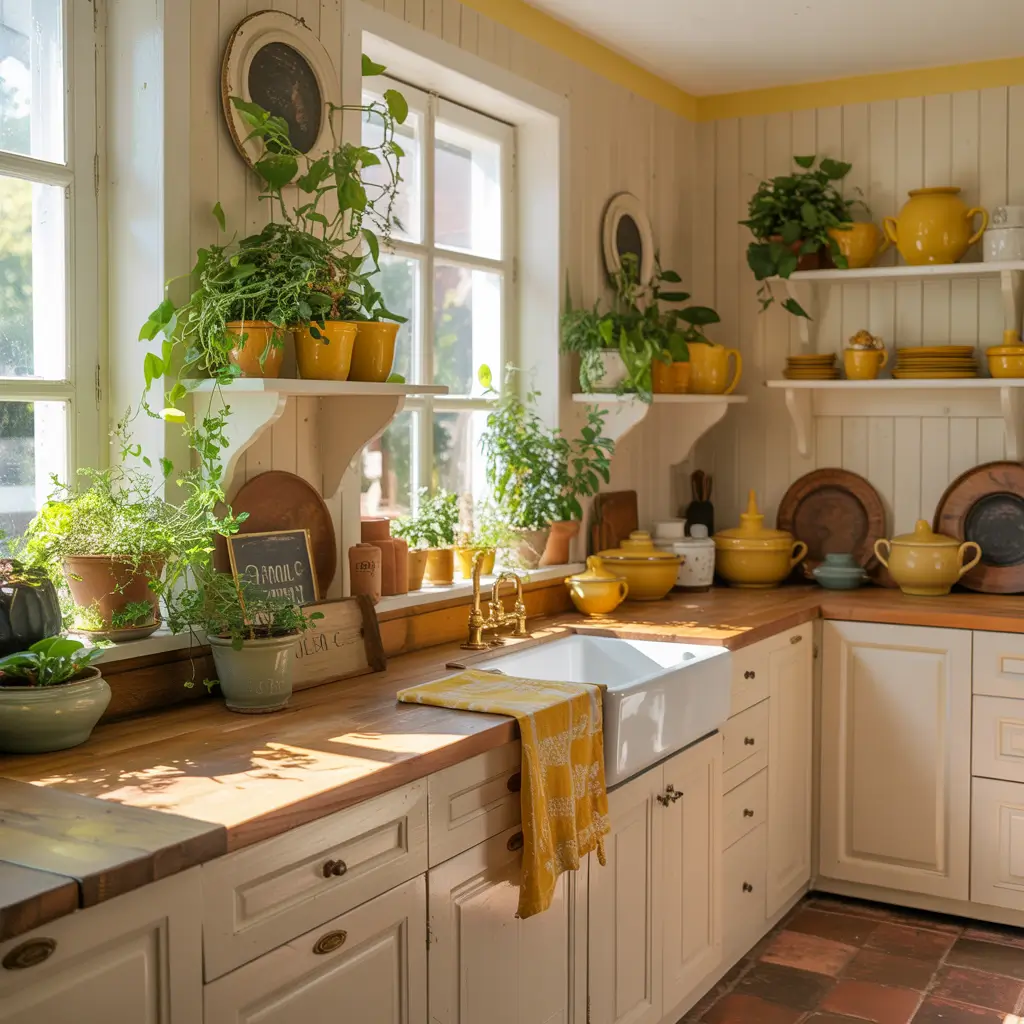
Shiplap is a farmhouse design staple — horizontal wood planks with characteristic grooves between them that add texture, depth, and a sense of craftsmanship to any wall. Against yellow walls or cabinets, shiplap becomes even more effective: the grooves catch shadow and light differently depending on the time of day, making the yellow appear to shift in warmth and intensity.
One accent wall of shiplap — painted white behind yellow cabinets, or left natural behind a yellow-painted cooking zone — creates a layered visual depth that adds character without complexity. Full shiplap can work in larger kitchens but requires a confident edit elsewhere to prevent the room from feeling over-decorated.
If installing real shiplap is beyond your current project scope, pine boards spaced with a consistent gap between them (use a nickel as a spacer) achieve nearly identical results at lower cost and with easier installation.
12. Vintage Yellow Kitchen Accessories and Ceramics
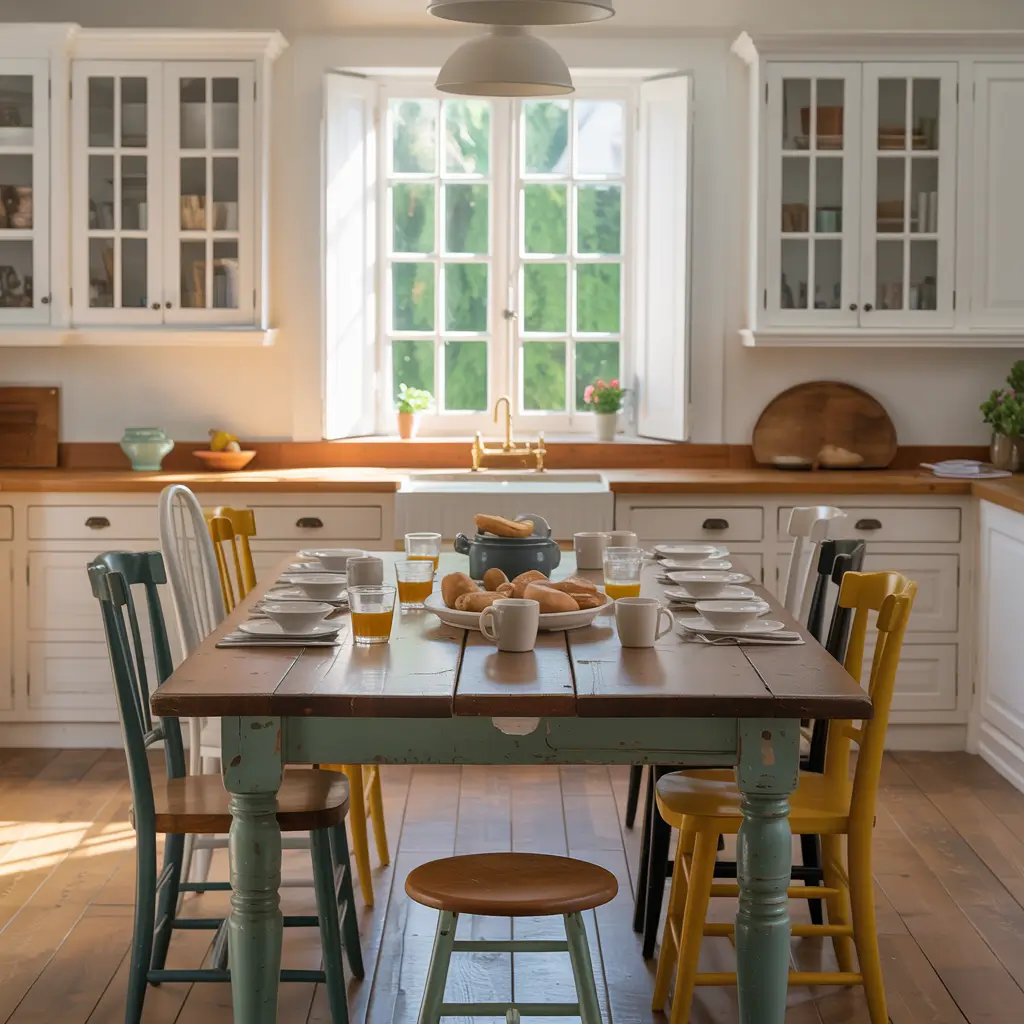
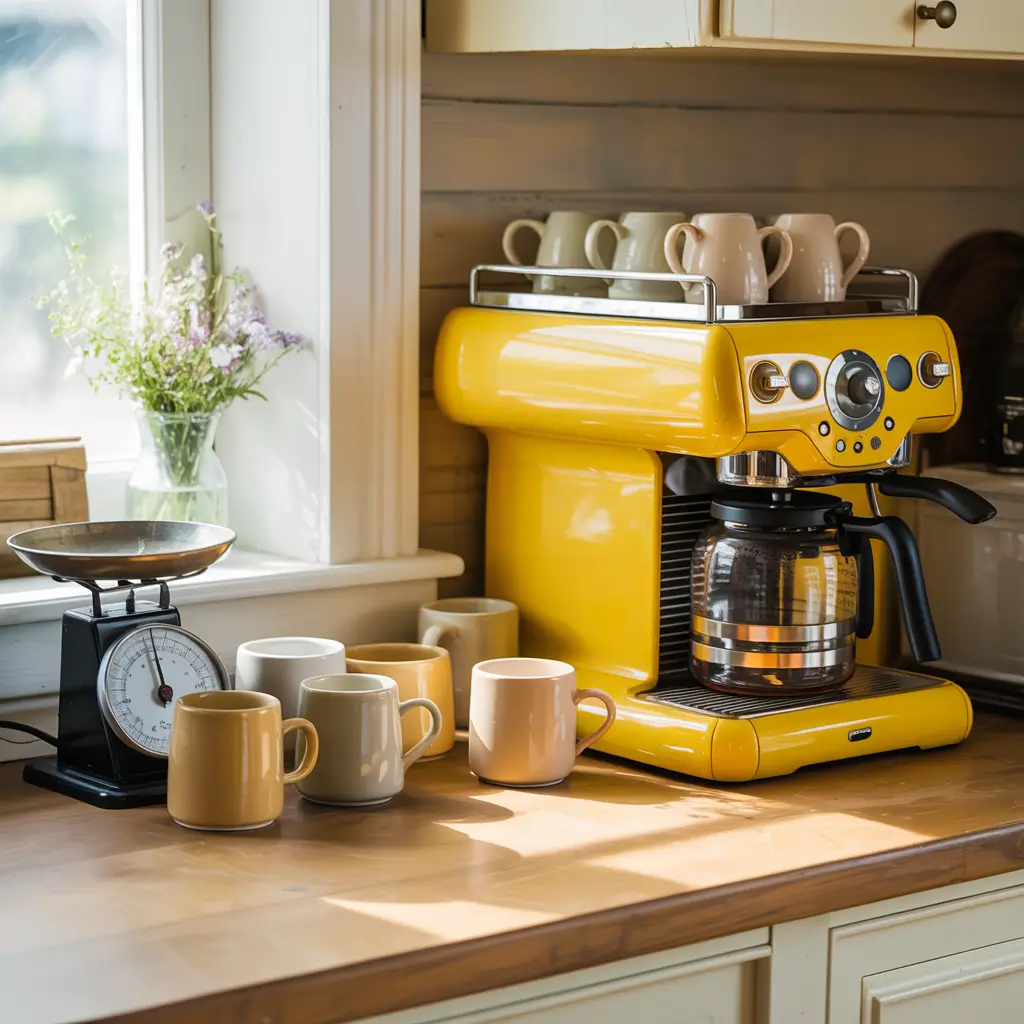
Sometimes the best approach is to let the accessories do the work. A kitchen with neutral walls and natural wood tones can be warmed and personalized dramatically with the right yellow accessories: vintage ceramic canisters in butter yellow, a lemon-glazed pottery pitcher on the counter, a set of yellow-rimmed enamelware hanging from a pot rack, a few golden brass accents among darker hardware.
This approach is the most accessible and reversible of all the options in this guide. It requires no renovation, no paint, and no real commitment — you can experiment with yellow accessories for a few weeks, see how they feel, and add more or edit back depending on what you find.
The farmhouse style actually calls for this kind of layered, collected-over-time look. Accessories that look like they’ve been gathered from different places and different moments in time — some vintage, some new, all chosen with care — are more authentic to the farmhouse aesthetic than a perfectly matched set.
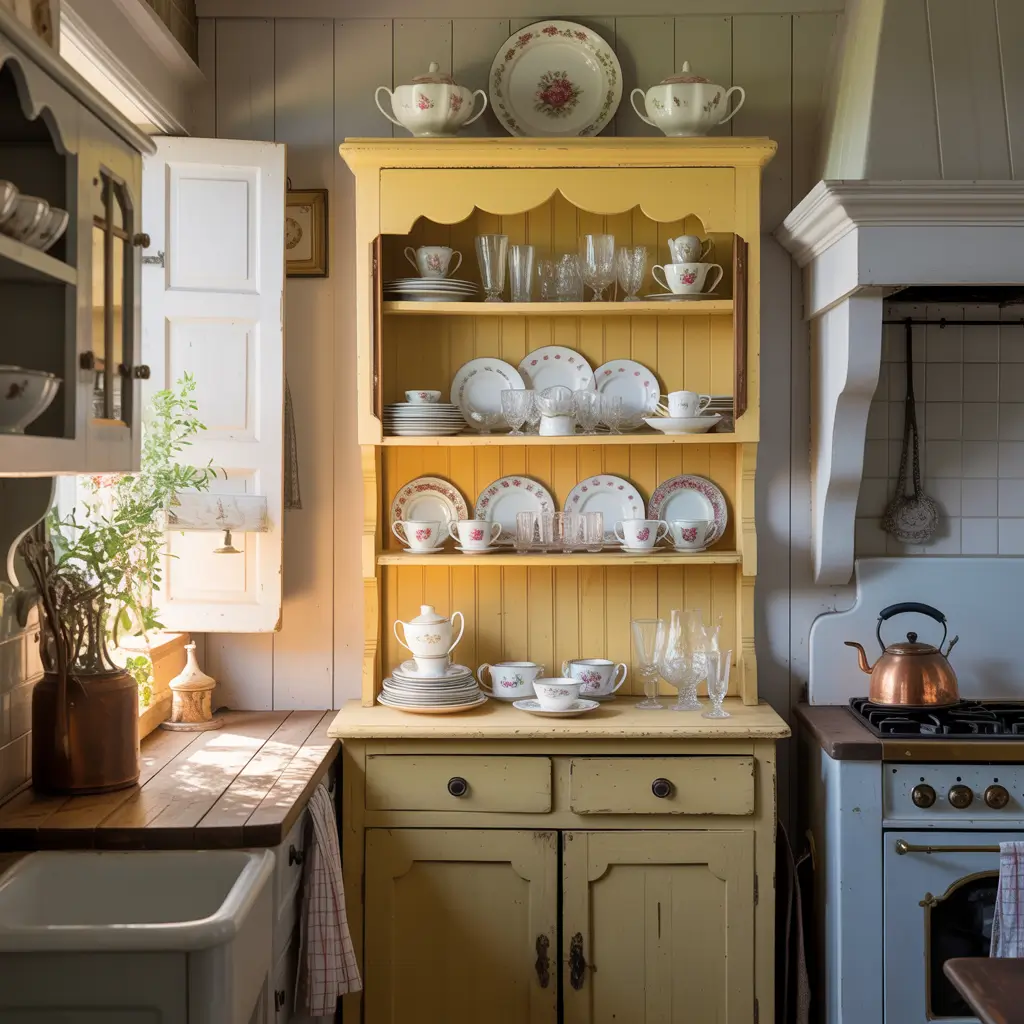
Shopping Note: Thrift stores, estate sales, and flea markets are the best sources for vintage yellow ceramics and enamelware. Pieces from the 1940s through 1970s often feature warm golden yellows that are difficult to find in contemporary housewares.
13. Yellow Painted Kitchen Table and Chairs
A painted farmhouse table and chair set in yellow is one of the most charming and personal expressions of this style. There’s something about a yellow dining table — especially one that’s slightly distressed or aged — that feels genuinely alive and inviting. It says: people eat here, laugh here, stay longer than they planned.
The most authentic farmhouse approach is to use mismatched chairs: a few painted yellow to match the table base, a few left in natural wood or painted cream. This collected, unselfconscious mix is more true to farmhouse origins than a perfectly matched set.
If you’re painting an existing piece, furniture chalk paint in a warm yellow with a clear wax topcoat gives beautiful matte results without stripping or priming. Deliberately distress the edges with fine sandpaper after the wax cures for a look that suggests the piece has been there for decades.
14. Yellow Kitchen with Natural Stone Countertops
Yellow kitchens and natural stone countertops are an outstanding pairing — the warmth of the yellow amplifies the character of the stone, and the organic variation of natural stone adds exactly the kind of artisan texture that farmhouse style is built on.
Soapstone — a dark gray-green stone that develops a beautiful patina with use — is a traditional farmhouse countertop material that creates stunning contrast against yellow cabinets. Honey-toned quartzite and cream-veined marble are warmer options that harmonize rather than contrast. Even concrete countertops in a warm gray can work beautifully against yellow.
Butcher block is the most affordable natural option and the most classically farmhouse. A thick end-grain butcher block island top against yellow cabinets is an image you’ll see reproduced on Pinterest indefinitely, because it simply works every single time.
15. Warm Golden Light Fixtures Above a Yellow Kitchen
Lighting in a yellow farmhouse kitchen deserves special attention, because the wrong light source can make yellow walls and cabinets look dingy or flat while the right one makes them glow. The goal is light that enhances the golden quality of the yellow rather than fighting it.
Choose warm-toned bulbs — 2700K to 3000K color temperature — throughout the kitchen. Cooler bulbs (4000K and above) will make yellow surfaces appear greenish and muted. Warm bulbs deepen the golden quality of the yellow and make the whole room feel more alive.
For fixtures, aged brass and oil-rubbed bronze are the most sympathetic finishes for yellow farmhouse kitchens. They echo the warm metallic quality of golden yellow and feel historically appropriate for the style. Brushed nickel and chrome are cleaner and more contemporary — they work in modern farmhouse interpretations but feel slightly incongruous in a more traditional farmhouse setting.
Choosing the Right Shade of Yellow: A Practical Guide
The single most common mistake with yellow farmhouse kitchens is choosing the wrong shade of yellow. Here’s a clear breakdown of the main options and where each one works best:
Buttercream and Cream Yellow
The softest, warmest option. Works in almost any farmhouse kitchen regardless of lighting conditions. Reads as almost-neutral in low light, warm and inviting in bright light. Best choice for nervous first-timers or kitchens with limited natural light.
Honey and Golden Yellow
More saturated and visually present than buttercream. Creates a richer, more golden feel — particularly beautiful in kitchens with natural wood details and warm lighting. Can feel intense in very small spaces with limited light.
Mustard Yellow
Deepest and most dramatically warm of the farmhouse yellows. Reads as almost earthy or ochre in certain lighting. Best on islands or accent pieces rather than all cabinetry. Creates the most striking contrast with black accents and dark hardware.
Lemon or Bright Yellow
Generally the most challenging for farmhouse applications. Too cool and too vibrant for most traditional farmhouse aesthetics. Use only in very small doses as an accent, or in modern farmhouse interpretations with strong architectural contrast.
Test First: Always test paint colors on the actual wall or a large piece of primed wood before committing. Yellow shifts dramatically in different light conditions — what looks perfect in the store can look very different on your east-facing wall at 7 AM.
How to Budget Your Yellow Farmhouse Kitchen Project
A yellow farmhouse kitchen transformation doesn’t have to be expensive. Here’s how to prioritize spending for maximum impact across different budget levels:
High Impact, Lower Cost
- Cabinet hardware swap — matte black or aged brass pulls transform white or yellow cabinets instantly. Budget: $50–$300 depending on quantity.
- Paint — cabinets, walls, or both. Proper preparation is where the cost and effort lives, not the paint itself. Budget: $100–$400 for materials.
- Window treatments — yellow linen curtains or Roman shades immediately change the mood of the room. Budget: $50–$200.
- Yellow accessories and ceramics — canisters, pitchers, a yellow mixing bowl on the counter. Budget: $30–$150.
Mid-Range Investments
- Lighting fixtures — new pendants and overhead fixtures in aged brass or black. Budget: $200–$800.
- Backsplash tile — yellow subway tile or a checkerboard pattern. Budget: $300–$1,200 including installation.
- Open shelving — replacing a few upper cabinets with floating wood shelves. Budget: $200–$600.
Larger-Scope Projects
- Cabinet refinishing or replacement — full yellow cabinet transformation. Budget: $500–$5,000+ depending on size and approach.
- Flooring — wide-plank wood or checkerboard tile. Budget: $2,000–$8,000+ installed.
- Island installation or refinishing — with yellow paint and new countertop. Budget: $500–$4,000+.
Mistakes to Avoid in a Yellow Farmhouse Kitchen
- Choosing a yellow with green undertones — these shift visibly in certain light conditions and can make the kitchen feel sour rather than warm. Always test in natural and artificial light before committing.
- Going too bright — saturated, high-chroma yellows overwhelm the natural textures and subtle details that make farmhouse design work. Dial back the intensity more than you think you need to.
- Neglecting the floor — a beautiful yellow kitchen sitting on top of cold gray tile or dated laminate loses half its warmth. The floor anchors everything; make sure it contributes rather than contradicts.
- Skipping the dark accents — yellow needs contrast to feel sophisticated. Without at least one or two darker elements (hardware, fixtures, a dark island base), yellow can feel unfocused and slightly overwhelming.
- Overcrowding the open shelves — yellow shelves are best shown off with space to breathe. Edit ruthlessly and resist the urge to fill every inch.
- Using cool-toned lighting — warm-toned bulbs are non-negotiable in a yellow kitchen. Cool bulbs will make your beautiful golden walls look greenish and flat.
Frequently Asked Questions
Does yellow work in a small farmhouse kitchen?
Yes — if you choose the right shade. Soft buttercream or cream yellows can make a small kitchen feel warmer and more energetic without making it feel smaller. Avoid deep mustard or golden yellows in very small spaces with limited natural light.
What colors pair best with yellow in a farmhouse kitchen?
White and antique white are the classic pairings — they balance the warmth of yellow without competing. Black accents (hardware, fixtures) add sophistication and grounding. Natural wood tones in warm honey and oak shades harmonize beautifully. Sage green and navy blue work well as secondary accent colors.
Is yellow farmhouse style still current in 2025?
Yes — yellow in muted, warm tones (butter, honey, mustard) is well established within the farmhouse and cottage-core aesthetic trends that remain strong in 2025. It’s not a flash-in-the-pan trend; warm yellow in farmhouse kitchens has a design history that goes back generations.
How do I prevent yellow cabinets from looking dated?
Choose a warm, muted yellow rather than a bright or primary yellow. Pair with timeless elements: Shaker cabinet profiles, natural stone or butcher block counters, simple hardware. Avoid trendy decorative details that will date the room before the cabinets do.
What finish should I use for yellow painted cabinets?
Satin or eggshell finishes are ideal — durable enough for kitchen use, with a low enough sheen to look artisan rather than industrial. High-gloss intensifies color (which can feel overwhelming with yellow) and shows every surface imperfection. Matte is beautiful but harder to clean.
Final Thoughts: Let Your Kitchen Catch the Light
Yellow farmhouse kitchens have something that most kitchens don’t — a warmth that’s immediately felt and almost impossible to explain. It’s the color of morning light and ripe wheat and old honey, and it does something to a room that careful architecture and expensive finishes can’t fully replicate on their own. It makes people feel welcome.
Of the 20 ideas in this guide, not all of them will be right for your kitchen, your budget, or your taste. But somewhere in this list, there’s a version of yellow farmhouse style that fits your space — whether that’s a full cabinet transformation in warm butter yellow, a single mustard island that becomes the heart of the room, or just a pair of golden linen curtains catching the afternoon sun.
Start where you’re comfortable. Test a shade of yellow on the wall before you commit. Swap the hardware. Add a few vintage ceramic pieces in honey and cream. See how it feels after a week. Yellow farmhouse kitchens rarely happen all at once — they build gradually, layer by layer, each addition making the whole thing feel more right.
1 thought on “15 Stunning Yellow Farmhouse Kitchen Ideas for Cozy Spaces”