
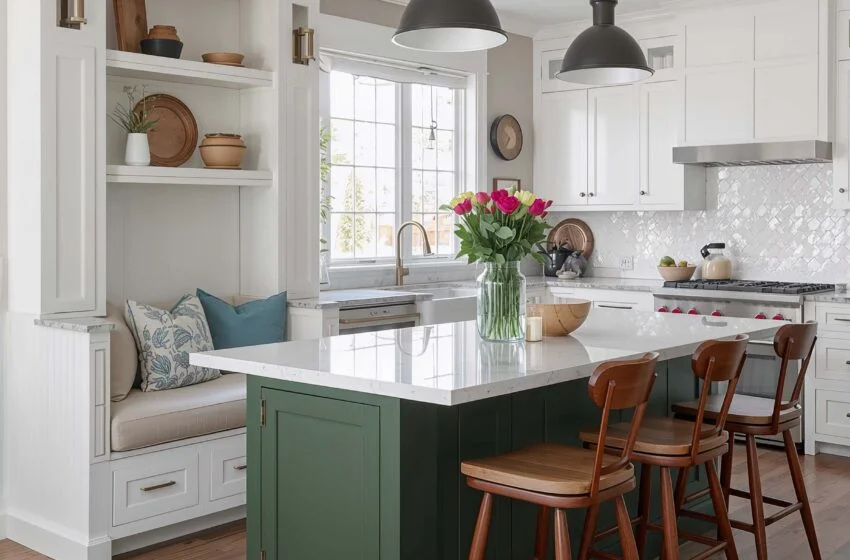
Picture this: you walk into your kitchen in the morning, and instead of the same tired white or gray island you’ve been staring at for years, there it is — a rich, confident shade of green that somehow makes the whole room feel like a completely different place. Warmer. More alive. More you.
That’s what a green kitchen island does. It’s not just a color choice; it’s a design decision that turns the most functional piece of furniture in your kitchen into the focal point of your entire home. And the best part? Whether you love soft, whispery sage or bold, unapologetic emerald, there’s a shade of green with your name on it.
Green kitchen islands have moved well beyond trend territory. At this point, they’re a genuine design classic — the kind of choice that still looks incredible in ten years’ time rather than dating badly like some of the flashier trends of the past decade. Interior designers, renovation experts, and homeowners who’ve made the leap all say the same thing: once you go green, you won’t look back.
1. Sage Green Island with White Shaker Cabinets and Brass Hardware
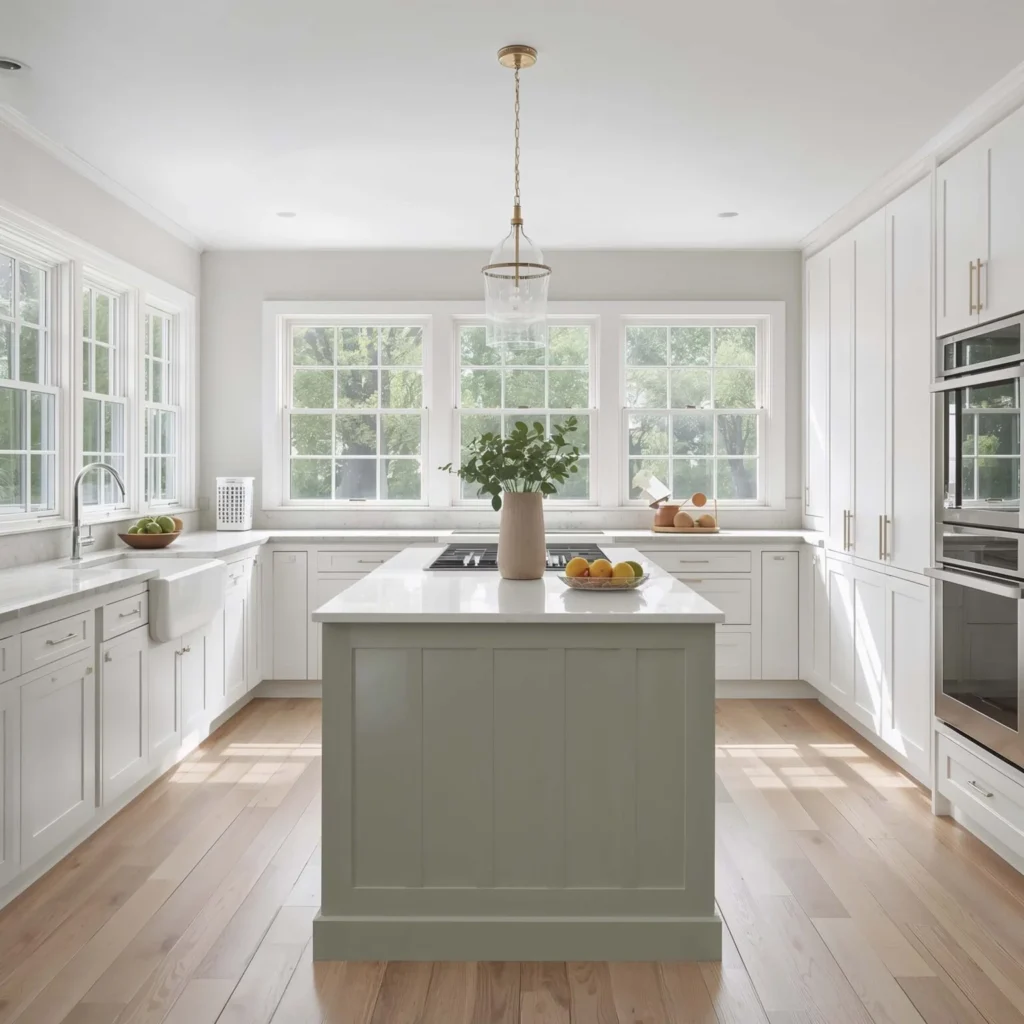
This is the combination that launched a thousand renovation projects — and it’s popular for a reason. Sage green sits in a wonderfully ambiguous zone between green, gray, and blue, which means it works as almost a neutral while still adding genuine personality. Paired with white shaker cabinets and brass hardware, you get a kitchen that feels both classic and completely contemporary.
The brass hardware is not optional here — it’s what ties the sage and white together and stops the look from feeling flat. Choose unlacquered brass if you want a more aged, organic feel, or brushed brass for something cleaner and more consistent. Either way, the warmth of the brass against the cool sage is what makes this combination sing.
2. Dark Forest Green Island with Calacatta Marble Countertop
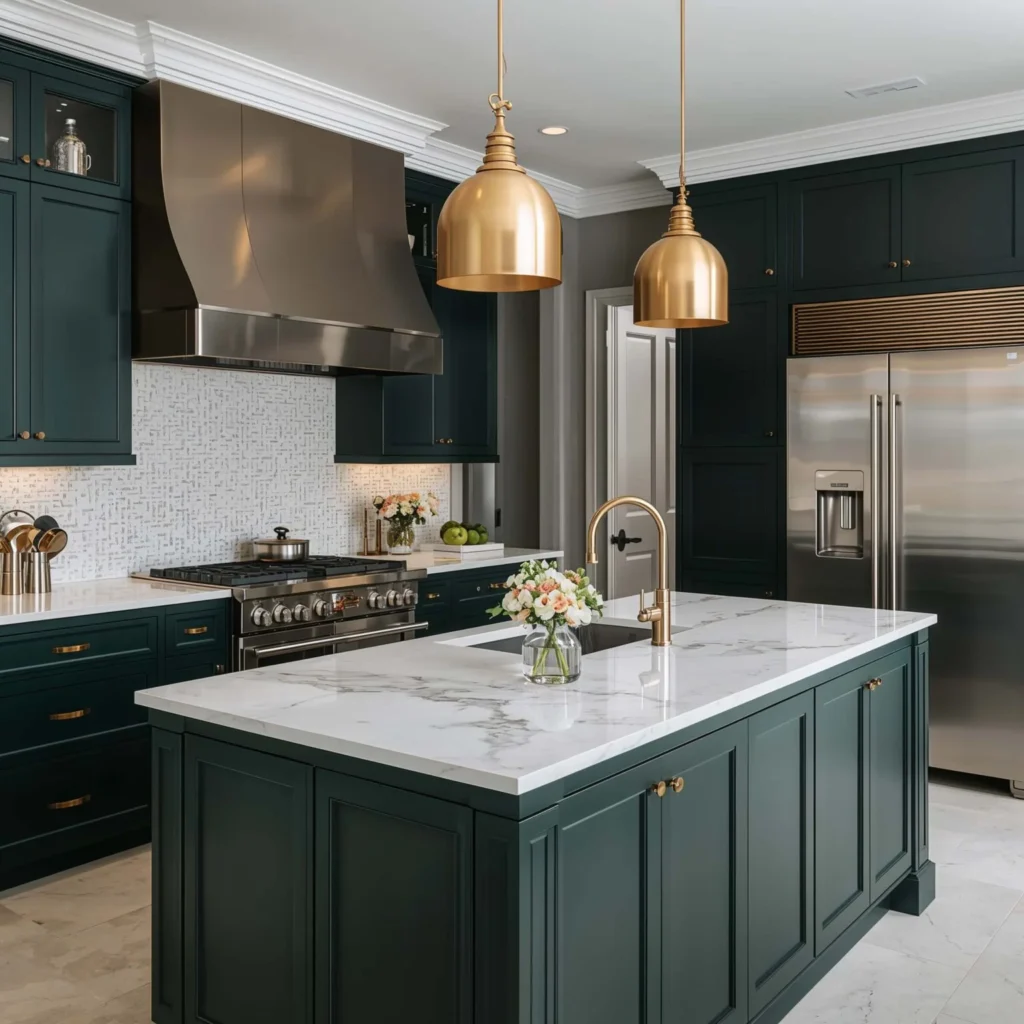
If you’ve ever wanted your kitchen to look like a high-end restaurant, this is your path. A deep, saturated forest green island topped with Calacatta marble — with its dramatic gray and gold veining — creates an extraordinary sense of luxury that’s almost impossible to achieve with any other color combination.
The key to making this work is contrast. Keep the surrounding cabinetry in a very light tone — bright white, off-white, or pale cream — so the dark island has room to breathe and establish itself as the centerpiece. Warm lighting, ideally from exposed-bulb pendants in aged brass, will bring out the depth of the green and the warmth in the marble veining.
3. Olive Green Island with Walnut Countertop and Open Base Shelving
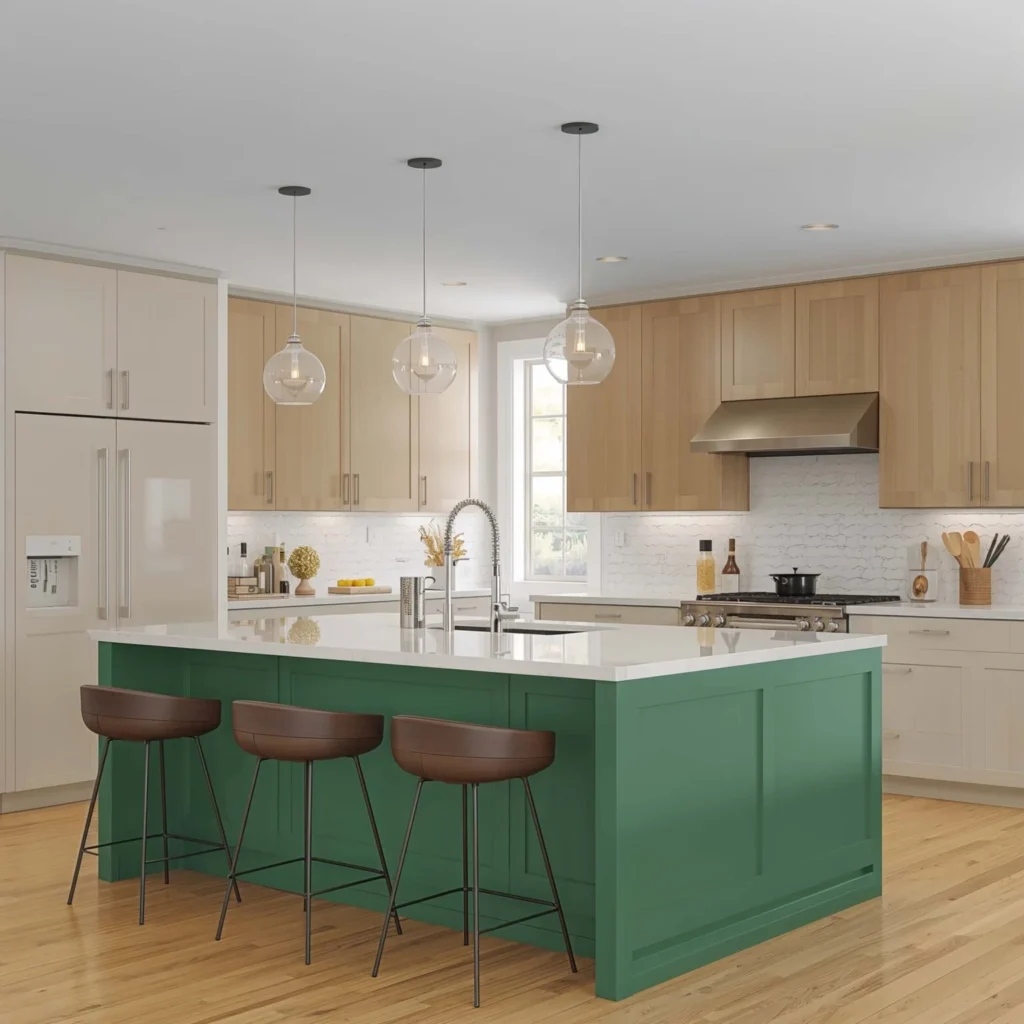
Olive green is one of those colors that looks different in every light and somehow manages to be both sophisticated and earthy at the same time. It has a warmth that forest green doesn’t, which makes it a natural partner for walnut. The rich, chocolate-brown warmth of walnut countertops against the golden-green of olive creates a pairing that feels genuinely Italian in its sense of understated elegance.
Adding open base shelving to the island — rather than solid doors all the way around — keeps the look from feeling too heavy and gives you somewhere to show off your cookbooks, a wine rack, or a collection of beautiful ceramics. It’s also a surprisingly practical feature that makes everything you use regularly much easier to access.
4. Emerald Green Island with Waterfall Quartz Edges in a Modern Kitchen
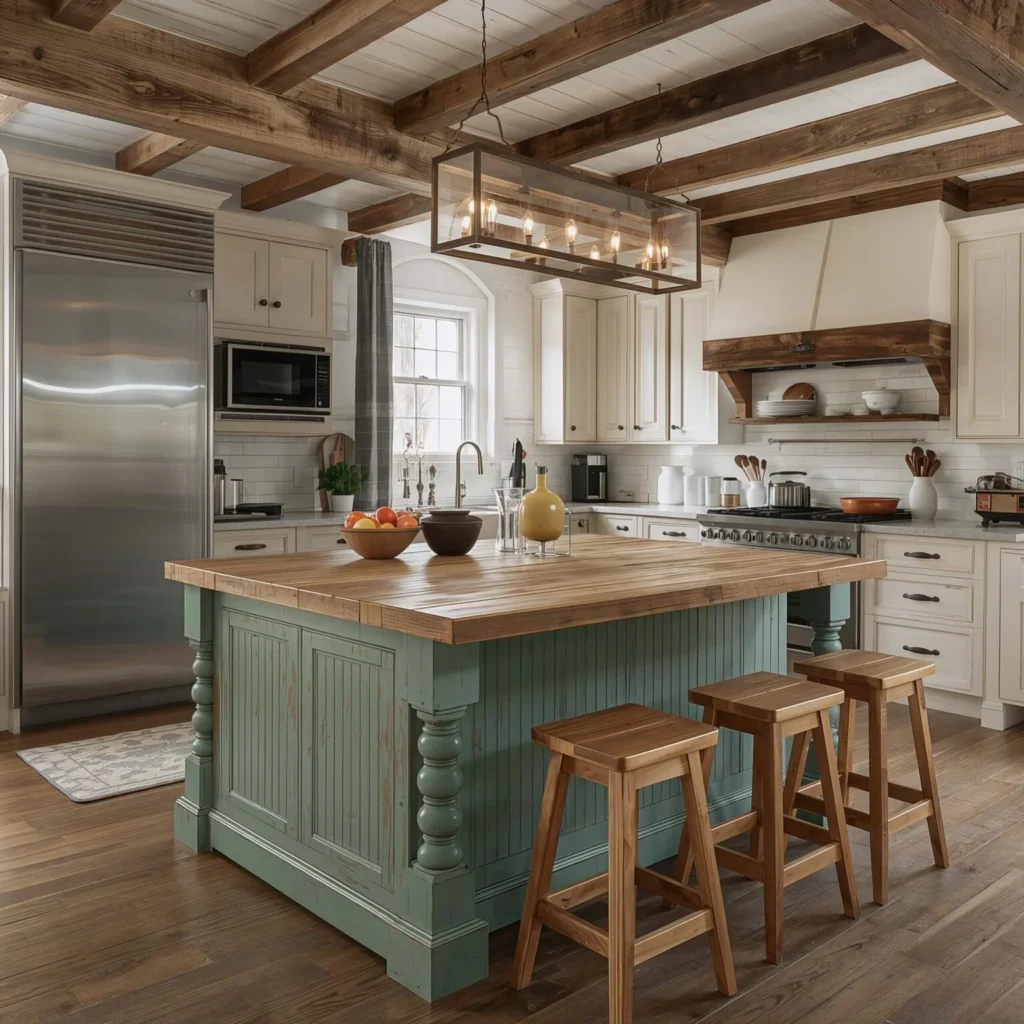
Emerald green is bold, jewel-toned, and not for the faint of heart — but when it’s handled with confidence, it creates a kitchen that people genuinely cannot stop talking about. A sleek, flat-panel emerald green island with waterfall quartz edges in white or pale gray is a thoroughly modern statement that borrows the energy of high-end hotel design.
The waterfall countertop edge — where the stone runs continuously down the sides of the island — adds an architectural quality that makes the island look like a single sculptural object rather than a box with a lid on it. This is especially effective in open-plan living spaces where the kitchen island is visible from multiple angles.
5. Pale Mint Green Island in a Small Kitchen
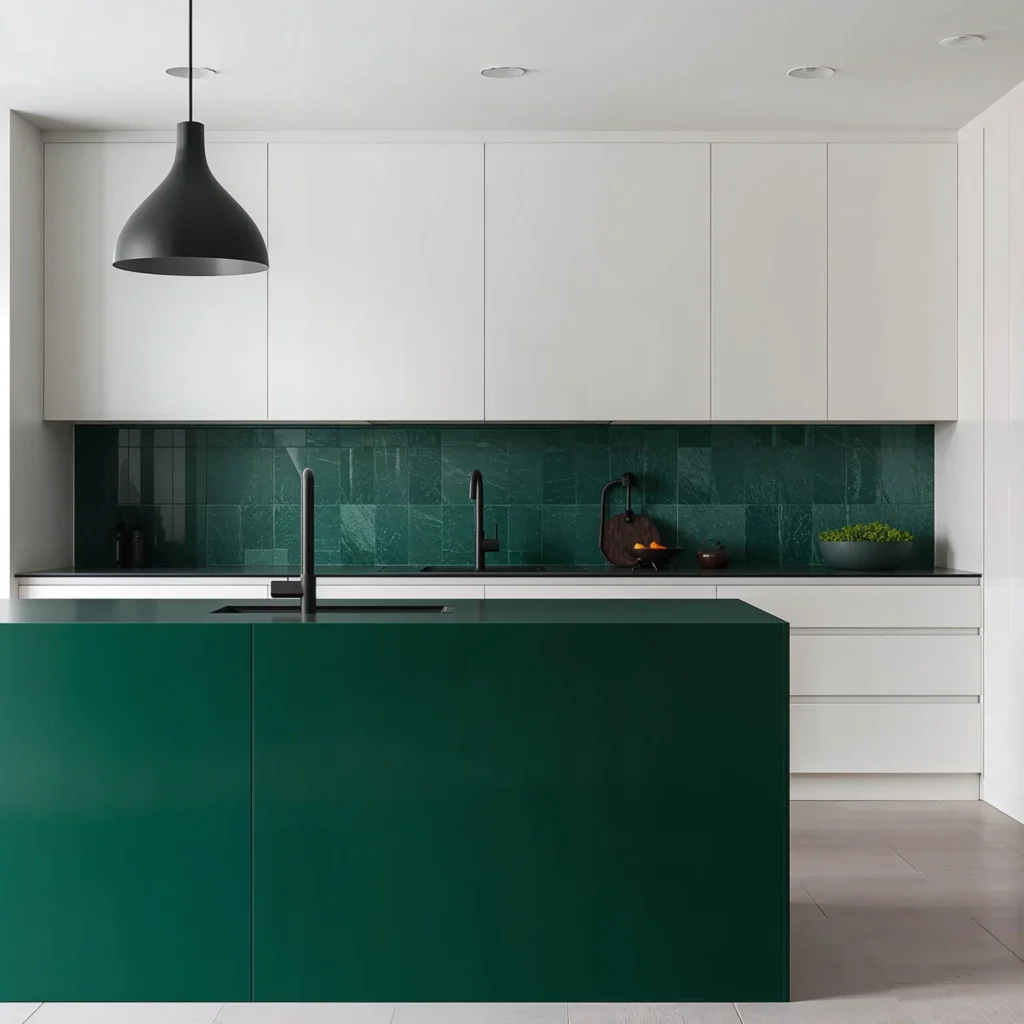
Small kitchens need color as much as large ones — sometimes more, because color creates the illusion of depth and interest that square footage can’t always provide. A pale mint green island in a compact kitchen is a clever solution: light enough not to close the space in, interesting enough to make the kitchen feel designed rather than functional-only.
In a small kitchen, the island also serves as a room divider, breakfast bar, and prep space all in one, so making it beautiful and distinct from the surrounding cabinets is both practical and visually smart. Pair pale mint with natural wood stools and white countertops for a fresh, Scandinavian-influenced look that feels open and clean.
6. Two-Tone Kitchen: Dark Green Island Against Light Gray Perimeter Cabinets
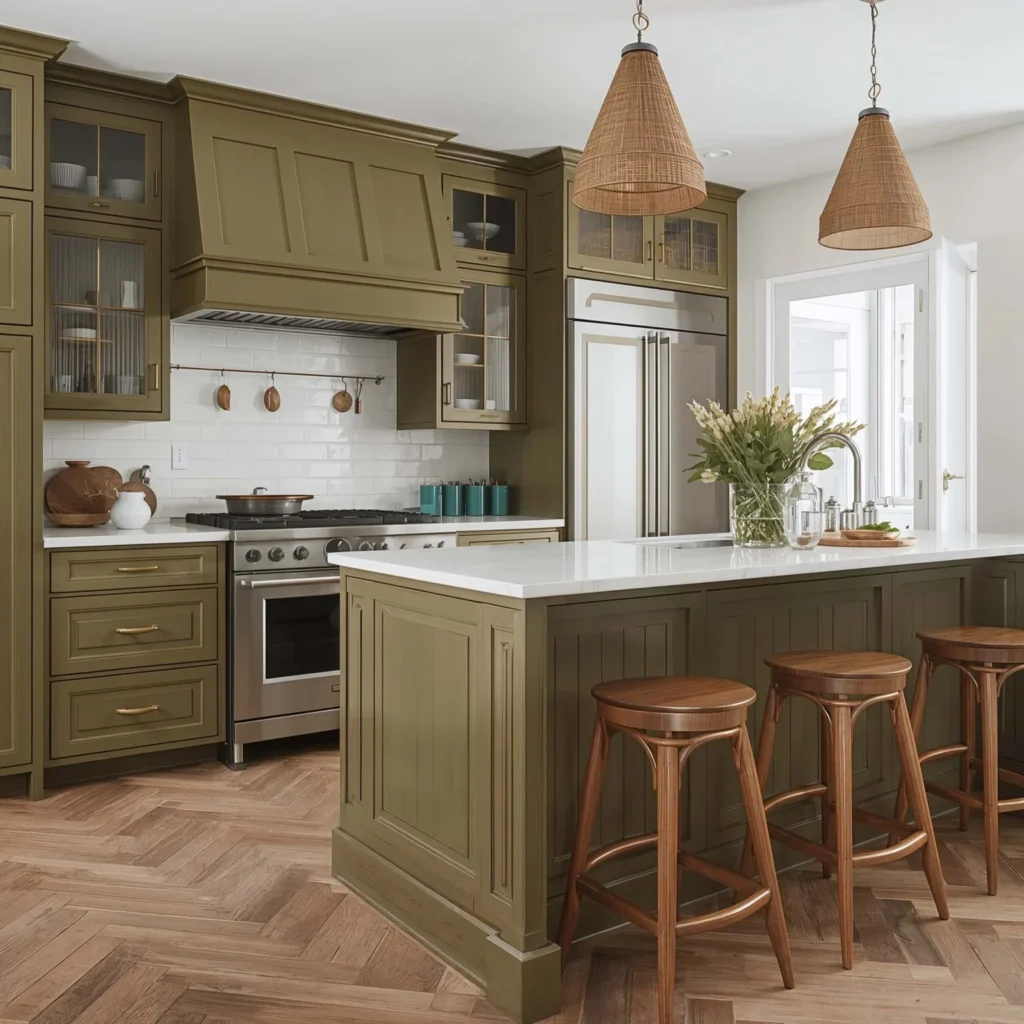
Two-tone kitchens are one of the most reliable ways to add visual interest without committing to color everywhere. A dark green island — think hunter green, British racing green, or deep sage — against light gray perimeter cabinets creates a grounded, confident look where each element enhances the other.
The gray reads as a neutral backdrop that makes the green look richer and more intentional, while the green stops the gray from feeling cold or bland. This combination is particularly effective in kitchens with dark hardwood floors, where the warmth of the floor anchors the whole scheme beautifully.
7. Sage Green Farmhouse Island with Butcher Block Top and Turned Legs
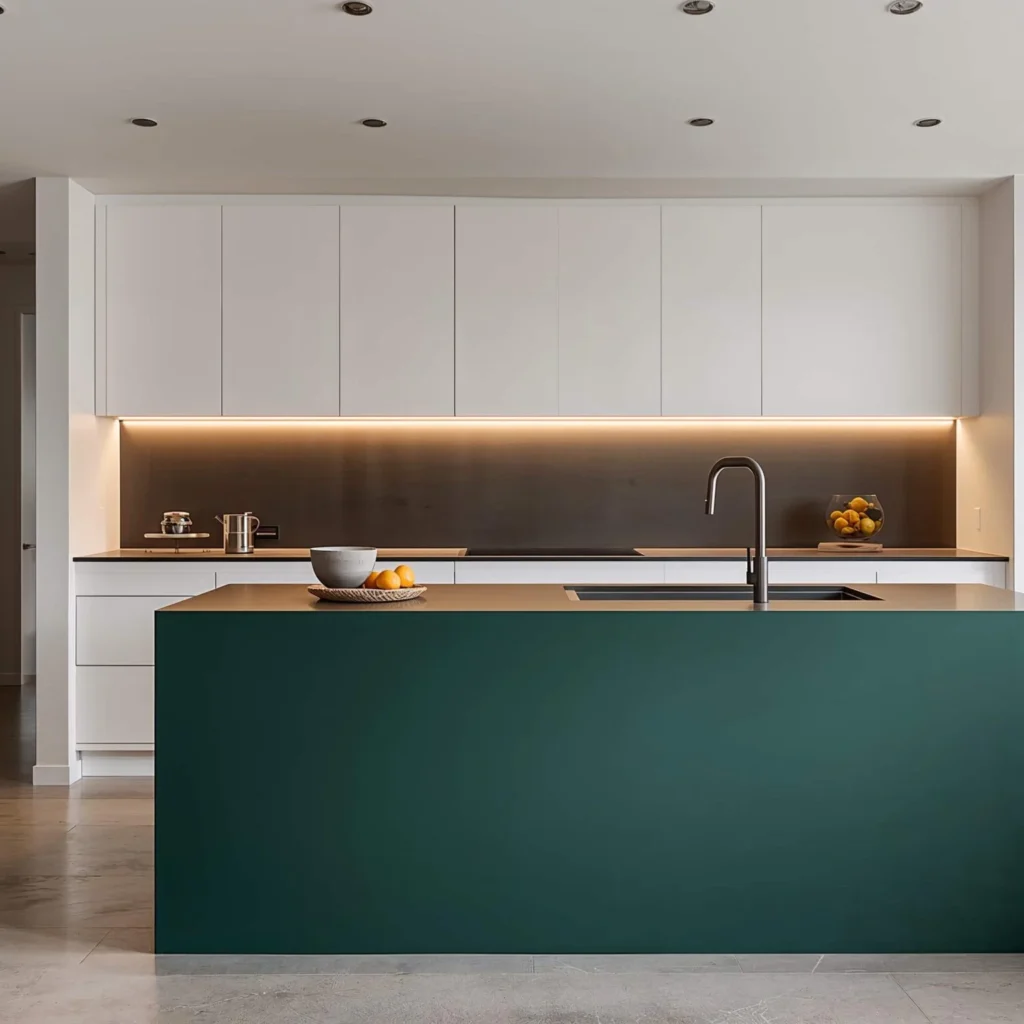
The farmhouse kitchen island is a style that never really goes out of fashion because it prioritizes the things people actually want from a kitchen: warmth, character, practicality, and a sense that the room has been lived in and loved for a long time. A sage green island with a butcher block top and traditional turned legs is the quintessential version of this look.
The turned legs — rather than a solid base — give the island a furniture-like quality that makes it feel like a piece that’s been in the family for generations. Butcher block is the perfect countertop partner because its natural grain and slight imperfections match the warmth and character of the style. Add vintage-inspired cup-pull hardware and you have a kitchen that feels like home the moment you walk in.
8. Green Kitchen Island with Integrated Seating and Wooden Bar Stools
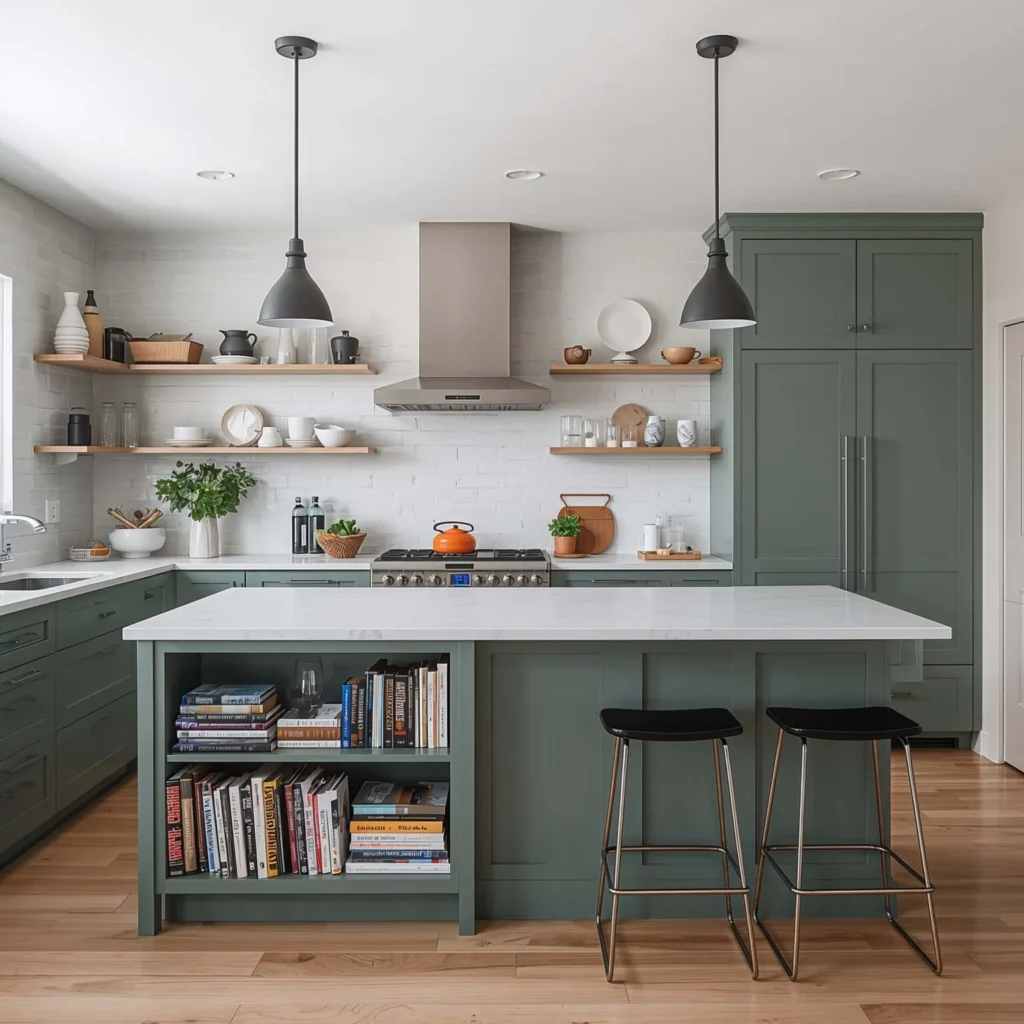
One of the smartest things you can do with a kitchen island is design it for people, not just food. An island with an extended countertop overhang on one side creates a natural seating area — a breakfast bar that becomes the casual, sociable hub of the kitchen. In green, this is particularly effective because the color gives the island a distinctly furniture-like quality that makes the seating feel intentional rather than afterthought.
Natural wood bar stools — rattan-seat or solid oak — are the ideal pairing for a green island because they reinforce the nature-indoors feeling that green promotes. Keep the stool design simple so the island color remains the hero.
9. British Racing Green Island with Exposed Copper Pipe Shelving
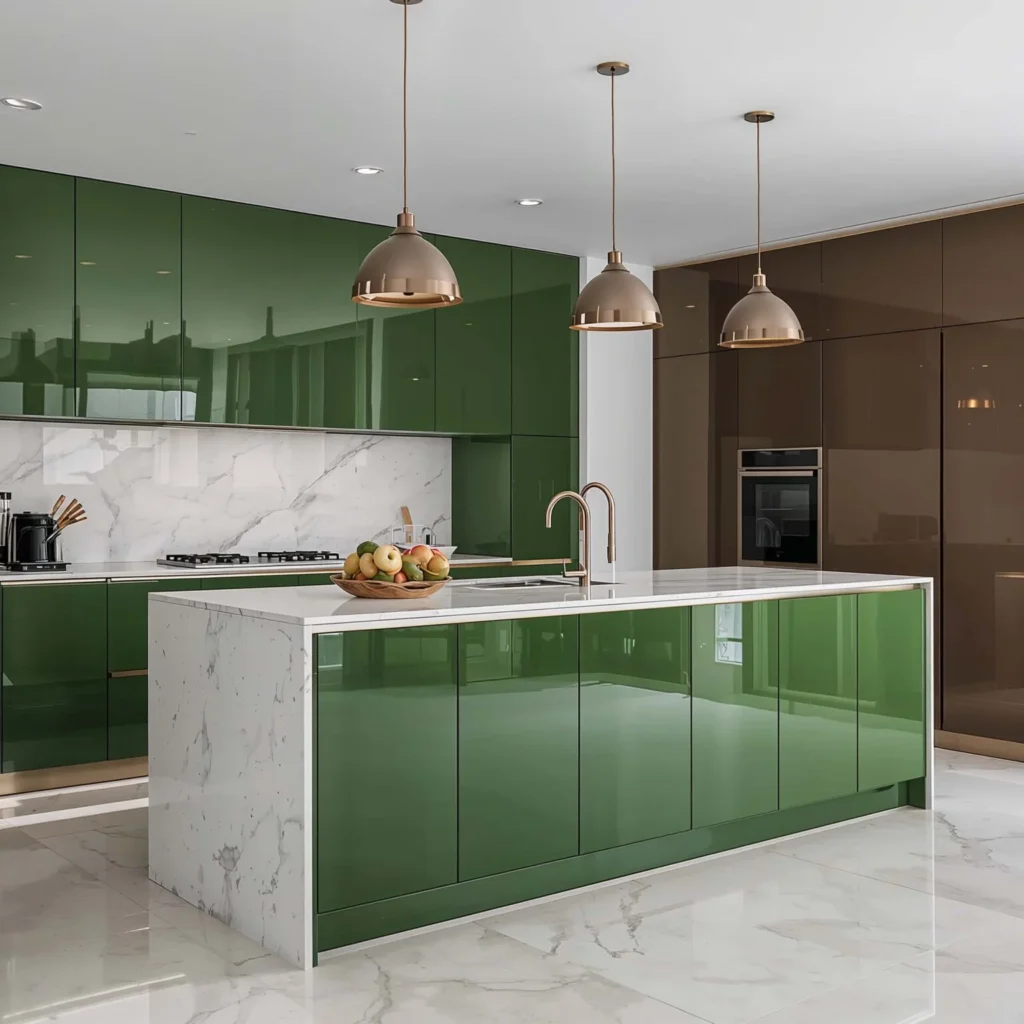
This is a combination that feels genuinely original: a deep, serious British racing green island base paired with copper pipe open shelving either above or incorporated into the island structure itself. The copper brings warmth and an industrial craft quality that stops the dark green from feeling too formal or heavy.
This look works especially well in converted spaces — former warehouses, older buildings with character, urban apartments — where the design can lean into a slightly raw, eclectic aesthetic. It’s not a look for everyone, but for the right kitchen and the right person, it’s completely unforgettable.
10. Dusty Green Island with Terrazzo Countertop in a Contemporary Kitchen
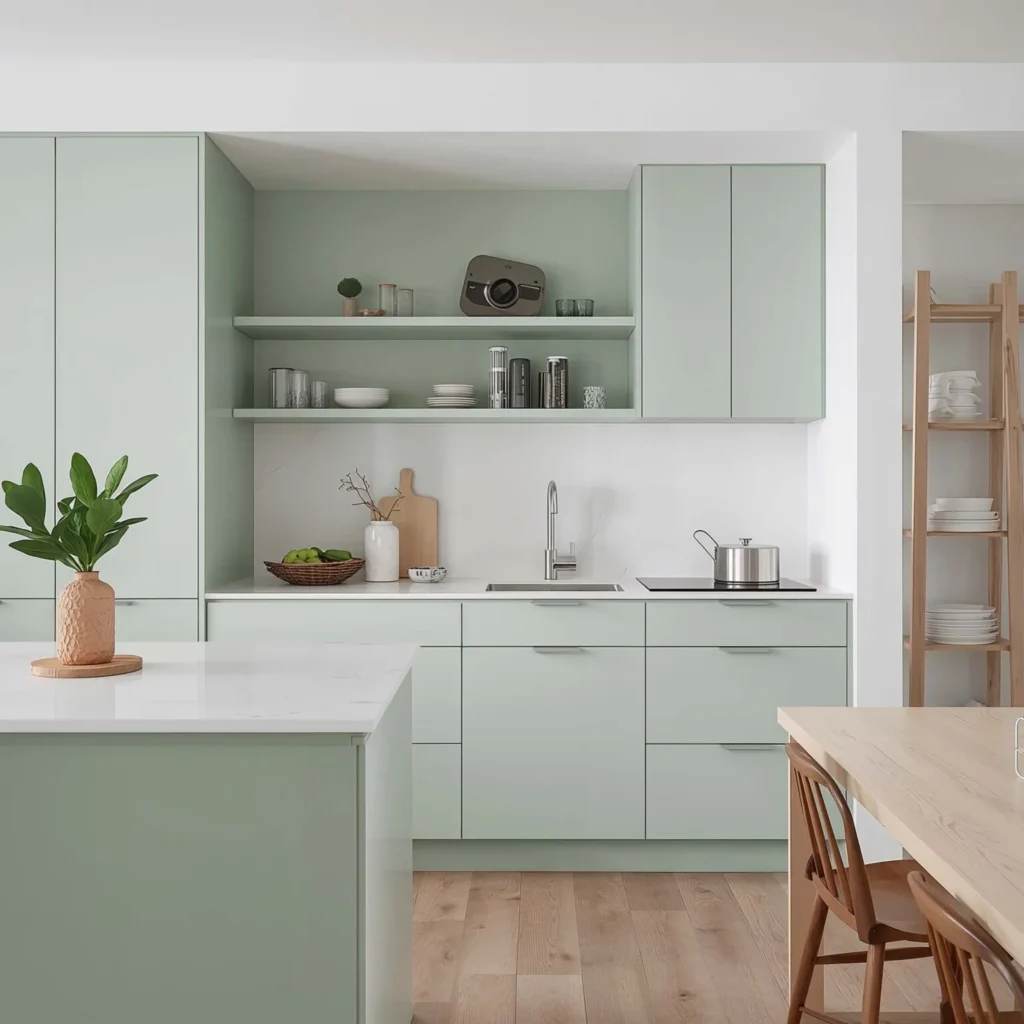
Terrazzo is having one of its periodic moments right now, and it pairs beautifully with dusty, slightly grayed-down green. The speckled, multicolored nature of terrazzo means it can pick up whatever tones are around it — so a terrazzo countertop on a dusty green island will take on subtle green, warm cream, and stone tones that tie the whole kitchen together.
This is a combination that works particularly well in contemporary kitchens with a Scandinavian or Italian influence — spaces that value material quality and subtle interest over flashy contrast. Keep everything else in the kitchen relatively restrained to let this pairing do its work quietly and confidently.
11. Sage Green Island with Black Matte Hardware and Concrete Countertop
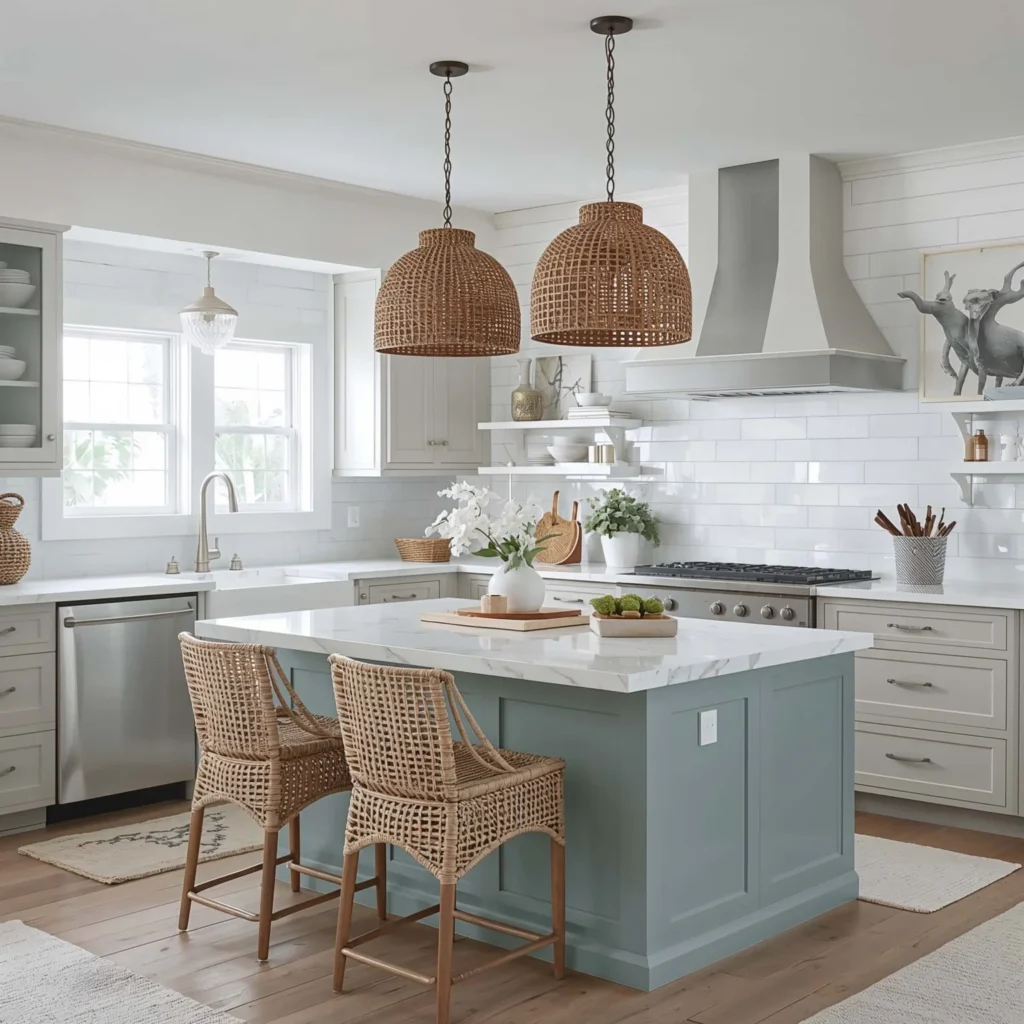
For those who lean toward the industrial-modern end of the design spectrum, sage green with black matte hardware and a concrete countertop is a sophisticated and genuinely striking combination. The sage softens the industrial materials — without it, concrete and black hardware can feel cold and uninviting — while those materials give the sage green a contemporary edge it wouldn’t have in a more traditional setting.
Concrete countertops require proper sealing and some ongoing care, but their flat, matte surface and subtle texture complement painted cabinetry beautifully. They also age in a way that adds rather than detracts — developing a patina that makes them look more interesting over time.
12. Hunter Green Island with Gold Veined White Marble and Black Sink
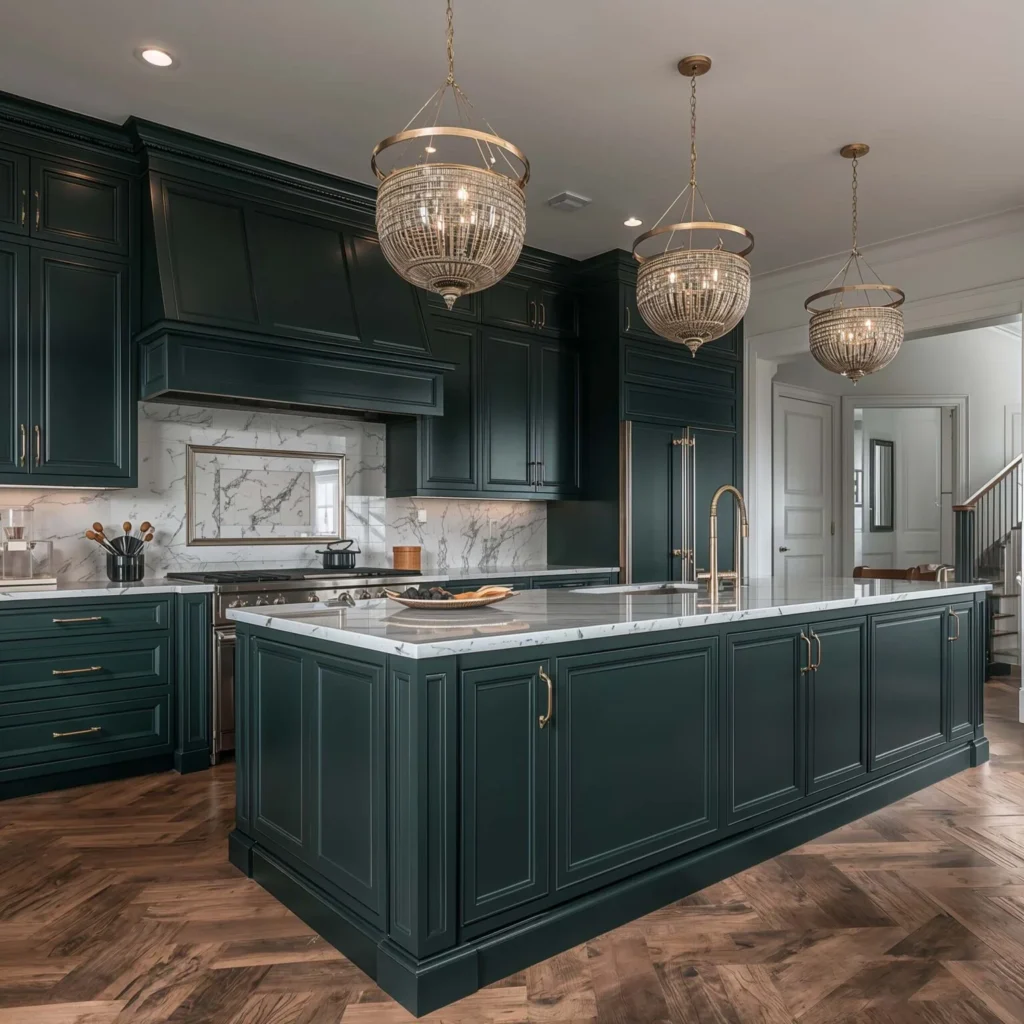
This is a combination straight out of a luxury design portfolio. Hunter green — a dark, slightly warm, forest-adjacent green — with gold-veined white marble and a matte black undermount sink creates a kitchen with extraordinary presence. Every element earns its place: the green is grounded and rich, the marble is luminous and dramatic, the black sink is sharp and modern.
The key to pulling this off is restraint everywhere else. Simple hardware, clean lines, no clutter on the countertop. The materials themselves are doing all the work, so the design needs to get out of their way. This is a kitchen that functions as beautifully as it looks, and that looks as beautiful as a room possibly can.
13. Pale Green Island with Rattan Pendant Lights and Terracotta Floor Tiles
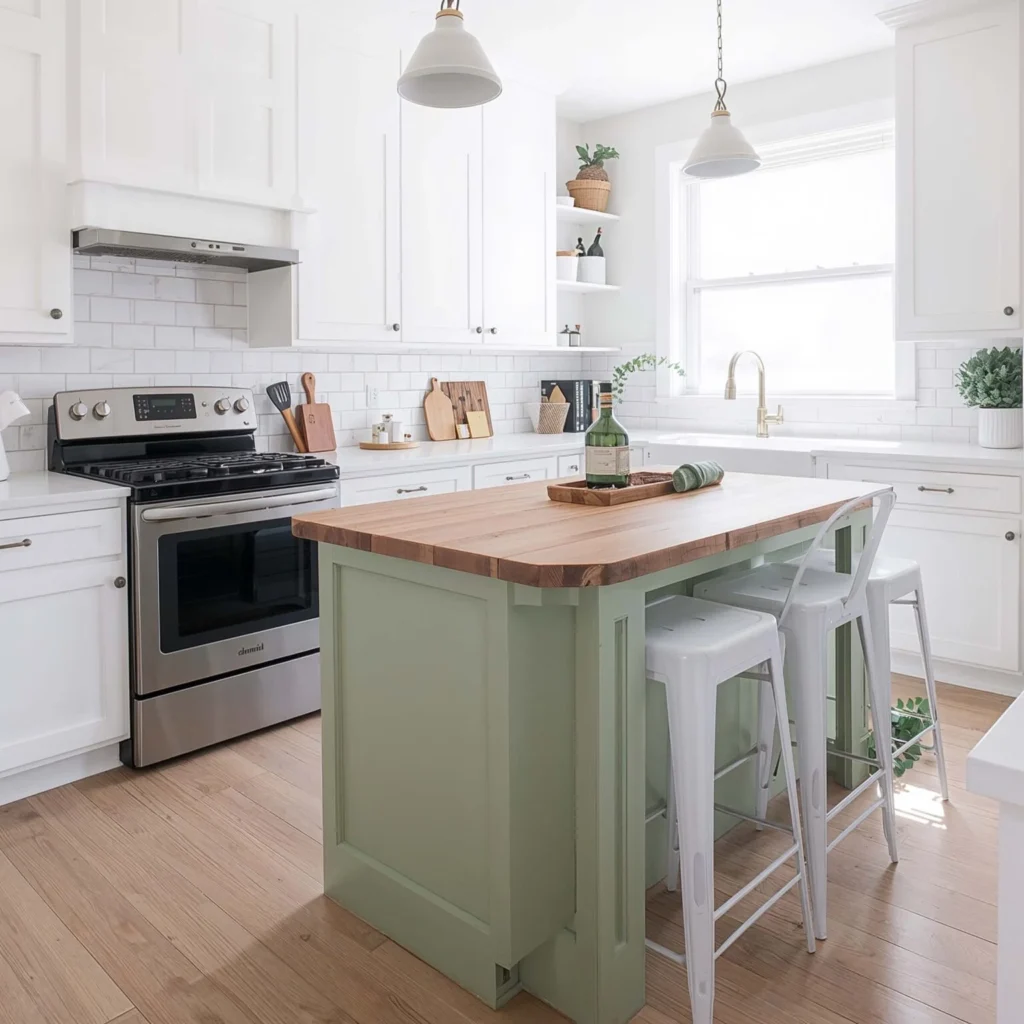
The combination of pale green, rattan, and terracotta is one of the most satisfying and complete design triangles in contemporary interior design. The pale green brings freshness and calm, the rattan pendants add natural texture and a slightly bohemian warmth, and the terracotta floor tiles ground everything with their earthy, sun-baked energy.
This is a kitchen that feels like it could exist in southern France, coastal California, or a beautifully renovated farmhouse in the English countryside — which is to say, it feels universal and aspirational in the best possible way. It also happens to photograph beautifully, which is a genuine bonus in the age of social media.
14. Olive Green Island with Herringbone Tile Backsplash
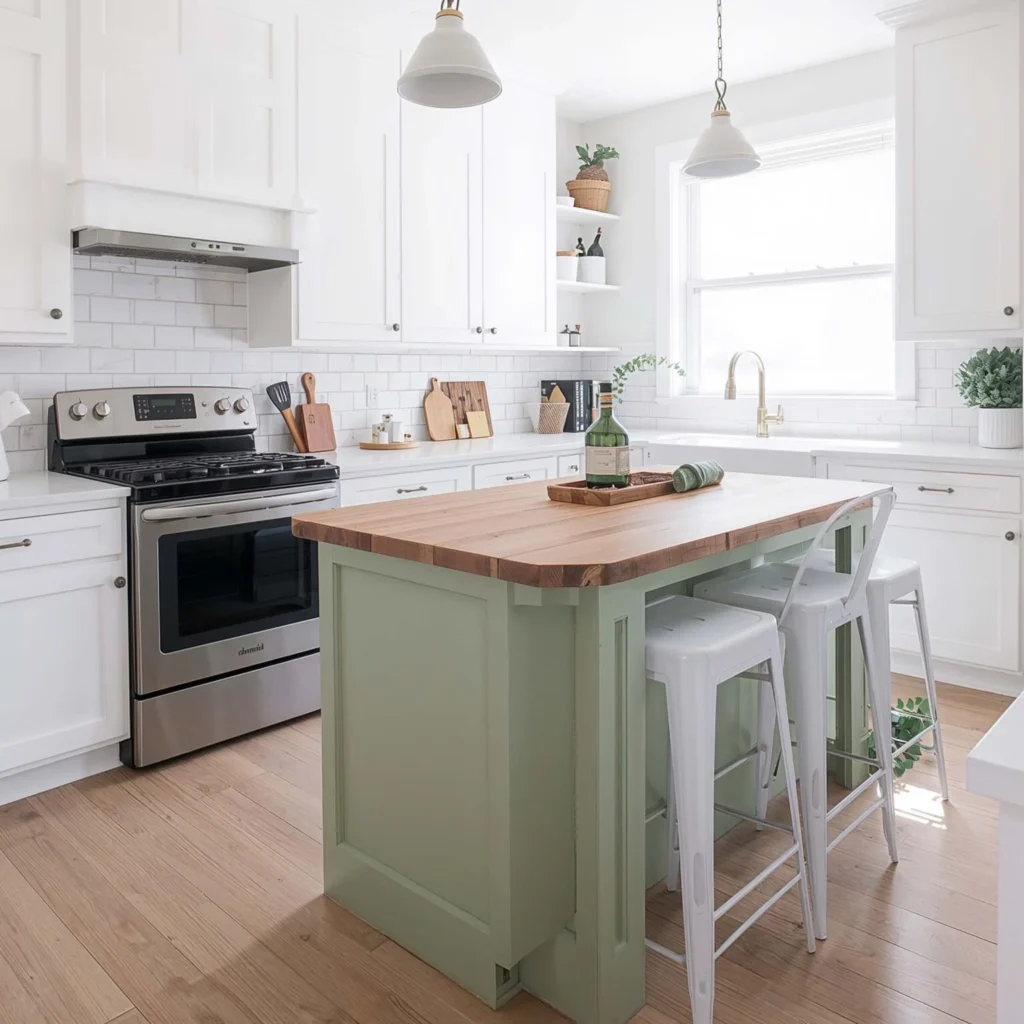
An olive green island doesn’t always need a wood or stone countertop to feel complete. Sometimes the most interesting pairing is with a strong, patterned backsplash. A warm-toned herringbone tile backsplash — in cream, pale gold, or a mix of natural tones — behind an olive green island creates a rich layering of pattern and color that feels genuinely Italian in its depth and warmth.
The herringbone pattern adds movement and visual interest without introducing another color that needs to be managed. It’s pattern in the same tonal family as the olive, which means everything feels harmonious rather than busy. This is a subtle but deeply effective design move.
15. Green Kitchen Island with Built-In Wine Rack and Integrated Appliances
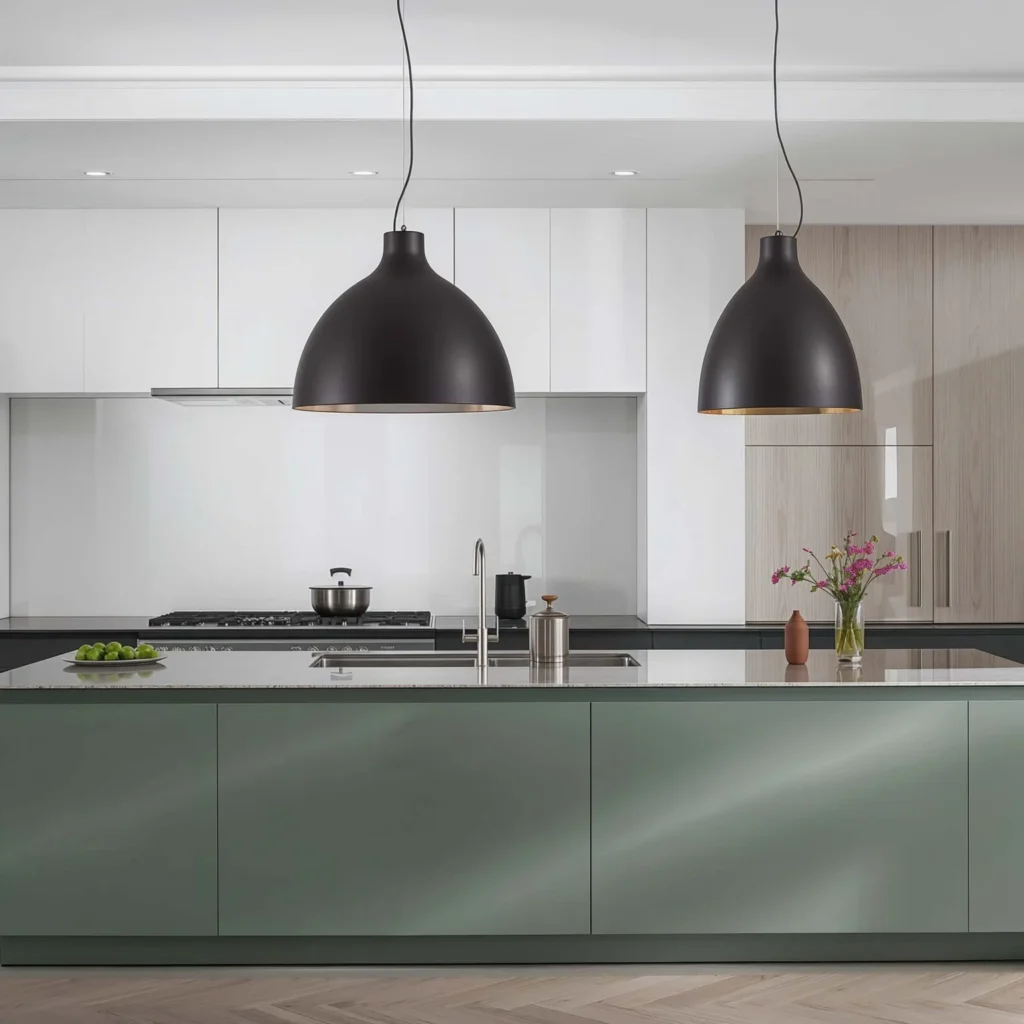
A kitchen island can do so much more than provide prep space and storage. Building in a wine rack — either at the end of the island or integrated into the base — turns it into a functional and beautiful piece of furniture that serves the whole household. In green, with the warm, natural associations the color carries, a wine rack feels particularly at home.
Integrated appliances — a wine cooler, a small dishwasher drawer, or a beverage fridge — take this even further, turning the island into a complete entertaining hub. For hosts who love to cook and serve in the same space, this kind of multi-functional island is an absolute game changer.
How to Choose the Right Shade of Green for Your Kitchen Island
With so many shades of green to consider, the choice can feel paralysing. Here’s a practical framework that will help you narrow it down quickly and confidently:
- Start with your light. This is the single most important factor. North-facing kitchens receive cool, indirect light all day, which means warm, slightly yellow-based greens (olive, sage, eucalyptus) will work better than cool, blue-based greens (emerald, forest green). South-facing kitchens get plenty of warm natural light and can handle the full range of greens, including deeper, cooler tones.
- Consider your existing finishes. Look at your floor, your countertops (if you’re keeping them), and your perimeter cabinets. What are the undertones? Warm undertones (honey, cream, wood) call for warm greens. Cool undertones (white, gray, stone) are more flexible and can handle both warm and cool greens.
- Decide on your mood. Soft, muted greens (sage, dusty green, pale olive) create calm, relaxed kitchens. Deep, saturated greens (forest green, hunter green, emerald) create drama and presence. Bold, slightly unusual greens (chartreuse, eucalyptus, mint) create kitchens with a strong individual personality.
- Test with large samples. Never choose a paint color from a small chip. Get a sample pot and paint at least two A4-sized swatches on the actual surface or on card held against the actual surface. Look at them at different times of day and in different light conditions before committing.
- Factor in the size of your island. A very small island can handle a deeper, bolder green without overwhelming the room. A very large island in a small kitchen might need a lighter, softer green to prevent it from dominating. Scale matters enormously with color.
The Best Countertop Materials for a Green Kitchen Island
The countertop you choose for your green island will define its character as much as the green itself. Here are the best pairings, and why they work:
- White marble or quartz: The classic, high-contrast pairing. Works beautifully with both light and dark greens, and creates an immediate sense of luxury. Best for sage, forest green, and hunter green islands.
- Walnut or dark wood: Creates a rich, warm pairing that feels grounded and sophisticated. Particularly beautiful with olive green and sage. Requires more maintenance than stone but rewards it with character.
- Butcher block (light wood): The farmhouse favorite. Works with any muted green and creates a warm, practical, inviting surface. Ideal for sage green and pale green islands in country-style kitchens.
- Concrete: Adds an industrial, contemporary edge. Works best with sage green or dusty green islands in modern kitchens. Requires sealing and care but develops a beautiful patina.
- Terrazzo: The playful, contemporary choice. Its multicolored speckled surface picks up green tones beautifully and adds visual interest without introducing a competing color. Works with pale and mid-tone greens.
- Quartzite or natural stone: The most unique and characterful option. Every slab is different, and the natural variation and veining create something truly one-of-a-kind. Works with almost any shade of green.
Hardware That Elevates a Green Kitchen Island
Hardware is the jewelry of a kitchen island — the finishing touch that pulls the whole look together. Here’s how to choose:
- Brass (polished or brushed): The most universally flattering hardware finish for green islands. The warmth of brass complements every shade of green, from pale mint to deep forest. Unlacquered brass develops a beautiful patina over time.
- Matte black: Creates strong, graphic contrast that reads as contemporary and confident. Particularly effective on sage green and pale green islands. Gives the island a sharper, more modern edge.
- Aged bronze: A warmer, more organic alternative to black. Works particularly well with olive green, hunter green, and any green island in a farmhouse or traditional setting. Has a subtlety that black sometimes lacks.
- Nickel or chrome: For those who prefer silver-toned hardware, nickel (brushed) has a warmth that chrome doesn’t, and it works well with cooler greens like eucalyptus and dusty sage. Avoid chrome with warm greens — the coolness can create a jarring contrast.
- No hardware (push-to-open): In a contemporary or Scandinavian-influenced kitchen, removing hardware entirely creates a clean, uninterrupted surface that makes the green itself the only visual element. This approach works best with fluted or interesting door textures.
Creating a Green Kitchen Island on Any Budget
A green kitchen island doesn’t have to mean a full renovation. Here are ways to achieve the look at different budget levels:
Low Budget: Paint and Hardware
If you already have a kitchen island, painting it green is one of the highest-impact, lowest-cost design moves you can make. Use a dedicated cabinet paint (not wall paint — it won’t stand up to the wear and tear of a kitchen surface) in your chosen green shade, sand and prime properly first, and the result can be extraordinary. Swap out the hardware at the same time and you’ve transformed your island for a few hundred dollars or less.
Mid Budget: New Island Unit with Custom Countertop
Freestanding kitchen islands are widely available in a range of styles and sizes, and many can be painted before delivery or are available in green finishes. Pair a mid-range island unit with a custom-cut butcher block or stone countertop, and you get a high-impact result for a fraction of the cost of bespoke joinery.
Full Budget: Bespoke Joinery and Premium Materials
A bespoke green island — designed to fit your specific space, built by skilled cabinetmakers, finished in premium paint, and topped with the countertop material of your choice — is one of the best investments you can make in your home. Not only does it look extraordinary; a well-made kitchen island in a timeless color will add genuine value to your property and bring you joy every single day.
Final Thoughts: Why a Green Kitchen Island Is Worth It
There’s a reason green kitchen islands have become one of the most talked-about, most pinned, and most searched kitchen design ideas of the past few years. It’s not because they’re trendy. It’s because they work — deeply, reliably, beautifully — in a way that very few other design choices do.
A green kitchen island brings life into a room that’s fundamentally about nourishment. It connects your home to the natural world in a way that feels both instinctive and sophisticated. It provides a focal point that makes the whole kitchen feel designed rather than assembled. And it’s a color that manages the rare trick of being both timeless and completely of-the-moment.
Whether you choose the softest sage, the deepest forest green, or something unexpected and entirely your own, a green kitchen island will change the way you feel about your kitchen. And given how much time most of us spend in there, that matters more than almost anything else.
So go ahead — paint it, plan it, or commission it. Your green kitchen island is waiting.
Frequently Asked Questions About Green Kitchen Islands
What is the most popular shade of green for a kitchen island?
Sage green is consistently the most popular choice, and has been for several years. Its soft, muted quality makes it feel like an elevated neutral — interesting and personal without being polarising. Forest green and olive green are close runners-up for those who want something deeper or warmer.
Will a green kitchen island date quickly?
Muted, earthy greens — sage, olive, dusty green, hunter green — are among the most enduring colors in kitchen design. They’ve been used in country kitchens for generations and have a design heritage that transcends trends. Very bright or unusual greens carry more risk of dating, but the core family of muted greens has extraordinary staying power.
Does a green island work in a small kitchen?
Yes, absolutely — but choose your shade carefully. Lighter greens (pale sage, mint, soft eucalyptus) are more forgiving in compact spaces. Even a dark green island can work in a small kitchen if the surrounding cabinetry and walls are kept very light, and if the lighting is generous.
What countertop goes best with a green kitchen island?
White marble or quartz creates the most dramatic, high-contrast look. Butcher block and walnut add warmth and a natural, organic quality. Concrete adds a contemporary industrial edge. The best choice depends on your style, your budget, and how much maintenance you’re willing to commit to.
Can I paint my existing kitchen island green myself?
Yes — and it’s one of the most cost-effective kitchen updates you can make. Use a dedicated cabinet or furniture paint, not wall paint. Prepare the surface thoroughly — clean, sand, prime — and apply multiple thin coats for the best result. Take your time with preparation and the finish will surprise you with how professional it looks.
What hardware color works best with a green kitchen island?
Brass is the most universally flattering option and works with every shade of green. Matte black is a strong contemporary choice, particularly with sage and pale greens. Aged bronze has a beautiful warmth that suits olive and hunter green islands in more traditional settings. The right choice ultimately depends on the other metal finishes in your kitchen and the overall style you’re going for.
1 thought on “15 Stunning Green Kitchen Island Ideas for Stylish Home Design”