
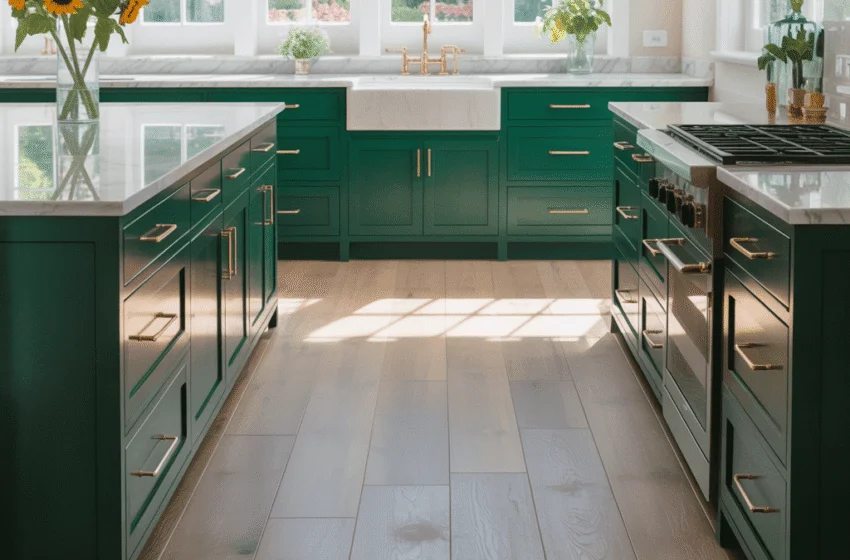
There’s something almost magical about a green and wood kitchen. Walk into one and you immediately feel it — that warm, grounded, alive energy that makes you want to linger over your morning coffee a little longer. It’s not just a trend. It’s a design philosophy rooted in bringing nature indoors, and it’s changing the way people think about the heart of their home.
Green and wood is one of those rare combinations that manages to feel both timeless and incredibly fresh at the same time. Whether you’re drawn to moody forest greens, soft sage tones, or playful mint, pairing any shade of green with natural wood creates a kitchen that feels personal, warm, and deeply inviting.
1. Sage Green Cabinets with Light Oak Open Shelving
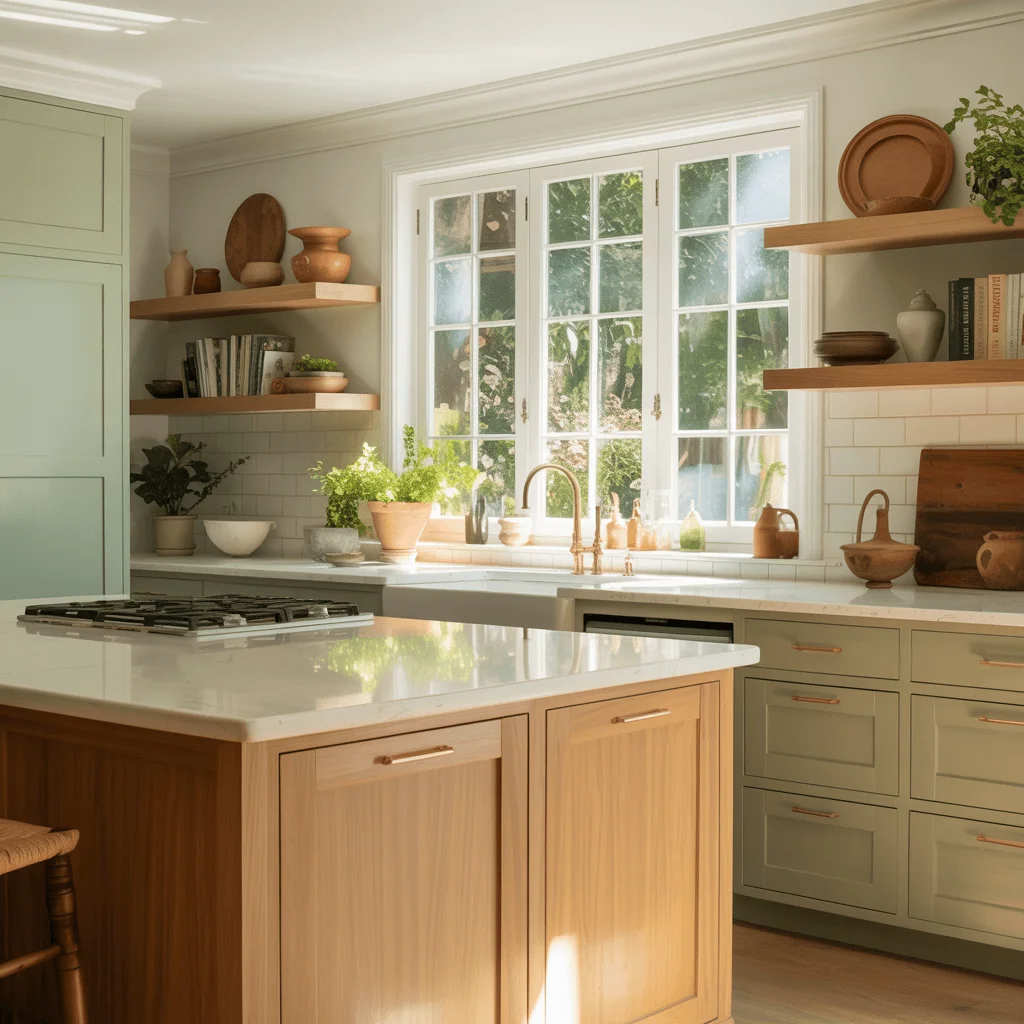
Sage green is the undisputed star of the green kitchen world, and for good reason. It sits in that sweet spot between gray and green, giving you all the calm of a neutral palette while still feeling genuinely interesting. Pair sage green lower cabinets with light oak floating shelves above, and you get a combination that feels both airy and grounded.
The light oak brings warmth without heaviness, and open shelving gives you the chance to display ceramics, plants, and cookware in a way that makes the kitchen feel lived-in and curated. Keep countertops in white quartz or cream marble, and choose matte brass hardware for that final editorial touch. This is the kitchen people photograph when they visit your home.
2. Dark Forest Green Island with Walnut Countertops
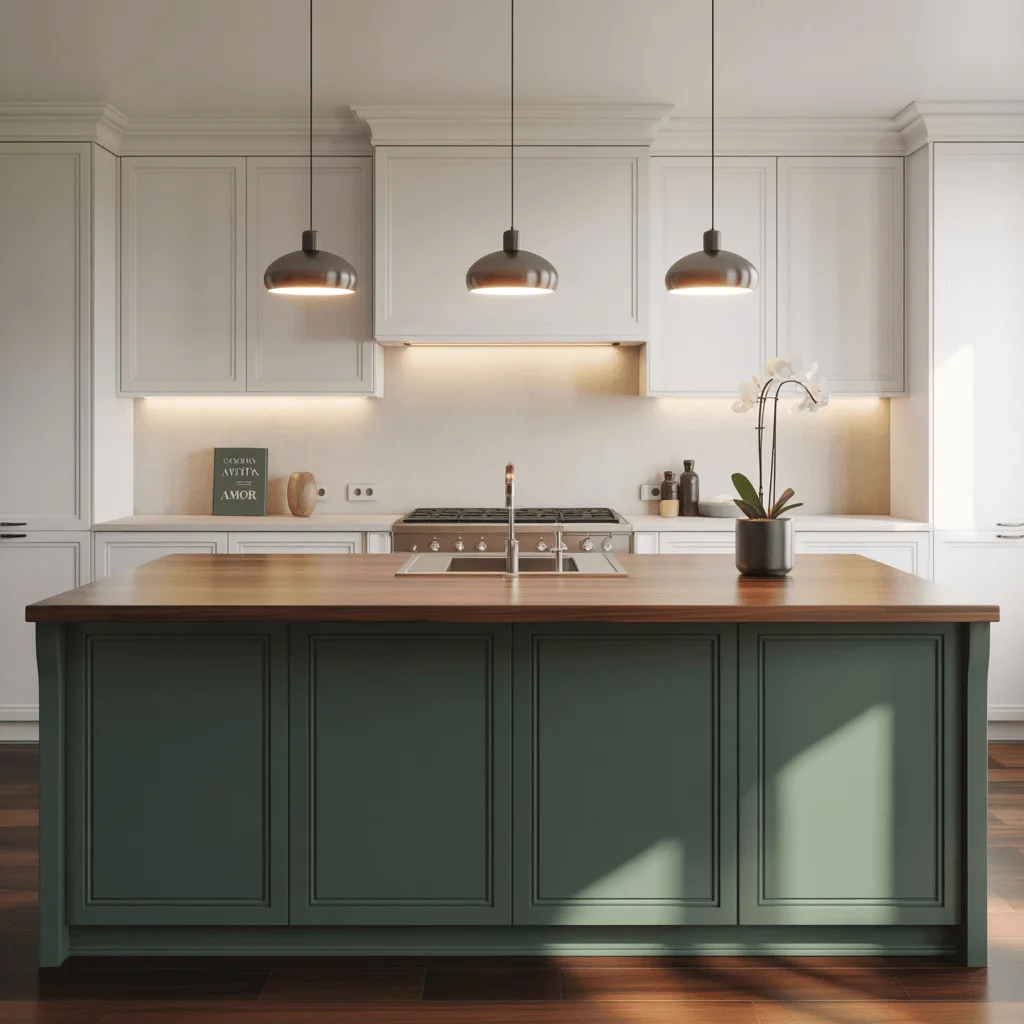
If you want drama — the sophisticated, magazine-cover kind — a dark green island with walnut countertops delivers it effortlessly. Deep forest green creates an instant anchor in the room, making the island feel like a piece of furniture rather than just a functional surface. Walnut countertops, with their rich chocolate tones and beautiful grain, bring warmth that stops the look from feeling heavy.
This works best in larger kitchens where the island can breathe, but even in a medium-sized space, a statement island can transform the entire room. Surround it with white or light natural wood perimeter cabinets to keep the balance right. Pendant lights in black or aged brass above the island complete the picture.
3. Olive Green Walls with Reclaimed Pine Cabinets
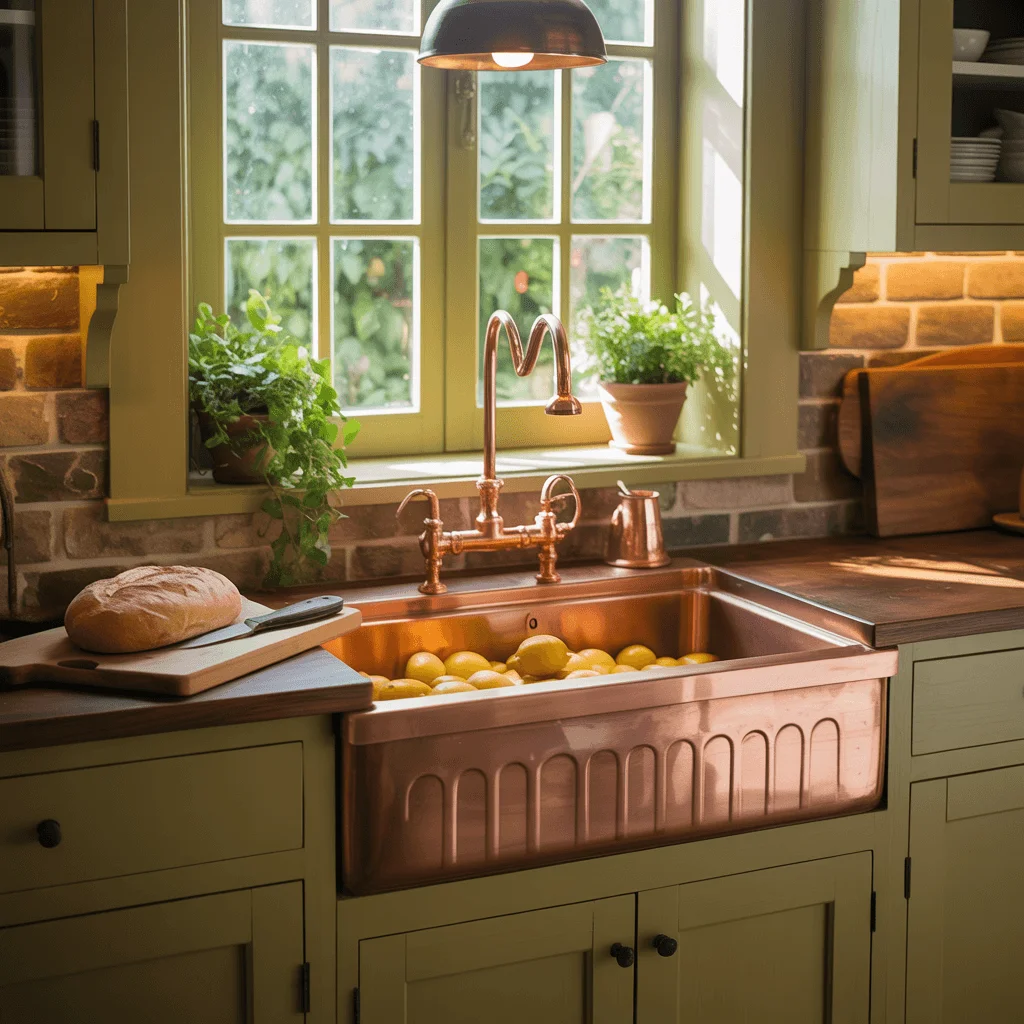
Olive green has a wonderful earthiness to it that pairs beautifully with the rustic character of reclaimed or knotty pine. This combination brings serious Mediterranean farmhouse energy — think Tuscany, sun-warmed stone, and dinners that last three hours. The natural imperfections in reclaimed pine (the knots, the grain variations, the slight roughness) actually become features rather than flaws when paired with olive green.
Keep the hardware simple — iron pulls or aged bronze work best. Add a terracotta-tiled floor or a stone backsplash to deepen the earthy feeling. This is a kitchen that rewards slow cooking and long conversations.
4. Emerald Green Cabinets with Pale Ash Wood Accents
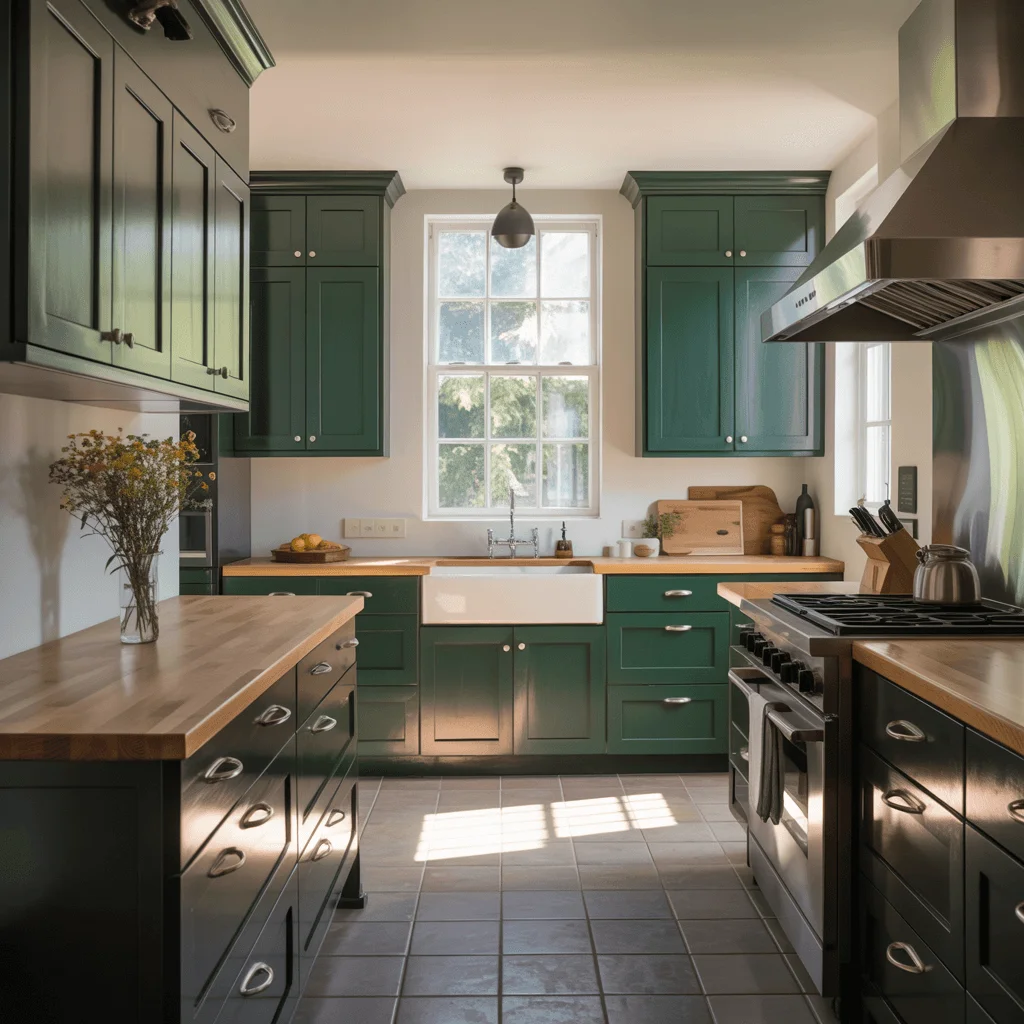
Emerald green is bold and unapologetic, and it absolutely works in a kitchen when handled correctly. The key is balance — pair saturated emerald green cabinets with very pale, almost-white ash wood accents to prevent the color from overwhelming the room. Pale ash has a fine, even grain that creates a clean contrast against the richness of emerald without fighting it.
Use the ash for a kitchen island top, open shelving, or even a hood surround. Keep walls white or very light cream. Gold hardware elevates the emerald beautifully and gives the whole scheme a jewel-box quality that feels genuinely luxurious.
5. Soft Mint Pantry Door with Natural Walnut Frame
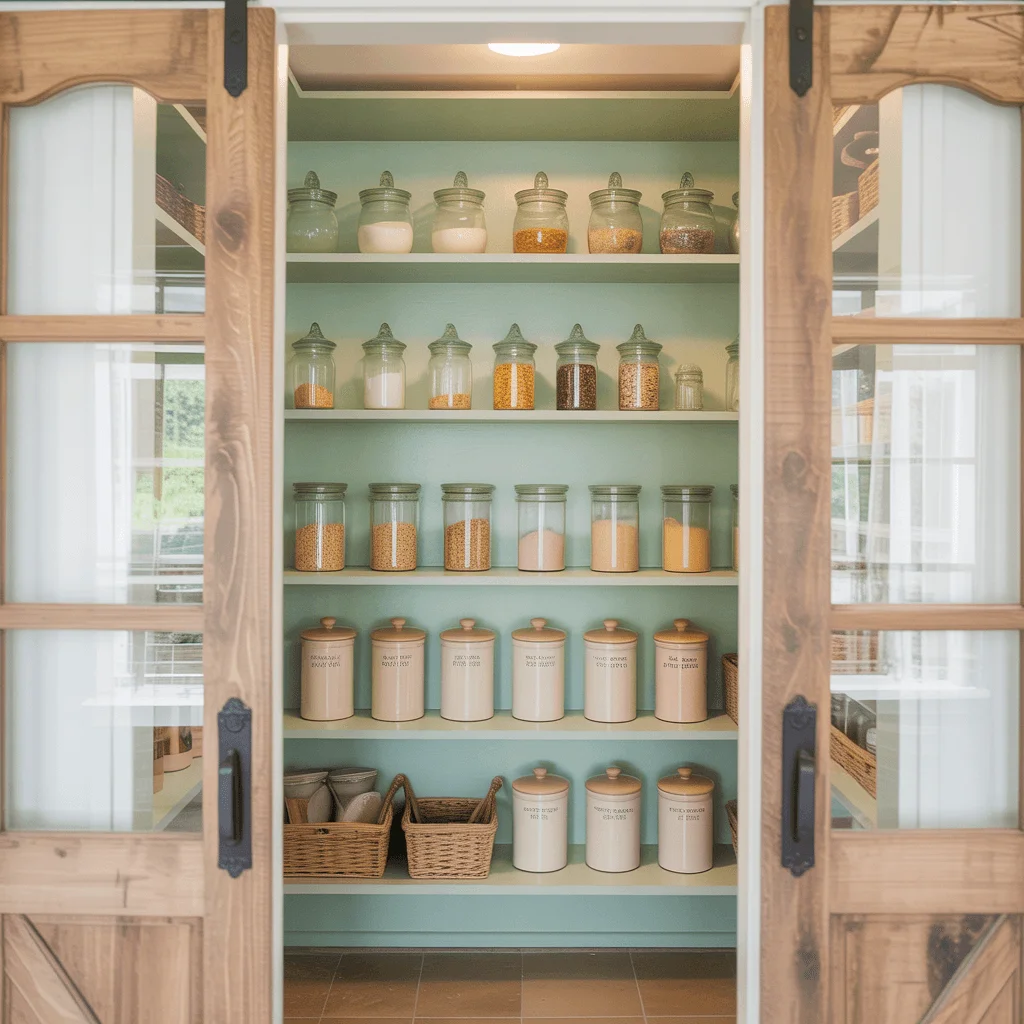
Not ready to commit to a full kitchen overhaul? Start with your pantry. A soft mint interior with a natural walnut door frame is a low-commitment, high-impact move that adds personality without the stress of a major renovation. Every time the pantry door opens, there’s that little moment of joy — the unexpected pop of color that makes a kitchen feel designed rather than just functional.
This works especially well in kitchens with otherwise neutral palettes, where you want one element that feels playful and personal. Soft mint is light enough to not feel intense, and the walnut frame brings it into the rest of the space beautifully.
6. Hunter Green Lower Cabinets with Bare Wood Uppers
Two-tone kitchens took off for a reason — they give you visual interest without the commitment of going all-in on one bold color. Hunter green lower cabinets paired with natural wood upper cabinets is one of the most balanced and beautiful versions of this approach. The green grounds the room while the wood keeps it from feeling heavy, and the contrast between painted and natural surfaces adds genuine depth.
This combination looks particularly stunning with a dark stone countertop — black granite or dark gray quartz — which ties the two tones together. If you’re renovating on a budget, you can even achieve this look by painting just your existing lower cabinets while leaving uppers in a natural wood stain.
7. Sage Green Shaker Cabinets with Butcher Block Countertops
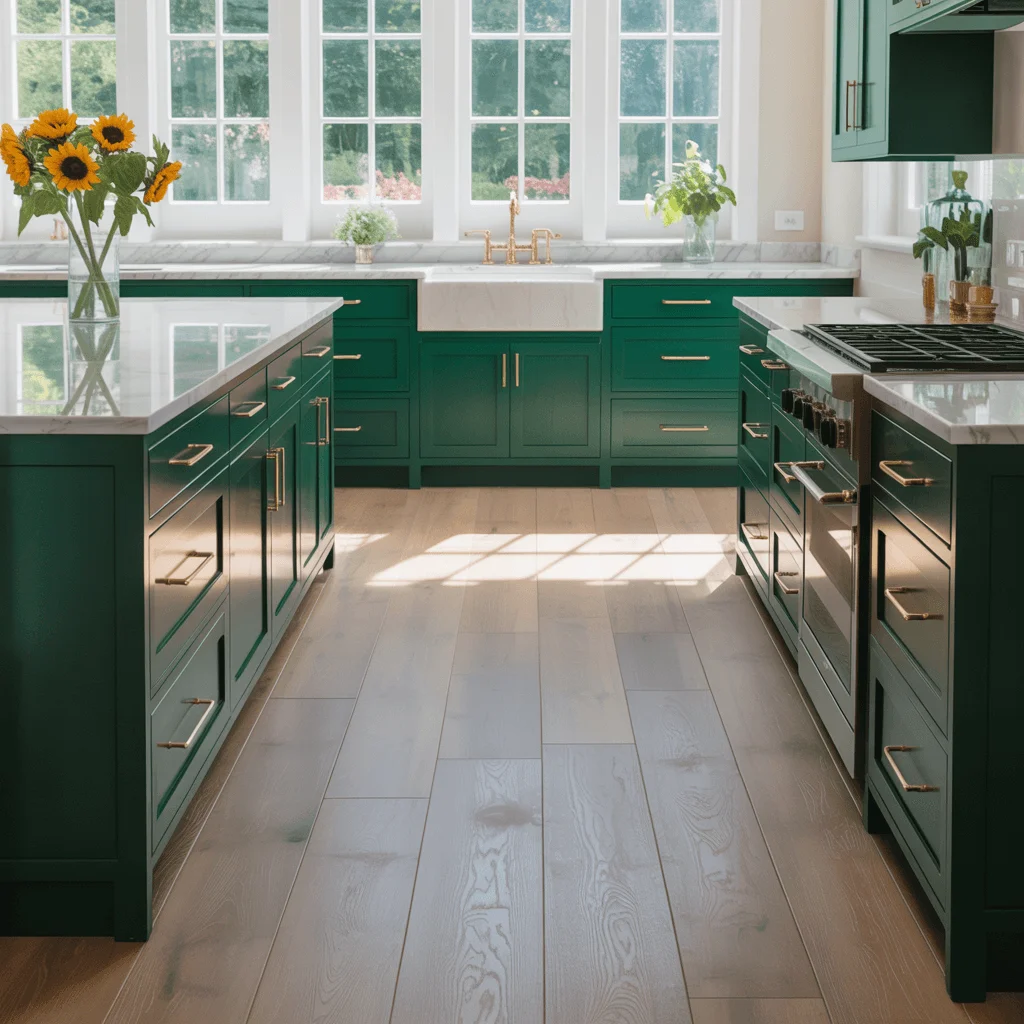
Shaker-style cabinets in sage green paired with butcher block countertops is the kitchen equivalent of a perfectly worn-in pair of jeans — classic, comfortable, and always in style. The clean lines of the shaker style bring structure, while the butcher block softens everything with its warmth and natural variation.
Butcher block countertops do require regular oiling and some care around water, but the reward is a surface that actually improves with age. Every cut mark and worn spot adds character rather than damage. For a truly timeless look, choose a pull-out instead of undermount sink to preserve the wood surface.
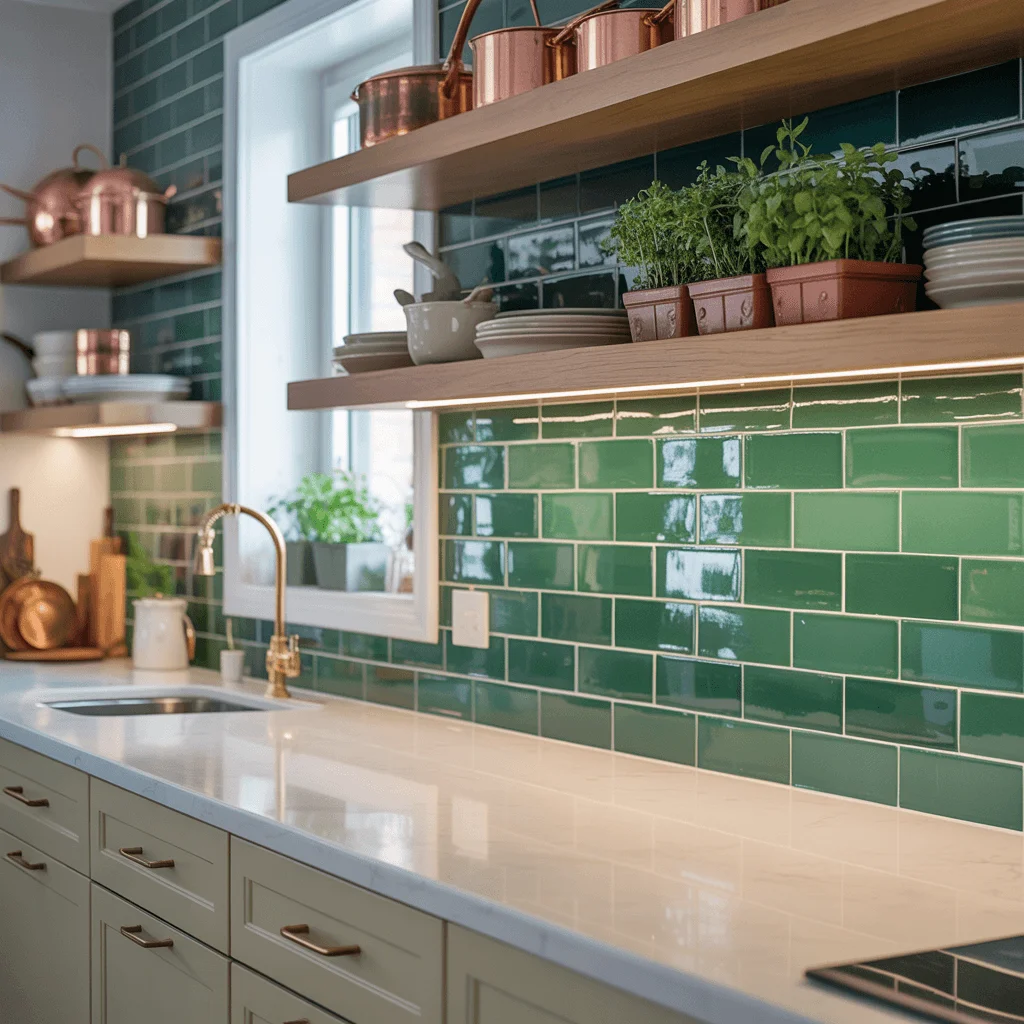
8. Green Tile Backsplash with Wood Floating Shelves
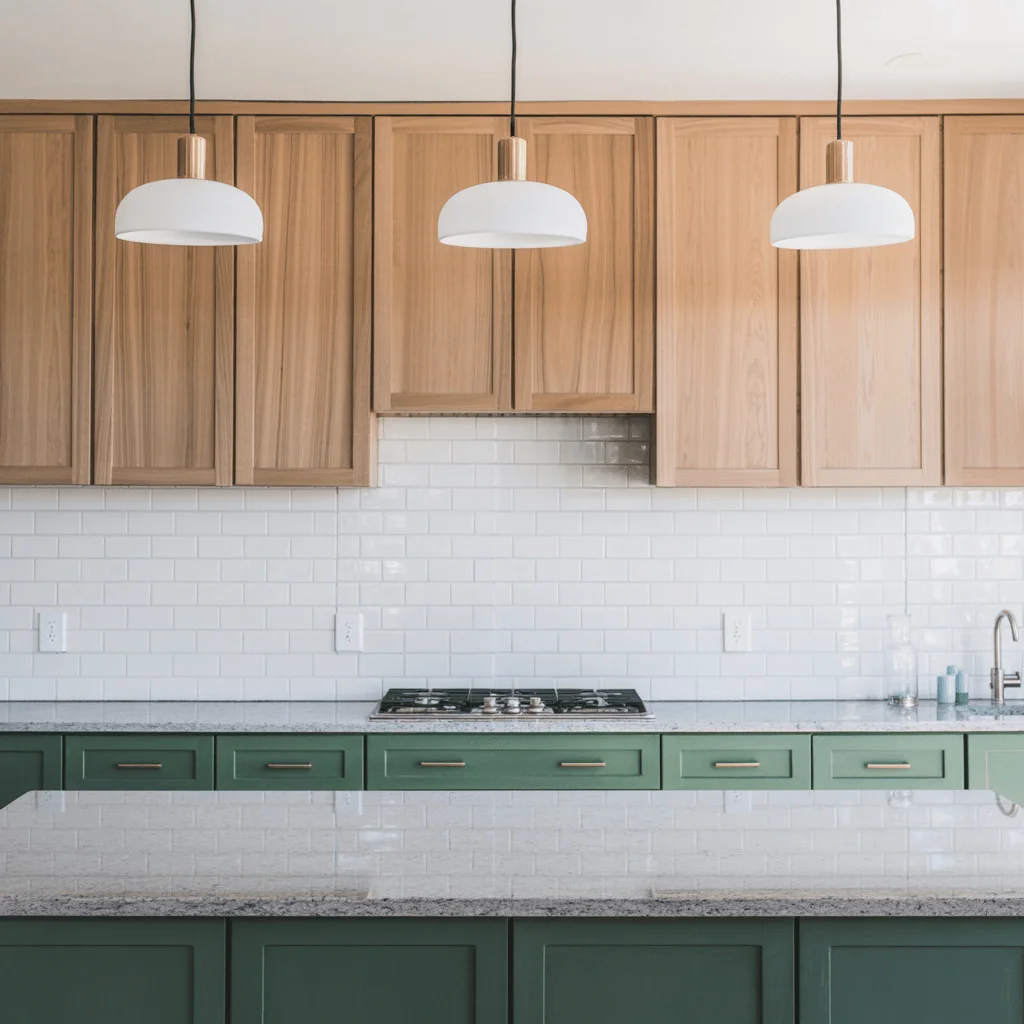
Sometimes you don’t want to paint cabinets or change countertops — you just want an update. A green tile backsplash paired with wood floating shelves is one of the most effective and cost-efficient ways to bring the green-and-wood combination into your kitchen without a full renovation.
Handmade ceramic tiles in sage, forest, or bottle green have a beautiful variation in tone that makes them feel artisanal rather than mass-produced. Run them all the way to the ceiling for maximum impact. Bracket the shelves in the same wood tone as your floors or island for a cohesive, pulled-together look.
9. Dark Olive Cabinets with Light Maple Countertops
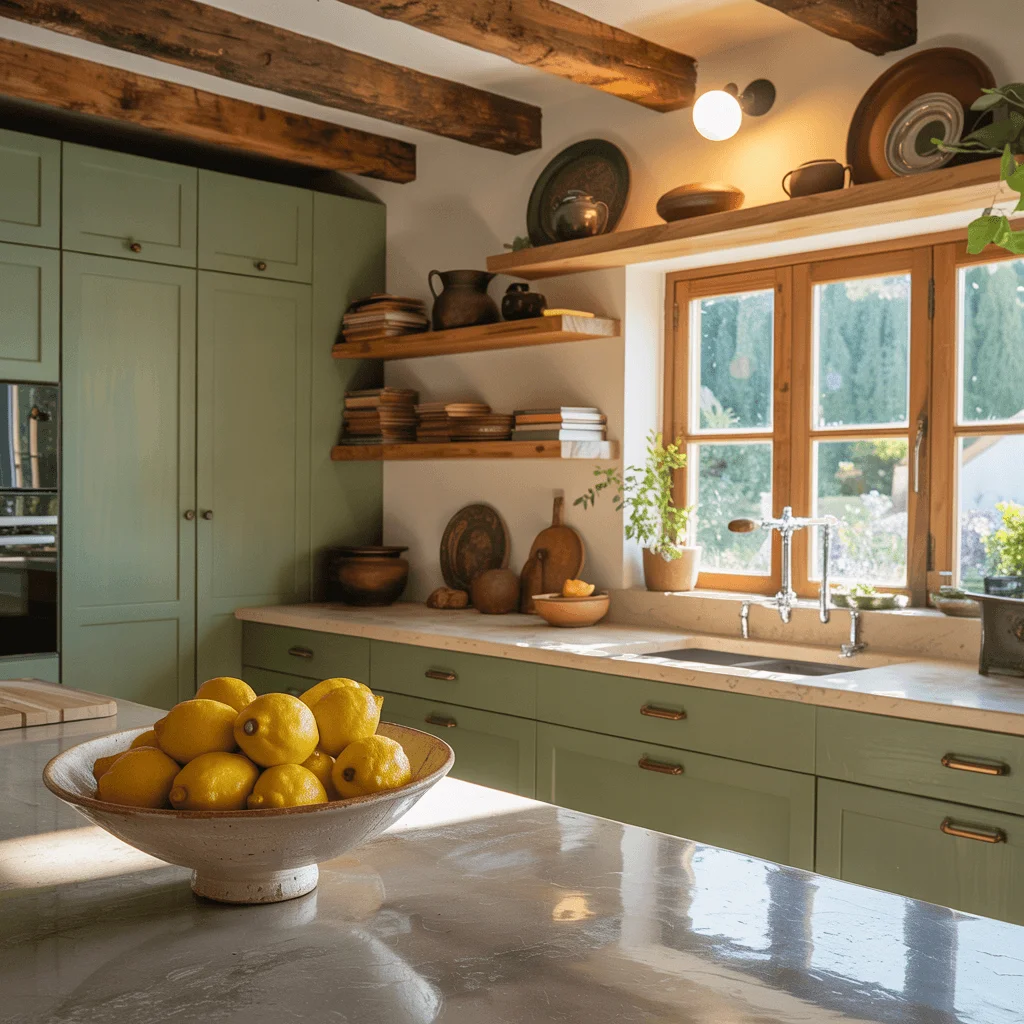
Dark olive is one of the most underrated kitchen cabinet colors. It’s deeper than sage but less intense than forest green, sitting in a warm, complex zone that reads differently in every light. Pair it with light maple countertops — maple has a tight, fine grain and a pale gold tone — and you get a combination that feels sophisticated and genuinely original.
This is a great choice for kitchens with lots of natural light, where the dark olive can really sing. In lower-light spaces, balance it with white walls and under-cabinet lighting to keep things feeling bright.
10. British Racing Green Cabinets with Dark Oak Details
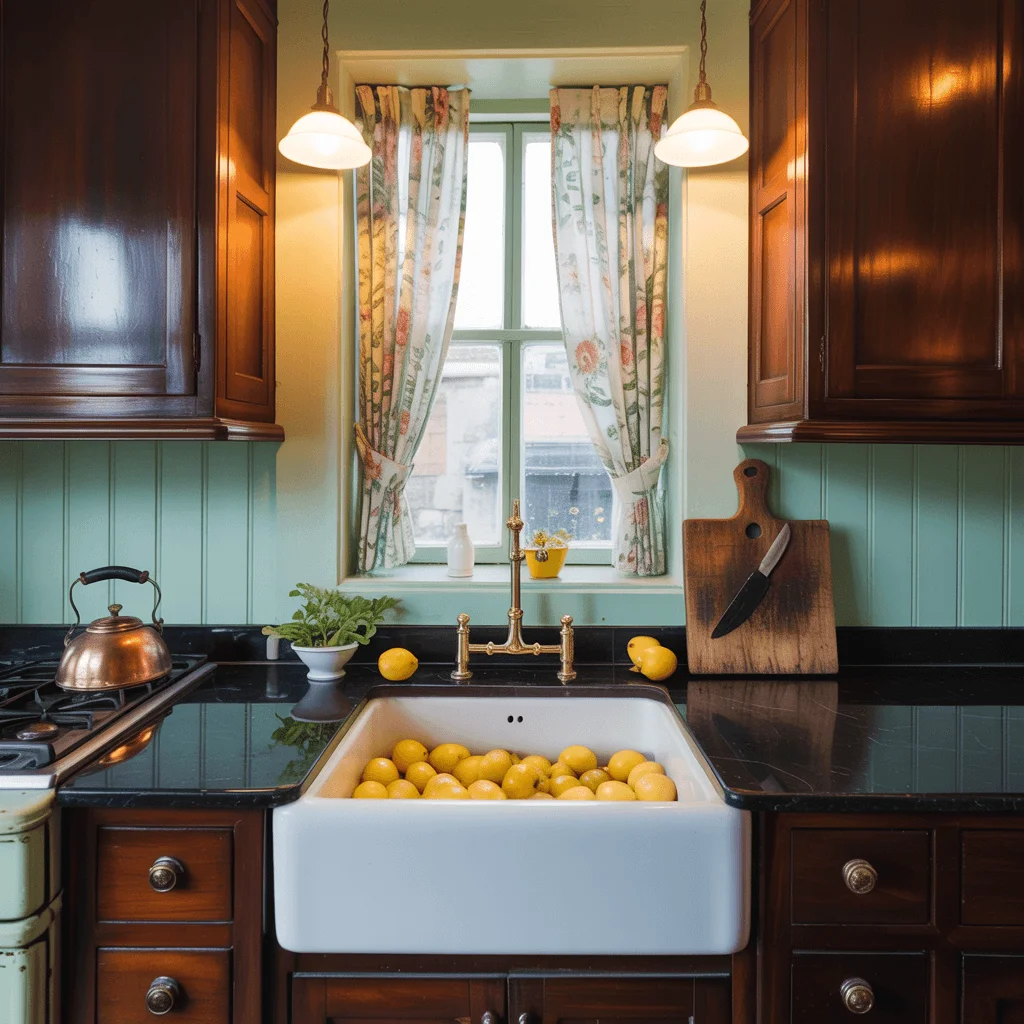
If you love a kitchen with a serious, grown-up personality, British racing green cabinets with dark oak details are your dream come true. This is a bold, confident look that references the grandeur of traditional English estate kitchens while feeling thoroughly modern in execution.
Dark oak — whether used for a kitchen island, shelving, or exposed ceiling beams — brings the same depth and richness as the green itself, so the two tones sit comfortably together without competing. Use aged brass fixtures and fittings throughout. This is a kitchen that doesn’t whisper — it makes a statement.
11. Pale Green Kitchen with Bamboo Flooring and Cabinetry
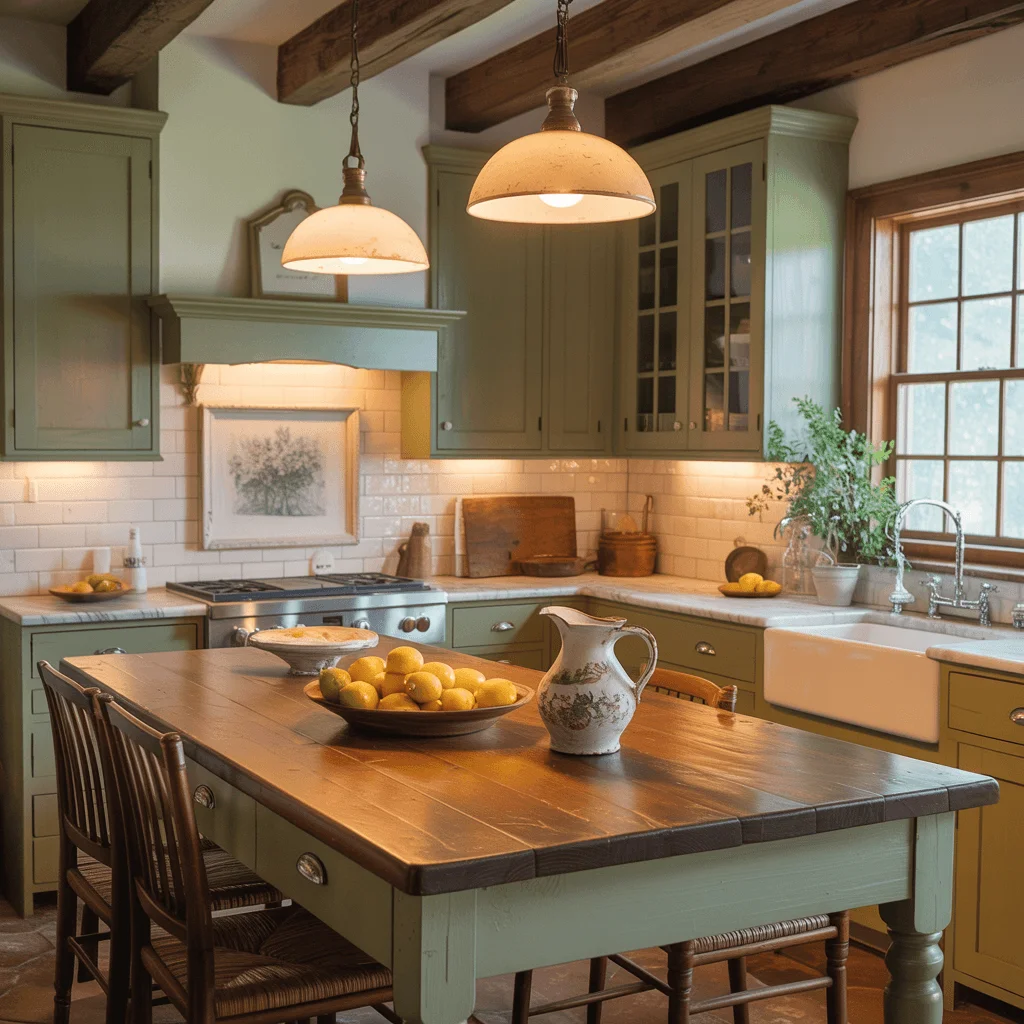
For a kitchen that leans into sustainability and wellness, pale green walls combined with bamboo flooring and cabinetry create a beautiful, eco-conscious space. Bamboo has a clean, linear grain that gives it a slightly more modern feel than traditional wood, making it perfect for contemporary kitchens.
This combination feels almost spa-like in its calm — fresh, clean, and grounding at the same time. It’s a wonderful choice for open-plan spaces where the kitchen flows into a living or dining area, as the pale green reads as almost neutral while still adding gentle color.
12. Sage Green Kitchen Island with Teak Wood Top
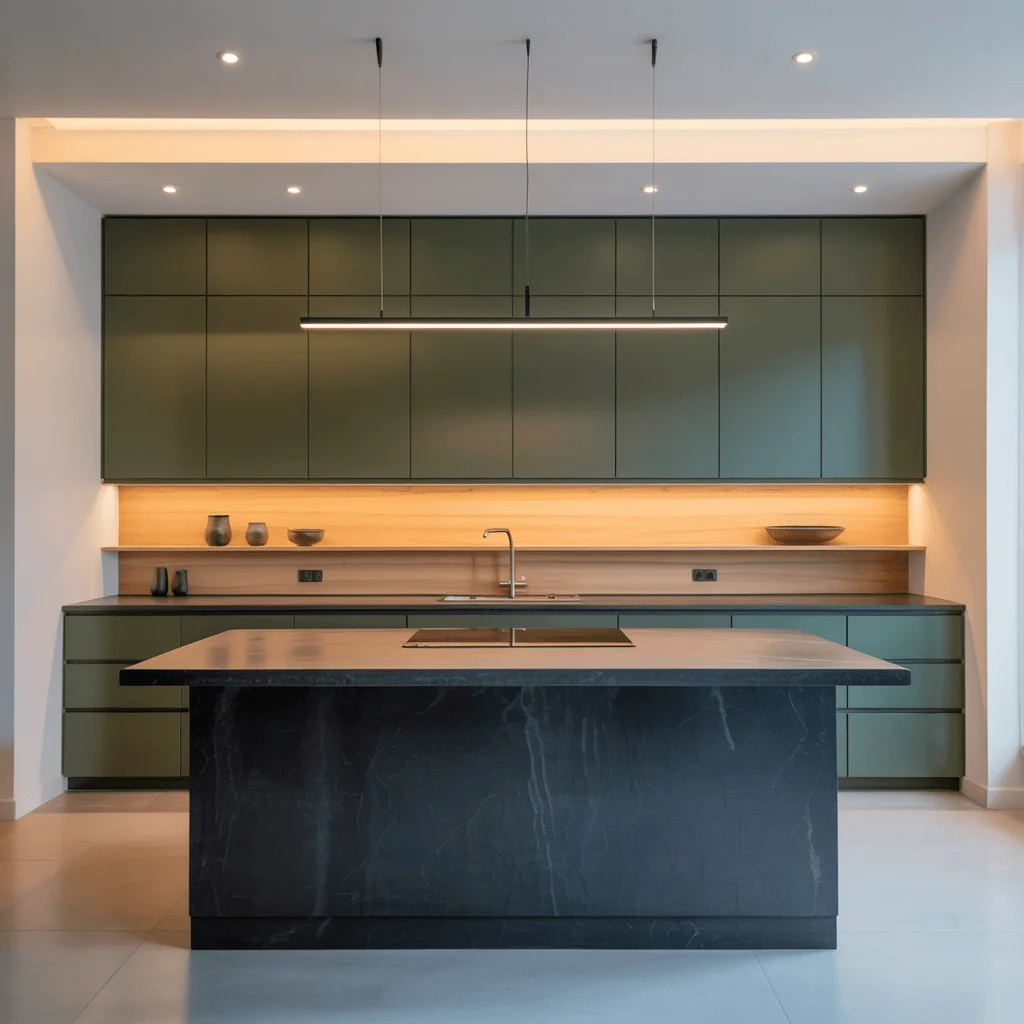
Teak is one of nature’s most beautiful woods — dense, golden-brown, with a straight grain that becomes more lustrous with age. A sage green kitchen island topped with teak brings a slightly exotic, coastal quality to a kitchen that’s warm and inviting without being overdone.
Teak is naturally resistant to moisture and humidity, making it a practical choice for a kitchen surface. It develops a beautiful silver-gray patina over time if left untreated, or you can oil it regularly to maintain the warm golden tone. Either way, it only gets better.
13. Green Glass Cabinet Fronts with Wood Cabinet Frames
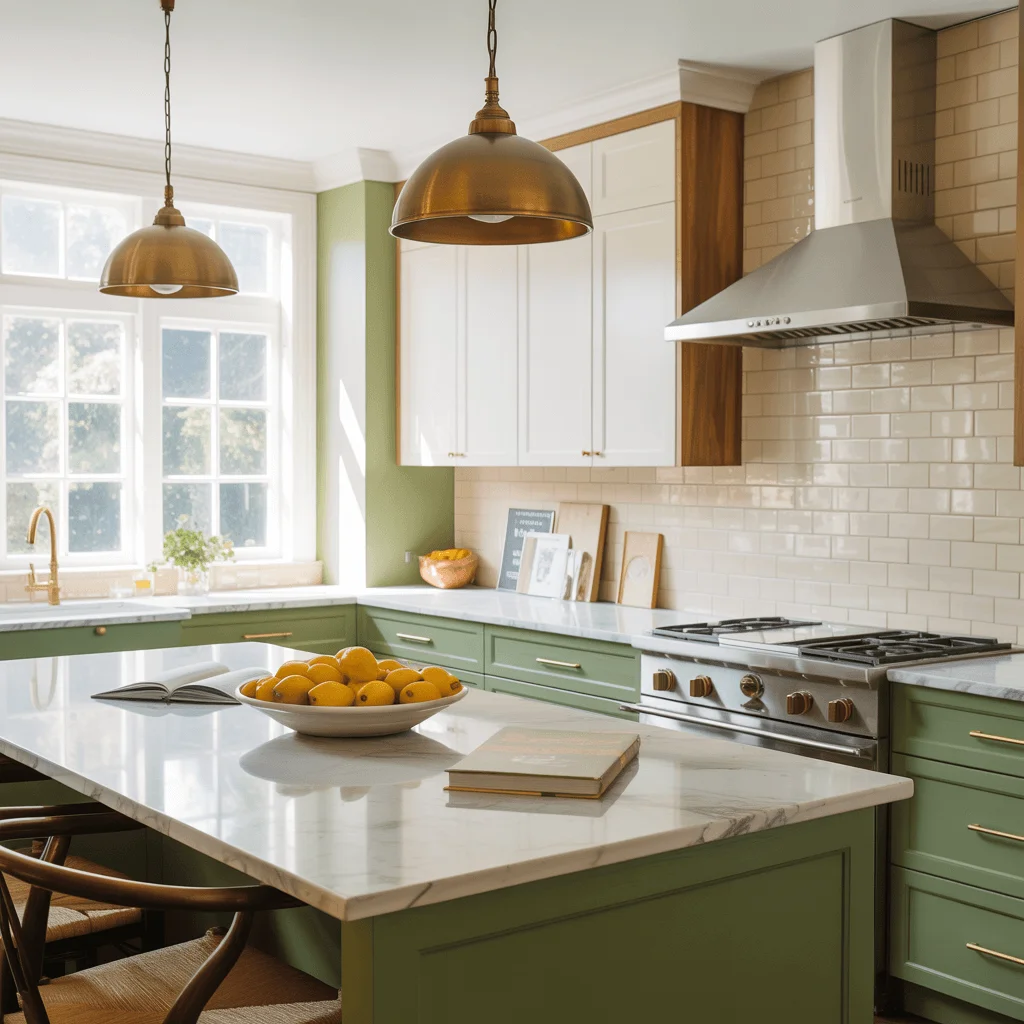
Want something truly unexpected? Glass-fronted cabinets in a pale green-tinted glass within natural wood frames give you a kitchen that feels like it came from a boutique hotel — in the best way. The green tint adds color without paint, and the glass fronts let you display your best dishes and glassware as part of the decor.
This is a particularly effective approach in kitchens where you want to add color but don’t want to commit to painting. The wood frames ground the glass beautifully, and the combination feels considered and original. Pair with simple, clean lines elsewhere to let this feature breathe.
14. Dusty Green Lacquered Cabinets with Oak Veneer Accents
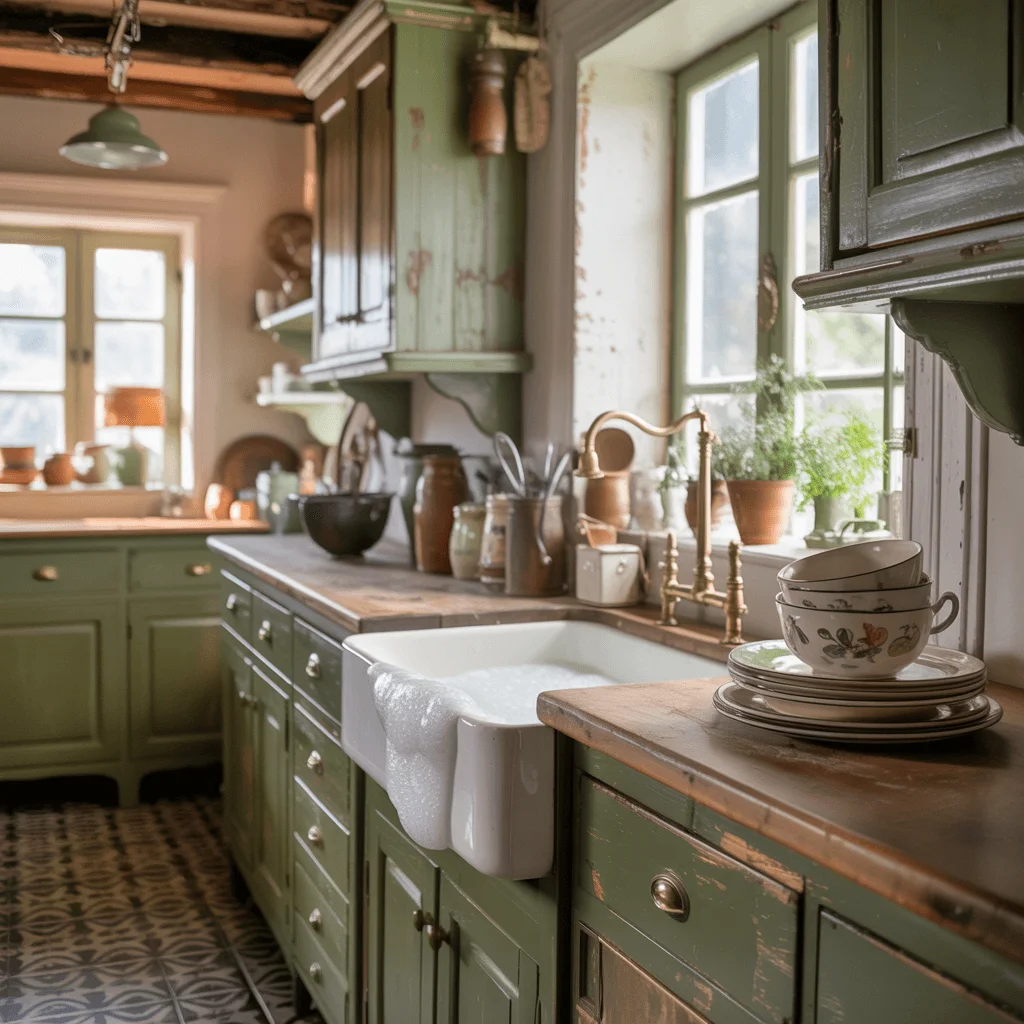
Dusty green — a muted, almost grayed-down green — with oak veneer accents is pure Scandinavian design perfection. This combination is quiet, refined, and beautiful in a way that doesn’t demand attention but rewards anyone who looks closely. The lacquer finish on the cabinets creates a subtle sheen that works beautifully against the matte warmth of the oak veneer.
This is the kitchen for people who believe that the best design is the kind you don’t notice right away but can’t imagine living without. Minimalist hardware (or push-to-open systems) and an integrated everything approach complete the look.
15. Chartreuse Green Accents with Warm Walnut Cabinetry
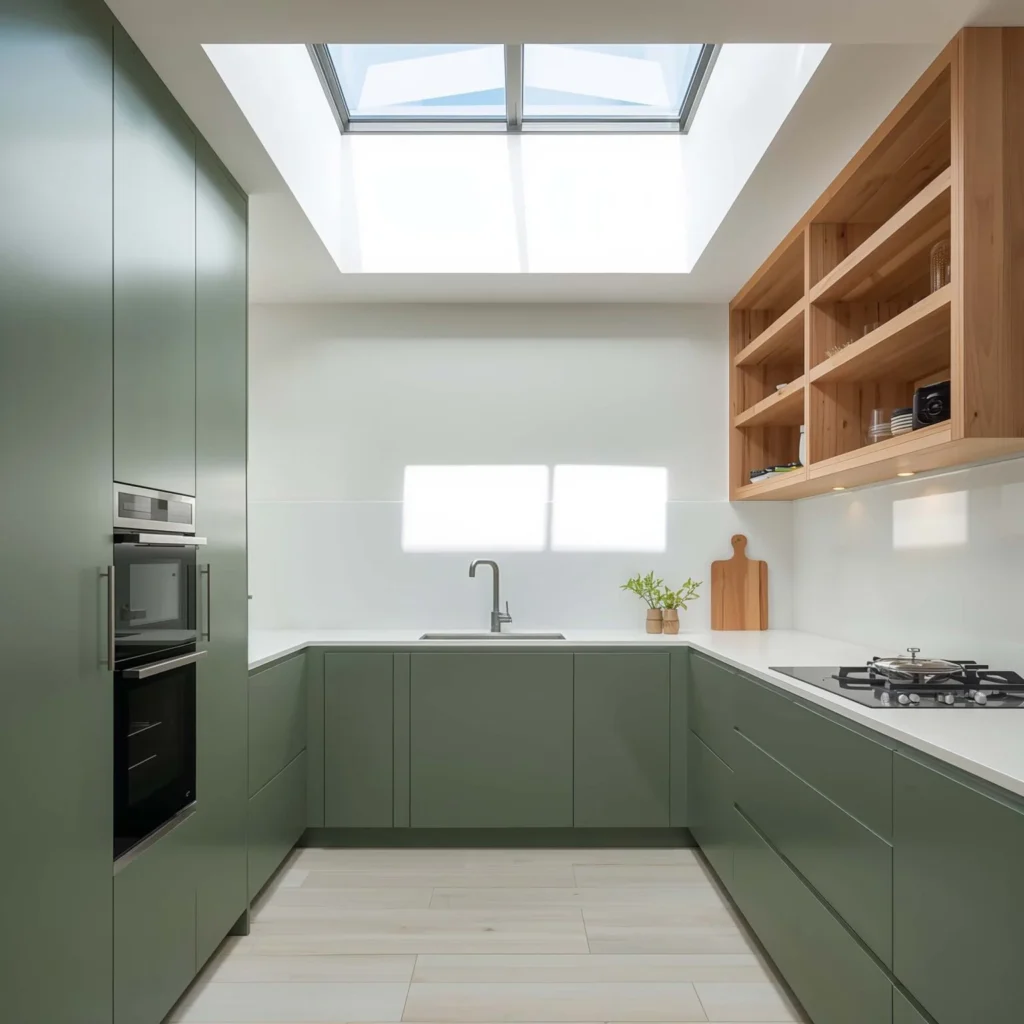
Here’s a twist on the formula — instead of green cabinets with wood accents, flip it. Warm walnut cabinetry is the anchor, with chartreuse green used sparingly as an accent color. A chartreuse green kitchen island, a painted alcove, or even just a bold set of bar stools can bring this pairing to life without making green the dominant note.
Chartreuse is one of those polarizing colors that, when used well, is genuinely brilliant — energetic, unexpected, and completely modern. Against the depth of walnut, it vibrates in a way that makes a kitchen feel alive. Use it carefully, and it will be the thing everyone remembers about your kitchen.
How to Choose the Right Green for Your Kitchen
With so many shades of green to choose from, it can feel overwhelming. Here’s a simple framework to help you narrow it down:
- Consider your light. North-facing kitchens need warmer, lighter greens (sage, mint, olive) to avoid feeling dark. South-facing kitchens can handle deeper, cooler greens like forest green or hunter green without losing brightness.
- Think about your wood tones. Light, pale woods (ash, maple, light oak) pair best with saturated, deep greens for contrast. Dark woods (walnut, dark oak) work better with lighter, softer greens that don’t compete.
- Look at your existing finishes. If your floors, countertops, or appliances are already in place, start there. Pull the undertone from those elements to guide your green choice.
- Test before you commit. Always paint sample swatches on the actual wall and observe them at different times of day. Green changes significantly between morning and evening light.
- Don’t underestimate mid-tone greens. Very dark and very light greens get most of the attention, but mid-tone greens like eucalyptus, fern, and muted avocado are often the most liveable and the most versatile.
Hardware and Finishing Touches That Make the Difference
Once you’ve nailed the green and wood combination, the finishing touches are what take a kitchen from nice to exceptional. Hardware is one of the most impactful and affordable ways to define the style of a green and wood kitchen.
- Brass hardware: Works with virtually every shade of green. Warm, golden brass adds a traditional or transitional quality. Brushed or unlacquered brass adds a slightly more casual, lived-in feel.
- Black matte hardware: Creates strong contrast against lighter greens and adds a contemporary edge. Particularly effective with sage green and oak combinations.
- Bronze hardware: Sits beautifully between brass and black, and works especially well with olive and dark green cabinets. Gives a kitchen an antique, European quality.
- Rattan and cane accents: Chair backs, pendant lampshades, or small cabinet inserts in rattan or cane add natural texture that bridges green and wood beautifully.
- Plants: The most obvious addition to a green kitchen, but also the most effective. Trailing plants on open shelving, herbs on the windowsill, or a large leafy plant in a terracotta pot bring the green-and-wood ethos to life in the most literal way.
Creating a Green and Wood Kitchen on a Budget
You don’t need a complete renovation budget to bring the green and wood look into your kitchen. Some of the most effective changes are also the most affordable:
- Paint your existing cabinets. This single change makes an enormous difference for a fraction of the cost of new cabinetry. Choose a quality kitchen cabinet paint and the results can be genuinely stunning.
- Add a tile backsplash. Green handmade tiles above the hob or sink area bring color and texture without touching your cabinets or countertops.
- Swap out hardware. New brass or black pulls and knobs on existing cabinets can completely change the feel of a kitchen for under $100.
- Add a butcher block countertop section. You don’t have to replace all your countertops — even a butcher block insert on your island or as a small prep section makes a warm, natural impact.
- Introduce wood through accessories. Wooden chopping boards, a wooden fruit bowl, wooden-handled cutlery — these small touches accumulate into a cohesive green-and-wood story without any construction required.
Final Thoughts: Your Green and Wood Kitchen Awaits
A green and wood kitchen is more than just a design choice — it’s a decision to fill the most-used room in your home with warmth, life, and natural beauty. Whether you go all-in with dark green cabinetry and walnut countertops, or start small with a painted pantry door and wooden floating shelves, every step in this direction makes your kitchen feel more like a place you genuinely want to be.
The beauty of this combination is that it grows with you. As you add pieces — a rattan pendant here, a terracotta pot of herbs there, a new backsplash tile — the kitchen evolves and deepens rather than going stale. It rewards investment, but it also rewards attention and intention.
So whatever your budget, your kitchen size, or your existing style, there’s a green and wood combination in this list that’s right for you. The only question is: where are you going to start?
Frequently Asked Questions
What shade of green is most popular for kitchen cabinets?
Sage green is consistently the most popular choice, thanks to its versatility and its ability to work with a wide range of wood tones and metal finishes. Forest green and olive green are close seconds for those who want a deeper, more dramatic look.
Does green work in a small kitchen?
Absolutely — but choose your shade carefully. Lighter greens like sage, mint, and pale olive are more forgiving in smaller spaces. Avoid very dark greens on all four walls, but a dark green island or accent color can work beautifully even in compact kitchens.
What wood goes best with dark green cabinets?
Lighter woods like ash, light oak, or maple create the most striking contrast with dark green. Walnut also works beautifully, creating a rich, layered look rather than a high-contrast one. The choice depends on whether you want drama or depth.
Is a green kitchen a good investment for resale?
Generally yes, especially for muted, sophisticated shades like sage and forest green. Bold, unusual choices carry more risk, but quality green kitchens are consistently well-received by buyers who appreciate a kitchen that stands apart from white-and-gray schemes.
How do I maintain wood countertops in a kitchen?
Wood countertops need regular oiling (every 3–6 months depending on use) and should be protected from standing water. Use a cutting board rather than cutting directly on the surface, clean up spills promptly, and they’ll reward you with years of beauty and character.
1 thought on “15 Stunning Green and Wood Kitchen Ideas for Cozy Style”