
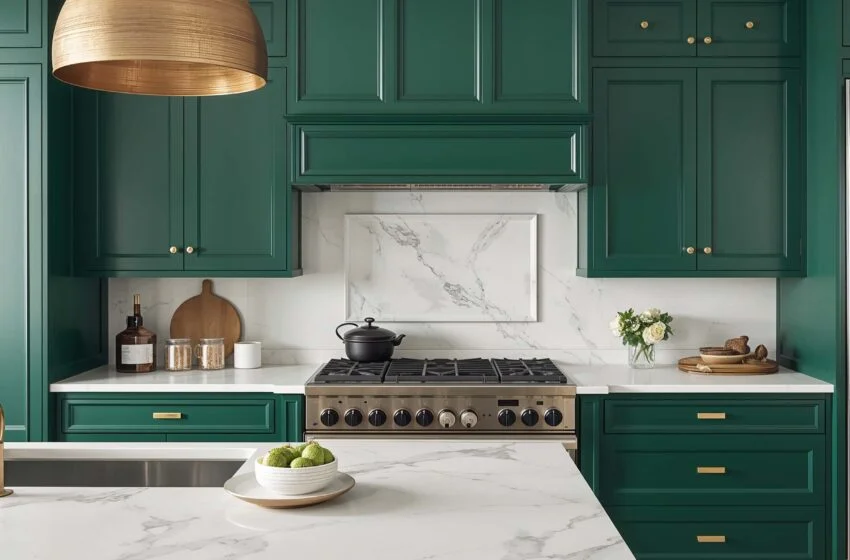
There’s a reason your Instagram feed has been flooded with green and white kitchens lately — and it’s not just a passing trend. This color combination has quietly taken over the world of interior design because it taps into something deeply human: our love of nature, our craving for calm, and our desire for a space that feels both fresh and timeless.
Green, in all its shades from dusty sage to bold forest, carries a psychological weight that few colors can match. It calms anxiety, connects us to the outdoors, and makes a room feel alive. Pair it with crisp white, and you get a kitchen that feels light, airy, and utterly irresistible — morning, noon, and night.
What makes this pairing so special is its versatility. Whether you’re renovating a modern apartment, refreshing a farmhouse kitchen, or simply adding a few thoughtful touches to a rental, green and white works. It scales from a single plant on a shelf all the way to a full cabinet overhaul, and it rarely gets dated.
1. Sage Green Lower Cabinets with White Uppers
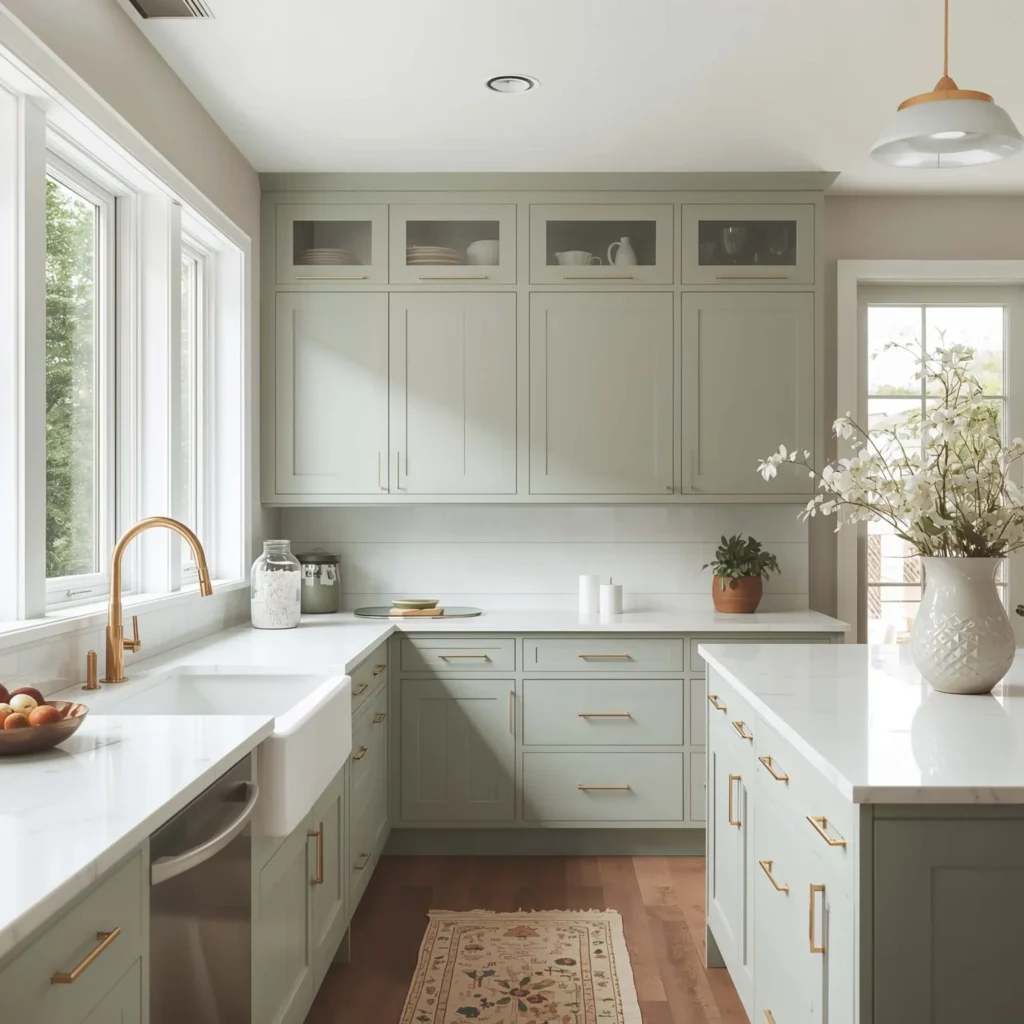
If you’ve been on the fence about adding green to your kitchen, this is the perfect starting point. Painting your lower cabinets in sage green while keeping the upper cabinets white is one of those design decisions that feels daring but is actually incredibly forgiving.
The genius of this approach is balance. The white upper cabinets keep the space feeling bright and open — which is especially important in smaller kitchens — while the sage green on the lowers anchors the room and adds warmth. It’s visual interest without chaos.
Sage green itself is a color that changes beautifully throughout the day. In the morning light it looks fresh and almost neutral. By evening under warm bulbs, it deepens to something almost earthy and cozy. It’s a color that genuinely rewards living with.
What Works Best with Sage Green Lower Cabinets:
- White quartz or marble countertops with subtle grey veining
- Brass or gold hardware — it adds warmth and elegance
- A white subway tile backsplash to tie everything together
- Natural wood open shelving for texture
- Warm pendant lights above the island or sink
Paint recommendation: Farrow & Ball ‘Mizzle’ or Benjamin Moore ‘Aganthus Green’ are favorites among designers for this look. Both have that slightly dusty quality that keeps sage green from reading too bright or too flat.
2. Bold Forest Green Island Against White Cabinetry
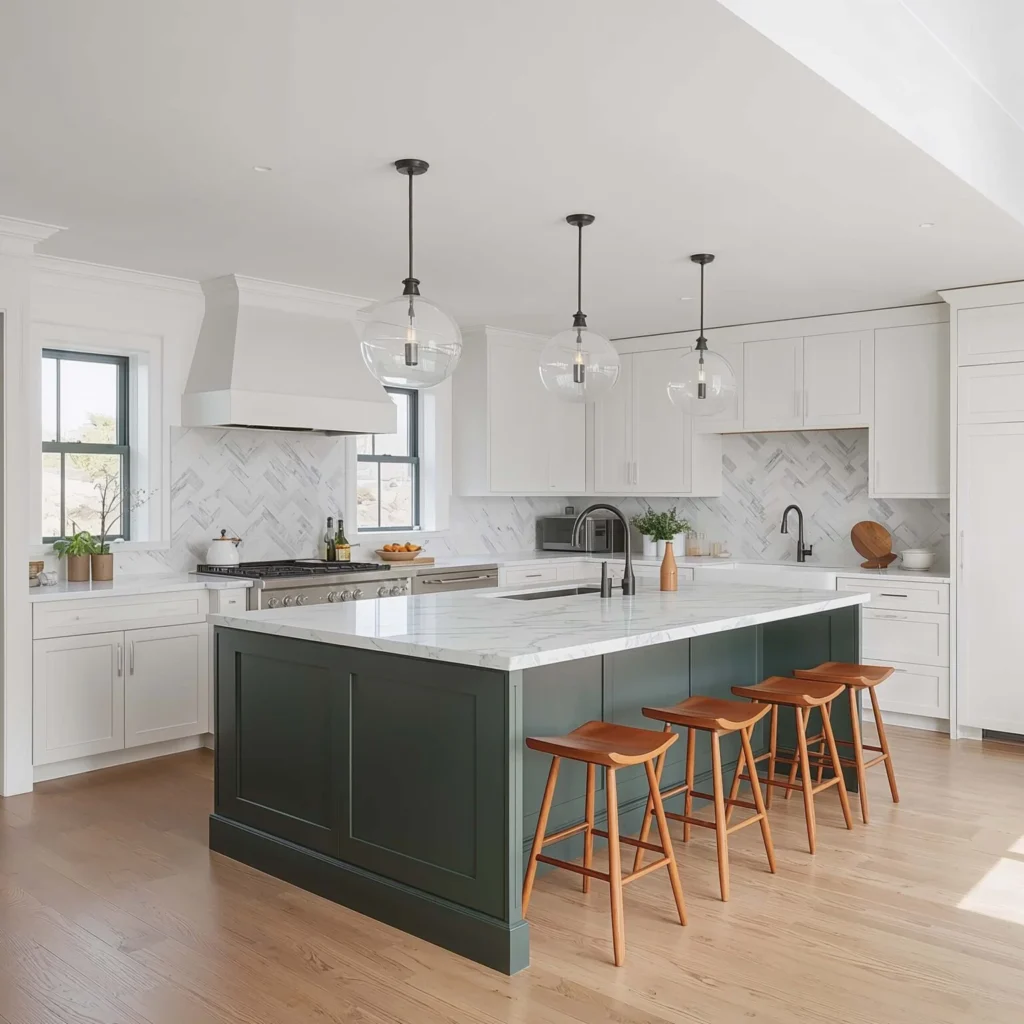
Want a kitchen that stops guests in their tracks? A dark forest green island set against white cabinets does exactly that. This is statement design — confident, beautiful, and surprisingly practical.
The reason this works so well is contrast. White cabinetry gives you that light, clean base that makes a kitchen feel spacious. The dark green island doesn’t take away from that spaciousness — it actually creates a focal point that draws the eye in a satisfying way.
Forest green islands work in almost any kitchen style. In a modern kitchen with clean-lined cabinets and minimal hardware, it looks sleek and architectural. In a traditional or Shaker-style kitchen, it takes on a richer, more classic quality, almost like a piece of furniture.
Tips for Pulling Off the Green Island Look:
- Choose a matte finish — it looks more expensive and hides smudges better
- Add a butcher block or light wood countertop on the island for contrast
- Pick statement bar stools in leather, rattan, or natural wood
- Install dramatic pendant lighting directly above the island
- Keep the rest of your accessories simple so the island can breathe
Color picks: Farrow & Ball ‘Calke Green,’ Sherwin-Williams ‘Cascades,’ or Benjamin Moore ‘Hunter Green’ all photograph beautifully and hold their depth even in artificial lighting.
3. Green Subway Tile Backsplash with White Shaker Cabinets
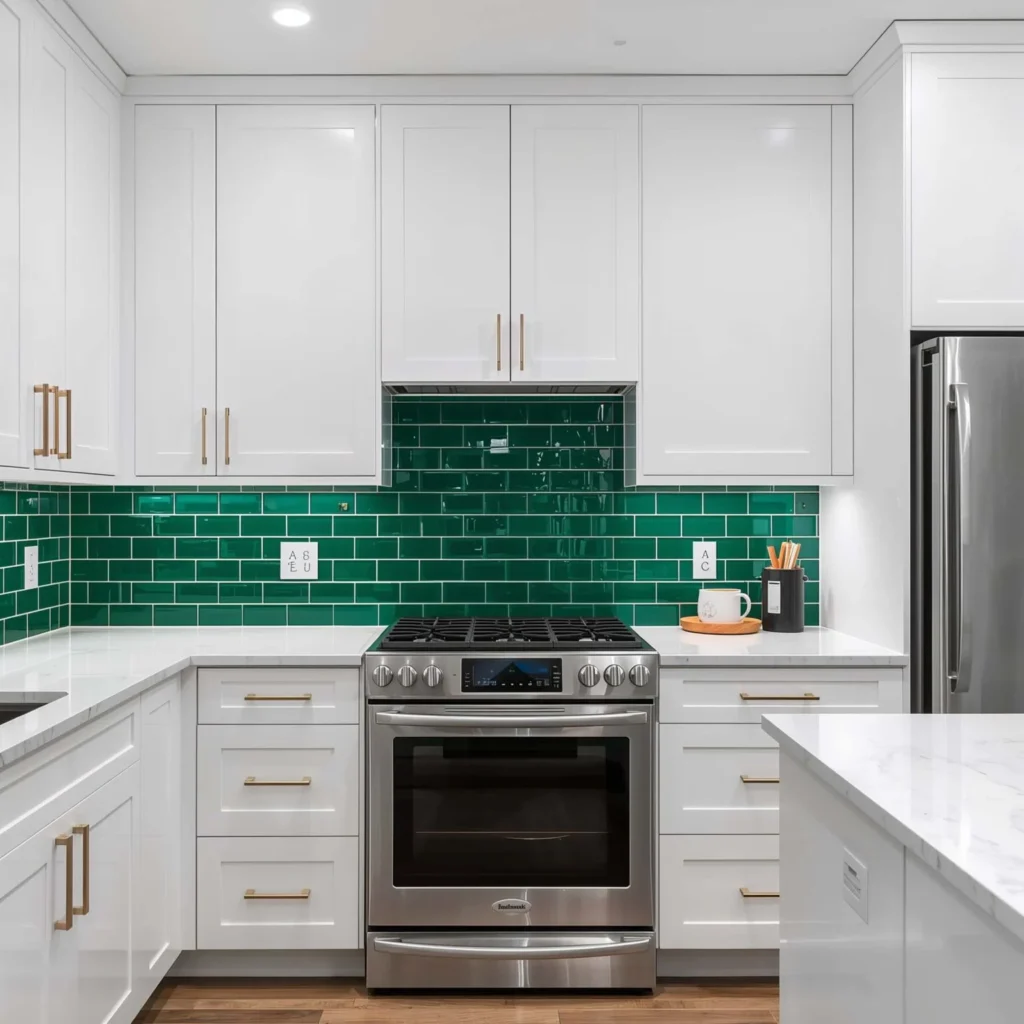
If you’re renting, working with a tight budget, or just not ready to commit to painting cabinets, a green backsplash is your best friend. It’s the lowest-effort, highest-impact change you can make to a kitchen — and pairing green subway tiles with white Shaker cabinets is practically foolproof.
Glossy green subway tiles bounce light around a kitchen in the best way. They add color without heaviness, bring a retro charm that still feels modern, and clean up beautifully — a non-negotiable in a space that sees daily cooking.
The classic rectangular subway tile in a glossy bottle green or deep emerald works especially well, but don’t overlook the more organic, handmade-looking zellige tiles. Their slight variation in color and surface creates a texture that feels artisan and alive.
Backsplash Style Options to Consider:
- Classic 3×6 subway tiles in a brick lay pattern — timeless
- Zellige green tiles for handcrafted warmth
- Scallop or fish-scale tiles for a softer, more playful feel
- Vertical stacked tiles for a more contemporary edge
- Green and white checkerboard for a bold vintage vibe
One design trick: run the backsplash all the way up to the ceiling if you have the height. It makes the kitchen feel taller and more dramatic without adding any more color to the walls or cabinets.
4. Olive Green Open Shelves Against White Walls
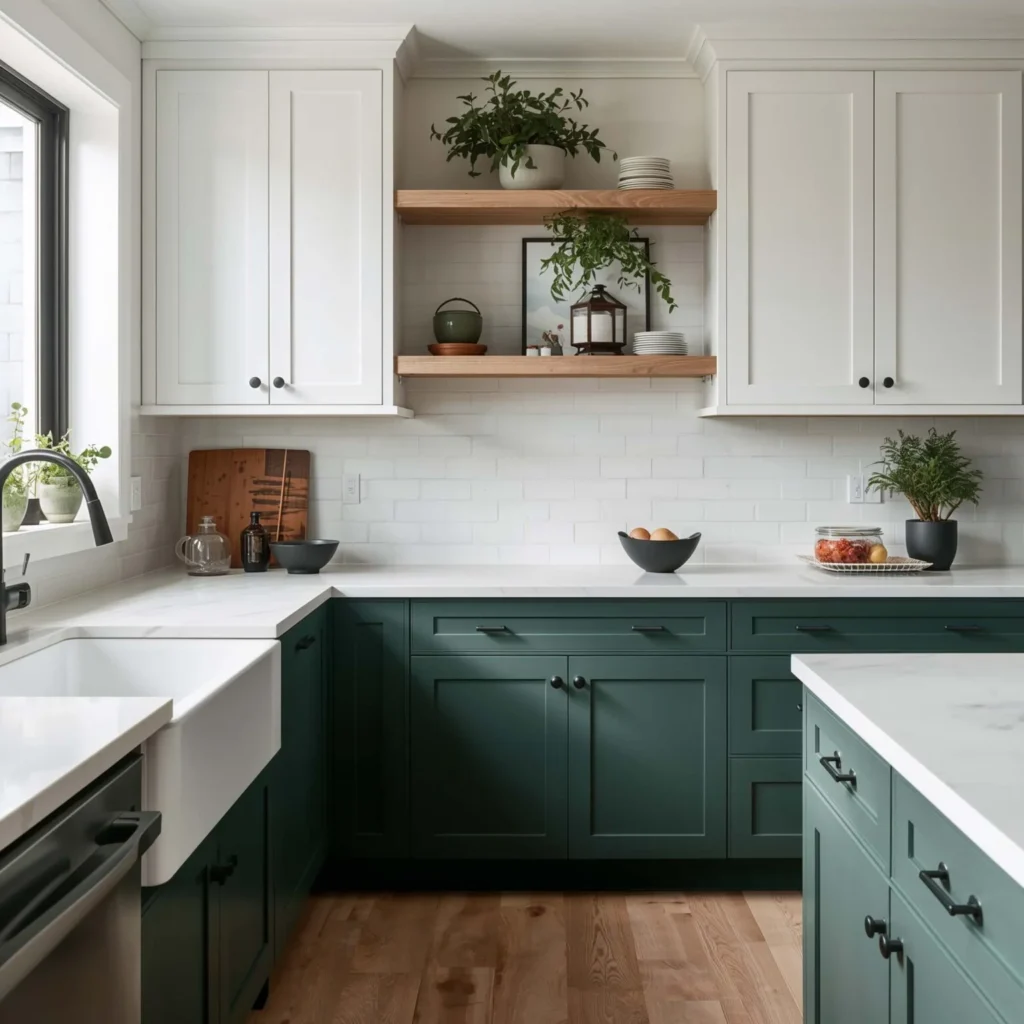
Open shelving has been a fixture in kitchen design for years now, and painting those shelves in olive green is one of the freshest ways to use the trend. Against white walls, olive green shelves create a layered, almost gallery-like effect that’s both functional and beautiful.
Olive green has a sophistication that brighter greens can lack. It reads as earthy and considered — more like something found in nature than something chosen from a paint chip. That quality makes it incredibly easy to style with everyday objects.
The key is in the styling. Stack white dishes, terracotta pots, brass vessels, and trailing green plants on olive green shelves, and the whole thing comes together like a curated still life. It’s a look that rewards a little intentionality.
What to Display on Olive Green Shelves:
- White ceramic dinnerware and mugs
- Wooden cutting boards and utensils
- Trailing pothos or ivy plants
- Brass or copper cookware
- Glass jars filled with pantry staples
5. Emerald Green Cabinets with White Marble Countertops
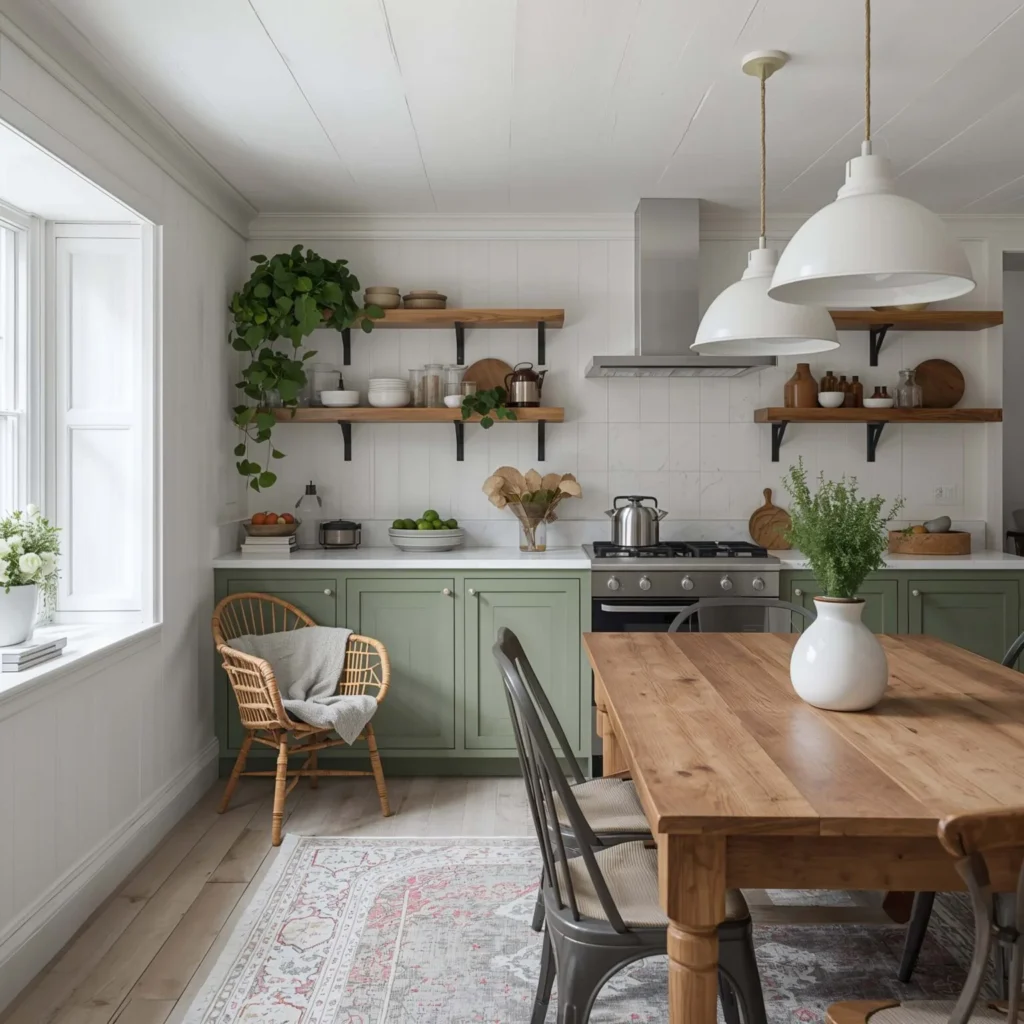
If sage is the quiet introvert of the green family, emerald is the confident extrovert — and when you pair emerald green cabinets with white marble countertops, you get a kitchen that feels genuinely glamorous.
This is the kind of kitchen that appears in design magazines and on Pinterest boards titled ‘dream homes.’ The richness of emerald green cabinet doors combined with the cool, veined luxury of white marble creates something that feels expensive and artful.
It’s worth noting that this combo works best in kitchens with good natural light. In a darker kitchen, emerald can feel a bit heavy. But give it a window and some daylight, and it transforms into something truly special.
How to Make Emerald and Marble Work:
- Use Calacatta or Carrara marble — both complement the jewel tone beautifully
- Go for gold or polished brass fixtures and hardware
- Keep your walls white or very pale to let the cabinets and countertops carry the room
- Add a simple white apron-front sink for a classic touch
- Limit your accessories — let the materials do the talking
6. Mint Green Accents in an All-White Kitchen
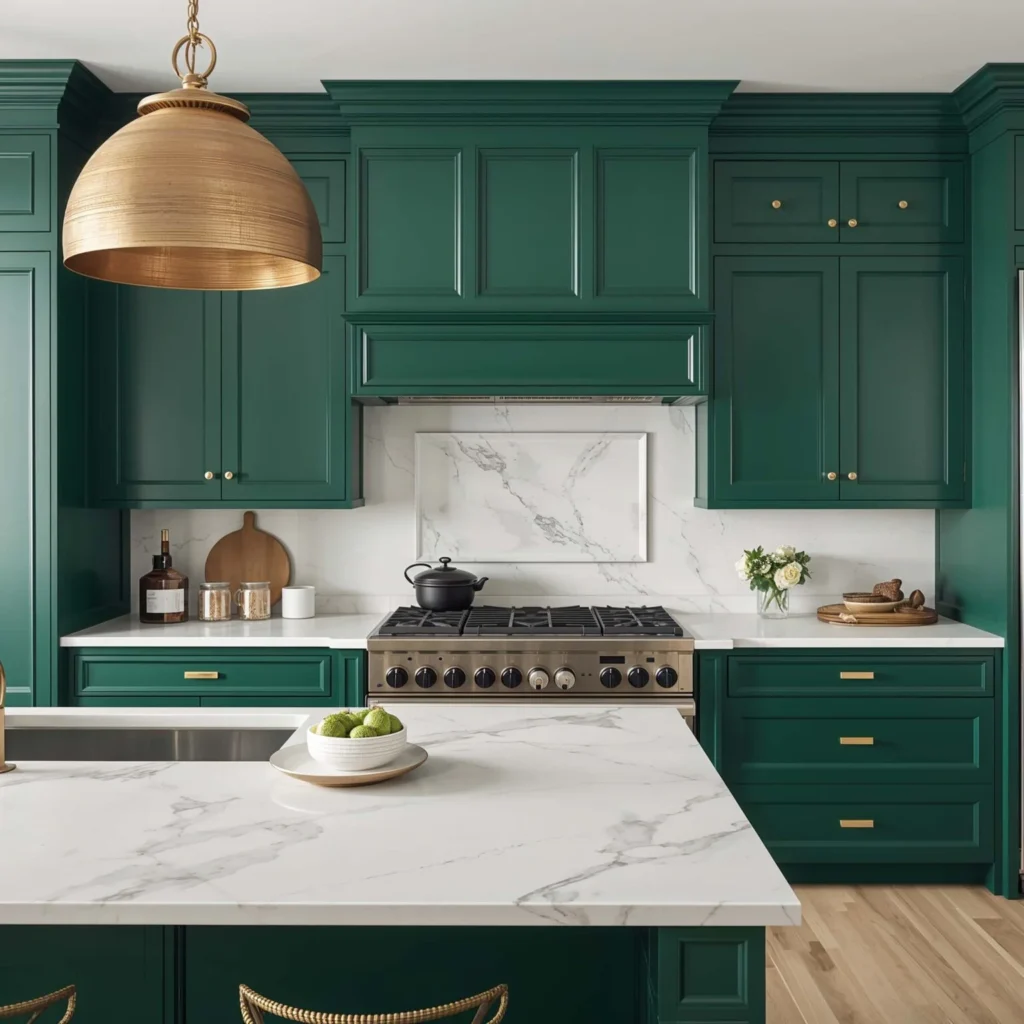
Not everyone wants green cabinets, and that’s completely fine. One of the most flexible approaches to the green-and-white kitchen is treating green as an accent: a color you layer into an all-white base through objects, textiles, and plants.
Mint green works particularly well for this approach. It’s lighter and more playful than sage or forest green, which makes it perfect for accents that don’t overwhelm. A few well-placed mint green accessories can make a white kitchen feel personal and styled without any permanent changes.
Easy Ways to Add Mint Green Accents:
- A set of mint green ceramic canisters on the counter
- Mint green bar stools at the island
- A green glass pendant light over the sink
- Dish towels and oven mitts in mint and white stripes
- A trailing plant in a mint-glazed ceramic pot
This approach is also ideal for renters or anyone who loves changing their space with the seasons. Swap out the accessories for a completely different feel whenever the mood strikes.
7. Hunter Green and White with Black Hardware
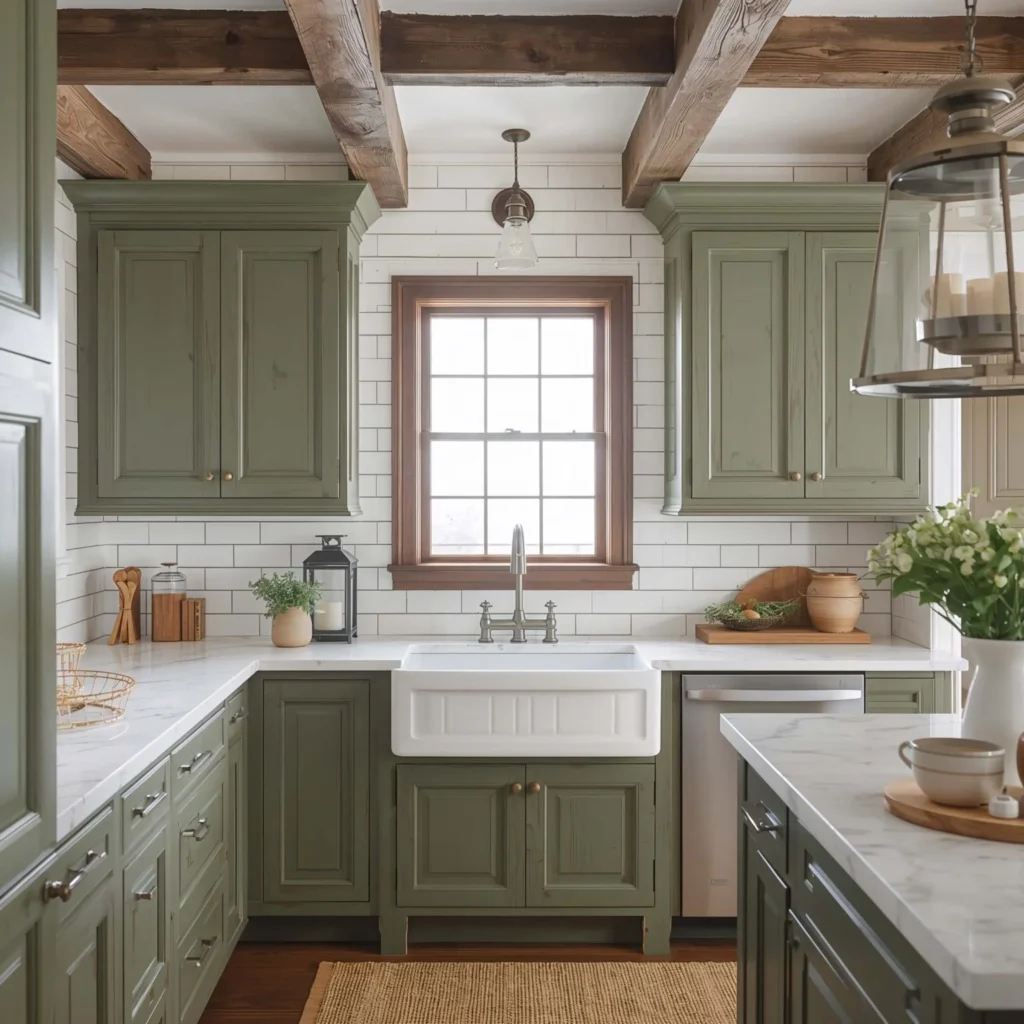
Hunter green is darker and more dramatic than sage but a bit warmer than forest green — which makes it one of the most versatile shades in the green-and-white palette. When you add matte black hardware to the mix, the whole look takes on a moody, sophisticated edge.
This three-color combination — hunter green, white, and black — is what designers call a ‘forever look.’ It doesn’t chase trends. It references traditional design in a way that still feels current and sharp.
Think deep green lower cabinets with white uppers, black pulls and knobs throughout, and maybe a black tap over a white farmhouse sink. It’s a combination that photographs beautifully and lives even better.
Making the Most of Black Hardware:
- Consistency is everything — use the same black hardware throughout
- Matte black is more forgiving than polished, as it hides fingerprints
- Match your tap and any appliance handles to the cabinet hardware
- A black-framed window or black-painted ceiling beams can extend the accent beautifully
8. Pale Green Kitchen with White Shiplap Walls
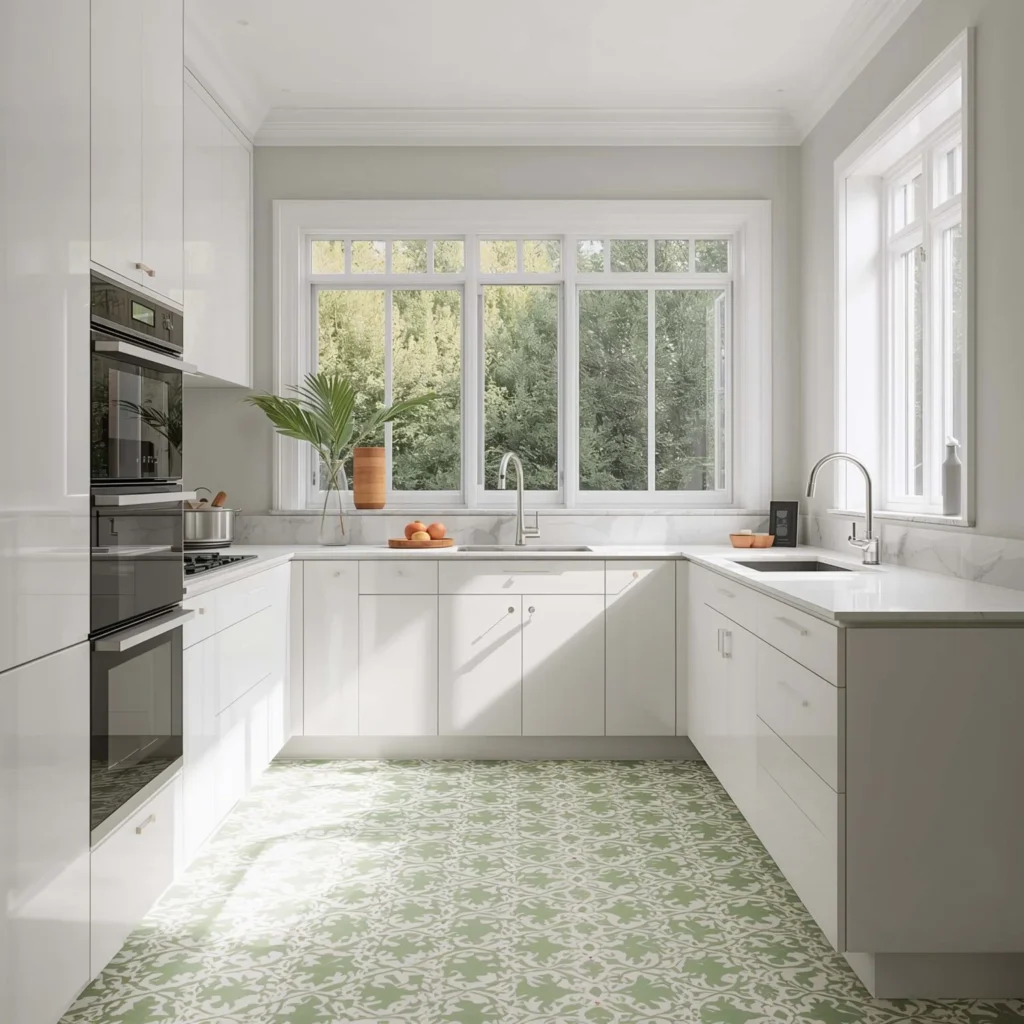
Shiplap walls have become synonymous with farmhouse kitchens, and for good reason — the horizontal planks add texture and character in a way that feels grounded and handsome. Paint those walls white and pair them with pale green cabinets, and you’ve got a kitchen with serious country-house charm.
The softness of pale green against white shiplap creates a layered, cottage-inspired feeling that’s incredibly welcoming. It’s the kind of kitchen that makes people want to sit down with a cup of tea and stay for hours.
This look works especially well with wood accents — a butcher block countertop, open wooden shelves, or a reclaimed wood breakfast bar all feel right at home alongside the pale green and white palette.
9. Green and White Kitchen with Terracotta Floor Tiles
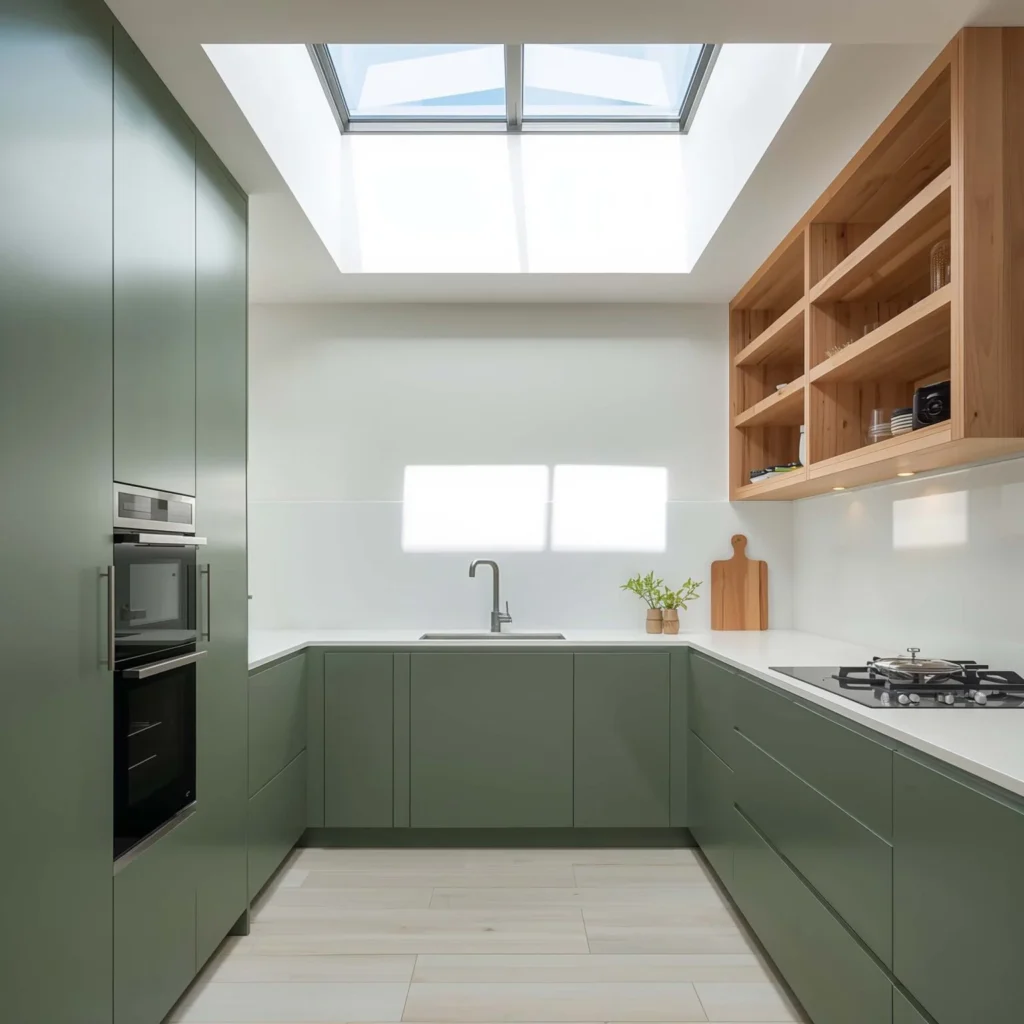
Here’s a combination that might not be the first thing you’d think of, but once you see it, you can’t unsee it: green and white cabinetry with terracotta floor tiles. The warmth of terracotta grounds a green-and-white kitchen beautifully, preventing it from feeling too cool or clinical.
The trick is to choose a green that has some warmth in it — sage, olive, or warm forest green rather than anything with too much blue in it. The terracotta will then feel like a natural extension of the palette, as though the whole kitchen grew out of the earth.
- Hexagonal terracotta tiles add geometric interest
- Larger format tiles look contemporary and are easier to keep clean
- Seal your terracotta well — unsealed tiles stain easily in a kitchen setting
- A natural fiber rug under the dining table ties the warmth together
10. Dark Green Cabinets with Unlacquered Brass
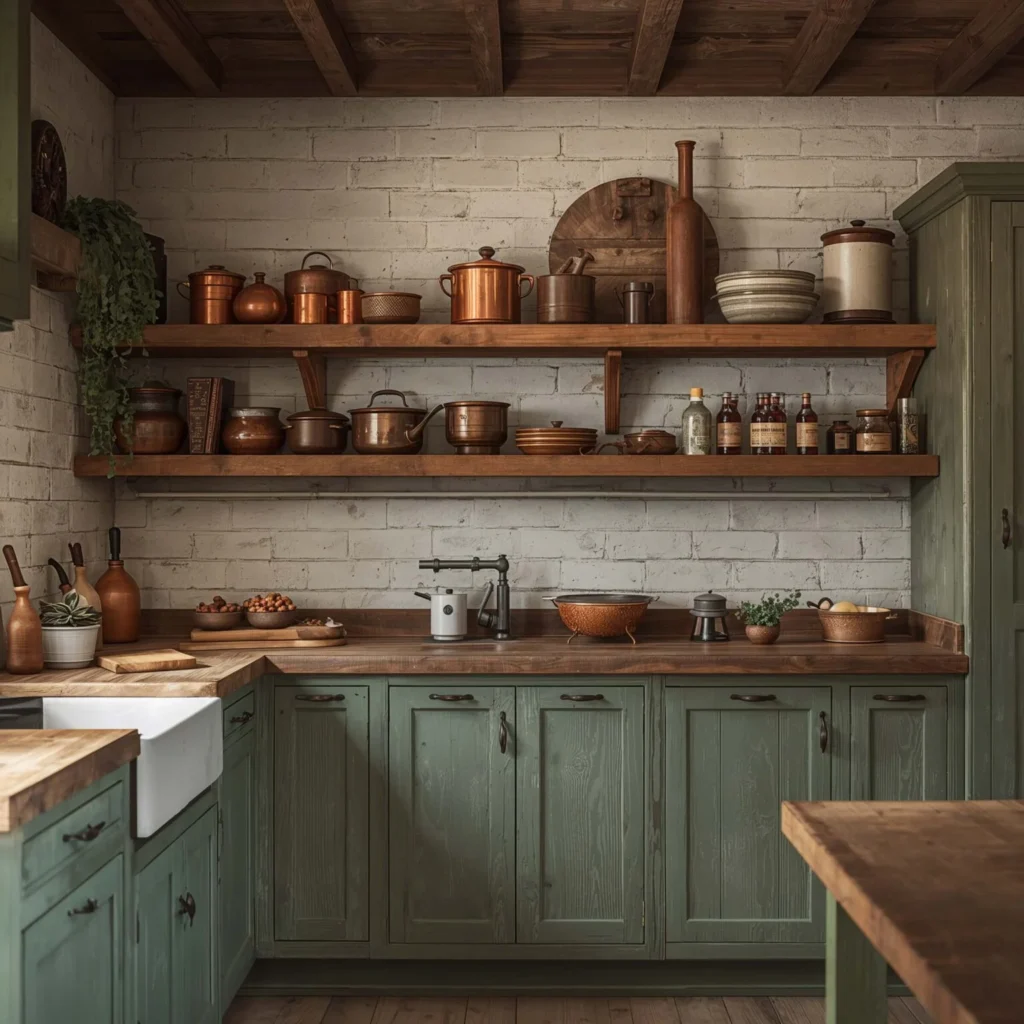
If you want a kitchen that ages beautifully over time, this is it. Dark green cabinets — whether in deep forest, racing green, or near-black bottle green — paired with unlacquered brass hardware creates a look that gets better the longer you live with it.
Unlacquered brass develops a patina over time. It loses that bright, shiny finish and takes on a more mellow, antique quality. Against dark green cabinetry, this patina looks intentional and soulful — less like a new renovation and more like a kitchen that has a history.
This is a particularly beautiful approach in period homes or in kitchens where you want to create a sense of warmth and permanence. It’s a look that says ‘this is a kitchen for living in.’
11. White Kitchen with Sage Green Painted Island
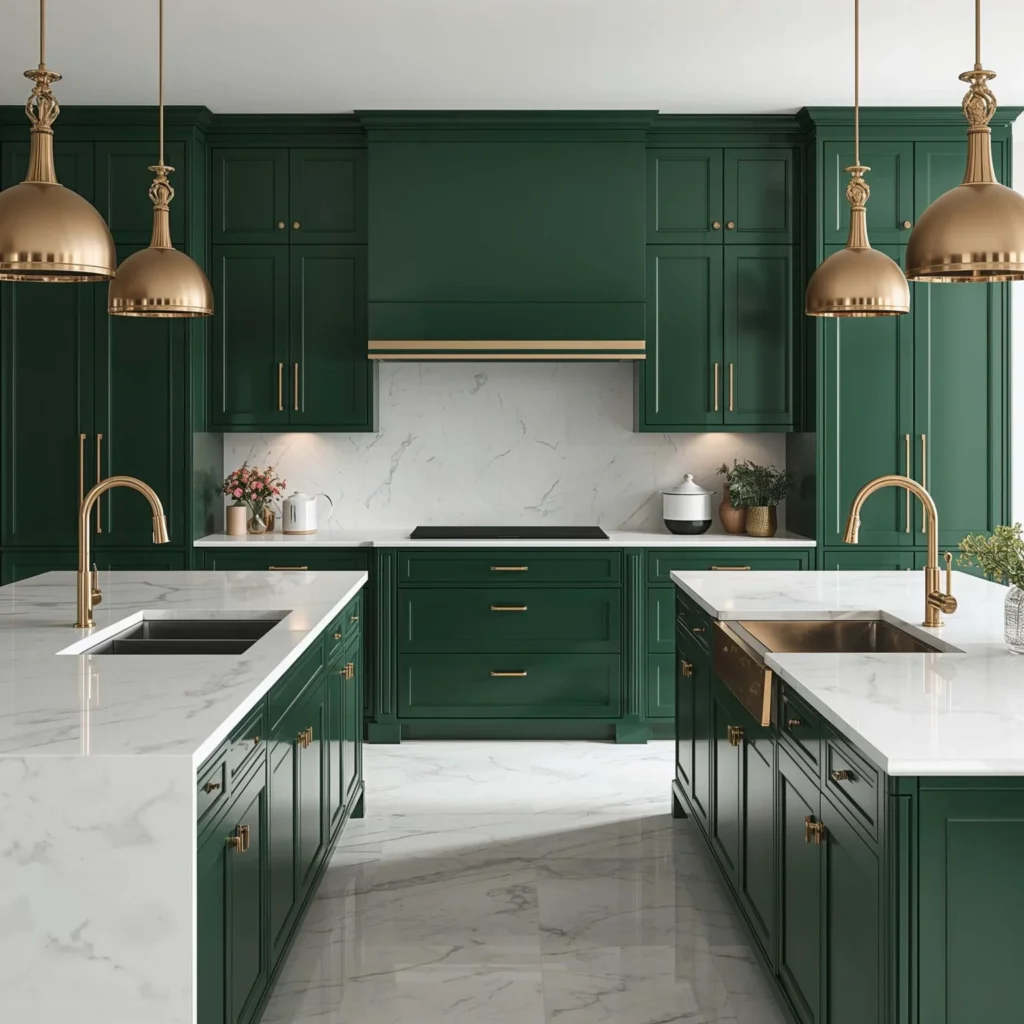
This is the middle-ground option for people who love the idea of a statement island but aren’t ready to commit to a very dark or very bold green. A sage green painted island in an otherwise white kitchen adds just enough color to feel intentional without being overwhelming.
What’s brilliant about this approach is how flexible it is. Sage green reads as a neutral to most eyes — it doesn’t clash with much, and it plays well with almost every countertop material, from white quartz to dark soapstone to warm wood.
Island Styling Tips:
- Add a waterfall edge countertop to the island to make it feel more substantial
- Consider painted shiplap detailing on the island sides for texture
- Install a pot rack overhead in wrought iron or aged brass
- Use rattan or leather upholstered bar stools to soften the look
12. Bright White Kitchen with Dark Green Window Frames
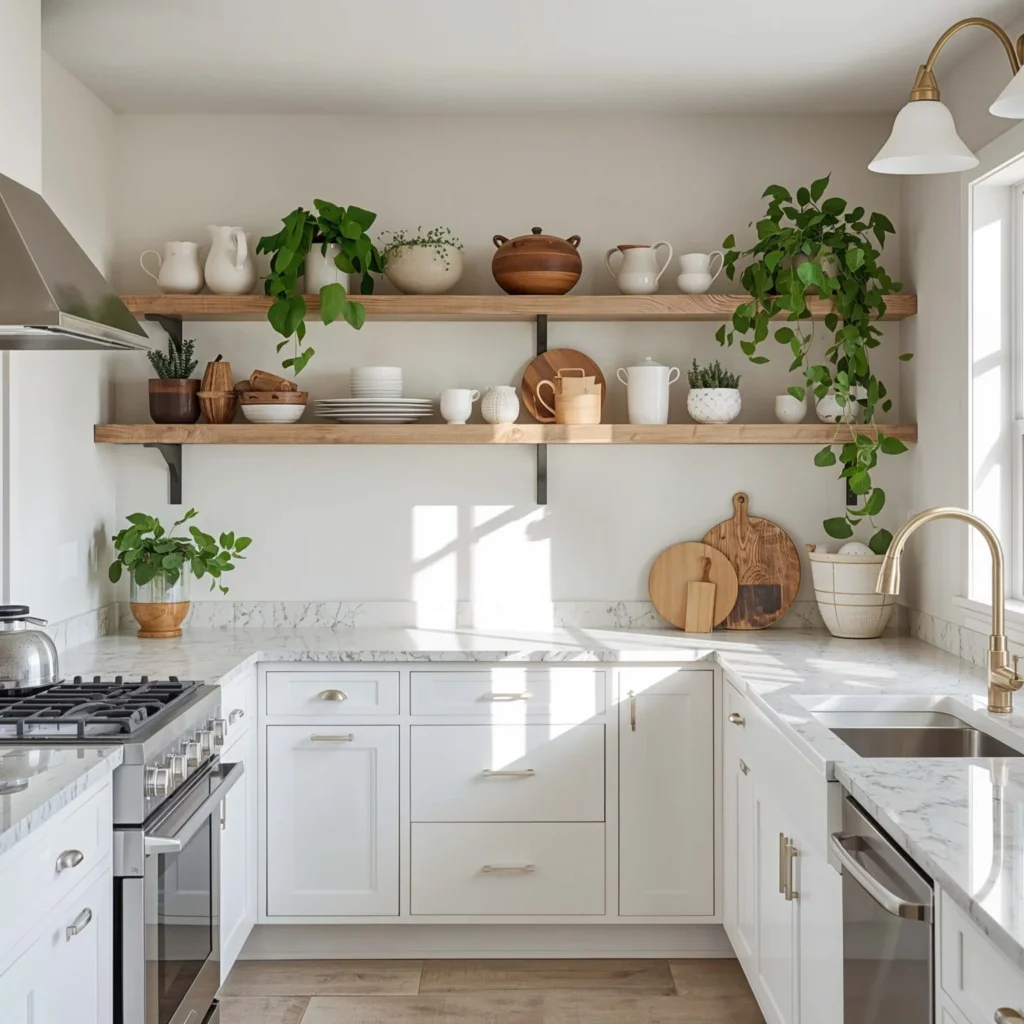
This idea often gets overlooked, but it’s one of the most elegant ways to bring green into a kitchen: paint your window frames in a deep, rich green while keeping everything else white.
Dark green window frames create a wonderful framing effect. They make the outdoor view feel more intentional — like a painting hanging in your kitchen — and they add architectural detail without touching a single cabinet.
This works best with steel or wood-framed windows, and the effect is especially beautiful in kitchens with large windows or garden views. The green frames feel like a bridge between the interior and the garden outside.
13. Green and White Kitchen with Rattan and Wood Accents
One of the reasons the green-and-white kitchen has stayed so popular is its adaptability to the broader trend toward natural, organic materials. Rattan, cane, raw wood, and linen all pair beautifully with green and white, and combining them creates a kitchen that feels deeply connected to the natural world.
Think white painted cabinets with rattan-inset door fronts, a sage green island, open shelves in oiled oak, and rattan pendant shades over the island. It’s layered and warm and completely at home in today’s design landscape.
- Rattan cabinet inserts on glass-fronted doors
- A cane-backed bar stool in natural tones
- Seagrass or sisal runner rug
- Driftwood or live-edge serving boards on display
- Woven baskets for pantry storage
14. Vintage Green and White Kitchen with Patterned Tiles
For a kitchen with real personality, look to vintage-inspired patterned tiles in green and white. Whether it’s a classic chequerboard floor, hand-painted Spanish tiles on the backsplash, or encaustic cement tiles in a geometric pattern, patterned tiles bring a story to a kitchen.
This approach works incredibly well in older homes where you want to honor the period of the building, but it also looks fantastic in otherwise very modern kitchens where the tile becomes the single dramatic element.
Keep the rest of the kitchen simple — plain white cabinets, minimal hardware, clean countertops — and let the tiles be the star. Trying to compete with a patterned tile floor or backsplash never ends well.
15. Soft Green Kitchen with White Ceiling Beams
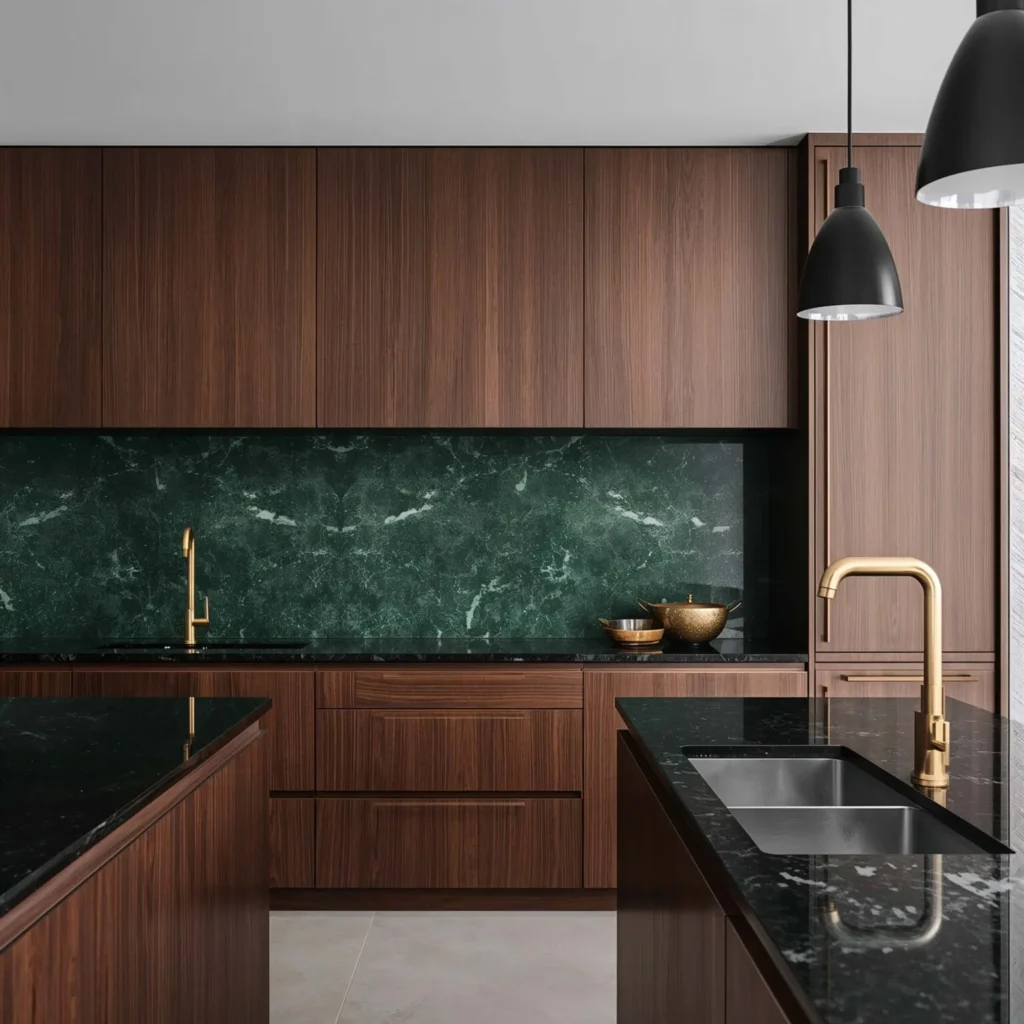
White ceiling beams add architectural drama to any kitchen, and they pair particularly well with soft green walls or cabinets. The contrast of dark green below and white above creates a sense of height and structure that’s really pleasing to the eye.
This is a look borrowed from traditional European farmhouse kitchens — the kind of space where the structure of the building becomes part of the decoration. It feels rooted and authentic in a way that’s hard to manufacture with accessories alone.
If you’re lucky enough to have original beams in your home, consider painting them a bright white while your cabinetry or walls take on a sage or olive green. If you’re adding beams as a decorative element, faux beams in MDF or polyurethane can look convincing and are much more affordable than real timber.
How to Choose the Right Shade of Green for Your Kitchen
Choosing the right green is everything — and it’s more complicated than it might seem. Green has a huge range: yellow-greens, blue-greens, grey-greens, warm earthy greens, and cool clinical greens. The undertone of your chosen green will affect how it interacts with your white cabinets, your countertops, your flooring, and your natural light.
The Main Green Families:
- Sage green — grey-green, muted, calm. Best for understated, Scandi, or country kitchens.
- Olive green — yellow-green, earthy, warm. Best for Mediterranean, rustic, or eclectic kitchens.
- Forest green — deep, dark, cool. Best for statement cabinets and islands in lighter kitchens.
- Emerald green — vivid, jewel-toned, luxurious. Best for high-end kitchens with marble or brass.
- Mint green — light, fresh, slightly retro. Best for accents and accessories.
- Hunter green — rich, traditional, versatile. Best for Shaker-style and classic kitchens.
Always test paint colours in your actual kitchen before committing. Buy sample pots and paint large swatches — at least A3 size — then observe them at different times of day. The kitchen’s natural light, the direction it faces, and the artificial lighting you use in the evening will all change how the green reads.
Frequently Asked Questions About Green and White Kitchens
Are green kitchens a trend or a timeless choice? Green kitchens have been around for decades — you’ll find sage green kitchens in 1970s homes and deep green kitchens in Victorian-era townhouses. The current wave of enthusiasm is strong, but green kitchens have genuine staying power. The key is choosing a shade that feels right for your home rather than one that’s simply popular at this moment.
Does green go with white countertops? Almost every shade of green pairs beautifully with white countertops. White quartz, marble, and laminate countertops all work well. The choice comes down to detail — a very vivid green like emerald looks best with a clean, bright white, while sage or olive are more forgiving and work with off-white or cream countertops too.
What hardware colour is best for green kitchens? Brass and gold hardware is the most popular choice because it adds warmth that complements the natural quality of green. Matte black is a close second and creates a sharper, more modern look. Brushed nickel or chrome can feel a little cold against green, though they work well with lighter, cooler greens like mint or sage.
Can I have a green kitchen in a small space? Absolutely. In fact, the green-and-white combination is one of the best choices for small kitchens because the white maintains brightness and the green adds personality without adding visual weight. Lighter greens — sage, mint, pale olive — are easier to work with in tight spaces than very dark or saturated greens.
What flooring works best in a green and white kitchen? Warm wood floors are the most popular choice because they add natural warmth that balances the coolness of white and the freshness of green. Terracotta tiles, white marble or stone floors, and classic black-and-white checkerboard tiles also all work beautifully.
Final Thoughts: Finding Your Perfect Green and White Kitchen
Green and white is one of those rare combinations in interior design that manages to be both exciting and easy to live with. It’s a palette that works across styles, scales with your budget, and — critically — doesn’t punish you for changing your mind over time.
Whether you go all-in with deep emerald cabinets and marble countertops, or simply add a few sage green stools to your existing white kitchen, you’ll be working with a colour story that has genuine depth and history behind it. This isn’t a trend that arrived last year and will be gone the next.
Start with one element — a backsplash, an island, a set of shelves — and see how it feels. The wonderful thing about green is that once you invite it into your kitchen, you almost always want more of it. It’s that kind of colour.
We hope this guide has given you plenty of ideas to work with. Whether you’re mid-renovation or just daydreaming, a green and white kitchen is always worth dreaming about.
1 thought on “15 Stunning Green and White Kitchen Ideas for Fresh Style”