
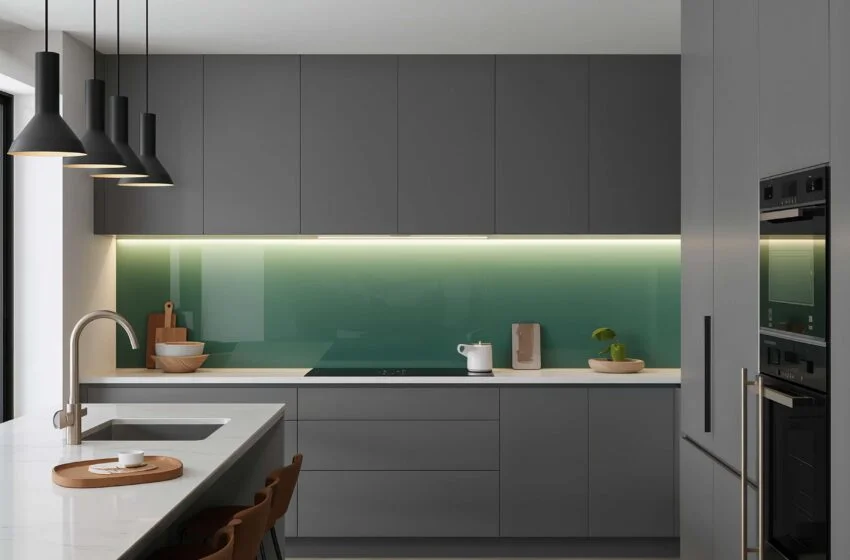
There’s something about walking into a kitchen with a green backsplash that just stops you in your tracks. It doesn’t matter whether it’s a deep forest green or a soft, whispery sage — green has a way of making a kitchen feel alive, grounded, and effortlessly stylish all at the same time.
If you’ve been scrolling Pinterest at midnight wondering whether a green backsplash would actually work in your kitchen — yes, it absolutely would. Green is one of those rare colors that plays well with almost every cabinet shade, countertop material, and flooring choice you can imagine.
In this guide, we’re walking you through 20 stunning green backsplash kitchen ideas — from budget-friendly options to full luxury renovations. Whether you want subtle and serene or bold and dramatic, you’ll find the perfect inspiration right here.
1. Classic Sage Green Subway Tiles
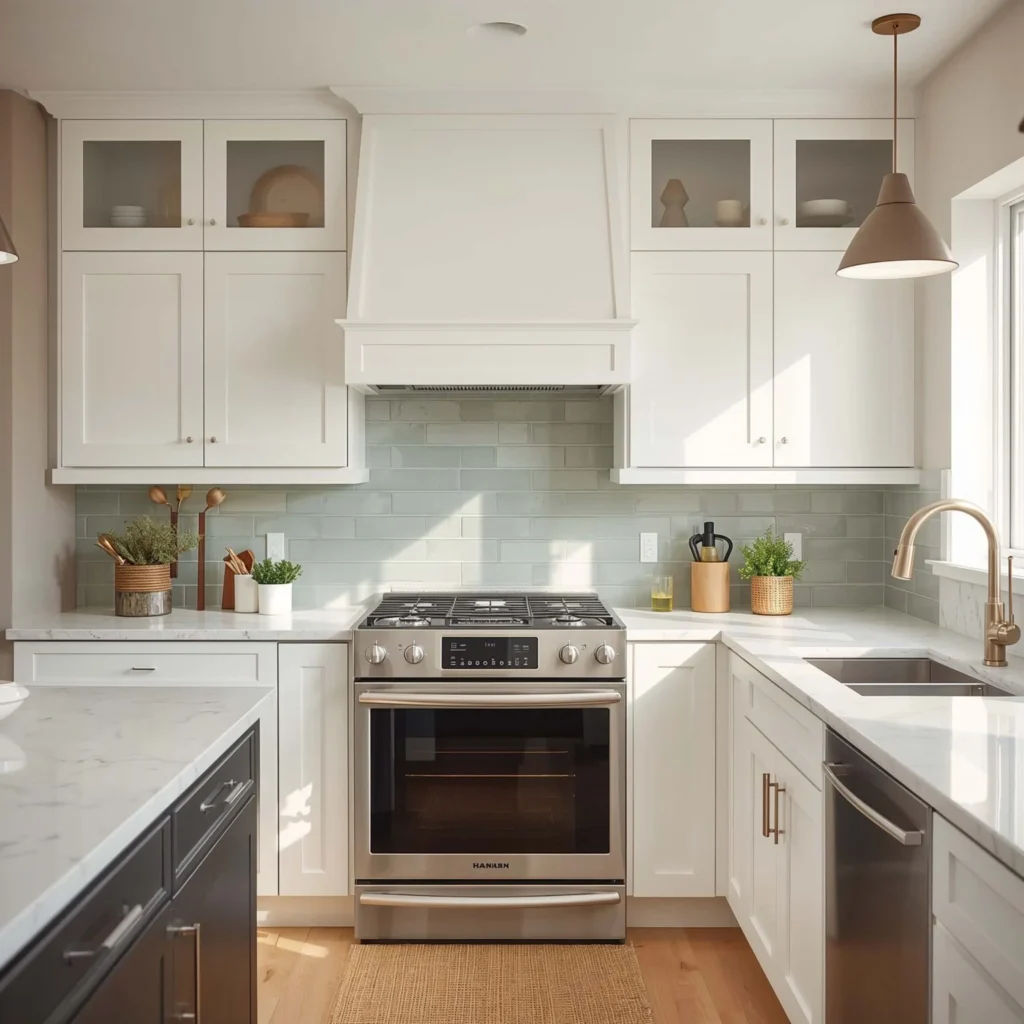
Sage green subway tiles are probably the most popular green backsplash choice right now — and for good reason. This soft, muted shade works with virtually any kitchen color scheme. Pair it with white cabinets for a clean Scandinavian feel, or with warm wood lower cabinets for something a little more rustic and grounded.
The classic brick pattern keeps things timeless, but don’t be afraid to try a vertical stack or a herringbone layout if you want to add a little more personality. White grout gives a crisp, defined look, while a tone-on-tone sage grout creates a seamless, almost painterly effect.
2. Emerald Green Glossy Tiles for Maximum Drama
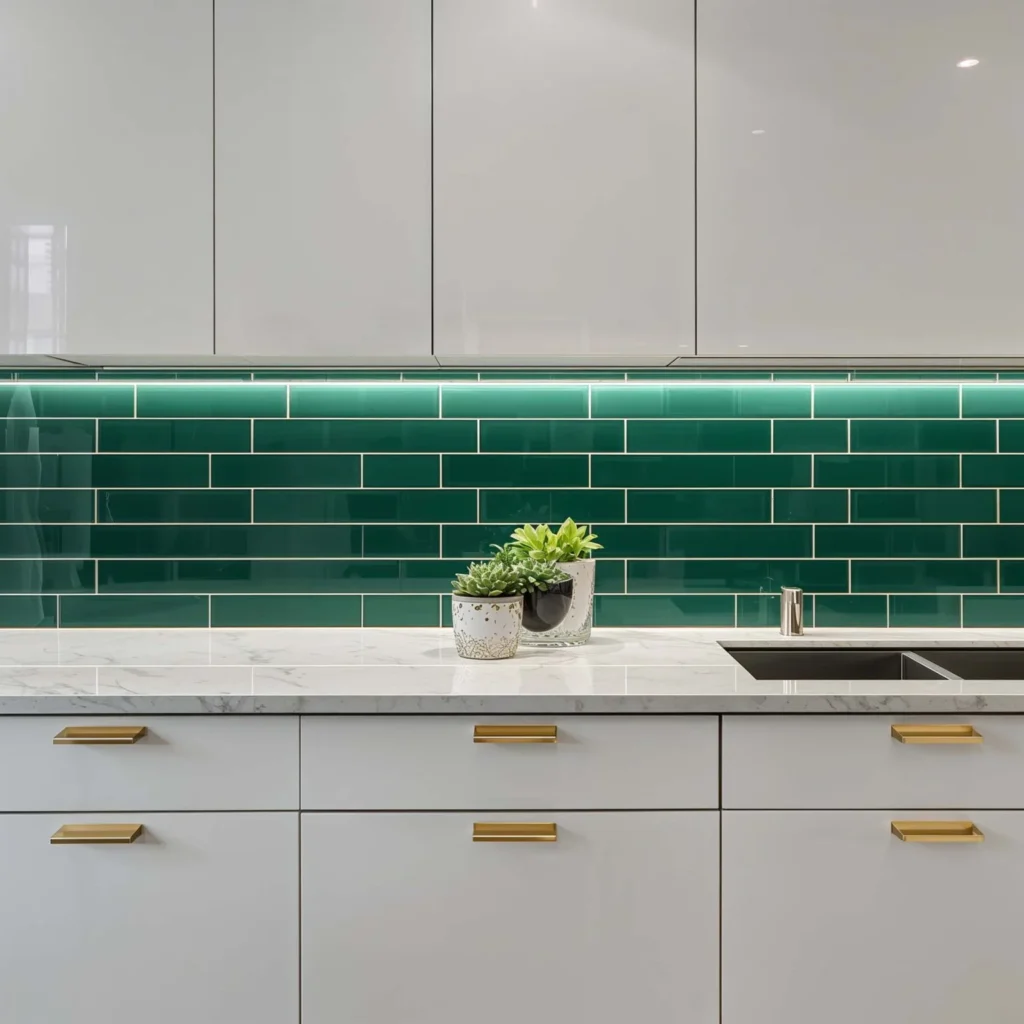
If sage is the understated elder sibling, emerald green is the one who shows up to the party in sequins. High-gloss emerald tiles catch light beautifully and create a jewel-box effect that feels genuinely luxurious. They work especially well in kitchens that already have brass or gold hardware, since the warm metal tones play off the rich green magnificently.
Fair warning: glossy tiles show fingerprints and water spots more readily than matte finishes. Keep a microfiber cloth nearby, and you’ll have no trouble keeping them looking sharp.
3. Olive Green Mosaic Tile Backsplash
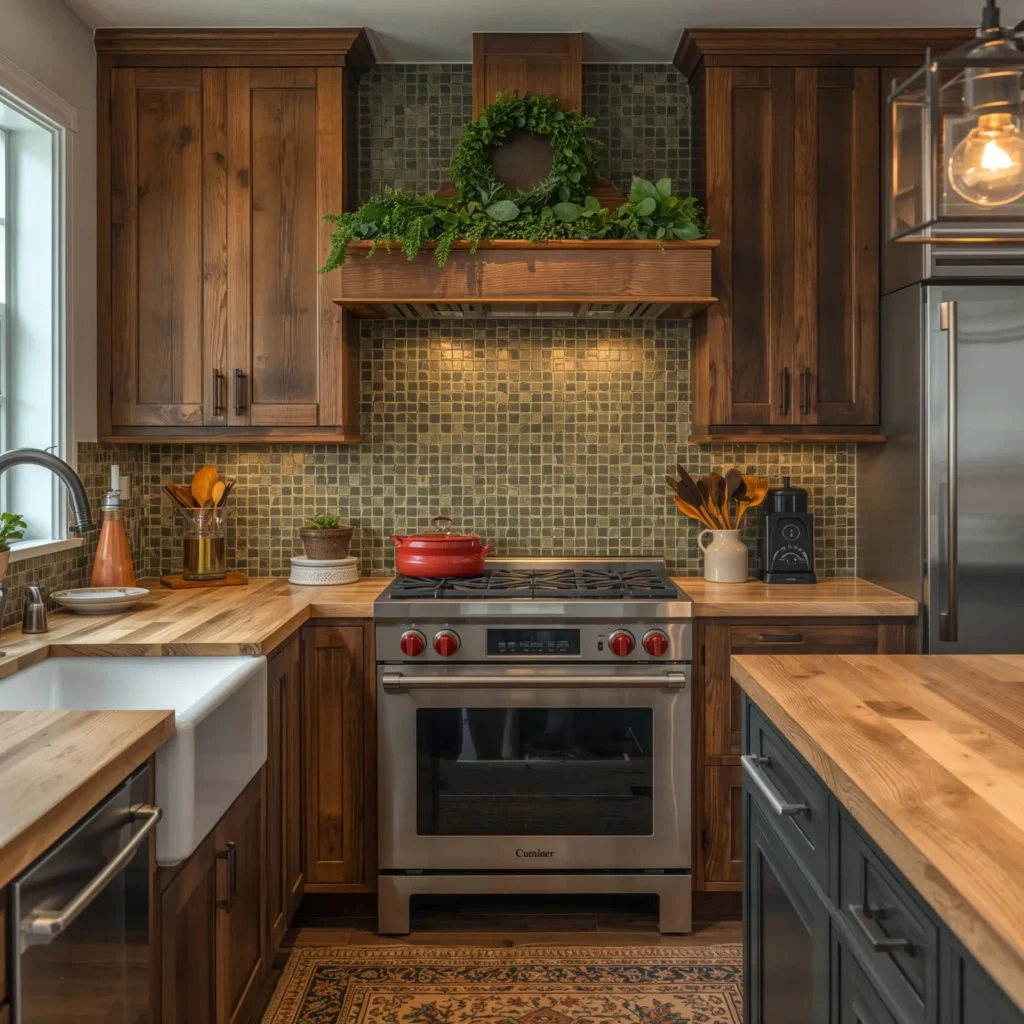
Olive green is criminally underrated in kitchen design. This warm, earthy shade has strong Tuscan energy and pairs beautifully with terracotta tiles, copper pots, and fresh herbs sitting on a windowsill. Mosaic tiles in olive green add texture and depth — try penny rounds or hexagons for something unexpected. Mix in a few tiles with golden accents for a truly special result.
4. Forest Green Brick-Style Tiles
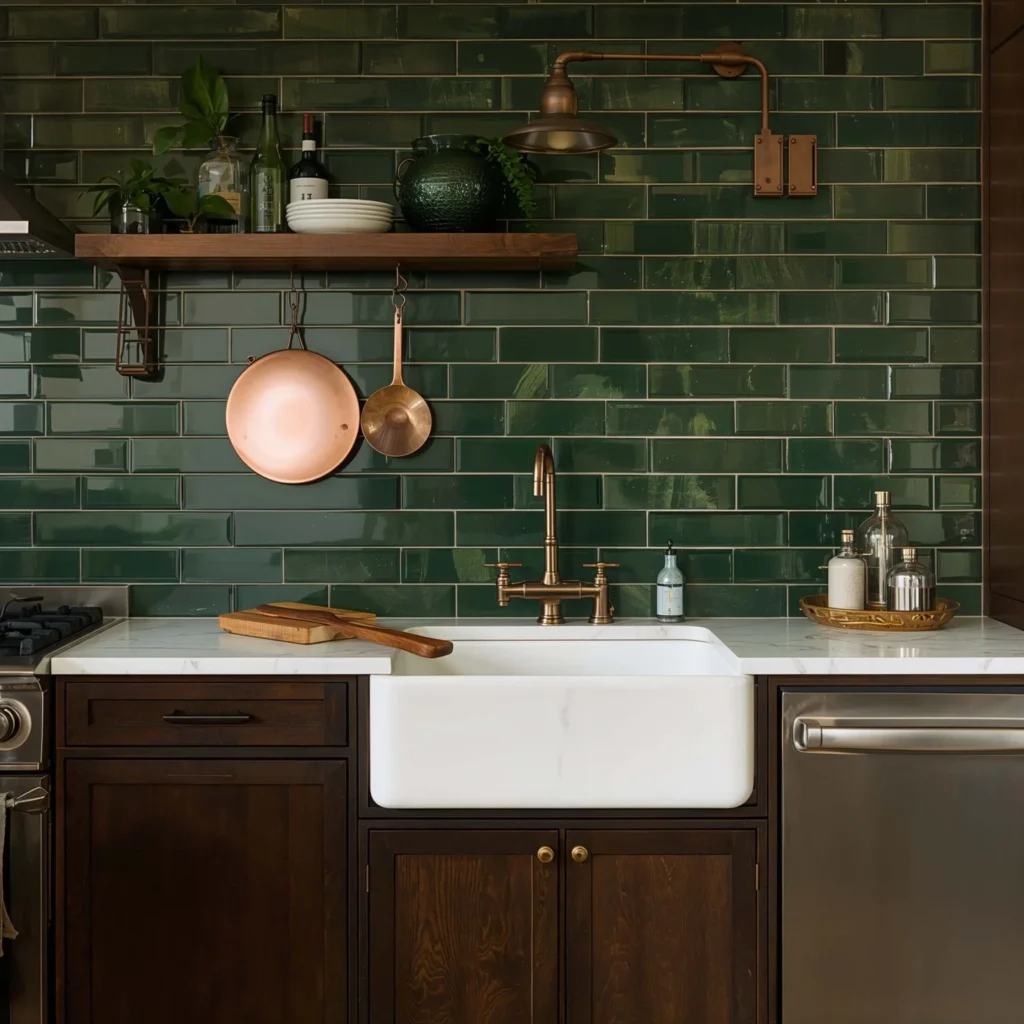
Deep forest green tiles laid in a traditional brick pattern bring a moody, sophisticated energy to a kitchen. This is the choice for someone who wants their kitchen to feel cocooning and dramatic rather than light and airy. It works best in kitchens with good natural light — the depth of color is something to celebrate, not fear. Balance it with open shelving and light-toned countertops to keep the space from feeling too heavy.
5. Sage Green Herringbone Pattern
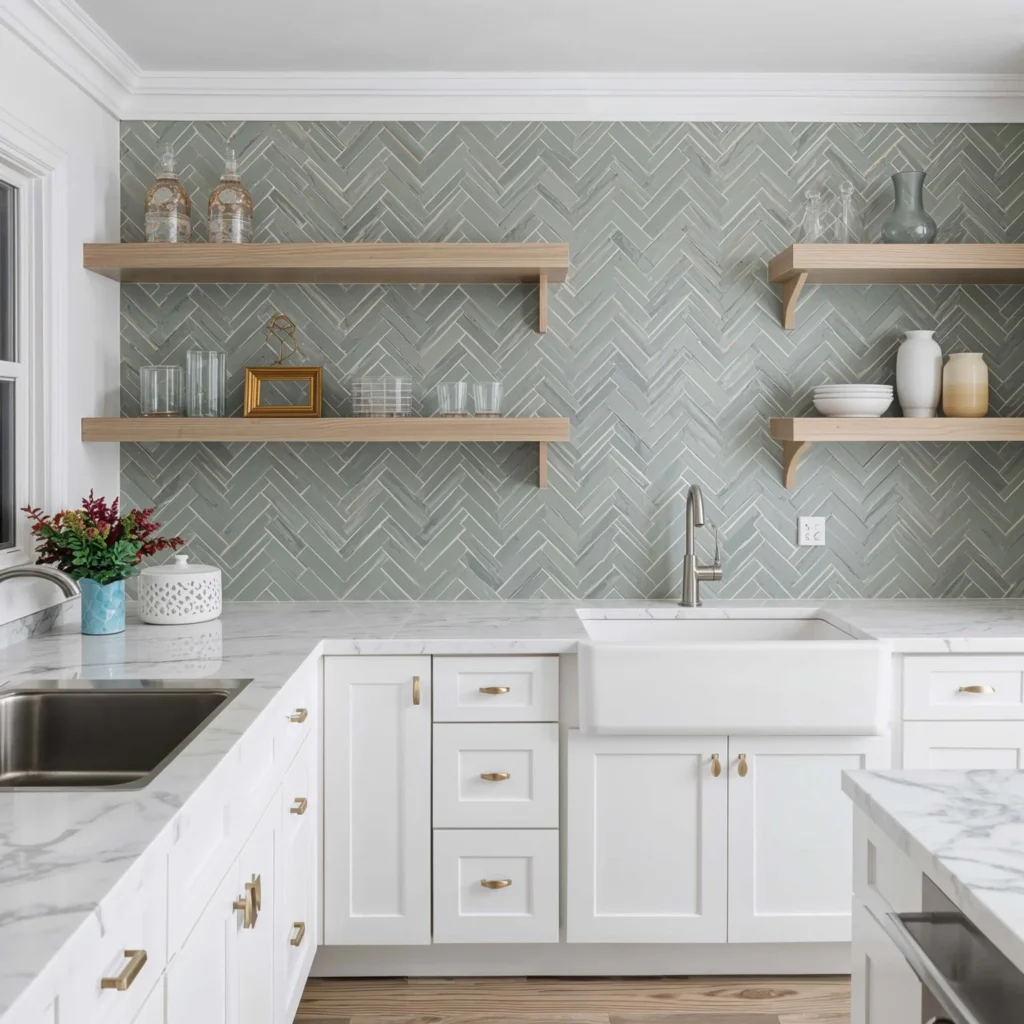
Take the timeless appeal of sage green and combine it with the elegant herringbone layout, and you’ve got a backsplash that looks genuinely custom. The angled pattern adds architectural interest and visual texture without overwhelming the space. It’s a bit more work to install than a straight layout — but the result consistently earns compliments. Larger tiles create a bolder, more modern feel; smaller tiles lean traditional.
6. Green Zellige Tiles for Artisan Character
Zellige tiles — handmade Moroccan clay tiles with a naturally uneven glaze — are having a real moment in kitchen design. In green, they create a backsplash that looks handcrafted and one-of-a-kind because, well, it genuinely is. Each tile catches light slightly differently, giving the surface a gentle shimmer and a richness that factory-made tiles just can’t replicate. They’re a splurge, but the visual payoff is extraordinary.
7. Mint Green Chevron Pattern
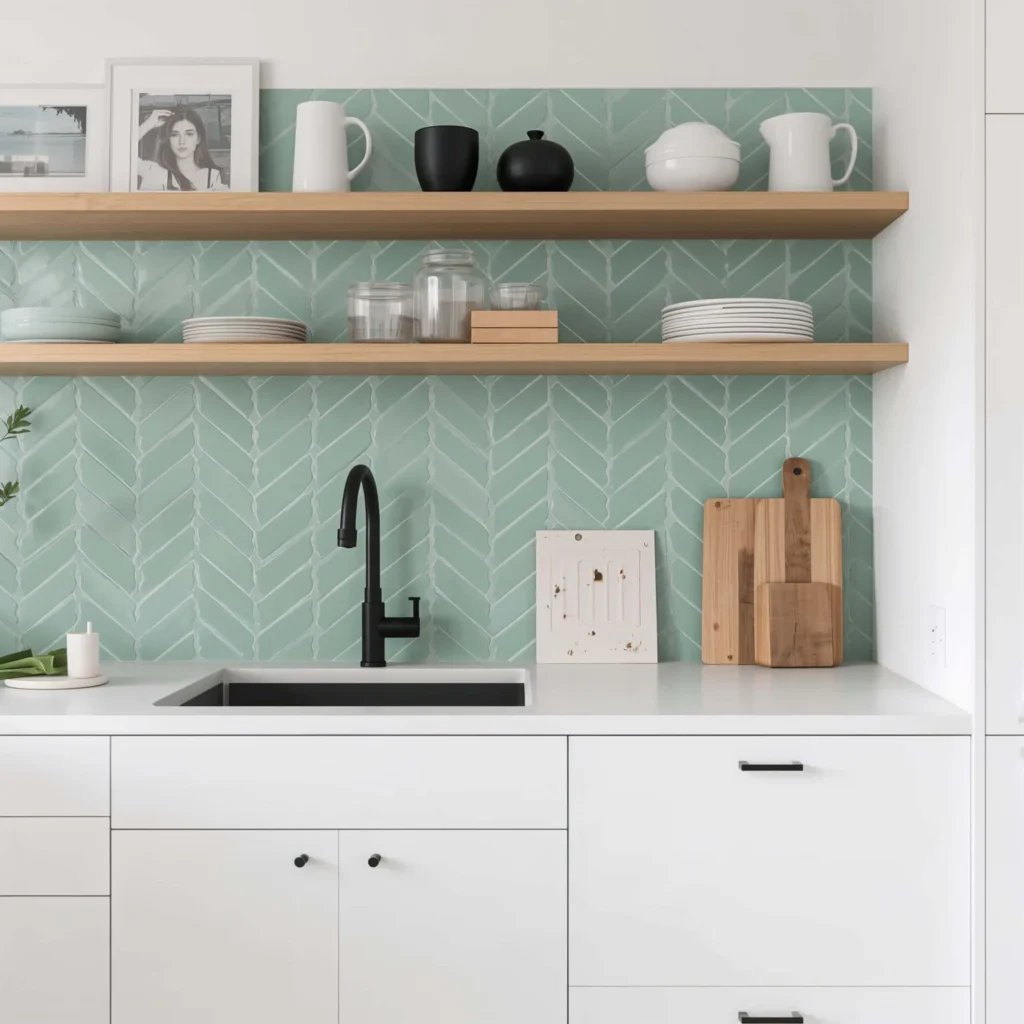
Mint green is lighter and more playful than sage — it brings a fresh, almost retro energy that works beautifully in vintage-inspired kitchens. Laid in a chevron pattern, those zigzag lines create movement and dynamism that make the backsplash a true focal point. Pair with white upper cabinets and navy lower cabinets for a look that’s bold without feeling chaotic.
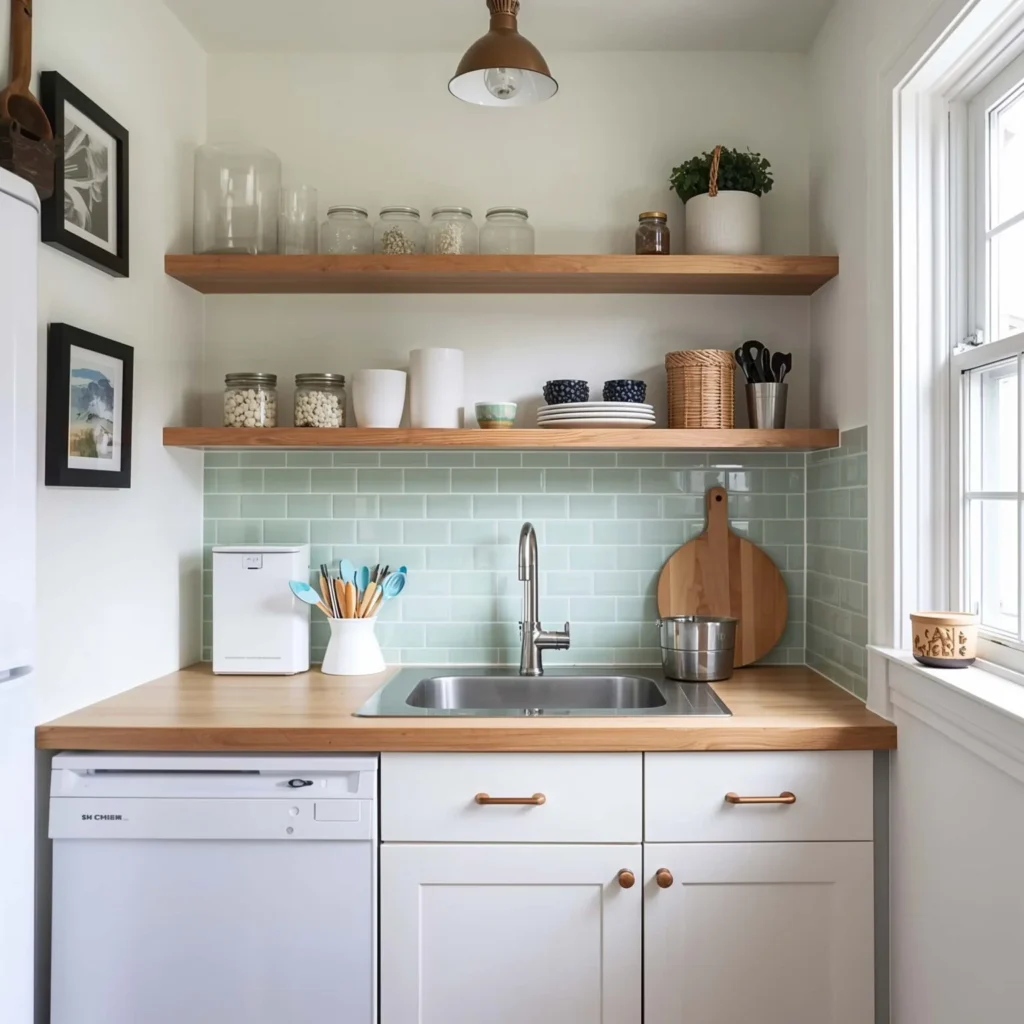
8. Green Glass Tiles with White Cabinets
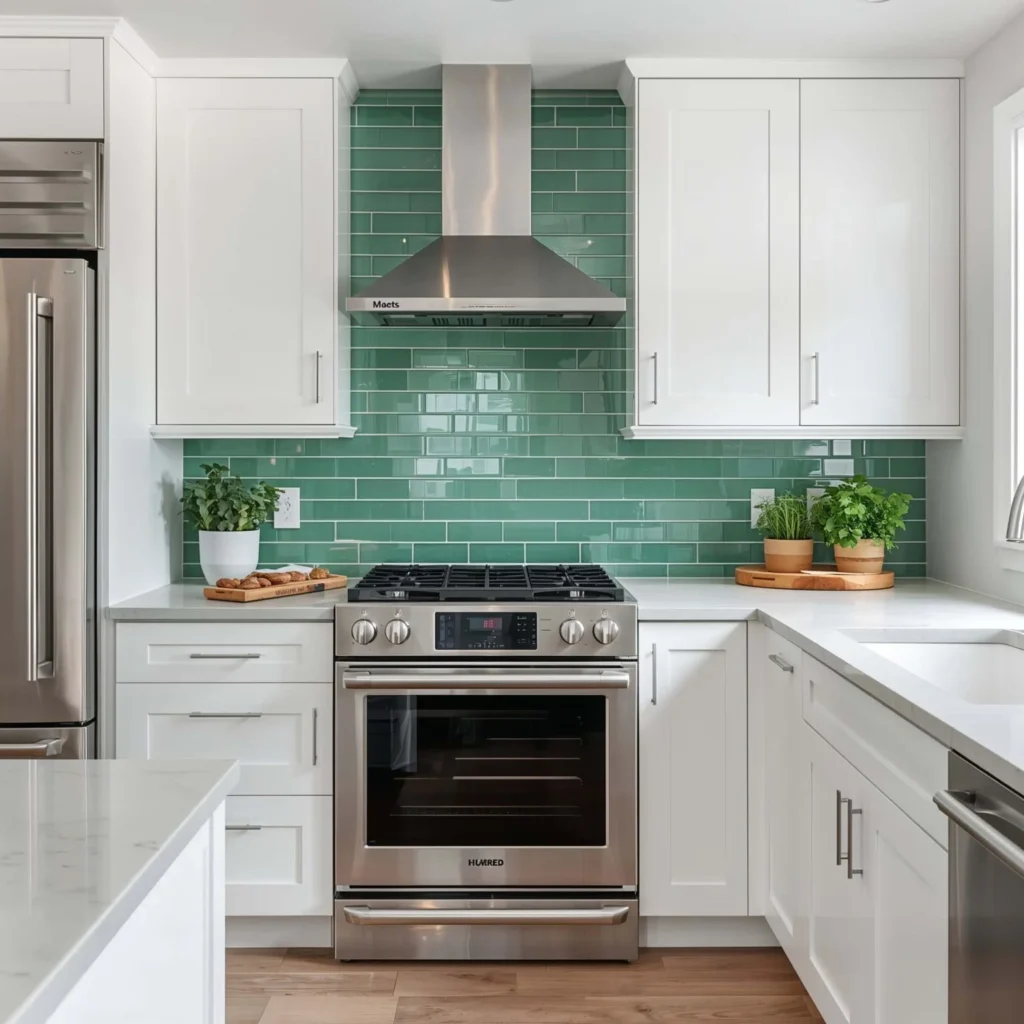
Glass tiles have a quality that ceramic and porcelain simply can’t match: true translucency. Light passes through them and bounces back in a way that makes them feel almost three-dimensional. In green, glass tiles shimmer and shift throughout the day — they look completely different under morning sunlight than they do under warm evening kitchen lighting. Pair them with white cabinets to keep things fresh and bright, and always use white thinset adhesive so the color stays true.
9. Dark Green Marble Backsplash
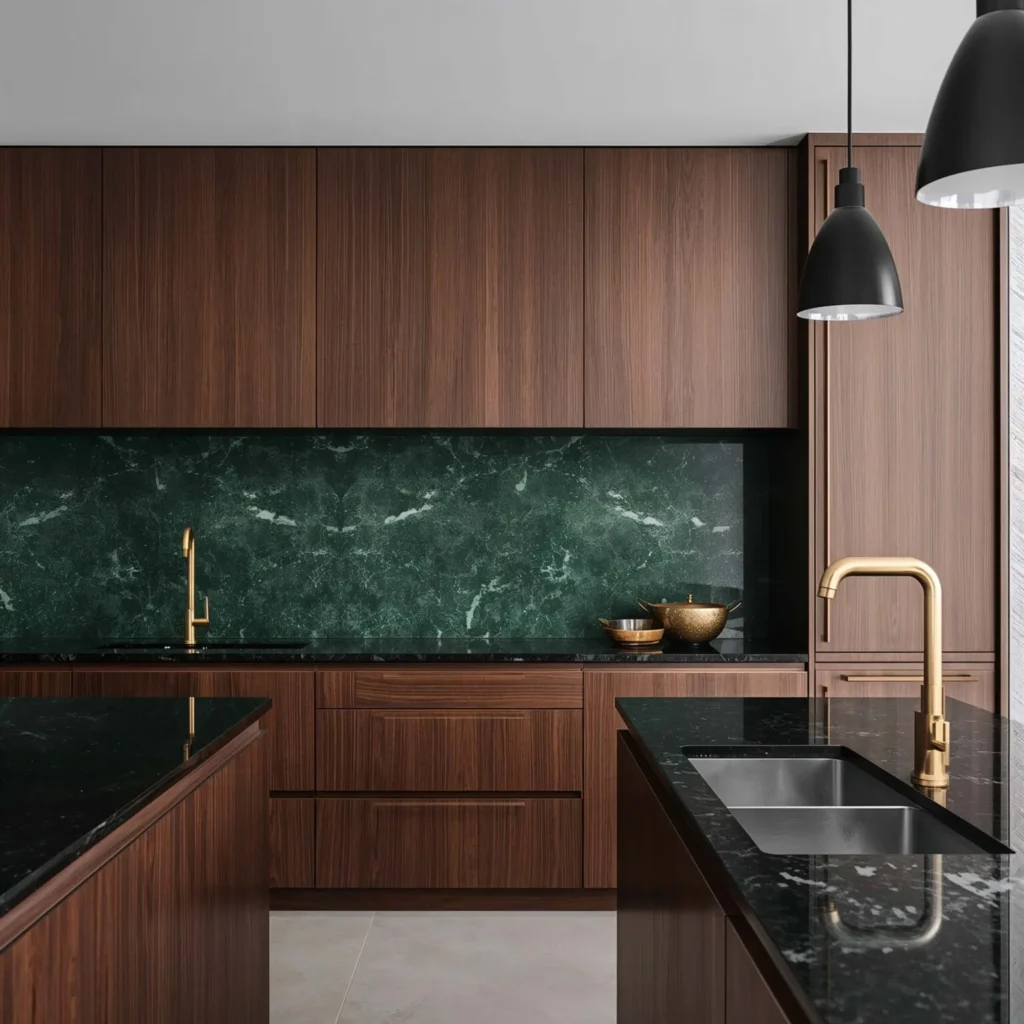
If budget allows, dark green marble — especially Verde Guatemala or Empress Green — is simply breathtaking as a kitchen backsplash. The dramatic veining means no two slabs look identical, and that natural variation gives your kitchen a richness and depth that no other material can reproduce. Use it as a statement behind the stove, and complement it with simpler tiles elsewhere to manage cost while still achieving the high-end effect.
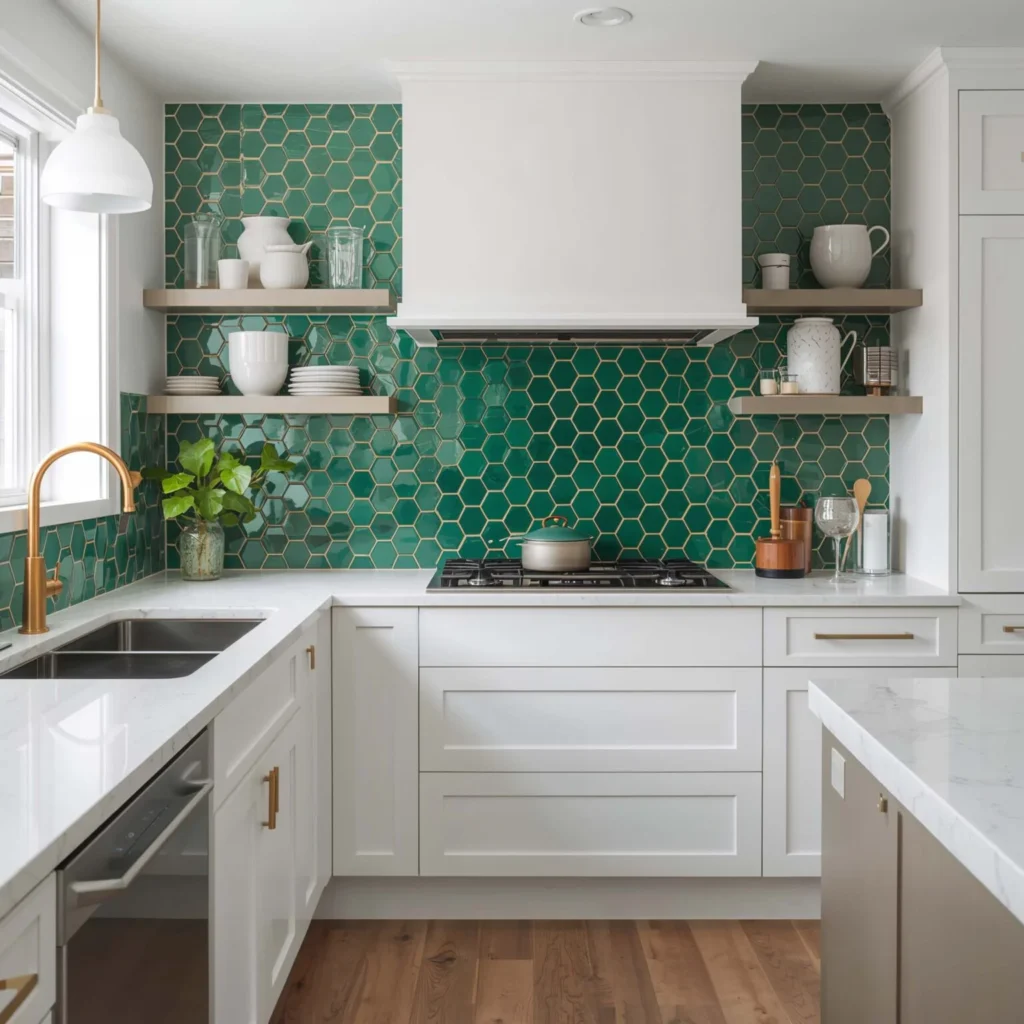
10. Emerald Green Hexagon Tiles
Hexagon tiles bring a geometric modernity that rectangular tiles just can’t match. The six-sided shape creates a natural honeycomb pattern that reads as both structured and organic at the same time. In emerald green, large-format hex tiles make a genuinely bold statement. You can also mix emerald and white hexagons for a softer take — a scattered pattern or a defined geometric design both work beautifully.
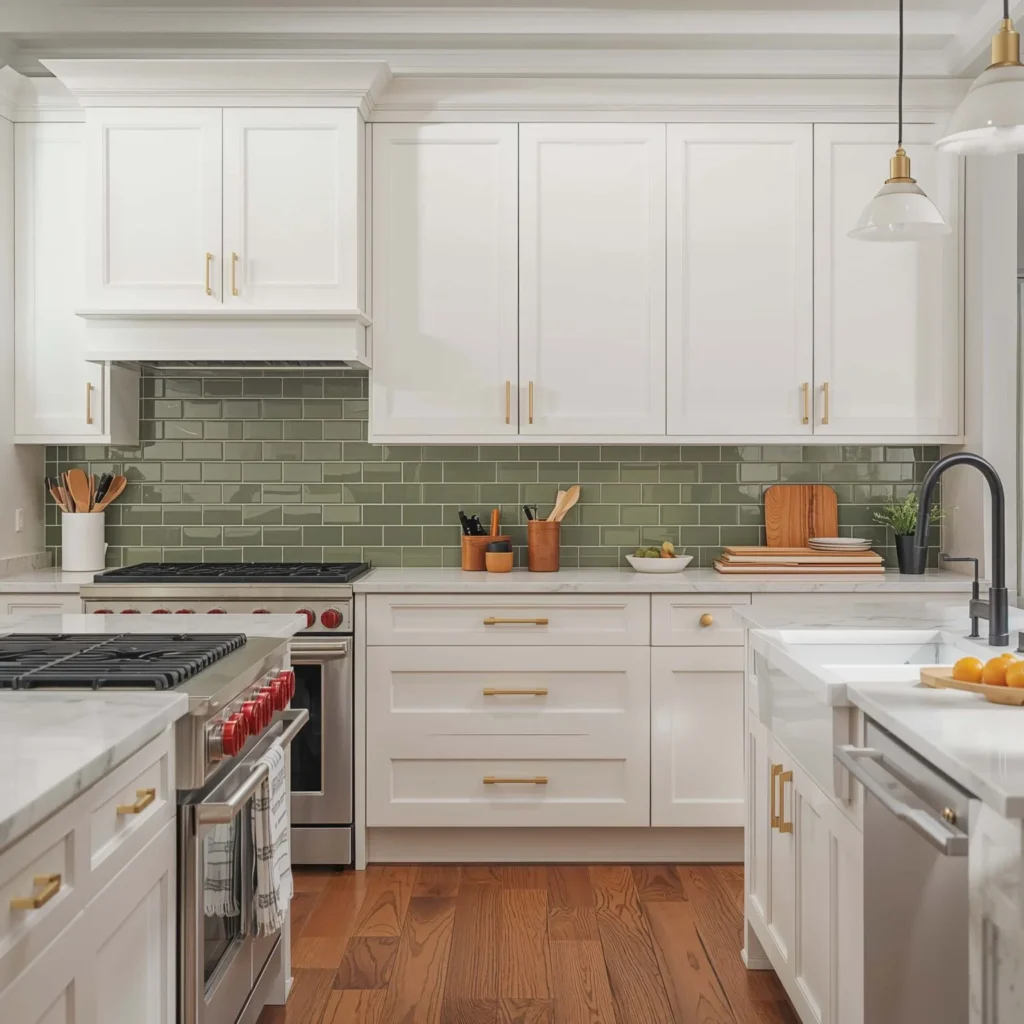
11. Olive Green Subway Tiles with Brass Hardware
Olive green and brass is a combination that feels earthy and luxurious in equal measure. The warm, brown-tinged undertones in olive connect naturally with the golden warmth of brass fixtures, pulls, and faucets. This pairing works brilliantly in kitchens going for that warm, lived-in, slightly European feel. Let the brass age naturally and develop its patina — it only gets better with time.
12. Sage Green Penny Tiles
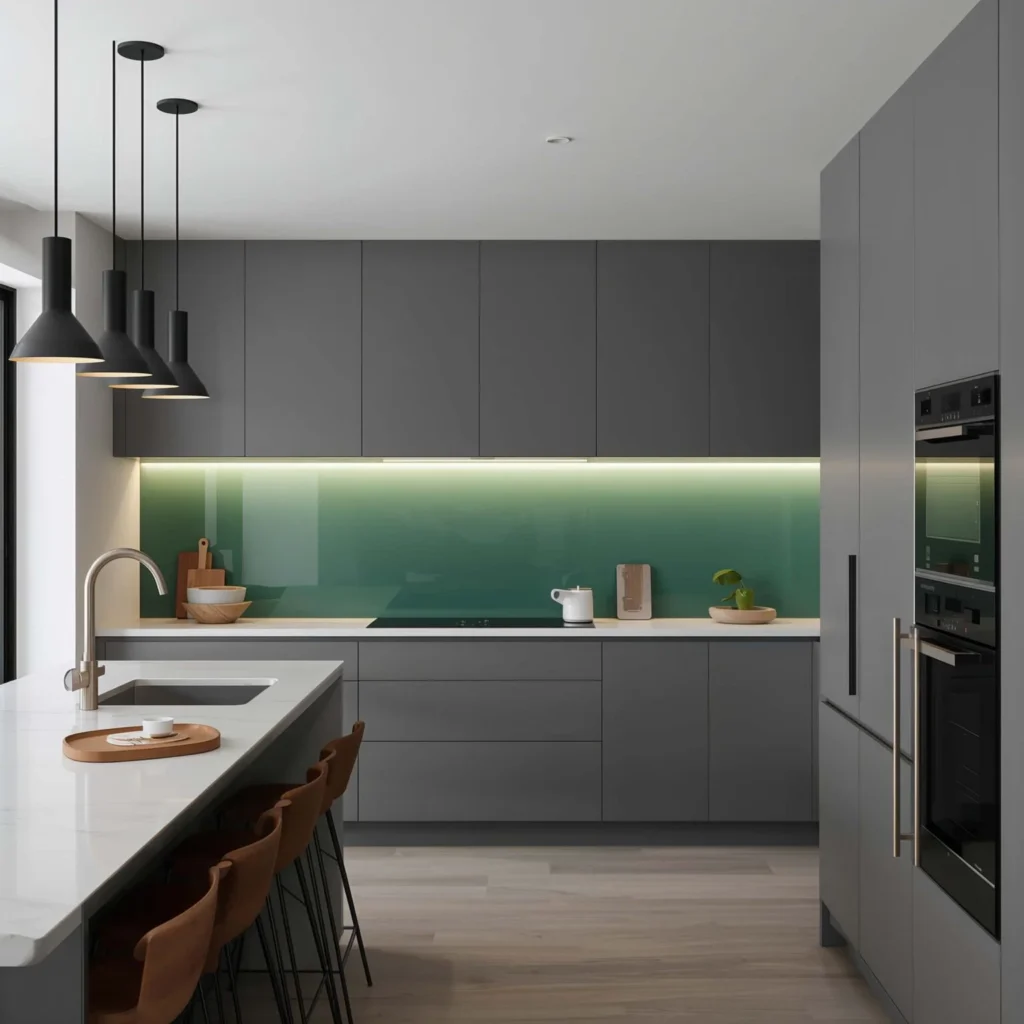
Penny tiles — those small, round circles mounted on mesh sheets — create a backsplash that has a vintage, slightly nostalgic quality. In sage green, they’re charming without being kitsch. The circular shape and the visible grout lines give the surface a wonderful texture that flat rectangular tiles can’t achieve. These work particularly well in homes with period features or in kitchens going for a 1920s–1950s aesthetic.
13. Two-Tone Green Gradient Backsplash
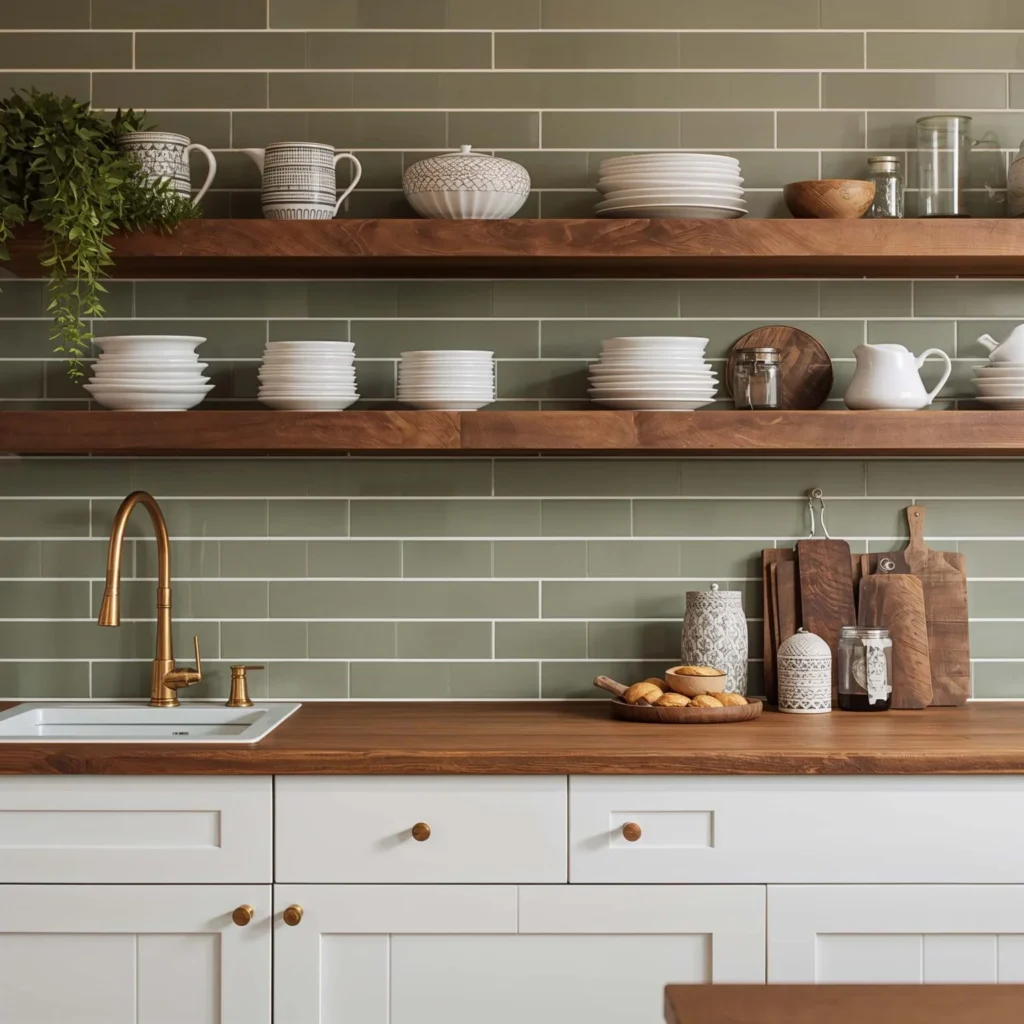
For the truly adventurous, a gradient backsplash using two or more shades of green creates an ombré effect that’s genuinely jaw-dropping. Start with pale sage at the top and transition down to deep forest green at the counter level, or reverse it. You’ll need tiles in three to five different shades for a smooth transition, and careful planning before installation is essential. The result? A backsplash that nobody else will have.
14. Green Moroccan-Inspired Pattern Tiles
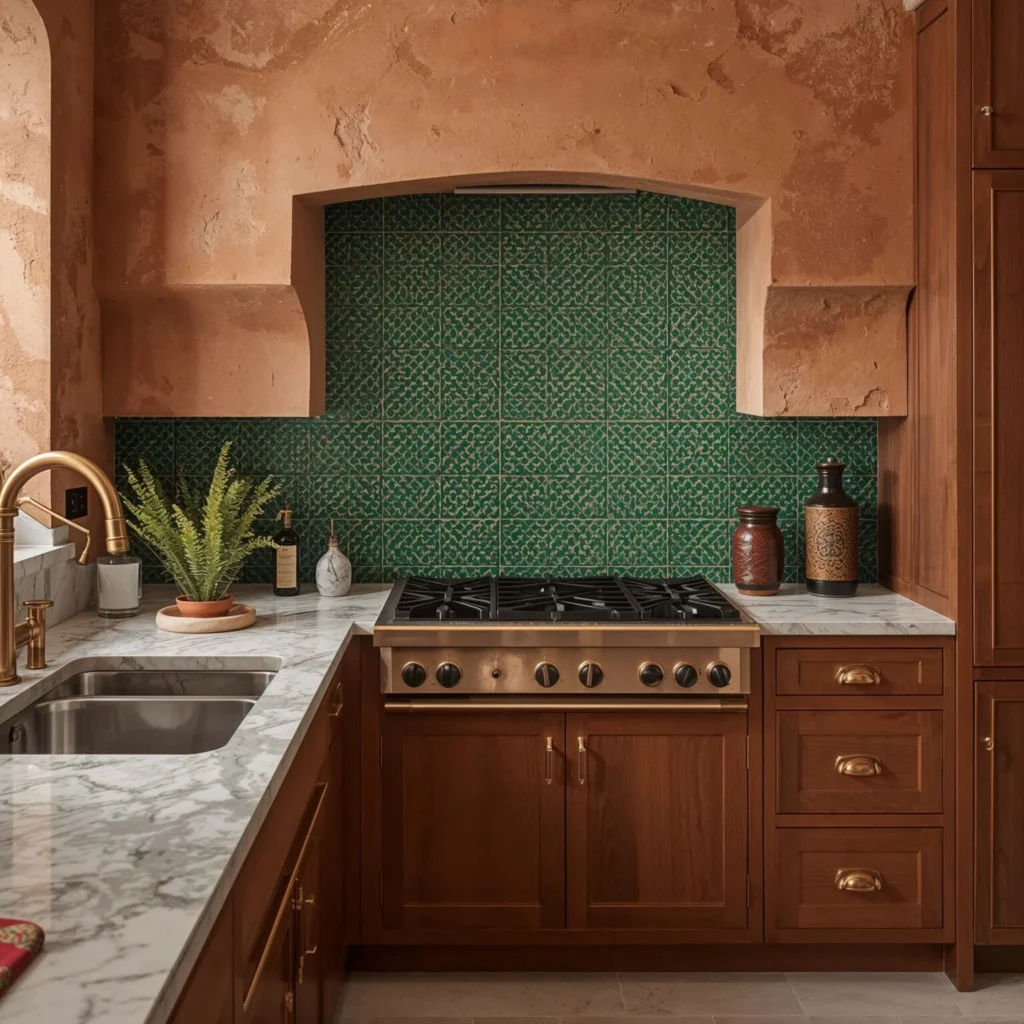
Moroccan-inspired tiles bring intricate arabesques, geometric stars, and ornate patterning that transforms a backsplash into wall art. In emerald or forest green, these tiles create a richness and exoticism that takes your kitchen somewhere far more interesting than the average renovation. Use them as a focused accent — behind the stove, for example — and keep everything else simple to let the pattern breathe.
15. Sage Green Tiles with Open Shelving
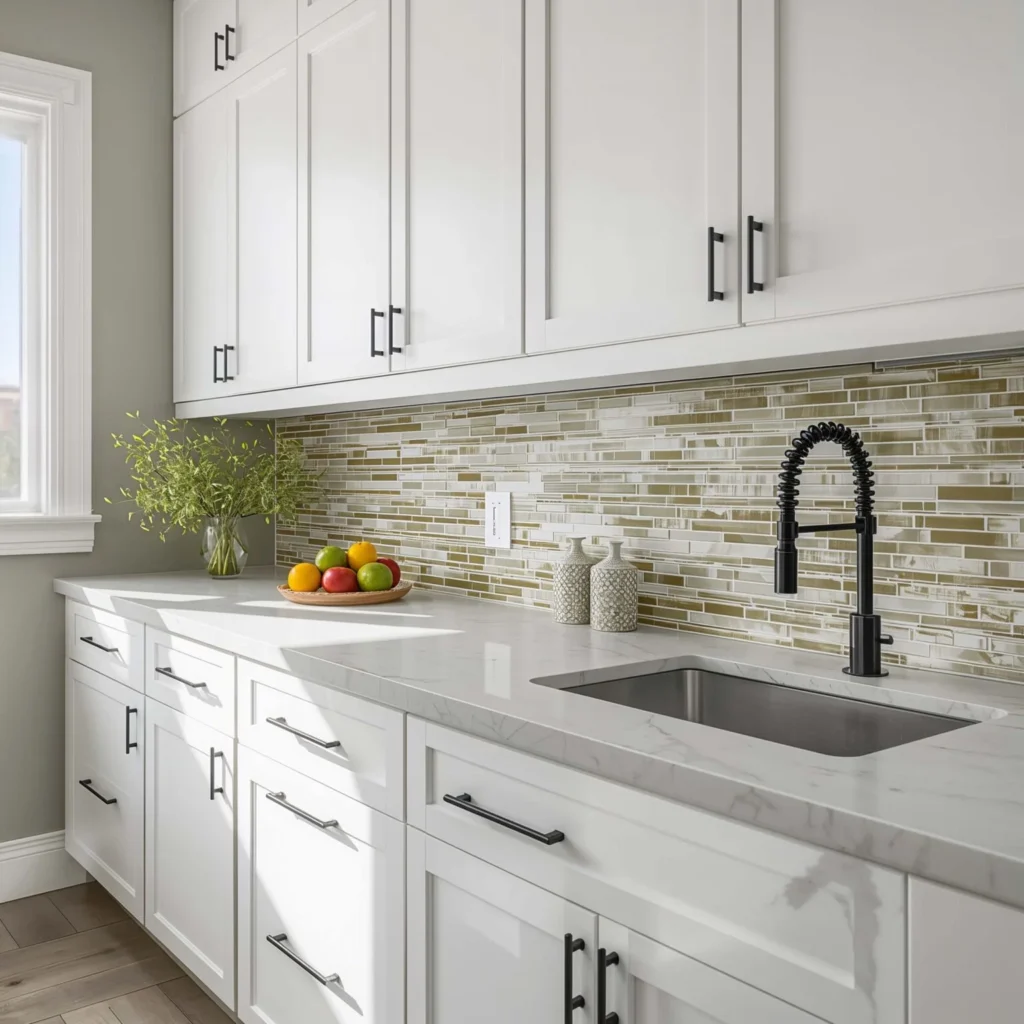
Open shelving against a sage green backsplash creates a layered, gallery-like effect that’s incredibly popular in Scandinavian and Japandi-influenced kitchens. The green acts as a backdrop that makes your white ceramics, natural wood cutting boards, and glass jars look deliberately curated. It forces you to stay organized — anything you put on those shelves is on display — but the result is consistently beautiful.
How to Choose the Right Shade of Green for Your Kitchen
With so many shades of green available, choosing the right one can feel overwhelming. Here’s a simple framework to help you narrow it down:
- Consider your cabinet color. White cabinets work with virtually any green. Dark navy or charcoal cabinets pair best with lighter greens like sage or mint to avoid making the kitchen feel cave-like. Wood-toned cabinets love olive and forest green.
- Think about your light source. North-facing kitchens with cooler light benefit from warmer greens (olive, sage). South-facing kitchens with abundant light can handle deeper, moodier shades like forest or hunter green.
- Match your hardware finish. Brass and gold tones work beautifully with olive and sage. Chrome and nickel pair better with cooler greens like mint or emerald. Matte black hardware is incredibly versatile and works with almost any green.
- Order samples before you commit. Always. The way a tile looks in a showroom or on a screen is rarely exactly how it looks on your wall under your specific lighting. Order samples, tape them to the wall, and live with them for a few days before making your final decision.
Green Backsplash Materials: What to Know Before You Buy
Ceramic and Porcelain Tiles
The most popular and practical choice. Ceramic tiles are affordable, easy to clean, and available in an enormous range of greens, shapes, and finishes. Porcelain is denser and more durable — worth the upgrade if your kitchen sees heavy use.
Glass Tiles
Gorgeous light-reflective properties, but more fragile during installation and require white adhesive to avoid color distortion. Great choice for accent areas.
Natural Stone (Marble, Quartzite)
Unmatched in terms of luxury and uniqueness. Requires sealing every 6–12 months and careful cleaning with pH-neutral products. An investment that lasts a lifetime when maintained properly.
Zellige and Handmade Tiles
The premium artisan option. Natural variation in color and glaze makes every installation unique. Higher cost and longer lead times, but the visual result is incomparable.
Installation and Styling Tips from Design Professionals
- Use consistent grout color throughout your backsplash for the most cohesive look. A grout that’s too different from your tile can fragment the overall effect.
- For small kitchens, lighter greens and vertical tile orientations help make the space feel larger and taller.
- Extend your backsplash all the way to the underside of your upper cabinets. Stopping short in the middle of the wall rarely looks intentional.
- Consider running your backsplash material up the wall behind your open shelving as well — it creates a seamless, intentional look that feels design-forward.
- Budget an extra 10–15% of tiles for cuts, breakage, and future repairs. Running out mid-project and being unable to source the same tile batch is a genuinely stressful experience.
Final Thoughts: Go Green and Don’t Look Back
A green backsplash is one of those design decisions that tends to feel a little scary before you commit and completely obvious the moment it’s installed. Whether you go for the approachable warmth of sage green subway tiles or the full-drama glamour of a dark green marble slab, the right green backsplash will make your kitchen feel more intentional, more beautiful, and more like you.
The best part about green is how much room it leaves for personal expression. There are twenty ideas in this list, and every single one of them could look completely different depending on the cabinets, hardware, lighting, and countertops surrounding them. Use this guide as a starting point, gather some samples, and trust your instincts.
Your kitchen is the most-used room in your home. It deserves a backsplash that makes you genuinely happy every single time you walk in. Go for the green — you won’t regret it.
Frequently Asked Questions
Is a green backsplash too trendy? Will it date my kitchen?
Softer, earthier greens like sage and olive have a quality that transcends trends — they’ve been popular in interior design for decades and are more likely to feel timeless than dated. Bolder choices like neon or very bright greens carry more trend risk, but even then, a backsplash is far easier to update than flooring or cabinetry if your tastes change.
What countertop colors go well with a green backsplash?
White marble or quartz is a safe, beautiful choice that works with any shade of green. Warm beige or cream countertops complement olive and sage particularly well. Black or dark charcoal countertops create a dramatic, high-contrast look against lighter greens. Butcher block wood countertops are especially lovely with forest and hunter green.
How easy is a green backsplash to keep clean?
Ceramic and porcelain tiles are extremely low-maintenance — a damp cloth handles most cooking splatter. Glossy tiles show water marks more readily than matte finishes but wipe clean just as easily. Natural stone requires more care (sealing and pH-neutral cleaners), but it’s very manageable with a simple routine. The grout lines require the most attention regardless of tile type — a grout sealer applied after installation makes a significant difference.
1 thought on “15 Green Backsplash Kitchen Ideas That Will Transform Your Space”