
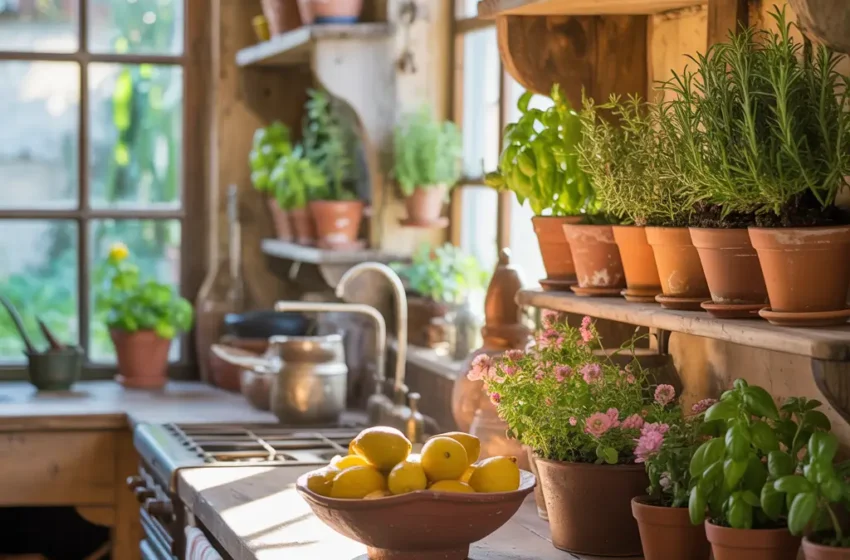
Close your eyes for a second and picture this: worn wooden cabinets that carry decades of stories, a deep apron sink with morning sunlight pouring over it, the smell of fresh bread mixing with old pine floors, and that one creaky stool nobody ever replaces because it just feels right. That is the soul of a country kitchen done in farmhouse style — and it is something a lot of homeowners are chasing today, whether they live on ten acres or in a third-floor apartment.
Country kitchen ideas with a farmhouse twist are everywhere right now, and for good reason. People are tired of cold, minimalist spaces that look impressive in photos but feel clinical to actually live in. The farmhouse aesthetic is warm, lived-in, and forgiving — it celebrates imperfection rather than hiding it. A scratched table becomes charming. A mismatched set of chairs becomes intentional. And that chipped enamel pot you inherited from your grandmother? Suddenly it is the most beautiful thing in the room.
In this guide, we are walking through 20 detailed country kitchen ideas in farmhouse style — from big structural changes to small weekend swaps that cost almost nothing. Whether you are renovating from scratch or just want to breathe some rural soul into your existing kitchen, there is something here for every budget and skill level.
1. Start with Rustic Wooden Cabinets — The Foundation of Farmhouse Style
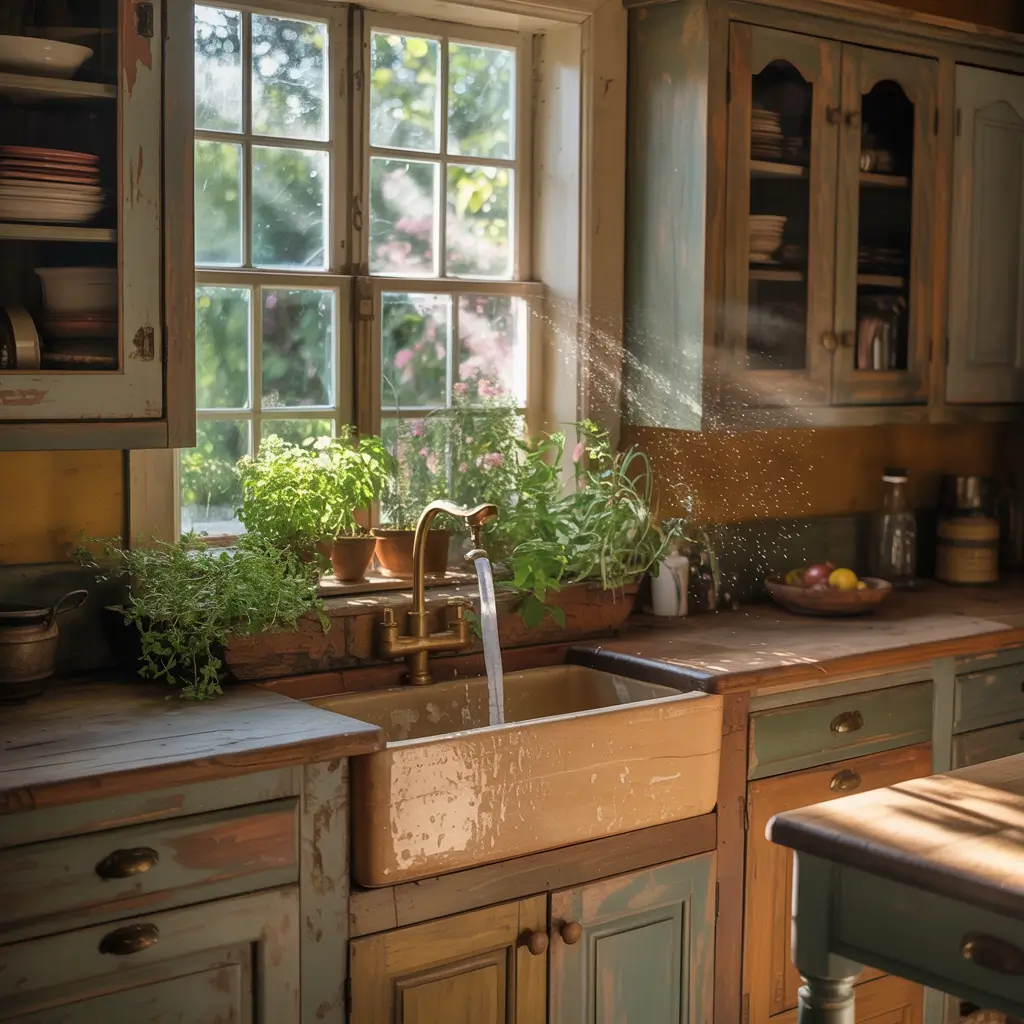
If there is one element that anchors the entire farmhouse kitchen look, it is the cabinetry. Rustic wooden cabinets do more for the overall feel of a kitchen than any other single investment you can make. And no, they do not have to look rough or unfinished — rustic just means honest. Real wood. Real grain. Real character.
The goal is to choose cabinetry that looks like it has been in the family for a while, not like it shipped from a flat-pack warehouse last Tuesday. Distressed oak, reclaimed pine, and weathered hickory are all excellent choices. The knots and grain variations are not flaws — they are what make the material feel alive.
Best Wood Finishes for a Country Kitchen Look
- Distressed oak for that authentic, time-worn texture
- Reclaimed pine with natural aging marks and character
- Weathered hickory with bold, dramatic grain patterns
- Whitewashed wood for a lighter, airier farmhouse aesthetic
- Dark walnut for a moody, modern country contrast
Pro tip: Mix your upper and lower cabinet finishes. Paint the upper cabinets in a soft cream and keep the lowers in natural wood. The visual contrast creates interest without overwhelming the space — and it can stretch your renovation budget by allowing you to update in stages.
2. Install an Apron-Front Farmhouse Sink
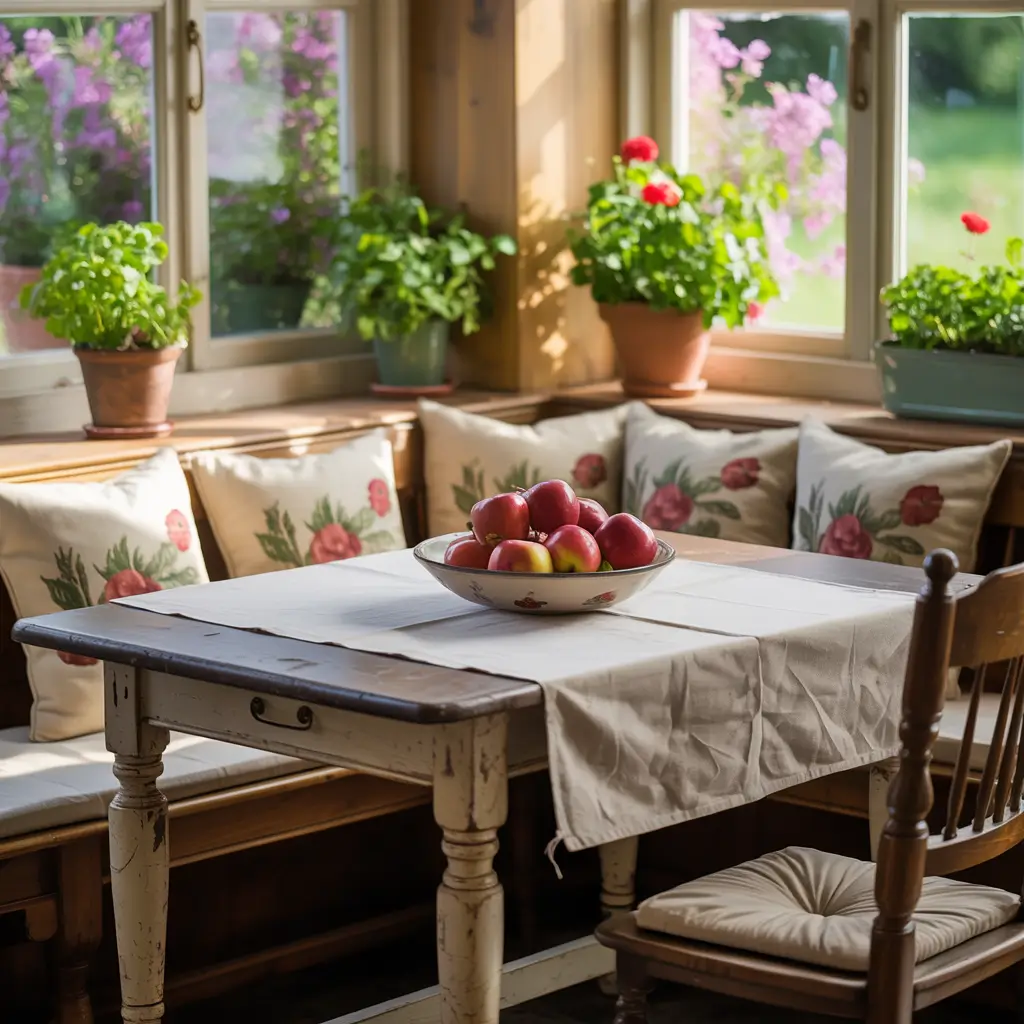
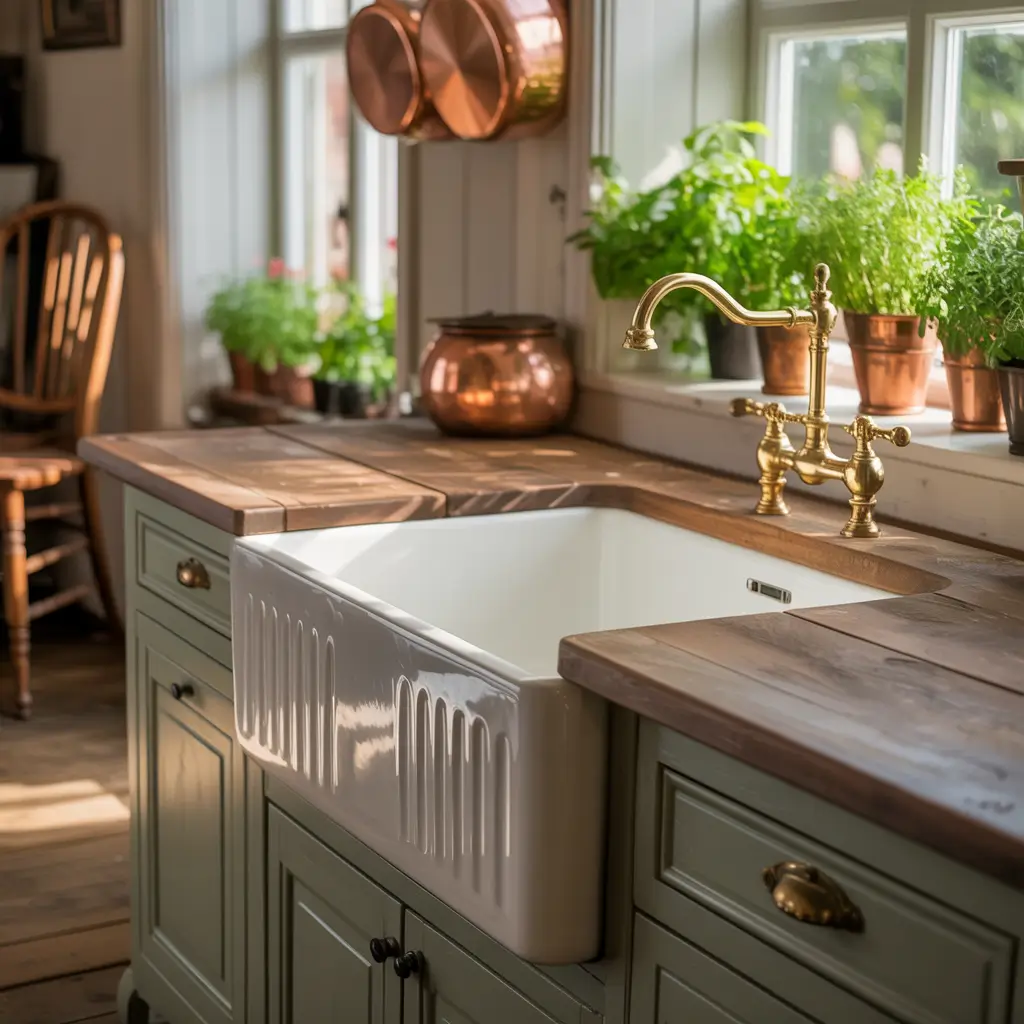
There is a reason the apron-front sink (also called a farmhouse sink) has become the symbol of the entire style. It is deeply practical, visually dramatic, and immediately communicates that this kitchen means business. These deep, wide basins were originally designed for farm life — washing vegetables fresh from the garden, cleaning up after big family meals, handling the kind of daily volume that a standard sink simply could not take.
In modern homes, they are a revelation. You can fit your largest roasting pan inside without awkward angles. The high front apron means you lean less while doing dishes, saving your lower back. And they come in enough sizes and materials to suit almost any kitchen layout and budget.
Farmhouse Sink Materials Compared
- Fireclay: Classic white look, highly durable, the most traditional choice
- Stainless steel: Sleek and easy to clean, suits modern farmhouse kitchens
- Cast iron enamel: Rich color options, extremely heavy but incredibly long-lasting
- Copper: Warm and beautiful, develops a natural patina over time
3. Add Open Shelving with Thoughtful Styling
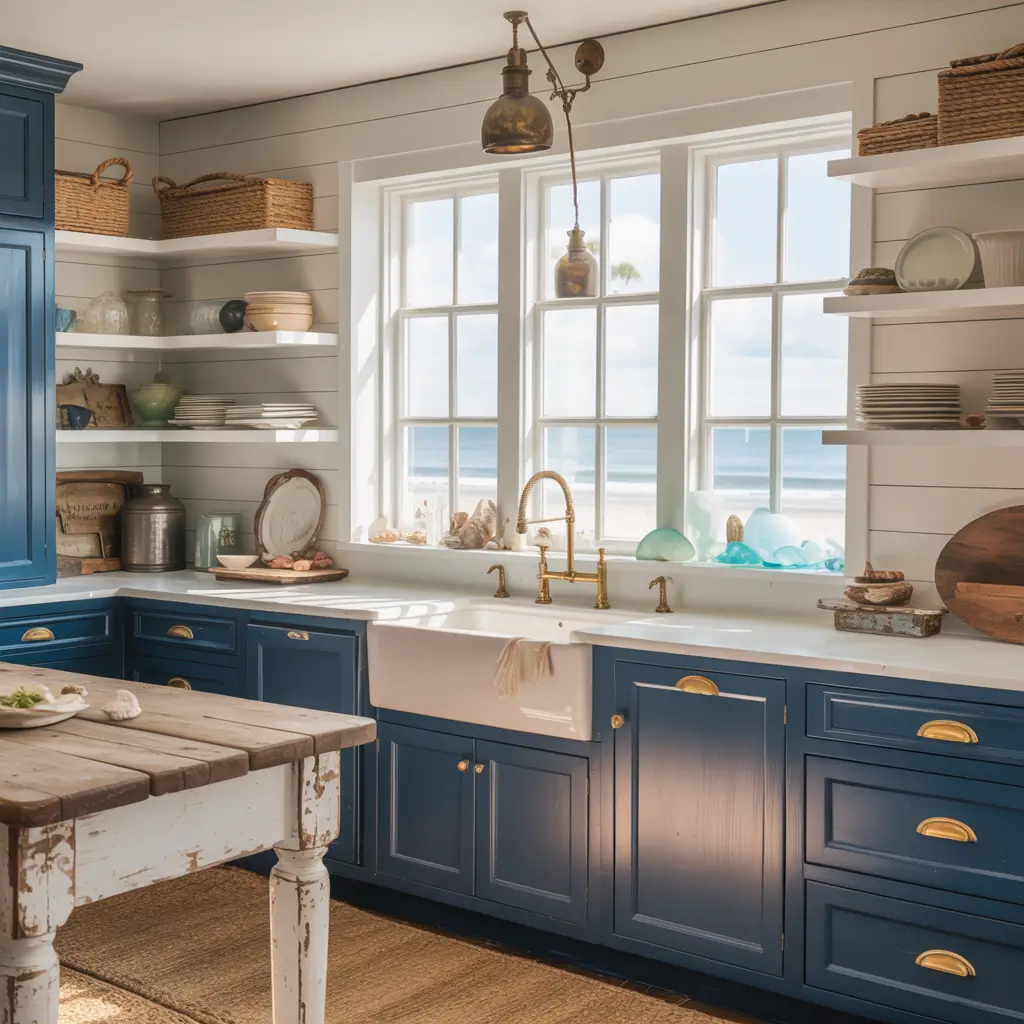
Open shelving might seem risky — suddenly everything you own is on display. But that is actually the point. Country kitchens were never designed to hide things away. They were designed around the idea that the tools of daily life, the bowls, the jars, the cast iron, are beautiful in their own right and deserve to be seen.
Start with one wall. Use thick reclaimed wood planks on simple iron brackets. Style them with a mix of functional everyday items and intentional decorative pieces. Glass jars filled with grains and pasta, a few worn cookbooks, a trailing pothos plant, and your everyday plates create a display that looks curated but completely natural.
Rules for Styling Open Shelves Like a Pro
- Group items in odd numbers — three plates, five mugs, seven jars
- Vary heights to avoid a flat, monotonous look
- Include at least one trailing plant for organic texture
- Keep the palette consistent — neutrals, naturals, and one accent color
- Only display items you actually use, not things you feel obligated to keep
4. Use Shiplap as a Statement Wall
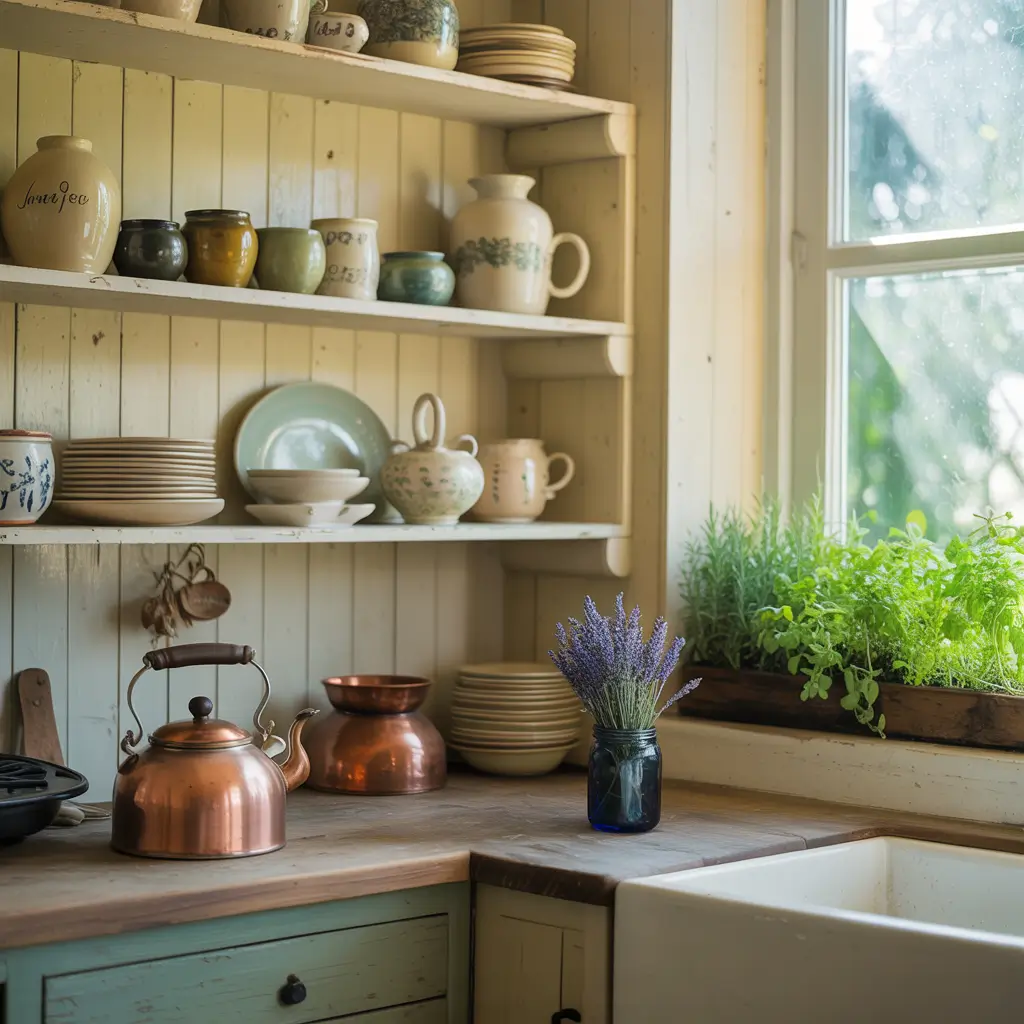
Shiplap has become one of the most recognizable farmhouse design elements, and while it sometimes gets dismissed as trendy, the truth is that horizontal wood paneling has been used in country homes for centuries. It adds texture, warmth, and a sense of architectural history that painted drywall simply cannot replicate.
The key is restraint. Choose one wall — the one behind your stove or above a built-in bench works beautifully — and let the shiplap do the work. Paint it white for the classic farmhouse look, or go sage green or muted navy for a more contemporary country feel.
5. Build or Source a Farmhouse Kitchen Island
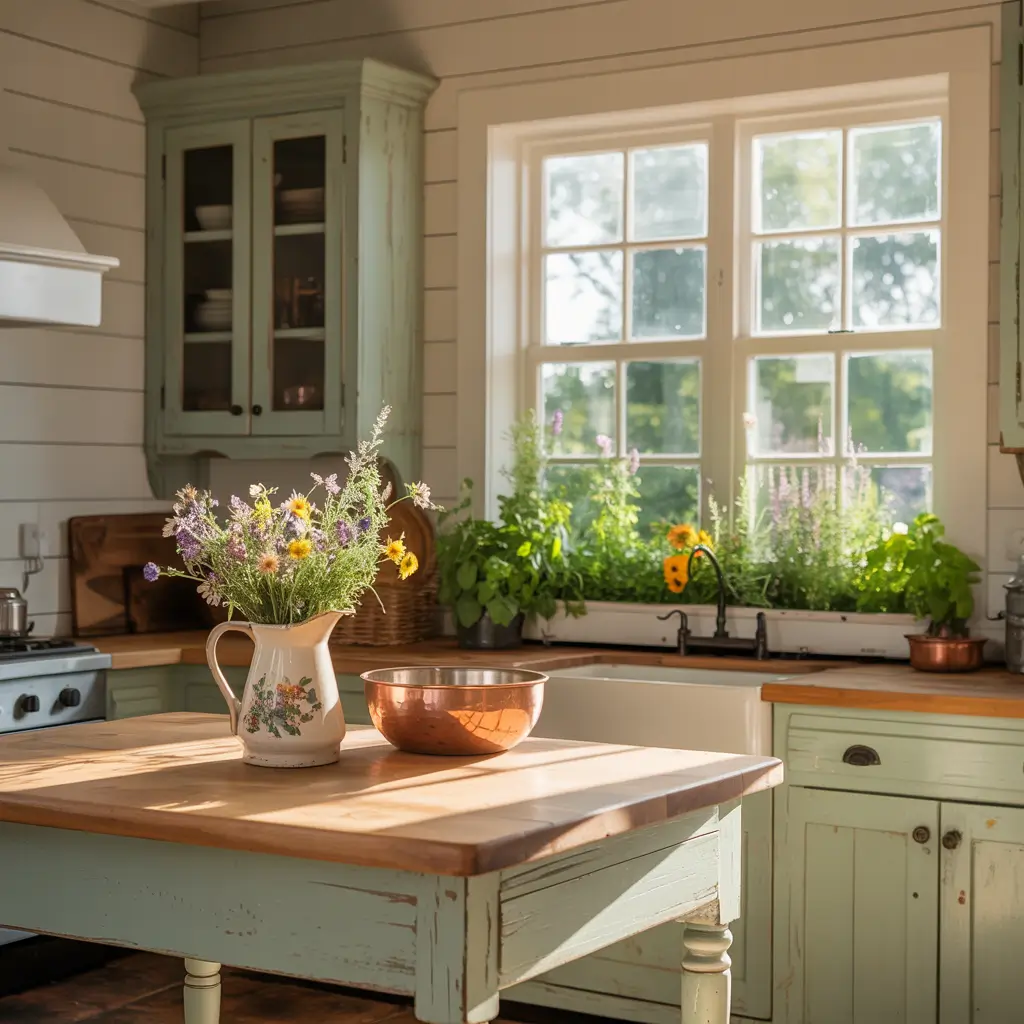
In a country kitchen, the island is more than a prep surface. It is the center of gravity for the entire room. It is where people gather, where kids do homework, where dinner gets assembled, and where guests inevitably end up leaning while you cook. It needs to work hard and look like it has always been there.
The easiest way to get an authentic farmhouse island is to not buy one new. Look for an antique dresser, a vintage worktable, or a solid wood console at an estate sale or flea market. Have a butcher block or reclaimed wood top cut to fit, add some industrial casters if you want mobility, and you have an island with genuine history at a fraction of the cost.
Essential Features for a Farmhouse Island
- Butcher block or reclaimed wood countertop surface
- A paint color that contrasts with your main cabinetry
- Open shelving or drawers on at least one end
- Vintage-style bar stools with worn leather or natural wood seats
- Hanging pot rack directly above if ceiling height allows
6. Choose the Right Farmhouse Color Palette
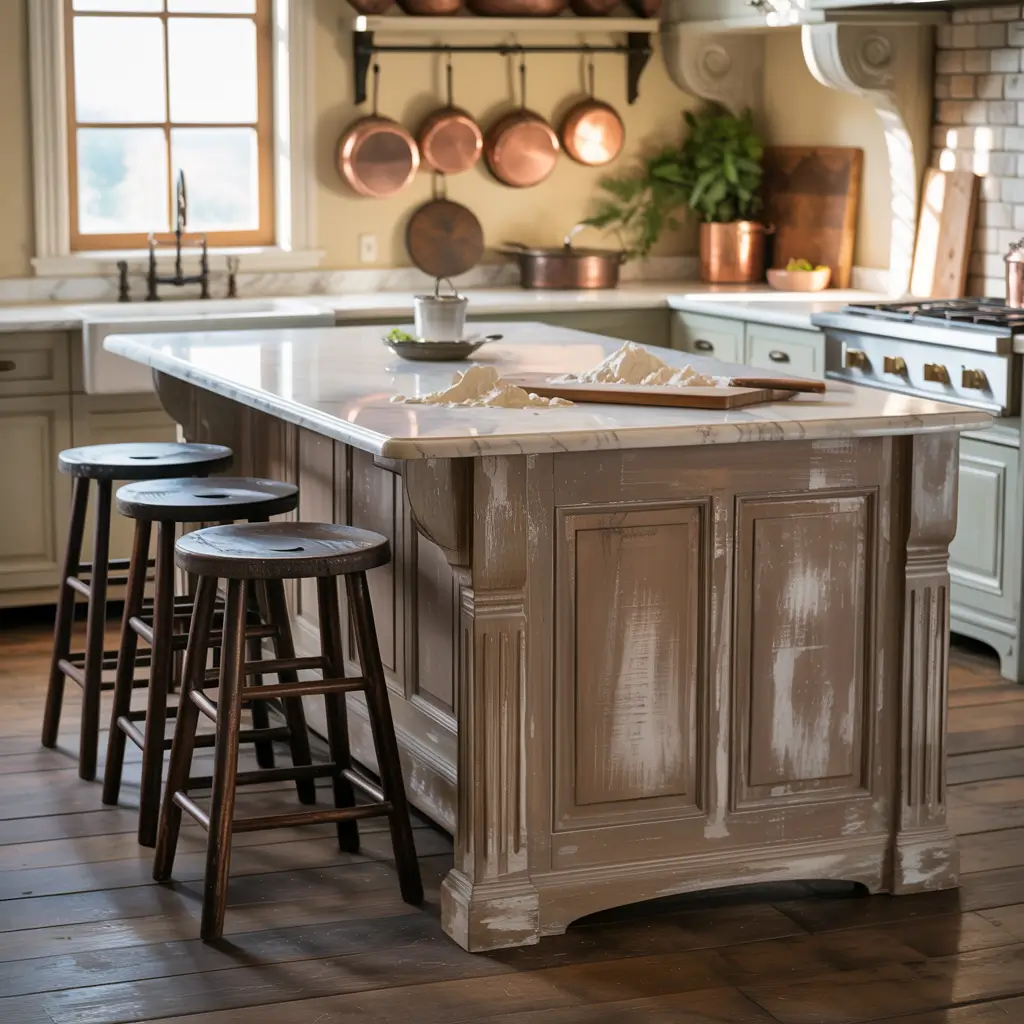
Color is where a lot of people either nail the farmhouse look or accidentally veer into something that feels dated. The good news is that the palette for country kitchen style is both forgiving and beautiful: soft whites, warm creams, muted greens, dusty blues, and natural wood tones.
The secret is to avoid anything too stark or too saturated. Pure bright white reads clinical. Neon green reads chaotic. The farmhouse palette is subtle — it layers different whites and creams together, lets the natural materials carry the warmth, and uses color as an accent rather than a statement.
Color Combinations That Always Work
- White cabinets with a natural wood island and black hardware
- Soft gray walls with white trim and aged brass accents
- Cream everything layered with pops of sage green
- Navy lower cabinets paired with bright white uppers
- Warm greige walls with dark walnut shelves and open brick
7. Install Vintage Farmhouse Lighting
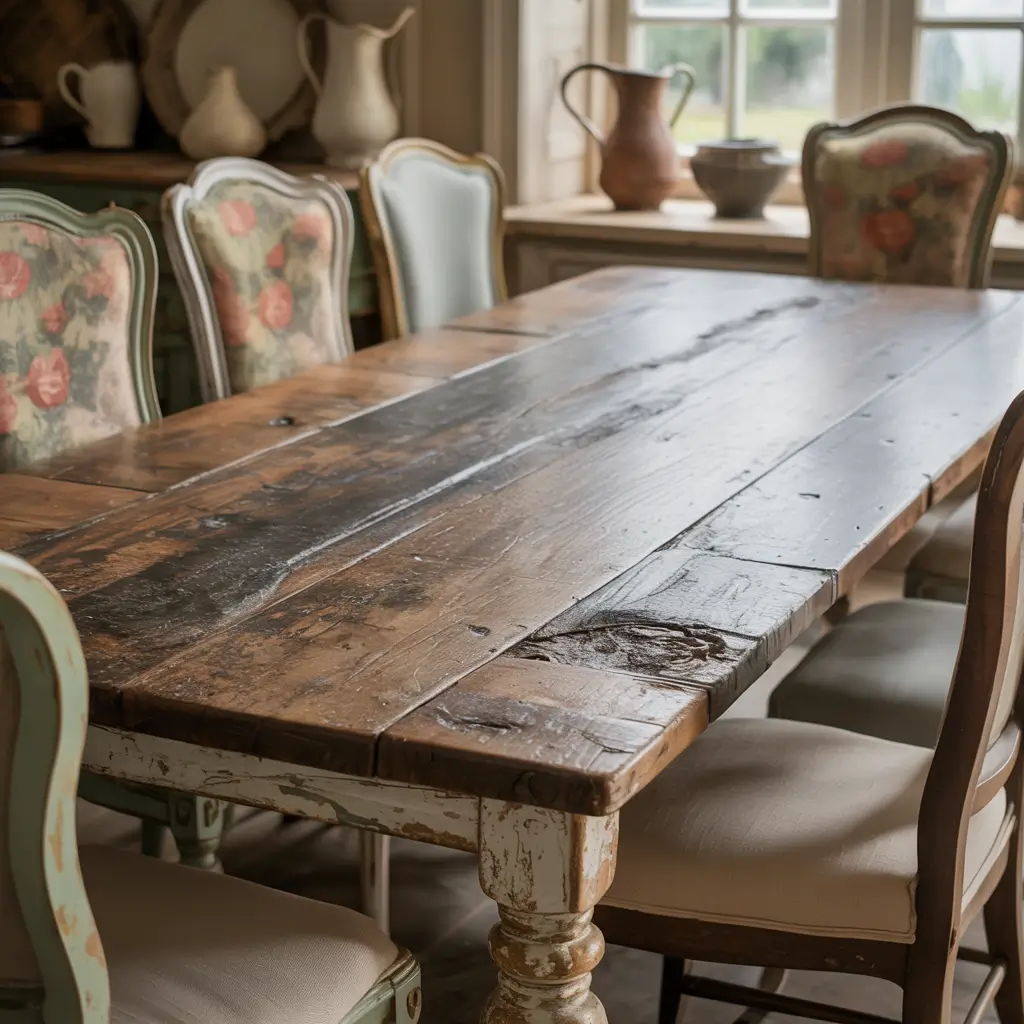
Lighting might be the single most underestimated element in kitchen design. The wrong fixtures can make even a beautifully styled room feel cold and uninviting. In a farmhouse kitchen, the goal is warmth — golden, soft, layered light that makes the space feel intimate even when you are cooking for twelve.
Pendant lights over the island or sink are non-negotiable. The style you choose should reinforce the overall feel: mason jar pendants for classic country charm, black metal barn pendants for an industrial farmhouse edge, or wooden bead chandeliers for something a little more elegant. Layer these with under-cabinet task lighting and a dimmer switch, and you have a kitchen that shifts from bright and functional at dinner prep time to warm and atmospheric by evening.
8. Lay Wide-Plank Rustic Wood Floors
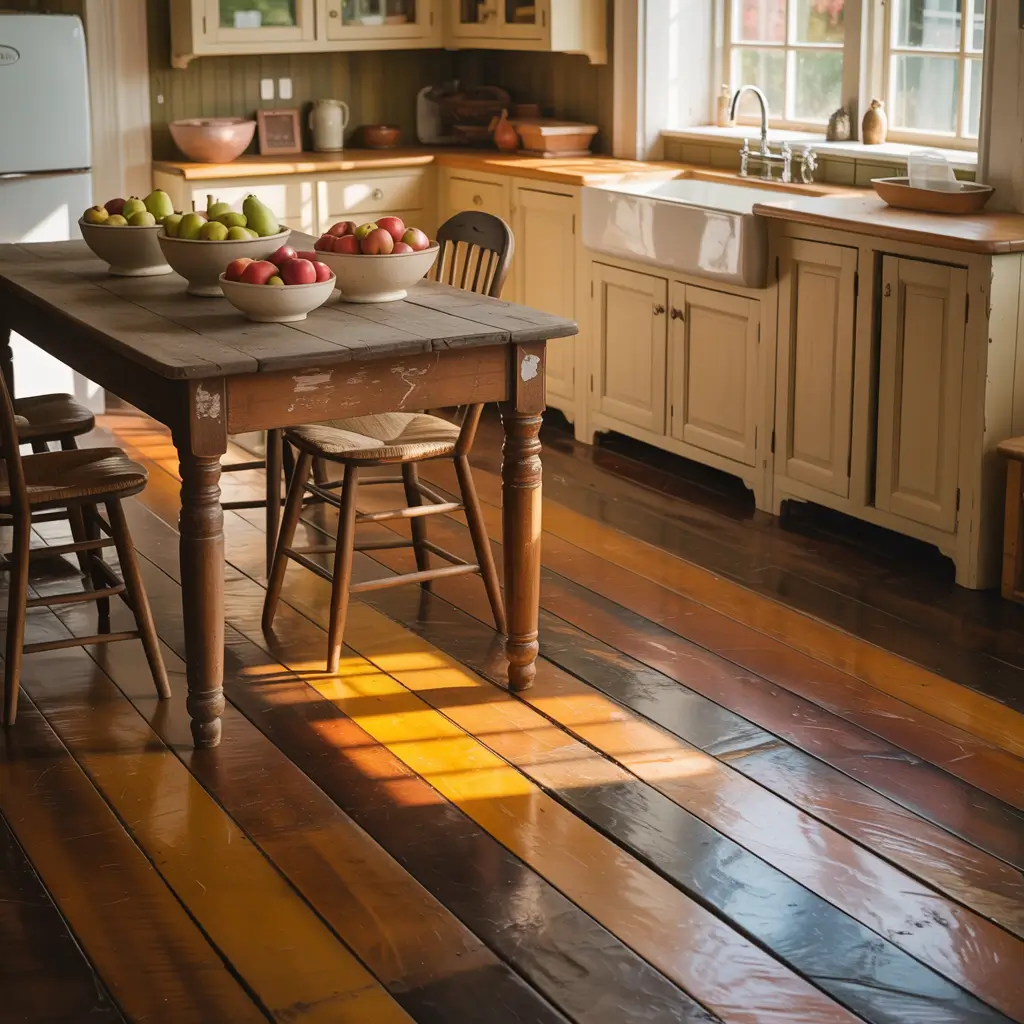
Nothing ties a farmhouse kitchen together from the ground up quite like wide-plank wood flooring. The wider the plank, the more traditional and authentic the look feels — narrow strips are more formal and refined, which is the opposite of what you want here.
Reclaimed barn wood floors are the gold standard, but they come with real wood’s maintenance requirements. If that feels like too much, modern luxury vinyl planks have become genuinely beautiful alternatives — especially in weathered gray or honey oak finishes. They hide spills, resist scratches, and survive kitchen traffic without flinching.
9. Create a Cozy Breakfast Nook
The breakfast nook is one of those features that sounds like a luxury until you have one — and then you cannot imagine a kitchen without it. In a country kitchen, it serves as the heart of daily family life: morning coffee, afternoon homework, quiet evenings with a book, and long weekend breakfasts that stretch past noon.
A built-in bench with hidden storage underneath is the most practical approach. Pair it with a round or oval rustic wood table — round tables naturally encourage conversation — and mix in a few mismatched vintage chairs. Cushions in buffalo check, gingham, or simple ticking stripe complete the look and make the wooden bench significantly more comfortable for extended sitting.
10. Use Beadboard Backsplash or Wall Paneling
Beadboard — that vertical groove paneling you associate with old cottage kitchens — is one of the most versatile and affordable ways to add country character to a kitchen. Used as a backsplash between your countertop and upper cabinets, it immediately shifts the space into rural territory without requiring a full renovation.
Paint it in soft white for a clean, classic farmhouse look, or in a muted sage green for something with a little more personality. It is also considerably cheaper than tile and easier to clean than you might expect. If you want to go bigger, extend the beadboard as wainscoting around the entire lower half of your kitchen walls.
11. Organize Your Pantry the Country Way
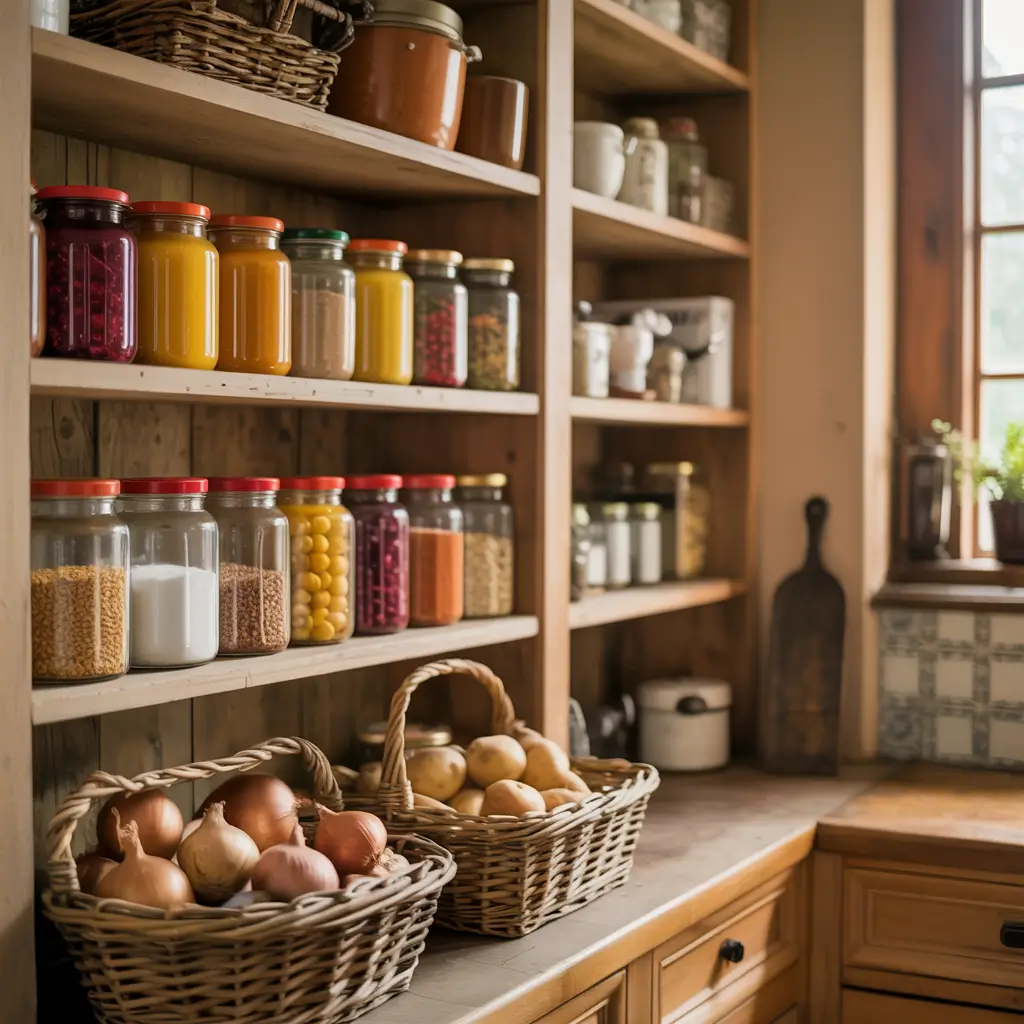
A beautifully styled kitchen with a chaotic pantry feels incomplete. The country kitchen aesthetic extends into every corner, and the pantry is no exception. This does not mean spending a fortune on a built-in renovation — it means being intentional about how you store things.
Country Pantry Organization Essentials
- Clear glass mason jars for dry goods like pasta, grains, and legumes
- Vintage wooden crates or wicker baskets for root vegetables
- Wire baskets for bread, snacks, and loose items
- Chalkboard labels on everything — both practical and visually cohesive
- A dedicated shelf for cookbooks with worn, loved spines
12. Hang a Vintage Pot Rack
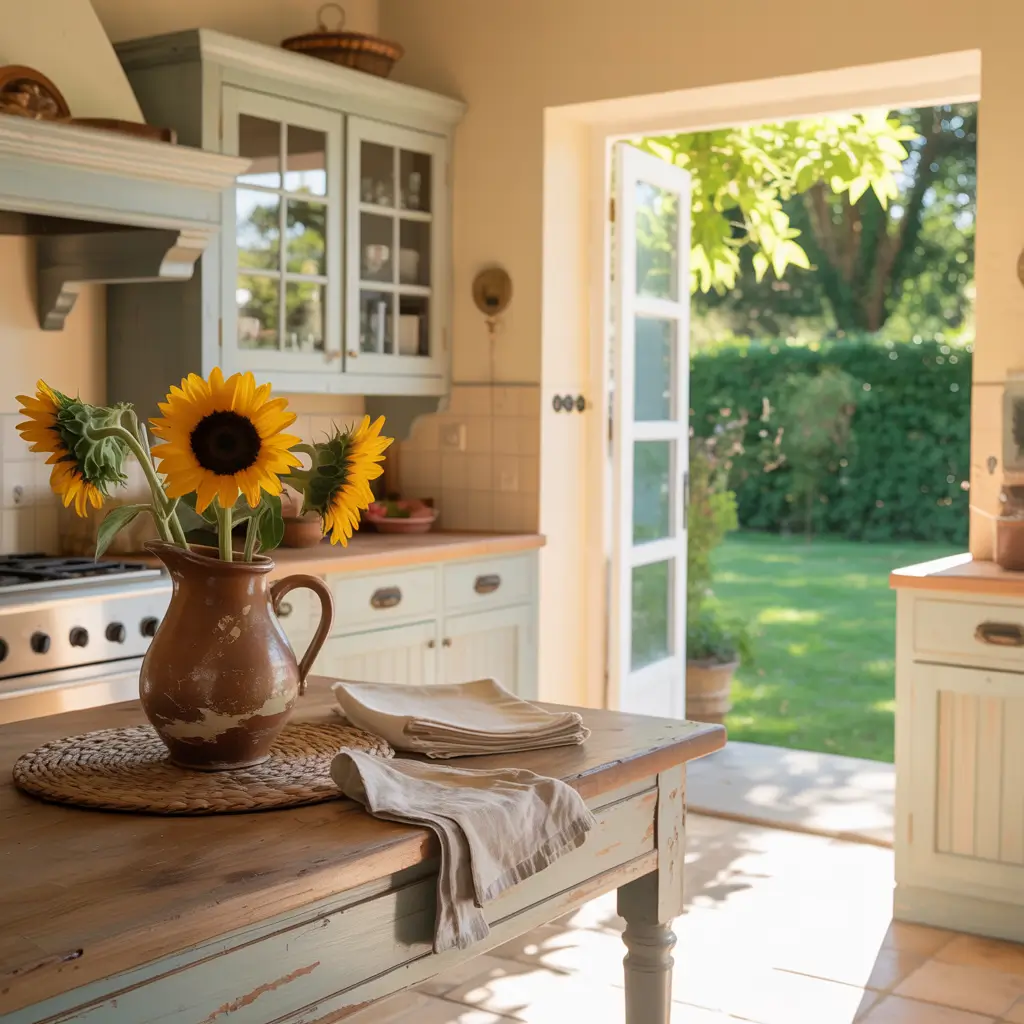
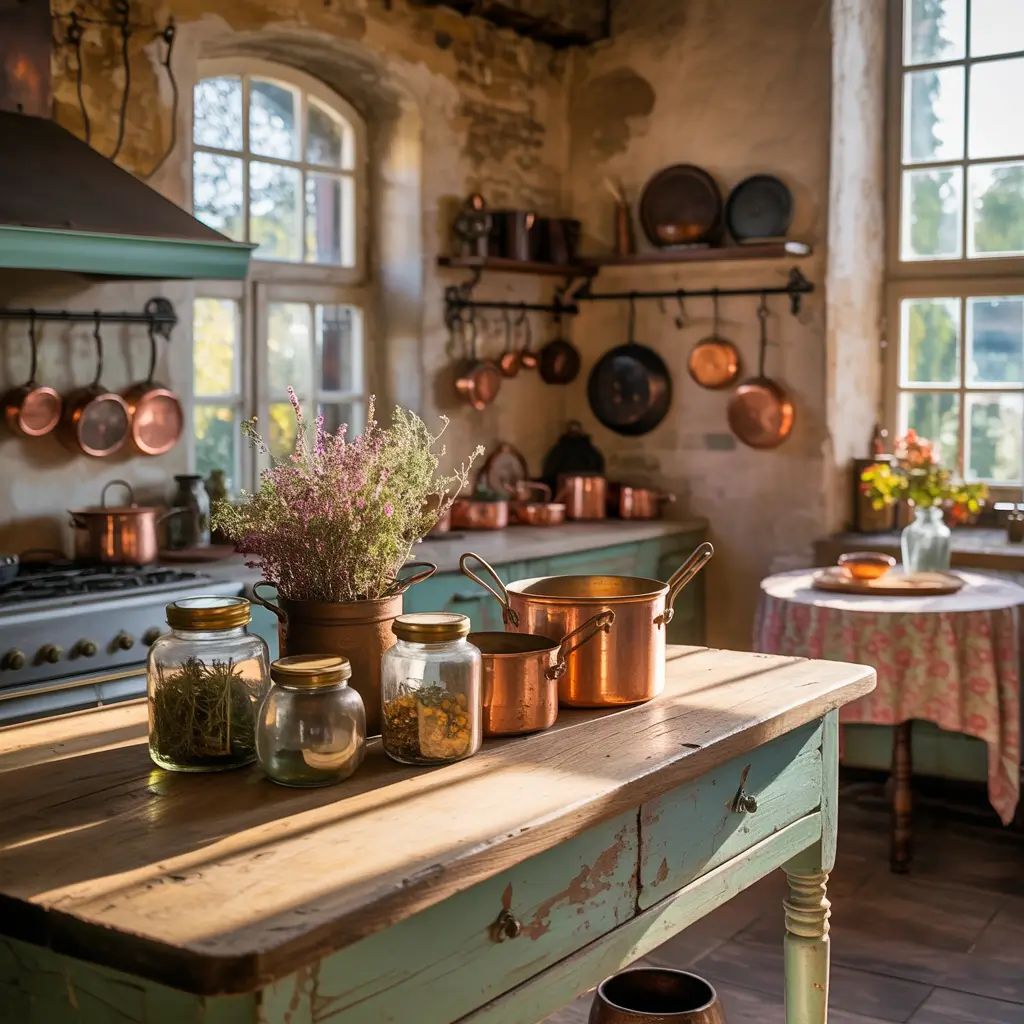
Before kitchen cabinets became standard, pots and pans lived above the stove or hung from ceiling beams where they were easy to reach and visible to anyone in the room. Bringing that tradition back is one of the most effective and affordable ways to add country kitchen character — especially if your ceiling allows for it.
An iron pot rack above the island or range displays your cookware as the functional art that it is. If you have cast iron, copper, or enamelware, this is their moment to shine. The scale of a well-filled pot rack also adds visual height to a kitchen, drawing the eye up and making the space feel larger.
13. Add Antique and Flea Market Accessories
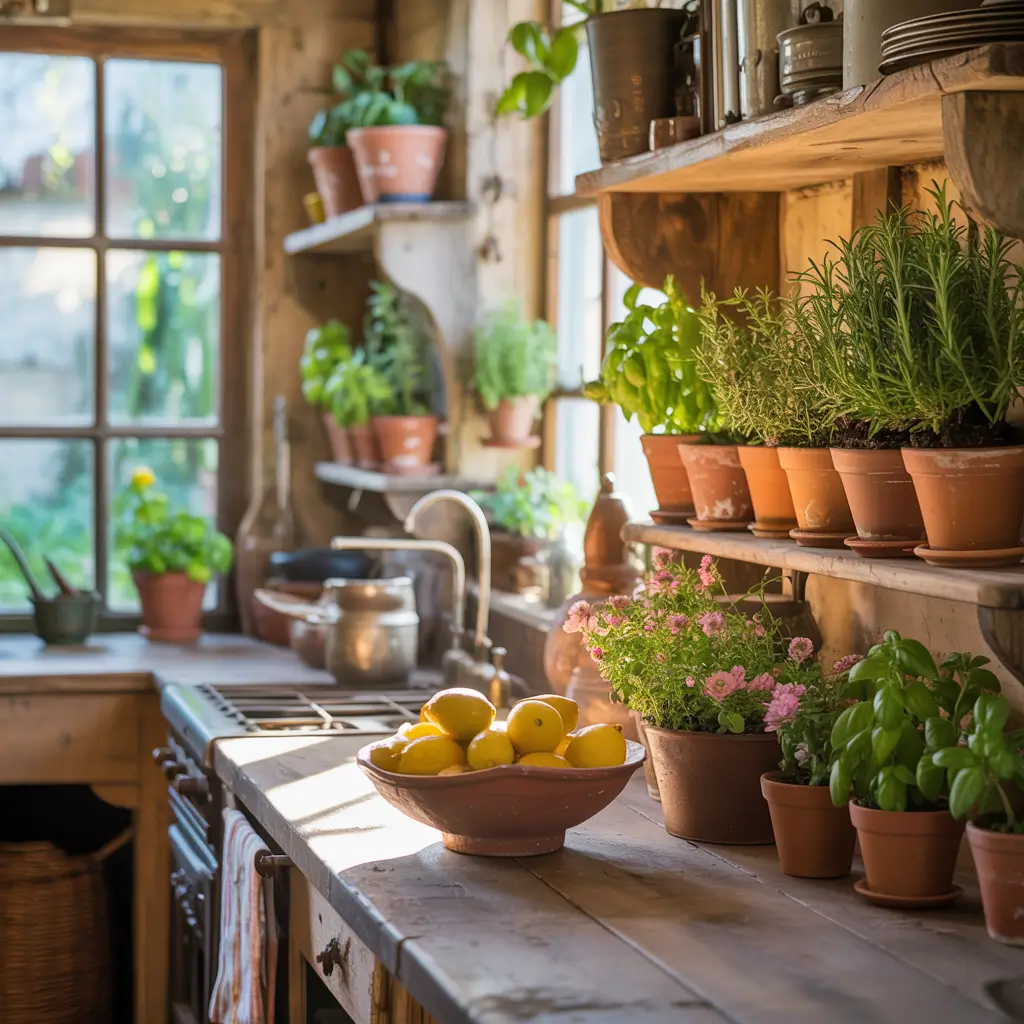
This is where a farmhouse kitchen gets its soul. Antique accessories are the finishing touches that make a designed space feel genuinely lived-in rather than assembled from a catalog. The hunt is part of the joy — flea markets, estate sales, antique shops, and even online secondhand platforms are full of objects with the patina and presence that new items simply cannot manufacture.
What to Look for on Your Next Flea Market Run
- Vintage kitchen scales for the countertop
- Antique wooden cutting boards as wall decorations
- Old milk bottles or glass insulators as bud vases
- Enamelware pitchers for storing utensils
- Cast iron skillets displayed on hooks or an open shelf
- Tin or enamel signs from old farms, dairies, or markets
14. Install a Classic Subway Tile or Brick Backsplash
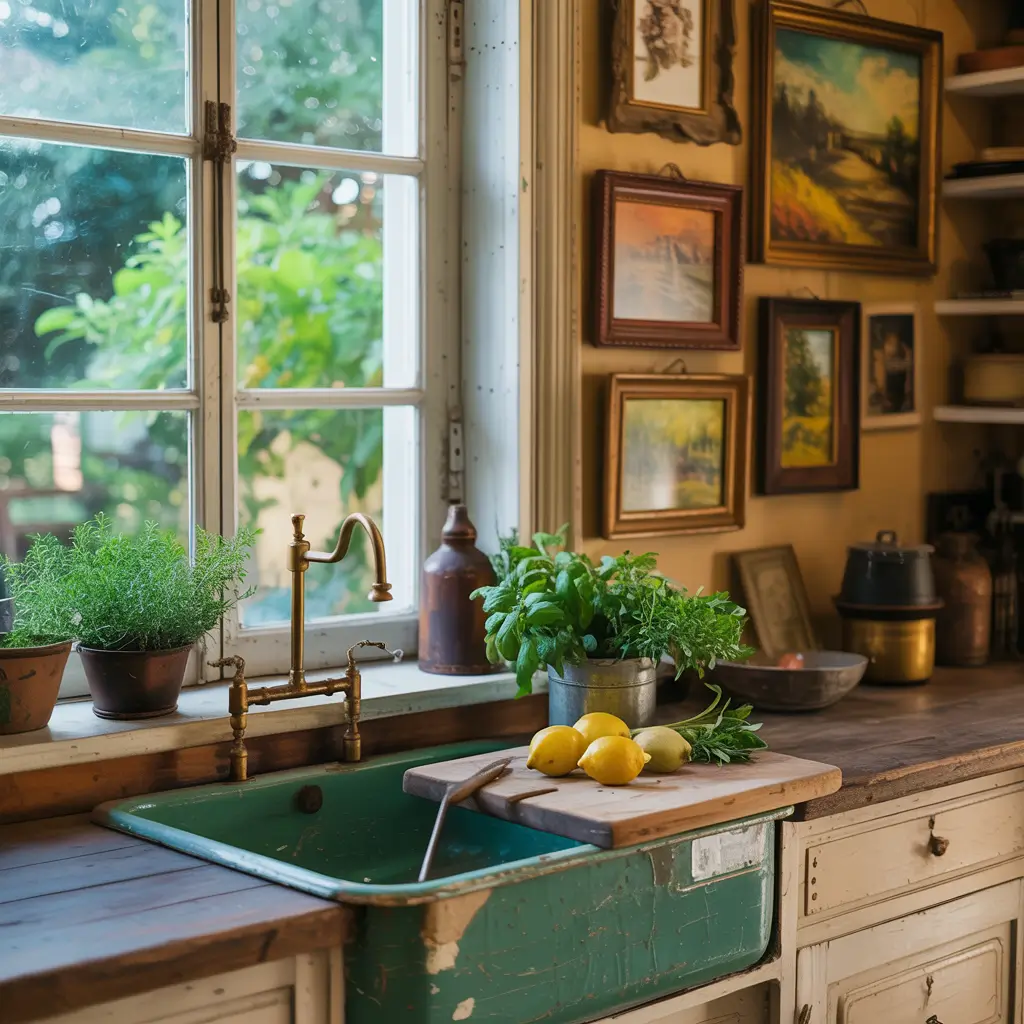
When it comes to farmhouse kitchen backsplash ideas, classic white subway tile is almost impossible to beat. It is timeless, versatile, easy to clean, and works with practically every cabinet color and countertop material. Laid in a traditional horizontal pattern it is clean and understated. In a herringbone arrangement it adds visual dynamism without losing that country character.
For something with more texture and warmth, consider brick veneer. An exposed brick backsplash behind the range adds an earthy, rustic quality that feels genuinely old-farmhouse. It is available in slim veneer form that installs over existing drywall, making it a realistic weekend DIY project.
15. Bring in Greenery and Fresh Herbs
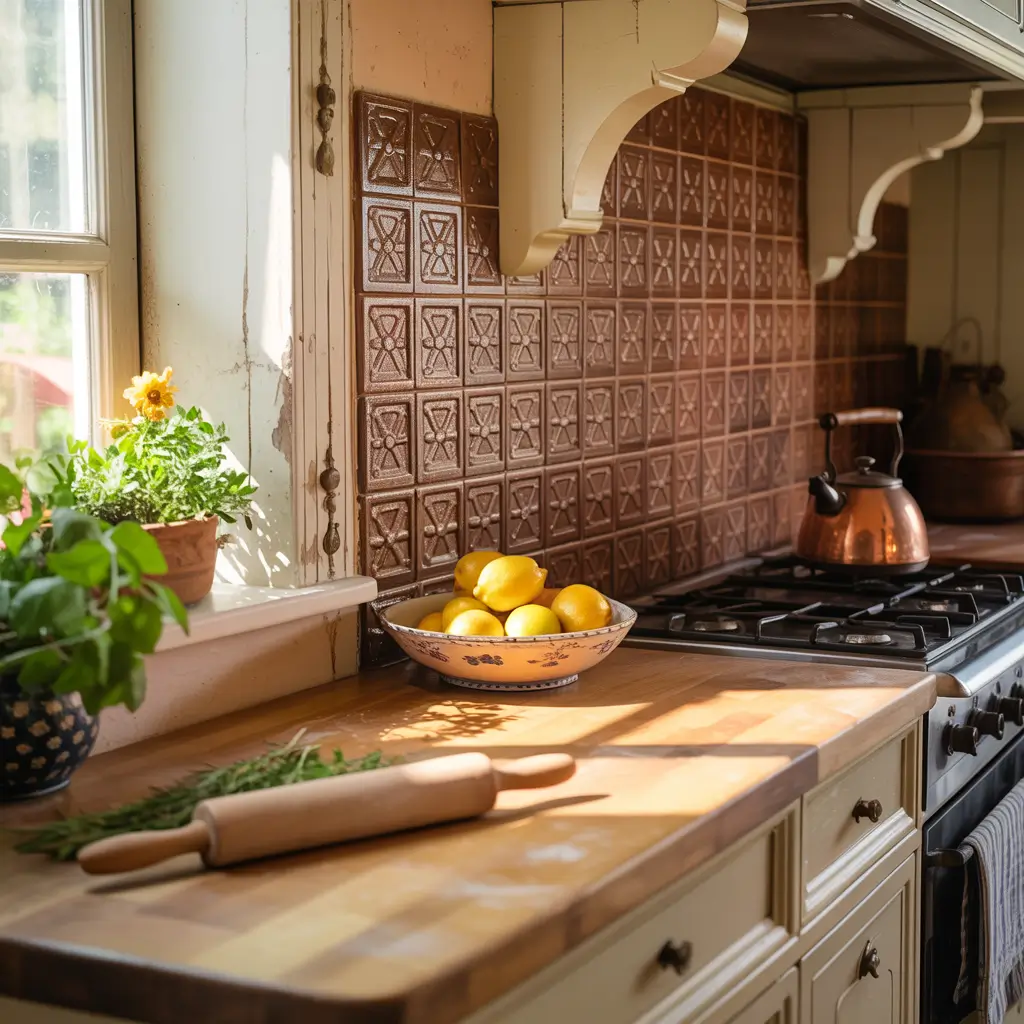
A farmhouse kitchen without plants feels unfinished. Living greenery is what softens all those hard surfaces — the stone counters, the wooden shelves, the iron hardware — and makes the space feel genuinely alive. It also connects your kitchen to the outdoors in a way that is integral to country living philosophy.
Grow fresh herbs on your windowsill or in small pots along a shelf: basil, rosemary, thyme, and mint are all beautiful and immediately useful. Trailing pothos from the top of your open shelving adds drama. A small succulent garden in an old wooden tray on the counter is low-maintenance and quietly lovely.
Frequently Asked Questions About Country Kitchen Farmhouse Style
What is the difference between country kitchen style and farmhouse style?
Country kitchen and farmhouse style share significant overlap — both prioritize natural materials, warm colors, and a sense of lived-in comfort. The distinction is largely one of era and formality. Country kitchen style tends to be more eclectic and informal, drawing from rural traditions across different regions. Farmhouse style, particularly modern farmhouse, has become a more defined aesthetic influenced by mid-century American farm design — think white shiplap, apron sinks, and clean lines alongside rustic elements.
How much does it cost to create a farmhouse kitchen from scratch?
The range is enormous depending on how far you go. A full renovation with new cabinets, a farmhouse sink, hardwood floors, and custom range hood can run anywhere from $15,000 to $60,000 or more. However, a focused refresh — new hardware, open shelving, shiplap accent wall, better lighting, and styling updates — can achieve a convincing farmhouse look for $500 to $3,000. The farmhouse style actually rewards a budget-conscious approach because vintage and secondhand pieces are more authentic than new purchases.
What countertop material works best in a farmhouse kitchen?
Butcher block and soapstone are the most authentically farmhouse options. Butcher block is warm, repairable, and develops character over time. Soapstone is soft gray, naturally antimicrobial, and has a beautiful matte quality that suits the style perfectly. Honed marble and concrete are also popular in modern farmhouse kitchens. What tends to look out of place is highly polished granite or glossy engineered stone — they read as too refined for the relaxed country aesthetic.
Can I achieve a farmhouse look in a small kitchen?
Absolutely. In fact, smaller kitchens often take on the farmhouse aesthetic beautifully because the coziness of the style suits compact spaces. Focus on the high-impact elements: a farmhouse sink if your footprint allows, open shelving in place of some upper cabinets (which opens up the space visually), good pendant lighting, and careful use of soft, warm colors. Shiplap on a single wall and vintage accessories do the rest of the work.
Conclusion: Build Your Country Kitchen One Layer at a Time
The most beautiful farmhouse kitchens in the world did not arrive that way. They accumulated. They were built over years of deliberate choices, chance flea market finds, gifts from family members, practical upgrades that happened to be beautiful, and the slow accumulation of things used daily until they became irreplaceable. That sense of time and use is impossible to fake, but it is absolutely possible to start building.
Start with the structural elements if your budget and timeline allow: the cabinets, the sink, the floors. Then work inward through the layers — the lighting, the shelving, the backsplash, the island. Finally, let the finishing touches accumulate naturally: the vintage scale you found at a market, the herbs you started growing because you actually cook with them, the dish towels in the pattern that just felt right.
None of these 20 ideas require you to do everything at once. Pick the two or three that resonate most with where you are right now — in terms of budget, energy, and what your kitchen actually needs. Make those changes well. Then pause, live in the space for a while, and see what feels missing.
That is the farmhouse way: unhurried, intentional, and always oriented toward comfort over perfection. Your kitchen does not need to be magazine-ready. It needs to be yours — warm, functional, full of meaning, and the kind of place people gravitate toward without quite knowing why. Get started, and let the rest follow naturally.
1 thought on “15 Beautiful Country Kitchen Ideas and Rustic Farmhouse Charm”