
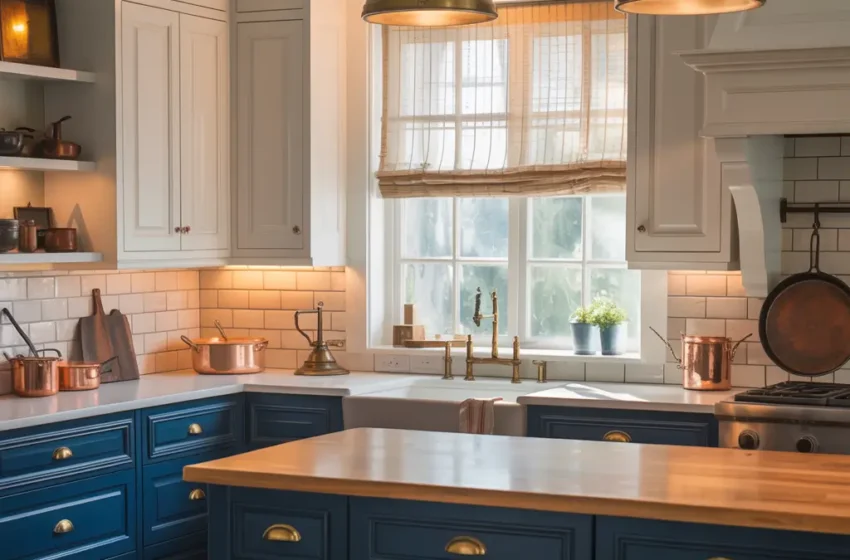
There is something undeniably magnetic about a farmhouse kitchen. It is the kind of space that pulls you in the moment you walk through the door — warm, layered, unhurried, and somehow deeply familiar even if you are seeing it for the first time. And if you ask most interior designers or avid home renovators what single element defines that feeling more than anything else, the answer is almost always the same: the cabinets.
Farmhouse kitchen cabinets are not just storage solutions. They set the entire mood of the room. They decide whether your kitchen feels like a cozy countryside retreat or just another generic cooking space. Whether you are in the middle of a full renovation, planning one for next year, or simply letting your imagination wander on a lazy afternoon, this guide has everything you need.
We have gone deeper than most guides out there — covering classic styles, bold color choices, clever storage tricks, budget-friendly upgrades, and everything in between. By the time you finish reading, you will have a clear picture of exactly which direction feels right for your home.
1. Classic White Shaker Cabinets — The Timeless Foundation
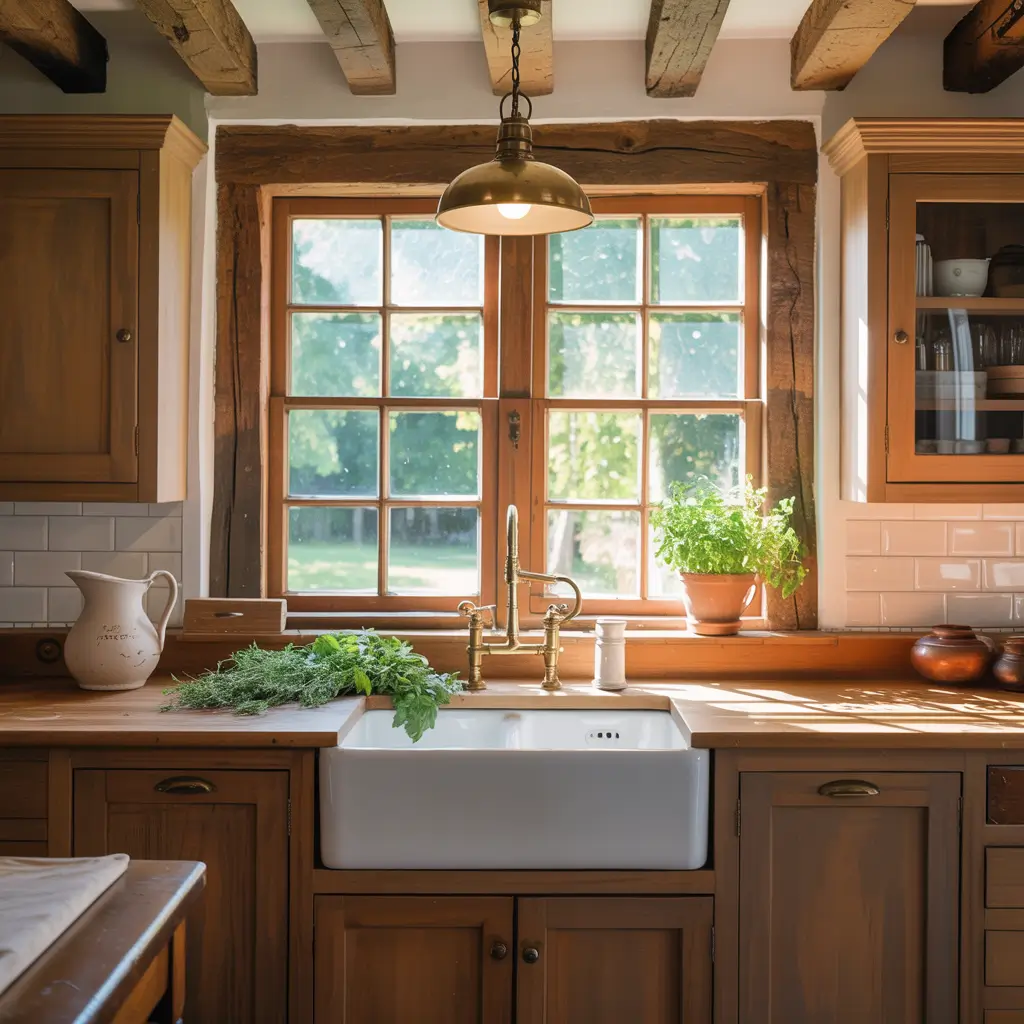
If farmhouse kitchen cabinets had a hall of fame, white shaker cabinets would be the founding member. Their clean recessed-panel design, crisp color, and quiet elegance have made them the most popular cabinet style in American homes for decades — and there is a reason they never seem to go out of fashion.
What makes white shakers work so brilliantly in farmhouse kitchens is their versatility. They pair effortlessly with butcher block countertops, marble slabs, or raw concrete. They look just as beautiful with antique brass hardware as they do with matte black pulls. And because white reflects light, they make even the smallest kitchens feel noticeably more open and airy.
Tips for Getting It Right
- Choose a slightly warm white like Benjamin Moore White Dove or Sherwin-Williams Alabaster — pure white can feel clinical in a farmhouse setting
- Invest in quality paint with a durable, scrubbable finish — kitchen cabinets take a beating
- Add crown molding at the top of upper cabinets for an elevated, built-in look
- Mix cabinet hardware finishes carefully — consistency in finish across all hardware creates a more polished result
2. Rustic Natural Wood Cabinets — Raw Beauty at Its Best
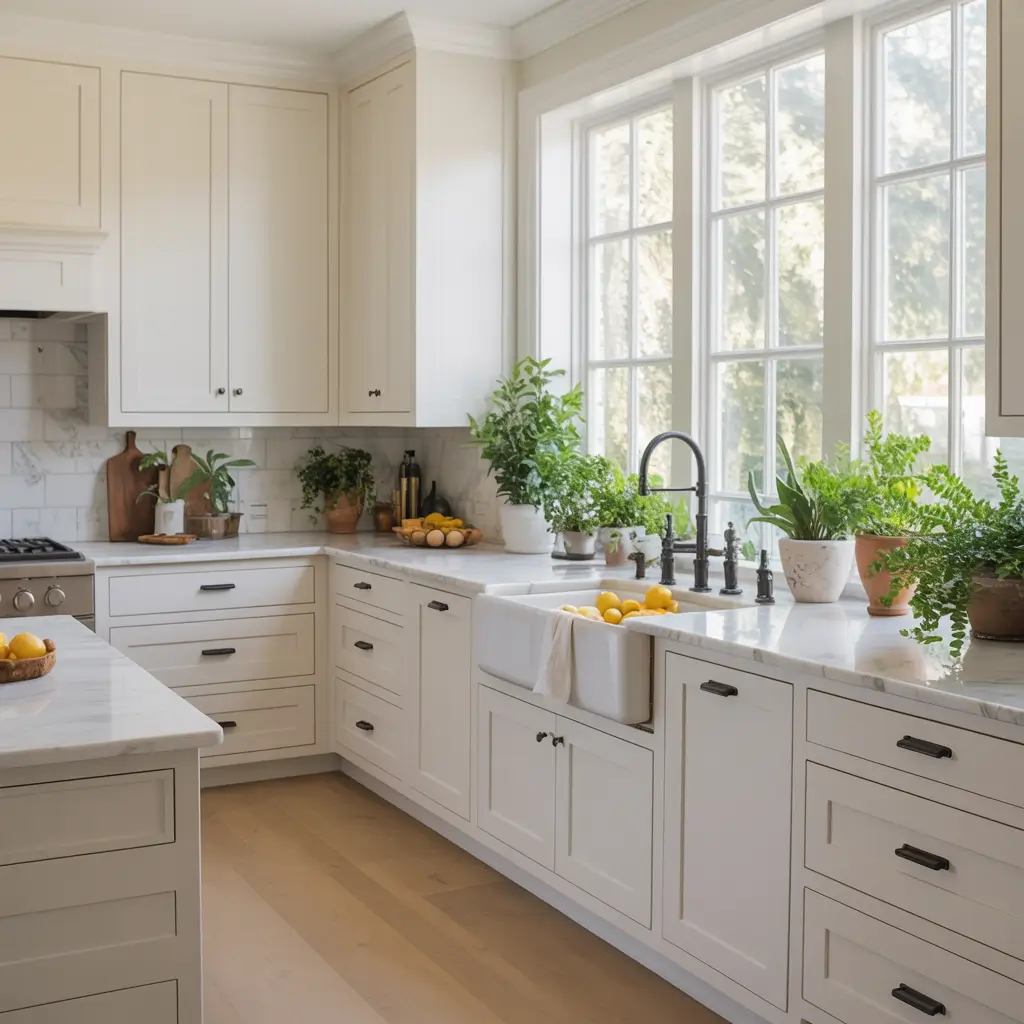
Nothing says farmhouse like the honest, unfiltered beauty of natural wood. Rustic wood cabinets bring warmth, texture, and a sense of history that no paint color can replicate. The knots, grain variations, and subtle imperfections are not flaws — they are the entire point.
These cabinets age gracefully. A scratch or a worn edge only adds to their character over time, which makes them an incredibly practical choice for a family kitchen where life actually happens. They pair beautifully with stone countertops, apron-front sinks, and pendant lighting with an industrial edge.
Best Wood Species for Farmhouse Cabinets
- Pine: Budget-friendly, takes stain beautifully, and has a soft, approachable grain
- Oak: Highly durable with bold, prominent grain — a classic farmhouse choice
- Hickory: Dramatic, high-contrast grain for a more rugged, bold look
- Maple: Subtle, fine grain for a softer, more refined rustic aesthetic
- Walnut: Rich, dark tones that feel luxurious while still deeply rooted in farmhouse tradition
Finish matters enormously with wood cabinets. Skip the high-gloss lacquer and opt for matte or satin finishes that let the wood breathe and show its natural character. An oil or wax finish gives the most authentic result if you are willing to do occasional maintenance.
3. Two-Tone Farmhouse Cabinets — Contrast That Creates Drama
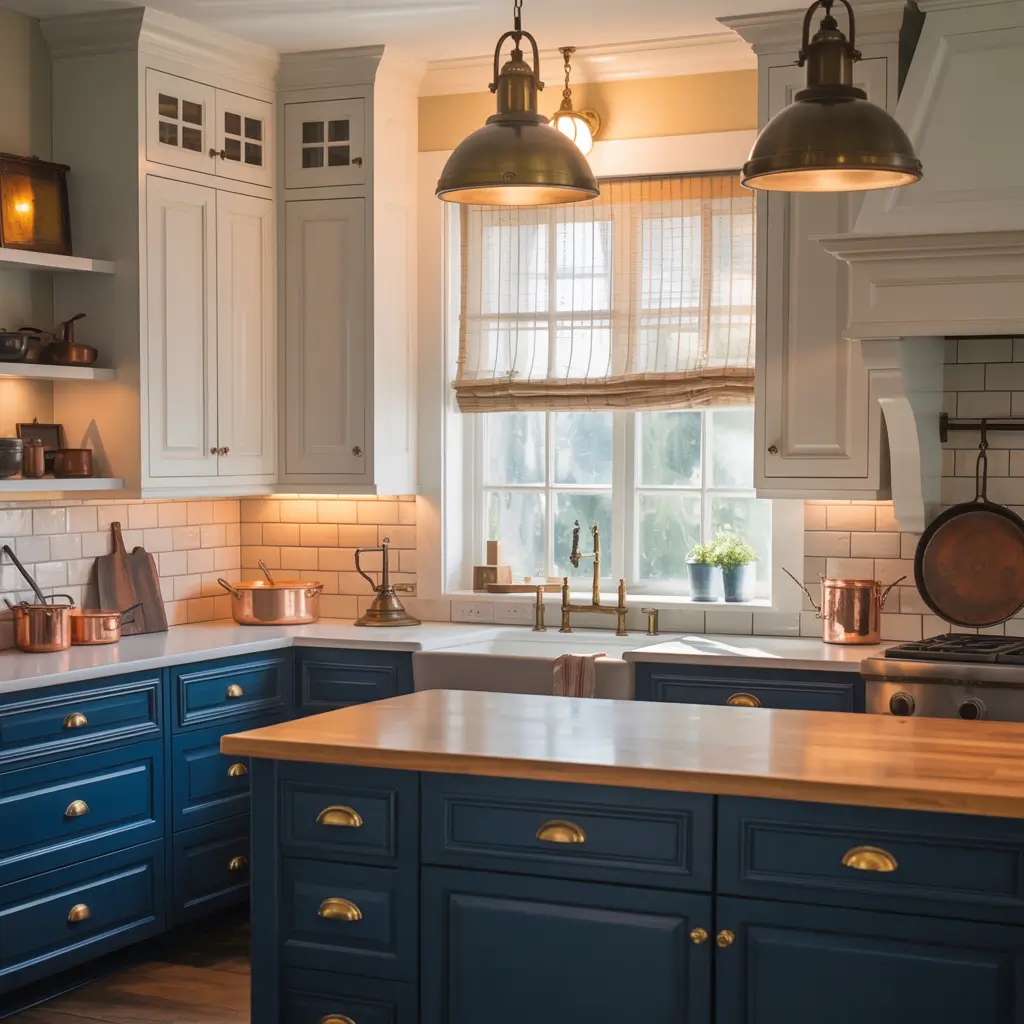
The two-tone cabinet trend has moved well beyond a passing fad and firmly into the territory of timeless design strategy. The concept is simple: use one color for upper cabinets and a different color or finish for the base cabinets. The result is a kitchen that feels dynamic, layered, and visually interesting without requiring an expensive full renovation.
For farmhouse kitchens, the most effective two-tone combinations lean on the contrast between light and grounded. White or cream on top keeps the space bright and open. A deeper shade below — forest green, navy, charcoal, or even black — anchors the room and adds sophistication.
Winning Two-Tone Combinations
- White uppers with sage green lowers: Soft, earthy, and endlessly calming
- Cream uppers with navy blue lowers: Classic with genuine staying power
- White uppers with charcoal gray lowers: The modern farmhouse sweet spot
- Natural wood uppers with painted white lowers: Brings warmth to a clean base
- White perimeter cabinets with a boldly colored island: Maximum impact without commitment
4. Open Shelving Mixed with Closed Cabinets — Style Meets Practicality
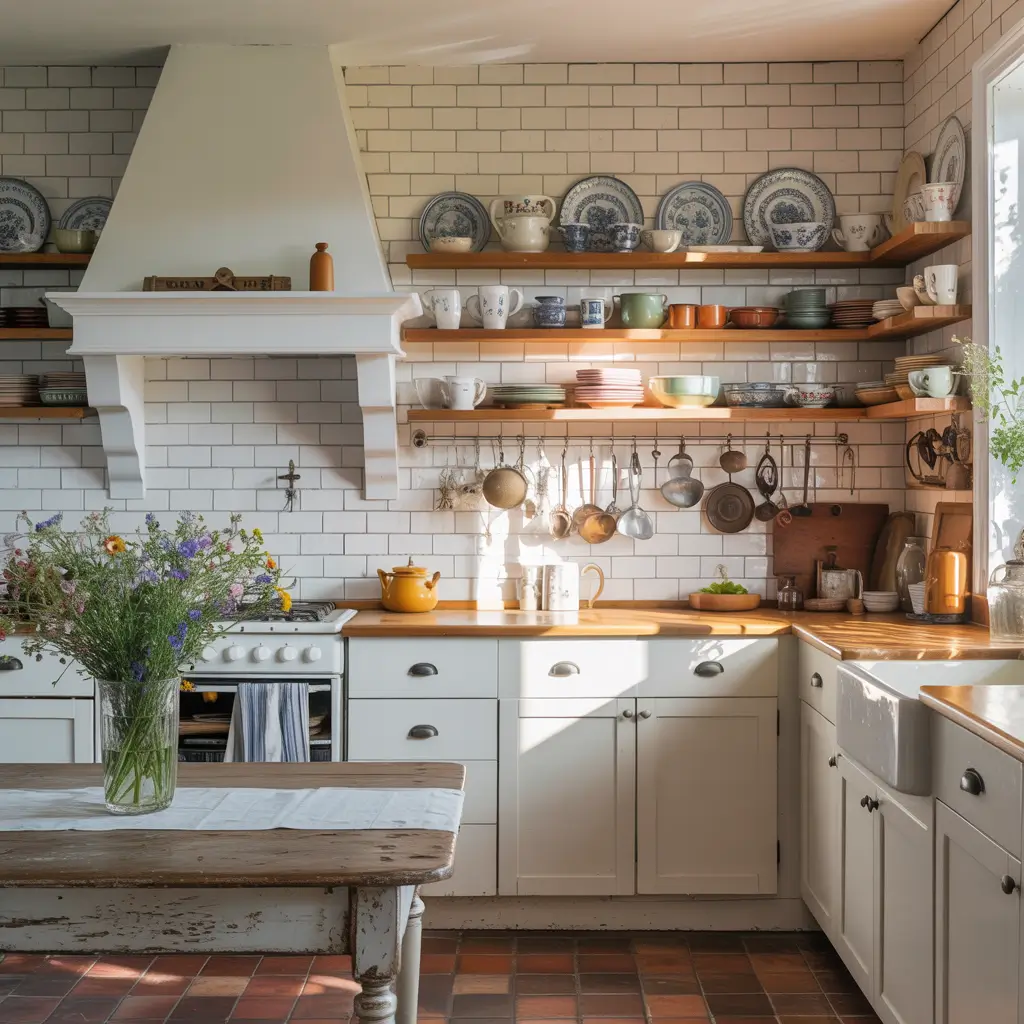
Open shelving is one of those design choices that divides people straight down the middle. Some homeowners love the airy, casual feel it creates. Others cannot imagine living without the security of closed cabinet doors hiding everything away. The good news? You do not have to choose one or the other.
Mixing open wooden shelves with traditional closed cabinets is one of the most popular and practical farmhouse kitchen design strategies available. Replace the upper cabinets on one wall with floating shelves, keep closed cabinets everywhere else, and you get the best of both worlds — visual openness where it matters and hidden storage where you need it.
Making Open Shelving Work Long-Term
- Stick to a cohesive color palette for dishware — visual consistency makes shelves look intentional rather than chaotic
- Leave breathing room between items — negative space is what separates display from clutter
- Mix heights and textures — combine stacked plates, pitchers, jars, and a plant or two for a lived-in farmhouse feel
- Keep everyday items on open shelves and hide the mismatched Tupperware behind doors — strategic editing is everything
5. Distressed and Painted Cabinets — Instant Farmhouse Character
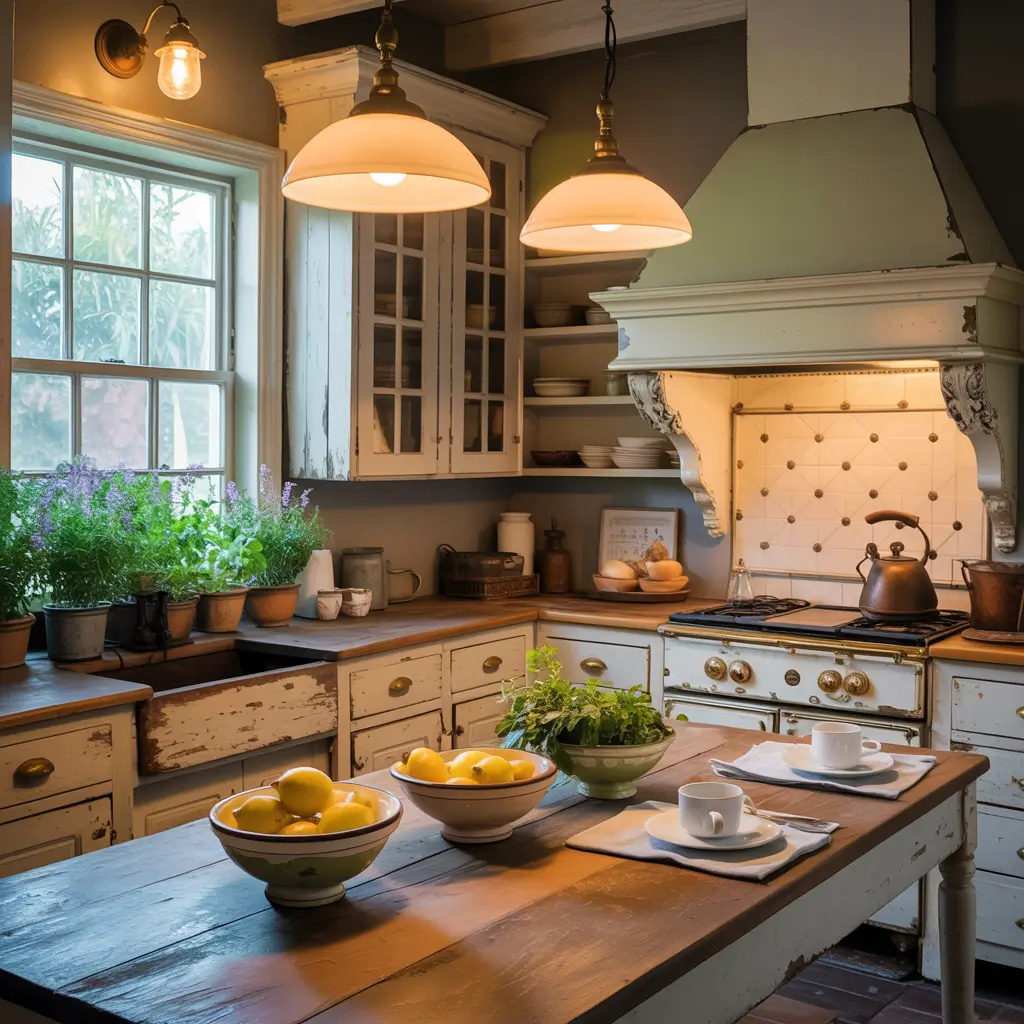
If you want your kitchen to feel genuinely lived-in and full of warmth without spending a fortune on reclaimed materials, distressed cabinets are one of the most effective shortcuts available. Modern distressing techniques create the look of age and character in a way that feels intentional rather than neglected.
The beauty of this approach is that it works on existing cabinets too. A coat of chalk paint followed by selective sanding at the edges and high-wear areas can completely transform builder-grade cabinets into something that looks like it belongs in a nineteenth-century farmhouse.
DIY Distressing Techniques That Actually Work
- Sanding: Focus on edges, corners, and raised panel details where natural wear would occur first
- Dark wax or glaze: Rub into crevices and wipe back to add depth and shadow
- Dry brushing: Load a brush lightly with a contrasting color and drag it across the surface for subtle texture
- Crackle medium: Apply between two paint colors for an authentic aged, peeling effect
A word of caution: always start lighter than you think you need. You can always add more distressing, but you cannot undo an overly aggressive sanding session without repainting from scratch.
6. Black Hardware and Accents — The Modern Farmhouse Edge
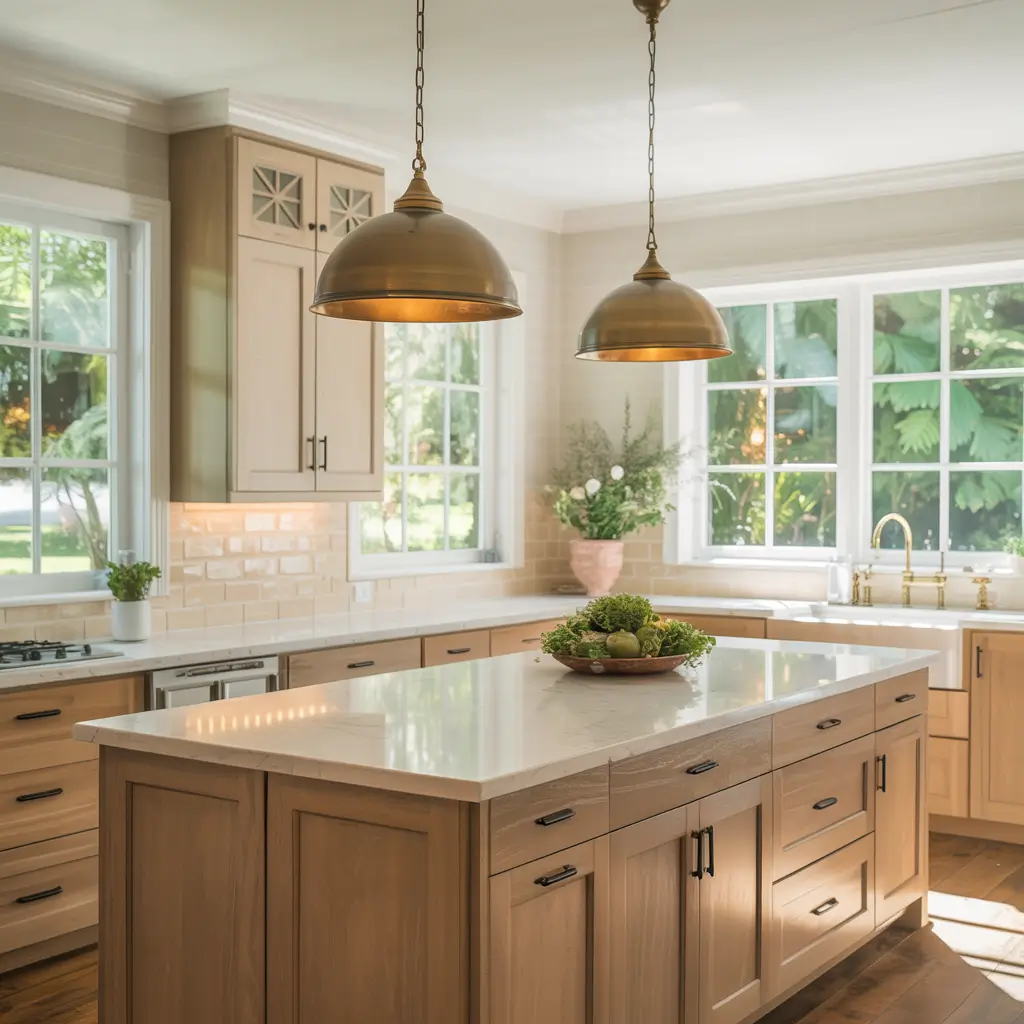
The rise of modern farmhouse style brought one design element to the forefront that has remained consistently popular: matte black accents. Black hardware on white or natural wood cabinets creates a visual contrast that immediately elevates the entire kitchen from pleasant to striking.
The key with black accents is restraint. Black works best as punctuation — the finishing detail that pulls everything together rather than the main event that dominates the room. Cabinet pulls, knobs, hinges, light fixtures, faucets, and window frames are all ideal places to introduce this element.
Where to Introduce Black in Your Farmhouse Kitchen
- Matte black cabinet pulls and knobs — the single highest-impact, lowest-cost upgrade available
- Black-framed windows — where the architecture allows, these add incredible visual weight
- Industrial-style pendant lights in black — a natural pairing with farmhouse cabinetry
- Black faucets and sinks — bold and practical in equal measure
- Exposed black pipe shelving brackets — an industrial farmhouse touch that works beautifully with wood shelves
7. Glass-Front Cabinet Doors — Light, Elegance, and Accountability
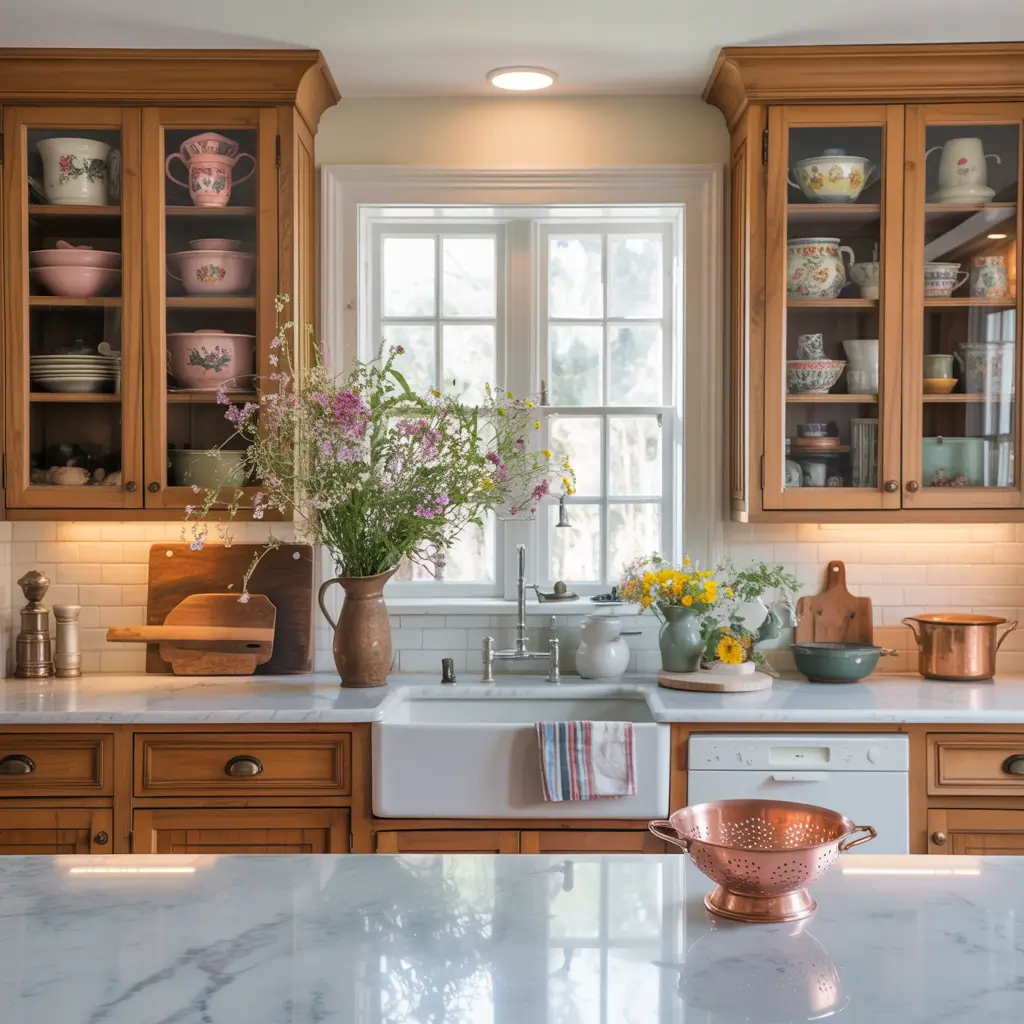
Glass-front cabinets have been a farmhouse kitchen staple for generations, and for good reason. They break up the visual weight of a wall of solid cabinet doors, allow light to pass through the space more freely, and give you the opportunity to display beautiful dishware, vintage glassware, or curated collections of kitchen items.
They are also a surprisingly affordable upgrade. Rather than replacing all your upper cabinets, consider having a glazier cut glass panels for just two or three existing doors. The visual impact is dramatic without the full replacement cost.
Glass Options Worth Considering
- Clear glass: Full visibility — ideal if your shelves are well-organized and your dishware is display-worthy
- Seeded glass: Adds texture and slight obscurity — a favorite for authentic vintage farmhouse kitchens
- Frosted glass: Lets light through while keeping the contents soft and private
- Reeded glass: Vertical ribbed texture that is having a serious design moment right now
- Chicken wire glass: The most distinctly farmhouse option — rustic, charming, and instantly recognizable
8. Sage Green and Earthy-Tone Cabinets — Nature-Inspired and Timeless
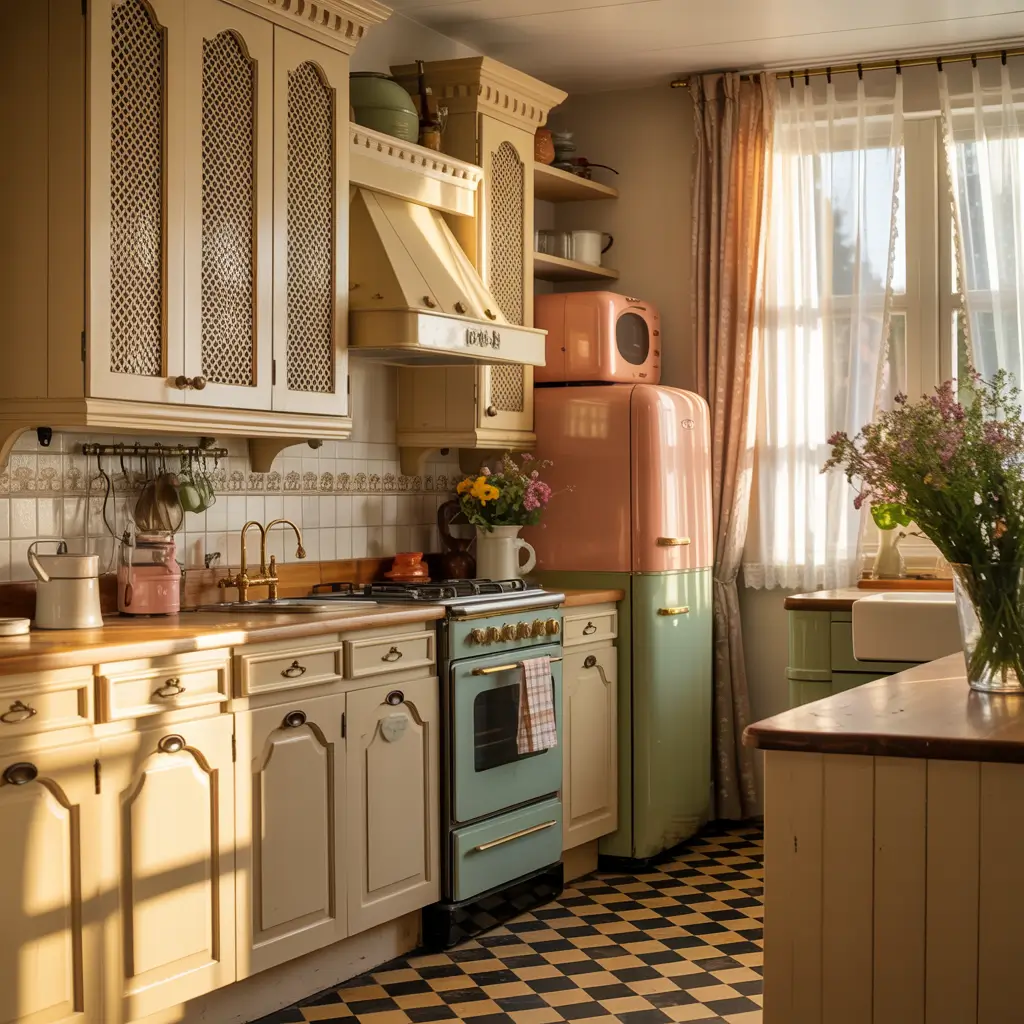
If the past few years of interior design trends could be distilled into a single color, it would be sage green. This muted, earthy green sits at the exact intersection of nature, warmth, and sophistication — and in a farmhouse kitchen, it feels completely at home.
Sage green cabinets work particularly well because they are calm without being cold, interesting without being loud. They pair naturally with warm wood tones, unlacquered brass hardware, and white or cream countertops. The overall effect is organic and grounding — like the kitchen was designed to feel connected to the land.
Other Earthy Tones That Work Brilliantly
- Warm terracotta: Unexpected, bold, and deeply rooted in heritage kitchen design
- Dusty olive: Deeper than sage, richer in tone, pairs beautifully with dark countertops
- Warm taupe: Neutral but warm — a safe choice that still feels considered and intentional
- Deep burgundy: For those willing to go bold — dramatic, warm, and surprisingly farmhouse-appropriate
9. Reclaimed Wood Cabinets — Sustainability with Soul
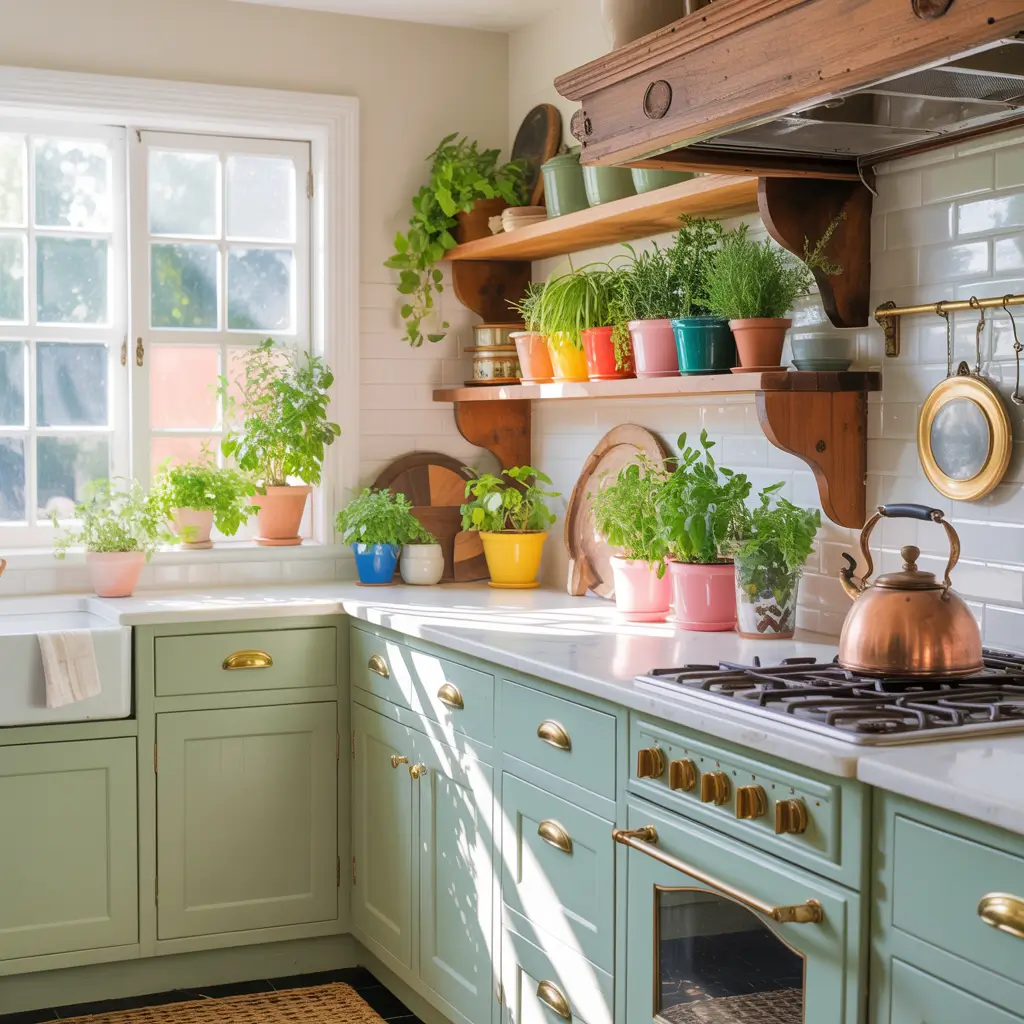
Reclaimed wood cabinets sit at the top of the farmhouse kitchen hierarchy for one simple reason: no new material can replicate the depth, patina, and character of wood that has already lived a full life. Whether it came from an old barn, a century-old warehouse floor, or salvaged timber from a demolished building, reclaimed wood brings a layer of authenticity that is simply impossible to fake.
Beyond aesthetics, reclaimed wood is also an environmentally responsible choice. You are giving beautiful material a second life rather than contributing to demand for new timber. For many homeowners, that combination of story, sustainability, and stunning appearance justifies the higher cost.
Important Considerations Before You Buy
- Verify the source and ensure the wood has been properly kiln-dried and treated to eliminate pests or contaminants
- Embrace variation — different boards will have different tones and textures, which adds to the charm rather than detracting from it
- Seal properly with food-safe finishes designed for high-humidity environments
- Keep hardware simple — reclaimed wood is the star and needs little supporting cast
10. Sliding Barn Door Cabinets — A True Farmhouse Statement
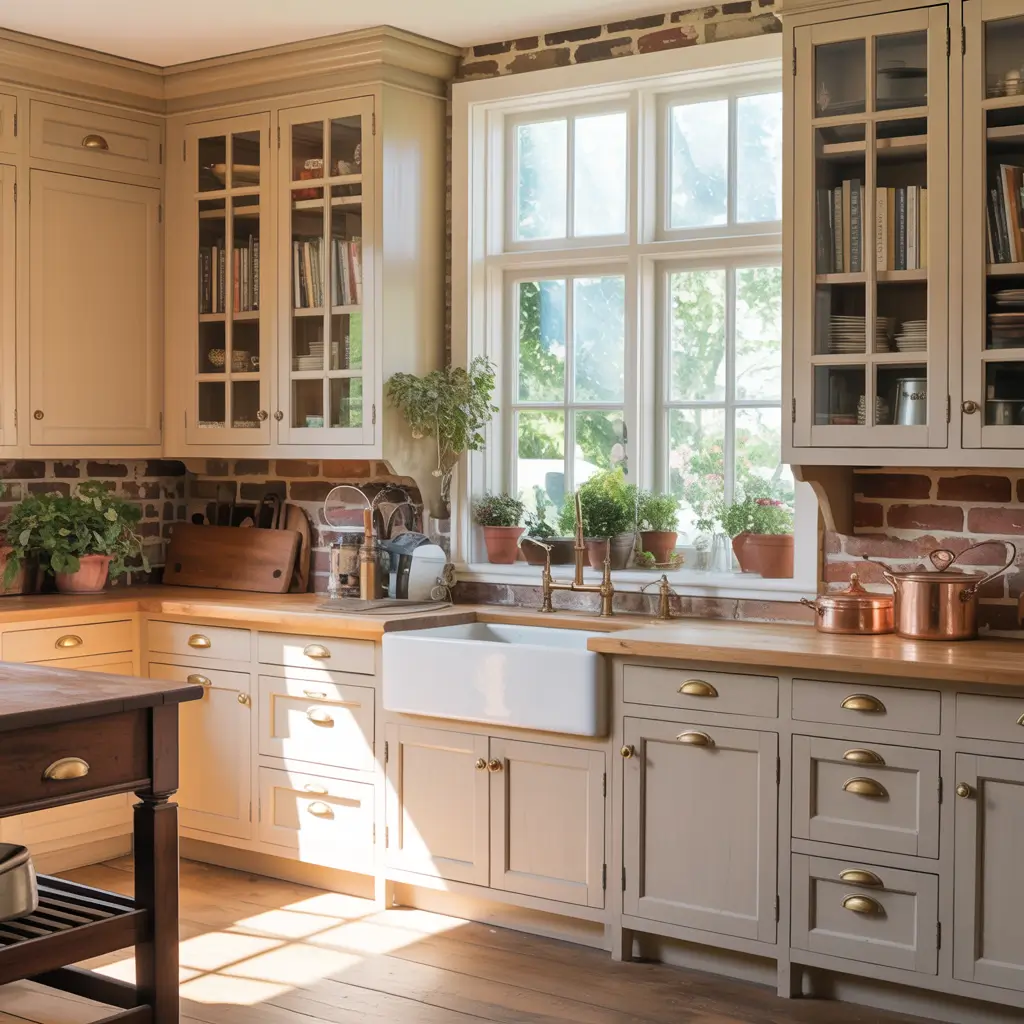
If you want to make one design decision that will generate more conversation than anything else in your kitchen, install barn door cabinets. Sliding barn doors on kitchen storage units are one of those ideas that sounds unexpected until you see it — and then it makes complete, perfect sense.
Beyond the obvious visual drama, barn doors offer a practical benefit in tight kitchens: they require zero clearance to open. No swinging door means no awkward choreography around an open refrigerator or island. For pantry access, appliance garages, or upper cabinet alternatives, they are genuinely functional as well as beautiful.
Best Applications for Barn Door Cabinets
- Full pantry doors: The most classic application and always impactful
- Appliance garages: Hide the coffee maker, toaster, and blender behind a sliding wood door
- Upper cabinet replacements: An unexpected focal point that completely transforms a wall
- Island storage access: Accessible from multiple sides without requiring swing clearance
11. Vintage and Beadboard Cabinet Designs — Heritage Charm Done Right
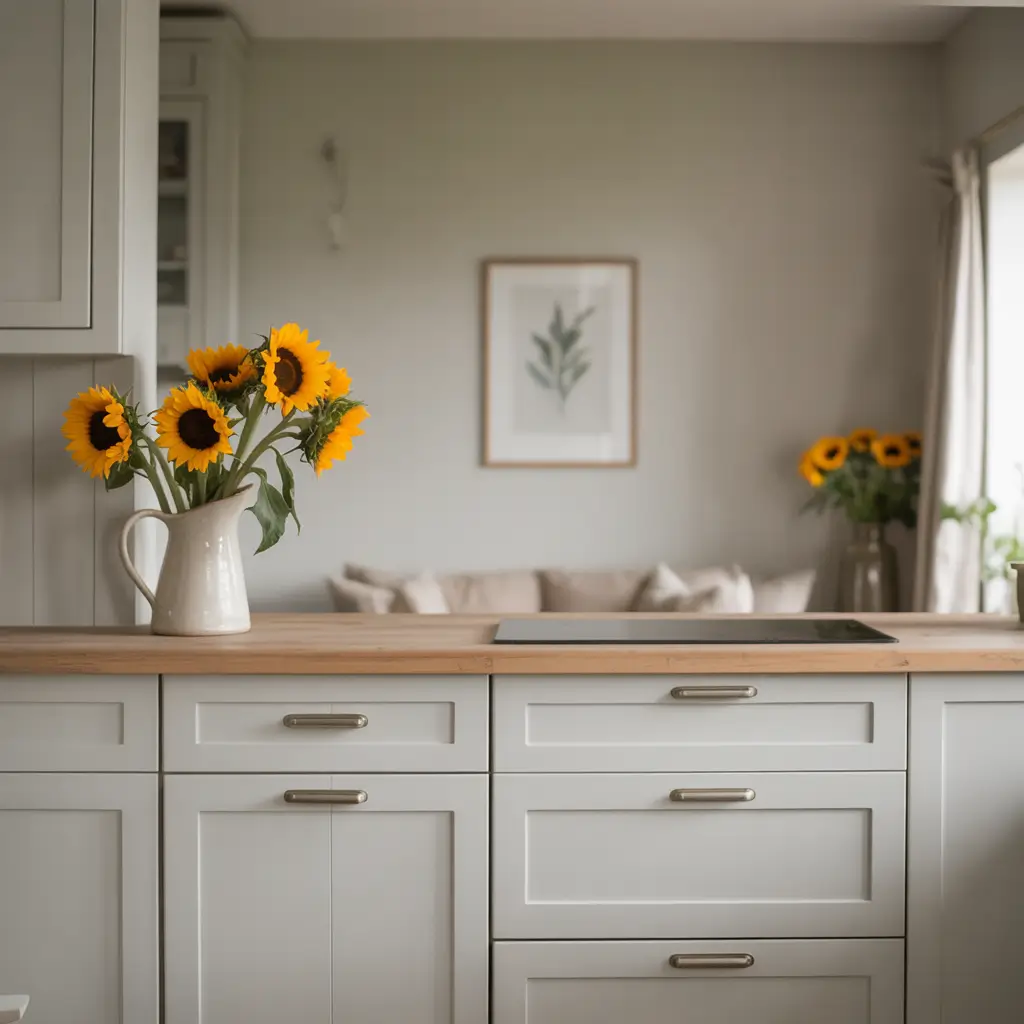
Beadboard detailing on cabinet doors is one of those farmhouse hallmarks that never really goes out of style. Those narrow, evenly spaced vertical grooves create a soft texture that reads as warm, heritage-rich, and unmistakably country — but in a refined, deliberate way rather than a kitschy one.
Pair beadboard cabinet panels with cup pulls or bin hardware reproduced from early twentieth-century designs and you have a kitchen that feels genuinely rooted in American farmhouse tradition. Add a painted finish in an antique white or pale butter yellow and the effect is complete.
Vintage Elements Worth Adding
- Bin pulls and cup hardware: Authentic reproductions are widely available and inexpensive
- Turned furniture legs: Add to islands or open lower sections for a freestanding furniture look
- Milk paint finish: Creates that perfectly chalky, matte, aged appearance
- Plate rack inserts: A gorgeous vintage detail that is also genuinely practical
12. Bold Color Farmhouse Cabinets — Make a Statement, Not an Apology
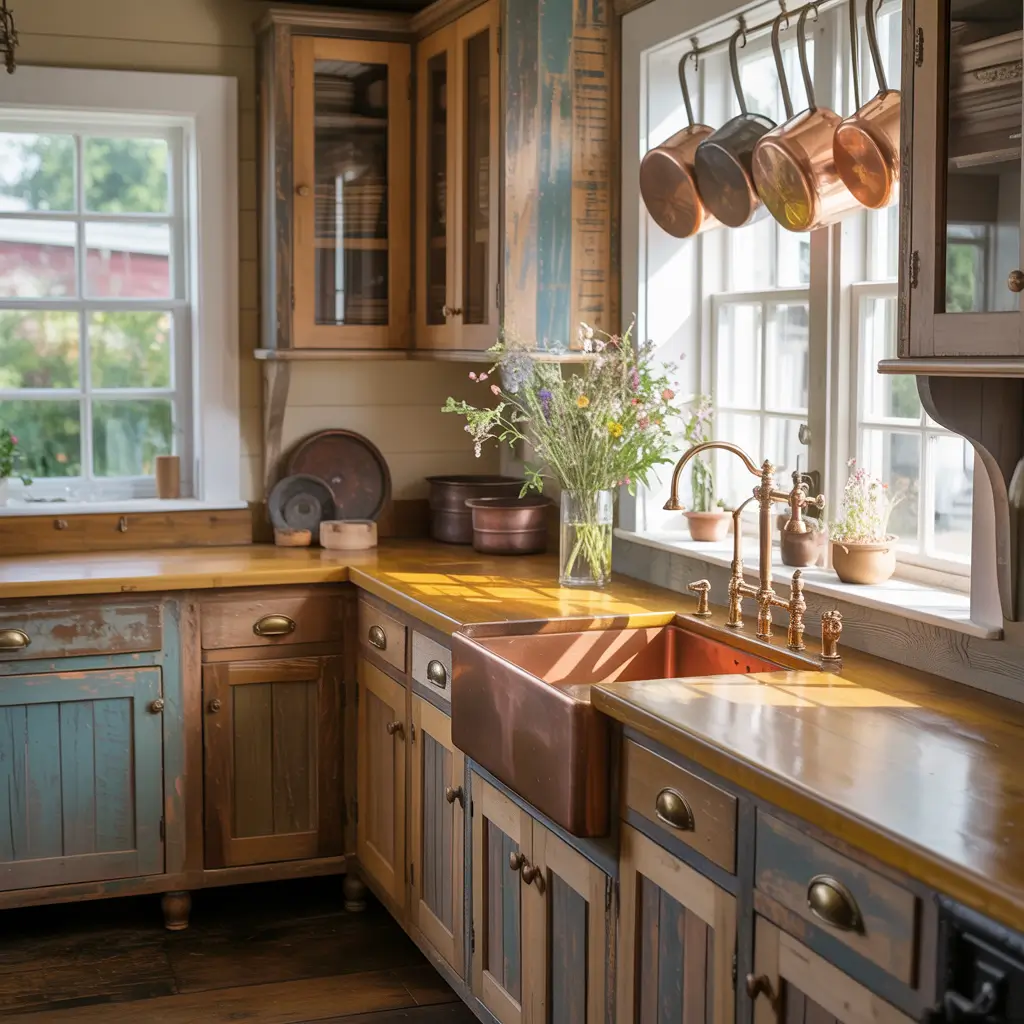
There is a quiet revolution happening in farmhouse kitchen design, and it goes by the name of bold color. For years, the farmhouse aesthetic was almost exclusively associated with white, cream, and natural wood. But a new generation of homeowners has discovered something wonderful: deep, saturated cabinet colors can feel just as warm, grounded, and farmhouse-appropriate as any neutral shade.
Forest green, deep navy, rich burgundy, and even a confident black can all work beautifully in a farmhouse kitchen when handled thoughtfully. The key is balancing the boldness with natural materials — wood countertops, stone backsplash, linen window treatments — that soften the overall effect.
Strategy for Going Bold Without Regret
- Start with the island: Paint just the island in a bold color while keeping perimeter cabinets neutral — lower commitment, maximum impact
- Invest in quality paint: Bold colors reveal every imperfection, so surface preparation and premium paint are non-negotiable
- Ensure adequate lighting: Dark cabinets absorb light, so plan your lighting scheme accordingly
- Balance with natural textures: Warm woods, stone, and soft textiles prevent bold colors from feeling harsh
13. Minimalist Farmhouse Cabinets — Quiet, Clean, and Completely Intentional
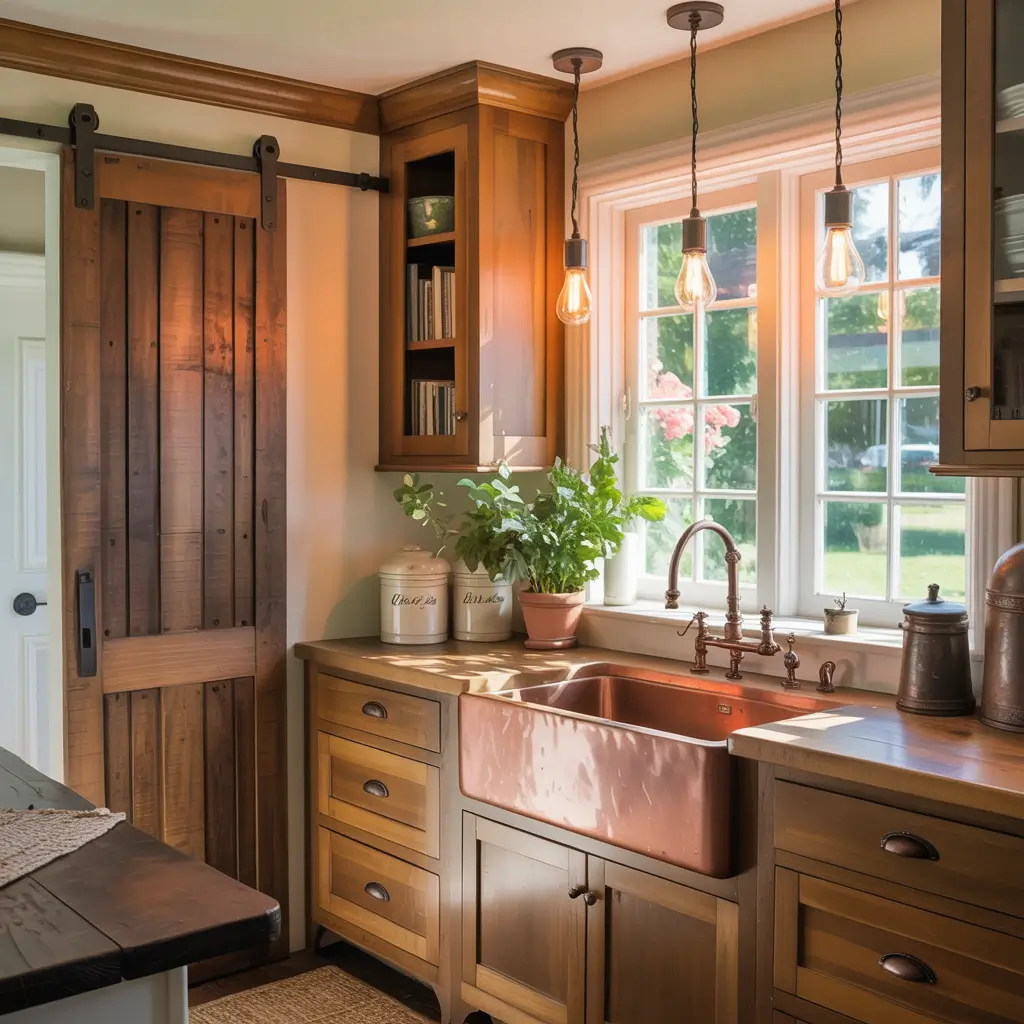
Minimalist farmhouse might sound like a contradiction, but in practice it is one of the most sophisticated expressions of the style. This approach strips away the ornate details — no beadboard, no crown molding, no decorative corbels — and focuses instead on quality materials, honest craftsmanship, and a sense of calm spaciousness.
Flat-panel or barely-there shaker doors in warm white or natural wood, paired with integrated handles or subtle edge pulls, create a kitchen that feels modern and edited without losing warmth. The farmhouse element comes from the materials and the feeling rather than the surface details.
Principles of Minimalist Farmhouse Design
- Choose quality over quantity: Fewer, better materials speak more eloquently than many competing elements
- Let one material be the star: Either beautiful wood or a perfect paint color — not both competing equally
- Edit the countertop: Clear surfaces are the visual reward that minimalist cabinetry earns
- Invest in invisible storage: Deep drawers, interior organizers, and pull-outs make minimalism actually liveable
14. Smart Storage Solutions in Farmhouse Cabinets — Beautiful and Functional
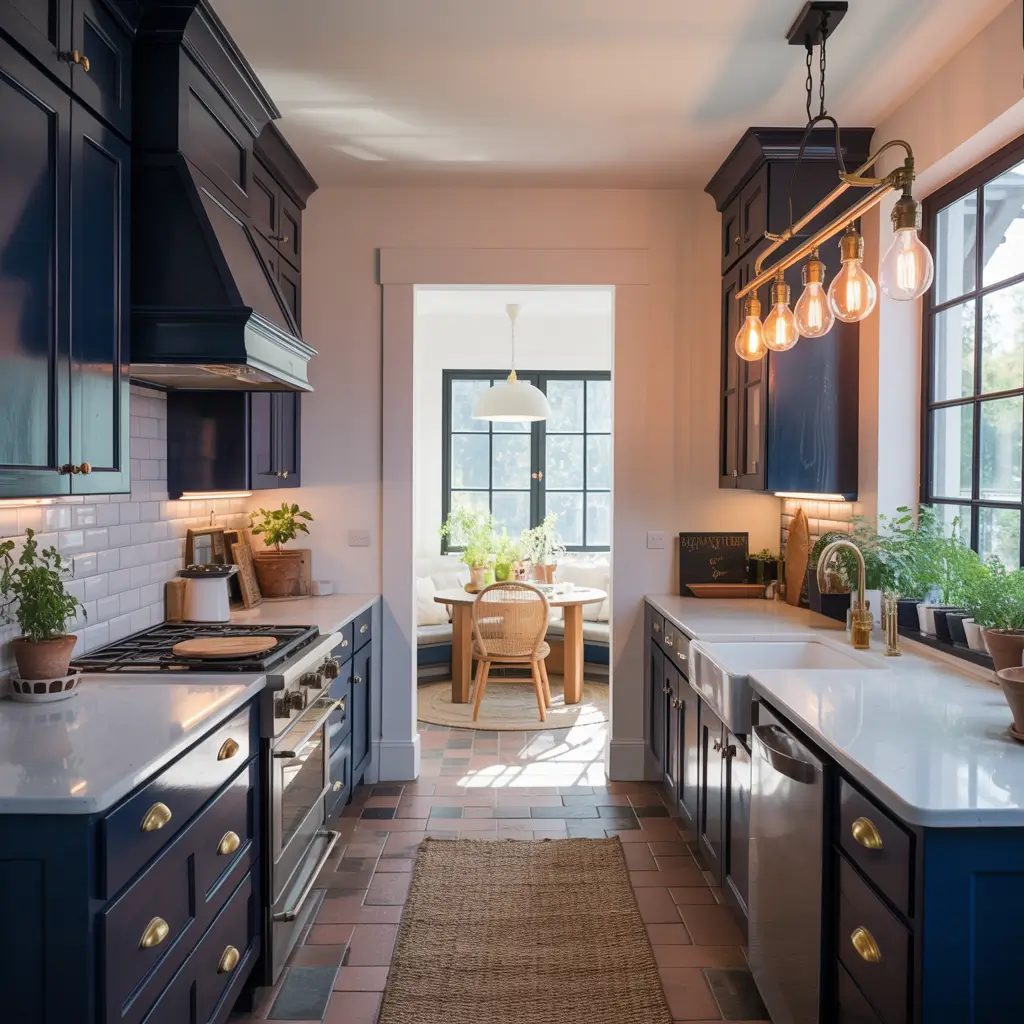
One of the most common mistakes in kitchen renovation is spending all the budget on the visible elements — the door style, the paint color, the hardware — and neglecting what goes on inside the cabinets. Smart interior storage is what separates a kitchen that looks beautiful in photographs from one that actually works beautifully for daily life.
Must-Have Interior Storage Features
- Deep drawer base cabinets: Dramatically better for pots, pans, and lids than traditional base cabinets with shelves
- Pull-out trash and recycling bins: Keeps waste out of sight and odors contained
- Vertical dividers in upper or base cabinets: Essential for baking sheets, cutting boards, and serving platters
- Pull-out spice organization: Keeps spices visible, accessible, and organized without consuming counter space
- Lazy Susans or magic corners: Transform those frustrating blind corner cabinets into actually accessible storage
- Built-in utensil dividers: Custom-fitted drawer organizers that make the most of every inch
15. Farmhouse Cabinets for Small Kitchens — Big Style in Tight Spaces
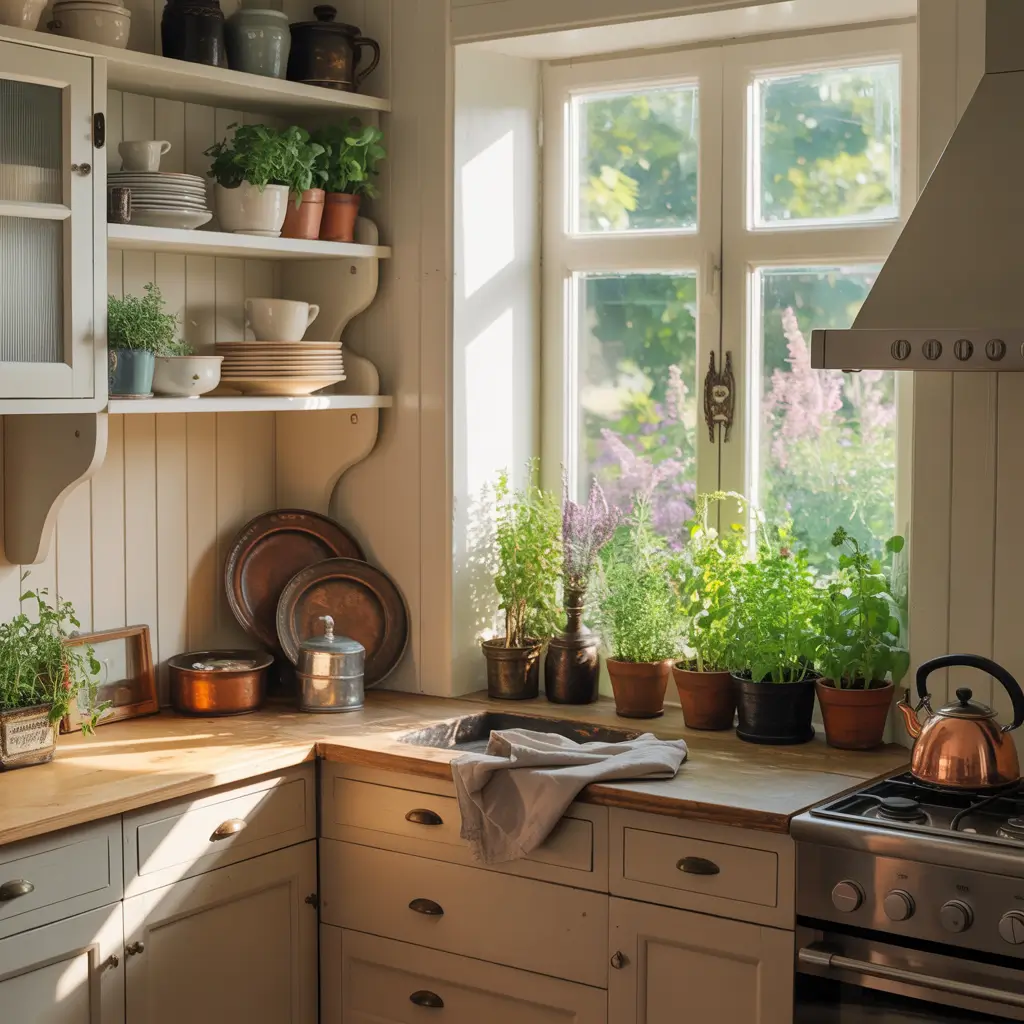
A small kitchen is no obstacle to farmhouse style — it just requires a slightly different approach. The goal is to maximize every inch of storage and visual space without sacrificing the warmth and character that define the aesthetic. With the right cabinet choices, even the most modest kitchen can feel cozy, intentional, and full of personality.
Small-Kitchen Cabinet Strategies
- Take cabinets to the ceiling: Eliminates dust-collecting dead space and dramatically increases storage capacity
- Use light colors for all or most cabinets: White, cream, and pale wood tones expand the perceived space
- Incorporate at least some glass-front or open elements: Preserving sight lines makes small kitchens feel significantly larger
- Choose hardware that does not project far: Flush pulls or small knobs prevent the visual busyness that makes small spaces feel cramped
- Edit ruthlessly: The most powerful tool in a small kitchen is not another cabinet — it is removing the things you do not actually use
Final Thoughts: Your Kitchen, Your Story
After exploring twenty distinct approaches to farmhouse kitchen cabinets, here is perhaps the most important thing to take with you: the best farmhouse kitchen is not the one that follows the most trends or checks every design box. It is the one that feels genuinely like you.
Farmhouse style at its heart is about warmth, honesty, and the beauty of imperfection. It is about a kitchen that invites people in and makes them feel comfortable enough to stay. It is about cabinets that get better with age rather than worse. It is about design decisions that prioritize how a space feels to live in over how it photographs — though when done right, those two things happen to align perfectly.
Whether you are drawn to the crisp simplicity of white shakers, the raw authenticity of reclaimed wood, the quiet drama of sage green, or the bold confidence of barn door accents, there is a farmhouse cabinet direction that will feel exactly right for your home and your life.
Start with what resonates most deeply. Make one good decision, then the next. And remember that the farmhouse kitchen has always been, above everything else, a place where real life happens — spilled coffee and all. That is not a flaw in the design philosophy. That is the entire point.
Frequently Asked Questions About Farmhouse Kitchen Cabinets
What color cabinets are most popular for farmhouse kitchens?
White and off-white remain the most popular choices, followed closely by sage green and navy blue. Two-tone combinations — typically white or cream uppers with a darker or bolder lower cabinet — are increasingly common and allow homeowners to add personality without fully committing to a single bold color throughout.
Are shaker cabinets the same as farmhouse cabinets?
Shaker cabinets are a style defined by their five-piece recessed panel door construction, and they are closely associated with farmhouse kitchens — but they are not the only farmhouse cabinet style. Beadboard panels, glass-front doors, open shelves, distressed finishes, and reclaimed wood are all equally at home in farmhouse kitchens without being shaker in style.
How can I add farmhouse style to my kitchen without replacing all the cabinets?
The most effective upgrades are: repainting existing cabinets in a farmhouse-appropriate color, replacing all hardware with a new finish such as matte black or unlacquered brass, adding glass inserts to a few upper cabinet doors, installing floating wood shelves on one wall, and adding crown molding at the top of existing upper cabinets. Even one of these changes can meaningfully shift the feel of the space.
What countertops work best with farmhouse cabinets?
Butcher block is the quintessential farmhouse countertop choice — warm, natural, and deeply practical for a working kitchen. Honed or leathered stone such as soapstone or matte quartzite work beautifully. Concrete countertops add an industrial farmhouse edge. Even simple laminate in a wood-grain or stone finish can work effectively in a budget-conscious farmhouse kitchen.
1 thought on “15 Stunning Farmhouse Kitchen Cabinets Ideas to Transform Your Space”