
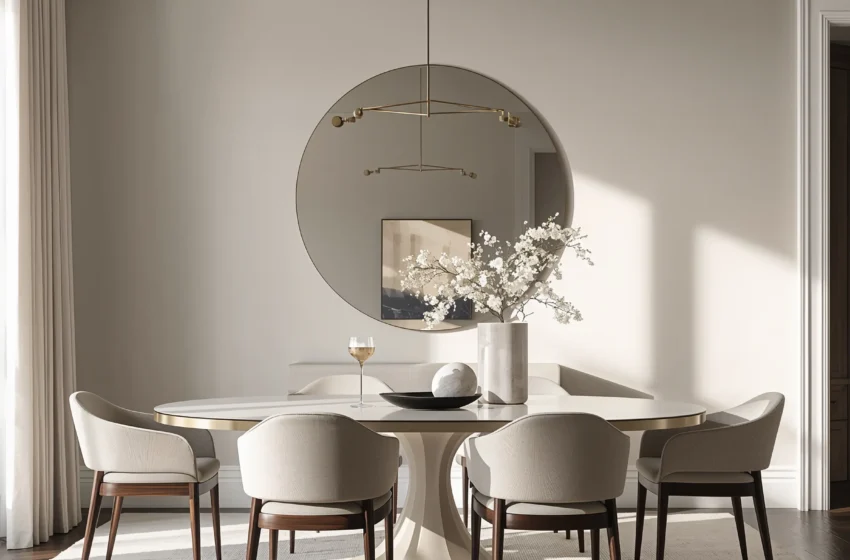
You know that feeling when you sit down for dinner and something just feels… off? The food is great, the company is wonderful, but those blank walls are silently screaming for attention. Sound familiar?
Here’s the honest truth: the dining room is one of the most underdecorated spaces in the average home. We spend hours choosing the right table, hunting for the perfect chairs, obsessing over the lighting — and then we hang one sad piece of art and call it done. But those walls? They’re the backdrop to every meal, every birthday celebration, every Sunday family brunch. They deserve better.
Whether your dining room is a formal space reserved for holidays or a cozy everyday gathering spot, the right wall decor can completely change how the room feels. It can make a small space look larger, a cold room feel warmer, a plain wall become a conversation piece. And the best part? You don’t need a massive budget or an interior designer on speed dial.
In this guide, we’re walking through 20 of the most impactful dining room wall decor ideas — from timeless classics to fresh 2025 trends. Each one is practical, style-forward, and absolutely doable. Let’s get into it.
1. Gallery Walls with Personal Photos
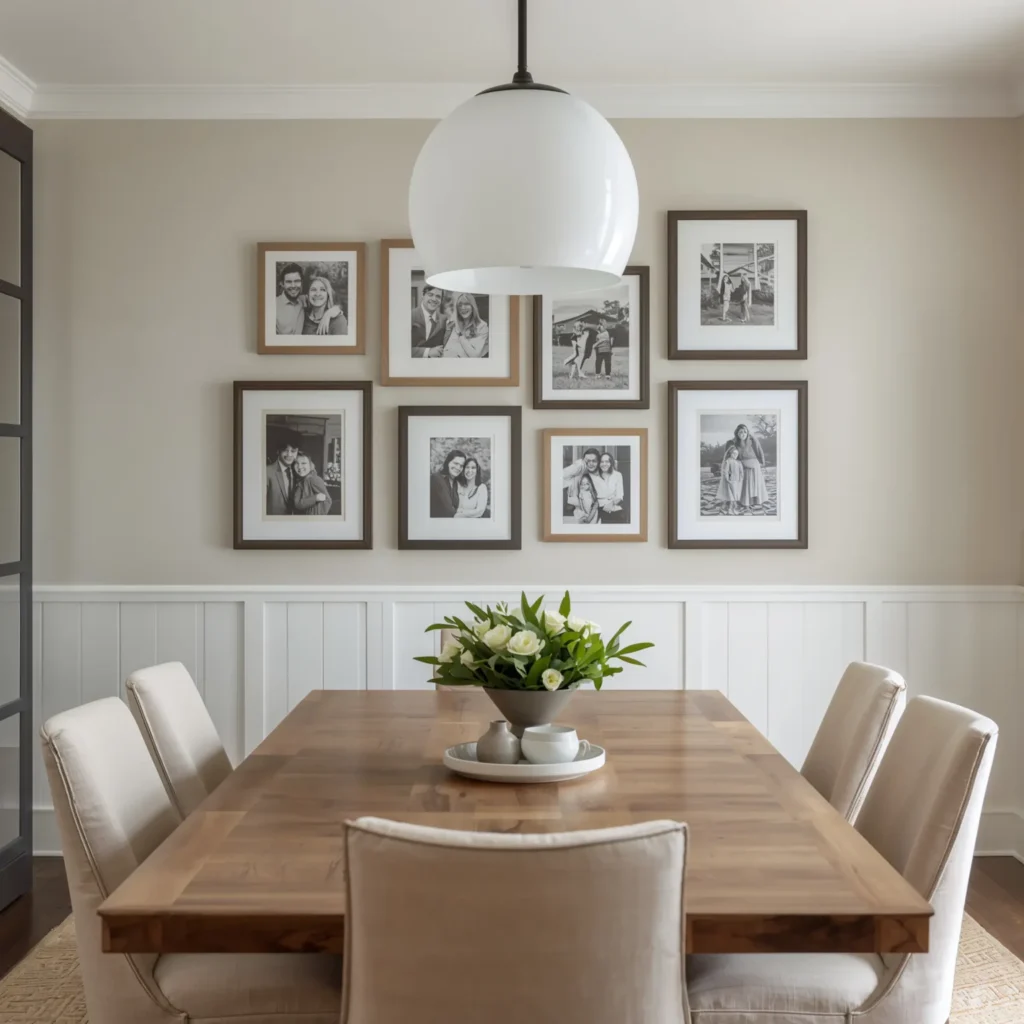
A gallery wall done right is one of the most personal, visually rich things you can do with a dining room wall. It tells your story — vacations you’ve taken, milestones you’ve reached, people you love. And unlike a single piece of art, a gallery wall grows with you.
The secret to pulling it off without it looking chaotic? Start with a common thread. That could be a consistent frame color, a shared tone (all black and white, for example), or a uniform mat style. You don’t need to match every frame — in fact, a little variation in shape and size is what makes gallery walls interesting — but some visual cohesion keeps things feeling intentional.
How to Nail the Layout Without Ruining Your Walls
Before you start hammering, cut paper templates of each frame and tape them up. Live with the arrangement for a day or two. Move things around. What looks balanced to you at 9 a.m. might look completely different at 7 p.m. with the dining room lights on.
Pro tip: Aim for 2 to 3 inches of spacing between frames. Close enough to feel connected, far enough to let each piece breathe. And always anchor the arrangement around one “hero” piece — usually the largest frame — then build outward from there.
2. Oversized Statement Mirrors
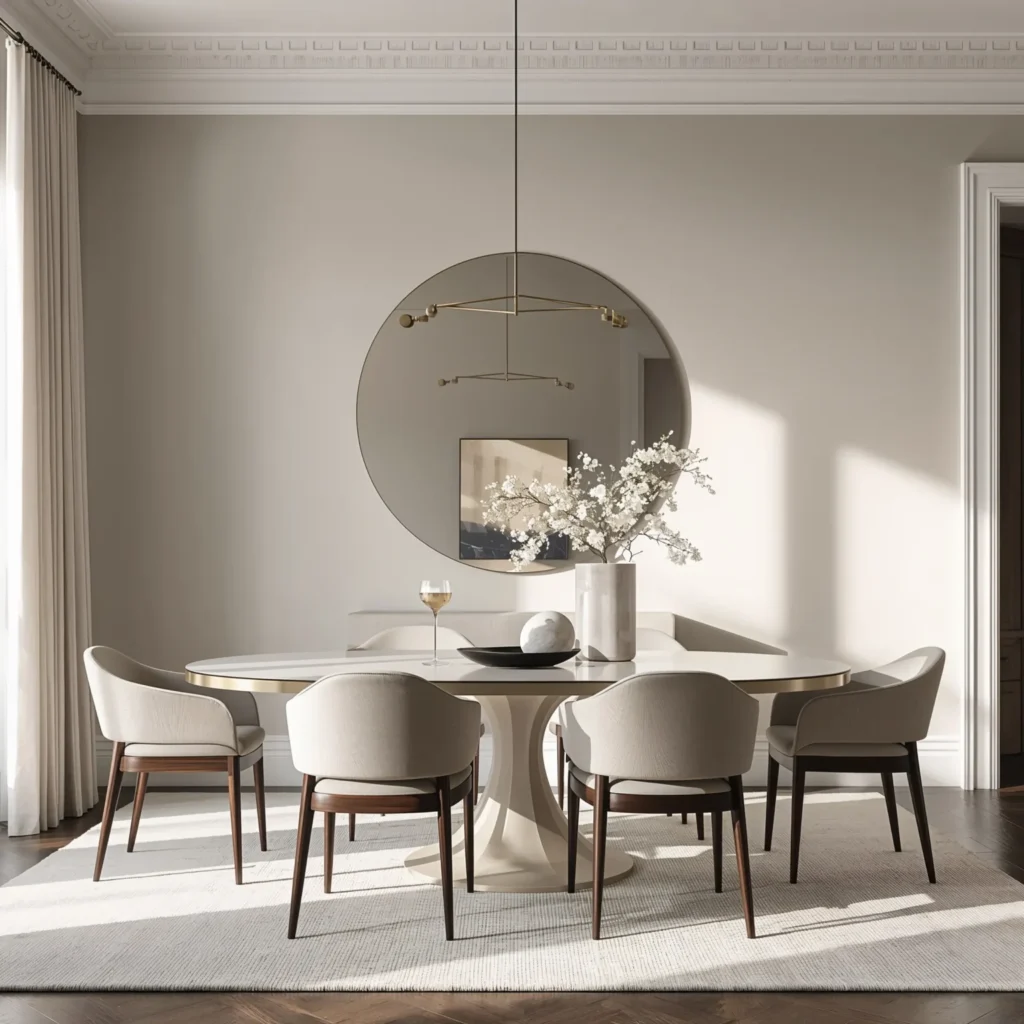
There’s a reason upscale restaurants almost always have large mirrors on their walls — they make spaces feel twice as big and twice as luxurious. The same principle works perfectly in home dining rooms, especially smaller ones.
The key word here is “oversized.” A 20-inch mirror in a 12-foot dining room wall is like wearing sunglasses indoors — it just doesn’t work. You want something that commands attention. Think 36 to 48 inches, minimum. Round mirrors in particular have had a massive moment in recent years and continue to be a top choice for 2025 because of how they soften otherwise angular dining spaces.
Choosing the Right Mirror Frame for Your Style
Ornate gold or champagne frames work beautifully in traditional or maximalist dining rooms. They add glamour and warmth.
Matte black or brushed iron frames are the go-to for modern and industrial spaces. Clean, sharp, and endlessly versatile.
Natural rattan or wood frames give a relaxed, organic feel — perfect if you’re leaning into the earthy, biophilic design trend.
Wherever you hang it, position the mirror to reflect something beautiful — a window, your chandelier, or even a gorgeous piece of artwork on the opposite wall.
3. Floating Wooden Shelves
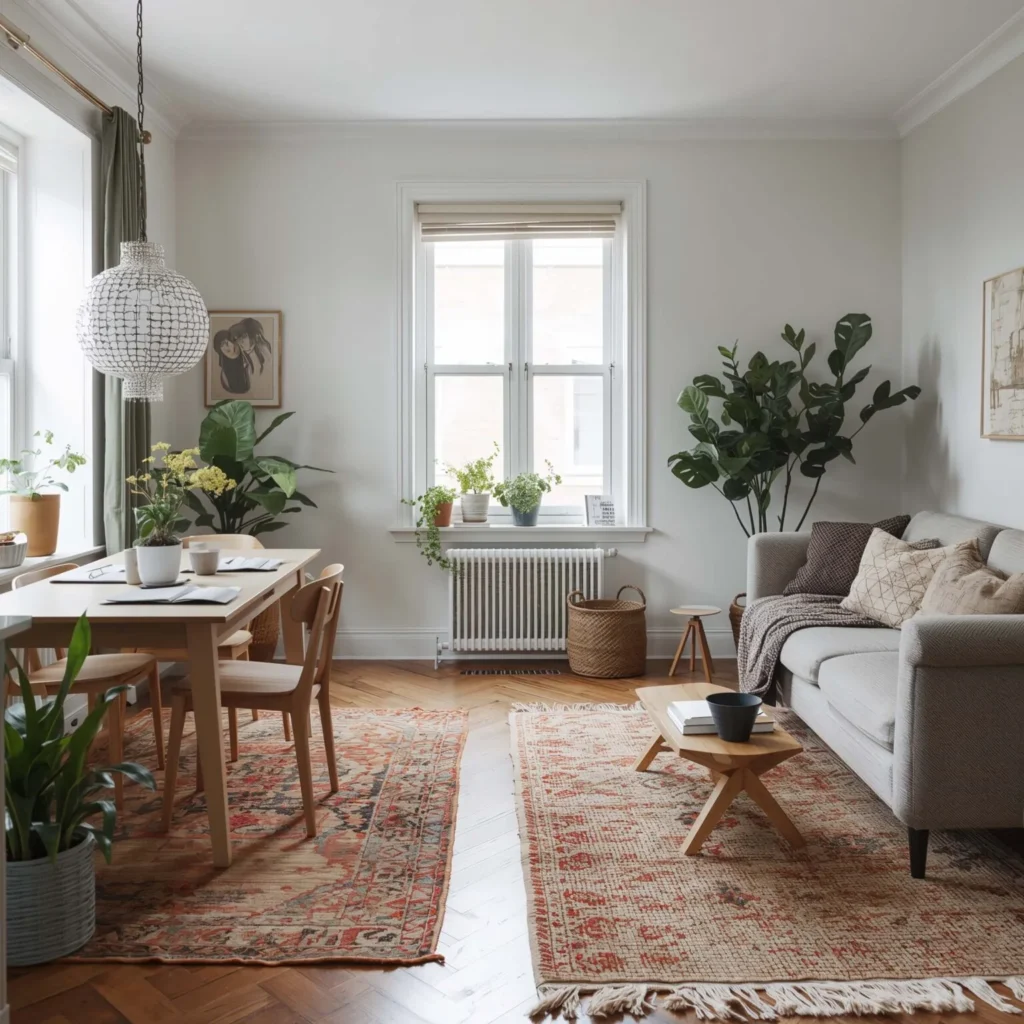
Floating shelves are the ultimate multitaskers of dining room wall decor. They’re functional (yes, you can store things on them), decorative (they look incredible styled right), and incredibly adaptable to any design aesthetic.
For dining rooms specifically, floating shelves have an extra advantage: they let you showcase things that actually belong in or near a dining space — wine bottles, decorative plates, cookbooks, candles, small potted herbs. It makes the decor feel purposeful rather than random.
The Art of Shelf Styling
The biggest mistake people make with floating shelves is overcrowding them. Every shelf should have at least one empty spot — that negative space is what makes the other items stand out. A general formula that works well: vary the heights of objects, mix materials (wood, ceramic, metal, glass), and always add at least one organic element like a plant or a piece of driftwood.
For a cohesive look, stick to a palette of three to four colors across all your shelf accessories. It doesn’t need to match perfectly — just harmonize.
4. Large Abstract Canvas Art
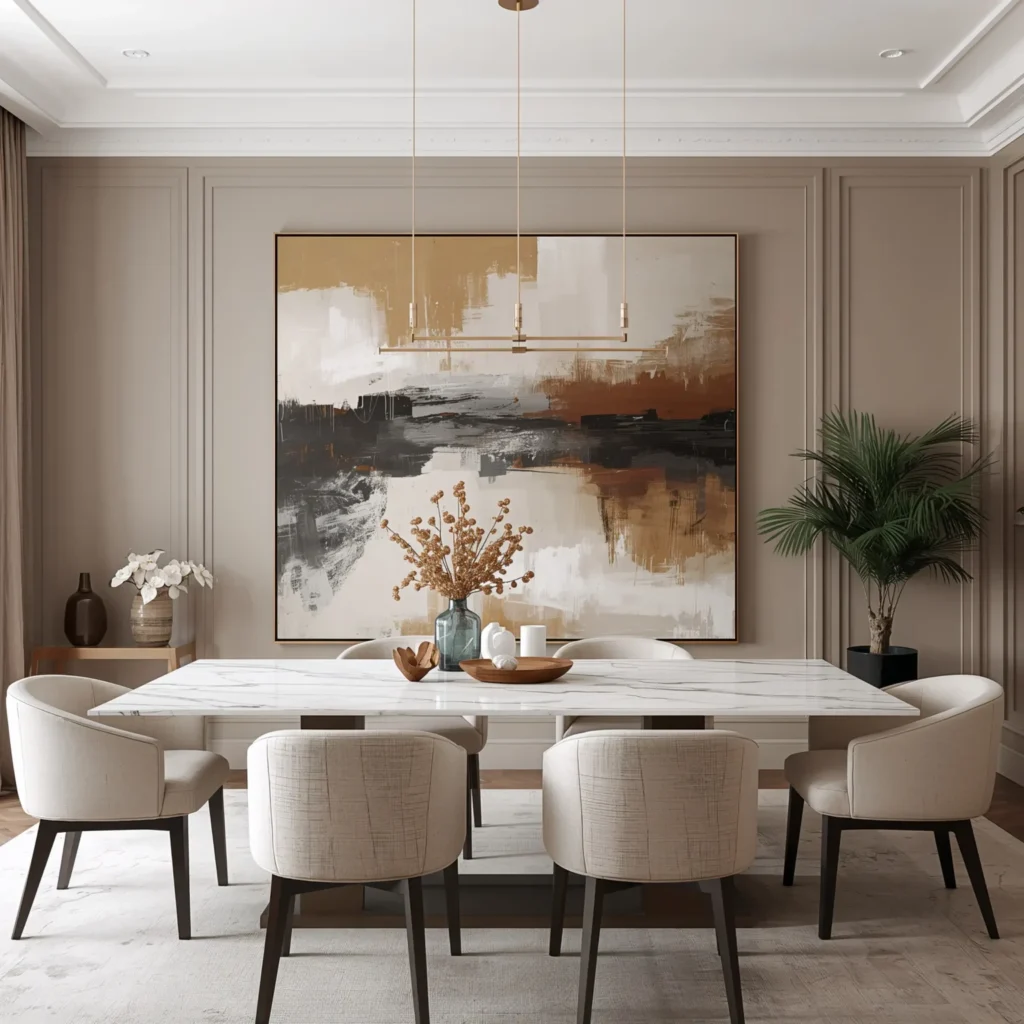
If you’ve been on the fence about abstract art because you don’t “get” it — let go of that worry. Abstract art isn’t about understanding; it’s about feeling. And in a dining room, a large, vibrant abstract canvas can completely set the mood of the space.
Size matters enormously here. A small canvas on a large wall will look awkward and out of place. For most dining rooms, you’re looking at 36 inches wide as a minimum, with 48 to 60 inches being the sweet spot for a statement piece above a buffet or sideboard.
Where to Find Affordable, High-Quality Abstract Art
You don’t need to spend thousands. Local art fairs, Etsy shops run by independent artists, and even thrift stores regularly yield genuinely beautiful abstract pieces. If you’re feeling adventurous, try creating your own — an abstract painting requires zero technical skill and can be an incredibly fun project.
Color selection tip: Pull two or three dominant colors from your dining room and use those as your starting point when shopping for art. You’re not looking for a perfect match — you’re looking for a conversation.
5. Rustic or Modern Wall Clocks
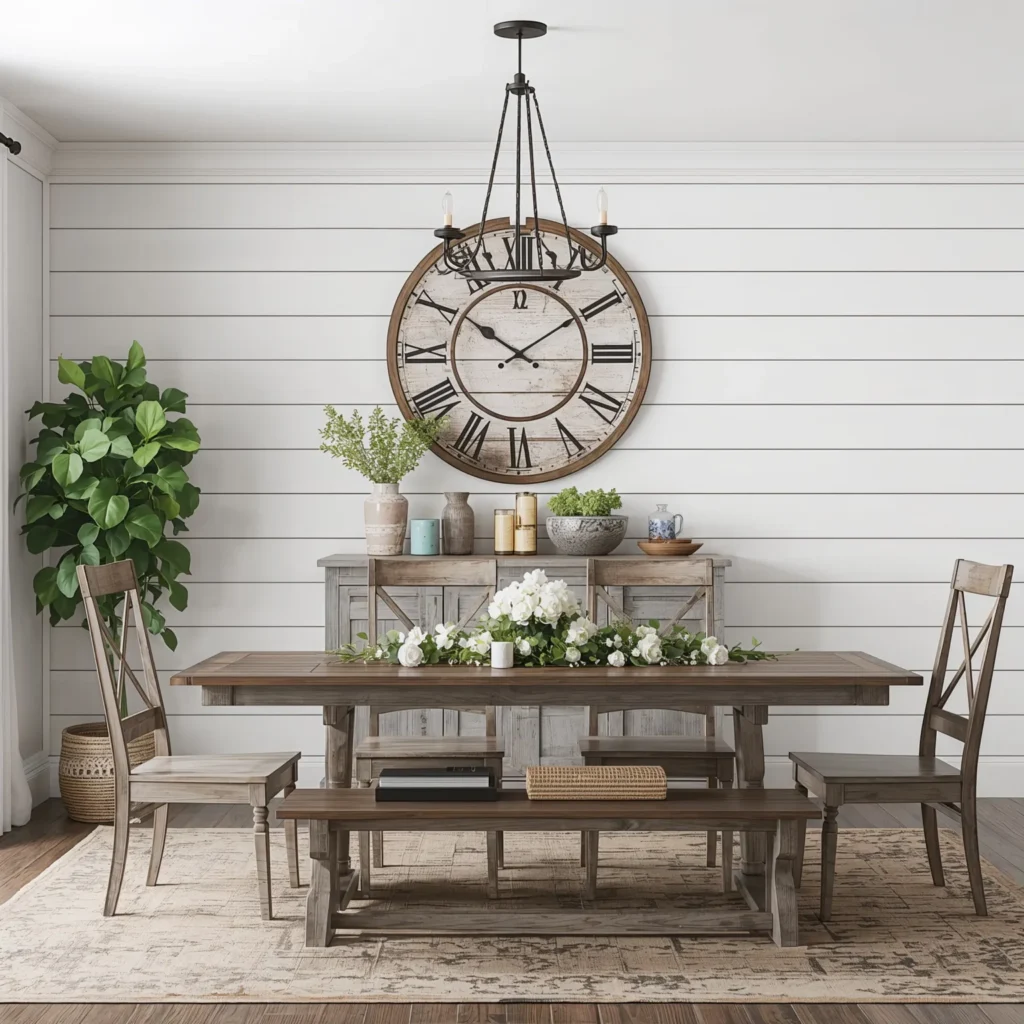
A statement wall clock is one of those underrated decor ideas that’s both functional and surprisingly impactful. The right clock can serve as a focal point, ground a wall arrangement, or add a layer of character that generic art simply can’t.
In recent years, oversized clocks — 24 to 36 inches — have become a staple of farmhouse, industrial, and even Scandinavian-inspired dining rooms. They work especially well on large, empty walls where a single framed print would get lost.
Matching Your Clock to Your Decor Style
Farmhouse and rustic dining rooms: Look for distressed wood faces with Roman numerals and wrought iron hands.
Modern and minimalist spaces: Choose sleek, frameless designs with clean lines and simple numbering.
Industrial dining rooms: Exposed gears, raw metal, and vintage-inspired faces are your best friend.
6. Botanical Prints and Nature-Inspired Art
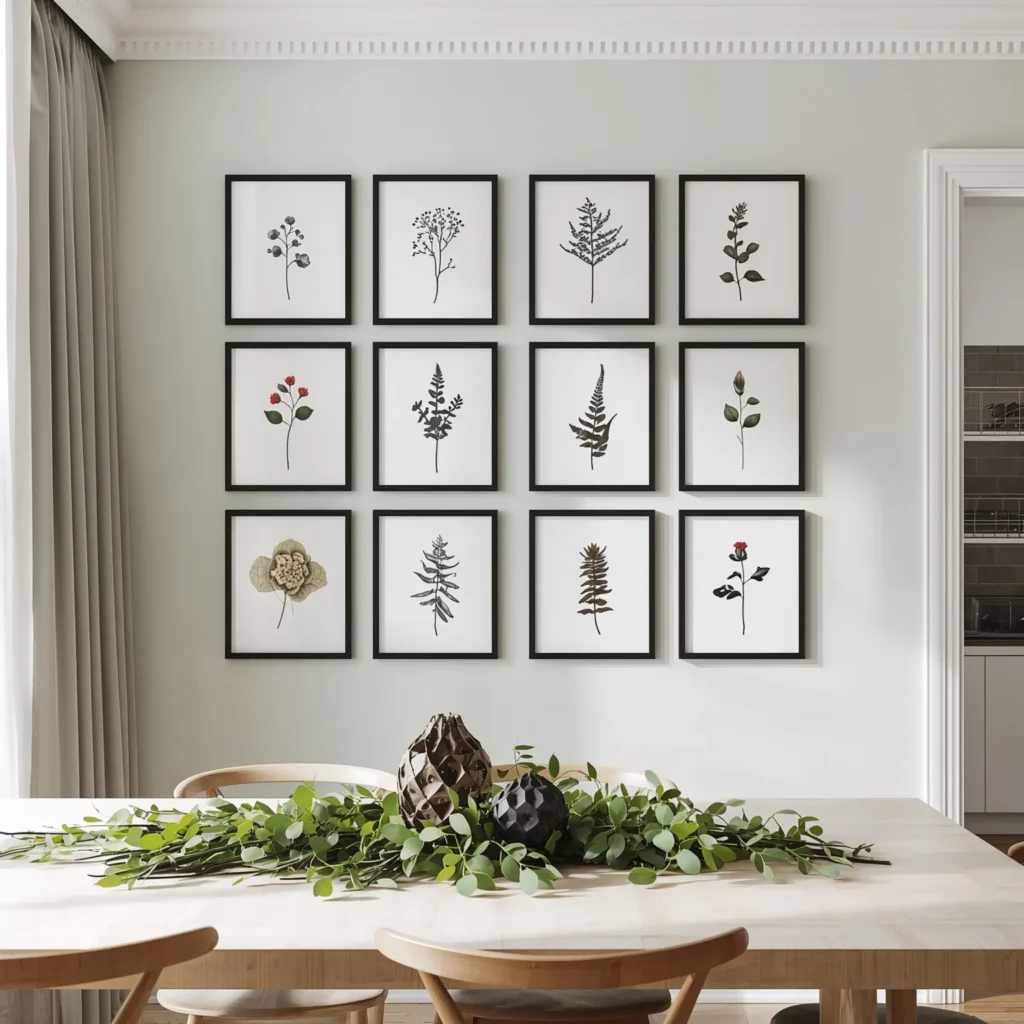
Botanical prints have been having a long, well-deserved moment in interior design — and they’re not going anywhere in 2025. There’s something deeply calming about bringing natural imagery into the dining room. It creates a sense of freshness, life, and groundedness that’s especially welcome in a space centered around nourishment.
You don’t have to stick to the typical fern or monstera leaf print. Think wider: pressed flower arrangements in shadowboxes, vintage-style illustrations from field guides, oversized tropical foliage prints, or even minimalist line drawings of herbs and spices. The variety available today is incredible.
Creating a Cohesive Botanical Wall Display
For maximum impact, consider grouping botanical prints in matching or complementary frames. A set of three or five identically framed botanical illustrations hung in a horizontal row above a dining table or sideboard looks incredibly polished and intentional. Stick to a consistent color palette — earthy greens with cream backgrounds tend to feel timeless.
7. Woven Wall Hangings and Macramé
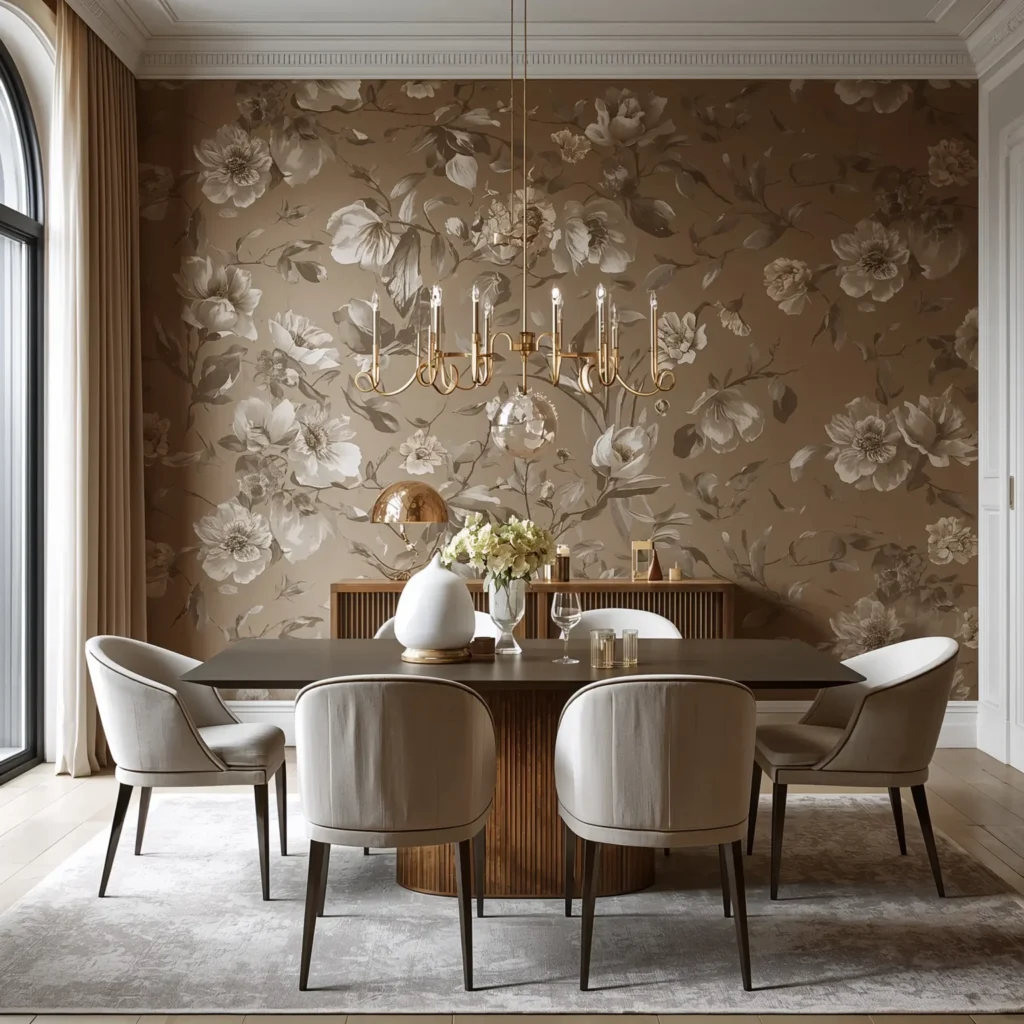
Texture is one of the most overlooked elements in dining room decor, and woven wall hangings solve that problem beautifully. Unlike framed art, which adds visual interest in a flat, two-dimensional way, a macramé piece or woven textile introduces actual physical depth and warmth to your walls.
This trend skyrocketed a few years ago and has evolved significantly since then. While you’ll still find plenty of bohemian-style pieces, today’s woven wall hangings range from minimalist neutral pieces to bold geometric patterns to intricate fiber art that could hang in a gallery.
Sizing and Placement Tips
A single large woven piece — think 24 inches wide or more — makes a bold focal point above a console table or sideboard. For smaller pieces, grouping three at different heights creates an interesting asymmetrical arrangement. Pair them with wooden rods or brass dowels for an elevated look.
8. Shiplap or Wood Plank Accent Walls
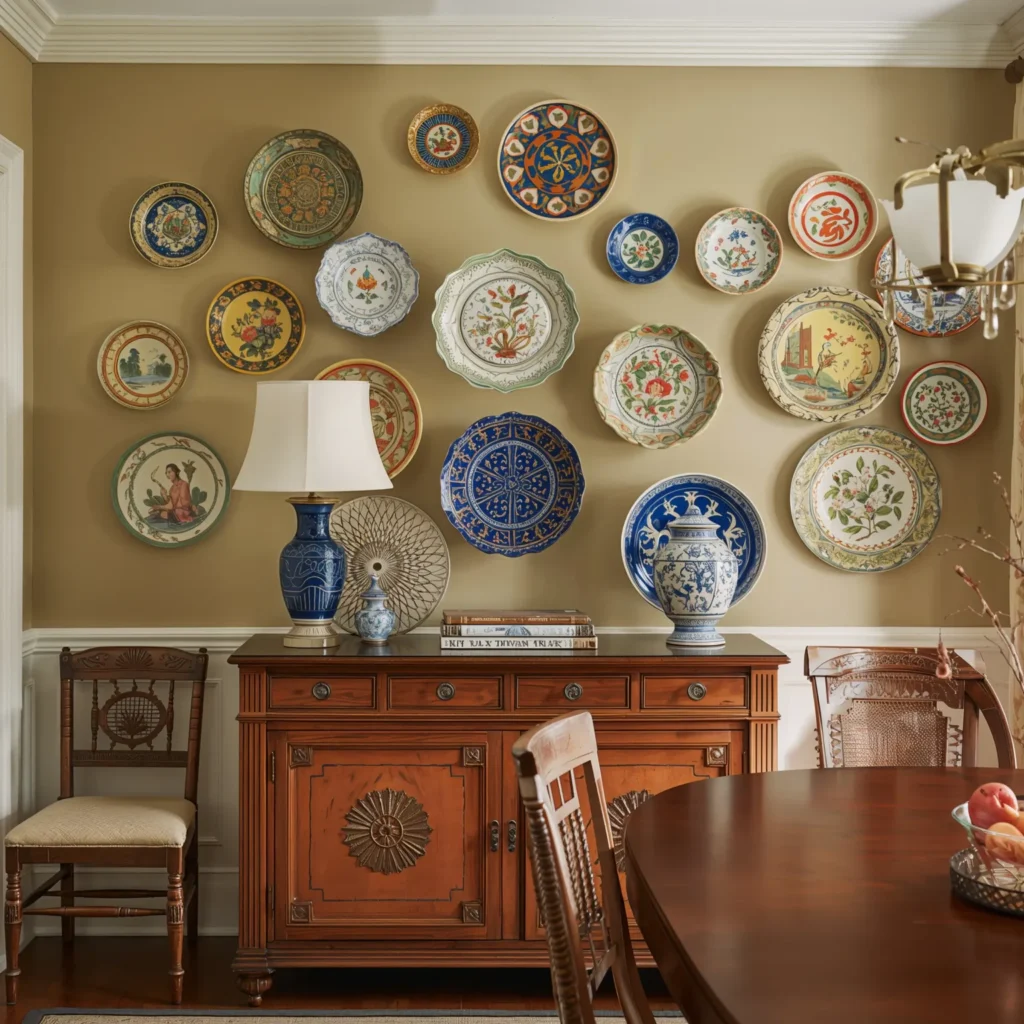
If you’re willing to invest a bit more time and effort, a shiplap or wood plank accent wall is one of the most transformative things you can do in a dining room. It changes the entire architectural feel of the space — adding warmth, texture, and character that no hanging art or shelf can replicate.
The good news? You don’t need to be a renovation expert to pull this off. Peel-and-stick shiplap panels have become remarkably realistic and are genuinely renter-friendly. Real wood planks are also surprisingly affordable, especially when you use pine and stain it yourself.
Color and Finish Options to Consider
Classic white shiplap gives a clean farmhouse look that pairs beautifully with dark wood dining furniture.
Natural wood tones create warmth and an organic, earthy atmosphere — ideal for Scandinavian or biophilic design enthusiasts.
Dark-stained or ebonized planks are a bold, moody choice that works exceptionally well in dramatic, dimly lit dining rooms.
Painted accent shiplap (in navy, sage, or terracotta) is one of 2025’s biggest dining room trends.
9. Plate Wall Displays
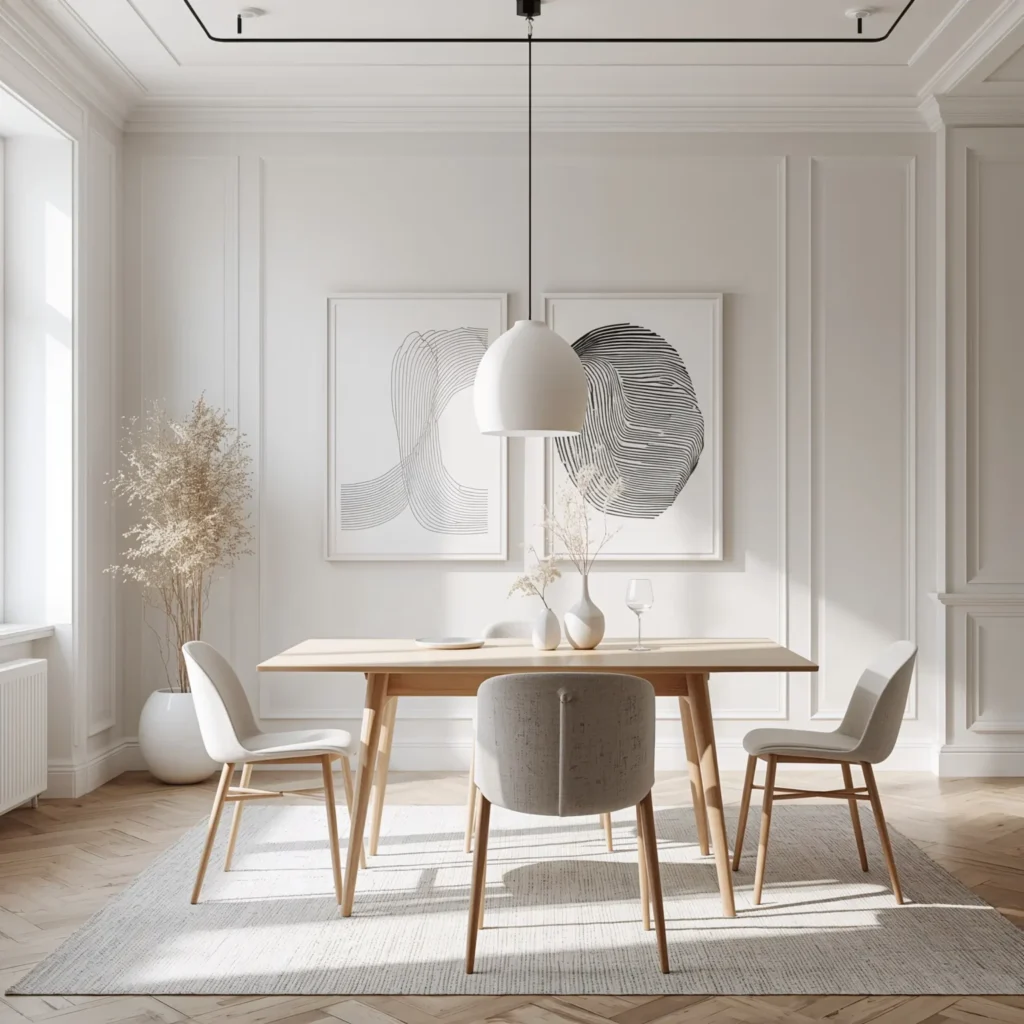
Plate walls might sound like something from your grandmother’s house — but done well, they’re genuinely stunning and deeply personal. The key is curation. You’re not just hanging a random assortment of dishes; you’re creating a curated display that tells a story.
Think: a collection of hand-painted Portuguese tiles you picked up on a trip abroad, a set of mismatched vintage floral plates from estate sales, or a uniform set of modern geometric plates in complementary glazes. What makes it work is that intentionality.
How to Arrange a Plate Wall Like a Pro
Start by tracing each plate on paper and cutting out the shapes. Use these templates on your wall to plan the arrangement before committing to any holes. Aim for a mix of plate sizes — at least two or three different diameters — and leave consistent spacing between each piece. Plate display hangers (the little spring-loaded wire mounts) are inexpensive and work on virtually any plate without requiring drilling.
10. Neon Signs and LED Word Art
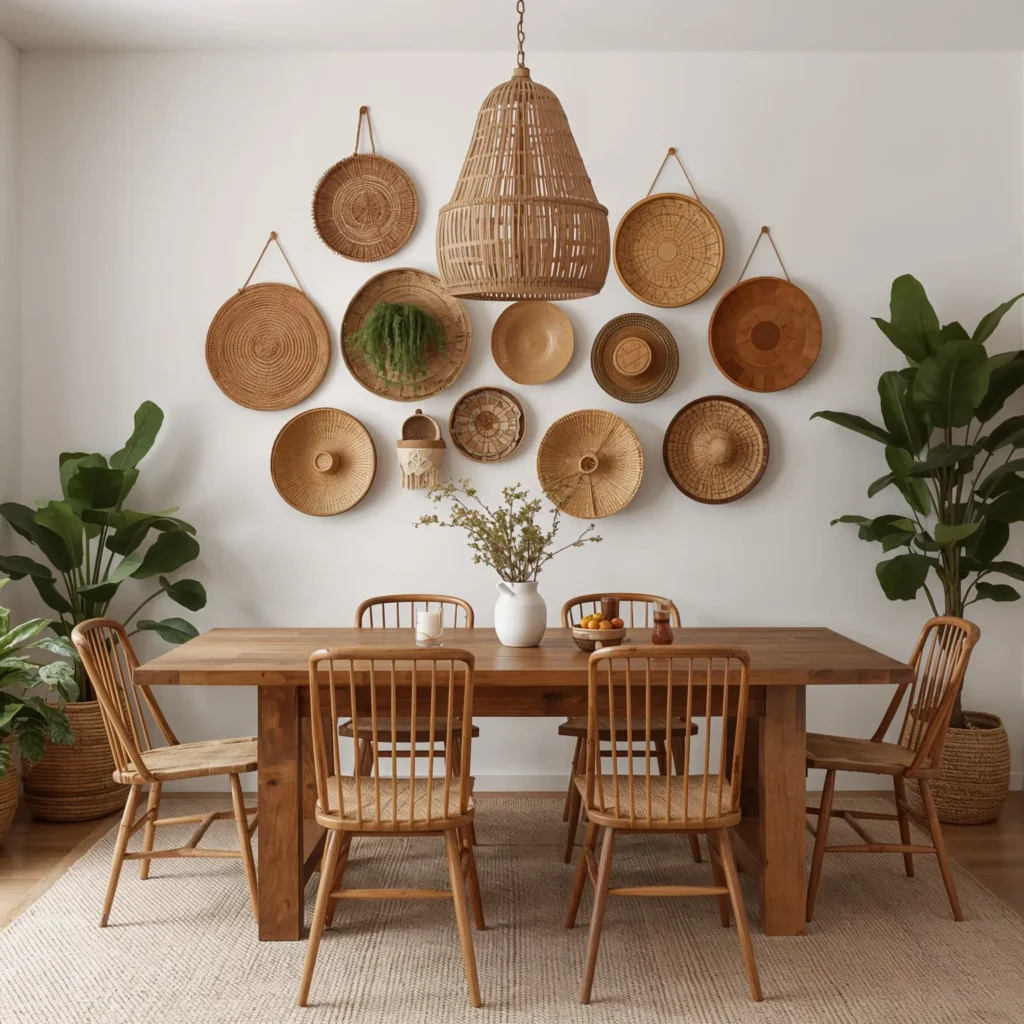
Neon and LED signs have moved well beyond the “retro diner” aesthetic and are now a genuinely sophisticated dining room decor option — when chosen thoughtfully. The right phrase, the right font, and the right placement can add personality and a warm ambient glow that completely changes the evening atmosphere.
Popular choices for dining rooms include warm phrases like “gather,” “good food good mood,” family initials, or even a simple wine glass outline. Warm white, amber, and soft rose gold tones tend to look the most refined and least kitschy in a dining context.
11. Vintage Maps and Travel Art
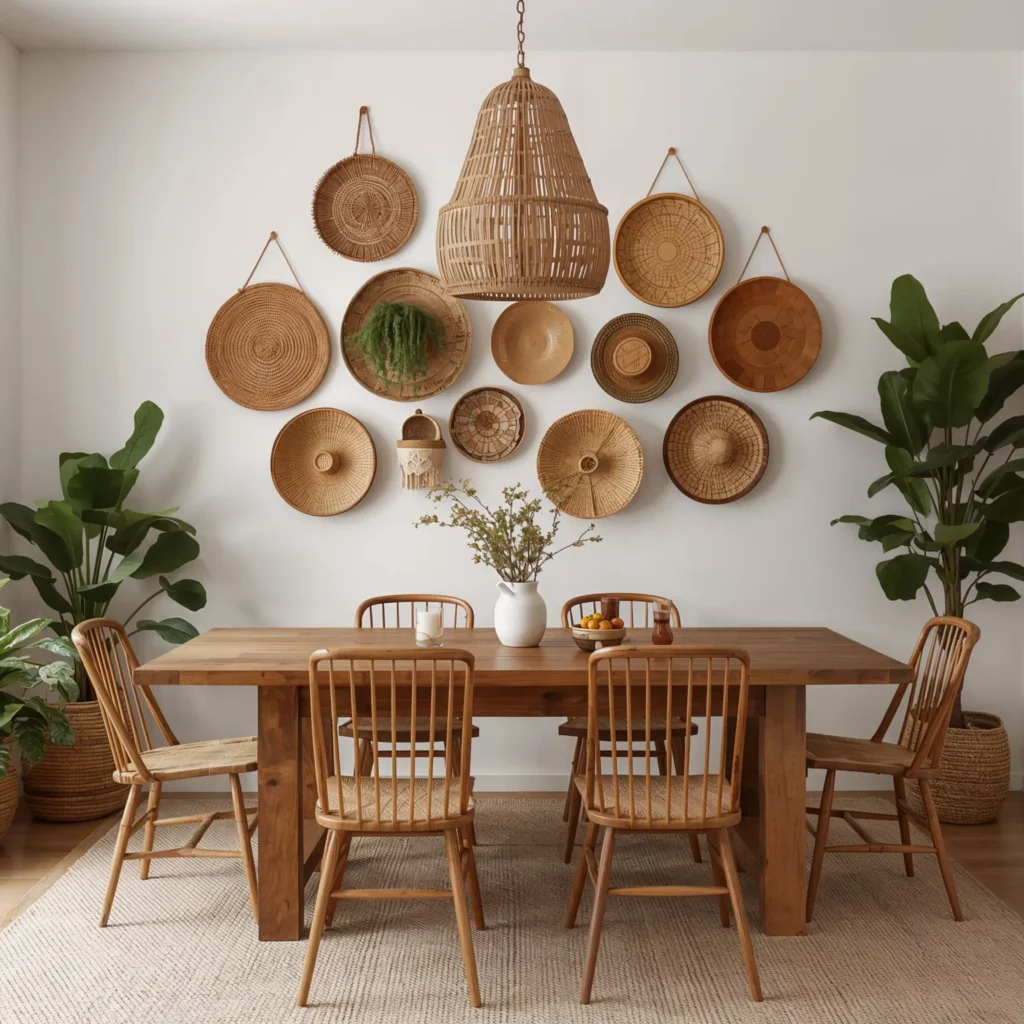
For the well-traveled family — or the aspiring one — a collection of vintage maps and travel-inspired prints makes dining room walls feel like a love letter to the places that matter most. Framed antique maps of your hometown, a city you honeymooned in, or a country you dream of visiting all make for meaningful, conversation-starting decor.
Old maps have a beautiful quality to them — the aged paper tones, the intricate line work, the faded colors. Even reproductions look incredible when framed properly. Pair them with travel photographs or local artwork from the destinations to create a layered, story-rich display.
12. DIY Tapestries and Textile Art
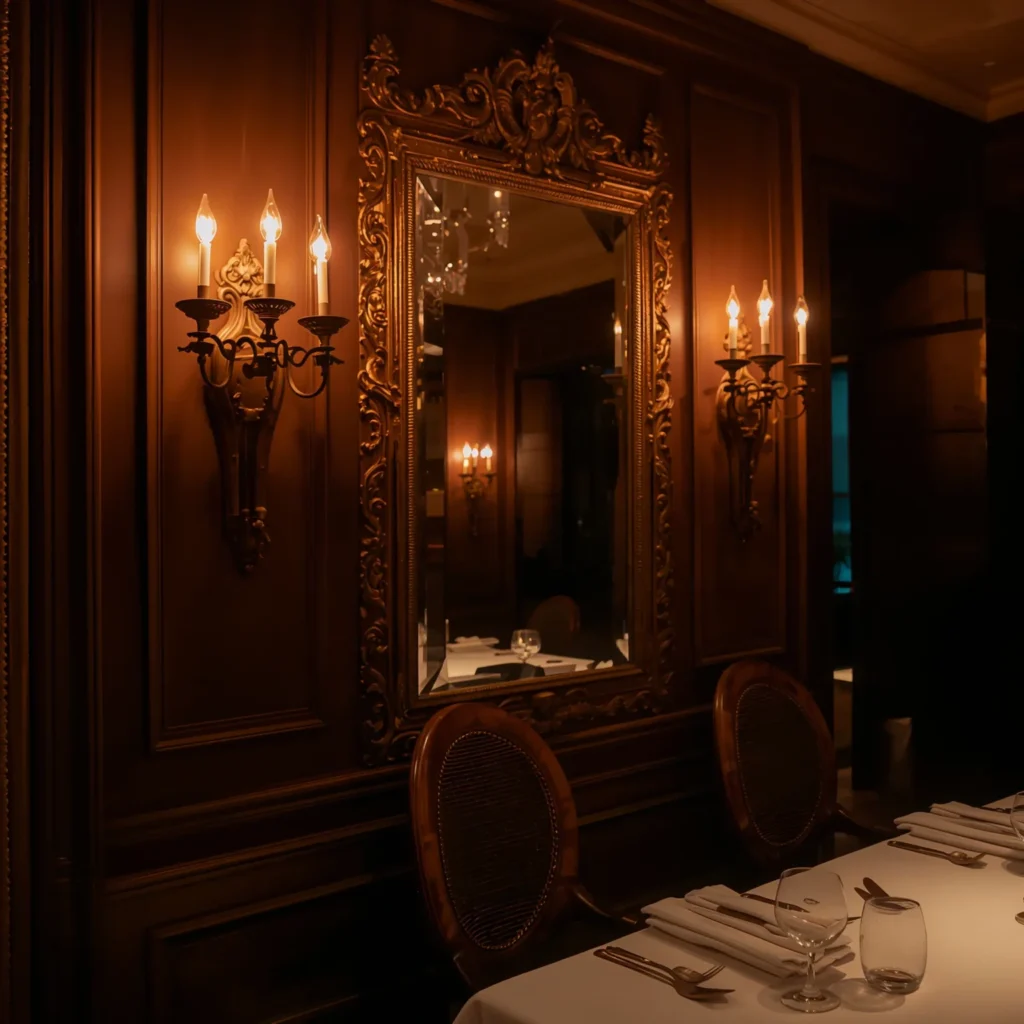
You don’t have to spend a fortune on wall art when you can make something truly unique yourself. DIY tapestries — even simple woven pieces created on a small loom — can look absolutely stunning in a dining room, and the process of making them is genuinely therapeutic.
For those who prefer not to start from scratch, printed tapestries and large-scale fabric prints are an excellent option. Stretch a length of beautiful fabric over a frame, hang it from a decorative dowel, or even use a quilt you inherited as a statement wall piece. Textile art adds warmth and softness that canvas and metal simply can’t match.
13. Framed Menus and Food Quote Art
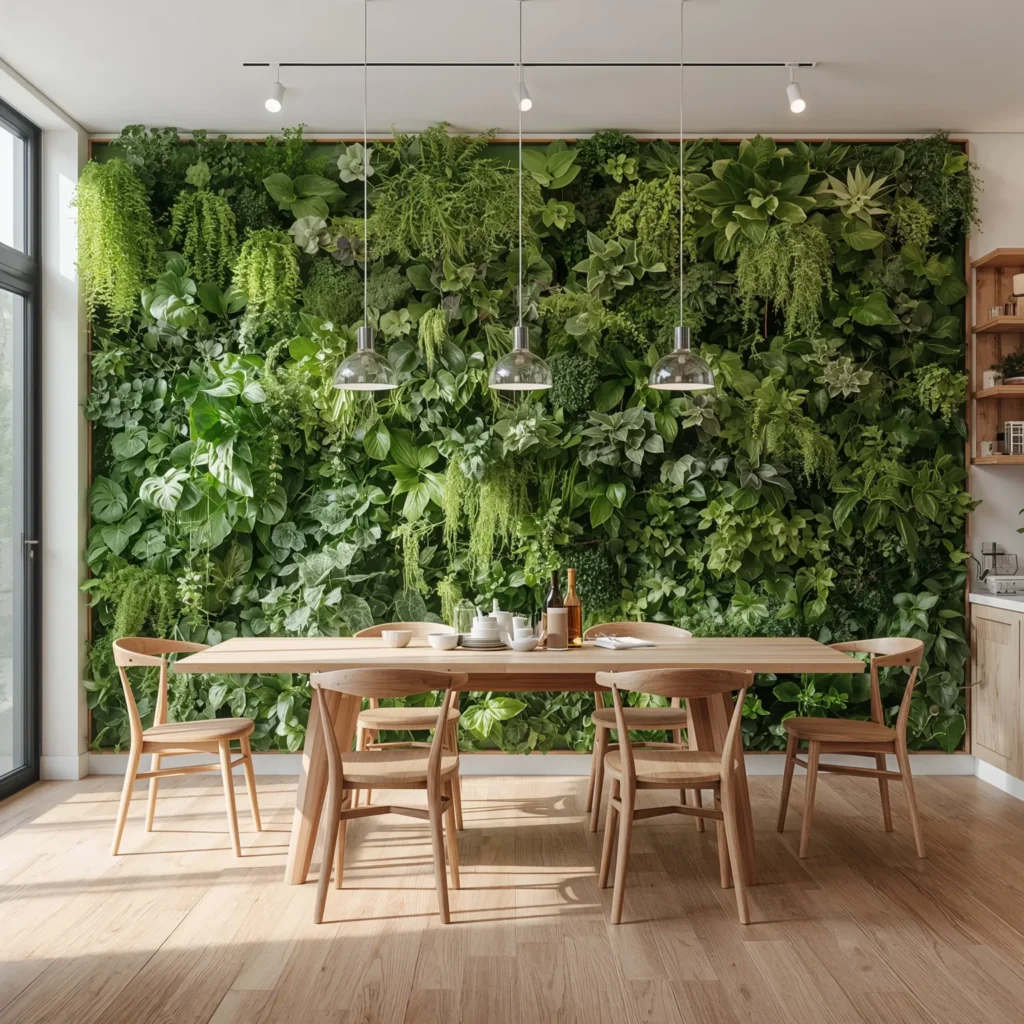
Here’s a dining room wall decor idea that’s surprisingly underused: decor that actually references food, dining, and togetherness. Framed menus from beloved restaurants, vintage food advertisements, or beautifully typeset food-related quotes all make for charming, thematically appropriate dining room art.
A framed vintage French menu from a 1960s Parisian bistro? Incredibly chic. A clean, modern print of your favorite Julia Child quote? Warm and delightful. This type of decor works especially well in kitchen-adjacent dining spaces where the connection between food and gathering is central to the room’s identity.
14. Sculptural 3D Wall Decor
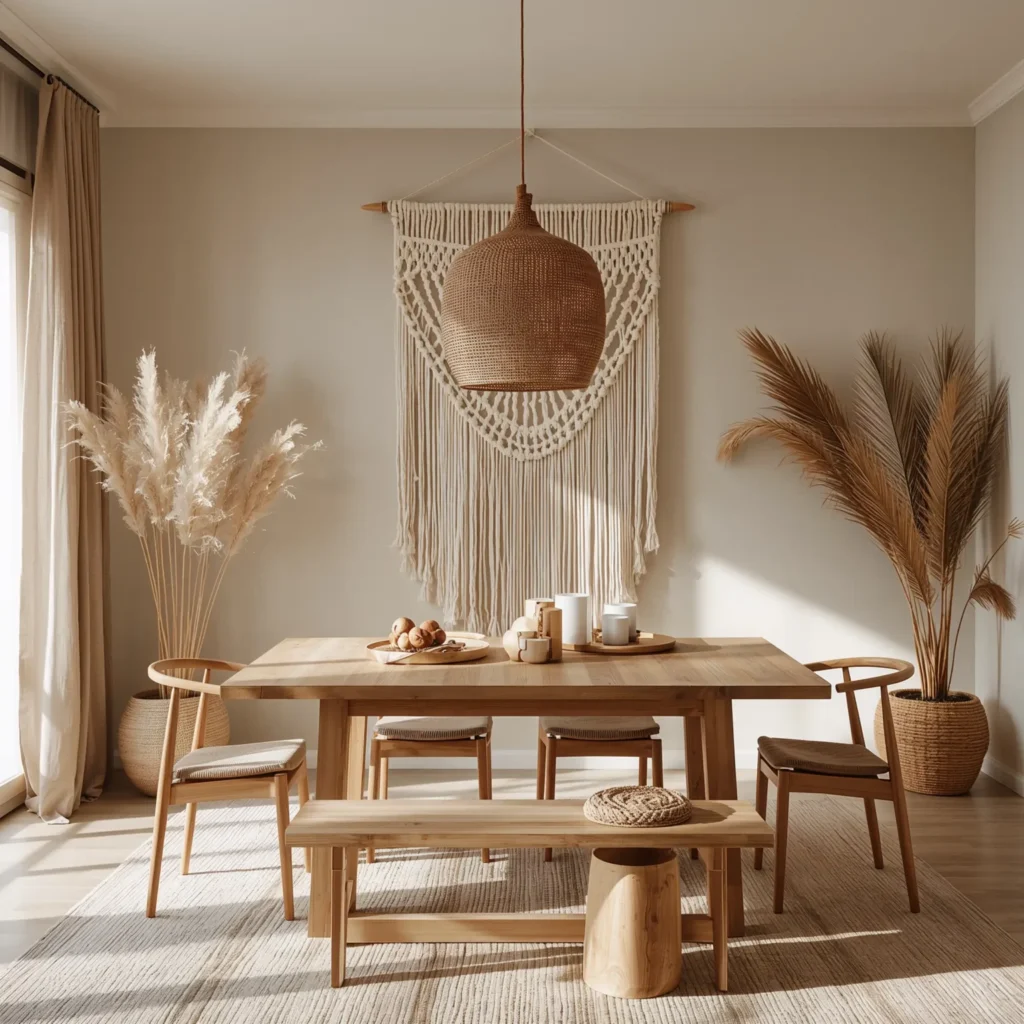
Flat art is wonderful, but three-dimensional wall decor takes things to a completely different level. Sculptural wall pieces — whether they’re hand-formed ceramic wall hangings, geometric metal panels, carved wood reliefs, or abstract resin art — add a sense of depth and artistry that genuinely stops guests in their tracks.
The dining room is actually an ideal place for 3D wall art because people sit facing the walls for extended periods. You want something with enough visual complexity to reward that sustained attention. A single large sculptural piece above a sideboard or buffet can be absolutely show-stopping.
15. Chalkboard or Corkboard Walls
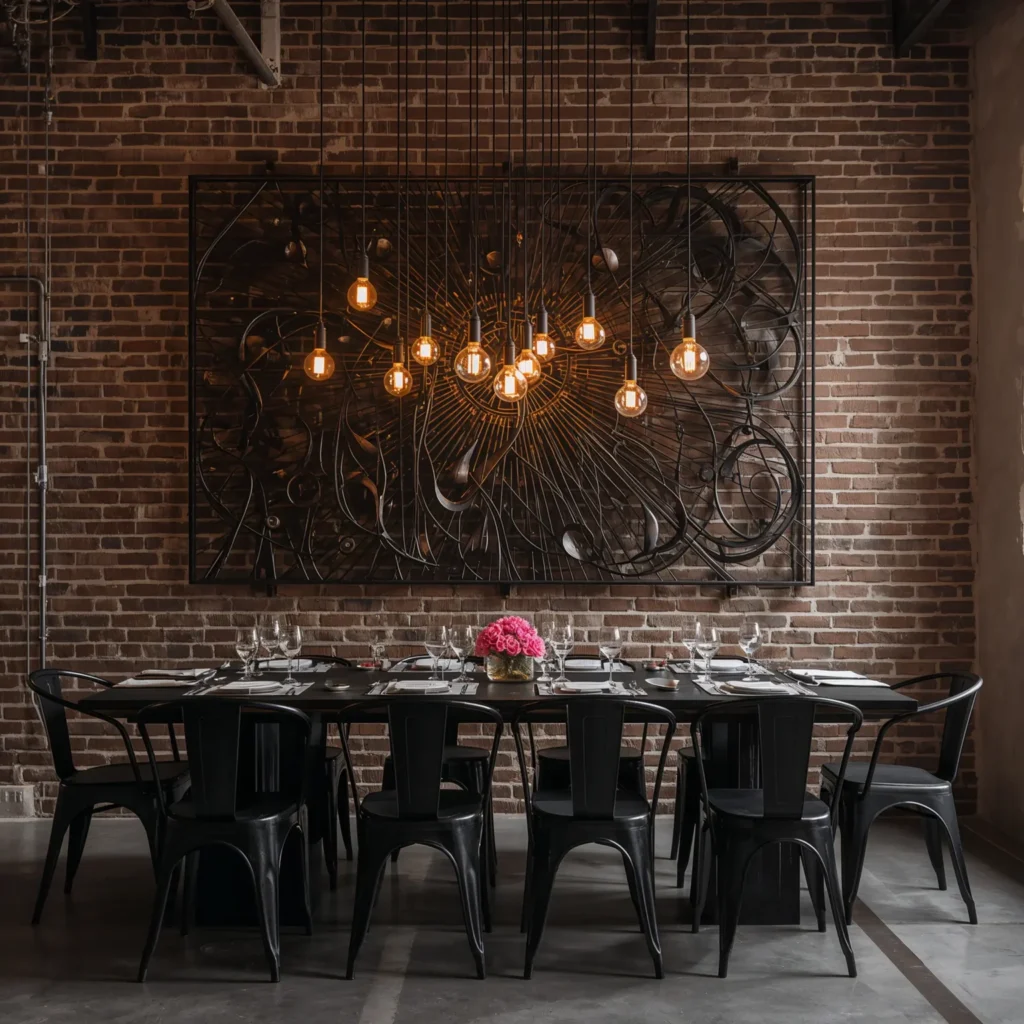
For families or anyone who loves a dining room that works as hard as it looks good, a chalkboard or corkboard accent wall is a brilliantly practical choice. Imagine writing your weekly dinner menu in beautiful chalk lettering, jotting down grocery lists visible to the whole family, or pinning up seasonal recipes and kids’ artwork.
Chalkboard paint has become remarkably sophisticated — it now comes in colors beyond black, including deep navy, sage green, and warm charcoal, which gives you a lot more design flexibility. A framed chalkboard section (rather than an entire wall) keeps things feeling intentional rather than classroom-like.
Making Your Dining Room Wall Decor Work Harder
The Golden Rule of Scale
The single most common mistake in dining room wall decor is going too small. Art, mirrors, and shelves that are undersized for the wall they’re on always look like an afterthought. When in doubt, size up. A piece that feels almost too big in the store will likely feel just right on the wall.
Lighting Changes Everything
Your wall decor looks entirely different at noon versus at 7 p.m. with the dining room lights on. Before finalizing any decor decisions, live with the space in evening light — ideally the kind of light you’ll have during actual dinner parties. Picture lights, directional track lighting, and even well-placed candles can elevate wall art from “nice” to “genuinely magical.”
Create Cohesion Across the Room
Your wall decor shouldn’t exist in isolation from the rest of the room. Pull colors from your dining chairs, table, or rug into your art selections. Repeat materials between your furniture and your wall pieces — if you have a walnut dining table, consider walnut frames or wooden shelf brackets. These threads of repetition are what make a room feel designed rather than assembled.
Don’t Over-Decorate
The goal is a dining room that feels curated, not cluttered. It’s always better to do a few things really well than to cover every inch of wall with stuff. Edit ruthlessly. If something doesn’t earn its place on the wall — if it doesn’t bring genuine beauty, meaning, or function — it probably doesn’t belong there.
Frequently Asked Questions About Dining Room Wall Decor
What is the best wall decor for a small dining room?
For small dining rooms, mirrors are your best friend — they create the illusion of more space by reflecting light and depth. A single large mirror (36 inches or more) is far more effective than multiple small pieces. If you prefer art, choose vertically oriented pieces that draw the eye upward and make ceilings feel higher.
How high should I hang wall art in a dining room?
The general rule is to hang art so the center of the piece is at eye level — roughly 57 to 60 inches from the floor. When hanging art above a piece of furniture like a sideboard or buffet, aim for the bottom edge of the art to sit 6 to 8 inches above the furniture surface. For art above a dining table, factor in seated versus standing eye level and aim for somewhere in between.
How do I choose wall decor that matches my dining room style?
Start with what you already have and love. Look at the dominant materials in your dining room — wood, metal, glass, fabric — and look for wall decor that echoes those materials. Pull two to three key colors from your existing furniture and accessories and use those as a guide when shopping for art or decor. Cohesion doesn’t require matchy-matchy perfection; it just requires a shared visual language.
What’s trending in dining room wall decor for 2025?
The biggest trends for 2025 include earth-tone abstract art, organic textures like macramé and rattan, dark accent walls (especially in forest green, navy, and charcoal), oversized round mirrors, and maximalist gallery walls. There’s also a significant move toward art that has personal meaning — travel photography, family portraits, and custom commissions are all gaining ground over generic off-the-shelf prints.
Final Thoughts: Your Dining Room Walls Deserve the Attention
There’s something deeply satisfying about sitting down at your dining table and loving every inch of the room around you. Your walls are a massive part of that experience — they’re what you look at, what your guests notice, and what sets the entire mood of the space.
The 20 ideas in this guide aren’t just decoration tips — they’re invitations to make your dining room feel more like you. Whether you go bold with a full shiplap accent wall or keep it simple with a single oversized mirror and a few well-chosen prints, the investment in your dining room walls pays dividends every single day.
Start with one change. See how it feels. Then build from there. The most beautiful dining rooms aren’t designed all at once — they evolve over time, collecting layers of meaning and personality along the way.
Ready to transform your dining room? Pick the one idea from this list that excites you most and start there. Your walls — and your dinner guests — will thank you.
1 thought on “15 Stunning Dining Room Wall Decor Ideas”