
White gets a bad reputation in home decor. People call it safe. They call it cold. They call it the choice you make when you can’t decide on a real color. And then they walk into a beautifully done white room and immediately start reconsidering everything they thought they knew.
The truth about white decor is that it’s one of the most demanding and one of the most rewarding color directions you can choose for a room. Demanding because white exposes every decision you make — there’s nowhere to hide a poorly scaled sofa or a cheap textile when the backdrop is pale and spare. Rewarding because when white is done well, rooms feel luminous, calm, considered, and genuinely beautiful in a way that’s difficult to achieve with any other palette.
1. All-White Minimalist Bedroom with Textural Layers
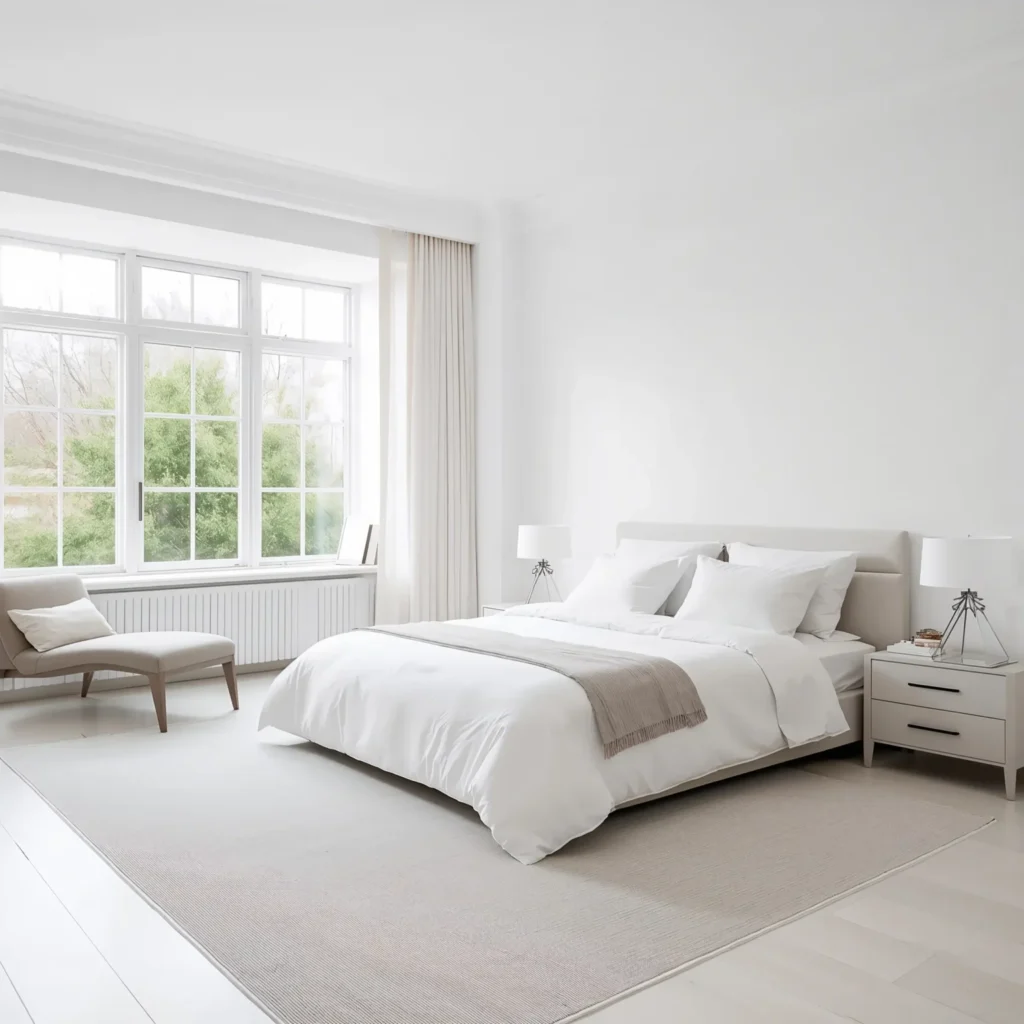
The all-white minimalist bedroom is the purest expression of white room design, and it’s a look that rewards careful, deliberate execution more than almost any other. The goal is a room that feels calm, spacious, and quietly luxurious — where every surface and every object has been chosen with intention and where the quality of textures does all the work that color would do in a different room.
Start with white walls in a warm-leaning tone — Benjamin Moore’s Chantilly Lace or Farrow & Ball’s All White are reliable starting points. Layer the bed with crisp white cotton sheets beneath a heavyweight linen duvet cover in natural white or very pale ivory. Add a chunky knit throw at the foot of the bed. Keep the floor in a light wood or white-painted board and add a low-pile wool rug in off-white or pale cream. Nightstands should be simple and low-profile. One or two plants in simple ceramic pots bring life without color.
Texture formula: For a minimalist white bedroom, aim for at least five different textures — cotton, linen, wool, wood, and ceramic is a good starting set. With this variety, the room will feel rich and considered even with a completely white-and-neutral palette.
2. White Farmhouse Living Room with Warm Wood Accents
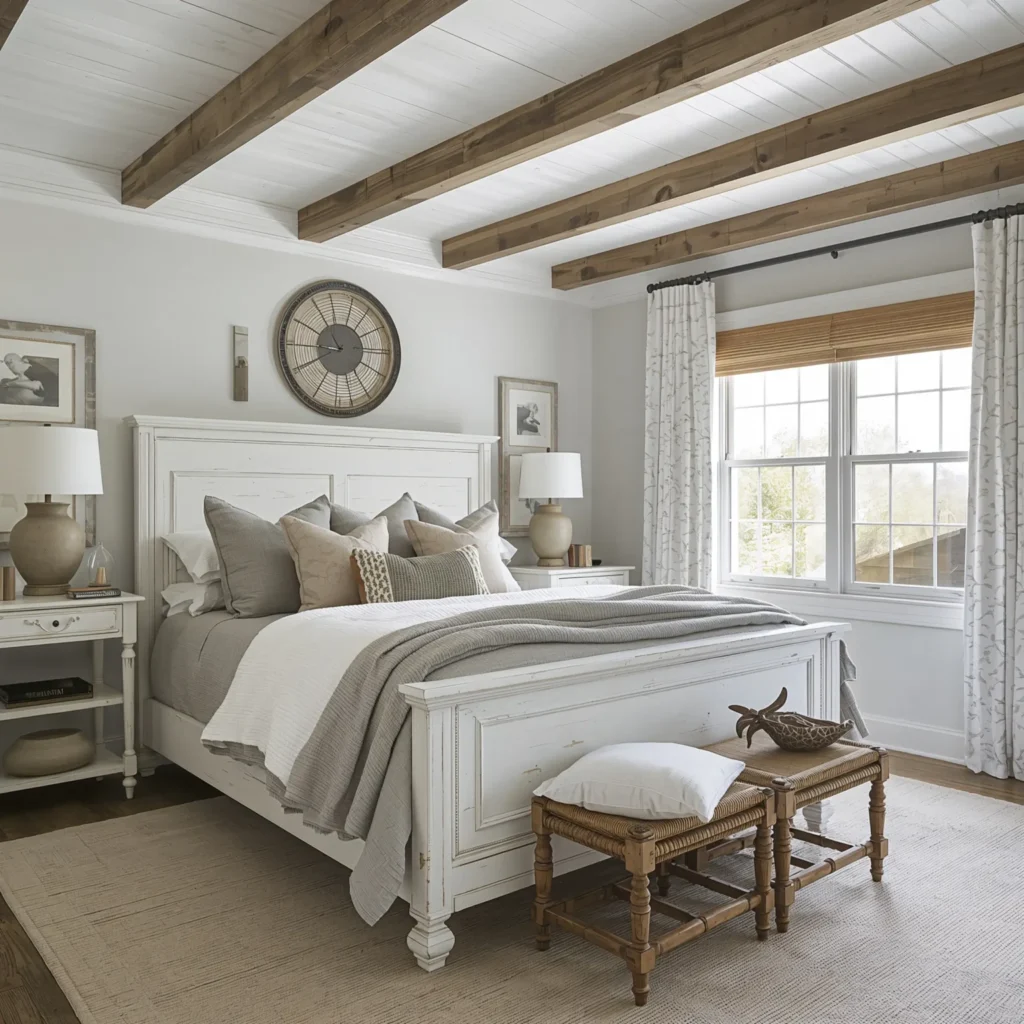
White and farmhouse design are natural partners. The crisp, fresh quality of white walls and painted furniture creates the perfect backdrop for the warmth of reclaimed wood, vintage metal, and soft linen — the materials at the heart of the farmhouse aesthetic. Together, they produce a room that feels both beautifully clean and genuinely welcoming.
For a white farmhouse living room, start with white shiplap or board-and-batten paneling on at least one wall — it immediately establishes the style signature. Pair it with a large linen sofa in natural or off-white, a reclaimed wood coffee table, and a vintage-inspired jute rug. Iron or aged black metal accents in lighting fixtures, curtain rods, and decorative objects bring the necessary contrast. Finish with some intentionally imperfect ceramics, a galvanized metal vase, and a blanket ladder in raw wood.
Authentic vs. staged: The best farmhouse rooms look collected rather than assembled. Resist the temptation to buy everything from the same collection or in perfectly matching sets. A deliberate mix of vintage finds, handcrafted objects, and quality modern pieces creates the genuinely layered quality that makes this style work.
3. Scandinavian White Room with Hygge-Inspired Warmth
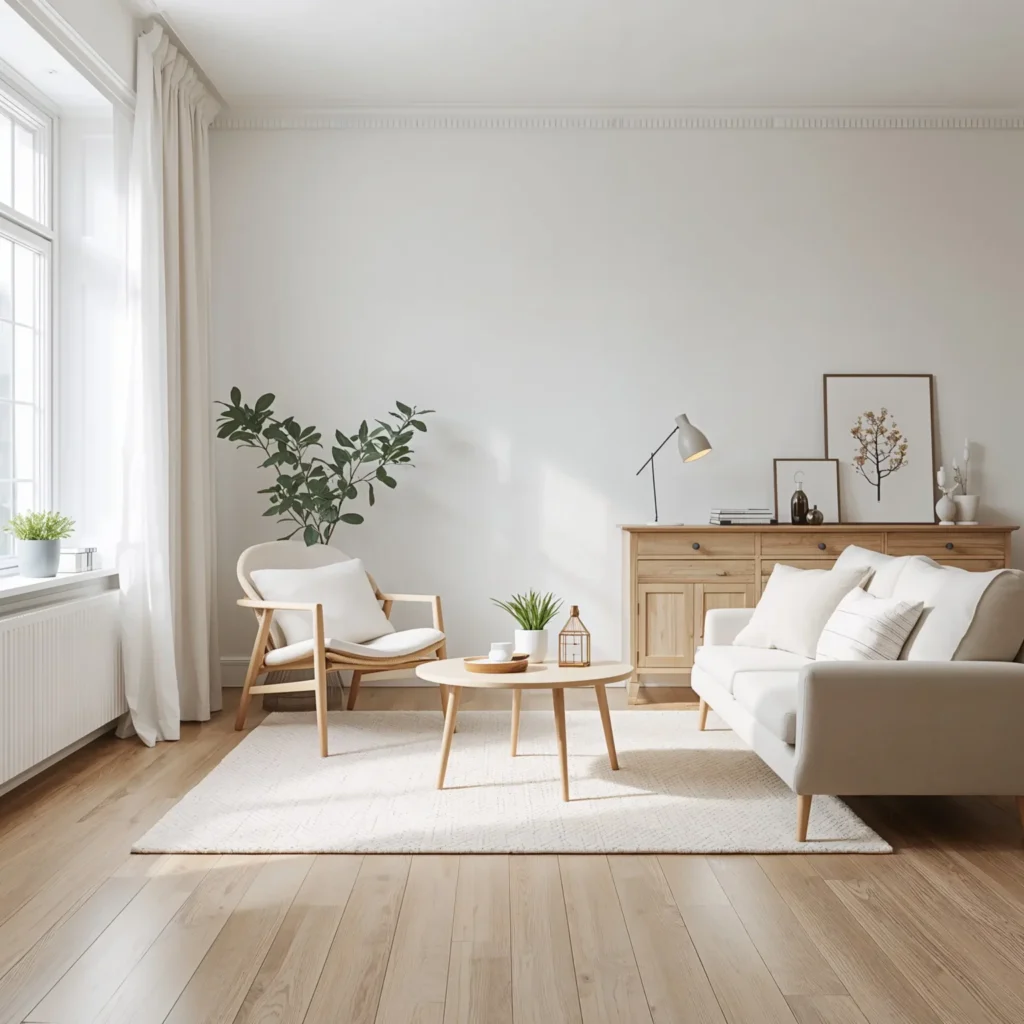
Scandinavian design developed, in part, as a response to long, dark Nordic winters — which is why it’s so good at creating rooms that feel warm, cozy, and luminous even when natural light is limited. Applied to a white room, Scandi principles produce a space that’s simultaneously calm and deeply comfortable.
The essential Scandi white room moves: white or very pale gray walls; light oak or ash furniture with clean, simple lines; abundant candles and warm-toned lighting; generous layering of natural textiles (a chunky wool throw, a sheepskin rug, a linen cushion, a cotton blanket); and at least a few plants in simple ceramic or terracotta pots. Keep surfaces relatively clear, but don’t mistake Scandi for stark — the warmth in a successful Scandi room comes from exactly those soft, tactile layers that some minimalists would edit away.
Hygge lighting: Nothing creates hygge atmosphere faster than layered warm light. Supplement overhead lighting with table lamps, floor lamps, and clusters of candles. Aim for multiple light sources at varying heights — the low, diffused quality of lamp light in a white room is genuinely beautiful in a way that overhead lighting alone never achieves.
4. White Bedroom with Black Accents for Graphic Contrast
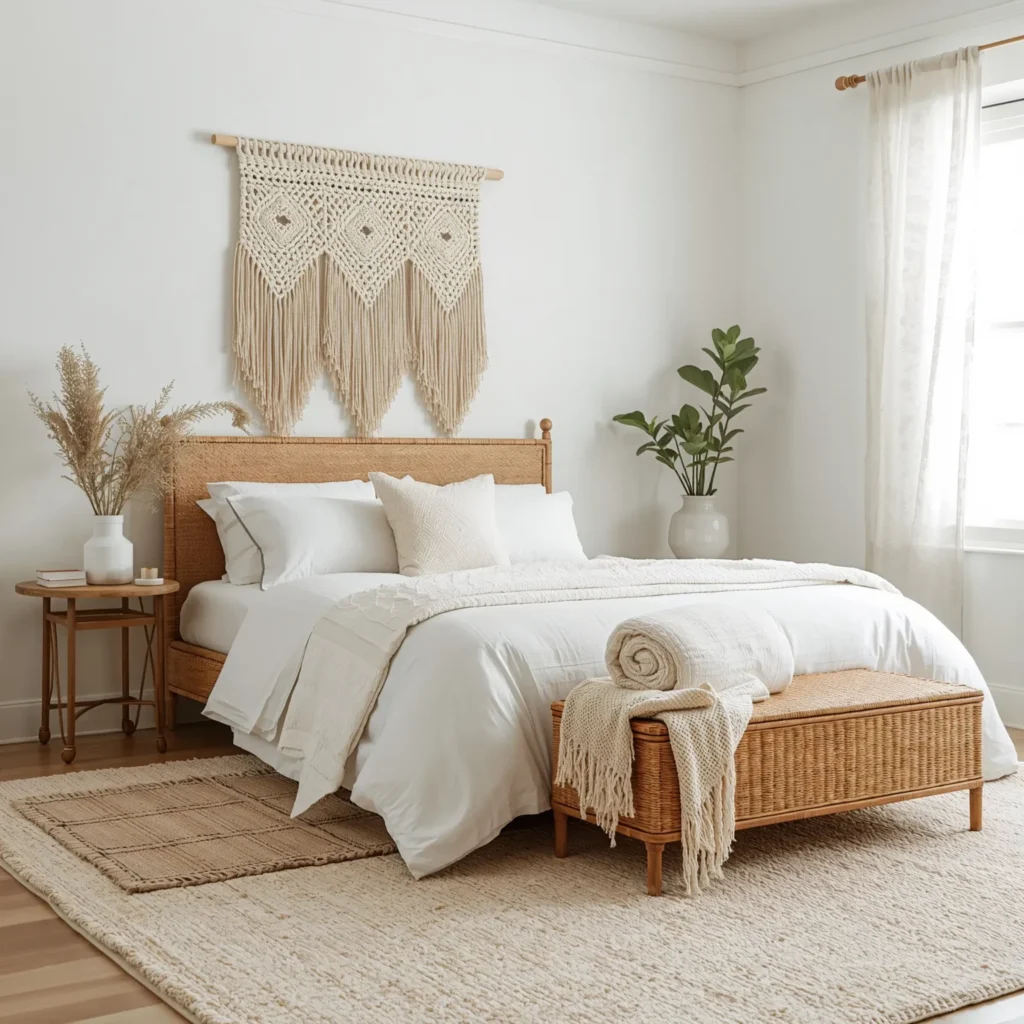
One of the most foolproof and visually striking applications of white room decor is using it as a backdrop for deliberate black accents. The contrast between white and black is clean, graphic, and timeless — and in a predominantly white room, even small amounts of black have significant visual impact.
Black accents in a white bedroom can come through picture frames, lighting fixtures, curtain rods, bedside table lamps, a throw cushion or two, hardware on furniture, or a statement piece of artwork. The key is restraint and consistency — choose your black elements carefully and keep them to a relatively small proportion of the overall room. Too much black tips the balance and the room stops feeling white; too little and the contrast isn’t sharp enough to register. Roughly ten to fifteen percent black to eighty-five to ninety percent white is a good working ratio.
Frame strategy: One of the easiest and most affordable ways to introduce black accents into a white room is through gallery wall frames. A collection of black-framed prints and photographs against a white wall creates a bold, graphic composition that looks both curated and effortless.
5. White Living Room with Natural Materials Throughout
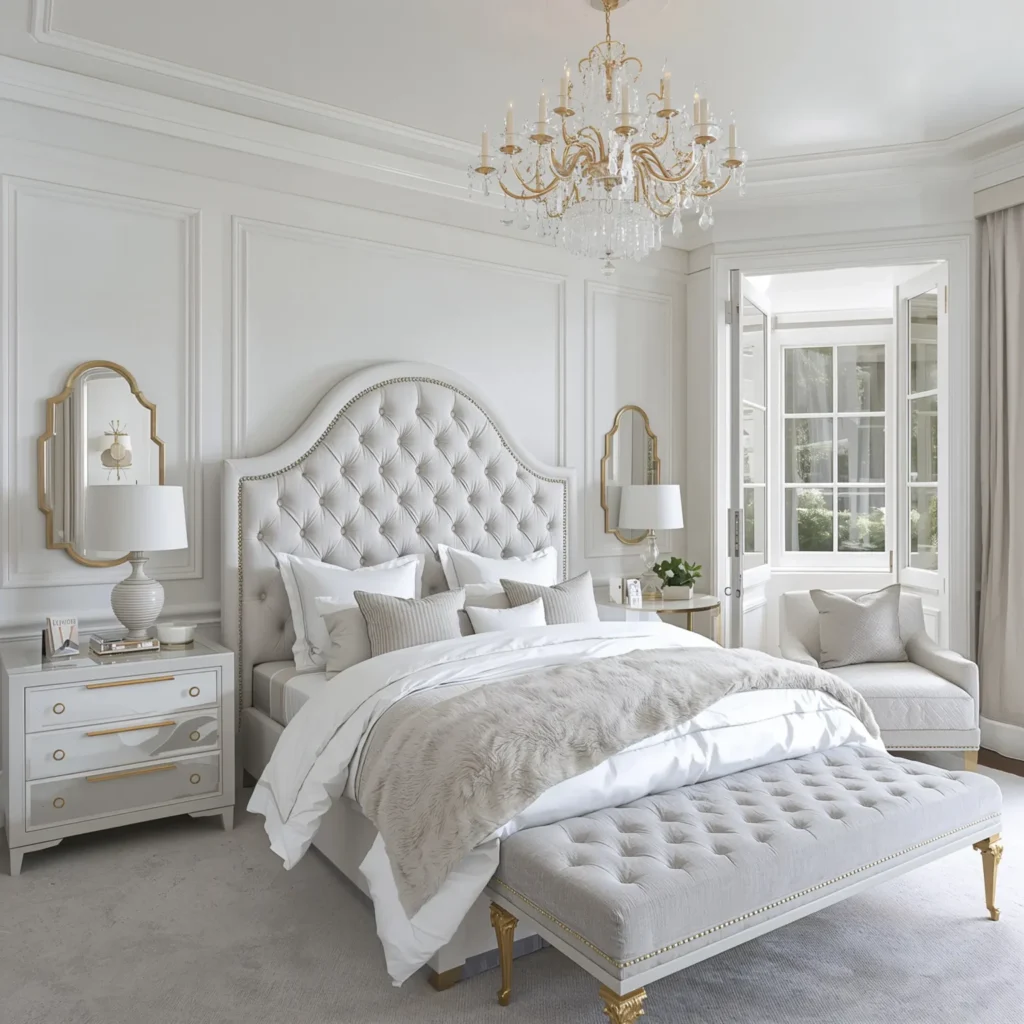
White walls and white furniture create a clean foundation, but a room that stops there often feels incomplete — too smooth, too even, too controlled. The answer is natural materials: wood, stone, rattan, jute, linen, leather, terracotta. Each brings a warmth and tactile richness that white surfaces alone cannot provide, and each connects the interior space to the natural world in a way that people respond to instinctively.
In a white living room with natural materials, the palette stays close to white and neutral throughout, but the variety of surfaces and textures creates a room that feels genuinely rich. A white sofa with linen upholstery. A coffee table in raw travertine or matte stone. A jute or sisal rug. Rattan occasional chairs. Wood shelving displaying ceramic vessels, books, and small plants. The materials do all the decorative work; the white simply lets them be fully seen.
Material hierarchy: Give your natural materials a clear hierarchy — one or two dominant materials (the large sofa, the main rug) and several supporting ones (small accents, decorative objects). A room where every material competes equally for attention feels as busy as a room with too many colors. The same editing principles apply.
6. White Boho Bedroom with Layered Textiles and Rattan
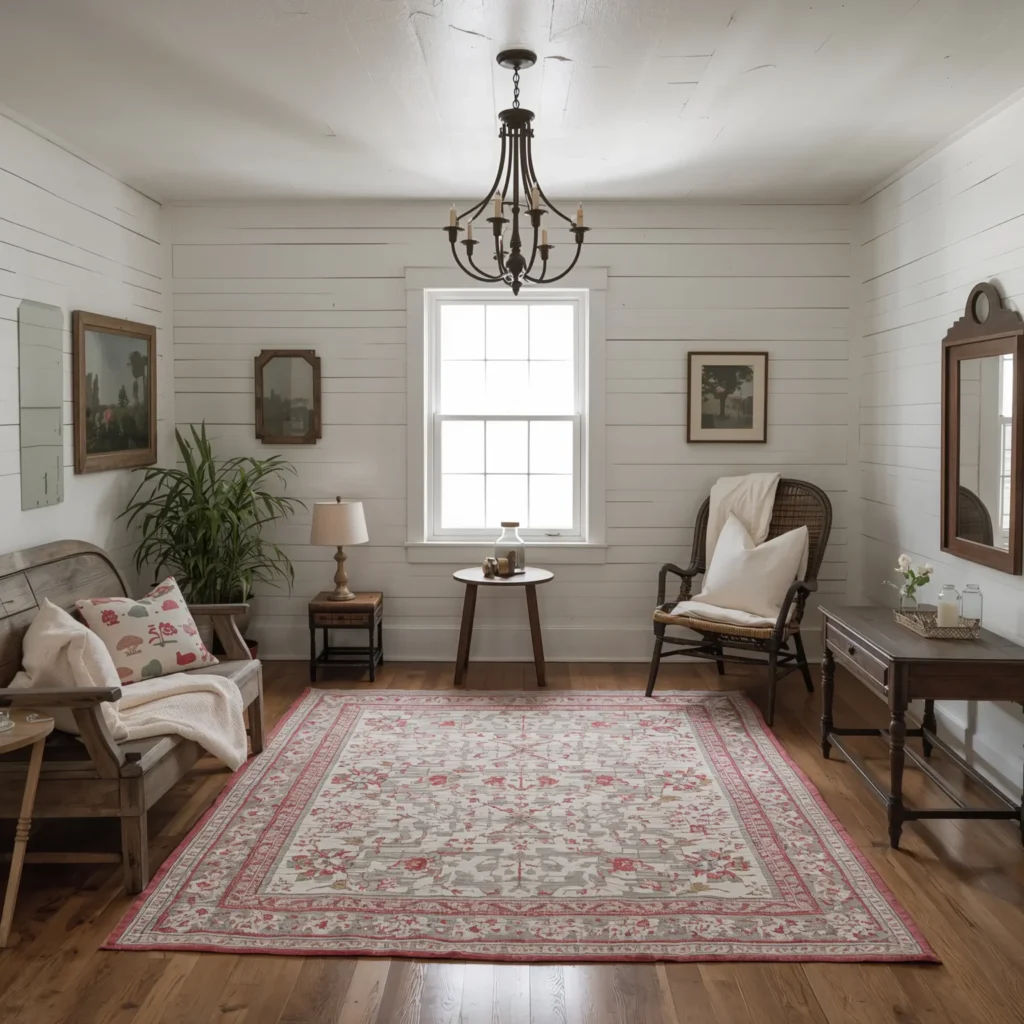
Bohemian design and white palettes make for a genuinely beautiful combination. White acts as the calm, spacious foundation that prevents boho’s characteristic abundance of texture and pattern from becoming visually overwhelming, while boho’s warmth and generosity prevent the white from feeling too spare or controlled.
A white boho bedroom layers white and natural textiles generously — a white cotton duvet, a woven cream throw, a pile of cushions in natural linen, jute, and lightweight macramé. Rattan furniture (a headboard, a bedside table, a pendant light shade) brings warmth and organic texture. Dried pampas grass, hanging macramé wall art, and some trailing plants add bohemian character against the white walls. Keep the color palette close to white, cream, and natural — occasional soft terracotta or muted sage can complement without dominating.
Pampas grass note: Dried pampas grass has become one of the most associated accessories with white boho interiors. It works because its soft, feathery texture photographs beautifully against white walls and its natural neutral tone fits the palette perfectly. If you’re tired of seeing it everywhere, consider alternatives: dried lunaria, cotton branches, dried grasses, or eucalyptus in simple white ceramic vases create the same organic quality with less visual familiarity.
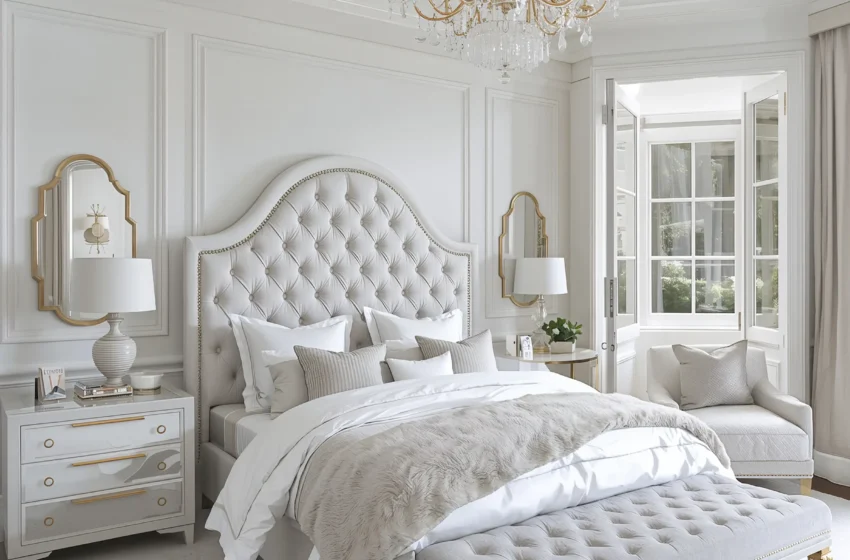
7. White Luxury Bedroom with Gold and Velvet Details
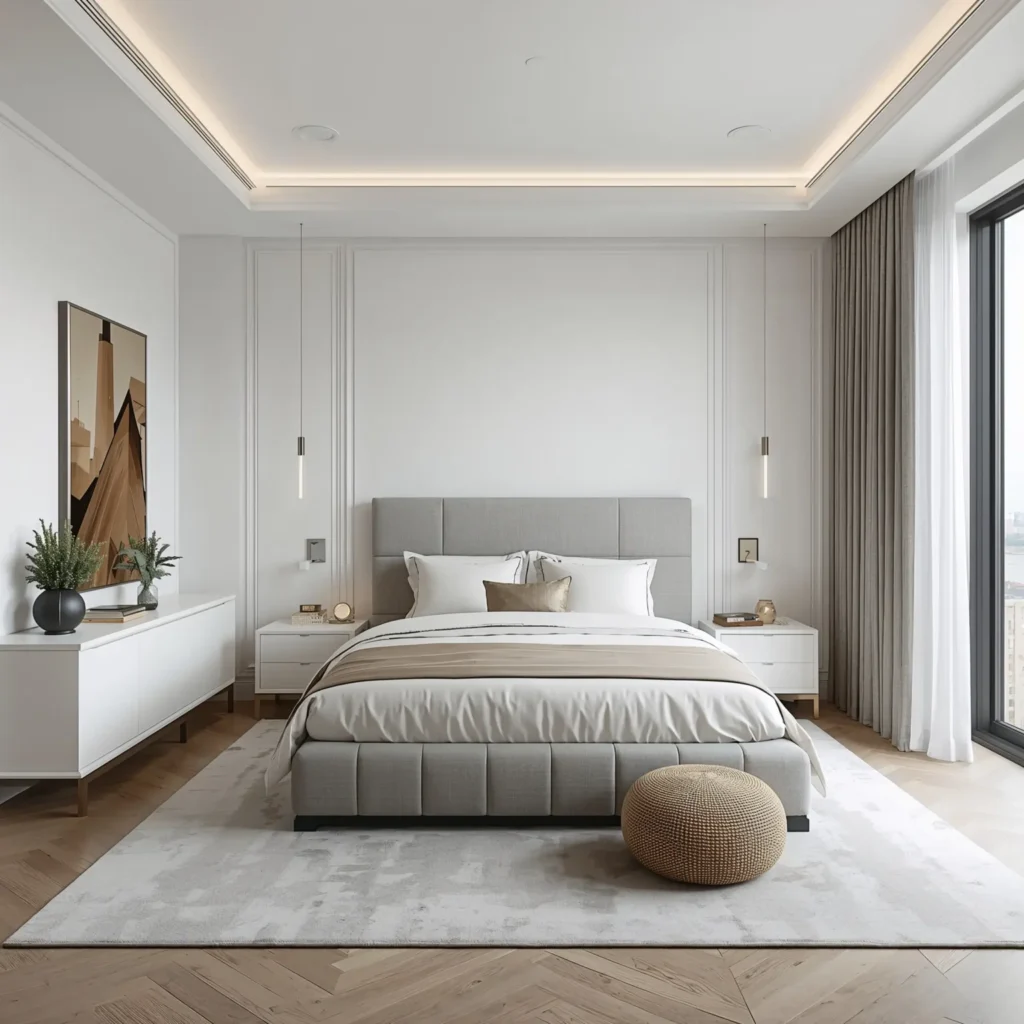
White and gold is one of the most enduring combinations in interior design. The contrast between white’s freshness and gold’s warmth creates an inherently luxurious pairing — one that references everything from classical European interiors to contemporary boutique hotel design.
In a white luxury bedroom, gold enters through hardware on furniture, light fixtures, decorative objects, mirror frames, and picture frames — rather than through heavy furniture or large surfaces. Velvet in white, ivory, or very soft blush adds the tactile richness that makes a luxury bedroom feel genuinely opulent. A large, ornate mirror in a gilded frame makes an excellent focal point. White linen bedding with subtle texture, plump pillows stacked generously, and a velvet bench at the foot of the bed complete the look. Keep the white throughout — this is a palette that depends on white’s brightness to make the gold sing.
Gold finish matters: In a white room, the finish on gold elements is particularly visible. Polished gold is the most formal and the most reflective — it suits classical and glam aesthetics. Brushed gold is softer and more contemporary. Antique or aged gold has an artisanal warmth that works in transitional and romantic bedroom styles. Choose consistently — two or three different gold finishes in one room tends to look unplanned.
8. White Kitchen with Open Shelving and Ceramic Displays
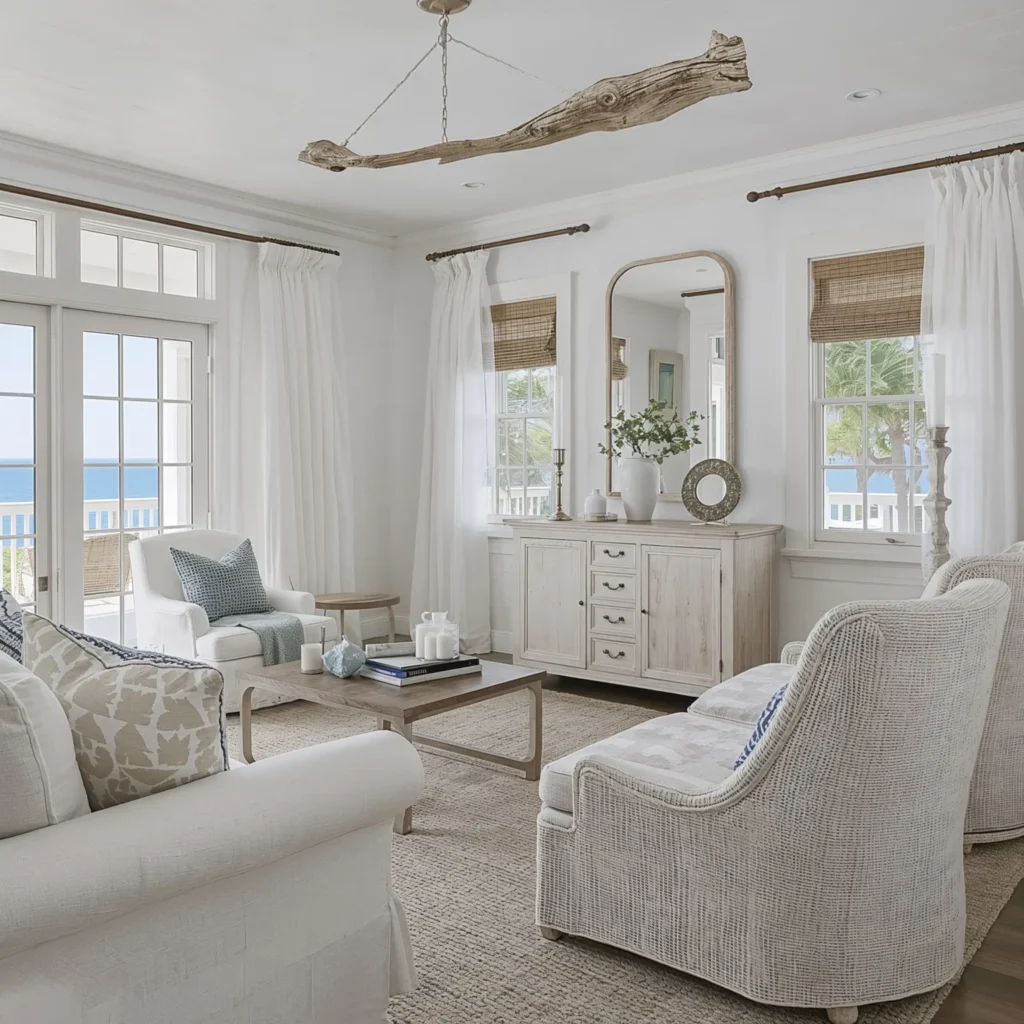
A white kitchen with open shelving is one of the most practical applications of white room decor — and one of the most photographed. White cabinetry, white walls, and open wooden or white-painted shelves create a kitchen that feels clean, generous, and full of light, while the shelving provides both functional storage and an opportunity for thoughtful display.
The key to open shelving in a white kitchen is curating what goes on display with genuine care. The best open shelf arrangements have a clear visual logic: similar objects grouped together, height varied across the shelf, a balance of functional items (stacked white plates, glass jars, a good olive oil bottle) and decorative ones (a small plant, a ceramic vase, a few beautiful books). In a white kitchen, the shelving display becomes the primary source of visual interest — it deserves the same attention as artwork in a living room.
Maintenance reality: Open shelving in a kitchen requires regular maintenance — surfaces visible to the eye are also visible to cooking grease and dust. Consider this honestly before committing. If you love the look but know you won’t keep up with the cleaning, glass-fronted cabinets offer a similar visual quality with much less upkeep.
9. White Bathroom with Marble and Natural Stone
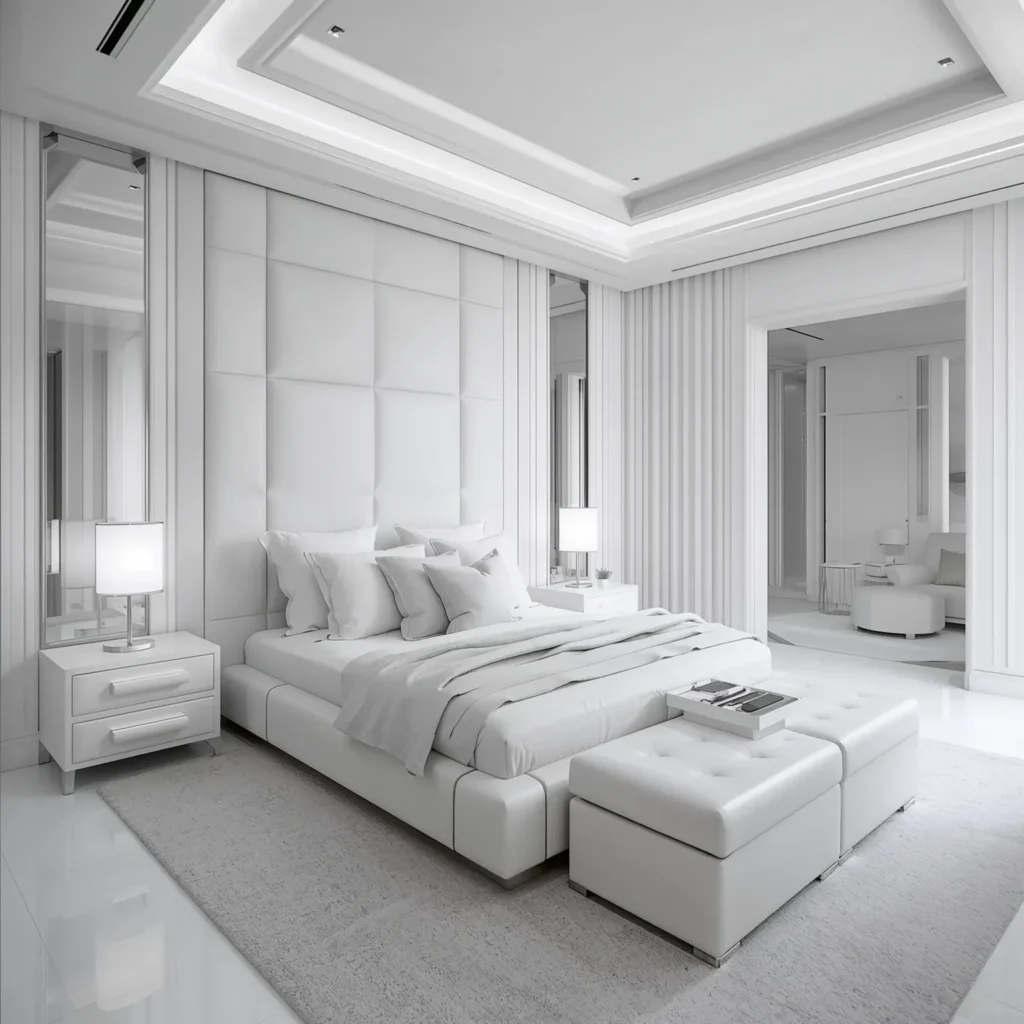
The white bathroom is perhaps the most natural application of white room decor — and for good reason. White in a bathroom reads as clean, fresh, and calming. Add marble or natural stone and it becomes something genuinely extraordinary: a private sanctuary that has all the quality and atmosphere of a high-end spa.
White marble — Calacatta, Statuario, or more affordable alternatives — on the floor and walls of a bathroom creates a luminous, almost glowing quality. The veining in natural marble provides all the visual interest and movement the room needs; no other decoration is required. Pair with white freestanding or wall-mounted fixtures, simple chrome or brushed brass hardware, large format mirrors, and some white or cream towels with visible texture. Keep the accessories minimal — a single potted plant, one beautifully crafted soap dish, a quality candle.
Marble alternative: Natural marble is beautiful but expensive, cold underfoot, and requires sealing. For a budget-conscious or practical alternative, large-format porcelain tiles that convincingly mimic marble are now widely available. They’re warmer, more durable, easier to maintain, and available in exactly the white-and-gray vein patterns that make marble so appealing.
10. White Living Room with a Single Bold Accent Color
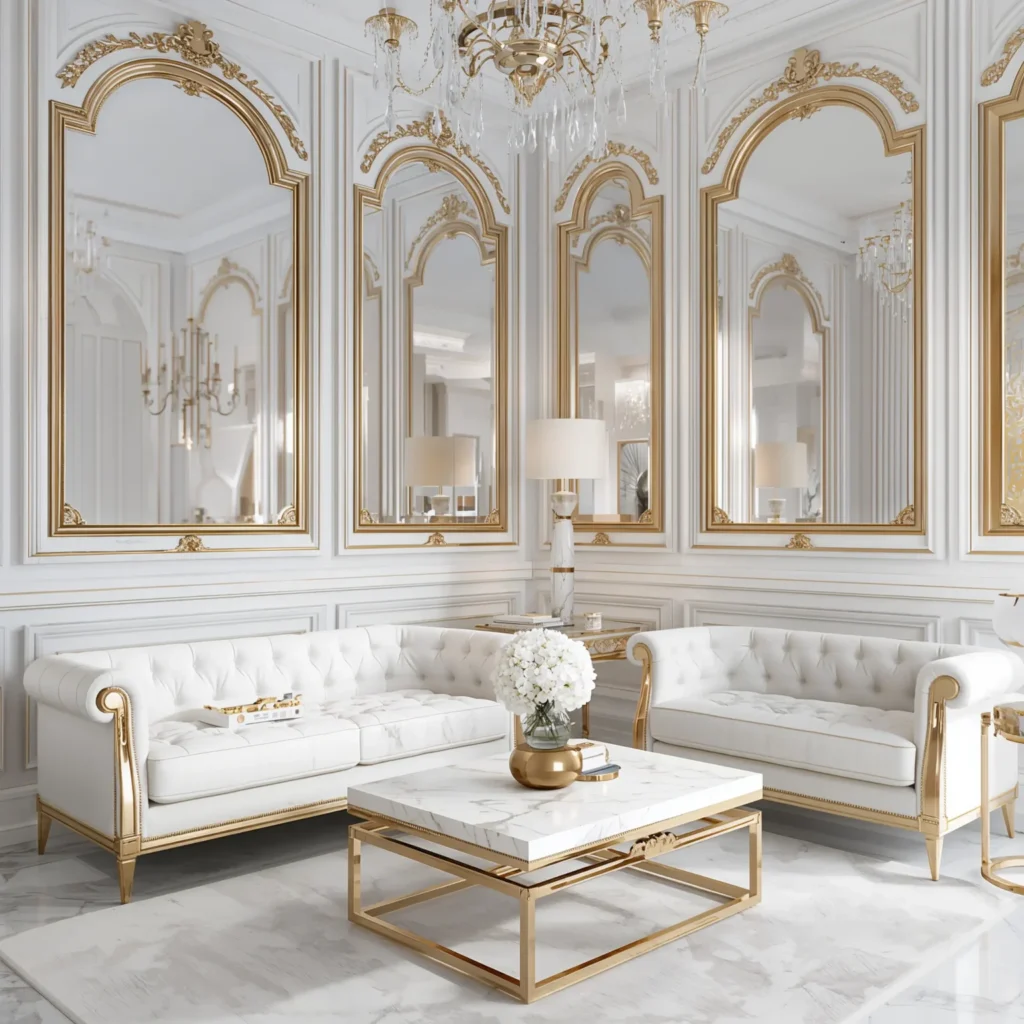
A predominantly white living room with one carefully chosen accent color is one of the most confident and effective design approaches available. The white creates a bright, uncluttered backdrop that makes the accent color appear more vivid and intentional than it would in a room with multiple competing tones.
The accent color works best when it’s used consistently across several elements — cushions, a throw, a vase, a piece of artwork, perhaps the back of a bookshelf — rather than in one large hit or scattered randomly around the room. Proportionally, the accent color should be enough to feel deliberate and present without tipping the balance away from white. Roughly ten to twenty percent of the visual field in the accent color, with white dominant throughout, is a reliable guide. Deep, saturated colors — forest green, navy blue, terracotta, dusty rose — tend to work better in this role than pale or muted tones, which can look washed out against a white backdrop.
Seasonal flexibility: One of the real advantages of a white room with an accent color is how easily the accent can be changed seasonally. Replace cushion covers, swap a throw, change a vase — and the entire personality of the room shifts. This makes white rooms among the most flexible and cost-effective to update over time.
11. White Cottage Bedroom with Floral and Vintage Touches
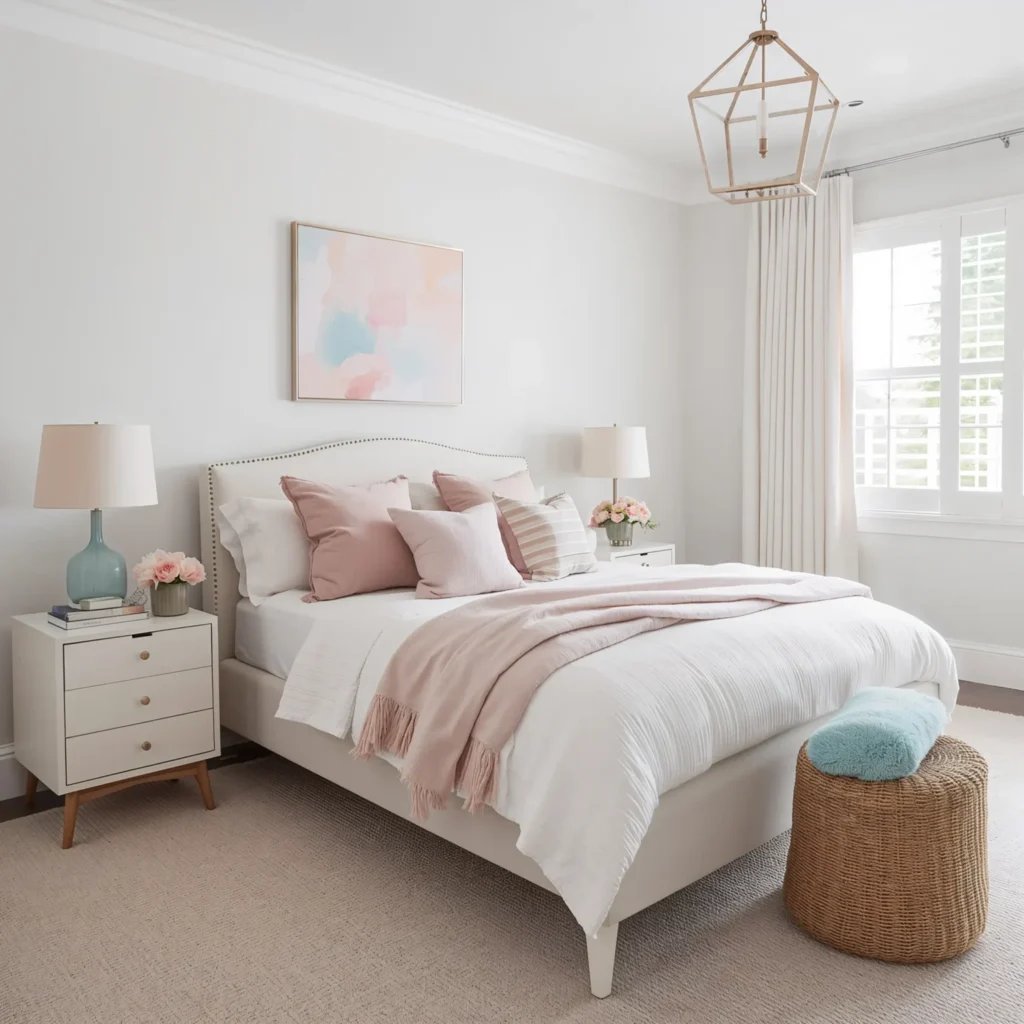
Cottage style brings a softness and romanticism to white rooms that’s distinct from every other aesthetic approach. It’s a style that embraces imperfection — slightly mismatched furniture, worn surfaces, the patina of age and use — and that warmth makes it feel genuinely lived-in and loved rather than curated for a photoshoot.
In a white cottage bedroom, the walls might be painted white over visible brick or plaster that shows its texture. The furniture might be painted white over older pieces in varying styles — a Victorian iron bed frame, a painted wooden chest of drawers, a simple bedside table. Floral and botanical textiles in soft, faded tones add pattern without modernizing the feel. A collection of white ceramic jugs on a windowsill, a simple posy of garden flowers in a glass jar, a worn linen bedspread — these are the details that make a cottage bedroom feel genuinely charming.
Paint technique: For walls in a cottage bedroom, consider a flat or matte paint finish rather than a standard eggshell or satin. Matte finishes have a soft, slightly chalky quality that reads as more naturally aged and more compatible with the imperfect, organic quality of cottage style.
12. Modern White Living Room with Concrete and Steel
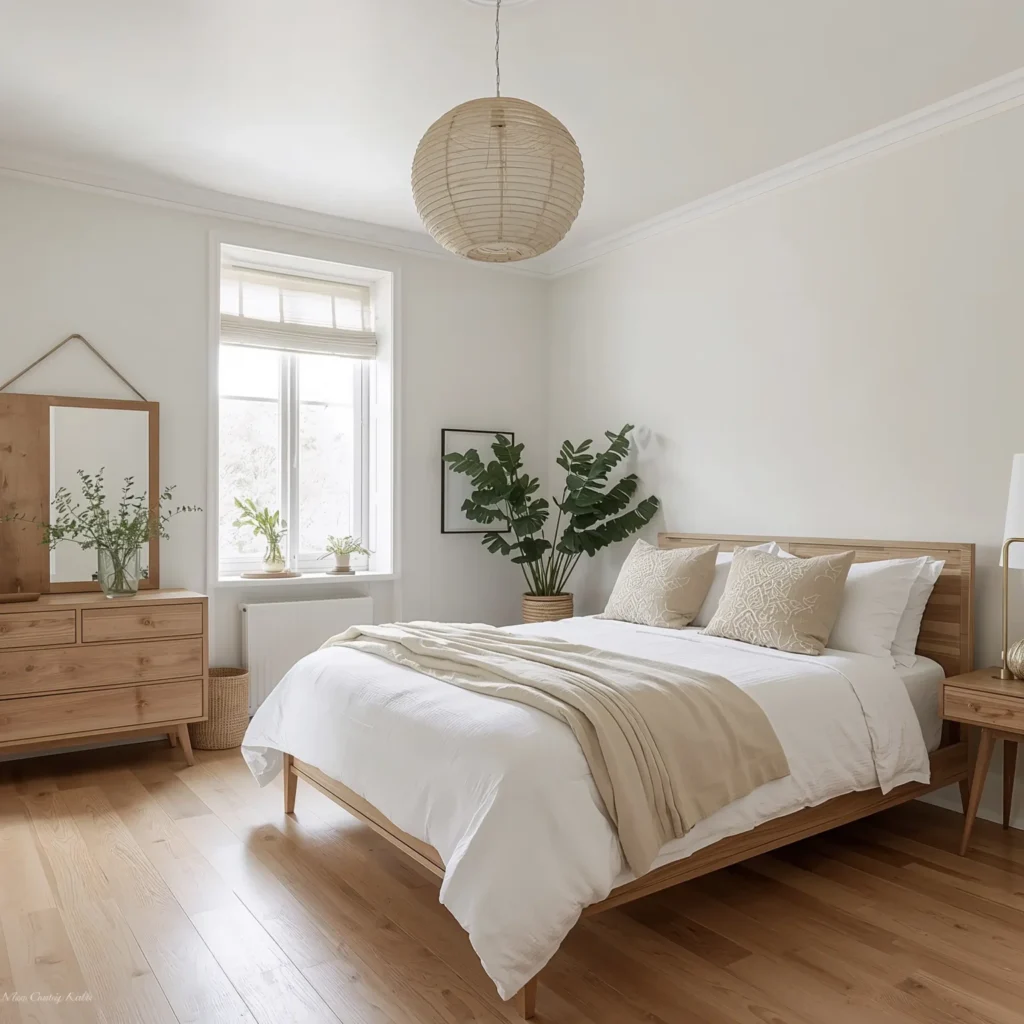
In a contemporary or industrial-modern design context, white pairs with concrete and steel to create a room that’s clean, architectural, and genuinely sophisticated. The roughness and weight of industrial materials creates a compelling tension with the lightness of white — a room that manages to feel both raw and refined.
White walls in a cool, blue-leaning tone — Pure White or similar — work best here, as they reference the coolness of the industrial materials rather than fighting against it. Concrete flooring or large-format concrete-look tiles provide the base. Furniture in white, black, and natural gray tones keeps the palette controlled. Matte black metal details — lamp stands, shelving brackets, curtain rods, chair frames — add definition and an industrial graphic quality. One or two pieces of abstract artwork in black, white, and gray maintain the palette while adding visual interest.
Warming it up: Pure industrial-modern white rooms can feel cold if not carefully balanced. A generous sheepskin rug, a wooden shelf, or even a single warm-toned plant — a fig tree, a rosemary topiary — introduces enough organic warmth to make the room livable without compromising its architectural quality.
13. White Dining Room with Statement Lighting
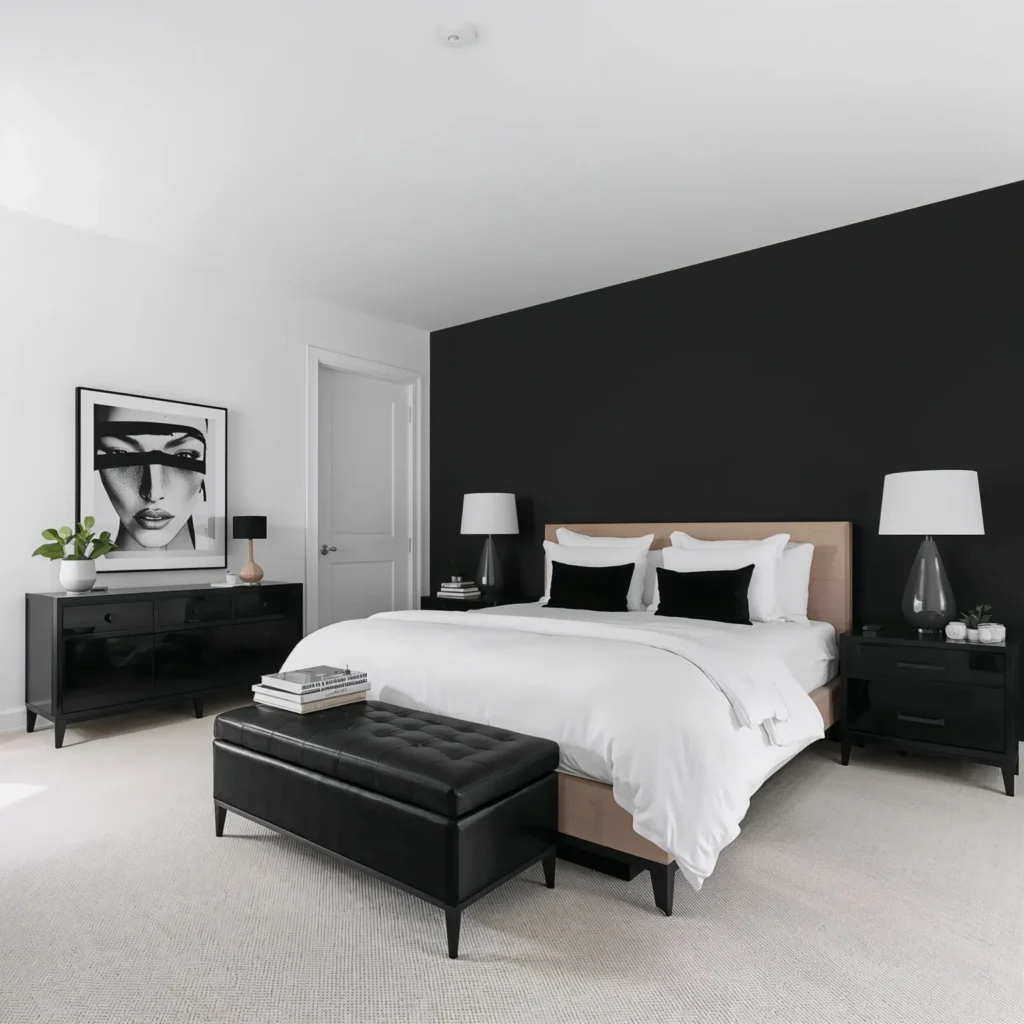
A white dining room gives a statement light fixture the cleanest possible backdrop to make its mark. With white walls, white ceiling, and simple furnishings, a dramatic pendant light or chandelier becomes the undisputed focal point of the room — the piece around which everything else is organized.
The fixture can take any form — a sculptural modern piece in metal or plaster, an oversized rattan or woven pendant, a traditional chandelier in aged brass, a cluster of simple glass globes — as long as it’s scaled generously relative to the table beneath it and hung at the right height (30 to 36 inches above the table surface). In a white room, the fixture’s silhouette is particularly important since it reads as a strong graphic shape against the pale backdrop.
Scale guidance: For dining room pendant sizing, the diameter of the fixture should be roughly half to two-thirds the width of the dining table. A pendant that’s too small looks tentative over a large table; one that’s too large overwhelms the space. When in doubt, err toward larger — a slightly oversized fixture in a white room reads as confident; an undersized one reads as uncertain.
14. White Children’s Room with Playful but Considered Details
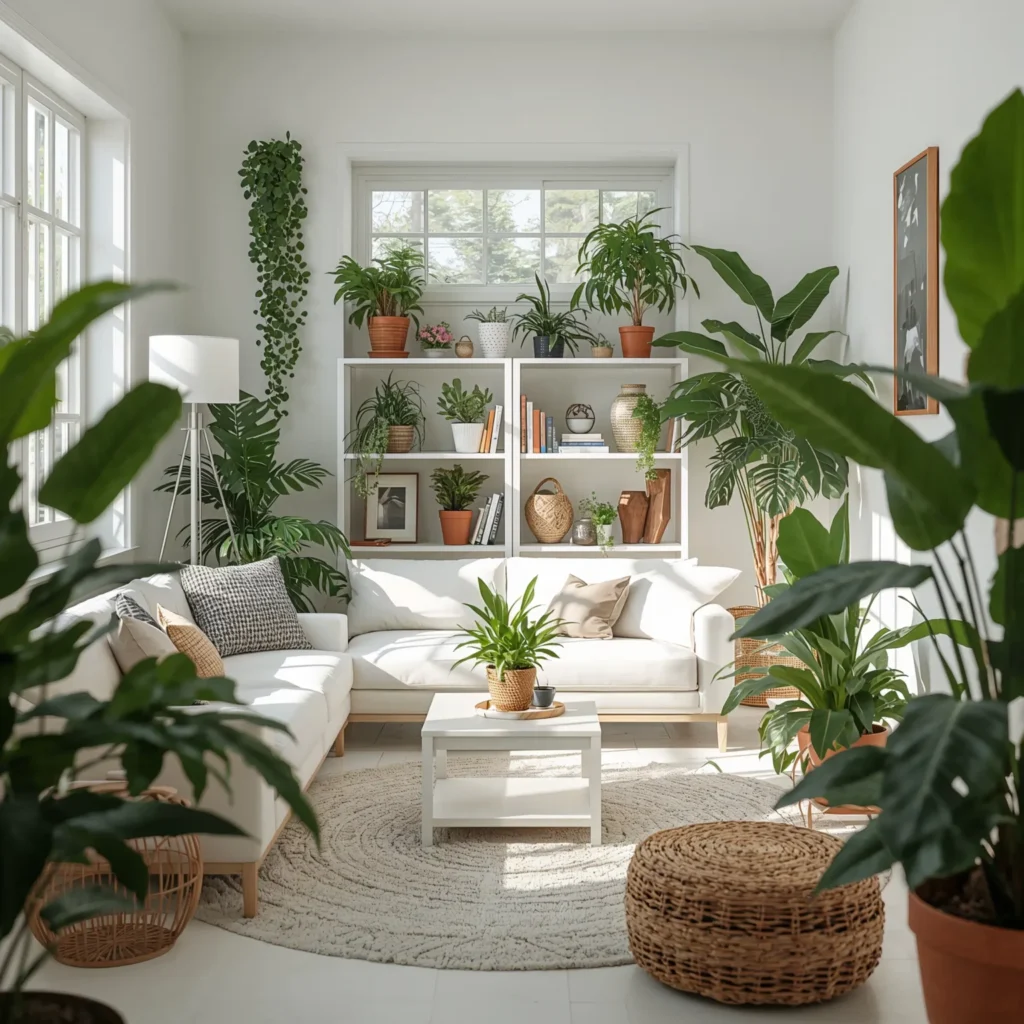
A white room for a child is an investment in longevity. While a room decorated in the child’s current favorite color or character theme will likely need redecorating within a few years, a white room can grow with the child — updated through accessories, artwork, and bedding as tastes evolve, without ever requiring a full repaint.
In a white children’s room, the personality comes through in the details rather than the walls: a colorful gallery wall of their own artwork or favorite prints, a brightly colored rug, playful cushions, a beautiful toy storage solution, and a few pieces of furniture in natural wood or painted in a soft accent color. The room stays white throughout childhood and teenage years, but it never looks the same because the accessories carry the character and change as the child does.
Practical white: In a child’s room, choose a paint finish that can be wiped clean — satin or eggshell rather than flat matte. White walls in a child’s room will encounter crayon, stickers, and general fingerprints. A wipeable finish is not optional.
15. White Home Office with Clean Lines and Natural Light
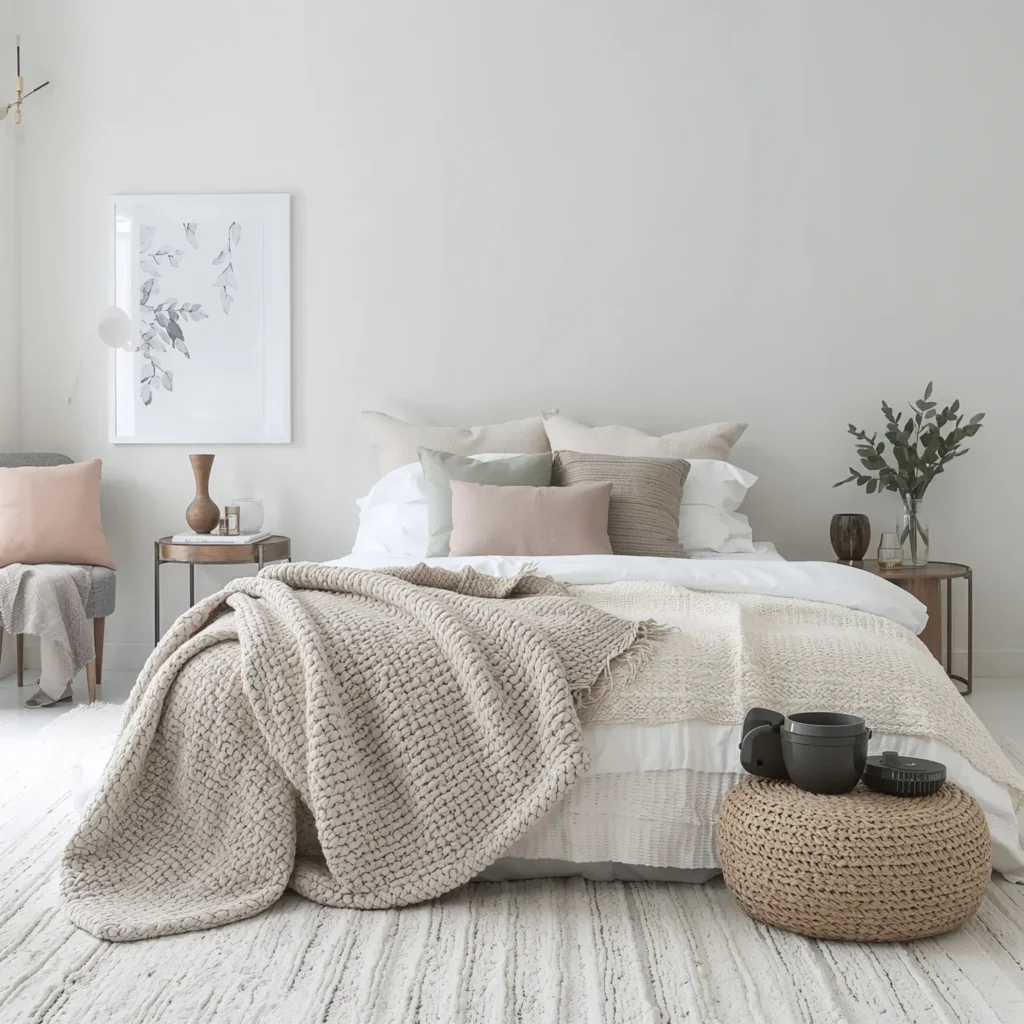
A white home office is one of the most functional applications of white room decor. White’s light-reflecting quality maximizes the available natural light in a workspace, reduces eye fatigue, and creates a visually clear environment that supports focus and clear thinking. Studies consistently show that lighter, brighter work environments tend to support productivity more effectively than darker ones.
For a white home office, keep the furniture simple and well-organized — a white or natural wood desk, a supportive chair in white, cream, or natural fabric, and clean shelving for books and materials. Introduce warmth through a wooden desktop accessory set, a plant or two, and a simple rug beneath the desk area. Ensure the primary light source — whether natural window light or task lighting — comes from the side rather than directly in front of or behind the screen to minimize glare on the white surfaces.
Focus environment: In a white home office, clutter is more visible than it would be in a darker space. Good cable management, intentional storage solutions, and a regular desk-clearing habit are non-optional. A clear, organized white desk is inspiring; a cluttered one is distracting in a way that a cluttered dark desk somehow isn’t.
How to Choose the Right White for Your Room
Choosing a white paint sounds simple. It’s one of the most nuanced decisions in a room. Here’s how to approach it systematically:
Step 1. Assess Your Room’s Light Quality
- North-facing rooms receive cool, indirect light throughout the day. They suit warm whites — those with cream, yellow, or pink undertones — which counterbalance the coolness of the light and prevent the room from feeling gray or cold.
- South-facing rooms receive warm, direct sunlight for much of the day. They can handle cool whites — those with blue or gray undertones — without feeling cold. Warm whites in south-facing rooms can look yellow under strong sunlight.
- East-facing rooms receive warm light in the morning and cooler light in the afternoon. They generally suit slightly warm-neutral whites.
- West-facing rooms receive warm afternoon and evening light. They handle both warm and cool whites reasonably well, though the warm evening light tends to flatter warm whites more.
Step 2. Consider the Room’s Purpose and Desired Mood
- Bedrooms and bathrooms benefit from warm whites — they create a softer, more restful atmosphere that supports relaxation.
- Home offices and studios benefit from cooler whites — they support alertness and clarity, and they’re less likely to distort color perception if the room is used for creative work.
- Living rooms and dining rooms can work with either warm or cool whites depending on the desired mood — warm for cozy and welcoming, cool for clean and contemporary.
- Kitchens typically suit cool-to-neutral whites that feel fresh and clean, though farmhouse and cottage kitchens are more comfortable with warm whites.
Step 3. Test Physically Before Committing
- Get sample pots of your top two or three whites and paint test patches directly on the actual wall — at least 12 inches square.
- Evaluate each test patch at multiple times of day: early morning, midday, late afternoon, and evening under artificial light.
- Look at the test patches next to the other elements that will be in the room — flooring samples, fabric swatches, furniture finishes.
- If two whites look virtually identical in isolation but read differently in the room, trust what you see in the room. The actual context is always the truth.
Popular White Paint Shades and What They Do
- Chantilly Lace (Benjamin Moore) — A clean, pure white with minimal undertones. Very versatile, works in both warm and cool lighting conditions.
- All White (Farrow & Ball) — A slightly warm, clean white with just enough warmth to prevent coldness. Excellent in bedrooms and living rooms.
- Simply White (Benjamin Moore) — A warmer white with a soft creaminess. Beautiful in farmhouse, cottage, and Scandi-inspired rooms.
- White Dove (Benjamin Moore) — A warm, soft white with very slight yellow-cream undertones. One of the most popular whites for good reason.
- Wimborne White (Farrow & Ball) — A warm white with cream undertones. Particularly beautiful in rooms with natural materials.
- Repose Gray (Sherwin-Williams) — A very light warm gray that reads almost white. Excellent for those who want white’s spaciousness without its starkness.
The White Room Texture Guide: How to Layer Without Color
Texture is the tool that makes white rooms work. Here’s how to layer it effectively across every room type:
Textiles
- Layer at least three different textile textures in any white room: a smooth woven fabric (cotton or linen), a looser or more open weave (jute, rattan, open-weave linen), and a pile or knitted fabric (wool, velvet, chunky knit).
- Vary the weight of textiles — light, sheeer curtains alongside heavyweight throws and medium-weight cushions — for visual and tactile depth.
- Stick to white, cream, natural, and off-white in the textiles for a fully tonal scheme, or introduce one accent color consistently through cushions and throws.
Hard Surfaces
- Vary the finish of hard surfaces throughout the room: matte plaster walls alongside a satin furniture paint alongside a gloss-painted window trim creates depth through sheen variation alone.
- Natural stone, marble, travertine, and concrete all bring texture and natural patterning to white rooms without introducing color.
- Visible wood grain — in floors, furniture, or shelving — is one of the most effective warmth-providers in a white room. Choose warm-toned woods for warmth; lighter woods for a more Scandinavian quality.
Decorative Objects
- Ceramics in white and natural tones — hand-thrown pottery with visible texture, simple stoneware, matte white porcelain — are the natural accessories of a white room.
- Natural objects (dried botanicals, stones, shells, driftwood) bring organic texture that references the outside world.
- Books arranged on shelves add color through their spines even in a white room — consider arranging by color for a more curated look, or embracing the natural variety of a working library.
8 White Room Decor Mistakes — and How to Avoid Them
- Choosing the wrong white undertone for the room’s light direction. Fix: assess light quality first and test samples in the actual room under its actual lighting conditions.
- Not layering enough texture. Fix: aim for at least five different textures in any white room. If the room feels flat or clinical, add a textile layer before changing anything else.
- Using too much cool white in a room that needs warmth. Fix: swap one or two key elements (the rug, the main sofa textile, the curtains) for warmer, more natural alternatives.
- Forgetting that white shows dirt more visibly than other colors. Fix: choose paint finishes that can be cleaned (satin or eggshell rather than flat), use performance fabrics on high-use upholstery, and have a regular cleaning routine.
- Creating a white room that looks exactly like everyone else’s white room. Fix: choose one unusual element — a piece of vintage furniture, an unexpected texture, a personal collection on display — that makes the room specifically yours.
- Making a white room too matchy-matchy. Fix: vary white tones deliberately and embrace slight variations between textiles and surfaces rather than trying to match everything precisely.
- Under-lighting a white room. Fix: white rooms look beautiful in warm, layered light. Ensure at least three light sources in any room, including table or floor lamps in addition to overhead fixtures.
- Choosing white for a room that genuinely doesn’t suit it. Fix: be honest about the room’s light quality. A very dark, basement-level room with minimal natural light will not be transformed by white paint — it may actually feel more dispiriting as the white makes the absence of light more visible.
Closing Thoughts: Why White Is the Most Challenging and Rewarding Color in Interior Design
White asks more of you as a designer — whether professional or amateur — than any other color choice. It asks for precision in shade selection, discipline in editing, generosity in texture layering, and genuine honesty about the light quality you’re working with. It offers nowhere to hide poor decisions, no bold color to distract from an ill-considered furniture arrangement or an uninspired accessory choice.
But for those who meet its demands, white gives back enormously. It creates rooms that feel luminous and calm. It gives every other material, texture, and object in the room the space and backdrop to be fully itself. It adapts to every style, every period, and every personal taste without ever becoming rigid or prescriptive. And it ages — unlike almost any bold color choice — without ever looking dated.
The 24 ideas in this guide are starting points, not prescriptions. Take the ones that resonate with your own taste, your room’s specific qualities, and the life you actually live in your home. Test shades before committing. Invest in texture before you invest in accessories. Let the room breathe. And trust that white — chosen thoughtfully and executed with care — can be one of the most beautiful, most personal, and most enduring choices you’ll ever make in your home.
Frequently Asked Questions
How do I stop a white room from feeling cold and clinical?
The answer is almost always texture. A room feels cold when its surfaces are too smooth and too similar — when there’s nothing for the eye or the hand to engage with. Add a chunky knit throw, a wool rug, a linen cushion, a wooden element. Layer at least five different textures in any white room. Warm-toned lighting also helps enormously — replace cool overhead bulbs with warm-white alternatives (2700K-3000K color temperature) and add lamps that cast a soft, diffused light.
What colors go well with white room decor?
White pairs beautifully with almost everything, but some combinations are particularly successful. Natural wood tones in any species are universally compatible. Gold and brass add warmth and a sense of luxury. Black creates a clean, graphic contrast. Navy blue is classic and sophisticated. Forest green brings the natural world inside. Terracotta and warm clay tones add earthy warmth. Soft, dusty rose or blush adds romance without heaviness. The more muted and natural the accent color, the more harmonious it tends to sit alongside white.
What is the best white paint for a living room?
There is no single best white for every living room — it depends entirely on the room’s light direction, size, and the mood you want to create. For warm, south-facing rooms, cooler whites work well. For cool, north-facing rooms, warmer whites with cream undertones are kinder. Benjamin Moore White Dove and Chantilly Lace are consistently reliable across different conditions. Farrow & Ball All White and Wimborne White are excellent warm options. Always test your shortlisted whites in the actual room under its actual light before committing.
How do I add personality to a white room without using color?
Through texture, form, material, and personal collections. A white room gains personality through the variety of its surfaces — polished marble alongside rough-hewn wood alongside soft linen. Through the shapes of its furniture and objects — organic curves, architectural angles, the irregular forms of hand-thrown pottery. Through displayed collections that reflect specific interests and experiences. And through personal artwork and photographs that bring specific meaning to the walls. Color is one way to add personality; it’s far from the only way.
Is white a good color for a small room?
Yes — white is one of the most effective tools for making small rooms feel larger. White reflects light rather than absorbing it, which creates a perception of greater space and reduces the claustrophobic quality that darker colors can give to compact rooms. For maximum effect in a small white room, paint walls, ceiling, and trim in the same or very similar tone; use furniture with visible legs; hang mirrors to reflect windows; and ensure the room is well lit throughout, especially in the evenings.
How do I keep a white room looking clean?
Practical choices matter. Use satin or eggshell paint finishes that can be wiped clean rather than flat matte. Choose performance fabrics on high-use upholstery — those treated for stain resistance or in washable slipcover form. Use a rug pad to prevent rugs shifting and to make vacuuming easier. Establish a regular dusting and quick-clean routine rather than letting maintenance accumulate. Accept that white rooms require slightly more upkeep than darker ones — and decide whether the aesthetic payoff is worth it for the way you actually live.
1 thought on “15 Dreamy White Room Decor Ideas with Fresh Aesthetic”