
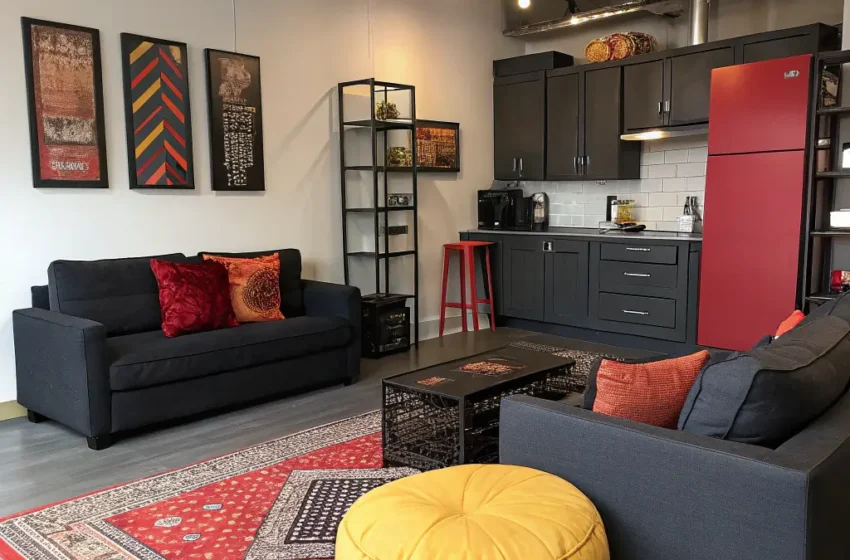
A studio apartment has a reputation problem. Mention it in conversation and most people picture a cramped, chaotic space — the transitional accommodation of someone between chapters. A place you endure, not enjoy.
That reputation is entirely undeserved, and the proof is everywhere. Some of the most thoughtfully designed living spaces in existence are studios — compact by necessity, exceptional by intention. The constraint of limited square footage forces decisions that most larger apartments never demand, and those decisions, made well, produce spaces that feel more curated and more personal than rooms three times their size.
This guide covers 20 concrete, specific studio apartment ideas for men — covering layout, furniture, aesthetics, storage, and the dozens of smaller details that separate a studio that works from one that merely functions. Whether you’re moving in for the first time or have been living in the same space for years without quite cracking the code, there’s actionable guidance here.
1. Start by Mapping Every Zone Before Moving a Single Thing
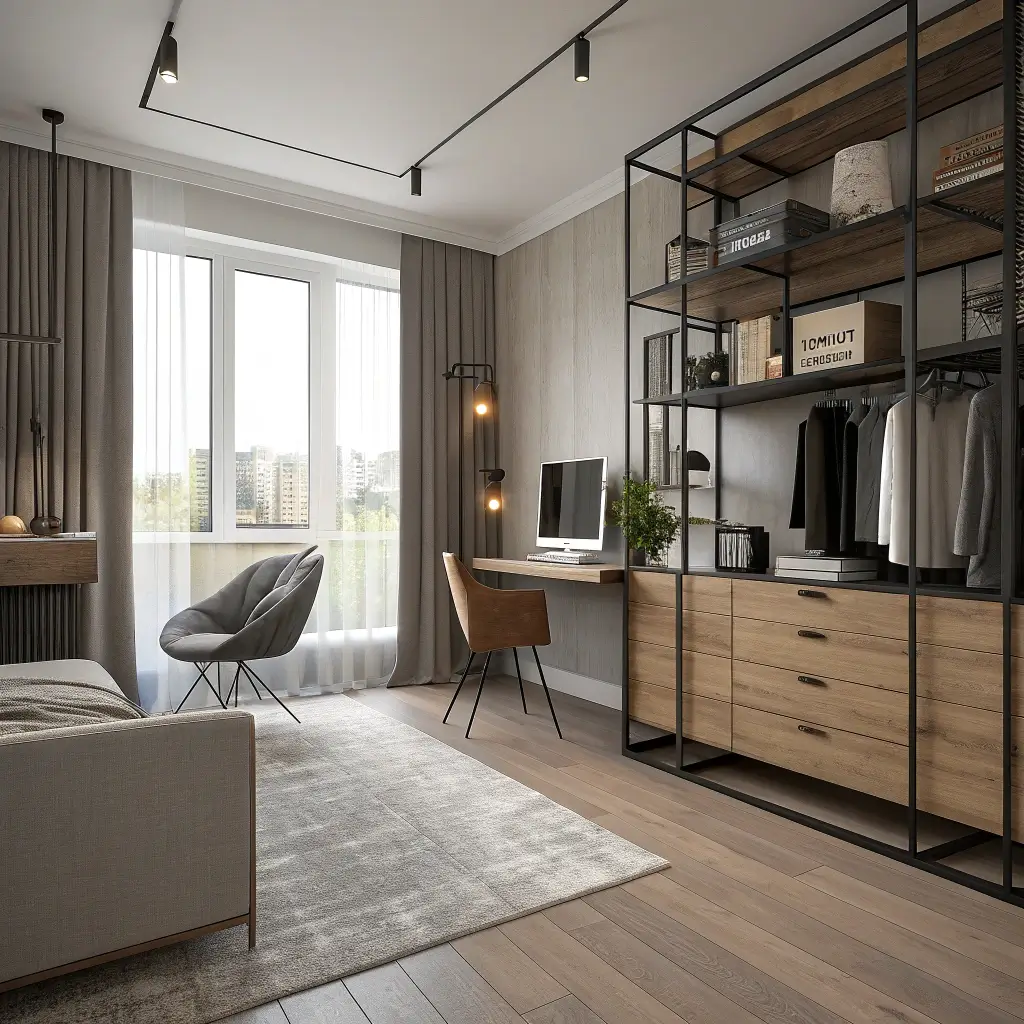
The most common studio apartment mistake is treating it as one undifferentiated room and trying to decorate it as such. A studio is actually several rooms sharing one space — a living area, a sleeping area, a workspace, a dining area, and a kitchen. Identifying those zones before you place a single piece of furniture changes everything.
Get a piece of paper and sketch your floor plan. Mark where the natural light comes from, where the electrical outlets are, and where the windows and door are located. Then decide which corner or area serves each function.
How to Zone a Studio Effectively
- Put the bed against the wall furthest from the entrance — this creates the most psychological separation between the ‘private’ and ‘public’ areas of the studio.
- Position the sofa with its back toward the sleeping area — it acts as a soft room divider and creates the feeling of a separate living room without any physical barrier.
- Keep the workspace near natural light but not competing with the living area for central floor space.
- The dining area, if you have one, lives best near the kitchen — keep it close to reduce the feeling of eating in the middle of a living room.
- Traffic flow matters: can you move between zones without navigating around furniture? If not, rethink the arrangement before buying anything.
🔑 Key Rule: In a studio, every spatial decision affects every other one. Plan on paper first, move furniture second, buy new pieces last.
2. Choose an Aesthetic and Let It Do the Heavy Lifting
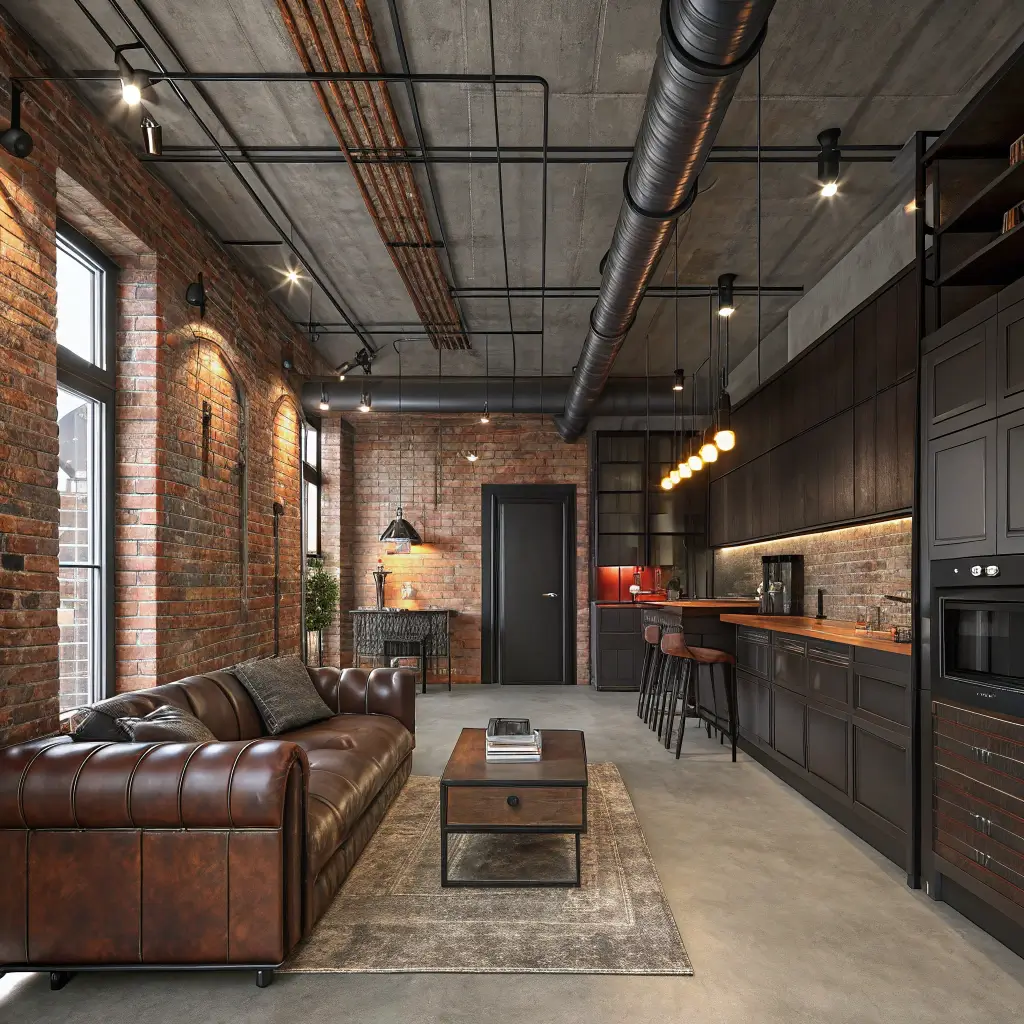
A studio apartment without a clear aesthetic looks like a storage space with a bed. A studio apartment with one clear aesthetic looks intentional regardless of its size. This is the first and most important design decision you’ll make — everything else flows from it.
For men’s studio apartments, certain aesthetics work particularly well because they combine visual strength with practical livability. Here are the ones that consistently deliver:
Aesthetics That Work Especially Well in Men’s Studios
- Industrial Minimalism — dark metals, exposed textures, simple furniture with strong lines. Masculine without trying, and scales beautifully into small spaces because it avoids visual clutter.
- Scandinavian — light woods, functional design, clean surfaces, warm textiles. Makes small spaces feel calm and organized rather than cramped.
- Dark Moody Minimalism — deep wall colors, rich textures, deliberately curated objects. Counterintuitively, dark colors can make small spaces feel more intimate and complete rather than smaller.
- Mid-Century Modern — warm wood tones, tapered legs, clean silhouettes. Timeless, versatile, and works with almost any color palette.
- Japandi (Japanese-Scandinavian hybrid) — natural materials, intentional simplicity, quality over quantity. The most space-efficient aesthetic because it philosophically opposes clutter.
Pick one. The studios that look like showrooms and the ones that look like chaos share the same square footage — the difference is a committed aesthetic direction.
💡 Pro Tip: Save 8–10 studio apartment images you genuinely like before buying a single thing. Look for what they have in common — that’s your aesthetic direction showing itself.
3. Invest in a Sofa That Earns Its Floor Space
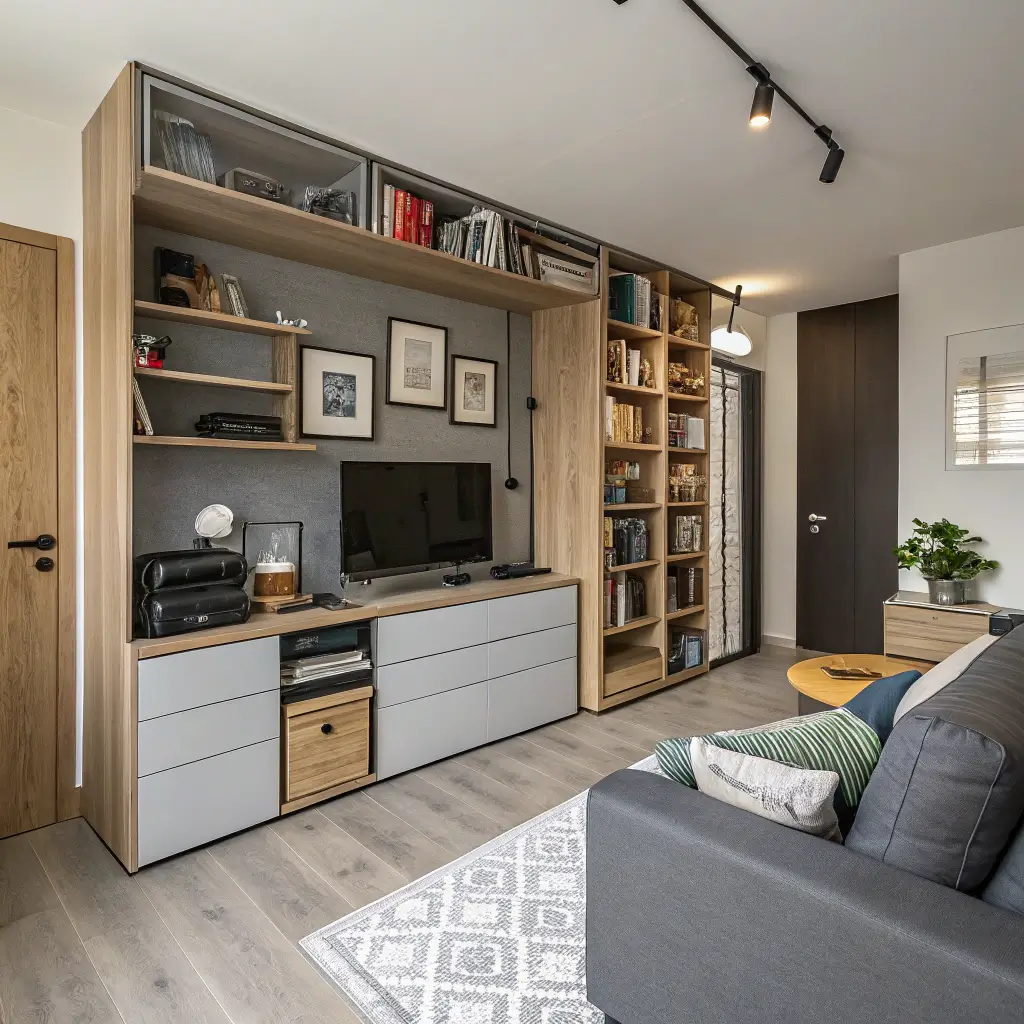
The sofa is the largest piece of furniture in most studios and the one that sets the visual tone for the entire space. In a studio, everything competes for floor space — and the sofa has to justify what it takes up by being both excellent and multifunctional.
What to Look for in a Studio Sofa
- Scale first — a sofa that’s too large doesn’t just look wrong, it makes the entire studio feel smaller and harder to navigate. Measure the space and work out what proportions allow comfortable movement around it.
- Legs matter more than you’d expect — sofas on visible legs (rather than sitting directly on the floor) feel lighter and make rooms appear more spacious. Dark metal or walnut legs are strong choices.
- Sleeper sofas are worth considering if you occasionally host — a quality one functions as a proper sofa by day and a guest bed by night without looking like either.
- Dark upholstery in charcoal, slate, navy, or caramel leather is practical and visually strong. Light upholstery in a studio invites anxiety about stains that doesn’t serve you.
- Storage sofas (with under-seat compartments) solve a meaningful portion of your storage problem while looking like regular furniture.
Position the sofa floating slightly away from the wall rather than pushed against it. Even a few inches creates the visual impression of a more deliberate arrangement — one of the simplest high-impact moves in studio decorating.
💡 Pro Tip: Apartment-sized sofas (typically 75–85 inches wide rather than the standard 90–100) are proportioned for smaller spaces and often look better in studios than full-size equivalents, even when the full-size would technically fit.
4. Use Your Bed Frame as a Design Statement
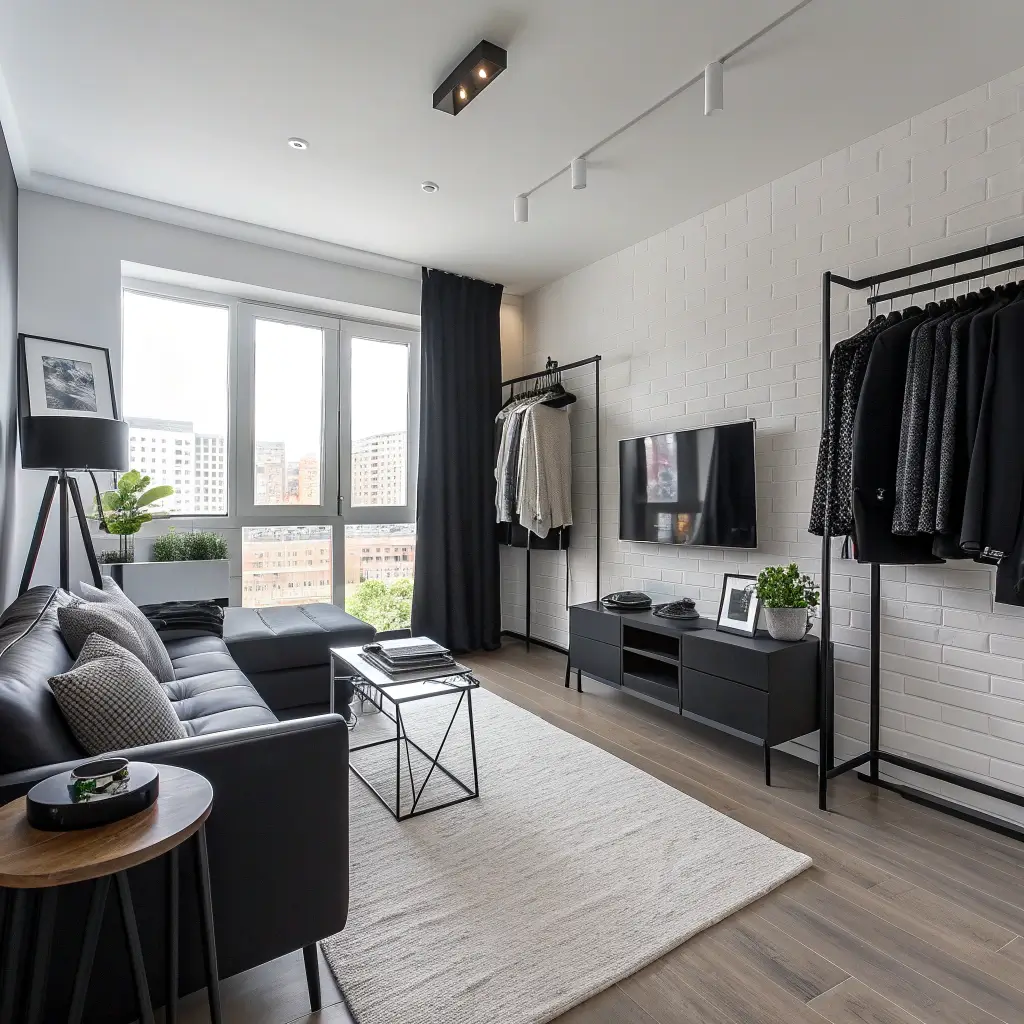
In a studio, the bed is always visible. Unlike in a separate bedroom where the door closes and the sleeping area disappears from view, in a studio the bed is present in every moment of your life at home. This makes the bed frame one of the most important design decisions in the entire space.
A platform bed in dark wood or matte black metal is the most versatile choice for men’s studios — it’s low-profile (which keeps sight lines open and makes the space feel less divided), visually strong, and works with almost every masculine aesthetic from industrial to mid-century.
Bed Setup Rules for Studios
- A headboard is non-negotiable — it visually anchors the sleeping area and prevents the bed from looking like it was just placed rather than positioned. Padded linen, solid walnut, or simple black metal all work well.
- Bed height matters for storage — a bed that sits high enough off the ground for under-bed containers gives you significant hidden storage without visible clutter.
- Quality bedding in a limited palette (navy, charcoal, white, slate, or camel) makes the bed look like an intentional element rather than an afterthought.
- Two nightstands, even if you sleep alone. One nightstand creates asymmetry that reads as unfinished. Two create a sense of completion.
- Blackout curtains or a curtain-based room divider behind the bed serves double duty — they improve sleep quality and visually separate the sleeping zone from the rest of the studio.
🔑 Key Rule: The bed is always on display in a studio. Treat it as a centerpiece, not just a place to sleep — make it every morning and you’ll feel the difference immediately.
5. Use Room Dividers to Create Psychological Separation
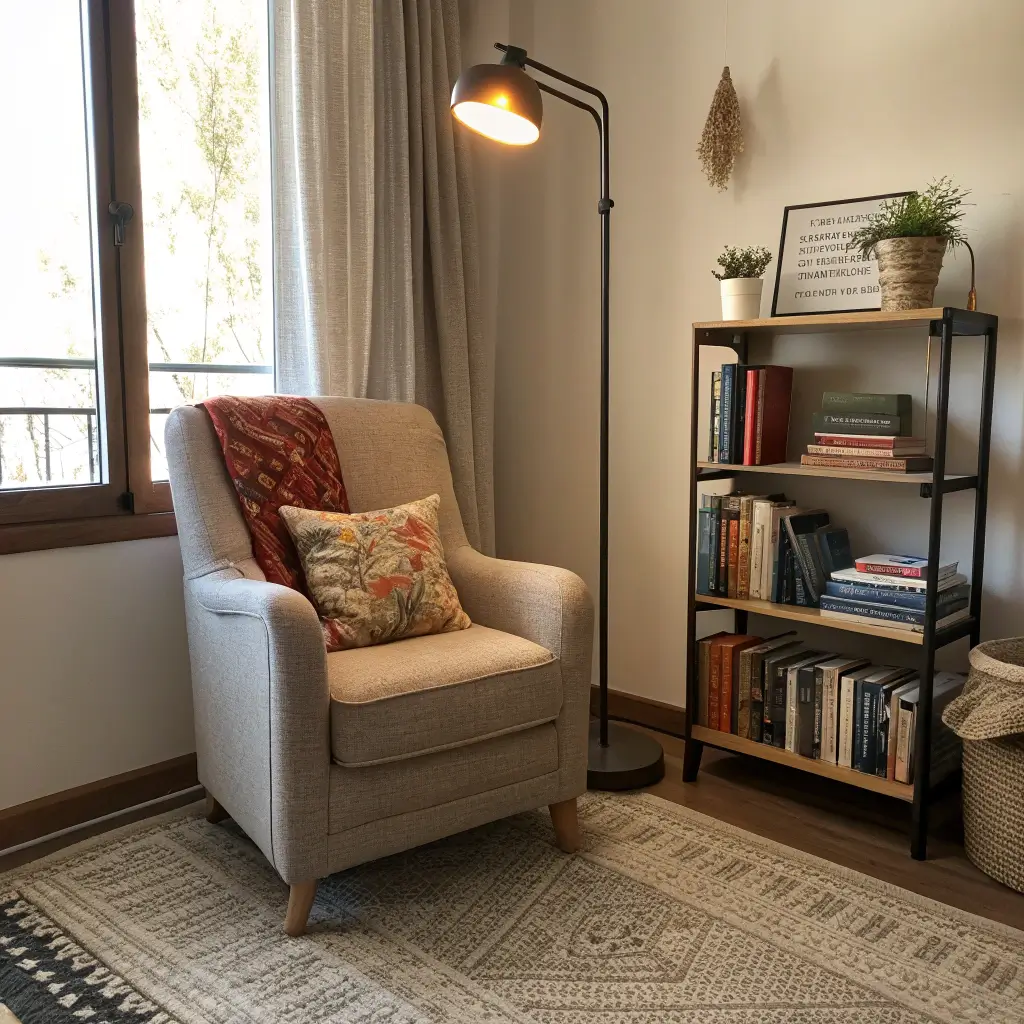
One of the most disorienting things about studio living is the lack of transition between zones — you can be eating dinner, working, and looking at your bed simultaneously. The solution isn’t walls (you can’t have those) but visual dividers that create the feeling of distinct spaces.
Effective Room Dividers for Men’s Studios
- A bookshelf positioned perpendicular to the wall — facing the living area from the sleeping side, it creates a wall-like separation while providing storage on both faces. IKEA KALLAX in dark gray or black works perfectly for this.
- A large area rug in the living area — the rug defines the ‘living room’ zone precisely, and stepping off it registers psychologically as leaving that space. This simple trick makes the studio feel like it has distinct rooms.
- A curtain track mounted from the ceiling — heavy linen or velvet curtains that can be drawn across the sleeping area when you’re entertaining or working, and opened when you want the full studio. Dramatic, functional, and impressively stylish.
- A large plant or a cluster of tall plants — a rubber tree, fiddle leaf fig, or bamboo in a large pot creates a natural visual barrier between zones without blocking light.
- A sofa with its back toward the sleeping area — the simplest divider of all. Position the sofa so that sitting on it, you’re facing away from the bed, and the psychological separation is immediate.
💡 Pro Tip: Layering two or three of these strategies together creates the most convincing room separation. A sofa facing away from the bed, plus a rug defining the living zone, plus a curtain track overhead — that’s three boundaries at different visual levels, and it’s remarkably effective.
6. Go Vertical — Your Walls Are Free Storage
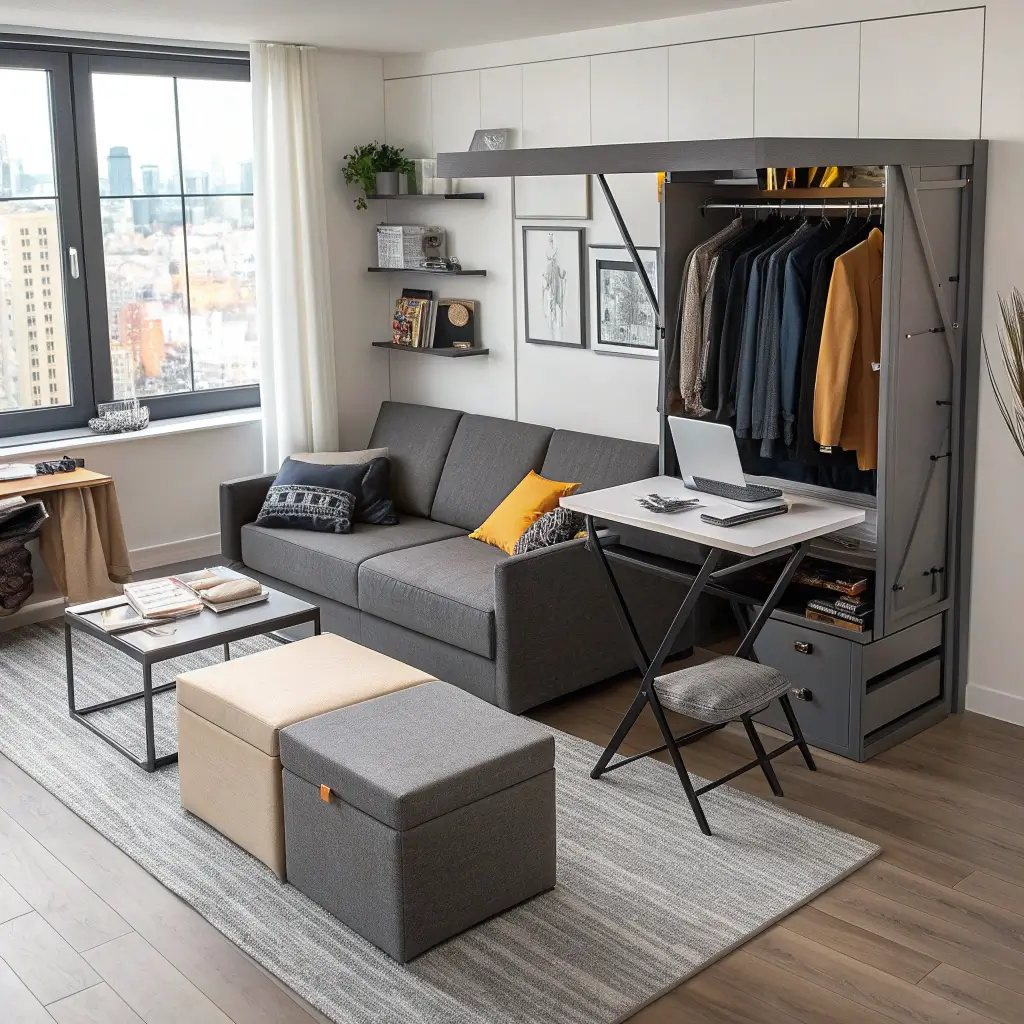
Floor space is the finite resource in a studio. Wall space, by contrast, is almost entirely unused in most apartments. Taking storage vertical is the single most effective space-multiplying strategy available, and it costs far less than buying additional furniture.
Vertical Storage That Looks Good and Works Hard
- Floor-to-ceiling shelving on one wall — treat it as the studio’s dedicated storage and display wall. Books, plants, equipment, and objects all live here, off the floor and out of the living area.
- Floating shelves in the kitchen for dishes, canisters, and small appliances — countertop space is too valuable in a studio kitchen to let appliances that are used twice a week occupy it permanently.
- Wall-mounted bike storage — if cycling is part of your life, a horizontal wall mount keeps the bike accessible without consuming floor space.
- Over-door organizers — the back of every door in a studio can hold shoes, accessories, cleaning supplies, or pantry overflow. It’s invisible when the door is open and organized when it’s closed.
- Pegboard or rail systems in the kitchen — knives, pans, and tools mounted on the wall rather than taking up drawer and cabinet space.
- Magnetic strips — for knives in the kitchen or tools in a workspace area, a magnetic strip clears an entire drawer.
The aesthetic key to vertical storage is consistency. Matching containers, consistent shelf heights, and limited color variation on shelves makes a lot of vertical storage look curated rather than cluttered.
💡 Pro Tip: On open shelving, use the 60/40 rule: 60% functional items (books, equipment, containers) and 40% breathing room or decorative objects. A shelf that’s fully packed reads as storage; one with some space reads as intentional.
7. Build a Workspace That Doesn’t Compromise the Living Area
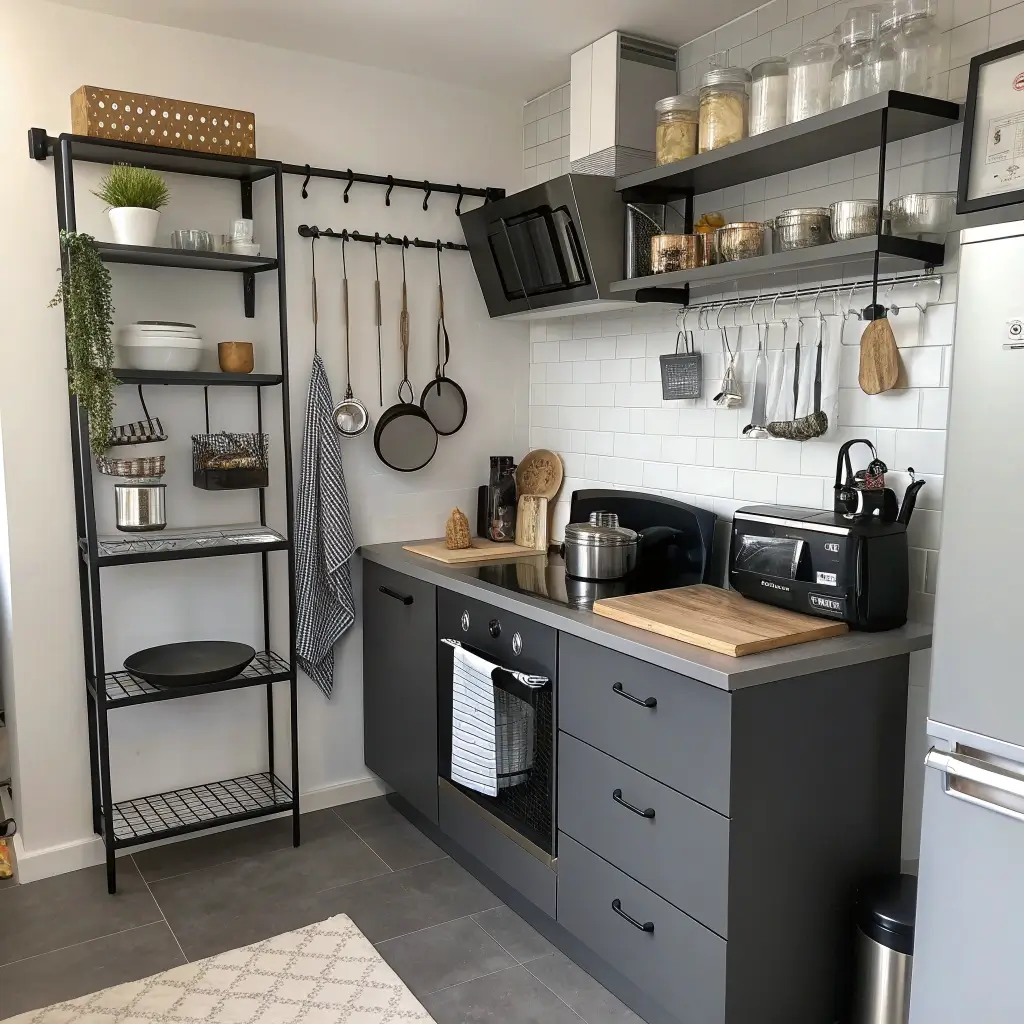
Working from home in a studio presents a specific challenge — without a dedicated room, the workspace bleeds into the living area, making it difficult to psychologically leave work at the end of the day. The goal is a workspace that’s clearly defined, visually tidy, and easy to step away from.
Studio Workspace Strategies That Work
- A wall-mounted fold-down desk is the most space-efficient workspace solution available — it folds flat against the wall when not in use and provides a full work surface when open. Ideal for studios where work is part-time or occasional.
- A compact standing desk in the corner near a window — positioned so you’re facing the window or wall rather than the living area. The orientation matters for mental separation from the rest of the space.
- A secretary desk (a cabinet that opens to reveal a workspace) looks like a cabinet when closed and disappears the workspace entirely at the end of the workday.
- Cable management is non-negotiable in a studio — tangled cables in an open space are visually damaging to the entire aesthetic. A cable raceway, velcro ties, and a surge protector mounted under the desk eliminate the problem.
- A dedicated desk lamp provides task light without affecting the living area’s ambiance — this physical distinction between task lighting and ambient lighting reinforces the zone separation.
- A small plant on the desk (a pothos, succulent, or snake plant) marks the workspace as a distinct zone and makes hours of focused work slightly more tolerable.
🔑 Key Rule: When the workday ends, close the laptop and turn off the desk lamp. In a studio, those two physical acts function as the equivalent of leaving the office. Without them, work and rest blur permanently.
8. Master Lighting at Every Level
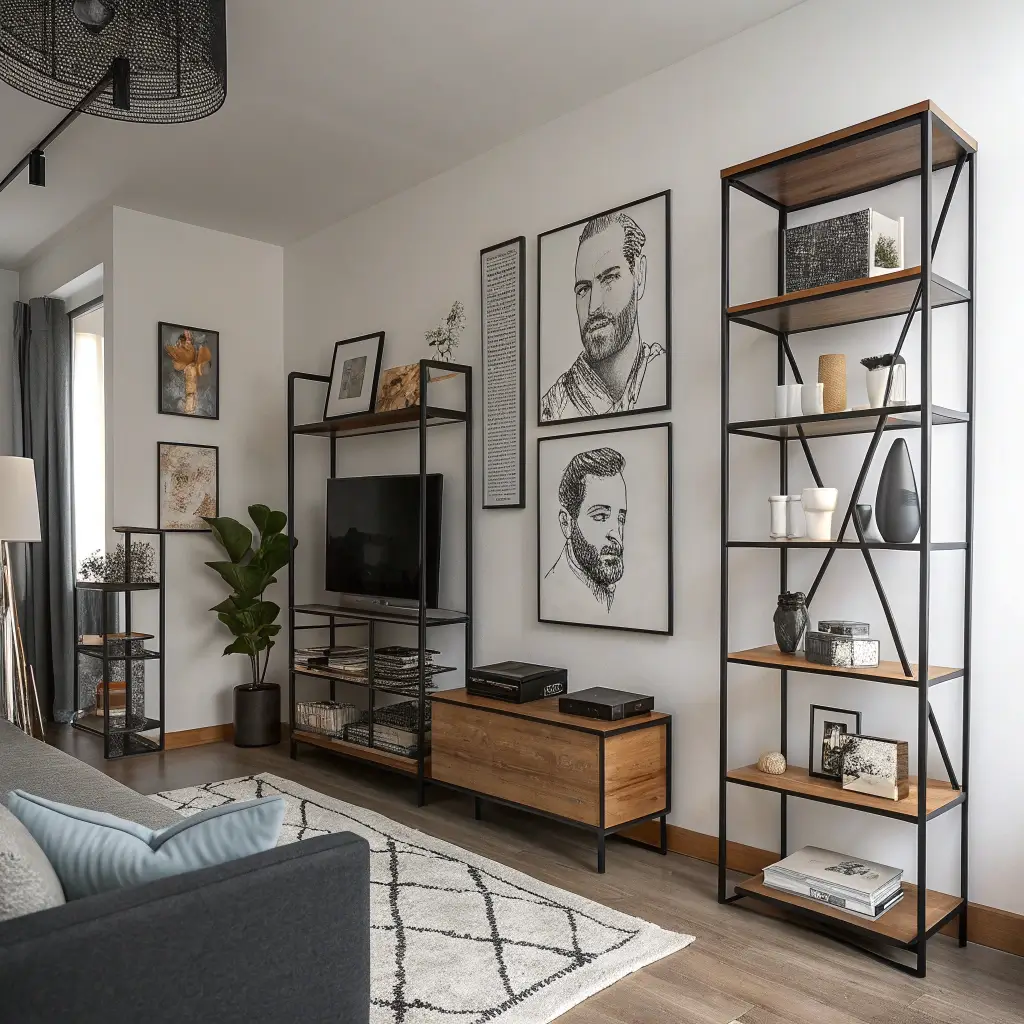
Lighting in a studio is more critical than in any other type of apartment — because one bad overhead light source is the only light source, and it shows. Single overhead lighting makes every space look the same: flat, harsh, and institutional.
The solution is layering — building a lighting plan that includes ambient, task, and accent light at different heights and positions around the studio. This creates mood, defines zones, and makes the space feel dramatically more considered.
Studio Lighting That Works at Every Hour
- Replace every overhead bulb with warm white LEDs (2700K). This single change costs under $20 and immediately transforms the atmosphere of every room it touches.
- A floor lamp in the living area — positioned in a corner, not directly next to another light source. The contrast between lit and shadow creates depth that flat overhead lighting destroys.
- Table lamps on both nightstands — these define the sleeping zone and provide the kind of warm, personal light that makes a sleeping area feel complete.
- Desk lamp for the workspace — bright enough for focused work, off when work is done. This is the light that visually ‘closes’ the office at the end of the day.
- Under-cabinet or shelf lighting — LED strips under kitchen cabinets or along shelving add warmth and make those areas feel designed rather than functional.
- String lights used deliberately — along a curtain track behind the bed, draped across the ceiling above the living area, or along a bookshelf. Not as decoration but as a consistent warm ambient layer.
- A dimmer switch on the main overhead light ($15 at any hardware store) gives you complete control over room mood without buying additional fixtures.
💡 Pro Tip: Photograph your studio with just the overhead light on, then again with floor lamp and table lamps on and overhead light off. The difference in atmosphere will be striking — and it will tell you immediately what your lighting plan is missing.
9. Pick Multi-Function Furniture Over Single-Purpose Pieces
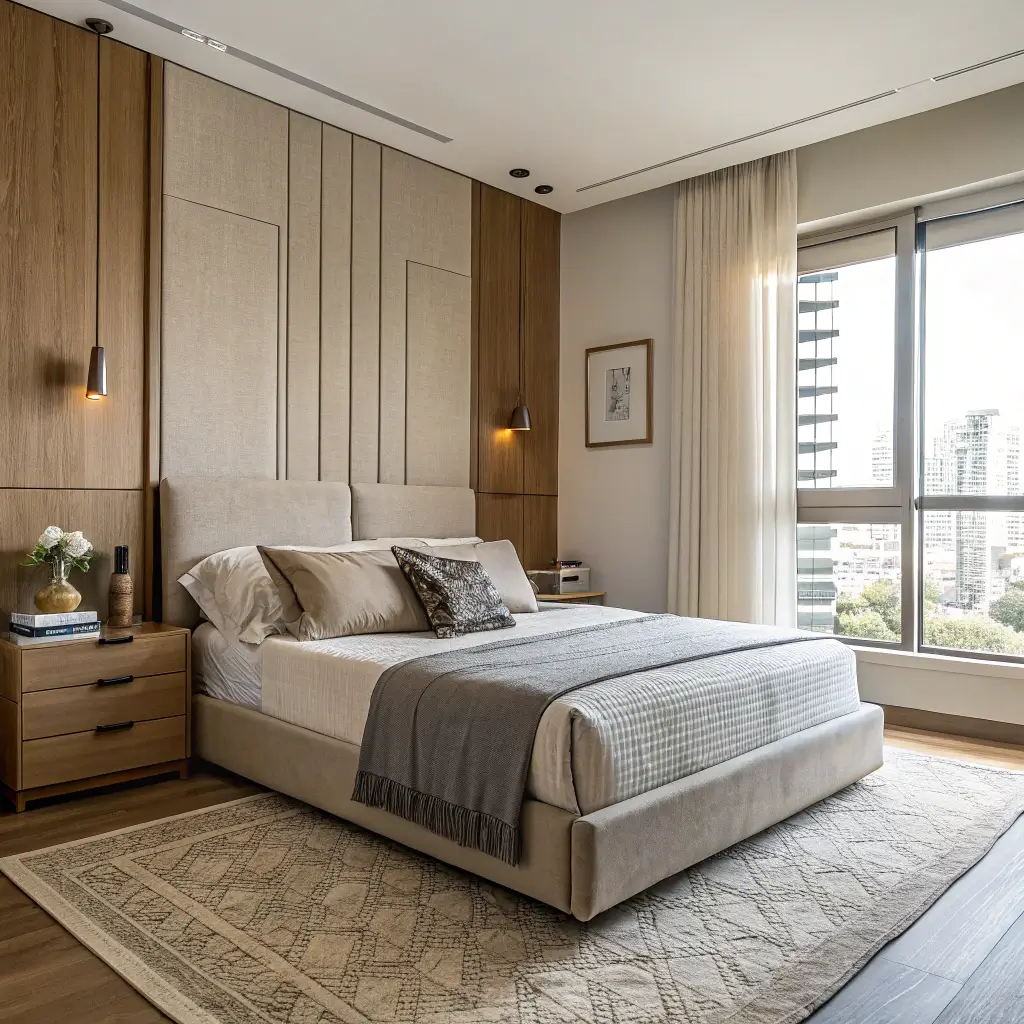
In a studio, single-purpose furniture is a luxury you can rarely afford. Every piece of furniture that does one thing is taking space that could be used by something that does two or three things. Multi-function furniture isn’t a compromise — when chosen well, it’s indistinguishable from its single-purpose counterparts and dramatically more useful.
Multi-Function Furniture Worth Finding
- An ottoman with internal storage — functions as a coffee table (add a tray on top), extra seating when guests arrive, footrest, and storage for blankets or remotes. Four functions in one footprint.
- A platform bed with built-in drawers — the under-bed space is the studio’s most underutilized storage zone. A bed that builds that storage in keeps it accessible and organized.
- A dining table that folds against the wall or extends when needed — for someone who eats alone most nights but occasionally hosts, a full-size dining table takes up permanent space for a part-time function.
- A bar cart that functions as a room divider — positioned between zones, it serves as a visual boundary while also holding drinks, a small plant, and miscellaneous kitchen overflow.
- A console table behind the sofa — acts as a visual room divider, provides surface space for a lamp and objects, and doesn’t consume additional floor space because it sits behind existing furniture.
- A storage bench at the foot of the bed — seating, storage, and a visual anchor for the sleeping zone simultaneously.
The question to ask before buying any furniture for a studio: what does this do, and could that same floor space be doing more? It sounds ruthless, but it’s the framework that produces studios that feel spacious rather than stuffed.
💡 Pro Tip: Before buying new multi-function furniture, audit what you already own. Many pieces can serve second functions with minor additions — a tray on an ottoman makes it a coffee table; a lamp on a side table makes it a zone marker.
10. Keep the Color Palette Tight
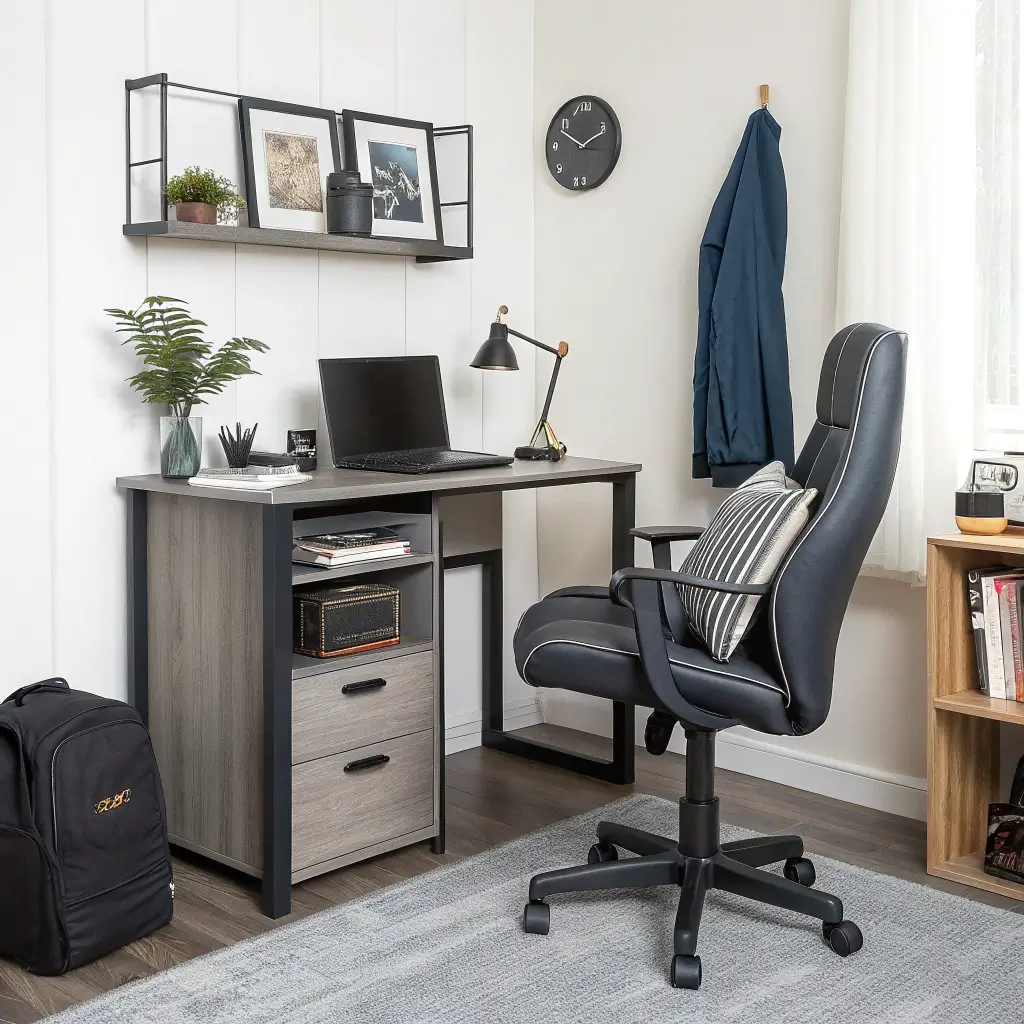
Color is where studios go wrong more often than anywhere else. A studio with too many colors looks fragmented — your eye keeps jumping between unrelated visual notes and the space never settles. A studio with two or three well-chosen colors looks significantly larger, more cohesive, and more deliberate.
For men’s studios, the most effective palettes tend to anchor in neutrals with one or two accent tones:
Color Palette Formulas That Work
- Charcoal + White + Warm Wood — classic and virtually foolproof. Dark furniture, white walls, natural wood accents. The contrast creates depth without visual chaos.
- Navy + White + Brass — sophisticated, slightly nautical, works brilliantly in industrial or mid-century contexts.
- Black + Gray + Concrete — urban, minimal, masculine. Requires textural variation to avoid flatness — leather, linen, and rough concrete textures keep it interesting.
- Forest Green + Tan + Dark Wood — warm, slightly rustic, unexpected. Works especially well in studios with a lot of natural light.
- Deep Charcoal Walls + Natural Linen + Black Metal — moody and strong. Counterintuitively makes small spaces feel more complete rather than smaller.
Once you’ve chosen a palette, run everything through it. Furniture, rugs, textiles, even plants (green is a neutral in most palettes). Anything that breaks the palette should be a deliberate accent, not an accident.
🔑 Key Rule: Two neutrals and one accent color is the studio formula. Add a second accent only if you’re confident — and even then, keep one of the two subdued.
11. Build an Industrial-Inspired Studio That Always Looks Sharp
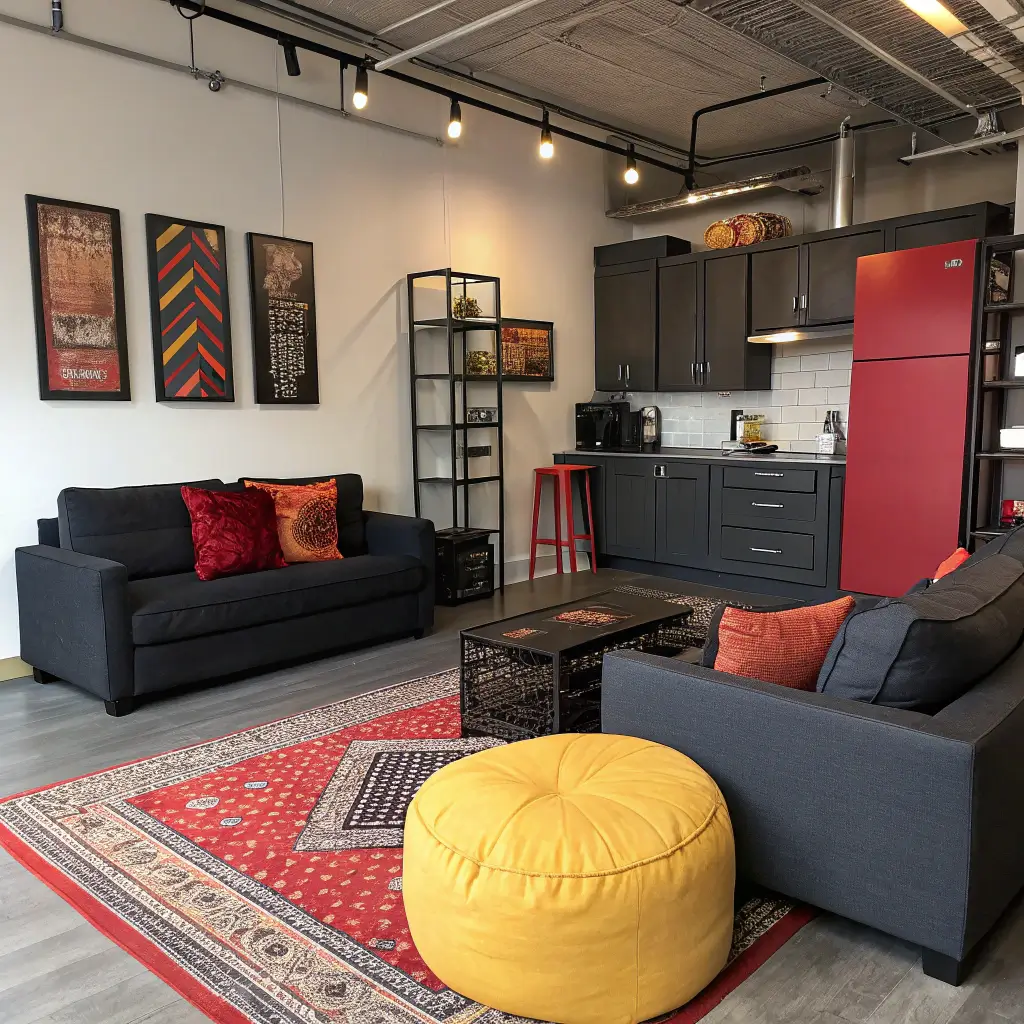
Industrial design and small-space living are a natural fit. The aesthetic inherently avoids decorative excess — raw materials, functional objects, honest construction. It’s a style that looks at home in 300 square feet just as readily as in 3,000.
Industrial Studio Essentials
- Metal and wood combination furniture — a reclaimed wood dining surface on black steel legs, or a bed frame in matte black metal, both establish the aesthetic immediately.
- Open metal shelving — pipe shelving systems or powder-coated metal shelving units hold books, plants, and equipment while keeping the visual footprint light.
- Edison bulb lighting — cage pendant lights, bare filament bulbs in industrial socket pendants, or black metal gooseneck lamps. Lighting is the element that most quickly communicates industrial style.
- Exposed materials where possible — concrete planters, leather-bound books, raw metal hardware, unfinished wood. Industrial style rewards visible material honesty.
- One large graphic piece of wall art — a vintage industrial poster, a black and white cityscape, or an architectural print. Industrial spaces handle large singular art well.
- A dark area rug — charcoal, slate, or distressed vintage-style rug grounds the space and adds warmth that prevents the aesthetic from feeling cold.
The key to industrial style in a studio is warmth control. Without careful management, it can tip into cold or harsh. A leather sofa, a few plants, and warm-toned lighting are the elements that keep it comfortable without compromising the aesthetic.
💡 Pro Tip: Black spray paint is the industrial decorator’s best friend. An outdated lamp, a bookshelf bracket, a basic mirror frame — matte black paint unifies disparate objects into a cohesive collection in under ten minutes.
12. Create a Proper Kitchen Setup in a Compact Space
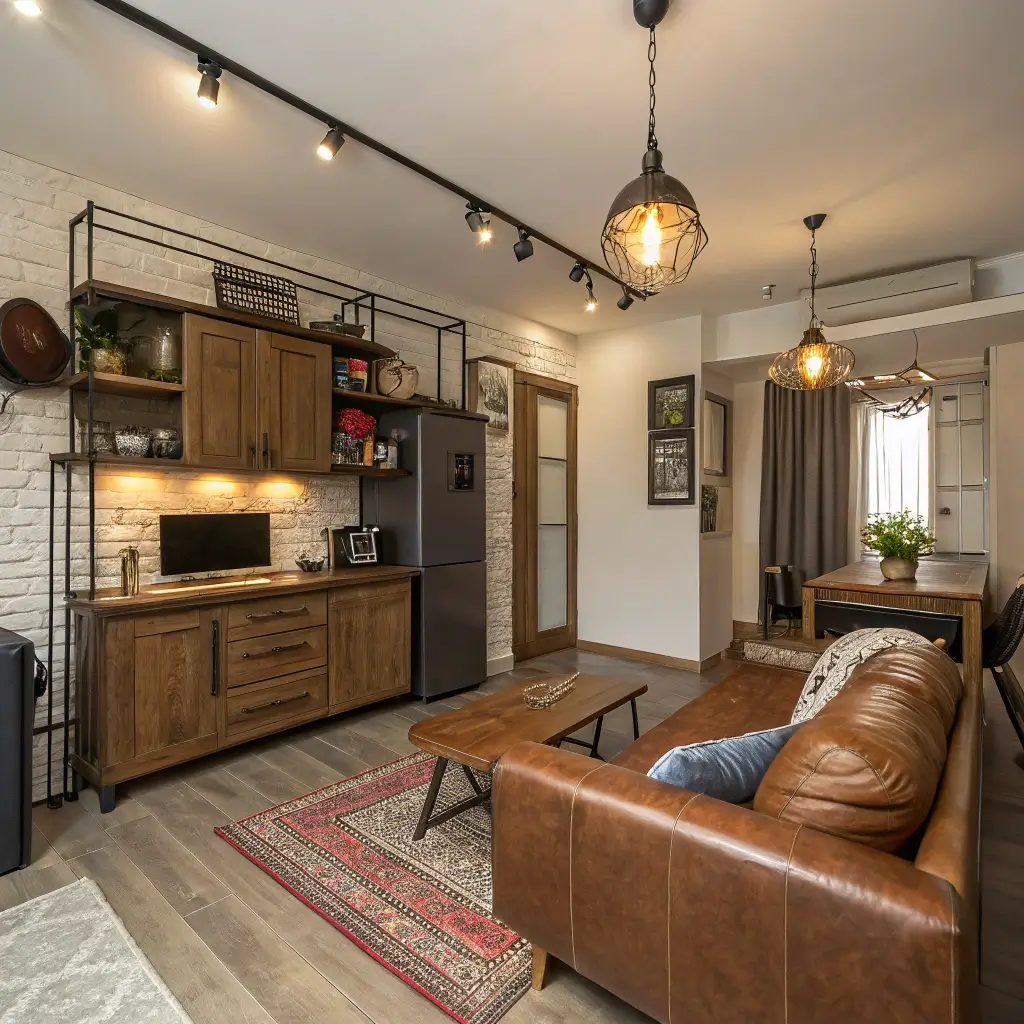
Studio kitchens are usually compact by design and frequently ignored by decorating guides. But the kitchen is the room you interact with multiple times every day, and a well-organized, visually tidy kitchen dramatically improves the quality of daily life in a studio.
Studio Kitchen Upgrades Worth Making
- Clear the counters aggressively — every appliance that lives permanently on the counter should earn its spot through daily use. A toaster you use every morning stays; a bread maker you’ve used twice goes in a cabinet.
- Upgrade the cabinet hardware — new handles and knobs in matte black or brushed brass cost about $3–8 per piece and make the entire kitchen look updated without touching the cabinets themselves.
- Install under-cabinet LED strips — $20 and 20 minutes of installation time. The task lighting improvement and the visual warmth they add are both disproportionate to the investment.
- Add floating shelves for the items that are used daily — plates, bowls, glasses — and move the things you rarely use to upper cabinets. Open shelving for daily items is faster, more accessible, and looks more intentional.
- A magnetic knife strip on the wall replaces a knife block on the counter and frees up meaningful surface space.
- Matching canisters for dry goods — flour, coffee, sugar, pasta — replace mismatched packaging with something that looks chosen. Three matching canisters cost $15–25 and immediately elevate the kitchen aesthetic.
💡 Pro Tip: One or two small potted herbs on the kitchen windowsill (basil, rosemary, chives) are functional, fragrant, and one of the most effective small-kitchen decorating moves available. They also mean fresh herbs whenever you need them.
13. Make the Entryway Work as a Decompression Zone
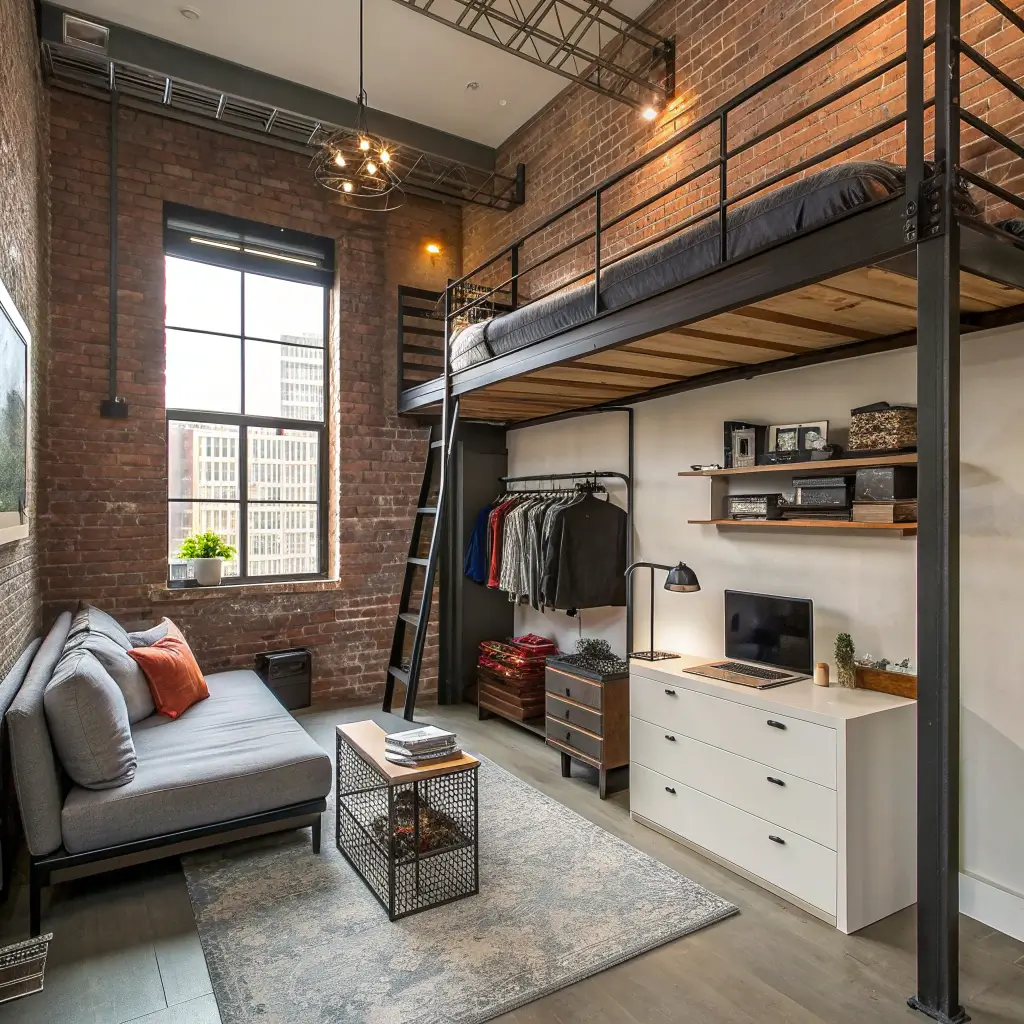
The entryway is the first thing you encounter when you come home, and in a studio it’s often just the door opening directly into the main space. Creating a defined entry point — even a small one — changes the psychological experience of arriving home.
The goal is a transition ritual: a specific place for the things that come off your body the moment you walk in, so they don’t spread through the studio. Keys, wallet, bag, jacket — all of these need a home at the entrance, or they end up on the nearest horizontal surface.
Entryway Setup That Pays for Itself Daily
- A console table or narrow sideboard just inside the door — provides surface for the daily dump and visually marks the entryway as a distinct zone.
- Two to three wall hooks at the right height — for jackets, bags, and headwear. Matching hooks in matte black, aged brass, or brushed nickel look intentional rather than improvised.
- A tray or bowl on the console surface — the designated home for keys, wallet, and loose change. Without a single dedicated spot, these items perpetually circulate through the apartment.
- A mirror near the door — for a final check before leaving. Full-length if space allows; smaller framed mirror if not.
- A shoe tray or rack — keeps footwear contained and visible, off the main floor of the studio.
- A small plant — even a single succulent on the console table makes the entryway feel alive and welcoming rather than purely functional.
🔑 Key Rule: The entryway sets the tone for everything that follows. A controlled, organized entry prevents the chaos that accumulates when items have no designated home — and that chaos is one of the hardest things about studio living to manage.
14. Use Mirrors Strategically to Expand the Space
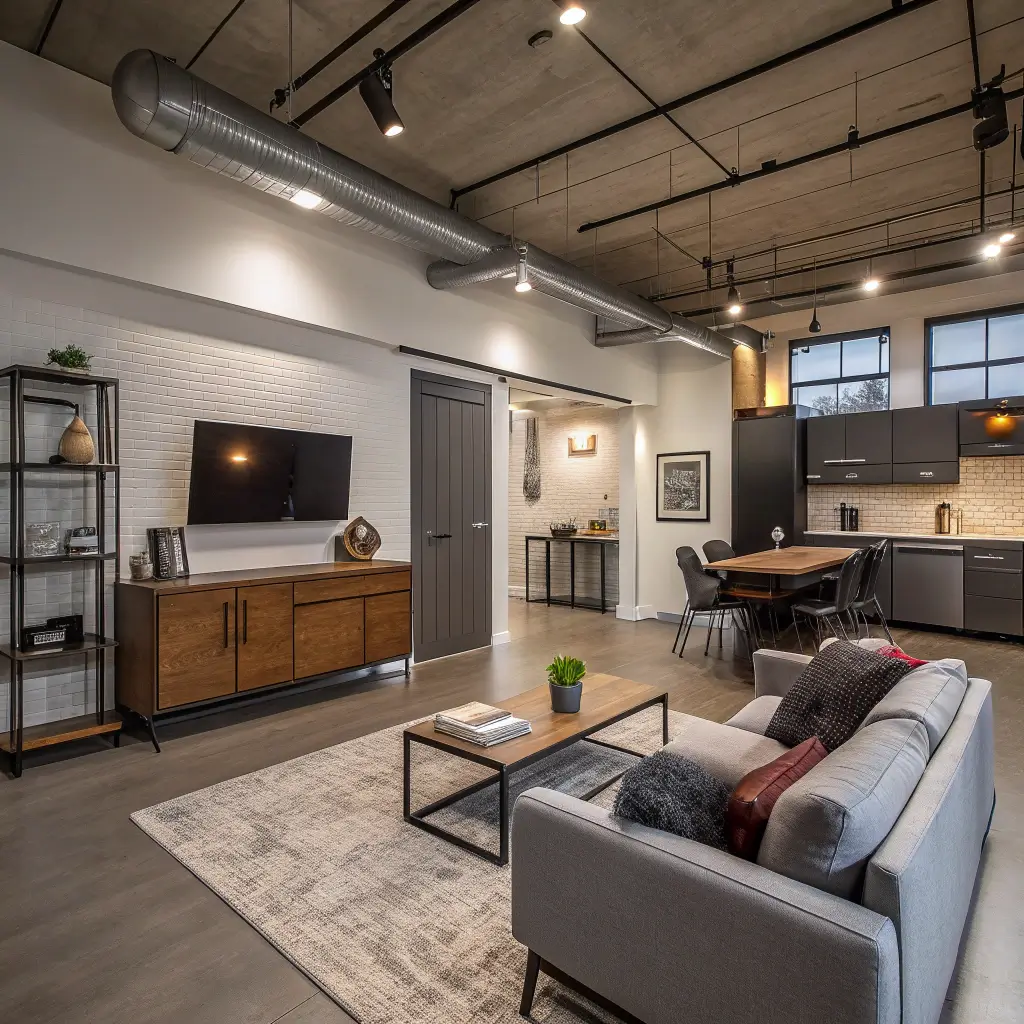
Mirrors are one of the most effective tools in small-space design — they reflect light, create depth, and generate the visual impression of more space than physically exists. In a studio, used thoughtfully, they’re transformative.
Mirror Placement That Actually Makes a Difference
- A large floor mirror leaned against a wall opposite a window — reflects the window light back into the room and makes the studio feel significantly larger and brighter during the day.
- A mirror placed to reflect the most interesting part of the studio — if you’ve styled a shelf or a corner well, a mirror reflecting that element effectively doubles it visually.
- A mirrored wardrobe or closet door — practical, visually space-expanding, and eliminates the need for a separate mirror.
- A collection of smaller mirrors in different frames on one wall — creates visual interest and reflective depth without requiring a single large piece.
- Avoid placing mirrors directly opposite the bed — it’s both aesthetically odd and practically disorienting to wake up facing your own reflection.
In industrial or minimalist studios, a large round mirror in a thin black frame adds an organic contrast to the angular lines that dominate those aesthetics. It’s one of the most affordable high-impact design moves available.
💡 Pro Tip: An arched or full-length mirror leaned casually against a wall rather than hung formally reads as deliberately designed rather than simply practical — the angle matters.
15. Choose Rugs That Define Each Zone Clearly
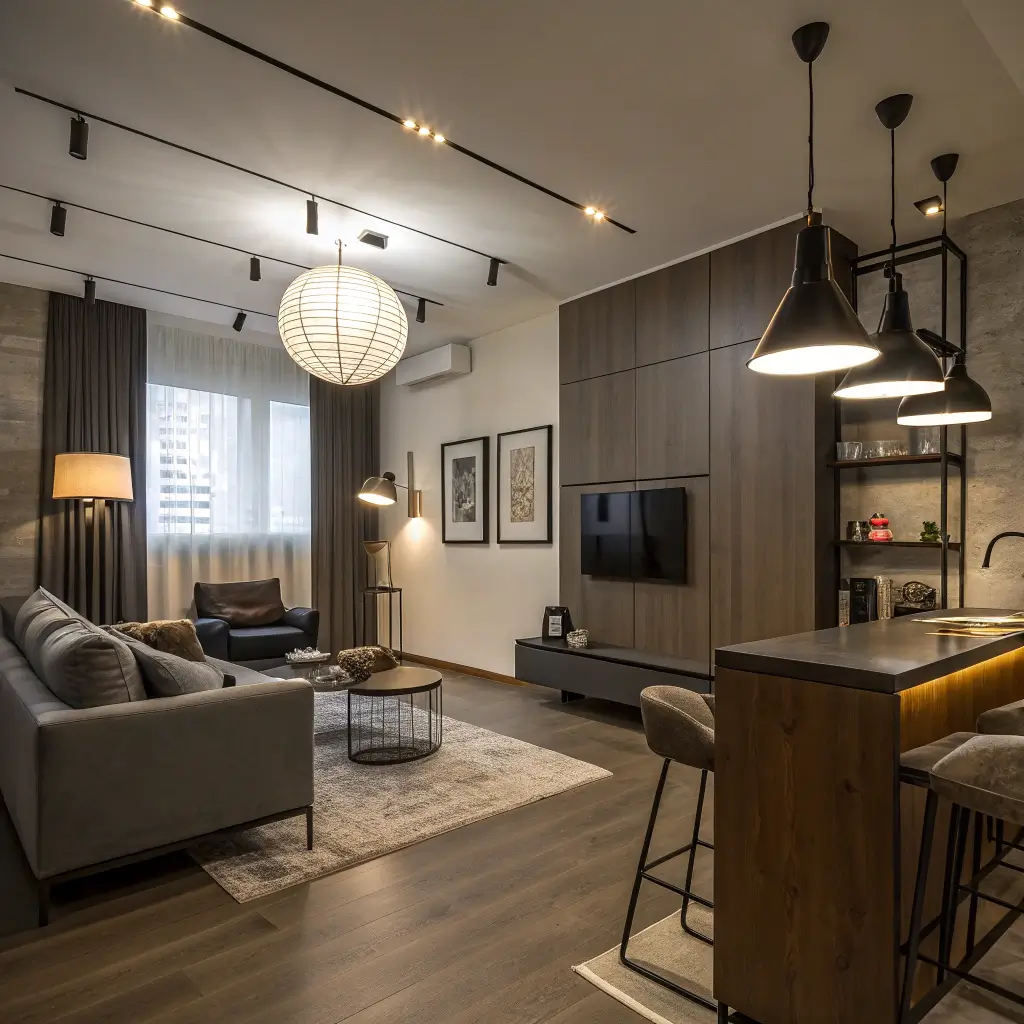
In a studio, area rugs do the most important design work of any floor-level element: they define zones. A rug under the sofa and coffee table says ‘this is the living room.’ A rug under the bed says ‘this is the bedroom.’ Without them, everything bleeds together into one undifferentiated room.
The sizing rule is the most commonly violated one in small apartments: the rug must be large enough for the furniture to sit on it, not around it. A rug that floats in the middle of a furniture arrangement with every piece pulled back from its edges looks accidental and makes the space feel smaller rather than larger.
Rug Strategy for Studios
- Living area: at minimum, the front legs of the sofa and chairs should sit on the rug. Ideally, all furniture sits on the rug with a visible border of floor around the edges.
- Sleeping area: extend at least 18–24 inches on both sides of the bed and beyond the foot. Waking up and stepping onto a cold hard floor is an avoidable quality-of-life issue.
- Two rugs in different zones make the studio feel like two distinct rooms. Choose rugs that share a color or tone so they feel related rather than competing.
- Layering rugs — a large natural fiber rug as a base with a smaller patterned rug on top — achieves size coverage efficiently and affordably.
For men’s studios, flatweave rugs in geometric patterns, solid charcoal or navy, distressed vintage-look designs, or natural fiber (jute, sisal) all work strongly. Avoid very light-colored rugs in high-traffic zones unless you’re extremely tidy.
💡 Pro Tip: Online rug sales (Wayfair, Ruggable, IKEA) regularly discount rugs significantly. The quality difference between a sale price and full retail is often minimal — subscribe to alerts and buy during promotions.
Daily and Weekly Habits That Keep a Studio Looking Sharp
- Make the bed every morning — in a studio, the bed is always visible. An unmade bed undermines every other decorating decision in the space.
- Clear surfaces before sleeping — the coffee table, the kitchen counter, the desk. Surfaces that accumulate throughout the day should be reset each night. Ten minutes, every night.
- Everything has a home — if an object doesn’t have a specific place it lives, it will find the nearest horizontal surface and stay there. Every item in the studio needs a designated location.
- One-in one-out — for every new thing that enters the studio, something leaves. In a small space, accumulation is the enemy of livability.
- Weekly: wipe down surfaces, vacuum the rug, take out recycling, and spend five minutes checking whether anything has migrated to the wrong place.
- Seasonal: reassess what’s in the space. A studio that was set up in winter has different needs in summer — different textiles, different plants, different organization priorities.
These habits sound minor. They’re not — they’re what separates the studio that looks as good in month twelve as it did in month one from the studio that slips back toward chaos by month two.
🔑 Key Rule: A great studio is built once and maintained daily. The design decisions bring it to a standard; the habits keep it there. Both matter equally.
The Studio Is Not a Compromise — It’s a Choice
The best thing about a well-designed studio isn’t any single element — not the furniture, the lighting, or the art. It’s the cumulative effect of intentional decisions made in a limited space. Studios force clarity: you can’t have everything, so you have to be clear about what you actually want.
That constraint, handled well, produces spaces that feel more personal, more considered, and more livable than many larger apartments that sprawl without direction. A studio that works isn’t a smaller version of a ‘real’ apartment — it’s a different kind of space with its own logic, its own strengths, and its own kind of satisfaction.
Pick two or three ideas from this list and apply them well. Then come back for more. A good studio is built progressively — decisions stacked on decisions, each one informed by what came before. You don’t need to do everything at once, and you shouldn’t. Start with the layout, get the lighting right, then build from there.
The studio you’re capable of creating is very likely better than the one you’re currently living in. The gap between the two is just a handful of good decisions — and now you have them.
1 thought on “15 Smart Studio Apartment Ideas for Men and Stylish Organization”