
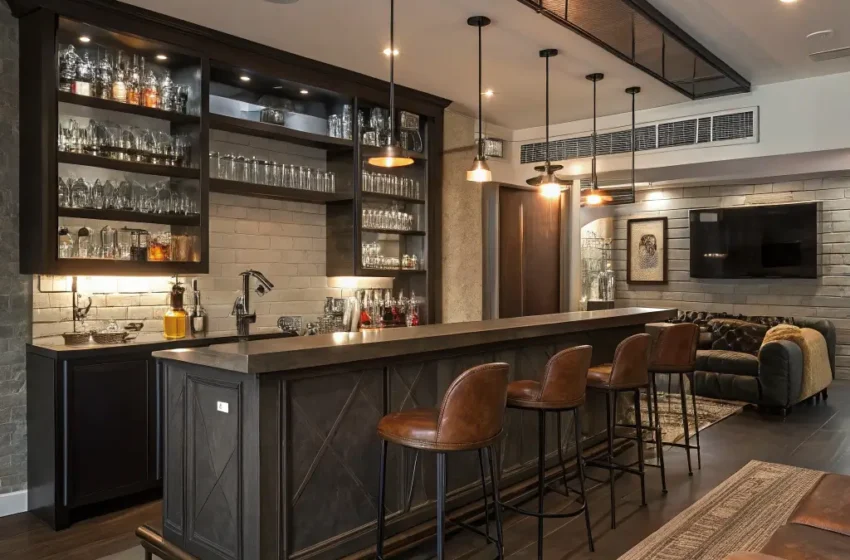
Let’s skip the part where we pretend the stereotype doesn’t exist. You know the one — the bachelor pad with a mattress on the floor, a gaming chair as the primary seating, and one lonely succulent dying on a windowsill because nobody remembered to water it.
Here’s the thing: that’s not the standard. That’s just what happens when nobody gives you a real starting point. Most men don’t lack taste — they lack a framework. Give them one, and the results are often surprisingly sharp.
This guide covers 20 concrete, practical apartment decorating ideas for men — ideas that cover everything from choosing a style identity to the specific purchases and arrangements that make a space feel intentional, comfortable, and genuinely yours. No condescension, no ‘add some throw pillows and call it done’ advice.
1. Ditch the ‘Bachelor Pad’ Mindset Entirely
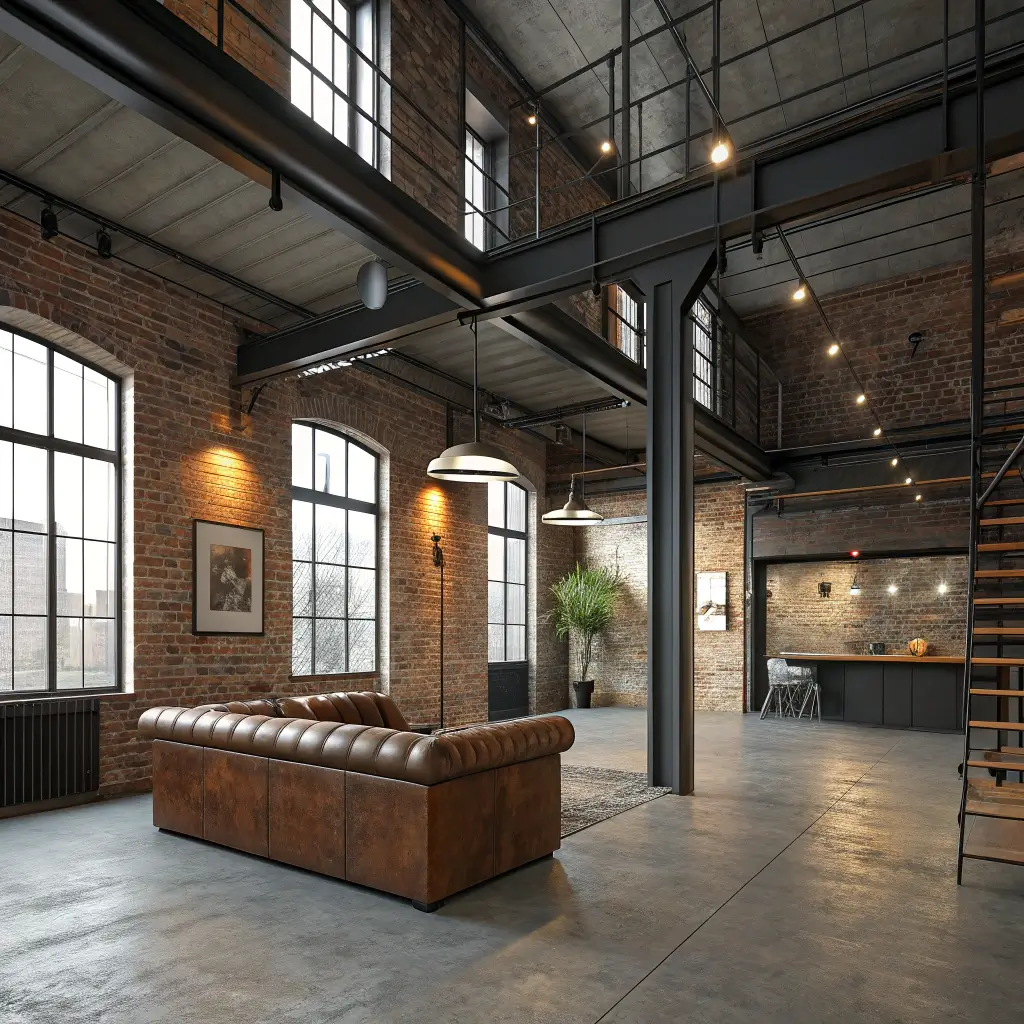
The bachelor pad concept is doing you no favors. It’s a low bar that actively encourages under-investing in your space — and it shows. The guys with the most impressive apartments aren’t trying to maintain a bachelor aesthetic. They’re just treating their homes like their homes.
The shift is simple: stop thinking of your apartment as a temporary holding place until something better happens, and start thinking of it as a reflection of who you actually are. A man who’s put thought into his space reads as confident and self-aware — because he is.
The apartments that consistently impress — regardless of size or budget — share one characteristic: they look like someone actually lives there and made intentional choices. That’s the bar. Not “impressive bachelor pad.” Just: chosen.
🔑 Key Rule: Your apartment doesn’t need to be decorated for dating, for entertaining, or for Instagram. Decorate it for yourself first. That’s where all the best spaces start.
2. Choose One Clear Aesthetic and Commit to It
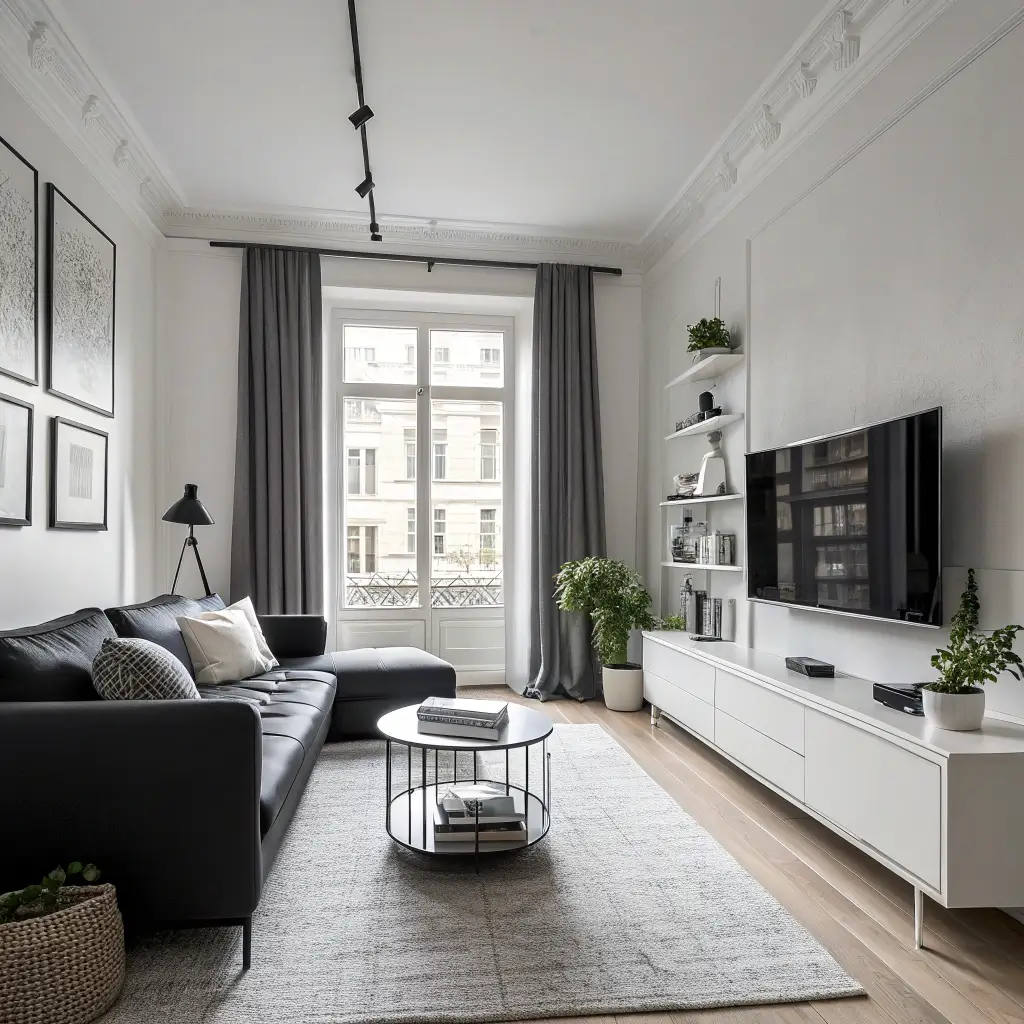
The single biggest mistake in men’s apartment decorating is trying to mix too many styles. A bit of industrial here, some mid-century there, a gaming setup in the corner, and suddenly the whole place looks like a storage unit with ambitions.
Pick one direction. Then make every decision through that filter. Every piece of furniture, every purchase, every accent — ask yourself if it fits the aesthetic you’ve chosen. If it doesn’t, it doesn’t belong in the space, regardless of how good a deal it was.
Strong Aesthetic Directions for Men’s Apartments
- Industrial — raw materials, metal and wood combinations, dark tones, exposed hardware. Works in almost any apartment and reads as effortlessly masculine without trying too hard.
- Minimalist Modern — clean lines, neutral palette, high-quality individual pieces, nothing extra. Extremely livable and practically maintenance-free.
- Mid-Century Modern — warm wood tones, tapered legs, geometric patterns, a slightly retro feel that never goes out of style.
- Rustic / Cabin — natural materials, warm lighting, texture over color, the aesthetic of a well-worn weekend retreat.
- Scandinavian — light woods, functional design, cozy textiles, calm and ordered. Deceptively simple to achieve.
- Dark Academia — rich tones, leather, books, maps, and art. Intellectual, moody, and distinctly personal.
None of these is more masculine than any other. The right aesthetic is the one that actually reflects your personality — not the one that seems like the obvious “guy choice.”
💡 Pro Tip: Save 10–15 apartment photos you genuinely like, then look for patterns. Style direction reveals itself fast when you stop overthinking and just react to what you’re drawn to.
3. Start with the Sofa — Everything Else Follows
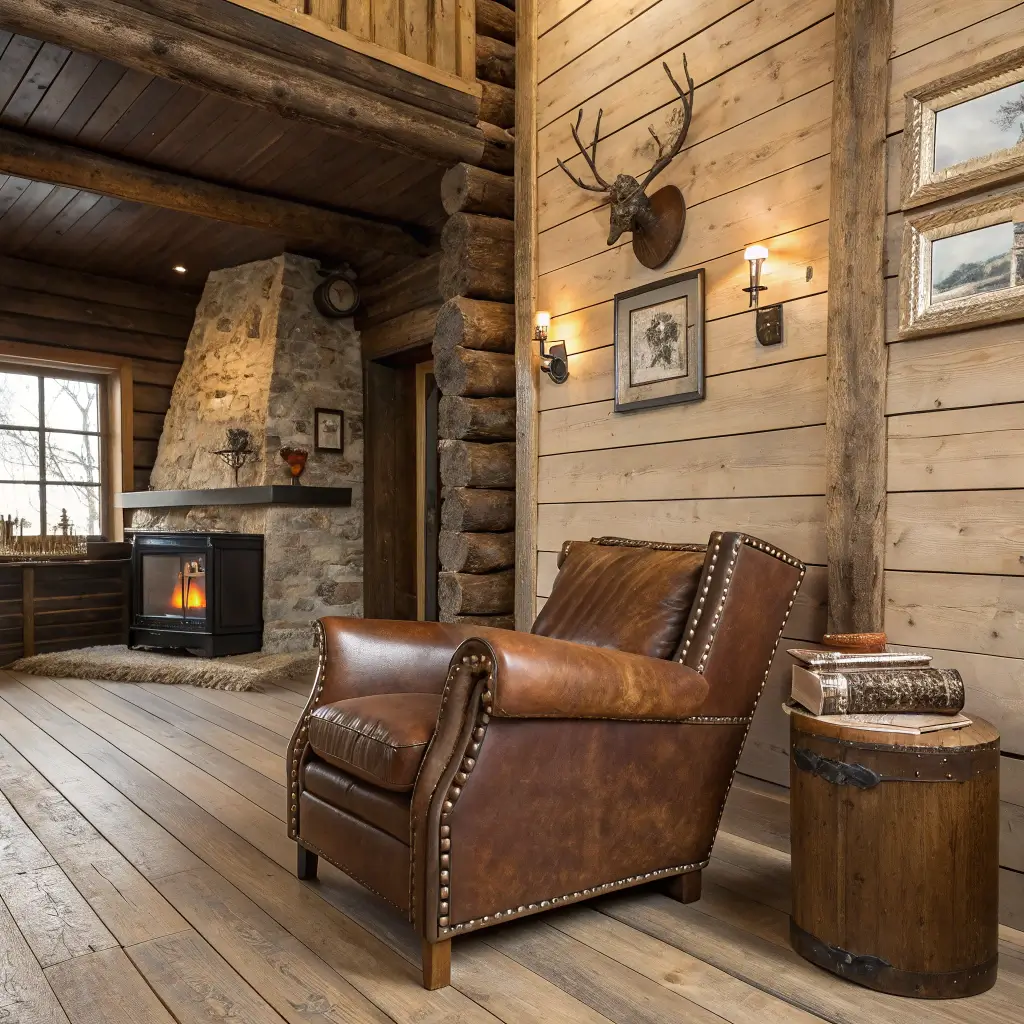
The sofa is the gravitational center of any living space. Get this right and the rest of the room has something to build around. Get it wrong and you’ll spend years fighting an uphill battle against a piece of furniture that doesn’t work.
For men’s apartments, three sofa materials consistently work well: leather (genuine or quality faux), performance fabric in a dark neutral, and linen in charcoal, slate, or navy. All three are forgiving, masculine without announcing it, and genuinely livable.
Sofa Buying Rules Worth Following
- Measure your space first — a sofa that’s too large for a room is the number one decorating error, full stop.
- Avoid light-colored sofas unless you’re extremely tidy or live alone with no pets. Charcoal, slate, navy, caramel leather, and dark walnut-tone wood frames are all practical and good-looking.
- Sit in it before buying if at all possible. A sofa that looks great but feels like a park bench is a bad trade.
- Quality here matters more than almost anywhere else in the apartment — this is worth spending real money on.
- The sofa’s legs matter more than most people realize. Dark metal, walnut wood, or brass legs are all strong choices. Chrome and light wood legs tend to undermine an otherwise strong piece.
💡 Pro Tip: The sofa should float slightly away from the wall rather than pushed flush against it. Even 4–6 inches makes the room feel more considered and spacious.
4. Build a Lighting Plan (Before You Buy a Single Lamp)
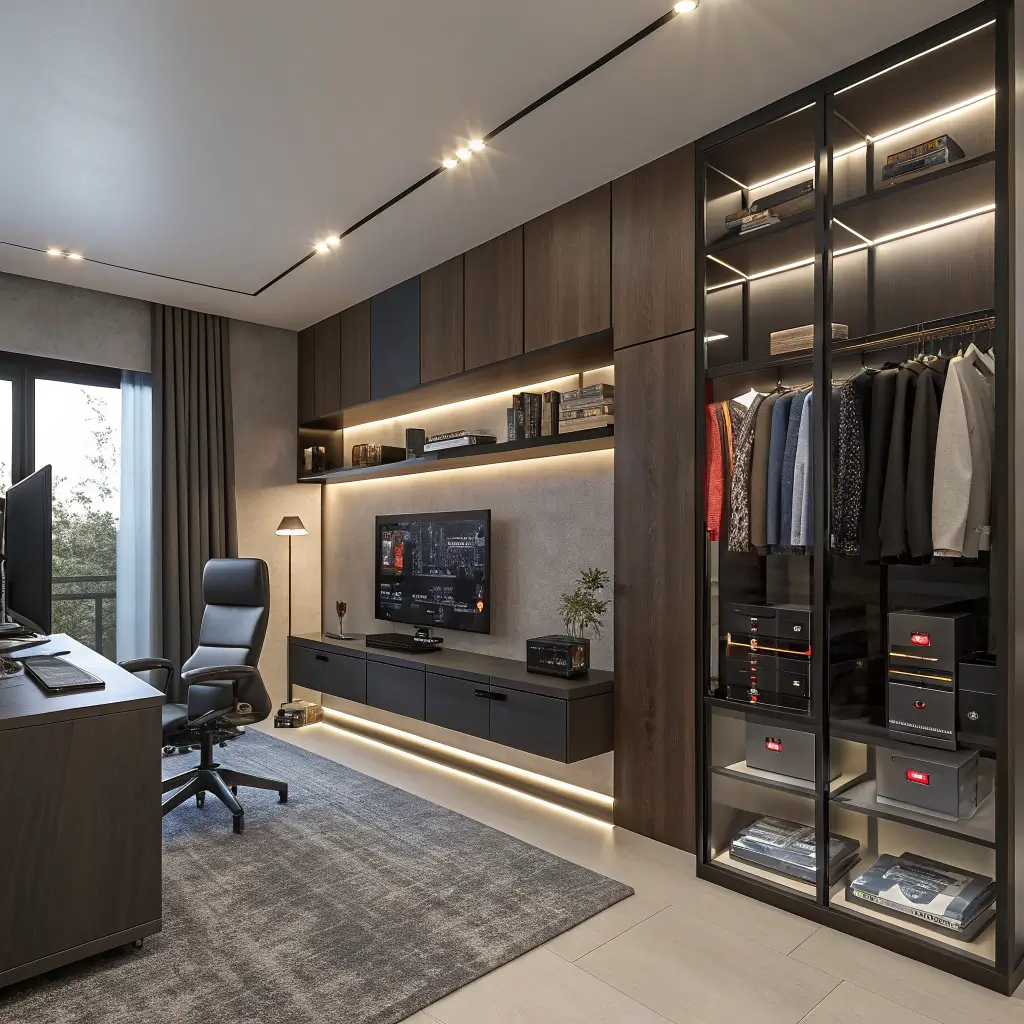
Lighting is the most dramatically misunderstood element of interior design — and the one that costs men the most in terms of their space’s atmosphere. Overhead lighting alone turns any room into an interrogation chamber. The fix is layering.
Three types of lighting work together to make a space feel complete: ambient (overall illumination), task (focused light for specific activities), and accent (light that highlights features or creates mood). Most apartments ship with only overhead ambient light. Your job is to add the other two.
Practical Lighting Upgrades That Make a Real Difference
- Swap every overhead bulb to warm white (2700K–3000K). This single change costs under $20 and makes every room feel warmer and more inviting.
- Add a floor lamp in the corner of the living room opposite the main light source — it eliminates harsh shadows and makes the room feel lived-in.
- Put a table lamp on each bedside table. A well-lit bedroom has ambient light plus two reading lights. This is non-negotiable for the space to feel like an adult’s bedroom.
- Under-cabinet LED strips in the kitchen add task lighting while making the space feel significantly more designed.
- A dimmer switch ($15 at any hardware store) turns one light source into multiple moods — arguably the highest ROI lighting upgrade available.
Industrial-style fixtures — cage pendants, Edison bulb chandeliers, black metal gooseneck lamps — are classics in men’s apartments for good reason. They’re strong, simple, and work with almost every masculine aesthetic.
💡 Pro Tip: Never put your living room floor lamp directly next to the overhead light. Place it across the room — the contrast and directionality is what creates atmosphere.
5. Use Dark Colors Strategically — Not Fearfully
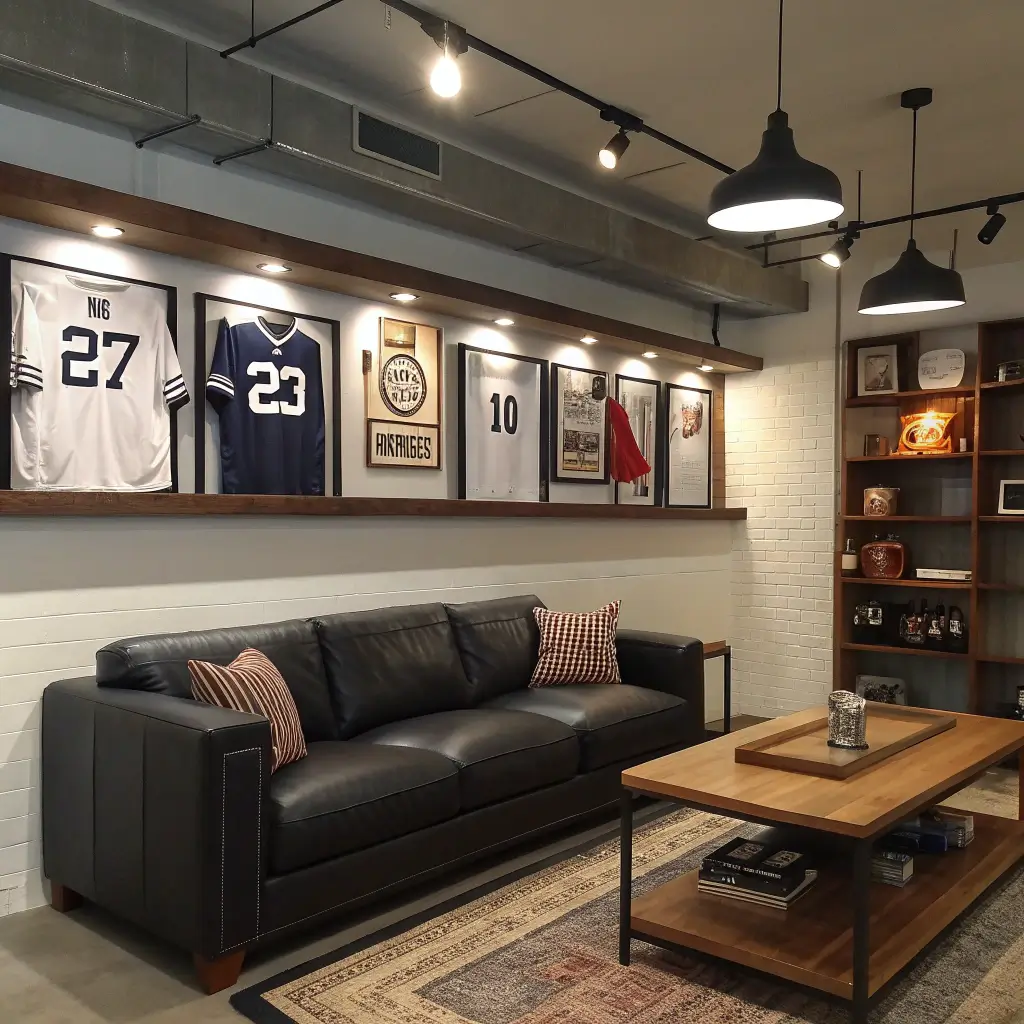
Men’s decorating advice online tends to oscillate between two extremes: all-white minimalism (safe, cold, impersonal) or an all-black room that feels more like a cave than a home. The reality is that dark colors are powerful tools when used strategically.
A charcoal or deep navy accent wall behind a sofa or bed completely transforms a room’s personality — it creates depth, makes artwork pop, and gives the space a deliberate, grown-up quality. Dark doesn’t mean depressing; it means grounded.
Dark Color Strategies That Work in Apartments
- One dark accent wall (behind the sofa, behind the bed, or facing the main window) anchors the room without overwhelming it.
- Dark furniture — charcoal sofas, black metal coffee tables, dark walnut bookshelves — against lighter walls creates a classic masculine contrast.
- Deep colors work best in rooms with natural light. Before committing to a dark wall, spend a week observing how light moves through the room at different times of day.
- If painting isn’t allowed, dark wallpaper panels or large canvas artwork in dark tones achieve a similar effect.
- Deep navy, charcoal, forest green, slate, and oxblood are all strong masculine colors that feel sophisticated rather than heavy.
💡 Pro Tip: Test paint colors with a large sample (at least 12×12 inches) on the actual wall before committing. Apartment lighting is dramatically different from hardware store lighting, and colors behave differently in each space.
6. Build a Proper Bedroom — Not Just a Room with a Bed
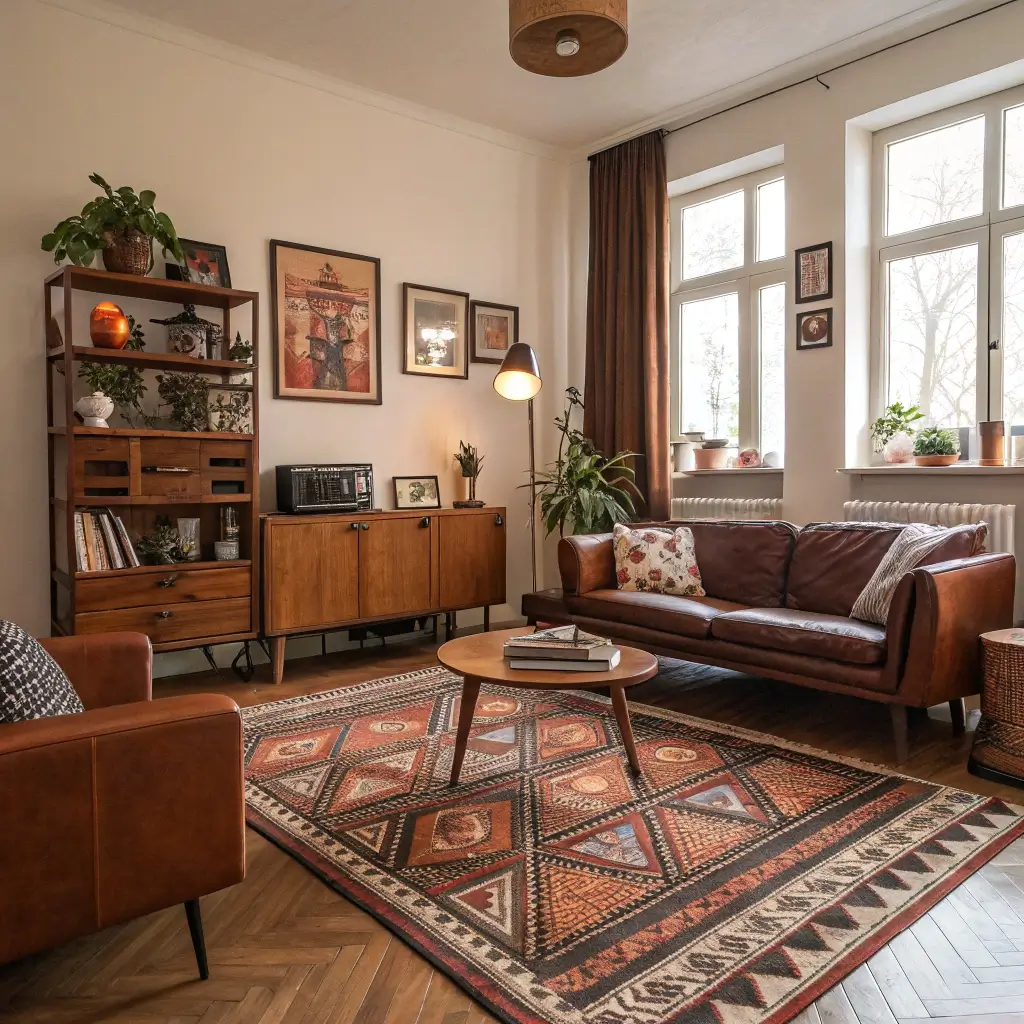
The bedroom is where most men’s apartments fail hardest. A mattress on a frame, a tangled mass of chargers on the nightstand, and laundry in a chair that has never known anything else. It’s functional in the loosest possible sense.
A proper bedroom does something different — it tells you that the person who lives here takes rest seriously. That has practical value beyond aesthetics. A well-designed bedroom actually helps you sleep better, decompress faster, and start mornings more calmly.
Elements of a Well-Decorated Men’s Bedroom
- A bed frame that fits the aesthetic — platform beds in dark wood or black metal work with almost every masculine style. The mattress on the floor era needs to end.
- A proper headboard — padded in dark linen or leather, or solid walnut — makes the bed look like the centerpiece it should be.
- Matching nightstands on both sides, even if you sleep alone. Asymmetry here looks unfinished.
- Quality bedding in a limited palette — navy, charcoal, white, cream, or camel. Thread count matters; so does a duvet cover that actually gets washed.
- Blackout curtains. Non-negotiable. They improve sleep quality and make the room look more finished.
- A rug under the bed (extending at least 18 inches on each side) grounds the entire room and makes cold mornings considerably more tolerable.
💡 Pro Tip: The phone charging setup on the nightstand says more about you than you think. A cable management tray or wireless charging pad replaces the coiled cable explosion and takes about ten minutes to set up.
7. Create a Dedicated Workspace That Doesn’t Look Like an Afterthought
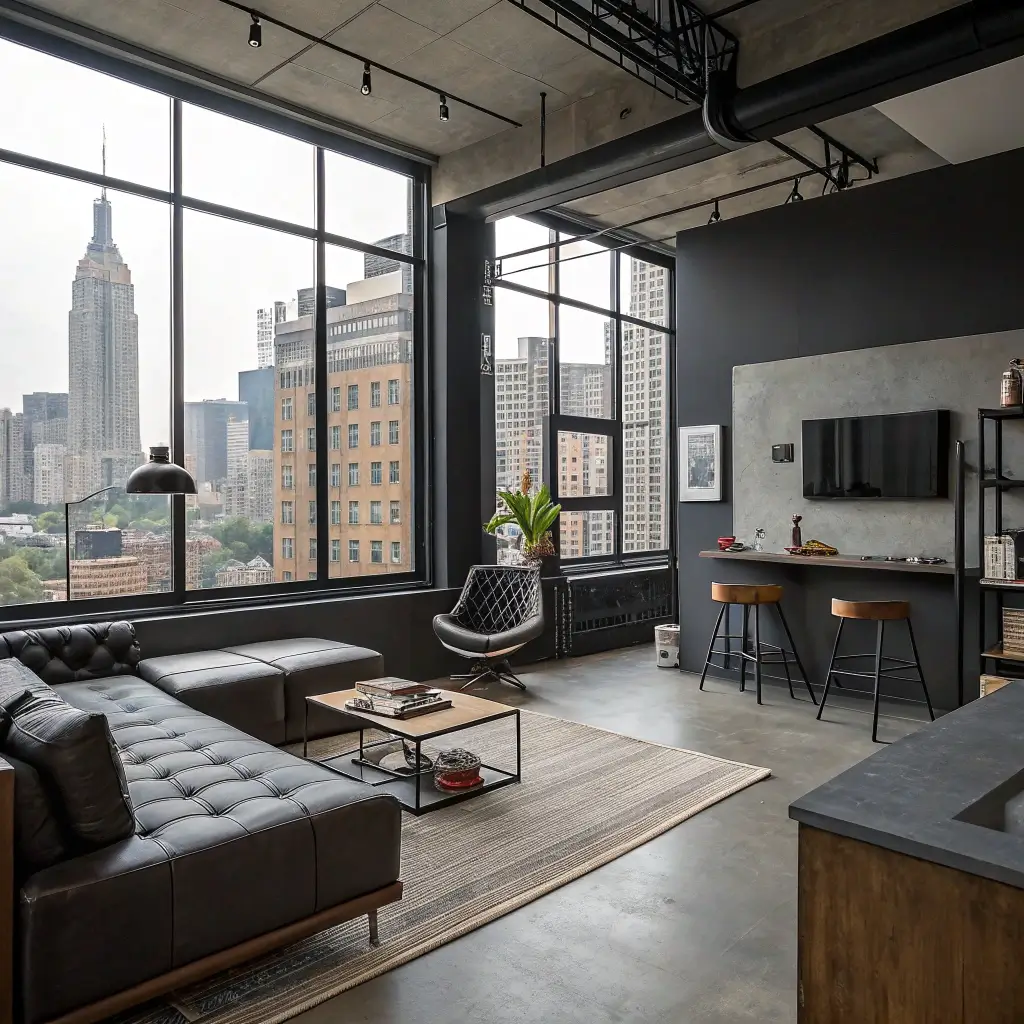
Working from home — or just needing a space to handle admin, game, or pursue hobbies — requires a dedicated spot that’s set up for purpose, not improvised every time you need it.
The desk setup is also one of the most visually prominent parts of a man’s apartment and one of the most telling. A thoughtfully assembled desk with cable management, good lighting, and clean organization reads as competent and intentional. A laptop balanced on a pile of books next to a cold cup of coffee does not.
Building a Desk Setup Worth Looking At
- Choose a desk with storage if space allows — drawers or shelves prevent surface clutter from accumulating.
- Cable management is the single biggest visual upgrade for any desk setup. A cable raceway, velcro ties, and a power strip mounted under the desk costs under $30 and eliminates the cable nest entirely.
- A quality monitor arm frees up desk surface and looks significantly more intentional than a standard monitor stand.
- Good task lighting — a desk lamp on the side opposite your dominant hand prevents screen glare and eye strain.
- A chair worth sitting in for extended periods. This is a health investment, not just an aesthetic one.
- Keep the surface to 3–5 objects maximum. Everything else should have a drawer or shelf home.
💡 Pro Tip: A small plant on the desk (pothos, snake plant, or a succulent) adds a visual anchor without requiring much care. It’s one of the most effective ways to make a workspace feel less sterile.
8. Get Serious About Storage and Organization
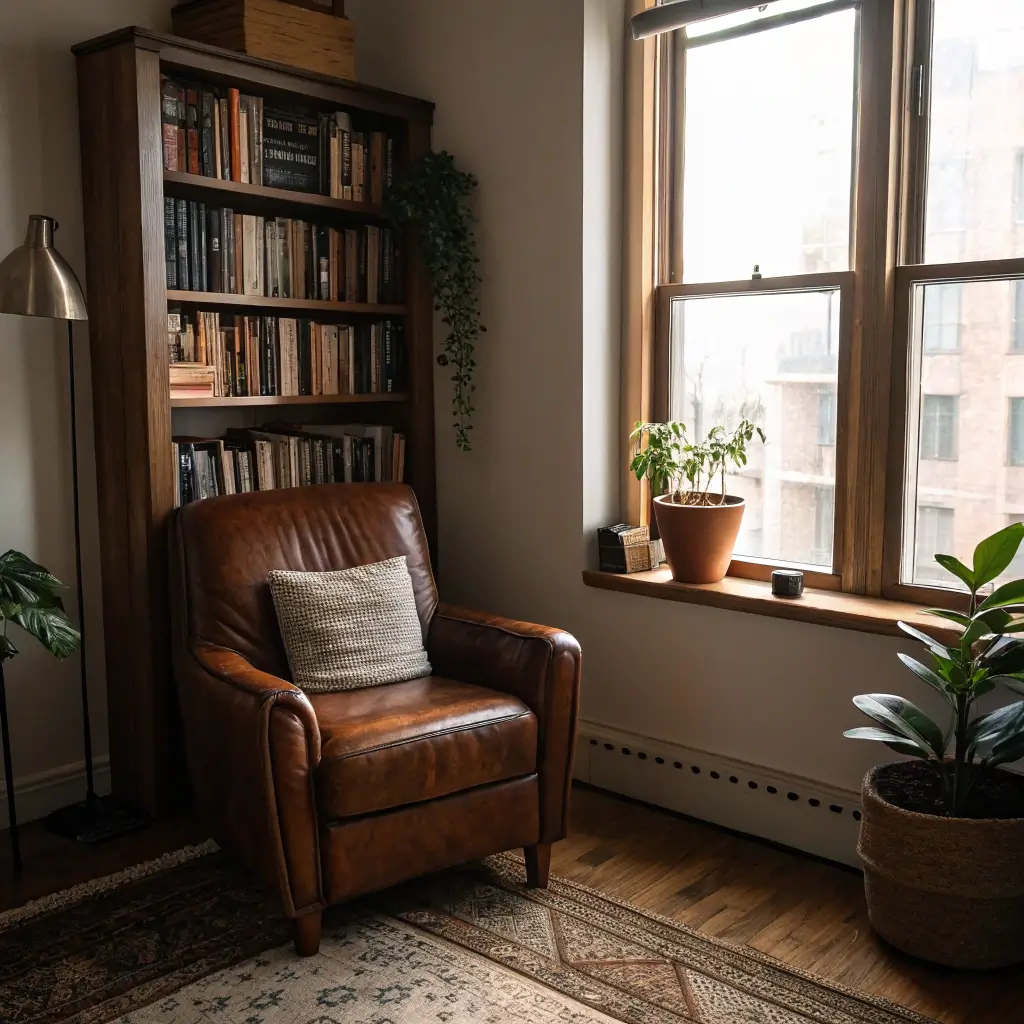
Clutter is the enemy of every good-looking apartment, and it’s especially damaging in smaller spaces. The solution isn’t to own less (though that helps) — it’s to give everything a specific place to live, so nothing ends up migrating to the nearest horizontal surface.
Storage Solutions Worth Investing In
- Floating shelves in the living room provide display space without sacrificing floor area — style them with books, a plant, and one or two objects rather than filling every inch.
- An entryway console table or hall tree with hooks and a shelf handles the daily dump zone — keys, wallet, bag, jacket — before it spreads through the apartment.
- Under-bed storage containers keep seasonal items, extra bedding, and shoes organized without being visible.
- A wardrobe organizing system (matching hangers, shelf dividers, a shoe rack) makes a regular closet feel significantly more controlled.
- A media console with enclosed storage keeps the area around the TV clean — wires, remotes, gaming equipment, and streaming devices all disappear behind doors.
The goal isn’t to hide everything. It’s to make the things on display look chosen, not accumulated. If it’s visible, it should be there on purpose.
🔑 Key Rule: Matching hangers in the closet is one of those changes that costs about $15, takes 20 minutes, and makes a disproportionate psychological difference. Do it.
9. Put Art on the Walls — The Right Way
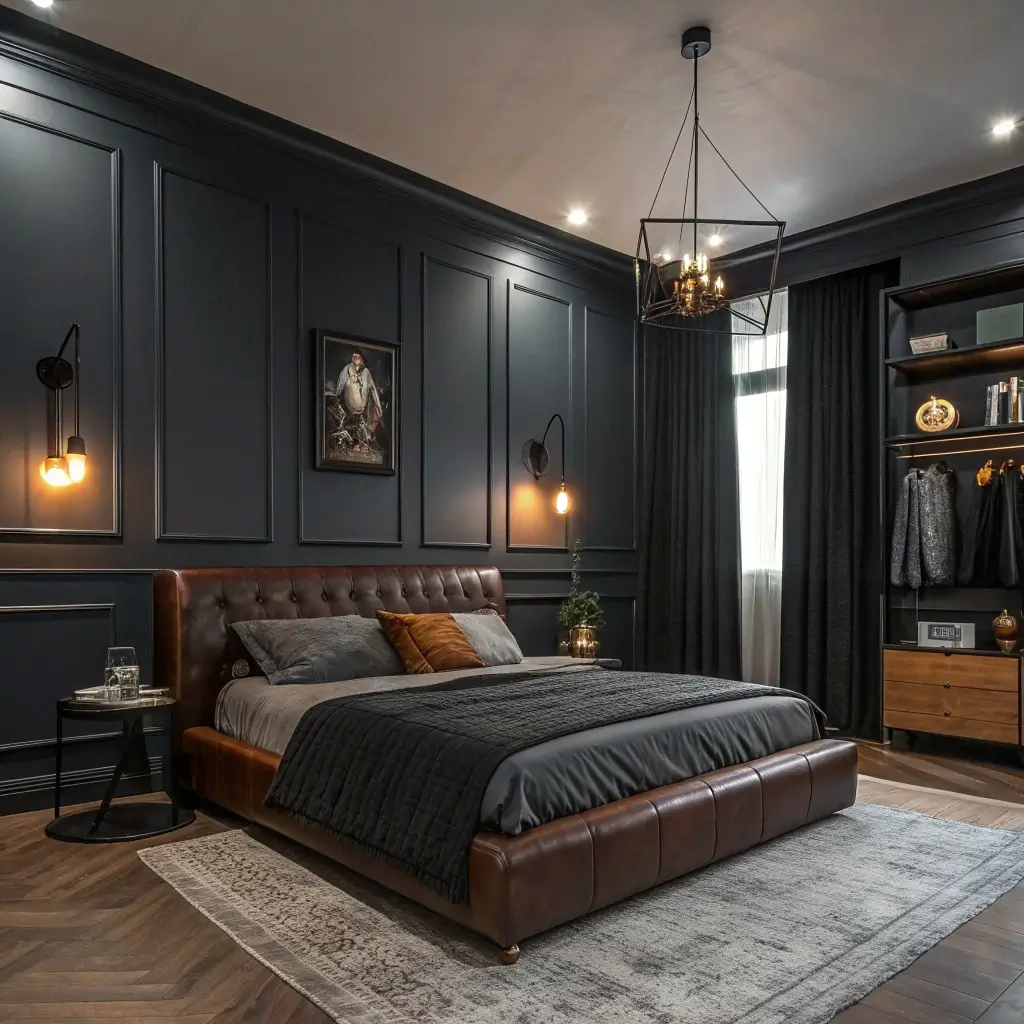
Bare walls are the tell. No matter how good the furniture is, bare walls announce that someone is just passing through — or doesn’t trust themselves to make decisions. Art on walls is commitment to a space.
Men’s apartment art doesn’t have a fixed definition — it’s art that means something to you, displayed in a way that looks deliberate. The key is in the framing and placement, not necessarily what you’re framing.
Wall Art Rules That Actually Matter
- Frame it properly. A poster without a frame still looks like a college dorm. The same poster in a simple black frame looks like a considered design choice.
- Hang art at eye level — center point at approximately 57–60 inches from the floor. Most people hang too high.
- One large piece or a curated gallery wall — both work. A single medium piece floating on a large wall does not.
- For a gallery wall, lay everything on the floor first to work out the arrangement before putting a single nail in the wall.
- Art that reflects your actual interests — travel photography, vintage maps, architectural drawings, sports history, music posters, film stills — beats generic “masculine” art every time.
- Mirrors count. A large statement mirror in the right spot reflects light, makes the room feel larger, and functions as wall art simultaneously.
💡 Pro Tip: Command strips (rated for the weight) and picture-hanging strips are worth using in rentals — they come off cleanly if applied and removed correctly. No deposit-losing holes needed.
10. Build an Industrial-Style Living Room
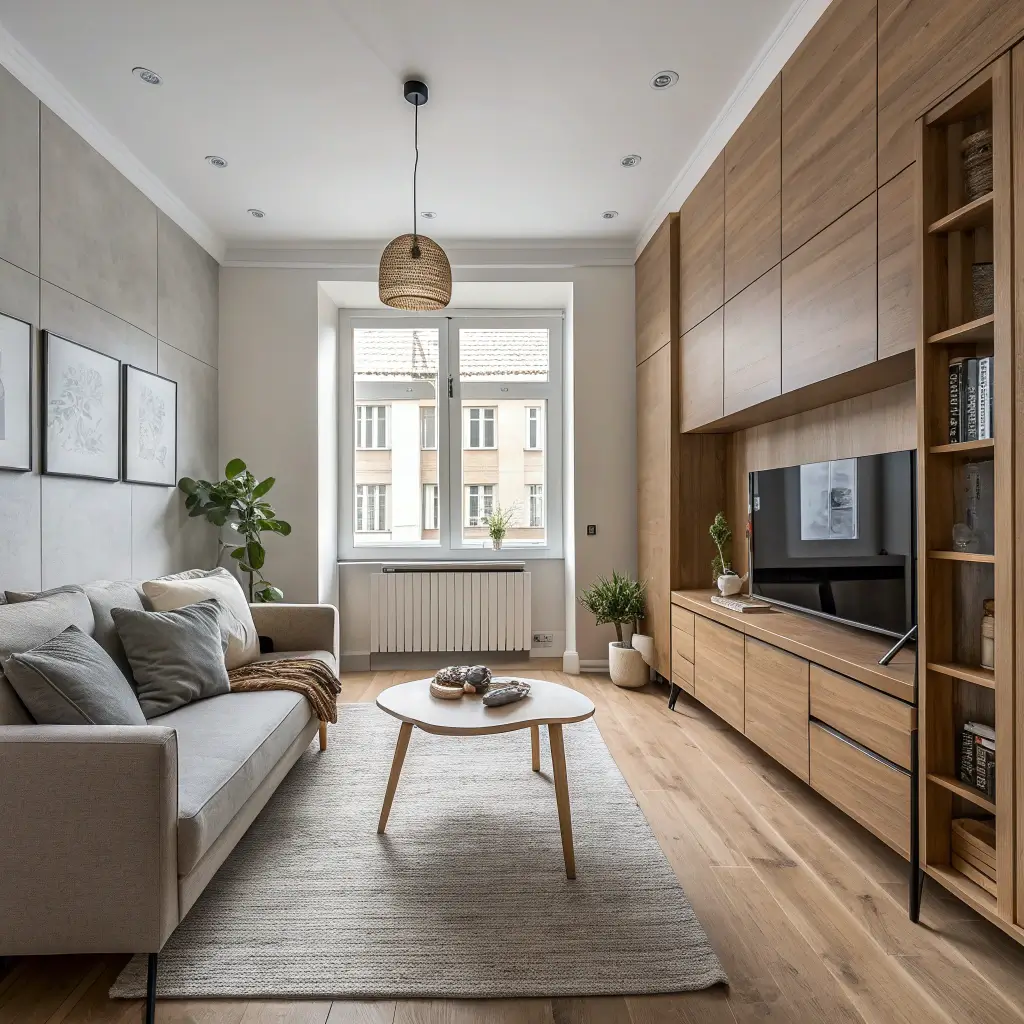
If you haven’t landed on an aesthetic yet or want a safe, reliably impressive direction, industrial is hard to beat for men’s apartments. It’s one of the few styles that looks effortlessly masculine without requiring a single clichéd ‘masculine’ element.
Industrial design works with exposed architectural features — brick, concrete, metal beams — but it doesn’t require them. The right furniture and lighting recreate the aesthetic in any apartment.
Industrial Living Room Essentials
- A leather or dark fabric sofa with dark metal legs — the furniture equivalent of a reliable foundation.
- A reclaimed wood or dark wood coffee table — warm wood against cool metal tones is the core industrial contrast.
- Edison bulb lighting — cage pendants, vintage filament bulbs in simple sockets, or black metal floor lamps with exposed bulbs.
- Open metal shelving — Ikea KALLAX spray-painted matte black, or metal pipe shelving systems, both work and both read as distinctly industrial.
- A dark area rug — aged leather-look, distressed patterns, or simple charcoal — grounds the space.
- Exposed metal hardware throughout — black or dark bronze is more refined than chrome here.
The industrial look pairs exceptionally well with a few warm elements — a leather-bound book stack, a potted plant, a wooden tray — that prevent it from tipping into cold or harsh territory.
💡 Pro Tip: One or two plants make industrial spaces feel significantly more alive without compromising the aesthetic at all. A snake plant in a concrete pot is essentially a perfect industrial design decision.
11. Set Up a Bar Area That Works for Entertaining
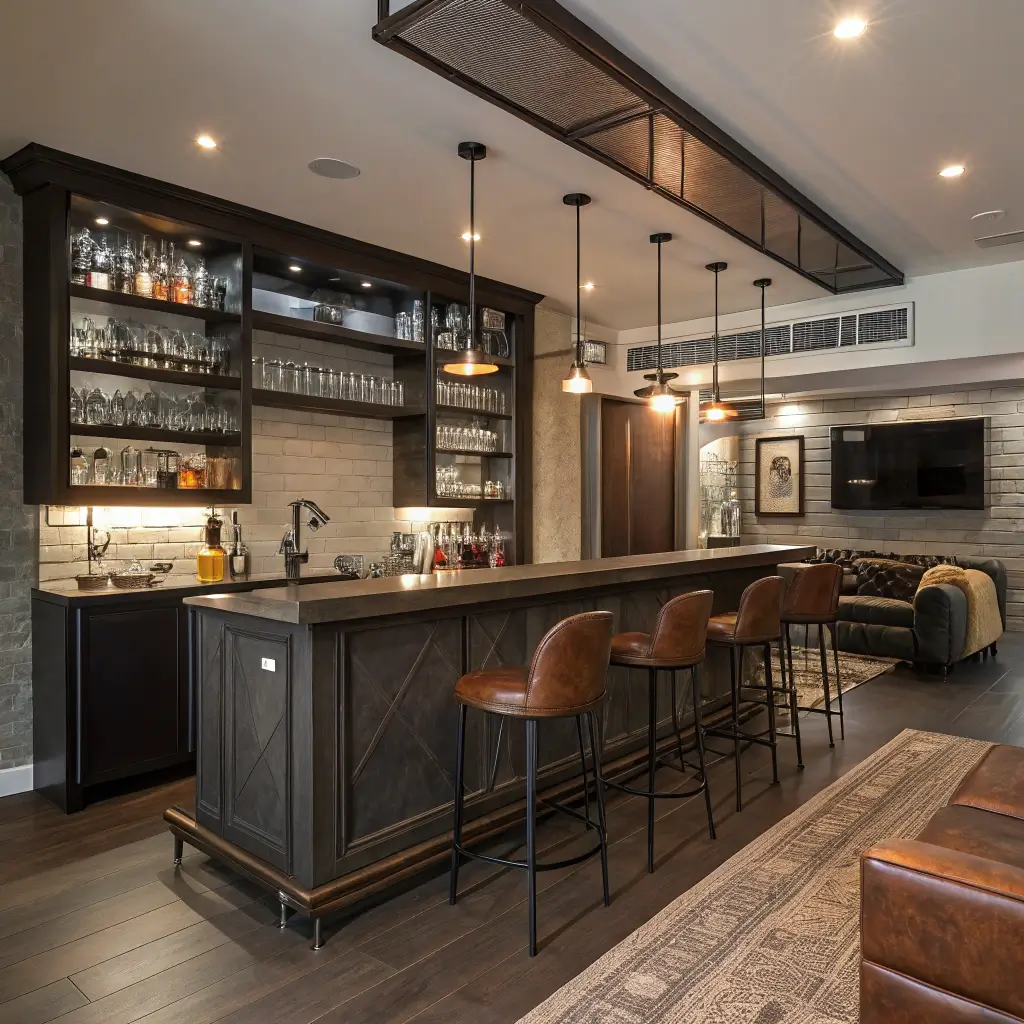
A bar cart or dedicated drink station is one of the most host-friendly additions to a men’s apartment — and one of the most aesthetically satisfying. Done right, it functions as both a practical entertaining tool and a design statement.
You don’t need a full wet bar. A well-stocked bar cart in the right corner of the living room or dining area establishes that you’re someone who’s ready to welcome people without making it feel like a statement.
Building a Bar Setup That Looks Good
- Choose a cart that fits the aesthetic — gold metal for mid-century, black metal for industrial, bamboo or teak for a warmer look.
- Display spirits by height and by category — tall bottles at the back, shorter at the front. Keep it curated rather than crowded.
- A matching set of glassware (even basic ones) elevates the whole setup. Mismatched pint glasses do not.
- Barware as decor — a cocktail shaker, a quality jigger, and a mixing glass look as good as they are functional.
- A small plant or potted herb (rosemary, especially) on the bar cart adds a fresh element and is actually useful.
- Keep it stocked but not cluttered — 5–8 bottles maximum on display, everything else stored below or in a cabinet.
💡 Pro Tip: A tray on the top shelf of the bar cart keeps everything organized and makes the whole thing portable when you need to move it. It’s also the element that makes it look styled rather than stacked.
12. Upgrade the Kitchen Without a Renovation
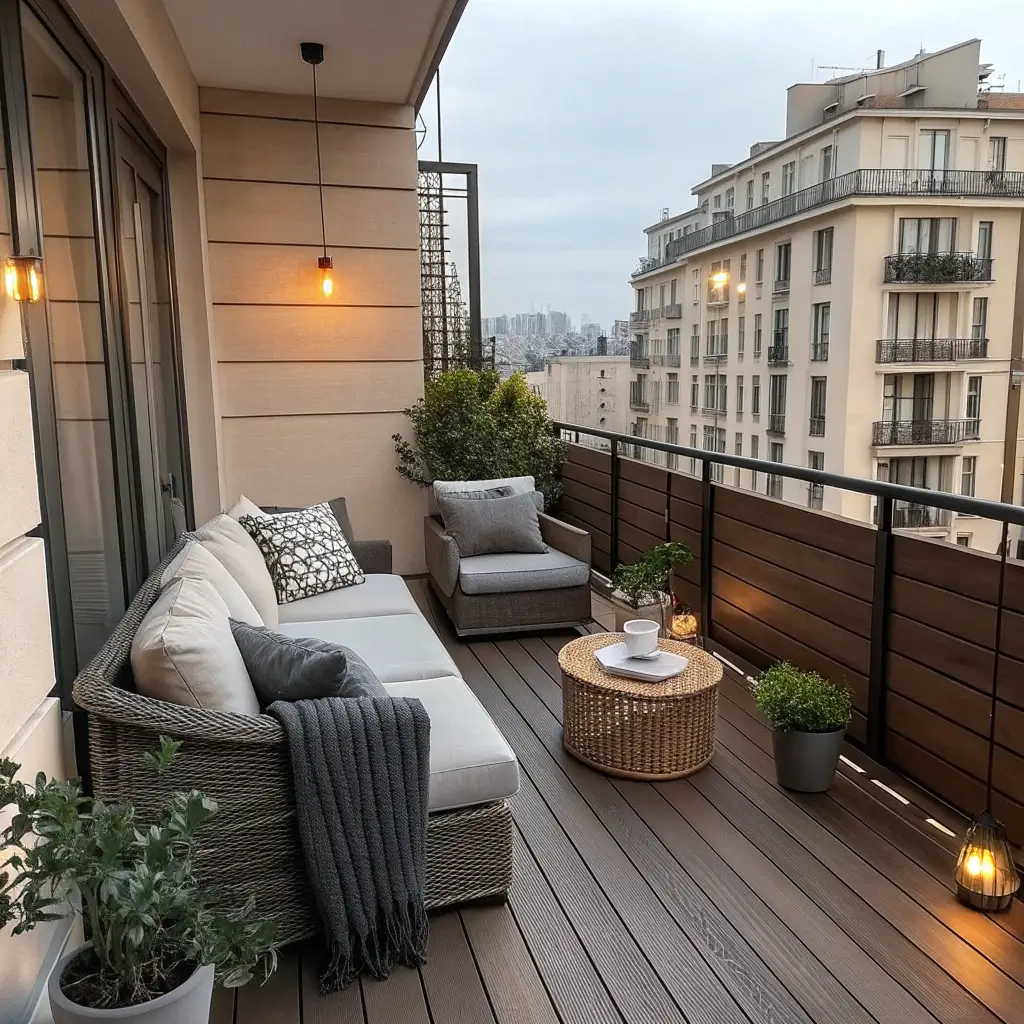
Most apartments come with kitchens that were designed for function and absolutely nothing else. The good news is that the kitchen is one of the easiest rooms to upgrade with surface-level changes that don’t require a landlord’s permission.
Kitchen Upgrades That Don’t Need Permission
- New cabinet hardware — pulling and replacing knobs and handles takes 30 minutes and makes the cabinets look like they were installed last week. Matte black and brushed brass are both strong choices.
- A peel-and-stick backsplash tile — removable, affordable, and available in styles that look genuinely good rather than obviously temporary.
- Clear countertop organization — a knife block, a unified set of canisters, a wooden or marble cutting board displayed upright — makes a cluttered counter look styled.
- Under-cabinet LED strip lights — instant warmth, better task lighting, and they cost about $20.
- A quality dish drying rack or mat in a color that complements the kitchen — the utilitarian items you can’t hide should at least look considered.
- Plants on the windowsill — herbs in matching pots are functional, fragrant, and visually far better than a bare window.
🔑 Key Rule: A clean kitchen with good hardware and clear counters reads as competent and controlled — two qualities worth communicating about yourself through your space.
13. Make the Bathroom Feel Like a Real Bathroom
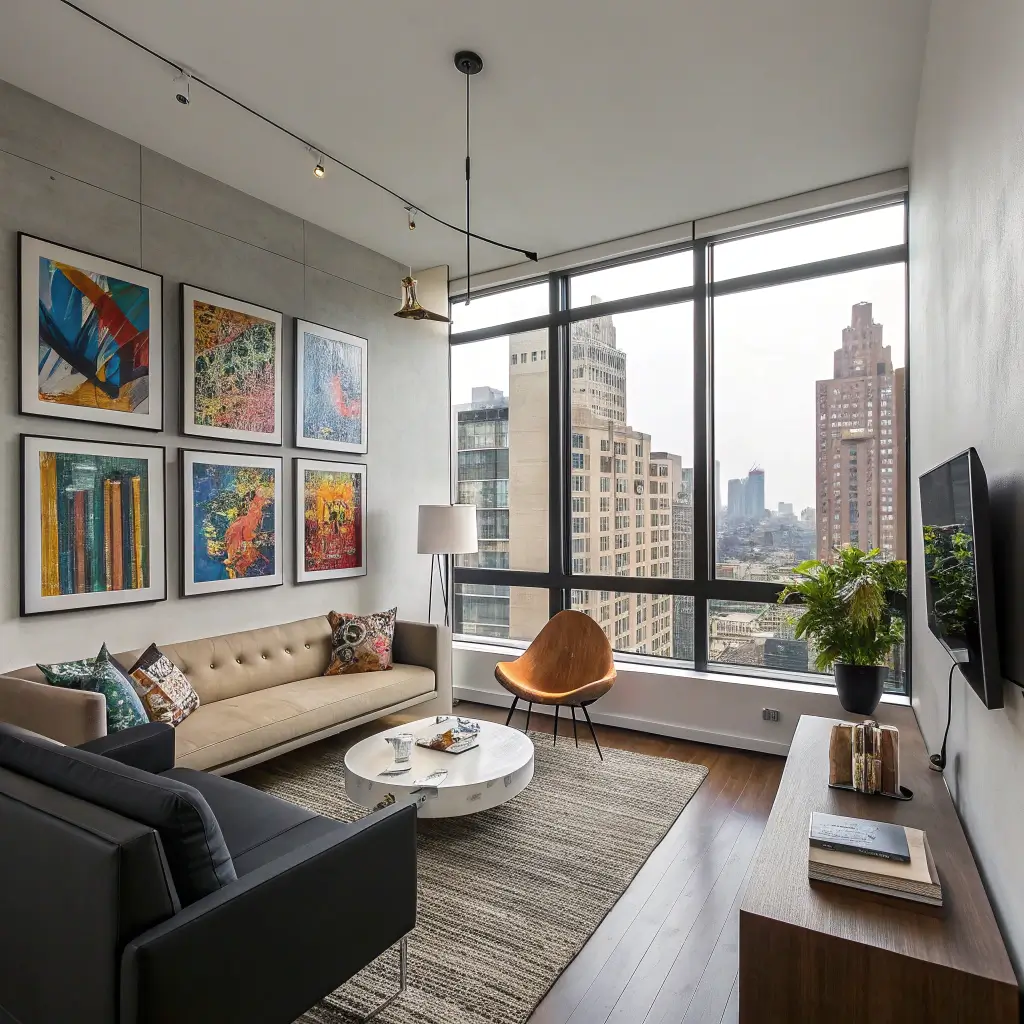
The bathroom gets almost no attention in most men’s apartments, which is why it’s one of the easiest places to dramatically upgrade with minimal effort. A few intentional choices here say more than you’d expect.
Bathroom Upgrades Worth the Effort
- Matching towels — two sets in one color. Charcoal, navy, white, or camel. Folded or hung consistently. This alone changes the room.
- A real soap dispenser instead of the bottle from the supermarket sitting on the edge of the sink. Stone, ceramic, or matte plastic — anything that looks like a choice.
- A proper bath mat that’s clean and that doesn’t slide. Sounds minimal; matters more than you’d think.
- Open shelving or a small cabinet that keeps toiletries organized and off the sink edge.
- A simple framed mirror if the existing one is clip-on or basic — this can often be installed over the existing mirror without damage.
- A plant that tolerates humidity — pothos, snake plant, or air plants all work in bathrooms and add life to a room that often has none.
💡 Pro Tip: A clear shower caddy beats the soap-and-shampoo lineup along the tub edge both aesthetically and practically. Spend $15 on a good one and the shower immediately looks more organized.
14. Use Plants — More Than You Think You Should
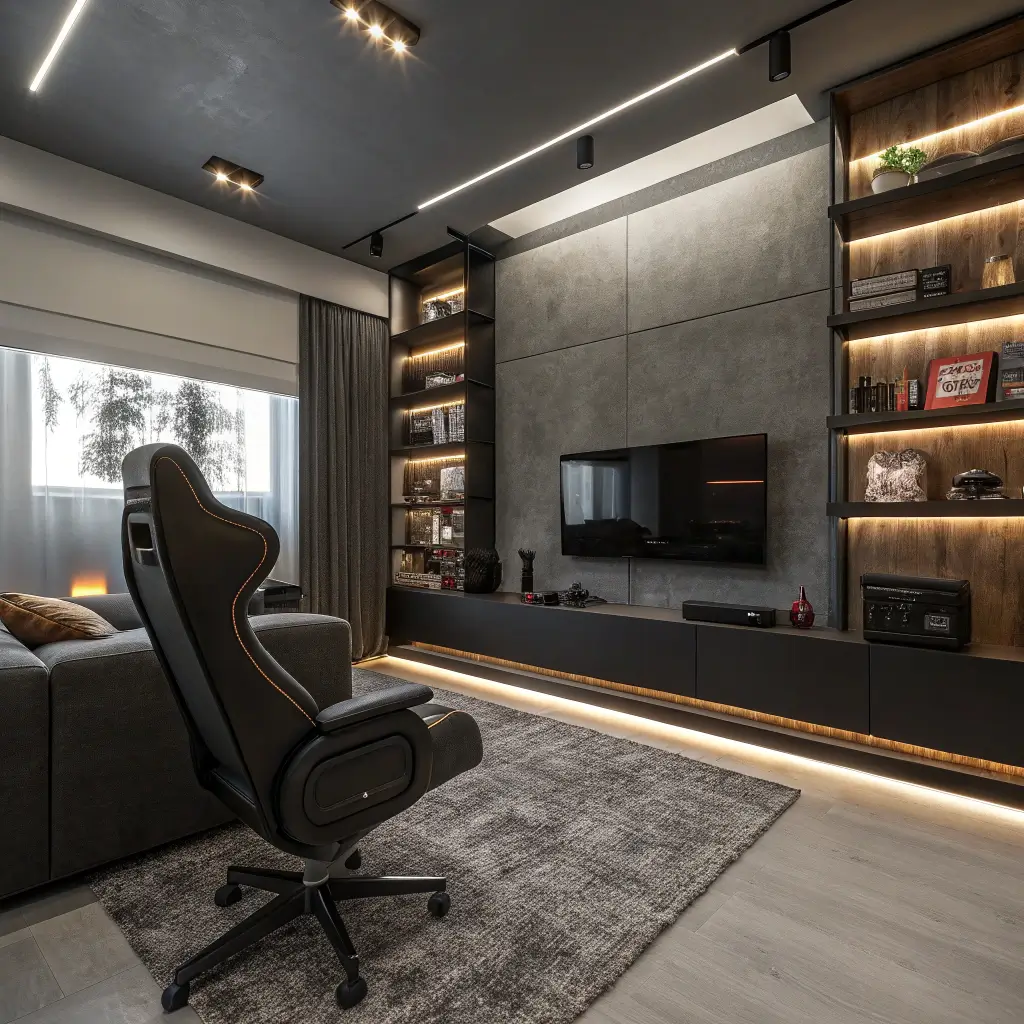
Plants in a man’s apartment are not a soft choice. They’re a design decision that adds life, texture, and color — and they work in every aesthetic from industrial to minimalist to rustic. The apartments that look most alive almost always have them.
The objection is always maintenance. And that’s legitimate if you’re starting with the wrong plants. The right plants are nearly indestructible.
Low-Maintenance Plants That Work in Men’s Apartments
- Snake plant (Sansevieria) — nearly impossible to kill, architectural shape, works in low light. The ideal starting plant.
- Pothos — trailing, fast-growing, thrives in low to medium light, and can go weeks without water.
- ZZ plant — glossy, sculptural, and so drought-tolerant it’s sometimes called the ‘neglect plant’.
- Rubber tree — bold, large-leaf, and makes a statement in a corner that needs a tall element.
- Fiddle leaf fig — higher maintenance but high visual impact in the right bright-light spot.
- Cactus or succulent collections — require almost no water, look strong in industrial or minimalist contexts.
Pot choice matters as much as plant choice. Concrete, matte black, dark ceramic, or terracotta pots all read well in masculine interiors. Stay away from cheap plastic nursery pots unless you’re going to put them inside something better.
💡 Pro Tip: Group plants in threes at varying heights for maximum visual impact with minimum individual plants. One large, one medium, one small creates a composition that reads as designed.
15. Build a Reading or Hobby Corner
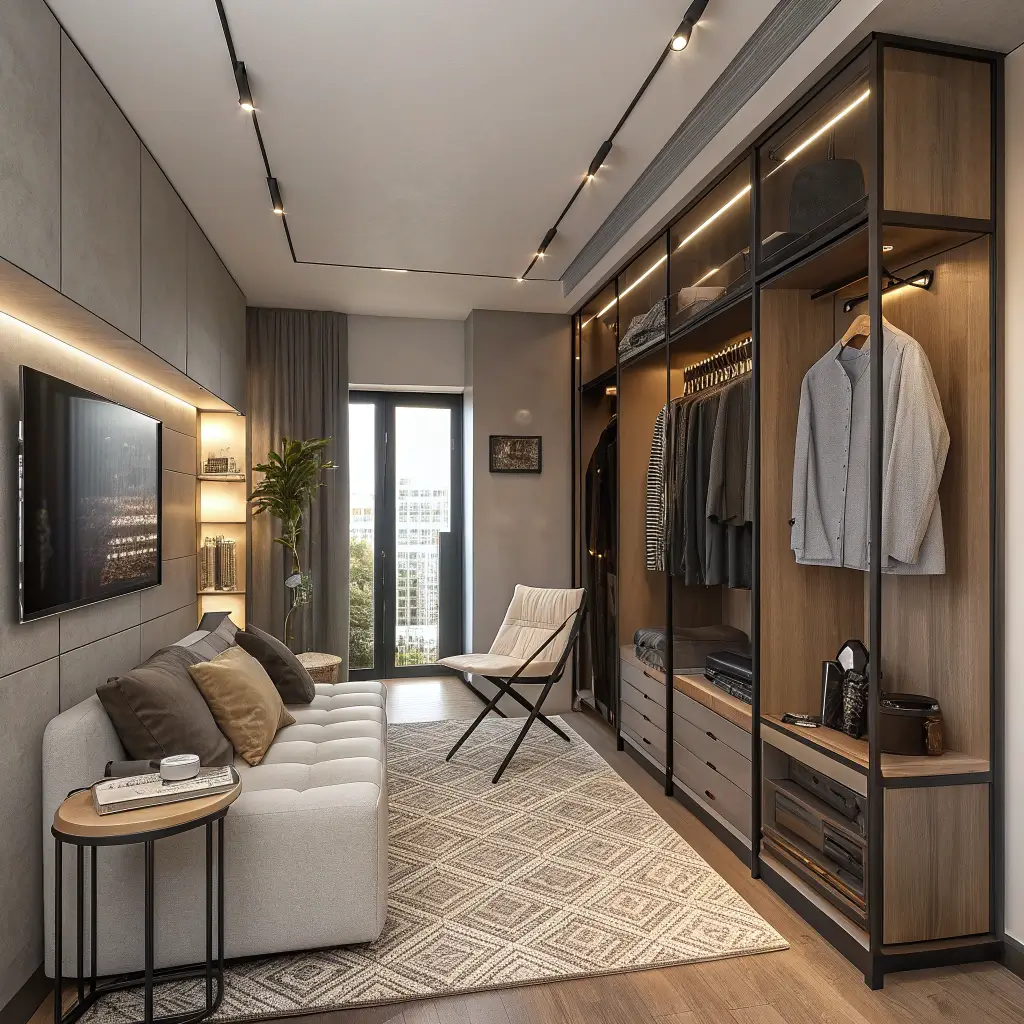
The most interesting men’s apartments have a corner that reveals something specific about who lives there — a record collection displayed on a shelf, a chess set on a side table, a camera bag on a hook, a stack of books that are actually being read.
This isn’t about performing interests for guests. It’s about designing a space that accommodates and reflects how you actually spend time. A dedicated corner for a specific activity makes the apartment feel more lived-in and more personal.
Corner Setups Worth Building
- Reading corner — an armchair with a floor lamp positioned over the right shoulder, a small side table, and a low shelf with current and upcoming reads.
- Music corner — a record player setup on a console or sideboard, records displayed in a crate or shelf below, a small speaker or amp visible.
- Gaming corner — properly set up rather than improvised. A quality chair, cable management, organized shelving for equipment and games, good lighting.
- Fitness corner — a yoga mat, a few kettlebells or dumbbells in a rack, and maybe a pull-up bar in a doorway. Functional and tells a story.
- Creative corner — a drawing table, photography gear on a shelf, or instrument storage. Specificity here is the point.
The corner doesn’t have to be large. Six square feet with the right chair, lamp, and side table is enough to create a spot that feels intentional and draws people into conversation.
💡 Pro Tip: The reading chair + floor lamp combination is one of the highest-impact decorating moves you can make. It immediately communicates that this is a place someone actually inhabits, not just sleeps in.
The Bottom Line: Your Apartment, Your Standards
Here’s what this really comes down to: your apartment is a reflection of your standards. Not your budget, not your design knowledge, not your gender. Your standards — what you’re willing to accept and what you think you deserve.
Men who live in great apartments aren’t people who obsess over decor or spend their weekends at design stores. They’re people who made a decision at some point that their space was going to be intentional — and then made a series of simple, progressive choices that built toward that.
You don’t have to do all 20 of these at once. Pick the two or three that would make the biggest immediate difference in how your space feels, and start there. A better apartment is built one good decision at a time — not all at once in a weekend panic-buy.
Start with the sofa position. Get the lighting right. Put something on the walls. Go from there. The version of your apartment that you’re capable of building is probably a lot better than what you’re currently living in — and it’s closer to reach than you think.
1 thought on “15 Modern Apartment Decorating for Men Ideas and Chic Details”