
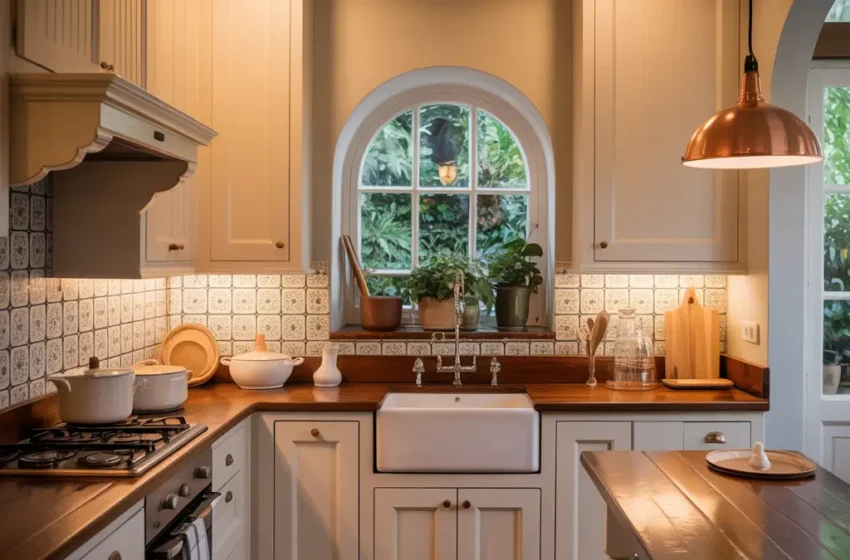
There is a reason farmhouse kitchens never go out of style. While trends come and go — and plenty of once-popular kitchen aesthetics now feel dated — the farmhouse kitchen keeps evolving, keeps feeling relevant, and keeps drawing people in with that particular kind of warmth that is genuinely hard to manufacture.
It is not just about shiplap and apron sinks, though those elements certainly do their part. A farmhouse kitchen works because it is built around the idea that a kitchen should feel lived-in, welcoming, and useful — not like a showroom that nobody is allowed to touch.
Whether you are doing a full renovation or simply refreshing what you already have, there are farmhouse kitchen ideas on this list for every budget, every room size, and every taste — from the purist who wants authentic rustic character to the modern homeowner who wants farmhouse warmth without sacrificing clean lines and contemporary function.
1. Start With White or Cream Shaker Cabinets as Your Foundation
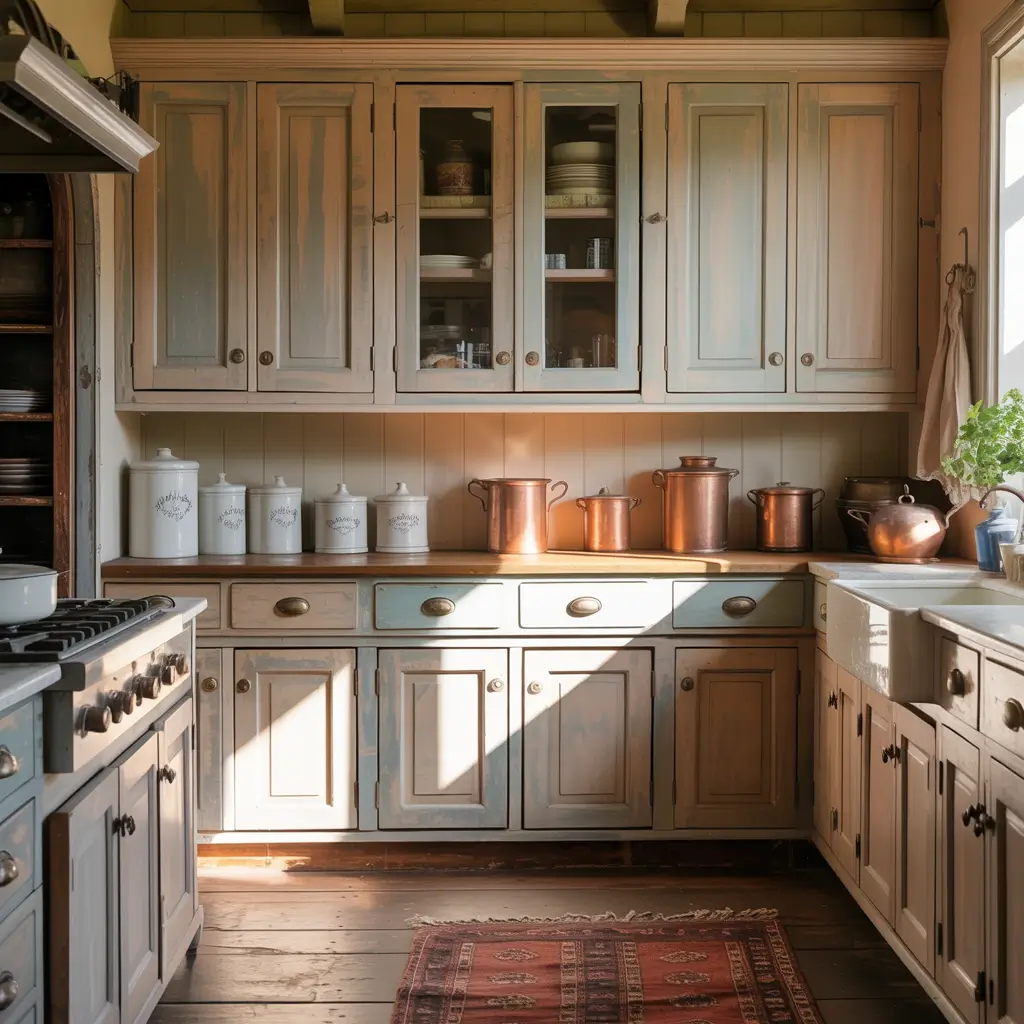
If there is one single element that defines the modern farmhouse kitchen more than any other, it is the shaker cabinet. Clean, flat-center-panel doors with simple rail-and-stile construction — that is the look. No ornate raised panels, no routed edges, no fussy detailing. Just honest, functional joinery that has been around for centuries because it works.
White and cream are the go-to finishes for good reason. They reflect light, they pair with virtually every countertop and flooring choice, and they give you total freedom with accents and hardware. In a smaller kitchen, white shaker cabinets make the space feel genuinely larger. In a large kitchen, they provide a calm, consistent backdrop for bolder elements.
That said, do not feel locked into pure white. Soft off-whites, warm creams, and light greige tones often look more genuinely farmhouse-like than stark white — which can read more contemporary. A color like Benjamin Moore’s White Dove, Sherwin-Williams Alabaster, or Farrow and Ball’s Pointing brings warmth without going yellow.
Hardware Upgrade: Shaker cabinets with the wrong hardware look generic. Black matte cup pulls, brushed brass knobs, or oil-rubbed bronze bin pulls are the details that push the look from builder-grade to genuinely farmhouse. Budget $3 to $8 per pull — it is the highest-return investment in your kitchen.
2. Install an Apron Front Farmhouse Sink
The apron front sink — also called a farmhouse sink — is the single most recognizable element in farmhouse kitchen design. The exposed front panel, the generous single or double basin depth, the way it anchors the entire kitchen — nothing else quite does what a farmhouse sink does for a space.
Fireclay is the traditional material and still the most beautiful. It is dense, chip-resistant compared to cast iron, and develops a depth of surface that porcelain simply cannot replicate. White fireclay is the classic choice. Matte black fireclay has become increasingly popular for a more dramatic farmhouse look.
Cast iron apron sinks are heavier but also excellent — the enamel surface is incredibly durable and the thermal mass keeps water warm longer, which matters more than you might think during a long washing session.
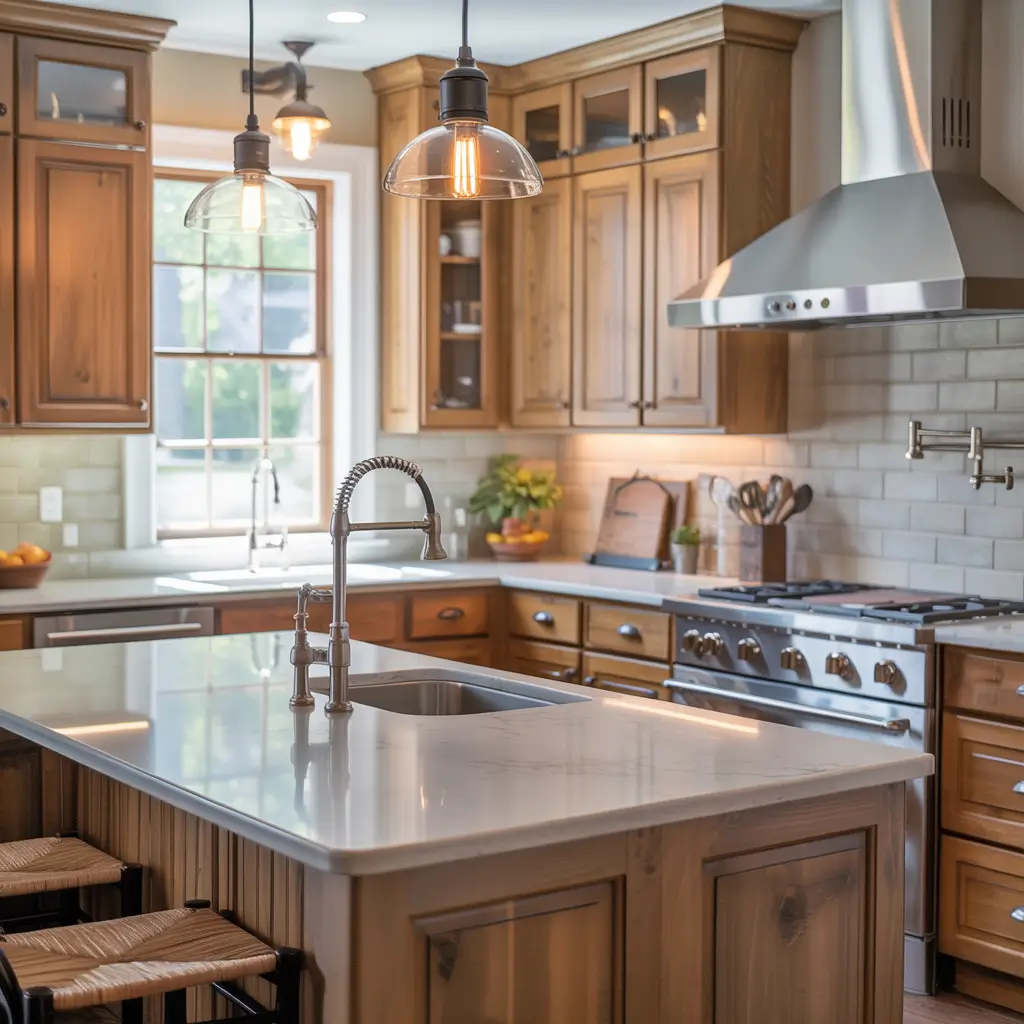
Stainless steel apron sinks are more affordable and work beautifully in kitchens leaning toward modern farmhouse — the industrial quality of brushed stainless pairs naturally with black hardware and concrete or wood countertops.
Installation Note: Apron front sinks require a modified base cabinet — the standard 36-inch cabinet needs its front rail cut away to accommodate the sink’s exposed apron. Plan this before purchasing. Many farmhouse sink cabinet bases are sold specifically for this configuration.
3. Choose Butcher Block Countertops for Warmth and Function
Nothing softens a kitchen like wood. And in a farmhouse kitchen, butcher block countertops do double duty — they look beautiful and they are genuinely practical for food preparation. End-grain butcher block, in particular, has a richness and depth that no laminate approximation can touch.
The natural hesitation with butcher block is maintenance. The reality is that with proper sealing — food-safe mineral oil applied regularly, or a hardening oil finish like Rubio Monocoat — butcher block holds up remarkably well in a working kitchen. Scratches and knife marks develop over time, but they are part of the character, not flaws.
For a kitchen that uses butcher block strategically rather than across every surface, consider using it on the island only, with a more durable material like quartz or soapstone on the perimeter countertops. The contrast of materials is a defining feature of great farmhouse kitchen design.
4. Add Open Shelving in Place of Some Upper Cabinets
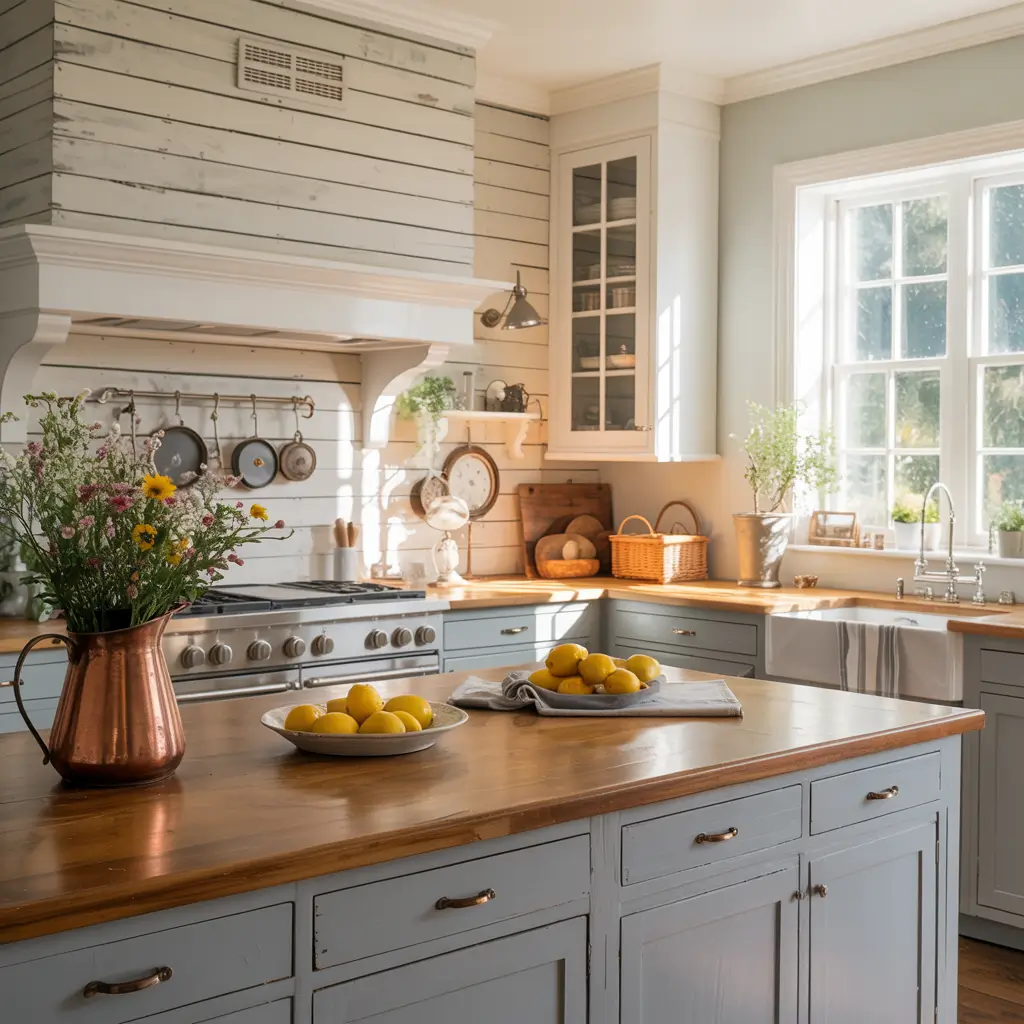
This is the farmhouse kitchen idea that people debate most, and for good reason — open shelving is genuinely polarizing. It looks stunning when done with intention. It looks chaotic when treated as overflow storage for everything that does not fit in the cabinets below.
The key is curation. Open shelves in a farmhouse kitchen are not storage — they are display. Think of each shelf as a small styled vignette:
1. Stacked white ironstone or ceramic dishes. Thrift stores are full of these. Mix plates and bowls of slightly different sizes for an authentic, collected feel.
2. Mason jars with dry goods. Flour, rice, lentils, oats — decanted into uniform glass jars with simple labels.
3. Vintage cutting boards. Wood or marble, leaned against the back wall at different angles.
4. A few plants or herbs. A small potted herb or a trailing pothos adds life without clutter.
5. One or two unexpected objects. A vintage tin, a small crock, a stack of worn cookbooks. These are what make a shelf feel personal rather than staged.
Floating shelves in reclaimed wood or solid walnut look particularly good in farmhouse kitchens. Simple black iron brackets add an industrial edge that plays well against the organic warmth of the wood.
5. Use Shiplap or Beadboard as a Backsplash or Accent Wall
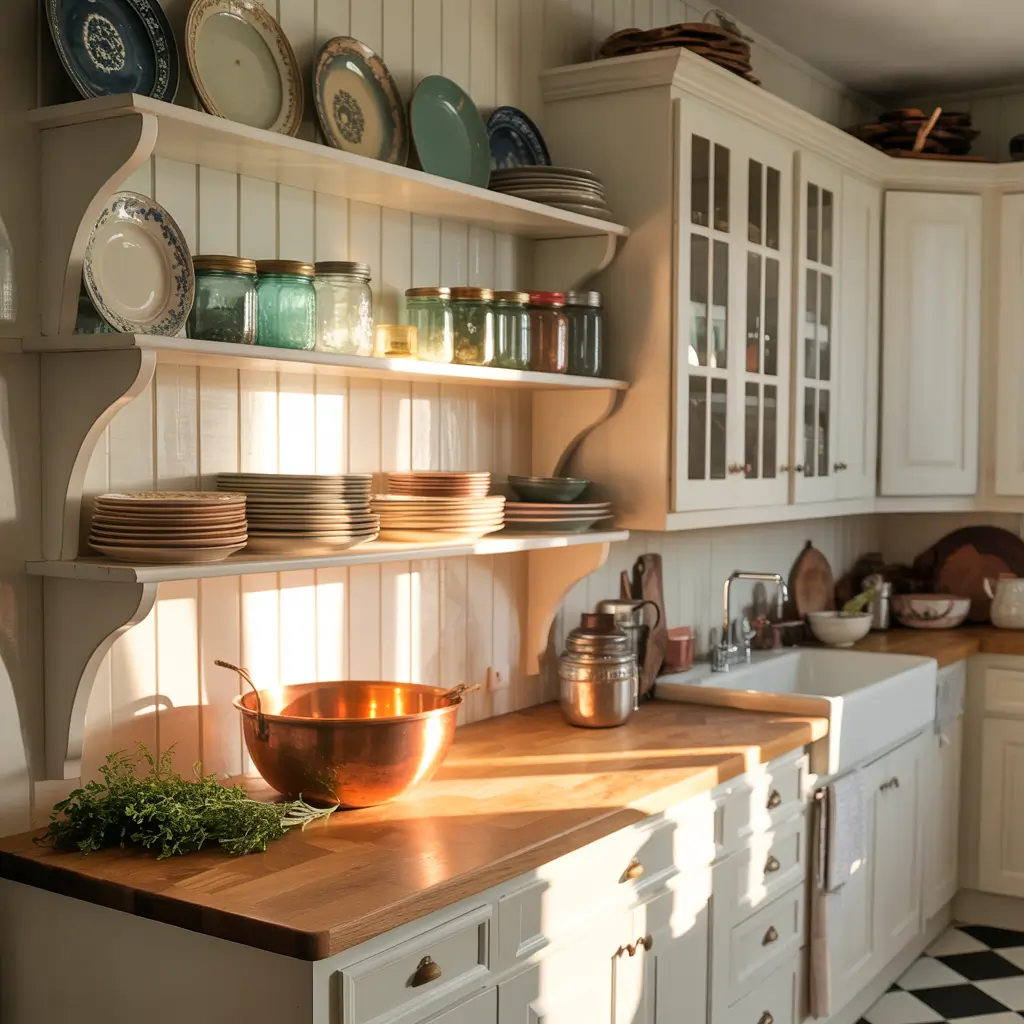
Tile backsplashes are the standard. Shiplap and beadboard are the farmhouse alternative — and when used thoughtfully, they create a warmth and texture that no tile can replicate.
Behind the stove is the most common placement, and it works particularly well because it creates a distinct focal point in the kitchen. Horizontal shiplap painted in a soft white or light gray, sealed with a matte polyurethane for easy cleaning, looks genuinely beautiful and utterly farmhouse.
Beadboard — the narrower, vertically grooved version — works especially well on lower cabinet doors, the kitchen island side panels, and the area between upper cabinets and countertop. It has a slightly more cottage-like quality than shiplap, which tends to read more contemporary.
Practical Tip: Seal any wood wall treatment behind the stove or near the sink with at least two coats of oil-based polyurethane. Farmhouse kitchens are working kitchens — steam, grease, and splatter happen, and the finish needs to handle it without absorbing moisture into the wood.
6. Bring In a Statement Kitchen Island With a Contrasting Finish
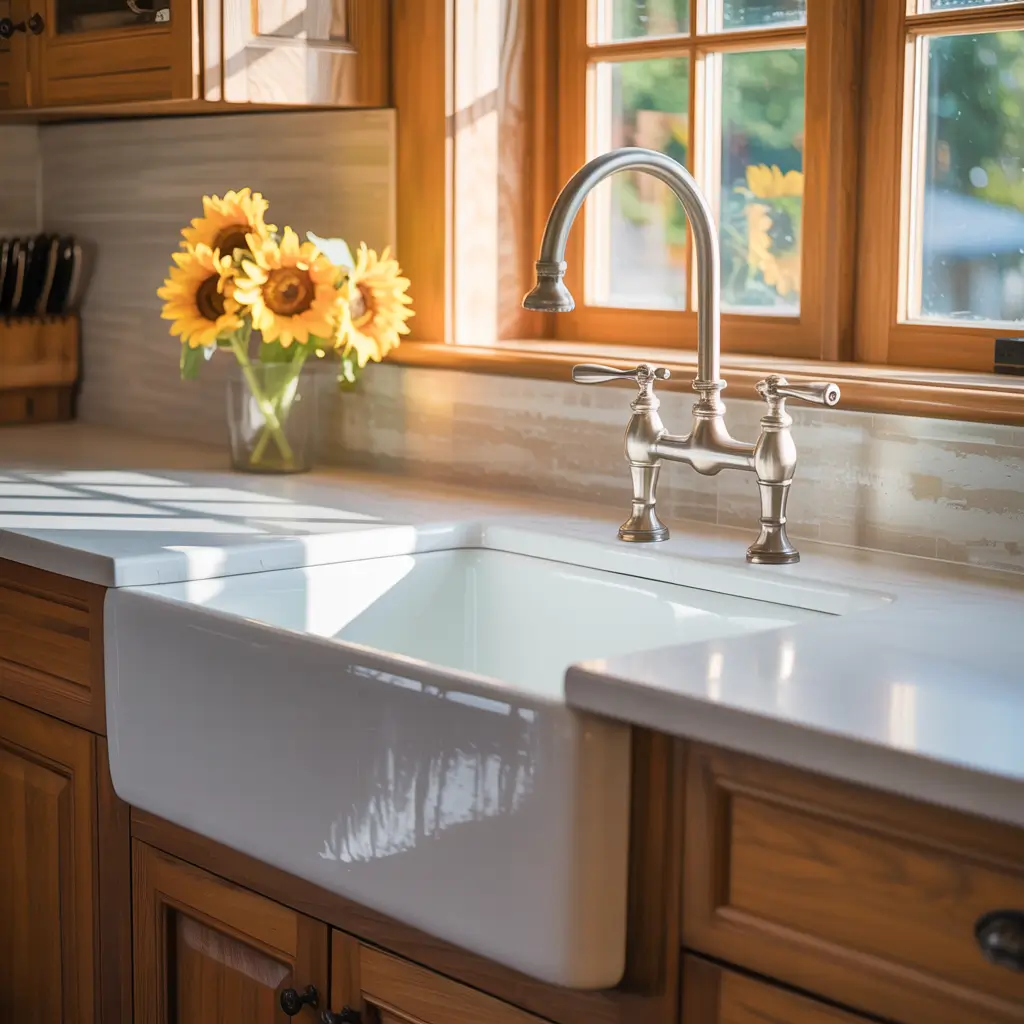
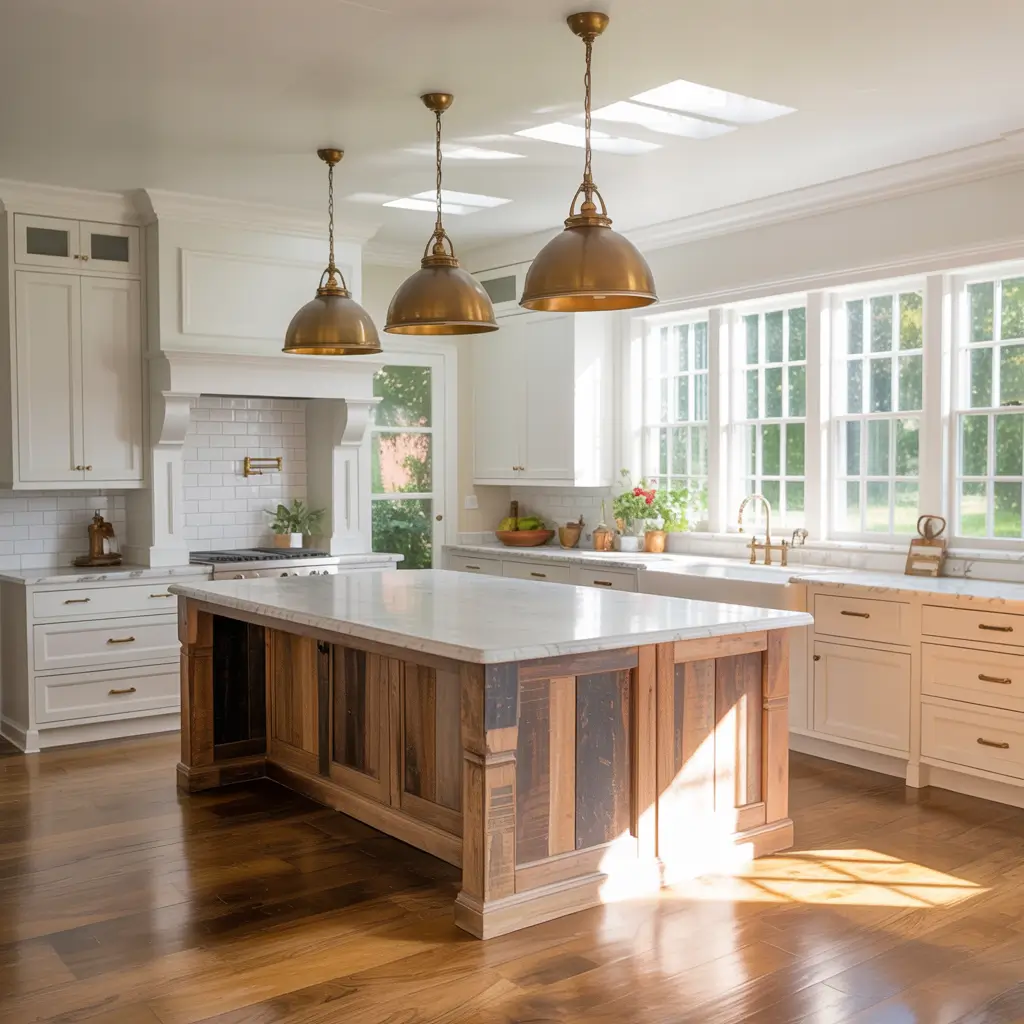
A farmhouse kitchen island done well is one of the most satisfying design moments in home decor. The approach that works best: make it different from the perimeter cabinets rather than matching. Contrast is what gives an island presence and makes the kitchen feel layered and interesting rather than uniform and flat.
If your perimeter cabinets are white, consider the island in a deep sage green, a navy blue, a warm charcoal, or even an unexpected rust or terracotta tone. Paint it with a furniture-quality paint in an eggshell or satin finish — chalk paint sealed with wax works beautifully for a matte farmhouse look.
Top the island with a surface that contrasts with the perimeter countertops. Butcher block on the island with quartz on the perimeter, or vice versa. Some kitchens use a soapstone island top for its dramatic charcoal color and the way it develops a natural patina with oil.
Add seating on one side with farmhouse-appropriate stools — simple wooden counter stools, metal industrial stools, or painted wood stools with a turned leg all work depending on how rustic or modern your overall direction leans.
7. Install Unlacquered Brass or Black Matte Hardware Throughout
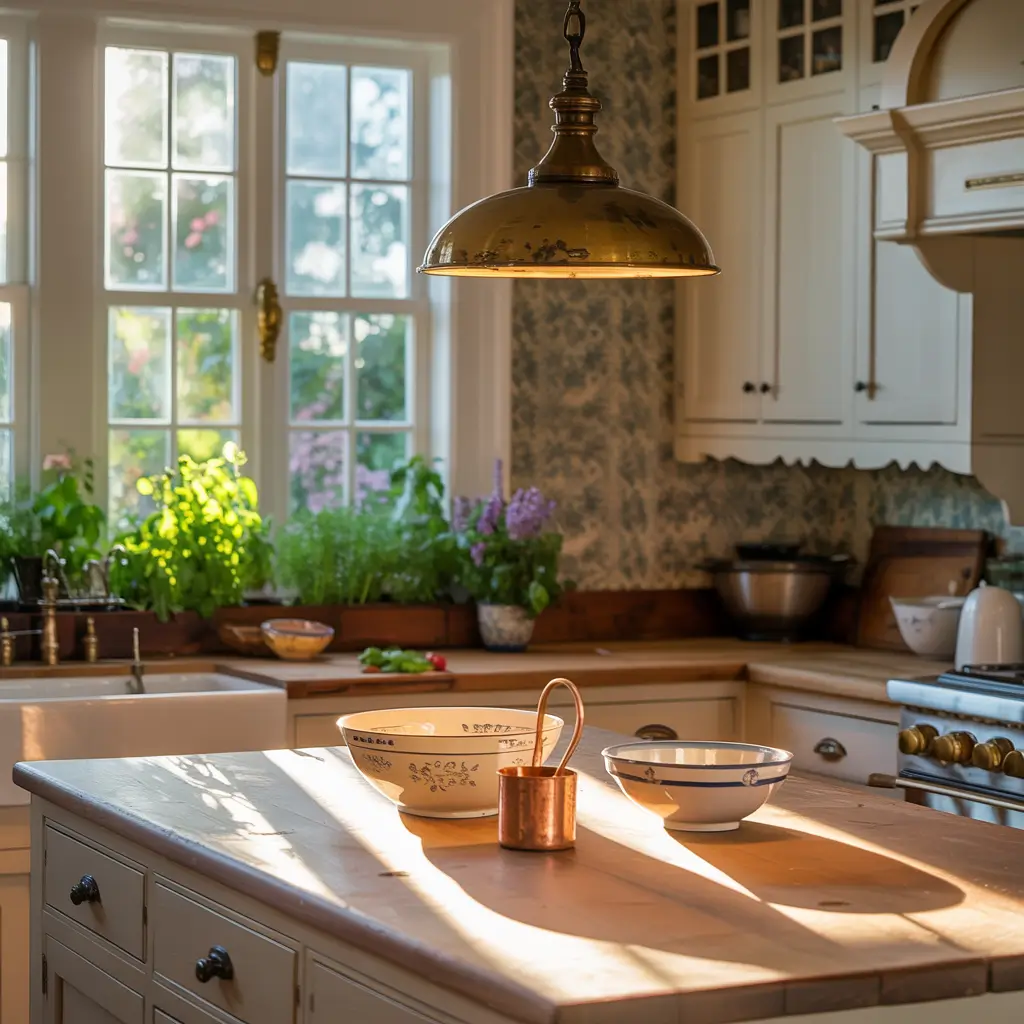
Hardware is the jewelry of a kitchen. And in a farmhouse kitchen, the right hardware is the detail that separates a vaguely rustic space from one that feels genuinely intentional and designed.
Two hardware directions dominate farmhouse kitchen design right now:
1. Unlacquered brass. This is the more classic farmhouse choice. Unlacquered brass is raw — it has no protective coating, which means it develops a natural patina over time, darkening and gaining depth in areas of frequent touch. The result, after a year of use, is hardware that looks genuinely antique and alive. Pulls, knobs, and faucets in unlacquered brass have an organic quality that aged nickel and standard polished brass cannot replicate.
2. Matte black. The more modern farmhouse choice. Black hardware is crisp, bold, and reads cleanly against white or cream cabinets. It connects the kitchen to a more contemporary visual language without abandoning the farmhouse aesthetic. Matte black faucets paired with a white fireclay apron sink is a particularly strong combination.
Whichever direction you choose, commit to it. Mixing metals in small quantities can work — a brass faucet with black cabinet pulls, for instance — but requires a confident hand. When in doubt, consistency wins.
8. Lay Hardwood or Wide-Plank Floors for Authentic Character
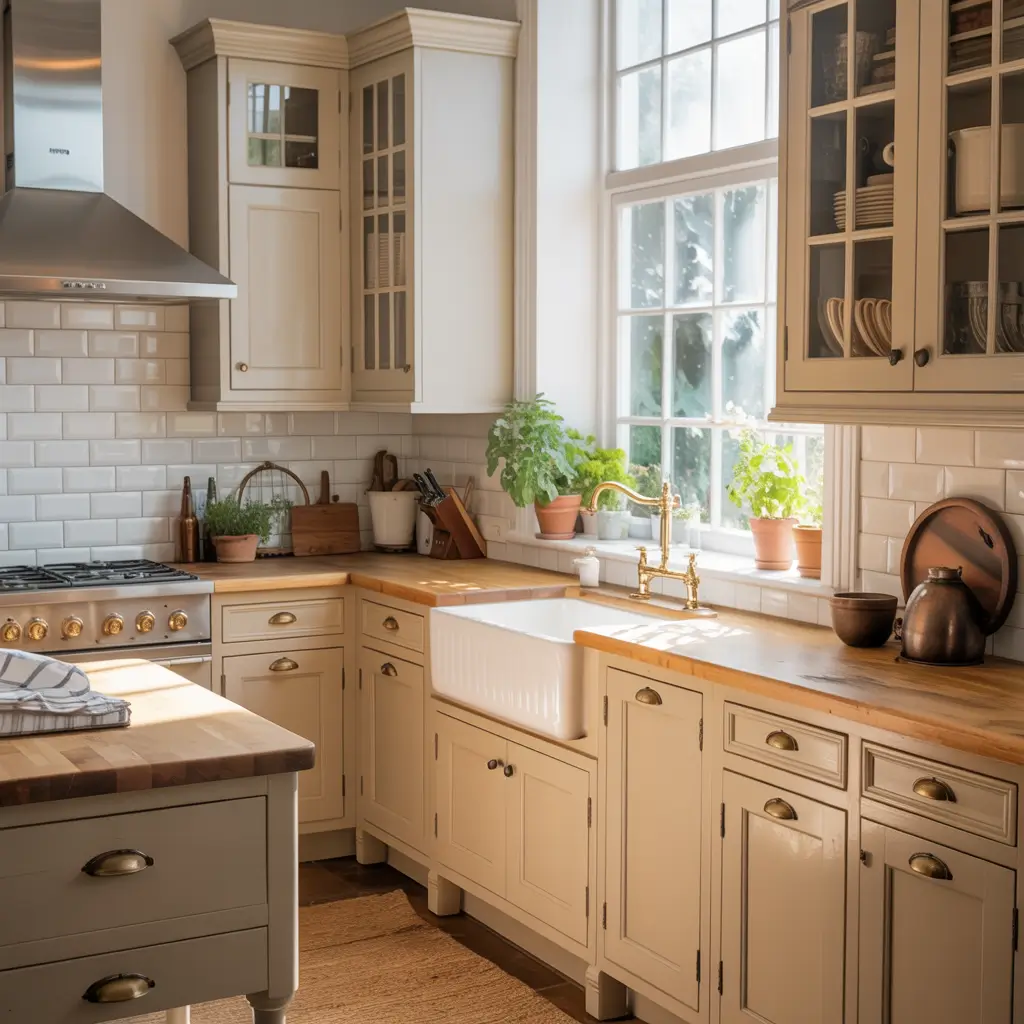
Flooring is often the last thing people think about in kitchen design, but it is foundational to the farmhouse aesthetic. Cold, hard tile reads contemporary. Wide-plank hardwood in a warm tone reads farmhouse immediately.
Traditional farmhouse floors used whatever local hardwood was available — oak, pine, maple, hickory. The wider the plank, the more original-farmhouse the look. Planks in the 5 to 8 inch width range have a particularly authentic quality. Narrower planks feel more formal and Victorian; wider planks feel more casual and agricultural.
For kitchens where real hardwood is impractical — high moisture areas, over concrete, or budget limitations — engineered hardwood in a wide-plank format is an excellent alternative. It handles moisture better than solid wood and is available in formats visually indistinguishable from the real thing.
Finish Tip: Avoid high-gloss polyurethane on farmhouse kitchen floors. A satin or matte finish looks far more authentic and does a better job of hiding the everyday scratches and scuffs that are simply part of life in a working kitchen.
9. Hang Pendant Lights Over the Island and Sink
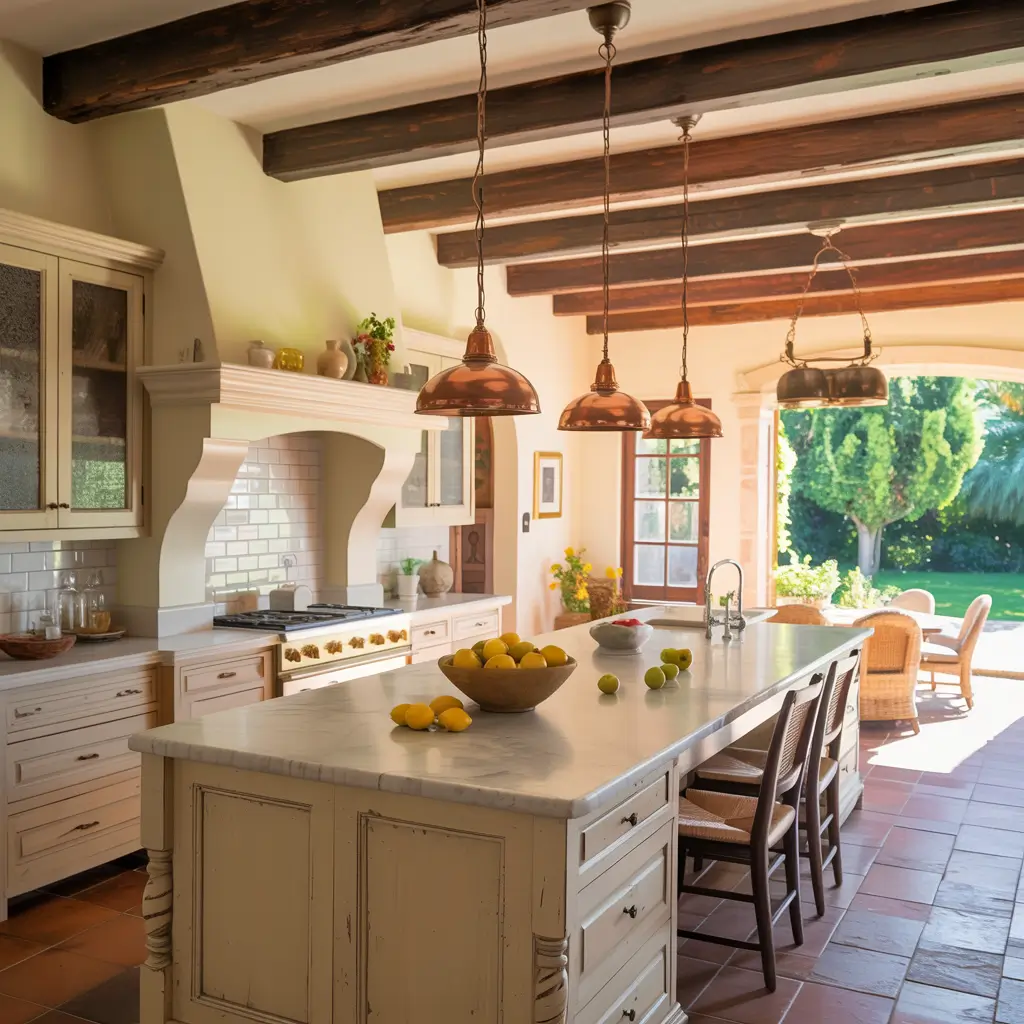
Lighting is the element that most often gets treated as an afterthought in kitchen renovations and most reliably transforms a farmhouse kitchen when it gets the attention it deserves.
Pendant lights over the island are the most visible lighting decision in the kitchen. For a farmhouse aesthetic, the most effective options are:
1. Industrial cage pendants. Black metal wire cage around an Edison bulb. Simple, inexpensive, genuinely farmhouse-compatible in both rustic and modern farmhouse kitchens.
2. Enamel dome pendants. A simple dome shade in white, black, or deep green enamel. The dome shape is utilitarian and agricultural — exactly the right visual language.
3. Woven rattan or seagrass pendants. These add warmth and texture and work especially well in farmhouse kitchens with a lighter, more coastal or cottage-adjacent aesthetic.
4. Aged brass gooseneck lights. Wall-mounted over the sink or as a pair over the island, gooseneck lights have a barn and workshop origin that makes them inherently farmhouse.
The height of pendant lights matters enormously. Over an island, the bottom of the pendant should hang 30 to 36 inches above the countertop surface. Too high and they look like they float disconnectedly; too low and they obstruct sightlines.
10. Use a Vintage or Freestanding Range as the Kitchen’s Centerpiece
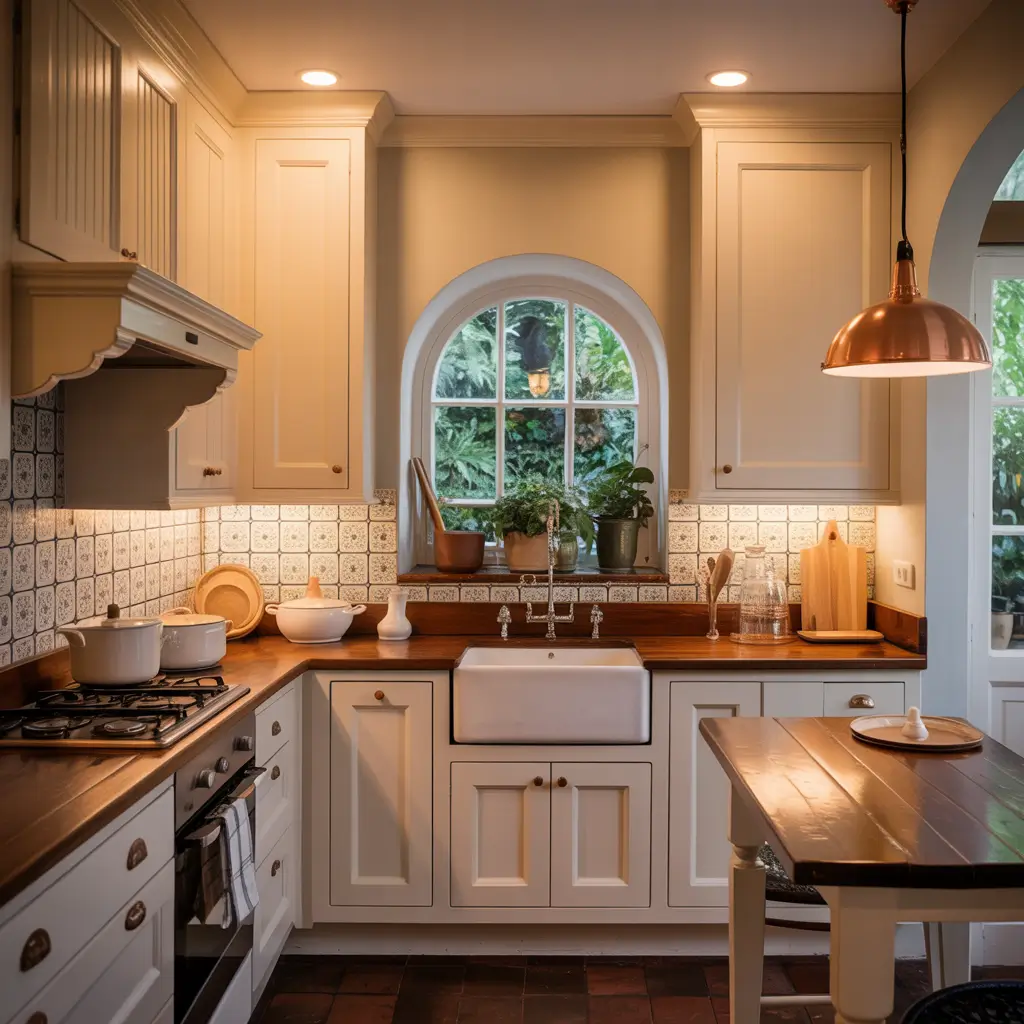
In a farmhouse kitchen, the range is not just an appliance. It is a focal point — the hearth of the modern kitchen, and it should be treated with the same design weight that a fireplace would receive in a living room.
Vintage-style ranges from brands like Big Chill, Smeg, or La Cornue have a presence and character that standard stainless appliances simply do not. The rounded edges, the porcelain enamel finish in colors like cream, sage green, or classic red, the chunky knobs and chrome accents — these ranges look like they have always belonged in a farmhouse kitchen because aesthetically, they have.
For kitchens where a vintage-style range is out of budget, a simple change in range strategy still helps: swap a standard range for a slide-in or freestanding model in matte black or cream, frame it with a painted range hood in a complementary color, and add some simple open shelving on either side to create the impression of a built-in cooking alcove.
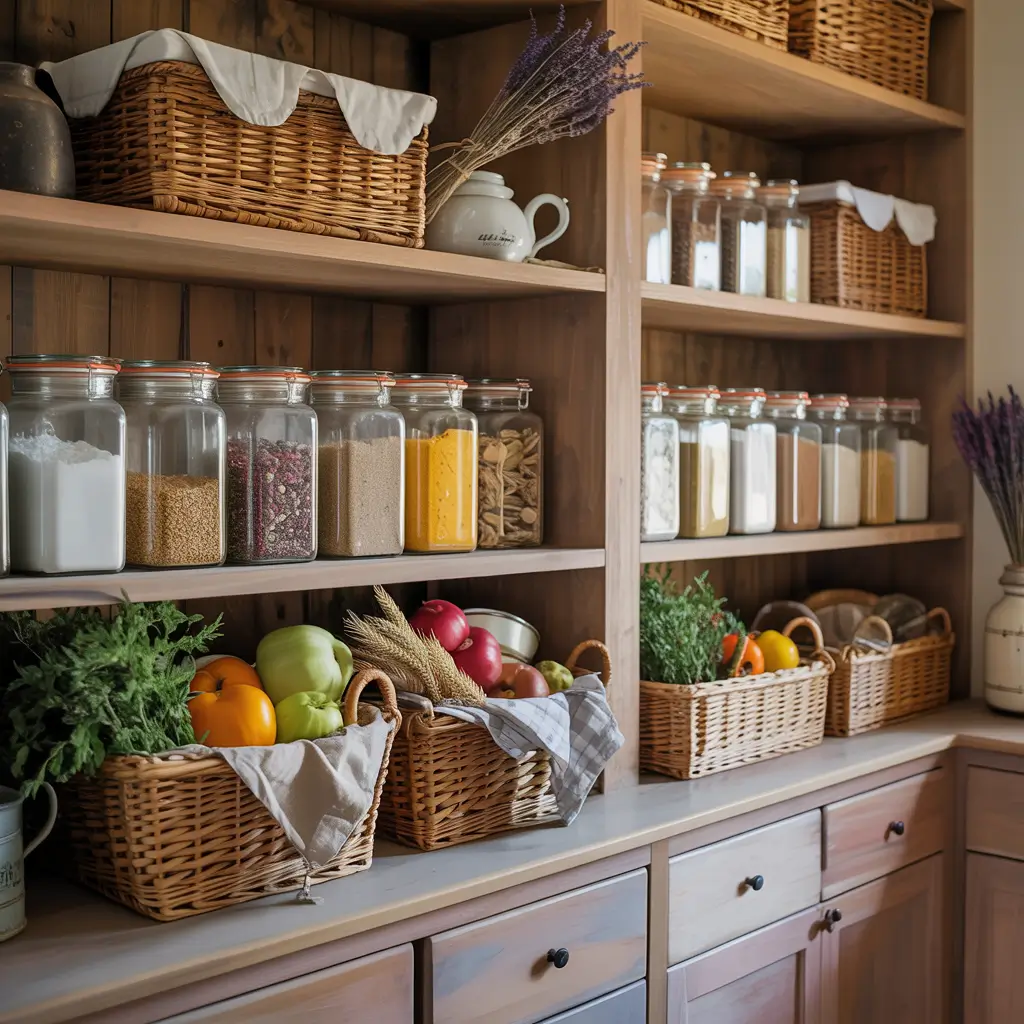
11. Create a Farmhouse Pantry With Open Shelving and Baskets
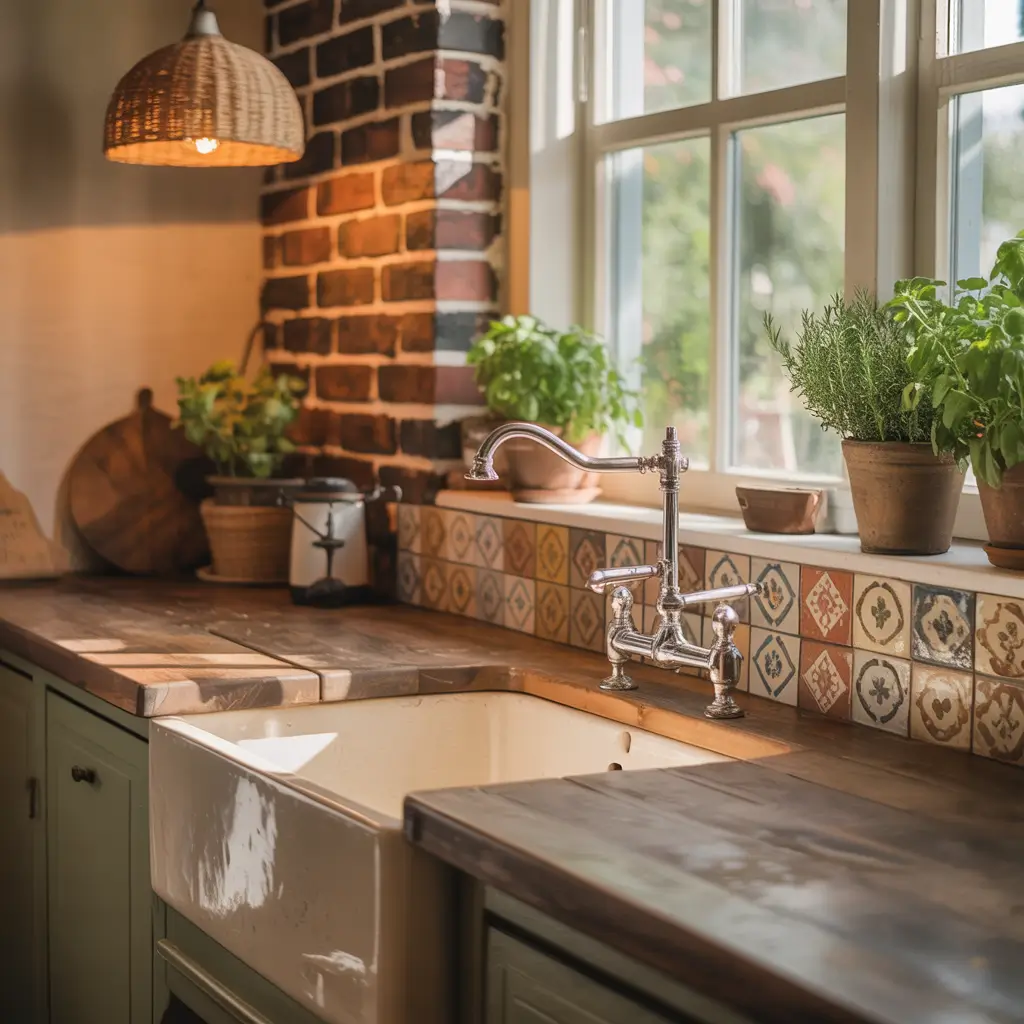
A dedicated pantry is a genuine farmhouse kitchen luxury, but even a small pantry closet or a butler’s pantry wall can be styled to become one of the most charming elements in the kitchen.
The farmhouse pantry aesthetic relies on visible organization. Clear glass jars for dry goods, wicker or seagrass baskets for produce and packaged items, a few ceramic crocks for utensils and tools. Everything has a place and everything is visible — the opposite of the modern hidden-storage approach.
Line the pantry shelves with a simple shelf liner in a stripe or small check pattern. Label your jars with handwritten kraft paper labels or simple chalkboard tags. Add a small ladder or step stool in a complementary color for reaching upper shelves — a detail that sounds unnecessary and ends up being one of the most photographed elements in any farmhouse kitchen.
Organization Tip: Group your pantry by use rather than category. Baking supplies together, breakfast items together, canned goods together. A farmhouse pantry that looks beautiful but requires fifteen minutes of archaeology to find the baking powder has failed at its actual job.
12. Add a Painted Brick or Stone Backsplash Behind the Range
If you are lucky enough to have existing brick in your kitchen — exposed brick walls are a genuinely extraordinary foundation for a farmhouse kitchen — embrace it completely. Do not tile over it. Do not paint it a trendy color. Clean it, seal it, and let it be what it is.
If you do not have original brick but love the look, thin brick veneer tiles give a convincing result at a fraction of the cost and effort of genuine brick. Applied in a running bond pattern behind the range and sealed with a matte grout sealer, they are nearly indistinguishable from the real thing at conversational distance.
Stone — particularly stacked slate or fieldstone — works beautifully in kitchens leaning toward a more rustic, rural farmhouse aesthetic. It is heavier and more involved to install but creates a backsplash that is genuinely unique and genuinely timeless.
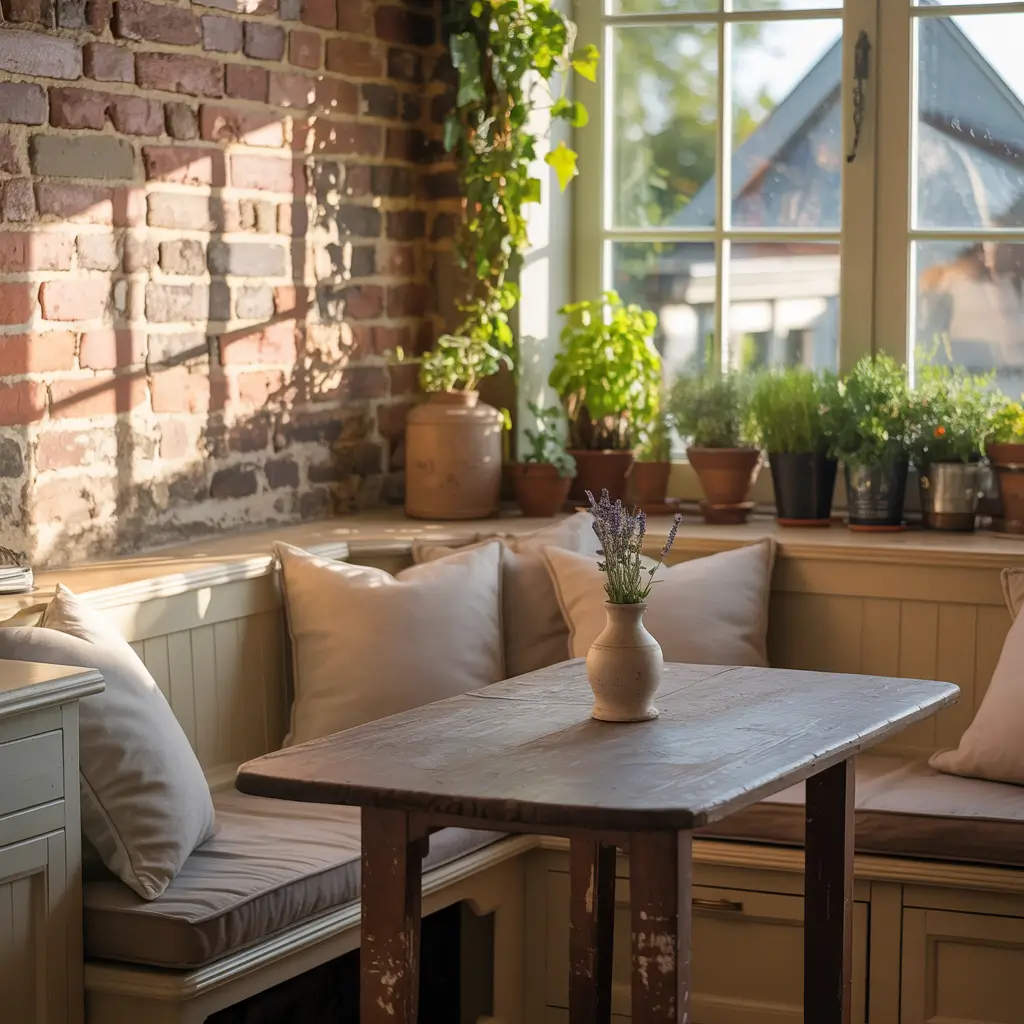
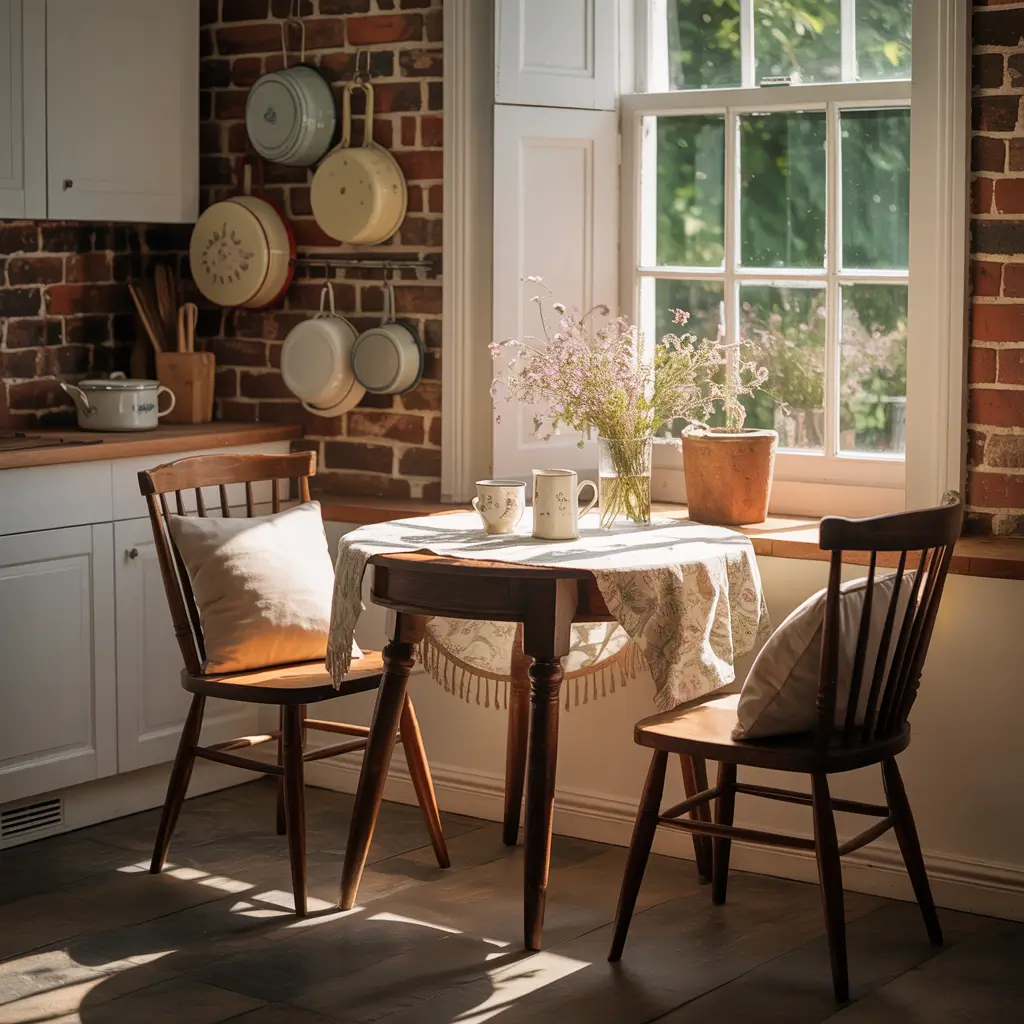
13. Build in a Cozy Breakfast Nook With a Farmhouse Banquette
A farmhouse breakfast nook is one of those design elements that feels almost impossibly good when it comes together. The idea is simple: a built-in or semi-built-in seating area adjacent to the kitchen, ideally near a window, with a weathered wood table and upholstered bench seating.
The details that make a farmhouse nook feel authentic rather than cookie-cutter:
1. A table with history. Reclaimed wood dining tables, antique farm tables, and secondhand pieces with visible wear have the character that new furniture cannot manufacture. Estate sales, barn sales, and online secondhand marketplaces are the right place to look.
2. Mixed seating. A built-in bench on two sides, with freestanding chairs on the third. The mix of fixed and moveable seating is more casual and more genuine-feeling than a perfectly matched set.
3. Cushions in durable fabric. Ticking stripe, buffalo check, or a simple linen are all appropriately farmhouse. Choose a fabric rated for high use and make sure the cushion covers are removable and washable.
4. A pendant light overhead. Low-hung over the table — an enamel dome, a rattan shade, or a simple cage pendant. The overhead light defines the nook as a destination rather than just a corner.
5. Window treatments that filter rather than block. Simple linen panels or a woven roman shade. Natural light is the nook’s greatest asset.
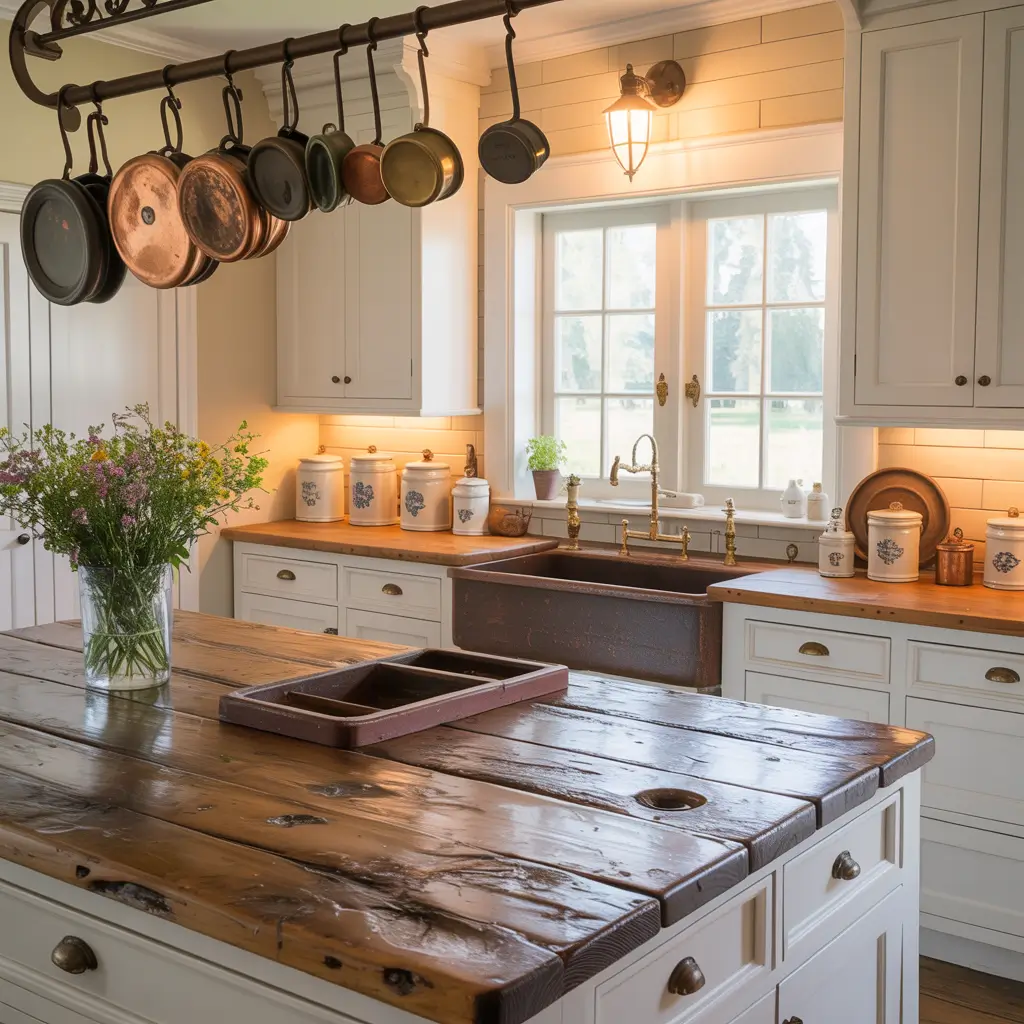
14. Hang a Pot Rack Over the Island or Range
A pot rack is both a functional storage solution and a farmhouse design statement. When a collection of cast iron, copper, and stainless pots and pans hangs overhead in a farmhouse kitchen, it signals immediately that this is a kitchen that is actually used — and that is exactly the message the aesthetic is built on.
Ceiling-mounted pot racks in wrought iron or aged brass are the most traditional farmhouse choice. The rack hangs from the ceiling with S-hooks for each pot and pan. It requires ceiling anchoring into joists and should be positioned above an island rather than a walkway.
Wall-mounted pot rails — a simple steel or iron rod at the back of the range or along one wall — are a more restrained alternative that works in kitchens without the ceiling height for a hanging rack. Add S-hooks and a row of copper or cast iron pieces and the effect is equally satisfying.
15. Use Soapstone or Marble Countertops for Timeless Elegance
Quartz has become the default countertop material for good reason — it is durable, consistent, and low-maintenance. But in a farmhouse kitchen, quartz often looks too perfect. The absolute uniformity of engineered stone works against the organic, slightly imperfect quality that makes farmhouse design so appealing.
Soapstone is the farmhouse countertop that deserves far more attention than it gets. It is a naturally occurring stone with a matte, velvety surface in dark charcoal tones that develops a natural patina when treated with mineral oil. It resists heat, is non-porous, and looks genuinely extraordinary in a white-cabinet farmhouse kitchen. The contrast of the dark stone against cream or white cabinetry is one of the most beautiful combinations in kitchen design.
Marble — particularly Carrara with its warm gray veining — is the other classic farmhouse countertop choice. It does require sealing and some care to prevent staining, but the natural variation and the warmth of real marble is something no engineered alternative has successfully replicated.
Maintenance Reality: Both soapstone and marble will show use over time. Soapstone develops deeper color with oil application. Marble may etch or stain. If this bothers you, choose a marble-look quartz for durability and save the authentic materials for lower-use areas like a bathroom vanity or a butler’s pantry.
Farmhouse Kitchen Ideas by Budget: Where to Invest, Where to Save
You do not need to spend a fortune to create a farmhouse kitchen that feels genuinely well-designed. Here is a practical framework for allocating a renovation budget:
High-Impact Investments Worth Spending On
1. The sink. An apron front sink is the defining farmhouse element. A quality fireclay or cast iron sink is a purchase you will not replace for decades. Do not cut corners here.
2. Cabinet hardware. The return on investment for quality hardware is extraordinary. Spend real money on pulls and knobs that feel good in the hand.
3. Lighting. The pendants over your island will be looked at every day for years. Choose fixtures you genuinely love.
4. The countertop on the island. If you can only do one genuine material surface, do it on the island. It is the most touched and most noticed surface in the kitchen.
Where to Be Strategic and Save
1. Shiplap and beadboard. Install it yourself. It is beginner-level carpentry and tutorials are widely available. The material cost is modest; the labor saving is significant.
2. Open shelving. A floating shelf in solid wood costs $30 to $80 and installs in an afternoon. It creates a visual impact far out of proportion to its cost.
3. Vintage accessories. This is specifically where you should not buy new. Estate sales, thrift stores, and online secondhand marketplaces are full of the authentic antique objects that make a farmhouse kitchen feel real.
4. Paint. Re-painting cabinets yourself — with proper preparation, the right primer, and a quality cabinet paint — produces results that rival professional refinishing at a fraction of the cost.
Frequently Asked Questions
What makes a kitchen farmhouse style?
Farmhouse kitchen style is defined by a combination of materials, colors, and objects that reference agricultural and rural domestic life: natural wood, stone, ceramic, and iron surfaces; white or cream cabinetry; apron front sinks; open shelving; vintage or antique accessories; and a general sense of warmth, function, and honest craftsmanship over decorative excess.
What colors are used in a farmhouse kitchen?
The most common farmhouse kitchen colors are white and cream for cabinetry, warm wood tones for flooring and accents, and nature-inspired wall colors like sage green, soft terracotta, warm off-white, and slate blue-gray. Hardware in unlacquered brass, matte black, or oil-rubbed bronze completes the palette.
Are farmhouse kitchens still popular in 2025?
Yes — and the style continues to evolve. The current direction in farmhouse kitchen design moves away from the all-shiplap, all-white maximalism of the mid-2010s toward a warmer, more layered, more personal aesthetic. Color is returning to farmhouse cabinetry, natural imperfect materials are celebrated more than ever, and the mix of antique and contemporary has become more nuanced and more interesting.
How do I make my kitchen look farmhouse without renovating?
Several high-impact changes require no renovation at all: swap out cabinet hardware for matte black or unlacquered brass options, add open wooden shelving to one wall, decant pantry staples into glass mason jars, hang farmhouse-style pendant lights over the island, add a woven or jute rug in front of the sink, and style countertops with vintage accessories like stoneware crocks and wooden boards.
What kind of sink is used in a farmhouse kitchen?
The classic farmhouse sink is an apron front design — where the front face of the sink is exposed rather than hidden behind a cabinet door. Fireclay is the traditional material, in white or cream. Matte black fireclay and stainless steel apron front sinks are popular contemporary variations. The apron front sink is the single most recognizable element in farmhouse kitchen design.
What flooring works best in a farmhouse kitchen?
Wide-plank hardwood flooring in a warm oak, pine, or hickory tone is the most authentic farmhouse kitchen choice. Engineered hardwood in a wide-plank format is an excellent practical alternative. Terracotta tile, concrete, and reclaimed brick are also appropriate farmhouse flooring materials depending on the specific aesthetic direction of the kitchen.
Final Thoughts: A Farmhouse Kitchen Is Built, Not Bought
The farmhouse kitchens that people fall in love with are not the ones that were assembled from a single retailer’s catalog in one weekend. They are the ones that were thought about, planned carefully, and built up over time — one good decision after another, one carefully chosen object after the next.
The apron sink that anchors the whole room. The slightly rough-edged wooden shelves with the ironstone stacked on them. The vintage scale on the counter that someone found at an estate sale and has never wanted to replace. The light above the table that makes everything look golden in the evening. These are not expensive things, most of them. They are just right things — chosen for the right reasons, placed where they belong.
Start with whatever is most feasible for your budget and your situation. Paint the cabinets. Change the hardware. Put up a shelf. Add a rug in front of the sink. Cook something and see how the room feels around you.
A farmhouse kitchen is not a style you install. It is a feeling you build. And it is absolutely one of the most rewarding rooms you can create in your home.
1 thought on “15 Cozy Farmhouse Kitchen Ideas for Warm Rustic Vibes”