
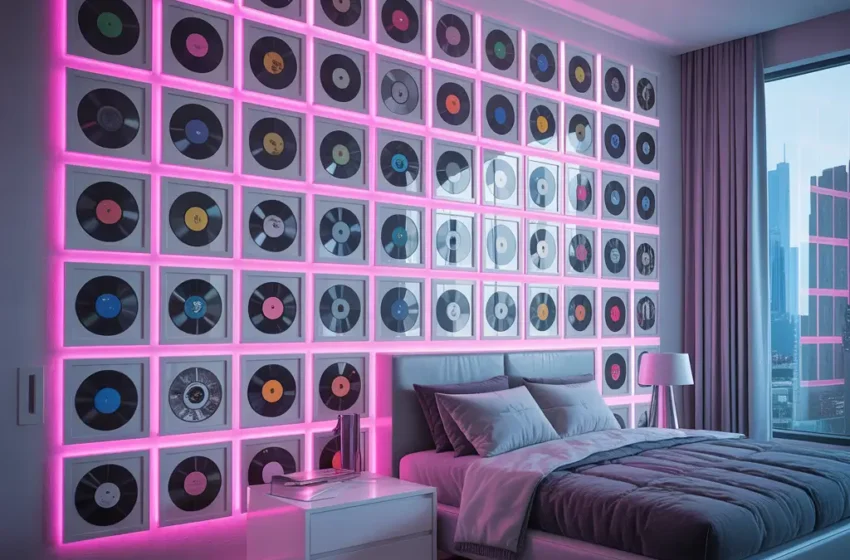
There’s something deeply personal about the music we love. The albums that got us through breakups, road trips, late-night study sessions, and Sunday mornings deserve more than being stacked in a crate or buried in a Spotify playlist. They deserve to be seen.
Album cover wall decor has gone from a niche music-nerd habit to one of the most creative and affordable ways to personalize any space. Whether you’re decorating a bedroom, a living room, a home studio, or even a hallway, album art brings color, character, and serious conversation-starting power to your walls.
And here’s the best part — you don’t need a huge budget or a degree in interior design. You just need to know what works. In this guide, we’re walking through 20 genuinely creative album cover wall decor ideas, from simple gallery walls to jaw-dropping LED-lit displays, all written from real experience and a deep love for good music and good design.
1. The Classic Vinyl Frame Gallery Wall
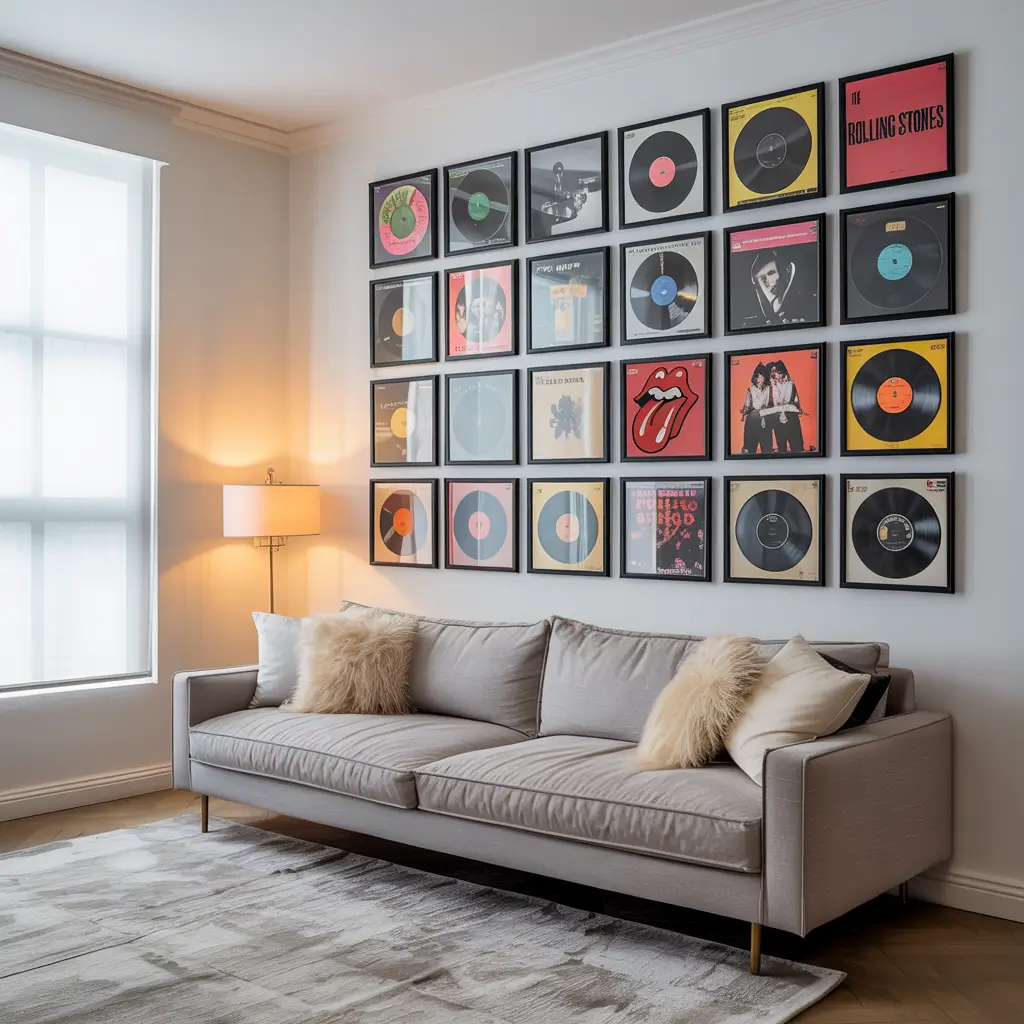
This is where most people start, and for good reason — it works beautifully. A gallery wall built entirely from framed album covers is clean, personal, and endlessly customizable. You don’t need every frame to match. In fact, a mix of black frames, white frames, and natural wood frames tends to look more considered and intentional than a perfectly uniform set.
The key is spacing. Leave enough breathing room between frames so each cover can be appreciated individually, but keep the overall arrangement tight enough that it reads as a cohesive display. A good rule of thumb is 2 to 3 inches between each frame.
Start with a center anchor — usually your most visually striking album — and build outward from there. Mix portrait and landscape orientations if your covers allow it, and don’t be afraid to include the occasional 7-inch single for size variation.
Pro Tip: Use paper templates cut to frame size before committing to holes. Tape them to the wall, step back, and live with the layout for a day before you start drilling.
2. Floating Shelf Displays with Rotating Albums
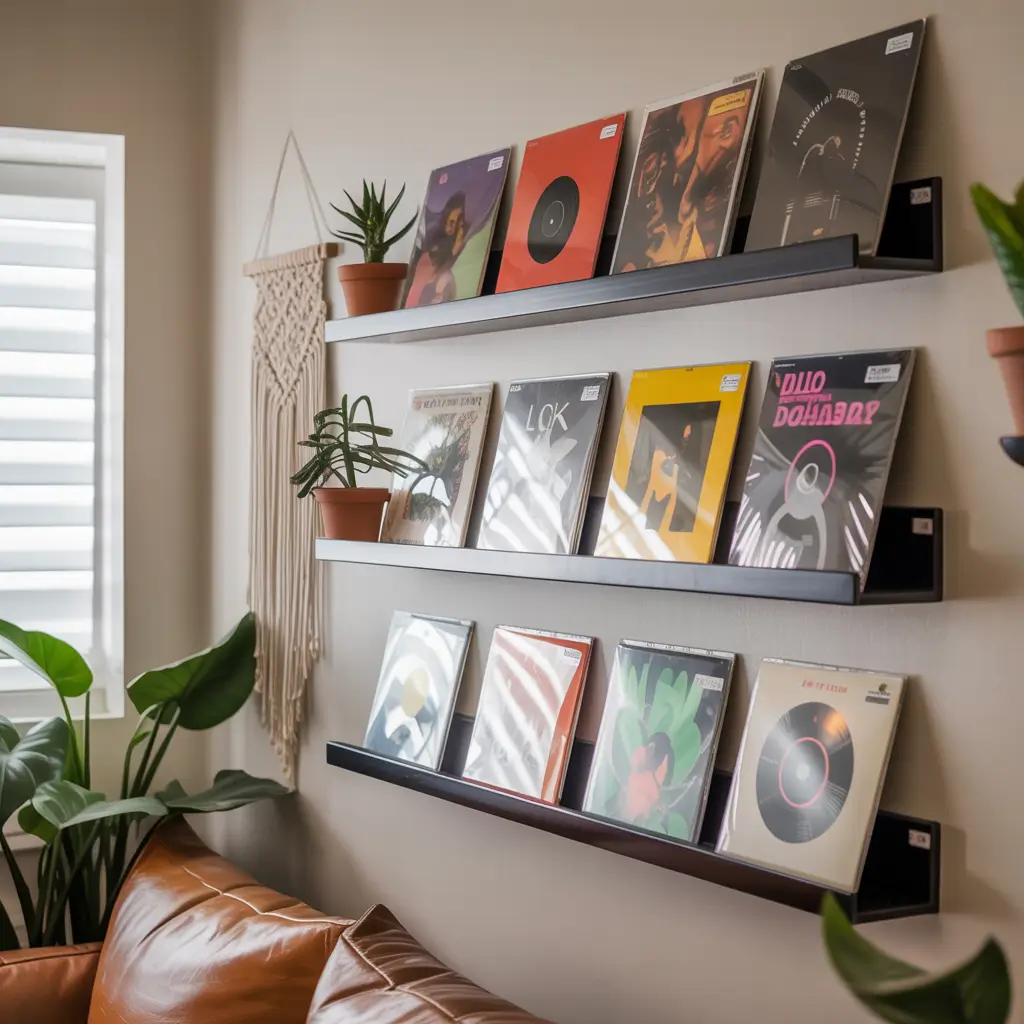
Floating ledge shelves are a game-changer for album display because they give you flexibility. Instead of committing a cover permanently to a wall, you can change what’s on display weekly, seasonally, or whenever your musical tastes shift — which they will.
Install two or three horizontal shelves at different heights and prop albums facing outward. Layer them slightly for depth: your current favorite in front, with other covers peeking out behind it. This creates visual dimension and lets you display more covers in less space.
The bonus here is that these albums are still accessible. You can grab one, play it, and swap in something new when the mood strikes. Your display becomes a live, breathing reflection of what you’re actually listening to.
Combine the shelves with small plants, a vintage clock, or a simple lamp for a display that feels styled rather than just stacked.
3. Oversized Prints of Iconic Album Art
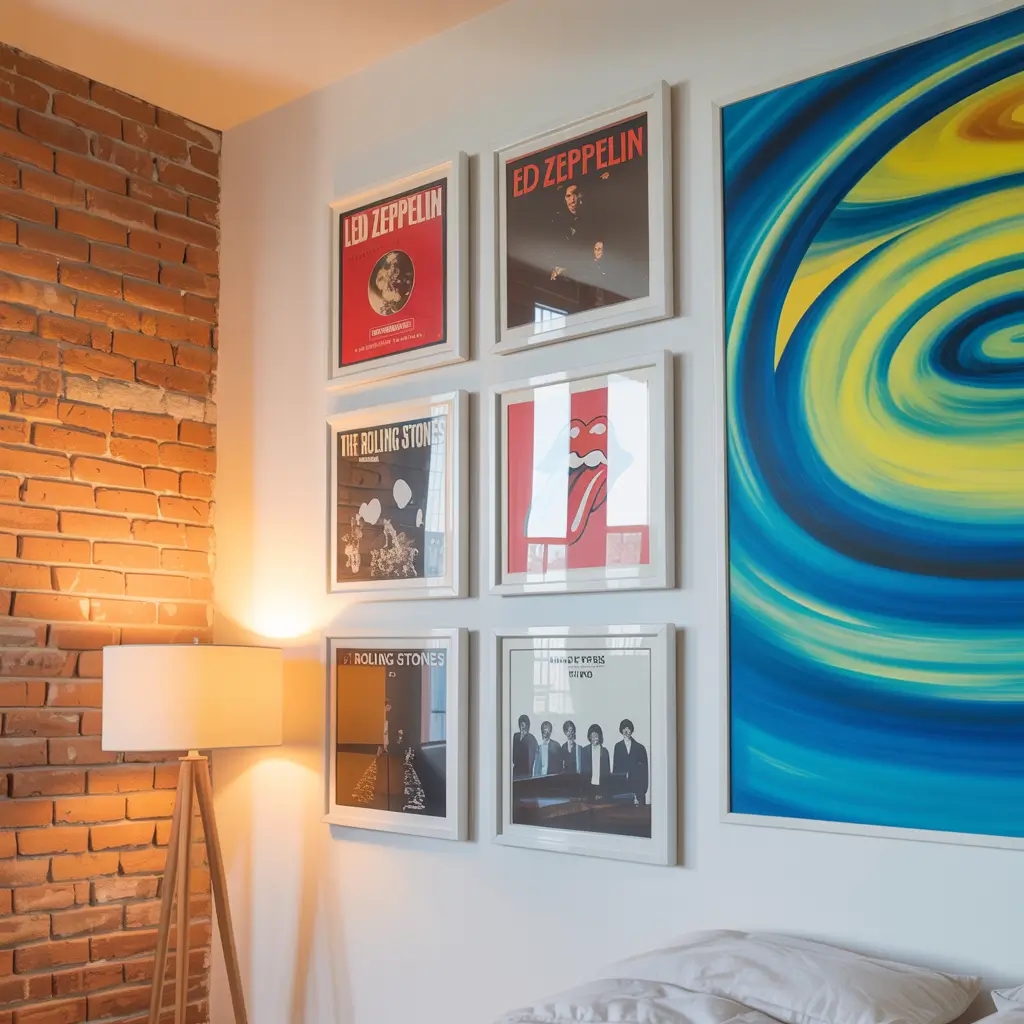
Some album covers are so visually powerful that they deserve to be blown up. Think about the iconic works: the stark black of Joy Division’s Unknown Pleasures, the Abbey Road crossing, the psychedelic swirl of Jimi Hendrix’s Are You Experienced, the sharp geometric lines of Kanye West’s My Beautiful Dark Twisted Fantasy. These aren’t just album covers. They’re works of art that happen to also contain music.
Getting a large-format print made is easier and more affordable than most people expect. Online print shops can produce high-quality canvas or fine art paper prints from digital files at 20 x 20 or even 24 x 24 inches for well under fifty dollars.
A single oversized print in the right space — above a sofa, above a bed’s headboard, centered on a large empty wall — can anchor an entire room’s design. This approach works especially well if your space leans minimalist and you want one strong statement rather than a busy arrangement.
Pro Tip: For the highest quality results, source high-resolution album artwork files from archival databases rather than scanning physical covers. The difference in print quality is significant at large sizes.
4. Color-Coordinated Album Grids
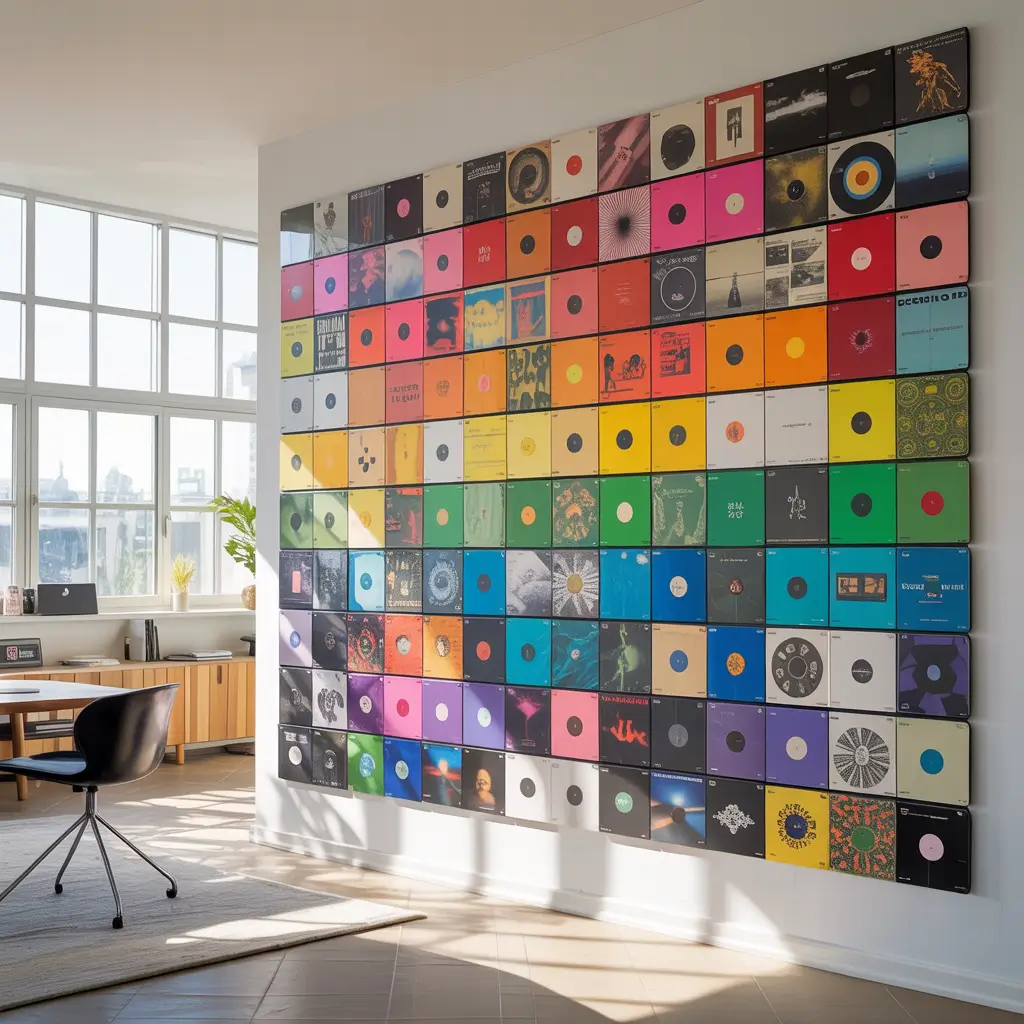
If you want your album wall to feel like a designed installation rather than a random collection, try organizing by color. Group your albums into a gradient — deep reds flowing into oranges and yellows, or blues shifting into greens — and suddenly your music collection becomes visual art at a completely different level.
This approach works surprisingly well even across wildly different genres, because color is universal. A classic jazz album in deep blue sits beautifully next to a shoegaze record in soft gray and a folk album in warm amber. The music doesn’t have to be related for the display to feel cohesive.
You can do this in a rigid grid for a more structured look, or arrange the colors in a loose, organic flow for something that feels more natural and hand-curated. Either way, the result is the kind of display that makes people stop mid-conversation to stare at it.
5. A Neon Sign and Album Cover Combination Wall
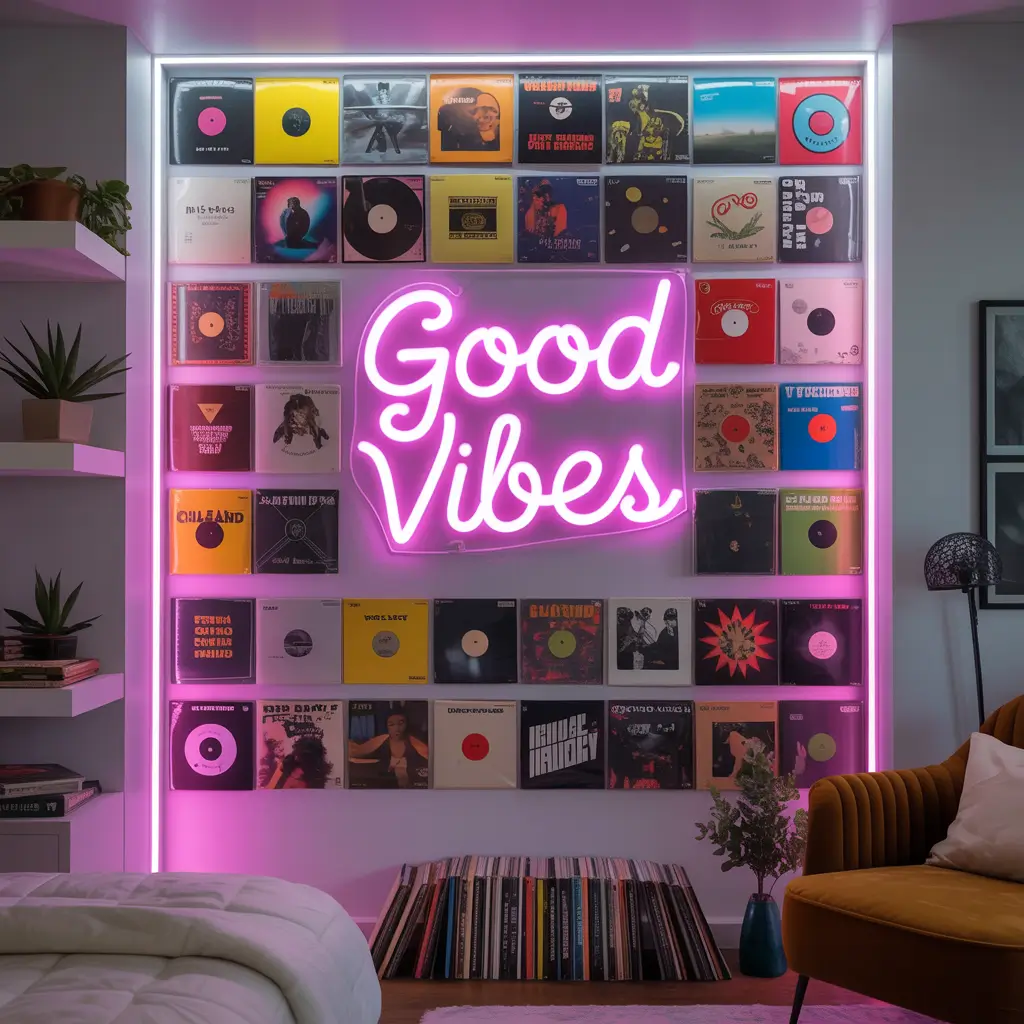
This one is for the music lovers who want their wall to make a statement the moment you walk into the room. A custom neon sign paired with a curated selection of album covers creates a display that’s vibrant, dramatic, and unmistakably personal.
The neon element does the heavy lifting atmospherically — it provides ambient color and light that transforms the mood of the entire space in the evening. The album covers provide the substance and personality. Together, they feel like the backstage wall of a very cool venue.
Great neon words or phrases for music spaces include PLAY, VINYL, LOUD, or even a lyric fragment that means something to you. Colors like warm pink, deep blue, or golden amber complement most album art palettes beautifully. LED neon options from custom makers on Etsy typically run between one hundred and two hundred dollars and last for decades.
6. DIY Album Cover Collage (The One Rule: There Are No Rules)
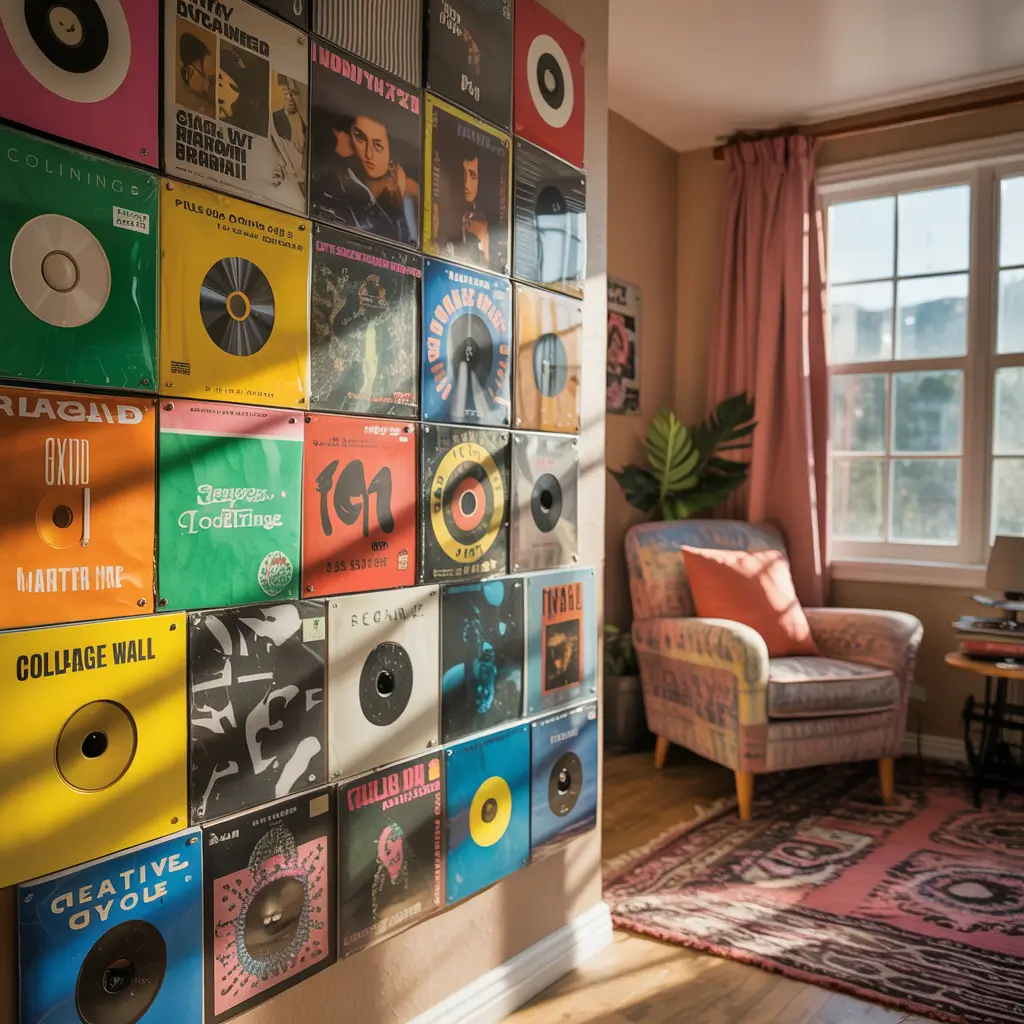
If the idea of perfectly spaced frames and color-coordinated grids sounds a little too polished for your taste, the collage approach might be exactly what you’re looking for. This is the most freeform, expressive option on this list — and it can produce some of the most visually striking results.
Gather old, damaged, or duplicate album covers (color photocopies work perfectly for covers you want to keep intact), concert tickets, band stickers, music magazine clippings, and setlists. Paste them directly to the wall with wallpaper adhesive or mod podge, overlapping and layering until you’ve covered a full panel or section of wall.
The result is chaotic in the best possible way — a dense, textured portrait of your musical life. It’s also genuinely therapeutic to make. Put on a great playlist, spread everything out on the floor, and let the arrangement evolve organically.
Seal the final collage with a matte varnish spray to protect it from dust and wear.
7. Shadow Box Displays for Precious Albums
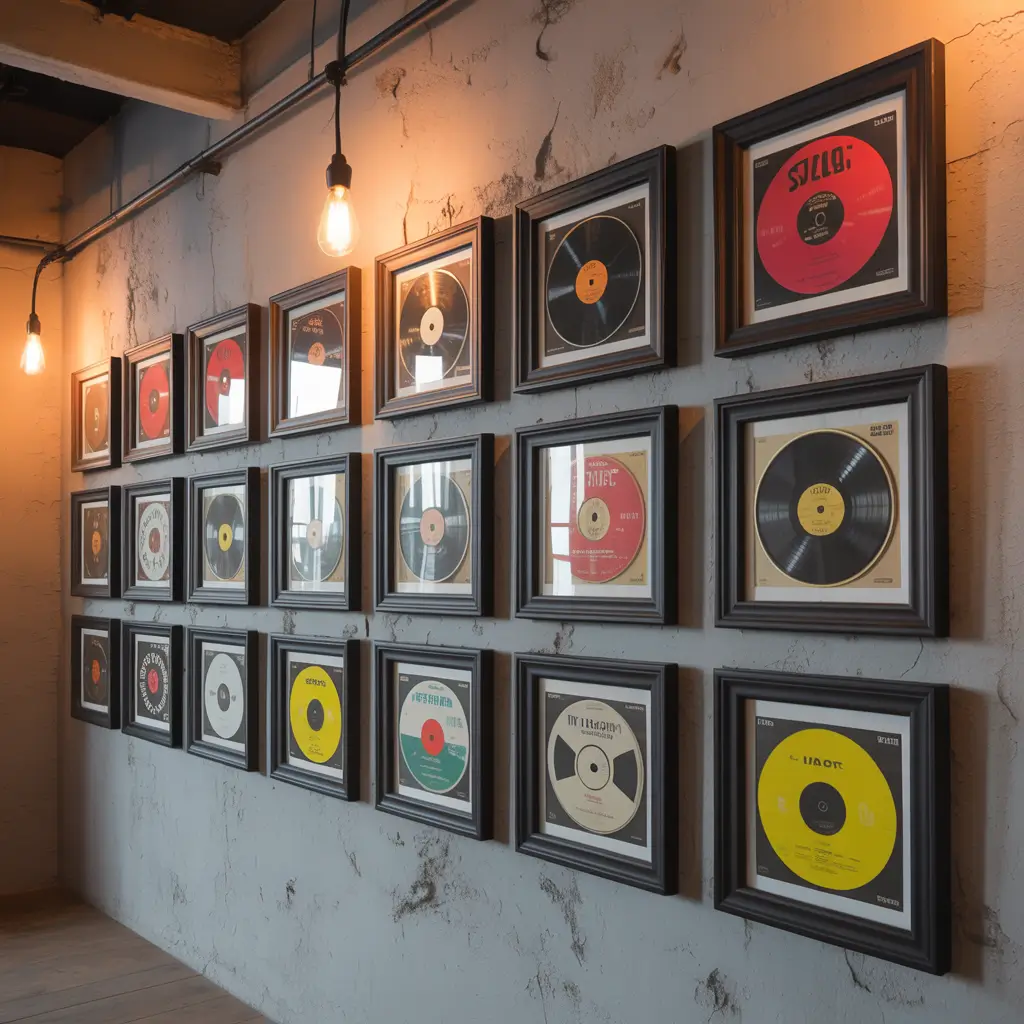
Some albums have real sentimental weight — a first pressing that belonged to a parent, a record you waited in line for, an album signed by the artist after a show. These covers deserve a display that honors them as the artifacts they are.
Shadow boxes are deep-set frames with enough interior space to include memorabilia alongside the cover: concert tickets from the tour that supported the album, a guitar pick, a handwritten note, a photograph from the era. Each shadow box becomes its own complete story.
The depth also allows for subtle interior lighting. Small battery-operated LED strips installed along the inner edge of the box create a warm glow that draws the eye to the display even in a room full of visual interest. These work particularly well for milestone albums or as gifts for music-obsessed friends and family.
8. The Minimalist Single-Row Album Strip
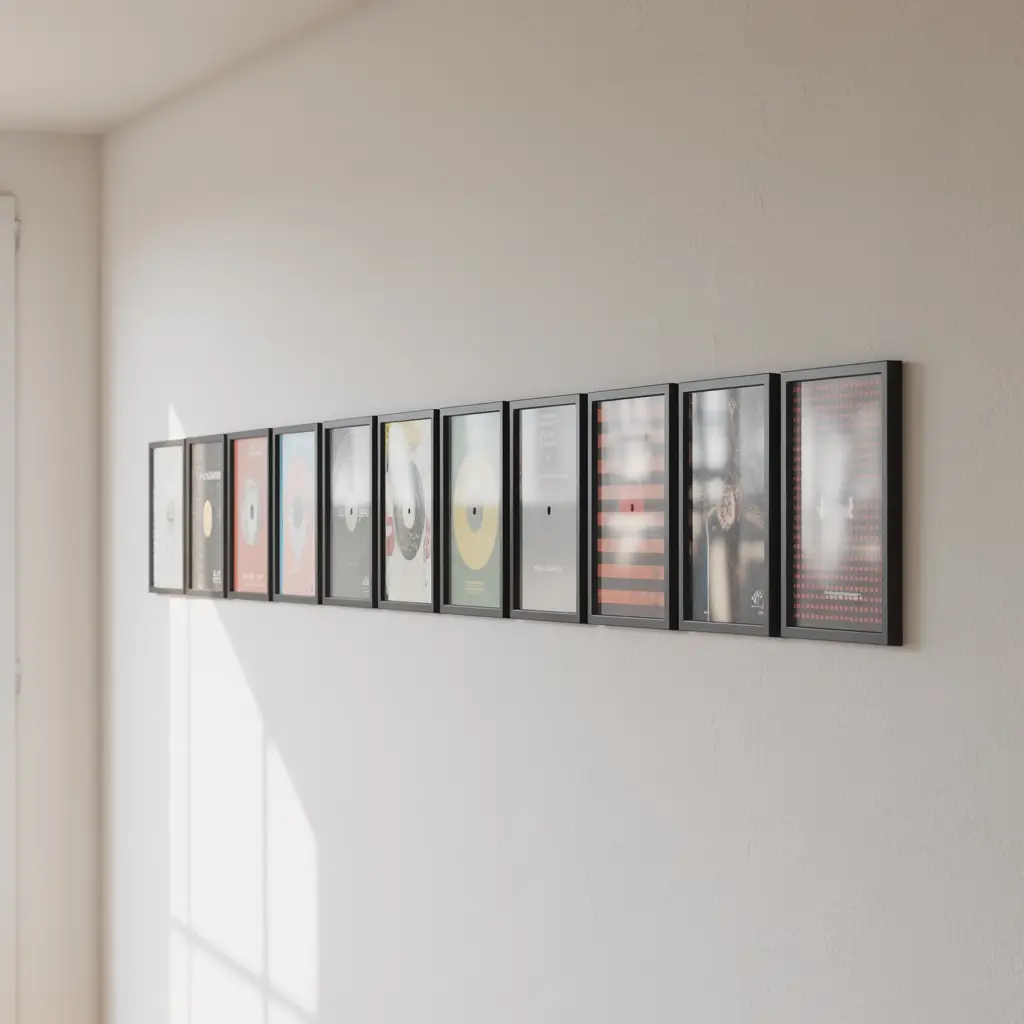
Not every album display needs to be a statement piece. Sometimes the most elegant solution is restraint. A single row of evenly spaced, identically framed album covers running along a hallway wall or above a doorframe creates a quiet, gallery-like effect that feels sophisticated rather than loud.
The success of this approach depends entirely on execution. Use a level. Measure the spacing precisely. Keep the frames identical — same style, same color, same size. The uniformity is the point. Within that uniform structure, the variety of the album art itself provides all the visual interest you need.
This works particularly well in narrow hallways, above kitchen counters, or in home offices where you want the music presence to feel curated and calm rather than maximalist.
9. Vintage Record Player Centerpiece Wall
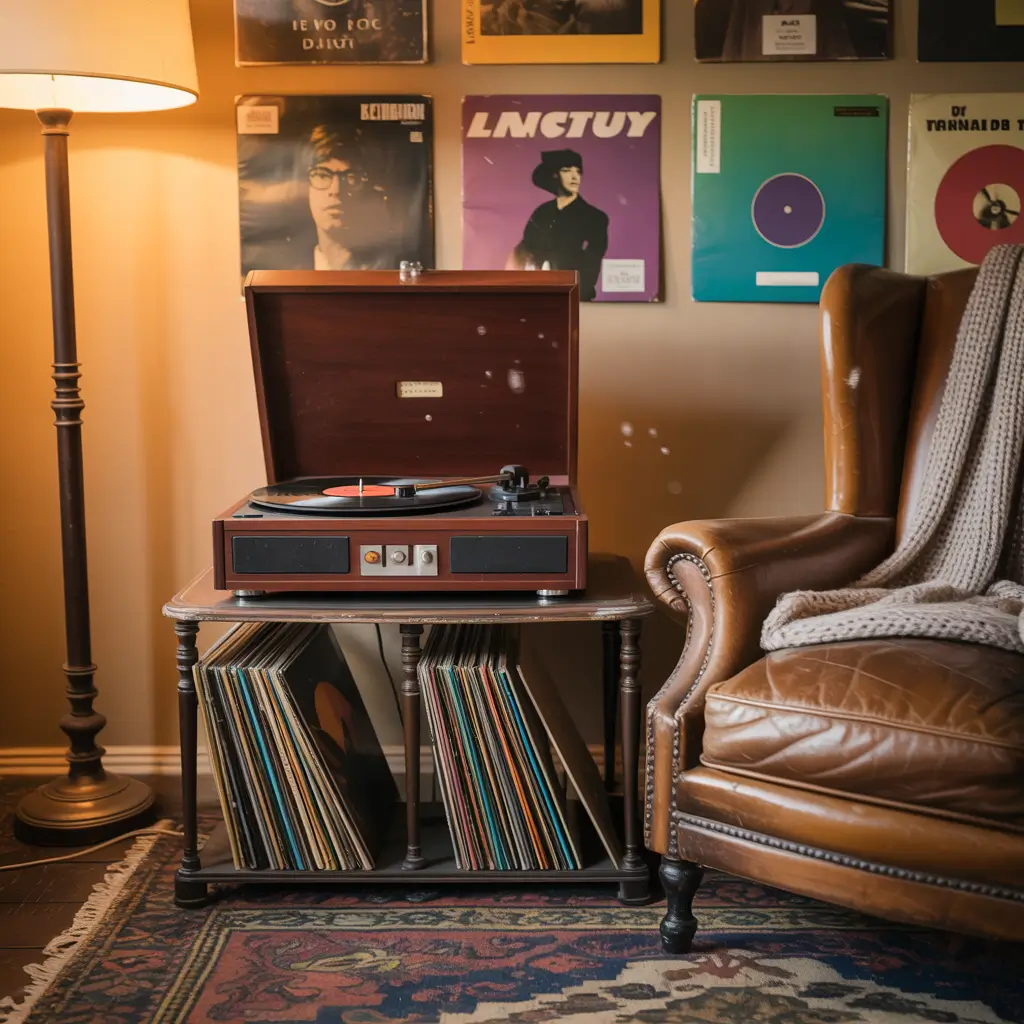
If you own a record player — especially an older or vintage model — build a wall display around it. Mount a small floating shelf at listening-friendly height, position the turntable on it, and surround it with framed album covers on both sides and above.
This turns a functional piece of equipment into the visual anchor of the whole display. It signals to anyone who enters the room that this is a space where music is taken seriously. Arrange the surrounding albums chronologically, by era, or simply by visual impact.
Add some warm ambient lighting — Edison bulbs work particularly well here — and perhaps a pair of vintage headphones hung nearby, and you have a display that feels like it belongs in a well-styled record store or a musician’s home studio.
10. Rotating Hinged Album Mounts
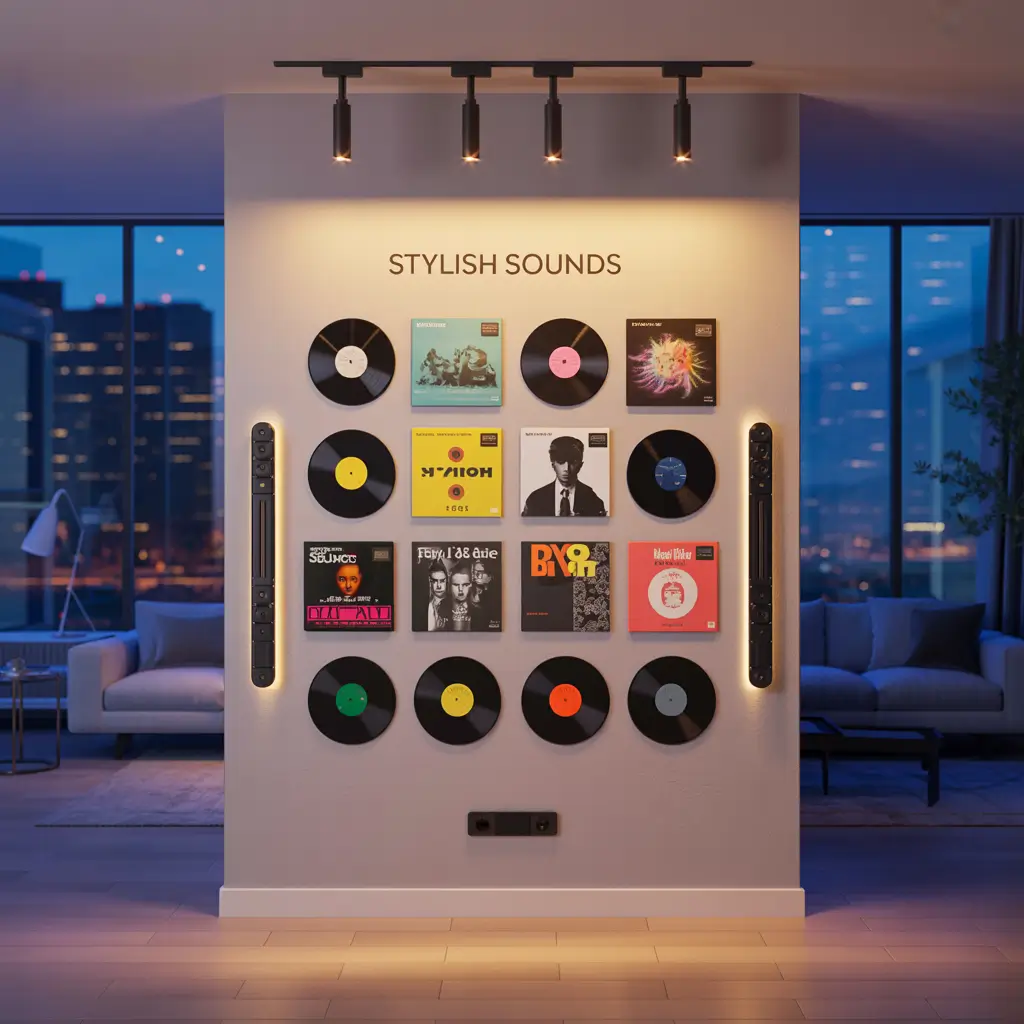
This is one of the more clever and interactive display options available. Specialized hinged mounts — sold by companies that cater specifically to the vinyl community — allow you to flip through multiple albums stacked in a single frame, like an oversized wall-mounted record bin.
One frame can hold four or more albums, and the act of flipping through them becomes part of the experience. Guests find it almost irresistible. It’s also a practical solution for people who want to display a large collection in a limited wall space.
For the adventurous DIYer, you can build a similar system using standard cabinet hinges and thin backing boards. The result won’t be as polished as a commercial product, but it can be made to fit any size or aesthetic.
11. Black and White Monochrome Album Wall
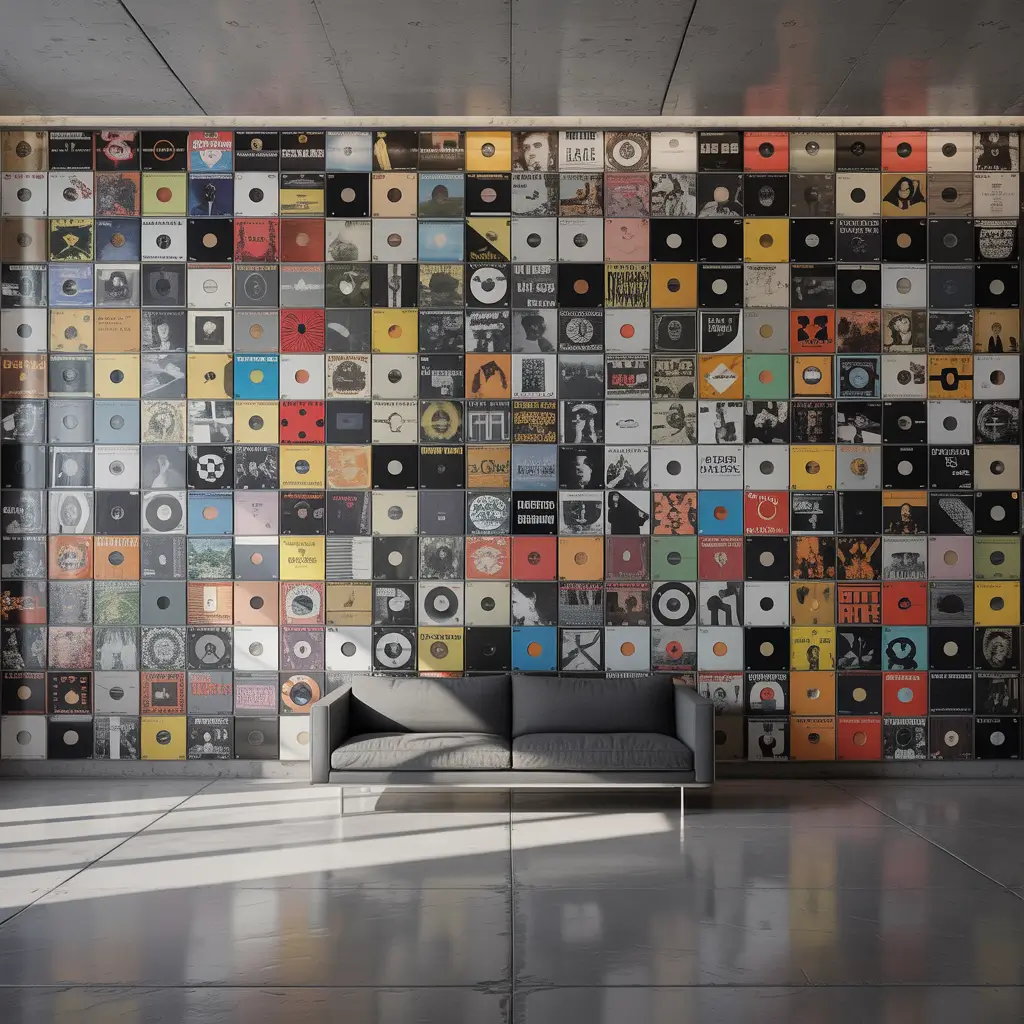
Color is powerful, but black and white is timeless. A wall dedicated entirely to monochrome album art creates a visual effect that feels less like a music collection and more like a curated photography exhibition.
Some albums are naturally black and white: Joy Division’s Unknown Pleasures, The Beatles’ self-titled White Album, countless jazz records from the Blue Note era, and much of the minimal electronic catalog. Others can be printed as black and white conversions without losing any of their visual power.
Frame them in simple black or white frames, keep the background wall white or light gray, and the result is a sophisticated, art-gallery quality display that works in almost any interior style — from ultra-modern to classically minimal.
12. Mixed Album Covers and Concert Posters
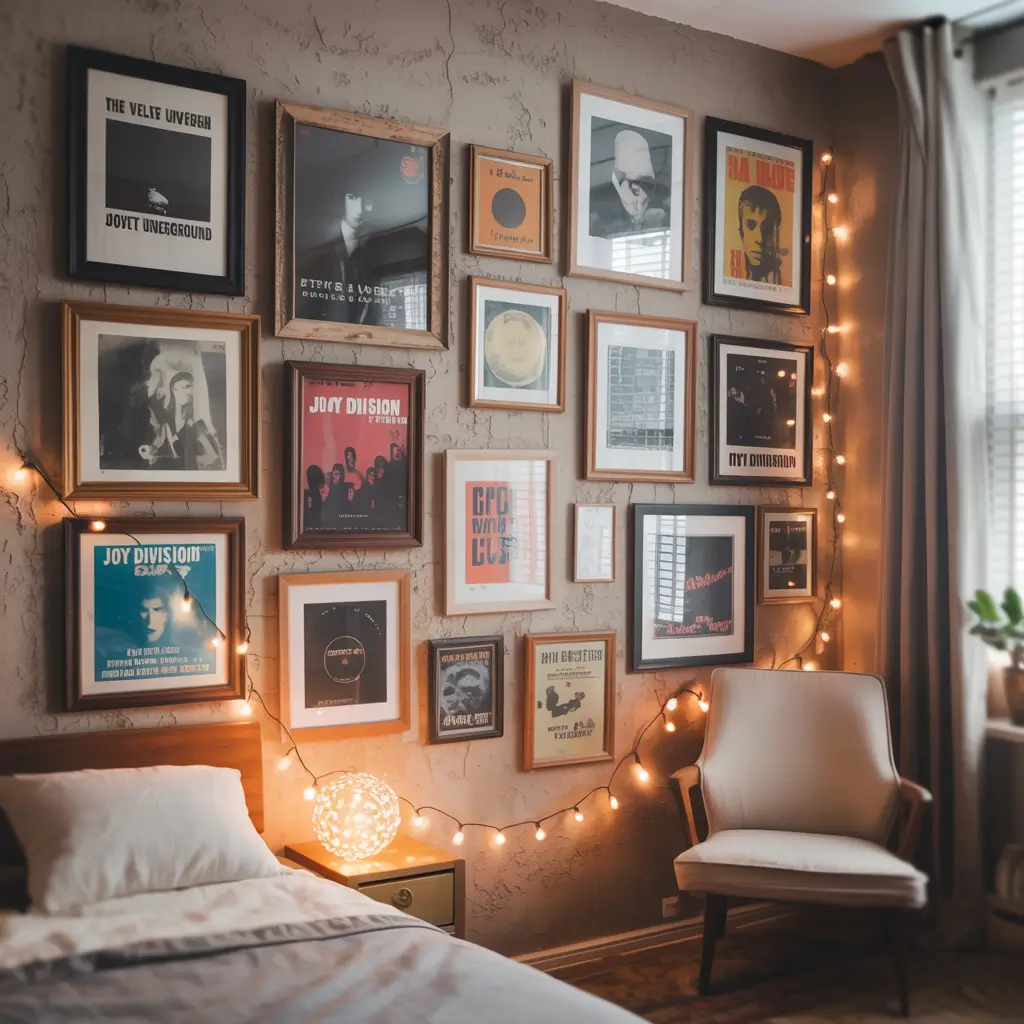
Album covers and concert posters were born from the same artistic tradition and belong together on your walls. Mixing them creates a display that captures both the recorded and live dimensions of your musical life — the album you listened to at home, alongside the show that changed how you heard it.
The size difference between a 12-inch album and a standard 11 x 17 concert poster creates natural visual rhythm. Larger posters anchor the arrangement while album covers fill in detail and texture. Concert poster reproductions are widely available online for most major artists and tours, and original vintage posters can be found at record fairs and estate sales.
This approach works especially well for fans of a single artist or scene — a wall dedicated to, say, the entire career of one band, from early club shows to arena tours, told through posters and albums together.
13. Three-Dimensional Layered Album Art
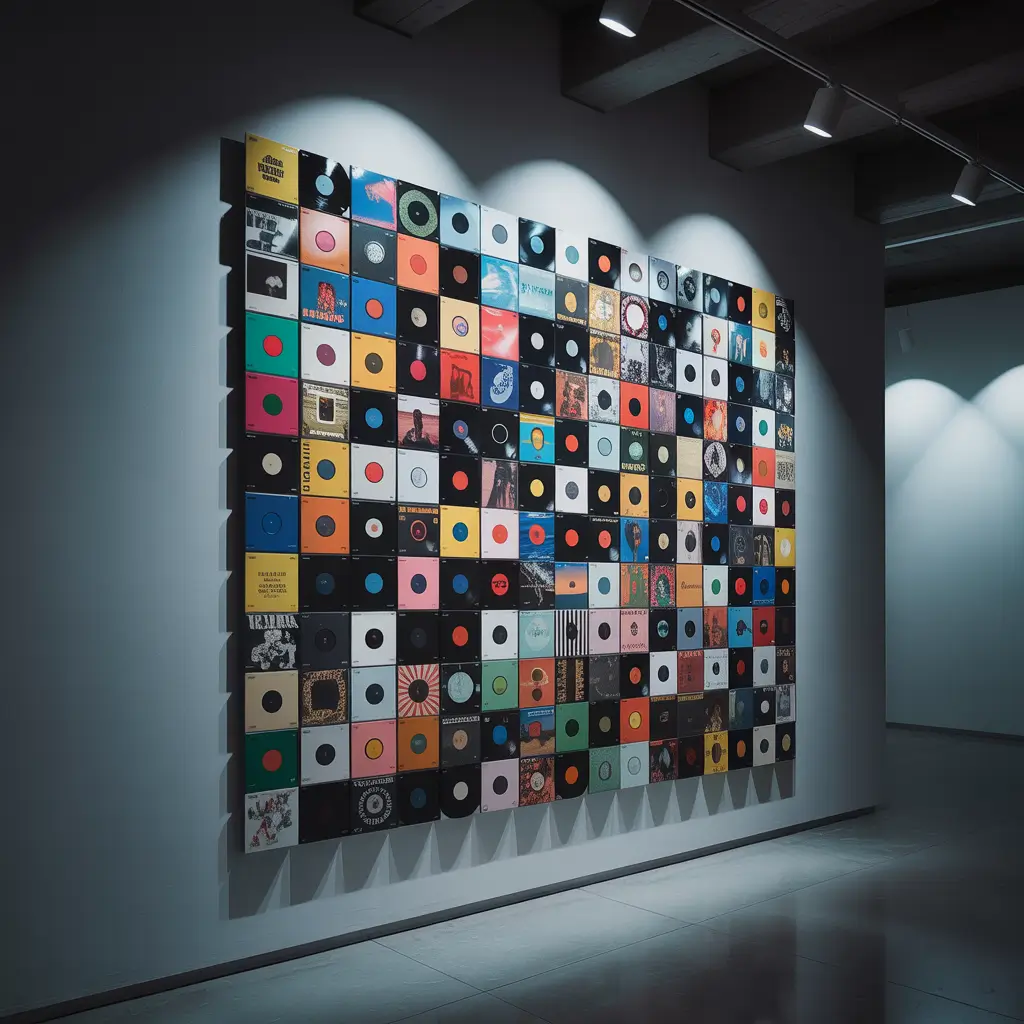
Most wall displays are flat. This one isn’t. By mounting album covers on brackets of varying depths — some flush to the wall, others extending an inch, two inches, or more — you create a display with genuine three-dimensional structure.
The effect is subtle in bright light and dramatic in evening light when shadows play across the arrangement. Albums with geometric or abstract designs work especially well because the angled lighting adds an entirely new dimension to the artwork itself.
This is a more involved installation than most options on this list, but the visual impact is proportionally greater. It works particularly well as the focal wall of a living room or music room where you want the display to genuinely compete with the furniture for attention.
14. Boho Macrame and Album Cover Combinations
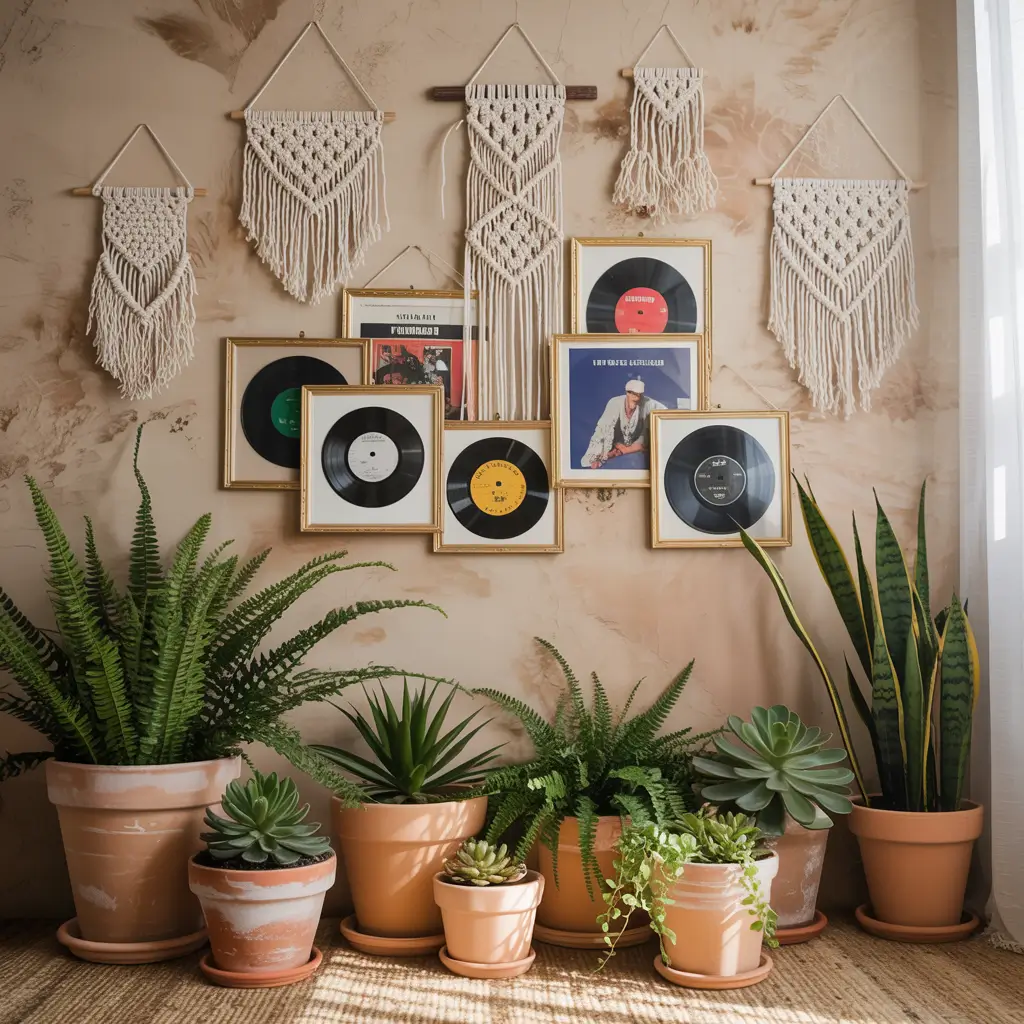
This one sounds unexpected, and that’s exactly why it works. The organic, handmade texture of macrame wall hangings creates a striking contrast with the hard graphic edges of album art. Together, they balance each other in a way that neither could achieve alone.
Hang macrame plant hangers from a horizontal rod and slip album covers into the loops. Or frame albums and weave macrame elements between and around the frames. The natural fiber tones — cream, tan, brown — complement earthy, folk, acoustic, and world music album palettes particularly well.
This is one of the more bohemian options on this list, and it works best in spaces that already have some warmth and natural texture: rattan furniture, wooden shelving, linen fabrics, plants. In those contexts, it feels genuinely designed rather than thrown together.
15. LED Backlit Album Cover Displays
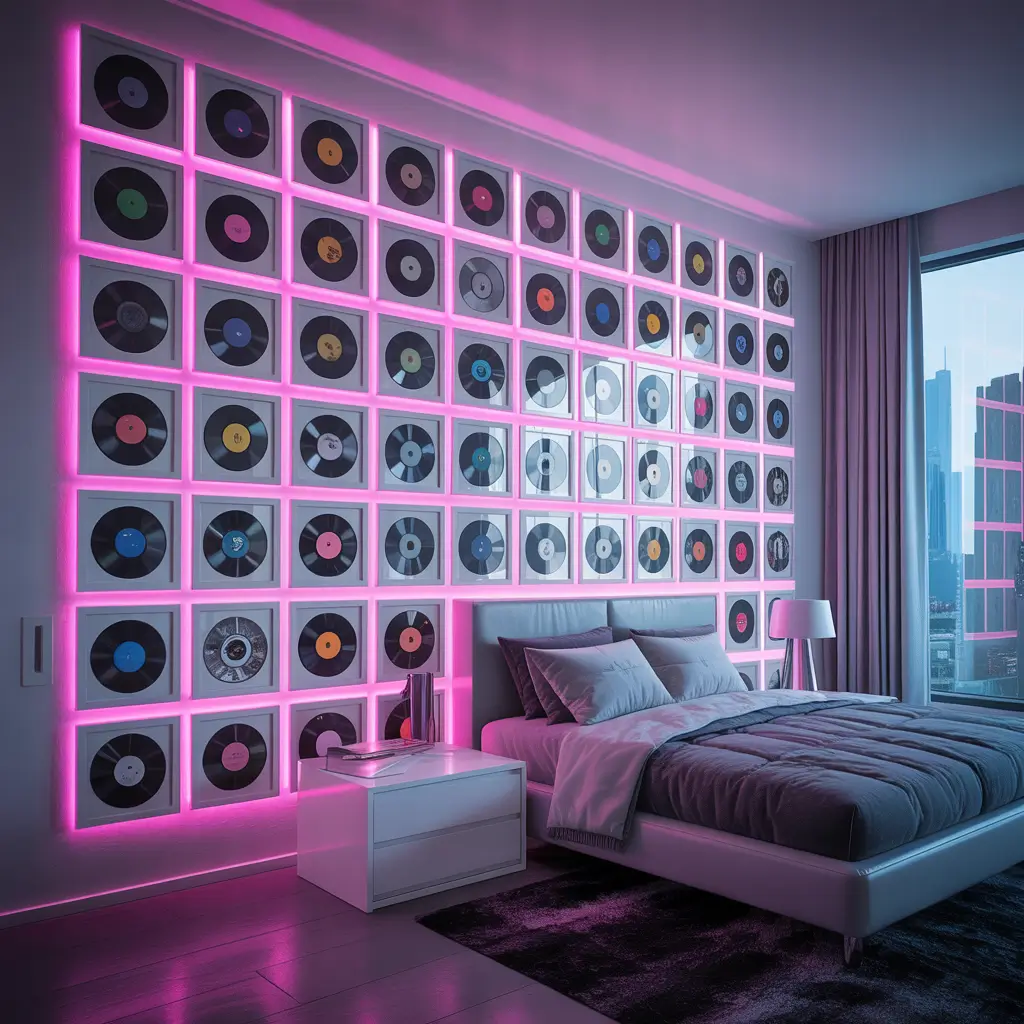
LED backlighting elevates album cover display from decoration to installation. By mounting covers in or against floating frames with LED strips behind them, you create a glowing, museum-quality effect that makes the artwork look completely different from standard framed prints.
Color-changing RGB strips allow you to shift the ambient color of your display to match your mood or the music you’re playing. Warm white gives a gallery feel. Deep blue creates a late-night listening atmosphere. Red and orange add energy for a party setting.
This setup requires a bit more investment in materials and installation time, but the wow factor is genuine. It’s the kind of display that photographs strikingly and impresses every guest without fail.
Practical Tips for Pulling Off Any Album Cover Display
Choosing the Right Frames
Square frames in the 12 x 12 inch size are your workhorses. Black frames give a clean, modern look. White frames feel lighter and more gallery-like. Natural wood adds warmth. Mix and match thoughtfully — three or four different frame styles can look intentional; six or seven starts to feel chaotic.
For budget framing, IKEA’s Ribba frames in the square format are a well-known option and widely available. For higher-quality presentation, custom framing shops or online frame makers like Framebridge offer significantly better materials and a wider range of finishes.
Protecting Your Records
If you’re framing actual vinyl sleeves — as opposed to prints — make sure the frames are deep enough to accommodate the sleeve without bending it. Acid-free backing materials prevent the cardboard from yellowing over time. For particularly valuable or rare pressing, consider archival UV-protective glazing to prevent the color from fading in direct light.
For everyday albums and casual displays, standard frames are perfectly adequate. Save the archival treatment for the covers that genuinely matter.
Lighting Your Display
Lighting can make or break an album cover display. Natural light is beautiful but can cause fading over time — keep UV-sensitive originals away from direct sunlight. For artificial lighting, warm-toned LED spotlights or picture rail lights create a flattering gallery effect without the heat of halogen bulbs.
For LED backlit displays, strip lights with a color temperature around 3000K (warm white) work well for most album art. For a more dramatic or contemporary look, cooler tones (5000K and above) suit monochrome and geometric covers particularly well.
Renter-Friendly Hanging Solutions
Not everyone can put holes in the wall. Command strips work reliably for frames up to a certain weight — check the product’s stated weight limit and stay well below it for peace of mind. Picture hanging strips work particularly well for the uniform weight distribution of album covers.
Floating shelves in some rental situations can be installed with furniture brackets that sit on top of baseboard molding without drilling. Pegboards leaning against the wall rather than fixed to it offer complete flexibility and can hold a surprisingly sophisticated display.
Building the Collection Over Time
You don’t need fifty albums to start. Begin with five or ten of the covers that mean the most to you, choose one display approach, and build from there. Album cover walls tend to grow organically — you find a new pressing at a record fair, someone gives you a concert poster, you print a new favorite — and that organic growth is part of what makes them feel alive.
The best album walls aren’t finished. They’re ongoing.
Common Questions About Album Cover Wall Decor
Do I need to use actual vinyl sleeves, or can I use prints?
Either works. Actual vinyl sleeves are more authentic and carry the sentimental weight of the physical object, but high-quality prints are often more practical, especially for oversized displays or for covers you want to protect. For a mixed gallery wall, combining originals and prints is completely fine — most people can’t tell the difference once they’re framed.
What’s the best way to hang album covers without frames?
Adhesive strips designed for posters and light prints work well for album covers displayed without frames. Washi tape is a popular choice for a more casual, DIY aesthetic — it’s easy to apply, repositionable, and comes in hundreds of colors and patterns that can themselves become part of the display. For a cleaner look without framing, transparent adhesive corners hold the cover flat against the wall with minimal visibility.
How do I stop album covers from fading on the wall?
The main culprits are direct sunlight and UV exposure from interior lighting. Keep original sleeves away from windows with direct sun exposure. UV-filtering glass or acrylic in frames dramatically reduces fading from both natural and artificial light sources. If a cover has already faded, high-quality reprints can often match the original closely enough that the difference isn’t noticeable in a mixed display.
Can album cover wall decor work in a small room?
Absolutely — and sometimes it works even better in smaller spaces. A tight, focused display in a small bedroom can feel more intimate and personal than the same arrangement spread across a large wall. In small rooms, stick to fewer, better-chosen covers rather than trying to fill every inch. A carefully chosen selection of five or six meaningful albums creates more impact than a crowded display of twenty.
What rooms are best for album cover wall decor?
Living rooms and bedrooms are the most common choices, but album cover displays work beautifully in home offices, music rooms, home studios, hallways, and even kitchens. The key is matching the scale and intensity of the display to the space — a dramatic LED-backlit installation belongs in a living room or dedicated music space, while a simple single row of three or four covers is perfect for a hallway or kitchen.
Conclusion: Make Your Walls Sound Like You
Album cover wall decor is one of those rare interior design choices that gets better the more personal it is. Unlike generic wall art that’s chosen to match a sofa or complement a color scheme, your album covers are already chosen — by the version of you that listened to them at two in the morning, or at a party, or on a long drive to somewhere new.
All you’re doing with any of the twenty ideas in this guide is giving those choices the visual presence they deserve. You’re saying, out loud and in public, that this music mattered to you. That it still does.
Start somewhere. Pick your five most loved albums. Choose one display approach that feels right for your space and your personality. Put them on the wall. See how it feels.
Chances are, you’ll be back for more shelves within a month.
Because the thing about living with music on your walls is that it changes the room. Not just visually, but atmospherically. It makes the space feel lived-in and loved in a specific, irreplaceable way. And that’s worth a few hours with a level and a hammer.
1 thought on “15 Inspiring Album Cover Wall Decor Ideas for Chic Interiors”