
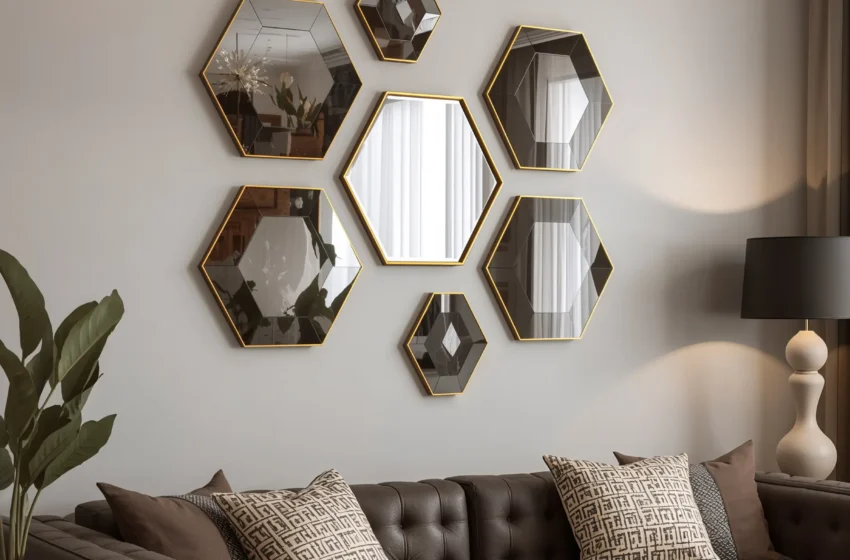
There is a reason mirrors have been a staple of interior design for centuries. They do things that no other decorative object can: they borrow light from one part of the room and redistribute it to another, they make a cramped space feel genuinely open, and when chosen well, they add a sense of craftsmanship and beauty that rivals the finest artwork. And yet, most people treat them as an afterthought — something you hang in a bathroom or above a dresser without much thought, and then forget about.
That is a missed opportunity. A mirror — or a thoughtfully arranged group of mirrors — can be the single most transformative thing you add to a room. Not just because of the light and space illusions, but because a beautiful mirror is a piece of design in its own right: the frame, the shape, the scale, the placement. All of it matters, and all of it contributes to how a room feels.
In this guide, you will find 15 mirror wall decor ideas for 2026 — ideas that go well beyond the standard bathroom mirror and cover every room, every style, and every budget. Whether you are looking for a single dramatic statement piece, a layered gallery of mirrors that builds over time, or a practical approach to making a small space feel twice as large, there is an idea here that will work for you.
1. Hang One Oversized Statement Mirror
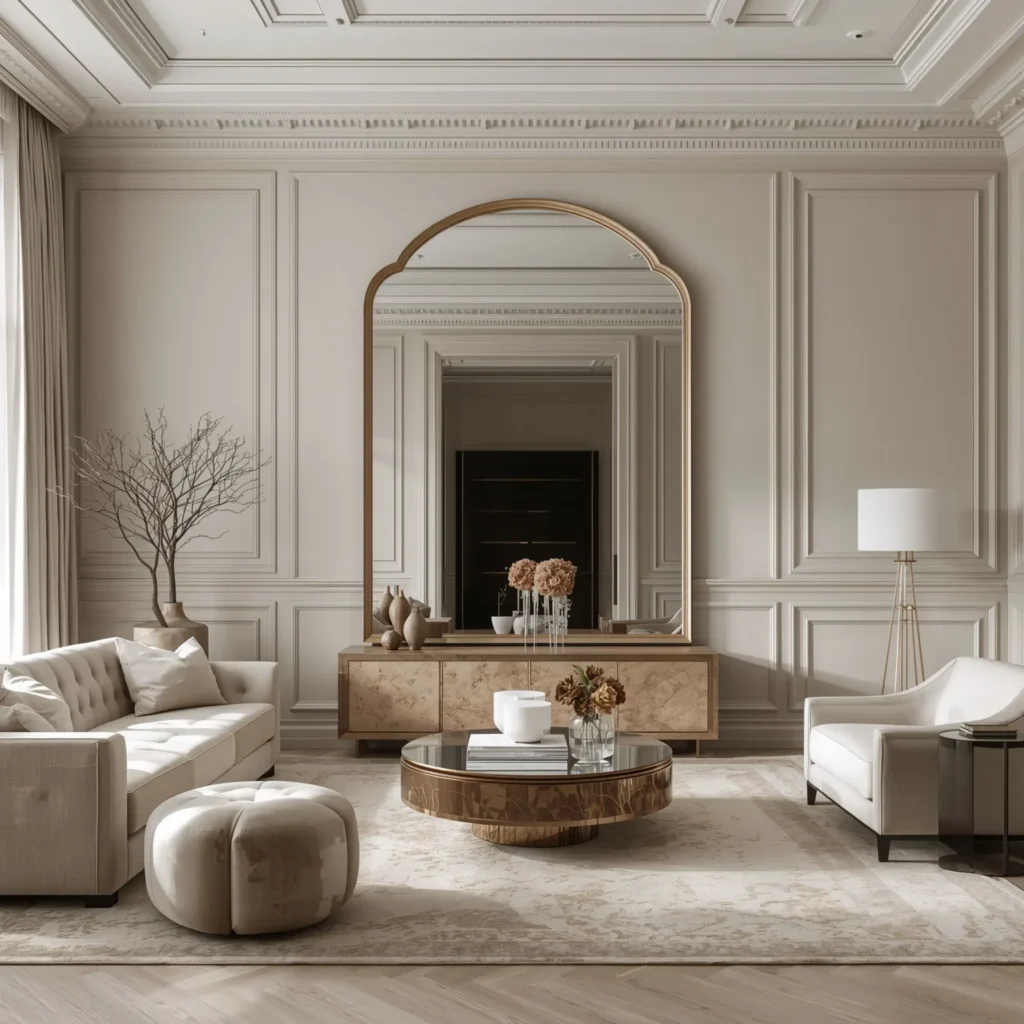
If there is a single mirror wall decor idea that delivers the highest impact for the lowest effort, it is the oversized statement mirror. One large, beautiful mirror — hung confidently on a wall with nothing else competing for attention — creates instant drama and visual authority.
The key is scale. In a living room, go for a mirror that is at least 36 inches in its smallest dimension — and ideally larger. In a bedroom, a mirror that fills the wall above the headboard or leans against the wall floor-to-ceiling makes the room feel like a luxury hotel suite. In a dining room, a mirror that spans most of the wall beside the table reflects the table setting and candlelight in a way that makes every dinner feel like an occasion.
💡 Pro Tip: Position your oversized mirror directly opposite a window whenever possible. This captures natural light and reflects it back into the room, effectively doubling your daylight without adding a single fixture.
2. Create a Mirror Gallery Wall
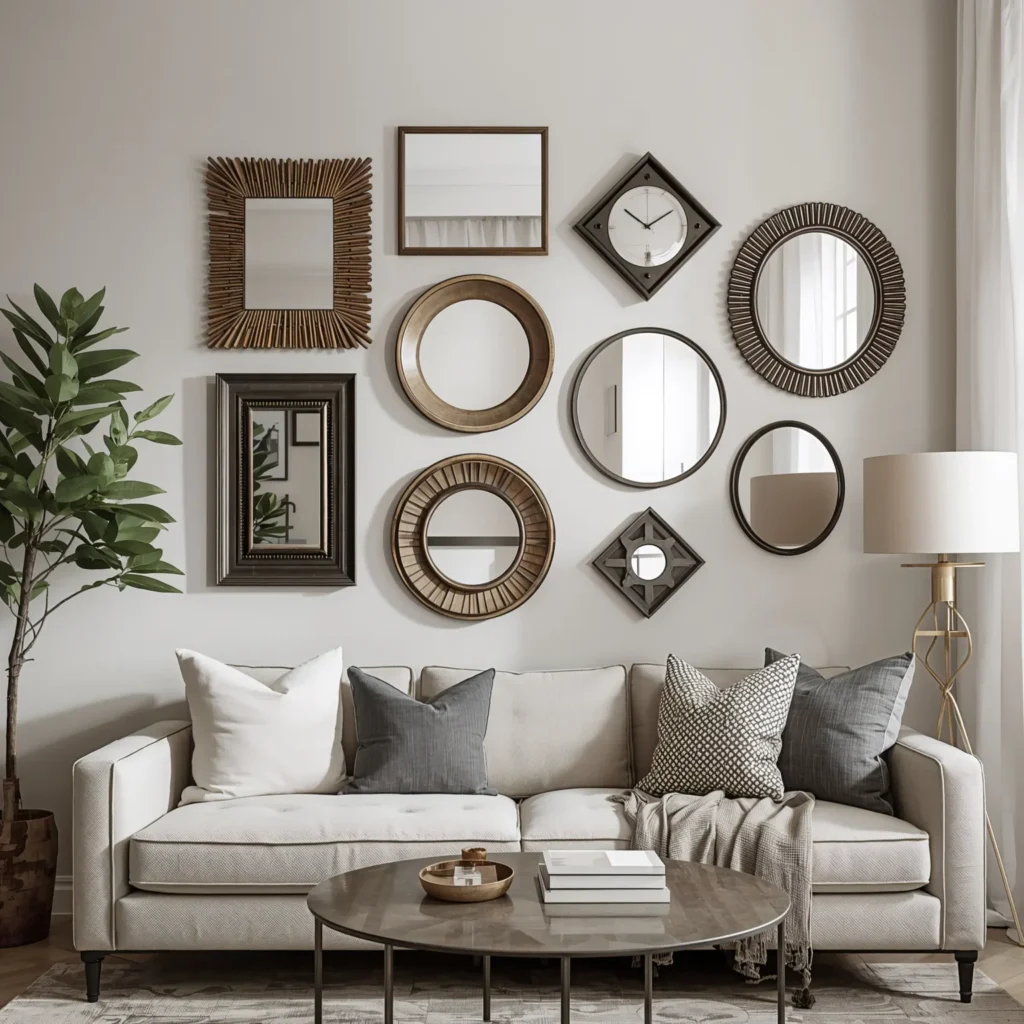
A gallery wall made entirely of mirrors — or a mix of mirrors and framed art — is one of the most visually interesting things you can do to a living room or dining room wall. Unlike a single mirror, a gallery arrangement creates a sense of depth and complexity that draws the eye and holds it.
The beauty of a mirror gallery is that it can grow organically over time. Start with three or four pieces in different shapes and sizes, then add more as you find pieces you love at flea markets, antique shops, and estate sales. The collected, layered quality of the result is part of what makes it so appealing — it looks personal and assembled rather than purchased all at once.
How to Arrange a Mirror Gallery Wall
- Lay all your mirrors on the floor and experiment with arrangements before touching the wall.
- Choose one large anchor mirror — typically the largest or most visually striking piece — and position it near the center of the arrangement.
- Mix shapes deliberately: round mirrors beside rectangular ones, octagonal beside arched. Variety is what makes the wall interesting.
- Use a consistent element to create cohesion — frame color, metal finish, or mirror shape — so the arrangement reads as intentional rather than random.
- Keep spacing consistent: approximately 2 to 3 inches between pieces for a tight, curated gallery feel.
3. Lean a Large Mirror Against the Wall
Not every mirror has to be hung. Leaning a large mirror against the wall — particularly a floor-length piece or an oversized canvas-style mirror — creates a relaxed, editorial look that feels current and effortlessly stylish. This is the approach you see constantly in high-end home interiors, architecture photography, and design hotels.
Leaned mirrors work beautifully in living rooms (propped against the wall beside a sofa or behind a console), bedrooms (standing on the floor against the wall, full-length), and entryways (beside the door for a last-look check on the way out). They also have the practical advantage of being completely renter-friendly and endlessly repositionable.
💡 Pro Tip: Layer a smaller framed art piece or a decorative object in front of a leaned mirror for a styled, editorial vignette. The mirror behind creates depth and makes the foreground object look more important.
4. Go Arched for a Sense of Elegance
Arched mirrors have had an extraordinary run over the last few years, and they show no sign of losing their appeal — because they work so well in so many contexts. The curved top softens the hard lines that dominate most rooms, adds a sense of architectural interest, and gives even a simple room a quietly luxurious quality.
A tall arched mirror in a bedroom, standing against the wall or hung above a dresser, brings an almost cathedral-like elegance to the space. In a living room, an arched mirror flanking the sofa or sitting on the floor beside a fireplace creates a sense of graceful proportion. In a bathroom, an arched mirror above the vanity instantly elevates the entire room.
Look for arched mirrors in thin brass or black metal frames for a contemporary feel, or in natural rattan or wood for something warmer and more organic. Both work — the choice depends on the overall palette and style of the room.
5. Install a Full-Length Floor Mirror
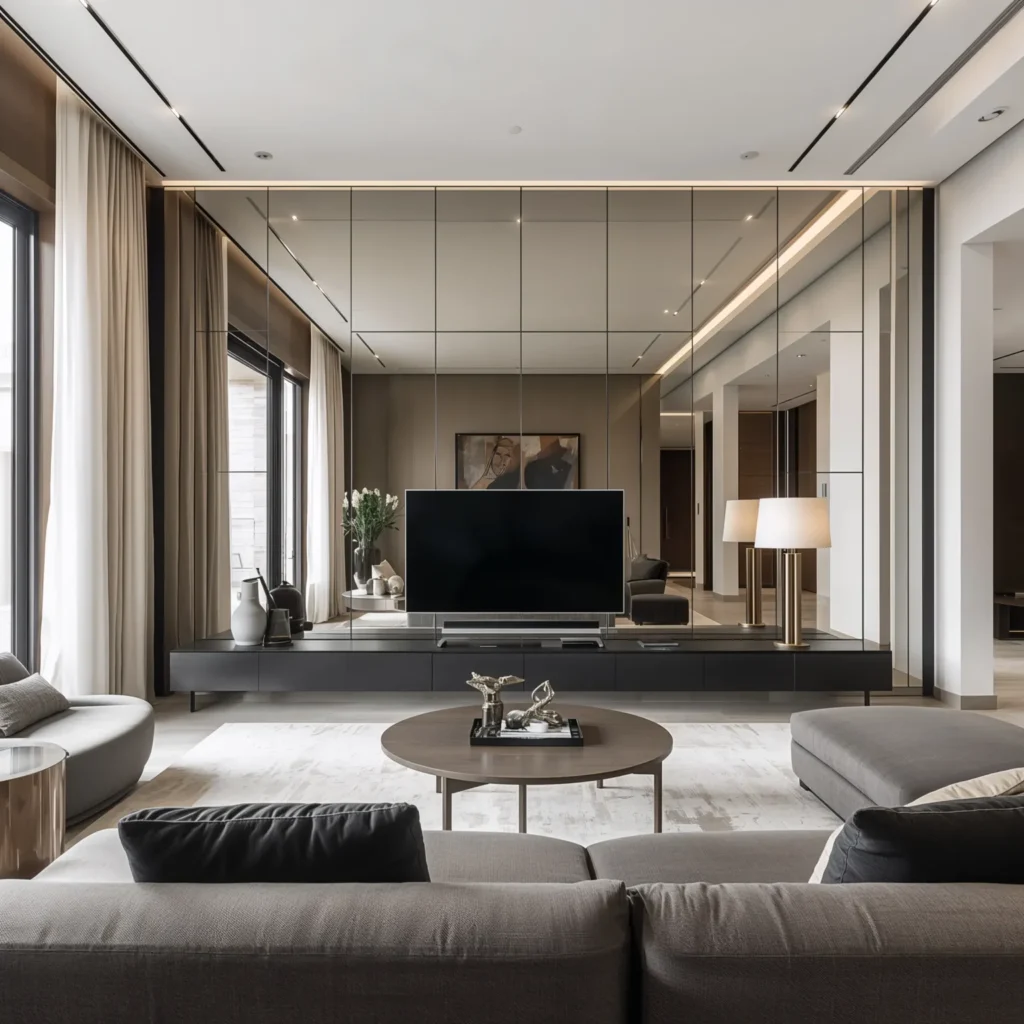
Every bedroom needs a full-length mirror — and most bedrooms do not have one that is doing its job properly. A full-length mirror mounted on the wall or leaning against it serves obvious practical functions, but it also does significant design work: it elongates the room, adds a reflective surface that bounces light around, and creates the sense that the room has more depth than it actually does.
The ideal mounting height for a full-length wall mirror is with the top edge at or slightly above your eye level when standing. For a leaned mirror, allow the base to sit on the floor with the mirror tilting very slightly away from the wall — this creates the most flattering angle for checking a full outfit.
💡 Pro Tip: Place your full-length mirror on a wall perpendicular to the window rather than directly opposite it. This angle catches natural light and reflects it across the room without creating a blinding glare during certain times of day.
6. Use a Sunburst Mirror as a Focal Point
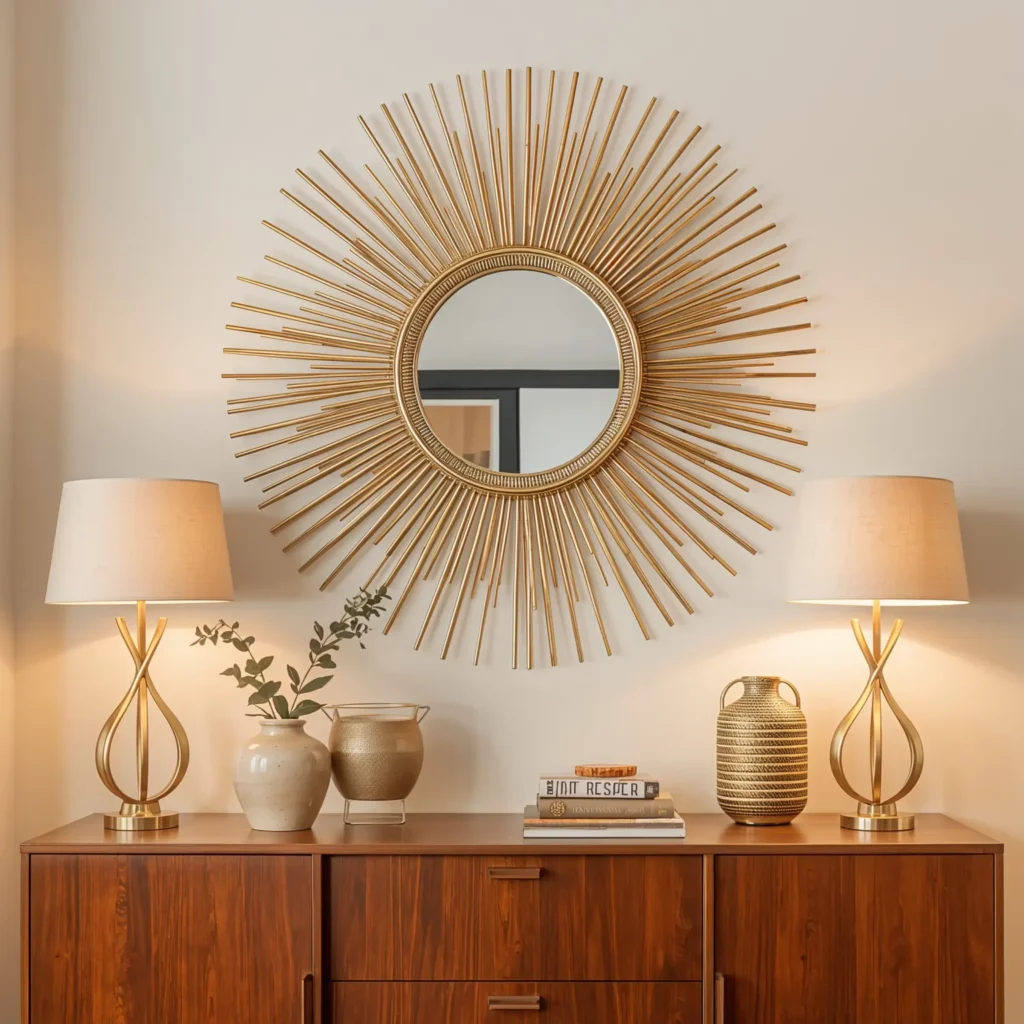
Few mirror designs are as universally appealing as the sunburst — and that enduring popularity is justified. The radiating rays of a sunburst mirror create movement and energy on a wall, making it feel dynamic in a way that a plain rectangular mirror never quite achieves. The shape draws the eye outward and upward, creating a sense of lightness and expansiveness that is genuinely welcome in any room.
Sunburst mirrors work particularly well above fireplaces, console tables, and bed headboards — anywhere you want a strong focal point that is interesting from across the room. They are available in every finish imaginable: antique gold, brass, silver, black matte, natural wood, and mixed metal. Choose a finish that picks up or complements existing metal tones in the room.
Size matters with sunburst mirrors. A small sunburst gets lost on a large wall. Go for at least 30 inches in diameter for a meaningful statement — 36 to 48 inches is ideal for living rooms and dining rooms.
7. Try a Cluster of Round Mirrors
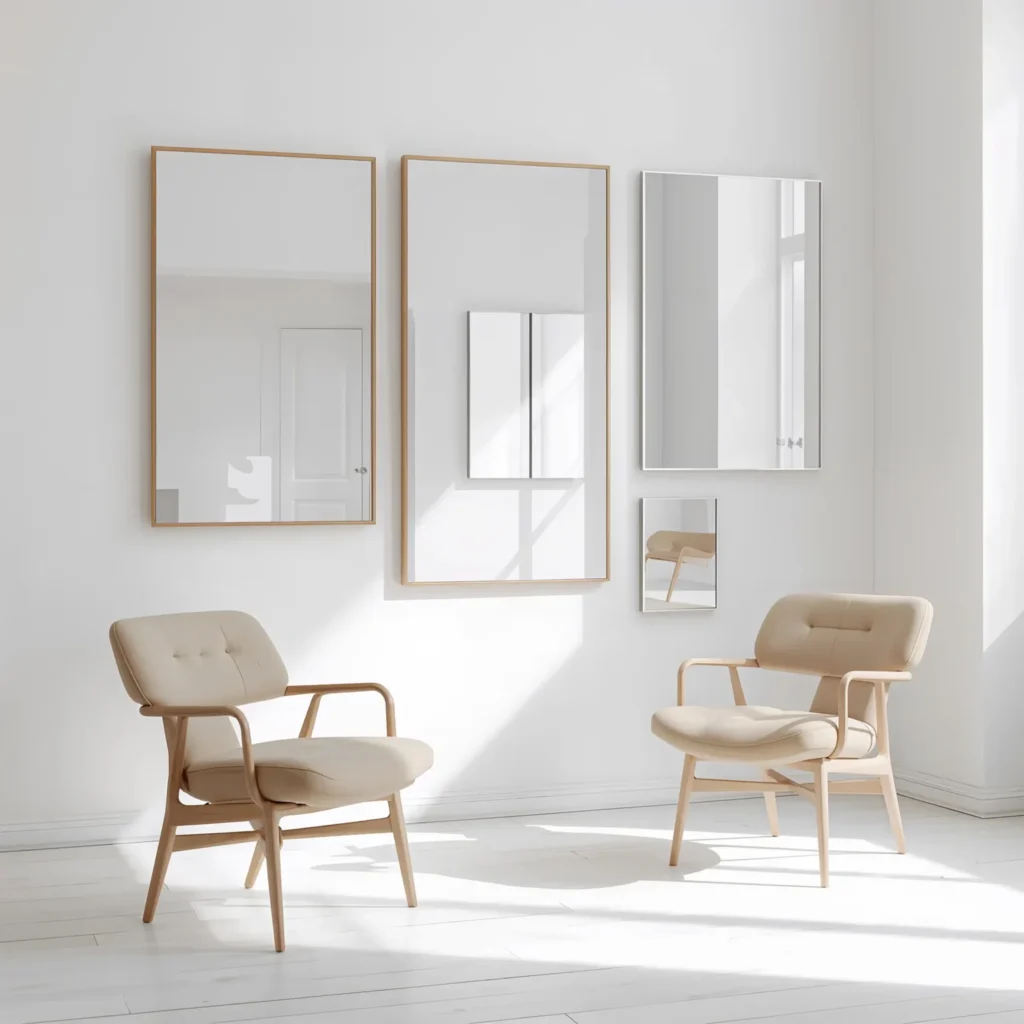
A cluster of small round mirrors grouped together on a wall creates a contemporary, almost cellular arrangement that is visually fascinating without being overwhelming. Unlike a full gallery wall, a round mirror cluster is tighter and more deliberate — a specific pattern of reflective circles that catches light and draws the eye.
The arrangement can be perfectly symmetrical for a formal, graphic look, or loosely organic for something more relaxed. Round mirrors in the same frame finish but different sizes — say, one 20-inch, two 14-inch, and three 8-inch pieces arranged in a constellation pattern — create a beautifully cohesive cluster.
💡 Pro Tip: Use paper circles cut to the mirror sizes and tape them to the wall first. This lets you refine the arrangement without committing to nail holes — a small investment in patience that saves significant frustration.
8. Create a Mirror Wall in a Dining Room
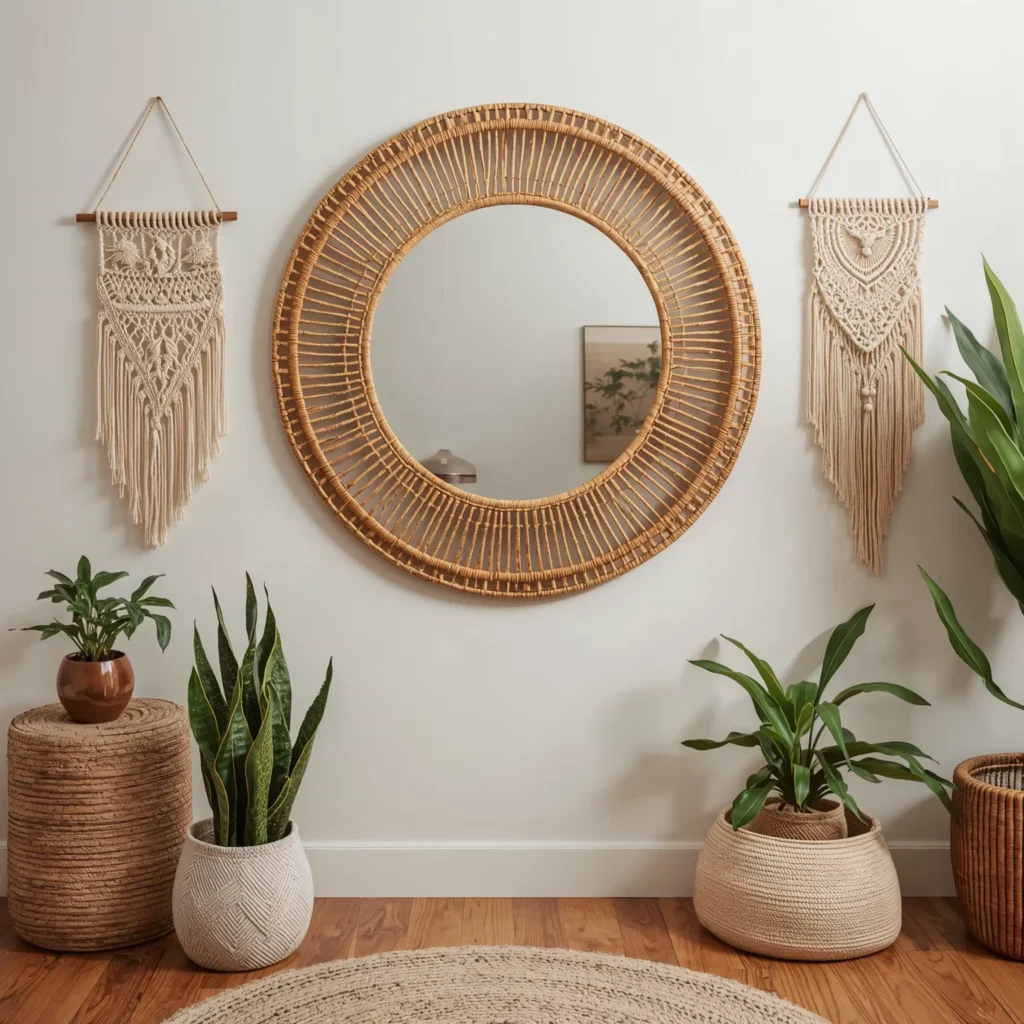
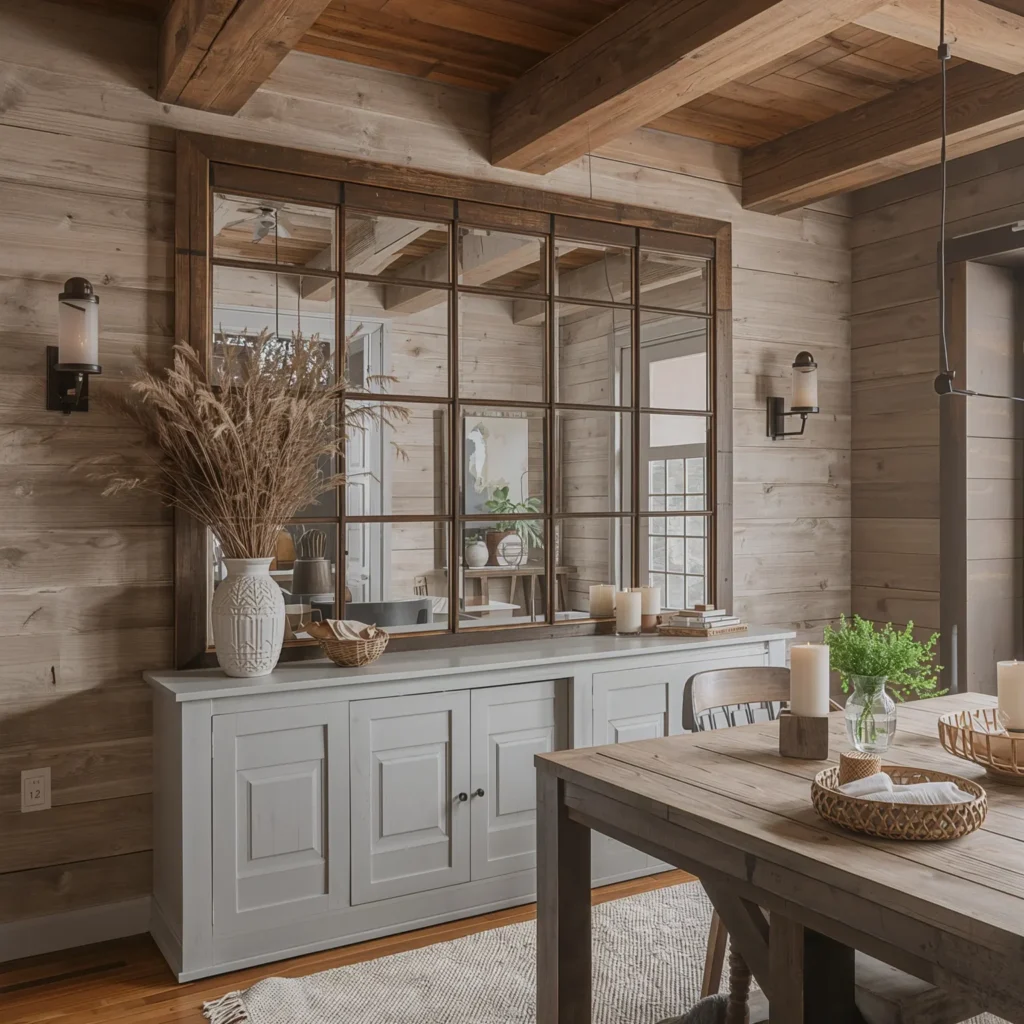
The dining room is one of the most underappreciated locations for mirror wall decor — and one of the most rewarding. A large mirror or a grouping of mirrors on the dining room wall reflects the table, the centerpiece, the candlelight, and the people gathered around it. The effect at dinner, particularly in the evening, is genuinely magical.
A single large rectangular mirror mounted horizontally on the wall beside or behind the dining table works beautifully. So does a pair of identically framed mirrors placed symmetrically. For a more dramatic effect, a full-width mirror spanning most of the dining room wall creates an almost gallery-like sense of space and occasion.
Frame choices matter here. In a formal dining room, an ornate gilded frame or a deep mahogany surround adds appropriate gravitas. In a more casual, contemporary dining space, a thin black metal frame or a frameless mirror keeps things clean and modern.
9. Frame the Entryway with a Stunning Mirror
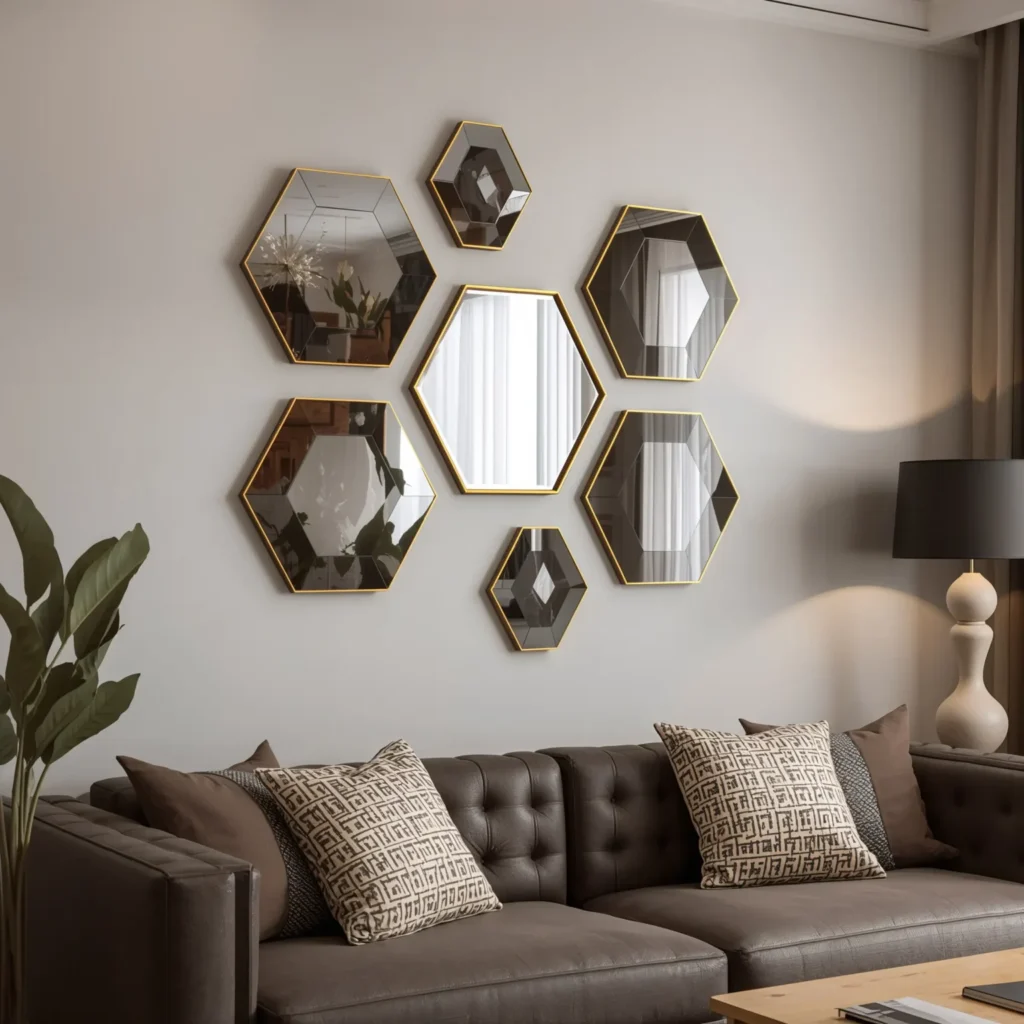
The entryway is, in many ways, the most important room in the house for mirror placement. It is the first thing you see when you arrive home and the last thing you see before you leave — and a beautiful mirror in this space sets the tone for everything that follows.
An entryway mirror should be substantial. A small mirror crammed into a hallway looks apologetic and does little for the space. Instead, go large: a floor-to-ceiling piece that commands the wall, an oversized round mirror that makes the corridor feel like a destination rather than a passageway, or a vintage ornate mirror that makes the first impression feel like an arrival.
Mirror Placement Tips for Entryways
- Hang the mirror at eye level — typically with the center at approximately 57 to 60 inches from the floor.
- Position it so it reflects something beautiful: a piece of art on the opposite wall, a pendant light above, a vase of flowers on the console below.
- In a narrow hallway, hang the mirror on the long wall rather than the end wall — this makes the corridor feel wider rather than longer.
- Add a console table below the mirror for a full entryway vignette: a lamp, a small plant, a bowl for keys, a stack of books.
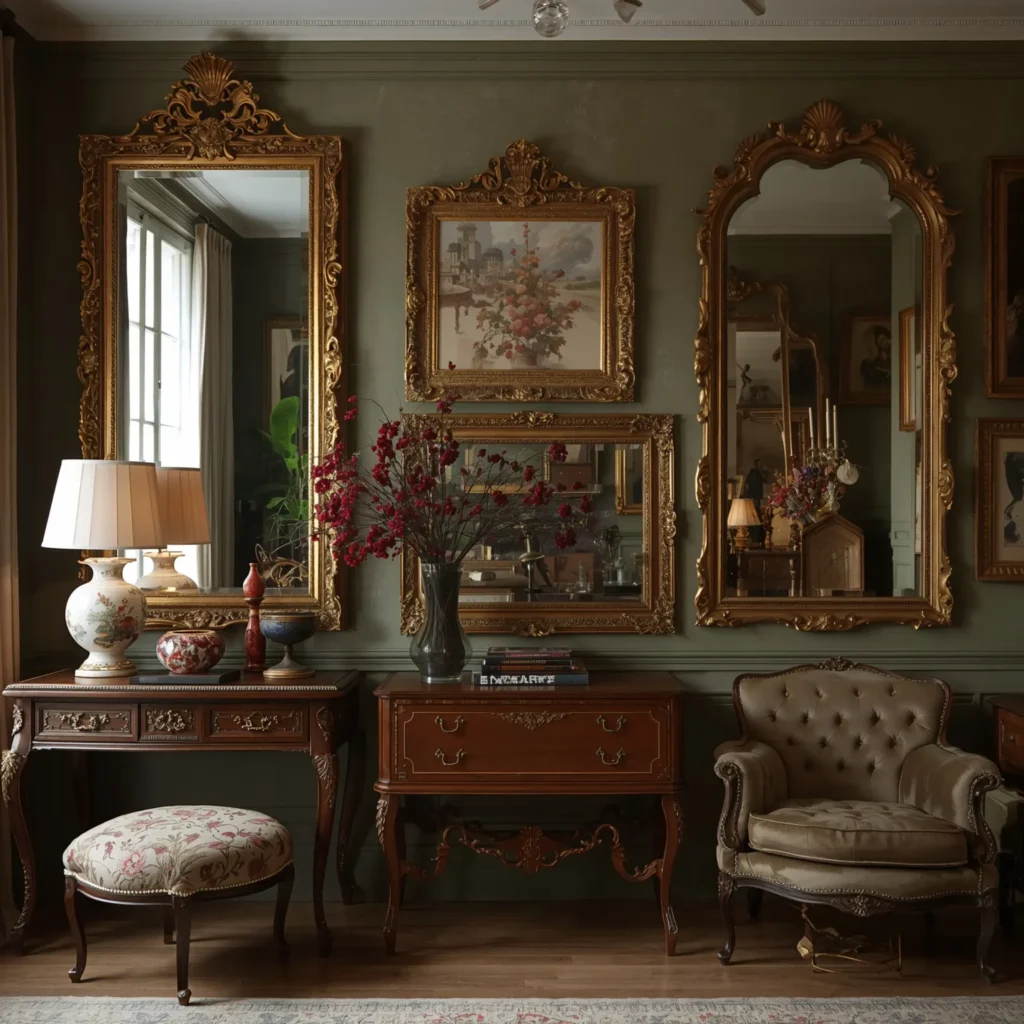
10. Use Antique or Vintage Mirrors for Character
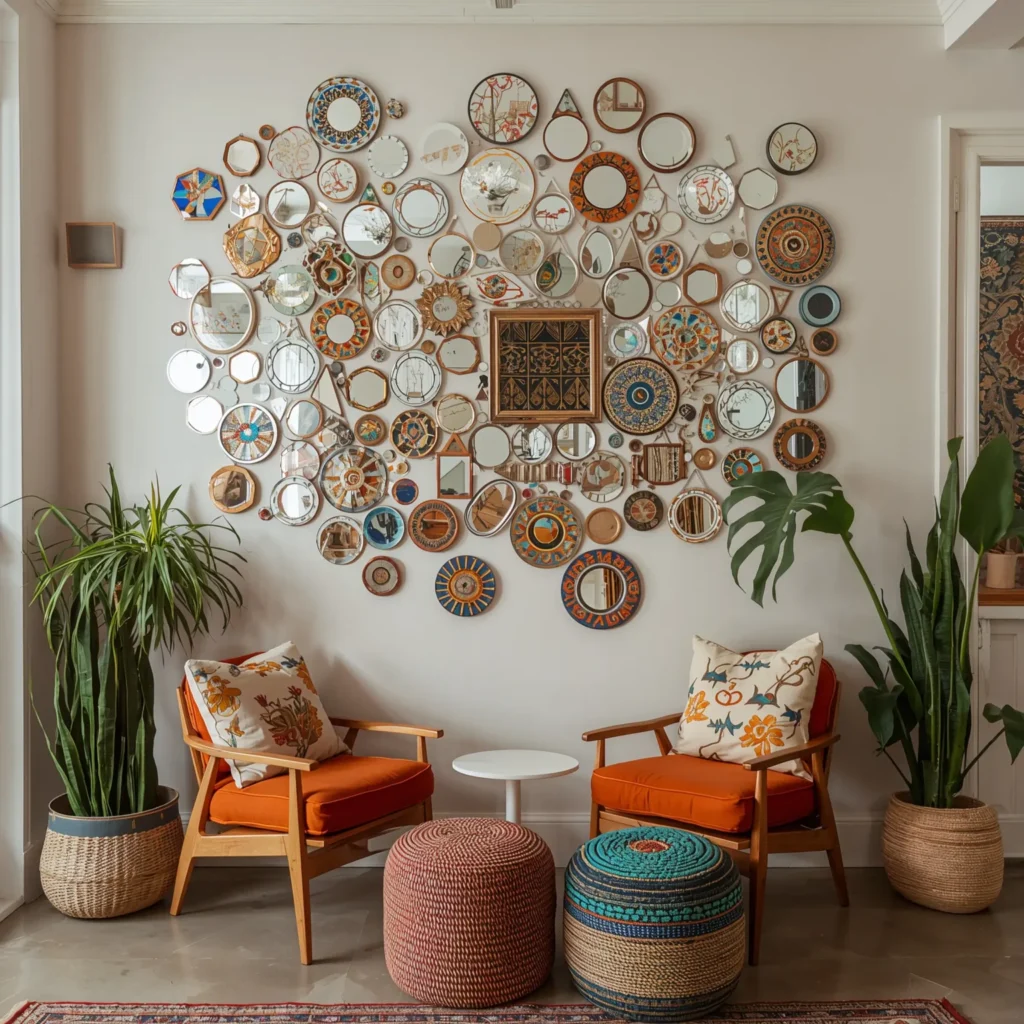
There is something that a new mirror, no matter how well made, simply cannot replicate: the particular beauty of age. An antique mirror — with its softly foxed glass, its slightly uneven reflection, its frame worn to a beautiful patina — brings character and history to a wall that no store-bought piece can match.
Antique and vintage mirrors are surprisingly accessible. Estate sales, flea markets, antique shops, and online marketplaces like Chairish and 1stDibs regularly feature gorgeous pieces at a wide range of price points. A single extraordinary antique mirror hung in a contemporary room creates a beautiful tension between old and new — the kind of contrast that makes a space feel genuinely layered and interesting.
💡 Pro Tip: Do not worry if the antique mirror glass is slightly spotted or uneven — this is called foxing, and it is actually a sign of authenticity and age. Many designers specifically seek out foxed mirrors for the soft, romantic quality of the reflection they produce.
11. Add Geometric Mirrors for a Contemporary Edge
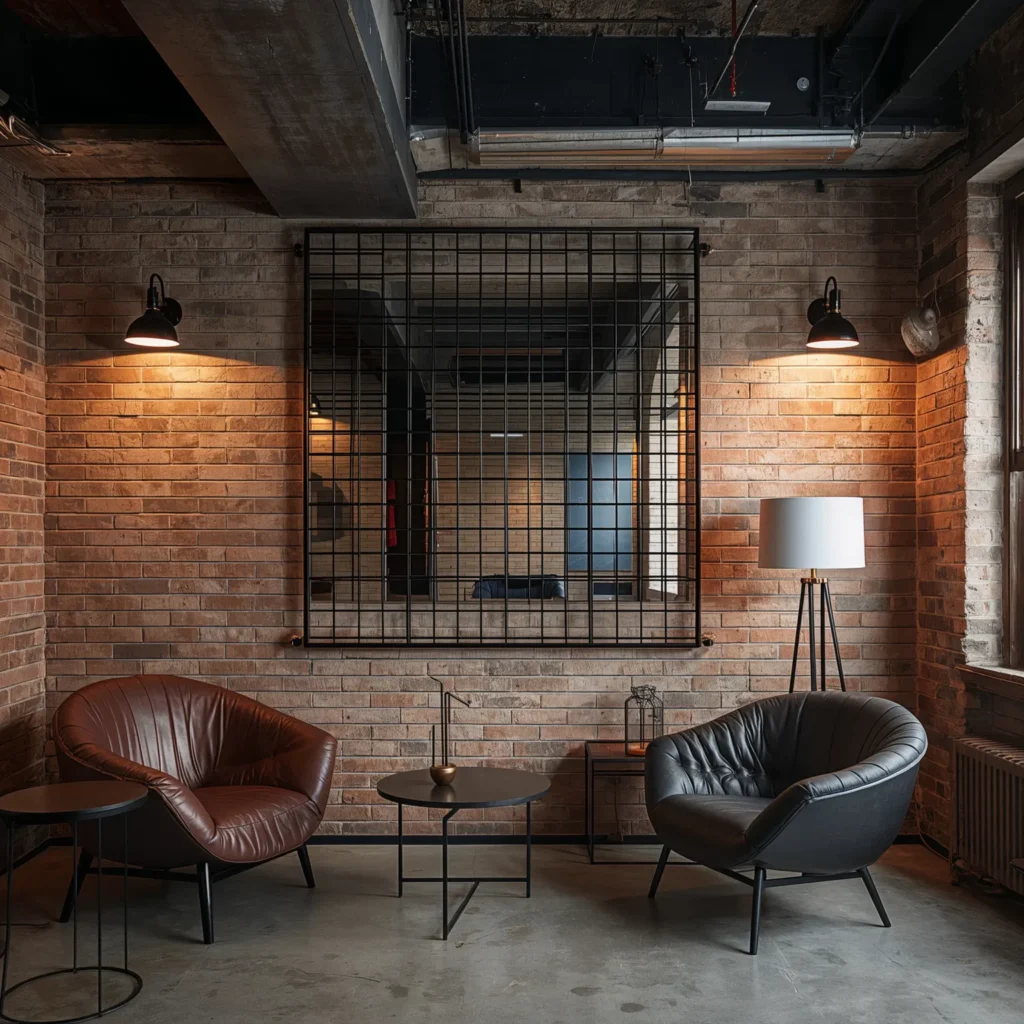
Geometric mirrors — hexagonal, diamond, octagonal, or irregular polygon shapes — bring a contemporary, graphic quality to a wall that round and rectangular mirrors simply cannot achieve. They feel modern and considered, and they work particularly well in spaces that lean toward the contemporary, minimalist, or industrial end of the design spectrum.
A large hexagonal mirror hung alone on a dark accent wall makes a clean, architectural statement. A group of diamond-shaped mirrors arranged in a geometric pattern creates a display that functions as much like modern art as it does as a mirror. Mix several different geometric shapes in the same metallic finish for a display that feels sophisticated and intentional.
Geometric mirrors look particularly strong in bedrooms, home offices, and dining rooms — spaces where a bit of visual energy is welcome and the graphic quality of the shape can be fully appreciated.
12. Place Mirrors Strategically to Reflect Nature
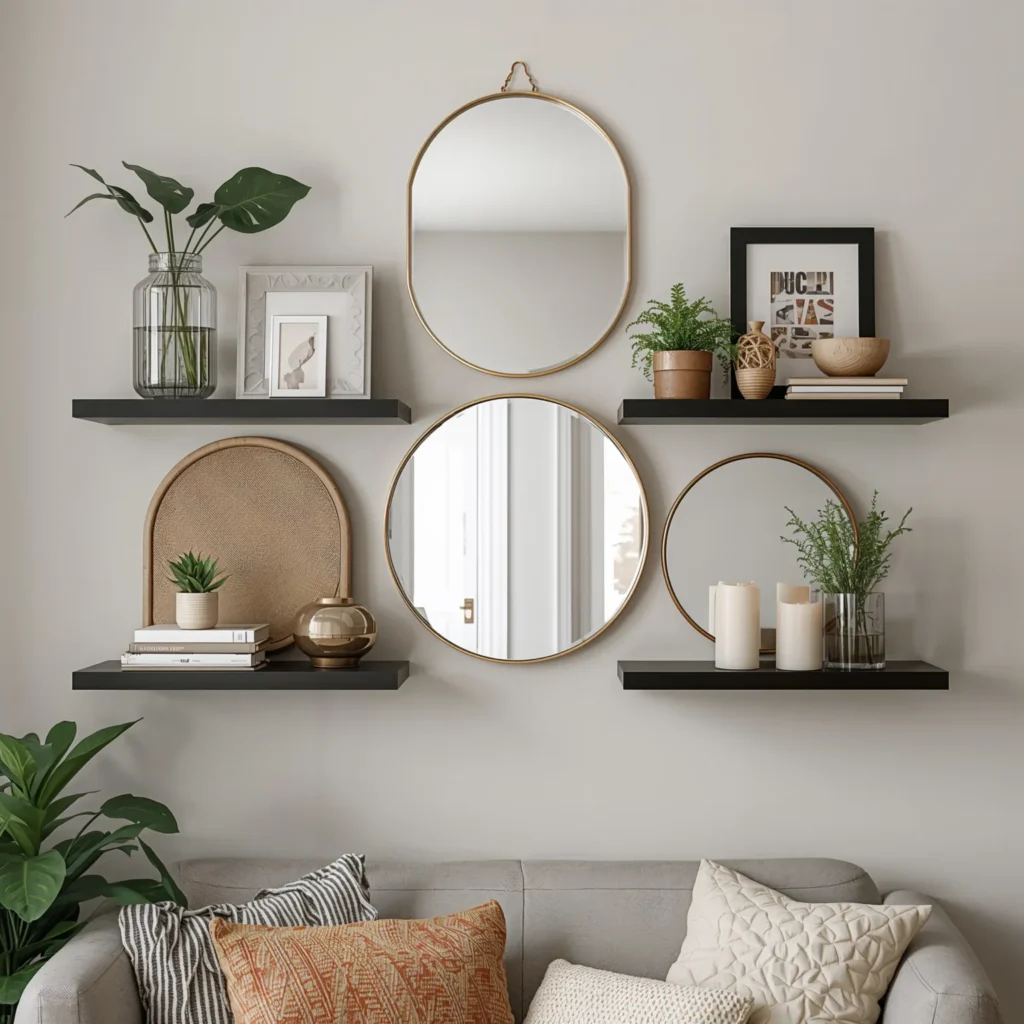
This is one of the most underused mirror wall decor ideas, and one of the most beautiful. Instead of simply placing a mirror on the wall, think carefully about what it will reflect — and position it specifically to capture a view of nature: the garden outside the window, a beautiful tree in the yard, the sky.
A mirror hung on the wall facing a garden window does not just reflect light — it brings the outside in, creating a living, changing display that shifts with the seasons, the time of day, and the weather. In rooms without much access to outdoor views, this kind of placement can make a meaningful difference to how the space feels.
💡 Pro Tip: In spring and summer, a mirror reflecting a blooming garden or green foliage creates a lush, verdant quality in the room. In autumn, the reflected colors of changing leaves become genuinely stunning. Adjust the angle of the mirror slightly to optimize what it captures as the seasons change.
13. Style a Mirror Above a Fireplace Mantel
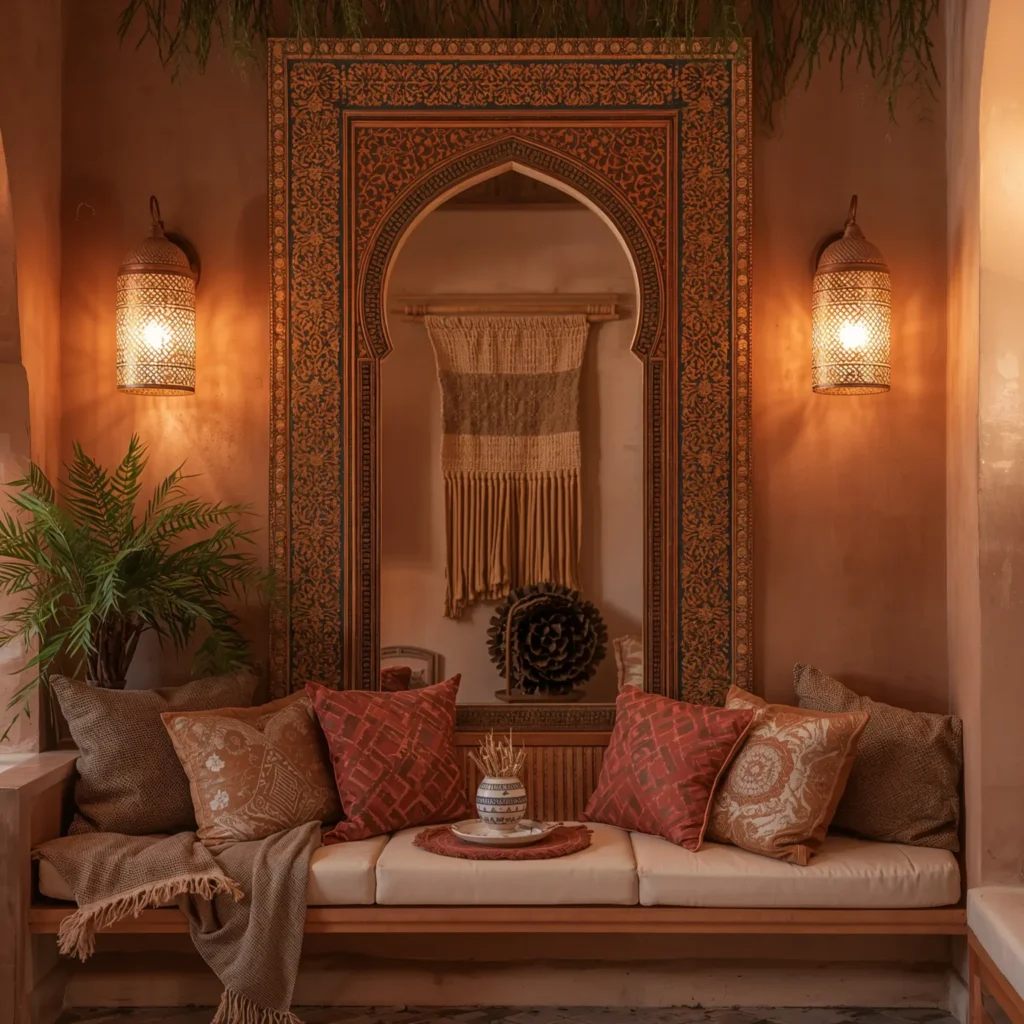
The mantelpiece mirror is one of the oldest and most enduring mirror wall decor traditions — and it has persisted for centuries because it genuinely works. A mirror above a fireplace draws the eye upward, reflects the room back on itself from the most prominent focal point in the space, and adds a sense of formality and occasion that this position in the room demands.
The proportions are important. The mirror should be wide enough to relate to the fireplace opening below it — typically between 75 and 90 percent of the mantel width — and tall enough to feel substantial without extending so high that it touches the ceiling. Ornate gilded frames suit traditional and transitional interiors. Thin metal or simple wood frames work in contemporary spaces. Sunburst and starburst designs work beautifully in spaces that want something between traditional and modern.
Style the mantel below the mirror with care — candles, small plants, objects with meaning. The mirror will reflect whatever is in front of it, so the mantel styling becomes doubly important.
14. Use a Mirror to Brighten a Dark Room or Hallway
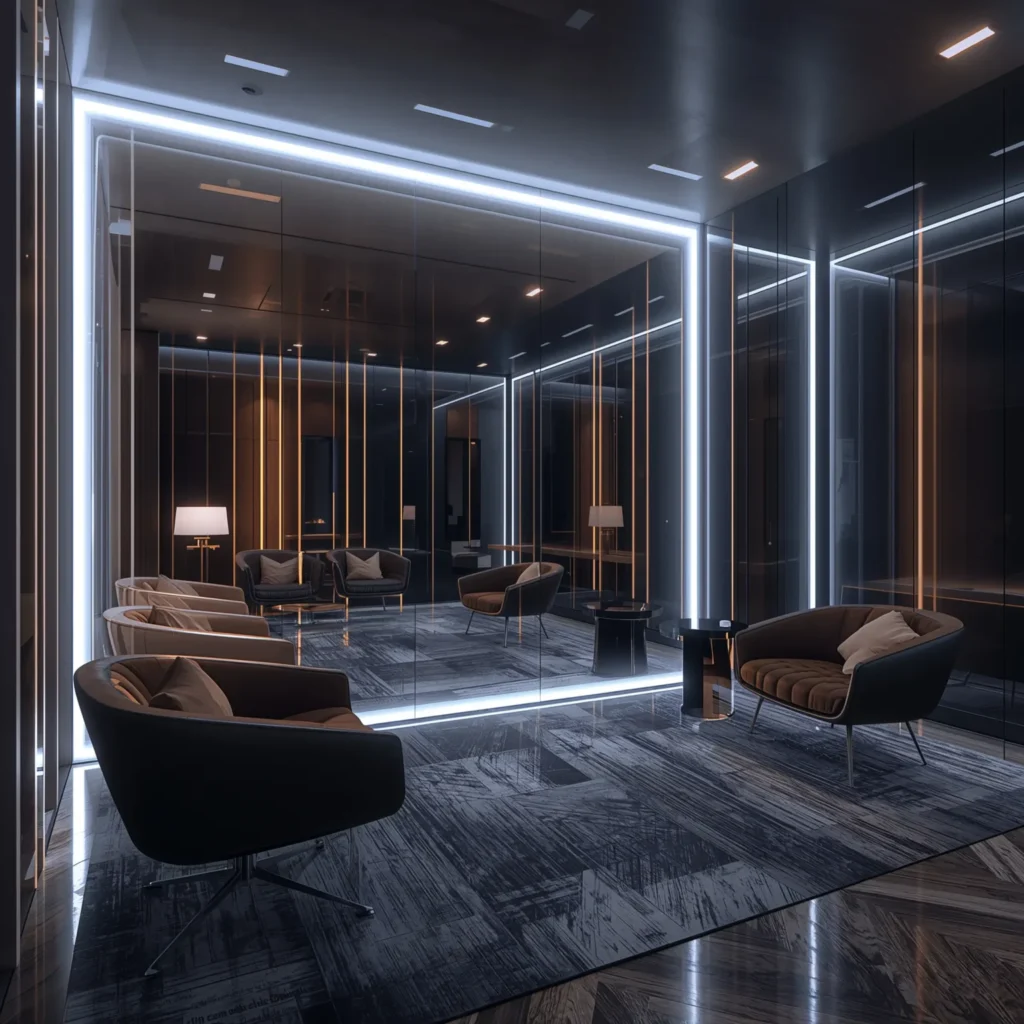
Dark rooms and narrow hallways are among the most challenging spaces in any home to decorate — and mirrors are among the most effective tools for addressing them. A large mirror in a dark room captures whatever available light exists and multiplies it, redistributing brightness to corners and walls that would otherwise remain dim.
The placement is everything. Position the mirror directly opposite a light source — a window, a lamp, a skylight — to maximize the amount of light reflected into the room. In a hallway, hang the mirror on the long wall rather than the end wall, and ensure it reflects something bright: a window at the far end, a wall sconce, or even an illuminated artwork on the opposite wall.
💡 Pro Tip: In a particularly dark room, consider using multiple mirrors arranged at different angles rather than a single large piece. Multiple mirrors catch light from different directions and create a more comprehensive brightening effect than one mirror alone.
15. Combine Mirrors with Wall Sconces
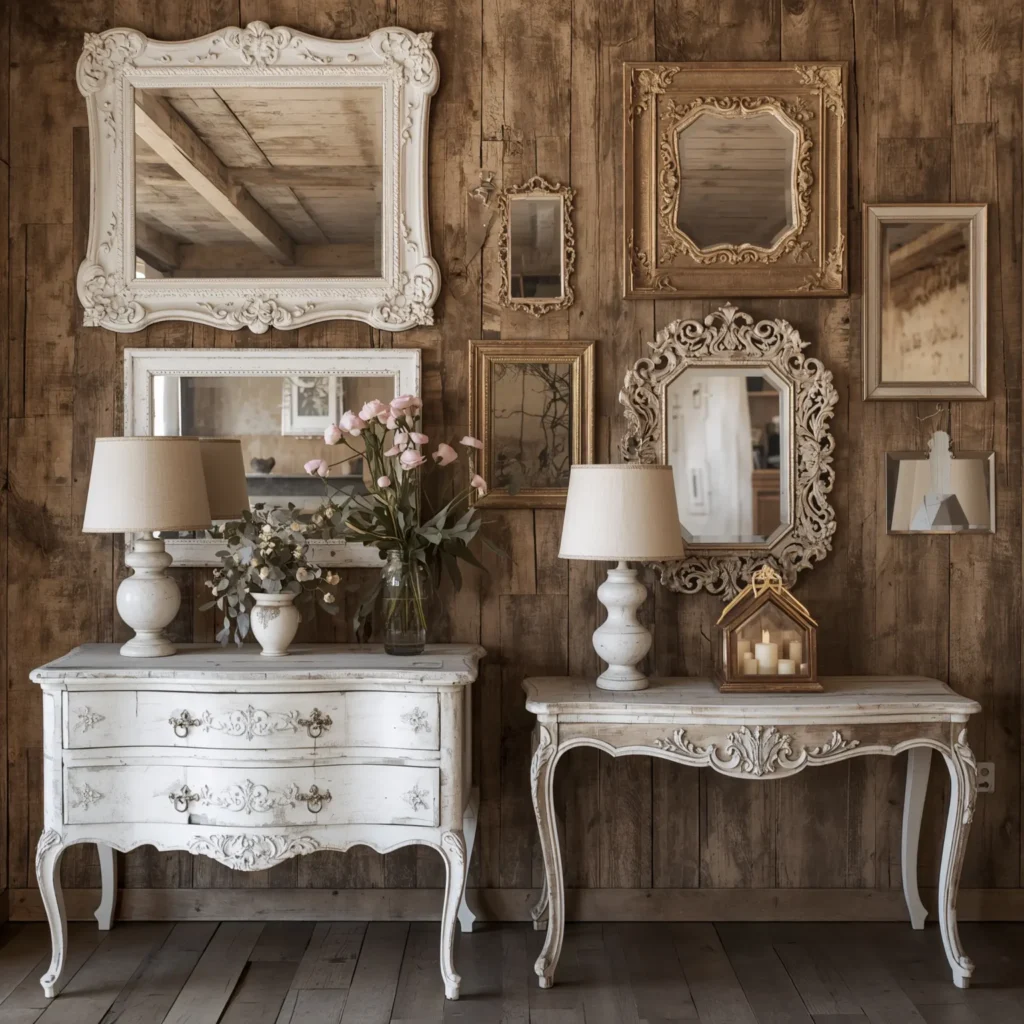
A mirror flanked by wall sconces — or a mirror with a sconce mounted directly beside it — is one of the most classically beautiful combinations in interior design. The sconces provide warm, directed light; the mirror reflects and amplifies that light; and the whole composition creates a kind of triptych that feels both functional and genuinely beautiful.
This combination works best in entryways, dining rooms, and bedrooms — spaces where atmospheric lighting matters and where the wall space allows for a centered, symmetrical arrangement. Choose sconces in a finish that complements the mirror frame: brass sconces beside a brass-framed mirror, black sconces beside a black metal mirror, bronze sconces beside an ornate antique frame.
The mounting height for sconces paired with a mirror is typically on either side, with the center of the sconce at eye level — approximately 60 to 66 inches from the floor. This places the light source at the ideal height for both ambient illumination and task lighting.
Mirror Wall Decor Ideas by Room: A Quick Reference Guide
Not every idea works in every room. Here is a quick guide to the best mirror choices by space.
Living Room
- One oversized statement mirror as the focal wall anchor
- A gallery wall combining mirrors and framed art
- A pair of large mirrors flanking the fireplace or sofa
- A sunburst or starburst mirror above the console table
Bedroom
- Full-length floor mirror leaned against the wall
- Arched mirrors used in place of traditional bedside art
- A large mirror mounted above the headboard for height and light
- A round cluster arrangement on the wall opposite the window
Entryway and Hallway
- One dramatic oversized mirror that commands the space
- A mirror mounted on the long wall of a narrow hallway (not the end wall)
- A vintage or antique mirror for character and a strong first impression
- Mirror paired with a console table and sconces for a full vignette
Dining Room
- A large horizontal mirror beside or behind the dining table
- Matching pair of framed mirrors for formal symmetry
- An ornate gilt mirror above the sideboard
- A full-width mirror that makes the room feel like a private dining room
Bathroom
- An arched mirror above the vanity
- A frameless mirror for a clean, spa-like quality
- A rattan or wood-framed mirror for warmth
- A pair of round mirrors above a double vanity
How to Choose the Right Mirror for Your Wall: 5 Key Considerations
With so many options available, choosing the right mirror can feel overwhelming. These five questions will help you narrow it down.
First, consider the size of the wall relative to the size of the mirror. A common mistake is choosing a mirror that is too small for the wall it is intended for. As a general rule, a mirror should fill at least one third of the wall width — and in many cases, more than half works better. Go bigger than your instinct tells you.
Second, think about what the mirror will reflect. Before hanging any mirror, stand in the intended position and look at what is reflected from that angle. If the mirror reflects a beautiful window, a piece of art, or a well-styled shelf, wonderful. If it reflects the back of a door or a blank wall, reposition it.
Third, consider the frame in relation to your existing decor. Mirror frames are like picture frames — they should complement the materials and colors already present in the room. Brass frames in rooms with warm tones. Black metal in rooms with cool, contemporary palettes. Natural rattan or wood in organic, textural spaces.
Fourth, think about shape. Round mirrors soften hard-lined rooms. Rectangular mirrors feel formal and orderly. Geometric mirrors add edge and energy. Arched mirrors bring elegance. Choose the shape that adds what the room needs most.
Fifth, consider the practicality of installation. Heavy antique mirrors require proper wall anchors and ideally a professional installer. Lighter contemporary pieces can be hung with standard hardware. Always check the wall type and anchor your mirror appropriately — an insecure mirror is a hazard, not just an aesthetic failure.
Final Thoughts: The Mirror That Changes the Room
Mirrors are one of those rare design elements that work on multiple levels simultaneously — practical and decorative, structural and atmospheric, functional and beautiful. The right mirror in the right place can make a small room feel generous, a dark room feel bright, and a plain wall feel designed.
The twenty ideas in this guide cover the full spectrum of what mirror wall decor can achieve, from a single oversized statement piece that takes thirty minutes to hang, to a full gallery wall that builds over years of collecting, to a floor-to-ceiling installation that genuinely transforms a room. There is no single right answer — only the approach that fits your space, your budget, and your sense of what a home should feel like.
Start with what you have. Choose one idea, one wall, one mirror that speaks to you. Hang it. Live with it. See how the room changes. You may be surprised at how much difference one well-chosen, well-placed mirror can make — and once you have experienced that, you will find yourself looking at every wall in your home differently.
Frequently Asked Questions About Mirror Wall Decor
Where should I hang a mirror in my living room?
The most effective positions in a living room are opposite a window (to reflect natural light back into the room), above the fireplace mantel (for visual drama and height), above a console table or sideboard (for a traditional focal point), and beside or behind the sofa on the main feature wall. The golden rule is to always check what the mirror will reflect before committing to a position — a mirror that reflects something beautiful multiplies that beauty; one that reflects something mundane does very little.
How big should a wall mirror be?
As a general guideline, a mirror should cover at least one third of the wall width it occupies — and often more. For a living room or bedroom focal wall, a mirror that is 36 to 48 inches wide (or larger) will typically be the minimum for a meaningful visual impact. For above a console or sideboard, the mirror should be roughly two thirds the width of the furniture below it. If in doubt, go larger — undersized mirrors are one of the most common decorating mistakes.
Can you put too many mirrors in a room?
Yes — though it takes more than most people think. The real issue is not the number of mirrors but their placement. If multiple mirrors are positioned to reflect each other, the resulting infinite reflections can feel disorienting and visually chaotic. Position mirrors so they reflect natural light or beautiful room elements, not each other, and you can use several in a single space without it feeling overwhelming.
What type of mirror makes a room look bigger?
Floor-to-ceiling mirrors are the most effective for making a room appear significantly larger. Beyond that, large single mirrors positioned opposite windows or light sources create the strongest sense of expanded space. Round mirrors tend to make rooms feel more open and less boxy than rectangular ones. Frameless mirrors or mirrors with very thin frames also maximize the reflective surface area, which enhances the space-expanding effect.
What is the best mirror frame style for 2026?
In 2026, the most popular mirror frame styles include thin brass and antique gold frames in arched shapes, natural rattan and woven frames for bohemian and coastal spaces, thin black metal frames for contemporary and minimalist rooms, and statement sunburst designs in antique brass or mixed metals. There is also a strong trend toward vintage and antique mirrors with foxed glass and ornate frames, as the appetite for pieces with genuine character and history continues to grow.
1 thought on “15 Fresh Mirror Wall Decor Ideas for Modern Living”