
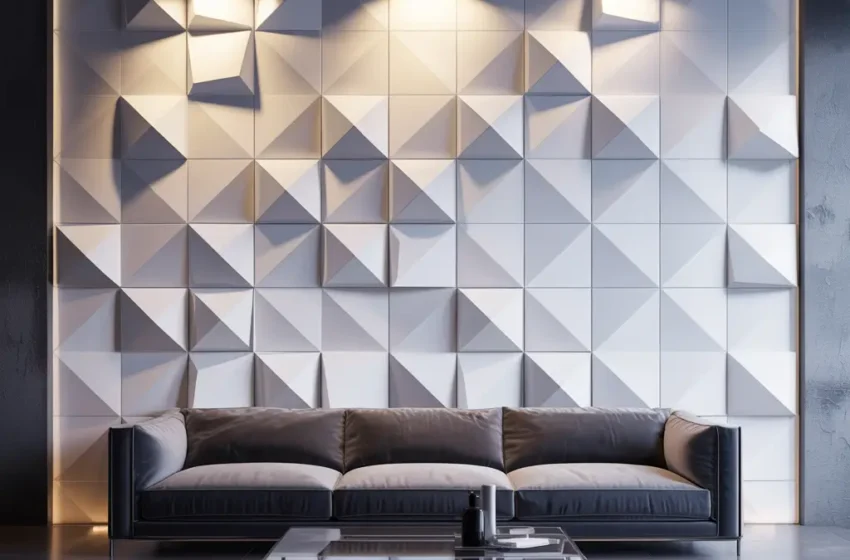
You know that feeling when you walk into a beautifully decorated room and your whole body just — relaxes? That’s not an accident. The walls in any room carry more weight than most people realize. They set the mood, establish the personality of the space, and either make a room feel alive or leave it feeling like a waiting room.
Aesthetic wall decor isn’t about following trends or copying a Pinterest board. It’s about creating walls that feel genuinely yours — walls that reflect how you live, what you love, and what kind of atmosphere you want to come home to every single day.
The good news? You don’t need a professional designer or a bottomless budget to get this right. What you need is the right ideas, a clear sense of your personal style, and a willingness to try something. This guide gives you all three.
We’re covering 22 aesthetic wall decor ideas — more than you’ll find anywhere else — organized by style, room, and budget, with practical advice on how to actually pull each one off. From minimalist line art to dramatic three-dimensional panels, from renter-friendly solutions to full-wall transformations, there’s something here for every space and every person.
1. Minimalist Line Art Prints
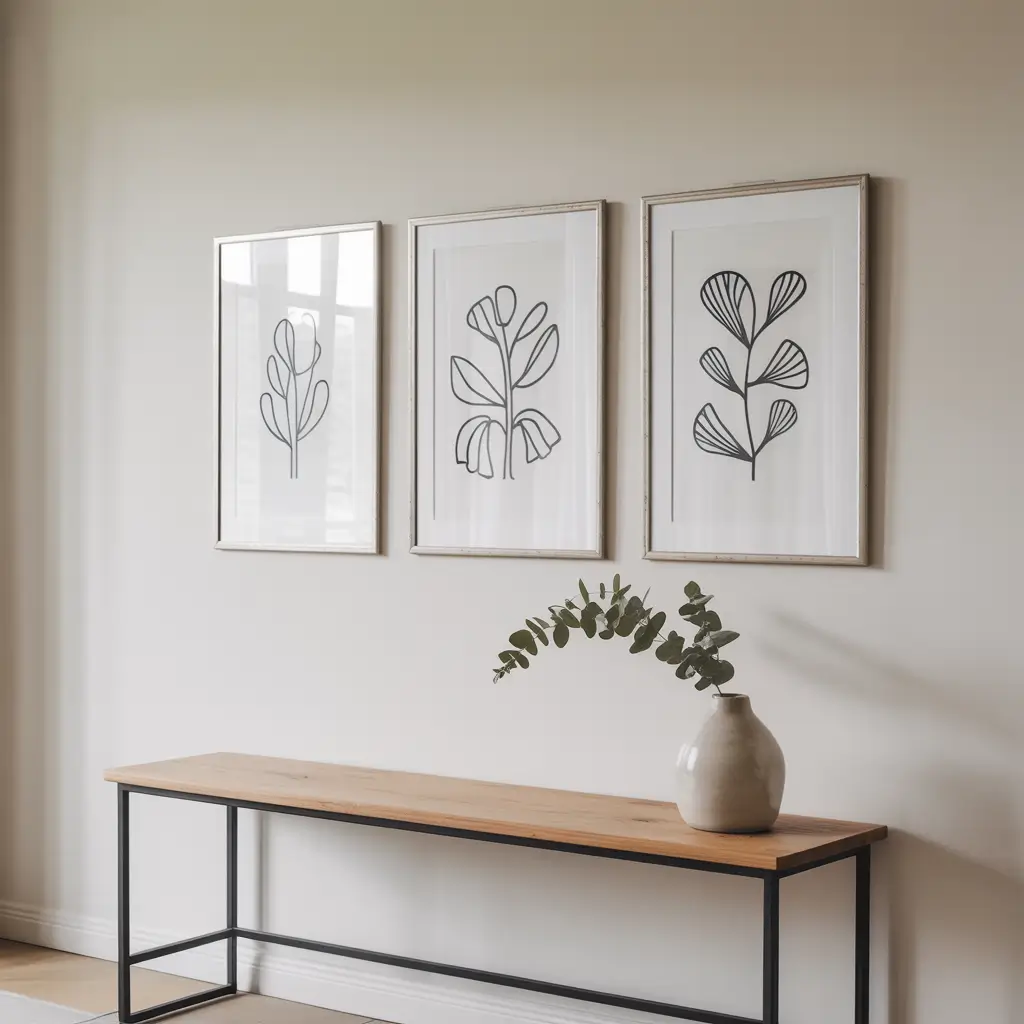
There’s a reason minimalist line art has become one of the most searched wall decor styles of the past five years. It works in virtually every space, it complements almost any existing color palette, and it carries visual weight far beyond its visual simplicity.
Good line art — whether it’s a continuous single-line face, a botanical outline, or abstract geometric forms — creates a sense of precision and intention. It’s the kind of decor that people notice slowly. They look at the wall, and then they look at the art, and then they start to see the skill in the restraint.
For maximum impact, group three pieces of the same style in different sizes. Frame them simply — thin black or white frames, no mat — and hang them with consistent spacing. The consistency is what gives the arrangement its pull.
Pro Tip: Download digital prints from Etsy or design marketplaces and print them at a local print shop. You can get three large high-quality prints for a fraction of what framed alternatives cost in home goods stores.
2. Curated Vintage Gallery Wall
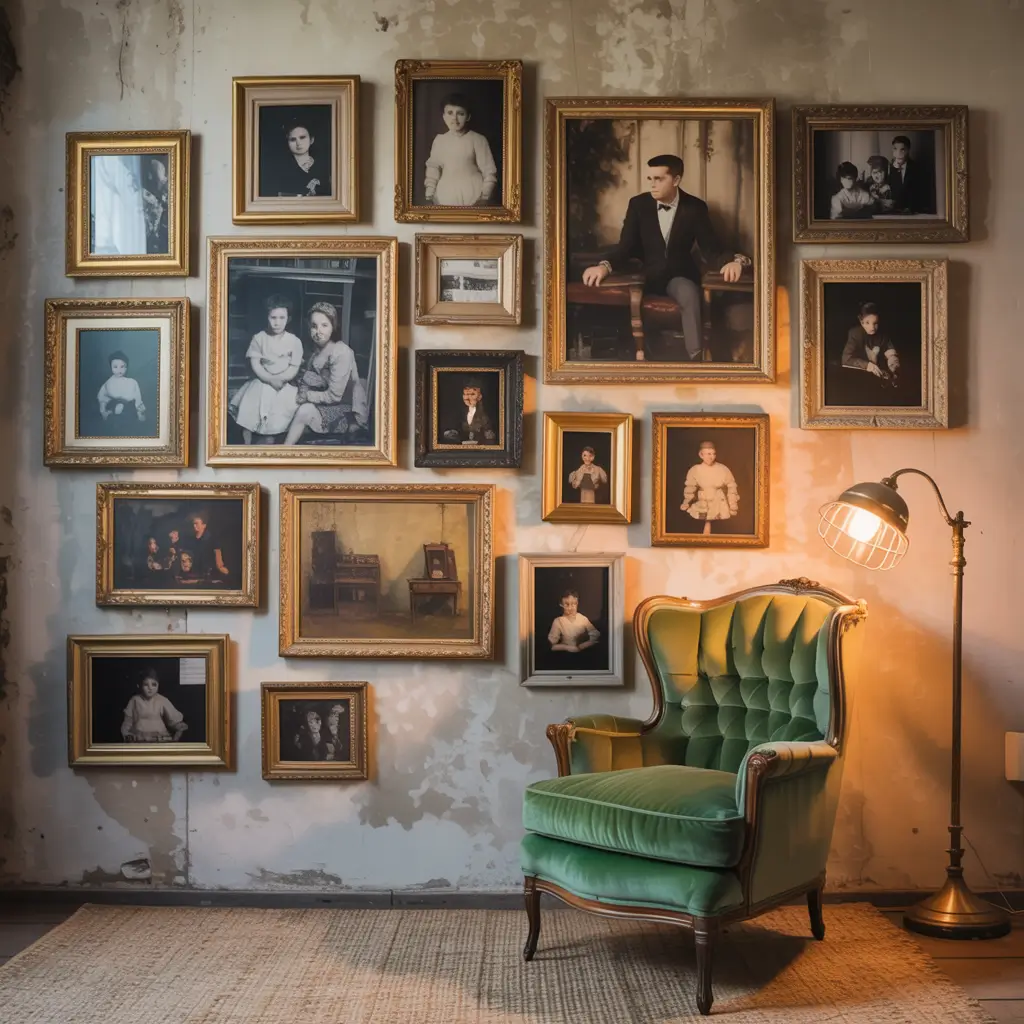
A gallery wall built from genuine vintage finds — old photographs, antique prints, faded maps, vintage botanical illustrations — carries a quality of authenticity that reproductions simply cannot replicate. The slight imperfections of the original materials, the aged paper, the cracked paint on an old frame — these things add life.
The secret to a vintage gallery wall that works rather than one that looks chaotic is identifying one consistent element across all pieces. It could be the color palette (cream, sepia, and faded brown work beautifully), the era (all Art Nouveau, all mid-century), or the subject matter (all portraits, all landscapes). Within that consistent element, allow as much variation as you like.
Build the wall outward from your largest or most striking anchor piece. Lay everything on the floor first — spend real time with the arrangement before committing to the wall.
Budget Tip: Estate sales, charity shops, and weekend markets are far better sources for genuine vintage pieces than antique stores. Expect to pay a fraction of the price for objects with just as much character.
3. Organic Macrame Textile Hangings
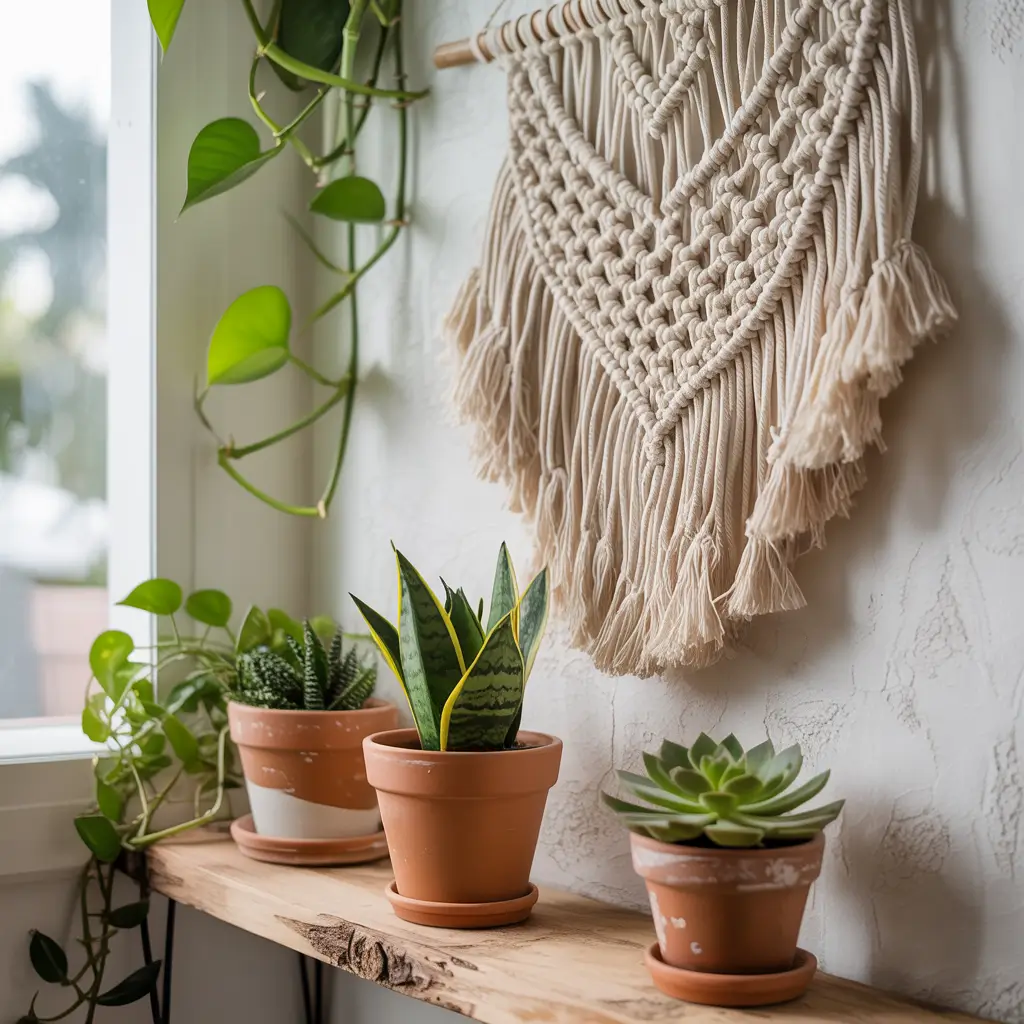
Macrame wall hangings introduce something to a wall that almost no other decor element can: texture that you can actually feel from across the room. The visual weight of knotted fibers, the movement of hanging tassels, the warmth of natural materials — all of it creates a presence that flat prints and framed art simply don’t have.
A large macrame piece above a bed or sofa is one of the most effective single-piece wall decor decisions you can make. It fills space without crowding it, adds warmth without adding color, and communicates a handmade, considered quality that mass-produced decor never achieves.
Natural fiber colors — undyed cotton, bleached white, warm ecru, soft gray — work with essentially every interior palette. For bolder rooms, look for macrame with integrated color through dip-dyeing or woven accent threads.
4. Custom Neon or LED Sign
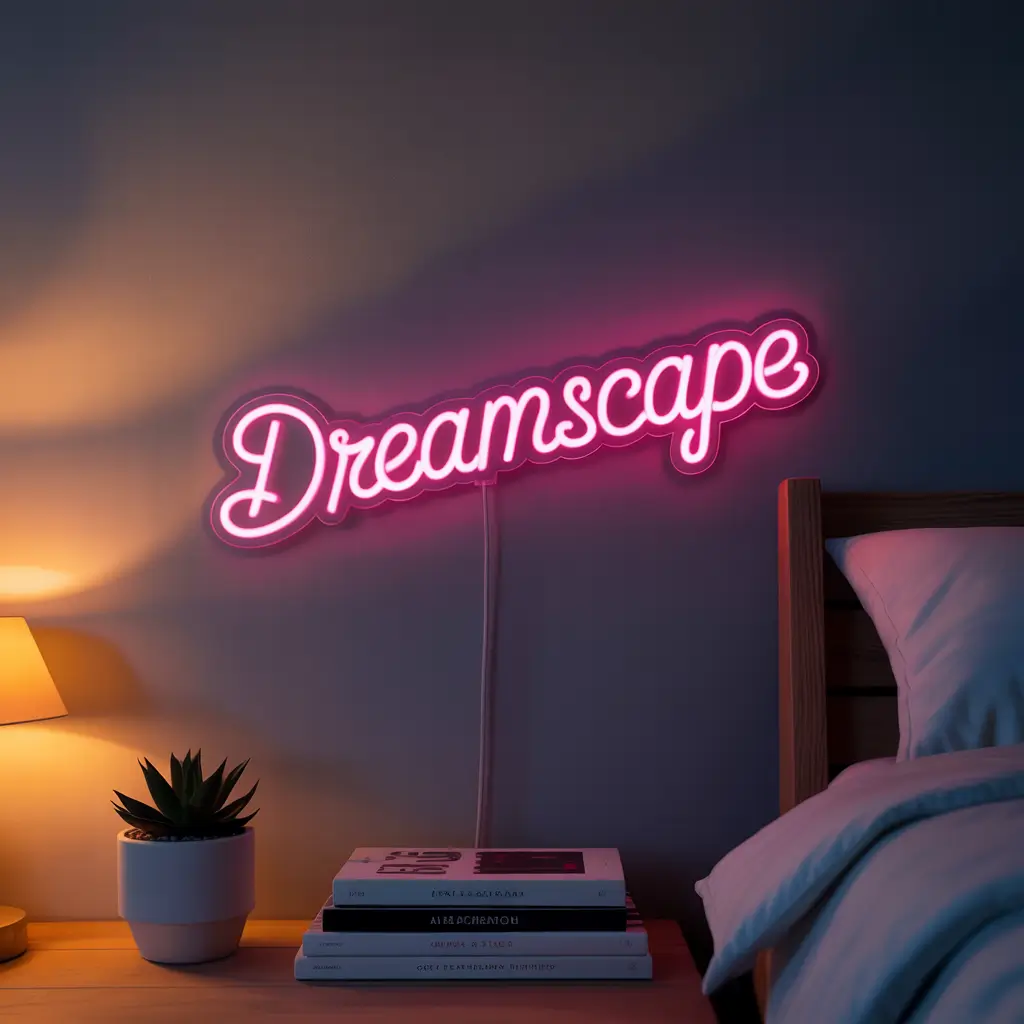
A well-chosen neon sign does something most wall decor doesn’t: it changes the room twice. By day, the sign’s shape and color add visual interest as a sculptural object. By night, the glow transforms the entire atmosphere of the space, adding warmth, color, and a quality of light that no lamp or overhead fixture can replicate.
The mistake most people make with neon signs is choosing something generic — a heart, a cliche quote, something they’ve seen in dozens of photos. The best neon signs are personal: a line from a song that matters to you, a word in a language you love, a shape that means something specific. Custom signs can be made for less than you’d expect, and the result is genuinely one-of-a-kind.
Modern LED neon — silicone tubing rather than glass — is lighter, safer, more energy efficient, and just as visually striking as traditional neon. It’s the sensible choice for home use.
Pro Tip: Position neon signs on walls painted in dark or deep tones. The contrast amplifies the glow dramatically. On white walls, the effect is significantly reduced.
5. Polaroid and Photo String Display
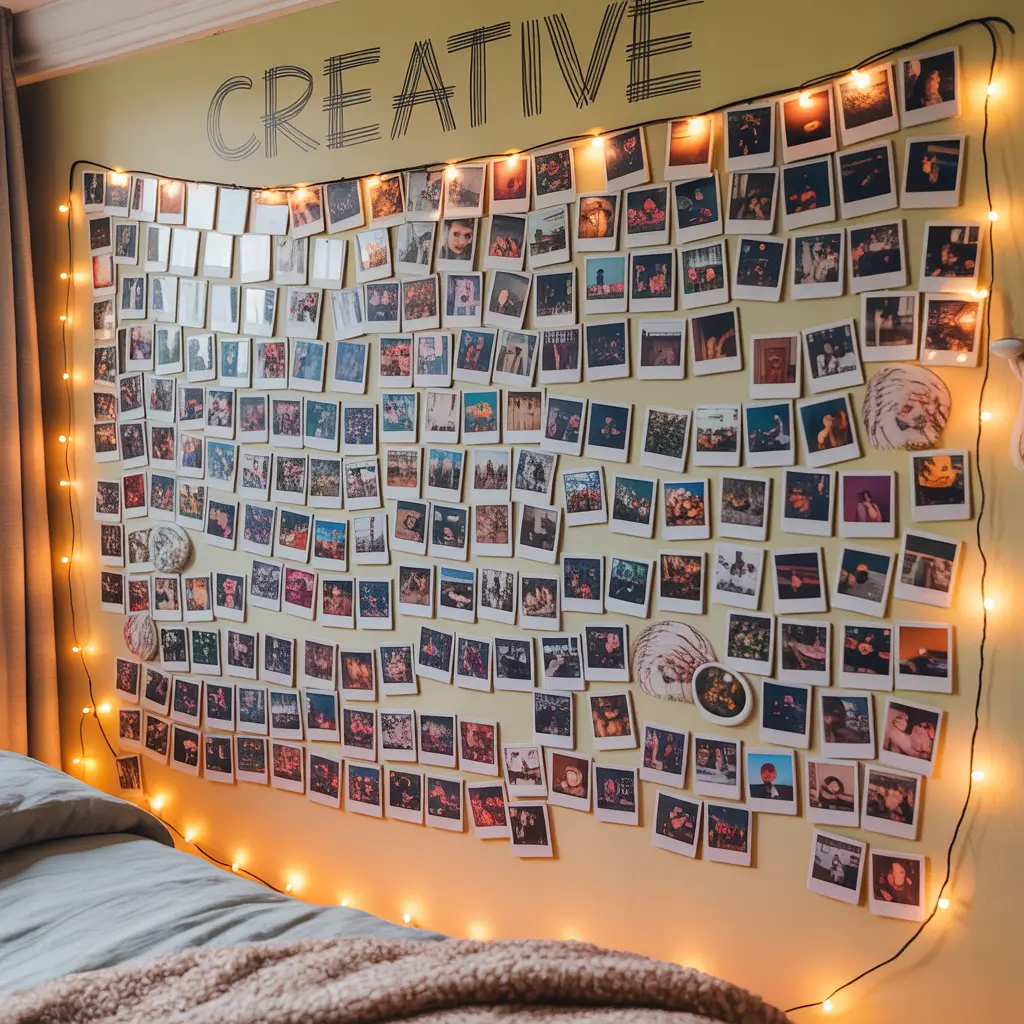
Physical photographs — especially small-format prints like Polaroids or standard 4×6 prints — carry an emotional warmth that digital images on a phone screen can’t match. They’re tangible records of real moments, and displaying them on your walls makes those moments part of your daily environment in a meaningful way.
The string display format — photographs clipped to horizontal strings or draped fairy lights — is particularly effective because it suggests movement and impermanence in a positive way. The display looks curated without looking rigid. You can rearrange, add, and remove photos easily without any tools or damage to the wall.
For a more structured look, a grid of uniform-sized prints in matching frames has a clean, considered quality. The choice between the two depends entirely on your aesthetic direction: organic and layered, or precise and minimal.
6. Floating Wooden Shelf Displays
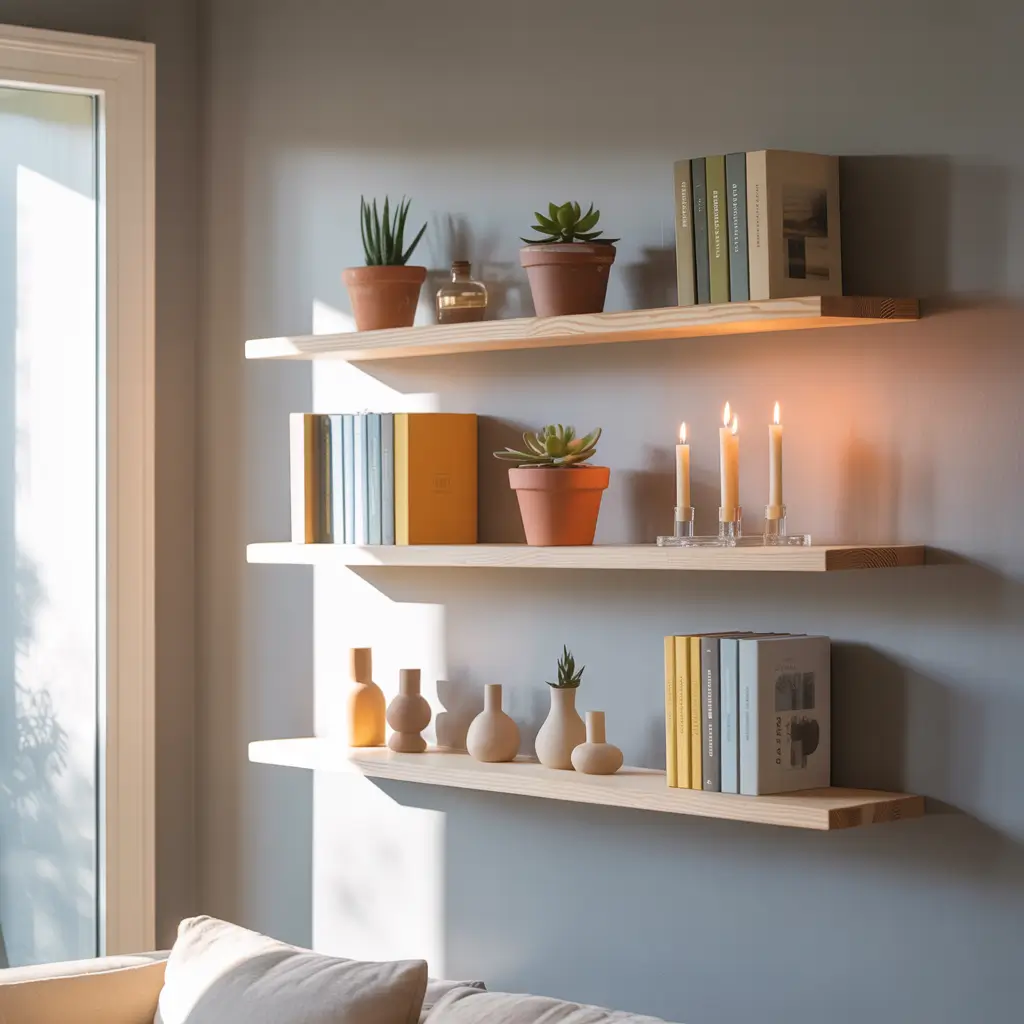
Floating shelves transform a wall from a flat surface into a three-dimensional display environment. The depth they create — the shadow line beneath each shelf, the objects at varying heights — adds architectural interest that paint and hanging art simply cannot achieve.
The key distinction that separates a great shelf display from a cluttered one is treating each shelf as a curated composition rather than a storage space. Every object on the shelf should be there because it contributes to the overall visual. Group objects in odd numbers, vary heights within each group, and leave genuine breathing room between objects.
Material choice matters significantly. Natural solid wood adds warmth and suits almost every interior style. Painted MDF is cleaner and more contemporary. Dark walnut reads as sophisticated and dramatic. Whatever you choose, make sure the installation is solid — floating shelves with significant weight need proper wall anchoring.
Style Note: The ‘rule of three’ in shelf styling exists for a reason — odd numbers of objects create visual tension and interest that even numbers don’t. A single large item, a medium item, and a small item together create a composition; two items of similar size simply sit next to each other.
7. Botanical and Nature Print Grid
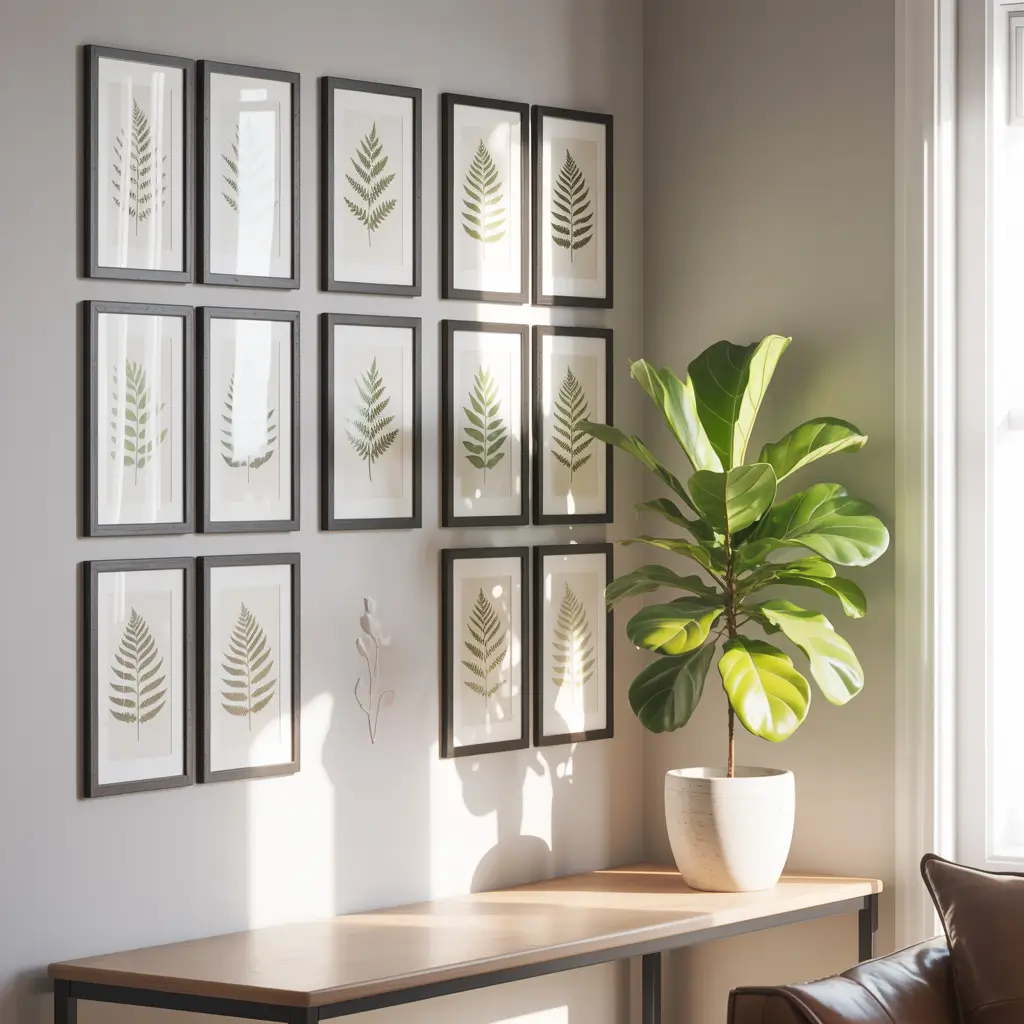
Botanical prints occupy a unique space in wall decor: they’re simultaneously classic and contemporary, scientific and artistic, detailed and calm. The subject matter — plants, flowers, leaves, seeds — connects the interior space to the natural world outside in a way that feels both decorative and grounding.
Arranged in a grid — two across and three down, or three across and two down — botanical prints create a display that reads as intentional and curated without requiring complex arrangement decisions. The grid format does the organizational work; you simply need to choose prints with visual coherence.
Vintage botanical illustration style — the kind used in eighteenth and nineteenth century scientific publications — is particularly striking. The detailed linework, faded color palettes, and formal composition give these prints a quality that modern botanical art often lacks.
Pro Tip: Mix plants from different categories — a fern, a flowering plant, a succulent, a tree leaf — within the same illustration style. The variety of forms within a consistent visual language creates exactly the right balance of variety and cohesion.
8. Large-Scale Statement Tapestry
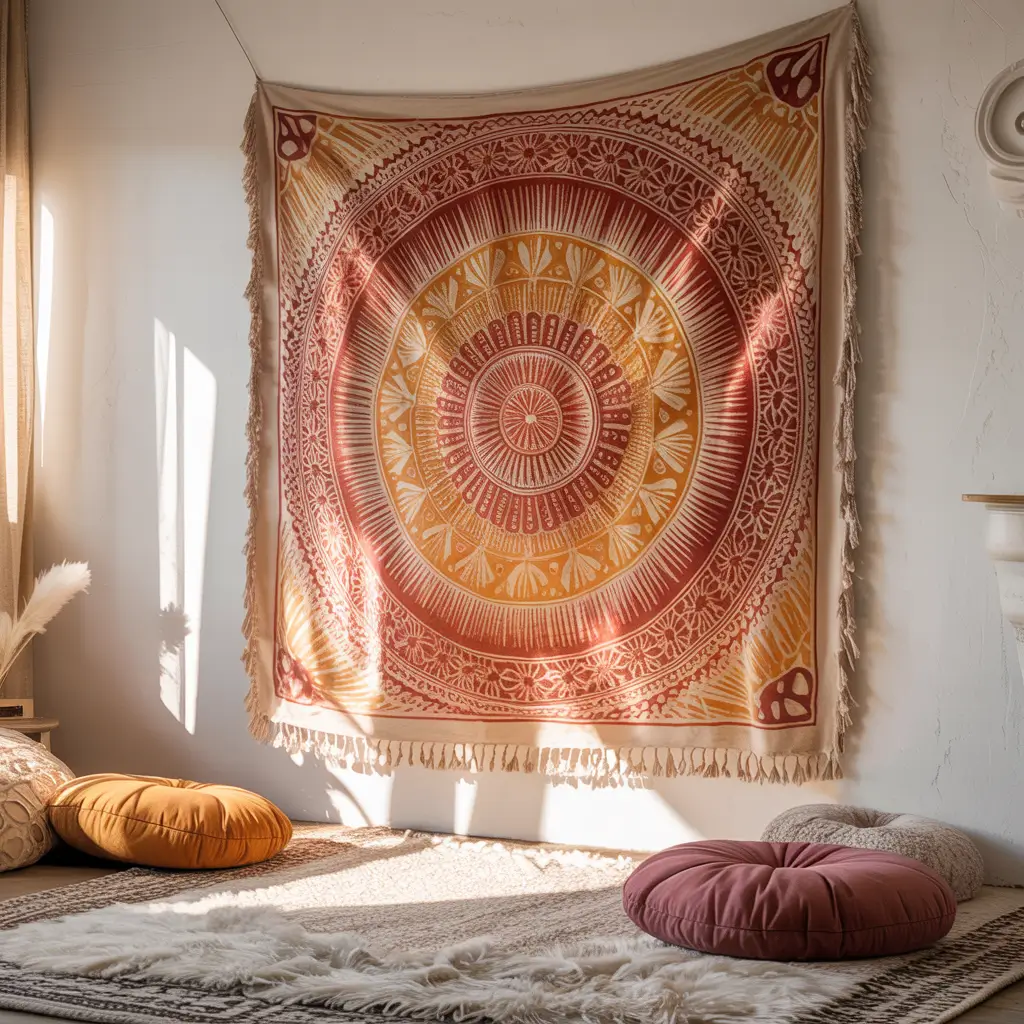
A tapestry — a genuinely woven fabric piece, not a printed poster on thin material — brings to a wall what rugs bring to floors: warmth, texture, acoustic softening, and a quality of handmade craftsmanship that manufactured decor can’t replicate.
The scale of a tapestry is part of its power. A piece that covers a significant portion of a large wall creates a visual anchor for the entire room. It establishes the color palette, sets the mood, and makes every other decorating decision easier because it gives you something to respond to.
Tapestries are also one of the most practical options for renters. A single picture hook or a wooden rod with two hooks can support a large, heavy tapestry without requiring anything more permanent. When you move, the wall is undamaged and the tapestry comes with you.
9. Frameless Mirror Arrangements
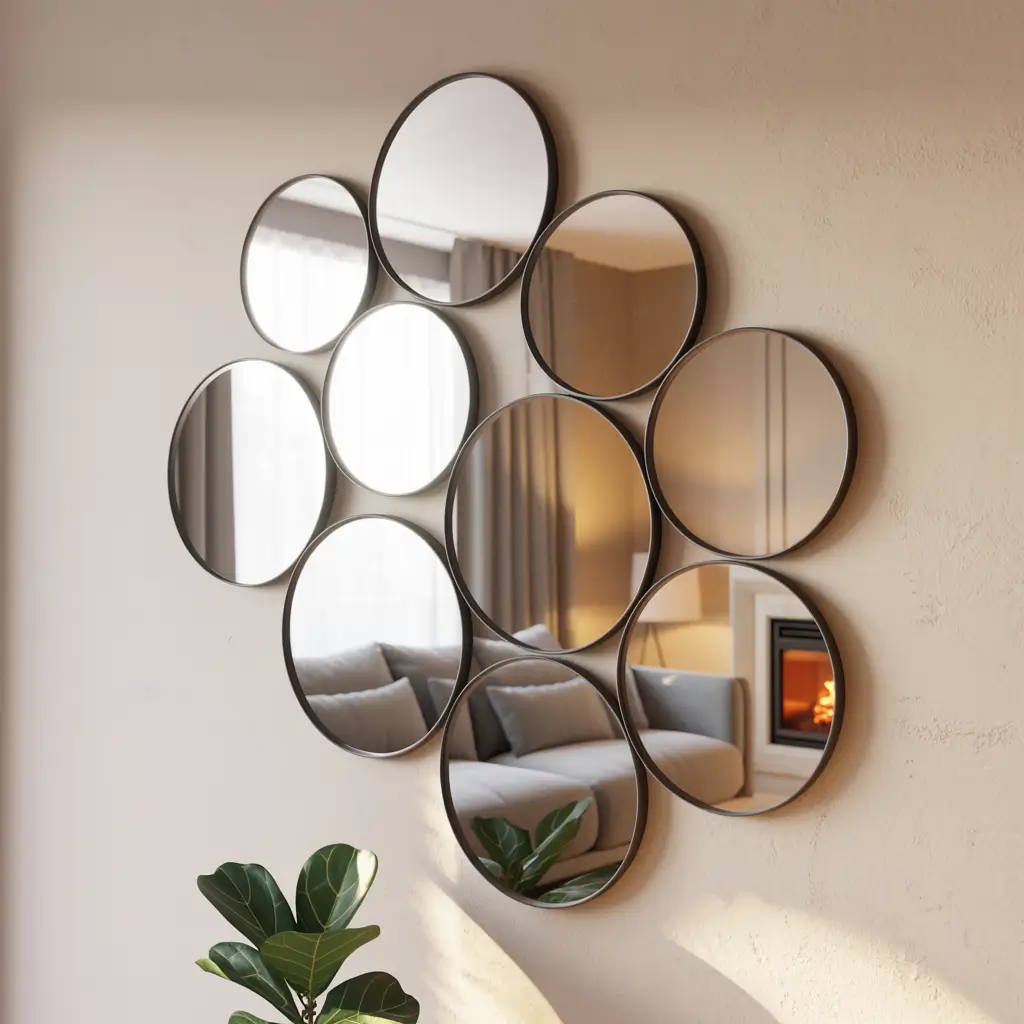
Mirrors are perhaps the most functionally versatile element in wall decor. They add light — reflecting both natural and artificial sources and distributing them through the room. They add apparent space — creating the impression of depth behind a flat surface. And used decoratively, they add visual interest through their shape, edge treatment, and placement.
An arrangement of frameless mirrors in different shapes — circles, hexagons, irregular organic forms — creates a display that reads as artistic and intentional while performing all the practical functions of mirrors. The frameless edges allow the mirror’s reflective quality to be the focal point rather than the frame surrounding it.
Place mirror arrangements on walls that face windows whenever possible. The reflected light will move across the wall throughout the day as sunlight changes angle, creating a living, dynamic quality that static art cannot achieve.
10. DIY Abstract Canvas Art
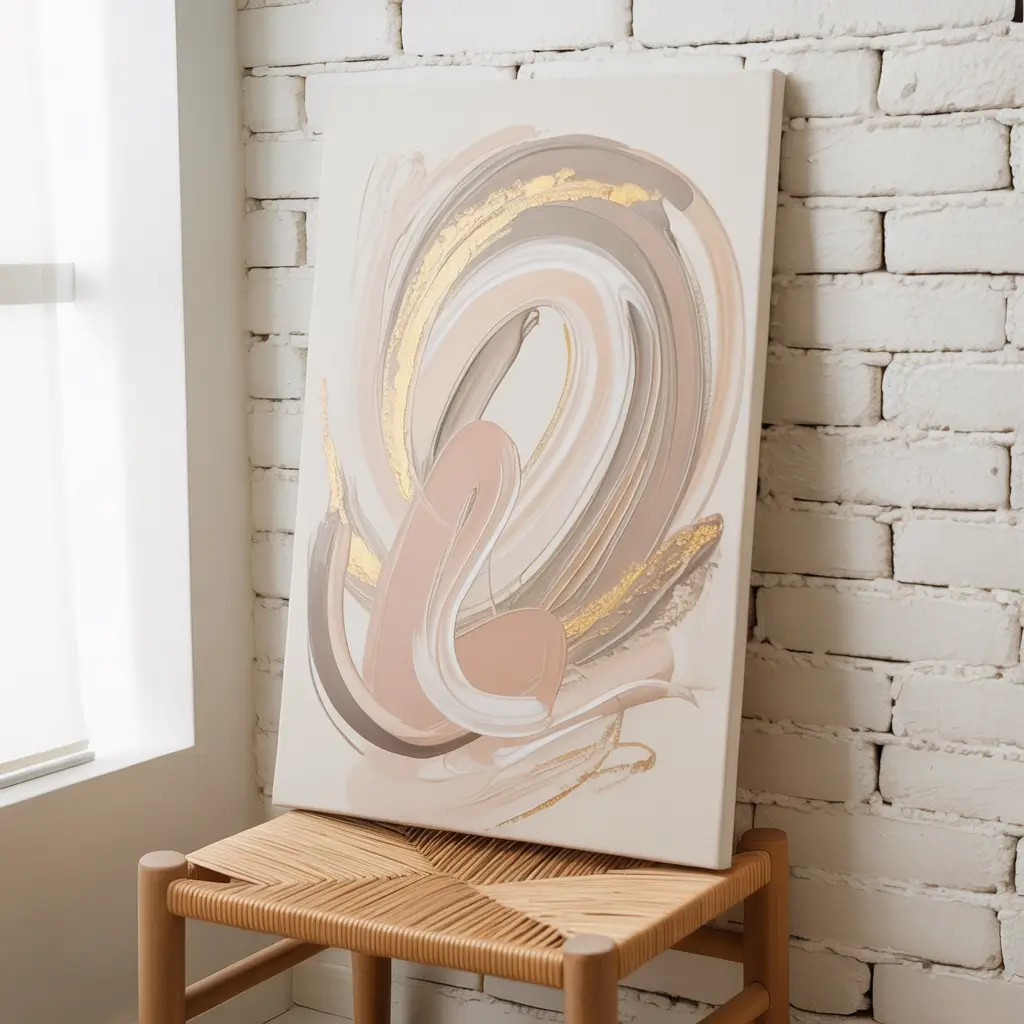
Abstract art made by hand — your hand — brings something to a room that purchased art, however beautiful, cannot: the knowledge that what you’re looking at exists because you made it. That’s a different kind of aesthetic quality, and it matters in ways that are hard to articulate but easy to feel.
The good news for anyone who claims they’re not artistic is that the abstract format specifically rewards non-traditional mark-making. Paint poured across a canvas, colors blended with a palette knife, brushstrokes applied with physical force — these techniques produce results that look like skilled expression precisely because they’re not trying to represent anything specific.
Work in your room’s color palette. Pull specific colors from existing textiles, furniture, or other art you already own. The resulting piece will integrate naturally with the space in a way that purchased art rarely does.
Pro Tip: Make more than one canvas at a time. The process is messy, and having three or four canvases in progress simultaneously lets you experiment freely. The failures become backgrounds for more experiments, and eventually you’ll have more pieces than you expected.
11. Fairy Lights with Hanging Photographs
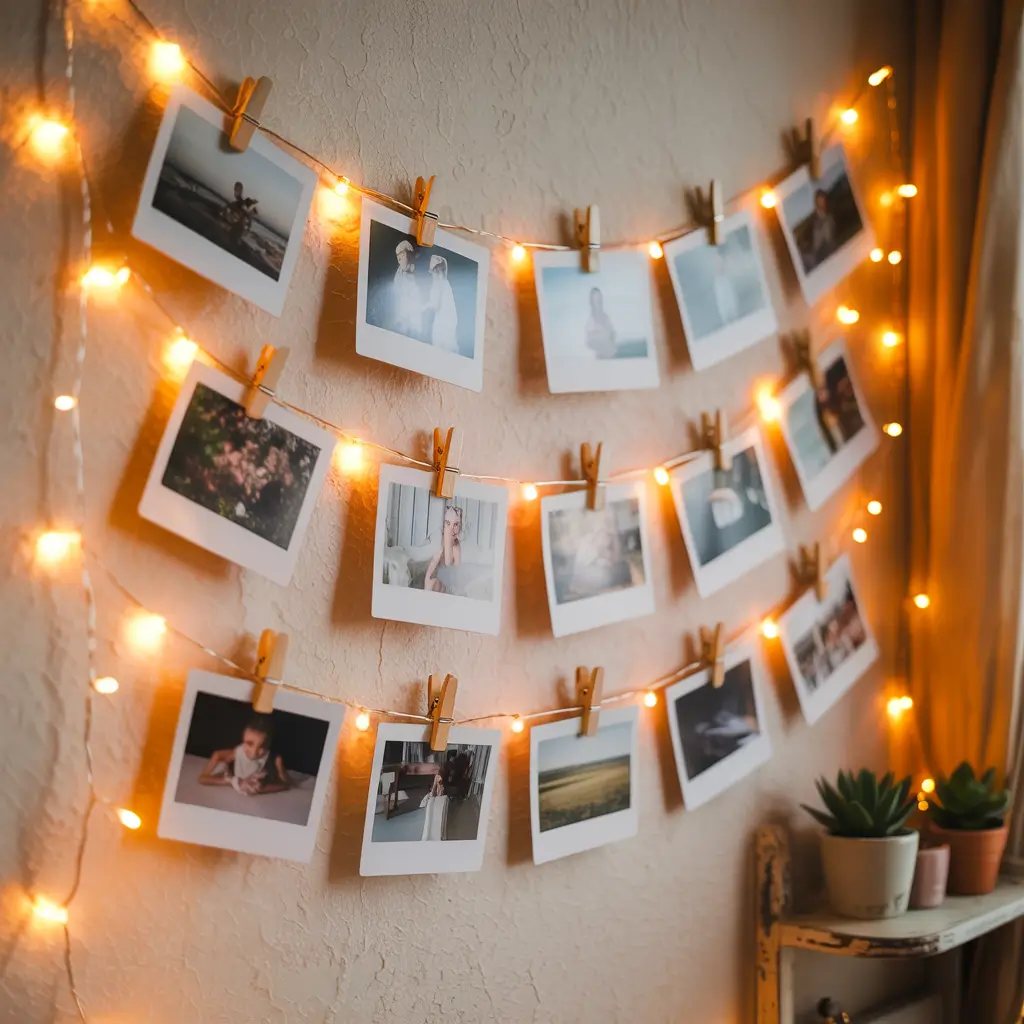
This combination — warm fairy lights with personal photographs clipped along them — creates a display that is simultaneously intimate and atmospheric. The soft glow of the lights gives photographs a warmth that gallery lighting never achieves. It makes the images feel like memories you’re in the middle of rather than records of events that have passed.
Battery-operated LED strings give you complete freedom in placement, independent of outlet locations. Warm white or amber tones work best for photographs — cool white light makes skin tones look flat and clinical.
The arrangement can be as structured or as casual as you prefer. Horizontal strings in neat rows create a clean, contemporary display. Lights draped in a more organic pattern — following the curve of a wall, framing a window, draping over a headboard — create something warmer and more informal.
12. Washi Tape Wall Art
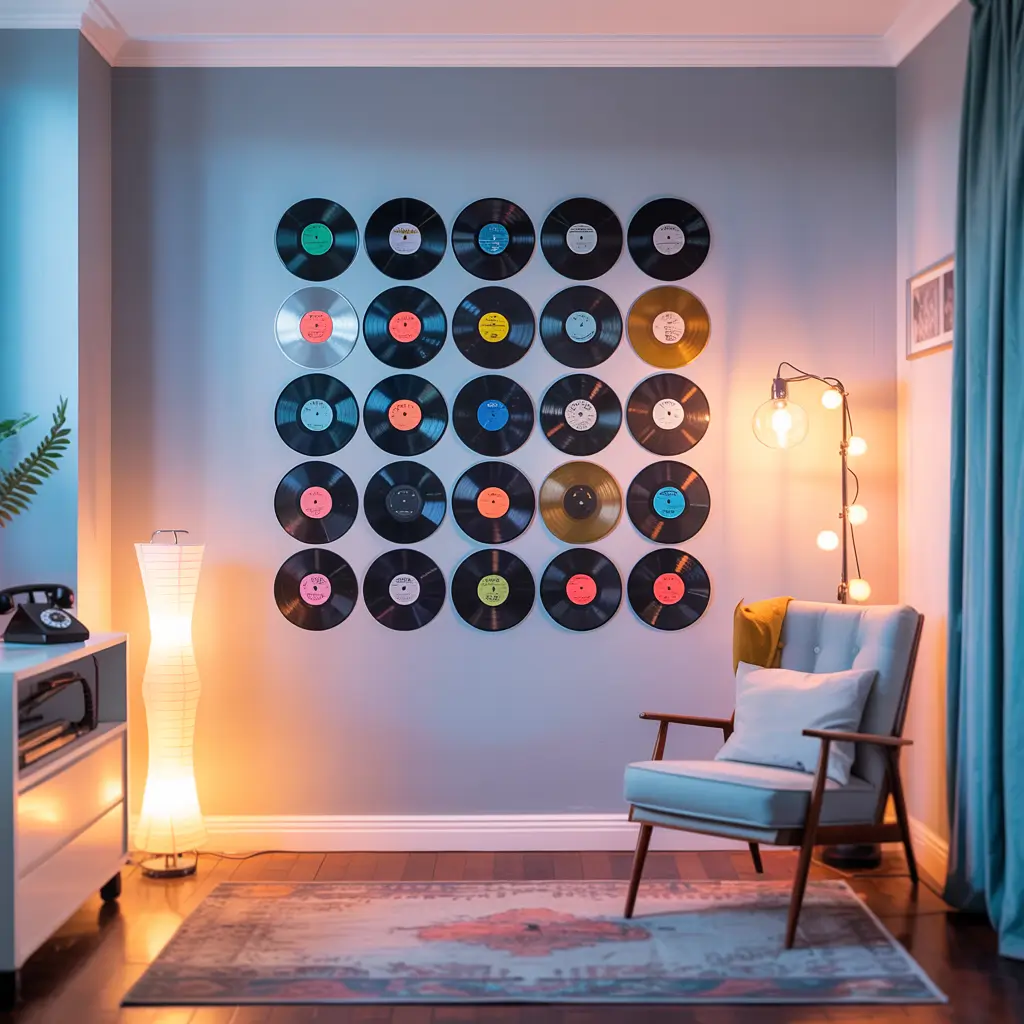
Washi tape is one of the most renter-friendly and reversible wall decor approaches available — and in the right hands, the results look nothing like the temporary, makeshift solution it technically is.
Geometric patterns made with precise tape lines — diamond grids, large triangles, hexagonal shapes — can cover significant wall areas with visual impact comparable to wallpaper or painted murals. Use a level and measuring tape to maintain precision; the clean lines are what make the technique work.
For smaller applications, washi tape frames around existing art, photographs, or prints create a custom, hand-crafted quality that adds personality without permanence. When you move or want to change the arrangement, the tape lifts cleanly from most wall surfaces without marking.
Renter’s Note: Test any tape in a hidden area first. While most washi tape is safe for painted walls, some paints — particularly flat or matte finishes — can lift with tape removal. Using painter’s tape as a base layer under the washi tape adds an extra margin of safety.
13. Textured 3D Wall Panels
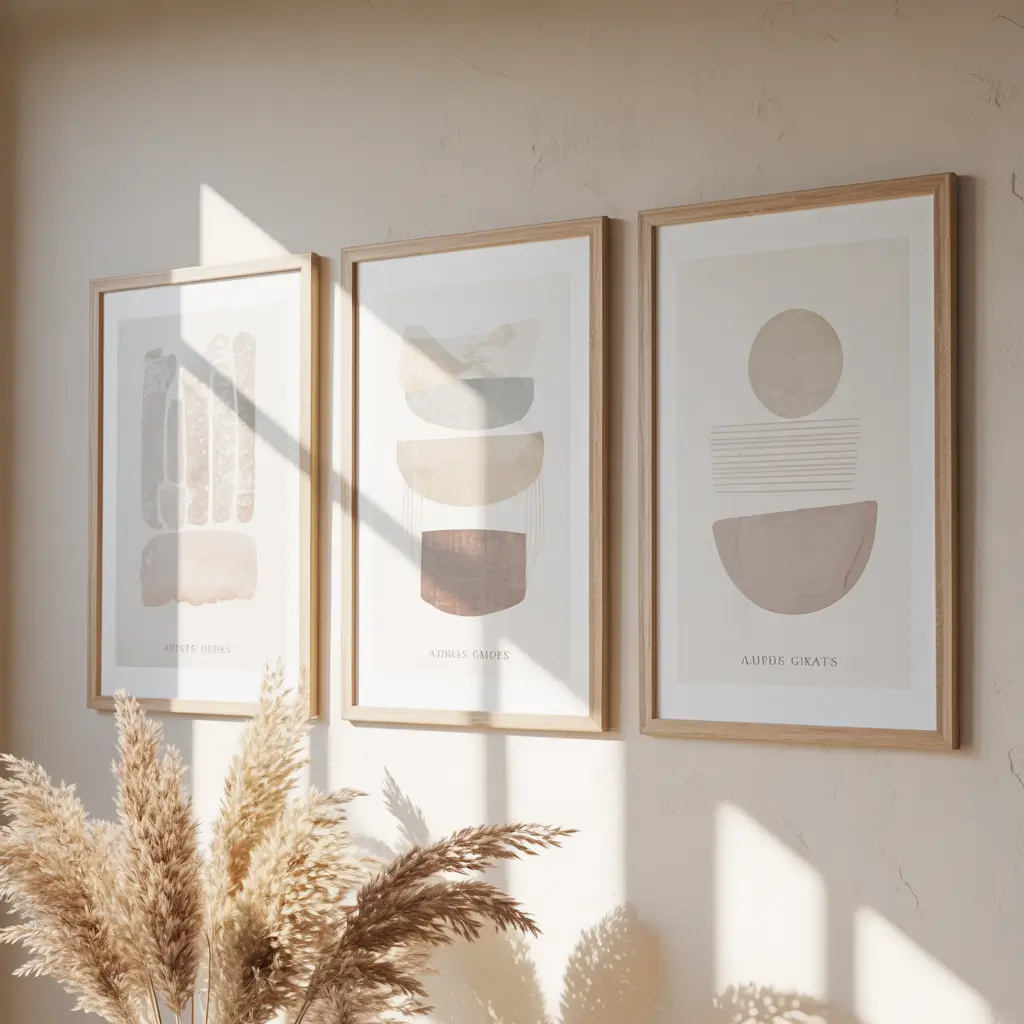
Three-dimensional wall panels change not just the appearance of a wall but its fundamental character. A flat wall with a textured panel installation becomes an architectural feature — something that casts shadows, changes appearance as the light moves, and draws touch as well as sight.
Materials range from natural wood in geometric relief patterns to pressed fiber panels to sculptural plaster installations. Each material creates a different quality: wood reads as warm and organic, geometric fiber panels as contemporary and precise, plaster as classical and substantial.
Even a relatively small panel installation — say, a three-foot square section of a larger wall — can anchor a room the way a significant piece of furniture does. It doesn’t need to cover the entire wall to establish a focal point.
14. Neutral Tone Curated Poster Set
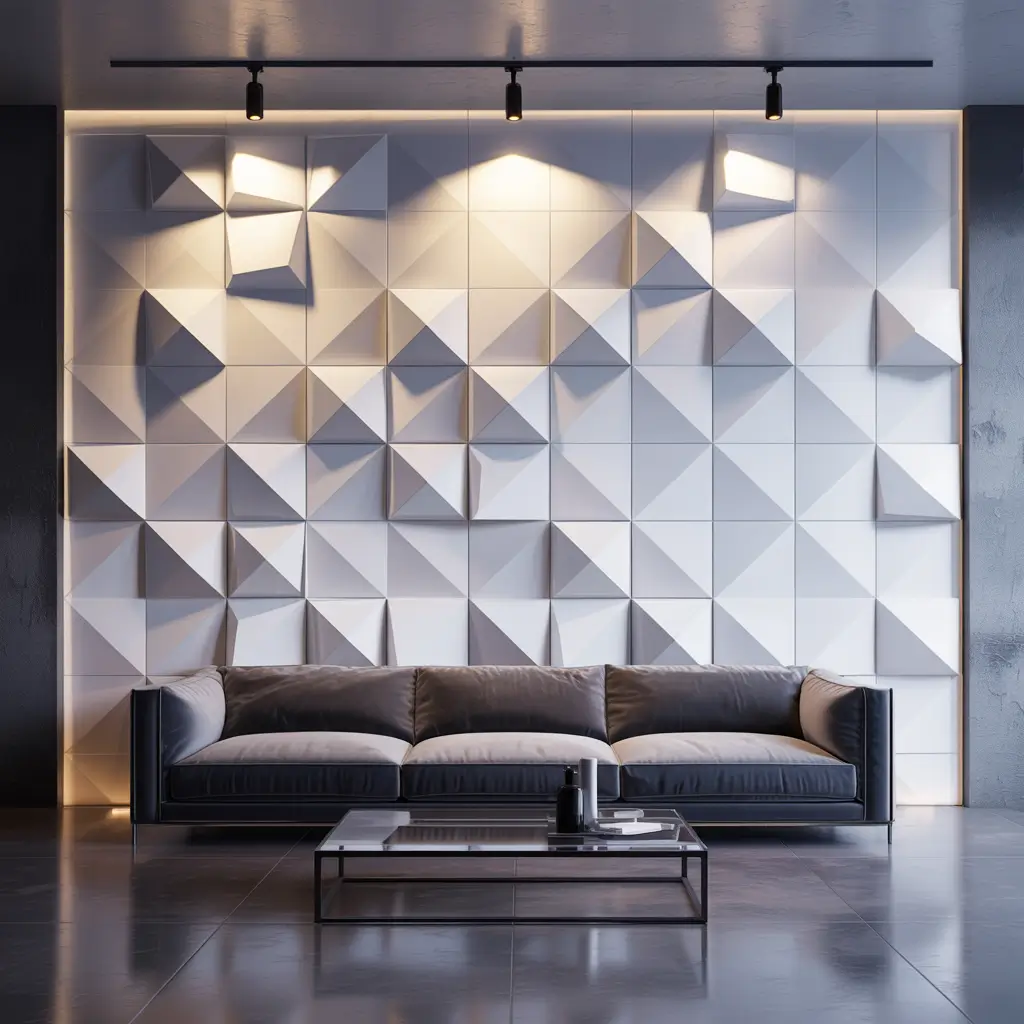
Neutral-palette posters — black and white photography, monochrome abstract art, sepia-toned illustrations, minimal typography in gray on cream — create a display that adds genuine visual substance without introducing color complexity that might disturb a carefully balanced room.
This approach works particularly well in spaces where the color comes from furniture, textiles, and living things — plants, throws, cushions — and the walls need to provide structure and interest without competing. Neutral art creates visual weight and focal points while keeping the overall palette coherent.
A collection of three to five pieces in matching frames — all black, all white, or all a specific wood tone — hung with consistent spacing reads as a considered set rather than a random accumulation, even when the individual pieces are quite different in subject or style.
15. Oversized Single Statement Print
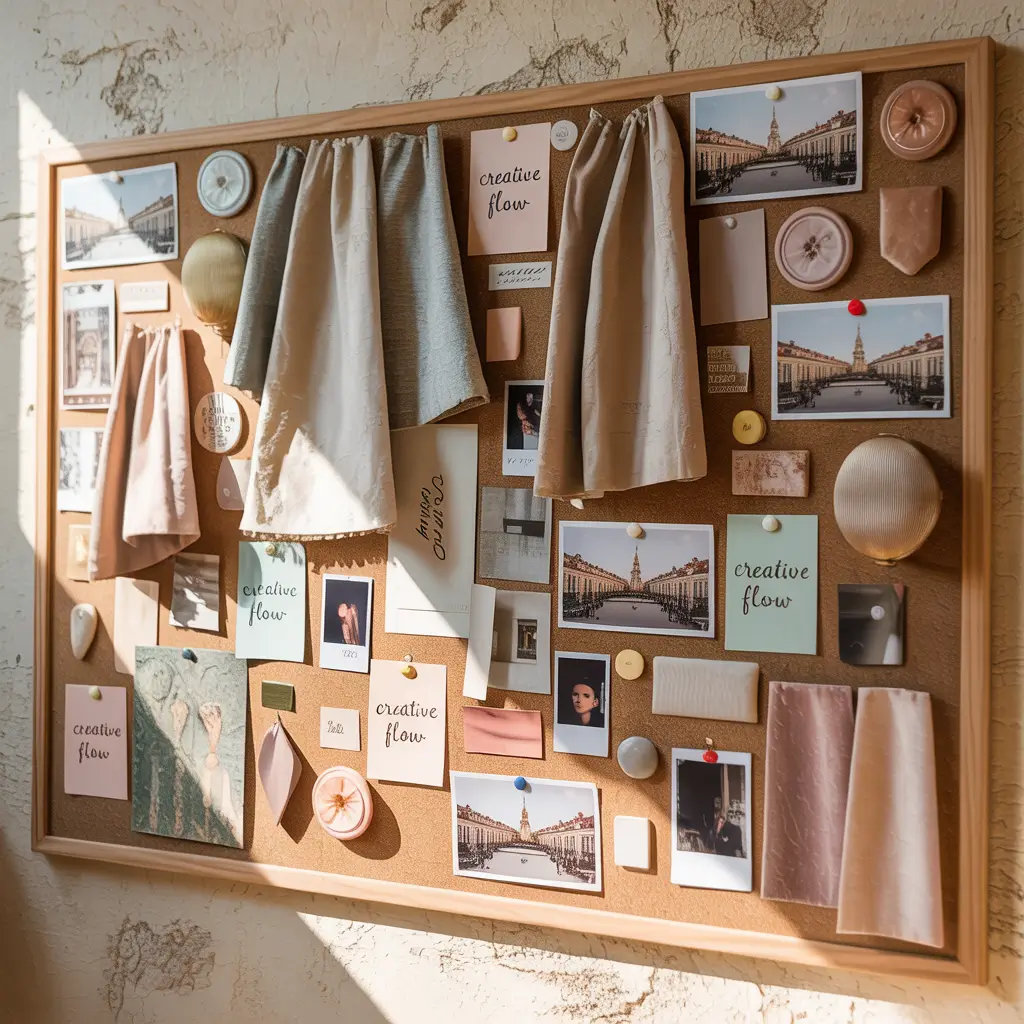
Sometimes the most effective wall decor decision is also the simplest: one large, exceptional piece that earns the wall it occupies. Not a collage, not a gallery arrangement, not a multi-piece set — one thing, scaled to make a genuine impression.
The piece needs to be right for this to work. It needs to be visually strong enough to stand alone — either through image quality, composition, or sheer beauty. And it needs to be sized correctly: a genuinely large print, at least 24 by 24 inches and often larger, creates the presence that makes the single-piece approach successful.
Canvas printing is the most straightforward option for large-format pieces — it requires no frame and has a texture that gives the print a quality feel. Framed prints in substantial, simple frames also work beautifully for the right images.
Aesthetic Wall Decor by Room: What Works Where
Living Room Wall Decor
The living room wall carries the most pressure of any wall in the home because it’s seen by everyone — residents and guests alike — and it sets the tone for the entire house. Living room walls generally reward boldness: this is the right space for oversized statement prints, dramatic gallery walls, large tapestries, or three-dimensional installations.
The wall behind the sofa is typically the focal point of the room and deserves the most considered treatment. If you choose a gallery arrangement for this wall, make sure its combined visual width is at least two-thirds the length of the sofa beneath it, or it will look undersized.
- Above the sofa: gallery walls, large single prints, tapestries, or 3D panels
- Fireplace wall: keep it simple — one significant piece or a pair of complementary pieces
- Side walls: lighter treatment — a shelf display, a few prints, or a single textile piece
Bedroom Wall Decor
Bedroom walls need to serve sleep as well as aesthetics. That means being thoughtful about visual stimulation, brightness, and whether what you’re looking at as you fall asleep contributes to restfulness rather than distraction.
The wall behind the headboard is the most prominent wall in most bedrooms and the natural focus for decorating effort. Soft textiles — macrame, a fabric headboard panel, a large tapestry — add warmth without visual complexity. Art in muted or cool tones reads as calming. Bright colors and high-contrast patterns work against restful sleep environments.
- Above the headboard: macrame, soft art, or a single large botanical print
- Opposite the bed: can handle bolder treatment since you see it fully awake, in the morning
- Bedside walls: keep modest — a small print, a simple shelf, or task lighting
Home Office and Studio Wall Decor
Office and studio walls do a specific job: they need to keep you motivated, inspired, and focused. This is the right context for a mood board wall, a gallery of work that inspires you, typographic prints with purposeful text, or a display of your own work.
Be intentional about what goes on these walls because you’ll spend significant time looking at it. Art that makes you feel capable and creative is a better choice than art that simply looks nice. Personal and meaningful beats generic and beautiful in a workspace.
- Behind the desk: mood board, inspiration gallery, or statement typographic art
- Beside the workspace: shelf display with books, objects, and personal items
- Facing the desk: this wall benefits from natural light reflection — consider mirrors
Hallway and Entryway Wall Decor
Hallways and entryways are transitional spaces — you’re never in them for long — but they create a powerful first impression and set the tone for the rest of the home. Wall decor in these spaces needs to make an impact quickly without overwhelming a space that’s often narrow.
A single-row display of consistently framed prints works beautifully in long hallways. An entryway benefits from a mirror — practical and visually spacious — combined with a meaningful object or piece of art that introduces the aesthetic of the rest of the home.
- Narrow hallways: single row of prints at eye level, evenly spaced
- Entryway: mirror plus one significant decorative piece
- Stairwell walls: gallery wall following the diagonal of the stair — visually dramatic and practical
The Practical Guide to Making It Work
Planning Before You Hang Anything
The single biggest mistake people make with wall decor is hanging things before they’ve worked out the full arrangement. Put one piece up, step back, think it looks okay, put another piece up next to it — and three months later, the wall has accumulated things without plan or coherence.
The right process is the opposite. Gather everything you’re considering. Lay it on the floor in rough arrangement. Photograph the arrangement from standing height and look at the photo — this gives you a much more objective view than looking at the actual objects. Adjust until you’re genuinely happy with the overall composition. Then, and only then, translate it to the wall.
Pro Tip: Cut paper templates to the exact size of each frame or object and tape them to the wall before drilling anything. This lets you assess scale, spacing, and arrangement in the actual space with zero commitment.
Mixing Styles Without Creating Chaos
Mixed-style walls — combining art of different types, eras, and aesthetics — can be the most interesting and personal of all wall displays. They can also be the most difficult to pull off. The difference between a mixed wall that reads as eclectic and considered and one that reads as random comes down to a few specific principles.
First, limit color. Mixed subject matter and style can be held together by a consistent color palette. If every piece, regardless of its style or medium, shares the same two or three colors, the wall will feel cohesive even with significant variety.
Second, maintain consistent framing or consistent absence of framing. All pieces in matching frames looks intentional. All pieces unframed looks intentional. Mixed framing looks accidental.
Third, vary scale deliberately. A mixed wall needs both large and small pieces, and they need to be distributed thoughtfully rather than clustered by size.
Lighting Your Wall Decor
Lighting is the most underconsidered element in wall decor, and it’s the one that makes the biggest difference to how the finished display actually looks — especially in the evening hours when you’re most at home.
Picture lights — small directional fixtures mounted above significant pieces — create museum-quality presentation even in a domestic space. Track lighting with adjustable heads lets you direct light precisely where it’s most needed. For gallery walls with many pieces, a warm-toned overhead source positioned to wash the wall generally works better than individual lights on each piece.
- Use warm white light (2700K-3000K) for art with warm tones — reds, oranges, earth tones
- Use neutral white light (3500K-4000K) for photography and black and white art
- Avoid cool white (5000K+) for most residential art displays
- LED lights don’t produce UV radiation, making them the safest choice for original art
Renter-Friendly Solutions That Actually Work
Not being able to make permanent changes to walls is a real constraint — but it’s a more manageable one than most renters believe. The landscape of damage-free hanging solutions has improved enormously in recent years.
Command strips from 3M hold reliably up to their stated weight limits and remove cleanly from most painted surfaces when the tab is pulled correctly. For heavier items, multiple strips distributed across the back of the frame distribute the load more effectively than a single central mount.
- Adhesive strips for frames up to around 4-5 kg
- Leaning frames and canvases against walls — especially on floating shelves
- Tapestries and textiles on tension rods or adhesive hooks
- Removable wallpaper for painted treatment effects
- Furniture-mounted shelving for heavier shelf displays
Important Note: Always check lease terms and communicate with landlords before making any changes. Many landlords are more flexible than tenants assume, particularly for small-impact hanging that uses proper damage-free methods.
Building an Aesthetic Wall on Any Budget
High-Impact Ideas Under $50
Some of the most effective wall decor costs almost nothing. Washi tape geometric patterns. Printed digital art from free design resources. Photographs developed from your phone camera in standard 4×6 format. A cluster of thrifted frames, spray-painted the same color, filled with magazine cutouts or your own drawings.
The limitation of a minimal budget isn’t a design problem — it’s a curation problem. The quality of your selections matters more than the amount you spend. A carefully chosen $8 poster in a well-made $15 frame will always look better than an expensive piece of art that doesn’t quite work in the space.
Mid-Range Investment ($50-$200)
With a modest budget, you can get custom digital prints made to exactly the size you need, invest in a few good-quality frames, or purchase a medium-sized macrame or textile piece. At this level, the returns on quality are significant — a well-made frame makes a significant difference to how the art inside it reads.
Floating shelves at this budget level can be genuine solid wood rather than MDF, which makes a difference both in appearance and longevity. And a small LED neon sign, custom-made to your specification, is achievable at this price point.
Investment Pieces ($200 and Above)
At a higher budget, the options open considerably. Original art from emerging artists — available through platforms like Saatchi Art or directly from artist studios — brings a quality and uniqueness to a wall that reproductions can’t match. Custom made-to-measure framing for special pieces. Large-format professional printing on fine art paper or canvas. Significant macrame or woven textile pieces from skilled makers.
The most important principle at any budget level remains the same: one exceptional piece always beats several mediocre ones. Patience in finding the right thing is worth more than speed in filling a wall.
Frequently Asked Questions
How do I figure out my personal aesthetic before I start decorating?
The most reliable method is to collect images of spaces you’re genuinely drawn to — not spaces you think you should like, but spaces that create a physical response when you look at them. Save them to a folder or a board, then look at the collection and identify what the images have in common. Not the specific objects, but the quality of light, the color palette, the density of objects, the mood. That common quality is your aesthetic direction.
How many pieces of art are too many for one wall?
There’s no universal answer, but the right number for any wall is the number at which removing one piece would make the arrangement feel incomplete, and adding one more would make it feel crowded. For most walls, that’s somewhere between three and nine pieces. Very large walls can support more. Very small walls sometimes need just one. Trust your visual response more than any formula.
Is it better to hang art at eye level or higher?
Standard gallery practice is to hang the center of a piece at 57 inches from the floor, which approximates average eye level. In practice, this means adjusting for your actual eye level and the specific function of the room — art above a sofa or bed should be positioned in relation to the furniture beneath it, not strictly to eye level. The most important principle is that art hung too high reads as disconnected from the room; when in doubt, hang slightly lower rather than higher.
How do I make a small wall look more interesting without making it feel crowded?
The answer is almost always vertical emphasis. One tall, narrow piece — or a vertical arrangement of two or three small pieces stacked — uses wall space efficiently while drawing the eye upward, which makes the overall wall and room feel larger. Avoid wide horizontal arrangements on small walls; they emphasize the limited width rather than working with it.
What’s the safest approach for decorating walls in a rental?
Damage-free adhesive strips for lighter hanging, leaning larger pieces against walls on shelves or floor, and removable wallpaper for painted effects. Document the wall condition with photographs before you start, communicate with your landlord about your plans, and when removing adhesive strips, follow the manufacturer’s instructions carefully — slow, deliberate removal at the correct angle prevents almost all paint lifting.
Conclusion: Your Walls Are Waiting
There’s a version of your home where every wall makes you feel something good when you look at it. Where the space around you reflects who you are, what you care about, and how you want to feel when you’re at home. That version isn’t hard to reach — it just requires intention and a willingness to start.
You don’t need to overhaul every wall at once. Pick the one that bothers you most — the blank one that catches your eye every day and reminds you that something is missing — and start there. Try one idea. See how it feels. Build from that foundation.
The best aesthetic wall decor isn’t the most expensive or the most elaborate. It’s the most honest — the arrangement that could only belong to you, in your space, at this point in your life. Everything in this guide is in service of that.
2 thoughts on “15 Inspiring Aesthetic Wall Decor Ideas for Small Rooms”