
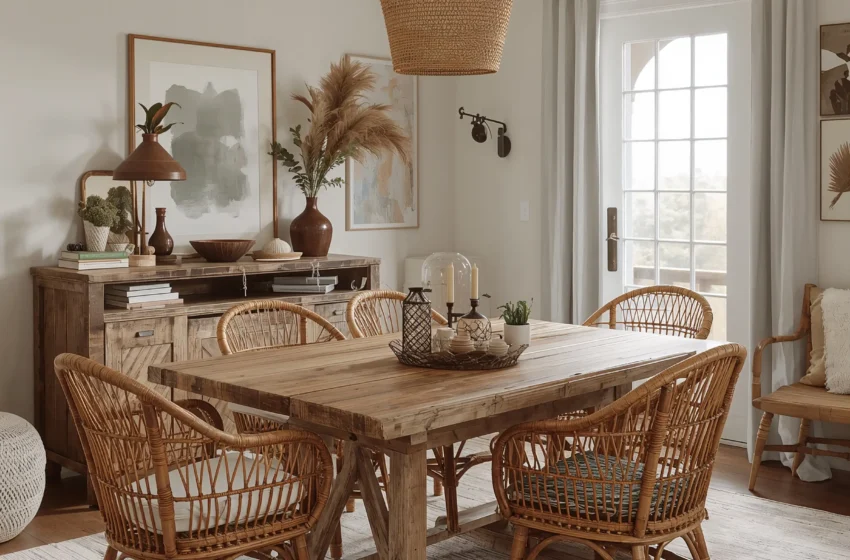
Walk into a well-done bohemian dining room and something shifts. The air feels different. There are layers to look at — a macrame wall hanging here, a cluster of rattan pendants there, mismatched chairs that somehow all feel like they belong together. It is warm, a little wild, and completely alive.
Boho style is one of those rare aesthetics that actually gets better the less you overthink it. The whole point is to build a space that looks and feels collected — like you gathered these pieces over years of traveling, thrifting, and just living. No matching sets. No rigid color rules. No pretense.
But here is the thing: even “effortless” takes a little intention. Knowing which elements to reach for — and how to combine them without the room looking like a cluttered mess — is what separates a genuinely beautiful boho dining room from a chaotic one.
1. Hang Rattan Pendant Lights Over the Table
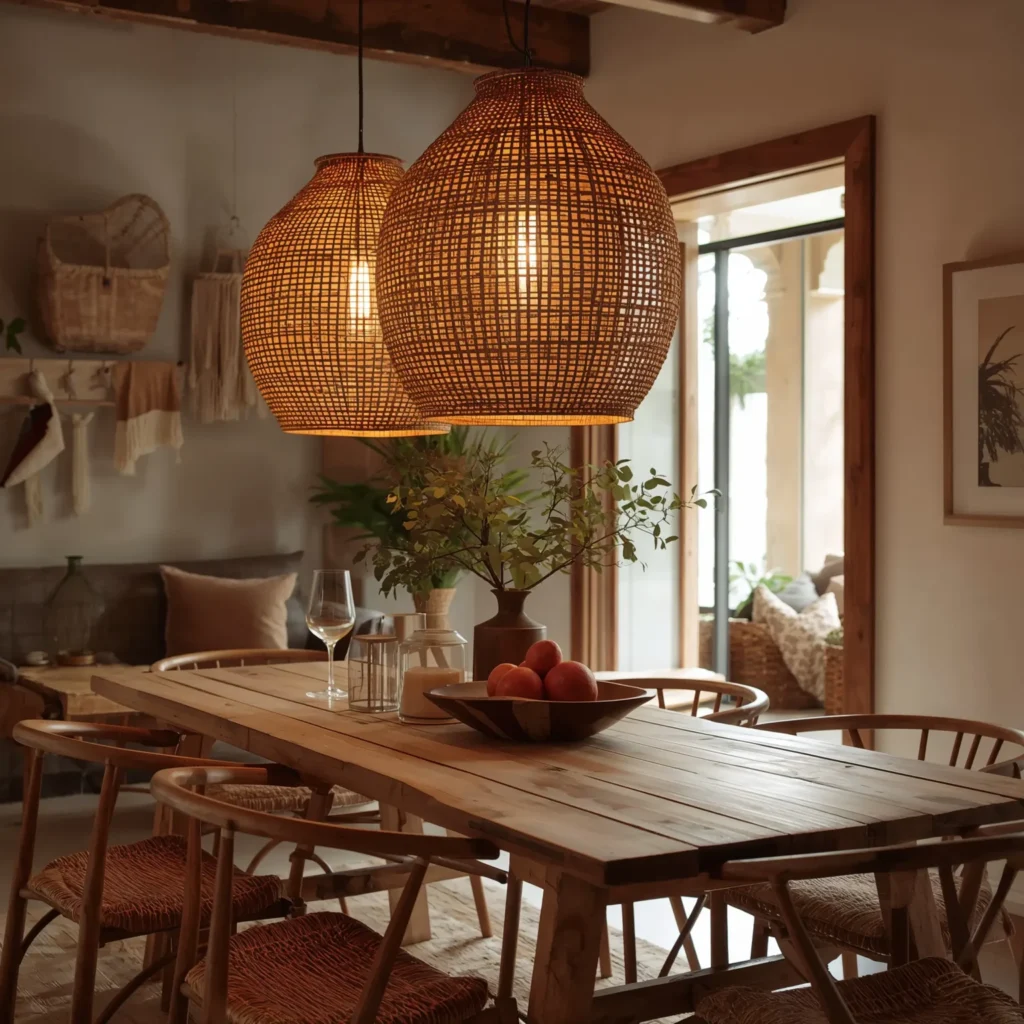
Few single changes transform a dining room as dramatically as swapping out a standard light fixture for one or more rattan pendants. The woven texture catches the light in a way that no glass or metal fixture can — casting soft, organic shadows across the room that make everything look warmer and more intentional.
Rattan pendants work especially well in groups. Two or three pendants hung at slightly varying heights over a long dining table create a layered, sculptural moment that feels high-design without the price tag. If you have a round table or a smaller space, a single oversized rattan pendant — at least 20 to 24 inches in diameter — makes a strong, confident statement.
Getting the Scale and Height Right
- For standard 8-foot ceilings, hang the bottom of the pendant 30 to 34 inches above the tabletop.
- For every additional foot of ceiling height, raise the fixture 3 inches.
- For a long rectangular table, consider using two or three pendants rather than one to distribute visual weight evenly.
- Natural rattan reads warmer; whitewashed or painted rattan reads more contemporary.
✨ Bulb choice matters: Edison-style filament bulbs or warm white LEDs (2700K) complement rattan beautifully. Cool white bulbs will undermine the whole warm, earthy effect you are going for.
2. Make a Statement with a Macrame Wall Hanging
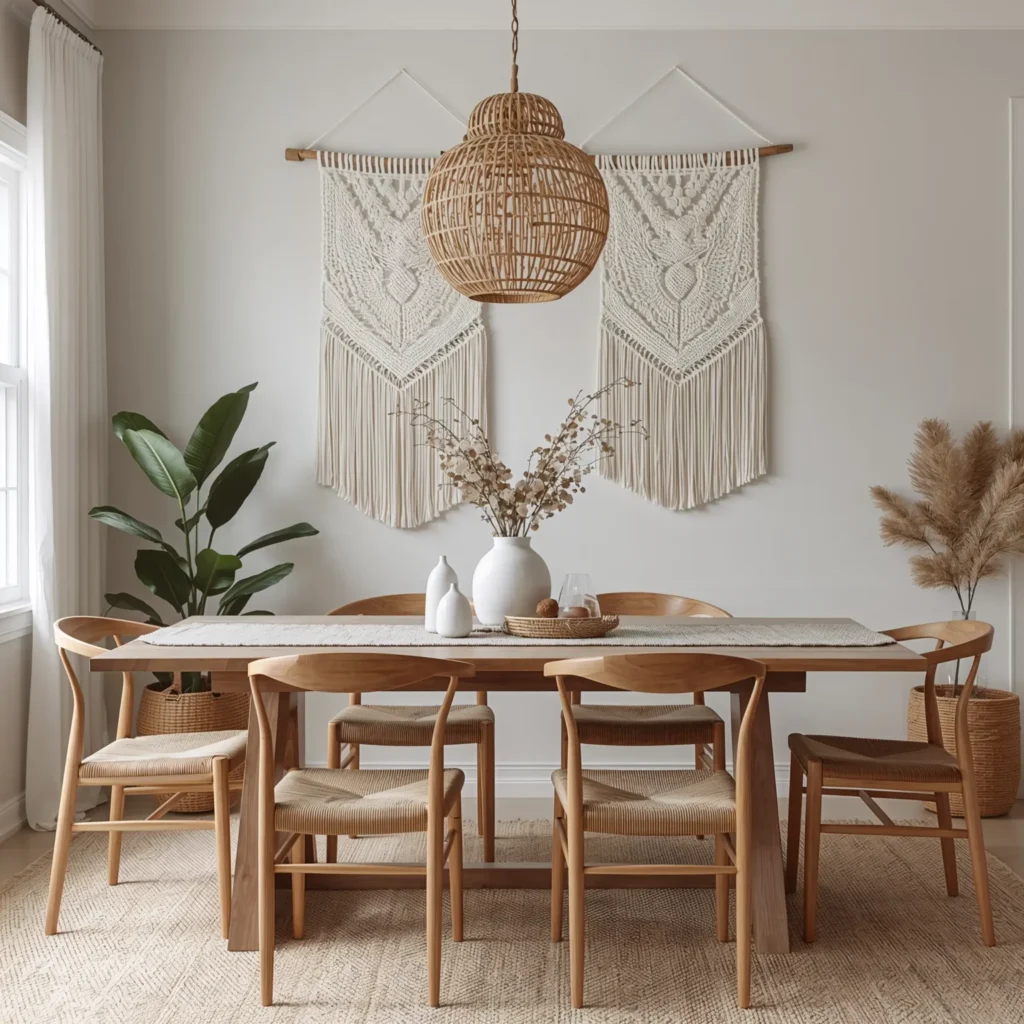
Macrame has had many lives, and right now it is firmly in its best one. A large macrame wall hanging behind the dining table functions like textile art — it adds texture, warmth, and a handmade quality that no printed canvas or framed poster can replicate.
The key is scale. A small macrame piece in a dining room tends to look like an afterthought. Go big — something that fills at least two-thirds of the wall space behind your table. The visual weight it adds anchors the seating area and gives the room a clear focal point.
Natural cotton rope in cream or off-white is the most versatile option, working with virtually every color palette. But if your space can handle it, try a terracotta-dyed macrame, a dusty sage, or even a deep rust — the color adds dimension without losing any of the handmade warmth.
✨ Styling tip: Hang the macrame so its center sits roughly at eye level when seated. This creates a connection between the art and the dining experience rather than leaving it floating too high on the wall.
3. Embrace Mismatched Chairs Around the Table
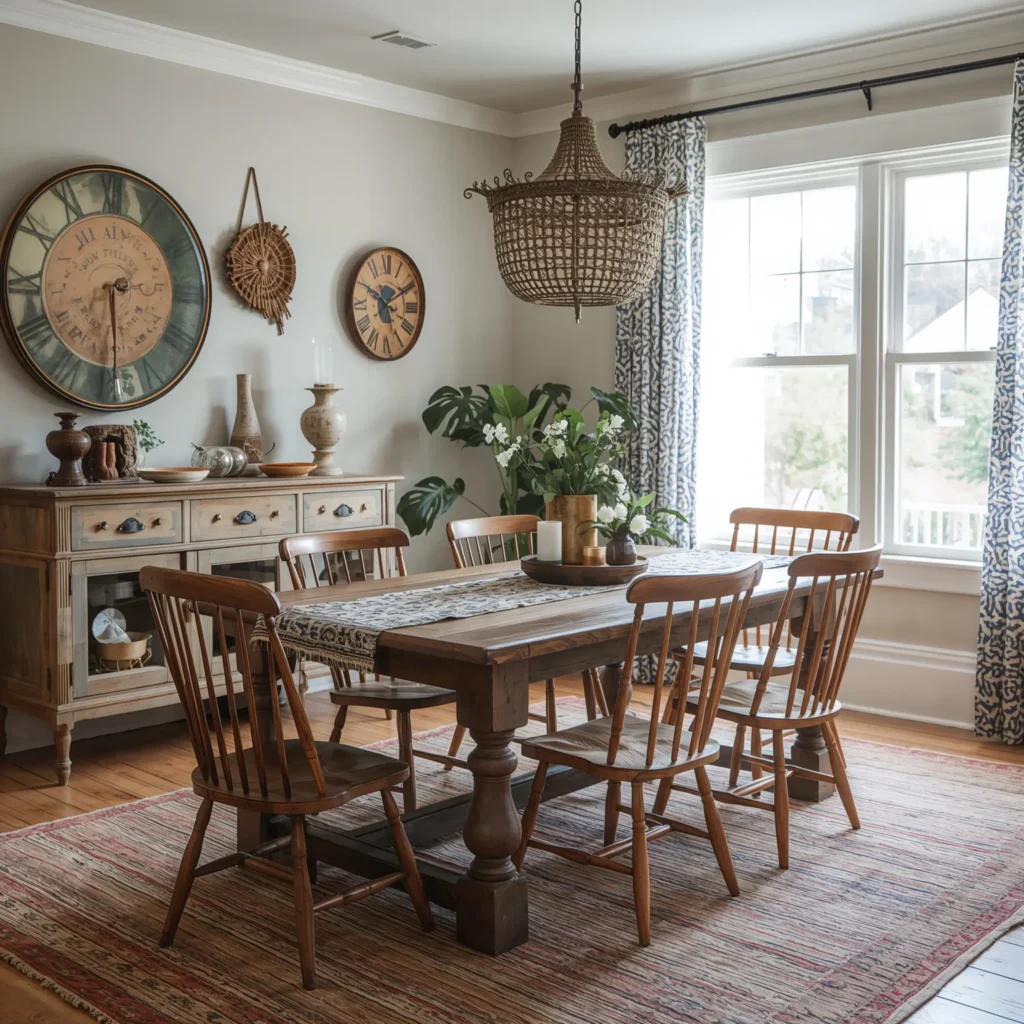
The matching dining set is the exact opposite of boho. In a bohemian dining room, the chairs should look like they came from different places — different eras, different styles, different hands — yet somehow all ended up at this one table together. That is the magic of the collected look.
The trick to making mismatched chairs work is finding a unifying thread. It might be a consistent wood tone, a shared color palette, a similar leg style, or just a rough similarity in seat height. You do not need the chairs to match — you just need them to converse.
A Simple Formula for Mixing Chair Styles
- Start with one dominant style — this is your anchor chair, perhaps used at the head of the table.
- Add two to four chairs in a complementary but different style along the sides.
- Use a wooden bench on one side for casual seating that breaks up the individual-chair rhythm.
- Limit your mix to three or four distinct chair styles to avoid visual chaos.
- Tie them together with cushions in a consistent color or pattern if needed.
Estate sales, thrift stores, and online marketplaces are gold mines for this approach. A $15 chair that needs a light sand and a fresh coat of paint can become a genuine standout piece.
4. Layer a Natural Fiber Rug Underfoot
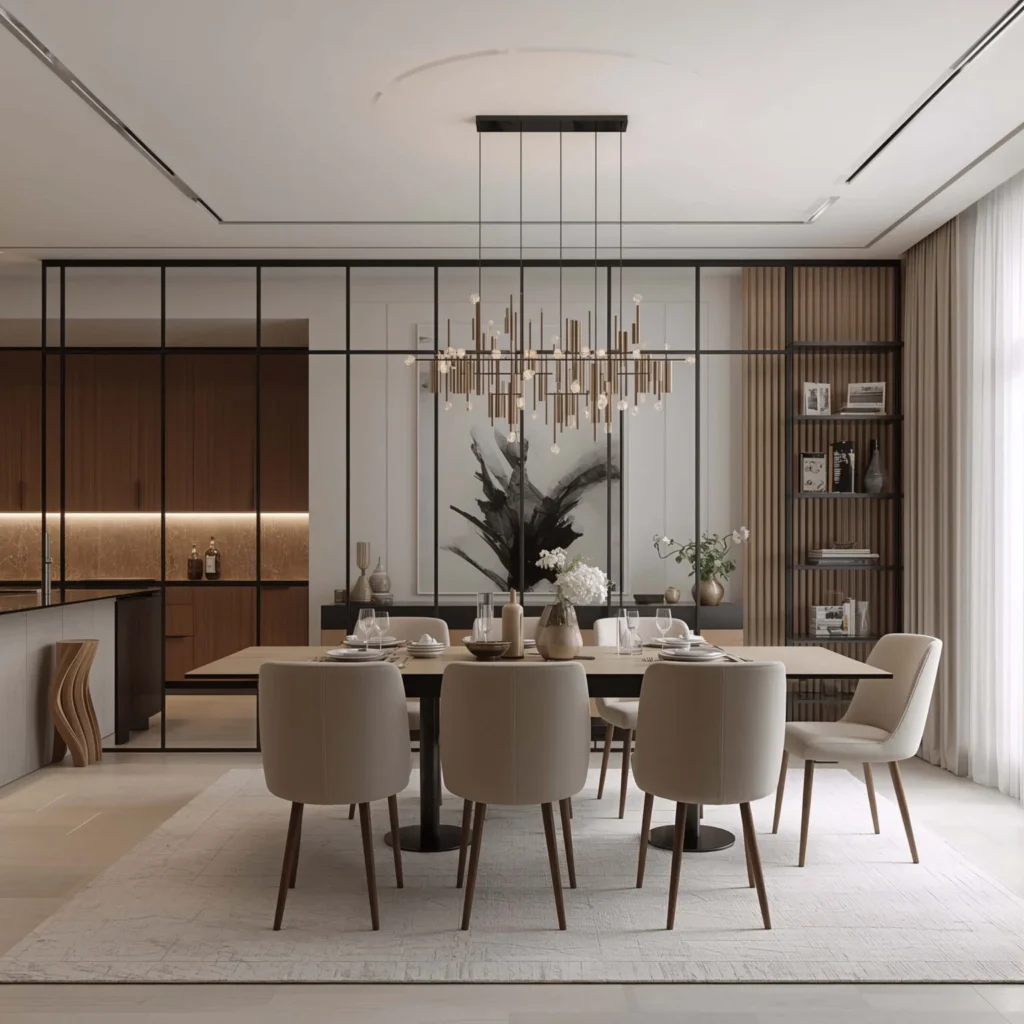
A bare dining room floor — no matter how beautiful the wood or tile — feels cold and unfinished in a boho context. The rug is what grounds the space, quite literally. It defines the dining area, adds warmth, and introduces another layer of natural texture.
Jute and sisal are the most popular choices for boho dining rooms, and for good reason. Their earthy, woven texture complements rattan, wood, and linen beautifully. For a more layered look, place a smaller patterned rug — a vintage Turkish kilim, a faded Persian, or a hand-blocked cotton print — on top of a larger natural fiber base rug.
✨ Size it correctly: The rug must extend at least 24 inches beyond each side of the dining table so chairs remain on the rug when pulled back. A rug that is too small is one of the most common mistakes in dining rooms — it makes the whole space feel off without anyone quite knowing why.
Do not stress about the rug staying perfectly clean. Natural fiber rugs wear beautifully over time, and a little fading and softening only adds to the lived-in boho feel you are going for.
5. Build a Gallery Wall of Eclectic Art and Objects
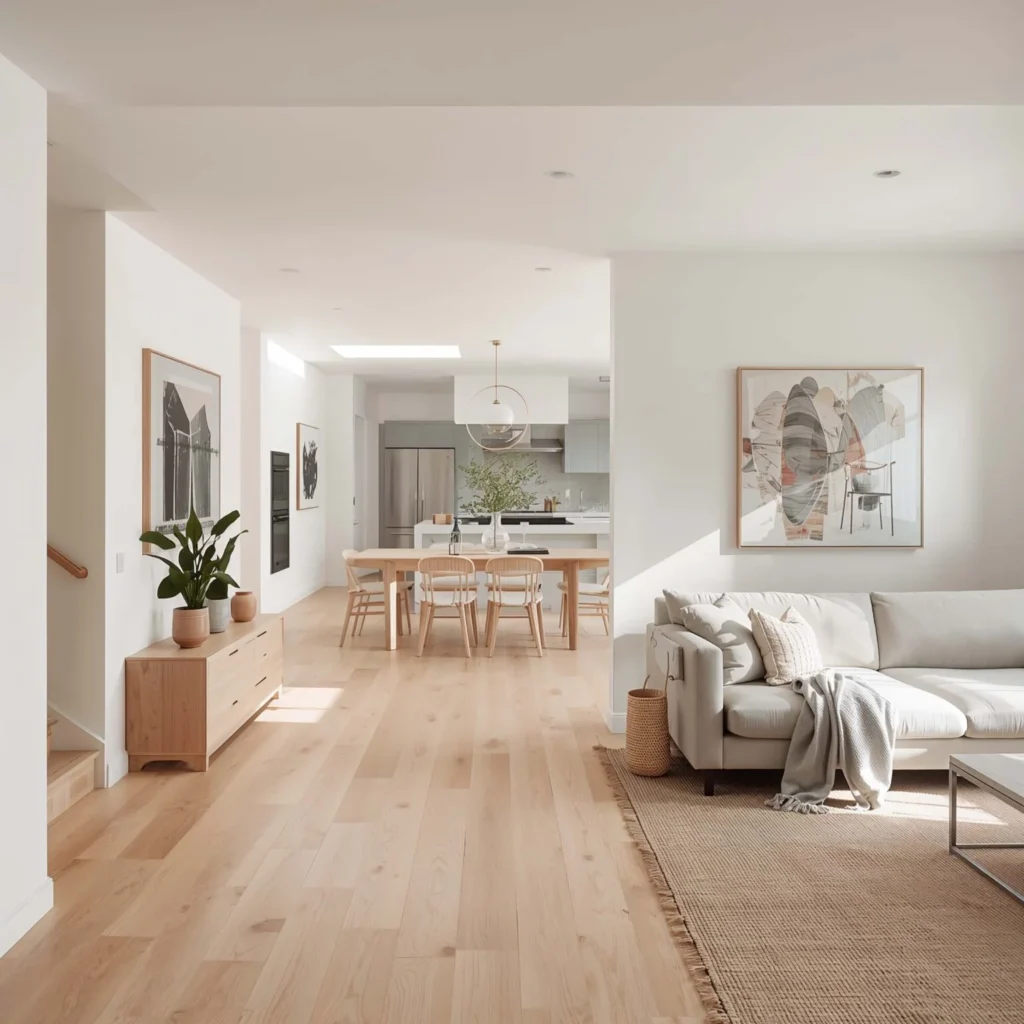
Boho style has a deep love for art — not the kind you order from a big box store in a standard size and a black frame, but the kind that feels personal, unexpected, and layered. A gallery wall in a bohemian dining room should look like it evolved over time rather than being installed in an afternoon.
Mix frame styles and sizes. Combine artwork with objects — a woven wall pocket, a small mirror, a vintage plate, a piece of driftwood. Include things at different depths so the wall feels dimensional rather than flat. Black-and-white photography sits beautifully alongside colorful botanical prints and abstract watercolors.
Building Your Boho Gallery Wall
- Gather all your pieces and lay them out on the floor first to experiment with arrangements.
- Start hanging from the center and work outward, keeping spacing between pieces relatively consistent (3 to 5 inches).
- Mix horizontal and vertical pieces to create visual movement.
- Include at least one unexpected object — not just framed art — to break up the flatness.
- Let the arrangement be slightly asymmetrical. Perfect symmetry is the opposite of boho.
6. Introduce a Woven or Caned Sideboard
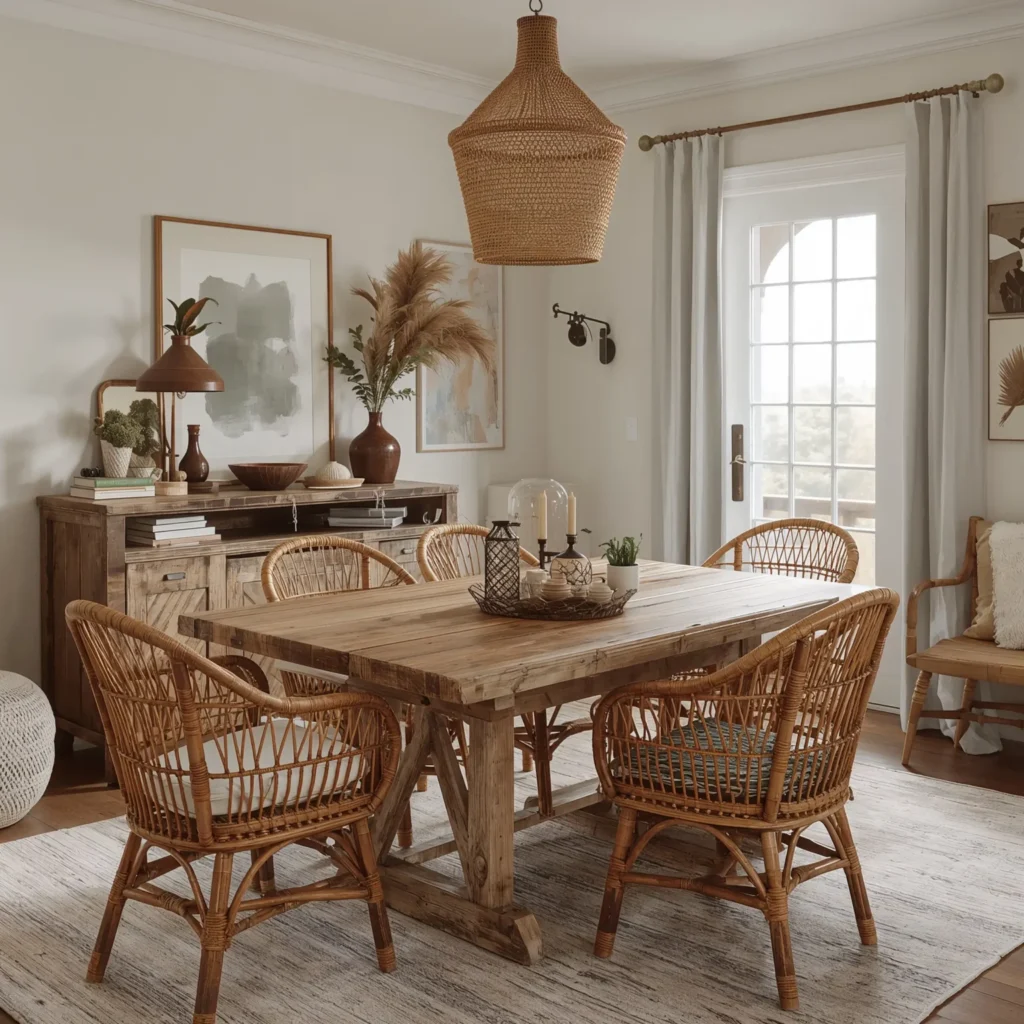
A sideboard or buffet is one of the most functional pieces you can add to a dining room, and in a boho space it doubles as a major decor moment. Look for sideboards that incorporate rattan caning, woven panels, or natural wood with visible grain and texture — pieces that feel handmade and a little imperfect.
Vintage sideboards with cane-front drawers have become genuinely hard to find as the demand for them has surged, but reproductions have gotten convincingly good. Mid-century modern pieces with tapered legs also work beautifully in a boho context — the clean silhouette contrasts nicely with the more organic, layered decor around it.
Style the top with a mix of heights and textures: a tall terracotta lamp, a trailing plant in a woven basket, a stack of art books, a ceramic bowl filled with found objects. Keep it full enough to feel curated but not so crammed that it looks cluttered.
7. Use Terracotta and Earthy Tones as Your Color Backbone
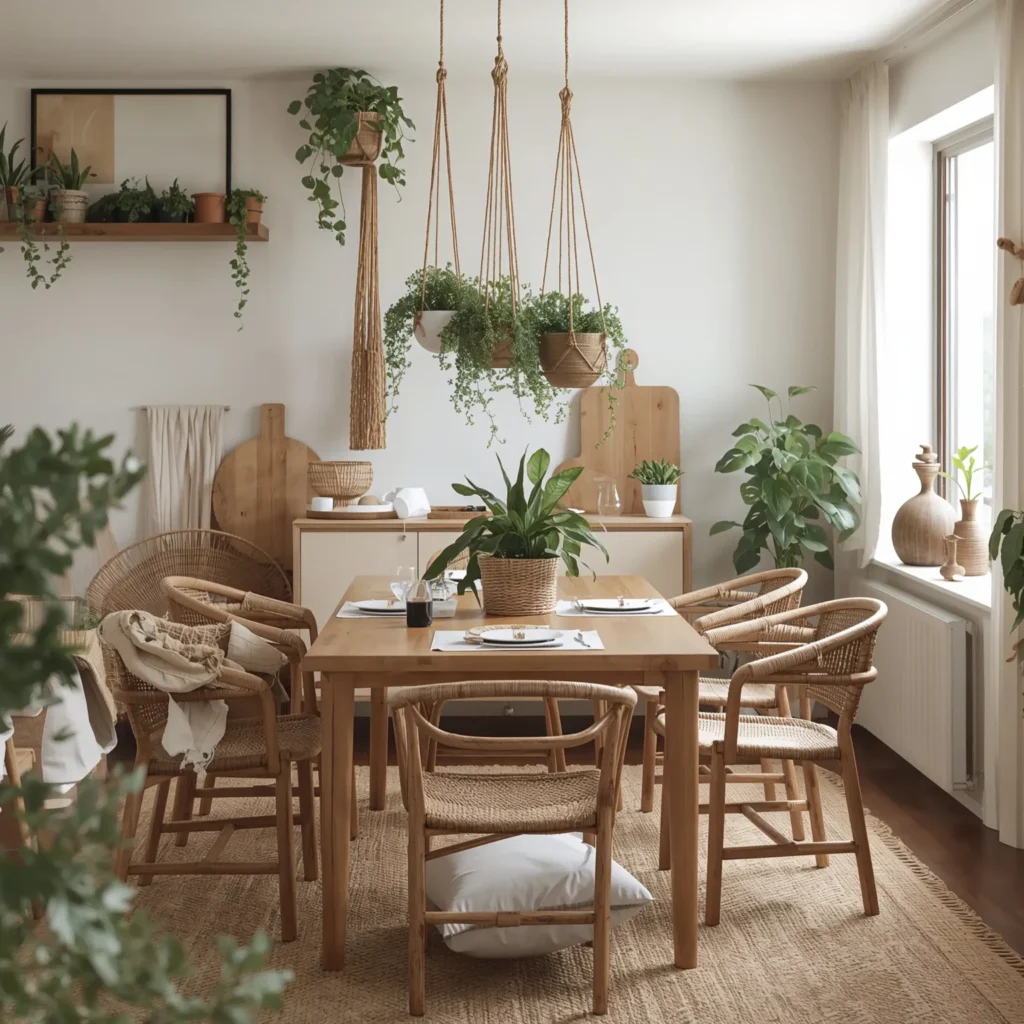
If there is one color that belongs in a boho dining room more than any other, it is terracotta. The warm, burnished orange-red of terra cotta clay connects the space to earth and nature in a way that feels ancient and deeply comforting.
But terracotta works best as part of a layered palette rather than as the only color in the room. Build around it with other earthy tones:
- Warm whites and cream — for walls, linens, and ceramics.
- Dusty sage or olive green — for cushions, plants, or an accent chair.
- Burnt sienna and rust — for artwork, throws, or a feature rug.
- Deep caramel and honey wood tones — for furniture and flooring.
- Muted mustard yellow — as a small pop of warmth in pillows or pottery.
These colors work because they all reference the natural world. They feel warm together without clashing, and they create a palette that is both energetic and deeply calming at the same time.
8. Drape Textiles Generously
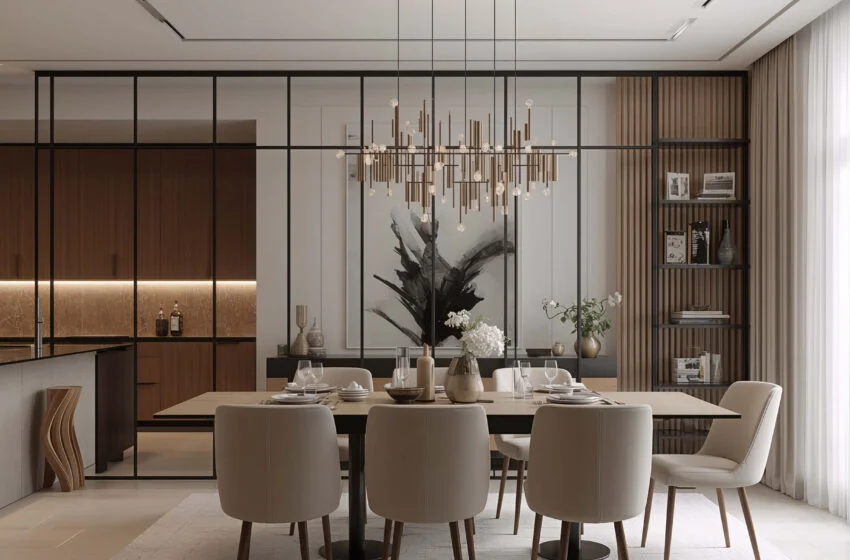
More than almost any other style, boho lives in its textiles. Layering different fabrics — linen, cotton, velvet, wool, silk — is what gives a bohemian dining room its signature softness and depth. Hard surfaces alone will never achieve the look, no matter how beautiful the furniture is.
At the dining table, start with a natural linen or cotton runner. Layer placemats in a woven natural fiber. Use cloth napkins rather than paper — oversized linen napkins in earthy colors or block-printed patterns make the table feel generous and relaxed. Tuck a throw or two over the back of an armchair at the head of the table for a casual, inviting touch.
✨ Pattern mixing rule: In boho style, patterns can coexist — but give them different scales. A large-scale ikat placemat pairs well with a small-scale block print napkin. Keep the colors within the same earthy family and the mix will feel intentional rather than chaotic.
9. Let Plants Take Over (Almost)
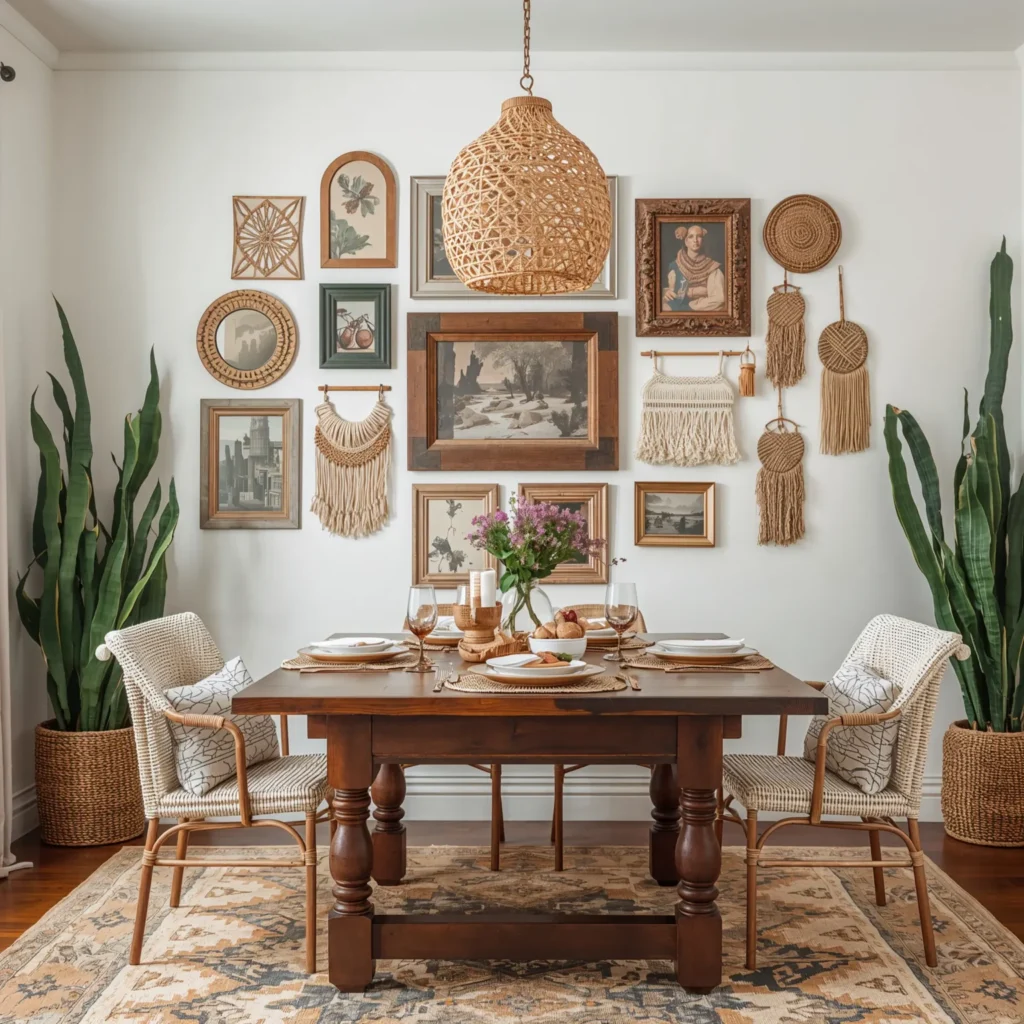
Plants are not optional in a bohemian dining room. They are essential. The lush, slightly untamed quality of a well-planted space is core to the boho aesthetic — the sense that nature has been invited in and made itself at home.
The best plants for boho dining rooms are ones with interesting shapes, trailing habits, or bold foliage. Some great choices:
- Monstera deliciosa — dramatic split leaves, thrives in indirect light.
- Pothos — trails beautifully from shelves and sideboards, nearly indestructible.
- Bird of paradise — tall, sculptural, a real statement piece in a corner.
- String of pearls — elegant and whimsical in a hanging planter.
- Olive tree — slow-growing and deeply Mediterranean, perfect beside a dining table.
- Trailing philodendron — lush and tropical, works well on open shelving.
Use a variety of pots — terracotta, woven baskets, ceramic vessels in earthy glazes. The containers are part of the decor, not just functional holders. Mix sizes and heights for a layered, jungle-like abundance.
10. Create a Candle-Heavy Atmosphere
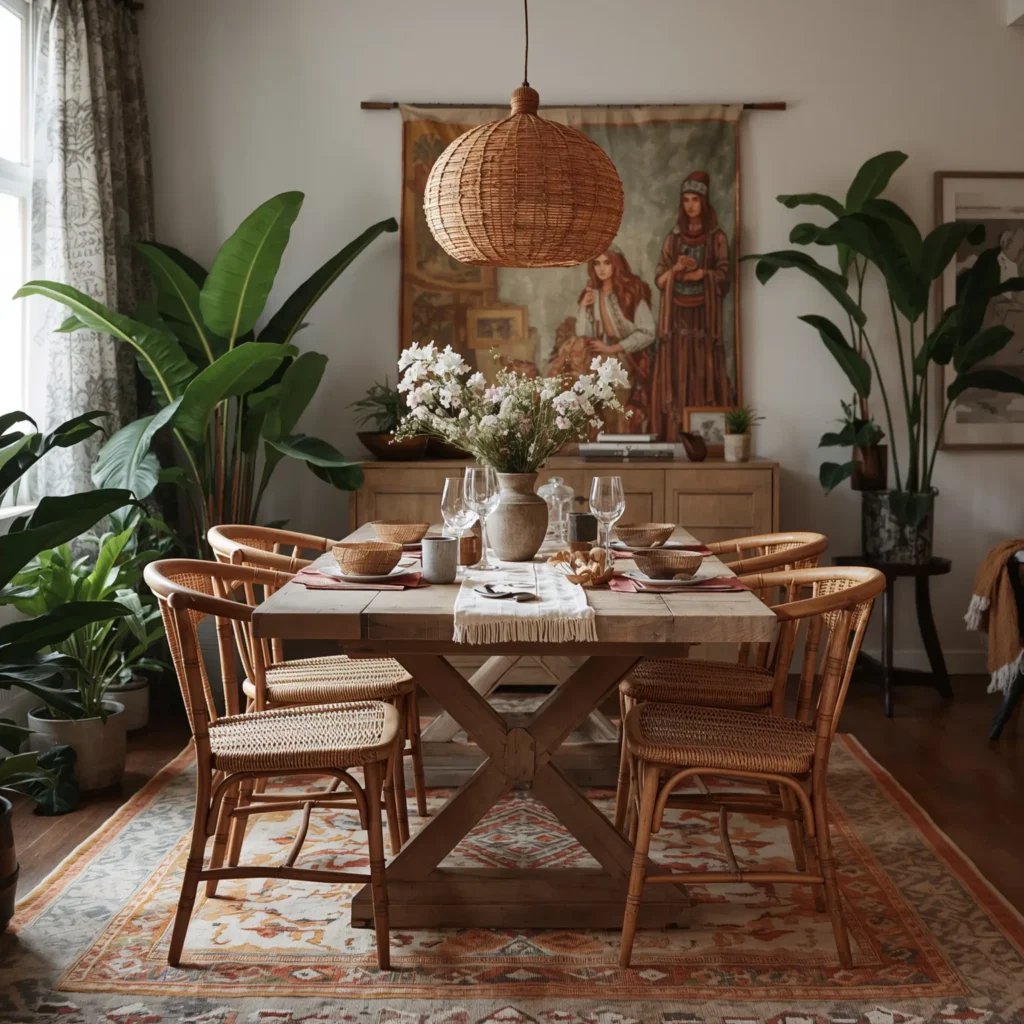
Boho dining rooms glow. The lighting is always warm, always layered, and always a little mysterious. Candles are central to this — not as a special-occasion touch, but as an everyday part of how the space feels.
Cluster pillar candles of different heights on a wooden board or tray at the center of the table. Use taper candles in mismatched brass or copper holders along the table length. Group lanterns in a corner or on the floor beside a sideboard for an ambient, ground-level glow.
For safety — especially around flowing textiles and plants — LED candles have improved dramatically. Many brands now offer realistic flicker effects that are genuinely convincing, and they can be left on all evening without worry.
✨ Scent matters too: Beeswax candles or those scented with warm, earthy notes — sandalwood, patchouli, amber, or cedarwood — reinforce the boho atmosphere in a way that goes beyond the visual.
11. Add Vintage and Handmade Ceramics to the Table
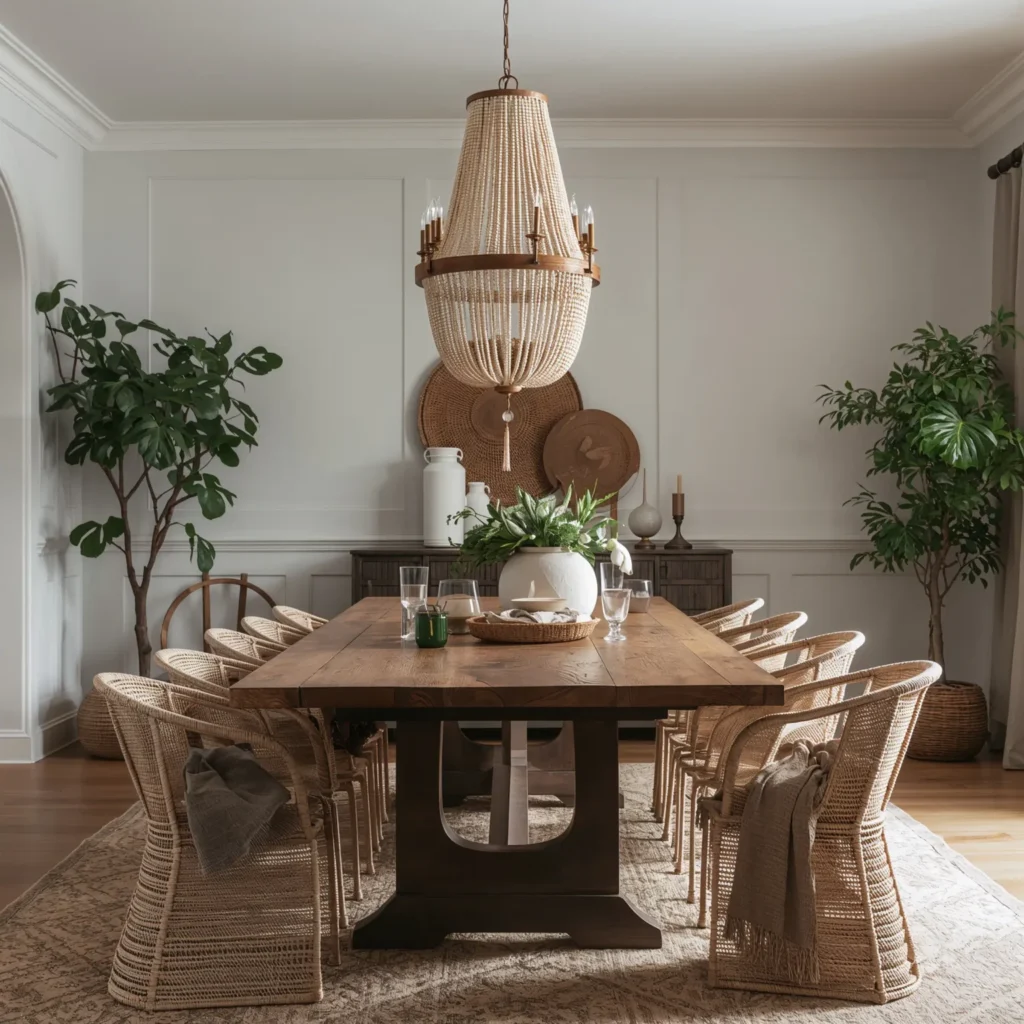
The ceramics you eat from and display are a significant part of the boho dining room aesthetic. Forget matching sets. In a bohemian space, the table is set with pieces that look handmade, slightly imperfect, and gathered over time from different makers and markets.
Hand-thrown pottery in earthy glazes — speckled white, warm terracotta, matte sage, or deep cobalt — makes every meal feel more considered. Mix your everyday dishes with a few vintage finds: an old transferware bowl, a hand-painted Moroccan plate displayed on a stand, a collection of different-sized ceramic mugs that do not match but all feel like they belong.
Open shelving in or adjacent to the dining room is the perfect place to display your ceramic collection. Arranged by color or size, the variety of textures and glazes creates a living, changing display that is both functional and genuinely beautiful.
12. Hang a Vintage or Kilim-Inspired Tapestry
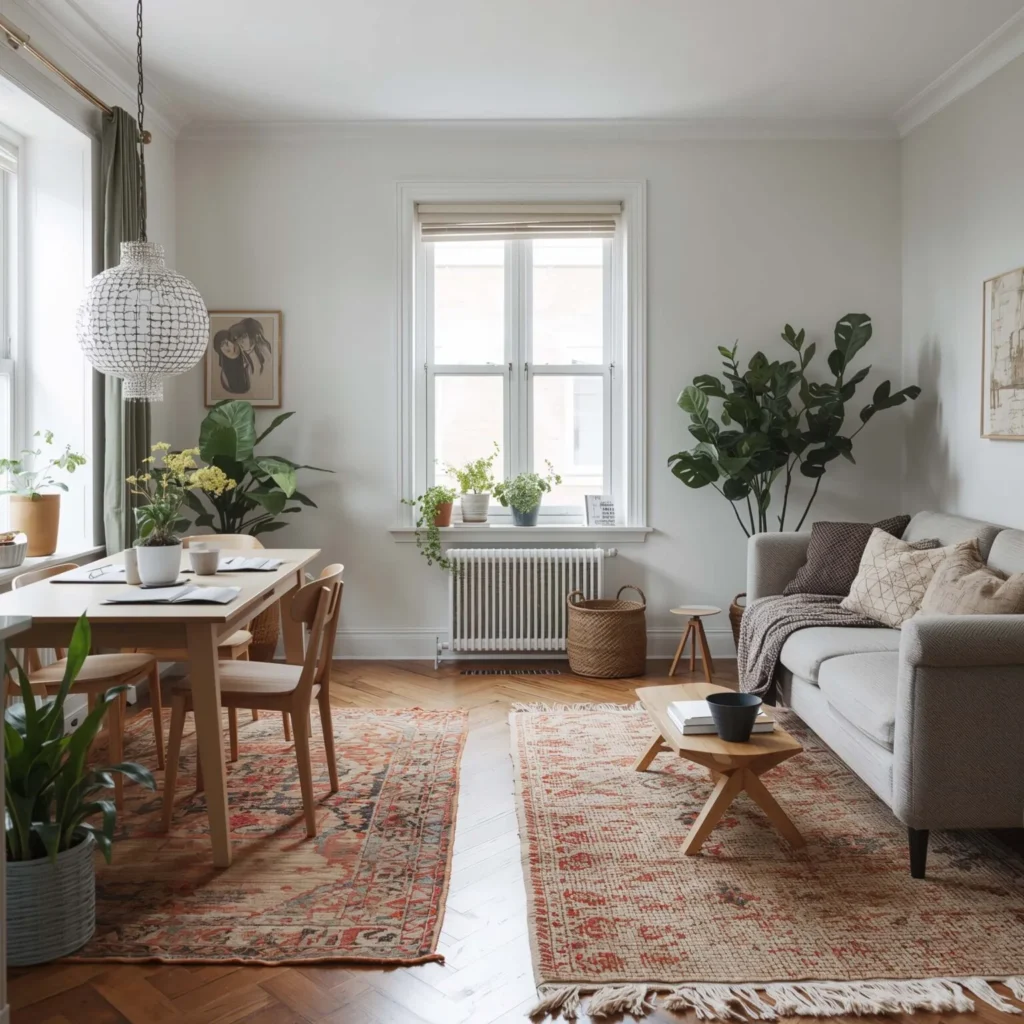
Beyond macrame, textile wall hangings in the form of vintage tapestries or kilim-inspired woven pieces bring incredible pattern and color to a boho dining room. They work especially well on larger walls where a single piece of framed art would be lost.
A faded vintage tapestry with geometric patterns — think Moroccan, Turkish, or South American textile traditions — adds a sense of worldliness and history that is central to the bohemian spirit. The more faded and worn the piece looks, the more beautiful it tends to be in this context.
Hang a tapestry the same way you would a piece of art — centered on the wall, at a height where the middle sits at eye level when standing. For very large pieces, floor-to-ceiling hanging creates a dramatic, room-defining effect.
13. Incorporate Wicker and Bamboo Furniture
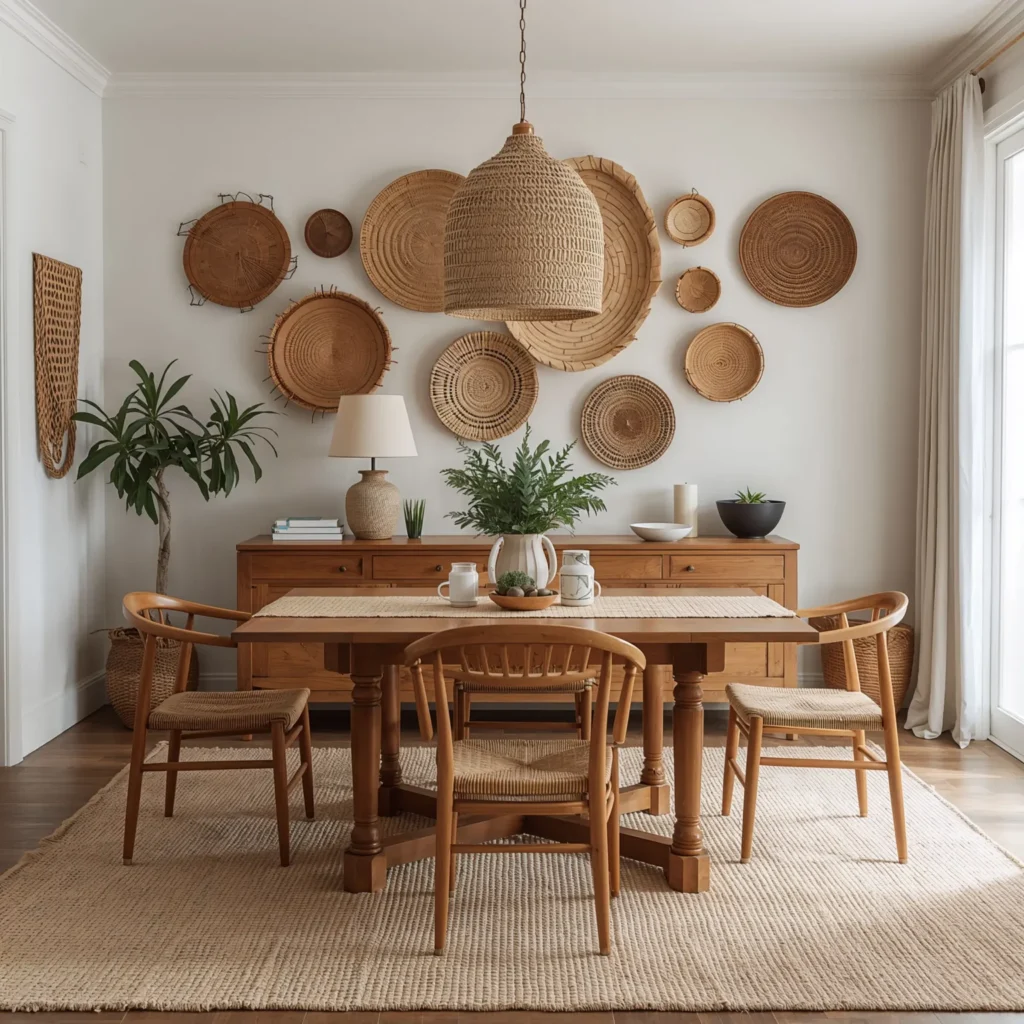
Alongside rattan, wicker and bamboo furniture bring a lightness and natural warmth to boho dining rooms that heavier wood pieces sometimes cannot achieve. A wicker armchair at the head of the table, a bamboo plant stand in the corner, or a wicker storage trunk used as extra seating — each adds organic texture without visual weight.
The key is balance. Too much wicker can tip the room into beach-house territory rather than boho. Use it as an accent — one or two pieces that complement the heavier furniture around them — and you will hit exactly the right note.
✨ Mix with metal: Pairing wicker and bamboo with aged brass, copper, or wrought iron hardware grounds the light, airy quality of natural fibers and stops the room from feeling too soft. The contrast is very boho.
14. Display a Collection of Global Objects and Souvenirs
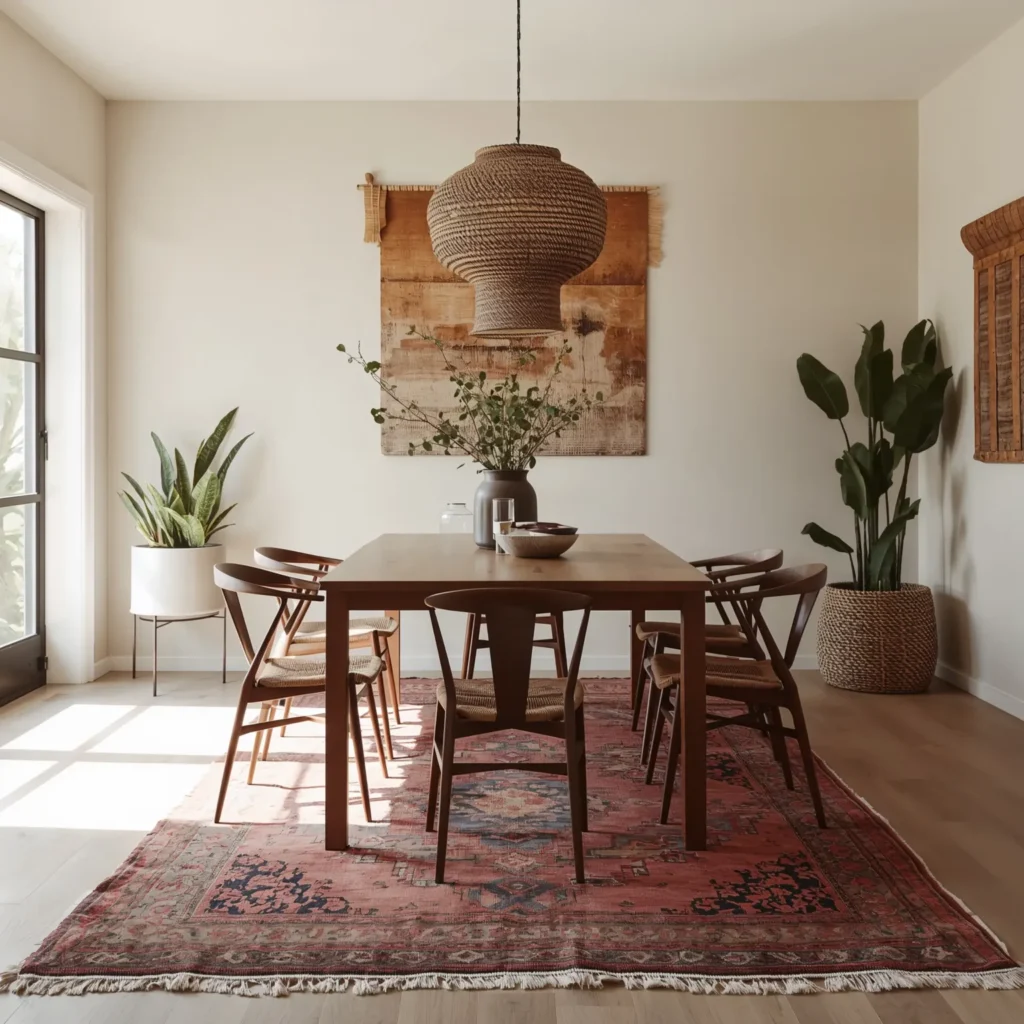
One of the defining characteristics of bohemian style is its spirit of wandering — the sense that the person who lives in this space has been places, collected things, and brought pieces of the world back home with them. In a dining room, this translates to a mix of global objects displayed with intention.
This might mean:
- Moroccan lanterns hung in a corner or used as candle holders on the table.
- Carved wooden bowls or trays from different cultural traditions.
- Brass incense burners or antique vessels used as vases.
- Woven baskets or textile pieces framed or hung as art.
- Vintage maps or travel-related prints in the gallery wall.
- Ceramic tiles used as coasters or trivets.
The objects do not need to come from your own travels — thrift stores and global goods retailers carry all kinds of pieces with genuine character. What matters is that they feel real and considered, not mass-produced.
15. Use Pampas Grass and Dried Botanicals as Decor
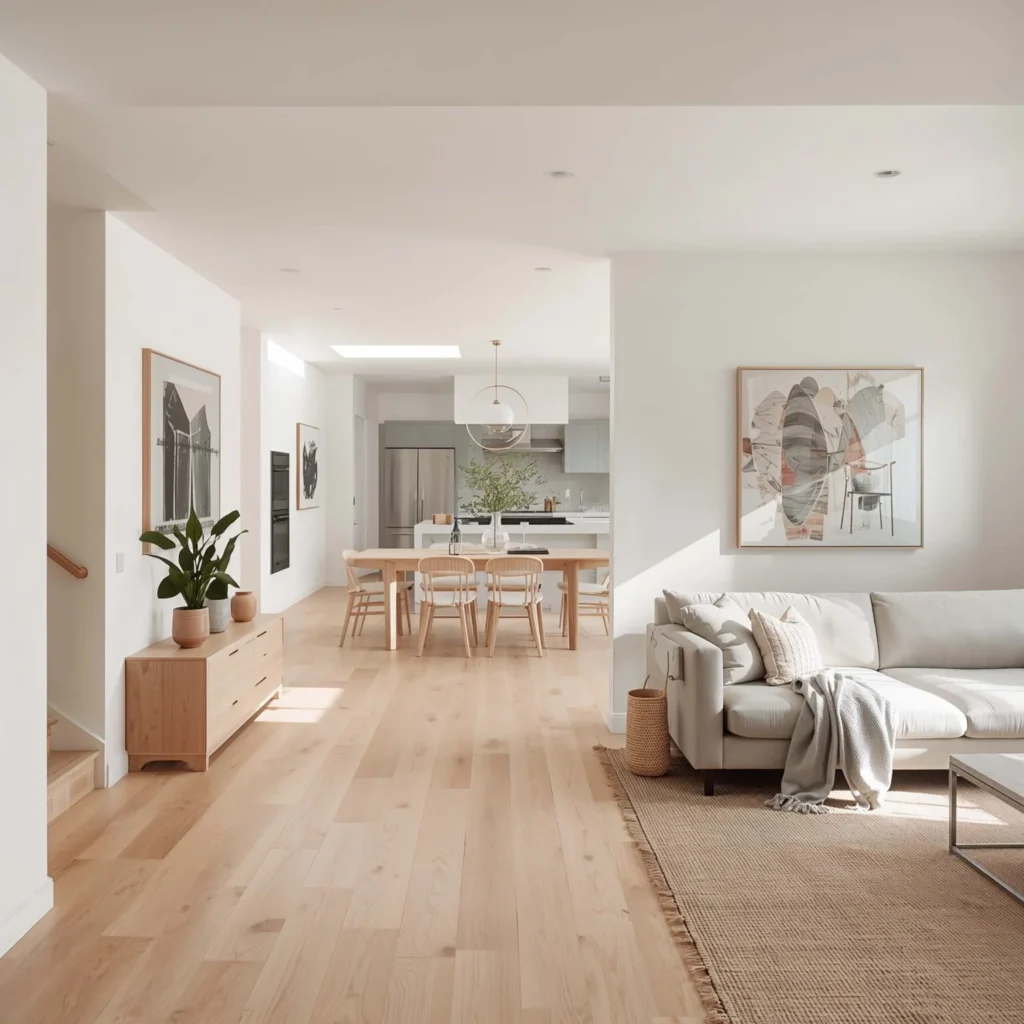
Pampas grass had its viral moment a few years ago, and while the hype has settled, the appeal has not. In a boho dining room, dried botanicals — pampas grass, bunny tail grass, dried protea, cotton stems, eucalyptus, and dried wildflowers — bring organic beauty that requires zero maintenance.
A large vase of dried pampas grass in a corner creates a statement without demanding anything from you. Dried botanicals on the dining table in ceramic or terracotta vessels keep the centerpiece interesting through every season without needing to be refreshed every few days.
For the table, mix dried and fresh elements. A few sprigs of fresh eucalyptus alongside dried wheat or cotton stems creates a centerpiece that smells wonderful and looks layered. Change out only the fresh elements when they fade — the dried pieces stay beautiful for months.
Quick Reference: The 15 Boho Dining Room Decor Ideas at a Glance
- Rattan pendant lights — warm, woven, and instantly boho.
- Macrame wall hanging — large-scale textile art behind the table.
- Mismatched chairs — collected, personal, and full of character.
- Natural fiber rug — grounds the space with organic texture.
- Eclectic gallery wall — mixed art, objects, and frames.
- Woven or caned sideboard — functional and decoratively rich.
- Terracotta and earthy color palette — warm, nature-rooted tones.
- Layered textiles — runners, placemats, napkins, throws.
- Abundant plants — trailing, sculptural, and alive.
- Candle clusters and lanterns — atmospheric glow on every surface.
- Handmade ceramics — imperfect, personal, and beautiful.
- Tapestry or kilim wall hanging — pattern and worldly warmth.
- Wicker and bamboo accents — light, natural, grounding.
- Global objects and souvenirs — a sense of story and travel.
- Pampas grass and dried botanicals — zero-maintenance organic decor.
- Rich accent wall — saturated earthy tone for depth and intimacy.
- Floor cushions and poufs — relaxed, inclusive extra seating.
- Open shelving styled in fours — practical meets beautiful.
- String lights and Moroccan lanterns — layered evening atmosphere.
- Relaxed, personal table setting — the heart of the boho meal.
Final Thoughts: Boho Style is About Feeling, Not Perfection
If there is one thing to take away from all of this, it is that a beautiful bohemian dining room is not built in a weekend. It grows. It changes. It reflects who you are and what you love, which means it is always slightly unfinished — and that is completely the point.
Do not try to implement all 20 ideas at once. Pick two or three that feel most like you and start there. Maybe it is the rattan pendants, a large plant in the corner, and finally hunting down those mismatched chairs you have been meaning to collect. Build from there, slowly and with intention, and the space will take shape in a way that feels genuinely yours.
The most successful boho dining rooms are not the ones that look like a perfectly curated Instagram grid. They are the ones where people walk in, immediately relax, and feel like they have been there before. That warmth — that sense of welcome and ease — is what you are really designing toward.
The rattan pendants and macrame will do their part. The rest is up to you.
Frequently Asked Questions
What defines boho dining room decor?
Bohemian dining room decor is characterized by a layered, collected aesthetic that draws on natural materials, global influences, and handmade or vintage elements. Key markers include rattan and wicker, macrame textiles, mismatched furniture, abundant plants, earthy color palettes, and an overall sense that the space has been assembled with personal intention rather than bought as a set.
How do I start a boho dining room on a budget?
Thrift stores, estate sales, Facebook Marketplace, and flea markets are your best resources. Look for wooden chairs to repaint, vintage ceramics, second-hand rugs, and old frames for a gallery wall. Rattan and jute pieces are widely available at affordable price points, and plants are one of the most cost-effective ways to transform a space quickly.
What colors work best in a boho dining room?
Warm whites, cream, terracotta, dusty sage, burnt sienna, caramel, muted mustard, and deep rust are the most authentically boho. The palette should reference the natural world — earth, clay, plants, and sun. For bolder spaces, add a deep accent wall in forest green, aubergine, or dark terracotta.
Can boho decor work in a small dining room?
Absolutely, and in some ways it works better in smaller spaces because the layering feels more intimate rather than overwhelming. Focus on vertical elements — tall plants, wall hangings, layered shelving — to draw the eye upward and create the sense of abundance. Keep the furniture scale appropriate for the room size.
How do I mix patterns in a boho dining room without it looking messy?
The golden rule is to vary the scale of your patterns. A large-scale geometric rug can coexist with a small-scale block print on cushions and a medium-scale kilim on the wall as long as the colors share an earthy, warm undertone. Keep your solid colors neutral and let the patterns breathe — space between patterned elements is what stops the room from feeling chaotic.
What types of plants are best for a boho dining room?
Monstera, pothos, trailing philodendron, bird of paradise, string of pearls, olive trees, and herbs in terracotta pots all work beautifully. Prioritize plants with interesting shapes, trailing habits, or bold foliage. Use a variety of pot styles — terracotta, woven baskets, and ceramic vessels — to reinforce the layered, collected look.
1 thought on “15 Elegant Boho Dining Room Decor Ideas for Warm Spaces”