
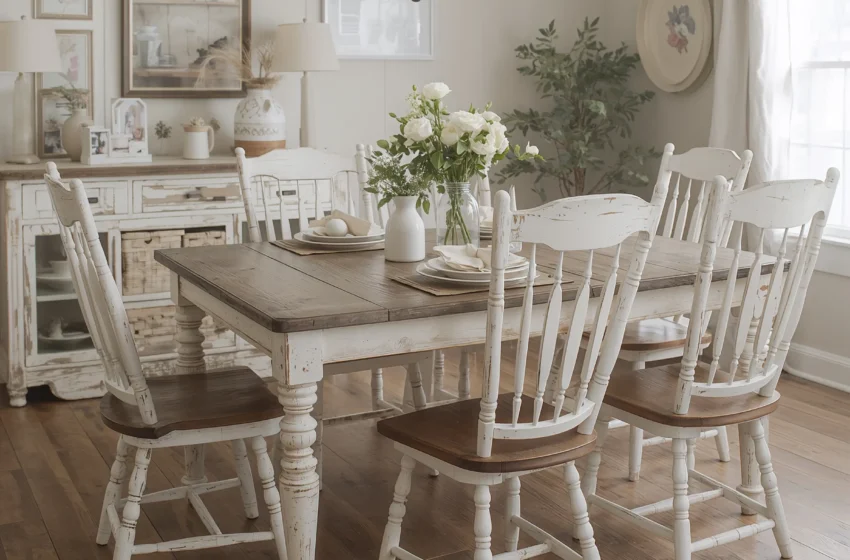
There is something about a farmhouse dining room that makes people slow down. The warm wood tones, the soft flicker of candlelight, the mismatched chairs that somehow all look perfect together — it all adds up to a space that feels less like a showroom and more like a place where real life happens.
If you have been scrolling through inspiration boards wondering how to get that look without uprooting your entire home (or budget), you are in the right place. Whether you are starting from scratch or just looking to refresh what you already have, these 20 farmhouse dining room decor ideas will give you practical, beautiful ways to bring that warm, welcoming aesthetic into your everyday life.
1. Anchor the Room with a Reclaimed Wood Dining Table
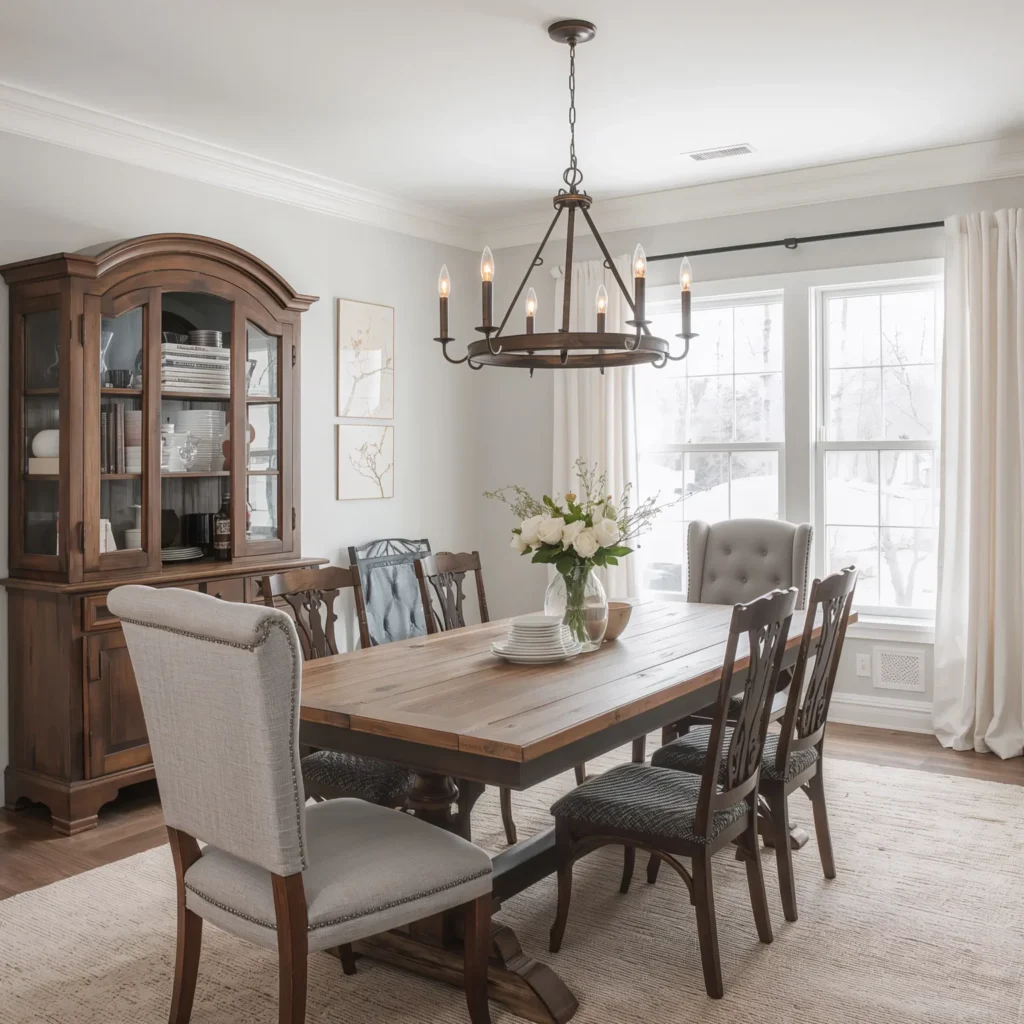
If there is one piece of furniture that defines the farmhouse dining room, it is the table. And nothing beats a solid reclaimed wood table — the kind with visible grain, natural knots, and just enough roughness to tell a story.
Reclaimed wood tables are more than just furniture. They carry character that no factory-fresh piece can replicate. Look for tables made from old barn wood, railway ties, or salvaged oak. The imperfections — the dents, the variations in color, the uneven surface — are not flaws. They are the whole point.
💡 Pro Tip: Pair a dark-stained reclaimed table with lighter chairs to keep the room from feeling too heavy. The contrast adds visual interest and keeps things balanced.
If a full reclaimed table is outside your budget, consider a veneer-top table with reclaimed wood legs, or refinish an existing table using a gel stain in a warm walnut or provincial tone.
2. Hang a Statement Farmhouse Chandelier
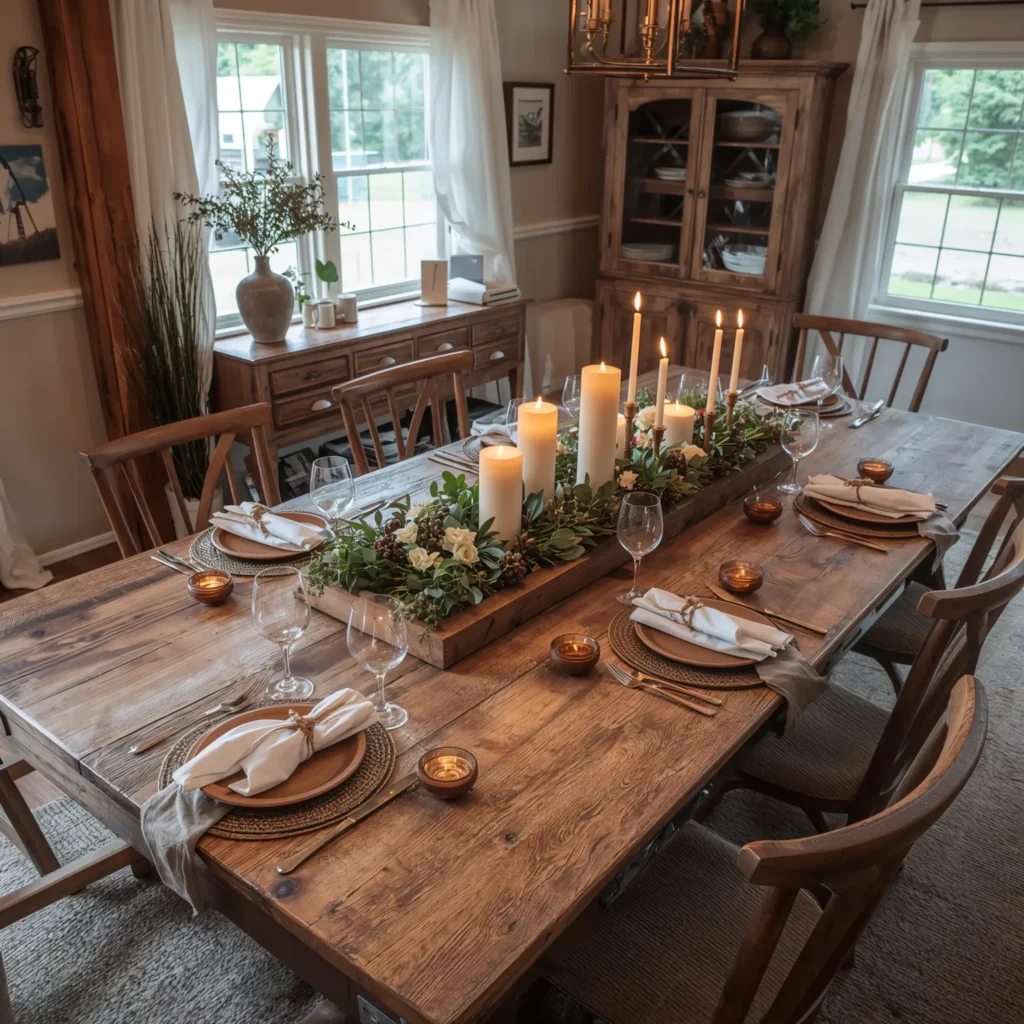
Lighting does more than brighten a room — it sets the entire mood. In a farmhouse dining room, the chandelier is often the centerpiece that ties everything together before a single piece of furniture is placed.
Look for fixtures that incorporate wrought iron, distressed wood beams, or aged brass finishes. Candelabra-style arms with Edison bulbs are a classic choice. If you prefer something a little more modern-farmhouse, a drum shade chandelier in linen or burlap works beautifully over a long dining table.
Getting the Size Right
Here is a simple formula that interior designers swear by:
- Add the length and width of your dining room together (in feet).
- Convert that number to inches.
- That figure is roughly the ideal diameter for your chandelier.
So if your room is 12 x 14 feet, aim for a chandelier around 26 inches wide. Too small and it will look like an afterthought; too large and it will overpower the space.
💡 Hang it right: The bottom of the fixture should sit about 30 to 36 inches above the tabletop for a standard 8-foot ceiling. Adjust up by 3 inches for every additional foot of ceiling height.
3. Create a Shiplap Accent Wall
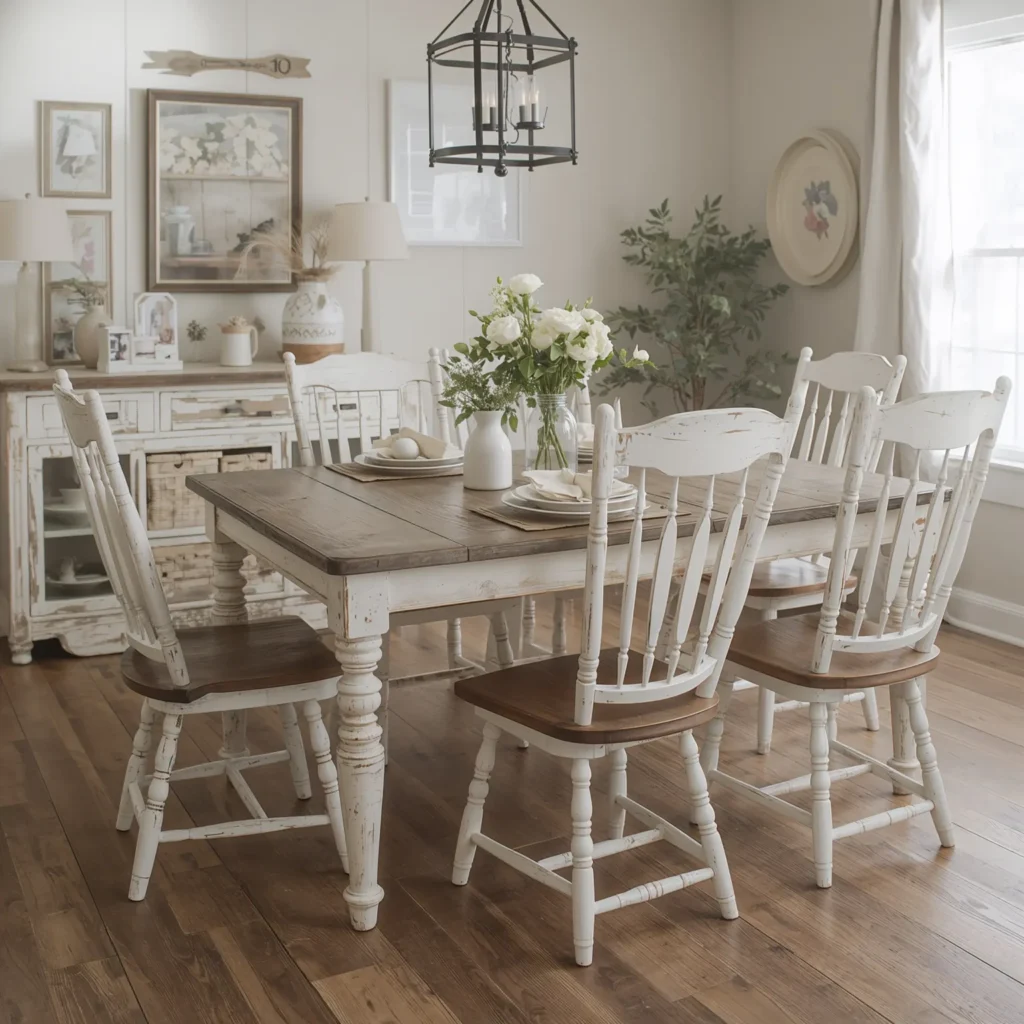
Shiplap has become synonymous with farmhouse style, and for good reason. The horizontal planks add texture, depth, and that unmistakable architectural detail that makes a room feel designed rather than decorated.
You do not need to cover every wall. One shiplap accent wall behind the dining area — especially if it frames a built-in buffet or sideboard — creates a focal point that anchors the whole room.
Painted in crisp white, shiplap brightens and opens up the space. Left in natural wood tones, it adds warmth and rusticity. A soft gray or sage green falls somewhere in between — contemporary farmhouse with a relaxed, earthy feel.
💡 Budget Hack: Peel-and-stick shiplap panels have improved significantly in quality and now offer a convincing alternative to real installation — great for renters or anyone who wants to test the look first.
4. Mix and Match Your Dining Chairs
Here is one of the most effective and underused tricks in farmhouse decorating: resist the urge to buy a matching dining set. Mismatched chairs — when done thoughtfully — create a collected, lived-in look that feels authentic rather than staged.
A common approach is to use a long farmhouse bench on one side of the table and individual chairs on the other. You could also mix wood-toned chairs with metal ones, or combine upholstered seats with bare wooden ones. The key is finding a common thread — a consistent color, material, or leg style — that holds the mix together.
Think of it like a well-curated antique store rather than a furniture showroom. Every piece has its own story, but they all feel like they belong together.
5. Add a Long Farmhouse Bench
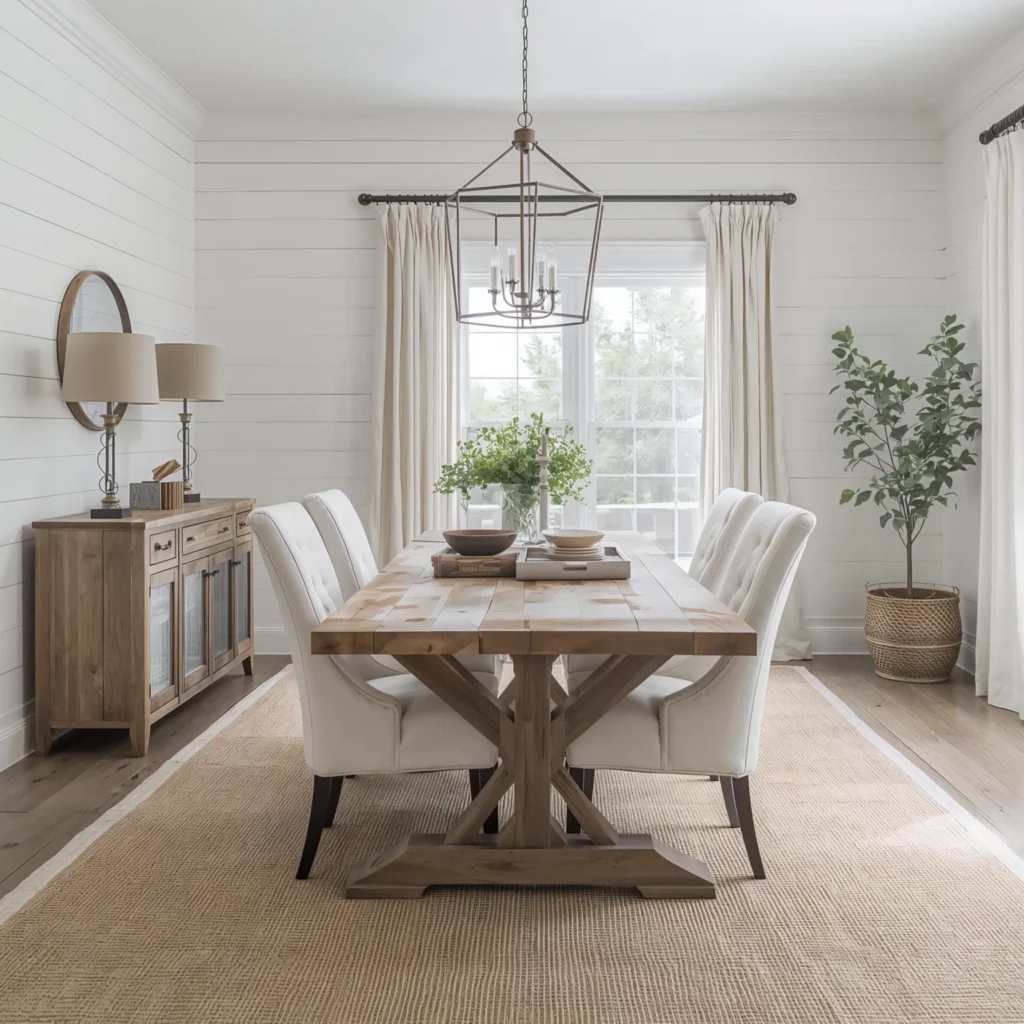
Speaking of benches — if you have not considered adding one to your dining room, now is the time. A sturdy wooden bench along one side of the table is a signature farmhouse detail that also happens to be incredibly practical.
Benches maximize seating without crowding the room the way extra chairs can. They work especially well in narrow dining spaces, and they are perfect for families with kids (no fighting over who gets which chair). A bench cushion in a buffalo check, grain sack stripe, or solid linen fabric pulls the look together while adding comfort.
6. Use Mason Jars as Everyday Vases
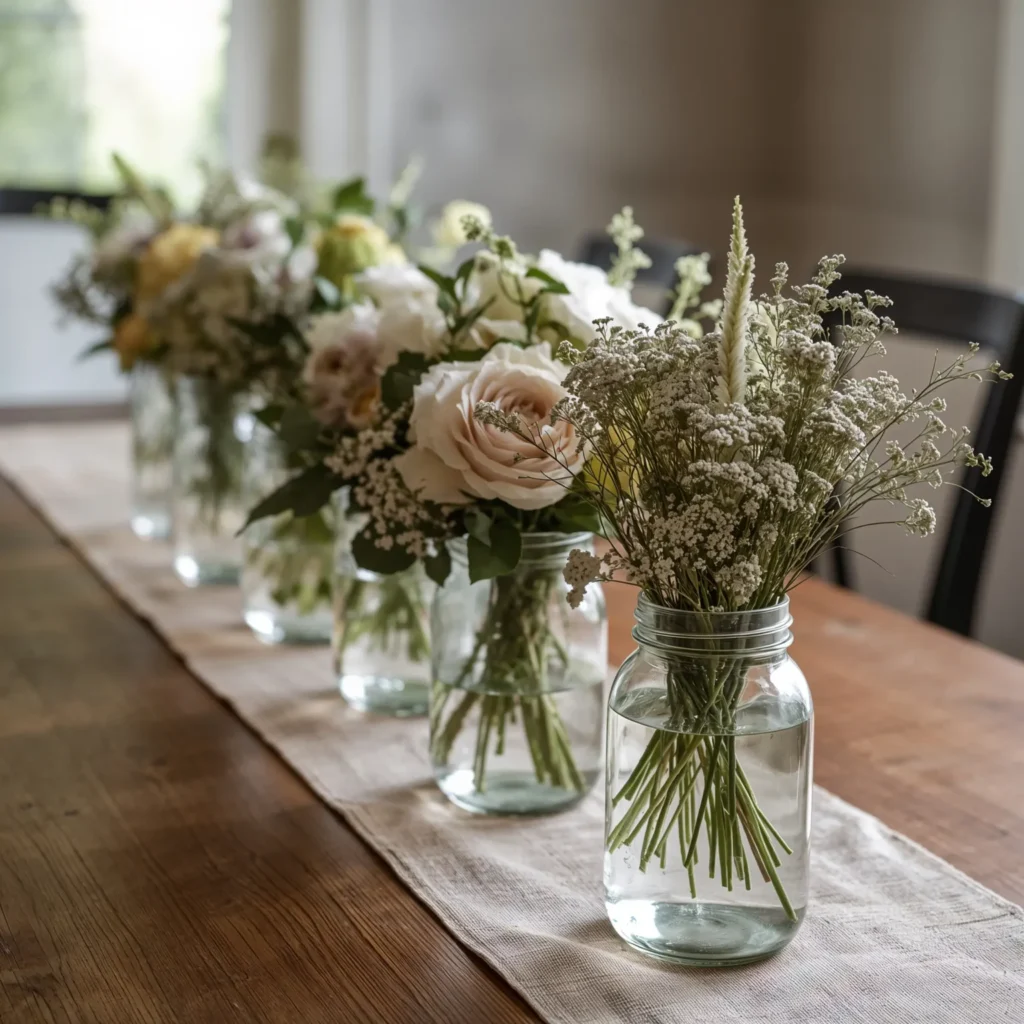
Few things say farmhouse more naturally than a mason jar full of fresh flowers sitting on a dining table. But the key to making this work — rather than looking like a Pinterest cliche — is in how you style them.
Use jars in different sizes. Group them in odd numbers (three or five). Wrap some with twine or burlap. Fill them with loose, imperfect arrangements rather than stiff, formal ones. Wildflowers from a roadside stand, grocery store sunflowers, or even stems from your own garden work perfectly.
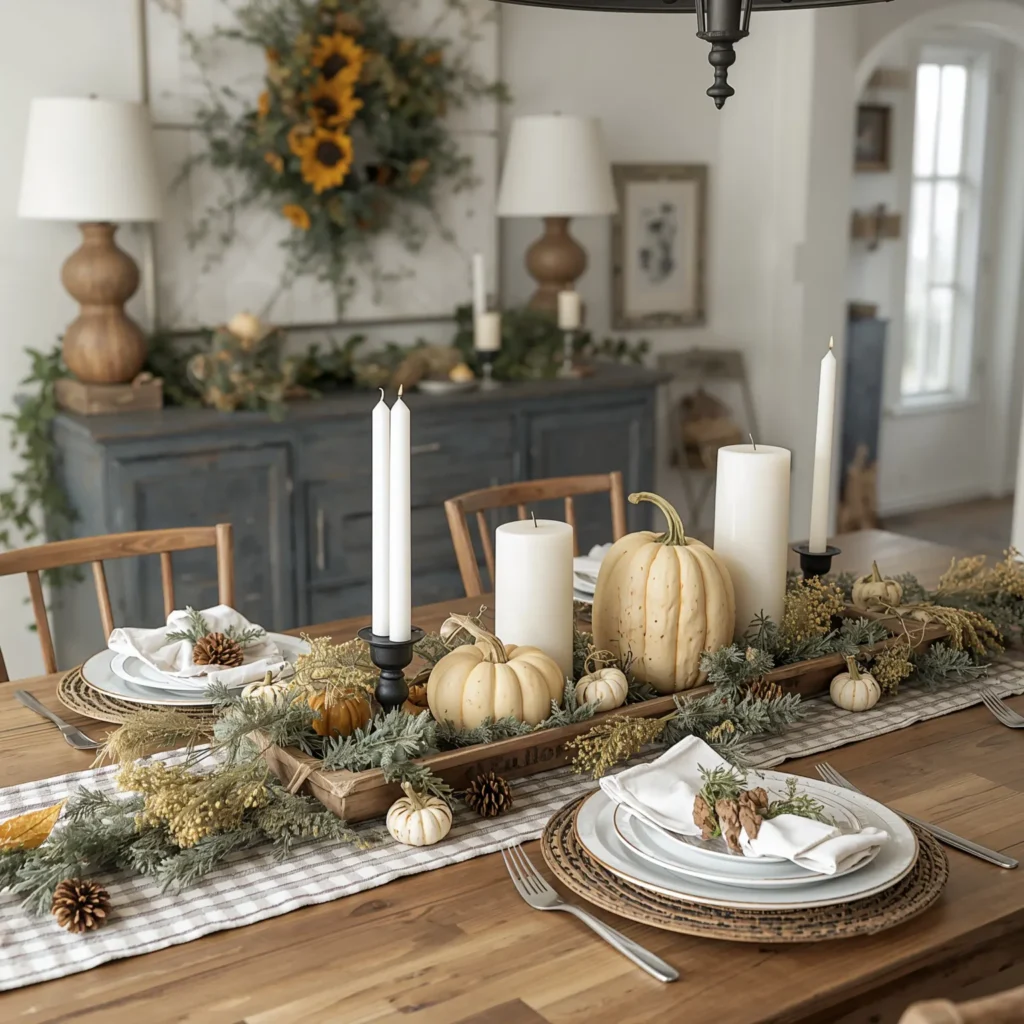
Rotate seasonally: cotton stems and dried wheat in the fall, evergreen sprigs in winter, tulips and daisies in spring, sunflowers and lavender in summer. It is an easy, affordable way to keep your dining room feeling fresh all year long.
7. Layer Your Table Linens
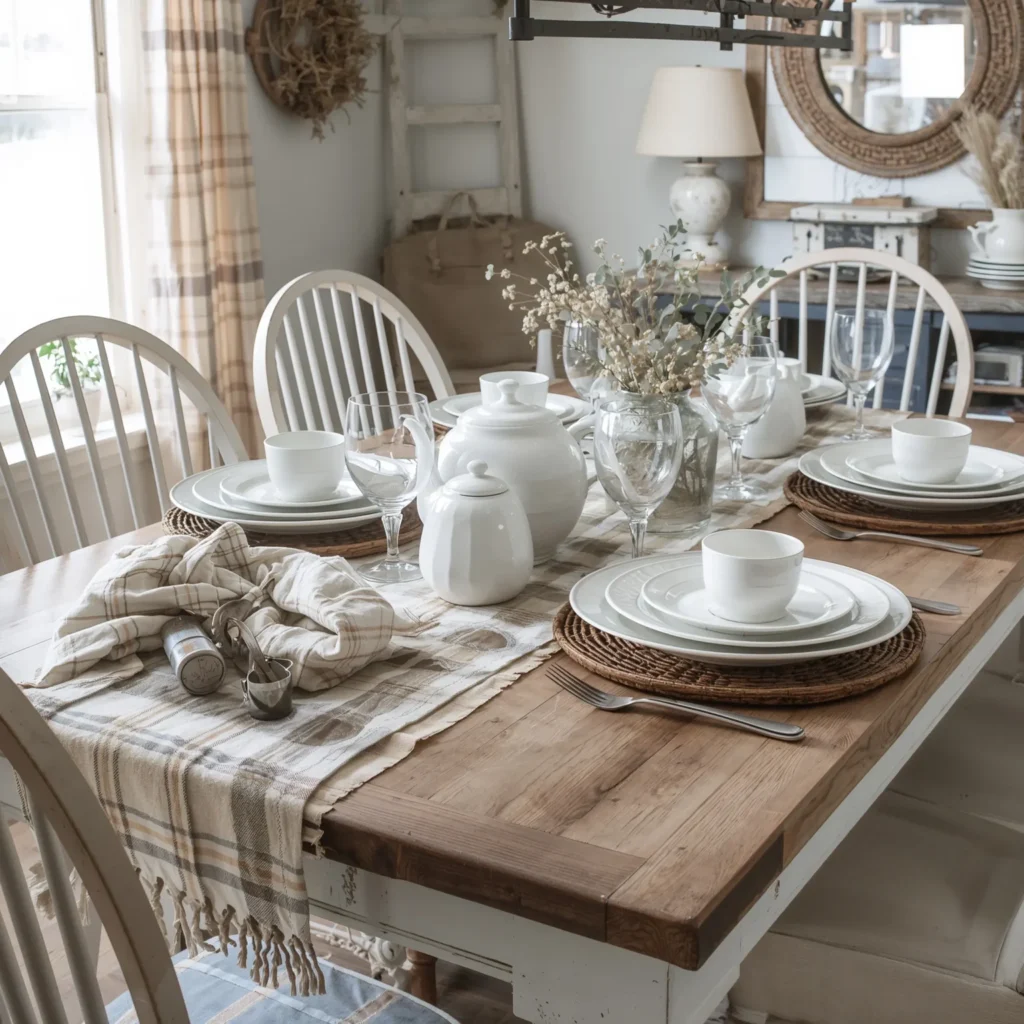
A bare table feels cold and unfinished. The right layering of textiles is what gives a farmhouse dining room its signature warmth and texture.
Start with a natural jute or linen table runner down the center. Layer a cotton or linen tablecloth underneath for more formal occasions, or leave the runner as a standalone for everyday use. Add woven placemats in natural fibers — water hyacinth, seagrass, or rattan all work beautifully.
Cloth napkins make a world of difference over paper ones. Look for grain sack stripe patterns, buffalo check, or simple solid linen in warm neutrals. The texture and warmth they add to a table setting is something paper napkins simply cannot match.
8. Incorporate Galvanized Metal Accents
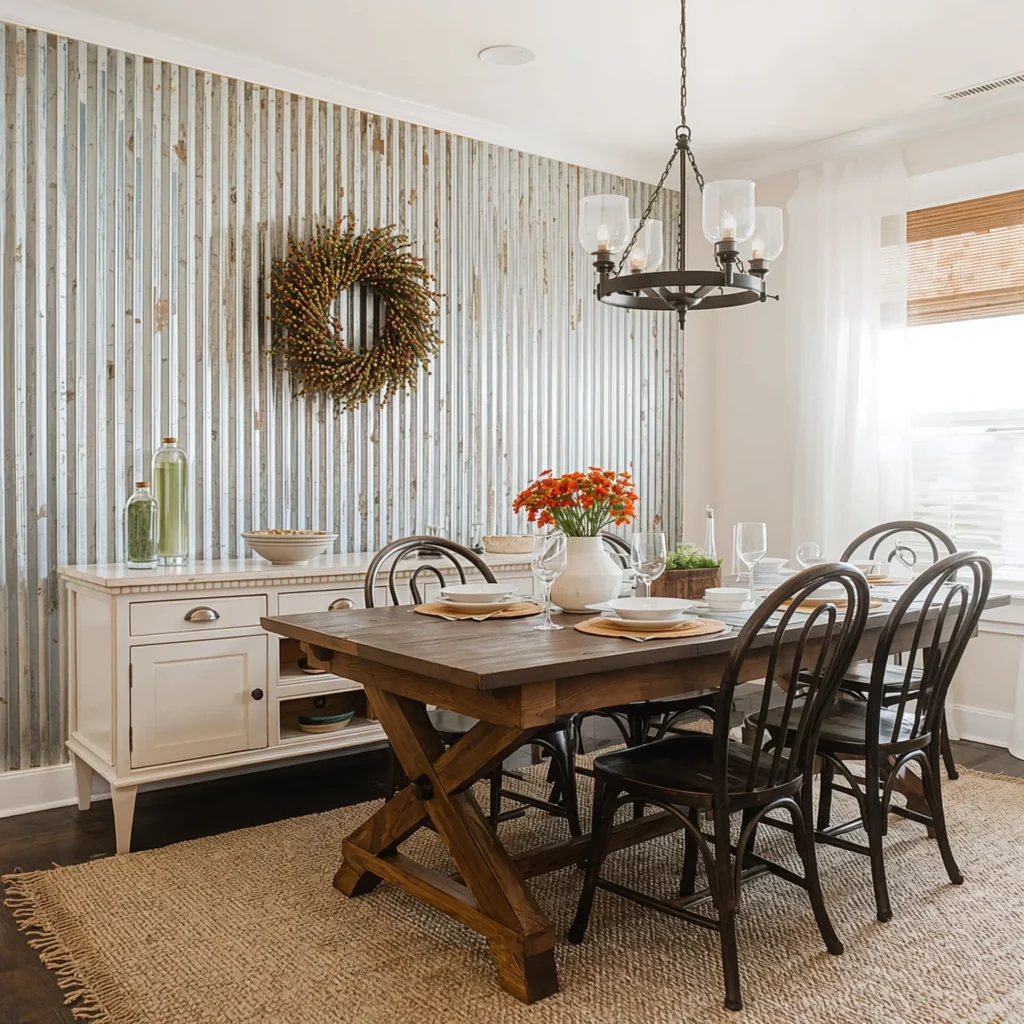
Galvanized metal might make you think of old water troughs and chicken coops, but in the context of farmhouse decor, it is one of the most versatile and authentic materials you can use.
In the dining room, galvanized metal works beautifully as:
- A large wall clock over a buffet or sideboard.
- Planters or vases holding greenery or candles.
- A tray to corral table centerpiece items.
- Pendant light shades above a kitchen island or bar area.
- Metal letter signs, vintage milk jugs, or old pitchers used as decor.
The silvery, slightly industrial tone of galvanized metal contrasts beautifully with warm wood tones and soft textiles, keeping the farmhouse look from feeling too precious or overly feminine.
9. Display Vintage Farmhouse Signs and Art
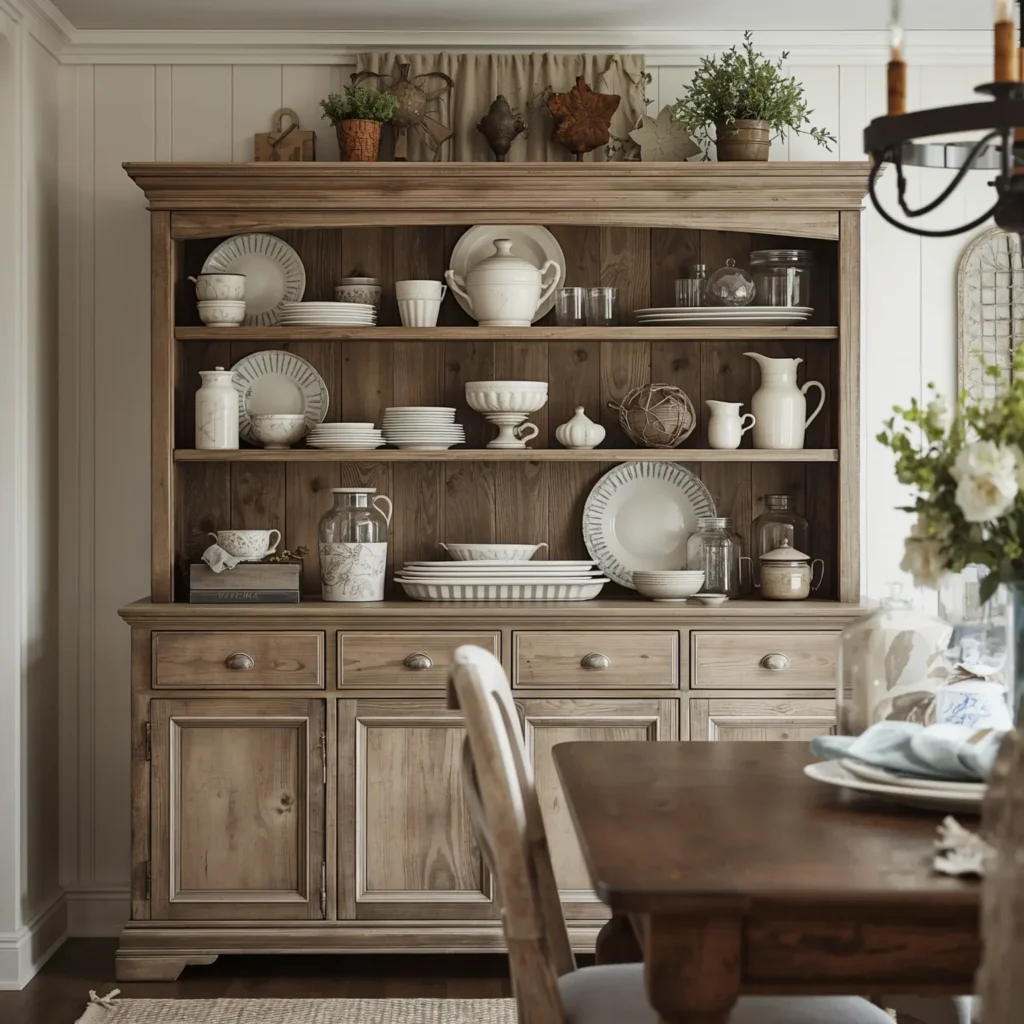
Wall decor in a farmhouse dining room should feel personal and a little imperfect. Vintage signs — whether found at a flea market, antique store, or made yourself — add character and warmth that mass-produced artwork rarely achieves.
Look for old wooden signs with faded paint, vintage tin advertisements, or botanical prints in simple frames. Black-and-white photography of landscapes, farm scenes, or family portraits also works beautifully in this aesthetic.
Do not be afraid to mix frame styles. A collection of mismatched frames — some wood, some metal, some gilded — arranged in a gallery wall brings an eclectic, collected feel that is very much in the spirit of farmhouse style.
10. Bring in a Vintage Buffet or Sideboard
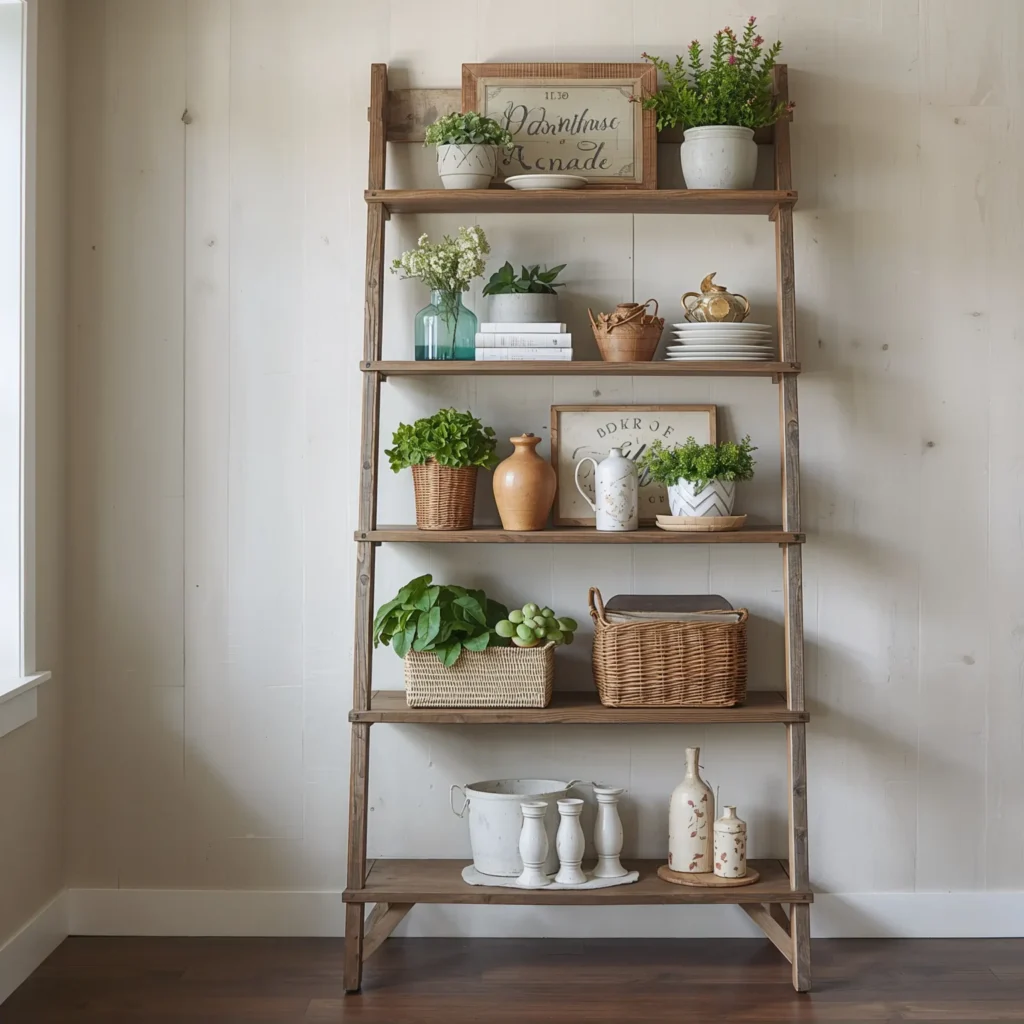
A buffet or sideboard is one of the most functional and beautiful additions you can make to a farmhouse dining room. It provides storage, display space, and a grounding element that makes the room feel complete.
Look for pieces with some age to them — painted furniture with chipped edges, old dressers repurposed as sideboards, or antique hutches with glass-front cabinets. A piece that has been refinished or painted in a chalk-finish white or warm gray has exactly the kind of worn, aged quality that farmhouse style celebrates.
Style the top with a mix of functional and decorative items: a large ceramic lamp, a stack of vintage dishes, a wooden bowl of seasonal fruits, or a framed chalkboard menu.
11. Use Woven Baskets for Texture and Storage
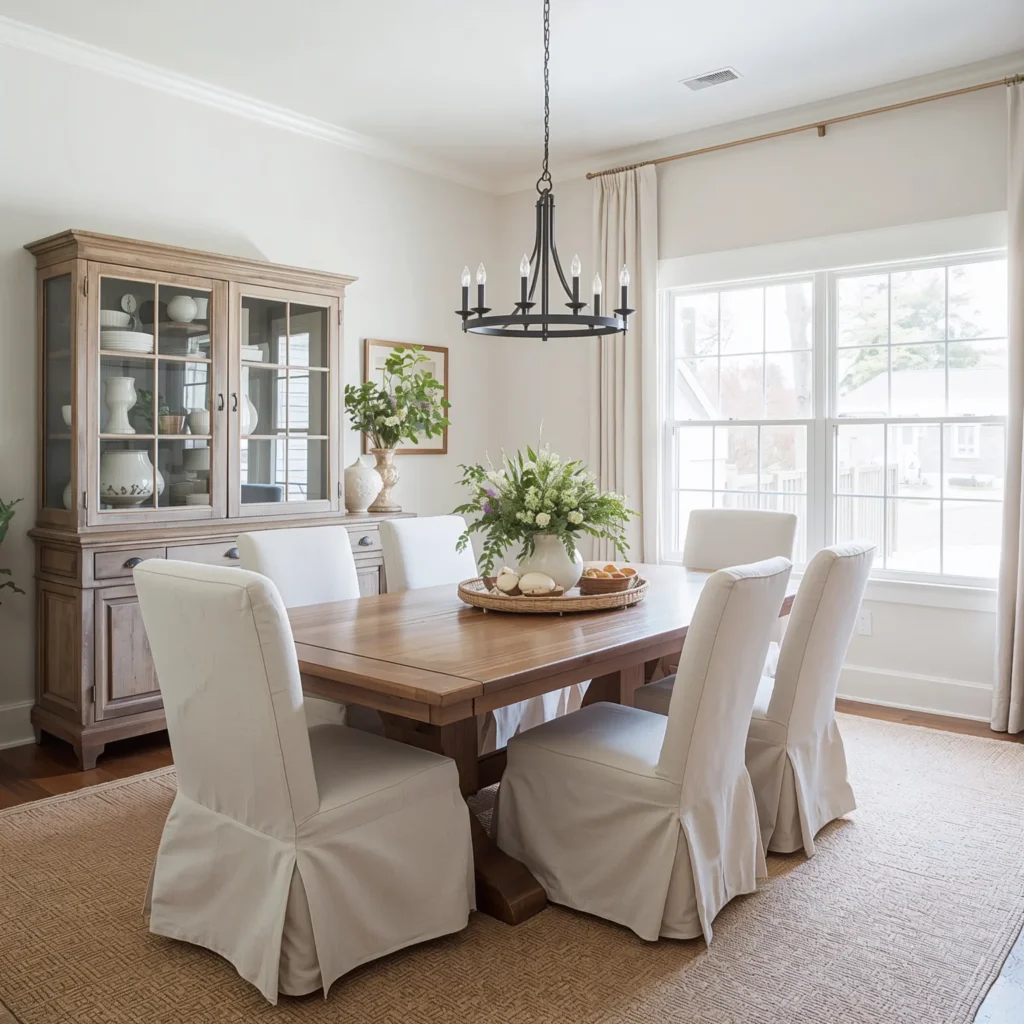
Baskets are one of those decorating elements that are both beautiful and genuinely useful — a rare combination. In a farmhouse dining room, they add layers of natural texture that soften the harder surfaces of wood, metal, and stone.
Use large woven baskets to store extra blankets or linens under a sideboard. Hang a few on the wall as art. Tuck smaller baskets into open shelving to hold napkins, candles, or seasonal decor. Lined baskets work well as bread baskets on the table itself.
Seagrass, rattan, water hyacinth, and wicker all work beautifully in this space. The variation in texture between different weaving styles keeps the look interesting without becoming busy.
12. Paint the Walls in Warm, Muted Tones
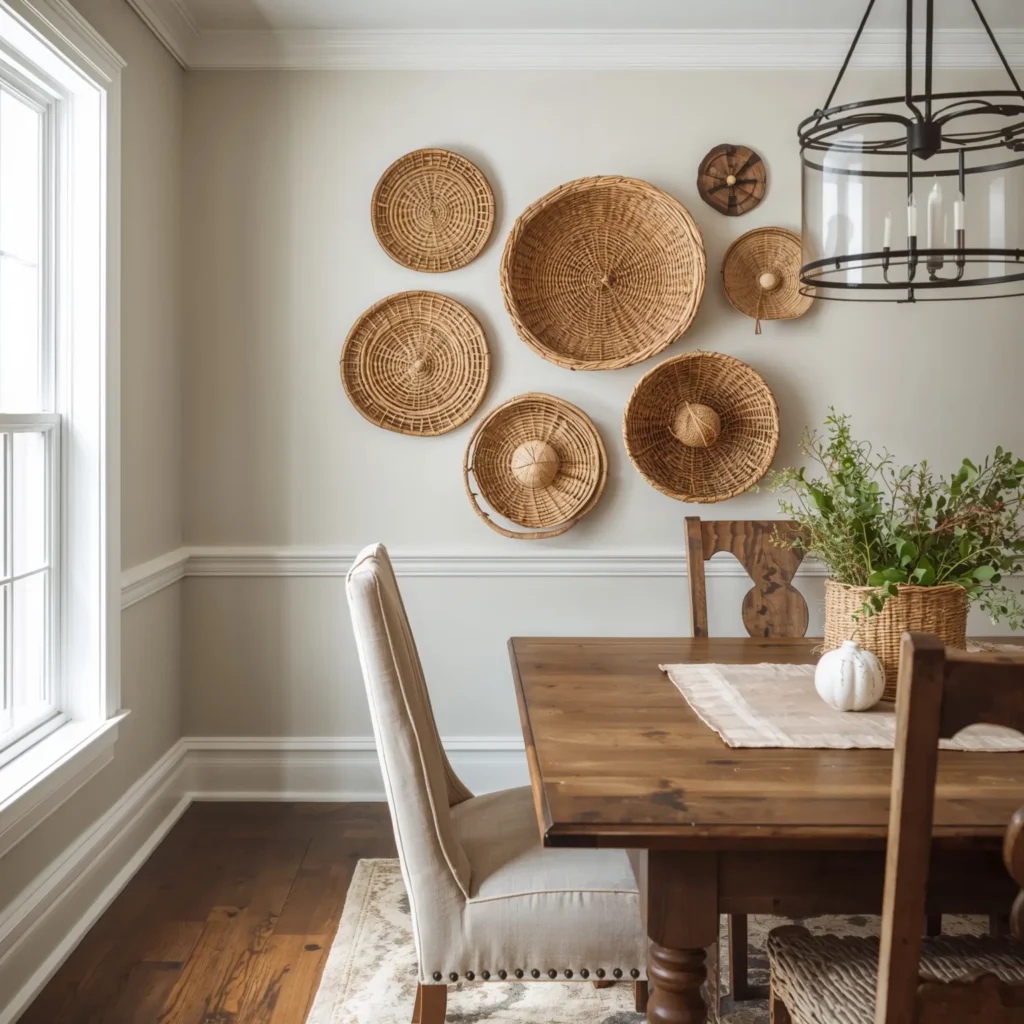
Color choice plays a huge role in creating the right atmosphere in a farmhouse dining room. The goal is warmth and calm — not bright, saturated colors, but rich, layered tones that feel like they have depth.
Some of the best wall colors for farmhouse dining rooms include:
- Warm white (try Benjamin Moore Chantilly Lace or Sherwin-Williams Alabaster)
- Soft sage green (earthy and calming, works beautifully with wood tones)
- Greige or warm gray (timeless and versatile)
- Deep navy or slate blue (bold but grounding, especially with white trim)
- Cream or off-white (classic farmhouse, pairs with everything)
Whatever color you choose, keep the trim and ceiling in a crisp white. The contrast makes the wall color pop and gives the room a clean, finished look.
13. Incorporate Exposed Wood Beams
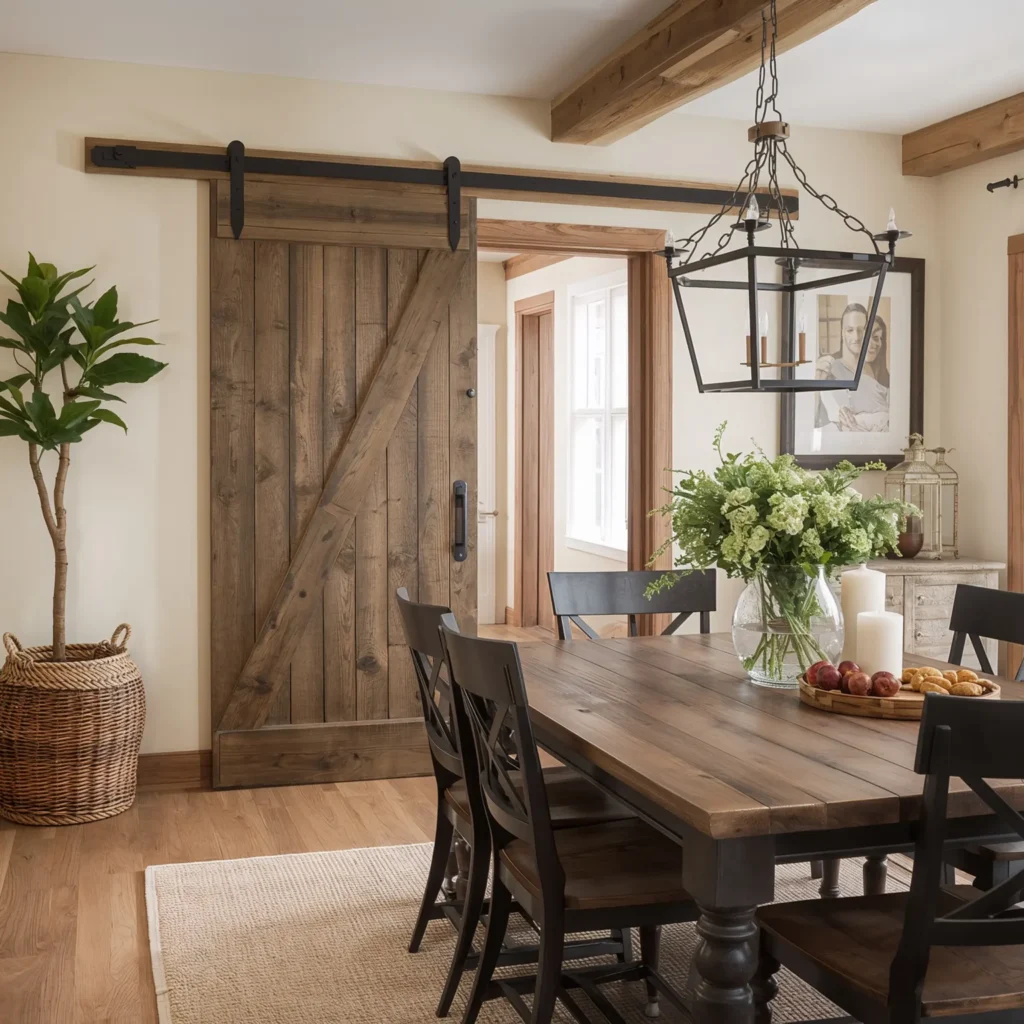
If your dining room has exposed wood beams, count yourself lucky. If it does not, you have options. Faux wood beams have become remarkably convincing over the past decade — lightweight, easy to install, and far more affordable than structural lumber.
Exposed beams on the ceiling immediately add architectural interest and draw the eye upward, making rooms feel taller and more dramatic. In a farmhouse dining room, they reinforce the rustic, country aesthetic and provide a natural frame for the chandelier below.
Stain faux beams to match your table or flooring for a cohesive look, or choose a slightly darker tone to create contrast against a white or light-colored ceiling.
14. Style Open Shelving Like a Pro
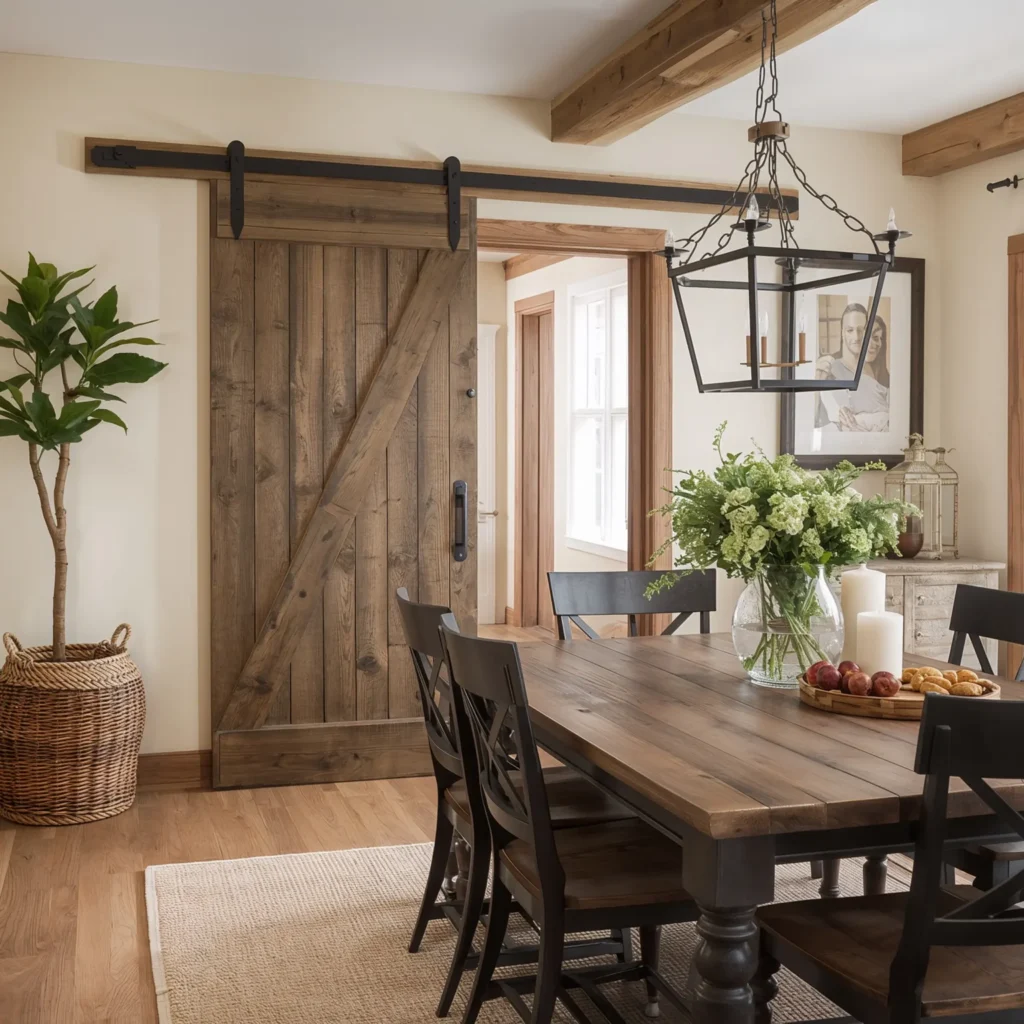
Open shelves in a dining room or adjacent kitchen area are a farmhouse staple — but they only look good when styled intentionally. The key is balancing decorative items with practical ones so the shelves feel curated rather than cluttered.
A good formula for each shelf:
- One large anchor item (a stack of plates, a wooden cutting board, a large vase).
- A medium decorative piece (a small plant, a vintage jar, a piece of pottery).
- Something that adds height or texture (a tall candle, a trailing vine plant, a folded linen).
Stick to a consistent color palette — white ceramics, natural wood tones, and greenery are a classic farmhouse combination that always looks intentional. Vary the heights and depths of items to keep the eye moving.
15. Add a Chalkboard Wall or Panel
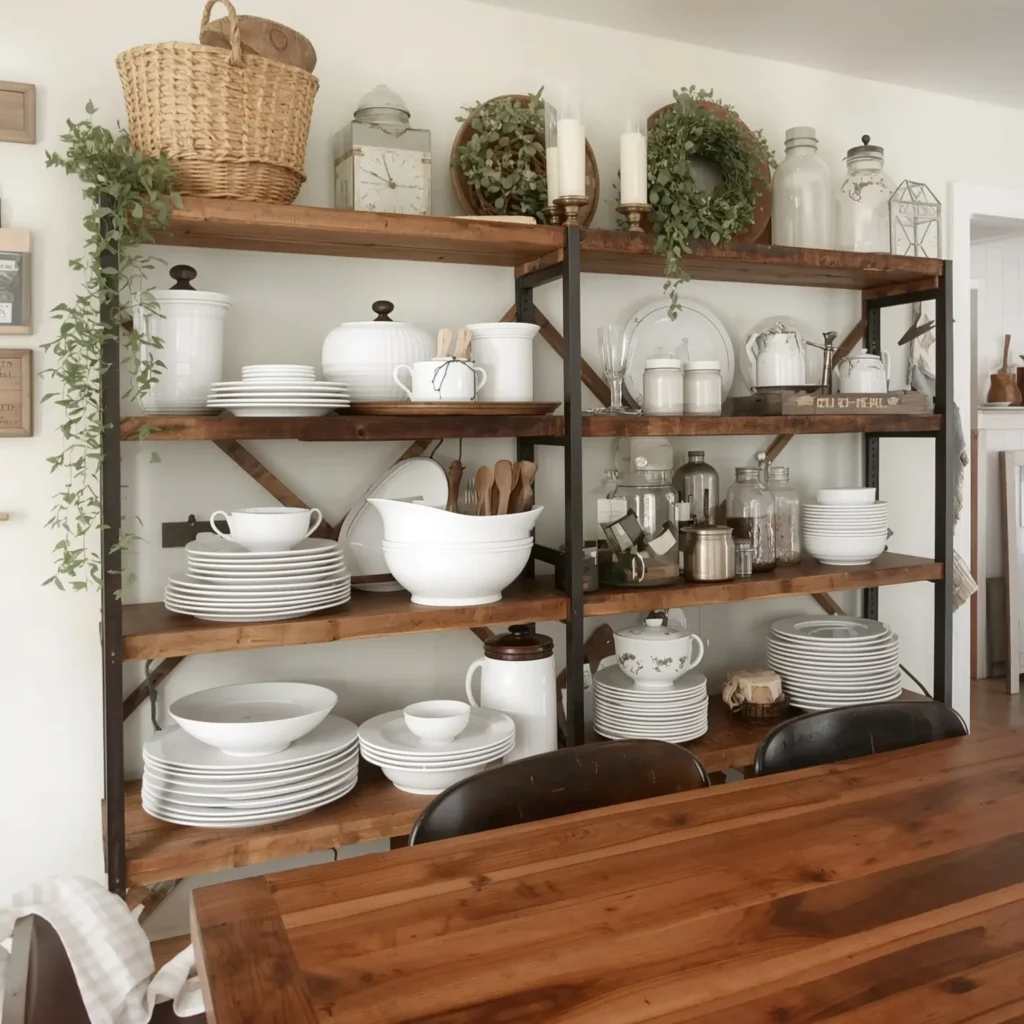
A chalkboard in the dining room is one of those ideas that sounds gimmicky until you actually try it — and then you wonder how you ever lived without one. It is functional, playful, and very much in keeping with the relaxed, family-friendly spirit of farmhouse style.
A full chalkboard wall in a muted matte black behind a sideboard or bar area makes a bold, striking statement. For a more subtle approach, a framed chalkboard panel hung above a buffet works just as well.
Use it to write the week’s dinner menu, a seasonal quote, a family announcement, or just a simple sketch of something that makes you smile. It changes the energy of the room and makes it feel lively and personal rather than static.
Quick Reference: Farmhouse Dining Room Essentials at a Glance
- Reclaimed wood dining table — the foundation of the space.
- Vintage-style chandelier — sets mood and anchors the ceiling.
- Shiplap accent wall — instant farmhouse texture and character.
- Mismatched chairs or bench — collected, lived-in look.
- Mason jar arrangements — seasonal, affordable, always charming.
- Natural fiber rugs — warmth, definition, and organic texture.
- Open shelving styled in threes — practical meets decorative.
- Candles and lanterns — layered, glowing warmth.
- Galvanized metal accents — rustic industrial contrast.
- Fresh or dried greenery — life, softness, and natural connection.
Final Thoughts: Making Farmhouse Style Your Own
The best farmhouse dining rooms are not the ones that look like they came straight out of a catalog — they are the ones that feel like someone actually lives there, laughs there, and loves the people they share meals with.
You do not need to implement all 20 of these ideas at once. Start with one or two that resonate with you — maybe a new chandelier, or finally committing to that reclaimed wood table you have been eyeing — and build from there. The style rewards patience and layering. The more time you give it, the more personal and cohesive it becomes.
Farmhouse decor is ultimately about warmth, welcome, and a sense that the most important thing in the room is the people gathered around the table. Get that part right, and the rest will follow.
Now go pull up a chair. Dinner is almost ready.
Frequently Asked Questions
What are the key elements of a farmhouse dining room?
The essentials include a solid wood dining table, vintage or wrought-iron lighting, natural fiber textiles, and a mix of rustic materials like reclaimed wood, galvanized metal, and ceramic. The overall feel should be warm, layered, and lived-in rather than overly polished.
How do I get a farmhouse look on a tight budget?
Thrift stores, estate sales, and flea markets are your best friends. Look for wooden furniture you can refinish or repaint, vintage frames for a gallery wall, and mismatched chairs that just need a fresh coat of paint. Mason jars, candles, and natural fiber textiles are all affordable and highly effective.
What colors work best in a farmhouse dining room?
Warm whites, soft creams, sage green, greige, and warm gray are the most popular and most successful choices. Pair any of these with crisp white trim for a classic farmhouse finish. Deep navy or charcoal can work beautifully as an accent wall color for a more dramatic space.
Can I achieve a farmhouse look in a modern or small dining room?
Absolutely. Farmhouse style adapts well to smaller spaces and modern architecture. Focus on a few key pieces — a solid wood table, a statement light fixture, and natural textiles — rather than trying to include every element. The layered, collected feel can be achieved in any size room.
What size rug should I use under a dining room table?
The rug should extend at least 24 inches beyond each side of the table so that chairs remain on the rug even when pulled out. For a standard 6-person table measuring around 36 x 72 inches, a 8 x 10-foot rug is a safe choice. For larger tables, size up to 9 x 12.
1 thought on “15 Cozy Farmhouse Dining Room Decor Ideas for Stylish Living”