
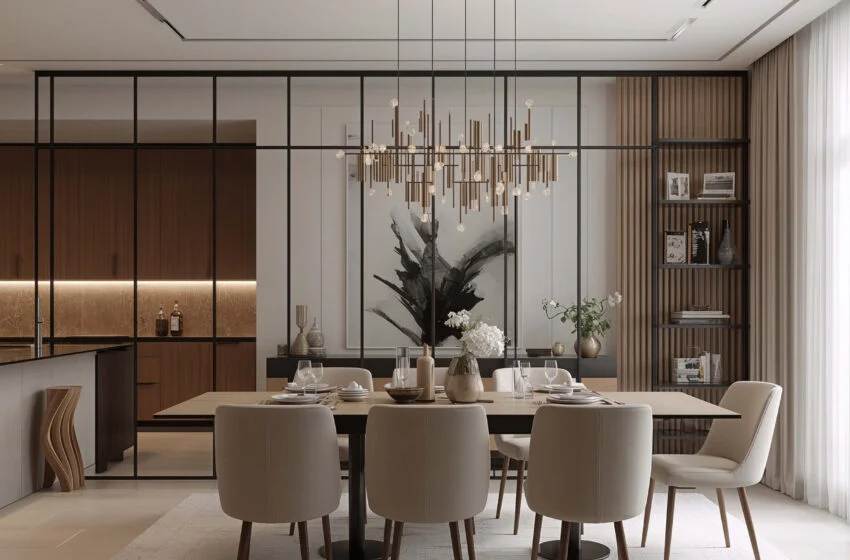
The combined living and dining room is one of the most common — and most creatively challenging — spaces in modern homes. It shows up in apartments, condos, starter homes, open-plan renovations, and anywhere that square footage is valued over having dedicated rooms for everything. And for a lot of people, it sits somewhere between functional and frustrating: you know you want it to work, you’re not entirely sure why it doesn’t, and you’ve looked at enough inspiration images online to feel more confused than when you started.
Here’s the thing that most design advice misses: the challenge of a combined living and dining room isn’t really about space. It’s about intention. Rooms that feel awkward or cluttered almost always got that way through a series of well-meaning but unconsidered decisions — a sofa placed against the wall because that’s where sofas go, a dining table centered in a room without any thought for how it relates to the furniture around it, lighting that treats the whole space as one undifferentiated area rather than two distinct zones with different purposes and moods.
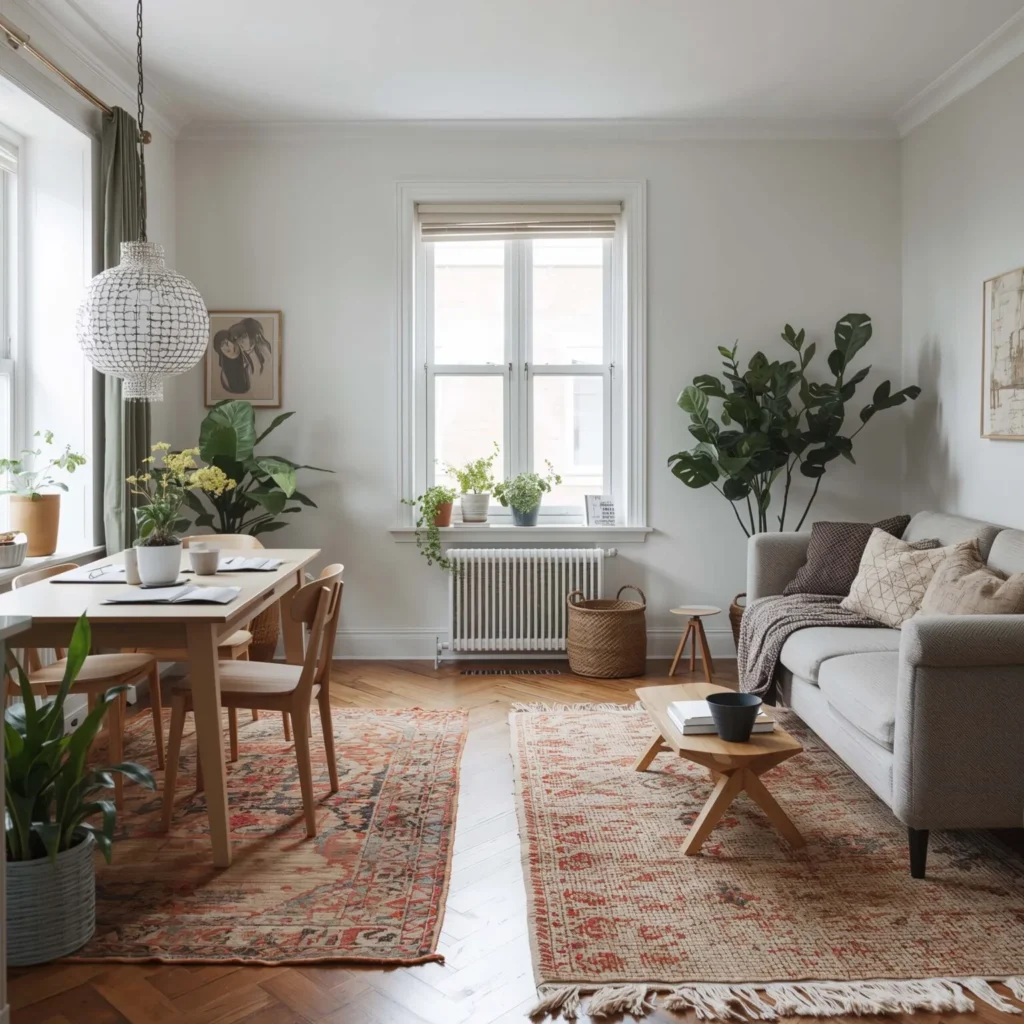
1. Use Two Distinct Area Rugs to Define Each Zone
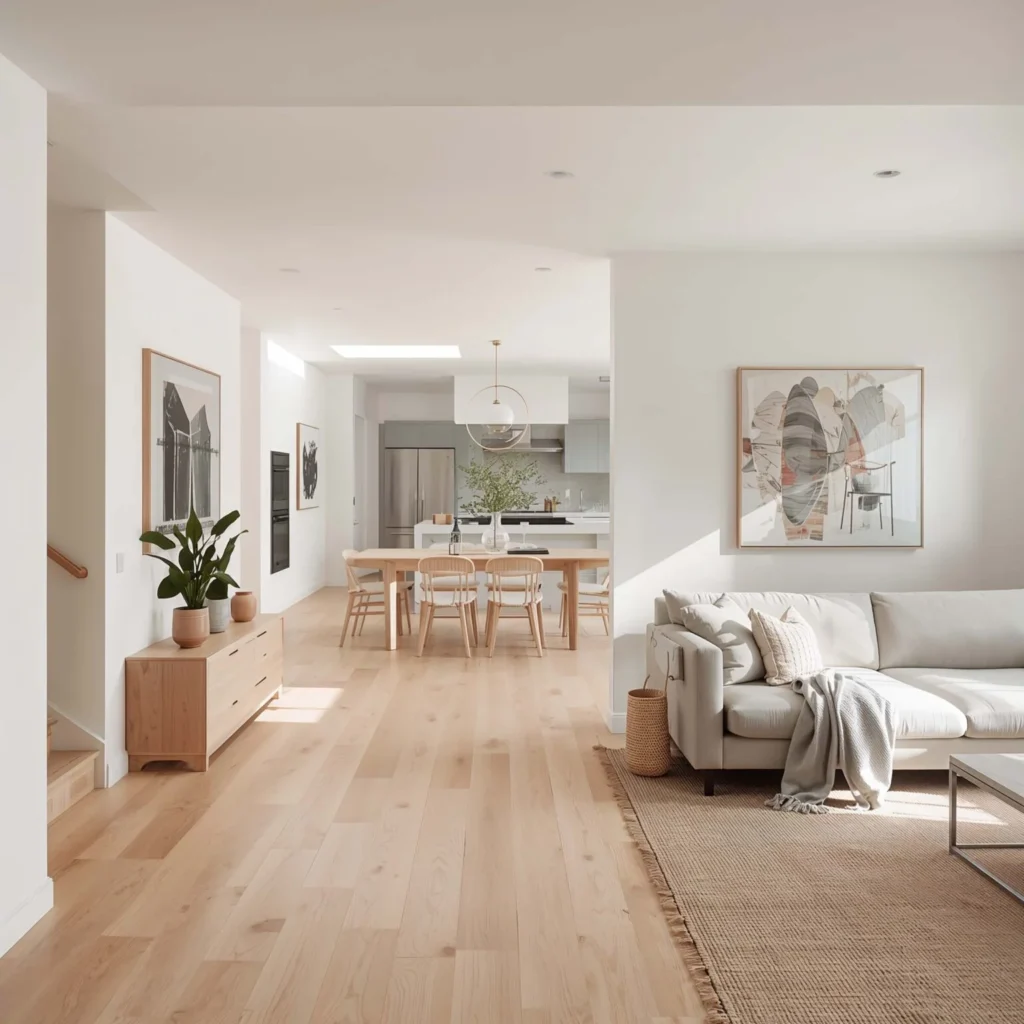
This is the single most effective — and most accessible — zoning technique available to anyone working with a combined living and dining room. Two area rugs, one anchoring the living area and one sitting beneath the dining table and chairs, do more to define a combo space than almost any other single design move.
The key is in the sizing and the relationship between the two rugs. For the living area rug, all front legs of the main seating pieces should sit on the rug — at minimum. Ideally, all four legs of every piece are on the rug. For the dining area, the rug should extend at least 24 to 30 inches beyond the table on all sides so that dining chairs remain on the rug even when pulled back.
Design tip: The two rugs don’t need to match, but they should relate. Consider using different patterns or textures in the same color family, or two solid rugs in complementary tones from the same palette. The connection between them is what signals that these are two parts of a unified design rather than two separate rooms.
2. Position the Sofa Back-to-Back with the Dining Zone
One of the most space-efficient and visually elegant solutions for a combined room is positioning the sofa with its back to the dining area, creating a soft, furniture-based divider between the two zones. This works in almost every layout — from long, narrow rooms to square open-plan spaces — and it creates a sense of clear separation without any construction or structural changes.
Add a narrow console table behind the sofa for extra functionality. It can hold a lamp, some books, a small plant, or serve as a surface for drinks during a dinner party. The console also adds a visual layer between the two zones — a subtle but effective buffer that makes each area feel more self-contained.
Layout note: For this arrangement to work well, choose a sofa with a clean, finished back — one that looks intentional when viewed from the dining area. A tufted linen sofa or a low-profile design with a visible frame works particularly well. Avoid sofas with overstuffed, unfinished backs that look incomplete when seen from the other side.
3. Hang a Statement Pendant Light Over the Dining Table
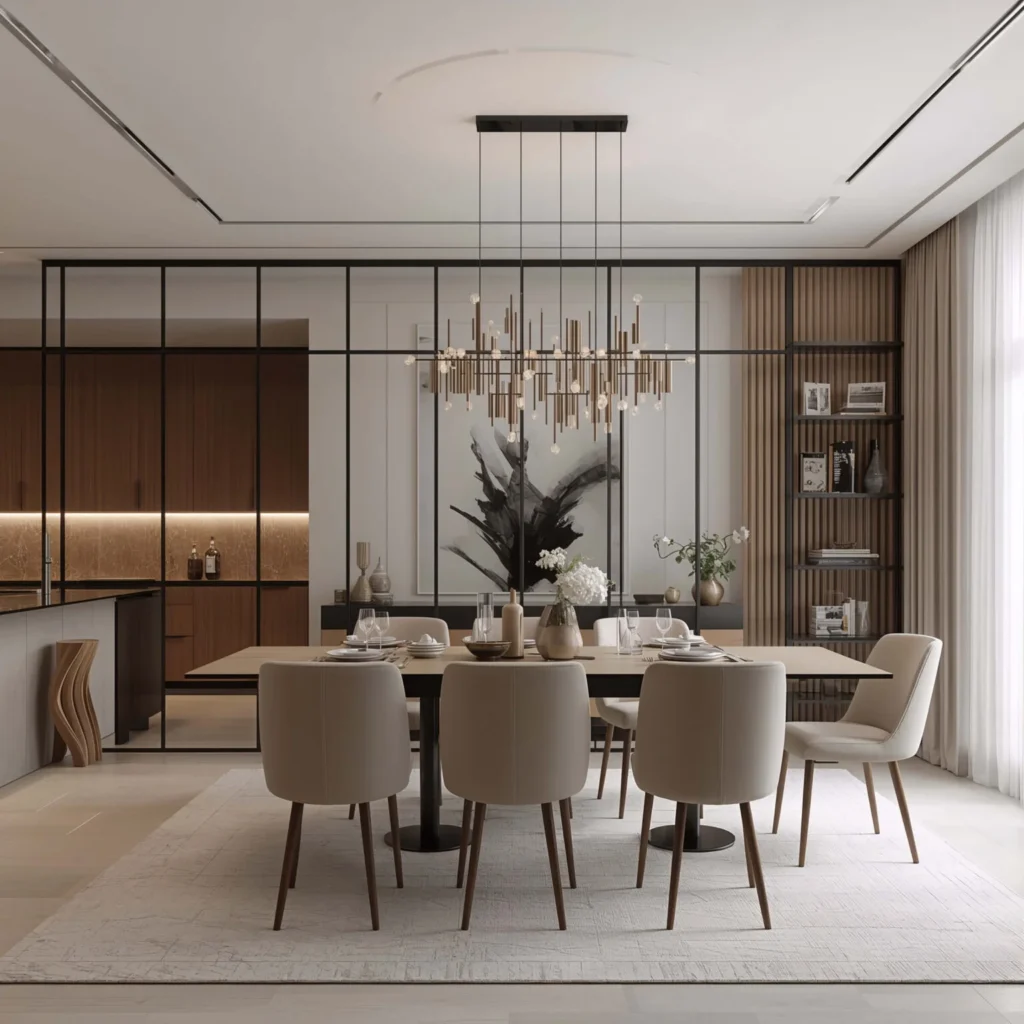
Lighting is the most powerful zoning tool in a combined room, and the dining area is where it tends to have the most impact. A statement pendant light — hung directly above the center of the dining table at 30 to 36 inches above the table surface — does three things simultaneously: it marks the dining zone as a distinct area, it creates a warm, intimate atmosphere for meals, and it gives the room a vertical focal point that draws the eye and adds visual interest to the overall composition.
The pendant doesn’t need to be enormous to have impact. Even a relatively modest fixture — a woven rattan globe, a simple industrial cage light, a cluster of smaller pendants — creates a sense of occasion over the dining table that an overhead ceiling light simply cannot replicate. What matters is that it’s hanging, that it’s centered over the table, and that its finish and style connect to the broader design of the room.
Practical rule: The bottom of the pendant should hang 30 to 36 inches above the table surface in rooms with standard 8-foot ceilings. Raise it proportionally for higher ceilings. Going lower than 30 inches blocks sightlines across the table; going higher than 36 inches loses the intimate, focused quality that makes pendant lighting over a dining table so effective.
4. Create a Half-Wall or Shelf Divider for Soft Separation
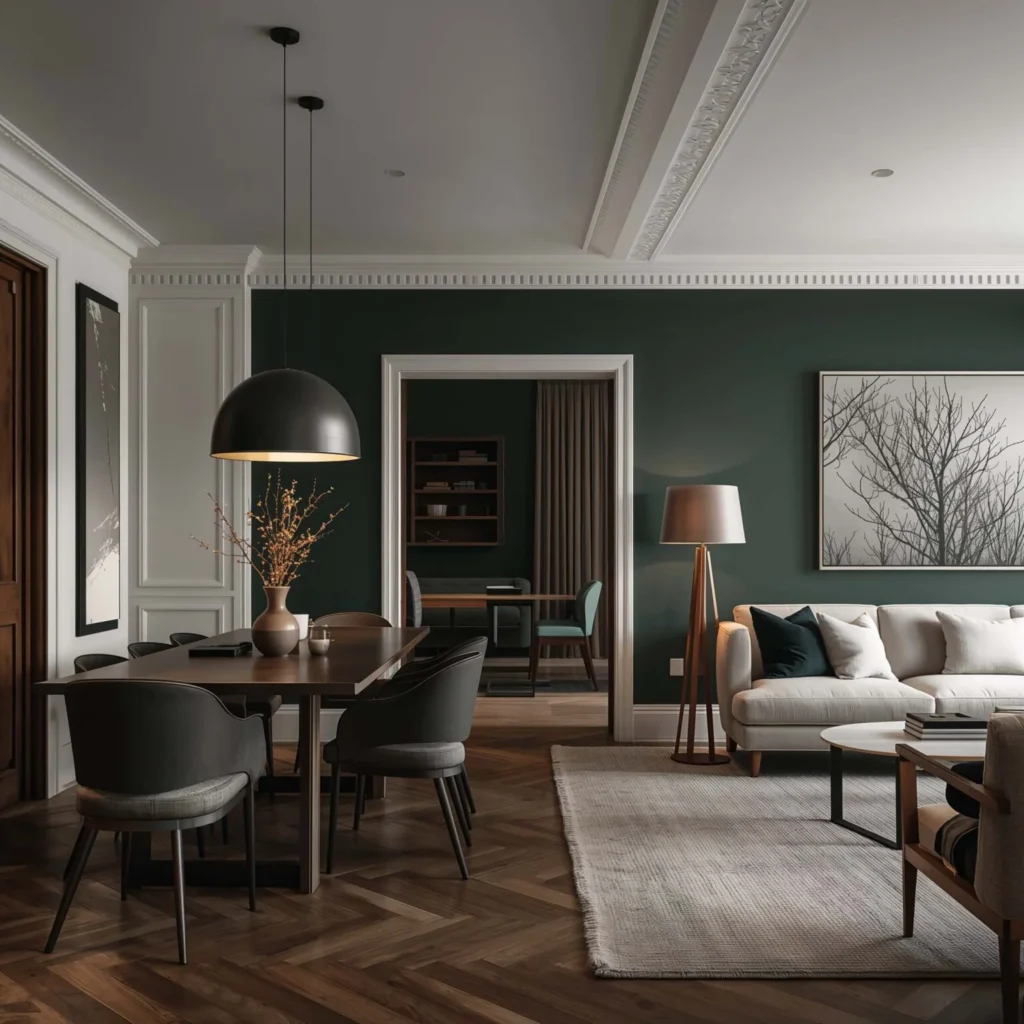
If you want a degree of physical separation between the two areas without fully closing off the space, a half-wall — sometimes called a pony wall — at counter height (roughly 36 to 42 inches) creates a meaningful divider while preserving the open, connected quality of the combined room. Top it with a surface that can hold a plant, some books, a small lamp, or decorative objects, and it becomes a functional ledge as well as a design feature.
A variation on this idea is using a freestanding open bookshelf as a divider. The open shelving allows light and sightlines to pass through — maintaining the sense of connection between the two areas — while still creating a physical and visual boundary. Style the shelves with a mix of books, plants, artwork, and decorative objects that reflect the design of both areas.
Construction note: A half-wall is a relatively straightforward carpentry project, but it does involve some structural work. If you’re renting or want a fully reversible solution, a freestanding bookshelf unit achieves a similar effect with no construction required. Some furniture companies make divider-specific shelving units designed exactly for this purpose.
5. Use a Single, Cohesive Color Palette Across Both Zones
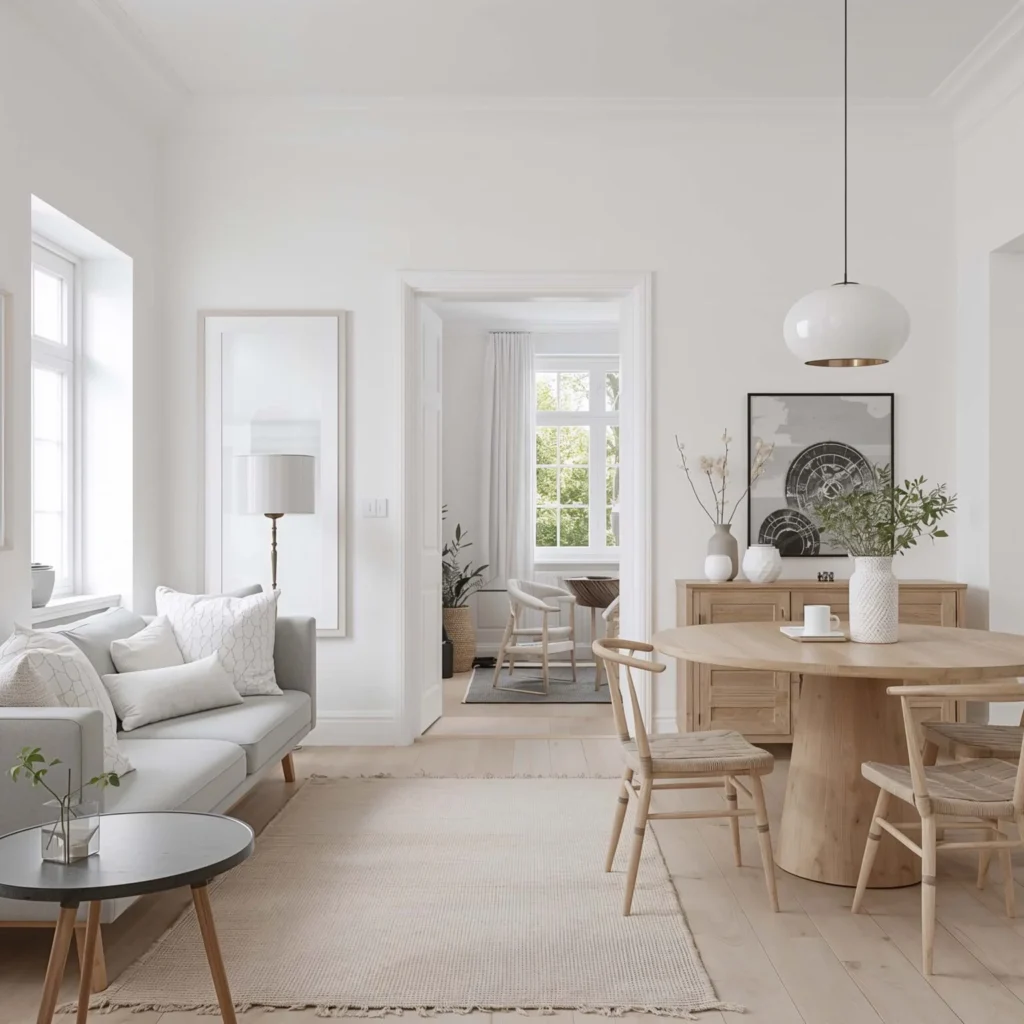
Color is one of the most powerful cohesion tools in a combined space. When both the living and dining areas share the same underlying color palette — even if they each use the colors in slightly different proportions or in different materials — the room reads as a unified whole rather than two separate spaces fighting for visual dominance.
This doesn’t mean everything needs to be the same color. It means the living area’s accent color should appear somewhere in the dining area, the dining area’s primary tone should be referenced in the living area, and the materials in both zones should share a general color temperature. Warm-toned rooms should stay warm throughout. Cool, neutral spaces should maintain that quality across both zones.
Color shortcut: Choose a 60-30-10 color split for the combined room: 60% of the space in a dominant neutral (walls, large furniture), 30% in a secondary tone (smaller furniture, rugs, window treatments), and 10% in an accent color (cushions, artwork, accessories). Apply the same split to both zones and the room will feel cohesive automatically.
6. Try a Banquette Dining Setup to Save Space and Add Character
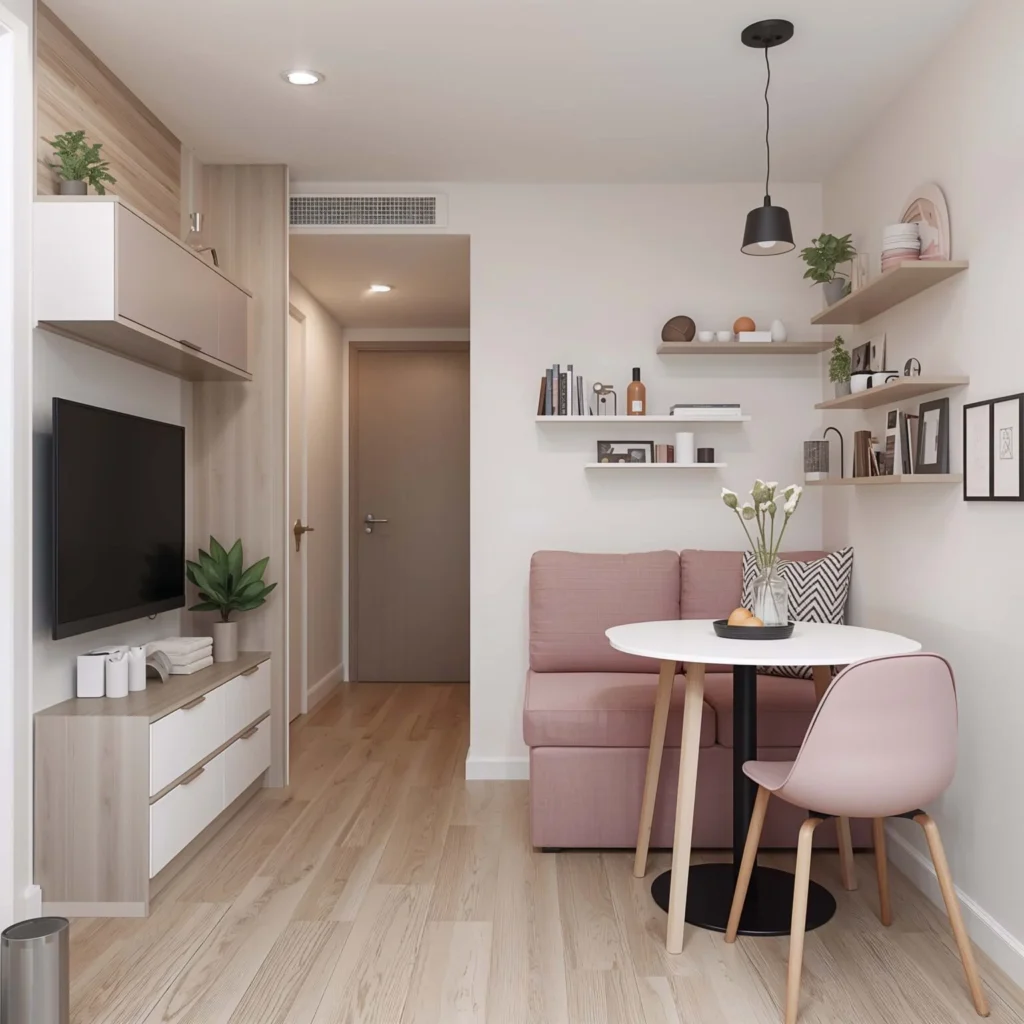
A built-in banquette — a fixed bench seat along one wall or in a corner of the dining area — is one of the most space-efficient dining solutions available for a combined room. Banquettes take up less circulation space than chairs on all four sides of a table, they can incorporate storage beneath the seat, and they create a cozy, settled quality in the dining area that makes meals feel genuinely convivial.
In a combined living-dining room, a corner banquette can be especially effective. It tucks the dining area into a corner of the space, freeing up the center of the room for better flow and making the living area feel more spacious. Upholster it in a fabric that connects to the living area’s color palette for cohesion, and add a few throw cushions that bridge the two zones.
Storage note: A well-built banquette with hinged seat lids provides significant hidden storage — ideal in combined rooms where every square foot of functional space matters. Use it for table linens, extra cushions, board games, or anything else that might otherwise add to visual clutter.
7. Float All Furniture Away from the Walls
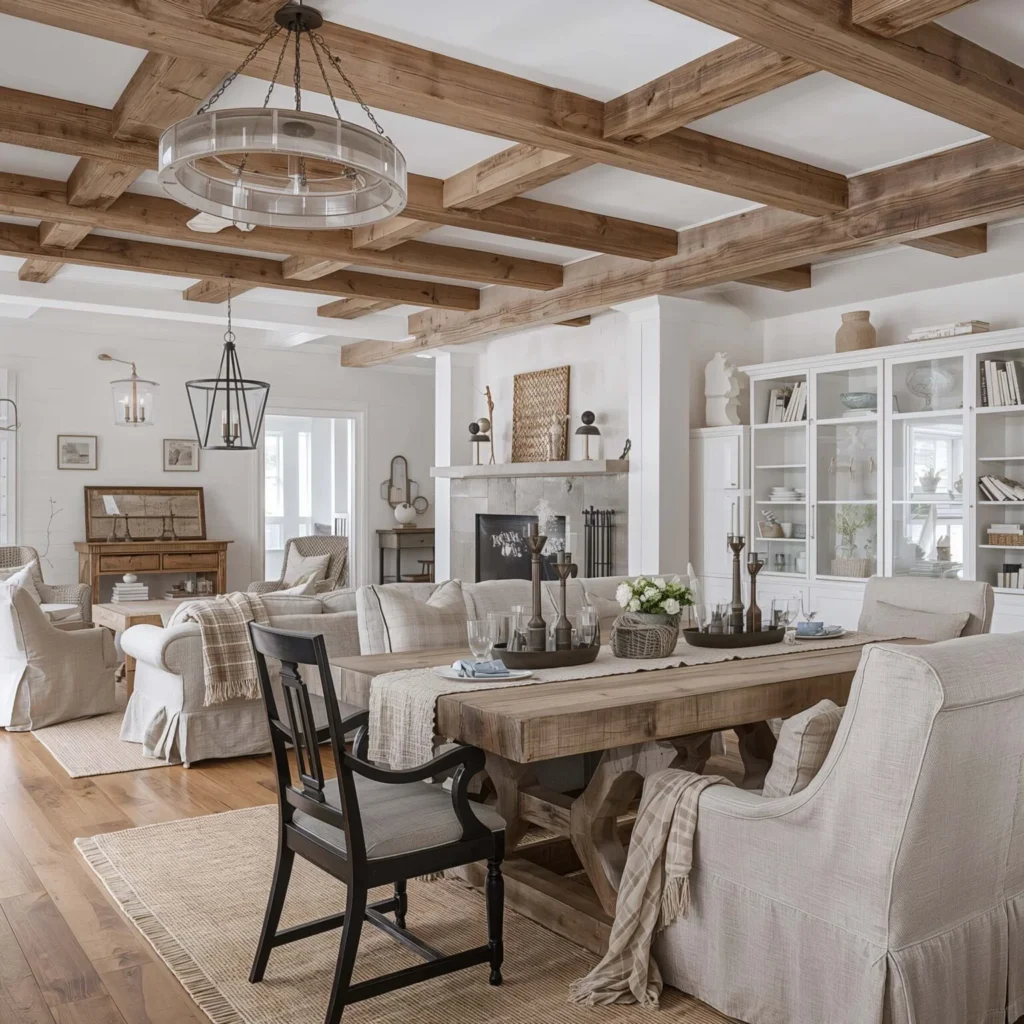
One of the most consistent mistakes in combined living-dining rooms is pushing all the furniture against the walls in an attempt to maximize floor space. The intention is understandable — it feels like creating more room — but the result is almost always a space that feels sparse and disconnected, with too much empty floor in the middle and furniture that appears to be hiding from itself around the edges.
Floating furniture — pulling it away from the walls and arranging it around the center of each zone — creates a more natural, conversational arrangement that actually makes the room feel more intimate and more generously proportioned at the same time. The sofa and chairs form a cohesive seating group. The dining table sits with space to breathe on all sides. Everything feels like it belongs together rather than being stored along the perimeter.
Rule of thumb: Leave at least six to twelve inches between the back of major furniture pieces and the wall behind them. This small gap creates a visual sense of space and depth that wall-pushed furniture simply cannot provide. In rooms where this feels counterintuitive given the space constraints, try it anyway for a week — most people who do never go back.
8. Install a Glass Partition for Elegant Definition
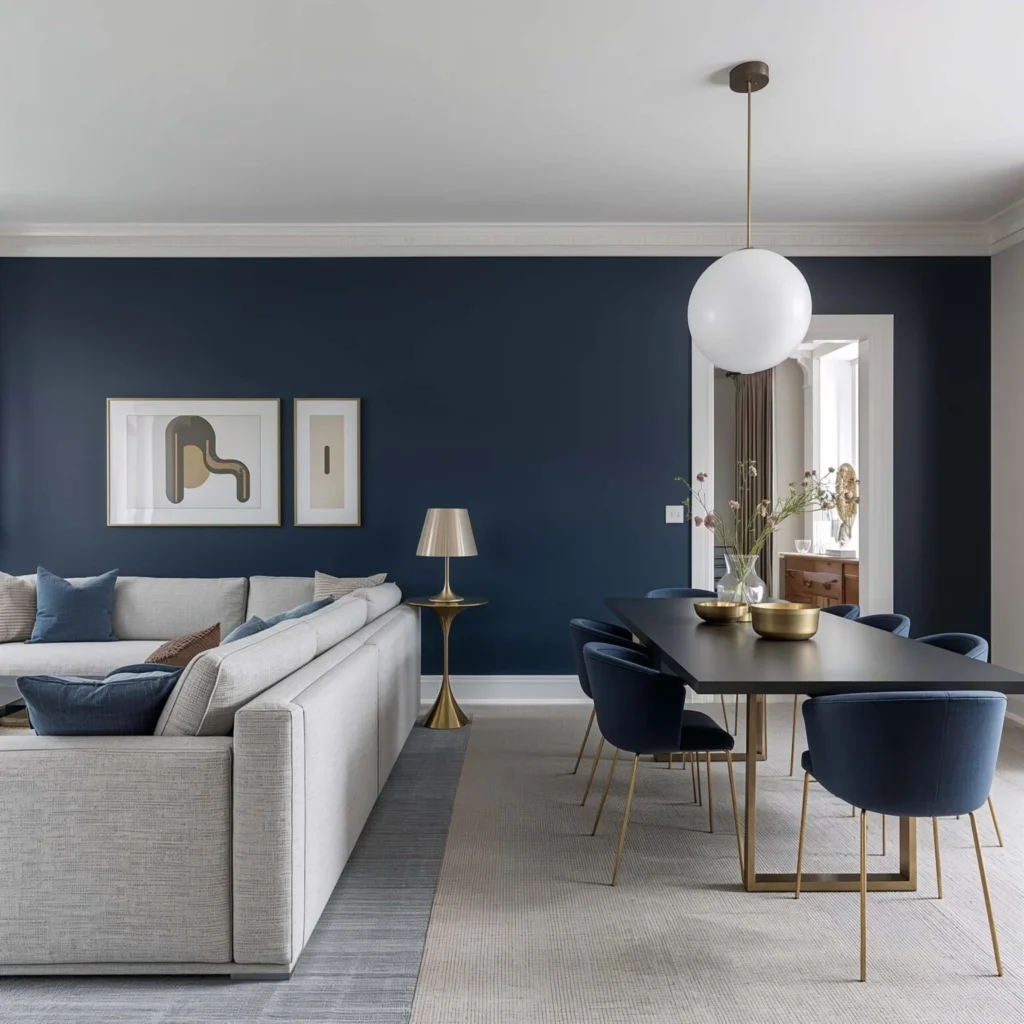
For those who want a stronger sense of separation between the two areas without sacrificing light or the open feel of the space, a glass partition is one of the most elegant and effective solutions. A frame of black steel or warm brass with clear glass panels creates a definitive visual boundary between the living and dining zones while allowing light to pass through freely and maintaining the spatial connection that makes combined rooms feel generous.
Glass partitions work in every design style — the frame profile is what determines the aesthetic. Thin black metal frames read as contemporary and industrial. Brass or gold-toned frames suit transitional and luxury interiors. Natural wood frames bring warmth and work beautifully in Scandinavian or organic modern design contexts.
Budget alternative: Full glass partitions are a significant investment. A more budget-friendly version of this idea uses a row of tall, slender plants — olive trees, fiddle-leaf figs, or bamboo in simple planters — as a green, living screen between the two areas. It’s softer, more organic, and equally effective at creating a visual boundary.
9. Extend One Feature Wall Across Both Zones
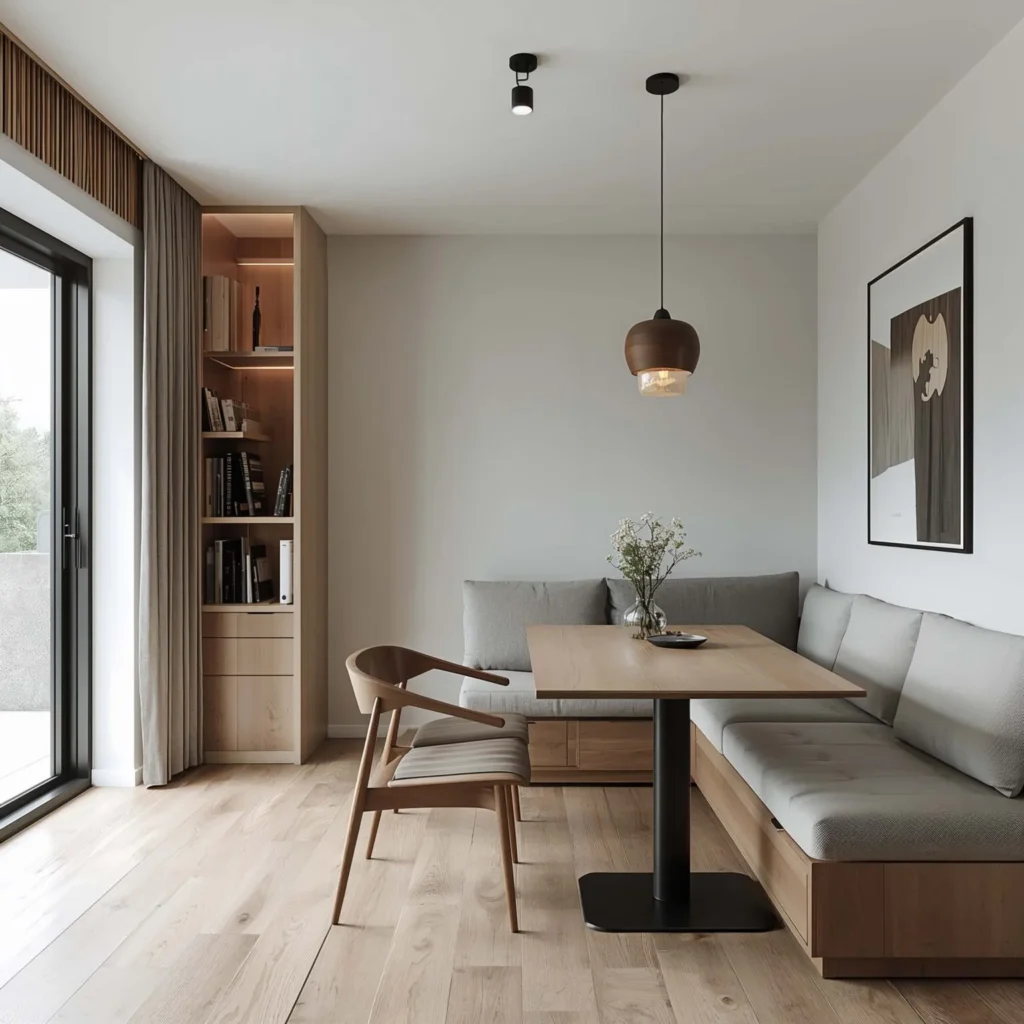
A feature wall — whether it’s a different paint color, a textured finish, wallpaper, wood paneling, or a combination of these — that runs continuously across both the living and dining areas creates a powerful thread of visual connection between the two zones. Instead of fighting for independence, the two areas are unified by this shared backdrop.
This works especially well in long, rectangular rooms where the two zones are arranged end-to-end along the longer axis. Running a warm plaster finish or a deep paint color along the length of one wall gives the room a continuous narrative that makes both areas feel like deliberate parts of a single, designed space.
Color choice: For a feature wall that spans both zones, choose a color with enough depth and interest to hold attention across the full length of the room without needing repetition. Deep, saturated tones — navy blue, forest green, terracotta, charcoal — tend to perform better in this role than lighter, more neutral colors, which can look flat over large expanses.
10. Use Scale to Your Advantage — Size Furniture Properly
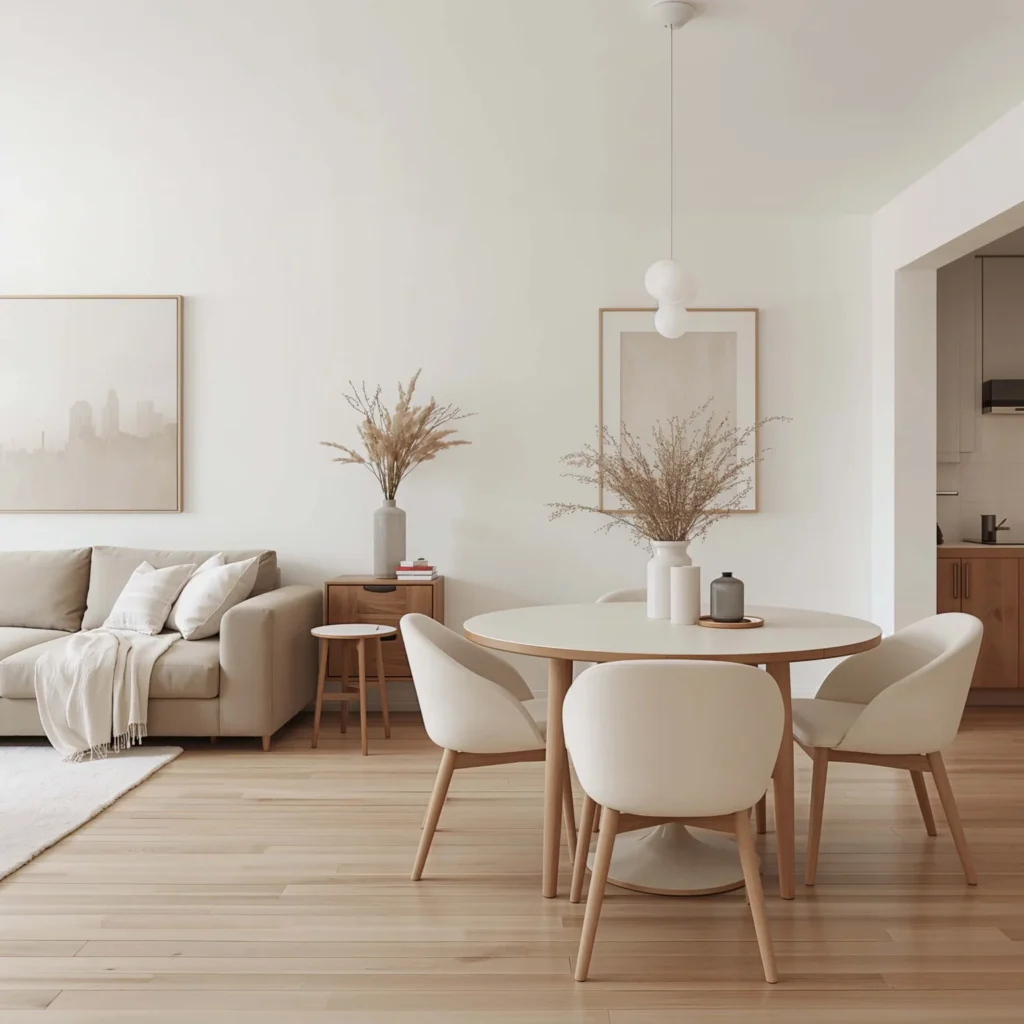
Scale is one of the most underappreciated factors in combined room design, and getting it wrong accounts for a large proportion of rooms that feel perpetually unsatisfying. Furniture that’s too small for a large combined space looks tentative and disconnected. Furniture that’s too large overwhelms a compact space and creates the cramped, cluttered feeling that makes combined rooms difficult to live with.
In a combined living-dining room, the general principle is to size each furniture piece to the zone it occupies rather than the room as a whole. A dining table sized to comfortably seat the number of people who regularly use it — not the maximum number it might theoretically accommodate — will feel proportionate to its space. A sofa sized to anchor the living area without dominating it serves the room better than the largest sofa that technically fits.
Measurement first: Before purchasing any major furniture piece for a combined room, tape out its footprint on the floor. Live with the tape for a day. Walk around it at the scale of the real piece. You’ll often discover that what looked fine on a floor plan feels very different in actual space — and this exercise costs nothing compared to discovering the problem after delivery.
11. Choose a Dining Table Shape That Works for the Space
The shape of the dining table has a surprisingly significant impact on how a combined room feels and functions. Round tables are the most space-efficient option for compact rooms — they take up less floor area per seat than rectangular tables and create a more conversational, inclusive atmosphere around the table. Their lack of corners also improves traffic flow in tight spaces.
Rectangular tables are the natural choice for longer, narrower rooms where the dining zone is oriented along the length of the space. Extending tables — those that expand for large gatherings and contract to a more modest size for everyday use — are particularly practical for combined rooms where the dining area doesn’t have the luxury of full-time space allocation.
Oval option: An oval dining table combines the space-efficiency of a round table with the capacity of a rectangular one. It seats more people than a circle of the same width and eliminates the corner problem of rectangular tables. In a combined room where the dining area is roughly square in shape, an oval table is often the best of all available options.
12. Embrace a Scandinavian-Inspired Palette for Maximum Space Efficiency
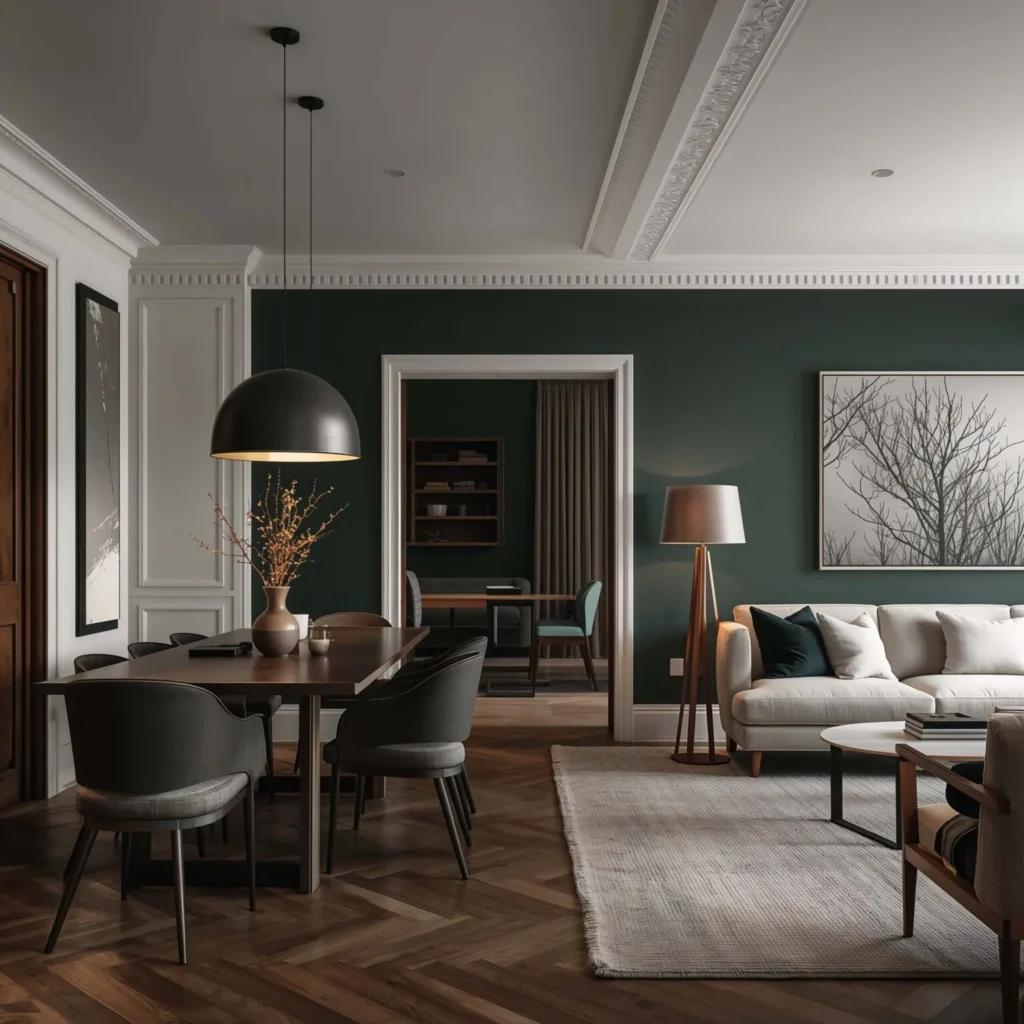
Scandinavian design principles were developed in part as a response to small, often dark living spaces — which makes them exceptionally applicable to combined living-dining rooms. The core elements of the Scandinavian approach — light colors, natural materials, minimal ornamentation, deliberate furniture selection, and an emphasis on quality over quantity — all serve the combined room beautifully.
A Scandi-inspired combined room uses white or light gray walls, light wood tones in furniture (oak is the quintessential choice), simple linen or cotton textiles in off-white and soft natural tones, and a small number of carefully chosen accessories. Plants are generous and used throughout. Lighting is warm-toned and comes from multiple sources at different heights rather than a single overhead fixture.
What to avoid: The Scandinavian aesthetic can go wrong when the restraint tips into sterility. The warmth in a Scandi room comes from texture — a chunky knit throw, a woven rattan pendant, a slightly imperfect ceramic vase — rather than from color. If your Scandi-inspired combined room feels cold, the answer is almost always more texture rather than more color.
13. Use a Consistent Flooring Material to Unify the Space
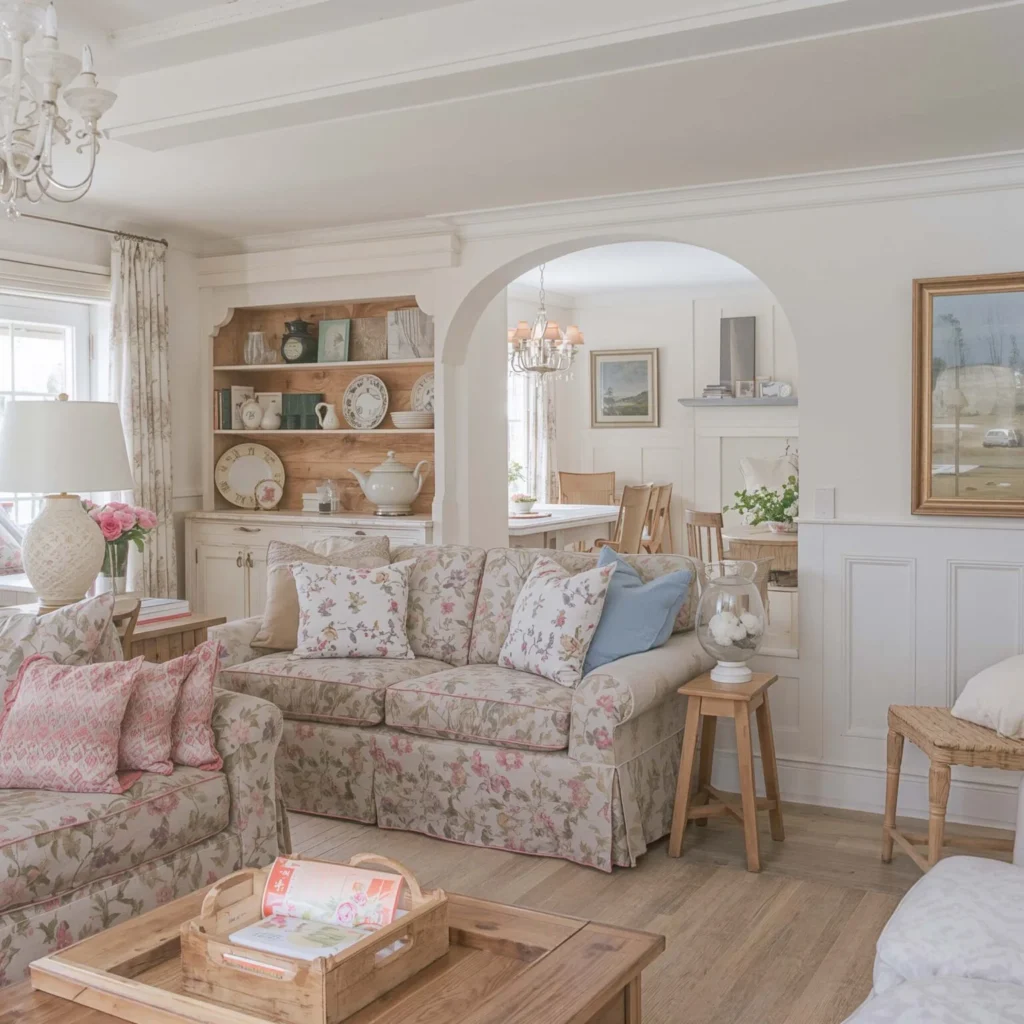
One of the most effective decisions you can make when designing a combined living-dining room — especially if you’re working from scratch or planning a renovation — is to run a single flooring material continuously across both zones. Whether it’s hardwood, large-format tile, polished concrete, or luxury vinyl plank, continuous flooring is one of the strongest visual signals of a unified space.
When different flooring materials meet in a combined room — carpet in the living area, tile in the dining area, for example — the seam between them creates an involuntary visual and psychological division. Sometimes that’s desirable; often it’s not. If your goal is a space that flows and reads as a generous whole, continuous flooring is one of the most powerful tools at your disposal.
Area rug role: Continuous flooring doesn’t mean the room has to feel like one undifferentiated surface. Area rugs placed within each zone — a large rug anchoring the living area, a dining rug beneath the table — sit on top of the continuous floor and define each zone while the floor itself maintains the underlying unity.
14. Let Natural Light Work for Both Zones
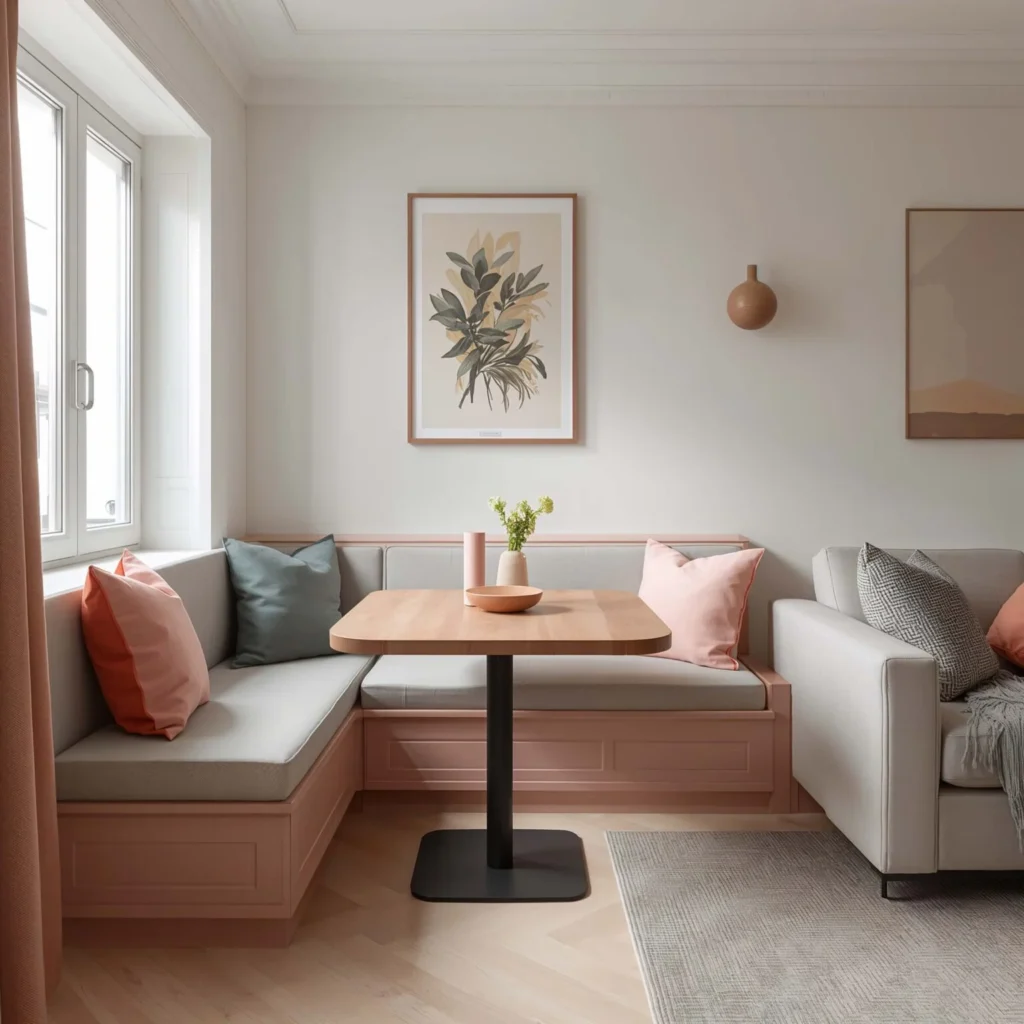
Natural light is one of the most powerful tools in a combined room, and it works best when it’s distributed evenly rather than concentrated in one zone at the expense of the other. If your combined room has windows primarily on one side, think carefully about how furniture placement affects light distribution — a large, dark sofa positioned directly in front of the main window blocks light from reaching the rest of the room.
Use mirrors strategically to amplify natural light — a large mirror on the wall opposite the main windows reflects light deep into the space and makes both zones feel brighter and more open. Keep window treatments simple: sheer linen panels that diffuse light without blocking it, or clean Roman blinds that stack neatly above the window when open, allow the room to benefit fully from available daylight.
Mirror placement: For maximum effect, hang mirrors at a height where they reflect the outside view or the light source rather than just the furniture opposite. A large mirror positioned to reflect a window or a well-lit wall does far more to brighten a space than the same mirror reflecting a dark sofa.
15. Create a Moody Dining Zone with Dimmer-Controlled Lighting
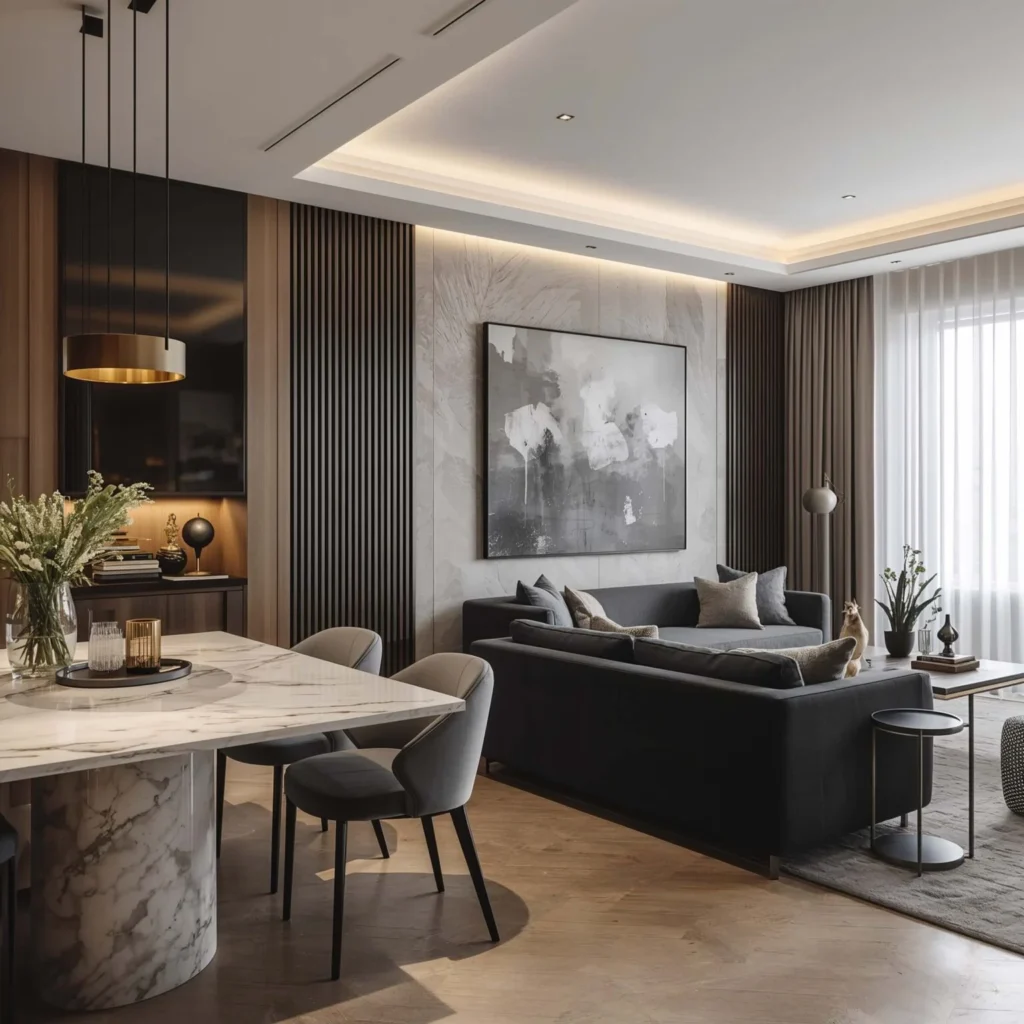
The dining area and the living area of a combined room have genuinely different lighting requirements, and acknowledging this difference with separate, independently controlled lighting circuits is one of the most valuable functional upgrades you can make. The dining area benefits from focused, warm, intimate lighting during meals. The living area needs a more flexible combination of ambient light for conversation and brighter, more directed light for reading or detailed tasks.
Installing dimmer switches — ideally separately controlled for each zone — allows the mood of each area to be calibrated for the activity at hand. During a dinner party, dim the living area and focus the light over the dining table. For a relaxed evening on the sofa, bring up the living area lighting and let the dining zone recede into the background. This simple functional upgrade transforms how the combined room feels throughout the day and evening.
Lighting layers: The most versatile combined rooms use at least three layers of lighting in each zone: ambient (overhead, general illumination), task (reading lamps, under-shelf lighting), and accent (candles, LED strips, picture lights). With all three layers controllable by dimmer, you can create an almost infinite range of moods appropriate to every occasion the room will ever need to serve.
Quick Reference: Furniture Sizing for Combined Living and Dining Rooms
Use these measurements as starting points when planning or purchasing furniture for a combined space:
Dining Area Measurements
- Allow 36 inches minimum between the edge of the dining table and the nearest wall or furniture piece — enough for comfortable chair movement and traffic flow.
- For a round table that seats four, aim for 42 to 48 inches in diameter. For six, 54 to 60 inches.
- For a rectangular table, allow 24 inches of table width per seated person and at least 30 inches of table length for two people on the ends.
- Seat height for dining chairs is typically 17 to 19 inches. Table height is typically 29 to 30 inches — confirm the relationship before purchasing separately.
- The bottom of a dining pendant light should hang 30 to 36 inches above the table surface in rooms with 8-foot ceilings.
Living Area Measurements
- Maintain 18 inches between the sofa and the coffee table for comfortable reach and natural traffic flow around the seating group.
- A coffee table should be roughly two-thirds the length of the sofa it sits in front of — proportionally, this is the most pleasing relationship.
- Allow 8 feet minimum between a television and the nearest seating position for comfortable viewing. Twelve to fourteen feet is ideal for larger screens.
- Sofa depth of 32 to 36 inches is the sweet spot for most adults — deep enough for comfort, shallow enough to maintain reasonable foot space.
- Area rugs in the living zone should extend at least 8 inches beyond all seating pieces — all four legs on the rug is the ideal standard.
Combined Room Traffic Flow
- Primary circulation paths (the main routes people use to move through the space) should be at least 42 to 48 inches wide.
- Secondary paths (less frequently used routes, side access to dining chairs, etc.) should be at least 36 inches wide.
- The transition zone between the living and dining areas — the space where movement shifts from one zone to the other — should feel clear and unobstructed. If it doesn’t, something needs to move.
Style Directions for Combined Living and Dining Rooms
Here are six of the most popular and coherent style directions for a combined room, with the core elements that define each:
Scandinavian Modern
- Light oak or ash furniture throughout both zones.
- White or pale gray walls; natural linen or cotton textiles.
- Warm, multi-source lighting with simple fixture designs.
- A modest number of carefully chosen accessories; plants generously placed.
- Clean lines, no ornament, emphasis on functional beauty.
Contemporary Transitional
- Mix of warm and cool neutrals — cream, warm gray, soft white.
- Furniture with clean lines but some organic softness in curves or materials.
- Mix of metals: brushed brass and matte black can coexist.
- Statement pendant over the dining table; layered lighting in the living area.
- Artwork used generously; pattern introduced through textiles.
Maximalist Eclectic
- Rich, bold color — deep teal, forest green, terracotta, dusty pink — used confidently.
- A mix of furniture periods and styles unified by color palette and material warmth.
- Pattern on pattern: a striped rug with a floral cushion with a geometric throw can work if the colors relate.
- Collections and personal objects displayed as part of the design rather than hidden.
- Lighting that makes a statement: chandeliers, statement pendants, wall sconces.
Industrial Modern
- Exposed brick, concrete, or dark-painted walls as backdrop.
- Furniture in dark wood, metal, and leather.
- Lighting in black metal or factory-style cage designs.
- Rugs in natural, undyed tones — jute, sisal, dark wool.
- Minimal accessories; what’s present should be functional or deeply considered.
Warm Mediterranean
- Terracotta tiles or warm wood flooring throughout.
- White plaster or limewash walls; wooden beams where possible.
- Furniture in natural rattan, cane, woven materials, and warm-toned wood.
- Abundant textiles: embroidered linens, woven throws, patterned cushions.
- Pottery, ceramics, and greenery in abundance; lantern-style lighting.
Mid-Century Modern
- Furniture with organic shapes, tapered legs, and clean mid-century silhouettes.
- Color introduced through furniture upholstery rather than walls — mustard, teal, olive.
- Walnut wood tones throughout; brass or gold hardware and fixtures.
- A statement pendant in an organic or geometric form over the dining area.
- Artwork from the mid-century era or designed in that spirit; abstract patterns welcome.
7 Common Mistakes in Combined Living and Dining Rooms — and How to Fix Them
- Pushing all furniture against the walls. The fix: pull every piece at least 6 to 12 inches from the wall and float the arrangement in the center of each zone.
- Using rugs that are too small. The fix: size up. The most common rug mistake in both living and dining areas is undersizing. When in doubt, go larger.
- Treating the whole room as one undifferentiated space for lighting. The fix: install separate lighting circuits for each zone, with dimmer switches on both.
- Mixing too many wood tones and metal finishes. The fix: choose one wood tone and one or two metal finishes, and apply them consistently across both zones.
- Buying furniture before measuring and taping out the floor plan. The fix: always tape first, live with the taped footprint, and measure twice before purchasing.
- Ignoring the transition zone between the two areas. The fix: think deliberately about the space where the living zone meets the dining zone. It should feel clear, open, and welcoming — not congested.
- Designing for a hypothetical life rather than the actual one. The fix: spend a week taking note of how you actually use the space before making any design decisions. Design for those patterns, not for the ideal ones.
Final Thoughts: The Combined Room Is an Opportunity, Not a Compromise
There’s a persistent assumption in home design that a combined living and dining room is a second-best arrangement — something you make work when you can’t have dedicated rooms for each function. It’s worth pushing back on that assumption fairly strongly.
A combined living-dining room, when designed with genuine thought and care, offers something that separate rooms can’t: a sense of connection and flow that makes a home feel generous and alive. Meals happen in view of the sofas; conversations that start at the dining table drift naturally to the living area; the whole space feels engaged and occupied in a way that rooms sealed off from each other never quite achieve.
The ideas in this guide — all 22 of them — are grounded in that possibility. None of them require a large budget or a professional designer. What they require is attention: to scale, to flow, to the relationship between the two zones, to the way light moves through the space, and to the people who are actually going to live in it.
Get those things right — take your time with the decisions that matter, measure before you buy, test colors in the actual room, and design for the life you live rather than the one you’d like to photograph — and your combined living and dining room will become one of the best spaces in your home. Not despite the fact that it combines two functions into one space, but because of it.
Frequently Asked Questions
How do I make a combined living and dining room feel bigger?
Several techniques work together here. Use a single, continuous flooring material across both zones. Float furniture away from walls. Choose lighter colors for walls and larger surfaces. Hang curtains at ceiling height rather than window-frame height. Use mirrors to reflect light and views. Maintain clear primary traffic paths of at least 42 inches. Choose furniture scaled appropriately to each zone rather than oversizing either area.
What size rug do I need for a combined living-dining room?
You typically need two separate rugs — one for each zone. For the living area, the rug should be large enough for all front legs (ideally all four legs) of the main seating pieces to sit on it. For the dining area, the rug should extend at least 24 to 30 inches beyond the table on all sides so dining chairs remain on the rug when pulled back. When in doubt, size up on both.
How can I separate a living room and dining room without a wall?
There are many effective ways to create separation without construction. Area rugs define each zone visually. Furniture positioning — particularly placing the sofa with its back to the dining area — creates a soft physical boundary. Different lighting fixtures above each zone communicate their separate identities. A freestanding bookshelf, glass partition, folding screen, or row of tall plants all create varying degrees of physical definition without permanent construction.
What furniture arrangement works best for a combined room?
The arrangement depends on the room’s shape, but several principles apply universally. Float all furniture away from walls. Size each piece to its zone rather than the room overall. Maintain clear traffic paths of at least 36 inches between zones and at least 42 inches on primary circulation routes. Place the sofa to face the primary living-area focal point (usually a fireplace or television) rather than simply centering it in the room. Center the dining table within its zone with equal space on all sides.
What’s the best lighting setup for a combined living and dining room?
The ideal setup uses separate lighting circuits for each zone, each independently dimmable. In the dining area, a pendant light hung 30 to 36 inches above the table surface provides focused, intimate illumination for meals. In the living area, a combination of ambient lighting (overhead or wall-mounted), task lighting (reading lamps), and accent lighting (table lamps, LED strips) creates a flexible, layered scheme that can be adjusted for any mood or activity.
Can a combined living and dining room work in a small space?
Absolutely — and in many ways, smaller combined rooms benefit most from thoughtful design because the impact of every decision is amplified. The most important moves for a small combined room are: choosing furniture scaled to the actual zones rather than the room as a whole; using two appropriately sized area rugs rather than attempting one large rug for both zones; maintaining clear traffic paths even at the cost of smaller furniture or fewer pieces; and maximizing natural light through mirror placement and unobstructed windows.
1 thought on “15 Brilliant Living and Dining Room Combo Ideas for Stylish Homes”