
Let’s be honest — when you first move into a small apartment or a compact home, the living and dining area combo can feel like a cruel joke. You’re staring at one open space and thinking: where does the sofa go? Where does the table go? And how do I make this not look like a furniture showroom explosion?
The good news is that small combo spaces are actually one of the most exciting design challenges out there. With the right ideas, a 400-square-foot open-plan room can feel cozy, stylish, and surprisingly functional. You don’t need a bigger place — you just need smarter choices.
In this guide, we’re covering 20 small living and dining room combo ideas that go beyond the obvious. Whether you’re decorating from scratch or reworking what you already have, there’s something here for every taste, every budget, and every floor plan.
1. Use Your Sofa as a Room Divider
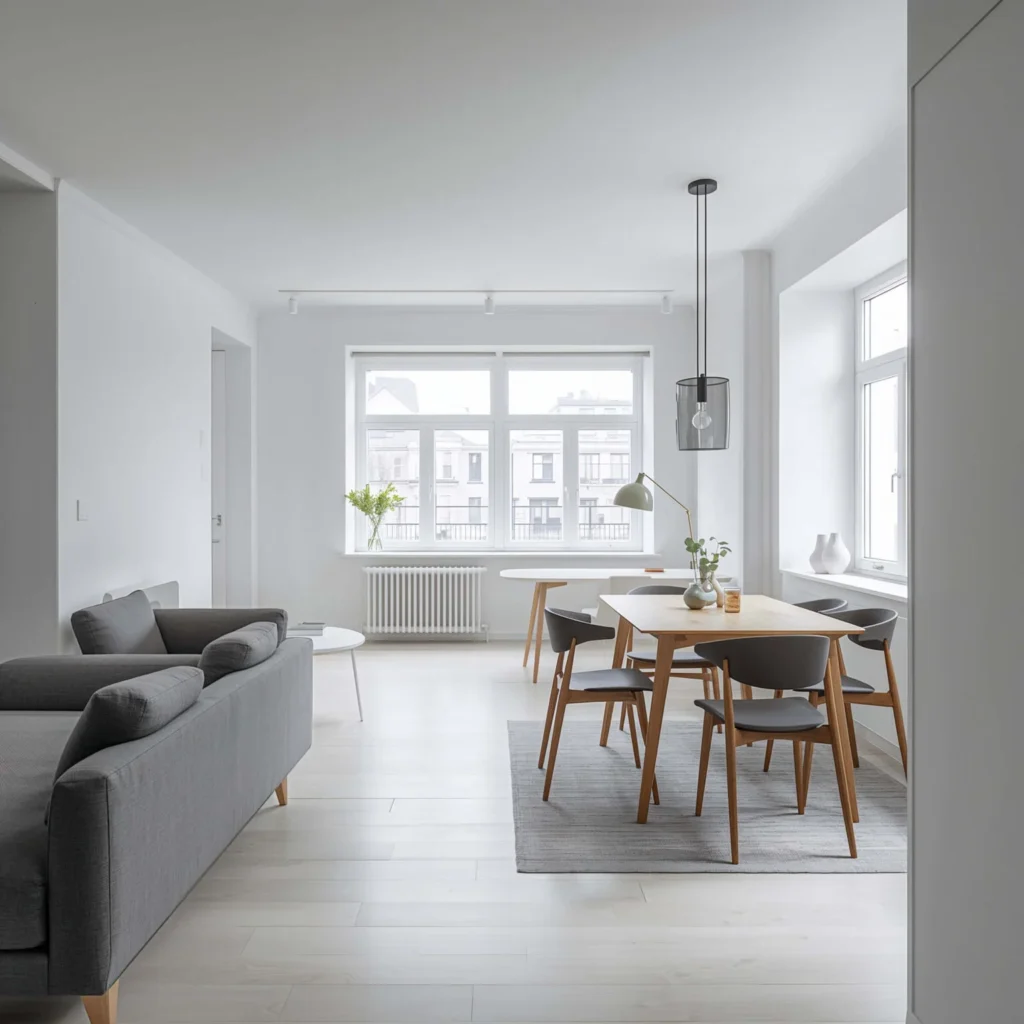
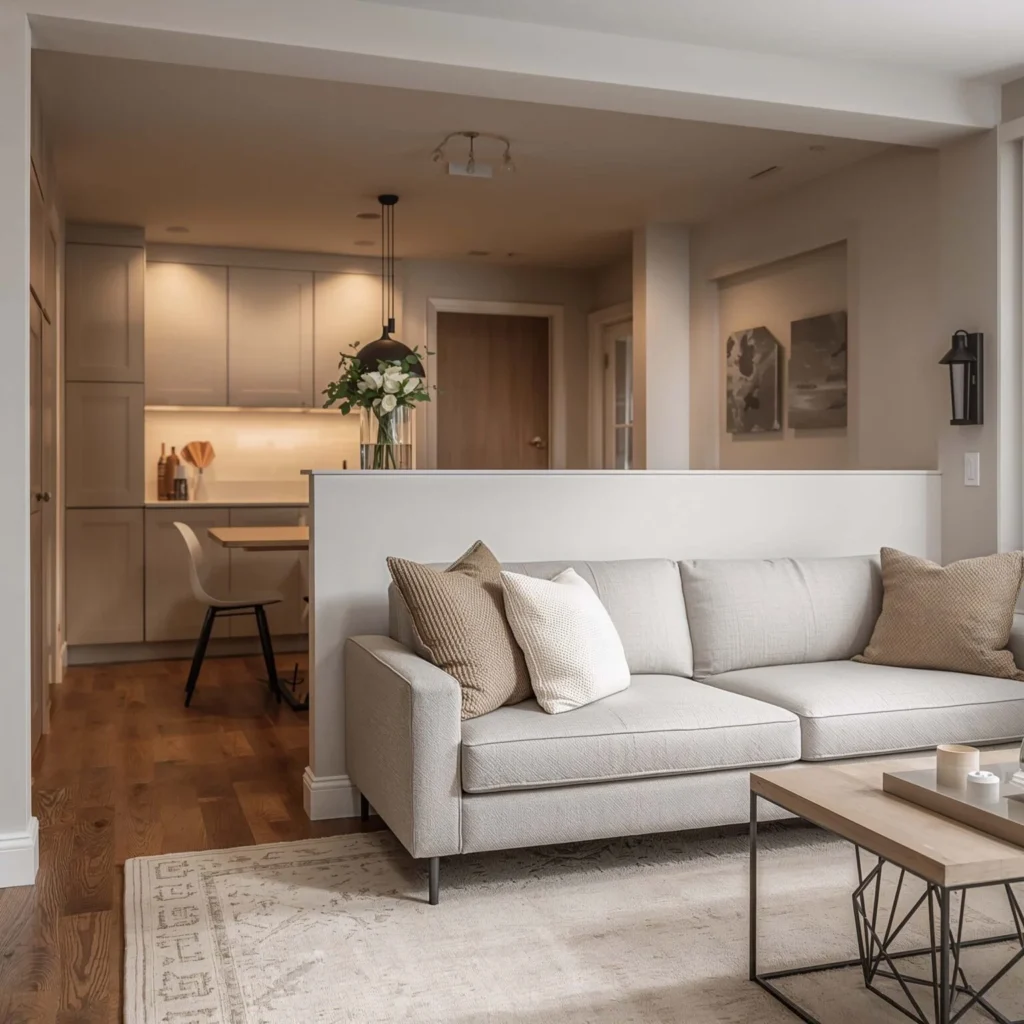
One of the most underrated tricks in small-space design is floating your sofa in the middle of the room instead of pushing it against the wall. When you position the sofa with its back facing the dining area, you naturally create two distinct zones without adding any walls or partitions.
It sounds counterintuitive — most people think furniture should hug the walls to ‘save space’ — but floating the sofa actually opens up the room and gives each zone its own sense of purpose. Add a slim console table behind the sofa and you get a bonus surface for candles, a small lamp, or decorative objects.
Why it works:
- Creates visual separation without walls or curtains
- Improves traffic flow through the space
- Gives the dining area its own defined corner
2. Choose a Round Dining Table
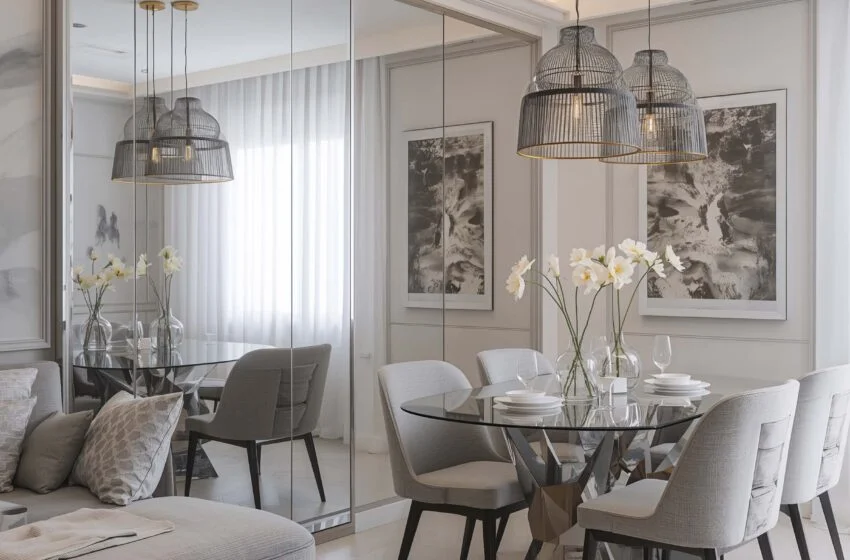
If you currently have a rectangular dining table in a small space, this one change might be the best decision you make all year. Round tables are simply better suited to small combo rooms. No sharp corners means easier movement, and the circular shape feels softer and less bulky in tight quarters.
A 36-inch round table comfortably seats four people and takes up significantly less visual real estate than a comparable rectangular version. Opt for a pedestal base instead of four legs — you get more legroom, and it’s easier to squeeze in an extra chair when guests arrive.
Best options for small spaces:
- 36–42 inch round tables with a pedestal base
- Glass-topped tables for a lighter visual feel
- Extendable round tables for occasional entertaining
3. Define Zones with an Area Rug
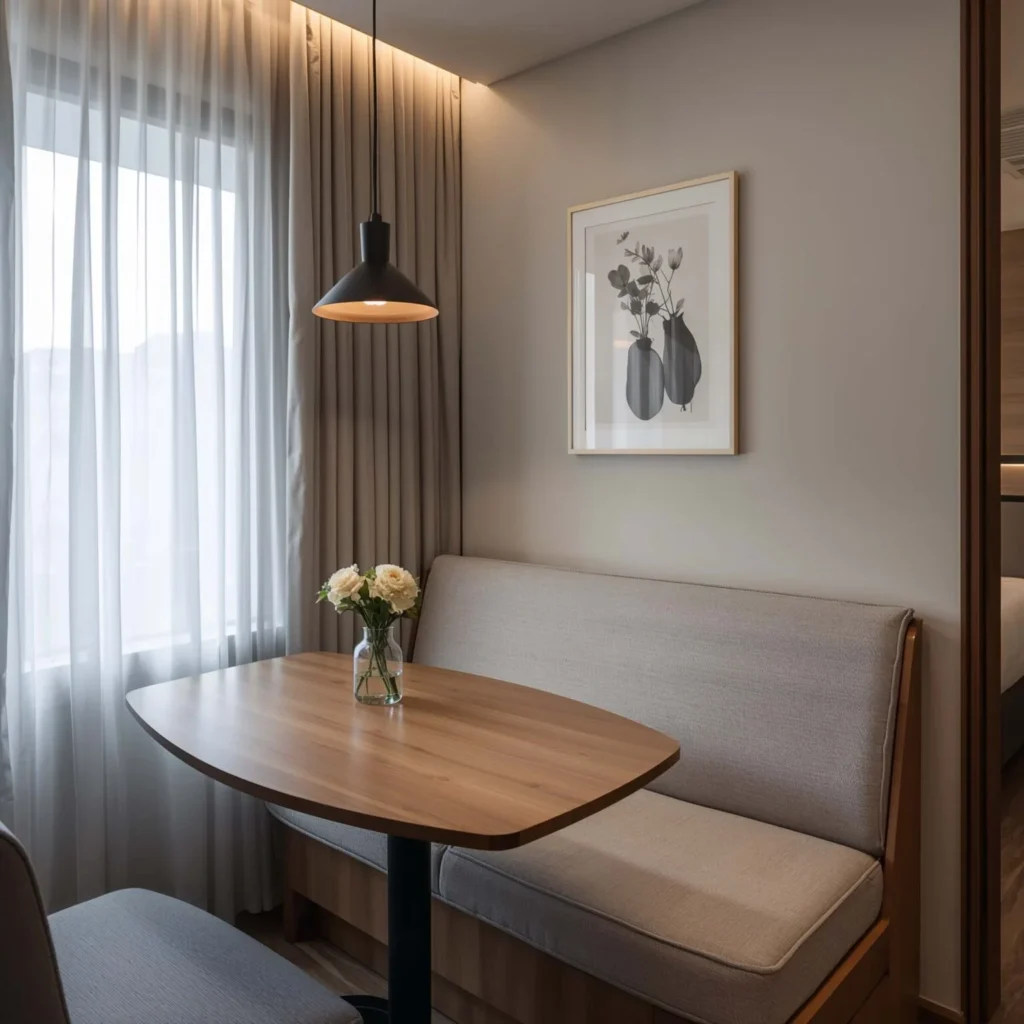
You don’t need walls, partitions, or even different paint colors to separate your living and dining areas — a well-placed area rug does the job beautifully. Anchor your sofa and coffee table on one rug, and let the dining table stand on its own flooring or a second, smaller rug.
The key is sizing your rugs correctly. A living area rug should be large enough that at least the front legs of all the seating pieces rest on it. In a combined space, this grounding effect makes the two zones feel intentional rather than accidental.
Rug tips for combo rooms:
- Use complementary colors or patterns between both rugs to maintain cohesion
- Low-pile rugs work best under dining tables (easier to clean)
- Natural fibers like jute or sisal add warmth without overwhelming
4. Go All-In on Multipurpose Furniture
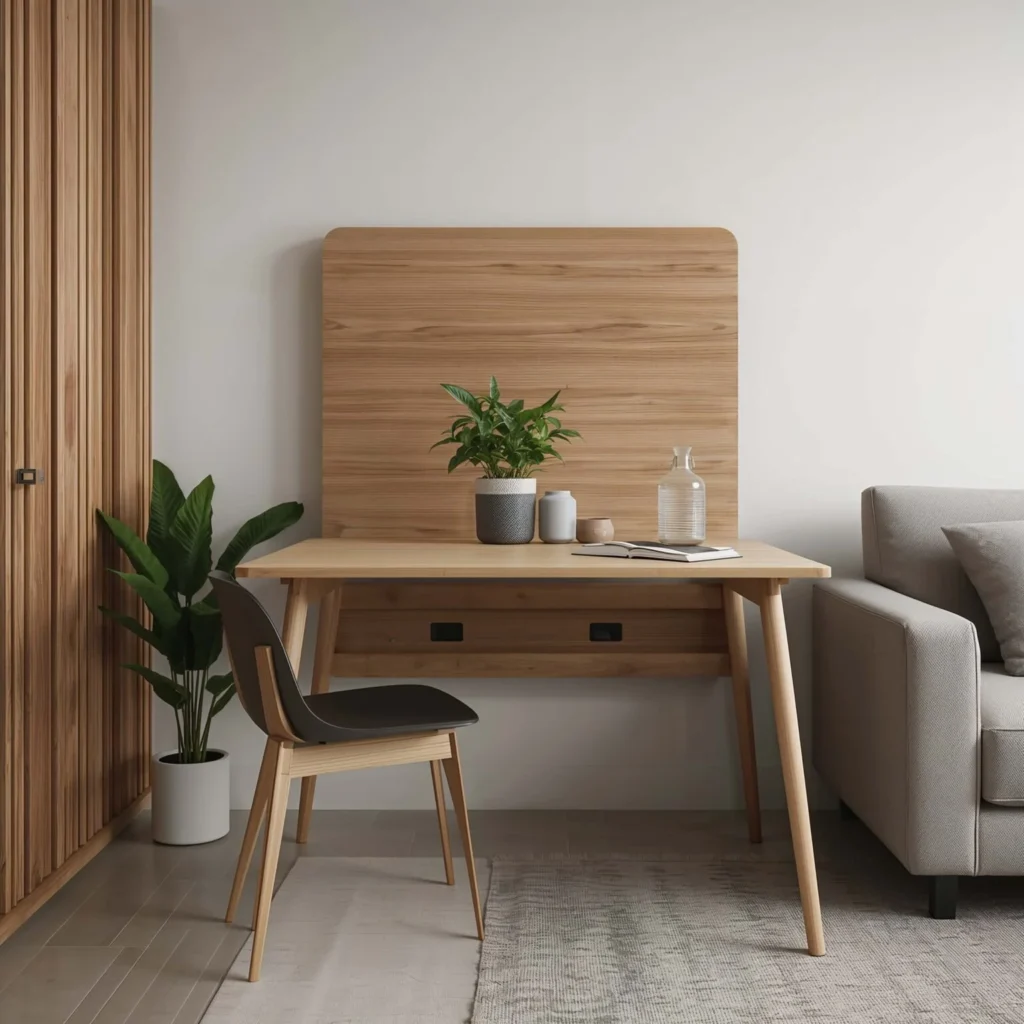
In a small combo room, every piece of furniture should earn its place. If something only does one job, ask yourself whether there’s a smarter alternative. Ottomans with hidden storage, coffee tables that lift to dining height, benches that tuck under the dining table — these are the kinds of pieces that make small spaces work.
A bar cart, for example, can serve as both a storage unit and a room divider. A console table behind the sofa doubles as a narrow serving sideboard for dinner parties. Think of your furniture as a team rather than a collection of individuals.
Multipurpose furniture worth investing in:
- Storage ottomans (seating + hidden storage)
- Lift-top coffee tables (lounge + workspace)
- Extendable dining tables (everyday compact + party-ready)
- Stackable dining chairs (easy storage when not needed)
5. Try a Light, Neutral Color Palette
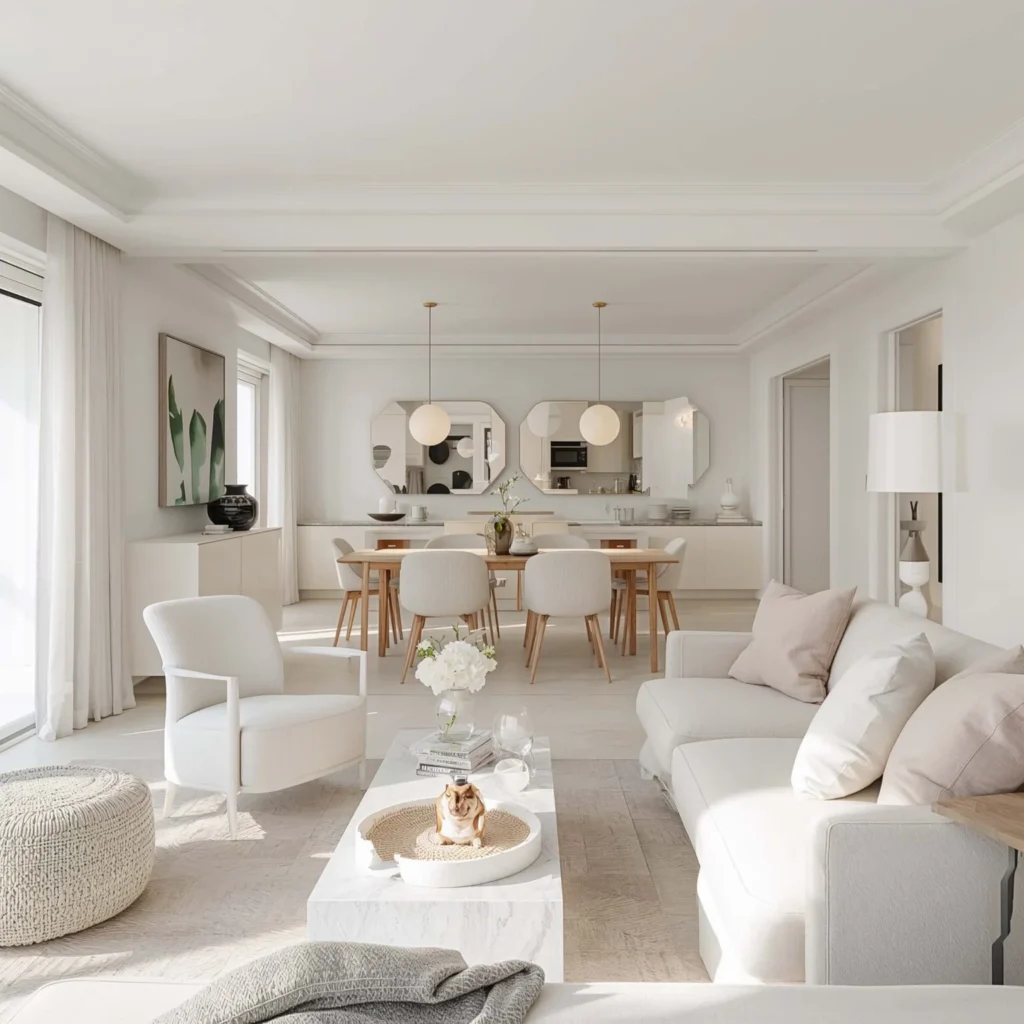
Light colors are the oldest trick in the small-space playbook, and there’s a reason designers keep reaching for them. Whites, soft grays, warm creams, and muted beiges reflect light and make a room feel larger and airier than it actually is.
The secret to pulling this off without the space feeling cold or clinical is layering your neutrals. Crisp white walls, cream upholstery, warm oak wood, and soft linen curtains — each element brings a slightly different texture and tone, so the room has depth even though everything is technically ‘light’.
A simple palette that works every time:
- Walls: warm white or the palest dove gray
- Sofa: light gray, cream, or soft sage
- Dining table: bleached oak, white oak, or natural pine
- Accents: terracotta, muted green, or dusty blue for warmth
6. Install a Wall-Mounted Folding Table
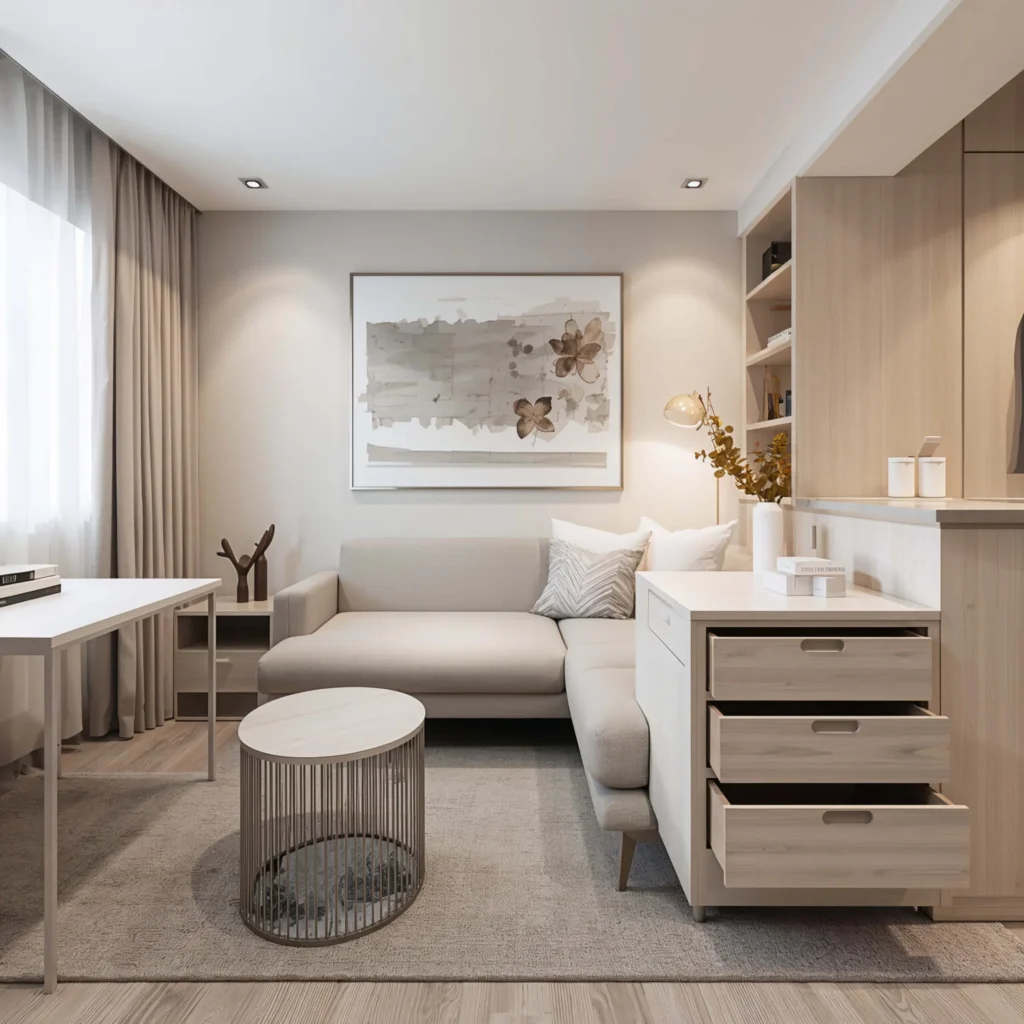
For studio apartments or genuinely tiny spaces, a wall-mounted folding table is a game-changer. When you don’t need it, it folds flat against the wall and takes up virtually no floor space. When mealtime comes around, you pull it down and you’ve got a proper dining setup.
Modern versions of these tables look sleek and intentional — nothing like the camping-table aesthetic of older models. Pair it with wall-mounted folding chairs or a couple of slim stools that slide under the sofa, and you’ve solved the dining area problem without permanently sacrificing floor space.
7. Use Pendant Lighting to Anchor Each Zone
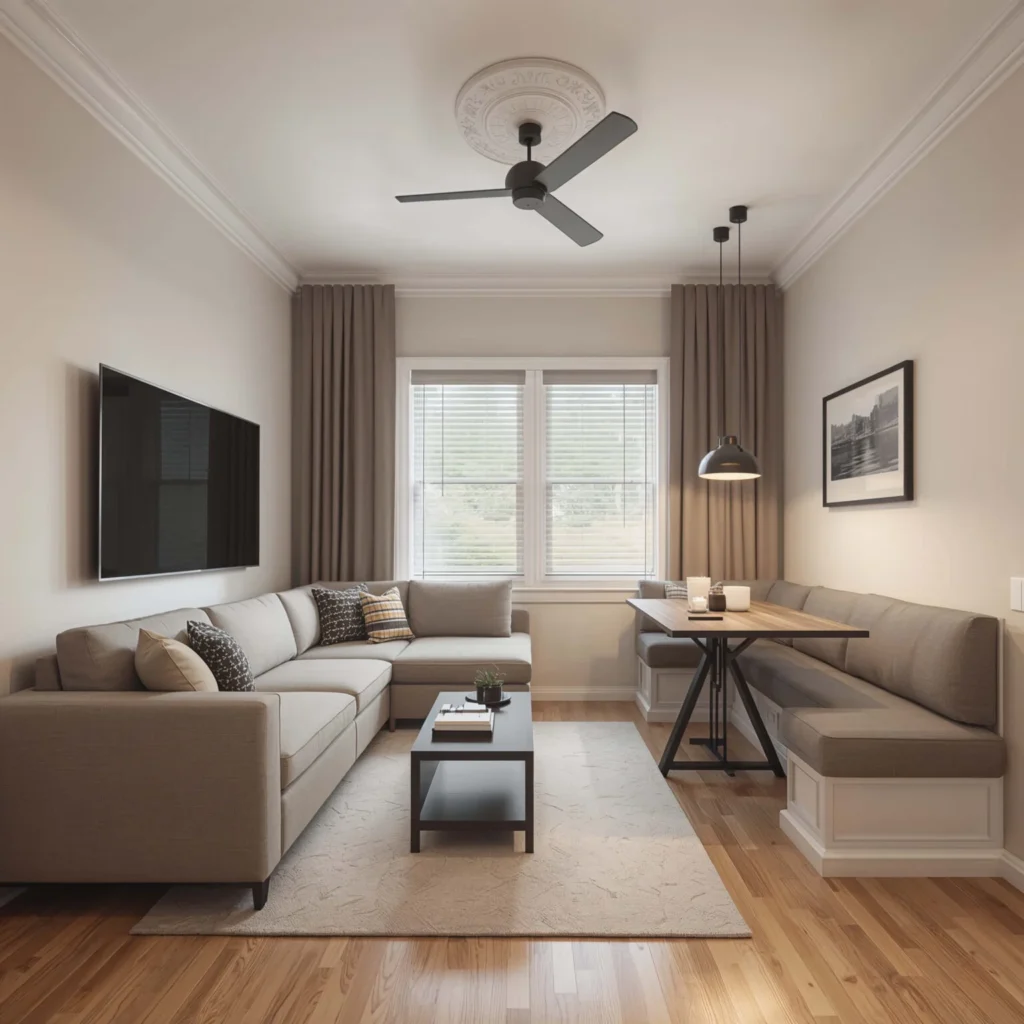
Lighting is one of the most powerful zoning tools you have in a combo space, and it’s often the most overlooked. A pendant light hung directly above the dining table immediately defines that area as ‘the dining zone’ — no walls required.
Meanwhile, a floor lamp in the corner of the living area creates a cozy reading nook feel. Together, these two lighting sources create two distinct atmospheres in the same room. The trick is to keep the finishes consistent — matching metals or complementary styles — so it looks curated rather than cobbled together.
Lighting ideas that work in small combos:
- Rattan or woven pendant over the dining table for warmth
- Arc floor lamp in the living area for ambient light
- Dimmer switches to shift the mood between day and night
8. Add a Bench to Your Dining Setup
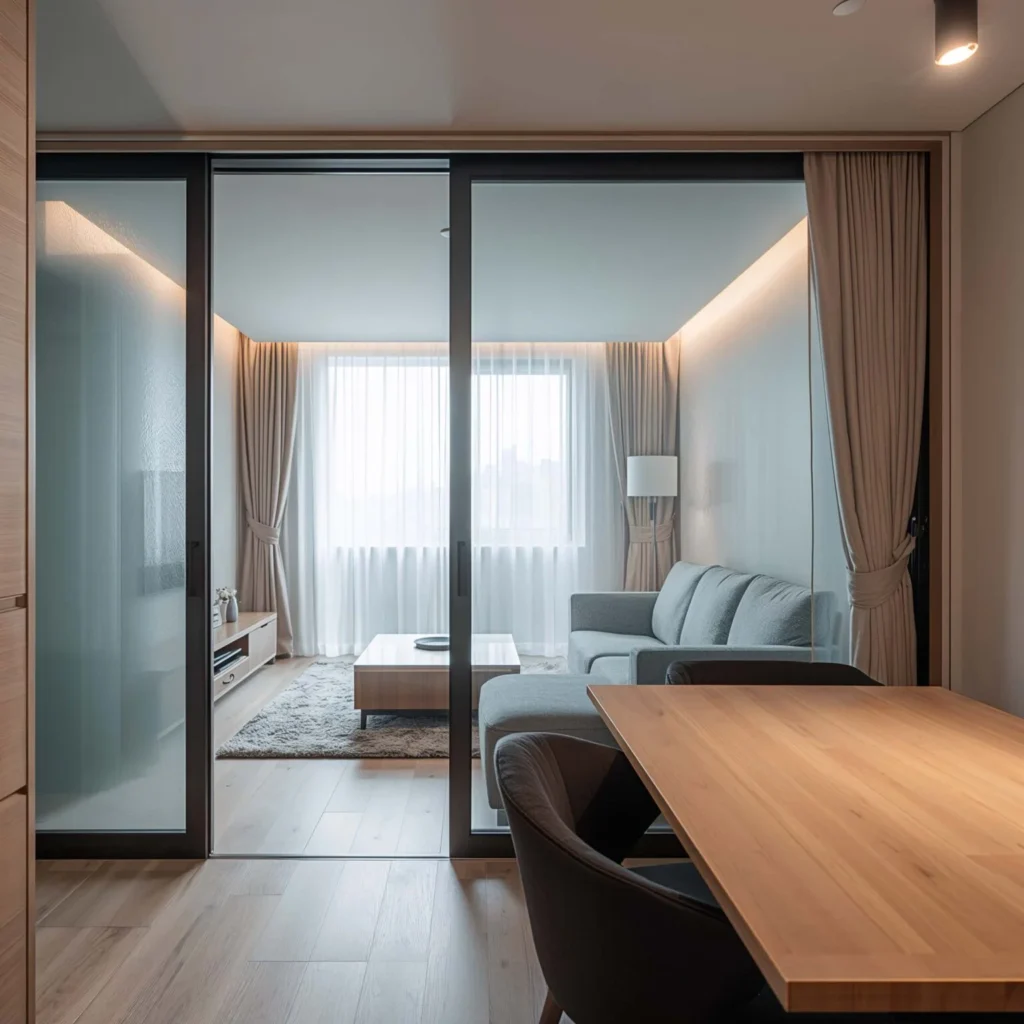
Swapping one or two dining chairs for a bench is a classic space-saving trick that doesn’t get enough credit. A bench tucks neatly under the table when not in use, taking up far less floor space than individual chairs. It also adds a casual, lived-in quality to the dining area that feels relaxed and inviting.
If you position the bench along the wall, you save even more room. You can also use it for extra seating in the living area when guests come over — just drag it across the room. Versatility at its finest.
9. Embrace a Monochromatic Color Scheme
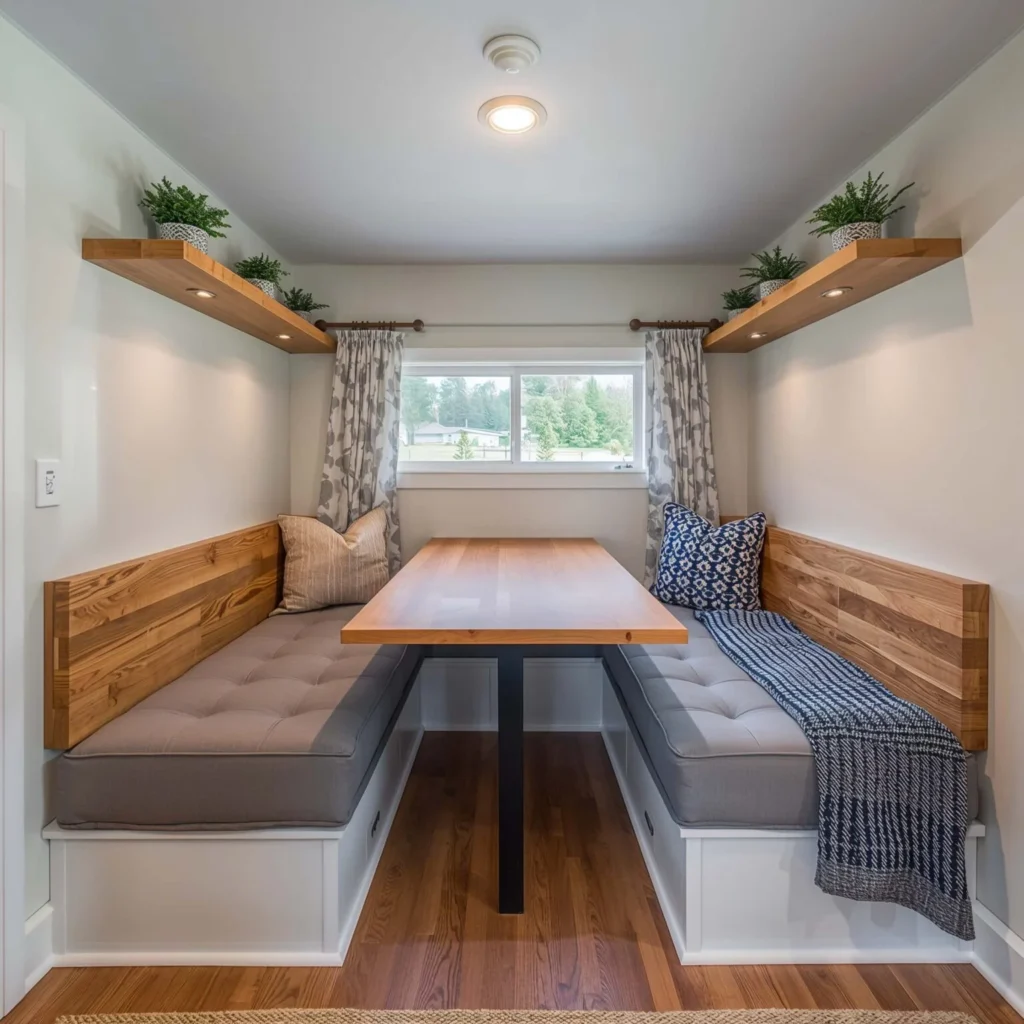
Staying within one color family across both your living and dining zones is one of the most effective ways to make a small combo room feel larger and more cohesive. When the eye doesn’t have to ‘reset’ between different color schemes, it reads the space as one continuous, unified area.
This doesn’t mean everything has to be the same shade. A monochromatic scheme works beautifully when you vary the tones and textures — light gray walls, medium gray sofa, charcoal dining chairs, and a silver pendant light all live in the same color family but create visual interest through contrast.
10. Maximize Vertical Space with Shelving
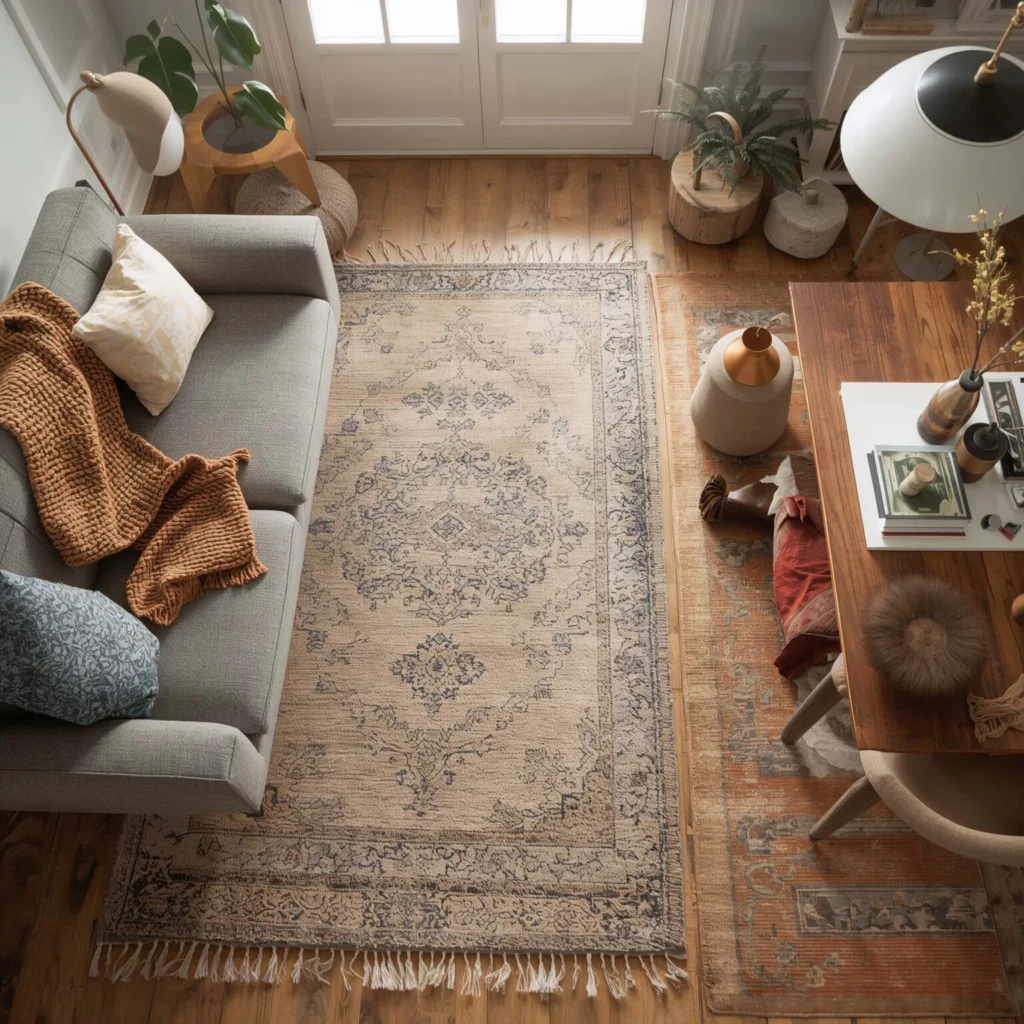
Small-space living means thinking vertically. Floor-to-ceiling shelving on one wall does two things at once: it gives you serious storage, and it draws the eye upward, making the room feel taller. Use it for books, plants, kitchen overflow, and decorative objects that would otherwise clutter the surfaces below.
In a combo room, a tall shelving unit positioned between the living and dining areas can even serve as a soft visual divider — open enough to keep the space feeling connected, structured enough to define two separate zones.
11. Use a Bar-Height Counter as a Dining Option
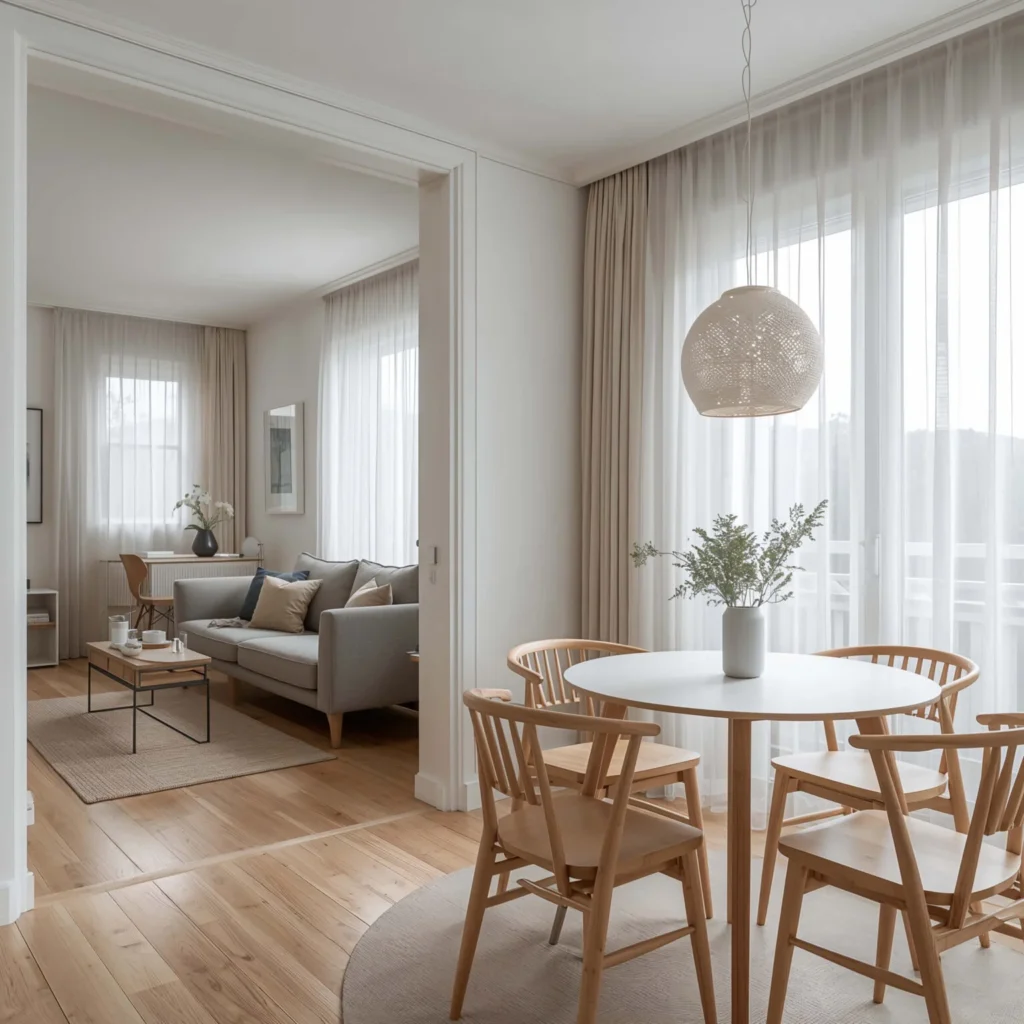
In open-plan apartments, a kitchen peninsula or bar-height counter can double as your dining area. Pair it with two or three bar stools and you’ve got a casual dining setup that doesn’t take up any extra floor space in the main living area. It keeps the combo room clean and functional.
Bar-stool dining also has a social element to it — whoever’s cooking and whoever’s eating are in the same conversation. For smaller households or solo dwellers, this setup is honestly hard to beat.
12. Keep the Living Area Furniture Low-Profile
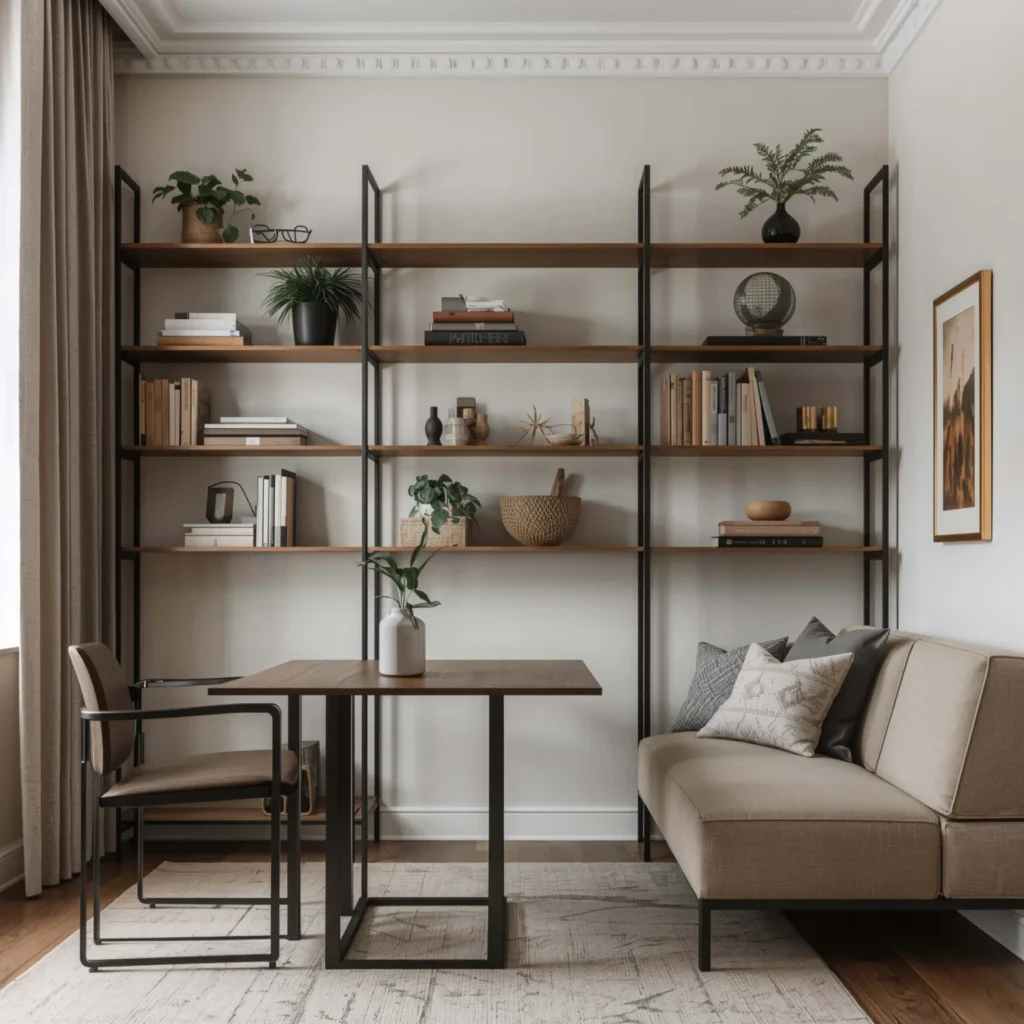
Low-slung furniture — sofas closer to the floor, low coffee tables, compact side tables — creates a visual spaciousness that taller, bulkier pieces simply can’t. The more wall you can see above your furniture, the taller and larger the room appears.
This approach also works beautifully in Japandi and Scandinavian-style interiors, where low furniture and clean lines are a design signature rather than just a space-saving trick. You get style and function at the same time.
13. Add a Mirror to Open Up the Space
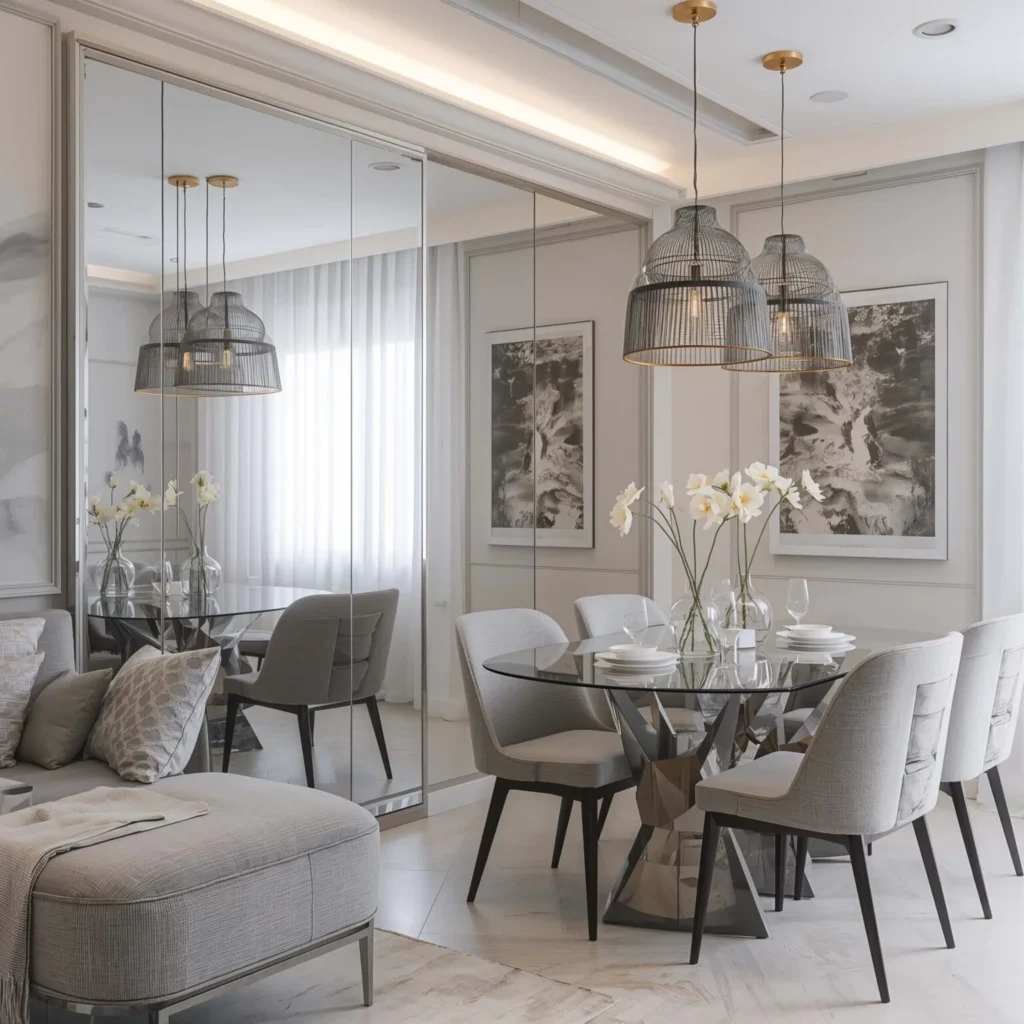
A large mirror on one wall is one of the oldest small-space tricks, but it works so reliably that it’s always worth mentioning. Mirrors reflect light, create the illusion of depth, and visually double the perceived size of a room. In a combo space, position it where it can reflect natural light from a window for maximum effect.
A full-length leaning mirror in the living zone, or a round mirror above a sideboard in the dining area, adds personality while doing genuine spatial heavy lifting. It’s one of those investments that immediately makes a room feel more considered.
14. Go Minimal with Decoration
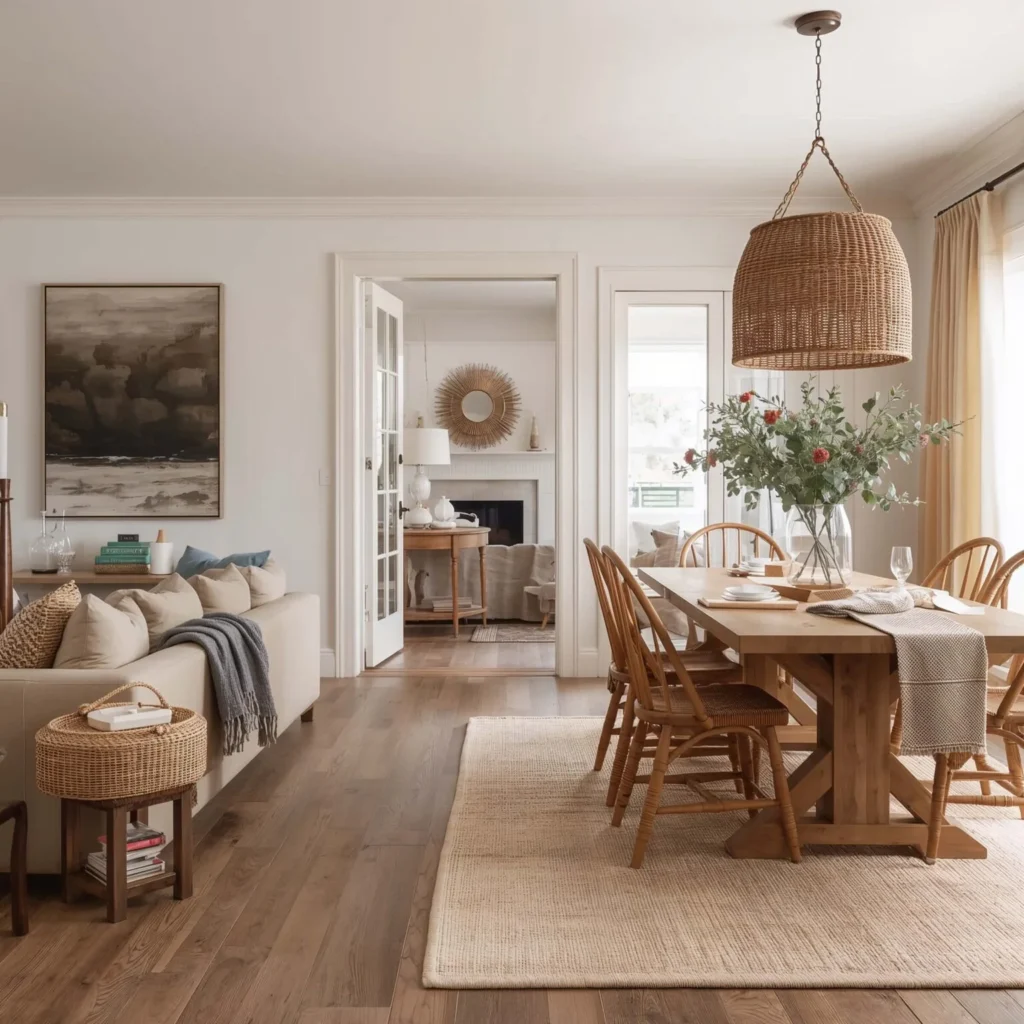
This one’s simple but important: in a small combo room, less decoration is almost always better. Every surface that’s cluttered makes the room feel smaller and more chaotic. Instead of many small decorative objects scattered around, choose fewer but more intentional pieces.
One large piece of wall art makes more impact than five smaller frames. Two carefully chosen plants are more effective than a dozen little pots. Edit ruthlessly, and the space will thank you for it.
15. Lean Into Transparent Furniture
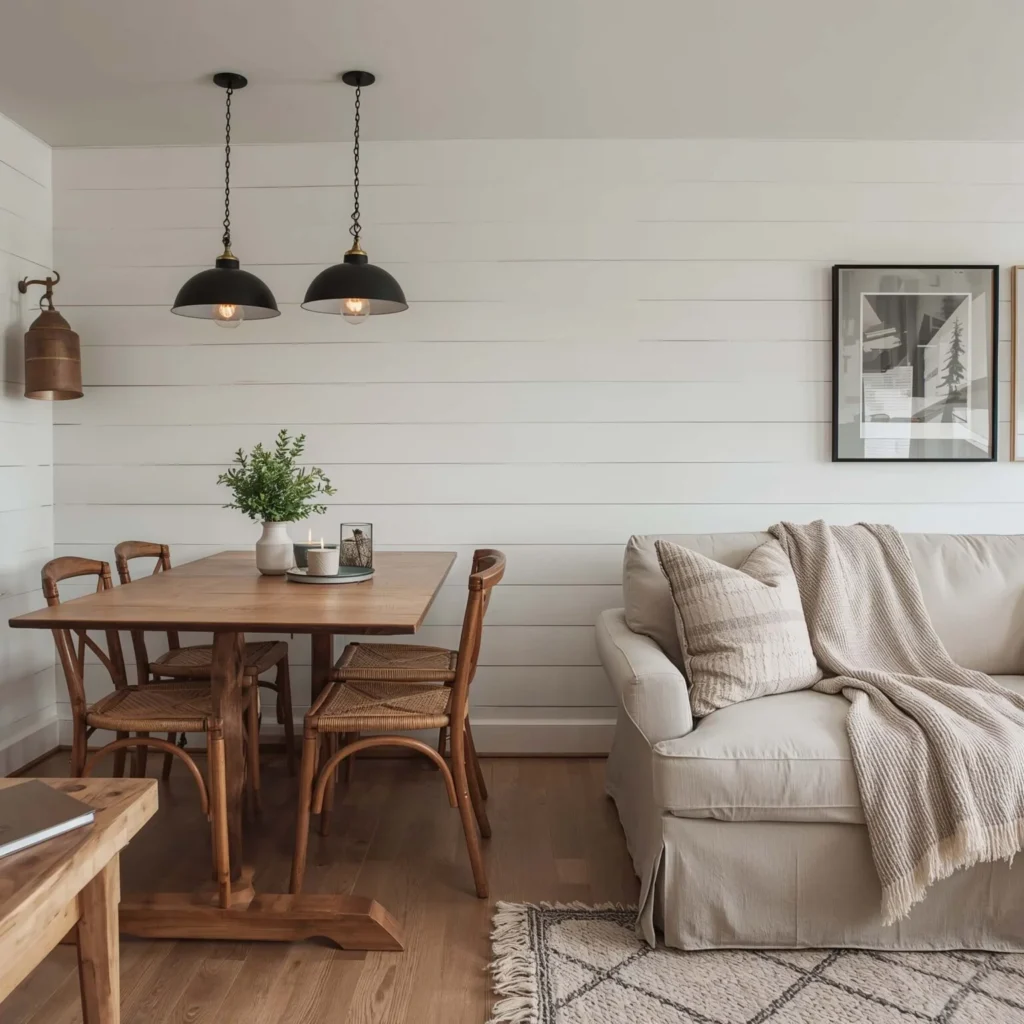
Ghost chairs. Glass coffee tables. Lucite stools. Transparent furniture has a visual superpower — it takes up physical space without taking up visual space. The eye passes through it rather than stopping at it, which keeps the room feeling open and uncluttered.
This is especially useful in the dining area. A glass dining table with clear acrylic chairs practically disappears in a room, making the space feel larger than it is. It’s a little bit of design magic that never gets old.
Quick Tips Before You Start Decorating
Before you go furniture shopping or pick up a paintbrush, here are a few practical things to get sorted:
- Measure everything twice. The sofa you love in the store might not fit the way you imagine once it’s in your room.
- Make a floor plan first. Even a rough sketch on paper helps you avoid costly mistakes.
- Allow at least 36 inches of clearance around the dining table for comfortable movement.
- Don’t overcrowd the space trying to fit every idea in this list. Pick four or five that resonate and do them well.
- Natural light is your best friend. Keep window areas clear and use light-filtering curtains rather than heavy blackout drapes.
Final Thoughts
A small living and dining room combo doesn’t have to feel like a compromise. In fact, when designed thoughtfully, it can feel more personal, more cohesive, and more comfortable than two separate rooms that are each half-empty.
The ideas in this guide all come back to the same core principle: be intentional. Choose furniture that earns its place. Use color, light, and texture to do the work that walls can’t. Define your zones through creative means rather than physical barriers. And above all, design for the way you actually live — not for how the space looks in a photo.
Start with one or two changes that feel most relevant to your space — maybe floating your sofa, or swapping your table for a round one — and see how much of a difference small decisions can make. You might be surprised how quickly a cramped combo room starts to feel like your favorite place in the home.
1 thought on “15 Small Living and Dining Room Combo Ideas That Actually Work”