
White countertops have an almost unfair advantage in kitchen design. They brighten a room, make small spaces feel generous, complement nearly every cabinet colour on the planet, and somehow manage to look both classic and completely current at the same time. They’re the design equivalent of a clean slate — and in a kitchen, that’s a genuinely powerful thing.
But here’s the thing people don’t always realise: ‘white countertop’ is not one choice. It’s dozens. White marble with dramatic grey veining. Pure, polished white quartz. Honed white granite. Smooth white laminate. Poured concrete in a pale, chalky finish. Each one behaves differently, ages differently, and suits a different kind of kitchen.
That’s exactly what this guide is here to sort out. We’ve pulled together 22 white countertop kitchen ideas that cover every style, budget, and lifestyle — from the easy Sunday-morning farmhouse kitchen to the sleek, barely-there minimalist space that belongs in an architecture magazine. By the time you reach the end, you’ll know exactly which direction is right for you.
1. White Marble Countertops with Classic Grey Veining
Marble is where the white countertop conversation almost always begins, and for good reason. There is genuinely nothing that replicates the quiet depth of natural stone — the way light passes through it, the way each slab is entirely unique, the subtle variations of tone that make it look almost alive.
Carrara marble is the entry point for most homeowners — it’s the most widely available white marble variety, characterised by its soft white-grey background and delicate feathery grey veining. For something more dramatic, Calacatta marble offers bolder, more widely spaced veins on a brighter white ground, and is generally considered the more luxurious of the two.
The Honest Truth About Marble in a Kitchen
Marble is porous. It can etch from acidic liquids like lemon juice, vinegar, and wine. It requires regular sealing — typically once or twice a year. It will develop a patina over time, and some marks may become permanent.
For many people, this is a dealbreaker. For others, these qualities are precisely what they love about marble — the sense that it’s a living surface with a story to tell. If you cook seriously and often, think hard before committing. If your kitchen is more a place of occasional weeknight dinners and weekend entertaining, marble may be a perfectly reasonable choice.
💡 Pro Tip: Opt for a honed (matte) finish rather than polished marble in a kitchen. It hides minor scratches and etching far better, and it has a beautifully understated quality that suits both modern and traditional spaces.
2. White Quartz Countertops — The Practical Powerhouse
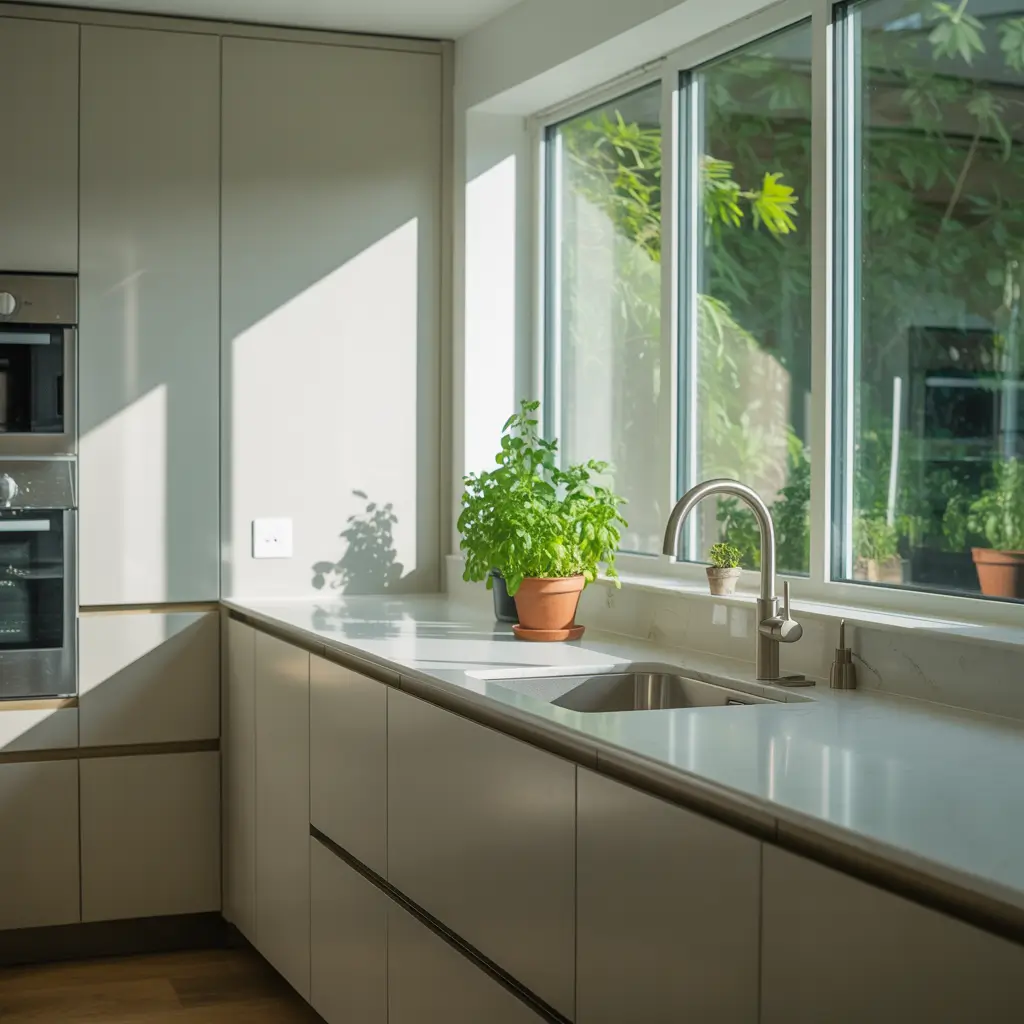
If marble is the romantic choice, quartz is the sensible one. And in the best possible way. Engineered quartz countertops are made from approximately 90 to 93 percent crushed natural quartz bound with polymer resins, which means they combine the look of natural stone with a durability that stone simply cannot match.
White quartz does not need sealing. It does not etch from acids. It resists staining from coffee, red wine, turmeric, and beet juice far better than any natural stone. It is consistent in colour and pattern, which makes it easier to match across multiple slabs. And it comes in a staggering range of white tones and vein patterns — from completely pure white to warm ivory to soft grey-white — many of which convincingly replicate the look of marble at a fraction of the maintenance burden.
Choosing the Right White Quartz Tone
The most common mistake with white quartz is choosing a shade that clashes with your cabinet colour. Cool, bright white quartz (which has a blue or grey undertone) can look harsh against warm cream or off-white cabinets. Conversely, warm white or ivory quartz can look yellowish against very crisp, pure white cabinetry.
Always take a large sample home and view it under your kitchen’s actual lighting conditions — both natural daylight and artificial evening light — before committing to any white quartz.
💡 Pro Tip: Ask your supplier for a full-slab view before ordering quartz with heavy veining. Veining patterns repeat across engineered stone, and seeing how the repetition looks across a full counter run can help you decide whether it works for your space.
3. Minimalist Kitchen with a Pure White Waterfall Counter
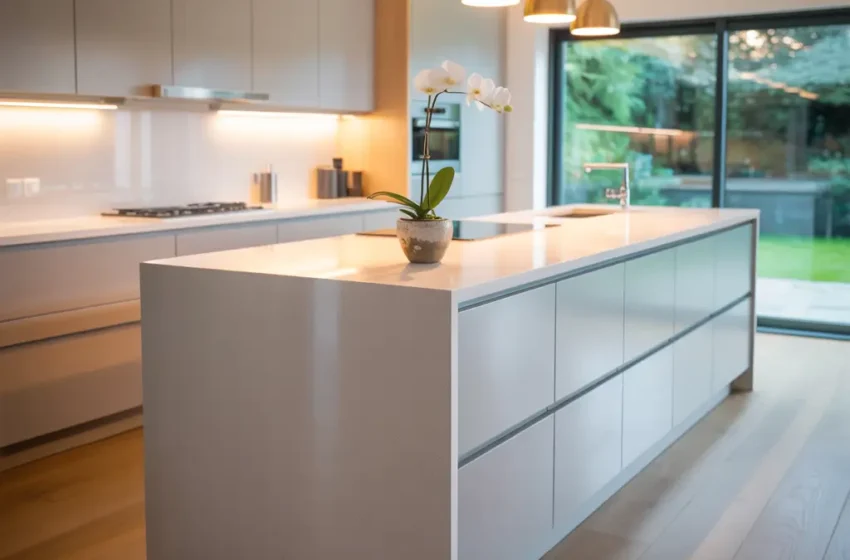
Few design moments are as satisfying as a white waterfall countertop done well. The counter surface runs continuously over the edge of the island and flows straight down to the floor, creating an uninterrupted vertical panel of white that is architectural in its impact.
This look works best with quartz or a similarly consistent engineered material, because natural stone with heavy veining can look awkward when the vein pattern changes direction at the corner. For pure white or subtly veined materials, the effect is breathtaking — clean, confident, and unmistakably modern.
What to Pair with a Waterfall Counter
- Handle-less flat-front cabinetry in matte white or light grey
- Integrated undermount sink with a minimal bridge faucet
- Pendant lighting in a contrasting material — aged brass or matte black
- Wide-plank flooring in a warm natural oak to prevent the space feeling cold
4. White Countertops with Dark Cabinets — The Bold Contrast
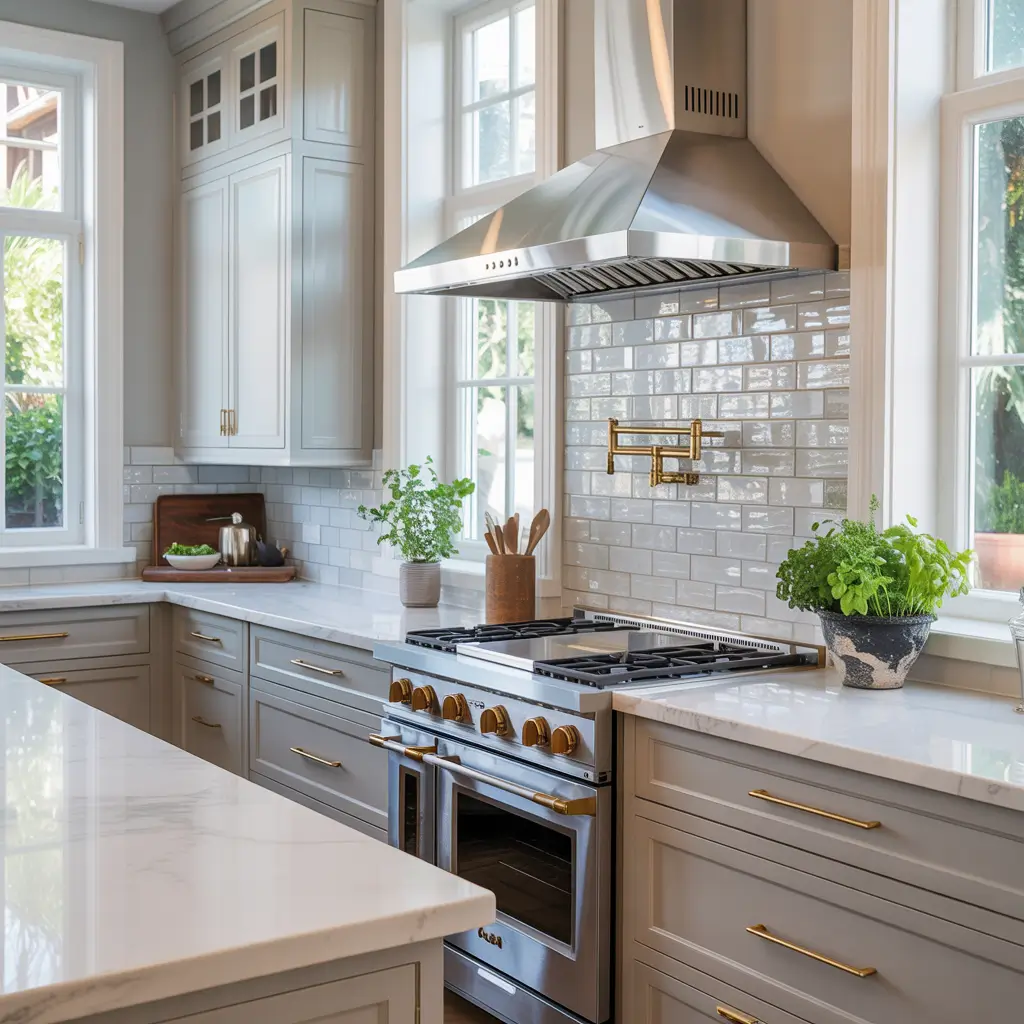
The contrast of white countertops against dark cabinetry is one of the most enduringly popular combinations in kitchen design, and it’s not difficult to understand why. Dark cabinets ground the space; white countertops lift it. The result is a kitchen that feels both dramatic and balanced — the visual equivalent of a perfectly composed photograph.
Navy blue is currently the most popular dark cabinet colour for this pairing, but forest green, charcoal grey, and even black all work beautifully. The key is ensuring the white countertop has enough contrast against the cabinet colour to read clearly, rather than blending into it.
Edge profiles matter more in high-contrast kitchens. A thick, square eased edge emphasises the drama of the contrast. A softer bullnose or bevelled edge moderates it slightly. Choose based on how bold you want the overall effect to be.
💡 Pro Tip: In a kitchen with very dark lower cabinets, consider keeping upper cabinets in white or light grey. This distributes the contrast more evenly and prevents the space from feeling bottom-heavy and enclosed.
5. Farmhouse Kitchen with Honed White Countertops
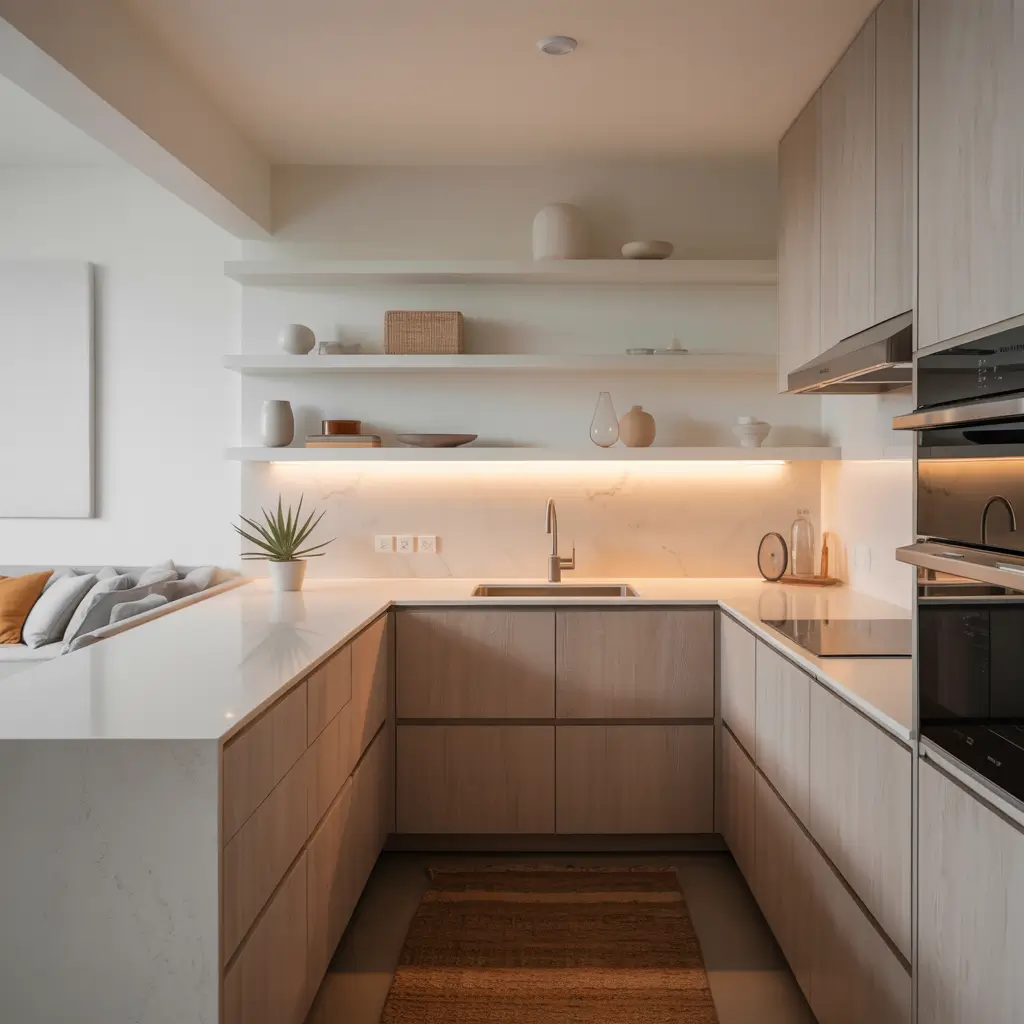
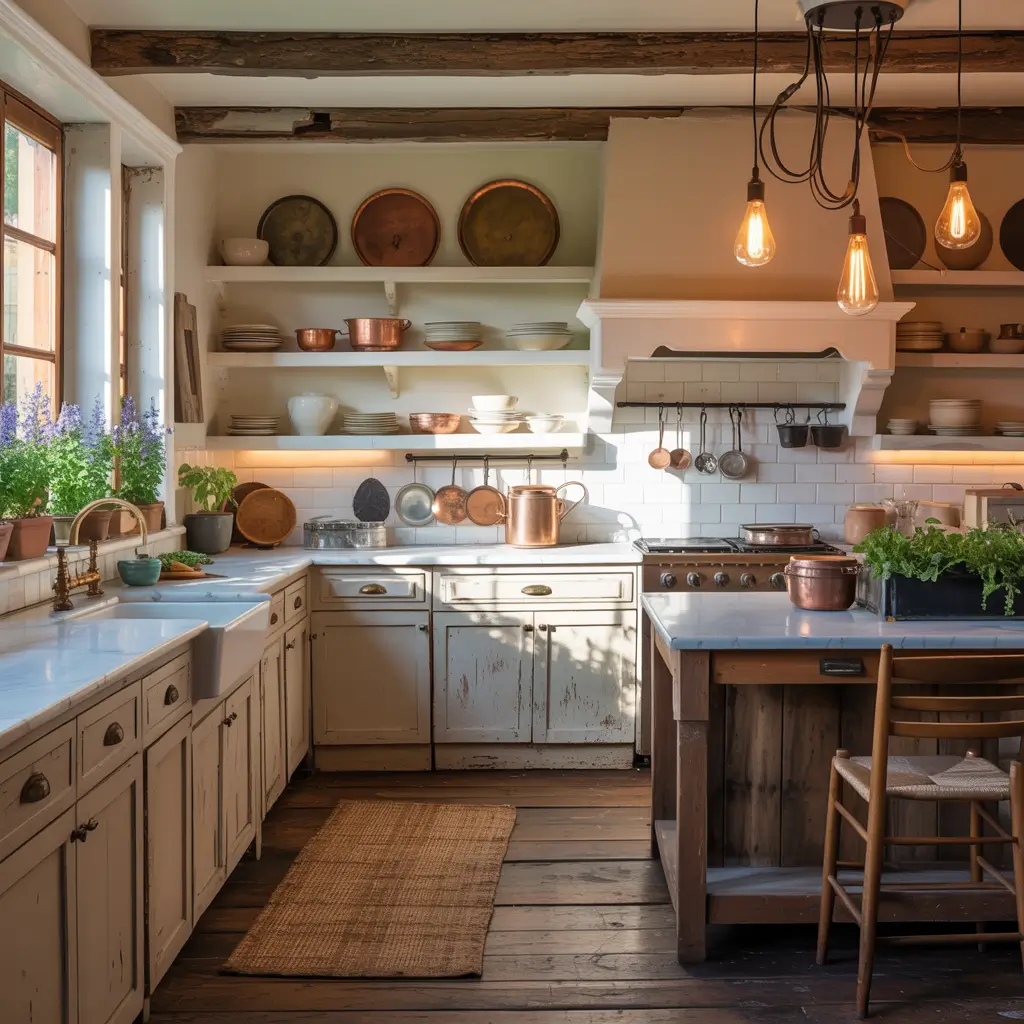
The farmhouse kitchen aesthetic — warm, textured, welcoming, and deeply unpretentious — has been one of the most consistently popular interior styles of the past decade, and it pairs beautifully with white countertops.
In a farmhouse kitchen, honed finishes are almost always preferable to polished ones. Honed marble, honed granite, or honed quartz have a soft, chalky quality that suits the handcrafted, imperfect character of farmhouse design. Combine with shaker-style white or cream painted cabinets, open timber shelving, and a generous apron-front sink in white ceramic.
Materials That Suit the Farmhouse Aesthetic
- Honed Carrara marble for authentic rustic luxury
- White soapstone — naturally warm, non-porous, and beautifully tactile
- White-painted butcher block for a casual, kitchen-garden feel
- Thick honed quartz in a warm ivory tone
Don’t overlook the edge profile in a farmhouse kitchen. Softer profiles — ogee, cove, or bullnose — suit the style far better than sharp, square modern edges. They echo the organic, handmade quality that defines farmhouse design at its best.
6. White Granite Countertops — The Underrated Option
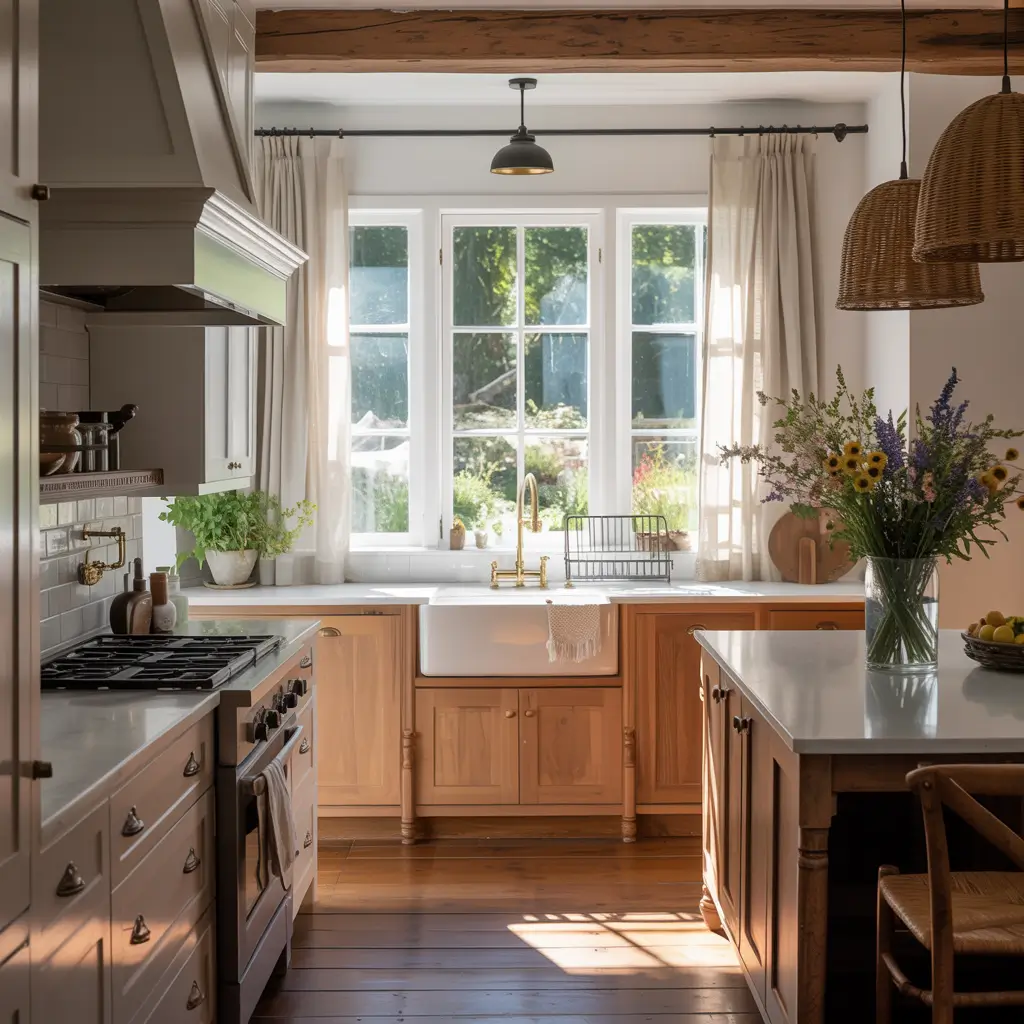
White granite gets somewhat overlooked in conversations dominated by marble and quartz, and that’s a genuine shame. White granite is a natural stone with real character — unlike the manufactured consistency of quartz, each granite slab is unique, with its own patterns, flecks, and crystalline inclusions.
Popular white granite varieties include Alaska White, which has a predominantly white ground with subtle grey and black mineral flecks; White Ice, which has a cool, almost translucent quality; and Colonial White, which features warm gold and brown tones that work particularly well in kitchens with timber or warm-toned elements.
White granite is harder and more scratch-resistant than marble, but it does require sealing — typically once a year. When properly sealed and maintained, it’s a highly practical surface that will last for decades with virtually no degradation in appearance.
7. White Countertops with a Statement Backsplash
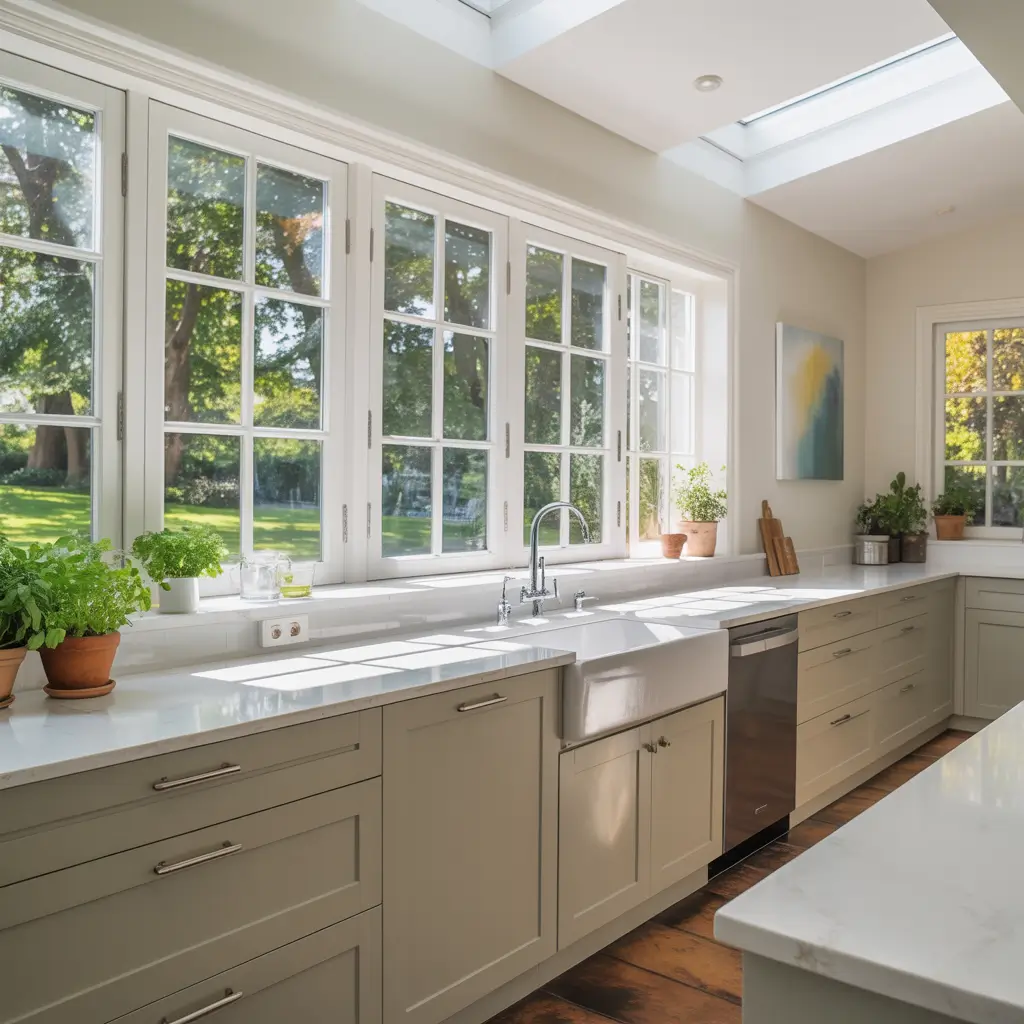
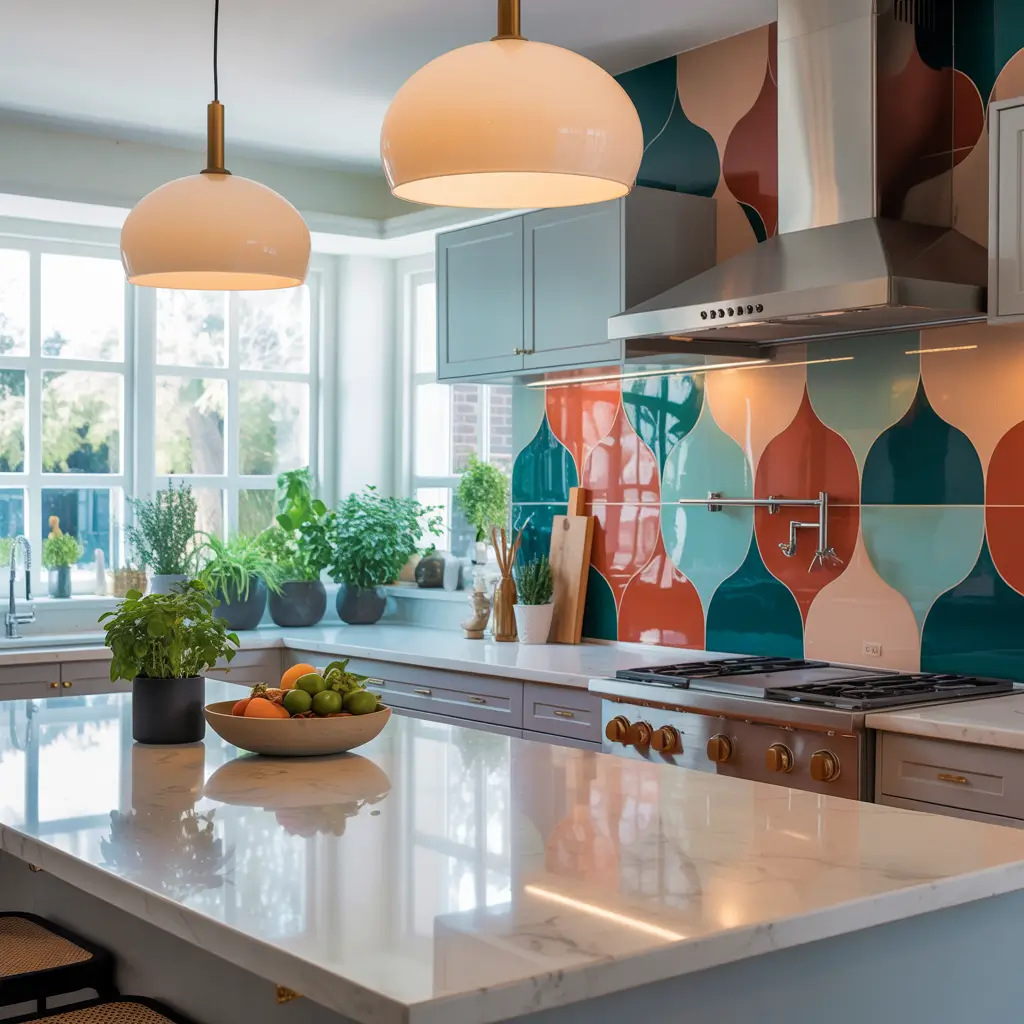
One of the most liberating things about choosing white countertops is what it allows you to do with your backsplash. A white counter is the most neutral canvas possible — it places no constraint on backsplash colour, material, or pattern.
This is where you get to have genuine fun. Deep cobalt blue Moroccan tiles against white quartz countertops create a kitchen that feels like a Mediterranean courtyard. Sage green subway tiles with natural white granite evoke a quiet, botanical mood. Dramatic floor-to-ceiling black slate behind a white counter makes a bold architectural statement.
Backsplash Ideas That Work Beautifully with White Countertops
- Handmade terracotta tiles in warm terracotta or sage for a relaxed, artisanal feel
- Classic white metro tiles in a vertical stack bond for understated texture
- Patterned encaustic cement tiles in blue, green, or rust tones
- Large-format bookmatched marble panels for seamless, gallery-like luxury
- Zellige tiles in a mix of white and warm neutral tones for organic texture
- Bold geometric tiles in black and white for a graphic, contemporary edge
💡 Pro Tip: When pairing a patterned backsplash with white countertops, keep your grout colour close to the tile colour. Contrasting grout lines can break up the pattern and make even beautiful tiles look busy.
8. White Countertops in Small Kitchens — Making the Most of Every Inch
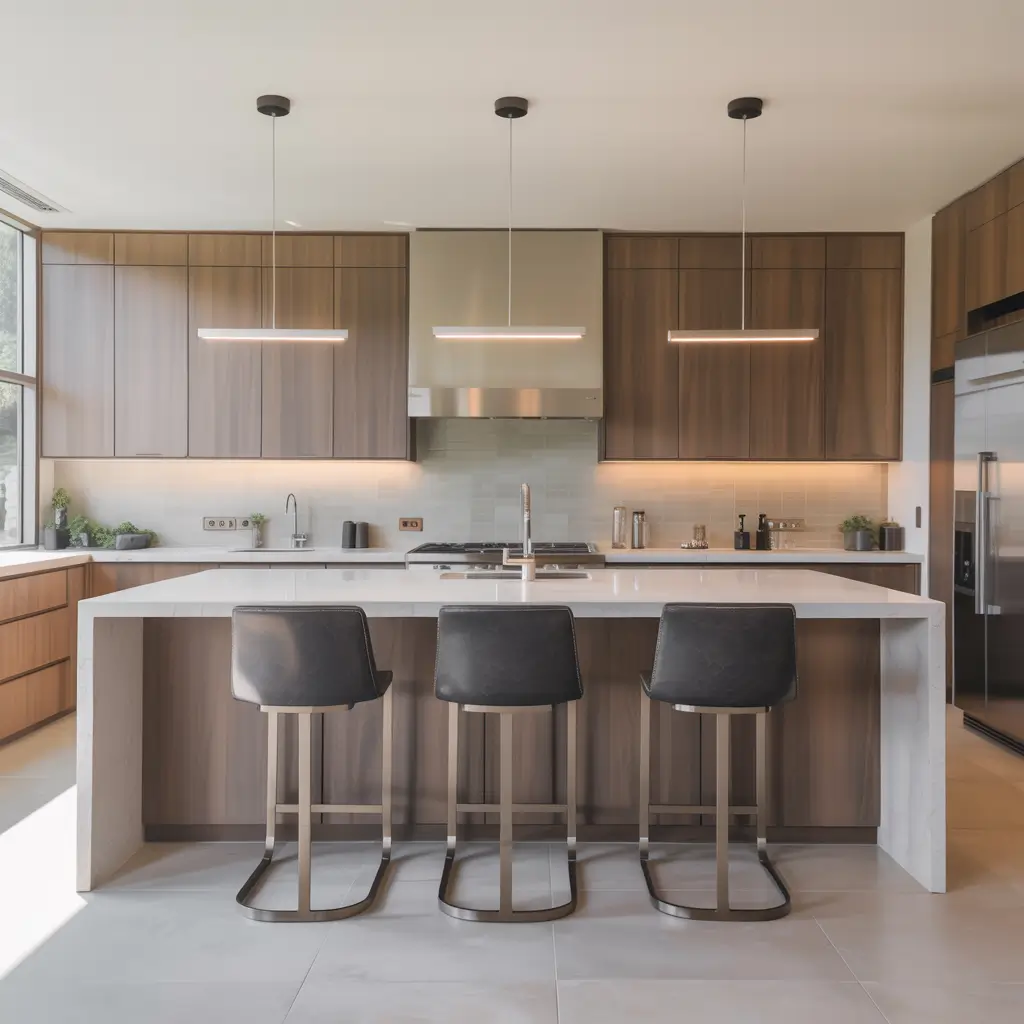
If there is a single design decision that makes a small kitchen feel larger, brighter, and more functional, it is choosing white countertops. The reason is simple: white surfaces reflect light rather than absorbing it. In a kitchen where natural light may be limited and the walls are close together, that reflectivity is enormously valuable.
In compact kitchens, consistency is the key to a sense of spaciousness. Choose a white countertop that closely matches the tone of your upper cabinets. This reduces the number of visual ‘breaks’ in the space and allows the eye to travel further before encountering contrast.
Avoid heavy veining in small kitchens — it can add visual noise that makes the space feel cluttered rather than refined. A clean, plain white or very subtly patterned surface will serve you far better.
💡 Pro Tip: In a galley or narrow kitchen, running the same white countertop material continuously along both sides of the space creates a powerful visual tunnel effect that makes the kitchen feel longer and more generous.
9. White Countertops with Wood Accents — Warmth and Balance
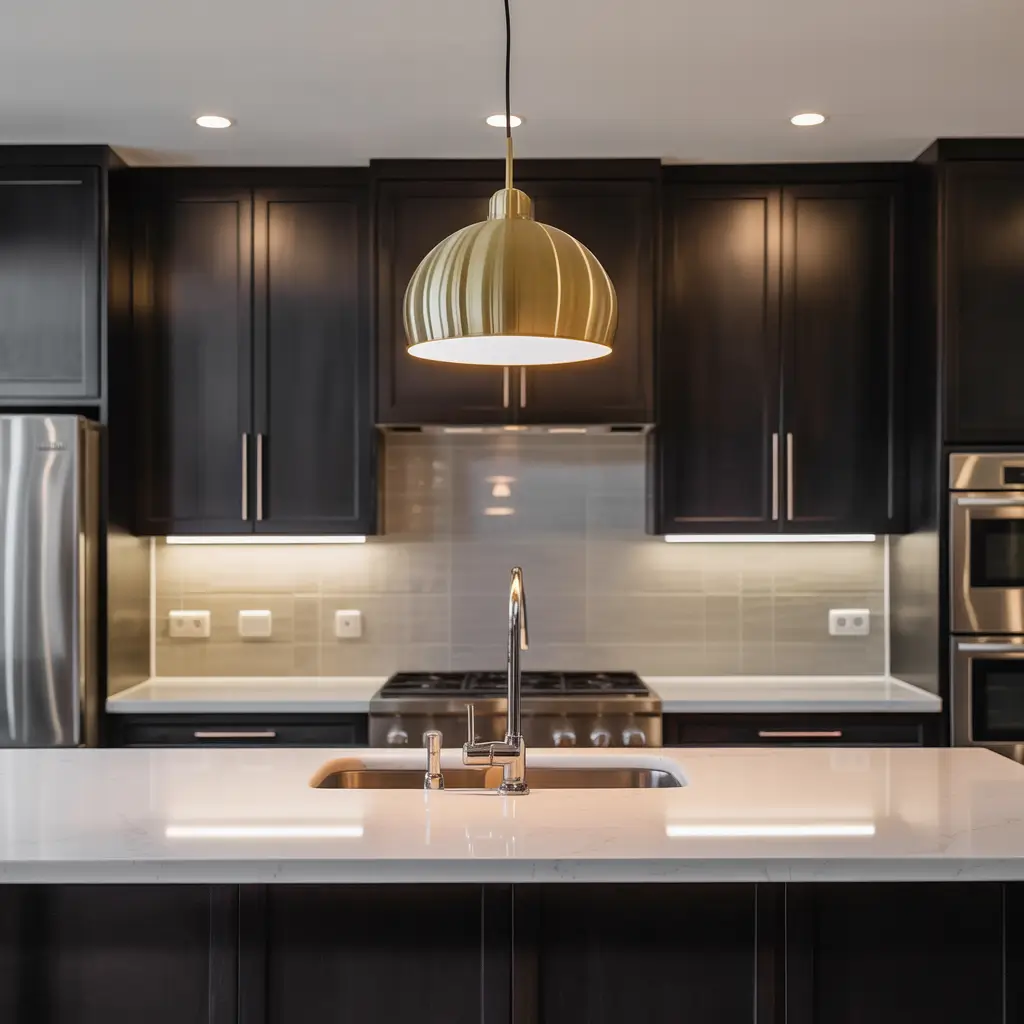
Pure white surfaces run the risk of feeling clinical or cold if not balanced with warmth from elsewhere in the kitchen. Timber is the most natural and effective antidote — the organic texture, grain variation, and warm tones of wood create a perfect counterpoint to the crispness of white stone.
This combination works in multiple ways. A white quartz counter can be paired with a butcher-block breakfast bar on the island. White marble countertops can sit alongside open timber shelving. A white honed granite can be balanced by natural oak cabinetry below or a timber ceiling beam above.
The Right Timber Tones to Pair with White Countertops
- Light natural oak — works with cool and warm whites equally
- Warm walnut — best with ivory or warm white countertops
- Bleached ash — suits very bright, Scandinavian-inspired spaces
- Reclaimed pine — perfect for farmhouse and rustic kitchens
10. Modern White Kitchen with Integrated White Countertops
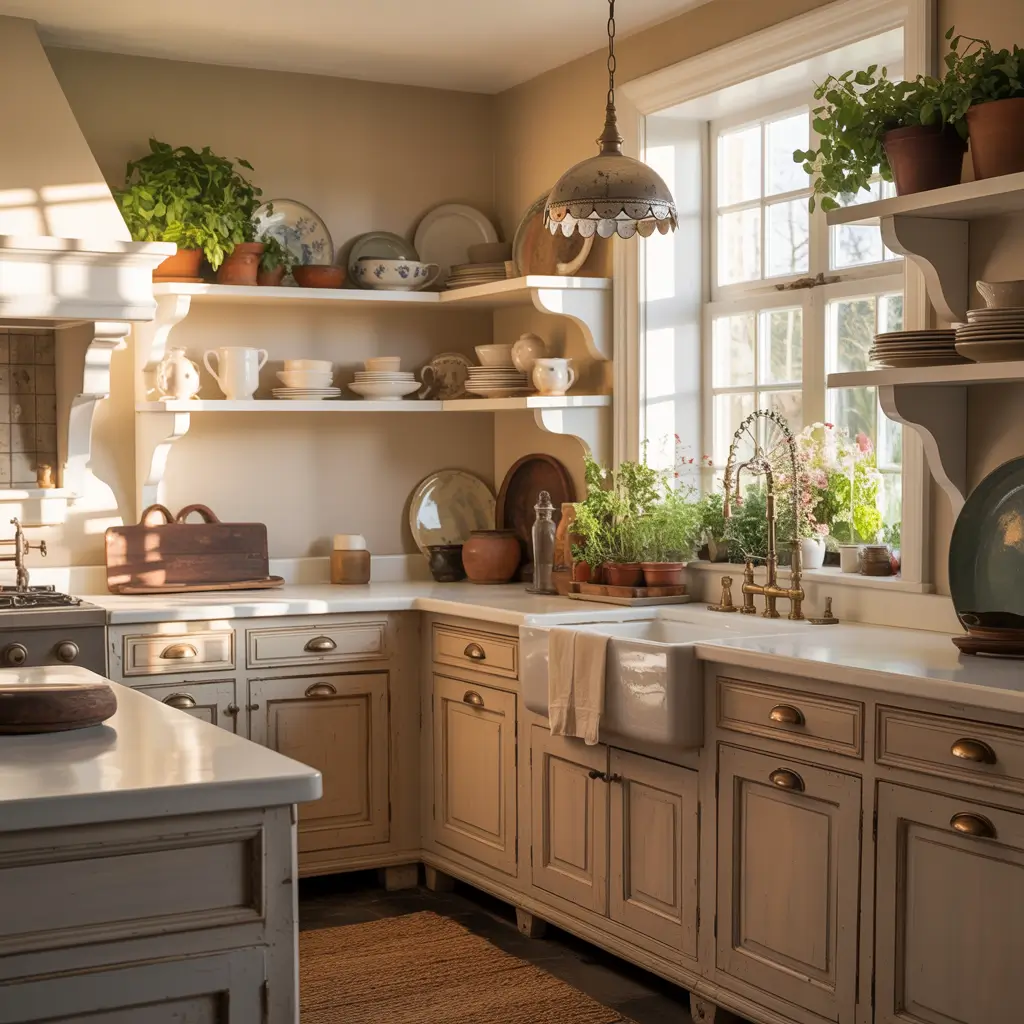
The modern trend for seamless, integrated kitchen design reaches its logical conclusion when countertops, cabinetry, and walls are all rendered in the same white. It’s a bold, uncompromising approach that strips the kitchen back to its purest architectural form.
In a fully integrated white kitchen, material texture becomes the only way to differentiate surfaces. A matte white countertop against a high-gloss white cabinet door creates subtle contrast without introducing any colour. A slightly warm white quartz against cooler white painted walls does the same. The differences are quiet, but they prevent the space from feeling flat.
This look is perhaps best suited to open-plan living spaces where the kitchen needs to recede slightly rather than compete with other zones in the room.
11. White Countertops for Outdoor and Alfresco Kitchen Spaces
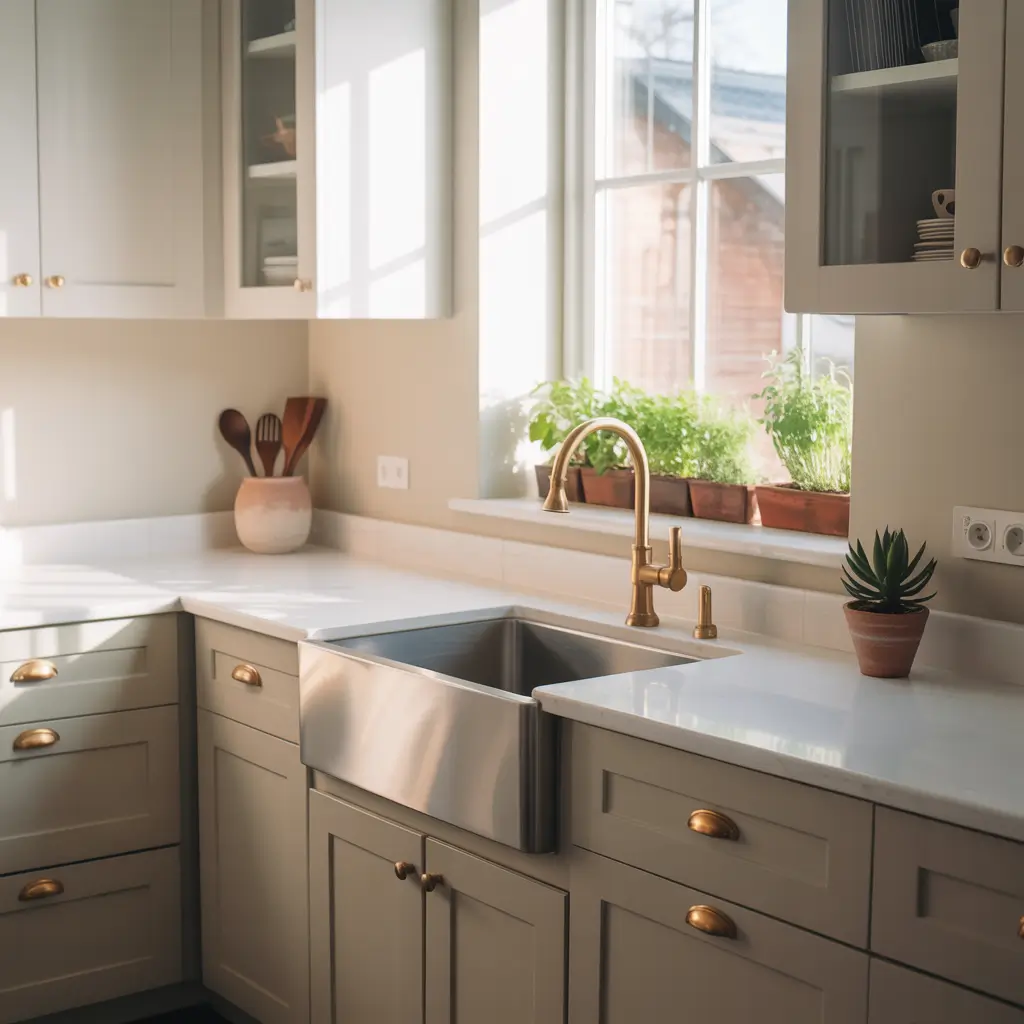
Outdoor kitchens have become a significant feature in contemporary home design, and white countertops translate remarkably well into exterior settings. The brightness of a white surface against the green of a garden or the warmth of outdoor timber decking creates a genuinely striking result.
For outdoor use, material selection matters enormously. Porcelain is arguably the best outdoor countertop material — it is frost-resistant, UV-stable, impermeable to water, and virtually indestructible. It comes in beautiful white and near-white tones that maintain their colour even after years of UV exposure.
White concrete or reconstituted stone are also strong choices for outdoor kitchen countertops, though both benefit from regular sealing. Avoid natural marble and most quartz products outdoors — neither is designed for temperature extremes or prolonged UV exposure.
12. White Countertops with Black Hardware and Fixtures
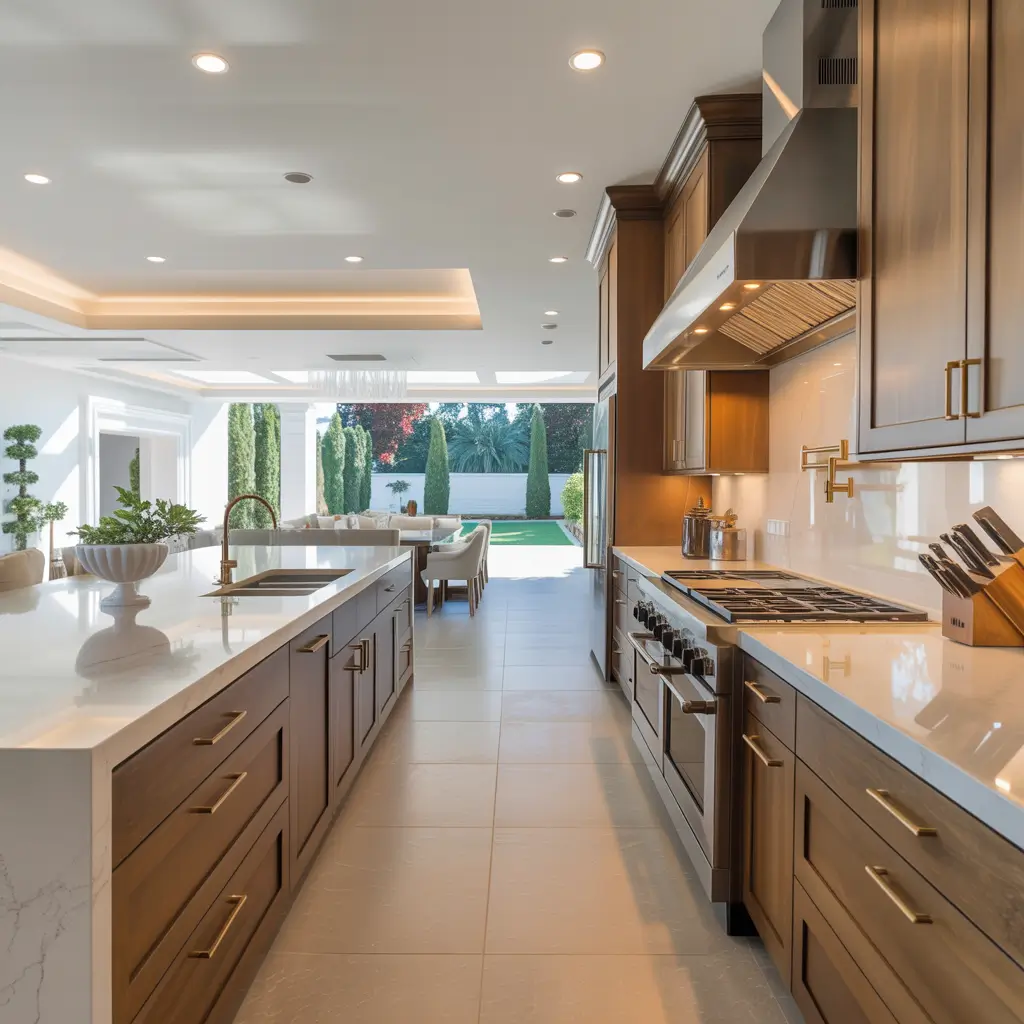
The combination of white countertops with matte black hardware has been one of the defining kitchen design trends of the past several years, and it continues to feel fresh and relevant. The contrast is sharp, graphic, and unmistakably contemporary.
Matte black tapware against a white countertop creates a strong focal point at the sink. Matte black cabinet hardware punctuates the surface of white cabinetry cleanly and crisply. Black pendant lights above a white island read like typography against a clean page — deliberate, bold, and precise.
💡 Pro Tip: When using matte black hardware with white countertops, maintain consistency across all fixtures. Mixing matte black with chrome or brass in the same space can look like an oversight rather than a design choice.
13. White Laminate Countertops — The Budget-Savvy Choice
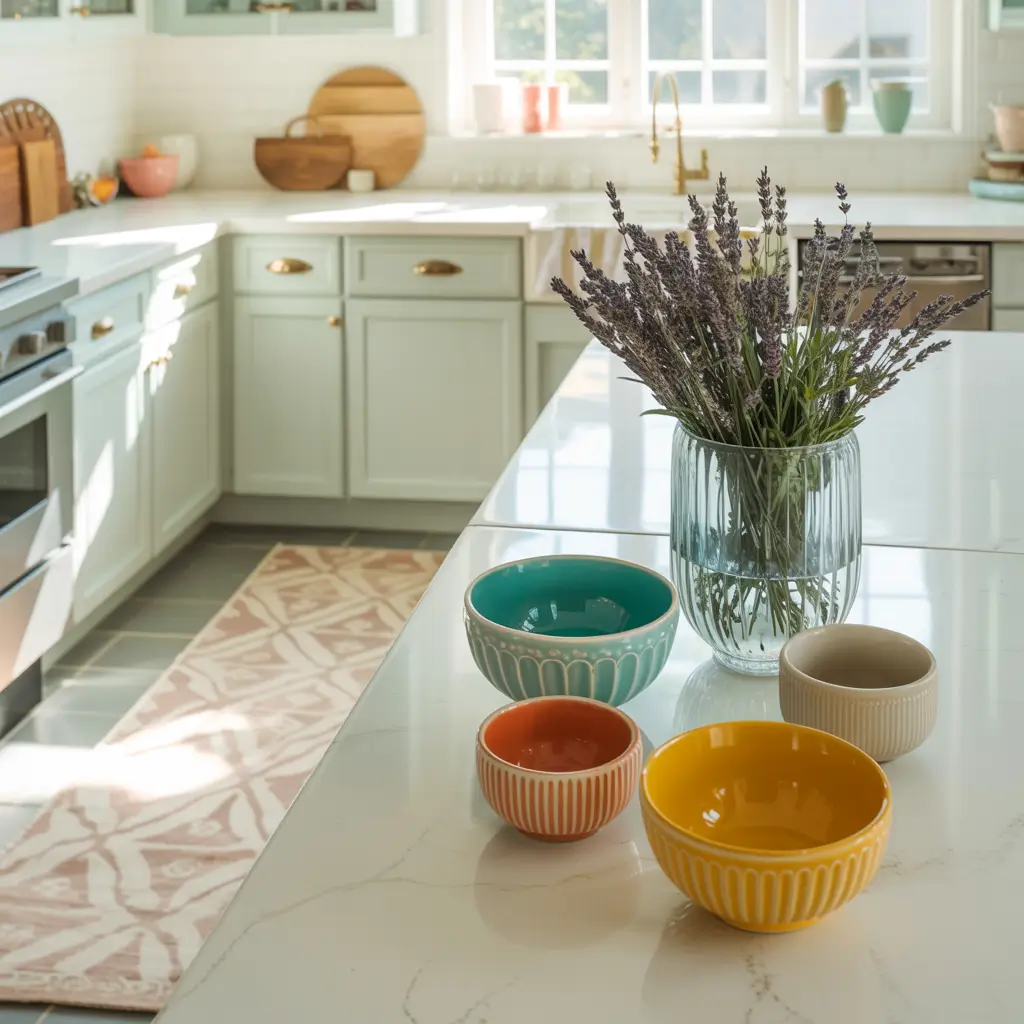
Laminate countertops have come an extraordinarily long way from the thin, plasticky surfaces of a few decades ago. Modern high-pressure laminate (HPL) products are durable, convincingly textured, available in a wide range of white and near-white finishes, and far more resistant to heat and impact than their predecessors.
For homeowners on a budget, or for anyone fitting out a rental property or a temporary kitchen, white laminate is a genuinely sensible choice. It can be updated relatively affordably when tastes change, it cleans easily, and the best modern products are difficult to distinguish from engineered stone at a glance.
Look for HPL products with a matte or silky finish rather than the high-gloss options, which tend to show scratches and fingerprints more readily. Post-formed edges — where the laminate curves down over the front of the counter — are more durable than separate edge strips, which can lift over time.
14. White Concrete Countertops for Industrial Style Kitchens
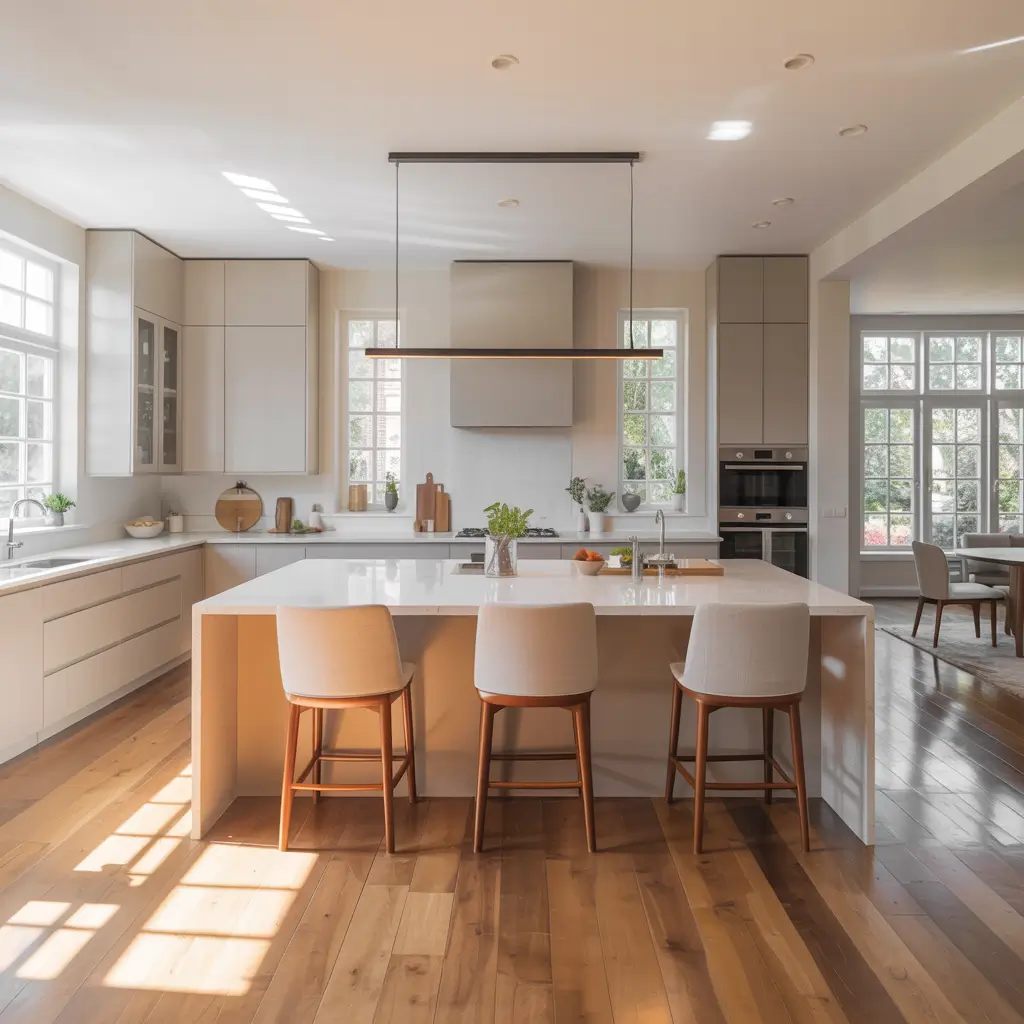
Poured concrete countertops in pale or white tones are a fascinating and genuinely distinctive choice for kitchens with an industrial, loft, or Brutalist aesthetic. Concrete is heavy, dense, and tactile in a way that no other material quite replicates — and when coloured white or pale grey, it has a refined quality that sits comfortably even in high-end spaces.
Concrete countertops are made to order, either cast in place or poured off-site and installed as panels. They can be formed into almost any shape and can incorporate drainage grooves, integrated trivets, or custom edge profiles. The surface is sealed to prevent staining and moisture absorption, though it will develop a patina and minor hairline cracking over time — which most concrete enthusiasts consider part of the material’s character.
What to Consider Before Choosing Concrete
- It is one of the heaviest countertop materials — ensure your cabinetry can support the weight
- Sealing is essential and should be repeated every one to two years
- Hairline cracking is normal and does not indicate structural failure
- Lead times can be lengthy — factor this into your renovation schedule
15. White Countertops in a Two-Tone Kitchen
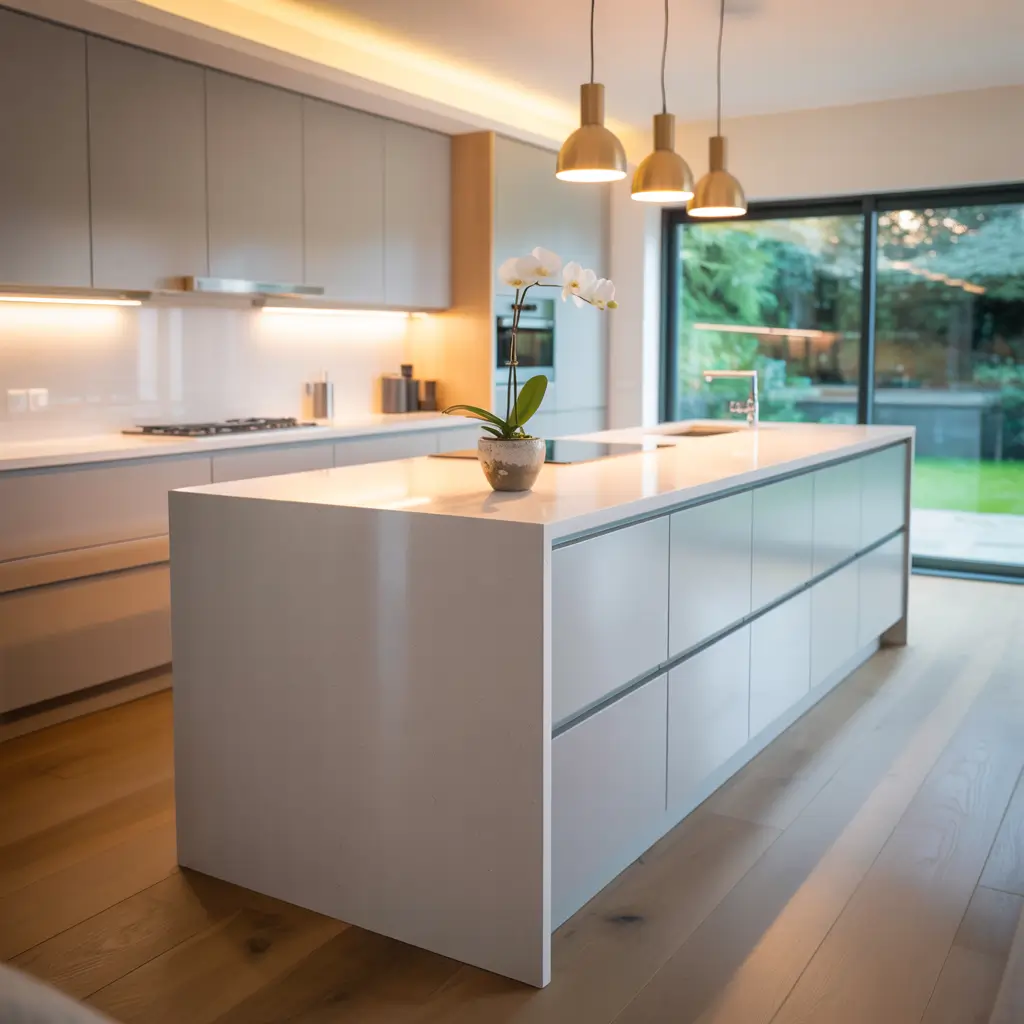
Two-tone kitchens — where upper and lower cabinetry are finished in contrasting colours — are one of the most effective ways to add depth and visual interest to a kitchen without committing to a single bold choice throughout.
White countertops in a two-tone kitchen act as the visual bridge between the two cabinet colours. They sit at the junction of the upper and lower units, pulling the different tones together and preventing the two colours from competing with each other.
The most popular two-tone pairings with white countertops include white uppers with navy blue lowers, white uppers with sage green lowers, and pale grey uppers with warm charcoal lowers. In each case, the white counter is the harmonising element that makes the whole composition work.
How to Choose the Right White Countertop for Your Kitchen
With so many white countertop materials available, making the right choice requires thinking honestly about how you cook, how much time you want to spend maintaining your surfaces, and what your kitchen genuinely needs to look and feel its best.
Step 1 — Assess Your Cooking Habits
If you cook daily, use acidic ingredients regularly, and don’t want to worry about sealers and etching, quartz is almost certainly your best option. If you cook occasionally and value the beauty of natural stone above all else, marble may be worth the additional care.
Step 2 — Consider Your Budget
White laminate starts from as little as a few hundred pounds for a standard kitchen. White quartz falls in the mid-range. White marble and granite vary enormously depending on the variety and slab quality. White concrete tends to be at the higher end due to the labour involved in fabrication.
Step 3 — Think About Your Kitchen’s Light
A north-facing kitchen with limited natural light will benefit most from a very bright, reflective white countertop. A sun-filled south-facing kitchen can accommodate warmer, creamier whites without the space feeling dimmed.
Step 4 — Get Large Samples Home
Always view countertop samples in your own kitchen under your own lighting conditions before ordering. What looks perfect in a showroom under flattering display lighting can look very different under a cool strip light above your actual counters.
5 Common Mistakes to Avoid with White Countertops
- Choosing without a large sample:
Small swatches in a showroom tell you very little. Always bring a large sample home and view it under your actual lighting conditions.
- Ignoring undertones:
White is never just white. Every white countertop has an undertone — blue, grey, yellow, or pink. Ignoring this is the most common reason white countertops look ‘off’ in a finished kitchen.
- Skipping maintenance planning:
Natural stone countertops require sealing. If you won’t do this, choose quartz or porcelain instead. An unsealed marble counter will stain, permanently.
- Choosing the wrong edge profile for your style:
Sharp eased edges suit contemporary kitchens. Ogee and bullnose profiles suit traditional and farmhouse spaces. A mismatched edge can undermine an otherwise excellent design.
- Over-veining in a small kitchen:
Heavily veined stone in a compact kitchen adds visual noise that makes the space feel smaller and busier. Simpler patterns and cleaner surfaces are almost always the right call.
Final Thoughts: Why White Countertops Remain the Ultimate Choice
Trends in kitchen design come and go with reliable frequency. The materials, colours, and textures that feel urgently current today will look dated in a decade. White countertops, somehow, sit outside this cycle. They have been part of beautiful kitchens for generations, and there is no credible sign that this is about to change.
The reason is not simply that white is neutral. It’s that white countertops are genuinely collaborative — they work with what surrounds them rather than competing with it. They make small spaces feel larger. They brighten dark rooms. They provide the visual calm that allows other design elements to speak clearly. And they photograph beautifully, which in the age of social media is, admittedly, not entirely irrelevant.
Whether you’re planning a full renovation or simply considering replacing a tired surface, white countertops are as reliable a starting point as kitchen design offers. Choose your material carefully, get the undertone right for your space, think seriously about maintenance, and then commit.
The kitchen you want is waiting on the other side of that decision.
Frequently Asked Questions
Are white countertops hard to keep clean?
Less difficult than most people expect. White quartz and porcelain are among the easiest kitchen surfaces to clean — a quick wipe with a damp cloth removes most everyday marks. Natural stone like marble requires a little more attention, particularly from acidic spills, but routine cleaning with a mild stone cleaner is all that’s needed.
Which white countertop material lasts the longest?
Quartz and porcelain are both exceptionally durable and will maintain their appearance for decades with minimal maintenance. Granite is also extremely long-lasting when properly sealed. Marble is durable structurally but develops a patina and surface marks over time that some people love and others find difficult to accept.
Do white countertops make a kitchen look bigger?
Yes, genuinely. White surfaces reflect light and reduce visual contrast, both of which contribute to a sense of spaciousness. In small or galley kitchens particularly, white countertops are one of the most effective tools available for making the space feel more generous.
What cabinet colour looks best with white countertops?
Almost any cabinet colour can work with white countertops, which is part of their enduring appeal. For drama, choose deep navy, forest green, or charcoal. For freshness, pair with sage green or soft blue. For timeless simplicity, white or cream cabinets with white countertops never fails.
How do I prevent white countertops from staining?
For quartz and porcelain, wipe spills promptly and clean regularly — no sealing required. For natural stone (marble, granite, soapstone), ensure the surface is properly sealed before use and reseal annually. Avoid leaving acidic liquids (lemon juice, vinegar, wine) sitting on marble for any length of time.
Is white quartz or white marble better for a kitchen?
For high-use everyday kitchens, white quartz is almost always the more practical choice — it requires no sealing, resists staining better, and maintains its appearance with minimal effort. White marble offers incomparable natural beauty but demands more care. The right choice depends entirely on your lifestyle and how much maintenance you’re willing to embrace.
1 thought on “WHITE COUNTERTOPS KITCHEN IDEAS”