
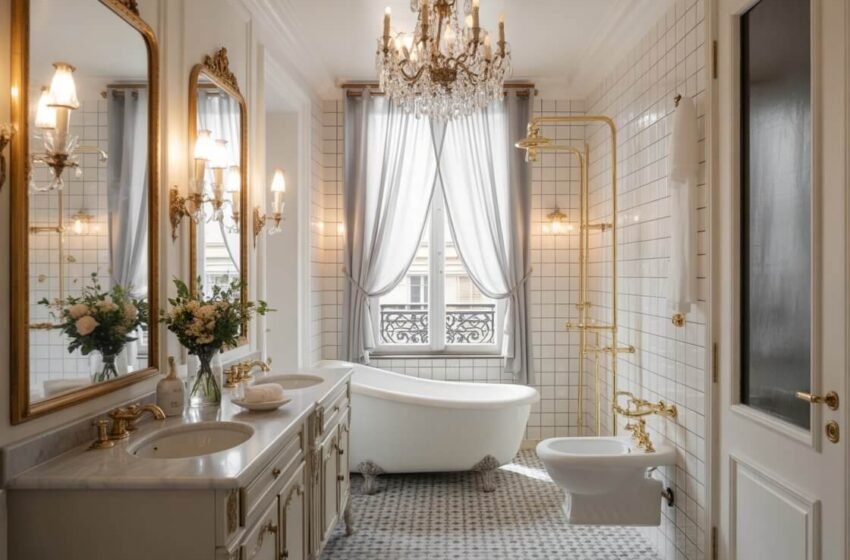
Here’s the thing about bathrooms — they get used more than almost any other room in the house, and most people treat them like an afterthought. A coat of builder beige, a chrome fixture that came with the place, and a bath mat that’s seen better days. It’s functional, sure. But is it somewhere you actually enjoy spending time?
It doesn’t take a full renovation or a designer budget to transform a bathroom. In most cases, it takes a clear aesthetic direction and a bit of intentionality about the details. Once you know what kind of atmosphere you’re going for, the decisions become much easier — and the result is a space that feels genuinely good to be in.
Below are 22 bathroom aesthetic ideas that cover every style from quiet minimalism to full-on Art Deco drama. Whether you’re starting from scratch or looking to refresh what you already have, there’s something in here that will give you a clear direction forward.
1. Minimalist — The Quiet Power of Restraint
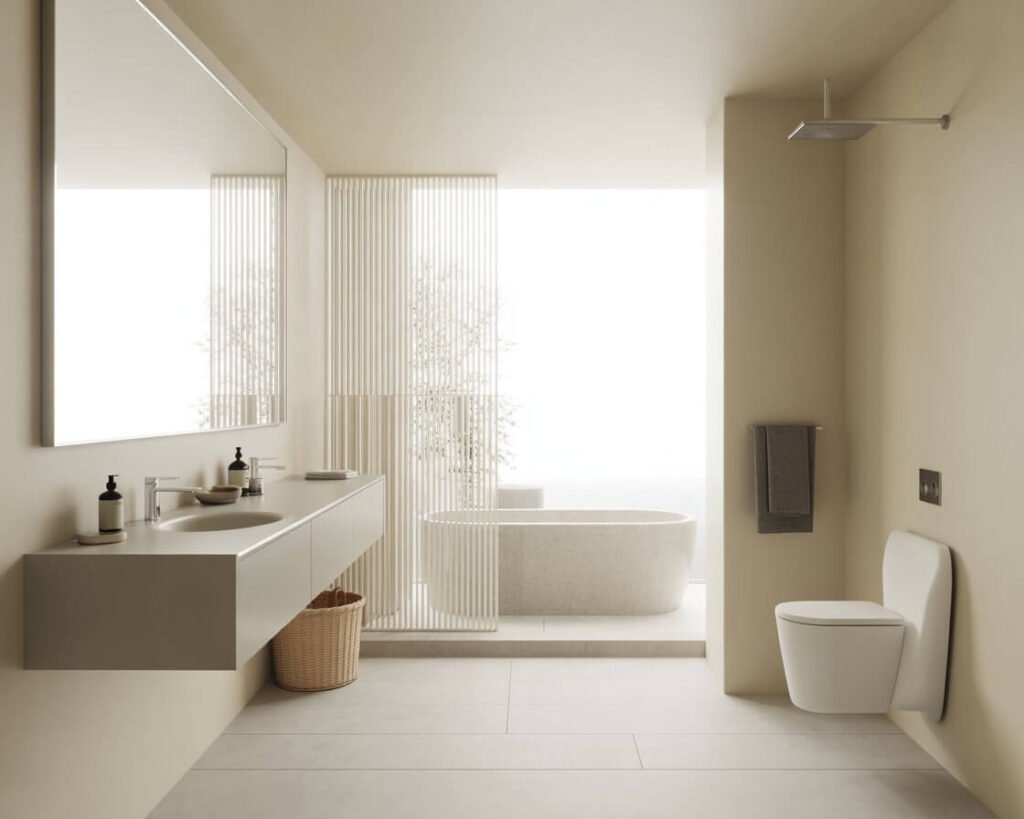
Minimalism in a bathroom isn’t about making the space feel empty. It’s about making every single element count. When you strip away the clutter and commit to a few well-chosen things done really well, you end up with a room that feels calm, spacious, and genuinely luxurious — even if the fixtures are modest.
The palette stays neutral: whites, warm creams, light stone greys. Surfaces are kept clear. Storage is hidden behind cabinet fronts rather than on open shelves. The vanity floats rather than sitting on the floor, which opens up the visual field and makes even a compact bathroom feel larger than it is.
What to focus on:
- A floating vanity with clean, handle-free cabinetry
- Seamless tile from floor to wall in one consistent colour or material
- Recessed lighting or a single statement fixture — nothing fussy
- One small plant or a single sculptural accessory as the only decoration
The hardest part of a minimalist bathroom is maintaining it. This style lives and dies by the absence of clutter, so think carefully about storage before anything else.
2. Spa-Inspired — Turn Your Bathroom Into a Place You Actually Want to Stay
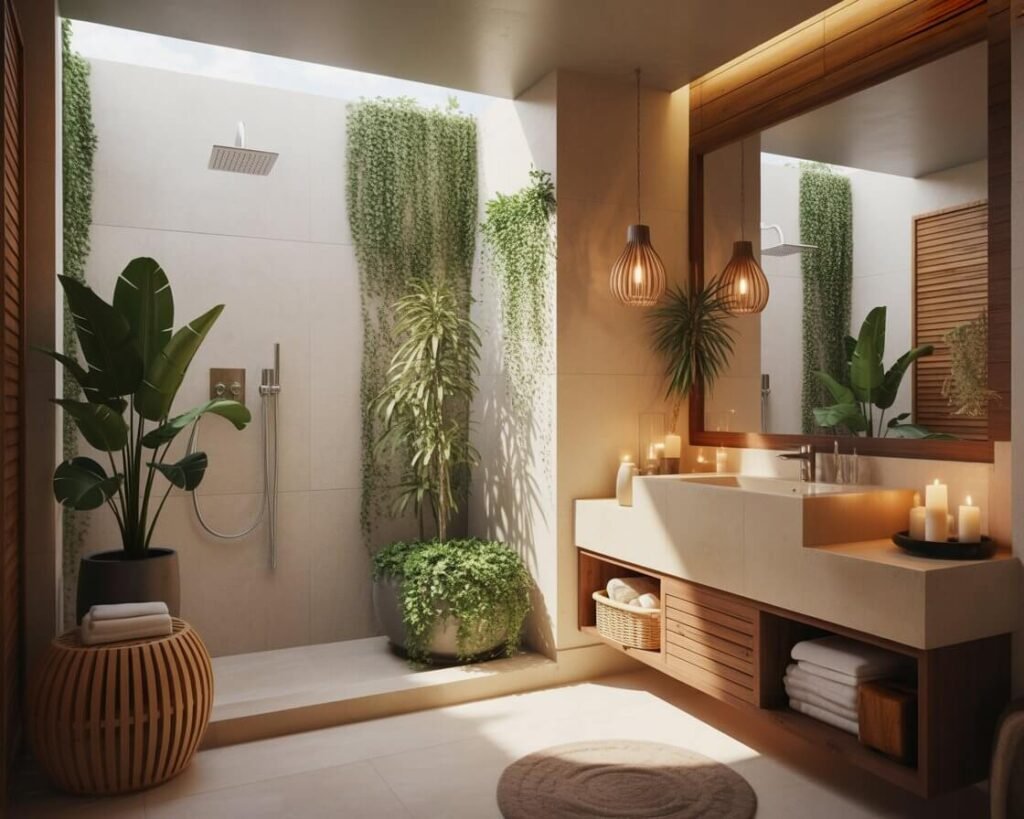
The spa aesthetic is less about a specific look and more about a feeling — that particular sense of stepping out of your day and into something quieter. It’s warm, soft, and sensory in the best way. The good news is that it translates remarkably well into a home bathroom, and you don’t need a wet room or a heated floor to pull it off.
Start with the lighting. Harsh overhead lights are the single biggest obstacle to a spa-like atmosphere. Replace or supplement them with dimmable fixtures, add a wall sconce or two, and keep candles within reach. Warm, layered light changes the whole feeling of a bathroom more than almost any other change you can make.
From there: natural materials, soft textures, and a muted earthy palette. Teak, bamboo, linen, stone. Think of the colours you’d find in a high-end wellness retreat — warm stone, eucalyptus green, aged driftwood. Keep it calm and consistent.
Spa-essential details:
- A rainfall showerhead — the single most impactful upgrade for the cost
- Eucalyptus or dried botanicals hung in the shower
- A teak shower bench or stool
- Thick, high-quality towels folded and stacked rather than hung haphazardly
- A diffuser with a calming scent like lavender, cedar, or sandalwood
3. Vintage — Nostalgia Done With Intention
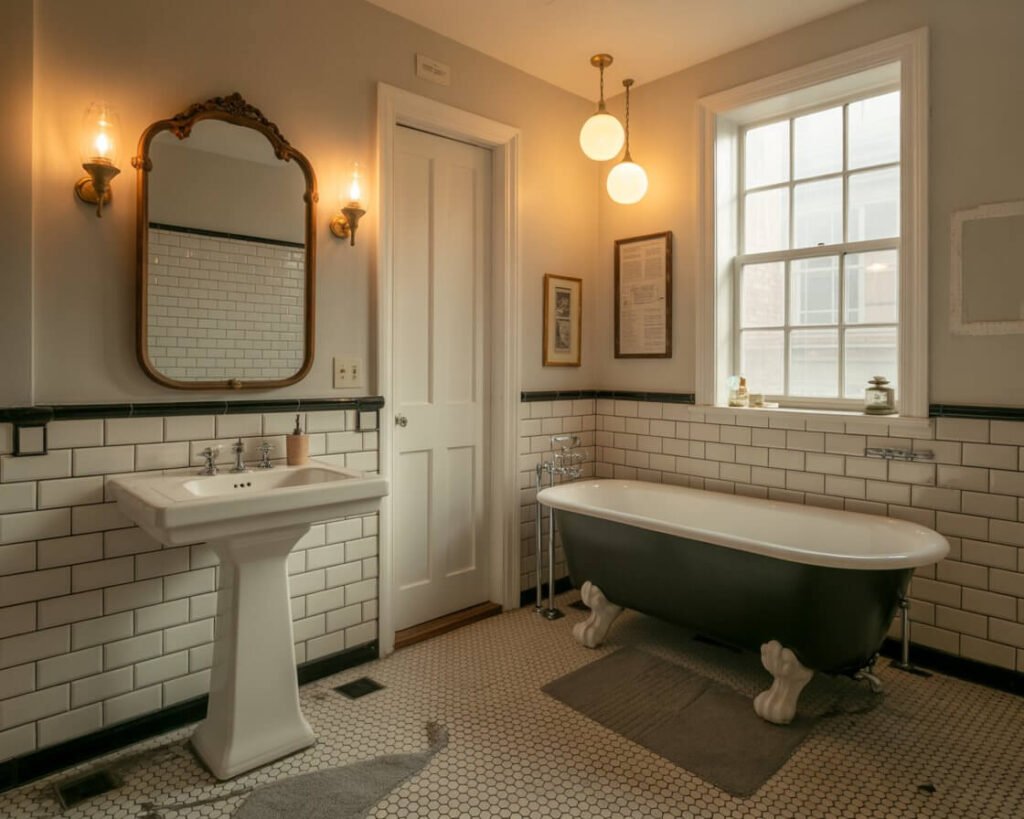
A vintage bathroom done well doesn’t feel like a museum. It feels lived-in, characterful, and warm — like it has a history that a brand-new space never quite achieves. The goal is to capture the spirit of a particular era while keeping the room fully functional and comfortable by modern standards.
The most timeless vintage elements are also the most practical: subway tiles with dark grout, hexagonal mosaic floors, pedestal sinks, and polished nickel or brass fixtures. A clawfoot tub is the obvious centrepiece choice if you have the space and budget, but even without one, these other elements communicate the aesthetic clearly.
Source pieces thoughtfully. A genuine antique mirror or medicine cabinet found at an estate sale will do more for the room than ten pieces of vintage-inspired replica accessories from a home goods chain. One authentic thing among modern necessities always reads better than an entirely reproduction look.
Key vintage choices:
- Subway tiles with charcoal or dark grey grout
- Hexagonal floor tiles in white or black and white
- Pedestal or console sink rather than a vanity cabinet
- Polished brass, unlacquered brass, or polished nickel fixtures
- An antique mirror or vintage-framed artwork as the focal point
4. Industrial — Intentionally Raw, Effortlessly Cool
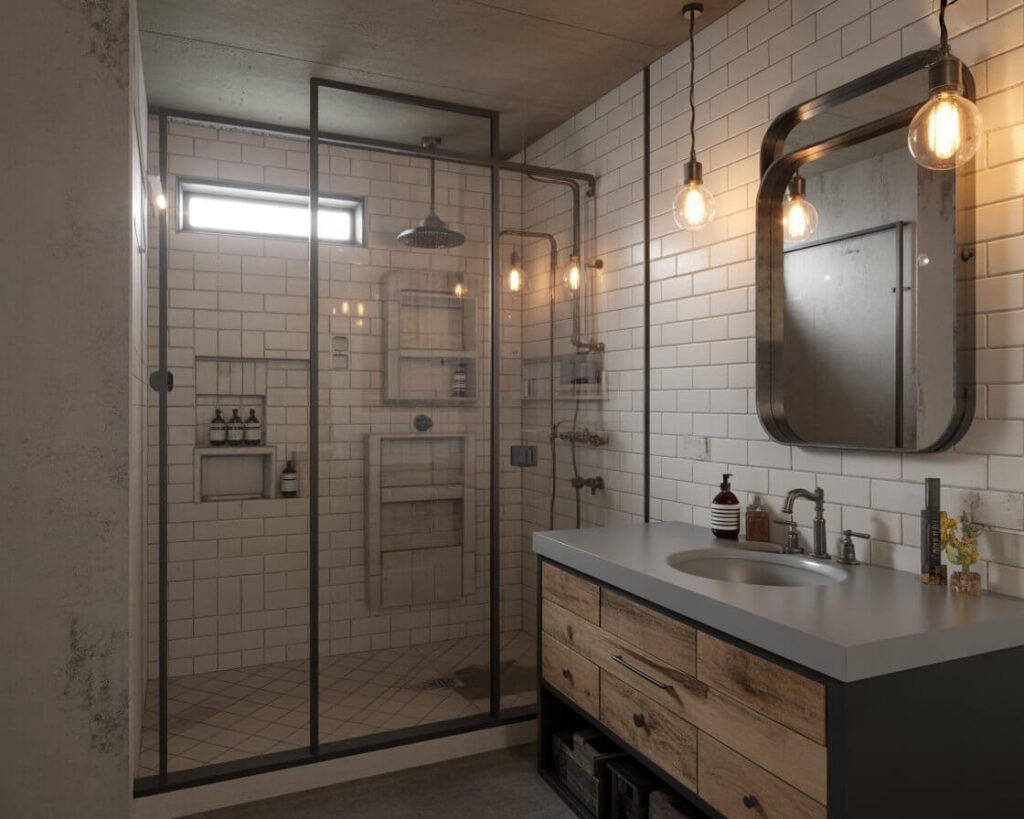
Industrial bathrooms have a directness to them that other styles don’t. They don’t try to be pretty. They use materials honestly — concrete, steel, reclaimed wood, exposed pipes — and the result is a space that feels confident in a way that polished, finished rooms sometimes don’t.
The key to making industrial work in a bathroom (rather than just feeling unfinished) is the intentionality of the choices. Exposed pipes should be deliberately coloured — matte black is the standard — and positioned in a way that reads as a design decision rather than something left uncovered. Concrete surfaces should be sealed. Raw wood elements should be treated for humidity.
Keep fixtures simple and functional. Matte black is the dominant hardware finish here. Lighting should feel industrial — think cage pendants, bare Edison bulbs on exposed cord, or factory-style wall sconces. Keep decoration minimal; the materials themselves are the aesthetic.
Industrial essentials:
- Matte black fixtures throughout — taps, towel bars, shower fittings
- Polished or sealed concrete on walls or floors
- A metal-framed mirror or medicine cabinet
- Open steel shelving in place of a traditional vanity unit
- Edison bulb or cage pendant lighting
5. Coastal — The Holiday Feeling, Without the Cartoon Fish
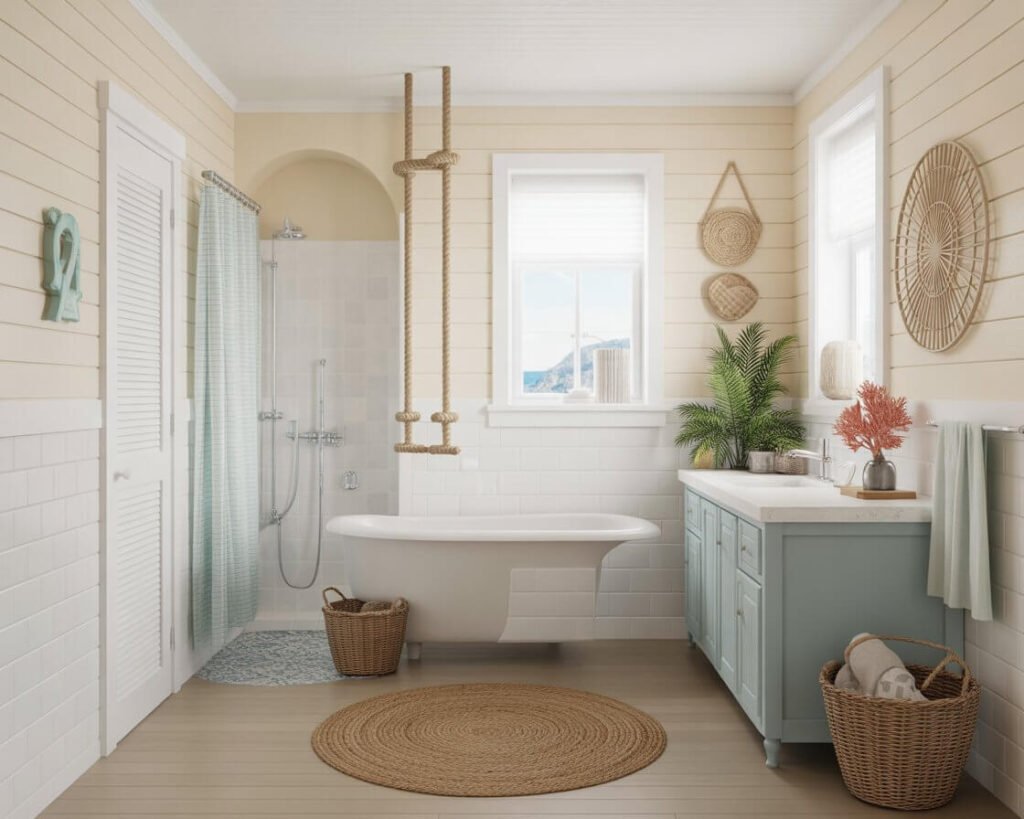
There’s a version of the coastal bathroom aesthetic that involves driftwood signs and cartoon seagulls, and then there’s the version that actually works. The better version — sometimes called coastal modern or coastal refined — takes the colours and textures of the seaside and applies them with enough restraint that the result feels elegant rather than novelty.
Soft blues, seafoam greens, sandy beiges, and crisp whites. Natural textures: jute, linen, seagrass. Materials that feel like they came from or near water: white-painted shiplap, raw wood, light stone. The overall effect should feel airy and open — like the room gets a sea breeze even when it doesn’t.
This aesthetic is one of the most achievable through paint and accessories alone. A soft blue-green wall colour, white fixtures, a jute bath mat, and woven storage baskets can transform an ordinary bathroom without a single structural change.
What makes it work:
- A soft, desaturated blue, seafoam, or sandy wall colour
- Shiplap — real or a convincing panelled alternative
- Natural fibre textiles: jute, linen, cotton
- White or light wood-toned furniture and shelving
- Simple, abstract or botanical prints — nothing literal or novelty
6. Bohemian — Layered, Warm, and Unapologetically Personal
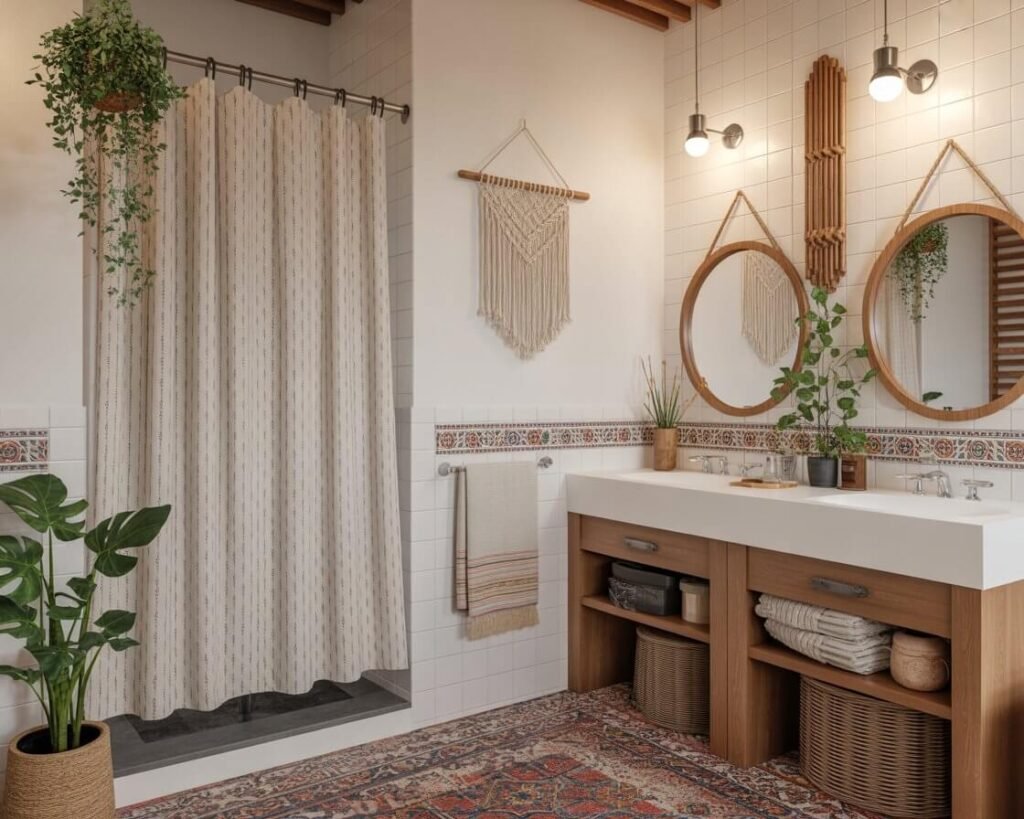
Boho bathrooms break most of the rules of conventional interior design — and look better for it. The aesthetic is about accumulation rather than curation: different textures, patterns, and objects that have been gathered over time and somehow coexist beautifully. It shouldn’t look designed. It should look discovered.
The foundation is always a neutral base — white walls, natural wood floors, or plain stone tiles — because without something to ground it, the layering tips into chaos. From there, everything else gets to be interesting. Moroccan tiles, a macramé wall hanging, three different mirrors, trailing plants, a vintage rug that somehow survives the humidity.
The colour palette runs warm: terracotta, ochre, dusty rose, sage green, rich brown. Nothing too bright or synthetic. The materials are natural: rattan, bamboo, jute, cotton, clay. If you find yourself wondering whether something is too much, it probably isn’t — boho rewards generosity.
Boho bathroom building blocks:
- A patterned or hand-painted tile on at least one surface
- Multiple mirrors of different shapes and frames
- Layered textiles — more towels, more texture, more colour
- Hanging planters and trailing plants wherever they can go
- Woven baskets, rattan accessories, and natural fibre storage
7. Monochrome — Bold, Graphic, and Surprisingly Timeless
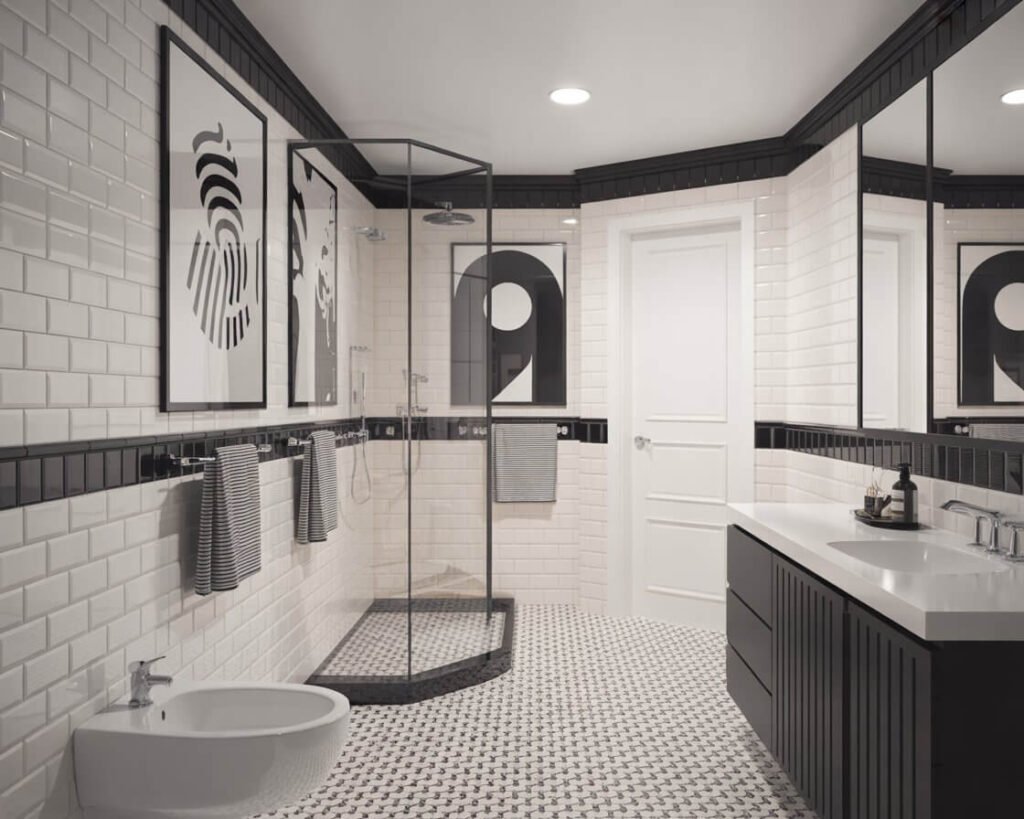
A monochrome bathroom — properly executed — is one of the most visually striking things you can do with a bathroom design. The absence of multiple colours forces you to work with contrast, texture, and form, and when you get that balance right, the result is something that photographs beautifully and never really goes out of style.
Black and white is the classic combination, but a monochrome approach can work in any single colour family. A room done entirely in warm stone tones — different shades of the same grey-beige — reads as monochrome and is every bit as effective. The same is true of an all-navy room with varying finishes and textures.
The key is that texture and finish do the work that colour would normally do. In a black and white bathroom, the difference between matte black tiles and glossy white ones, polished chrome fixtures and a rough-textured rug, creates depth that colour would otherwise provide.
Making monochrome work:
- Vary finishes: mix matte, gloss, and satin surfaces in the same colour
- Use pattern — geometric tiles, striped textiles — to add visual interest
- Ensure high contrast between the darkest and lightest elements
- Let the fixtures and fittings be part of the graphic language
8. Scandinavian — Warmth and Functionality in Equal Measure
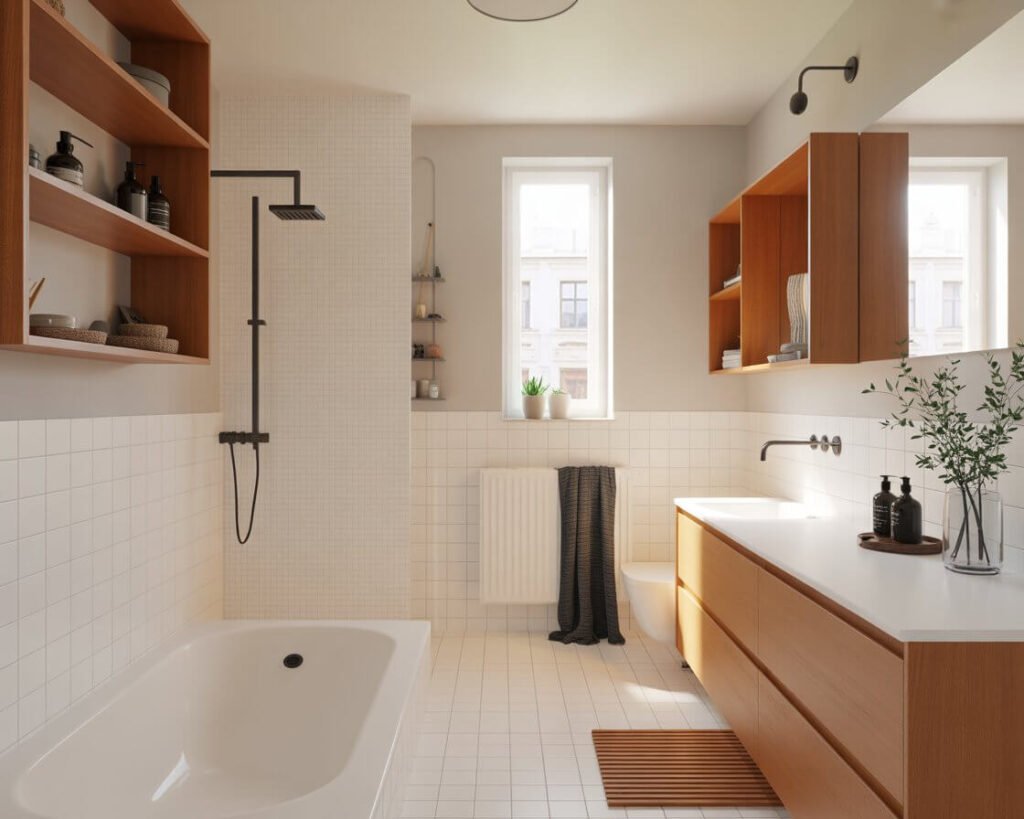
Scandinavian design has a reputation for being cold and clinical that it doesn’t entirely deserve. At its best, Scandi interiors are warm, functional, and deeply considered — the kind of spaces that feel good to be in because every decision was made with genuine intention rather than trend-chasing.
The Scandi bathroom keeps its palette light and neutral — white, soft grey, warm stone, natural wood — but counteracts any potential starkness with texture and warmth. A teak bath mat, a wooden shelf, a linen hand towel, a small plant in a simple clay pot. These soft elements are what turn a clinical white room into something that actually feels inviting.
Quality is the underlying principle. Scandi design prioritises craftsmanship and longevity over decoration, which means the investment goes into well-made materials rather than accessories. A beautifully jointed wooden vanity will do more for a Scandinavian bathroom than a dozen well-chosen prints.
Scandi bathroom essentials:
- Light-toned natural wood: oak, ash, or pine
- A muted neutral palette — white, dove grey, warm greige
- Simple, considered hardware in brushed nickel or matte black
- Natural textiles: linen, undyed cotton, wool
- One or two plants, simply potted — greenery without fanfare
9. Dark and Moody — The Aesthetic That Changes What a Bathroom Can Feel Like
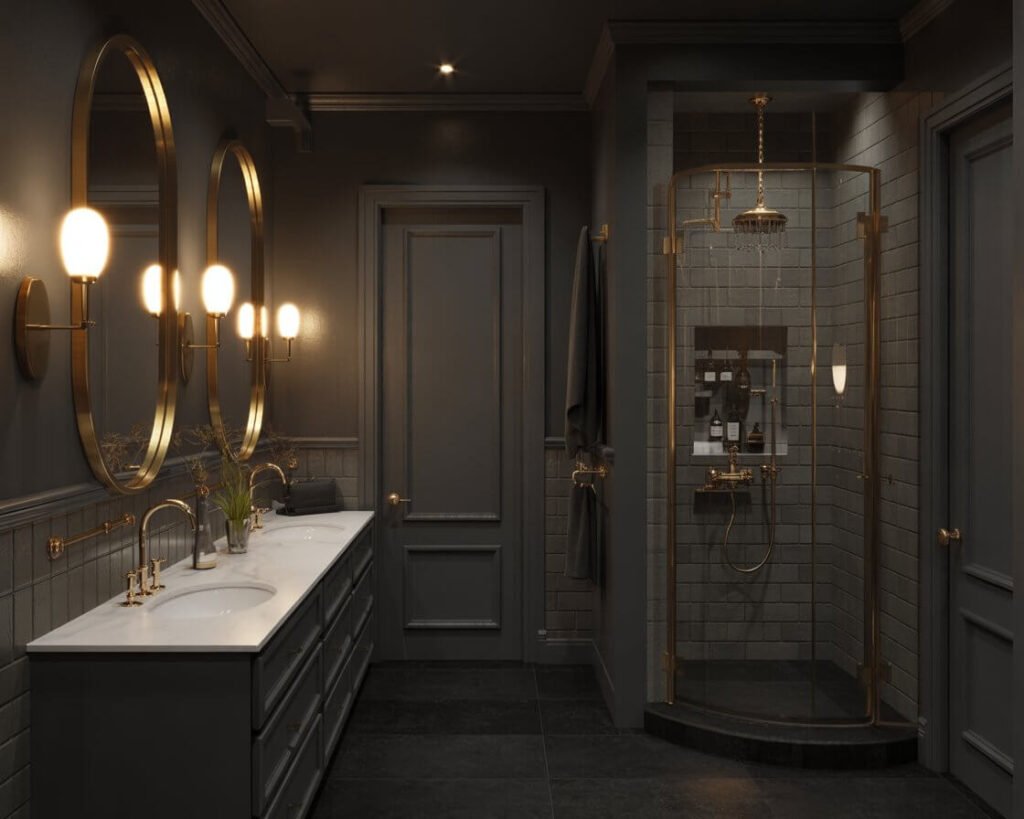
The received wisdom is that bathrooms should be light and bright — white tiles, pale walls, maximum reflection. And then someone paints a bathroom charcoal or deep forest green and discovers that dark rooms can feel extraordinary: dramatic, intimate, and genuinely luxurious in a way that bright white simply can’t manage.
Dark bathrooms work best when the darkness is committed to. A single dark wall in an otherwise pale room can look unresolved. A fully dark room — or close to it — creates a consistency that reads as intentional. The contrast between dark walls and white fixtures (a white basin, a white bath) provides the visual relief that keeps the space from feeling oppressive.
Lighting is critical. A dark bathroom needs thoughtful lighting more than a pale one does. Wall sconces at face height are more flattering and effective than a single overhead light. A backlit mirror adds light where you need it most. Candles, even LED ones, contribute to the atmosphere rather than the illumination.
Shades that work well in dark bathrooms:
- Charcoal and deep slate — versatile, sophisticated, pairs with everything
- Forest and sage green — surprisingly warm and natural-feeling
- Navy blue — classic, slightly nautical, works with both warm and cool metals
- Deep terracotta or burgundy — moody without feeling cold
- Near-black brown or espresso — rich, warm, and unexpected
10. Art Deco — Glamour That Takes Itself Seriously
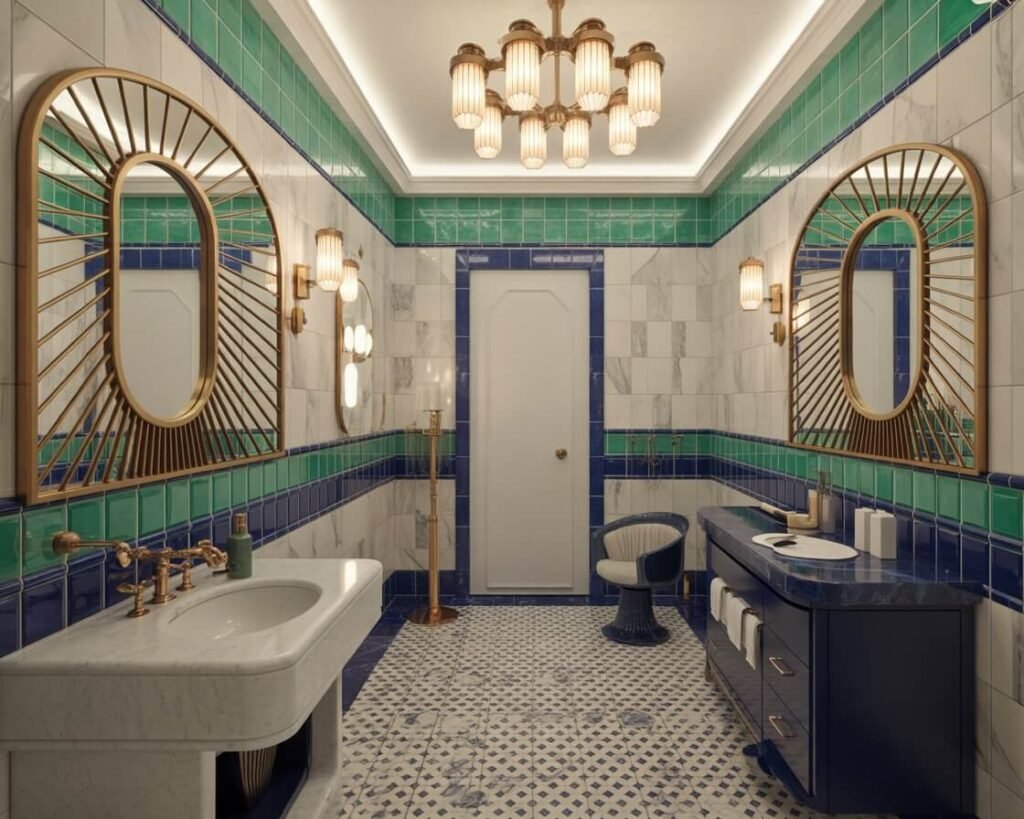
Art Deco is a style that commits. It’s geometric, symmetrical, and unabashedly decorative — the opposite of minimalism in almost every way. In a bathroom, Art Deco creates a sense of occasion: entering the room feels like an event rather than a routine.
The visual language is precise and distinctive: fan-shaped tiles, chevron patterns, sunburst mirrors, strong angular lines. The materials are luxurious: marble (or convincing alternatives), polished brass, lacquered surfaces, gilded accents. The colour palette tends toward the rich and jewel-toned — emerald, sapphire, deep gold — though black and gold or black and white can also work beautifully in this style.
Half-measures don’t serve Art Deco particularly well. The style needs enough commitment to read clearly. A single Art Deco mirror in an otherwise unremarkable bathroom will look lost. Building around a strong central element — a fan-tiled floor, a dramatic vanity, a statement light fixture — gives the style the foundation it needs to come together.
Art Deco elements to incorporate:
- Fan or chevron floor tiles in black and white or gold and white
- A sunburst or geometric-framed mirror as a focal point
- Polished or antique brass fixtures
- A rich accent colour — emerald, sapphire, or deep teal
- Glossy or lacquered surfaces alongside matte ones for contrast
11. Farmhouse Modern — Rural Warmth Without the Kitsch
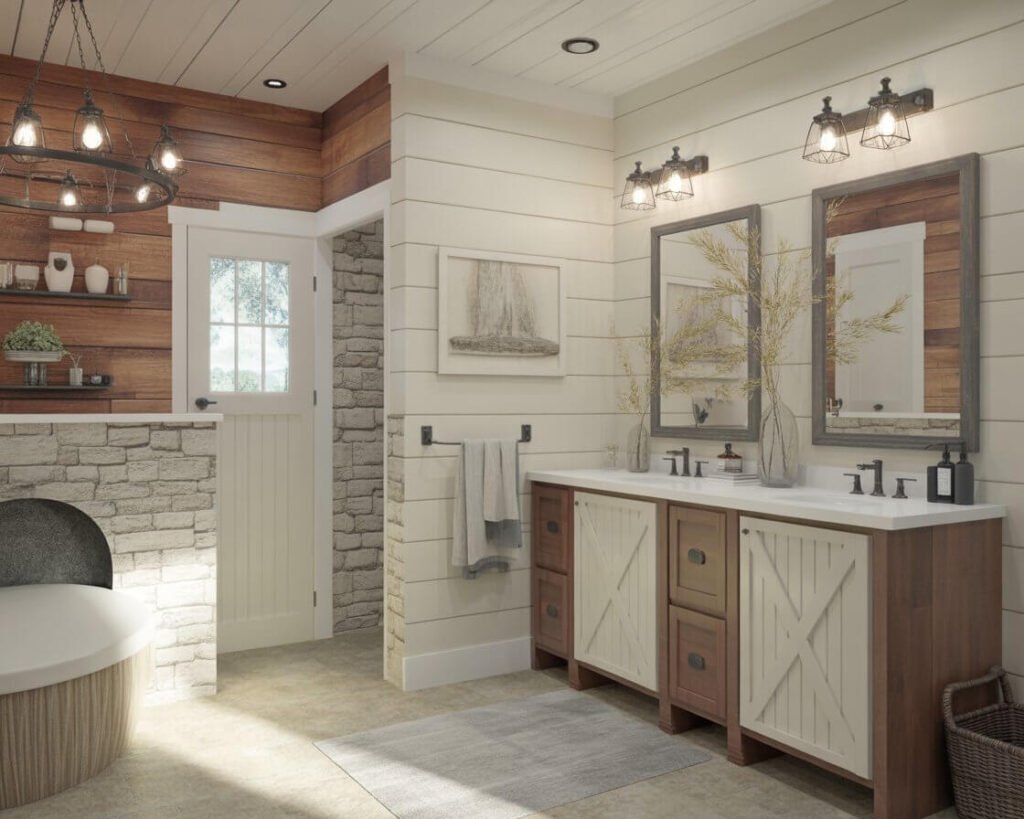
The modern farmhouse aesthetic has been done to death in its more commercialised form — the mason jar soap dispenser, the “wash, rinse, repeat” sign, the shiplap on every surface. But strip away the clichés and there’s a genuinely lovely aesthetic underneath: natural materials, warm neutrality, and a sense of unpretentious comfort.
White or cream walls, natural wood vanities, stone or stone-effect tiles, simple unfussy fixtures. The palette stays within a narrow warm neutral range, and the texture does the work. A farmhouse bathroom should feel like it belongs in a house where things are made to last — solid, unhurried, comfortable.
Keep the accessories minimal and functional. A wooden shelf above the sink, simple white towels, a plant that actually does well in humidity (pothos, ZZ plant, peace lily). The overall effect should feel settled and genuine rather than assembled.
What separates modern farmhouse from cliché:
- Natural wood — real or high-quality veneer, not particle board
- Apron-front or console sinks rather than drop-in options
- Bridge-style faucets in brushed nickel or unlacquered brass
- Stone, slate, or terracotta floor tiles
- Minimal accessories — a few things chosen carefully, not a collection
12. Zen — Stillness You Can See and Feel
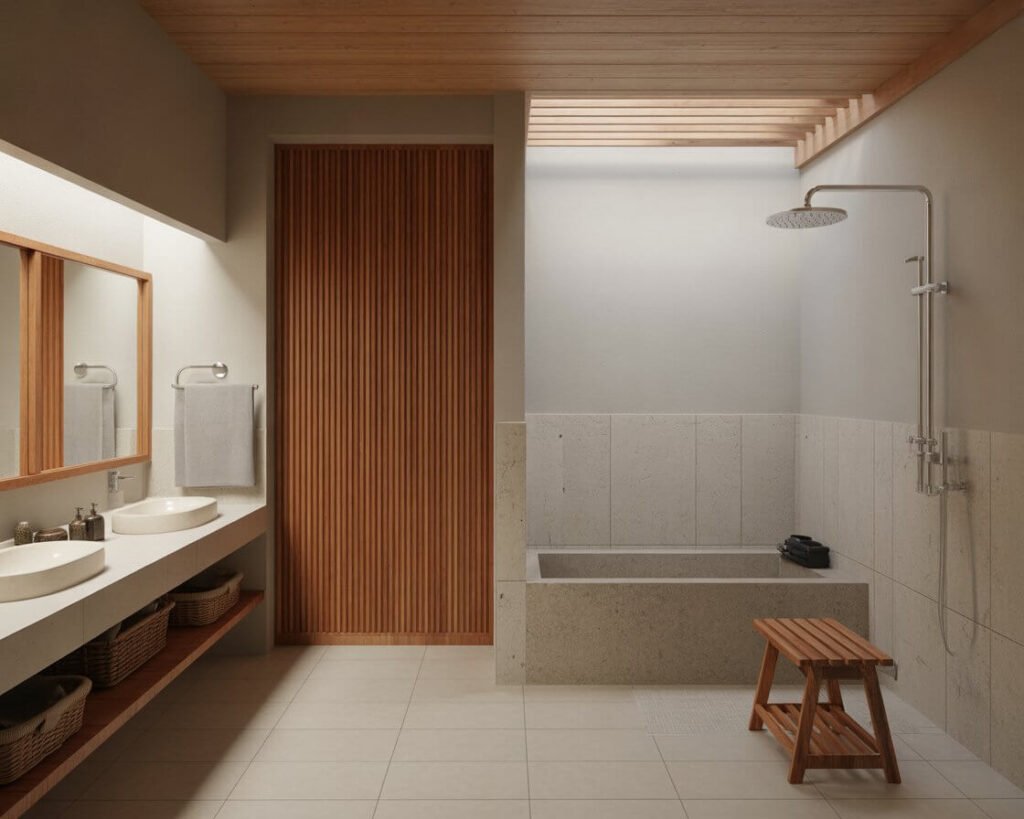
A zen bathroom is perhaps the most specific kind of atmosphere on this list. It’s not just about how the room looks — it’s about how the room makes you feel, and specifically whether it creates a pause in the noise of the day. That’s a high bar for a small domestic space, but it’s achievable if you’re willing to be disciplined about what you include.
The palette is neutral and muted. The materials are natural: wood, stone, bamboo, clay. Everything in the room serves a purpose, and nothing competes for attention. Surfaces are clear. Storage is hidden. Light is soft and diffused rather than direct and harsh.
What makes a bathroom feel zen is largely about what you don’t do. No busy patterns. No unnecessary decorative objects. No jarring colours. The space should feel like it’s had a breath taken out of it — quiet and easy in a way that most rooms aren’t.
Zen design principles for the bathroom:
- A single, dominant natural material — stone tile, wood wall, bamboo panel
- A deep soaking tub, or a walk-in shower with a simple bench
- Soft, indirect lighting — no harsh overhead fixtures
- One or two plants, chosen for humidity tolerance: bamboo, peace lily
- Complete absence of clutter on any visible surface
13. Retro Pop — Colour, Pattern, and a Healthy Disregard for Restraint
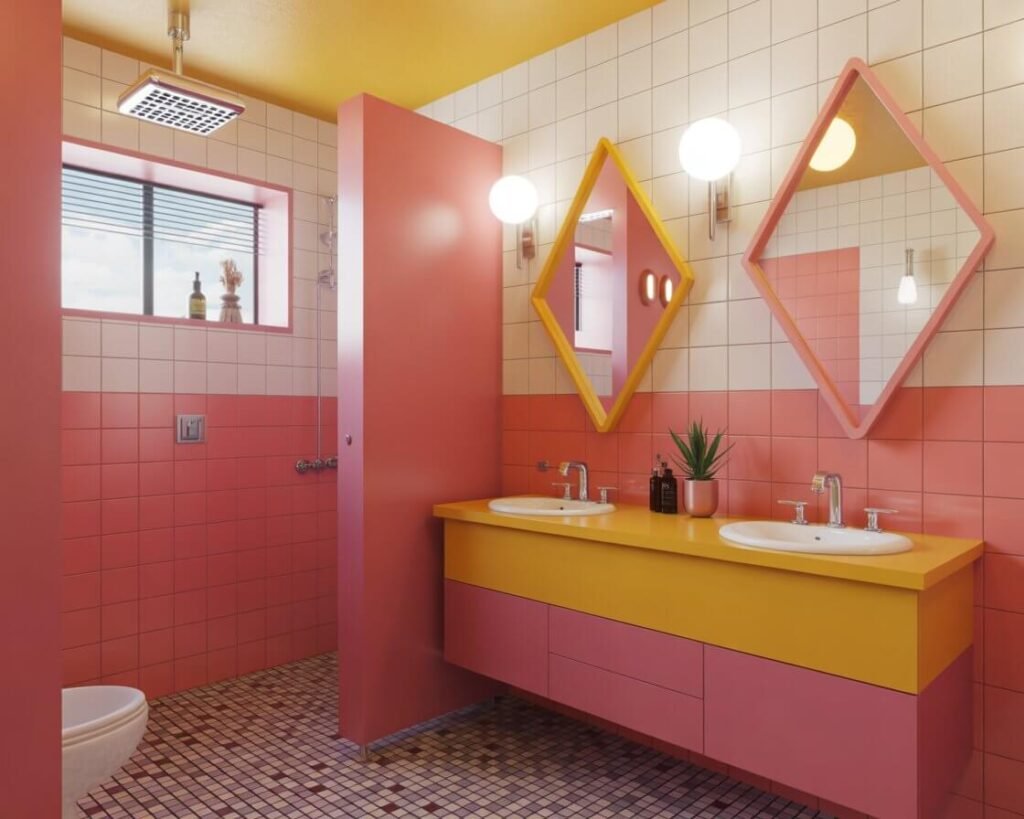
Retro pop bathrooms are fun, and fun is undervalued in interior design. Not every room needs to be calming or sophisticated. Sometimes a bathroom can just be delightful — a bit silly, a bit bold, a room that makes you smile without asking you to think about it too hard.
Pick an era and commit to its visual language. The 1950s offers black and white checks, rounded lines, and candy colours. The 1960s brings op-art patterns, strong geometric shapes, and bold primary colours. The 1970s goes earthy — orange, brown, olive, and a whole lot of texture. Each decade has a distinct personality; mixing them tends to diffuse the effect.
Keep the permanent elements — tiles, fixtures — in check if you’re not sure how long you’ll want to live with the look. Bold wallpaper on one wall, coloured accessories, and a vintage-style light fixture can deliver the retro feeling without locking you in. Or go all the way. A fully committed retro bathroom is genuinely joyful.
Retro elements worth incorporating:
- Bold patterned or coloured wall tiles — commit to one surface at least
- Vintage-style faucets with cross handles or lever details
- A period-appropriate pendant or sconce in the right finish
- Coloured sanitaryware if you can find it — pink, avocado, or powder blue
- A graphic print shower curtain or vintage poster as a focal point
14. High-Tech Modern — The Bathroom That Works as Hard as You Do
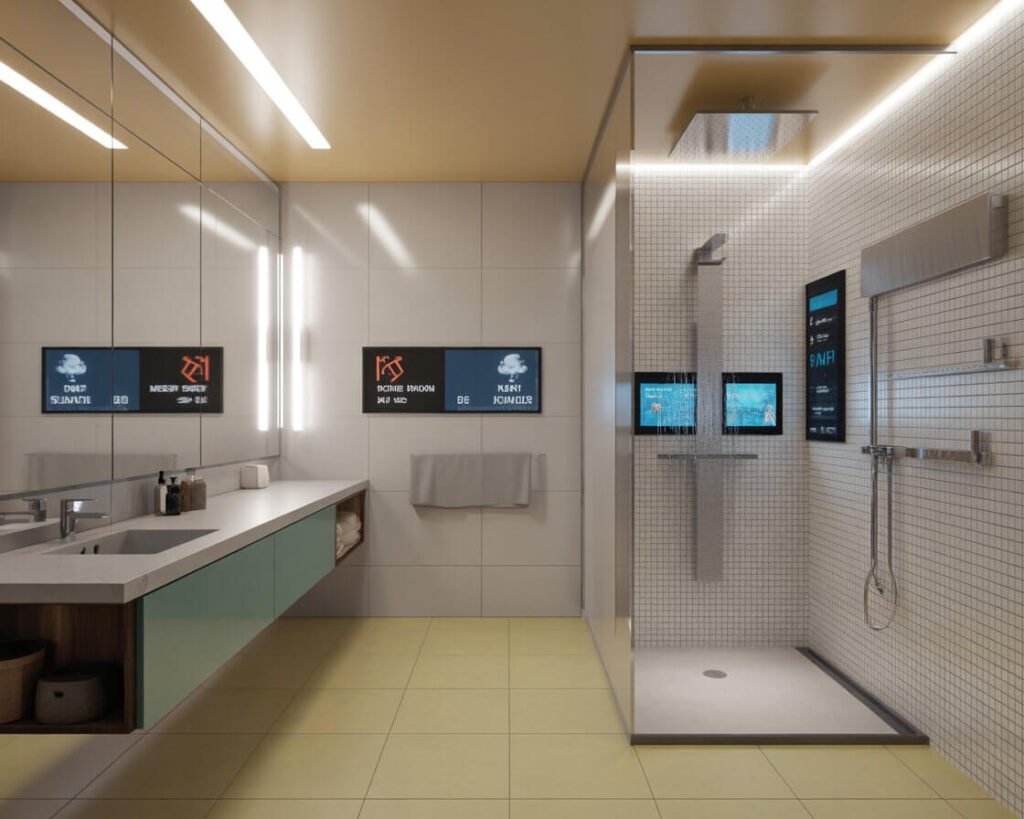
The best high-tech bathrooms don’t announce themselves. The technology is embedded, the interfaces are seamless, and the overall aesthetic remains clean and modern rather than futuristic in a self-conscious way. The experience is the point — a shower that remembers your preferred temperature, lighting that adjusts by time of day, a mirror that doesn’t fog.
Heated floors are probably the most life-changing single upgrade in this category — the kind of thing that, once experienced, makes unheated bathroom floors feel like a deprivation. A smart mirror (weather, calendar, ambient music) and a digital shower system are the next tier of investment. A Japanese-style toilet seat with bidet function sits somewhere between luxury and, once you’ve had one, apparent necessity.
The design language to pair with this level of technology is consistently clean: integrated cabinetry, concealed pipework, large-format tiles with flush-finish drains, and surfaces that are easy to keep pristine. Let the technology be felt rather than seen.
15. Nature-Inspired — The Indoors Feeling Like the Outdoors
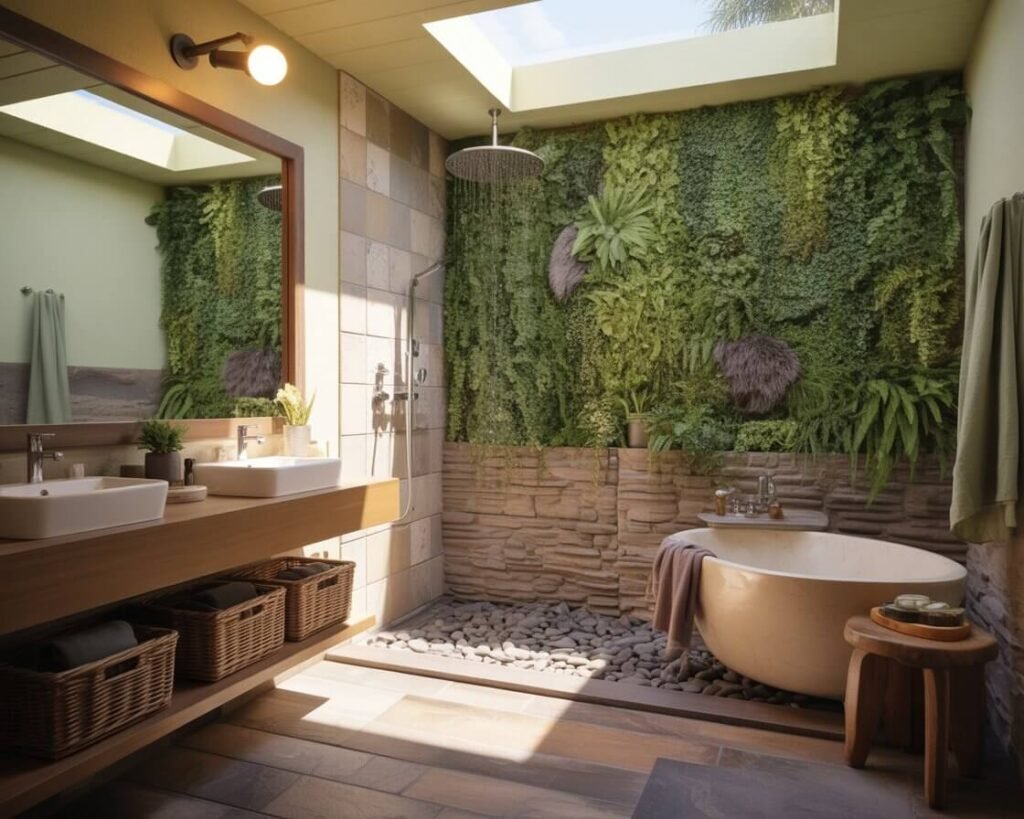
The nature-inspired bathroom goes beyond a few plants and some pebble accessories. It’s a considered attempt to bring the textures, materials, and colours of the natural world into a domestic space — and when done well, it creates an atmosphere that’s both grounding and quietly beautiful.
Natural stone tiles (or high-quality stone-effect porcelain) on the floor and walls. A wood-look or real wood vanity. Earthy, organic colours: warm stone, terracotta, moss green, clay, bark brown. Plants — real ones, chosen for their ability to thrive in humidity. A skylight or frosted window that lets in natural light without sacrificing privacy.
The goal is that the room feels genuinely organic rather than nature-themed. The difference is subtle but significant. Nature-themed has a pebble soap dish and a print of a forest. Nature-inspired has materials, colours, and textures that come from the natural world and speak to it honestly.
Materials that carry this aesthetic furthest:
- Slate, limestone, travertine, or sandstone — or excellent porcelain lookalikes
- Real teak, oak, or reclaimed wood — sealed properly for bathroom use
- Clay or terracotta accessories and vessels
- Moss or preserved botanical wall panels
- A living plant wall, even a small one, if the light allows
16. French Parisian — Effortless Elegance With a Strong Sense of History
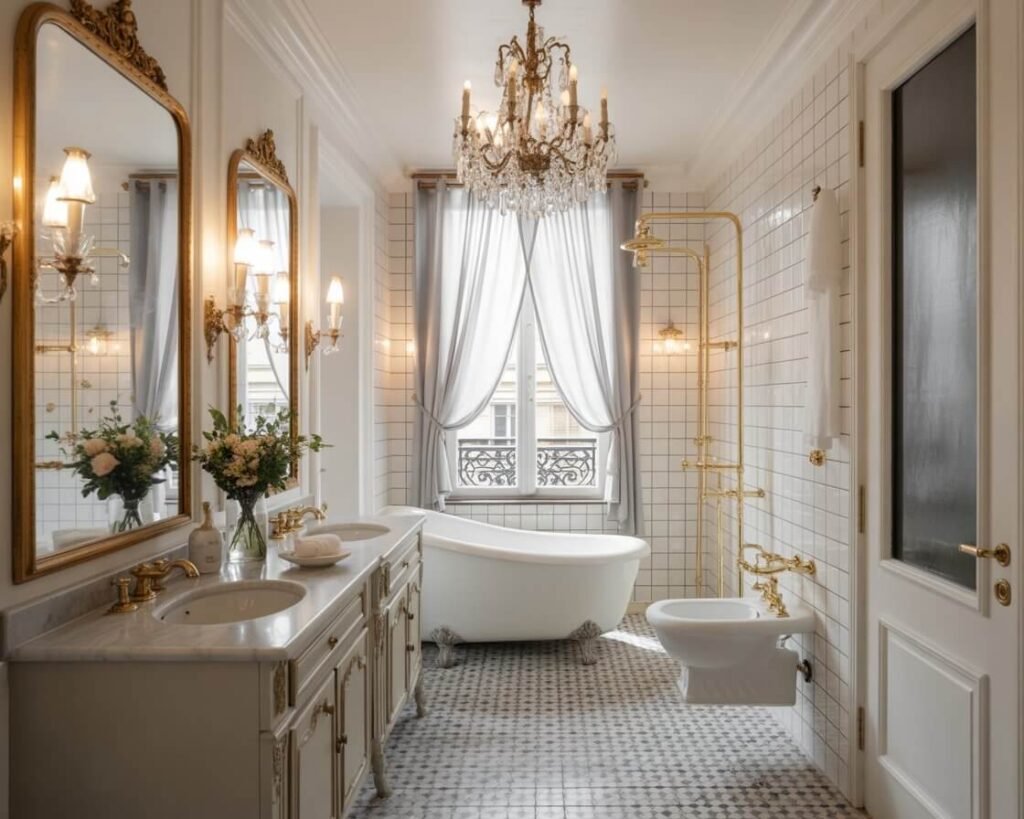
The Parisian bathroom aesthetic has a very particular quality that’s difficult to fake: it looks like it wasn’t designed so much as it evolved. The fixtures are beautiful because they were chosen carefully and have been lived with. The mirror is ornate because it came from somewhere. The colour palette is classic because it has been refined over time.
White or pale grey walls with good crown moulding. Hexagonal floor tiles or aged herringbone parquet. A pedestal sink with elegant proportions. Polished chrome or unlacquered brass fixtures. An ornate or gilded mirror that’s either genuinely antique or a very good reproduction. Fresh flowers in a simple vase — always.
The Parisian approach to decoration is about quality over quantity and age over novelty. One genuinely beautiful thing always beats five mediocre ones. The room should feel as if each piece was acquired because it was too good not to have, rather than assembled all at once for a designed effect.
17. Maximalist — More of Everything, Done With Conviction
Maximalism gets an unfair reputation for being chaotic or tasteless, but a well-executed maximalist bathroom is a genuinely extraordinary space. The distinction between maximalism and clutter is intention: everything in a maximalist room is there because it was chosen, not because it accumulated.
Pattern on pattern. Colour against colour. Objects grouped in ways that create deliberate visual abundance. A gallery wall in a bathroom. Patterned tiles on both the floor and the walls. A chandelier above a bath. Velvet, marble, brass, and botanical print all in the same room. It shouldn’t be restful — it should be exhilarating.
If you’re drawn to this aesthetic, resist the impulse to edit it down in the name of taste. The maximalist bathroom that pulls its punches ends up looking uncertain rather than bold. Trust the direction and follow it through.
18. Mediterranean — Sun-Bleached, Textured, and Genuinely Warm
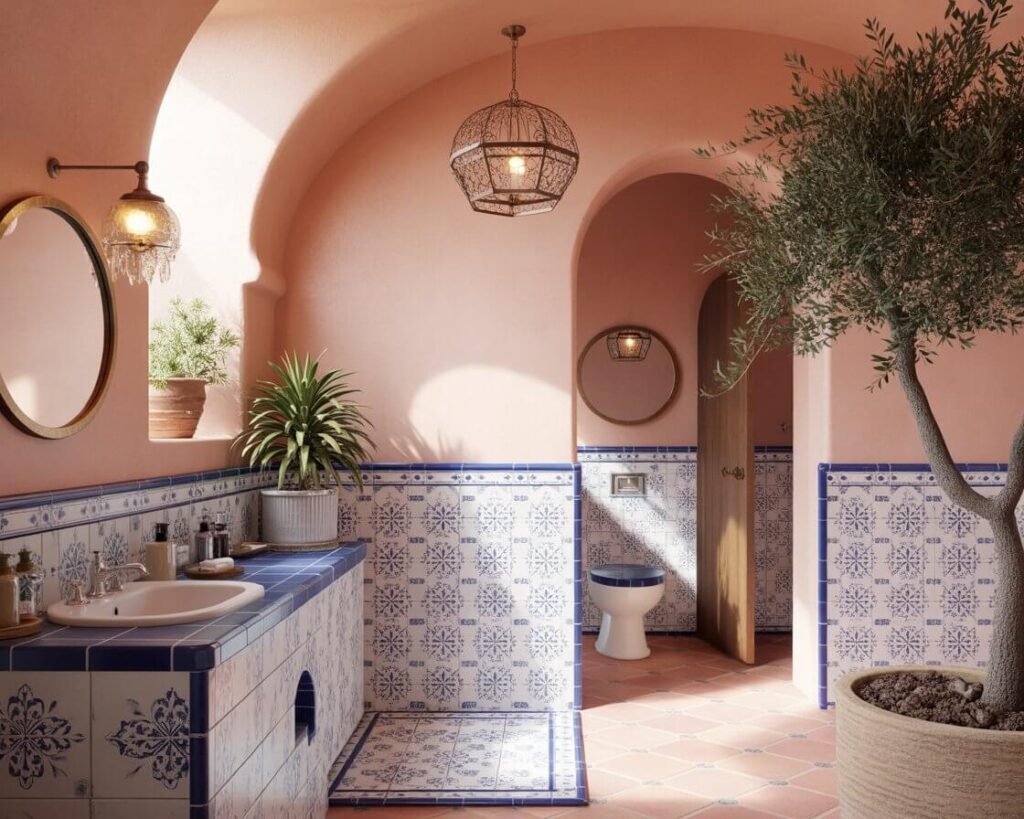
Mediterranean bathrooms draw on the design traditions of Southern Europe and North Africa — Moroccan zellige tiles, Italian terracotta, Spanish hand-painted azulejo, Greek whitewash. The common thread is warmth: warm colours, warm light, warm materials, and a sense of ease that comes from spaces designed around living well.
Terra cotta tiles on the floor. Handmade or zellige tiles on the walls, with their characteristic variation and imperfection. Wrought iron fixtures or unlacquered brass. A colour palette of warm white, sandy ochre, burnt sienna, and dusty olive. Carved wooden details. A hand-painted basin. Afternoon light, or at least the feeling of it.
This aesthetic particularly suits older homes and spaces with some architectural character to work with. It doesn’t feel at home in a perfectly rectangular room with flush-finish everything. It wants a bit of unevenness, a bit of irregularity — the kind of imperfection that makes a space feel real.
19. Hollywood Regency — Glamour Without Irony
Hollywood Regency is maximalism with a very specific point of view: opulent, theatrical, and completely uninterested in modesty. This is the aesthetic of mirrored surfaces, lacquered finishes, jewel-toned colours, and statement lighting. A bathroom done in this style is a room that announces itself.
Mirrored or lacquered vanity fronts. A crystal or glass chandelier. A colour palette built around deep, saturated tones — emerald, sapphire, amethyst, or blush — against high-gloss white or gold. A freestanding bath as a sculptural centrepiece. Gilded mirror frames. Velvet, if the humidity allows for it in accessories.
This is the only aesthetic where more is more and you should feel encouraged to go further than feels comfortable. If it doesn’t feel slightly excessive, it isn’t Hollywood Regency yet.
20. Japandi — The Most Refined Blend on This List
Japandi — the fusion of Japanese minimalism and Scandinavian warmth — has become one of the most talked-about interior aesthetics of recent years, and for good reason. It takes the best qualities of both traditions: the discipline and precision of wabi-sabi Japanese design, and the organic warmth and hygge-influenced coziness of Scandinavian interiors.
In a bathroom, Japandi looks like this: warm neutral walls in clay, warm grey, or pale sand. Natural wood used sparingly but meaningfully — a vanity, a shelf, a bath panel. Stone or stone-effect tiles in a muted, natural tone. Simple, quality fixtures in matte black or brushed bronze. One carefully chosen plant. Nothing unnecessary, but everything present has warmth and texture.
The beauty of Japandi is how liveable it is. It’s minimal without being cold, and warm without being cluttered. It’s the kind of aesthetic that ages well — that still feels considered and calm in ten years’ time.
21. Eclectic — When No Single Style Fits, Make Your Own
The eclectic bathroom is the honest answer to the design process for most people: you’ve collected things you love from different places and different eras, and the challenge is making them coexist in a way that looks intentional rather than random. Eclectic done well is not a compromise — it’s a genuinely sophisticated approach.
The secret is a coherent underlying structure. Colour, material, or scale needs to provide a thread that ties the disparate elements together. A mix of vintage and contemporary pieces works beautifully if they share a colour palette. Different pattern styles coexist if they share a similar scale or tone. The eclectic bathroom isn’t an excuse to throw everything at the wall — it’s a skill of finding the unifying logic between things that don’t obviously match.
22. Statement Tile — When One Choice Carries the Whole Room
Sometimes the cleanest design strategy is to pick one extraordinary tile and let it lead everything else. A hand-painted encaustic tile floor in a bold geometric pattern. A wall of iridescent glass mosaic tiles that shift colour with the light. A continuous expanse of dramatic book-matched marble. One strong material choice, executed well, can define an entire aesthetic without needing to layer in additional style decisions.
The rest of the room becomes a quiet backdrop: white or neutral walls, simple fixtures in a finish that complements the tile, minimal accessories. This approach is particularly useful if you find the process of building an aesthetic from scratch overwhelming — start with the tile you love and let that choice make the subsequent decisions easier.
How to Choose the Right Bathroom Aesthetic for Your Space
With twenty-two options in front of you, the question is how to narrow down. A few practical questions will help you find the right direction without getting lost in the possibilities.
What do you need the room to feel like?
Different aesthetics produce genuinely different emotional experiences. If your bathroom is where you decompress at the end of the day, you probably want something calm — spa, zen, Japandi, or Scandinavian. If it’s a quick-use room you want to enjoy visually, something bolder and more expressive — Art Deco, maximalist, retro pop — might be more appropriate. Start with the feeling, then find the aesthetic that produces it.
What are the fixed constraints of your space?
Room size, natural light levels, existing architectural features, and budget all shape which aesthetics are realistic. A dark and moody bathroom needs thoughtful lighting to work in a north-facing room. A maximalist bathroom needs sufficient square footage. A Parisian aesthetic works better in a room with high ceilings and architectural detail. Work with what you have rather than against it.
How permanent do you want the changes to be?
Some aesthetics are built into the fabric of the room — tile choices, plumbing, structural changes. Others live primarily in paint colour, accessories, and textiles, and can be changed relatively easily. If you’re renting, or if you change your mind about design regularly, lean toward aesthetics that can be achieved through the latter. If you’re investing in a long-term renovation, choose something with real staying power.
What do you already have that you like?
The most sustainable aesthetic direction is one that builds on something you already love. An existing tile you don’t want to replace. A freestanding bath that came with the house and you’re keeping. A colour that keeps showing up in your wardrobe and your other rooms. Start from what’s already there and find the aesthetic that accommodates it, rather than imagining a blank canvas.
Frequently Asked Questions
What’s the most timeless bathroom aesthetic?
Minimalism, vintage, and Scandinavian design have all shown genuine longevity. They’re built on principles — quality materials, considered simplicity, authentic craftsmanship — that don’t date in the way that more overtly trend-driven styles do. If you’re renovating with the long term in mind, these are the safest directions.
Can I mix bathroom aesthetics?
Yes, and many of the best bathrooms do. The key is to have one dominant aesthetic and bring in elements of another as accents rather than trying to balance two equally. A primarily minimalist bathroom can have a vintage mirror as its one expressive element. A zen bathroom can have a single Art Deco light fixture that adds personality without competing with the calm.
How do I create a beautiful bathroom aesthetic on a small budget?
Paint is the highest-impact, lowest-cost change you can make — particularly for a dark and moody or colour-forward aesthetic. New hardware (taps, towel bars, cabinet handles) makes an outsized difference relative to cost. High-quality towels, folded and displayed rather than hung, cost little and change the feel of a room significantly. Focus spending on one or two things that really matter to the aesthetic, and keep everything else minimal.
What bathroom aesthetic is best for a small bathroom?
Light, pale aesthetics (minimalist, Scandinavian, coastal) tend to make small bathrooms feel larger by maximising light and visual space. That said, dark and moody can work beautifully in a small bathroom — particularly a powder room — where the intimacy of the dark space becomes a feature rather than a problem. The key in any small bathroom is ruthless editing: every element has to justify its presence.
How do I make my bathroom feel more high-end without spending a lot?
Replace plastic accessories with stone, ceramic, or metal equivalents. Add a large, well-framed mirror (size and frame quality matter more than most people realise). Declutter every visible surface and store things properly. Add a plant that actually thrives in bathroom conditions. Change the lighting — even a simple dimmer switch and a warm-toned bulb transforms the atmosphere at almost no cost.
The Bottom Line
Your bathroom doesn’t have to be the room you rush through without thinking. It’s used every single day, often at the quieter moments of it — the beginning and the end — which makes it one of the most worthwhile rooms in the house to invest real thought into.
The twenty-two aesthetics in this guide cover a wide range of sensibilities, budgets, and spatial constraints. The one thing they have in common is that they all require a clear decision: choosing a direction and following it through with enough consistency that the room feels considered rather than assembled by accident.
That clarity is what makes a bathroom genuinely beautiful, whatever style it’s in. It doesn’t take a big budget or a professional designer. It takes knowing what you’re going for — and then actually going for it.